• Login / Join
  • About
  • •
  • Contact
  • •
  • Advertising
bustler logo
bustler logo
  • News
  • Competitions
  • Events
  • Bustler is powered by Archinect
  • Sign up for Bustler's Email Newsletters

  • Follow these Bustler feeds:

  • Search

    Search in

  • Submit

    What are you submitting?

    News Pitch
    Competition
    Event
  • Login / Join
  • News|Competitions|Events
  • Search
    | Submit
    | Follow
  • Search in

    What are you submitting?

    News Pitch
    Competition
    Event

    Follow these Bustler feeds:

  • About|Contact|Advertising
  • Login / Join

Winners of Los Angeles Conservancy 2009 Preservation Awards

By Bustler Editors|

Thursday, Mar 26, 2009

The Los Angeles Conservancy has announced the recipients of its 28th annual Preservation Awards, which recognize outstanding achievement in the field of historic preservation.

As always, this year’s winning projects reflect a wide range of efforts to preserve L.A. County’s architectural heritage. “We received more applications this year than any other, making the competition particularly tough,” said Linda Dishman, the Conservancy’s executive director. “We congratulate the winners for their excellent work and commitment to preserving the rich cultural heritage of L.A. County.”

Here are this year’s winners:

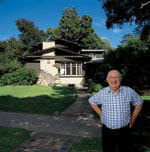
President’s Award: Robert W. Winter, Ph.D.
image
Photo from pasadenahistory.org

This renowned architectural historian, author, and educator has spent decades promoting awareness and appreciation of Los Angeles’ built environment. Widely celebrated for his work on the Arts and Crafts Movement in California (which earned him the moniker “Bungalow Bob”), Dr. Winter taught at both UCLA and Occidental College, served on several preservation commissions, and has long been active in local historical societies and preservation organizations.

Perhaps his greatest single contribution to the field of preservation lies in one book. Among many other works on California architecture, Dr. Winter co-wrote the groundbreaking Los Angeles: An Architectural Guide with the late David Gebhard. This definitive guide helped change the public’s perception of Los Angeles from an endless landscape of sprawl to a trove of unique architectural treasures. Fifteen years after publication, the guide remains a vital resource and a key factor in fostering a culture of preservation in Los Angeles.

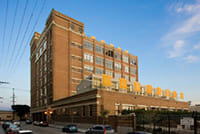
Biscuit Company Lofts
Downtown Los Angeles
image
Photo courtesy Aleks Istanbullu Architects

In 1925, the National Biscuit Company (Nabisco) built its West Coast headquarters at the corner of Mateo and Industrial Streets just east of downtown Los Angeles. Prominent Midwestern architect E. J. Eckel designed the seven-story “skyscraper” of brick, steel, and concrete, which was built at a then-astronomical cost of $2 million. After serving decades later as a clothing manufacturing facility, the building languished until 2006, when it was adapted into 104 live/work lofts with ground-floor retail. The project brought new life to a historic industrial building, used the Mills Act Program to offer residents tax relief, and helped to create a vibrant new mini-community in the Arts District.

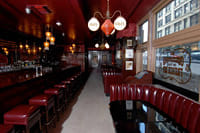
Cole’s Original French Dip
Downtown Los Angeles
image
Photo courtesy Cedd Moses

The oldest continuously operating public house in Los Angeles, Cole’s has been serving Angelenos since 1908. Harry Cole established the restaurant and saloon in the Pacific Electric building, in a former terminal for horse-drawn streetcars. Cole’s became a hangout for Red Car commuters, downtown workers, even prizefighters and gangsters. After nearly a century of ongoing use, Cole’s needed major upgrades and a good cleaning. In a project that could easily have been overdone as a caricature of an old-time eatery, this careful restoration used invaluable restraint, doing just enough to renew original features while keeping the authentic patina of a century-old landmark.

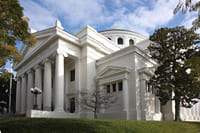
First Church of Christ, Scientist
Pasadena
image
Photo courtesy Architectural Resources Group

This Classical Revival church, built in 1910 for Pasadena’s burgeoning Christian Scientist congregation, was the largest building in the city at the time. It was designed to be completely fireproof and was topped by one of the earliest examples of a reinforced concrete dome. Nearly a century later, structural work revealed the need for a large-scale seismic upgrade. The project team analyzed the building’s condition, installed a major structural system that is virtually invisible, and restored historic finishes. And they did it all with a budget of only $3.5 million, and without disrupting a single church service in eighteen months.

Griffith Park City of Los Angeles Historic-Cultural Monument Application
Los Feliz
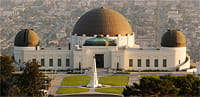
image
Photo courtesy Matthew Field

At over 4,000 acres, Griffith Park is the largest interurban wilderness park in the United States. It is also widely considered the heart and soul of Los Angeles. To help protect the park from incompatible development and foster public involvement in future planning, members of the Griffith family nominated the park for designation as a Los Angeles Historic-Cultural Monument. The exhaustive 400-page nomination provides a model for addressing the complex issues involved in designating a large-scale cultural landscape. The project paid great tribute to the crown jewel of Los Angeles parks, as well as the value of public space in general.

Hollywood Palladium
Hollywood
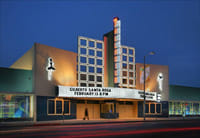
image
Photo courtesy COE Architecture International

Noted architect Gordon Kaufmann designed the Hollywood Palladium on a site once occupied by one of the precursors to Paramount Studios. The Streamline Moderne nightclub opened in 1940 and has been an entertainment icon ever since. Yet for decades, it was vulnerable to demolition due to deferred maintenance, management troubles, and even Hollywood’s own renaissance. A new owner chose to revitalize the Palladium as the centerpiece of new development. The project team renovated the building for modern use while returning it to its original appearance. The result is a revitalized entertainment icon in a legendary entertainment district, and a model for other large-scale development in Hollywood.

La Laguna de San Gabriel
Historic Structures Report and Preservation Plan
San Gabriel
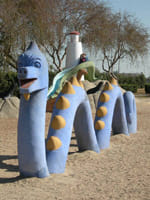
image
Photo courtesy The Arroyo Guild.

In the corner of Vincent Lugo Park sits La Laguna, a playground handcrafted in the mid-1960s by master concrete artist Benjamin Dominguez. This beloved “lagoon” of whimsical sea creatures was threatened with demolition in 2006 as part of a park expansion plan. After successfully rallying to save the playground, a grassroots group commissioned a groundbreaking study and preservation plan for this unique architectural treasure. Preservation professionals applied standard methodologies to an unconventional resource: the postwar playground. In addition to laying the essential groundwork for preserving La Laguna, the project created a framework for historic playgrounds everywhere, already serving as a model around the state and the nation.

Malibu Pier
Malibu
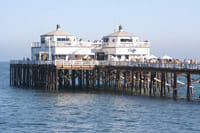
image
Photo courtesy Historic Resources Group

This iconic sports fishing pier has been a public recreational destination for over seventy-five years. Particularly vulnerable to the elements, the wooden pier had suffered heavily from daily exposure to wind and water, recurring storm damage, and years of deferred maintenance. Over a decade of phased planning and implementation, the project team repaired and restored deteriorated portions of the pier’s superstructure, restored and rehabilitated four buildings from 1945, restored nearby structures designed by Stiles Clements for the adjacent Adamson House, improved access and utilities, and planned historically inspired concessions. With this project, the California State Parks Department showed strong stewardship of this beloved historic resource and public amenity.

Mark Taper Forum
Downtown Los Angeles
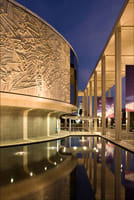
image
Photo courtesy Tom Bonner

Designed by Welton Becket and Associates, the Mark Taper Forum opened in 1967 as part of the Music Center of Los Angeles County. By 2007, the Taper was bursting at the seams, needed major upgrades, and had endured decades of piecemeal alterations. Rather than expand the building upward or outward—and ruining the historic integrity of both the Taper and the Music Center—the project team excavated underneath the building, preserving its signature circular shape and context within the complex. The project restored original features, carefully blended old with new, and recognized the value of historic resources from the 1960s, now coming of age.

Pisgah Village
Highland Park
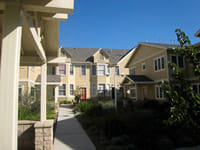
image
Photo courtesy Ena Dubnoff Architects

In 1895, Dr. Finis E. Yoakum founded a non-denominational Christian movement to serve the poor in Los Angeles. His Pisgah Home Movement headquarters was a Highland Park compound that grew to encompass eleven structures in various styles. The site served as a mission through the early 1990s, although by 2002 the buildings had fallen into serious disrepair and were vulnerable to demolition. By rehabilitating the historic buildings and adding five new ones, the project revitalized a full city block as a cohesive village with forty-seven units of low-income senior housing. A preservation trifecta, Pisgah Village improves lives, preserves history, and enhances the community.

2009 AWARDS JURY

Jessica Wethington McLean (Chair) ; Executive Director, Bringing Back Broadway, Office of Los Angeles City Councilmember José Huizar

Kenneth A. Breisch, Ph.D.; Director of Graduate Programs in Historic Preservation, University of Southern California School of Architecture

Marie Campbell; President, Sapphos Environmental, Inc.

John D. Lesak, AIA, LEED AP; Principal, Page & Turnbull

Will Wright; Director of Government and Public Affairs, AIA/Los Angeles

Related

west coast ● usa ● prize ● preservation ● los angeles ● historic ● conservancy ● california ● award

Share

  • Follow

    0 Comments

  • Comment as :

Winners of Los Angeles Conservancy 2009 Preservation Awards

Northwestern University selects 12-firm longlist to design new engineering building

New architecture and design competitions: Exploring 130 Years of American Design, Christo & Jeanne-Claude Center, 13 White Houses, and La Pyramide

Micro-architecture honored in latest Tiny House Architecture Competition

World’s most beautiful restaurants of 2026 chosen by Prix Versailles

Sponsored Post by Buildner

Design a wine tasting room in Italy! Valli Wine Tasting Room is launched!

10 can't-miss architecture & design events to see this June in London, Los Angeles, Chicago, San Francisco, Detroit, San Diego, Porto, and Barcelona

Sponsored Post by Buildner

Museum of Emotions / Edition #8 FINAL registration deadline is approaching!

Seven global projects make AR Public Awards shortlist 2026

Sign up for Bustler's Email Newsletters

Sponsored Post by Buildner

Design a slow-living restaurant in Portugal! Portugal Long Table Restaurant is launched!

World's best tall buildings honored at the CVU 2026 Award of Excellence

Sponsored Post by TWOPAGES

Final call: TWOPAGES X Design Contest 2026 submissions close June 5

Kengo Kuma & Paul Raff win Alberta national park visitor center competition with landscape-focused design

2026 Moira Gemmill and MJ Long prizes announced by W Awards

New architecture and design competitions: Kinderspace, Stewardson Keefe LeBrun Travel Grant, SMALL PROJECT BIG IMPACT, and Garden of University House, Bucharest

The Century of Gehry: New retrospective explores the late architect's work & collaborations

Next page » Loading

Winners of Los Angeles Conservancy 2009 Preservation Awards

By Bustler Editors|

Thursday, Mar 26, 2009

Share

Related

west coast ● usa ● prize ● preservation ● los angeles ● historic ● conservancy ● california ● award

The Los Angeles Conservancy has announced the recipients of its 28th annual Preservation Awards, which recognize outstanding achievement in the field of historic preservation.

As always, this year’s winning projects reflect a wide range of efforts to preserve L.A. County’s architectural heritage. “We received more applications this year than any other, making the competition particularly tough,” said Linda Dishman, the Conservancy’s executive director. “We congratulate the winners for their excellent work and commitment to preserving the rich cultural heritage of L.A. County.”

Here are this year’s winners:

President’s Award: Robert W. Winter, Ph.D.

image
Photo from pasadenahistory.org

This renowned architectural historian, author, and educator has spent decades promoting awareness and appreciation of Los Angeles’ built environment. Widely celebrated for his work on the Arts and Crafts Movement in California (which earned him the moniker “Bungalow Bob”), Dr. Winter taught at both UCLA and Occidental College, served on several preservation commissions, and has long been active in local historical societies and preservation organizations.

Perhaps his greatest single contribution to the field of preservation lies in one book. Among many other works on California architecture, Dr. Winter co-wrote the groundbreaking Los Angeles: An Architectural Guide with the late David Gebhard. This definitive guide helped change the public’s perception of Los Angeles from an endless landscape of sprawl to a trove of unique architectural treasures. Fifteen years after publication, the guide remains a vital resource and a key factor in fostering a culture of preservation in Los Angeles.

Biscuit Company Lofts
Downtown Los Angeles

image
Photo courtesy Aleks Istanbullu Architects

In 1925, the National Biscuit Company (Nabisco) built its West Coast headquarters at the corner of Mateo and Industrial Streets just east of downtown Los Angeles. Prominent Midwestern architect E. J. Eckel designed the seven-story “skyscraper” of brick, steel, and concrete, which was built at a then-astronomical cost of $2 million. After serving decades later as a clothing manufacturing facility, the building languished until 2006, when it was adapted into 104 live/work lofts with ground-floor retail. The project brought new life to a historic industrial building, used the Mills Act Program to offer residents tax relief, and helped to create a vibrant new mini-community in the Arts District.

Cole’s Original French Dip
Downtown Los Angeles

image
Photo courtesy Cedd Moses

The oldest continuously operating public house in Los Angeles, Cole’s has been serving Angelenos since 1908. Harry Cole established the restaurant and saloon in the Pacific Electric building, in a former terminal for horse-drawn streetcars. Cole’s became a hangout for Red Car commuters, downtown workers, even prizefighters and gangsters. After nearly a century of ongoing use, Cole’s needed major upgrades and a good cleaning. In a project that could easily have been overdone as a caricature of an old-time eatery, this careful restoration used invaluable restraint, doing just enough to renew original features while keeping the authentic patina of a century-old landmark.

First Church of Christ, Scientist
Pasadena

image
Photo courtesy Architectural Resources Group

This Classical Revival church, built in 1910 for Pasadena’s burgeoning Christian Scientist congregation, was the largest building in the city at the time. It was designed to be completely fireproof and was topped by one of the earliest examples of a reinforced concrete dome. Nearly a century later, structural work revealed the need for a large-scale seismic upgrade. The project team analyzed the building’s condition, installed a major structural system that is virtually invisible, and restored historic finishes. And they did it all with a budget of only $3.5 million, and without disrupting a single church service in eighteen months.

Griffith Park City of Los Angeles Historic-Cultural Monument Application
Los Feliz

image
Photo courtesy Matthew Field

At over 4,000 acres, Griffith Park is the largest interurban wilderness park in the United States. It is also widely considered the heart and soul of Los Angeles. To help protect the park from incompatible development and foster public involvement in future planning, members of the Griffith family nominated the park for designation as a Los Angeles Historic-Cultural Monument. The exhaustive 400-page nomination provides a model for addressing the complex issues involved in designating a large-scale cultural landscape. The project paid great tribute to the crown jewel of Los Angeles parks, as well as the value of public space in general.

Hollywood Palladium
Hollywood

image
Photo courtesy COE Architecture International

Noted architect Gordon Kaufmann designed the Hollywood Palladium on a site once occupied by one of the precursors to Paramount Studios. The Streamline Moderne nightclub opened in 1940 and has been an entertainment icon ever since. Yet for decades, it was vulnerable to demolition due to deferred maintenance, management troubles, and even Hollywood’s own renaissance. A new owner chose to revitalize the Palladium as the centerpiece of new development. The project team renovated the building for modern use while returning it to its original appearance. The result is a revitalized entertainment icon in a legendary entertainment district, and a model for other large-scale development in Hollywood.

La Laguna de San Gabriel
Historic Structures Report and Preservation Plan
San Gabriel

image
Photo courtesy The Arroyo Guild.

In the corner of Vincent Lugo Park sits La Laguna, a playground handcrafted in the mid-1960s by master concrete artist Benjamin Dominguez. This beloved “lagoon” of whimsical sea creatures was threatened with demolition in 2006 as part of a park expansion plan. After successfully rallying to save the playground, a grassroots group commissioned a groundbreaking study and preservation plan for this unique architectural treasure. Preservation professionals applied standard methodologies to an unconventional resource: the postwar playground. In addition to laying the essential groundwork for preserving La Laguna, the project created a framework for historic playgrounds everywhere, already serving as a model around the state and the nation.

Malibu Pier
Malibu

image
Photo courtesy Historic Resources Group

This iconic sports fishing pier has been a public recreational destination for over seventy-five years. Particularly vulnerable to the elements, the wooden pier had suffered heavily from daily exposure to wind and water, recurring storm damage, and years of deferred maintenance. Over a decade of phased planning and implementation, the project team repaired and restored deteriorated portions of the pier’s superstructure, restored and rehabilitated four buildings from 1945, restored nearby structures designed by Stiles Clements for the adjacent Adamson House, improved access and utilities, and planned historically inspired concessions. With this project, the California State Parks Department showed strong stewardship of this beloved historic resource and public amenity.

Mark Taper Forum
Downtown Los Angeles

image
Photo courtesy Tom Bonner

Designed by Welton Becket and Associates, the Mark Taper Forum opened in 1967 as part of the Music Center of Los Angeles County. By 2007, the Taper was bursting at the seams, needed major upgrades, and had endured decades of piecemeal alterations. Rather than expand the building upward or outward—and ruining the historic integrity of both the Taper and the Music Center—the project team excavated underneath the building, preserving its signature circular shape and context within the complex. The project restored original features, carefully blended old with new, and recognized the value of historic resources from the 1960s, now coming of age.

Pisgah Village
Highland Park

image
Photo courtesy Ena Dubnoff Architects

In 1895, Dr. Finis E. Yoakum founded a non-denominational Christian movement to serve the poor in Los Angeles. His Pisgah Home Movement headquarters was a Highland Park compound that grew to encompass eleven structures in various styles. The site served as a mission through the early 1990s, although by 2002 the buildings had fallen into serious disrepair and were vulnerable to demolition. By rehabilitating the historic buildings and adding five new ones, the project revitalized a full city block as a cohesive village with forty-seven units of low-income senior housing. A preservation trifecta, Pisgah Village improves lives, preserves history, and enhances the community.

2009 AWARDS JURY

Jessica Wethington McLean (Chair) ; Executive Director, Bringing Back Broadway, Office of Los Angeles City Councilmember José Huizar

Kenneth A. Breisch, Ph.D.; Director of Graduate Programs in Historic Preservation, University of Southern California School of Architecture

Marie Campbell; President, Sapphos Environmental, Inc.

John D. Lesak, AIA, LEED AP; Principal, Page & Turnbull

Will Wright; Director of Government and Public Affairs, AIA/Los Angeles

Share

  • Follow

    0 Comments

  • Comment as :

Archinect JobsArchinect Jobs

The Archinect Job Board attracts the world's top architectural design talents.

VIEW ALL JOBS POST A JOB

Intermediate Designer - 3+ Years Experience (NY)

Cass Calder Smith

Intermediate Designer - 3+ Years Experience (NY)

New York, NY, US

Architect

mani colaku architects

Architect

New York, NY, US

Project Designer / Job Captain

Solutions Architecture Corp

Project Designer / Job Captain

Verona, NJ, US

Architect / Project Manager

Curtis + Ginsberg Architects LLP

Architect / Project Manager

New York, NY, US

Project Architect/Interior Designer

IMC Architecture

Project Architect/Interior Designer

Brooklyn, NY, US

Interior Designer, 5+ Years Experience

Cass Calder Smith

Interior Designer, 5+ Years Experience

San Francisco, CA, US

Architectural Designer, Residential

Roman and Williams Buildings and Interiors

Architectural Designer, Residential

New York, NY, US

Architectural Designer II

Studio AR&D Architects

Architectural Designer II

Los Angeles, CA, US

Project Architect

Berliner Architects

Project Architect

Culver City, CA, US

AutoCAD Drafter/Architectural Designer

Kari Whitman Interiors

AutoCAD Drafter/Architectural Designer

Boulder, CO, US

Next page » Loading