• Login / Join
  • About
  • •
  • Contact
  • •
  • Advertising
bustler logo
bustler logo
  • News
  • Competitions
  • Events
  • Bustler is powered by Archinect
  • Sign up for Bustler's Email Newsletters

  • Follow these Bustler feeds:

  • Search

    Search in

  • Submit

    What are you submitting?

    News Pitch
    Competition
    Event
  • Login / Join
  • News|Competitions|Events
  • Search
    | Submit
    | Follow
  • Search in

    What are you submitting?

    News Pitch
    Competition
    Event

    Follow these Bustler feeds:

  • About|Contact|Advertising
  • Login / Join

“The Next Architecture” Award (Episode I): Smart Tree: Future Life in a Vertical Community

Registration Deadline:  Wednesday, Aug 15, 201811:30 PMHKT

Submission Deadline:  Saturday, Sep 1, 201811:30 PMHKT

Smart Tree: Future Life in a Vertical Community

"The Next Architecture" Award (Episode I)
 Apply Now   Complete Info
Background

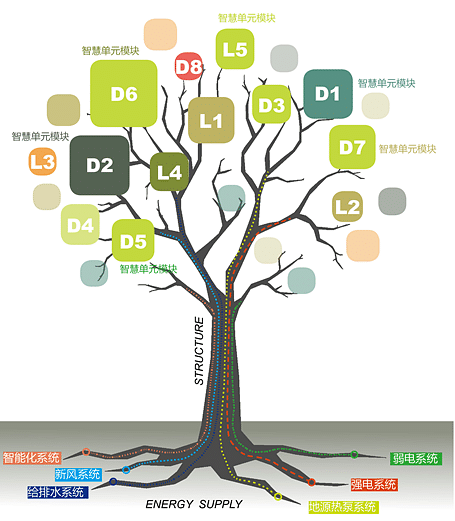
On one hand, our planet has undergone unpredictable changes in climate. On the other hand, digital technology cored with artificial intelligence and the Internet of Things has changed our lives dramatically. “Vertical Intelligent Community” embodies an understanding and response to ongoing phenomena and life expectancy in densely populated cities in Asia. Its features include vertical mixture, vertical ecology, systematic connectivity, live mechanisms, and energetic balance. To achieve fuller vitality, it is required to generate more mobility, extension, abundance, and wisdom in the areas of communications, entertainment, commerce, R&D, healthcare, and public services. At the same time, the development and construction of this project will advance integration of new technology industries, representing intelligence, informatization and clean energy, architectural design, and the general management of community systems.

Organizers

International Green Building Alliance

Southeast University

Nanjing Yangtze River Urban Architectural Design Co., Ltd.

The Third Construction Co.,Ltd. of China Construction Eighth Engineering Bureau

Nanjing International Healthcare Area Development & Construction Co., Ltd.

Fondazione EMGdotART

Introduction

The competition focuses on Building No. 3 of the International Healthcare Area Talent Apartment in Jiangbei New Area, Nanjing. A 35.1-meter-high section above the ground floor of the apartment will be utilized as the competition scope. 

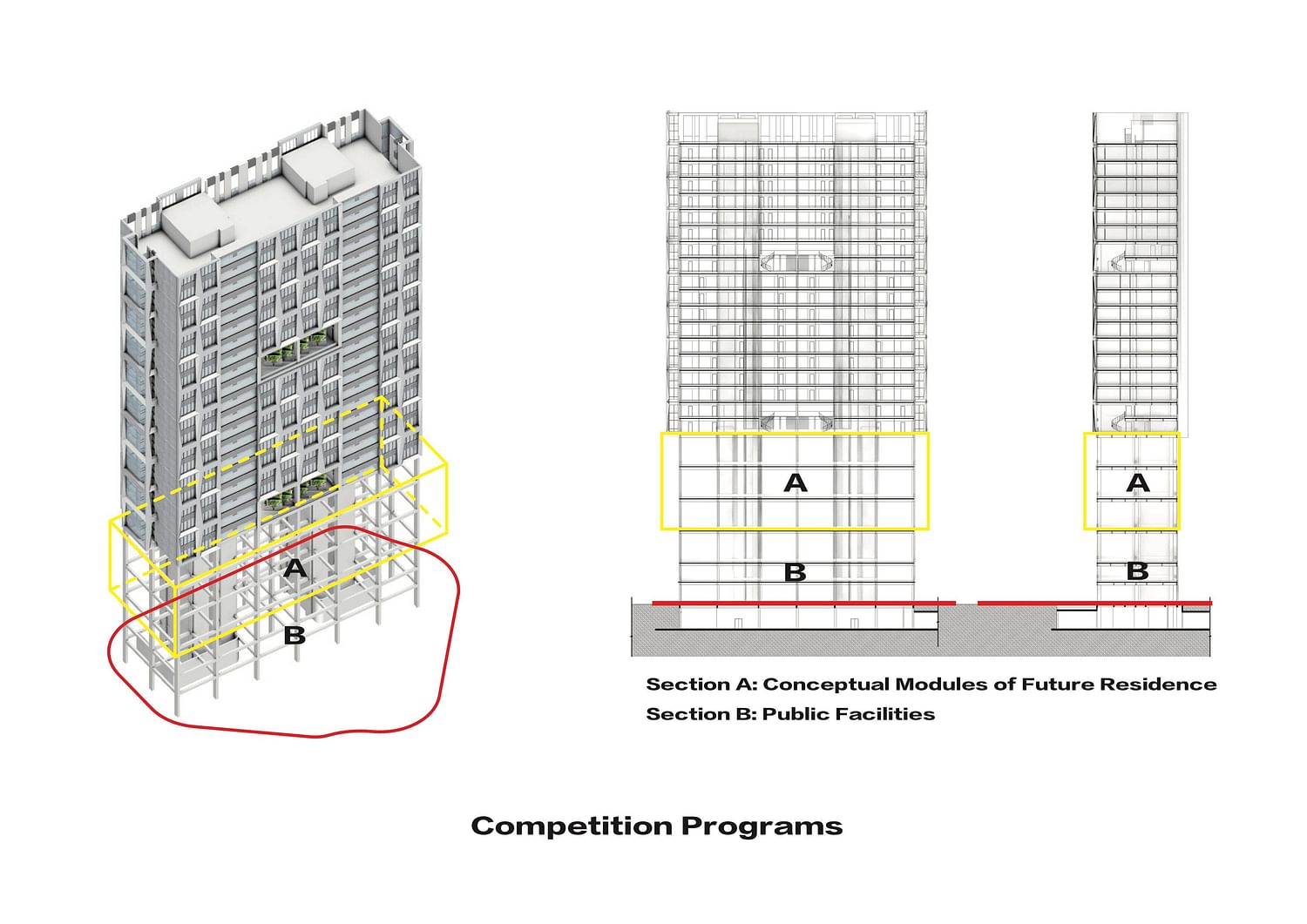
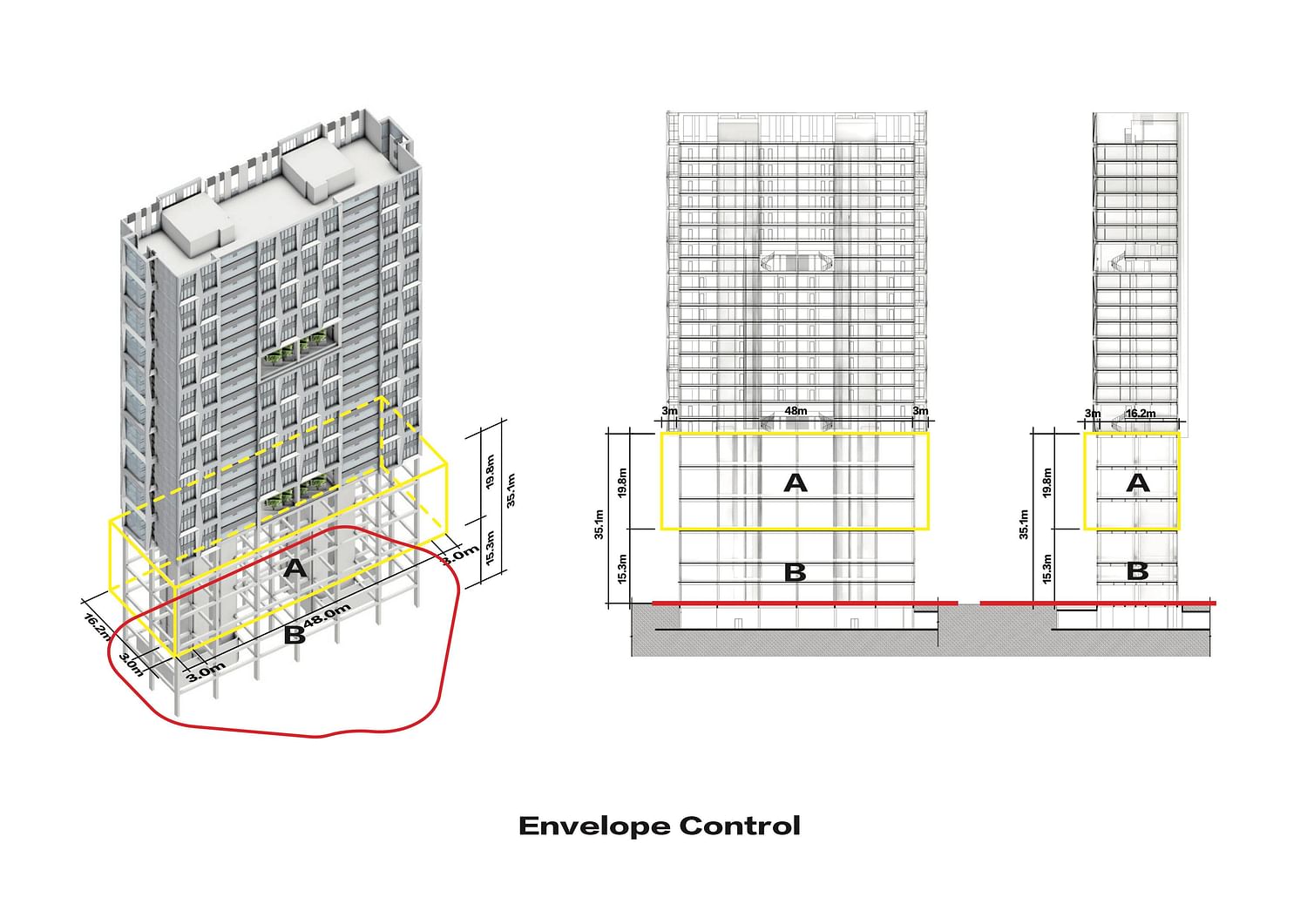
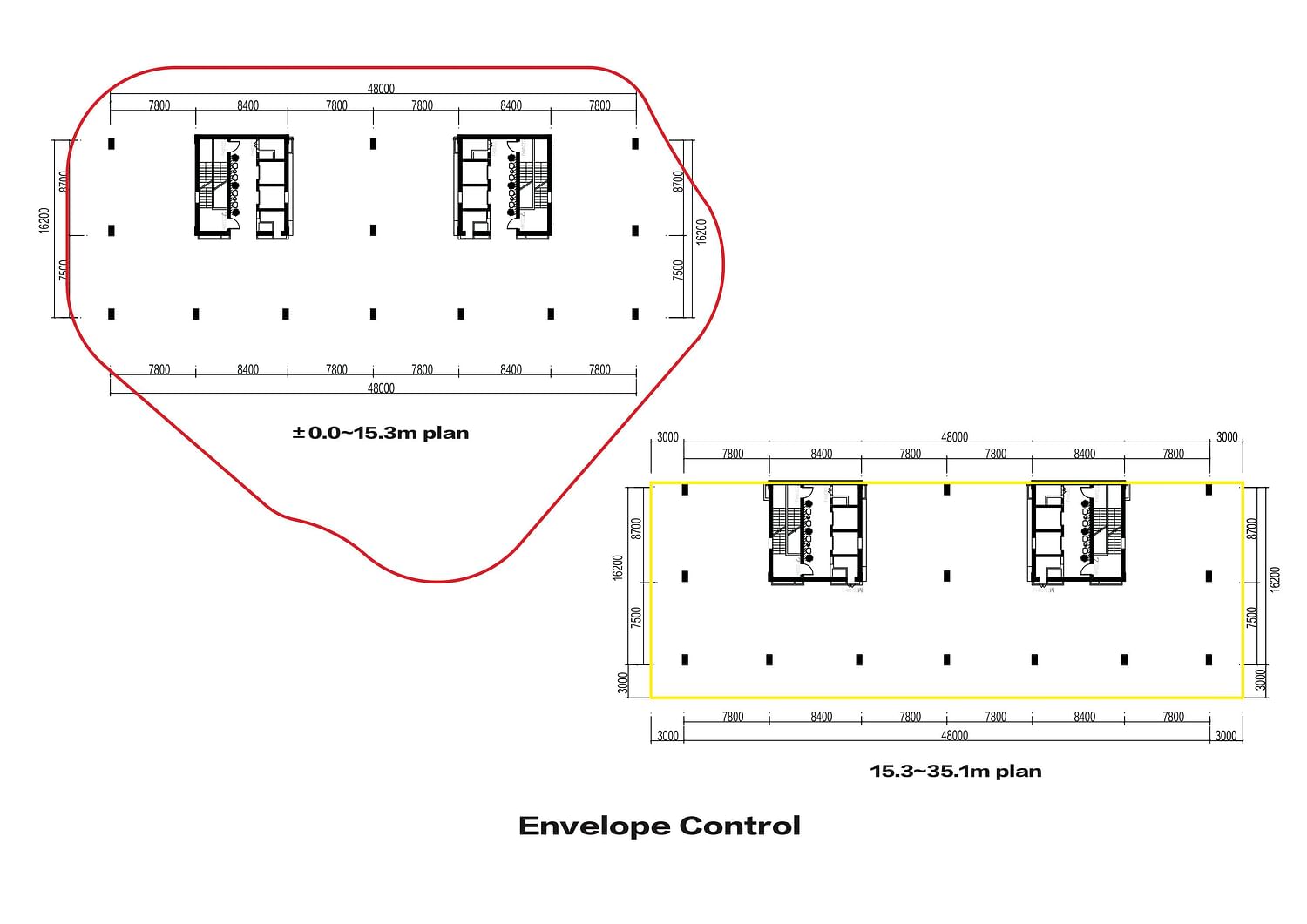
From the ground up to 15.3 meters (Part B) will be designated as public vertical community. From 15.3 meters to 35.1 meters (Part A) will be designated as the conceptual experiment unit of a future residence. The conceptual experiment unit of future residence (15.3m - 35.1m)(Part A) has partial rooms no wider than 3 meters on the edges of the southern, eastern, and western sides, and 15.3 meters from the ground, encouraging overall designs that integrate into the external landscape.

Functional content includes, but is not limited to, conceptual units of future residence. However, these are mainly residential units. Other possible content includes small-scaled R&D and brainstorm centers, makerspaces, business meeting rooms, libraries, exhibition halls, cold-chain supermarkets, restaurants, coffee bars, tearooms, fitness clubs, theaters, farms, gardens, etc. that maximize flexibility and variability.

The elevator and staircase shown in the floor plan are used for the upper floors of this apartment, and the staircase serves as the safety evacuation staircase for the high-rise building (elevators and safety evacuation staircases will service both residents from the competition units and residents from upper floors). The design solution for this competition project needs to consider the transportation system for vertical communities, and also distinguish the public streamlines from the residential streamlines.
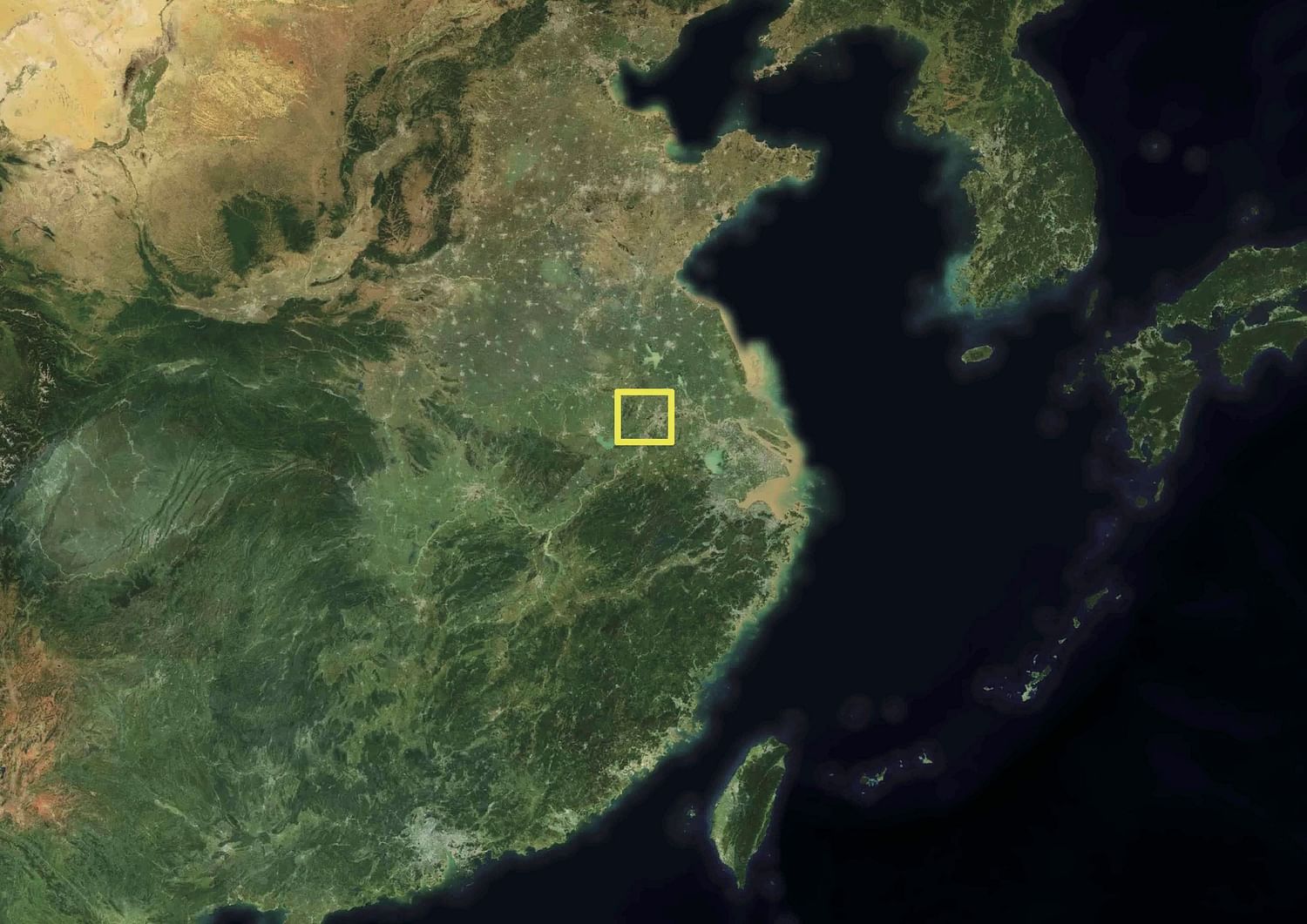
P1: Nanjing, Jiangsu Province, China

1) The International Healthcare Area Talent Apartment in the International Healthcare Area, Jiangbei New Area, Nanjing, Jiangsu Province, China is located in a green, low-carbon park in a residential area. The total construction area covers 22,270 square meters, and the total height is 100 meters. It is expected to accommodate 450 people in total.
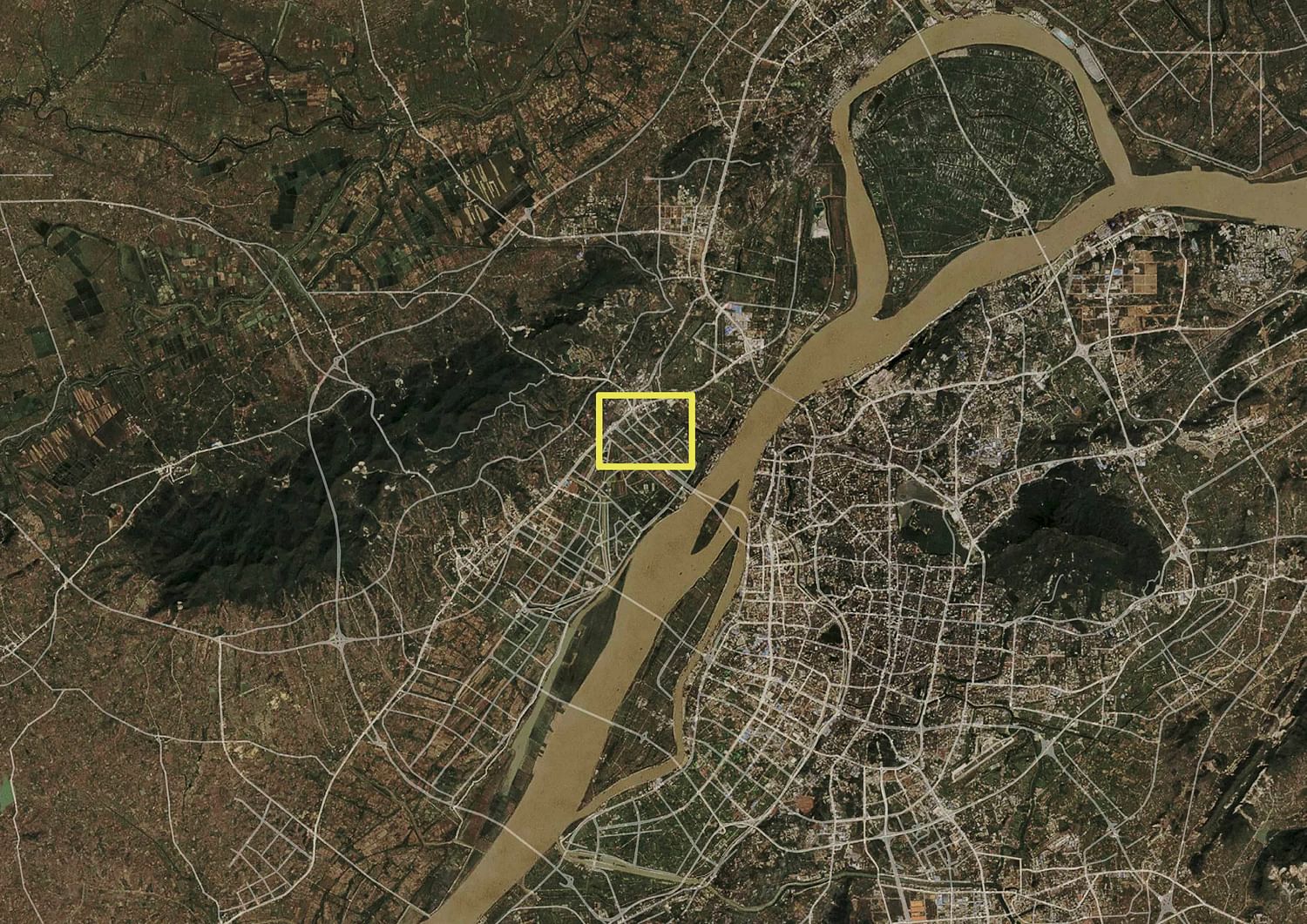
P2: Jiangbei New Area, Nanjing

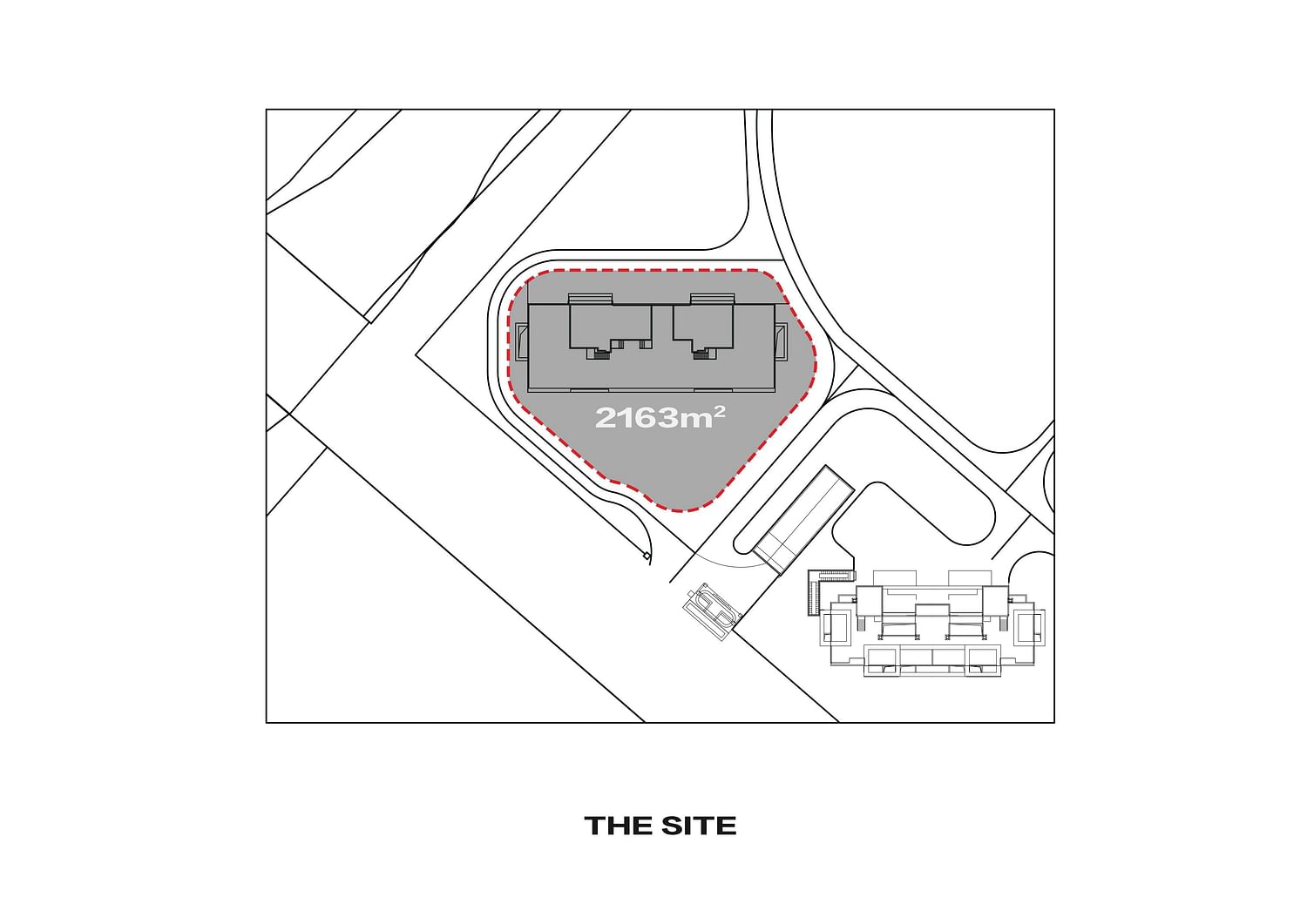
2) This is the external landscape site, covering 2,163 square meters.
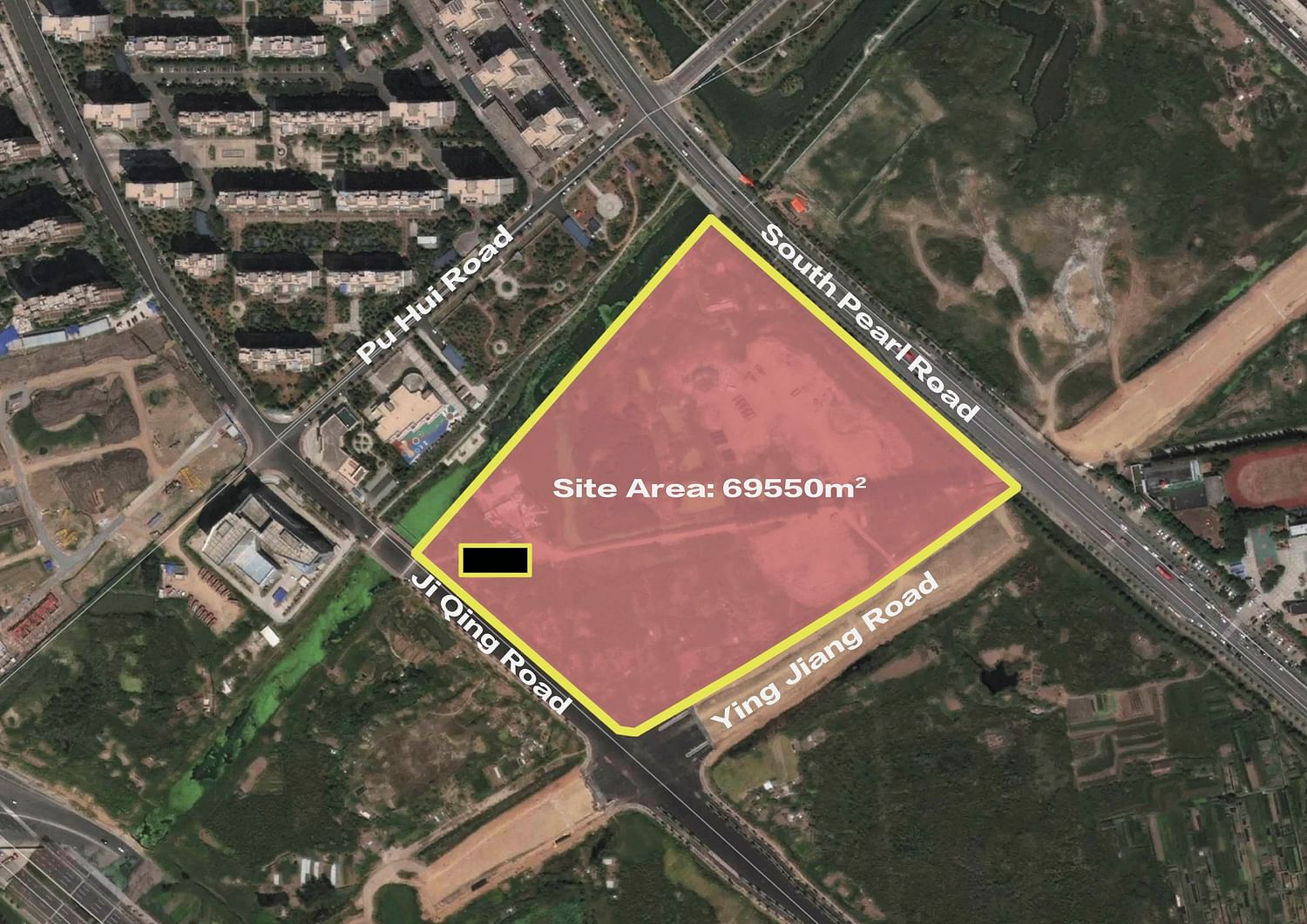
P3: International Healthcare area
P4: Building No.3,International Talent Apartment
P5: The Site
P6: The competition program

3) Part A will be the conceptual experiment unit of the future residence.Part B will be the public vertical community.

4) The conceptual experiment unit of future residence (15.3m - 35.1m)(Part A) has partial rooms no wider than 3 meters on the edges of the southern, eastern, and western sides.

P7-1: Envelope Control
P7-2: Envelope Control
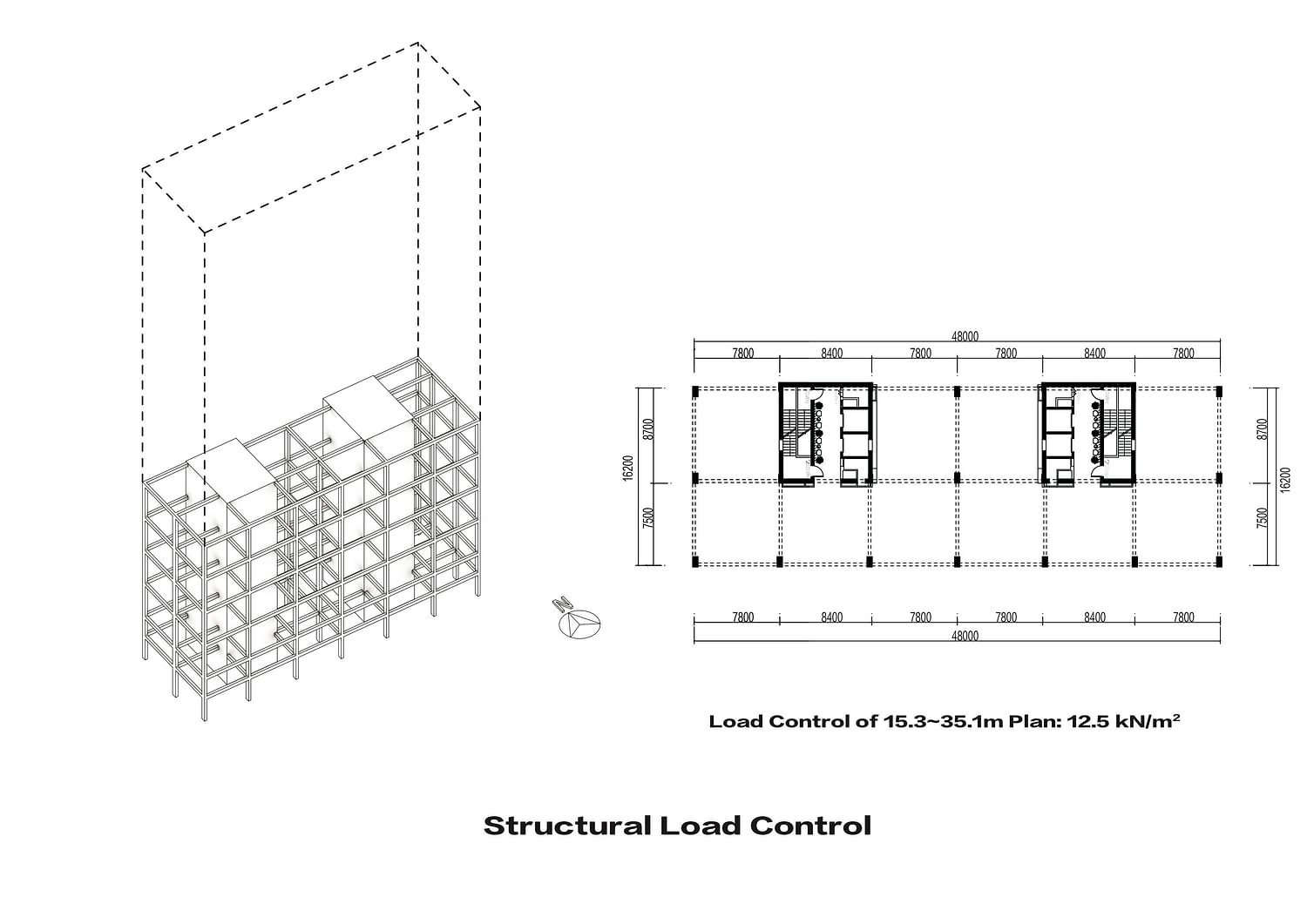
P8: Structural Load Control

5) The concrete core-tube and steel-framed construction of the building are established with a structural load of 12.5 KN/m2.

Competition Task

1. In general, the “Smart Tree-Vertical Intelligent Community” competition held in the International Healthcare Area Talent Apartment in Jiangbei New District, Nanjing, calls for design coordination and enabled technology. It invites global architects, designers, research and development institutions, academies, enterprises, and innovative pioneers to present integral solutions, including (or selected from) the following three content blocks:
Integral systematic organization and integrated design;
Integration of diverse future living modules (can be set by function);
Key technologies and scientific innovation

Considering the competition project will be constructed and realized, the design solution must therefore be reliable and practical, both in construction and technical feasibility.

2. The competition advocates all participants as individual or group (a joint team consisting of members focusing on design + R&D + technology) to provide innovative solutions including, but not limited to, the following 7 requirements Seven requirements (key design principles):
1) Create abundant publicity in high-density and vertical life
2) Adapt well to changes, to the largest extent
3) Utilize the Internet of Things, with mobility and connectivity
4) Achieve environmental balance, from a resource perspective
5) Achieve a low ecological footprint in open and integrated situations
6) Create a pleasant and aesthetic environment
7) Lead a practical and intelligent construction technology

3. Key points need to be considered by participants:
1) The publicity of vertical life under high-density conditions in Asian cities;
2) Energy efficiency solutions for high-rise buildings, including but not limited to the integrated efficiency of renewable energy, distributed energy systems, and energy usage in unit modules, etc.
3) Developing the smart “brain” of architecture through data-driven design, which not only brings efficient systematic operation, but also takes subtle human emotions and needs to enable the space to integrate to the level of living and humanity.
4) Combining technologies of artificial intelligence and the Internet of Things to explore and respond to space patterns and technical application scenarios such as residence, entertainment, research and development, and communication, in this era of artificial intelligence.
5) Combining with the environment (buildings, parks, and cities) where participants of the “Smart Tree” create configurations that embody the functional content that best reflects residential personality, publicity, interaction, and wisdom of the future life, and which can accommodate but not limit the conceptual units of future residences, small-scaled R&D and brainstorm centers, makerspaces, business meetings, libraries, exhibition halls, cold-chain supermarkets, restaurants, coffee bars, tearooms, fitness clubs, cinemas, farms, gardens, etc. And which also achieves maximum flexibility and variability.
6) Provide practical technical solutions in intelligent construction.

4. The following qualify as bonus points:
1) Joint-team participants bring in technology solutions, including intelligent construction, the Internet of Things, information technology, energy, new materials, artificial intelligence, VR & AR, etc.
2) Propose the economic evaluation in terms of building operations, energy management, etc., and/or business innovative models originating from functional configurations, etc. that come along with technical optimization and systematic collaboration design.

Competition mechanism

1. Award System
First Prize (1 place): 25,000 Euro (Tax included)
Second Prize (2 places): 12,000 Euro (Tax included)
Unit Module Prize (3 places): 6,000 Euro (Tax included)
Finalist Award(20 places): Participants entered in finalist will be awarded Finalist   Award Certification
The Next Architecture Scholarship Award: The Jury will select one person who will be awarded scholarship for IAAC MASTER IN ADVANCED ECOLOGICAL BUILDINGS (2019-2020)

Remarks: For the winning design solution of the Unit Module Prize, the project party will communicate with the awarded team about any issues and details involving actual implementation.

2. Competition Schedule
Start Date of Proposal Collections: June 11th, 2018 
Deadline of Registration: August 15th, 2018 
Deadline for Proposal Collections: September 1st, 2018 
Deadline for Initial Evaluation: September 25th, 2018 
Deadline for Final Review: October 15th, 2018

3. Selection System
Two rounds of Review:
• The first round as initial evaluation: Experts from The Next Architecture professional committee will score online and select short-listed projects.
  • The second round as final review: The final selection will be decided on-site by 7 jury members.

4. Method of Submission
1.Participants need to log into the competition's official platform and click on "Online Registration" to fill out the applicant's detailed information. The application is free for this competition. Applicants must register ahead of time and confirm that the application has been accepted before submitting their work. According to principle, group applicants should consist of no more than 6 people per team. Each team should designate one member as their contact person.
2. Click on "Submit" to submit your work online. This entire submission of this competition will be conducted online; the organizing committee will not accept any submissions in email or paper formats. Please refer to the specific submission steps and detailed operations on the website. The time of submission may be no later than September 1st, 2018 at 11:59pm, Beijing Time. Any work submitted after this time will be considered invalid.
3. The official language of the competition is English. The main description and descriptions of the submitted work must include English. Participants from China can choose to submit a bi-lingual version. We will notify the chosen participants to create exhibition boards. For specific sizing and other requirements, teams will be notified after preliminary assessments.
4. No identification such as texts or logos of the participant's name or organization should appear on any digital blueprints or description documents. Doing so will make the submission to be considered invalid.

5. Submission Content
Project Exhibition and Assessment Documents: A PDF document (No more than 30 pages with white background in 4:3 ratios for online usage. Submit the PDF document as an attachment, split each page into separate images, and upload them onto your personal page. Each photo cannot exceed 10MB, with no limit on the pixel count.) and which should contain the following items:
(1) Project Description – including an understanding for next-generation architecture and Smart Tree, and an explanation of the project's core concepts, the source for the project's inspiration and technical aspects, etc.
(2) Relevant technical blueprints and descriptions including: The entire solution (including the unit functional integration module, as well as key technical and technological innovations.), or relevant floor plans, sectional sketches, elevation sketches, and sliced sketches of the unit functional integration module or key technical innovations. Include at least two impression sketches, detail descriptions, sketches, etc. as well as any relevant and involved new materials, energy, products, technical application descriptions, and sketches. 
(3) Applicants are allowed to submit other auxiliary materials (e.g. videos, models, etc.).

6. Information Download Directory

(1) Assignment Document PDF (Chinese & English);

Competition Task Document PDF (Chinese & English) 

(2) Project CAD Blueprint;

CAD FILES 

(3) Project Related Introduction.

Smart Tree Competition Project Introduction 

Copyright Statement

According to relevant laws in China, any voluntary participants of this recruiting event is deemed to have made these irrevocable statements below on the ownership of his/her submitted work:

1. Originality Declaration All participating work of the competition must be the applicant's original creation. No violation of any other party or institution's patent rights, copyrights, trademark rights, and other legal rights shall be violated. Otherwise, the organizing committee shall revoke the participant's privilege to participate, become short-listed, receive prizes after further assessment, withdraw cash awards, and retain the rights to pursue legal actions. Should the organizing committee experience any loss or legal dispute, the committee has the right to demand compensation from the participant.

2. Ownership Rights of Participating Works Participants are able to retain the rights to their designs, as well as relevant images and documents. However, the committee has the right to use participant-designed words, blueprints, and images free of charge for the purpose of exhibition and any form of distribution. Any other individual or institution may not transfer, copy, forward, spread, extract, compile, publish, distribute, or use the participants' work in any format without consensus.

3. Declaration of Application The awarded projects may be used for any landing, implementation, and related costs of contest-affiliated construction projects upon negotiation between the participant and the organizing committee.

4. Declaration of Agreement This contest will be conducted online. By submitting their works online, participants automatically agree to showcase their work to everyone anonymously, and accept the competition's judging style. Participants should carefully read the above articles before submitting their work. They should also fully understand and agree that the judging committee of this competition shall possess the final adjudicative power to all awarded entries.

Committee Contact Information

1. Official Website: http://www.nextarchitecture.com

2. Official News Platform: WeChat Accounts for the International Green Building Alliance (IGBA) and Arch-SEU

IGBA IGBA Arch-SEU Arch-SEU

3. Questions and Alternative Option Submission Email: [email protected]

Contact for Questions: Joy Zhao(Chinese Contact) WeChat & Phone Number: 18842641498 Jade Wang (International & Hong Kong, Macao, and Taiwan, China) Business Days 8:30am-12:00pm; 2:00pm-5:30pm Beijing Time

Frequently Asked Questions

1. Is there an entrance fee for the competition? The competition is completely free of charge. It has been established to encourage participation from any creative individuals or teams who are also interested in these types of projects, next generation architecture, and technological architecture.

2. What are the prerequisites of the competition? There are no prerequisites or qualifications for the competition. The committee encourages the participation of any groups including students, professional designers, and corporate teams, etc.

3. Do I have to participate as a team? Both team and individual participations are accepted. However, due to the characteristics of the competition, the committee encourages technological corporations, technical providers, application parties, and professional design teams to form coordinated teams and participate in the competition. The committee can also provide recommendations for related teams to form groups with each other.

4. What are the specific contents for the design? The design of this competition will be based on an actual project. However, the restrictive conditions have been lowered to a minimum amount in order to encourage participating individuals/teams to expand their thoughts to best of their abilities without limits. The competition is recruiting total solutions from global architects, designers, schools, technological enterprises, innovative pioneers, and R&D teams, including (or selected from) any of the following three content blocks: (1) The entire system’s organization and integrative designs; (2) Various future life unit module integrations (can be based on functional settings); (3) Key technology and technical innovations.

5. There are three content blocks for the entire solution plan. Does every participating entry have to design all three content blocks? A complete entry plan should include all three content blocks in order to show that a more integral deign with strong practicability is more likely to receive an award. However, designing only one of the content blocks such as the system organization, unit module integration, and key technical innovations also fits the requirements of the competition and will be allowed to submit to the competition. The committee has also designed a separate award for the unit module. The judgment of this award will be conducted on an integration design of a certain future life unit module based on functional settings.

6. If I participated and won an award in the unit module contest, does that mean I am not qualified to participate in the judgment of the major award for the integral design? Yes. In theory, the two are incompatible with each other. Contestants do not need to choose which award assessment to participate in; the committee will decide the suitable award according to the entry’s type and quality.

7. Will the entry plan need to be based on landing the construction project? Since the principal of the competition will soon be constructed, the participating plans should therefore consider constructing a practicable and technical solution. The committee will encourage participants’ creativity and innovation. Meanwhile, practicable and creative content are more likely to win awards.

8. My work suits the theme of this competition well. However, this has already been published or has already participated in another competition. Need I make adjustments to it, or can I directly submit it for this competition? As long as it doesn’t involve any copyright infringements, it is allowed to be submitted for this competition. The submitted content must be suitable to the tasks and submission demands of this competition.

9. How will the cash prize be distributed? If there are no objections within a month after the announcement of the awards, the participant or team will sign a statement of knowledge. The committee will directly deposit the cash price into the participant’s designated account (relative taxes may be applicable). As for the ratio of the reward for each participant within a team, the participant team would need to conduct an automated discussion. The committee will not be involved in that process.

10. Has the time and method of the second round of judging been decided? Do the participant teams need to be present on scene? The second round of judging will be conducted offline. Please wait for the official announcement for the specific time of the judgment, and whether the teams must be present on scene.

The Next Architecture

Share

  • Follow

    0 Comments

  • Comment as :

“The Next Architecture” Award (Episode I): Smart Tree: Future Life in a Vertical Community

Register: Wed, Aug 15, 2018

Submit: Sat, Sep 1, 2018

Kinderspace: Architecture for Children's Development competition / Edition #4

Register: Thu, Jun 18, 2026

Submit: Mon, Nov 30, 2026

Museum of Emotions / Edition #8

Register: Thu, Jun 18, 2026

Submit: Mon, Jul 20, 2026

Mass Timber Innovation and Design Center of Canada - Call for Entries

Register/Submit: Sun, Jun 21, 2026

Open Access: Exploring 130 Years of American Design

Register/Submit: Sun, Jun 28, 2026

2026 Taipei Design Award

Register/Submit: Tue, Jun 30, 2026

SMALL PROJECT BIG IMPACT

Register/Submit: Tue, Jun 30, 2026

CCC Emerging Design Awards 2026

Register/Submit: Tue, Jun 30, 2026

N.Y.C. Groceries Branding and Design RFP

Register/Submit: Tue, Jun 30, 2026

Sign up for Bustler's Email Newsletters

Call for nominations: Tamayouz Women in Architecture and Construction Award 2026

Register: Wed, Jul 1, 2026

Submit: Fri, Jul 31, 2026

Re:Form - New Life for Old Spaces / Edition #3

Register: Thu, Jul 2, 2026

Submit: Mon, Oct 12, 2026

AR House awards 2026

Register/Submit: Fri, Jul 3, 2026

Envision Resilience National Design Studio Grant

Register/Submit: Fri, Jul 3, 2026

Study Architecture Student Showcase 2026

Register/Submit: Mon, Jul 6, 2026

Portugal Long Table Restaurant

Register: Wed, Jul 8, 2026

Submit: Mon, Jan 11, 2027

100,000 € Prize / Buildner's Unbuilt Award 2026

Register: Thu, Jul 9, 2026

Submit: Tue, Oct 20, 2026

Next page » Loading

“The Next Architecture” Award (Episode I): Smart Tree: Future Life in a Vertical Community

Registration Deadline:  Wednesday, Aug 15, 201811:30 PMHKT

Submission Deadline:  Saturday, Sep 1, 201811:30 PMHKT

Share

Related

building technology ● advancing sustainability ● ecological ● digital fabrication ● interdisciplinary collaboration ● architecture

Smart Tree: Future Life in a Vertical Community

"The Next Architecture" Award (Episode I)
 Apply Now   Complete Info

Background

On one hand, our planet has undergone unpredictable changes in climate. On the other hand, digital technology cored with artificial intelligence and the Internet of Things has changed our lives dramatically. “Vertical Intelligent Community” embodies an understanding and response to ongoing phenomena and life expectancy in densely populated cities in Asia. Its features include vertical mixture, vertical ecology, systematic connectivity, live mechanisms, and energetic balance. To achieve fuller vitality, it is required to generate more mobility, extension, abundance, and wisdom in the areas of communications, entertainment, commerce, R&D, healthcare, and public services. At the same time, the development and construction of this project will advance integration of new technology industries, representing intelligence, informatization and clean energy, architectural design, and the general management of community systems.

Organizers

International Green Building Alliance

Southeast University

Nanjing Yangtze River Urban Architectural Design Co., Ltd.

The Third Construction Co.,Ltd. of China Construction Eighth Engineering Bureau

Nanjing International Healthcare Area Development & Construction Co., Ltd.

Fondazione EMGdotART

Introduction

The competition focuses on Building No. 3 of the International Healthcare Area Talent Apartment in Jiangbei New Area, Nanjing. A 35.1-meter-high section above the ground floor of the apartment will be utilized as the competition scope. 

From the ground up to 15.3 meters (Part B) will be designated as public vertical community. From 15.3 meters to 35.1 meters (Part A) will be designated as the conceptual experiment unit of a future residence. The conceptual experiment unit of future residence (15.3m - 35.1m)(Part A) has partial rooms no wider than 3 meters on the edges of the southern, eastern, and western sides, and 15.3 meters from the ground, encouraging overall designs that integrate into the external landscape.

Functional content includes, but is not limited to, conceptual units of future residence. However, these are mainly residential units. Other possible content includes small-scaled R&D and brainstorm centers, makerspaces, business meeting rooms, libraries, exhibition halls, cold-chain supermarkets, restaurants, coffee bars, tearooms, fitness clubs, theaters, farms, gardens, etc. that maximize flexibility and variability.

The elevator and staircase shown in the floor plan are used for the upper floors of this apartment, and the staircase serves as the safety evacuation staircase for the high-rise building (elevators and safety evacuation staircases will service both residents from the competition units and residents from upper floors). The design solution for this competition project needs to consider the transportation system for vertical communities, and also distinguish the public streamlines from the residential streamlines.

P1: Nanjing, Jiangsu Province, China

1) The International Healthcare Area Talent Apartment in the International Healthcare Area, Jiangbei New Area, Nanjing, Jiangsu Province, China is located in a green, low-carbon park in a residential area. The total construction area covers 22,270 square meters, and the total height is 100 meters. It is expected to accommodate 450 people in total.

P2: Jiangbei New Area, Nanjing

2) This is the external landscape site, covering 2,163 square meters.
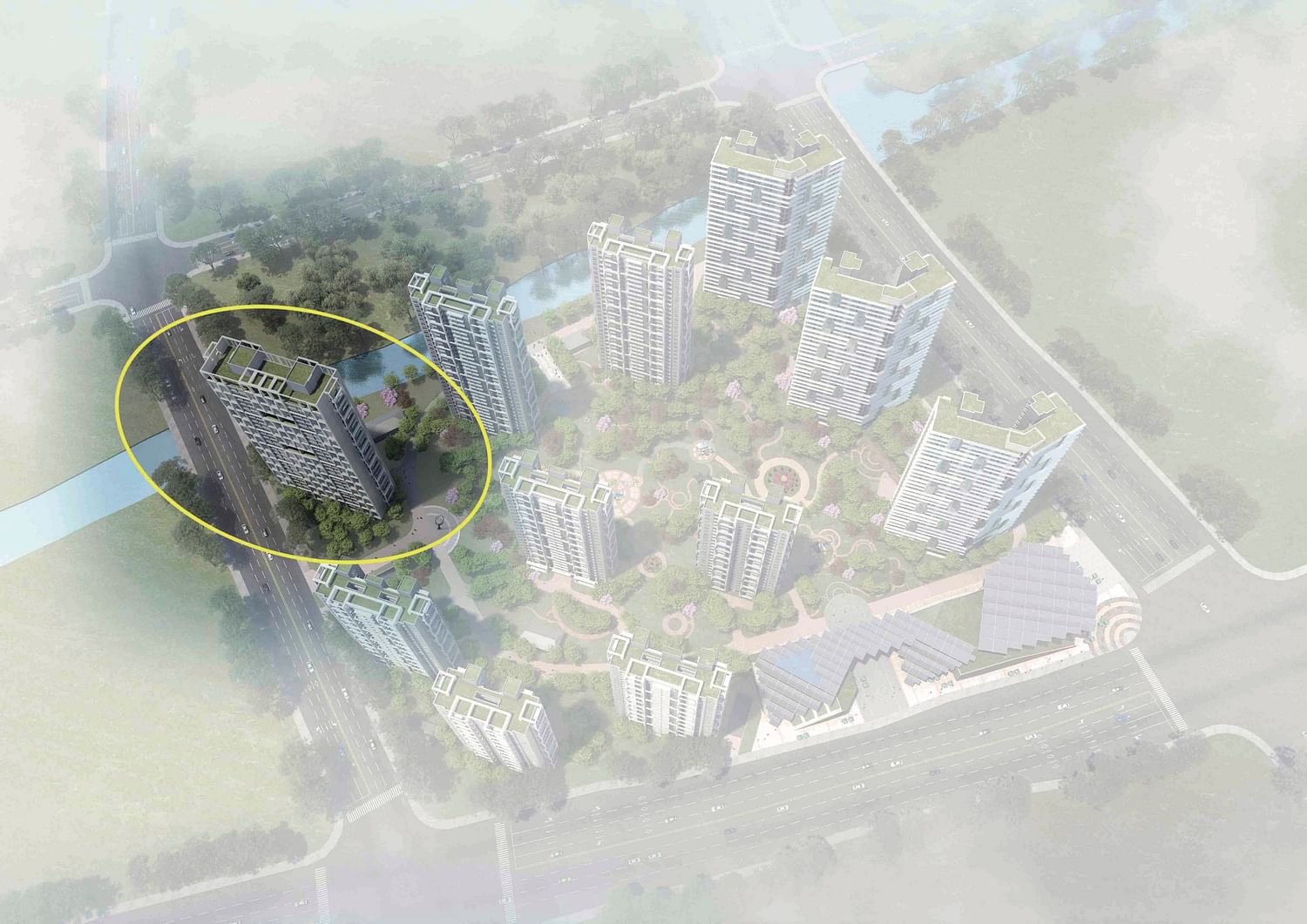
P3: International Healthcare area
P4: Building No.3,International Talent Apartment
P5: The Site
P6: The competition program

3) Part A will be the conceptual experiment unit of the future residence.Part B will be the public vertical community.

4) The conceptual experiment unit of future residence (15.3m - 35.1m)(Part A) has partial rooms no wider than 3 meters on the edges of the southern, eastern, and western sides.
P7-1: Envelope Control
P7-2: Envelope Control
P8: Structural Load Control

5) The concrete core-tube and steel-framed construction of the building are established with a structural load of 12.5 KN/m2.
Competition Task

1. In general, the “Smart Tree-Vertical Intelligent Community” competition held in the International Healthcare Area Talent Apartment in Jiangbei New District, Nanjing, calls for design coordination and enabled technology. It invites global architects, designers, research and development institutions, academies, enterprises, and innovative pioneers to present integral solutions, including (or selected from) the following three content blocks:
Integral systematic organization and integrated design;
Integration of diverse future living modules (can be set by function);
Key technologies and scientific innovation

Considering the competition project will be constructed and realized, the design solution must therefore be reliable and practical, both in construction and technical feasibility.

2. The competition advocates all participants as individual or group (a joint team consisting of members focusing on design + R&D + technology) to provide innovative solutions including, but not limited to, the following 7 requirements Seven requirements (key design principles):
1) Create abundant publicity in high-density and vertical life
2) Adapt well to changes, to the largest extent
3) Utilize the Internet of Things, with mobility and connectivity
4) Achieve environmental balance, from a resource perspective
5) Achieve a low ecological footprint in open and integrated situations
6) Create a pleasant and aesthetic environment
7) Lead a practical and intelligent construction technology

3. Key points need to be considered by participants:
1) The publicity of vertical life under high-density conditions in Asian cities;
2) Energy efficiency solutions for high-rise buildings, including but not limited to the integrated efficiency of renewable energy, distributed energy systems, and energy usage in unit modules, etc.
3) Developing the smart “brain” of architecture through data-driven design, which not only brings efficient systematic operation, but also takes subtle human emotions and needs to enable the space to integrate to the level of living and humanity.
4) Combining technologies of artificial intelligence and the Internet of Things to explore and respond to space patterns and technical application scenarios such as residence, entertainment, research and development, and communication, in this era of artificial intelligence.
5) Combining with the environment (buildings, parks, and cities) where participants of the “Smart Tree” create configurations that embody the functional content that best reflects residential personality, publicity, interaction, and wisdom of the future life, and which can accommodate but not limit the conceptual units of future residences, small-scaled R&D and brainstorm centers, makerspaces, business meetings, libraries, exhibition halls, cold-chain supermarkets, restaurants, coffee bars, tearooms, fitness clubs, cinemas, farms, gardens, etc. And which also achieves maximum flexibility and variability.
6) Provide practical technical solutions in intelligent construction.

4. The following qualify as bonus points:
1) Joint-team participants bring in technology solutions, including intelligent construction, the Internet of Things, information technology, energy, new materials, artificial intelligence, VR & AR, etc.
2) Propose the economic evaluation in terms of building operations, energy management, etc., and/or business innovative models originating from functional configurations, etc. that come along with technical optimization and systematic collaboration design.

Competition mechanism

1. Award System
First Prize (1 place): 25,000 Euro (Tax included)
Second Prize (2 places): 12,000 Euro (Tax included)
Unit Module Prize (3 places): 6,000 Euro (Tax included)
Finalist Award(20 places): Participants entered in finalist will be awarded Finalist   Award Certification
The Next Architecture Scholarship Award: The Jury will select one person who will be awarded scholarship for IAAC MASTER IN ADVANCED ECOLOGICAL BUILDINGS (2019-2020)

Remarks: For the winning design solution of the Unit Module Prize, the project party will communicate with the awarded team about any issues and details involving actual implementation.

2. Competition Schedule
Start Date of Proposal Collections: June 11th, 2018 
Deadline of Registration: August 15th, 2018 
Deadline for Proposal Collections: September 1st, 2018 
Deadline for Initial Evaluation: September 25th, 2018 
Deadline for Final Review: October 15th, 2018

3. Selection System
Two rounds of Review:
• The first round as initial evaluation: Experts from The Next Architecture professional committee will score online and select short-listed projects.
  • The second round as final review: The final selection will be decided on-site by 7 jury members.

4. Method of Submission
1.Participants need to log into the competition's official platform and click on "Online Registration" to fill out the applicant's detailed information. The application is free for this competition. Applicants must register ahead of time and confirm that the application has been accepted before submitting their work. According to principle, group applicants should consist of no more than 6 people per team. Each team should designate one member as their contact person.
2. Click on "Submit" to submit your work online. This entire submission of this competition will be conducted online; the organizing committee will not accept any submissions in email or paper formats. Please refer to the specific submission steps and detailed operations on the website. The time of submission may be no later than September 1st, 2018 at 11:59pm, Beijing Time. Any work submitted after this time will be considered invalid.
3. The official language of the competition is English. The main description and descriptions of the submitted work must include English. Participants from China can choose to submit a bi-lingual version. We will notify the chosen participants to create exhibition boards. For specific sizing and other requirements, teams will be notified after preliminary assessments.
4. No identification such as texts or logos of the participant's name or organization should appear on any digital blueprints or description documents. Doing so will make the submission to be considered invalid.

5. Submission Content
Project Exhibition and Assessment Documents: A PDF document (No more than 30 pages with white background in 4:3 ratios for online usage. Submit the PDF document as an attachment, split each page into separate images, and upload them onto your personal page. Each photo cannot exceed 10MB, with no limit on the pixel count.) and which should contain the following items:
(1) Project Description – including an understanding for next-generation architecture and Smart Tree, and an explanation of the project's core concepts, the source for the project's inspiration and technical aspects, etc.
(2) Relevant technical blueprints and descriptions including: The entire solution (including the unit functional integration module, as well as key technical and technological innovations.), or relevant floor plans, sectional sketches, elevation sketches, and sliced sketches of the unit functional integration module or key technical innovations. Include at least two impression sketches, detail descriptions, sketches, etc. as well as any relevant and involved new materials, energy, products, technical application descriptions, and sketches. 
(3) Applicants are allowed to submit other auxiliary materials (e.g. videos, models, etc.).

6. Information Download Directory

(1) Assignment Document PDF (Chinese & English);

Competition Task Document PDF (Chinese & English) 

(2) Project CAD Blueprint;

CAD FILES 

(3) Project Related Introduction.

Smart Tree Competition Project Introduction 
Copyright Statement

According to relevant laws in China, any voluntary participants of this recruiting event is deemed to have made these irrevocable statements below on the ownership of his/her submitted work:

1. Originality Declaration All participating work of the competition must be the applicant's original creation. No violation of any other party or institution's patent rights, copyrights, trademark rights, and other legal rights shall be violated. Otherwise, the organizing committee shall revoke the participant's privilege to participate, become short-listed, receive prizes after further assessment, withdraw cash awards, and retain the rights to pursue legal actions. Should the organizing committee experience any loss or legal dispute, the committee has the right to demand compensation from the participant.

2. Ownership Rights of Participating Works Participants are able to retain the rights to their designs, as well as relevant images and documents. However, the committee has the right to use participant-designed words, blueprints, and images free of charge for the purpose of exhibition and any form of distribution. Any other individual or institution may not transfer, copy, forward, spread, extract, compile, publish, distribute, or use the participants' work in any format without consensus.

3. Declaration of Application The awarded projects may be used for any landing, implementation, and related costs of contest-affiliated construction projects upon negotiation between the participant and the organizing committee.

4. Declaration of Agreement This contest will be conducted online. By submitting their works online, participants automatically agree to showcase their work to everyone anonymously, and accept the competition's judging style. Participants should carefully read the above articles before submitting their work. They should also fully understand and agree that the judging committee of this competition shall possess the final adjudicative power to all awarded entries.

Committee Contact Information

1. Official Website: http://www.nextarchitecture.com

2. Official News Platform: WeChat Accounts for the International Green Building Alliance (IGBA) and Arch-SEU

IGBA IGBA Arch-SEU Arch-SEU

3. Questions and Alternative Option Submission Email: [email protected]

Contact for Questions: Joy Zhao(Chinese Contact) WeChat & Phone Number: 18842641498 Jade Wang (International & Hong Kong, Macao, and Taiwan, China) Business Days 8:30am-12:00pm; 2:00pm-5:30pm Beijing Time

Frequently Asked Questions

1. Is there an entrance fee for the competition? The competition is completely free of charge. It has been established to encourage participation from any creative individuals or teams who are also interested in these types of projects, next generation architecture, and technological architecture.

2. What are the prerequisites of the competition? There are no prerequisites or qualifications for the competition. The committee encourages the participation of any groups including students, professional designers, and corporate teams, etc.

3. Do I have to participate as a team? Both team and individual participations are accepted. However, due to the characteristics of the competition, the committee encourages technological corporations, technical providers, application parties, and professional design teams to form coordinated teams and participate in the competition. The committee can also provide recommendations for related teams to form groups with each other.

4. What are the specific contents for the design? The design of this competition will be based on an actual project. However, the restrictive conditions have been lowered to a minimum amount in order to encourage participating individuals/teams to expand their thoughts to best of their abilities without limits. The competition is recruiting total solutions from global architects, designers, schools, technological enterprises, innovative pioneers, and R&D teams, including (or selected from) any of the following three content blocks: (1) The entire system’s organization and integrative designs; (2) Various future life unit module integrations (can be based on functional settings); (3) Key technology and technical innovations.

5. There are three content blocks for the entire solution plan. Does every participating entry have to design all three content blocks? A complete entry plan should include all three content blocks in order to show that a more integral deign with strong practicability is more likely to receive an award. However, designing only one of the content blocks such as the system organization, unit module integration, and key technical innovations also fits the requirements of the competition and will be allowed to submit to the competition. The committee has also designed a separate award for the unit module. The judgment of this award will be conducted on an integration design of a certain future life unit module based on functional settings.

6. If I participated and won an award in the unit module contest, does that mean I am not qualified to participate in the judgment of the major award for the integral design? Yes. In theory, the two are incompatible with each other. Contestants do not need to choose which award assessment to participate in; the committee will decide the suitable award according to the entry’s type and quality.

7. Will the entry plan need to be based on landing the construction project? Since the principal of the competition will soon be constructed, the participating plans should therefore consider constructing a practicable and technical solution. The committee will encourage participants’ creativity and innovation. Meanwhile, practicable and creative content are more likely to win awards.

8. My work suits the theme of this competition well. However, this has already been published or has already participated in another competition. Need I make adjustments to it, or can I directly submit it for this competition? As long as it doesn’t involve any copyright infringements, it is allowed to be submitted for this competition. The submitted content must be suitable to the tasks and submission demands of this competition.

9. How will the cash prize be distributed? If there are no objections within a month after the announcement of the awards, the participant or team will sign a statement of knowledge. The committee will directly deposit the cash price into the participant’s designated account (relative taxes may be applicable). As for the ratio of the reward for each participant within a team, the participant team would need to conduct an automated discussion. The committee will not be involved in that process.

10. Has the time and method of the second round of judging been decided? Do the participant teams need to be present on scene? The second round of judging will be conducted offline. Please wait for the official announcement for the specific time of the judgment, and whether the teams must be present on scene.

The Next Architecture

Share

  • Follow

    0 Comments

  • Comment as :

Promoted Competitions

Re:Form - New Life for Old Spaces / Edition #3

Register by Thu, Jul 2, 2026

Submit by Mon, Oct 12, 2026

Underbridge / Edition #2

Register by Thu, Jul 16, 2026

Submit by Mon, Oct 19, 2026

Kinderspace: Architecture for Children's Development competition / Edition #4

Register by Thu, Jun 18, 2026

Submit by Mon, Nov 30, 2026

Kingspan MICROHOME 2026

Register by Wed, Sep 30, 2026

Submit by Mon, Nov 2, 2026

Valli Wine Tasting Room

Register by Thu, Jul 30, 2026

Submit by Mon, Feb 15, 2027

Open Call: 13 White Houses

Register/Submit by Sun, Aug 2, 2026

Museum of Emotions / Edition #8

Register by Thu, Jun 18, 2026

Submit by Mon, Jul 20, 2026

2026 Fall 2x8 Exhibition and Scholarship Program

Register by Mon, Sep 14, 2026

Submit by Mon, Oct 19, 2026

50,000€ Prize / Mujassam Watan Urban Sculpture Challenge #8

Register by Thu, Jul 23, 2026

Submit by Thu, Aug 27, 2026

Pavilion Atlas 2026

Register by Wed, Sep 16, 2026

Submit by Mon, Oct 19, 2026

Portugal Long Table Restaurant

Register by Wed, Jul 8, 2026

Submit by Mon, Jan 11, 2027

100,000 € Prize / Buildner's Unbuilt Award 2026

Register by Thu, Jul 9, 2026

Submit by Tue, Oct 20, 2026

Next page » Loading