• Login / Join
  • About
  • •
  • Contact
  • •
  • Advertising
bustler logo
bustler logo
  • News
  • Competitions
  • Events
  • Bustler is powered by Archinect
  • Sign up for Bustler's Email Newsletters

  • Follow these Bustler feeds:

  • Search

    Search in

  • Submit

    What are you submitting?

    News Pitch
    Competition
    Event
  • Login / Join
  • News|Competitions|Events
  • Search
    | Submit
    | Follow
  • Search in

    What are you submitting?

    News Pitch
    Competition
    Event

    Follow these Bustler feeds:

  • About|Contact|Advertising
  • Login / Join

Polish Pavilion for Shanghai Expo 2010

By Bustler Editors|

Friday, Jan 4, 2008
image

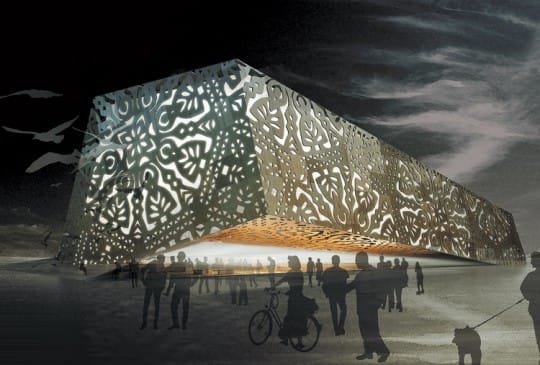
In December the architectural team of Wojciech Kakowski, Marcin Mostafa, Natalia Paszkowska was announced as the winner of the design for the Polish Pavilion for EXPO 2012 in Shanghai.

image
The design team: Wojciech Kakowski, Natalia Paszkowska, Marcin Mostafa
image


Project Concept

In the contemporary world with its abundance of visual experience, with the pictorial language of communication reigning supreme, with the almost unconstrained and instant accessibility of iconographic material, an exposition piece of architecture will only be attractive insofar it can offer perceptual sensations attainable only through direct, unmediated exposure to out-of-the-ordinary, singular stimuli, insofar it can provide a quality of experience born out of the chemistry of inter-sensory stimulation.
image

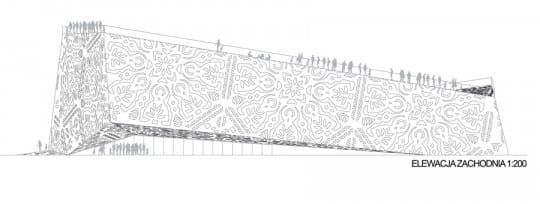
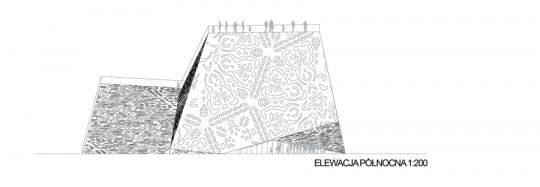
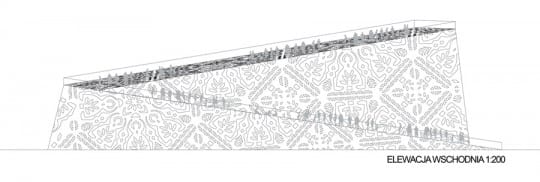
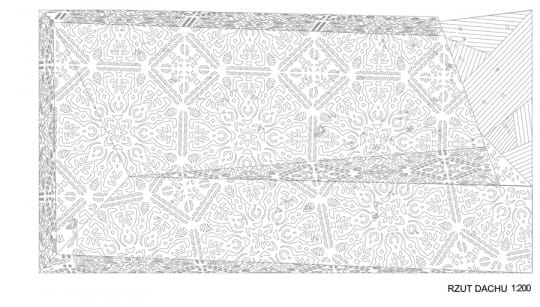
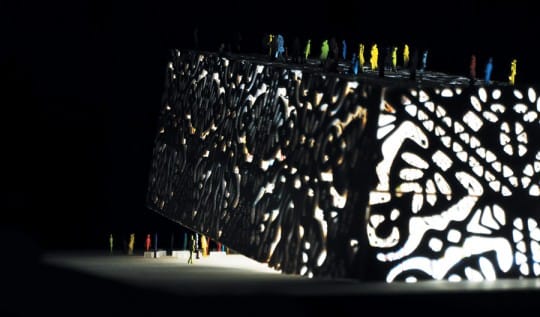
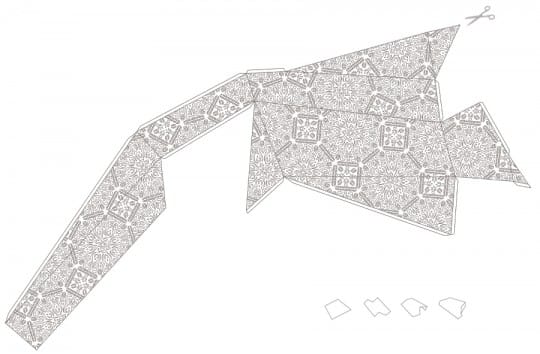
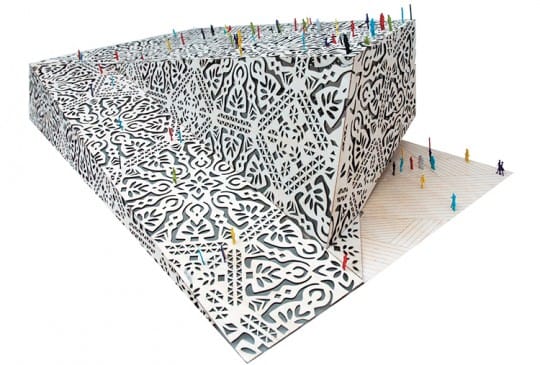
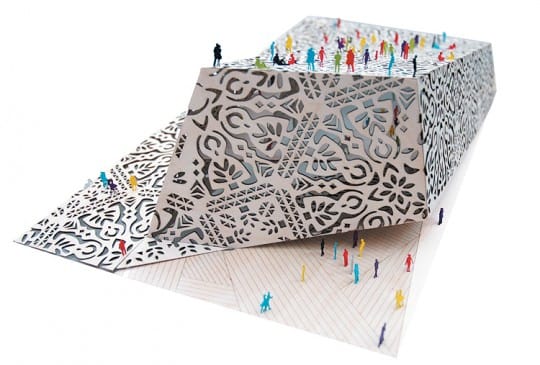
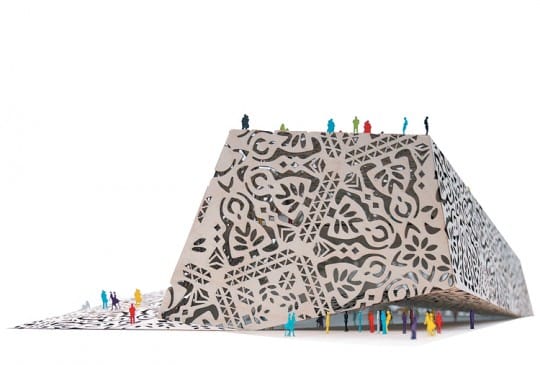
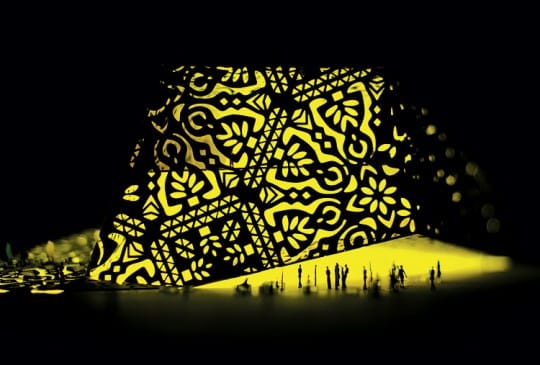
Given the nature of the exposition, the exhibition facility has to denote, by its esthetic distinctiveness, the country of origin, has to constitute, by the strength of its stylistic connotations, an evocative, recognizable and memorable cultural ideogram. In our design, the cultural idiom is primarily conveyed through the theme, the motif of folk-art paper cut-out. Or, more precisely, through a rendering of the motif, a transcription of an elementary esthetic code into the contemporary language of architectural décor.
image

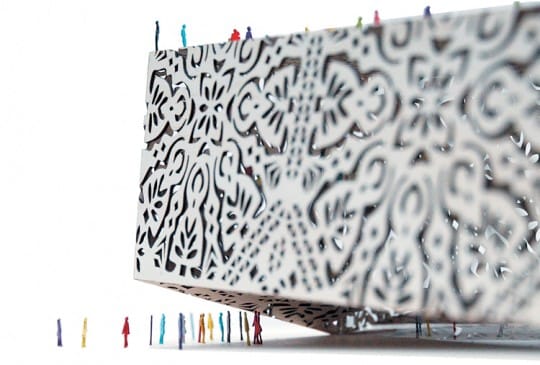
The transcription rationale was twofold. First of all, we did not wish the design to be literally folklorish, a mechanical multiplication of convention-approved set patterns. The intention was for the structure décor to draw on and make reference to tradition, but ultimately to be that tradition’s contemporary reinterpretation, a creative extension into the present day by way of inspiration rather than replication. Secondly, we aspired to make the structure in its own right, in a purely architectural dimension, a significant landmark, a showcase of Polish design achievements.
image

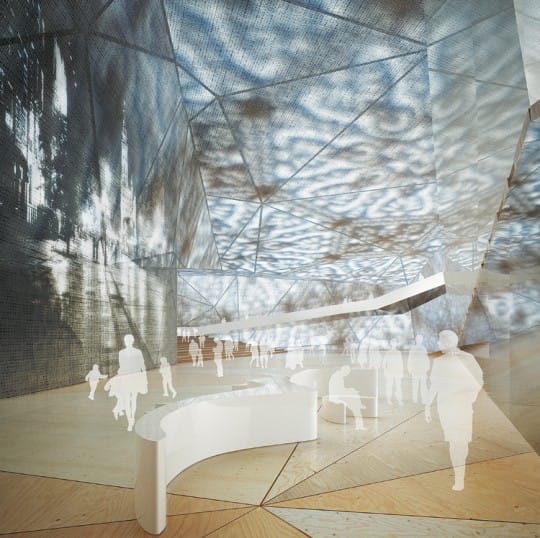
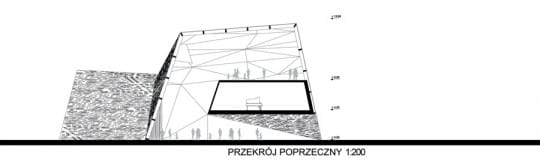
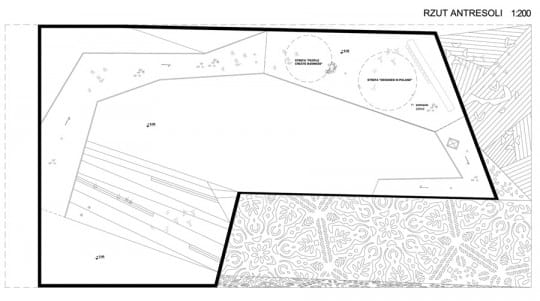
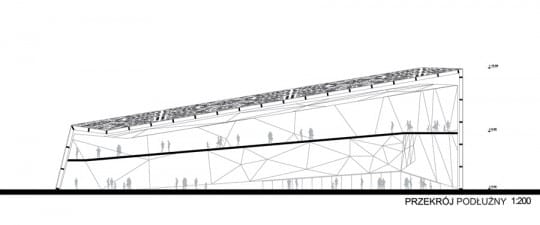
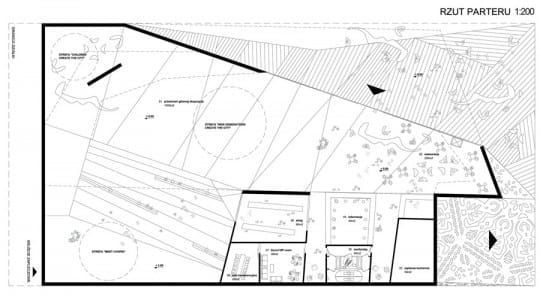
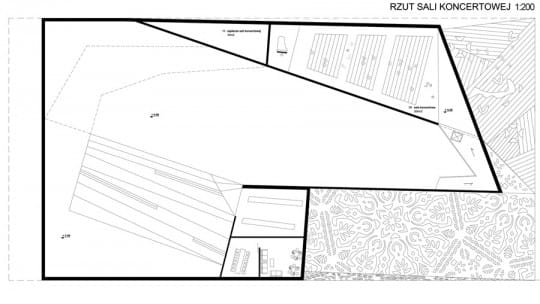
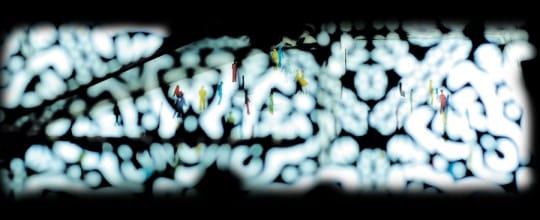
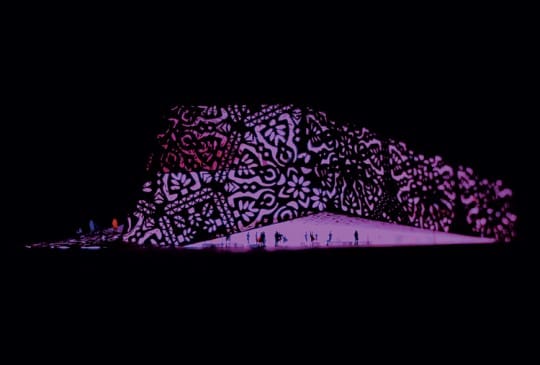
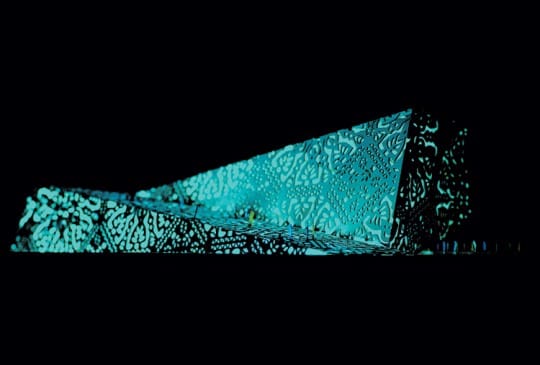
That it should be an attractive, eye-catching exterior both in daylight, against the panorama of other Expo facilities, as well as a mesmerizing experience at night with the edifice drawn by the multi-colored light seeping through the cut-out patterns. And reversely, that it should provide inside visitors with comparable experience by shaping the outer skin patterning in such a way that the sun rays shining through would chisel, by light and shade, the space under the vault. The structure’s overall shape, with many slanting planes, on the one hand complements and rounds out, by the suggestion of a folded sheet of paper, the ‘cut-out’ narrative, on the other creates inside a geometrically intriguing and flexible space that can be creatively apportioned, by inner divisions, to different exhibition, performance and utility functions and uses.
image
image
image

image

image

image

image

image

image

image

image

image

image

image

image

image

Related

results

Share

  • Follow

    0 Comments

  • Comment as :

Polish Pavilion for Shanghai Expo 2010

Micro-architecture honored in latest Tiny House Architecture Competition

World’s most beautiful restaurants of 2026 chosen by Prix Versailles

Sponsored Post by Buildner

Design a wine tasting room in Italy! Valli Wine Tasting Room is launched!

10 can't-miss architecture & design events to see this June in London, Los Angeles, Chicago, San Francisco, Detroit, San Diego, Porto, and Barcelona

Sponsored Post by Buildner

Museum of Emotions / Edition #8 FINAL registration deadline is approaching!

Seven global projects make AR Public Awards shortlist 2026

Sponsored Post by Buildner

Design a slow-living restaurant in Portugal! Portugal Long Table Restaurant is launched!

World's best tall buildings honored at the CVU 2026 Award of Excellence

Sign up for Bustler's Email Newsletters

Sponsored Post by TWOPAGES

Final call: TWOPAGES X Design Contest 2026 submissions close June 5

Kengo Kuma & Paul Raff win Alberta national park visitor center competition with landscape-focused design

2026 Moira Gemmill and MJ Long prizes announced by W Awards

New architecture and design competitions: Kinderspace, Stewardson Keefe LeBrun Travel Grant, SMALL PROJECT BIG IMPACT, and Garden of University House, Bucharest

The Century of Gehry: New retrospective explores the late architect's work & collaborations

Sponsored Post by Buildner

Rome Rain Rooms FINAL registration deadline is in 5 DAYS!

UIA and UN Habitat unveil sustainability-focused winners for UIA 2030 Award

Next page » Loading

Polish Pavilion for Shanghai Expo 2010

By Bustler Editors|

Friday, Jan 4, 2008

Share

Related

results

image

In December the architectural team of Wojciech Kakowski, Marcin Mostafa, Natalia Paszkowska was announced as the winner of the design for the Polish Pavilion for EXPO 2012 in Shanghai.
image
The design team: Wojciech Kakowski, Natalia Paszkowska, Marcin Mostafa

image


Project Concept

In the contemporary world with its abundance of visual experience, with the pictorial language of communication reigning supreme, with the almost unconstrained and instant accessibility of iconographic material, an exposition piece of architecture will only be attractive insofar it can offer perceptual sensations attainable only through direct, unmediated exposure to out-of-the-ordinary, singular stimuli, insofar it can provide a quality of experience born out of the chemistry of inter-sensory stimulation.

image

Given the nature of the exposition, the exhibition facility has to denote, by its esthetic distinctiveness, the country of origin, has to constitute, by the strength of its stylistic connotations, an evocative, recognizable and memorable cultural ideogram. In our design, the cultural idiom is primarily conveyed through the theme, the motif of folk-art paper cut-out. Or, more precisely, through a rendering of the motif, a transcription of an elementary esthetic code into the contemporary language of architectural décor.

image

The transcription rationale was twofold. First of all, we did not wish the design to be literally folklorish, a mechanical multiplication of convention-approved set patterns. The intention was for the structure décor to draw on and make reference to tradition, but ultimately to be that tradition’s contemporary reinterpretation, a creative extension into the present day by way of inspiration rather than replication. Secondly, we aspired to make the structure in its own right, in a purely architectural dimension, a significant landmark, a showcase of Polish design achievements.

image

That it should be an attractive, eye-catching exterior both in daylight, against the panorama of other Expo facilities, as well as a mesmerizing experience at night with the edifice drawn by the multi-colored light seeping through the cut-out patterns. And reversely, that it should provide inside visitors with comparable experience by shaping the outer skin patterning in such a way that the sun rays shining through would chisel, by light and shade, the space under the vault. The structure’s overall shape, with many slanting planes, on the one hand complements and rounds out, by the suggestion of a folded sheet of paper, the ‘cut-out’ narrative, on the other creates inside a geometrically intriguing and flexible space that can be creatively apportioned, by inner divisions, to different exhibition, performance and utility functions and uses.
image
image
image

image

image

image

image

image

image

image

image

image

image

image

image

image

Share

  • Follow

    0 Comments

  • Comment as :

Archinect JobsArchinect Jobs

The Archinect Job Board attracts the world's top architectural design talents.

VIEW ALL JOBS POST A JOB

Architectural Associate/Junior Architect

Goldstone Architecture

Architectural Associate/Junior Architect

Bennington, VT, US

Senior Interior Designer

IMC Architecture

Senior Interior Designer

Brooklyn, NY, US

Project Architect

Westside Design

Project Architect

Santa Monica, CA, US

Intermediate Architect

FROM Architecture DPC

Intermediate Architect

New York, NY, US

Interior Designer | Education & Institutional Work

Berliner Architects

Interior Designer | Education & Institutional Work

Culver City, CA, US

Project Architect

Lang Architecture

Project Architect

New York, NY, US

Interior Designer, 5+ Years Experience

Cass Calder Smith

Interior Designer, 5+ Years Experience

San Francisco, CA, US

Architects with 4-10 Years' Experience

Adamson Associates, Inc.

Architects with 4-10 Years' Experience

Los Angeles, CA, US

Architect

mani colaku architects

Architect

New York, NY, US

Project Designer (3 to 5 years)

Swift Lee Office

Project Designer (3 to 5 years)

Los Angeles, CA, US

Next page » Loading