• Login / Join
  • About
  • •
  • Contact
  • •
  • Advertising
bustler logo
bustler logo
  • News
  • Competitions
  • Events
  • Bustler is powered by Archinect
  • Sign up for Bustler's Email Newsletters

  • Follow these Bustler feeds:

  • Search

    Search in

  • Submit

    What are you submitting?

    News Pitch
    Competition
    Event
  • Login / Join
  • News|Competitions|Events
  • Search
    | Submit
    | Follow
  • Search in

    What are you submitting?

    News Pitch
    Competition
    Event

    Follow these Bustler feeds:

  • About|Contact|Advertising
  • Login / Join

"Urban China: Informal Cities" Opens at The New Museum

By Bustler Editors|

Monday, Feb 9, 2009

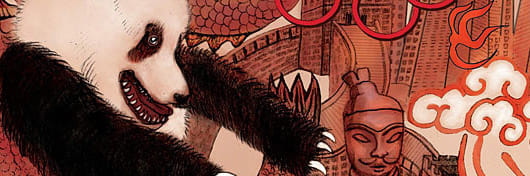
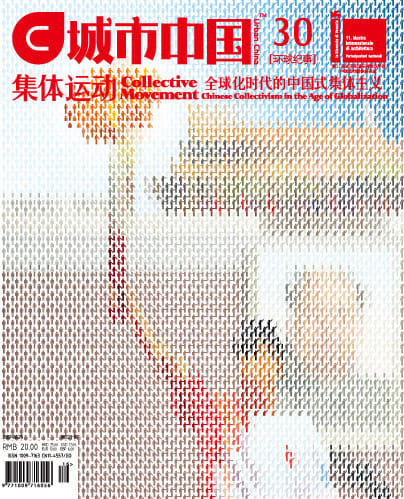
“Urban China: Informal Cities” is a multifaceted exploration and physical manifestation of the groundbreaking magazine Urban China. Founded in 2005, Urban China is the only magazine devoted to issues of urbanism published in and about China. In addition to offices in Beijing, Shanghai, and Guangzhou, the magazine has a network of correspondents and collaborators around the world who work under the guidance of its Editor-in-Chief, Jiang Jun, to meld elements of photojournalism, geography, architecture, graphic design, anthropology, statistics, and historical research together in an investigation of how cities, particularly rapidly developing cities, function today.
image

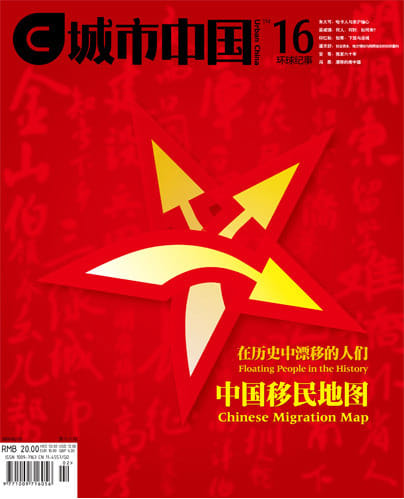
Urban China investigates these complex issues with a unique sensibility that infuses serious, multidisciplinary data collection and analysis with a genuine sense of wide-eyed awe, channeling data streams of seemingly unrelated information into digestible narrative webs. Each boldly designed, graphically rich issue of Urban China is dedicated to exploring a single, rigorously researched theme, such as “Chinatown,” “Migrating China,” and “Urban Images and Text.” In articles, interviews, photographs, and visually compelling diagrams, each issue’s pages brim with an exuberant air of possibility mixed with melancholic reflection. Urban China expresses a joy in analyzing the world anew, finding fresh ways to map it, and in that mapping, showing us the unheralded and unknown connections and relations that shape the way cities and lives are continually made and remade. For “Urban China: Informal Cities”—the magazine’s first exhibition in the United States—Urban China has extended its visionary language of display from the pages of the magazines into the three-dimensional space of the gallery. Combining a large-scale wall graphic, objects, a retrospective of past issues of the magazine, a dynamic user-navigable database of images, and a series of discussions, lectures, and class meetings that will take place in this exhibition space,

“Urban China: Informal Cities” serves as an introduction to the methods and multiplicity of the magazine’s practices, as well as an extended exploration of how “informalism” influences the shape of cities in China and beyond.
image

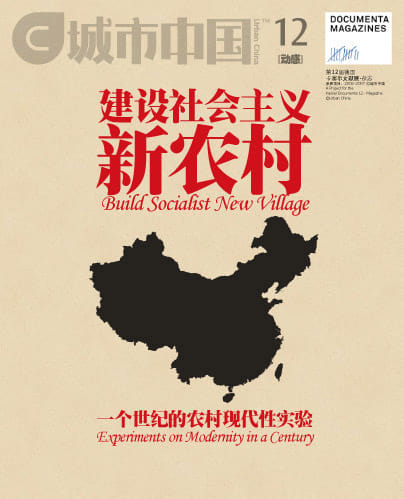
Urban China cover

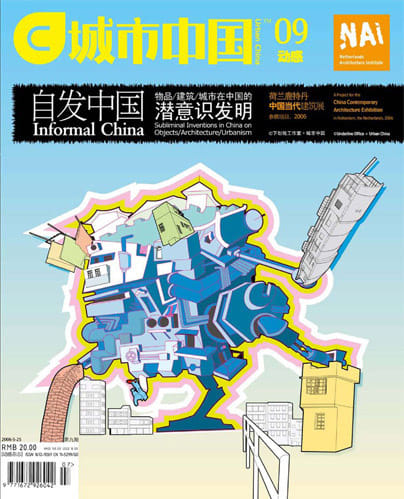
Urban China uses the term “informalism” as a catchall term that combines notions of the informal, or underground, economy with popular, vernacular modes of remaking objects, buildings, and lives. The idea of the informal is especially consequential in light of the rigorous order with which Chinese cities have historically been planned and policed. Chinese cities are, and have always been, highly ordered; from the gatehouse structure at the core of ancient city plans to the volumes of bureaucracy necessary to engage in many everyday tasks today, Chinese cities are a study in control of space, people, and economies. For Urban China, informalism is a way for individuals to exert direct agency over the basic facts of their daily lives and remix their immediate reality. As such, the gallery is replete with graphic treatments, objects, and remnants, all of which combine to explain how informal systems—spatial, economic, and utilitarian—act to subvert the highly structured nature of urban spaces in China and beyond.
image

Urban China cover

Like the magazine itself, this project is the culmination of research translated into a riot of interrelated statistics, graphics, keywords, notions, photographs, discussions, spaces, and stories. Urban China’s consistent and revelatory engagement with the world around them, and the singular manner with which they see and describe the details of that world, both mundane and remarkable, has earned the magazine recognition as one of the most vibrant intellectual projects anywhere in the world: one that is constantly engaged in finding ways of making the invisible seeable, and of changing, and making clearer, the way that we all are able to view and make sense of the world around us.
image

Urban China cover

This exhibition is curated by Benjamin Godsill, Curatorial Associate, New Museum.

In collaboration with the Graduate School of Architecture, Planning, and Preservation (GSAPP) at Columbia University and Volume magazine, an ongoing series of discussions, panels, screenings, and classes will take place in the gallery. Discussions are free and open to the public.

“Urban China: Informal Cities” is part of The Three M Project, a series organized by the New Museum, New York; the Museum of Contemporary Art, Chicago; and the Hammer Museum, Los Angeles, to commission, organize and co-present new works of art.
image

Urban China cover

On view at the New Museum from February 11 through March 29, 2009.

ABOUT “NEW COMMISSIONS” AND THE THREE MUSEUM (Three M) PROJECT
In 2004, The Three M Project was conceived and developed together with the Museum of Contemporary Art, Chicago, and the Hammer Museum in Los Angeles, to jointly commission, exhibit, and acquire important works of contemporary art by artists whose work has not yet received significant recognition. All three museums share a collaborative vision and entrepreneurial spirit, and the belief that ambitious projects on a national scale can be produced through efficiency, knowledge, and resource sharing. The partnership, now in its second cycle, involves four new commissions by Jeremy Deller, Daria Martin, Mathias Poledna, and Urban China. Together, these exhibitions will be presented simultaneously in “New Commissions” at the New Museum. The Three M project is directed by leading curators from each museum: Laura Hoptman, Kraus Family Senior Curator, New Museum; Elizabeth Smith, James W. Alsdorf Chief Curator, with Dominic Molon, Curator, Museum of Contemporary Art, Chicago; and Ali Subotnik, Curator, Hammer Museum, Los Angeles.

Visit exhibition website

Related

usa ● urban china ● new york ● new museum ● magazine ● exhibition ● event ● east coast ● china ● asia

Share

  • Follow

    0 Comments

  • Comment as :

"Urban China: Informal Cities" Opens at The New Museum

Northwestern University selects 12-firm longlist to design new engineering building

New architecture and design competitions: Exploring 130 Years of American Design, Christo & Jeanne-Claude Center, 13 White Houses, and La Pyramide

Micro-architecture honored in latest Tiny House Architecture Competition

World’s most beautiful restaurants of 2026 chosen by Prix Versailles

Sponsored Post by Buildner

Design a wine tasting room in Italy! Valli Wine Tasting Room is launched!

10 can't-miss architecture & design events to see this June in London, Los Angeles, Chicago, San Francisco, Detroit, San Diego, Porto, and Barcelona

Sponsored Post by Buildner

Museum of Emotions / Edition #8 FINAL registration deadline is approaching!

Seven global projects make AR Public Awards shortlist 2026

Sign up for Bustler's Email Newsletters

Sponsored Post by Buildner

Design a slow-living restaurant in Portugal! Portugal Long Table Restaurant is launched!

World's best tall buildings honored at the CVU 2026 Award of Excellence

Sponsored Post by TWOPAGES

Final call: TWOPAGES X Design Contest 2026 submissions close June 5

Kengo Kuma & Paul Raff win Alberta national park visitor center competition with landscape-focused design

2026 Moira Gemmill and MJ Long prizes announced by W Awards

New architecture and design competitions: Kinderspace, Stewardson Keefe LeBrun Travel Grant, SMALL PROJECT BIG IMPACT, and Garden of University House, Bucharest

The Century of Gehry: New retrospective explores the late architect's work & collaborations

Next page » Loading

"Urban China: Informal Cities" Opens at The New Museum

By Bustler Editors|

Monday, Feb 9, 2009

Share

Related

usa ● urban china ● new york ● new museum ● magazine ● exhibition ● event ● east coast ● china ● asia

“Urban China: Informal Cities” is a multifaceted exploration and physical manifestation of the groundbreaking magazine Urban China. Founded in 2005, Urban China is the only magazine devoted to issues of urbanism published in and about China. In addition to offices in Beijing, Shanghai, and Guangzhou, the magazine has a network of correspondents and collaborators around the world who work under the guidance of its Editor-in-Chief, Jiang Jun, to meld elements of photojournalism, geography, architecture, graphic design, anthropology, statistics, and historical research together in an investigation of how cities, particularly rapidly developing cities, function today.

image

Urban China investigates these complex issues with a unique sensibility that infuses serious, multidisciplinary data collection and analysis with a genuine sense of wide-eyed awe, channeling data streams of seemingly unrelated information into digestible narrative webs. Each boldly designed, graphically rich issue of Urban China is dedicated to exploring a single, rigorously researched theme, such as “Chinatown,” “Migrating China,” and “Urban Images and Text.” In articles, interviews, photographs, and visually compelling diagrams, each issue’s pages brim with an exuberant air of possibility mixed with melancholic reflection. Urban China expresses a joy in analyzing the world anew, finding fresh ways to map it, and in that mapping, showing us the unheralded and unknown connections and relations that shape the way cities and lives are continually made and remade. For “Urban China: Informal Cities”—the magazine’s first exhibition in the United States—Urban China has extended its visionary language of display from the pages of the magazines into the three-dimensional space of the gallery. Combining a large-scale wall graphic, objects, a retrospective of past issues of the magazine, a dynamic user-navigable database of images, and a series of discussions, lectures, and class meetings that will take place in this exhibition space,

“Urban China: Informal Cities” serves as an introduction to the methods and multiplicity of the magazine’s practices, as well as an extended exploration of how “informalism” influences the shape of cities in China and beyond.

image

Urban China cover

Urban China uses the term “informalism” as a catchall term that combines notions of the informal, or underground, economy with popular, vernacular modes of remaking objects, buildings, and lives. The idea of the informal is especially consequential in light of the rigorous order with which Chinese cities have historically been planned and policed. Chinese cities are, and have always been, highly ordered; from the gatehouse structure at the core of ancient city plans to the volumes of bureaucracy necessary to engage in many everyday tasks today, Chinese cities are a study in control of space, people, and economies. For Urban China, informalism is a way for individuals to exert direct agency over the basic facts of their daily lives and remix their immediate reality. As such, the gallery is replete with graphic treatments, objects, and remnants, all of which combine to explain how informal systems—spatial, economic, and utilitarian—act to subvert the highly structured nature of urban spaces in China and beyond.

image

Urban China cover

Like the magazine itself, this project is the culmination of research translated into a riot of interrelated statistics, graphics, keywords, notions, photographs, discussions, spaces, and stories. Urban China’s consistent and revelatory engagement with the world around them, and the singular manner with which they see and describe the details of that world, both mundane and remarkable, has earned the magazine recognition as one of the most vibrant intellectual projects anywhere in the world: one that is constantly engaged in finding ways of making the invisible seeable, and of changing, and making clearer, the way that we all are able to view and make sense of the world around us.

image

Urban China cover

This exhibition is curated by Benjamin Godsill, Curatorial Associate, New Museum.

In collaboration with the Graduate School of Architecture, Planning, and Preservation (GSAPP) at Columbia University and Volume magazine, an ongoing series of discussions, panels, screenings, and classes will take place in the gallery. Discussions are free and open to the public.

“Urban China: Informal Cities” is part of The Three M Project, a series organized by the New Museum, New York; the Museum of Contemporary Art, Chicago; and the Hammer Museum, Los Angeles, to commission, organize and co-present new works of art.

image

Urban China cover

On view at the New Museum from February 11 through March 29, 2009.

ABOUT “NEW COMMISSIONS” AND THE THREE MUSEUM (Three M) PROJECT
In 2004, The Three M Project was conceived and developed together with the Museum of Contemporary Art, Chicago, and the Hammer Museum in Los Angeles, to jointly commission, exhibit, and acquire important works of contemporary art by artists whose work has not yet received significant recognition. All three museums share a collaborative vision and entrepreneurial spirit, and the belief that ambitious projects on a national scale can be produced through efficiency, knowledge, and resource sharing. The partnership, now in its second cycle, involves four new commissions by Jeremy Deller, Daria Martin, Mathias Poledna, and Urban China. Together, these exhibitions will be presented simultaneously in “New Commissions” at the New Museum. The Three M project is directed by leading curators from each museum: Laura Hoptman, Kraus Family Senior Curator, New Museum; Elizabeth Smith, James W. Alsdorf Chief Curator, with Dominic Molon, Curator, Museum of Contemporary Art, Chicago; and Ali Subotnik, Curator, Hammer Museum, Los Angeles.

Visit exhibition website

Share

  • Follow

    0 Comments

  • Comment as :

Archinect JobsArchinect Jobs

The Archinect Job Board attracts the world's top architectural design talents.

VIEW ALL JOBS POST A JOB

Intermediate Designer - 3+ Years Experience (NY)

Cass Calder Smith

Intermediate Designer - 3+ Years Experience (NY)

New York, NY, US

Architect

mani colaku architects

Architect

New York, NY, US

Project Manager - Civic/Community

DAHLIN ARCHITECTURE | PLANNING | INTERIORS

Project Manager - Civic/Community

Irvine, CA, US

Intermediate Architectural Designer

David Smotrich & Partners LLP

Intermediate Architectural Designer

New York, NY, US

Architect 10+

Standard Architects

Architect 10+

Long Island City, NY, US

Marketing and Architectural Assistant

AGENCIE / Architecture & Engineering

Marketing and Architectural Assistant

New York, NY, US

Architectural Designer

1100 Architect

Architectural Designer

New York, NY, US

Architects with 4-10 Years' Experience

Adamson Associates, Inc.

Architects with 4-10 Years' Experience

Los Angeles, CA, US

Intermediate Architect (Advanced Revit User)

O'Neil Langan Architects

Intermediate Architect (Advanced Revit User)

New York, NY, US

Architectural Job Captain

Christopher Courts Inc.

Architectural Job Captain

Los Angeles, CA, US

Next page » Loading