• Login / Join
  • About
  • •
  • Contact
  • •
  • Advertising
bustler logo
bustler logo
  • News
  • Competitions
  • Events
  • Bustler is powered by Archinect
  • Sign up for Bustler's Email Newsletters

  • Follow these Bustler feeds:

  • Search

    Search in

  • Submit

    What are you submitting?

    News Pitch
    Competition
    Event
  • Login / Join
  • News|Competitions|Events
  • Search
    | Submit
    | Follow
  • Search in

    What are you submitting?

    News Pitch
    Competition
    Event

    Follow these Bustler feeds:

  • About|Contact|Advertising
  • Login / Join

Anna Puigjaner of MAIO Studios wins 2016 Wheelwright Prize

By Justine Testado|

Thursday, May 19, 2016

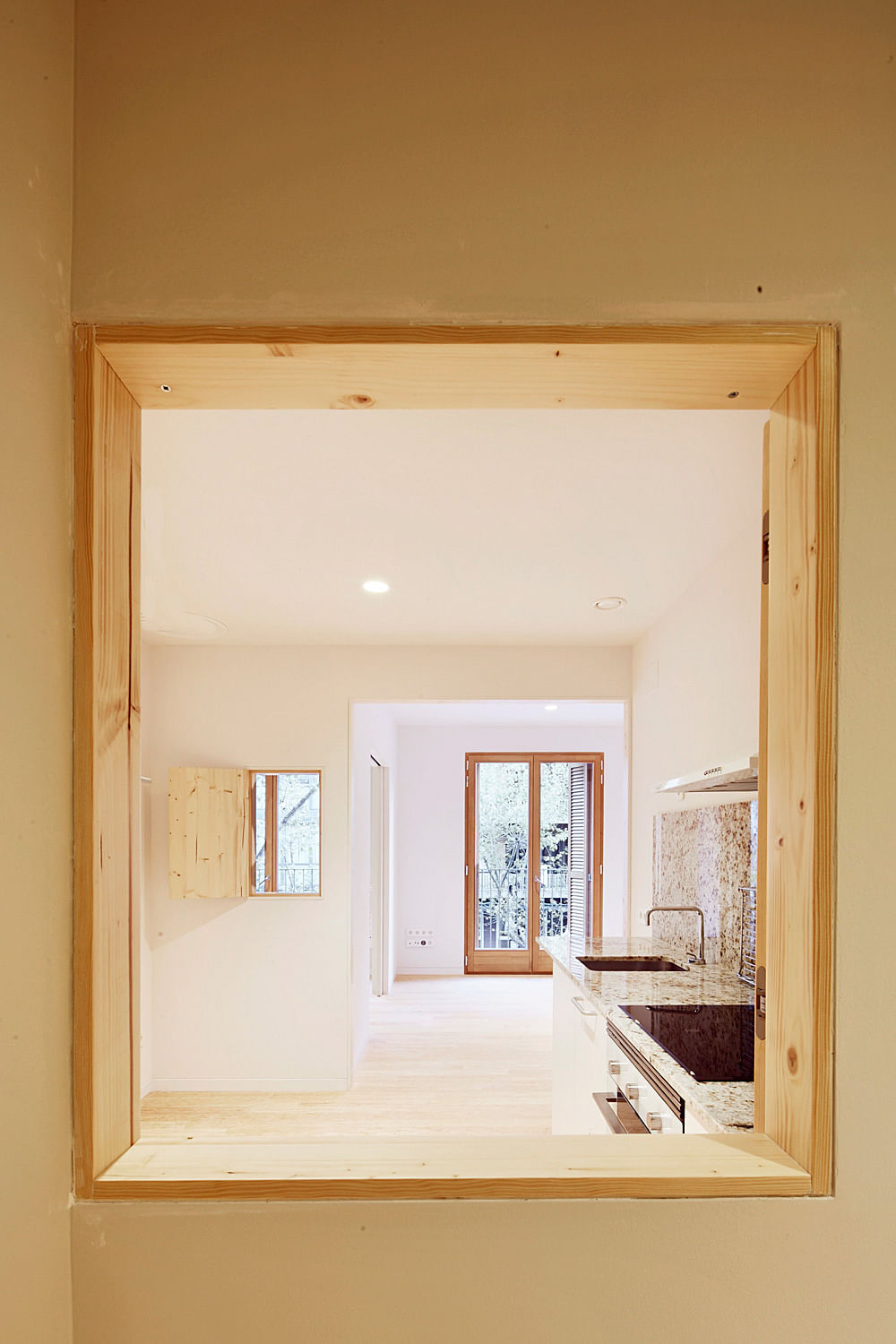
MAIO Studio, Barcelona, 2011-12. Photo credit: José Hevia.

The coveted 2016 Wheelwright Prize went to Anna Puigjaner, cofounder of Barcelona-based MAIO Studios, as announced today by the Harvard Graduate School of Design. First established by the school in 1935, the prestigious $100,000 travel architectural research grant is awarded to one lucky early-career architect. Originally intended for Harvard GSD alumni, the prize became an open international competition in 2013 that gives competitive early-career architects anywhere on the globe a chance to apply. Some iconic recipients include Paul Rudolph, Eliot Noyes, William Wurster, and I. M. Pei.

Competition always runs high, with this year's cycle attracting nearly 200 submissions representing some 45 countries that touched on various architectural, technological, and social issues. The jury then selected four finalists in March, and Anna Puigjaner won for her proposal “Kitchenless City: Architectural Systems for Social Welfare”. Using shared domestic spaces as a starting point, Puigjaner will spend the next two years studying various collective housing models in China, Korea, India, Russia, Sweden, and Brazil aiming to find new design solutions that address persistent housing dilemmas worldwide.

Read on for more.

RELATED NEWS Four 2016 Wheelwright Prize finalists from Chile, Italy, and Spain to compete for $100K grant
2016 Wheelwright Prize winner: Anna Puigjaner

“Puigjaner is a graduate of the Escola Tècnica Superior d’Arquitectura de Barcelona-Universitat Politècnica de Catalunya (BArch 2004, MArch 2008, and Ph.D. 2014). In 2005, she cofounded MAIO Studio with partners Maria Charneco, Alfredo Lérida, and Guillermo López. MAIO operates as a collaborative studio and has completed several projects, spanning exhibition design, furniture, interiors, public spaces, urban planning, and architecture. Puigjaner teaches at the School of Architecture of Barcelona and Massana School of Arts and Design, and she has lectured at multiple architecture schools including Columbia University, Yale University, Universidad Politécnica de Madrid, and Washington University, among others.”

MAIO Studio, Barcelona, 2011-12. Photo credit: José Hevia.

“Kitchenless City: Architectural Systems for Social Welfare” focuses on a historic housing type: housing blocks with collective kitchens, in addition to other shared amenities like dining rooms, lounges, and service areas. Puigjaner proposes to study collective housing in Russia, Brazil, Sweden, China, Korea, and India in order to examine a variety of approaches to the organizing and distributing of domestic spaces. “Noting this housing type and notion of collective life were ‘deeply understood as a tool for social transformation,’ [Puigjaner] sees its relevance to today’s housing dilemmas and its potential lead to discovering ‘renewed domestic proposals for the present.‘”

Bar Nou, Barcelona, 2014–15. Photo credit: José Hevia.

“The research builds on work Puigjaner initiated several years ago while pursuing her Ph.D. She has published articles on the subject, contributing essays to Space Caviar’s SQM: The Quantified Home (Lars Muller, 2014) and Volume (2013, #. 3). Kitchenless City is also evidently reflective of MAIO Studio’s particular interest in flexible systems and the potential of variation, ephemerality, and appropriation.”
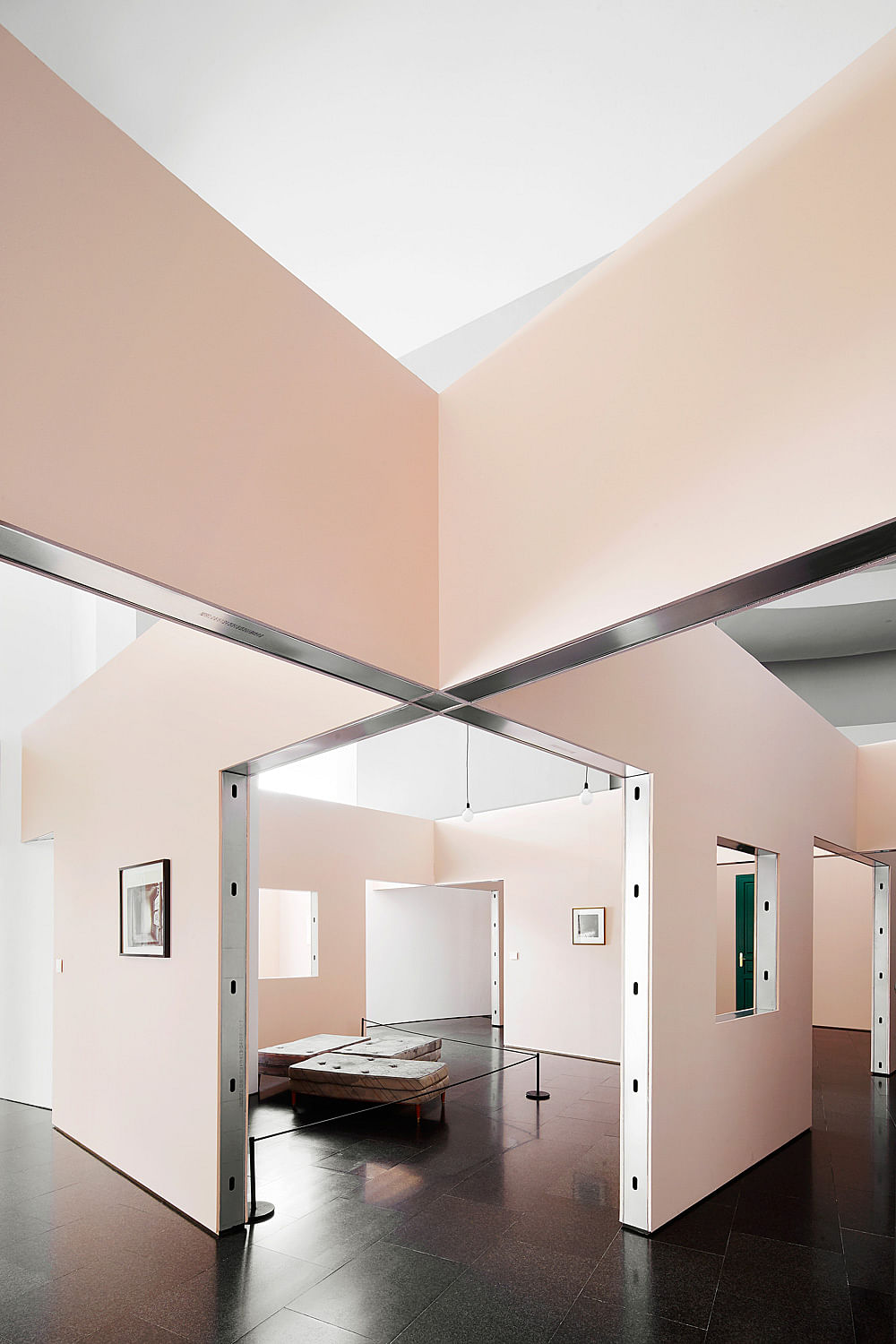
​Species of Spaces, Museum of Contemporary Art of Barcelona, 2015–16​. Photo credit: José Hevia.

“MAIO Studio's finalist submission to the MoMA PS1 Young Architects Program in 2014, Rooms: No Vacancy, designed with Fake Industries Architectural Agonism, consisted of a grid of rooms offering a succession of different atmospheres and moods.”

Floating Columns, Chicago Architecture Biennial, 2015. Photo credit: David Schalliol.

“For the 2015 Chicago Architecture Biennial, MAIO created Floating, a series of inflated columns that traveled throughout the Chicago Cultural Center. This drew from MAIO previous projects Floating: Urban Activator (Barcelona, 2011) and Urban Space System (Barcelona, 2014), which utilized flexible devices to delineate new gathering spots or “monuments” in public spaces. The firm’s first building is, fittingly, a residential block that puts many of its ideas about open systems and changeability into practice.”

​Corners: Exhibition Display System, Barcelona Maritime Museum, 2014. Photo credit: José Hevia.

“Over the next two years, Puigjaner's research itinerary will begin with historical examples, such as the Kommunalkas, which began appearing in the Soviet Union after the 1917 revolution; as well as the projects spearheaded by Carmen Portinho, who directed Rio de Janeiro’s Popular Housing Department in the late 1940s and 1950s, including the large-scale Gávea and Pedregulho housing projects, both designed by Affonso Eduardo Reidy and completed in the early 1950s.”

​Urban Space System, Barcelona, 2013–14. Photo credit: José Hevia.

“Puigjaner will then visit contemporary examples of alternative collective domestic architecture, like the Sargfabrik complex in Vienna (BKK-2 Architectur, 1996), and Chinese entrepreneur Liu Yang’s You+ International Youth Apartments, affordable communal housing aimed at young adults, and is now in 14 cities in China. Afterward, she will continue her research at the collective solar kitchens in India and kitchenless housing developments in Korea and Japan.”

​Housing: 22 Dwellings, 110 rooms, Barcelona, 2013–16. Image: MAIO.

The jury cited Puigjaner's Wheelwright proposal for its relevancy to the ongoing housing issues occurring throughout the world and the need for new and inventive housing models, as cities struggle to keep up with adequate housing due to rapid urbanization. Puigjaner's proposal also highlights the rise of alternative sharing and resource-pooling economies.

More images in the gallery below.

RELATED COMPETITION 2016 Wheelwright Prize
RELATED NEWS Erik L’Heureux wins 2015 Wheelwright Prize
RELATED NEWS Jose M. Ahedo wins the 2014 Wheelwright Prize

Related

wheelwright prize ● harvard gsd ● harvard university ● academia ● social design ● social impact ● grant ● travel grant ● social issues ● traveling ● design research ● competition ● domestic space
MAIO
MAIO
Harvard University
Harvard University Hiring!

Share

  • Follow

    0 Comments

  • Comment as :

Anna Puigjaner of MAIO Studios wins 2016 Wheelwright Prize

New architecture and design competitions: IDEAS Awards, UIA-HYP CUP International Student Competition, Vancouver Tall Challenge, and Memorial to the Sixth Extinction

Best small projects chosen at AIA Small Project Award 2026

10 standout sustainable projects honored at AIA COTE Top Ten Award 2026

Best residential architecture of 2026 honored at AIA Housing Award

Best new interiors of 2026 chosen at AIA Interior Architecture Awards

Best global architecture honored at RIBA International Awards 2026

World’s most beautiful airports of 2026 chosen by Prix Versailles

New architecture and design competitions: Brick in Architecture Awards, Study Architecture Student Showcase, N.Y.C. Groceries, and New York High Falls Riverfront Market

Sign up for Bustler's Email Newsletters

SmithGroup’s ‘pioneering’ Philip Merrill Environmental Center wins AIA Twenty-five Year Award

Sponsored Post by Buildner

Museum of Emotions / Edition #8 FINAL registration deadline is in 5 DAYS!

Here are the winners of the 2026 AIA Architecture Awards

40 emerging architects and designers under 40 from Europe honored

Northwestern University selects 12-firm longlist to design new engineering building

New architecture and design competitions: Exploring 130 Years of American Design, Christo & Jeanne-Claude Center, 13 White Houses, and La Pyramide

Micro-architecture honored in latest Tiny House Architecture Competition

Next page » Loading

Anna Puigjaner of MAIO Studios wins 2016 Wheelwright Prize

By Justine Testado|

Thursday, May 19, 2016

Share

MAIO Studio, Barcelona, 2011-12. Photo credit: José Hevia.

Related

wheelwright prize ● harvard gsd ● harvard university ● academia ● social design ● social impact ● grant ● travel grant ● social issues ● traveling ● design research ● competition ● domestic space
MAIO
MAIO
Harvard University
Harvard University Hiring!

The coveted 2016 Wheelwright Prize went to Anna Puigjaner, cofounder of Barcelona-based MAIO Studios, as announced today by the Harvard Graduate School of Design. First established by the school in 1935, the prestigious $100,000 travel architectural research grant is awarded to one lucky early-career architect. Originally intended for Harvard GSD alumni, the prize became an open international competition in 2013 that gives competitive early-career architects anywhere on the globe a chance to apply. Some iconic recipients include Paul Rudolph, Eliot Noyes, William Wurster, and I. M. Pei.

Competition always runs high, with this year's cycle attracting nearly 200 submissions representing some 45 countries that touched on various architectural, technological, and social issues. The jury then selected four finalists in March, and Anna Puigjaner won for her proposal “Kitchenless City: Architectural Systems for Social Welfare”. Using shared domestic spaces as a starting point, Puigjaner will spend the next two years studying various collective housing models in China, Korea, India, Russia, Sweden, and Brazil aiming to find new design solutions that address persistent housing dilemmas worldwide.

Read on for more.

RELATED NEWS Four 2016 Wheelwright Prize finalists from Chile, Italy, and Spain to compete for $100K grant
2016 Wheelwright Prize winner: Anna Puigjaner

“Puigjaner is a graduate of the Escola Tècnica Superior d’Arquitectura de Barcelona-Universitat Politècnica de Catalunya (BArch 2004, MArch 2008, and Ph.D. 2014). In 2005, she cofounded MAIO Studio with partners Maria Charneco, Alfredo Lérida, and Guillermo López. MAIO operates as a collaborative studio and has completed several projects, spanning exhibition design, furniture, interiors, public spaces, urban planning, and architecture. Puigjaner teaches at the School of Architecture of Barcelona and Massana School of Arts and Design, and she has lectured at multiple architecture schools including Columbia University, Yale University, Universidad Politécnica de Madrid, and Washington University, among others.”

MAIO Studio, Barcelona, 2011-12. Photo credit: José Hevia.

“Kitchenless City: Architectural Systems for Social Welfare” focuses on a historic housing type: housing blocks with collective kitchens, in addition to other shared amenities like dining rooms, lounges, and service areas. Puigjaner proposes to study collective housing in Russia, Brazil, Sweden, China, Korea, and India in order to examine a variety of approaches to the organizing and distributing of domestic spaces. “Noting this housing type and notion of collective life were ‘deeply understood as a tool for social transformation,’ [Puigjaner] sees its relevance to today’s housing dilemmas and its potential lead to discovering ‘renewed domestic proposals for the present.‘”

Bar Nou, Barcelona, 2014–15. Photo credit: José Hevia.

“The research builds on work Puigjaner initiated several years ago while pursuing her Ph.D. She has published articles on the subject, contributing essays to Space Caviar’s SQM: The Quantified Home (Lars Muller, 2014) and Volume (2013, #. 3). Kitchenless City is also evidently reflective of MAIO Studio’s particular interest in flexible systems and the potential of variation, ephemerality, and appropriation.”

​Species of Spaces, Museum of Contemporary Art of Barcelona, 2015–16​. Photo credit: José Hevia.

“MAIO Studio's finalist submission to the MoMA PS1 Young Architects Program in 2014, Rooms: No Vacancy, designed with Fake Industries Architectural Agonism, consisted of a grid of rooms offering a succession of different atmospheres and moods.”

Floating Columns, Chicago Architecture Biennial, 2015. Photo credit: David Schalliol.

“For the 2015 Chicago Architecture Biennial, MAIO created Floating, a series of inflated columns that traveled throughout the Chicago Cultural Center. This drew from MAIO previous projects Floating: Urban Activator (Barcelona, 2011) and Urban Space System (Barcelona, 2014), which utilized flexible devices to delineate new gathering spots or “monuments” in public spaces. The firm’s first building is, fittingly, a residential block that puts many of its ideas about open systems and changeability into practice.”

​Corners: Exhibition Display System, Barcelona Maritime Museum, 2014. Photo credit: José Hevia.

“Over the next two years, Puigjaner's research itinerary will begin with historical examples, such as the Kommunalkas, which began appearing in the Soviet Union after the 1917 revolution; as well as the projects spearheaded by Carmen Portinho, who directed Rio de Janeiro’s Popular Housing Department in the late 1940s and 1950s, including the large-scale Gávea and Pedregulho housing projects, both designed by Affonso Eduardo Reidy and completed in the early 1950s.”

​Urban Space System, Barcelona, 2013–14. Photo credit: José Hevia.

“Puigjaner will then visit contemporary examples of alternative collective domestic architecture, like the Sargfabrik complex in Vienna (BKK-2 Architectur, 1996), and Chinese entrepreneur Liu Yang’s You+ International Youth Apartments, affordable communal housing aimed at young adults, and is now in 14 cities in China. Afterward, she will continue her research at the collective solar kitchens in India and kitchenless housing developments in Korea and Japan.”

​Housing: 22 Dwellings, 110 rooms, Barcelona, 2013–16. Image: MAIO.

The jury cited Puigjaner's Wheelwright proposal for its relevancy to the ongoing housing issues occurring throughout the world and the need for new and inventive housing models, as cities struggle to keep up with adequate housing due to rapid urbanization. Puigjaner's proposal also highlights the rise of alternative sharing and resource-pooling economies.

More images in the gallery below.

RELATED COMPETITION 2016 Wheelwright Prize
RELATED NEWS Erik L’Heureux wins 2015 Wheelwright Prize
RELATED NEWS Jose M. Ahedo wins the 2014 Wheelwright Prize

Share

  • Follow

    0 Comments

  • Comment as :

Archinect JobsArchinect Jobs

The Archinect Job Board attracts the world's top architectural design talents.

VIEW ALL JOBS POST A JOB

Studio Coordinator

Sarah Jacoby Architect

Studio Coordinator

Long Island City, NY, US

Architectural Designer

1100 Architect

Architectural Designer

New York, NY, US

Intermediate Designer

Rafael Viñoly Architects

Intermediate Designer

New York, NY, US

Project Manager - Residential

DAHLIN Architecture | Planning | Interiors

Project Manager - Residential

Bellevue, WA, US

Miami Senior Project Coordinator

BMA Architects

Miami Senior Project Coordinator

Miami, FL, US

Architectural Project Manager - Residential

DAHLIN Architecture | Planning | Interiors

Architectural Project Manager - Residential

Pleasanton, CA, US

Job Captain - Residential

DAHLIN Architecture | Planning | Interiors

Job Captain - Residential

Pleasanton, CA, US

Junior/Intermediate Architect

Archimaera Architecture

Junior/Intermediate Architect

New York, NY, US

Architect / Architectural Designer (3-5 years experience)

Resolution: 4 Architecture

Architect / Architectural Designer (3-5 years experience)

New York, NY, US

Intermediate Architect

GF55 Architects

Intermediate Architect

New York, NY, US

Next page » Loading