• Login / Join
  • About
  • •
  • Contact
  • •
  • Advertising
bustler logo
bustler logo
  • News
  • Competitions
  • Events
  • Bustler is powered by Archinect
  • Sign up for Bustler's Email Newsletters

  • Follow these Bustler feeds:

  • Search

    Search in

  • Submit

    What are you submitting?

    News Pitch
    Competition
    Event
  • Login / Join
  • News|Competitions|Events
  • Search
    | Submit
    | Follow
  • Search in

    What are you submitting?

    News Pitch
    Competition
    Event

    Follow these Bustler feeds:

  • About|Contact|Advertising
  • Login / Join

The “techno-boreal” Wind Forest wins the LAGI Glasgow competition

By Justine Testado|

Thursday, Jul 28, 2016

Image courtesy of Dalziel + Scullion, Qmulus Ltd., Yeadon Space Agency, and ZM Architecture.

The Land Art Generator Initiative competition proves once again that clean-energy design can be pleasing to the eyes. The LAGI competition challenges inter-disciplinary design teams to propose permanent public art installations that are equipped with the latest technological innovations in sustainable energy. Following successful competitions in Copenhagen, Dubai, and New York, the 2016 site was a new mixed-use development currently planned for Dundas Hill (or 100 Acre Hill), a post-industrial brownsite in Glasgow.

When it comes to wind energy, most people imagine rows of spinning wind turbines you'd typically find in the middle of a vast desert or a field. A team comprising of Peter Foster Richardson (ZM Architecture), Matthew Dalziel and Louise Scullion (Dalziel + Scullion), Ian Nicoll (Qmulus Ltd.), and Peter Yeadon (Yeadon Space Agency) created their own version of the wind turbine with their proposal, “Wind Forest”, which was selected as the winning commission. The other top-winning proposals were “Watergaw” and “Dundas Dandelions”.

While the LAGI competitions has its series of biennial open ideas competitions, the Glasgow edition was an invite-only to firms following an RFQ. LAGI Founding Directors Elizabeth Monoian and Robert Ferry pointed out that the invite-only competition model will soon be carried out in more cities, with the resulting projects spanning over multiple years.*

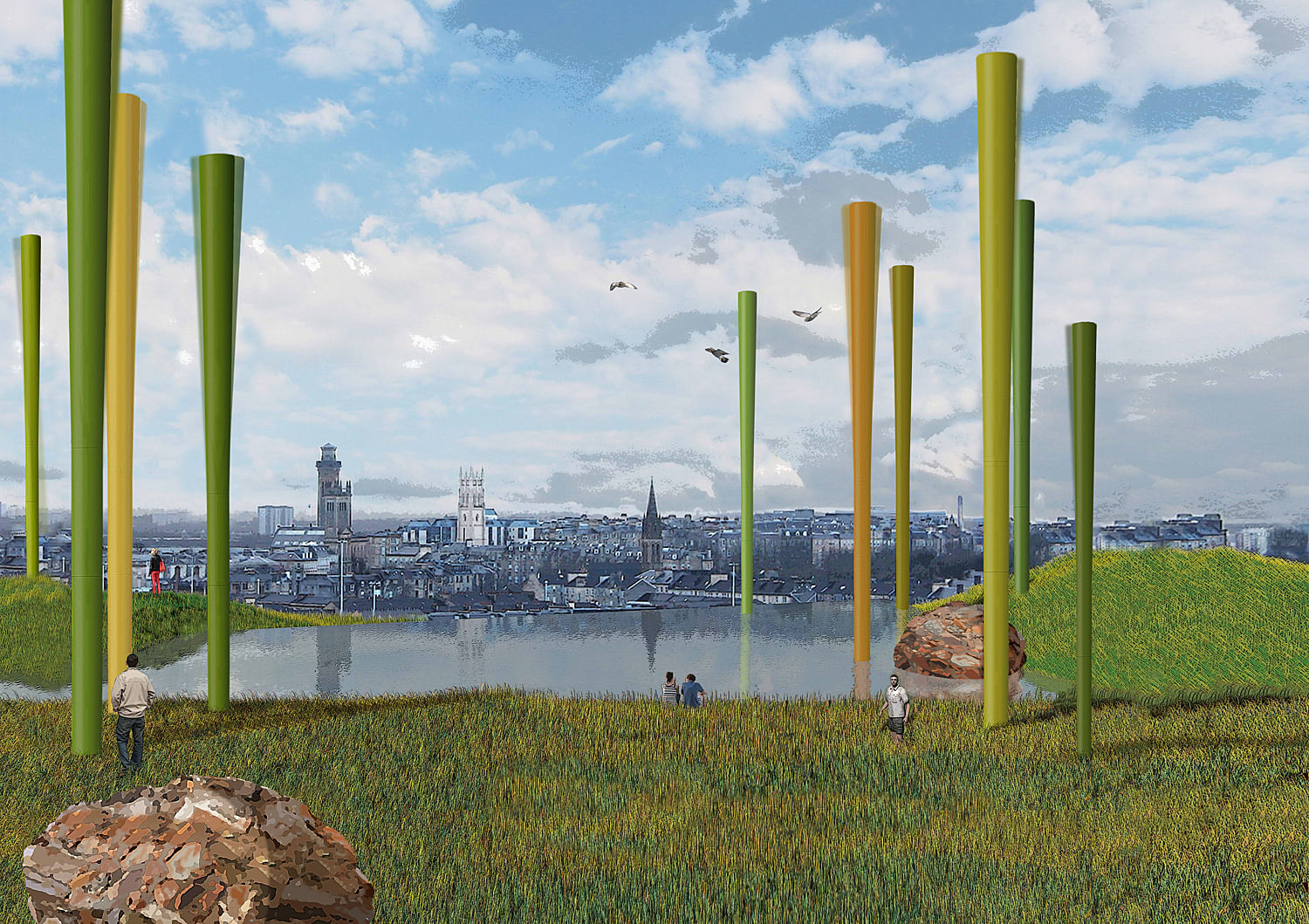
The “techno-boreal” Wind Forest is a group of blade-less wind turbines that use oscillation to generate enough electricity for approximately 300 homes, according to the team. In the coming months, the designers will move on to the development phase with their proposal.

And be on the lookout for the 2016 LAGI Santa Monica results, which are expected to be announced this October!

Read on for more about the Wind Forest from the designers.
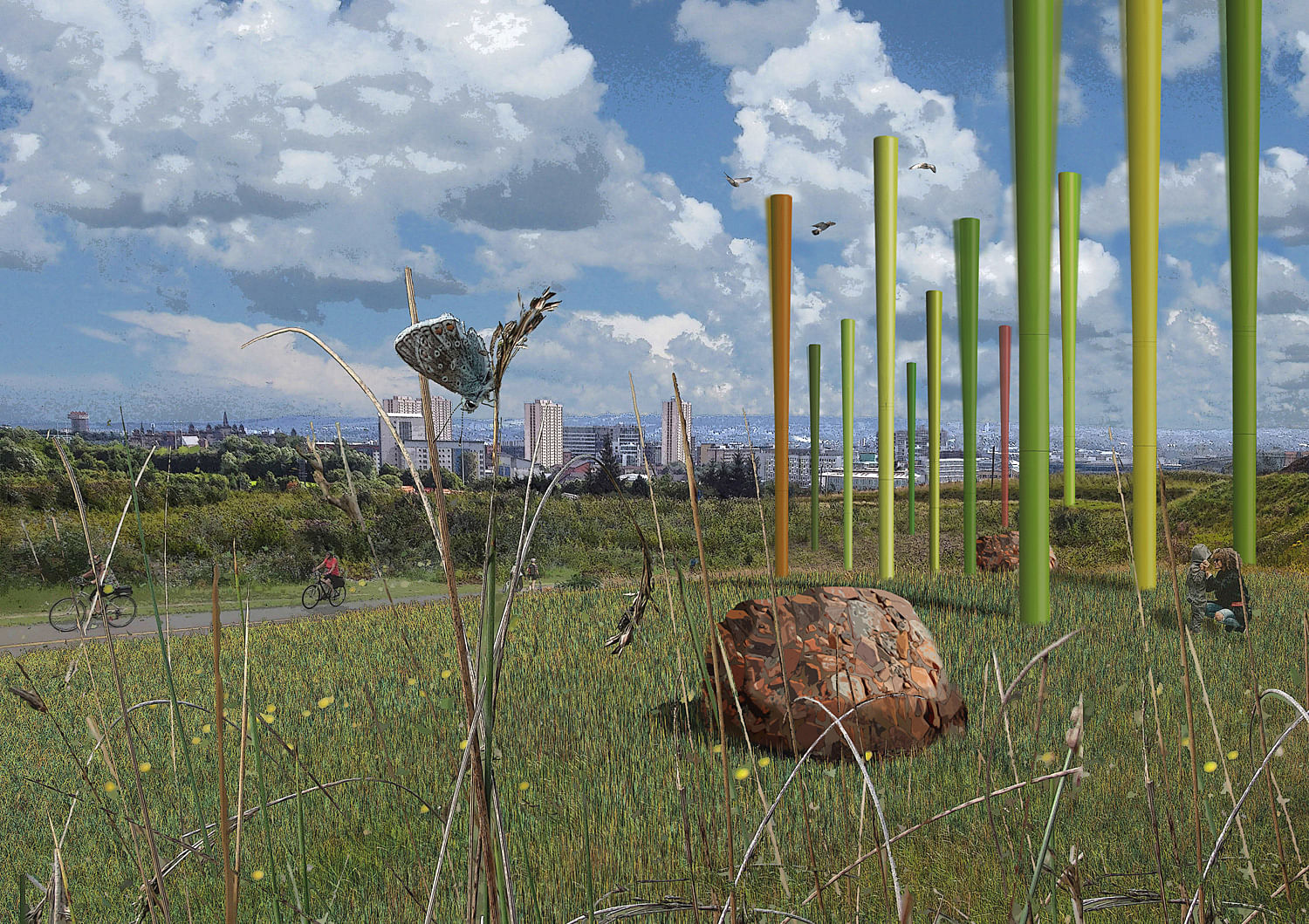
Image courtesy of Dalziel + Scullion, Qmulus Ltd., Yeadon Space Agency, and ZM Architecture

Project description:

Wind Forest is designed with “various spatial, sensory and environmental qualities, [mimicking] the activity of a forest by absorbing energy from the passing wind, and distributing it to its diverse and connected community ecosystem,” the designers stated. “We were keen to address this brief in a way that was imaginative, resourceful and exciting, examining the context of the location from its geological origins through to its imagined interconnected future.”
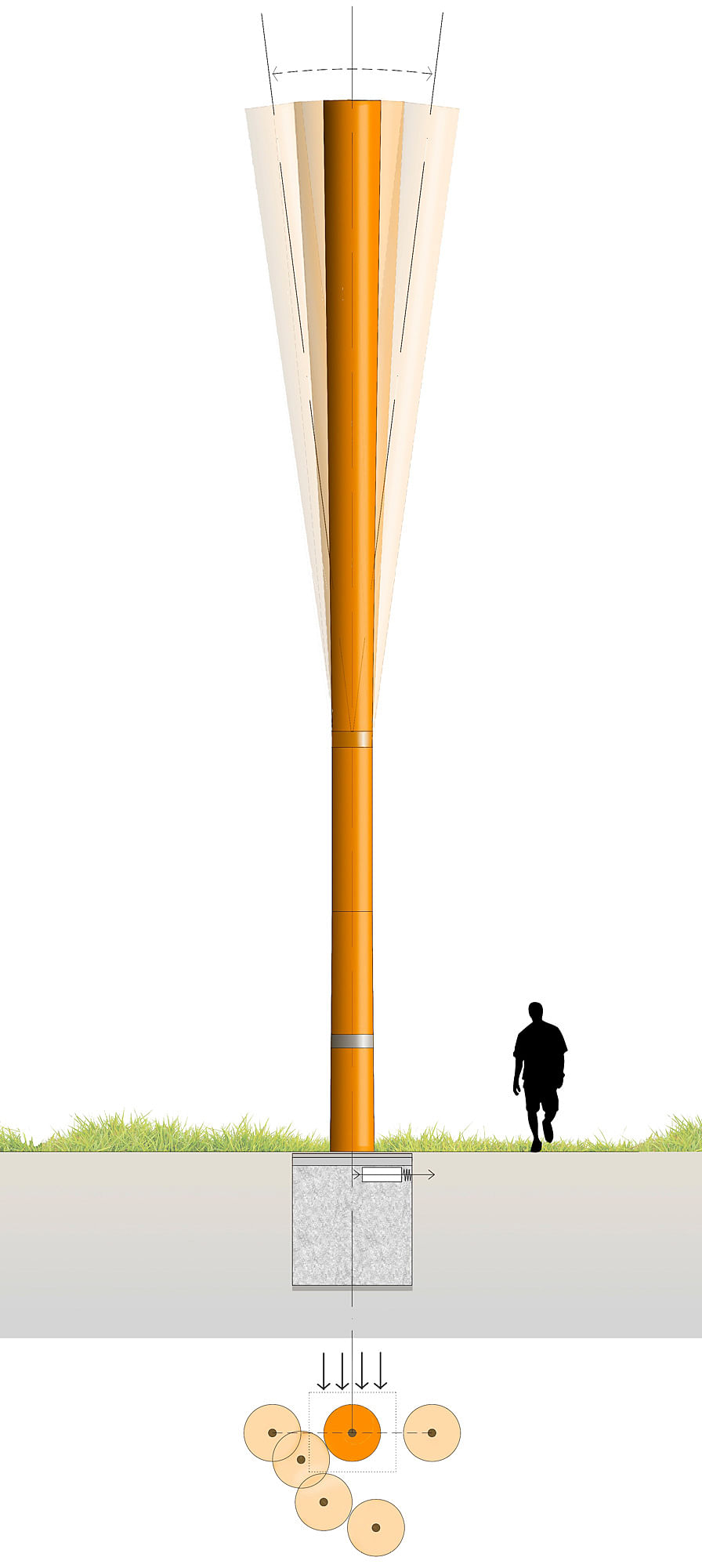
Image courtesy of Dalziel + Scullion, Qmulus Ltd., Yeadon Space Agency, and ZM Architecture

“Wind Forest works with the physical landscape of 100 Acre Hill, upon which one hundred 4 kW single stem-like wind turbines will be planted. A revolution in wind energy design, these stems have no blades, have no gears or bearings, are noiseless, and do not present a hazard to birds. Instead, they generate electricity by oscillating, resulting in reduced maintenance costs, reduced manufacturing costs, reduced transportation costs, and smaller foundations.”
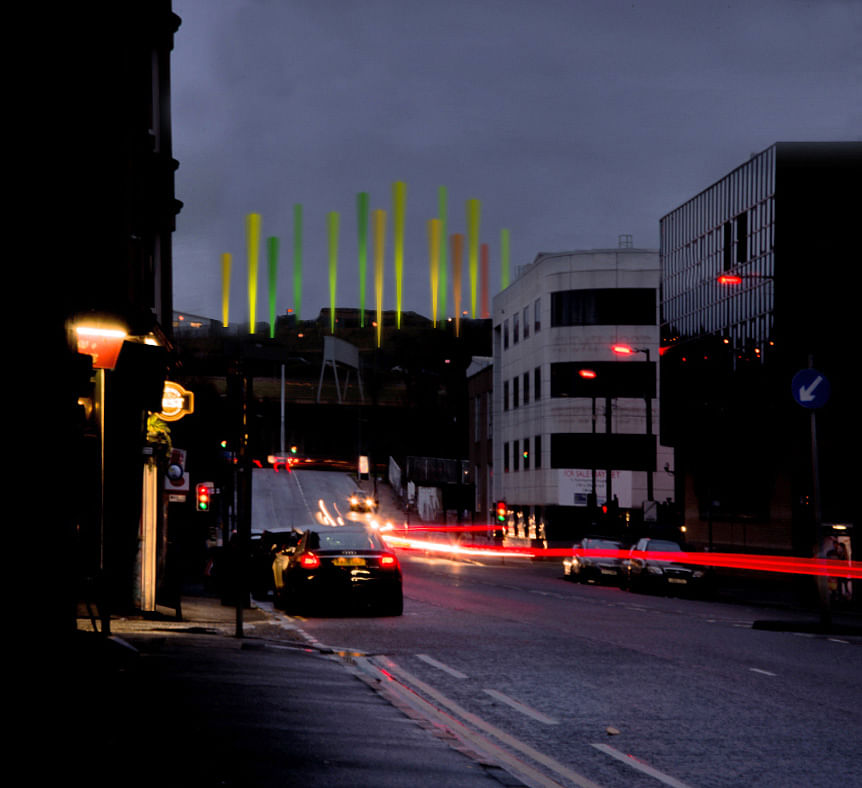
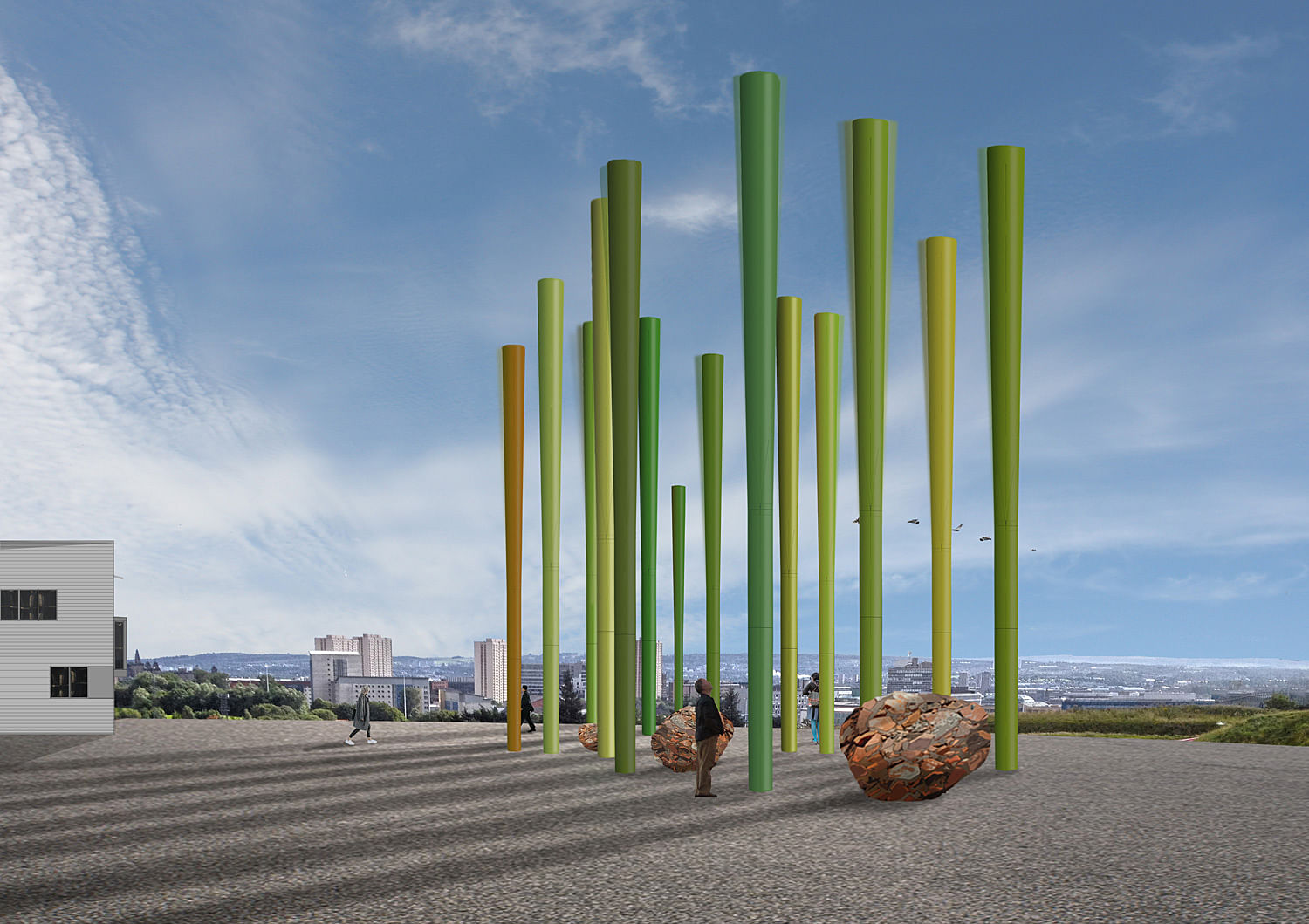
Image courtesy of Dalziel + Scullion, Qmulus Ltd., Yeadon Space Agency, and ZM Architecture
Image courtesy of Dalziel + Scullion, Qmulus Ltd., Yeadon Space Agency, and ZM Architecture.

“Each of the stems will be colored using a palette that draws from the year-round colors of natural deciduous woodlands. The 13-meter high stems (about the average height of a Rowan, Hazel or Hawthorn tree) generate power by oscillating from a fixed point in the lower half of the structure. The top of each stem has the capacity to circle up to 2 meters across which when amplified over the entire forest would be a unique and exciting spectacle to stand amongst. Together, they will power about 300 dwellings.”
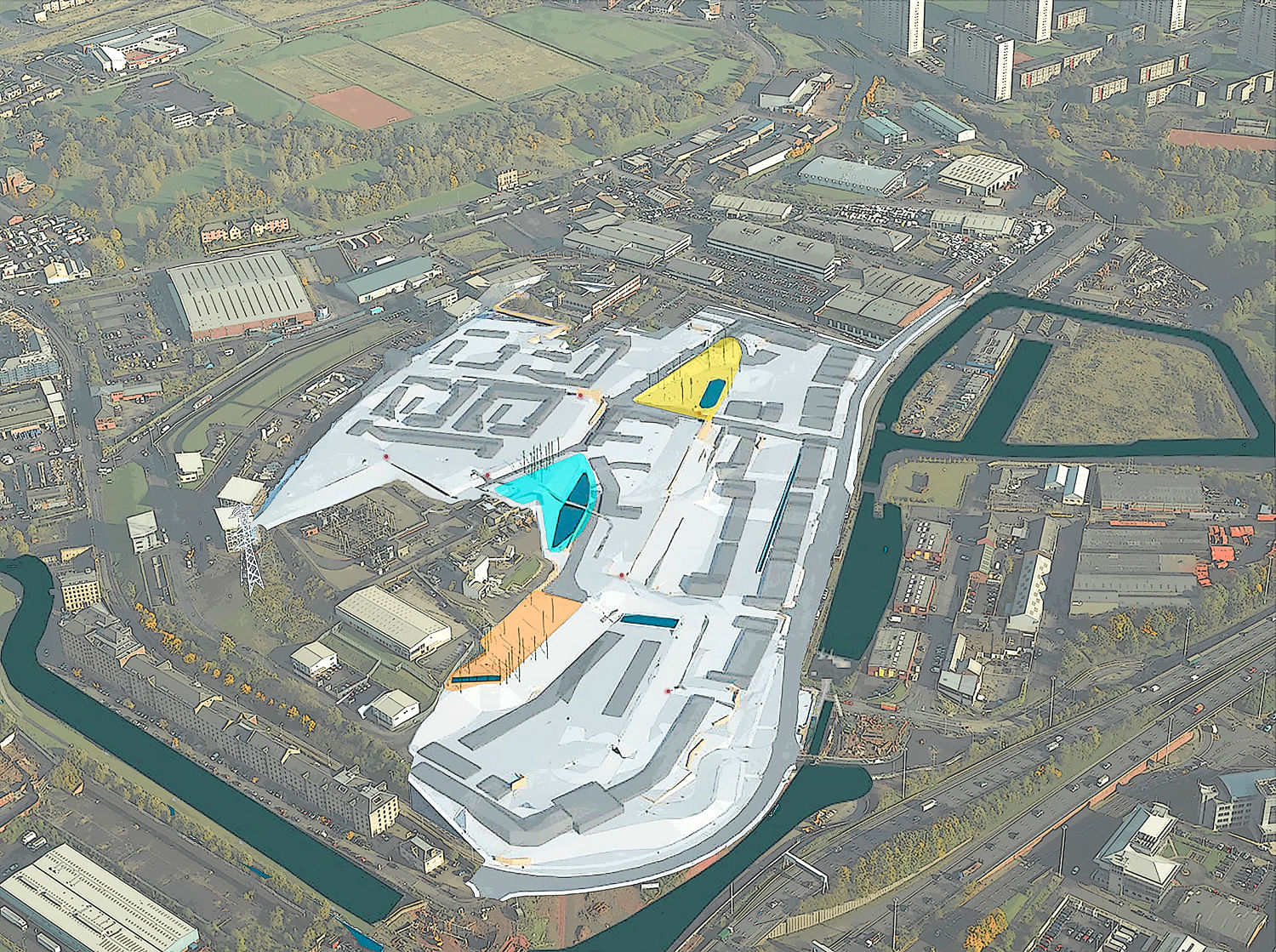
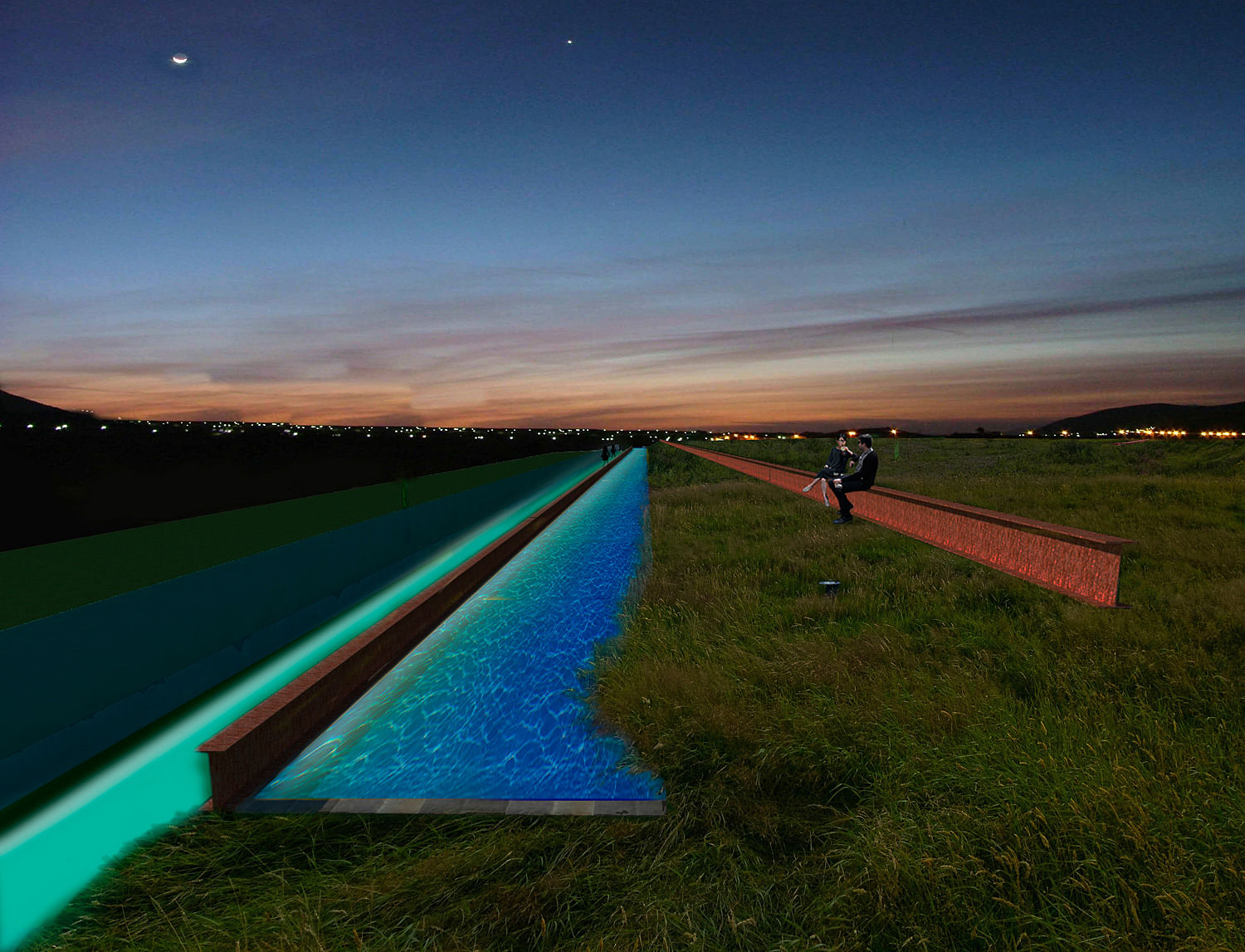
Image courtesy of Dalziel + Scullion, Qmulus Ltd., Yeadon Space Agency, and ZM Architecture.

“Our techno-boreal forest is arranged as three groves that distinguish distinct spaces across the site, while generating energy by swaying in the wind. One of the groves is at a gathering place or common. The second grove forms a central wetlands area with a natural SUDS (sustainable urban drainage system) basin, and the third is a glade at the edge of the site that opens onto spectacular views of Park Circus and the City. This particular grove is most visible from Glasgow City Center and it will be sited partially on one of the sloping sites that is more difficult to build on. All sites are exposed areas in no build zones within the current masterplan and will be interconnected through a path network.”

You can read more about Wind Forest and the other winning proposals here (PDF).

All images © Wind Forest Team.

*Update: This article was amended to clarify the slightly different model of the LAGI Glasgow competition, in comparison to LAGI's biennial open-ideas competitions as seen in Copenhagen, Dubai, New York, and the current Santa Monica competition.

RELATED NEWS A peek into "Sight" from the Land Art Generator Initiative 2014 in Copenhagen

Related

sustainability ● wind power ● wind energy ● alternative energy ● art installation ● lagi ● glasgow ● scotland ● europe ● competition ● land art generator initiative ● public art ● forest

Share

  • Follow

    1 Comment

  • markj.w.b
    markj.w.b

    markj.w.b ·  Jul 30, 16 4:10 PM

    Its similar to this design of an Architecture Student At TUDelft how created an Energy generating facade with out the need of blades. Which create a Nice pattern.

    http://www.designboom.com/architecture/murtada-alkaabi-ammophila-habitable-wind-farms-04-05-2014/
  • Comment as :

The “techno-boreal” Wind Forest wins the LAGI Glasgow competition

10 standout sustainable projects honored at AIA COTE Top Ten Award 2026

Best residential architecture of 2026 honored at AIA Housing Award

Best new interiors of 2026 chosen at AIA Interior Architecture Awards

Best global architecture honored at RIBA International Awards 2026

World’s most beautiful airports of 2026 chosen by Prix Versailles

New architecture and design competitions: Brick in Architecture Awards, Study Architecture Student Showcase, N.Y.C. Groceries, and New York High Falls Riverfront Market

SmithGroup’s ‘pioneering’ Philip Merrill Environmental Center wins AIA Twenty-five Year Award

Sponsored Post by Buildner

Museum of Emotions / Edition #8 FINAL registration deadline is in 5 DAYS!

Sign up for Bustler's Email Newsletters

Here are the winners of the 2026 AIA Architecture Awards

40 emerging architects and designers under 40 from Europe honored

Northwestern University selects 12-firm longlist to design new engineering building

New architecture and design competitions: Exploring 130 Years of American Design, Christo & Jeanne-Claude Center, 13 White Houses, and La Pyramide

Micro-architecture honored in latest Tiny House Architecture Competition

World’s most beautiful restaurants of 2026 chosen by Prix Versailles

Sponsored Post by Buildner

Design a wine tasting room in Italy! Valli Wine Tasting Room is launched!

Next page » Loading

The “techno-boreal” Wind Forest wins the LAGI Glasgow competition

By Justine Testado|

Thursday, Jul 28, 2016

Share

Image courtesy of Dalziel + Scullion, Qmulus Ltd., Yeadon Space Agency, and ZM Architecture.

Related

sustainability ● wind power ● wind energy ● alternative energy ● art installation ● lagi ● glasgow ● scotland ● europe ● competition ● land art generator initiative ● public art ● forest

The Land Art Generator Initiative competition proves once again that clean-energy design can be pleasing to the eyes. The LAGI competition challenges inter-disciplinary design teams to propose permanent public art installations that are equipped with the latest technological innovations in sustainable energy. Following successful competitions in Copenhagen, Dubai, and New York, the 2016 site was a new mixed-use development currently planned for Dundas Hill (or 100 Acre Hill), a post-industrial brownsite in Glasgow.

When it comes to wind energy, most people imagine rows of spinning wind turbines you'd typically find in the middle of a vast desert or a field. A team comprising of Peter Foster Richardson (ZM Architecture), Matthew Dalziel and Louise Scullion (Dalziel + Scullion), Ian Nicoll (Qmulus Ltd.), and Peter Yeadon (Yeadon Space Agency) created their own version of the wind turbine with their proposal, “Wind Forest”, which was selected as the winning commission. The other top-winning proposals were “Watergaw” and “Dundas Dandelions”.

While the LAGI competitions has its series of biennial open ideas competitions, the Glasgow edition was an invite-only to firms following an RFQ. LAGI Founding Directors Elizabeth Monoian and Robert Ferry pointed out that the invite-only competition model will soon be carried out in more cities, with the resulting projects spanning over multiple years.*

The “techno-boreal” Wind Forest is a group of blade-less wind turbines that use oscillation to generate enough electricity for approximately 300 homes, according to the team. In the coming months, the designers will move on to the development phase with their proposal.

And be on the lookout for the 2016 LAGI Santa Monica results, which are expected to be announced this October!

Read on for more about the Wind Forest from the designers.

Image courtesy of Dalziel + Scullion, Qmulus Ltd., Yeadon Space Agency, and ZM Architecture

Project description:

Wind Forest is designed with “various spatial, sensory and environmental qualities, [mimicking] the activity of a forest by absorbing energy from the passing wind, and distributing it to its diverse and connected community ecosystem,” the designers stated. “We were keen to address this brief in a way that was imaginative, resourceful and exciting, examining the context of the location from its geological origins through to its imagined interconnected future.”

Image courtesy of Dalziel + Scullion, Qmulus Ltd., Yeadon Space Agency, and ZM Architecture

“Wind Forest works with the physical landscape of 100 Acre Hill, upon which one hundred 4 kW single stem-like wind turbines will be planted. A revolution in wind energy design, these stems have no blades, have no gears or bearings, are noiseless, and do not present a hazard to birds. Instead, they generate electricity by oscillating, resulting in reduced maintenance costs, reduced manufacturing costs, reduced transportation costs, and smaller foundations.”

Image courtesy of Dalziel + Scullion, Qmulus Ltd., Yeadon Space Agency, and ZM Architecture
Image courtesy of Dalziel + Scullion, Qmulus Ltd., Yeadon Space Agency, and ZM Architecture.

“Each of the stems will be colored using a palette that draws from the year-round colors of natural deciduous woodlands. The 13-meter high stems (about the average height of a Rowan, Hazel or Hawthorn tree) generate power by oscillating from a fixed point in the lower half of the structure. The top of each stem has the capacity to circle up to 2 meters across which when amplified over the entire forest would be a unique and exciting spectacle to stand amongst. Together, they will power about 300 dwellings.”

Image courtesy of Dalziel + Scullion, Qmulus Ltd., Yeadon Space Agency, and ZM Architecture.

“Our techno-boreal forest is arranged as three groves that distinguish distinct spaces across the site, while generating energy by swaying in the wind. One of the groves is at a gathering place or common. The second grove forms a central wetlands area with a natural SUDS (sustainable urban drainage system) basin, and the third is a glade at the edge of the site that opens onto spectacular views of Park Circus and the City. This particular grove is most visible from Glasgow City Center and it will be sited partially on one of the sloping sites that is more difficult to build on. All sites are exposed areas in no build zones within the current masterplan and will be interconnected through a path network.”

You can read more about Wind Forest and the other winning proposals here (PDF).

All images © Wind Forest Team.

*Update: This article was amended to clarify the slightly different model of the LAGI Glasgow competition, in comparison to LAGI's biennial open-ideas competitions as seen in Copenhagen, Dubai, New York, and the current Santa Monica competition.

RELATED NEWS A peek into "Sight" from the Land Art Generator Initiative 2014 in Copenhagen

Share

  • Follow

    1 Comment

  • markj.w.b

    markj.w.b ·  Jul 30, 16 4:10 PM

    Its similar to this design of an Architecture Student At TUDelft how created an Energy generating facade with out the need of blades. Which create a Nice pattern.

    http://www.designboom.com/architecture/murtada-alkaabi-ammophila-habitable-wind-farms-04-05-2014/
  • Comment as :

Archinect JobsArchinect Jobs

The Archinect Job Board attracts the world's top architectural design talents.

VIEW ALL JOBS POST A JOB

Architect

KieranTimberlake

Architect

Philadelphia, PA, US

Project Architect - Residential

DAHLIN Architecture | Planning | Interiors

Project Architect - Residential

Pleasanton, CA, US

Junior/Intermediate Architect

Archimaera Architecture

Junior/Intermediate Architect

New York, NY, US

Architect/Project Manager - Commercial

DAHLIN Architecture | Planning | Interiors

Architect/Project Manager - Commercial

Pleasanton, CA, US

Architect

Joe Serrins Studio

Architect

New York, NY, US

Interior Designer - Intermediate Level (3-7 Years)

Yazdani Studio of Cannon Design

Interior Designer - Intermediate Level (3-7 Years)

Los Angeles, CA, US

Senior Landscape Designer

Surfacedesign, Inc.

Senior Landscape Designer

San Francisco, CA, US

Intermediate Architect

O'Neill Rose Architects

Intermediate Architect

Brooklyn, NY, US

 Intermediate Architect

Curtis + Ginsberg Architects LLP

Intermediate Architect

New York, NY, US

Marketing Coordinator / EA

Stoss Landscape Urbanism

Marketing Coordinator / EA

Boston, MA, US

Next page » Loading