• Login / Join
  • About
  • •
  • Contact
  • •
  • Advertising
bustler logo
bustler logo
  • News
  • Competitions
  • Events
  • Bustler is powered by Archinect
  • Sign up for Bustler's Email Newsletters

  • Follow these Bustler feeds:

  • Search

    Search in

  • Submit

    What are you submitting?

    News Pitch
    Competition
    Event
  • Login / Join
  • News|Competitions|Events
  • Search
    | Submit
    | Follow
  • Search in

    What are you submitting?

    News Pitch
    Competition
    Event

    Follow these Bustler feeds:

  • About|Contact|Advertising
  • Login / Join

Winning installation ideas of the Nka Foundation 2017 Land Art Competition for Ghana

By Justine Testado|

Thursday, May 11, 2017
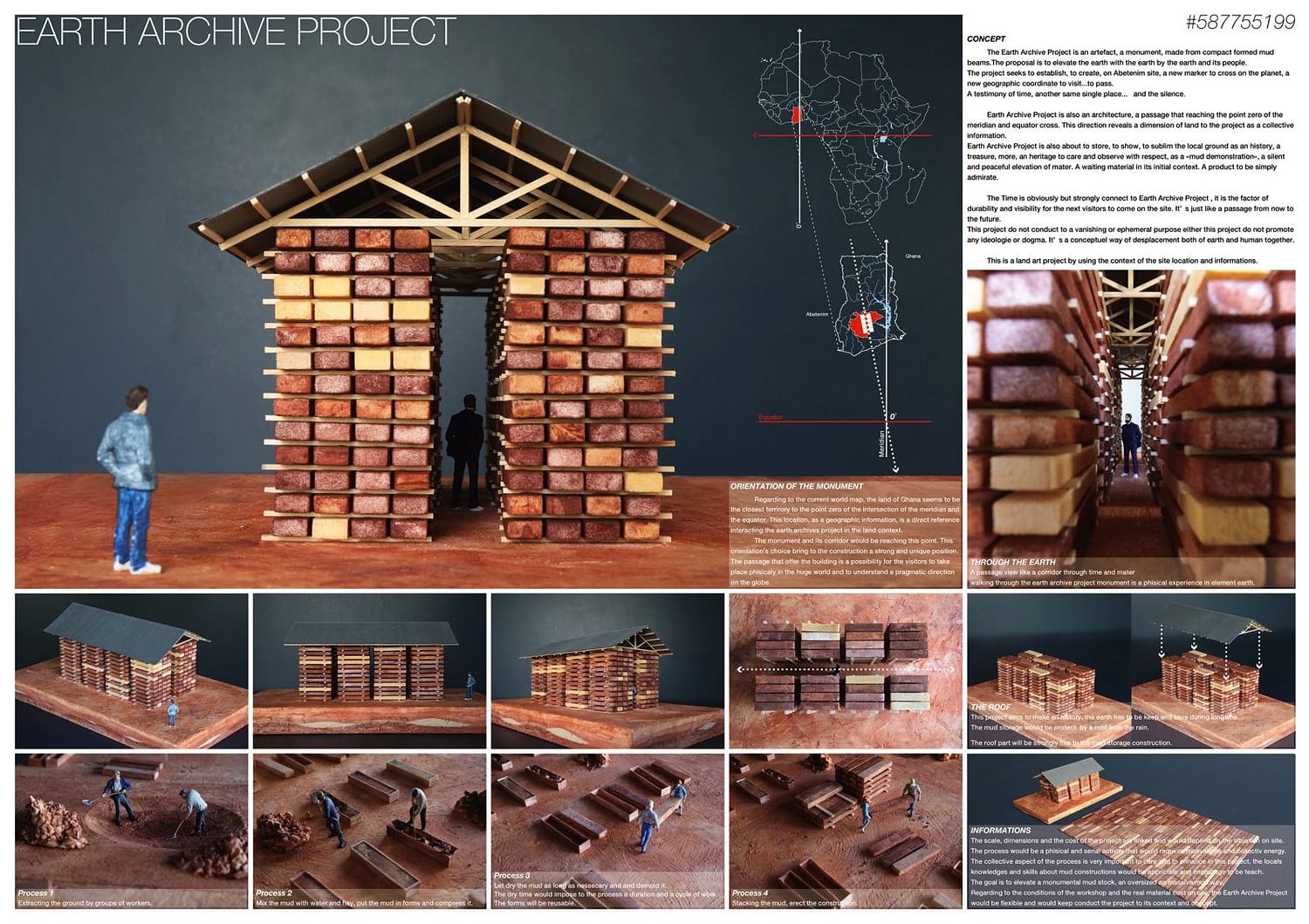
1st place: Earth Archive Project by Yusuke Suzuki and Léo Allègre of Yusuke Suzuki Design Office in Japan

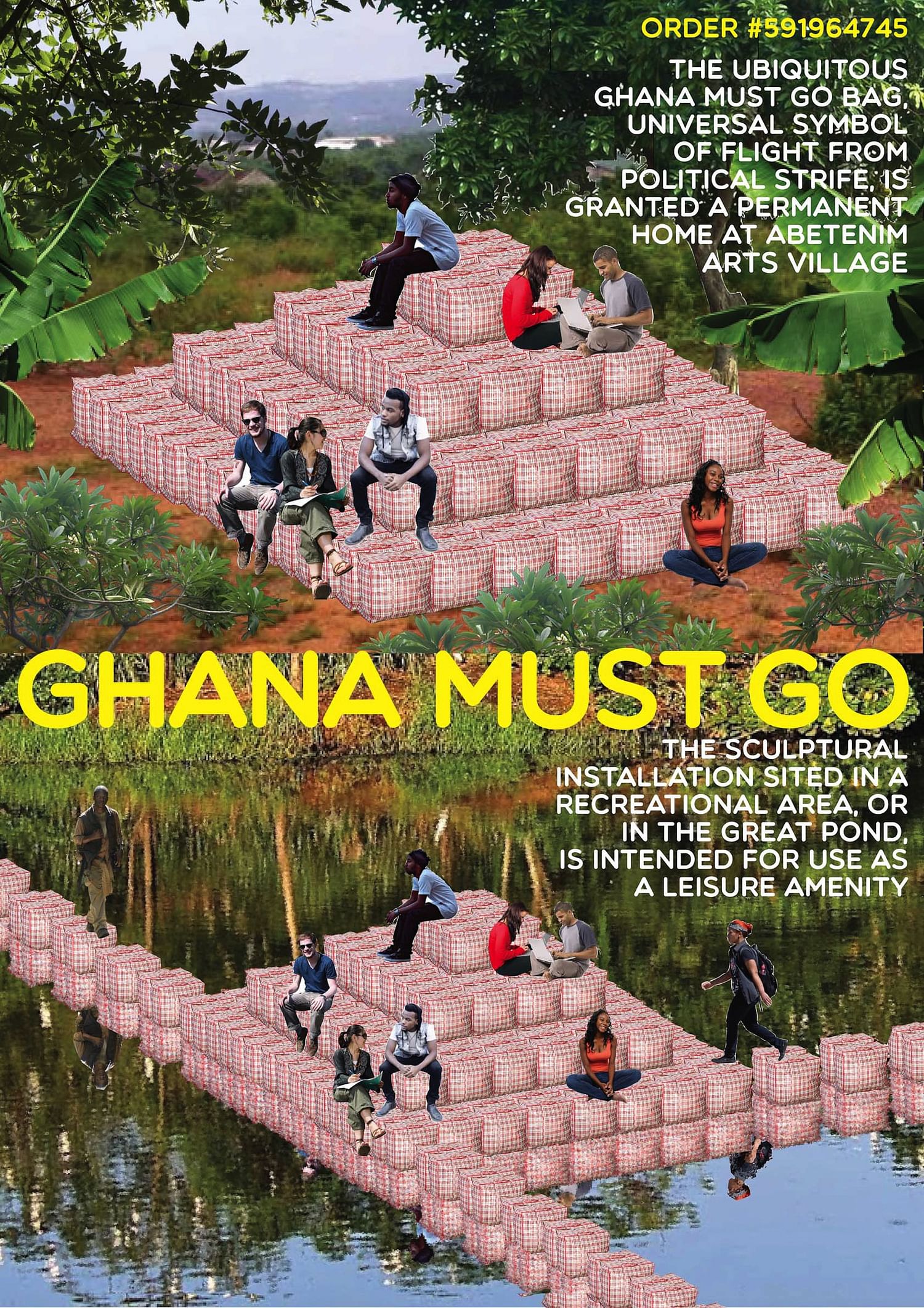
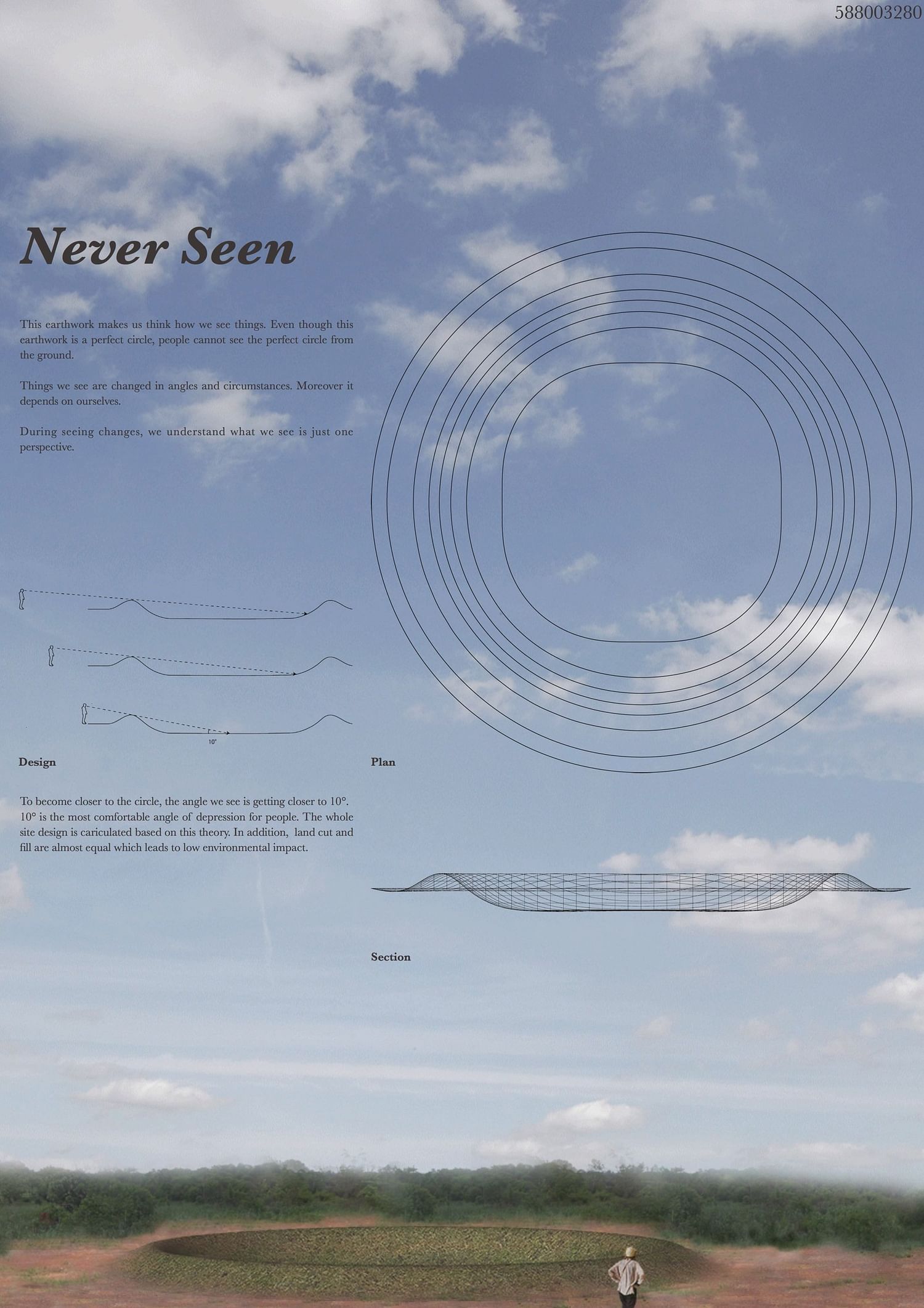
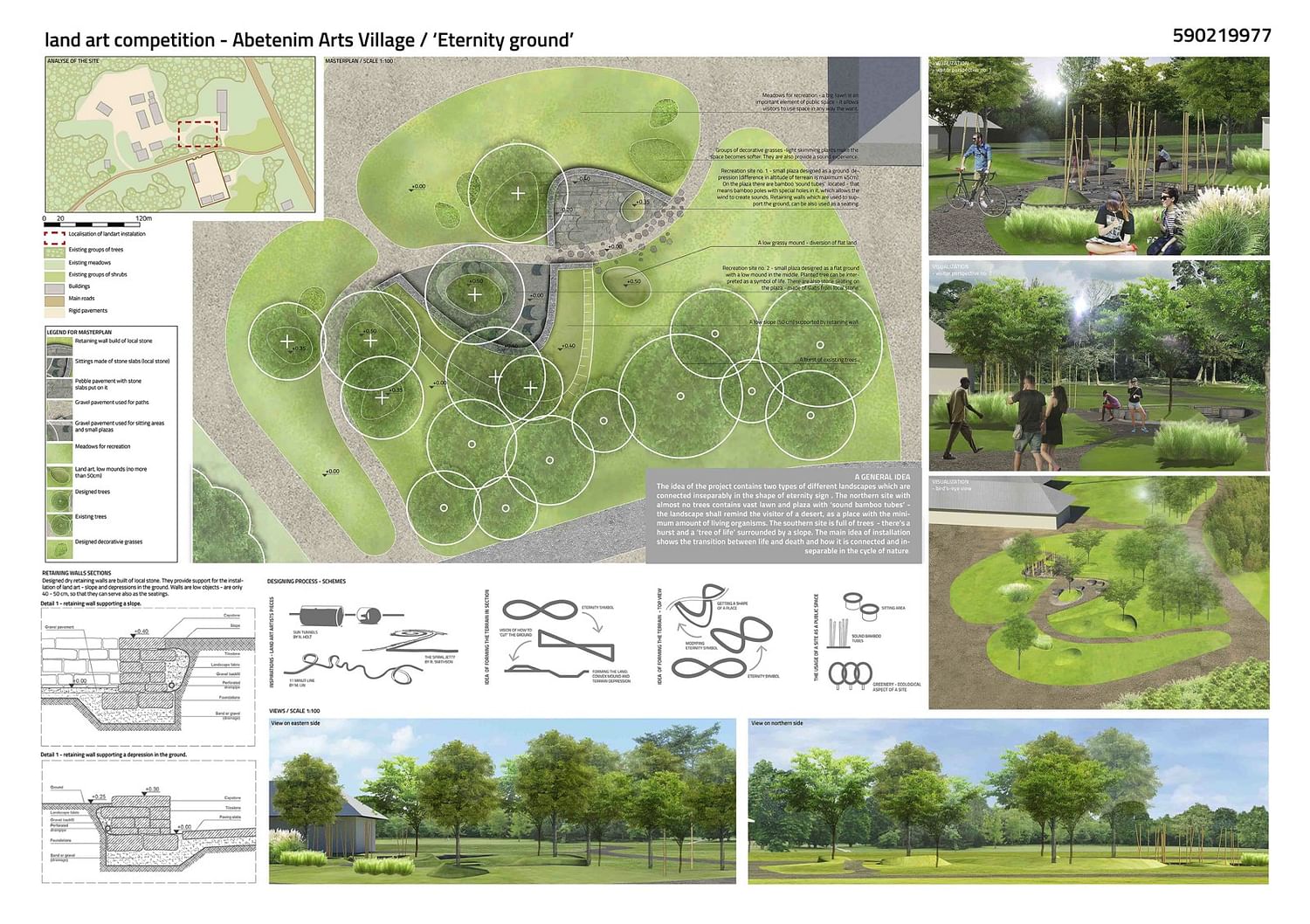
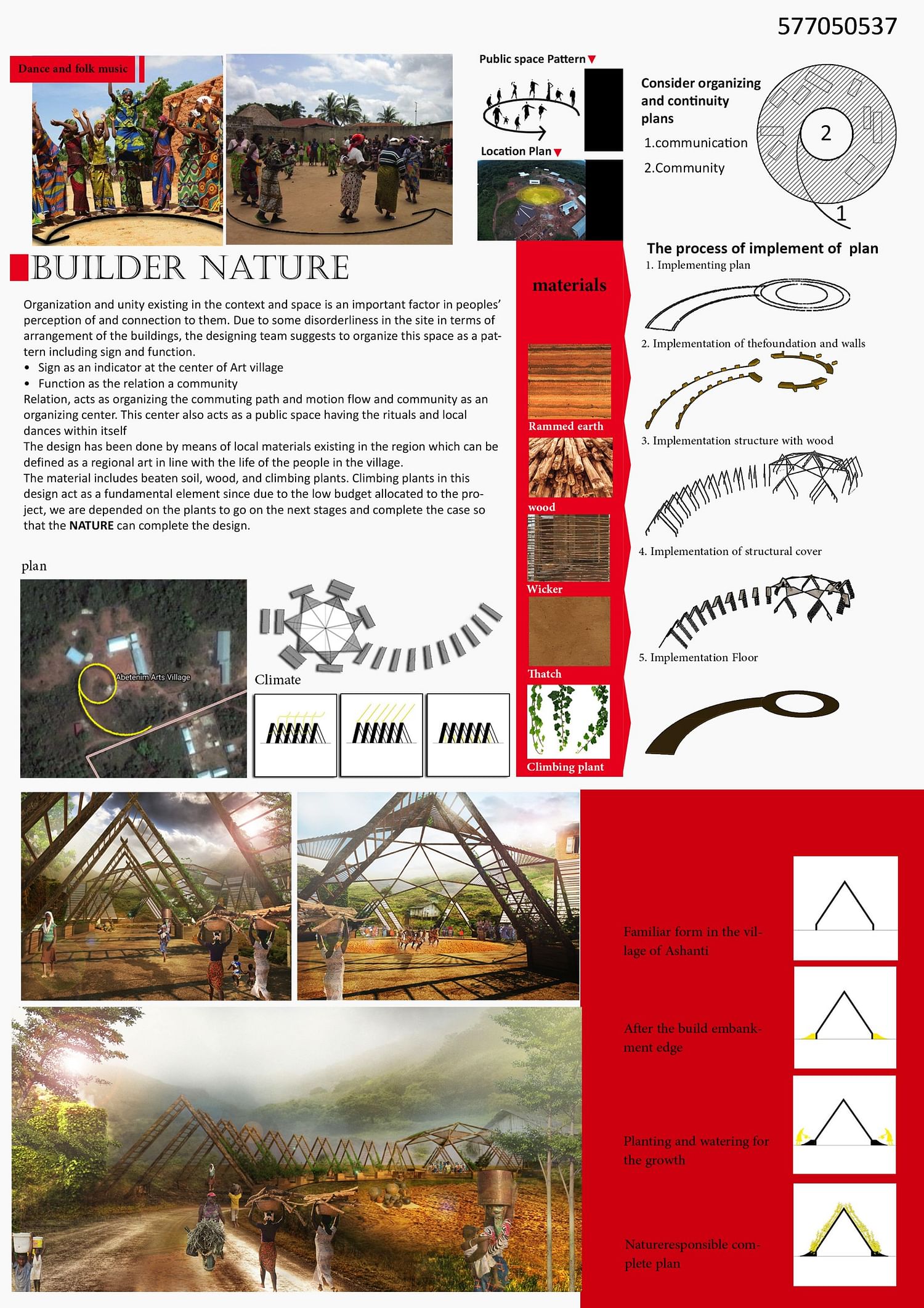
The Nka Foundation recently revealed the winners of the 2017 Land Art Competition for Ghana. In this edition of the global placemaking competition, architects, landscape architects, engineers, and students alike were invited to submit their most inventive ideas for large-scale and site-specific public art installations in rural Ghana.

In designing their proposals, entrants had to emphasize creating a unique arts village experience and how their design functions as a place. The jury selected three prize winners and seven honorable mentions. The designers of the top entries will have the chance to collaborate with Nka Foundation in organizing a design workshop open to design students and recent graduates everywhere to help realize the winning projects. The installations will be displayed in the Abetenim Arts Village in Ghana. Workshops are currently scheduled for 2018.

Check out the winning and honorable mention entries below.
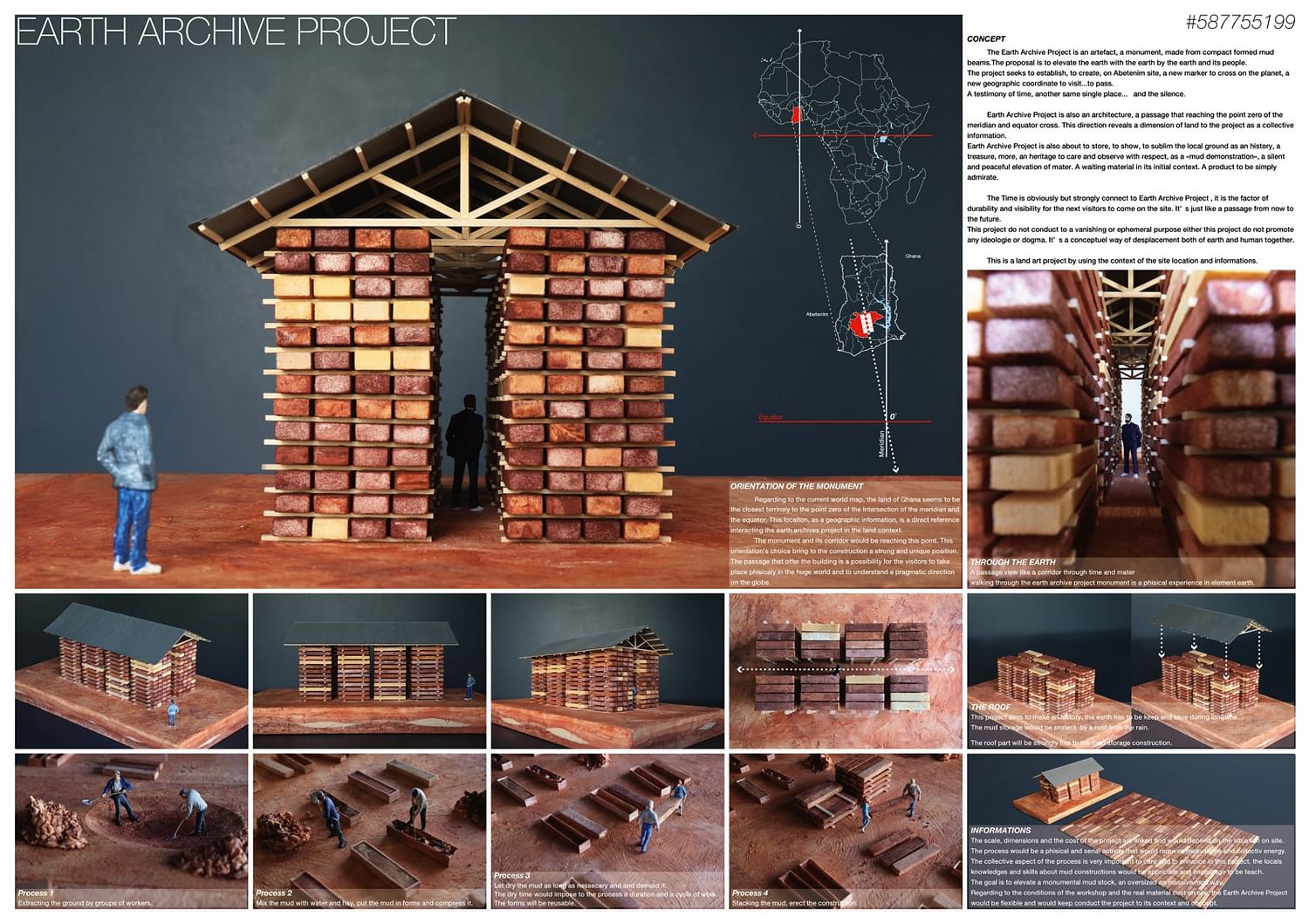
1st place: Earth Archive Project by Yusuke Suzuki and Léo Allègre of Yusuke Suzuki Design Office in Japan

1st place: Earth Archive Project  by Yusuke Suzuki and Léo Allègre of Yusuke Suzuki Design Office in Japan

Project description:  “The Earth Archive Project is an artifact, a monument, made from compact formed mud beams.The proposal is to elevate the earth with the earth by the earth and its people. The project seeks to establish, to create, on Abetenim site, a new marker to cross on the planet, a new geographic coordinate to visit...to pass. A testimony of time, another same single place... and the silence. 

Earth Archive Project is also an architecture, a passage that reaching the point zero of the meridian and equator cross. This direction reveals a dimension of land to the project as a collective information. Earth Archive Project is also about to store, to show, to sublime the local ground as an history, a treasure, more, an heritage to care and observe with respect, as a «mud demonstration», a silent and peaceful elevation of mater. A waiting material in its initial context. A product to be simply admired. 

The Time is obviously but strongly connect to Earth Archive Project , it is the factor of durability and visibility for the next visitors to come on the site. It’s just like a passage from now to the future. This project do not conduct to a vanishing or ephemeral purpose either this project do not promote any ideology or dogma. It’s a conceptual way of displacement both of earth and human together. This is a land art project by using the context of the site location and informations.”
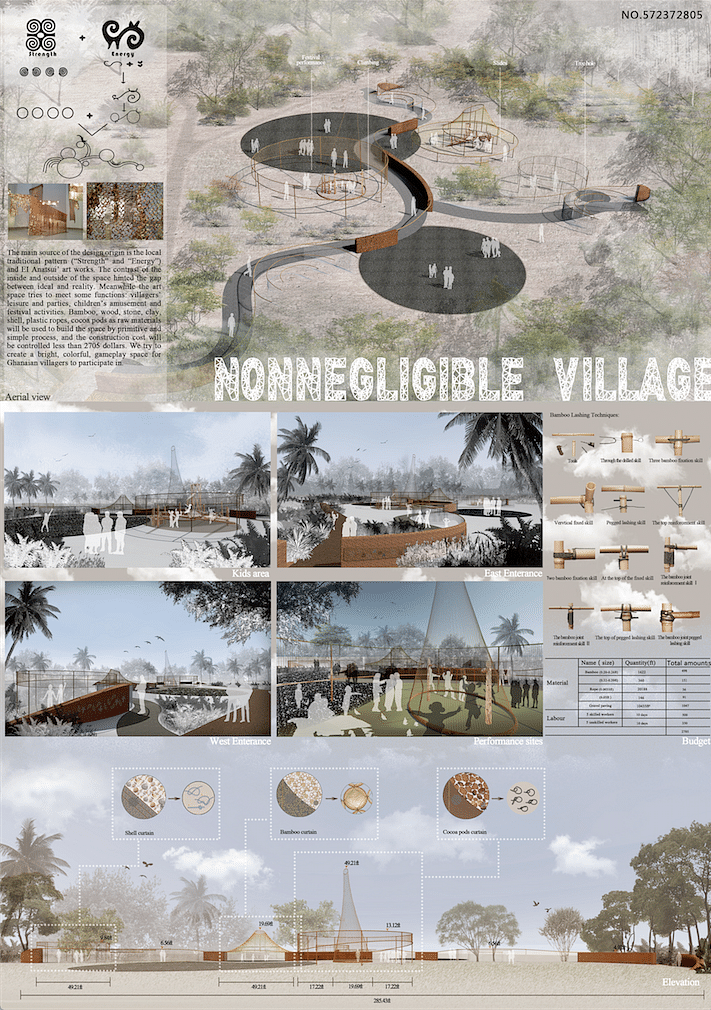
2nd place: Nonnegligible Village by the Urban Active Space Research Studio involving Team Members: Ruixuan Li, Jiazi Zhang, Qiuming Dong, Rui Xu, Ying Zheng, Xiaoming Wang, Ziyi Zhao, Yanying Zhao, Yuxiang Zhang, Na Li, Henan Wang, Pengzhe He at Dalian polytechnic University in China

2nd place: Nonnegligible Village by the Urban Active Space Research Studio at Dalian Polytechnic University in China
Team: Ruixuan Li, Jiazi Zhang, Qiuming Dong, Rui Xu, Ying Zheng, Xiaoming Wang, Ziyi Zhao, Yanying Zhao, Yuxiang Zhang, Na Li, Henan Wang, Pengzhe He

Project description: “The main source of the design origin is the local traditional pattern (“Strength” and “Energy”) and EI Anatsui’ art works. The contrast of the inside and outside of the space hinted the gap between ideal and reality. Meanwhile the art space tries to meet some functions: villagers’ leisure and parties, children’s amusement and festival activities. We try to create a bright, colorful, gameplay space for Ghanaian villagers to participate in. Bamboo, wood, stone, clay, shell, plastic ropes, cacao shell as raw materials will be used to build the space by primitive and simple process.”
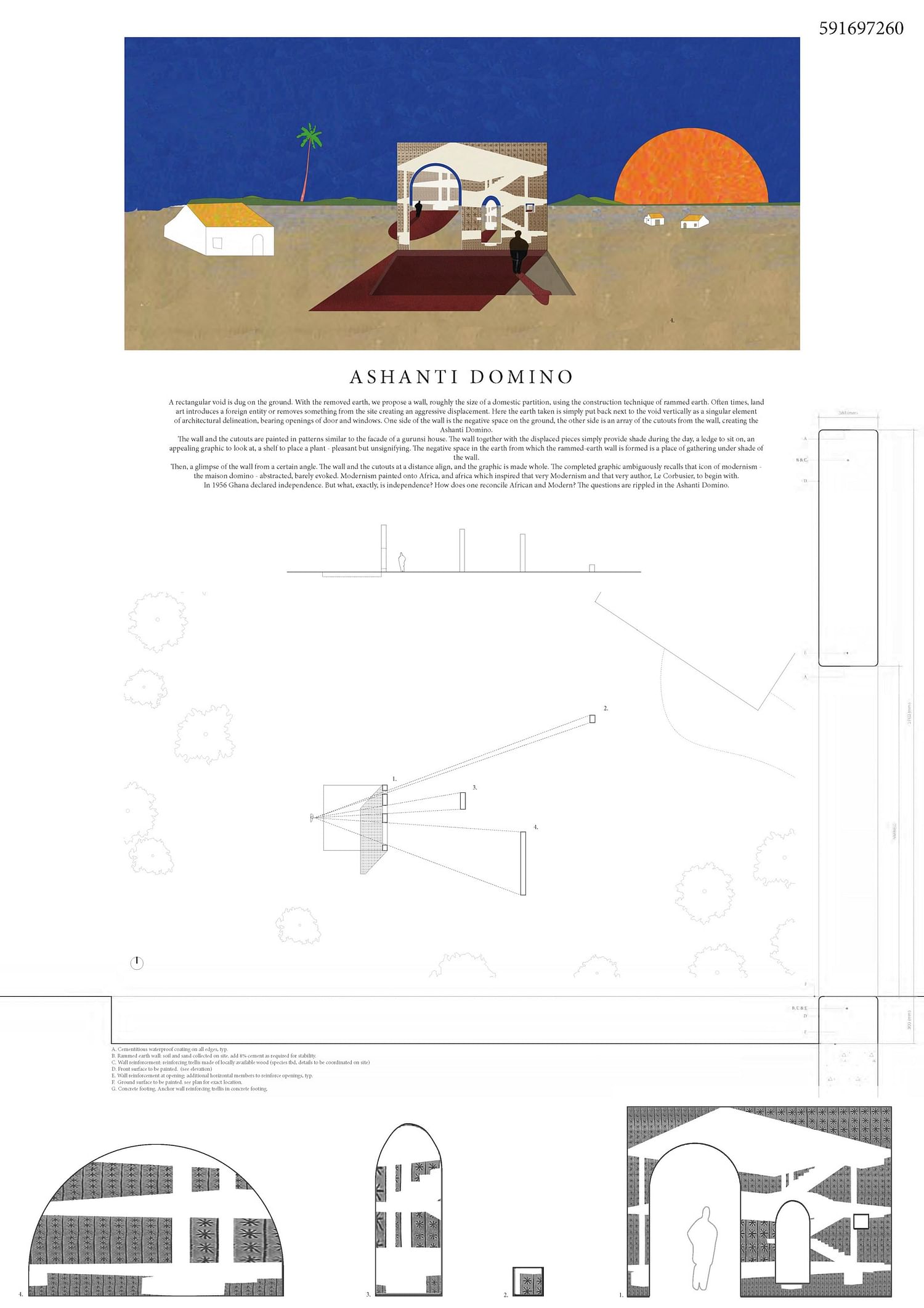
3rd place: Ashanti Domino by Sara Arfaian, Junko Yamamoto and Jenny Zhan in USA​

3rd place: Ashanti Domino by Sara Arfaian, Junko Yamamoto and Jenny Zhan in USA

Project description: “A rectangular void is dug on the ground. With the removed earth, we propose a wall, roughly the size of a domestic partition, using the construction technique of rammed earth. Often times, land art introduces a foreign entity or removes something from the site creating an aggressive displacement. Here the earth taken is simply put back next to the void vertically as a singular element of architectural delineation, bearing openings of door and windows. One side of the wall is the negative space on the ground, the other side is an array of the cutouts from the wall, creating the Ashanti Domino. 

The wall and the cutouts are painted in patterns similar to the facade of a gurunsi house. The wall together with the displaced pieces simply provide shade during the day, a ledge to sit on, an appealing graphic to look at, a shelf to place a plant - pleasant but unsignifying. The negative space in the earth from which the rammed-earth wall is formed is a place of gathering under shade of the wall. 

Then, a glimpse of the wall from a certain angle. The wall and the cutouts at a distance align, and the graphic is made whole. The completed graphic ambiguously recalls that icon of modernism - the maison domino - abstracted, barely evoked. Modernism painted onto Africa, and Africa which inspired that very Modernism and that very author, Le Corbusier, to begin with. 

In 1956 Ghana declared independence. But what, exactly, is independence? How does one reconcile African and Modern? The questions are rippled in the Ashanti Domino.”

Don't forget about the honorable mentions in the gallery below! You can see all the competition entries here.

Jury: Hsu-Jen Huang, PhD and Professor in the Department of Architecture, School of Building Arts, Savannah College of Art and Design in Savannah, GA; Ingrid Lenz, Writer in Munich, Germany; Antonio Manfredi, Curator, Contemporary Art Museum (CAM), Casoria, Naples, Italy; Moyo Okediji, PhD and Professor in the Department of Art and Art History, College of Fine Arts, University of Texas in Austin, TX; and Sabine Tastel, Architect and Urban Planner teaching international urbanism at KIT in Germany

Images courtesy of Nka Foundation.
Related

nka foundation ● land art ● ghana ● competition ● placemaking ● art installation ● architectural workshop
Nka Foundation
Nka Foundation
Dalian University of Technology

Share

  • Follow

    0 Comments

  • Comment as :

Winning installation ideas of the Nka Foundation 2017 Land Art Competition for Ghana

World’s most beautiful airports of 2026 chosen by Prix Versailles

New architecture and design competitions: Brick in Architecture Awards, Study Architecture Student Showcase, N.Y.C. Groceries, and New York High Falls Riverfront Market

SmithGroup’s ‘pioneering’ Philip Merrill Environmental Center wins AIA Twenty-five Year Award

Sponsored Post by Buildner

Museum of Emotions / Edition #8 FINAL registration deadline is in 5 DAYS!

Here are the winners of the 2026 AIA Architecture Awards

40 emerging architects and designers under 40 from Europe honored

Northwestern University selects 12-firm longlist to design new engineering building

New architecture and design competitions: Exploring 130 Years of American Design, Christo & Jeanne-Claude Center, 13 White Houses, and La Pyramide

Sign up for Bustler's Email Newsletters

Micro-architecture honored in latest Tiny House Architecture Competition

World’s most beautiful restaurants of 2026 chosen by Prix Versailles

Sponsored Post by Buildner

Design a wine tasting room in Italy! Valli Wine Tasting Room is launched!

10 can't-miss architecture & design events to see this June in London, Los Angeles, Chicago, San Francisco, Detroit, San Diego, Porto, and Barcelona

Sponsored Post by Buildner

Museum of Emotions / Edition #8 FINAL registration deadline is approaching!

Seven global projects make AR Public Awards shortlist 2026

Sponsored Post by Buildner

Design a slow-living restaurant in Portugal! Portugal Long Table Restaurant is launched!

Next page » Loading

Winning installation ideas of the Nka Foundation 2017 Land Art Competition for Ghana

By Justine Testado|

Thursday, May 11, 2017

Share

1st place: Earth Archive Project by Yusuke Suzuki and Léo Allègre of Yusuke Suzuki Design Office in Japan

Related

nka foundation ● land art ● ghana ● competition ● placemaking ● art installation ● architectural workshop
Nka Foundation
Nka Foundation
Dalian University of Technology

The Nka Foundation recently revealed the winners of the 2017 Land Art Competition for Ghana. In this edition of the global placemaking competition, architects, landscape architects, engineers, and students alike were invited to submit their most inventive ideas for large-scale and site-specific public art installations in rural Ghana.

In designing their proposals, entrants had to emphasize creating a unique arts village experience and how their design functions as a place. The jury selected three prize winners and seven honorable mentions. The designers of the top entries will have the chance to collaborate with Nka Foundation in organizing a design workshop open to design students and recent graduates everywhere to help realize the winning projects. The installations will be displayed in the Abetenim Arts Village in Ghana. Workshops are currently scheduled for 2018.

Check out the winning and honorable mention entries below.

1st place: Earth Archive Project by Yusuke Suzuki and Léo Allègre of Yusuke Suzuki Design Office in Japan

1st place: Earth Archive Project  by Yusuke Suzuki and Léo Allègre of Yusuke Suzuki Design Office in Japan

Project description:  “The Earth Archive Project is an artifact, a monument, made from compact formed mud beams.The proposal is to elevate the earth with the earth by the earth and its people. The project seeks to establish, to create, on Abetenim site, a new marker to cross on the planet, a new geographic coordinate to visit...to pass. A testimony of time, another same single place... and the silence. 

Earth Archive Project is also an architecture, a passage that reaching the point zero of the meridian and equator cross. This direction reveals a dimension of land to the project as a collective information. Earth Archive Project is also about to store, to show, to sublime the local ground as an history, a treasure, more, an heritage to care and observe with respect, as a «mud demonstration», a silent and peaceful elevation of mater. A waiting material in its initial context. A product to be simply admired. 

The Time is obviously but strongly connect to Earth Archive Project , it is the factor of durability and visibility for the next visitors to come on the site. It’s just like a passage from now to the future. This project do not conduct to a vanishing or ephemeral purpose either this project do not promote any ideology or dogma. It’s a conceptual way of displacement both of earth and human together. This is a land art project by using the context of the site location and informations.”

2nd place: Nonnegligible Village by the Urban Active Space Research Studio involving Team Members: Ruixuan Li, Jiazi Zhang, Qiuming Dong, Rui Xu, Ying Zheng, Xiaoming Wang, Ziyi Zhao, Yanying Zhao, Yuxiang Zhang, Na Li, Henan Wang, Pengzhe He at Dalian polytechnic University in China

2nd place: Nonnegligible Village by the Urban Active Space Research Studio at Dalian Polytechnic University in China
Team: Ruixuan Li, Jiazi Zhang, Qiuming Dong, Rui Xu, Ying Zheng, Xiaoming Wang, Ziyi Zhao, Yanying Zhao, Yuxiang Zhang, Na Li, Henan Wang, Pengzhe He

Project description: “The main source of the design origin is the local traditional pattern (“Strength” and “Energy”) and EI Anatsui’ art works. The contrast of the inside and outside of the space hinted the gap between ideal and reality. Meanwhile the art space tries to meet some functions: villagers’ leisure and parties, children’s amusement and festival activities. We try to create a bright, colorful, gameplay space for Ghanaian villagers to participate in. Bamboo, wood, stone, clay, shell, plastic ropes, cacao shell as raw materials will be used to build the space by primitive and simple process.”

3rd place: Ashanti Domino by Sara Arfaian, Junko Yamamoto and Jenny Zhan in USA​

3rd place: Ashanti Domino by Sara Arfaian, Junko Yamamoto and Jenny Zhan in USA

Project description: “A rectangular void is dug on the ground. With the removed earth, we propose a wall, roughly the size of a domestic partition, using the construction technique of rammed earth. Often times, land art introduces a foreign entity or removes something from the site creating an aggressive displacement. Here the earth taken is simply put back next to the void vertically as a singular element of architectural delineation, bearing openings of door and windows. One side of the wall is the negative space on the ground, the other side is an array of the cutouts from the wall, creating the Ashanti Domino. 

The wall and the cutouts are painted in patterns similar to the facade of a gurunsi house. The wall together with the displaced pieces simply provide shade during the day, a ledge to sit on, an appealing graphic to look at, a shelf to place a plant - pleasant but unsignifying. The negative space in the earth from which the rammed-earth wall is formed is a place of gathering under shade of the wall. 

Then, a glimpse of the wall from a certain angle. The wall and the cutouts at a distance align, and the graphic is made whole. The completed graphic ambiguously recalls that icon of modernism - the maison domino - abstracted, barely evoked. Modernism painted onto Africa, and Africa which inspired that very Modernism and that very author, Le Corbusier, to begin with. 

In 1956 Ghana declared independence. But what, exactly, is independence? How does one reconcile African and Modern? The questions are rippled in the Ashanti Domino.”

Don't forget about the honorable mentions in the gallery below! You can see all the competition entries here.

Jury: Hsu-Jen Huang, PhD and Professor in the Department of Architecture, School of Building Arts, Savannah College of Art and Design in Savannah, GA; Ingrid Lenz, Writer in Munich, Germany; Antonio Manfredi, Curator, Contemporary Art Museum (CAM), Casoria, Naples, Italy; Moyo Okediji, PhD and Professor in the Department of Art and Art History, College of Fine Arts, University of Texas in Austin, TX; and Sabine Tastel, Architect and Urban Planner teaching international urbanism at KIT in Germany

Images courtesy of Nka Foundation.
Share

  • Follow

    0 Comments

  • Comment as :

Archinect JobsArchinect Jobs

The Archinect Job Board attracts the world's top architectural design talents.

VIEW ALL JOBS POST A JOB

Junior Architect in nyc

Lara Apelian Studio

Junior Architect in nyc

New York, NY, US

Architectural/Structural Drafter

New Beginnings Engineering

Architectural/Structural Drafter

Irvine, CA, US

Junior Architect / Architectural Designer

S20M

Junior Architect / Architectural Designer

New York, NY, US

Design Director or Sr. Architect

b.hills architecture, P.C.

Design Director or Sr. Architect

Boise, ID, US

Professor/Associate Professor/Assistant Professor of Architecture

Harvard University

Professor/Associate Professor/Assistant Professor of Architecture

Cambridge, MA, US

Intermediate Architect

GF55 Architects

Intermediate Architect

New York, NY, US

Project Architect/ Designer

Nandinee Phookan Architect, P.C.

Project Architect/ Designer

New York, NY, US

Architect

OBRA Architects

Architect

New York, NY, US

Architect / Project Manager

Curtis + Ginsberg Architects LLP

Architect / Project Manager

New York, NY, US

 Intermediate Architect

Curtis + Ginsberg Architects LLP

Intermediate Architect

New York, NY, US

Next page » Loading