• Login / Join
  • About
  • •
  • Contact
  • •
  • Advertising
bustler logo
bustler logo
  • News
  • Competitions
  • Events
  • Bustler is powered by Archinect
  • Sign up for Bustler's Email Newsletters

  • Follow these Bustler feeds:

  • Search

    Search in

  • Submit

    What are you submitting?

    News Pitch
    Competition
    Event
  • Login / Join
  • News|Competitions|Events
  • Search
    | Submit
    | Follow
  • Search in

    What are you submitting?

    News Pitch
    Competition
    Event

    Follow these Bustler feeds:

  • About|Contact|Advertising
  • Login / Join

Engineered Biotopes Commended in Piraeus Tower 2010 Competition

By Bustler Editors|

Wednesday, Jul 28, 2010
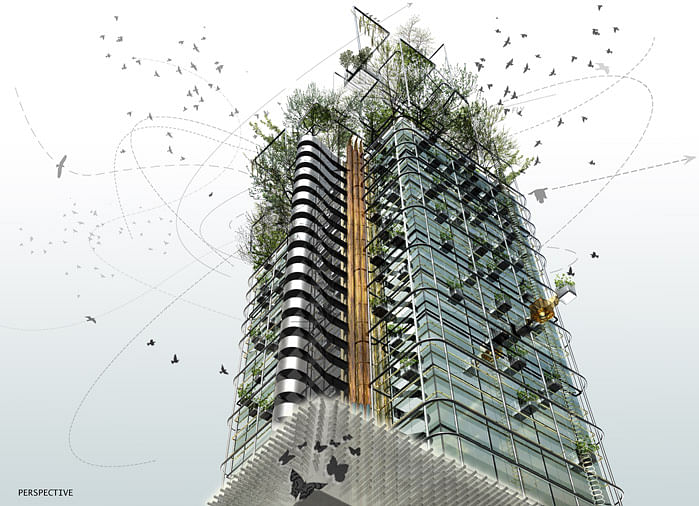
Perspective

London-based Teammates Anthi Grapsa Konstantinos Chalaris, have shared with us their project 'Engineered Biotopes'.

Their proposal was for a competition in Greece, and was given a Commendation. The title of the competition was ‘Piraeus Tower 2010 – Changing the Face/Façades Reformation’, organized by DUPONT and greekarchitects.gr.

The cities of Attica and especially Piraeus is a city with a very low proportion of open green spaces to the number of its inhabitants compared to European standards.

Our proposal for the Façade reformation of Piraeus Tower intends to use technology for the best possible adaption of nature on the building. Using modern agricultural techniques in the construction of the building we allow nature to flourish with the help of plants and birds that already exist around the city.
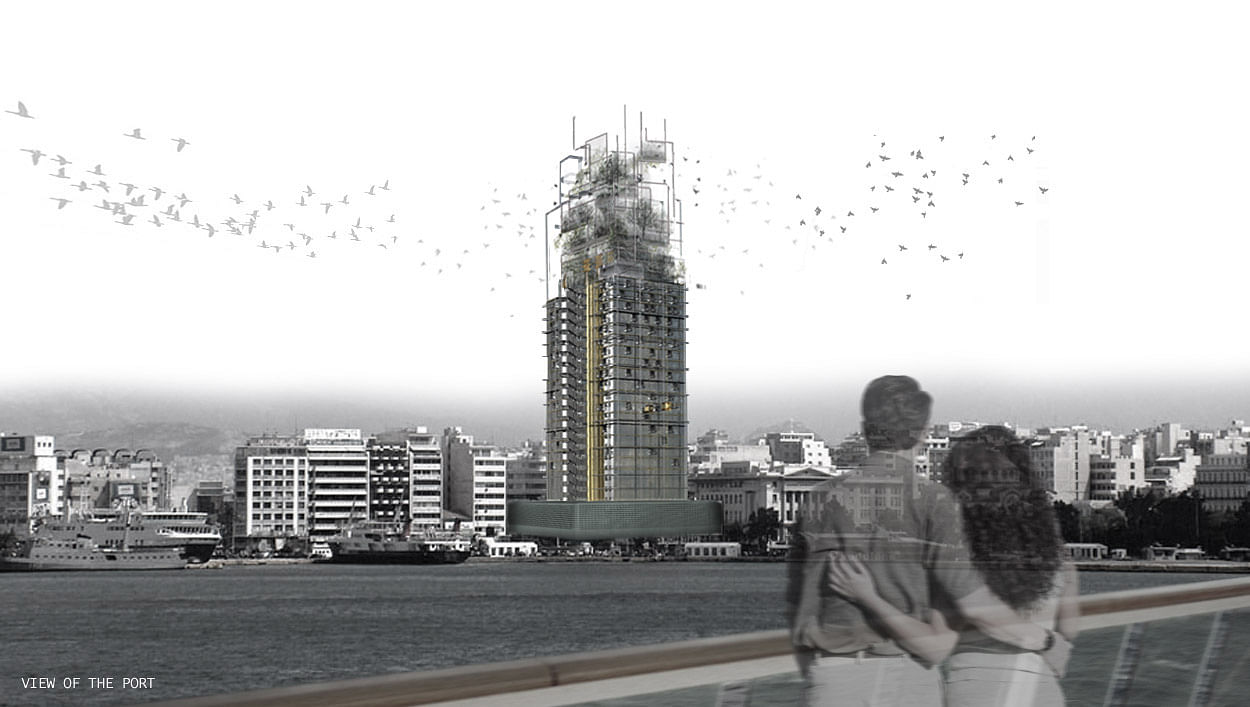
Perspective in context

The program of the facade varies through its vertical expression.

On the outside of the first two floors, the plant nursery consists of a grid of glass tubes used to nurture seedlings.  From a distance these appear as a shimmering form, reflecting light onto the street provoking the attention of the passerby.
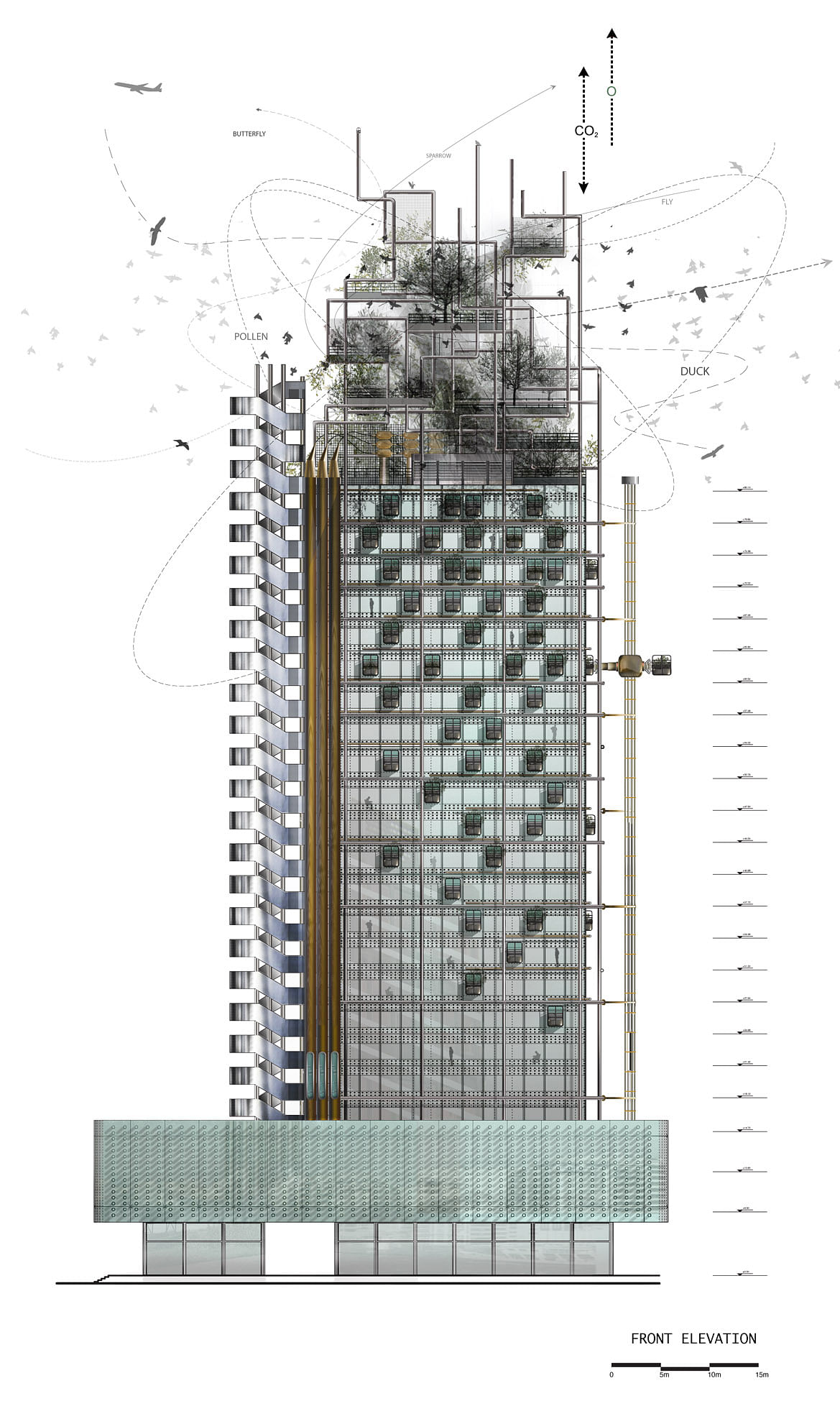
Front Elevation

Floors 3-22 consist of small biotopes that produce low vegetation for the workers and visitors inside the building. This system consists of a robotic crane and specially designed modules where plants are grown. The crane is connected to a computer, which re-positions the modules based on the weather conditions, sun light and water consumption. If a crop is receiving too much sunlight, the module is moved to the shade either horizontally or vertically until finding the required position.
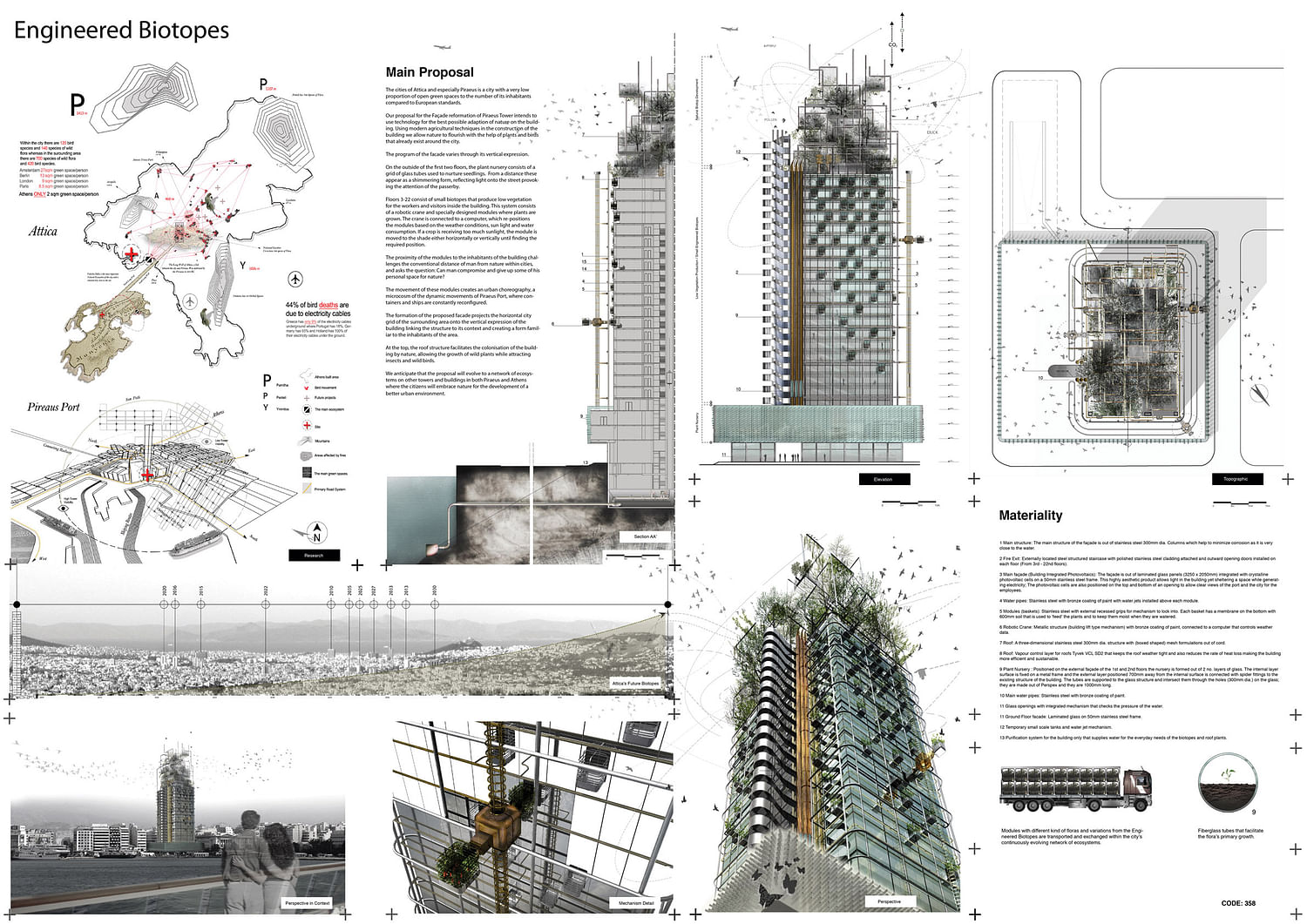
Final board

The proximity of the modules to the inhabitants of the building challenges the conventional distance of man from nature within cities, and asks the question: Can man compromise and give up some of his personal space for nature?
 
The movement of these modules creates an urban choreography, a microcosm of the dynamic movements of Piraeus Port, where containers and ships are constantly reconfigured.
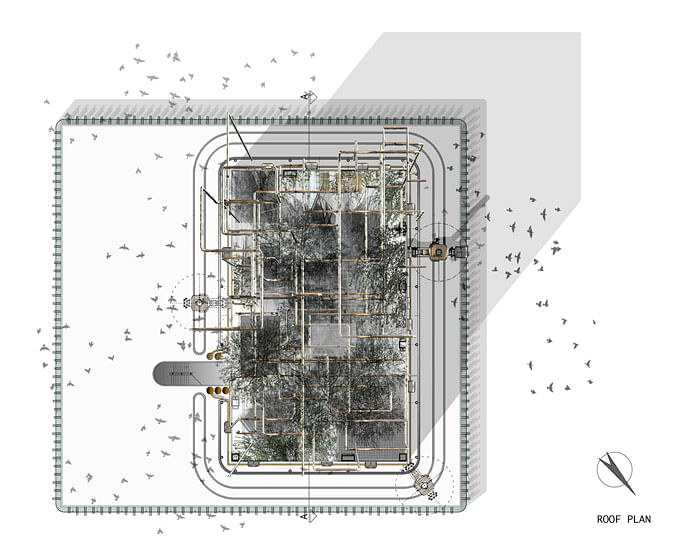
Plan

The formation of the proposed facade projects the horizontal city grid of the surrounding area onto the vertical expression of the building linking the structure to its context and creating a form familiar to the inhabitants of the area.

At the top, the roof structure facilitates the colonisation of the building by nature, allowing the growth of wild plants while attracting insects and wild birds. 
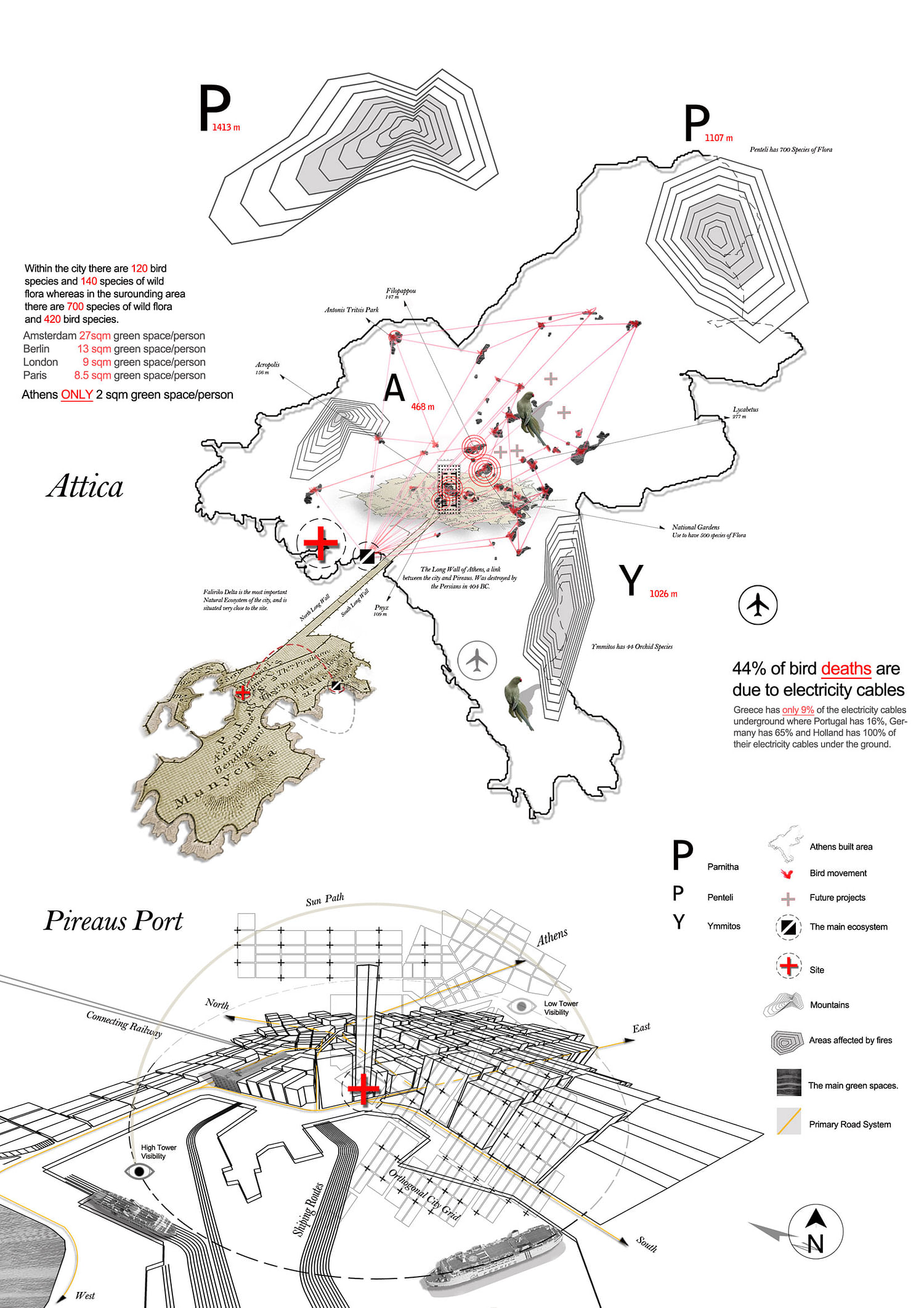
Research

We anticipate that the proposal will evolve to a network of ecosystems on other towers and buildings in both Piraeus and Athens where the citizens will embrace nature for the development of a better urban environment.

Related

tower ● non-winner ● façade ● facade ● façade ● dupont

Share

  • Follow

    0 Comments

  • Comment as :

Engineered Biotopes Commended in Piraeus Tower 2010 Competition

New architecture and design competitions: IDEAS Awards, UIA-HYP CUP International Student Competition, Vancouver Tall Challenge, and Memorial to the Sixth Extinction

Best small projects chosen at AIA Small Project Award 2026

10 standout sustainable projects honored at AIA COTE Top Ten Award 2026

Best residential architecture of 2026 honored at AIA Housing Award

Best new interiors of 2026 chosen at AIA Interior Architecture Awards

Best global architecture honored at RIBA International Awards 2026

World’s most beautiful airports of 2026 chosen by Prix Versailles

New architecture and design competitions: Brick in Architecture Awards, Study Architecture Student Showcase, N.Y.C. Groceries, and New York High Falls Riverfront Market

Sign up for Bustler's Email Newsletters

SmithGroup’s ‘pioneering’ Philip Merrill Environmental Center wins AIA Twenty-five Year Award

Sponsored Post by Buildner

Museum of Emotions / Edition #8 FINAL registration deadline is in 5 DAYS!

Here are the winners of the 2026 AIA Architecture Awards

40 emerging architects and designers under 40 from Europe honored

Northwestern University selects 12-firm longlist to design new engineering building

New architecture and design competitions: Exploring 130 Years of American Design, Christo & Jeanne-Claude Center, 13 White Houses, and La Pyramide

Micro-architecture honored in latest Tiny House Architecture Competition

Next page » Loading

Engineered Biotopes Commended in Piraeus Tower 2010 Competition

By Bustler Editors|

Wednesday, Jul 28, 2010

Share

Perspective

Related

tower ● non-winner ● façade ● facade ● façade ● dupont

London-based Teammates Anthi Grapsa Konstantinos Chalaris, have shared with us their project 'Engineered Biotopes'.

Their proposal was for a competition in Greece, and was given a Commendation. The title of the competition was ‘Piraeus Tower 2010 – Changing the Face/Façades Reformation’, organized by DUPONT and greekarchitects.gr.

The cities of Attica and especially Piraeus is a city with a very low proportion of open green spaces to the number of its inhabitants compared to European standards.

Our proposal for the Façade reformation of Piraeus Tower intends to use technology for the best possible adaption of nature on the building. Using modern agricultural techniques in the construction of the building we allow nature to flourish with the help of plants and birds that already exist around the city.

Perspective in context

The program of the facade varies through its vertical expression.

On the outside of the first two floors, the plant nursery consists of a grid of glass tubes used to nurture seedlings.  From a distance these appear as a shimmering form, reflecting light onto the street provoking the attention of the passerby.

Front Elevation

Floors 3-22 consist of small biotopes that produce low vegetation for the workers and visitors inside the building. This system consists of a robotic crane and specially designed modules where plants are grown. The crane is connected to a computer, which re-positions the modules based on the weather conditions, sun light and water consumption. If a crop is receiving too much sunlight, the module is moved to the shade either horizontally or vertically until finding the required position.

Final board

The proximity of the modules to the inhabitants of the building challenges the conventional distance of man from nature within cities, and asks the question: Can man compromise and give up some of his personal space for nature?
 
The movement of these modules creates an urban choreography, a microcosm of the dynamic movements of Piraeus Port, where containers and ships are constantly reconfigured.

Plan

The formation of the proposed facade projects the horizontal city grid of the surrounding area onto the vertical expression of the building linking the structure to its context and creating a form familiar to the inhabitants of the area.

At the top, the roof structure facilitates the colonisation of the building by nature, allowing the growth of wild plants while attracting insects and wild birds. 

Research

We anticipate that the proposal will evolve to a network of ecosystems on other towers and buildings in both Piraeus and Athens where the citizens will embrace nature for the development of a better urban environment.

Share

  • Follow

    0 Comments

  • Comment as :

Archinect JobsArchinect Jobs

The Archinect Job Board attracts the world's top architectural design talents.

VIEW ALL JOBS POST A JOB

Junior Designer/Architect

O'Neill Rose Architects

Junior Designer/Architect

Brooklyn, NY, US

Project Architect

Pickard Architects

Project Architect

Whittier, CA, US

Landscape Architect

EDR - Environmental Design & Research

Landscape Architect

Syracuse, NY, US

Project Captain

Practice (formerly GGA+)

Project Captain

Pasadena, CA, US

Junior to Intermediate Architect

Totum

Junior to Intermediate Architect

Sherman Oaks, CA, US

Project Architect

The Goldman Group

Project Architect

Walpole, MA, US

Project Designer / Manager

BuiltIN Studio

Project Designer / Manager

New York, NY, US

Job Captain - Education

DAHLIN Architecture | Planning | Interiors

Job Captain - Education

San Diego, CA, US

Project Manager

The Brooklyn Studio

Project Manager

Brooklyn, NY, US

Marketing & Business Development Manager

KPB Architects

Marketing & Business Development Manager

Anchorage, AK, US

Next page » Loading