• Login / Join
  • About
  • •
  • Contact
  • •
  • Advertising
bustler logo
bustler logo
  • News
  • Competitions
  • Events
  • Bustler is powered by Archinect
  • Sign up for Bustler's Email Newsletters

  • Follow these Bustler feeds:

  • Search

    Search in

  • Submit

    What are you submitting?

    News Pitch
    Competition
    Event
  • Login / Join
  • News|Competitions|Events
  • Search
    | Submit
    | Follow
  • Search in

    What are you submitting?

    News Pitch
    Competition
    Event

    Follow these Bustler feeds:

  • About|Contact|Advertising
  • Login / Join

A Green Mosque for the American Midwest

By Bustler Editors|

Thursday, Oct 21, 2010
Green Mosque

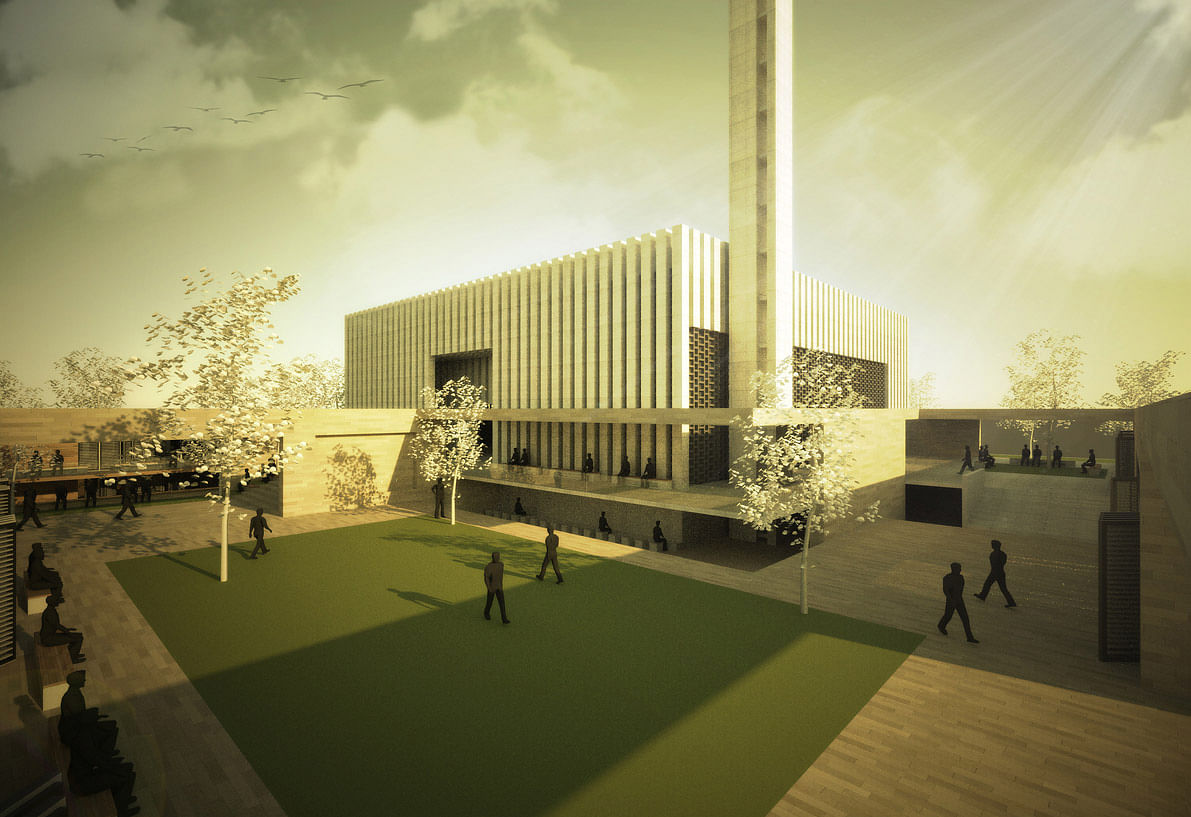
We just published the winners of the 'The Building: Problem or Solution?' competition, sponsored by Faith in Place. Here is the winner in the category Freestanding Religious Structure, Green Mosque, which incorporates traditional architectural elements in a modern urban context, featuring several sustainable elements. The design team comprised Onat Oktem, Ziya Imren, Zeynep Oktem, Uri Tzarnotzky from Pasadena, CA.

This international ideas competition called for the development of an array of ideas that will assist congregations in the future when they contemplate significant remodeling or new building programs, hoping to create buildings that are active and full of life at all times of the week, that use their spaces well and serve their communities well.

Project Description:

Since the Ottoman tradition the mosques incorporate many different functions besides being only a place for prayer. The project team thus decided to design not only a mosque but a religious complex for various social activities and mutual aid.
Green Mosque

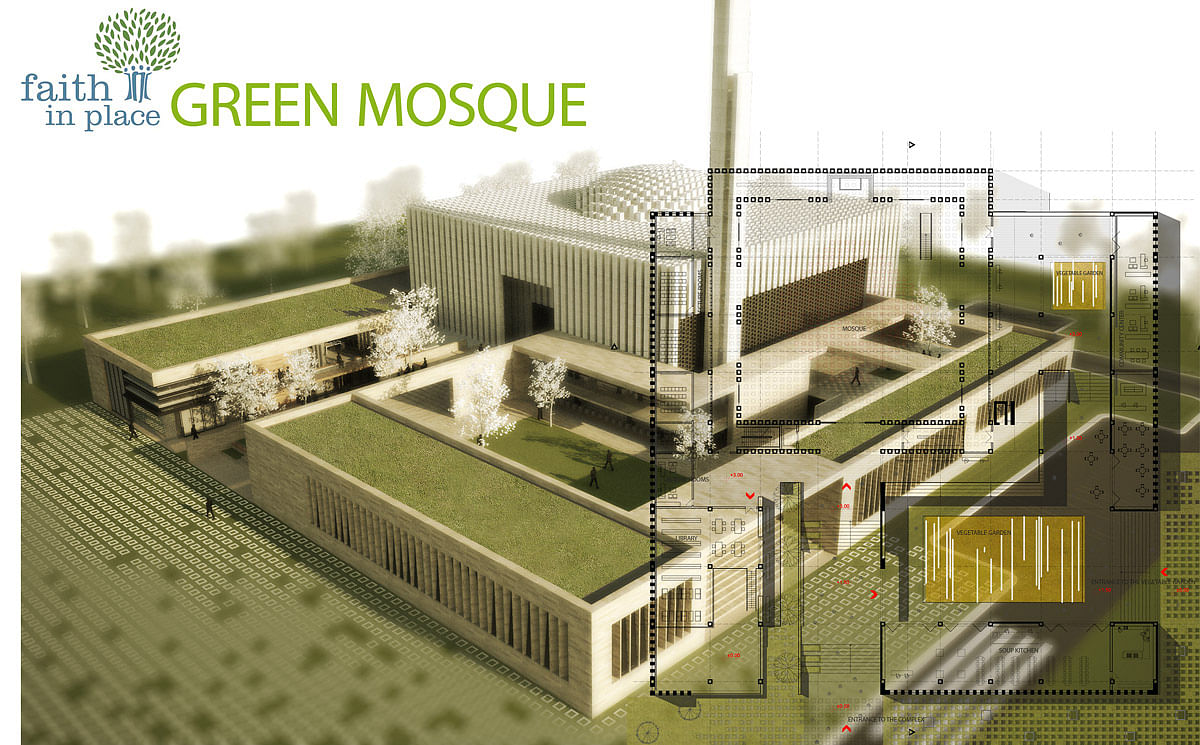
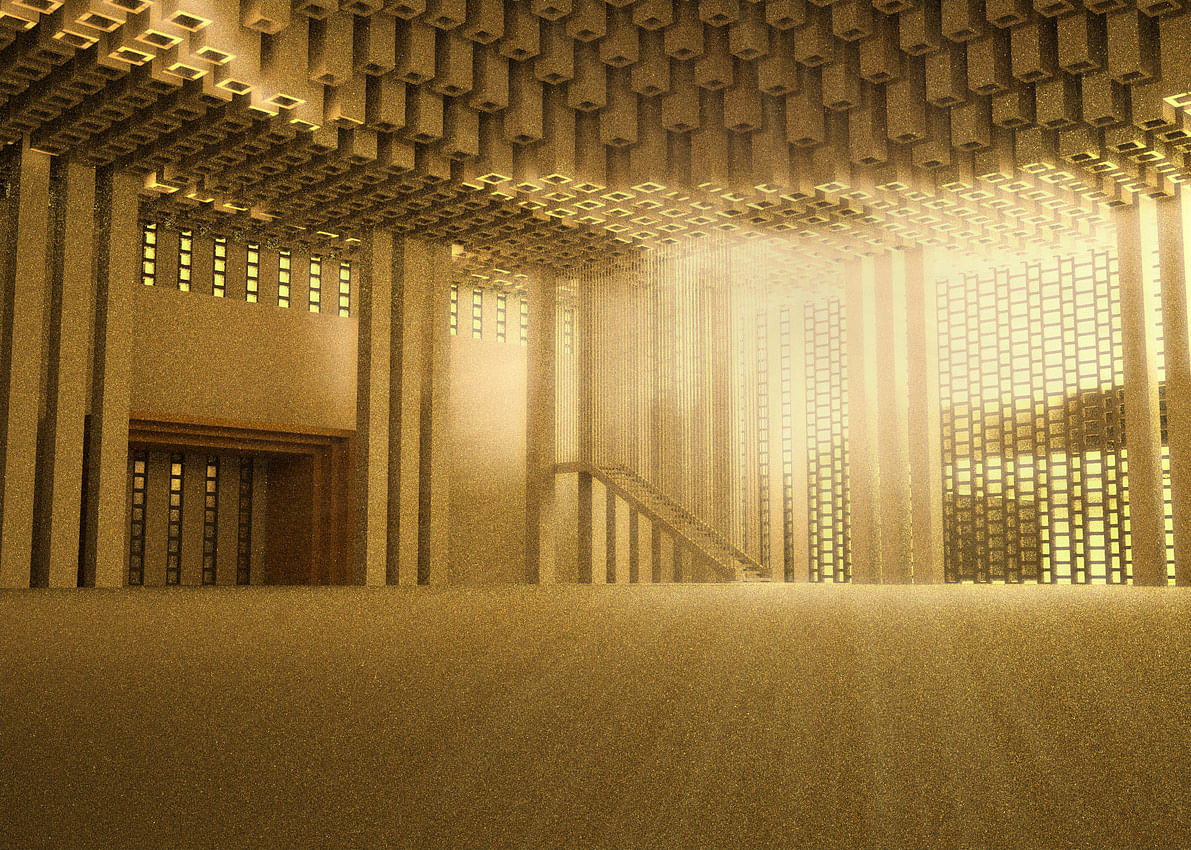
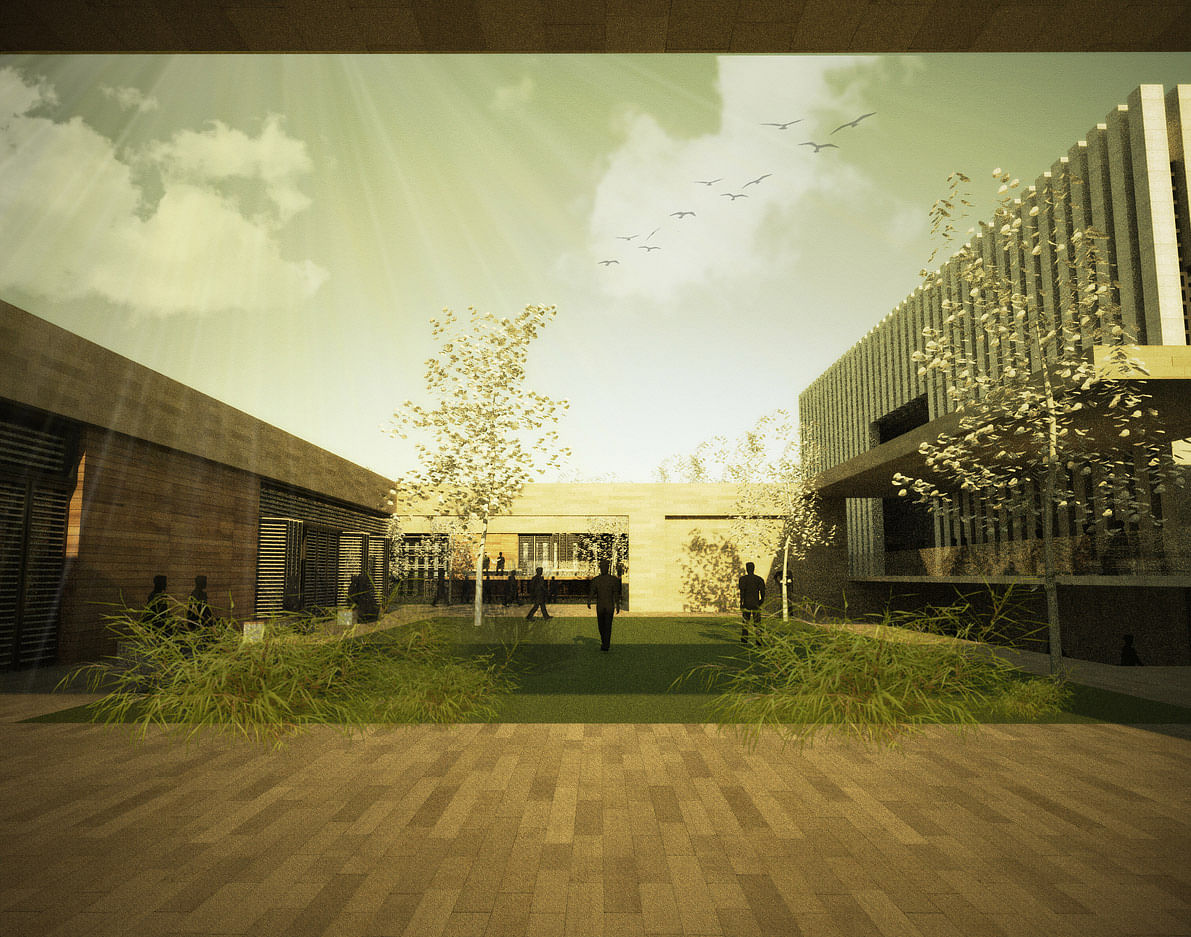
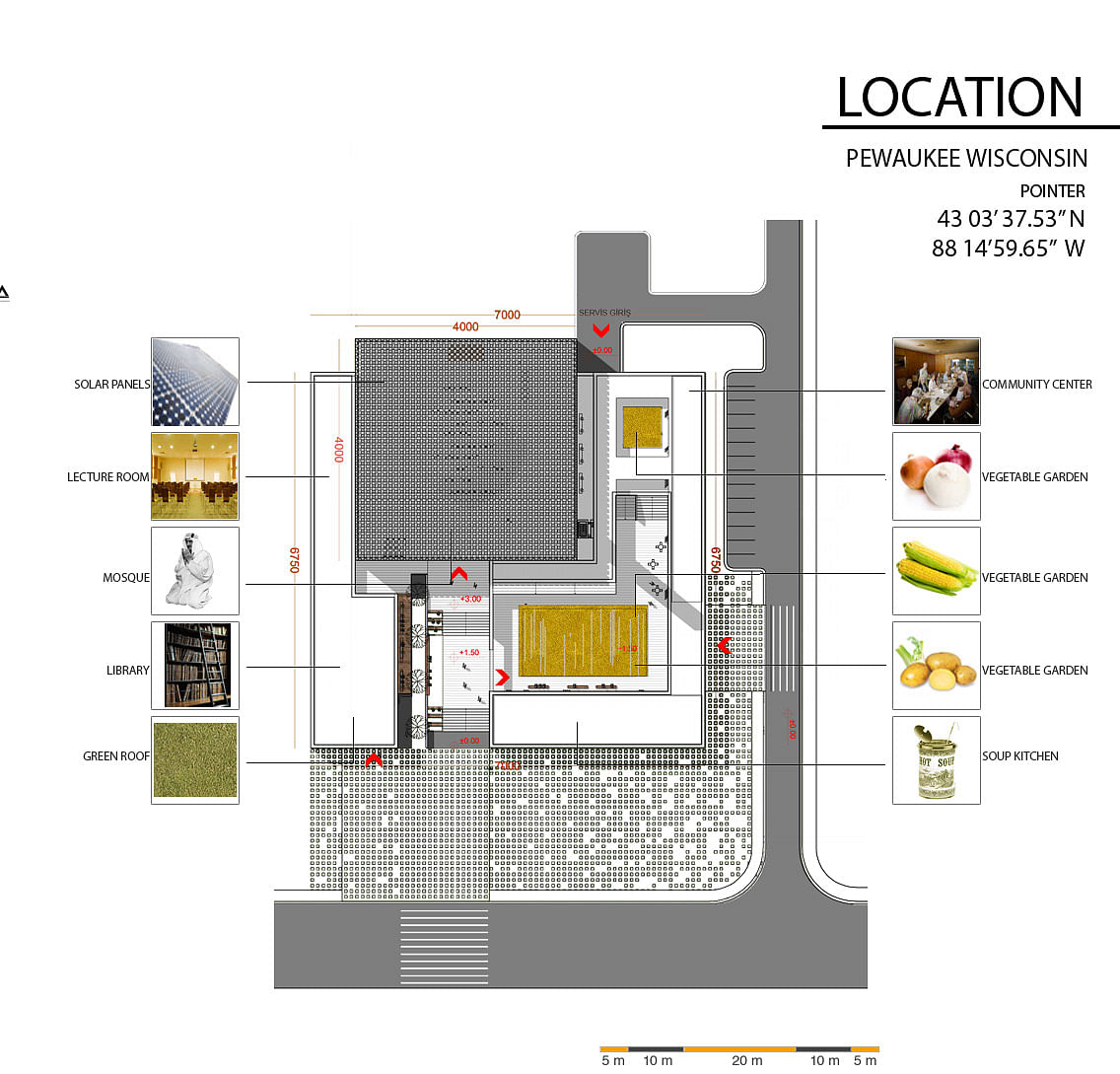
The mosque complex, composed of the main mosque building, a library, education and lecture halls, accompanied with a "soup kitchen", strengthens the idea of getting together and socializing as a community, with social and cultural activities. Similarly the structure of the dome represents the gathering function of the mosque with its structural units coming together to compose the dome shape.
Green Mosque

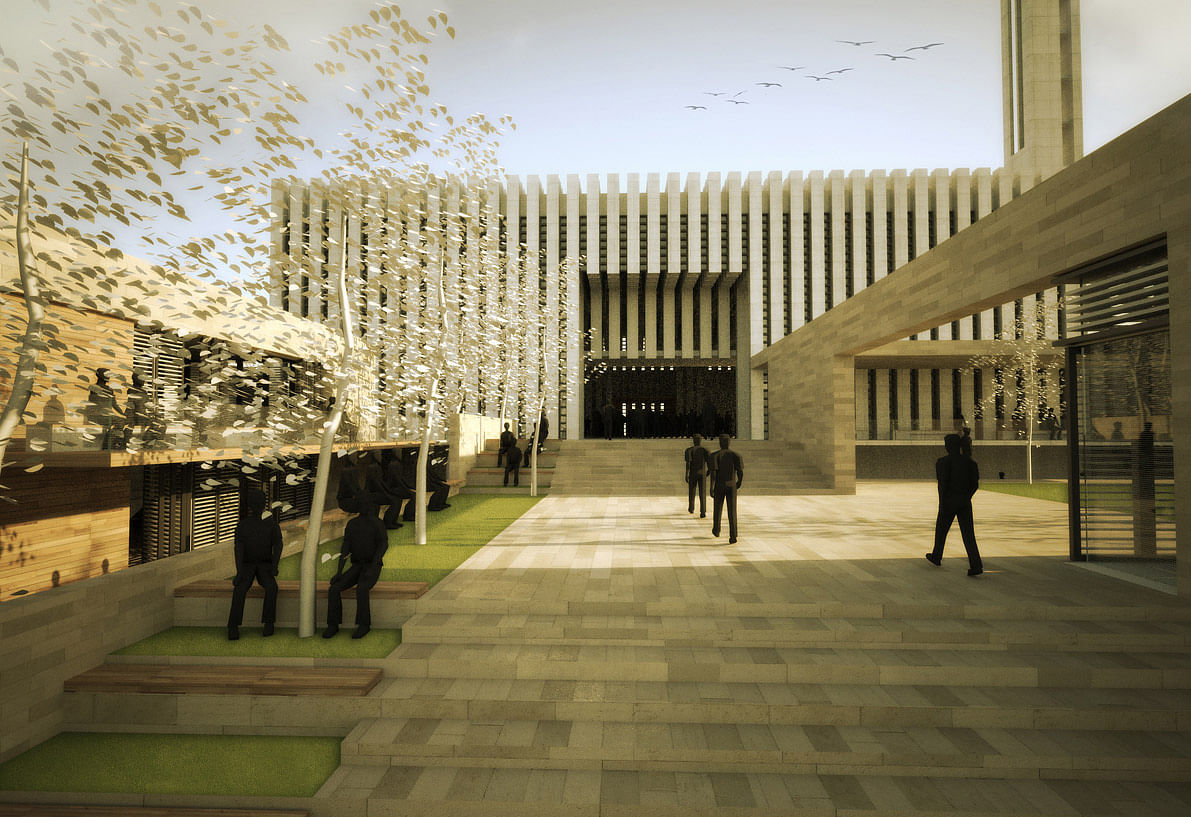
The complex not only acts as a continuous interaction space but also respects its user’s privacy. The ablution space and the prayer area are separated from the rest of the complex by different levels of entrance. The level difference also enables the gradual transition from public to semi-public and finally to private spaces of the complex.

Green Mosque

The double-hull system in the mosque creates a thermal buffer zone between the main mass and outside. This system which also helps to keep the calm environment in the prayer area, facilitates internal heating in winter and also protects the interior zone from rain, snow and wind. In summer the thermal buffer zone creates a cooler zone for the main mass. Additionally the vertical glass surfaces create a spiritual atmosphere for the prayer area.
Green Mosque

As the mosque is situated in a humid continental climate it is appropriate to benefit from the rain water and solar properties of the area for a more sustainable usage. Solar thermal cells disposed on the units composing the dome of the mosque, serve as an additional medium for water heating. Green roofs of the library, soup kitchen and lecture rooms contribute to the insulation of the building, and to the improved air quality, helping to lower urban air temperatures and combat the heat island effect.

Green Mosque

A mosque necessitates more water than any other religious building because of the ablution ritual before the prayer. In order to reduce the water consumption the project embodies several energyefficient strategies. The rain water and waste water from ablution is collected so that the purified water can be re-used for watering the vegetable garden with a high-efficiency drip irrigation system. For the vegetable garden which aims to support the community, corn, onions and potatoes were selected since they are easy to cultivate in this climate and in this geography and also they require less water to grow. The products from the garden can be used to prepare meals for those who are in need, in the community and can be dispatched in the “soup kitchen” which is integrated to the mosque complex.
Green Mosque

Another feature that the mosque incorporates to reduce water consumption is low-flow toilets. Again waterless urinals, low-flow faucets and water-efficient plumbing fixtures all contribute to water savings. The water collected from the rain water and ablution water is also used for the toilet flushes.
Green Mosque

As for the materials chosen for construction, the project team suggests using materials with recycled content. According to the Wisconsin DNR "approximately 28% of waste, entering the municipal solid waste stream is construction and demolition waste much of which is recyclable or reusable” (source). Together with the reused materials, the project team considers the importance of using paints, adhesives, and sealants that feature low chemical emissions for the sake of the environment. The use of local materials for the construction and the interior design minimizes the energy spent for transportation thus contributes to the sustainability goal of the project while also favoring the
development of the local industry.

Green Mosque
Green Mosque

Related

church ● faith in place ● mosque ● religion ● religious ● sustainability ● usa ● wisconsin

Share

  • Follow

    0 Comments

  • Comment as :

A Green Mosque for the American Midwest

World’s most beautiful airports of 2026 chosen by Prix Versailles

New architecture and design competitions: Brick in Architecture Awards, Study Architecture Student Showcase, N.Y.C. Groceries, and New York High Falls Riverfront Market

SmithGroup’s ‘pioneering’ Philip Merrill Environmental Center wins AIA Twenty-five Year Award

Sponsored Post by Buildner

Museum of Emotions / Edition #8 FINAL registration deadline is in 5 DAYS!

Here are the winners of the 2026 AIA Architecture Awards

40 emerging architects and designers under 40 from Europe honored

Northwestern University selects 12-firm longlist to design new engineering building

New architecture and design competitions: Exploring 130 Years of American Design, Christo & Jeanne-Claude Center, 13 White Houses, and La Pyramide

Sign up for Bustler's Email Newsletters

Micro-architecture honored in latest Tiny House Architecture Competition

World’s most beautiful restaurants of 2026 chosen by Prix Versailles

Sponsored Post by Buildner

Design a wine tasting room in Italy! Valli Wine Tasting Room is launched!

10 can't-miss architecture & design events to see this June in London, Los Angeles, Chicago, San Francisco, Detroit, San Diego, Porto, and Barcelona

Sponsored Post by Buildner

Museum of Emotions / Edition #8 FINAL registration deadline is approaching!

Seven global projects make AR Public Awards shortlist 2026

Sponsored Post by Buildner

Design a slow-living restaurant in Portugal! Portugal Long Table Restaurant is launched!

Next page » Loading

A Green Mosque for the American Midwest

By Bustler Editors|

Thursday, Oct 21, 2010

Share

Green Mosque

Related

church ● faith in place ● mosque ● religion ● religious ● sustainability ● usa ● wisconsin

We just published the winners of the 'The Building: Problem or Solution?' competition, sponsored by Faith in Place. Here is the winner in the category Freestanding Religious Structure, Green Mosque, which incorporates traditional architectural elements in a modern urban context, featuring several sustainable elements. The design team comprised Onat Oktem, Ziya Imren, Zeynep Oktem, Uri Tzarnotzky from Pasadena, CA.

This international ideas competition called for the development of an array of ideas that will assist congregations in the future when they contemplate significant remodeling or new building programs, hoping to create buildings that are active and full of life at all times of the week, that use their spaces well and serve their communities well.

Project Description:

Since the Ottoman tradition the mosques incorporate many different functions besides being only a place for prayer. The project team thus decided to design not only a mosque but a religious complex for various social activities and mutual aid.

Green Mosque

The mosque complex, composed of the main mosque building, a library, education and lecture halls, accompanied with a "soup kitchen", strengthens the idea of getting together and socializing as a community, with social and cultural activities. Similarly the structure of the dome represents the gathering function of the mosque with its structural units coming together to compose the dome shape.

Green Mosque

The complex not only acts as a continuous interaction space but also respects its user’s privacy. The ablution space and the prayer area are separated from the rest of the complex by different levels of entrance. The level difference also enables the gradual transition from public to semi-public and finally to private spaces of the complex.

Green Mosque

The double-hull system in the mosque creates a thermal buffer zone between the main mass and outside. This system which also helps to keep the calm environment in the prayer area, facilitates internal heating in winter and also protects the interior zone from rain, snow and wind. In summer the thermal buffer zone creates a cooler zone for the main mass. Additionally the vertical glass surfaces create a spiritual atmosphere for the prayer area.

Green Mosque

As the mosque is situated in a humid continental climate it is appropriate to benefit from the rain water and solar properties of the area for a more sustainable usage. Solar thermal cells disposed on the units composing the dome of the mosque, serve as an additional medium for water heating. Green roofs of the library, soup kitchen and lecture rooms contribute to the insulation of the building, and to the improved air quality, helping to lower urban air temperatures and combat the heat island effect.

Green Mosque

A mosque necessitates more water than any other religious building because of the ablution ritual before the prayer. In order to reduce the water consumption the project embodies several energyefficient strategies. The rain water and waste water from ablution is collected so that the purified water can be re-used for watering the vegetable garden with a high-efficiency drip irrigation system. For the vegetable garden which aims to support the community, corn, onions and potatoes were selected since they are easy to cultivate in this climate and in this geography and also they require less water to grow. The products from the garden can be used to prepare meals for those who are in need, in the community and can be dispatched in the “soup kitchen” which is integrated to the mosque complex.

Green Mosque

Another feature that the mosque incorporates to reduce water consumption is low-flow toilets. Again waterless urinals, low-flow faucets and water-efficient plumbing fixtures all contribute to water savings. The water collected from the rain water and ablution water is also used for the toilet flushes.

Green Mosque

As for the materials chosen for construction, the project team suggests using materials with recycled content. According to the Wisconsin DNR "approximately 28% of waste, entering the municipal solid waste stream is construction and demolition waste much of which is recyclable or reusable” (source). Together with the reused materials, the project team considers the importance of using paints, adhesives, and sealants that feature low chemical emissions for the sake of the environment. The use of local materials for the construction and the interior design minimizes the energy spent for transportation thus contributes to the sustainability goal of the project while also favoring the
development of the local industry.

Green Mosque
Green Mosque

Share

  • Follow

    0 Comments

  • Comment as :

Archinect JobsArchinect Jobs

The Archinect Job Board attracts the world's top architectural design talents.

VIEW ALL JOBS POST A JOB

Office Assistant / Studio Coordinator

Beinfield Architecture PC

Office Assistant / Studio Coordinator

Norwalk, CT, US

Interior Designer - Intermediate Level (3-7 Years)

Yazdani Studio of Cannon Design

Interior Designer - Intermediate Level (3-7 Years)

Los Angeles, CA, US

Architectural Project Manager - Residential

DAHLIN Architecture | Planning | Interiors

Architectural Project Manager - Residential

Pleasanton, CA, US

Architect

Joe Serrins Studio

Architect

New York, NY, US

Intermediate Residential Architect

52XConsulting

Intermediate Residential Architect

New York, NY, US

Architectural Project Manager - Multifamily

DAHLIN Architecture | Planning | Interiors

Architectural Project Manager - Multifamily

San Diego, CA, US

Project Manager / Project Architect (5–10 Years’ Experience)

Millan Architect / Studio Inc.

Project Manager / Project Architect (5–10 Years’ Experience)

Venice, CA, US

Architectural Designer, Residential

Roman and Williams Buildings and Interiors

Architectural Designer, Residential

New York, NY, US

Intermediate Designer / Architect [5+ years experience]

RO | ROCKETT DESIGN

Intermediate Designer / Architect [5+ years experience]

Sausalito, CA, US

Designer

HATCH ARCHITECTURE

Designer

Los Angeles, CA, US

Next page » Loading