• Login / Join
  • About
  • •
  • Contact
  • •
  • Advertising
bustler logo
bustler logo
  • News
  • Competitions
  • Events
  • Bustler is powered by Archinect
  • Sign up for Bustler's Email Newsletters

  • Follow these Bustler feeds:

  • Search

    Search in

  • Submit

    What are you submitting?

    News Pitch
    Competition
    Event
  • Login / Join
  • News|Competitions|Events
  • Search
    | Submit
    | Follow
  • Search in

    What are you submitting?

    News Pitch
    Competition
    Event

    Follow these Bustler feeds:

  • About|Contact|Advertising
  • Login / Join

A Room for London

By Bustler Editors|

Monday, Jan 10, 2011
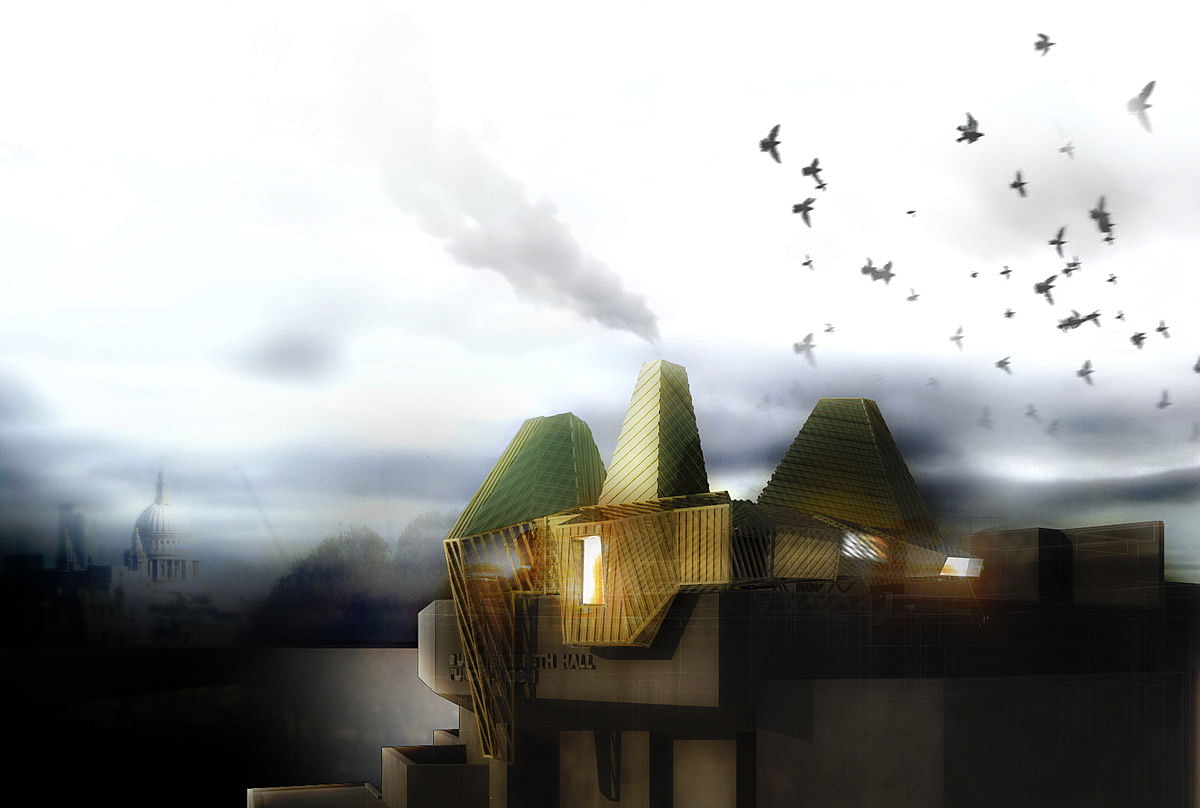
"A Room for London" by António Miguel Gonçalves, Antoine Pascal and Anthony Thevenon - View from West

Last November, Living Architecture and Artangel, two of Britain's leading cultural organizations, held a contest open internationally to design a room in the roof of one of London's most prominent buildings for a visitor from the future Olympic Games in 2012. "A Room for London" will sit on top of the Queen Elizabeth Hall roof at the Southbank Centre in London and will allow up to two guests at a time a chance to spend a unique night in an exemplary work of art and architecture overlooking the British capital.

The competition was attended by 500 international teams. London-based architects António Miguel Gonçalves and Antoine Pascal formed a team with Lisbon architect Anthony Thevenon and have shared their competition entry with us. The quality of their project has been recognized by the selection board but didn’t make part of the finalists.

Project Description:

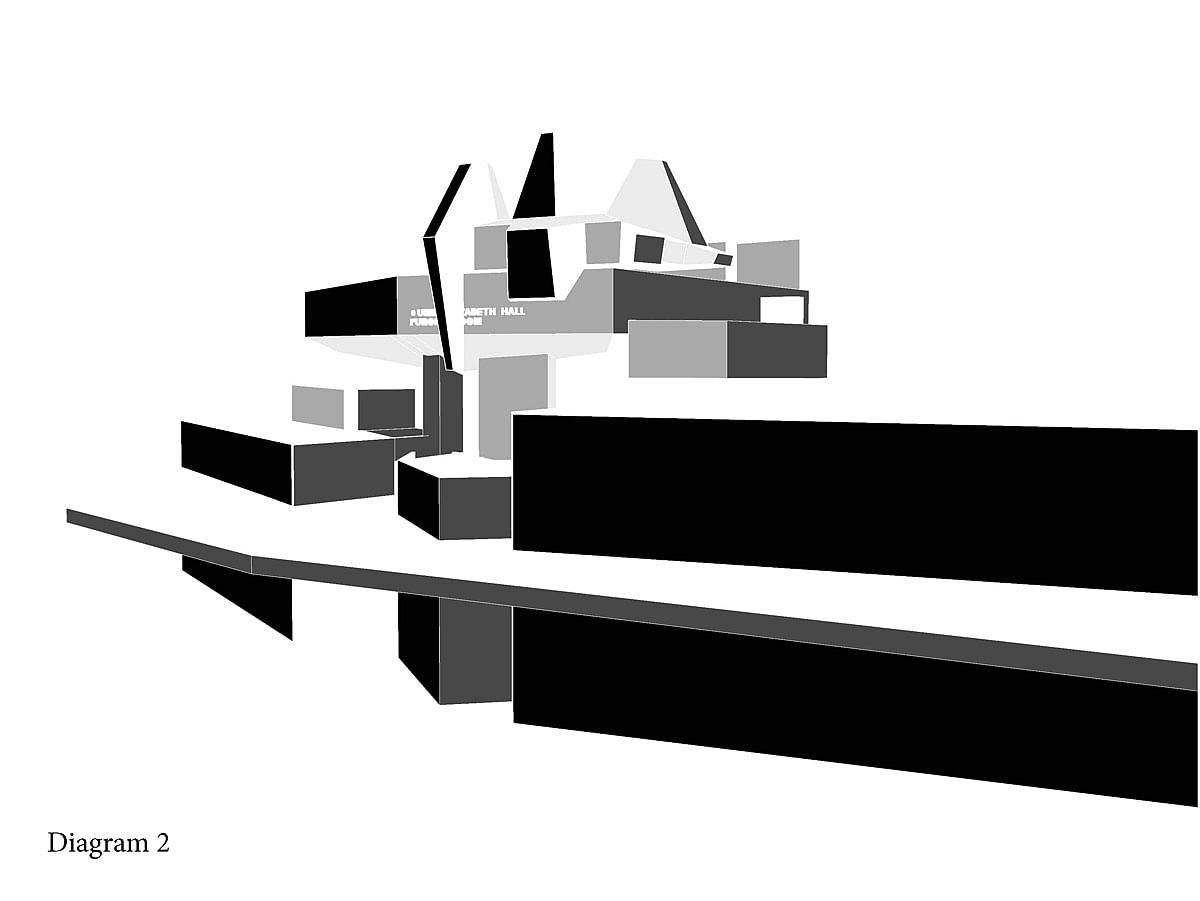
We are proposing a room that grabs the corner of the south bank centre. Our idea was to create a body in the roof, acting like a living organism finding different views of the city. In this way its articulated body adapts to the building’s shape. We would like to make people wondering what is that shape on the roof.
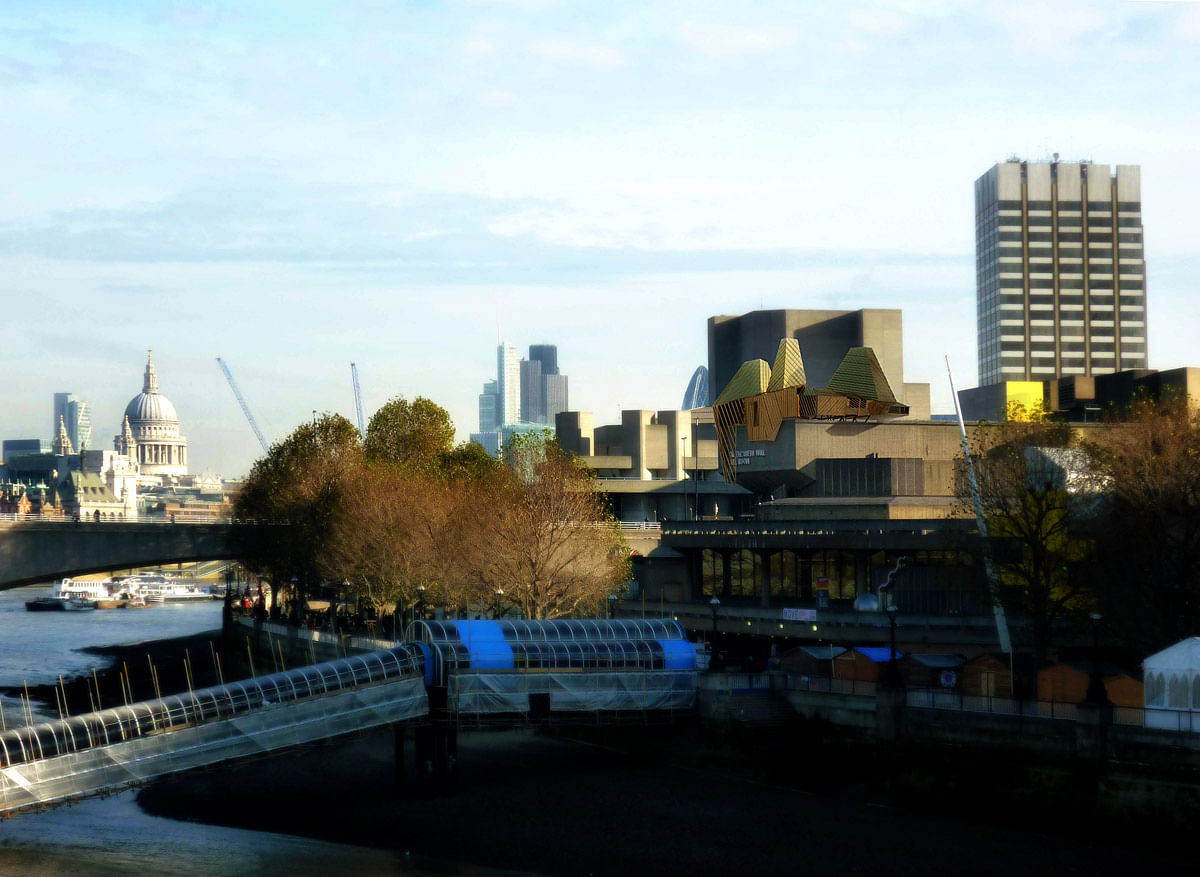
View from Golden Jubilee Bridge

Dialog with the building

The room is expected to change location, but it will always keep the memories of its first address. The project was designed to play with the surrounding brutalist architecture, as the National Theatre, a building that is a clever way of building a nuclear power station in the middle of London without anyone objecting. This premise can be applied to the room, seems to be there without any permission. The design is based on sharp angles and its repetition, which could be clearly identified as the brutal architecture tools.
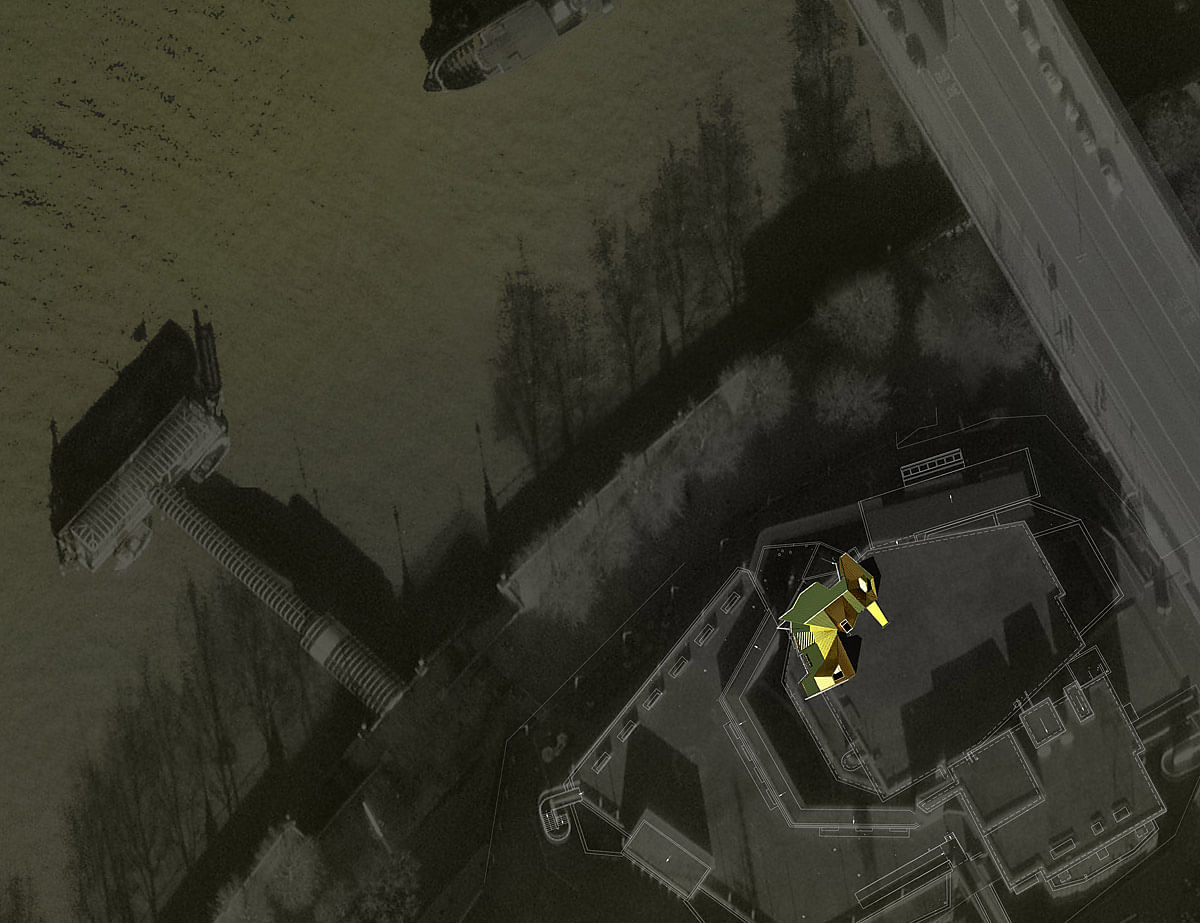
Site plan

Position

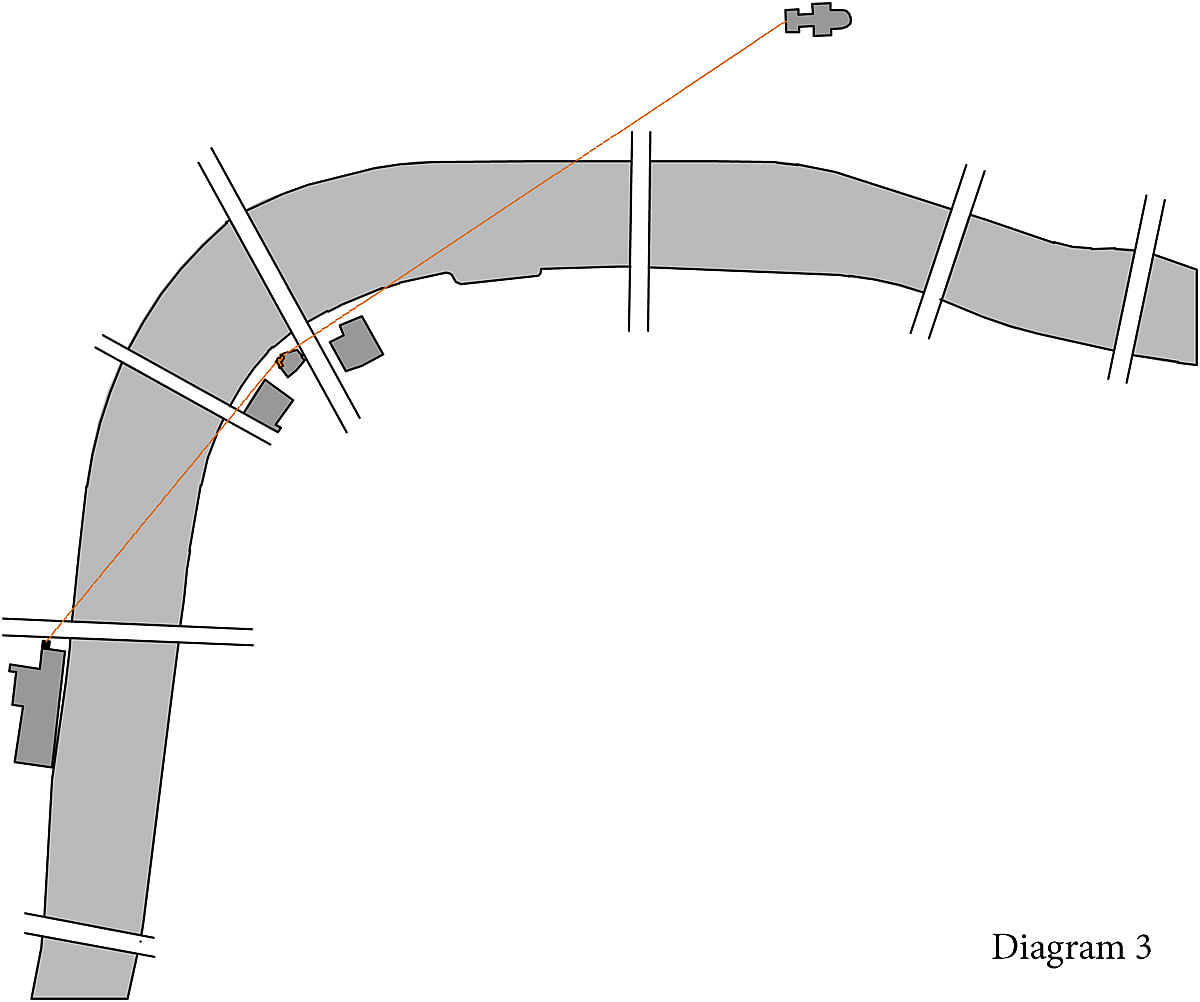
We located the project on the edge of the building, because we need to be as much as possible on north, to see Big Ben (on the left, almost hidden by the Royal Festival Hall), and Saint Paul’s Cathedral (on the right side almost hidden by the National Theatre) and to be seen by the people as a new landmark, so the closer we install the structure to the out line of the roof more people will see it. We want to find more points of view related to the London’s landmarks at the same time to create a new spot in the city’s landmark.
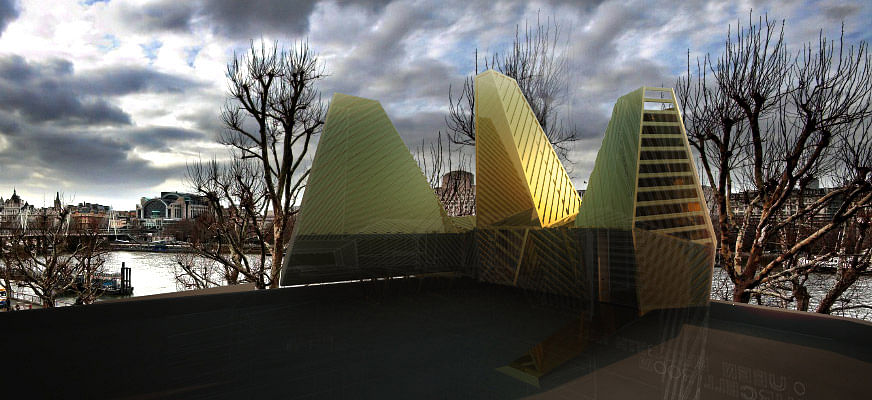
View from Queen Elizabeth Hall

This position also avoids a cantilever solution that would be too complex and expensive to construct in this kind of light material. The room is grabbing the North West corner, and from the Waterloo Bridge we will see the room entrance. The deeper the guest is going in the quieter the area around is. In this way the room is protected from noise pollution, more than any wide expensive insulation system.
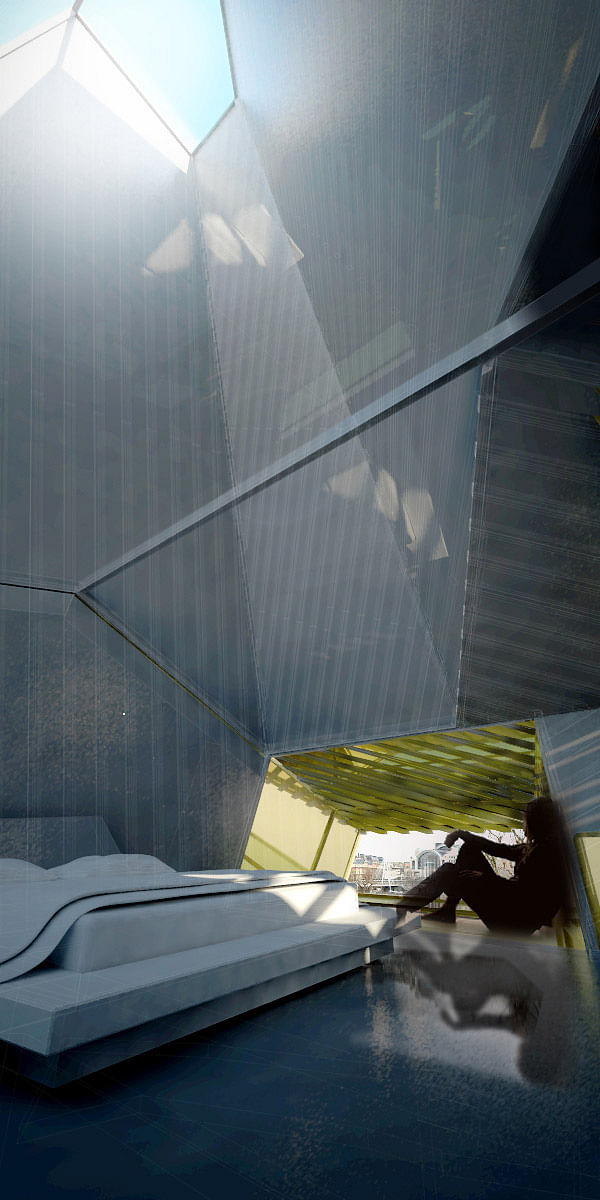
Inside the bed room

Back and Front

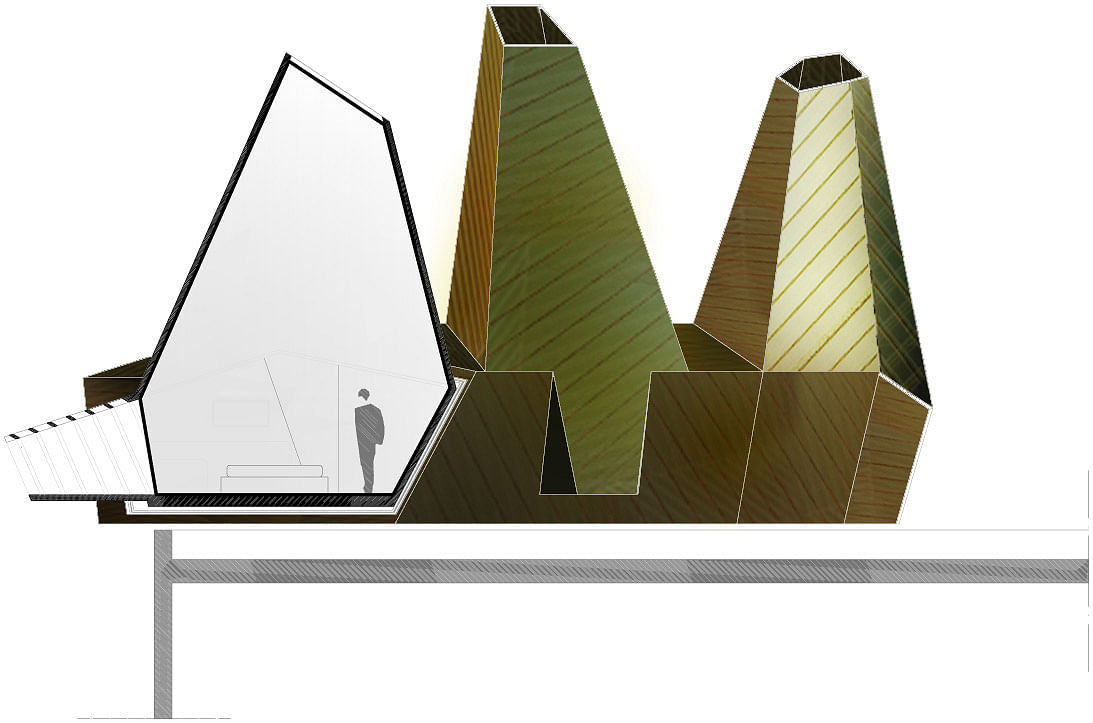
There is a permanent dialog between the building, the surroundings and the city. The dialog with the surroundings is achieved by using the same brutalist language. With the city we achieved this dialog playing with the dichotomy of back and front facades of the standard terraced houses that we can find in London. In these houses the front with its cornice hides the pitched roofs (back facade), two architectures systems which ignore each other. This is expressed in the transversal section.

The project is playing with this representation, the section prevails to define its identity, and the end terrace is a specific response (entrance patio and chimney in the room).
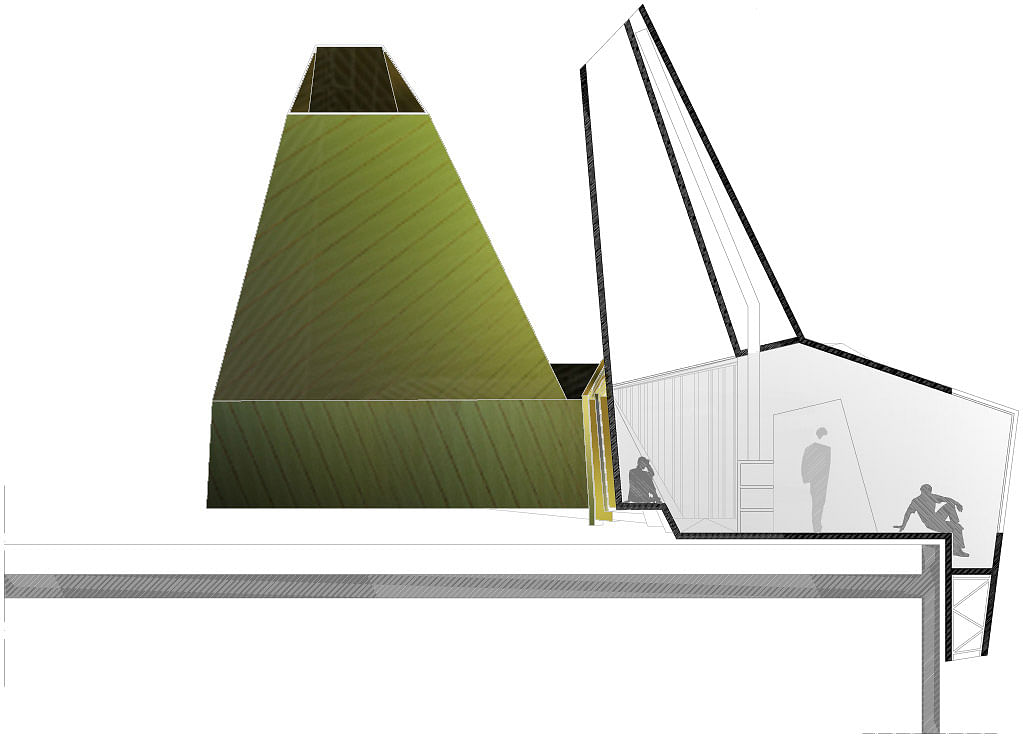
Section living room

Orientation

The project is assuming an orientation. The north is the front, with the views on the Thames, the room is dripping over the building, the south is closed from view and we use chimneys to get light in.
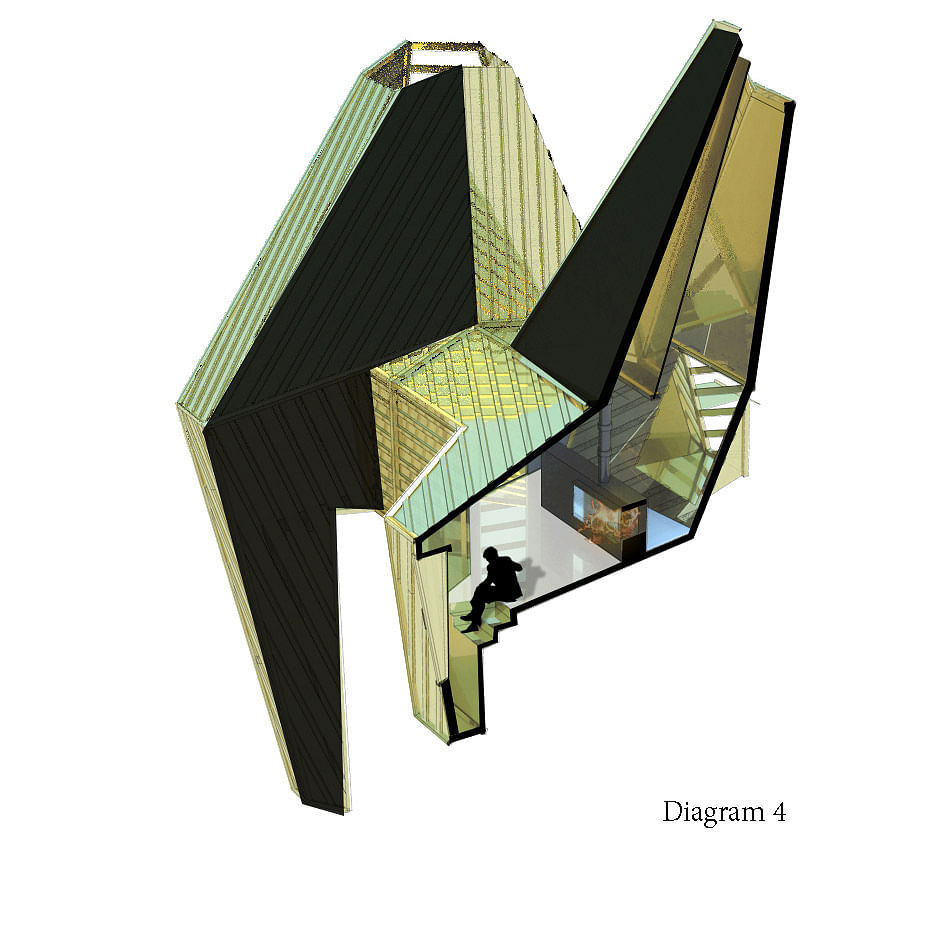
Perspective section

Sustainability

In order to do sustainable project we need to think in the all life cycle of the building.

This project is really specific because it is temporary and can be moved for different locations, so adaptation and easy assembly are two essential things.

During the design process we thought in easy ways of assemble and disassemble.

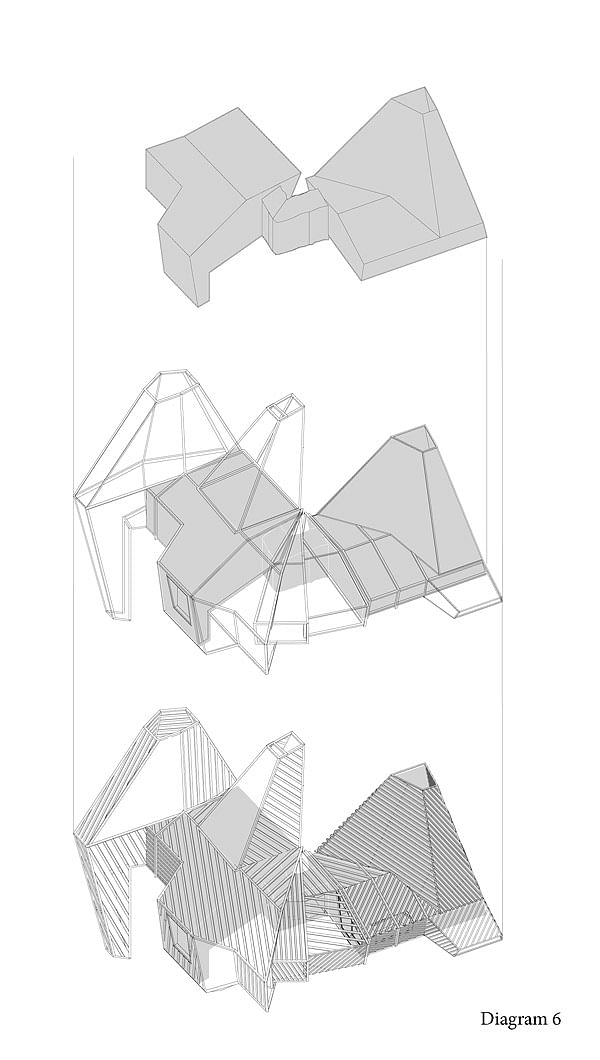
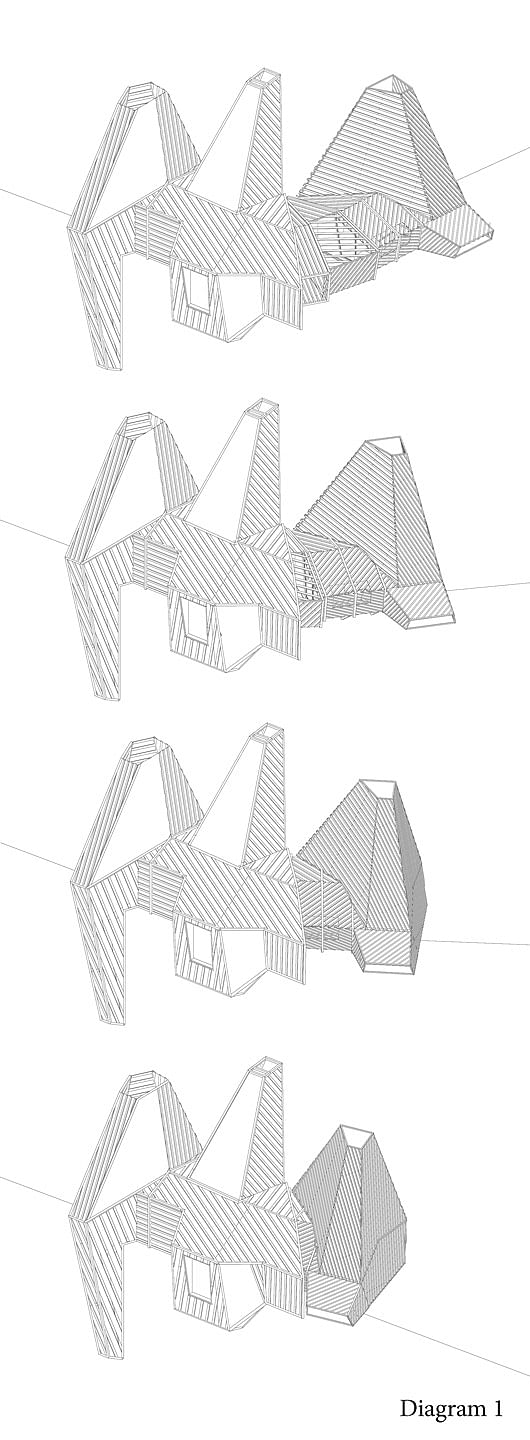
The building is composed by two bodies that follow the same section connected by an articulation that allow an easy adaption to different situations, so we use all the time the same skeleton. The bodies are made of a simple steal structure where we attach the different chimneys that go up and down. The ones that go up capture the sun and make it slide in side providing light and heat, the ones that go down focus on the different views that you can have from the top of Queen Elizabeth Hall but just two of them make part of the inside space and needed to be insulated.
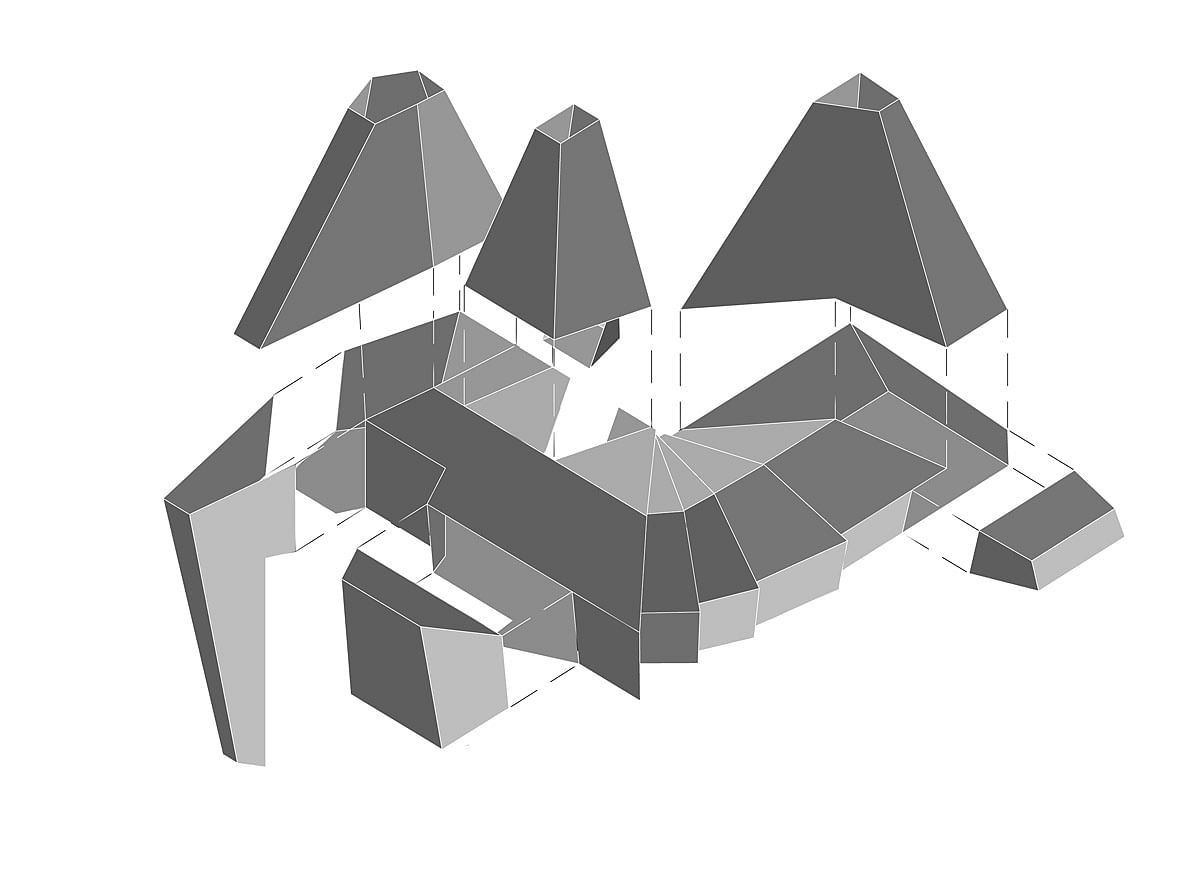
Axo

This simple structure and this two articulated bodies gave us the inside configuration. We placed the entire fixed program in the two static bodies (bed room, toilets and living room) to allowed the rest of the space to be flexible for the two patios.

In terms of construction materials we want to use pre-fabricated and standardized materials which can be easily assembled and recycled. With this kind of materials we want to avoid waste as much as we can and other pollutants that normally we produced in the construction site.

See more diagrams and plans in the image gallery below:
Related

united kingdom ● uk ● temporary ● portugal ● pavilion ● london ● europe ● architecture ● a room for london

Share

  • Follow

    0 Comments

  • Comment as :

A Room for London

Northwestern University selects 12-firm longlist to design new engineering building

New architecture and design competitions: Exploring 130 Years of American Design, Christo & Jeanne-Claude Center, 13 White Houses, and La Pyramide

Micro-architecture honored in latest Tiny House Architecture Competition

World’s most beautiful restaurants of 2026 chosen by Prix Versailles

Sponsored Post by Buildner

Design a wine tasting room in Italy! Valli Wine Tasting Room is launched!

10 can't-miss architecture & design events to see this June in London, Los Angeles, Chicago, San Francisco, Detroit, San Diego, Porto, and Barcelona

Sponsored Post by Buildner

Museum of Emotions / Edition #8 FINAL registration deadline is approaching!

Seven global projects make AR Public Awards shortlist 2026

Sign up for Bustler's Email Newsletters

Sponsored Post by Buildner

Design a slow-living restaurant in Portugal! Portugal Long Table Restaurant is launched!

World's best tall buildings honored at the CVU 2026 Award of Excellence

Sponsored Post by TWOPAGES

Final call: TWOPAGES X Design Contest 2026 submissions close June 5

Kengo Kuma & Paul Raff win Alberta national park visitor center competition with landscape-focused design

2026 Moira Gemmill and MJ Long prizes announced by W Awards

New architecture and design competitions: Kinderspace, Stewardson Keefe LeBrun Travel Grant, SMALL PROJECT BIG IMPACT, and Garden of University House, Bucharest

The Century of Gehry: New retrospective explores the late architect's work & collaborations

Next page » Loading

A Room for London

By Bustler Editors|

Monday, Jan 10, 2011

Share

"A Room for London" by António Miguel Gonçalves, Antoine Pascal and Anthony Thevenon - View from West

Related

united kingdom ● uk ● temporary ● portugal ● pavilion ● london ● europe ● architecture ● a room for london

Last November, Living Architecture and Artangel, two of Britain's leading cultural organizations, held a contest open internationally to design a room in the roof of one of London's most prominent buildings for a visitor from the future Olympic Games in 2012. "A Room for London" will sit on top of the Queen Elizabeth Hall roof at the Southbank Centre in London and will allow up to two guests at a time a chance to spend a unique night in an exemplary work of art and architecture overlooking the British capital.

The competition was attended by 500 international teams. London-based architects António Miguel Gonçalves and Antoine Pascal formed a team with Lisbon architect Anthony Thevenon and have shared their competition entry with us. The quality of their project has been recognized by the selection board but didn’t make part of the finalists.

Project Description:

We are proposing a room that grabs the corner of the south bank centre. Our idea was to create a body in the roof, acting like a living organism finding different views of the city. In this way its articulated body adapts to the building’s shape. We would like to make people wondering what is that shape on the roof.

View from Golden Jubilee Bridge

Dialog with the building

The room is expected to change location, but it will always keep the memories of its first address. The project was designed to play with the surrounding brutalist architecture, as the National Theatre, a building that is a clever way of building a nuclear power station in the middle of London without anyone objecting. This premise can be applied to the room, seems to be there without any permission. The design is based on sharp angles and its repetition, which could be clearly identified as the brutal architecture tools.

Site plan

Position

We located the project on the edge of the building, because we need to be as much as possible on north, to see Big Ben (on the left, almost hidden by the Royal Festival Hall), and Saint Paul’s Cathedral (on the right side almost hidden by the National Theatre) and to be seen by the people as a new landmark, so the closer we install the structure to the out line of the roof more people will see it. We want to find more points of view related to the London’s landmarks at the same time to create a new spot in the city’s landmark.

View from Queen Elizabeth Hall

This position also avoids a cantilever solution that would be too complex and expensive to construct in this kind of light material. The room is grabbing the North West corner, and from the Waterloo Bridge we will see the room entrance. The deeper the guest is going in the quieter the area around is. In this way the room is protected from noise pollution, more than any wide expensive insulation system.

Inside the bed room

Back and Front

There is a permanent dialog between the building, the surroundings and the city. The dialog with the surroundings is achieved by using the same brutalist language. With the city we achieved this dialog playing with the dichotomy of back and front facades of the standard terraced houses that we can find in London. In these houses the front with its cornice hides the pitched roofs (back facade), two architectures systems which ignore each other. This is expressed in the transversal section.

The project is playing with this representation, the section prevails to define its identity, and the end terrace is a specific response (entrance patio and chimney in the room).

Section living room

Orientation

The project is assuming an orientation. The north is the front, with the views on the Thames, the room is dripping over the building, the south is closed from view and we use chimneys to get light in.

Perspective section

Sustainability

In order to do sustainable project we need to think in the all life cycle of the building.

This project is really specific because it is temporary and can be moved for different locations, so adaptation and easy assembly are two essential things.

During the design process we thought in easy ways of assemble and disassemble.

The building is composed by two bodies that follow the same section connected by an articulation that allow an easy adaption to different situations, so we use all the time the same skeleton. The bodies are made of a simple steal structure where we attach the different chimneys that go up and down. The ones that go up capture the sun and make it slide in side providing light and heat, the ones that go down focus on the different views that you can have from the top of Queen Elizabeth Hall but just two of them make part of the inside space and needed to be insulated.

Axo

This simple structure and this two articulated bodies gave us the inside configuration. We placed the entire fixed program in the two static bodies (bed room, toilets and living room) to allowed the rest of the space to be flexible for the two patios.

In terms of construction materials we want to use pre-fabricated and standardized materials which can be easily assembled and recycled. With this kind of materials we want to avoid waste as much as we can and other pollutants that normally we produced in the construction site.

See more diagrams and plans in the image gallery below:
Share

  • Follow

    0 Comments

  • Comment as :

Archinect JobsArchinect Jobs

The Archinect Job Board attracts the world's top architectural design talents.

VIEW ALL JOBS POST A JOB

Intermediate Architect/Designer

DXA Studio

Intermediate Architect/Designer

New York, NY, US

Architectural Designer (5-7 Years) - Commercial & Hospitality Focus

Pfeffer Torode Architecture

Architectural Designer (5-7 Years) - Commercial & Hospitality Focus

Nashville, TN, US

Job Captain / Project Manager

Breland – Harper

Job Captain / Project Manager

Los Angeles, CA, US

Architectural Associate/Junior Architect

Goldstone Architecture

Architectural Associate/Junior Architect

Bennington, VT, US

Project Architect

jones | haydu

Project Architect

San Francisco, CA, US

Architectural Designer

Build Block Inc.

Architectural Designer

Los Angeles, CA, US

Senior Architectural Project Manager (Systems Driven, Human-Centric) (Hourly)

Local Parti Architecture, PC

Senior Architectural Project Manager (Systems Driven, Human-Centric) (Hourly)

New York, NY, US

Architect 10+

Standard Architects

Architect 10+

Long Island City, NY, US

Site Planning and Master Development Consultant, Part-Time / Hybrid

Naim Associates Inc.

Site Planning and Master Development Consultant, Part-Time / Hybrid

West Hollywood, CA, US

Junior Architect

Eric Colbert & Associates

Junior Architect

Washington, DC, US

Next page » Loading