• Login / Join
  • About
  • •
  • Contact
  • •
  • Advertising
bustler logo
bustler logo
  • News
  • Competitions
  • Events
  • Bustler is powered by Archinect
  • Sign up for Bustler's Email Newsletters

  • Follow these Bustler feeds:

  • Search

    Search in

  • Submit

    What are you submitting?

    News Pitch
    Competition
    Event
  • Login / Join
  • News|Competitions|Events
  • Search
    | Submit
    | Follow
  • Search in

    What are you submitting?

    News Pitch
    Competition
    Event

    Follow these Bustler feeds:

  • About|Contact|Advertising
  • Login / Join

Faculty of Fine Arts, Brno University of Technology by CHYBIK+KRISTOF AA

By Bustler Editors|

Wednesday, Jan 11, 2012
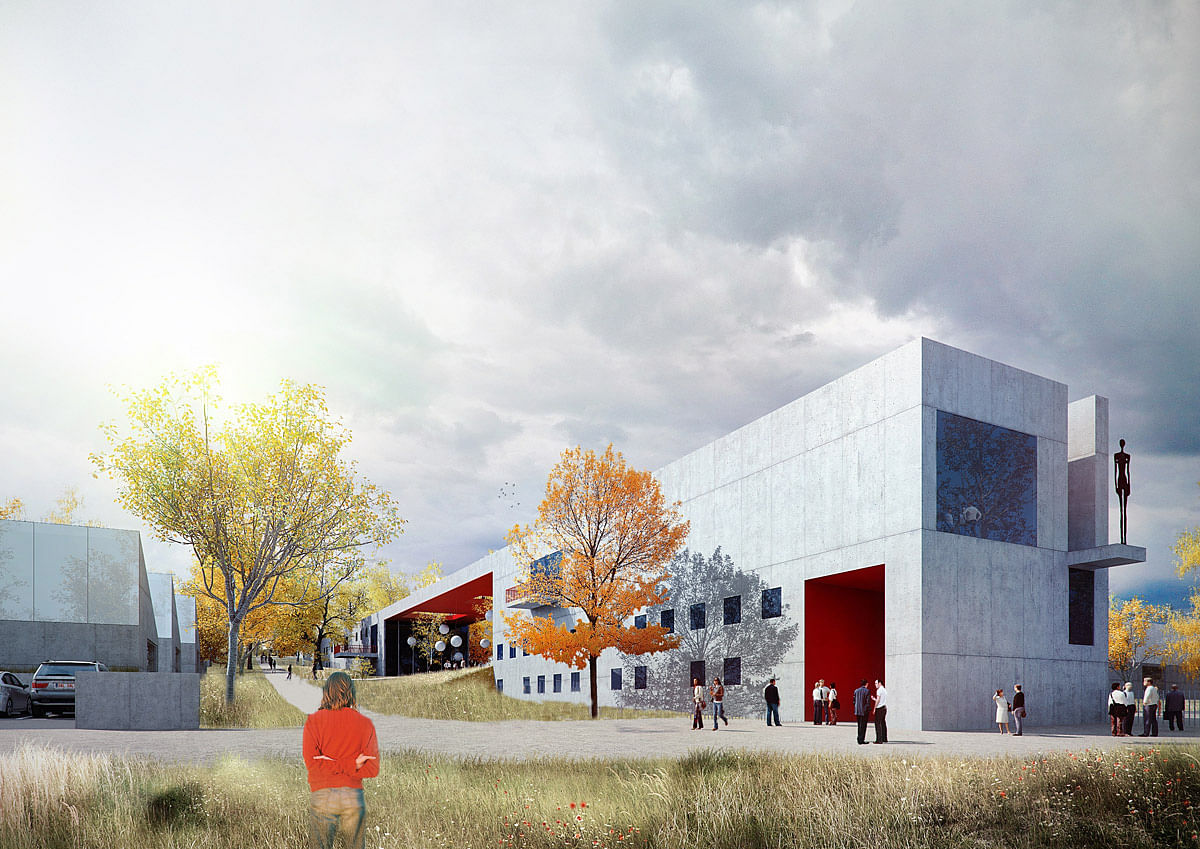
Exterior view of the Central Building (Image: CHYBIK+KRISTOF AA)

Czech firm CHYBIK+KRISTOF Associated Architects have shared with us their schematic design for the Faculty of Fine Arts at Brno University of Technology in Brno, Czech Republic. The project team also included Ivan Ruller and Ondrej Stehlik.

Project Description from the Architects:

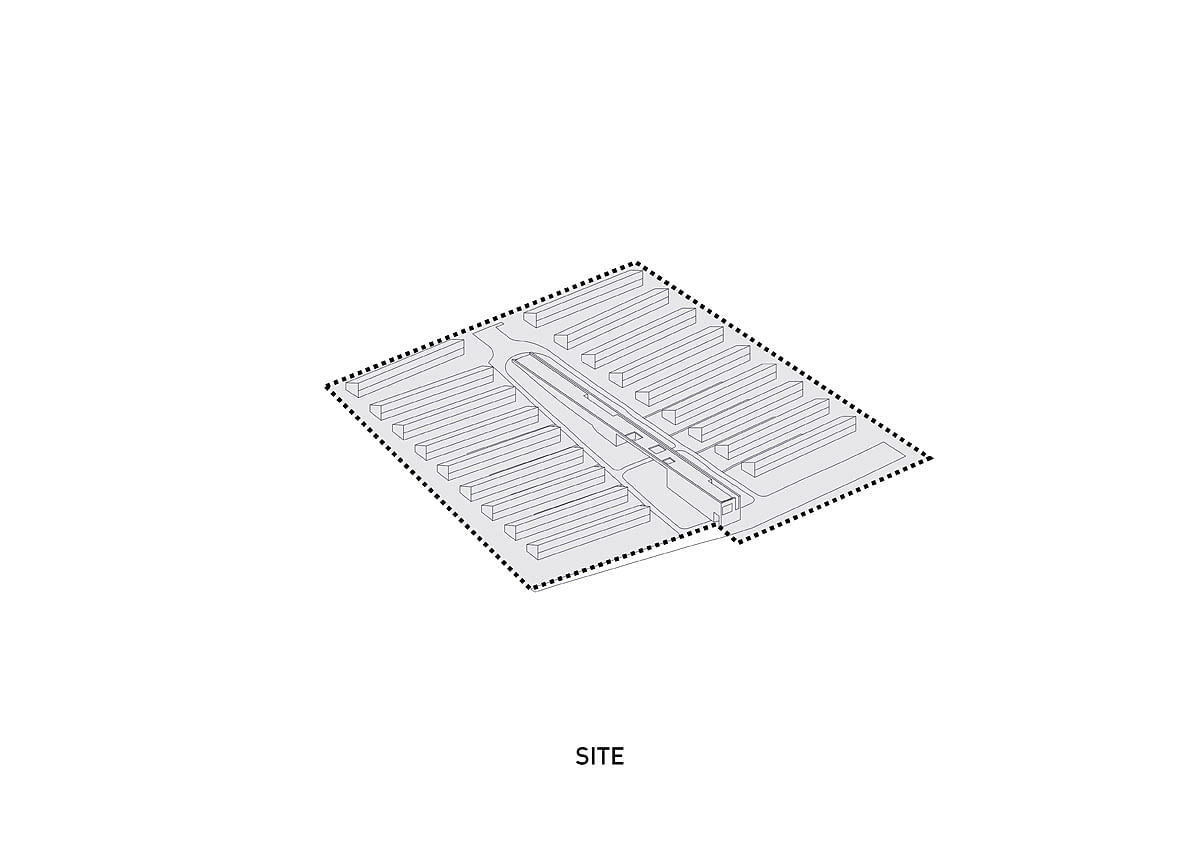
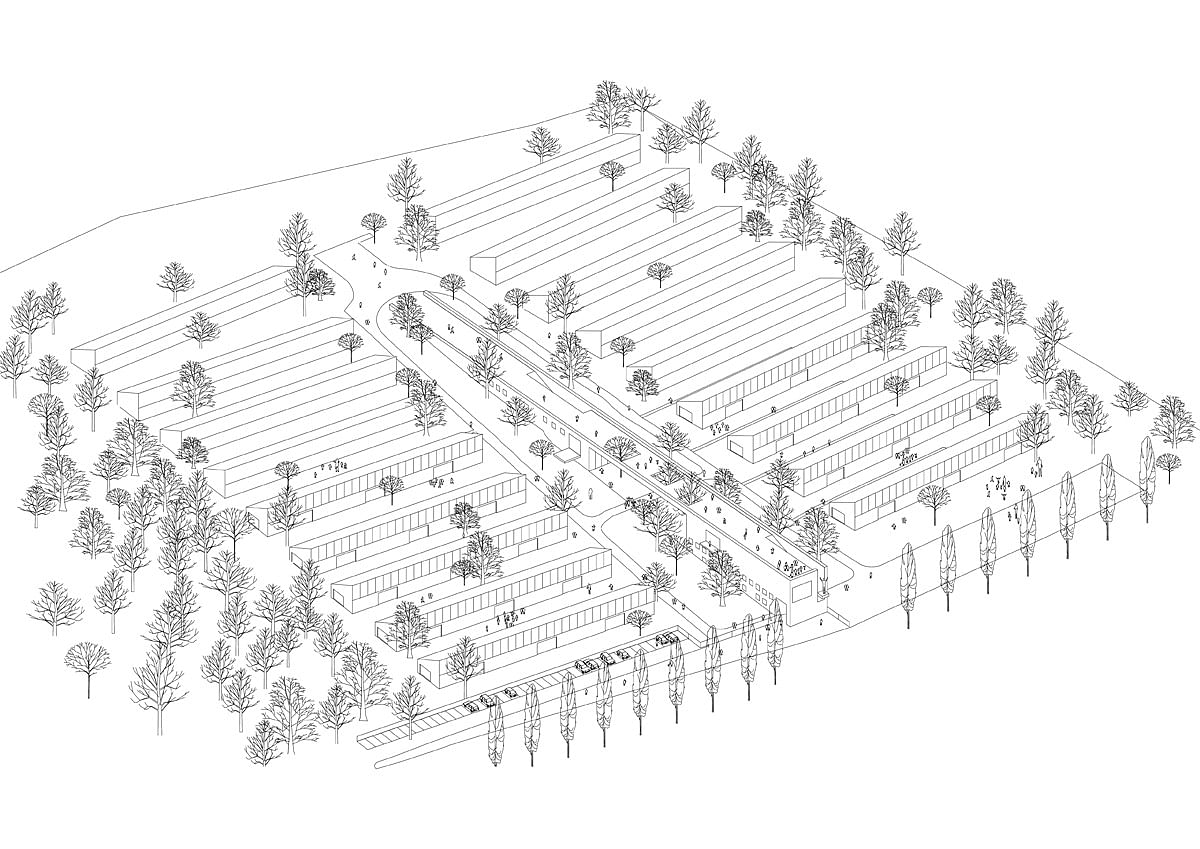
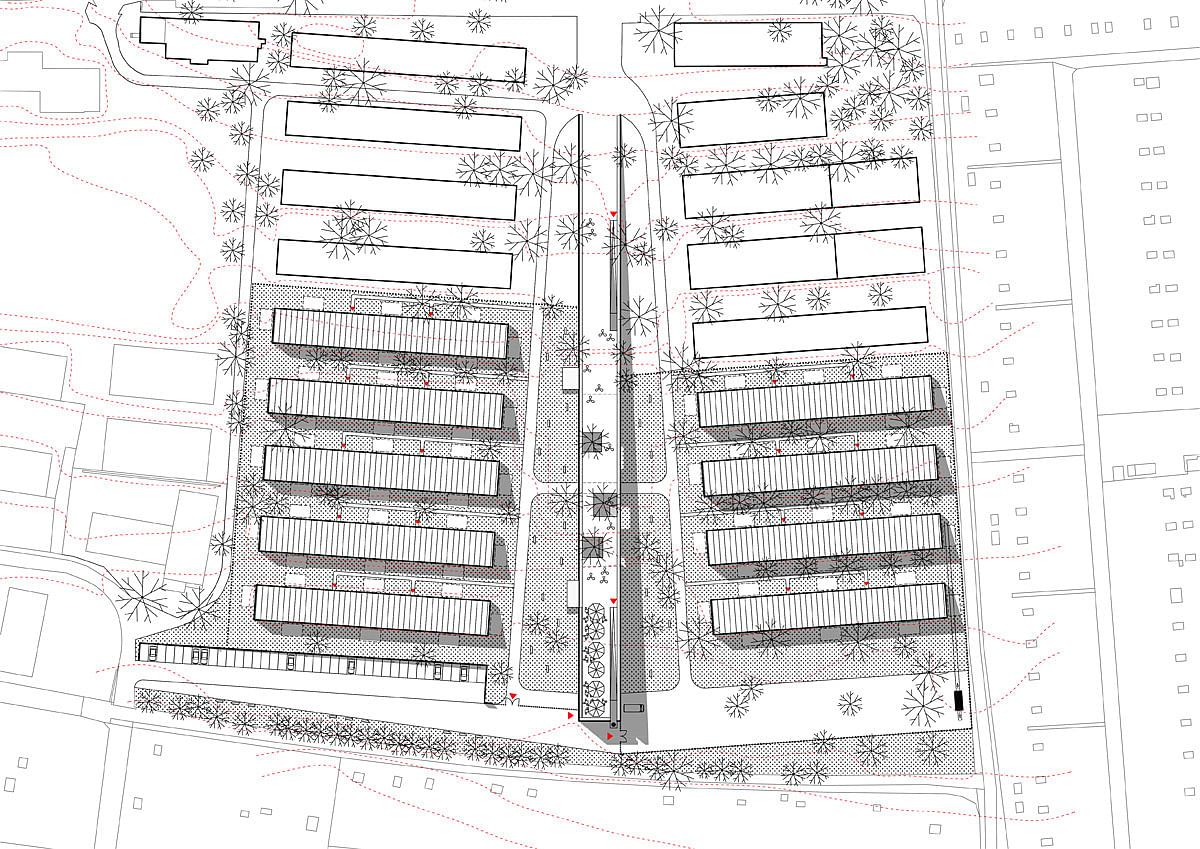
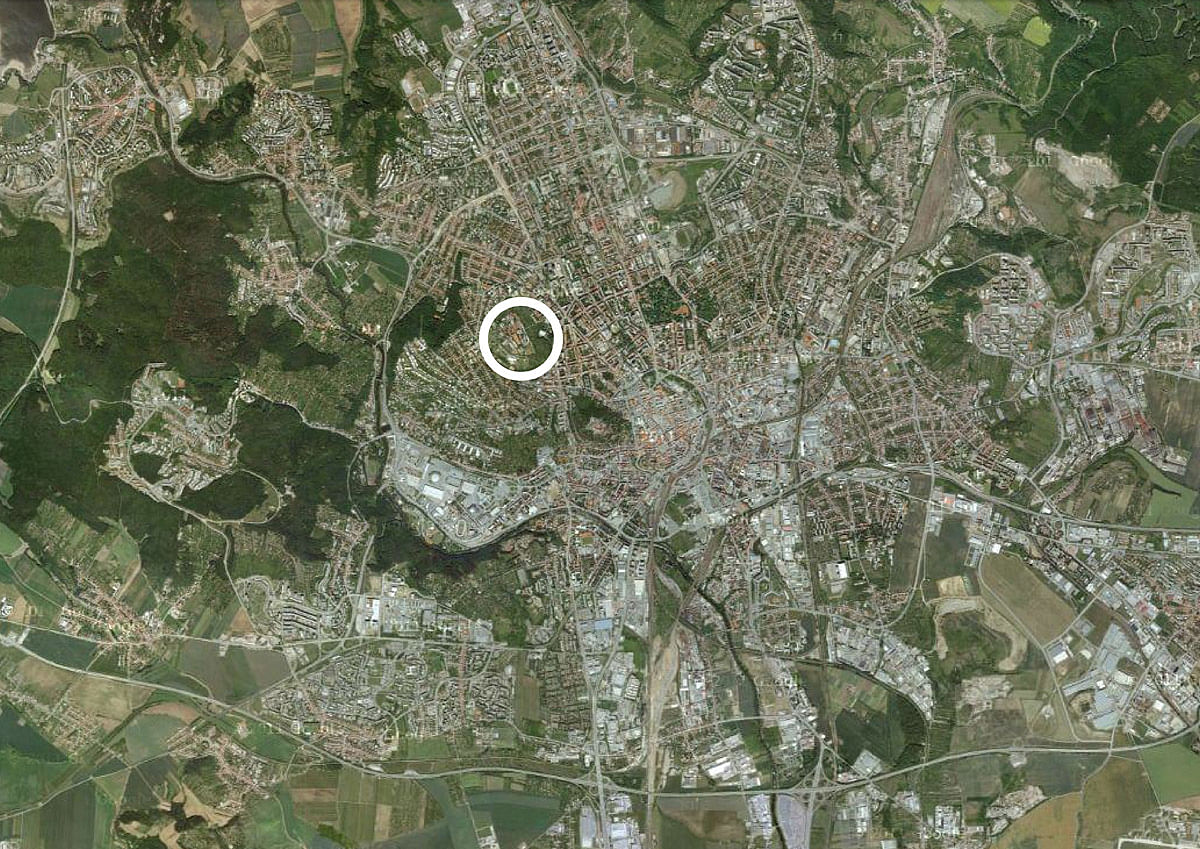
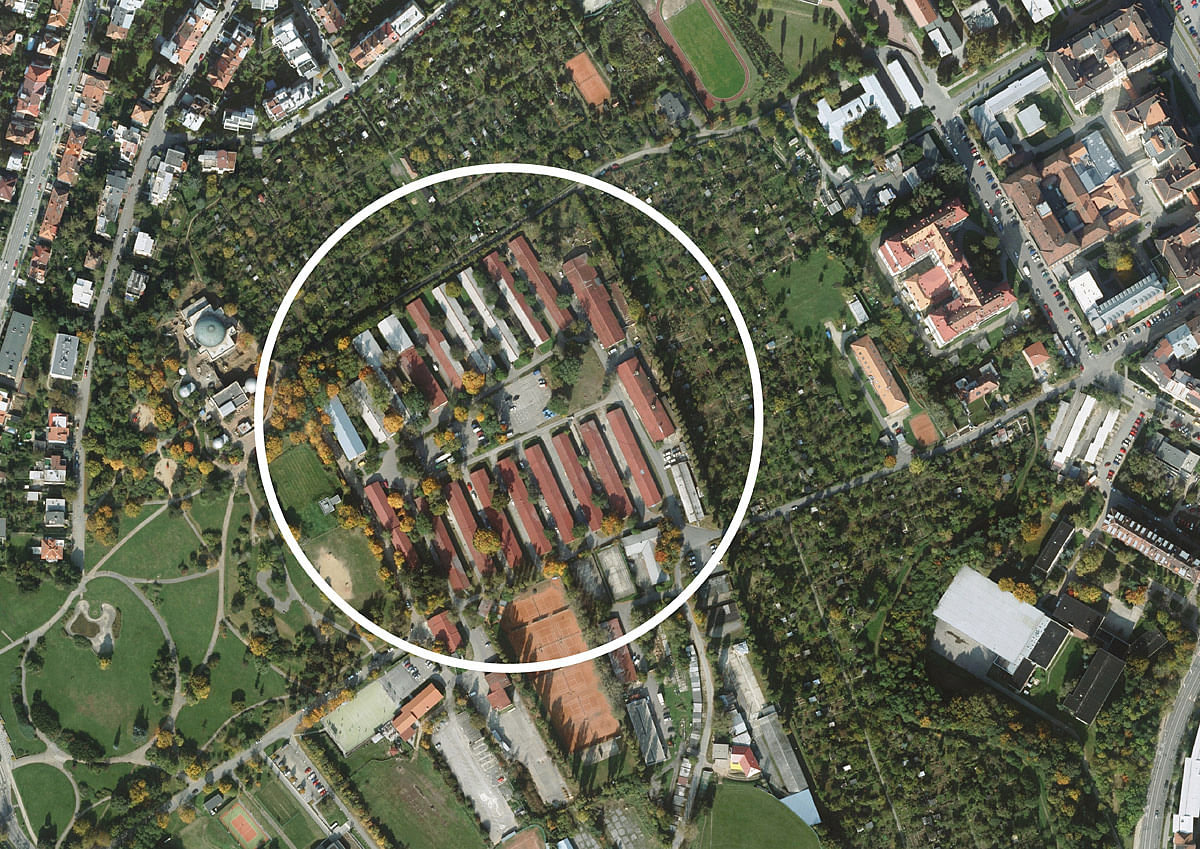
The project is based on the idea of maximal respect to the character of the park’s locality in the city centre for which it is designed. It is a complex of separate pavilions based on the floor plan of the existing build-up area of provisional assembled buildings, so-called likusáks. The concept of the project presupposes an interaction between education, culture and the public. Its realisation will significantly contribute to revitalise the neglected eastern part of the park on Kraví hora. The exclusively located area offers only a commercial use of the provisional built-up area, and even though it is situated in the wider city centre, it has not undergone a process of revitalisation yet. The joyless nature of the area with decrepit temporary objects contrasts dramatically with the surrounds of Kraví hora, being architectonically and socially highly attractive.
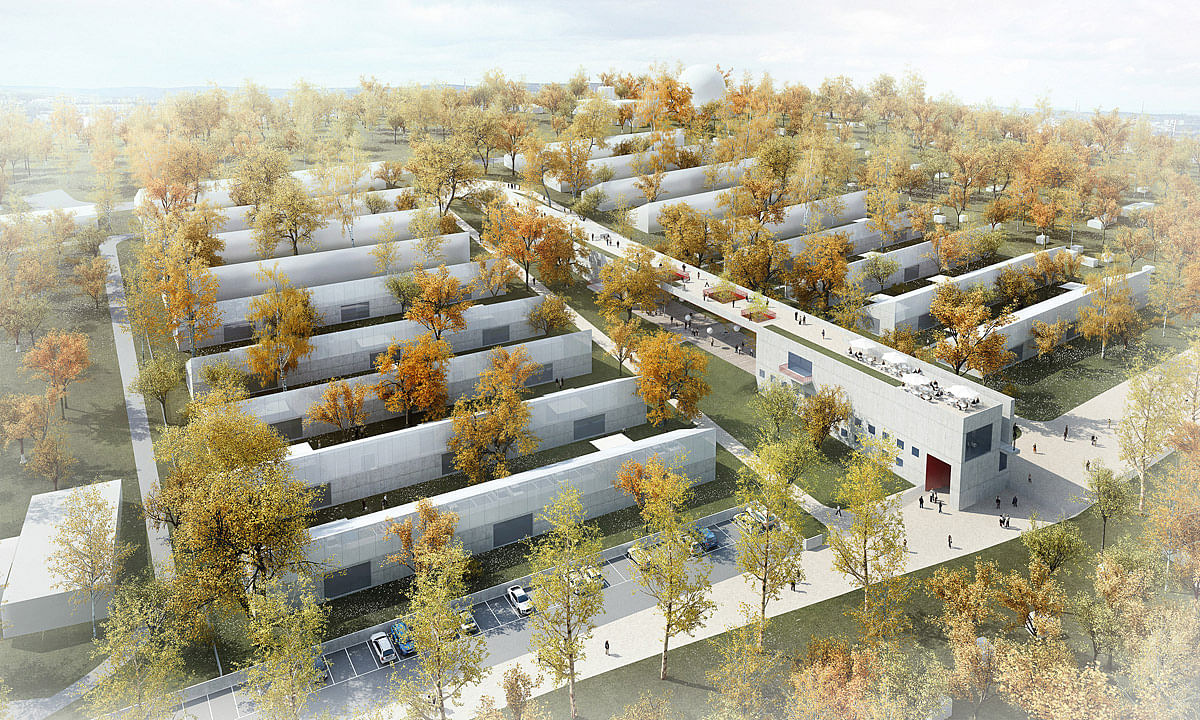
Aerial view, day (Image: CHYBIK+KRISTOF AA)
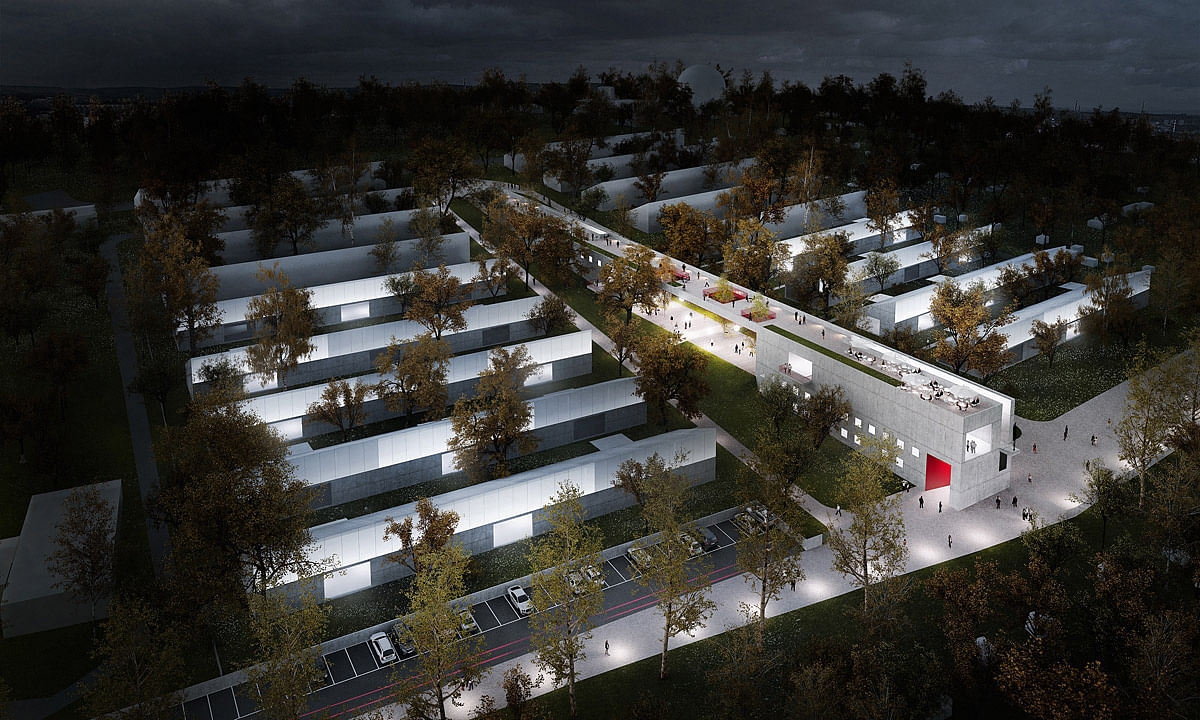
Aerial view, night (Image: CHYBIK+KRISTOF AA)

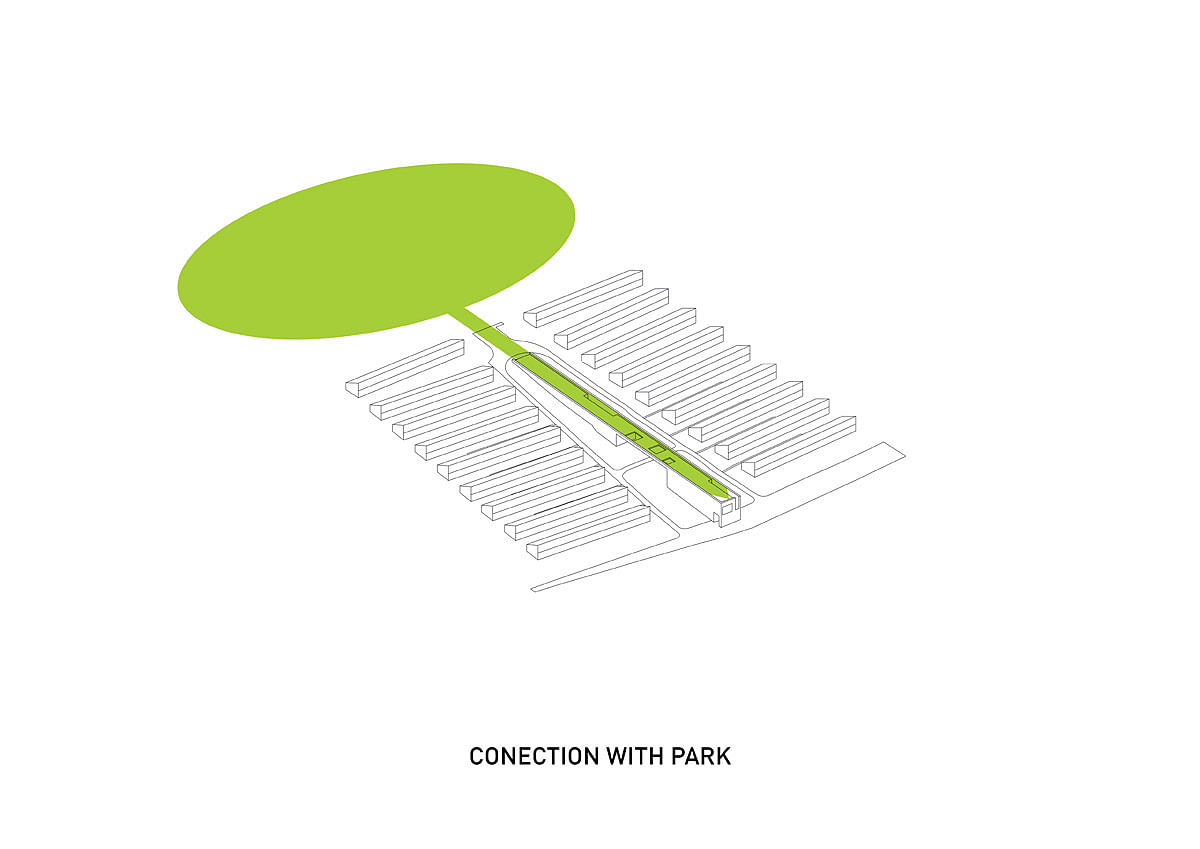
Historically, the most significant urbanistic intention to fully exploit the area was the project of the Academic Square from 1920s and 1930s which had counted on building up Kraví hora for the newly founded Masaryk University. Successive competitions were attended by renowned representatives of the Czech interwar architecture, e. g. Alois Dryák, Bohuslav Fuchs, Jindřich Kumpošt, Miloš Laml, Jan Víšek, Ernst Wiesner etc. However, due to the antagonism of both the architectural and academic community, the only building realised was the Faculty of Law by Alois Dryák. The project of the new campus of the Faculty of Arts follows the historic continuity of the first-republican idea of building a campus. Nevertheless, it differs significantly in the fact that it preserves desirable green zones in this area.
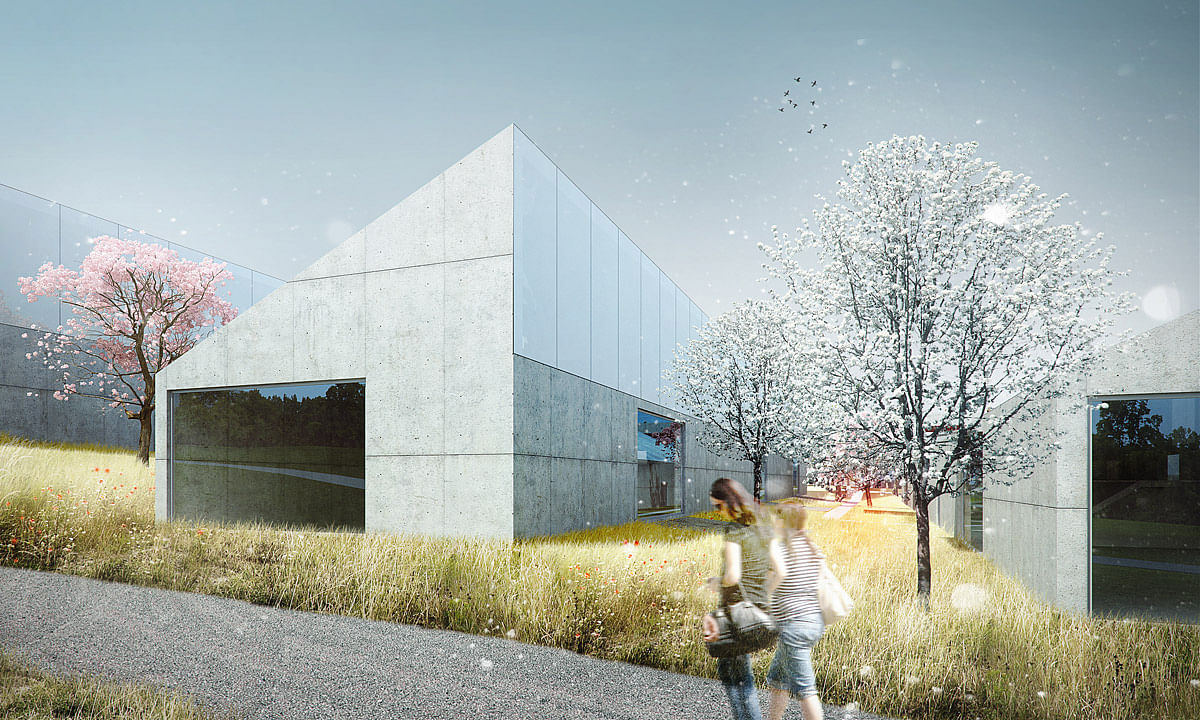
Exterior view, Pavilion (Image: CHYBIK+KRISTOF AA)

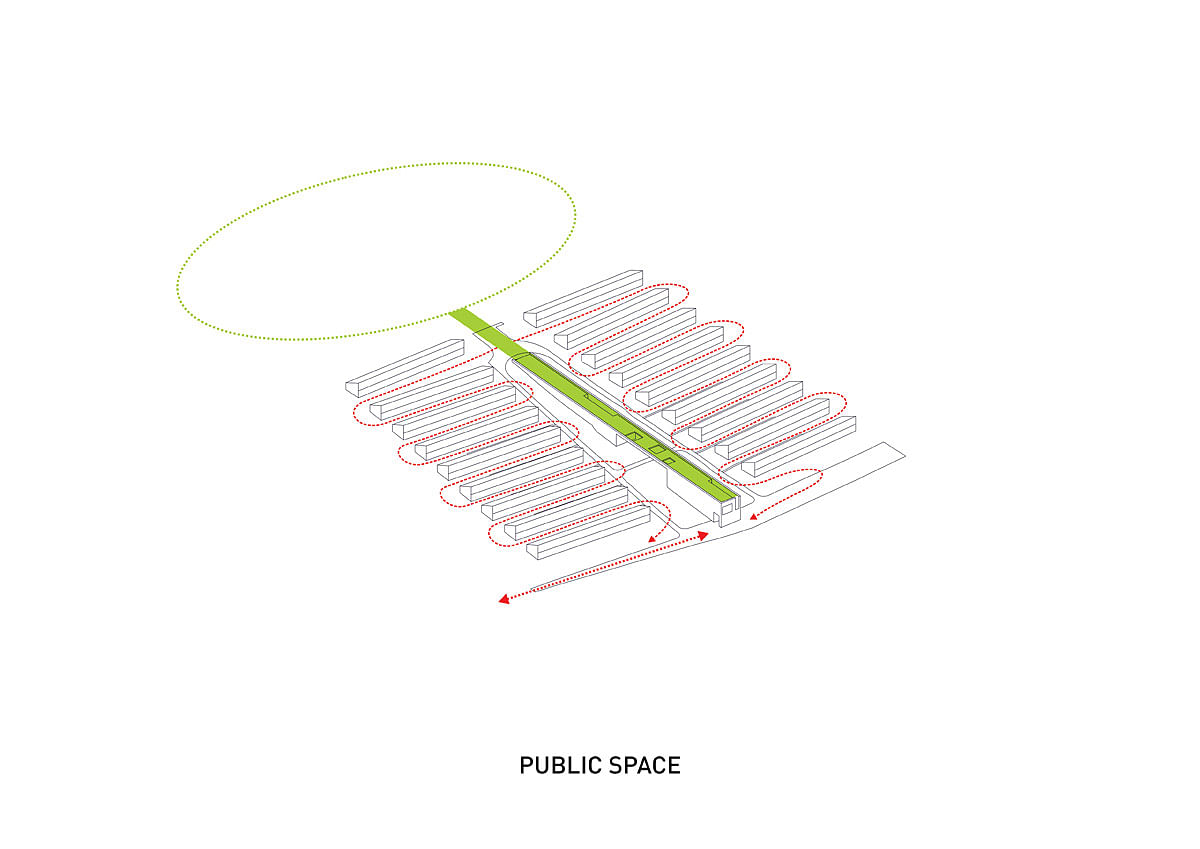
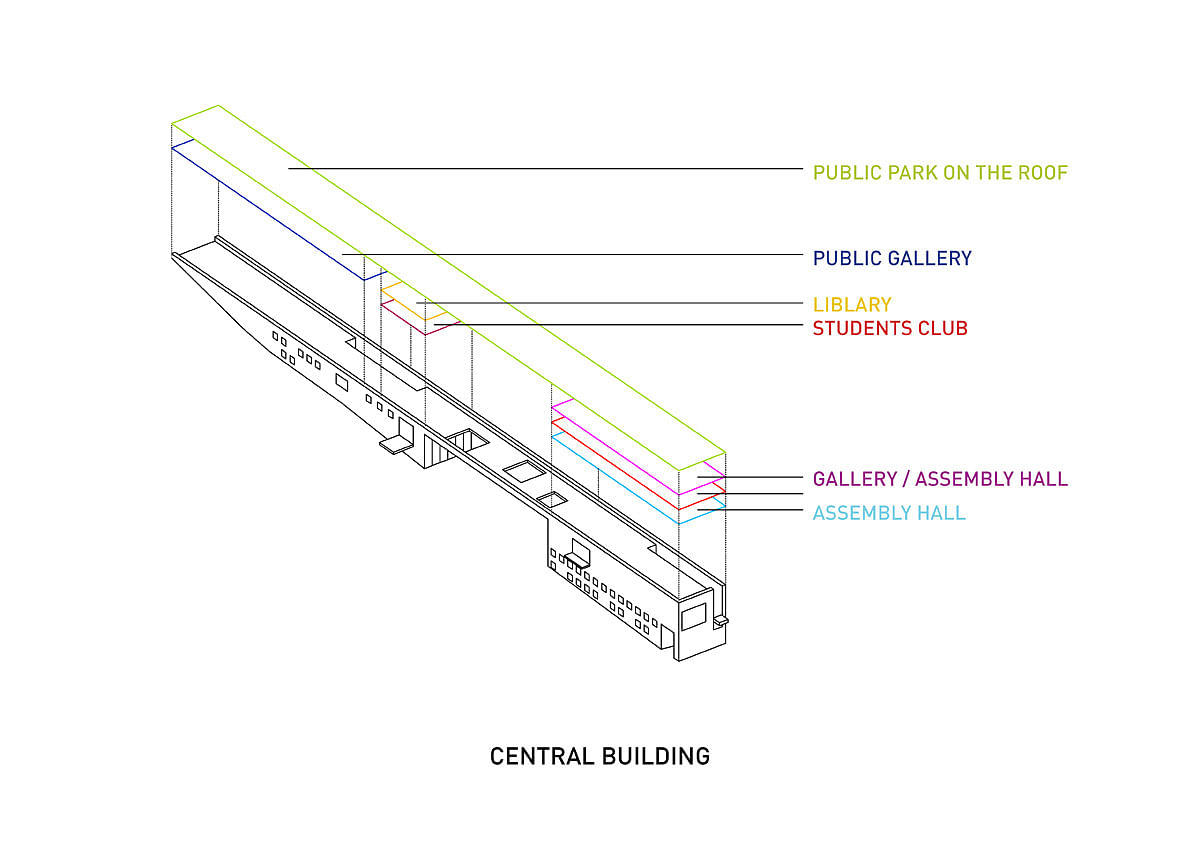
An optimal space for art presentation in public will be created within the new premises of the Faculty of Arts. The educational function will be completed with a cultural and social function: in one of its variants, the project includes a public-accessible gallery, a club, a library and rooms for organising lectures and workshops. These rooms will be situated in the central object which will act as a spine of the area. The project’s realisation will bring a complex use of the whole area – it will include science and education (observatory and planetarium, technical and art schooling), culture (gallery, art presentations in public) and sport (sport and recreational area with a pool, baseball field). At the same time, a new dominant feature will emerge within the city structure connecting the Veveří Street to the square náměstí Míru. Thanks to this, the whole area will get more open and less obstructed.
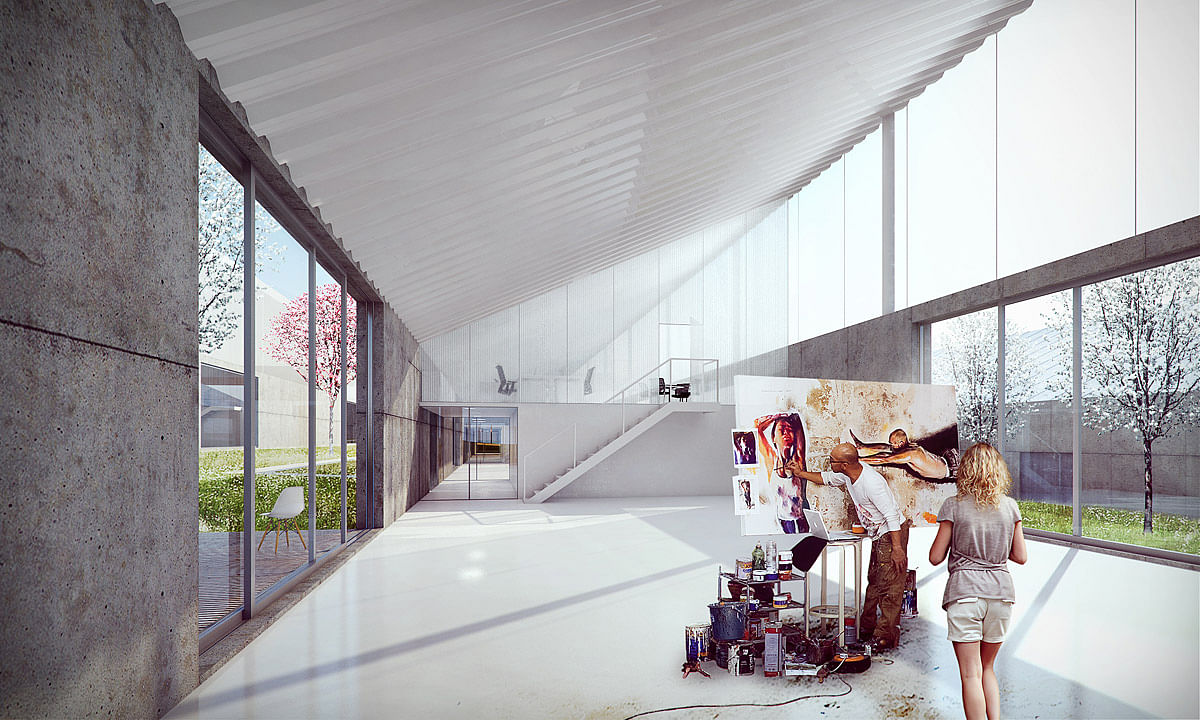
Interior view, Pavilion (Image: CHYBIK+KRISTOF AA)

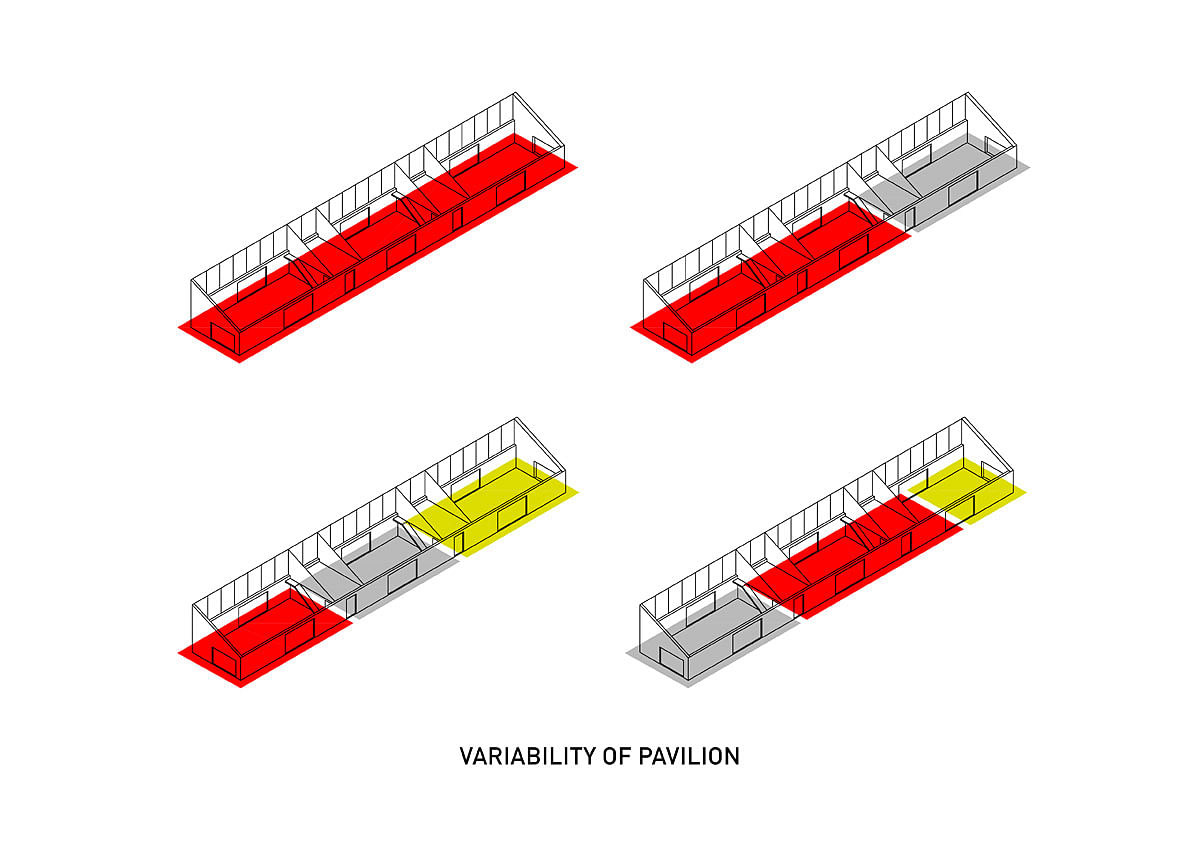
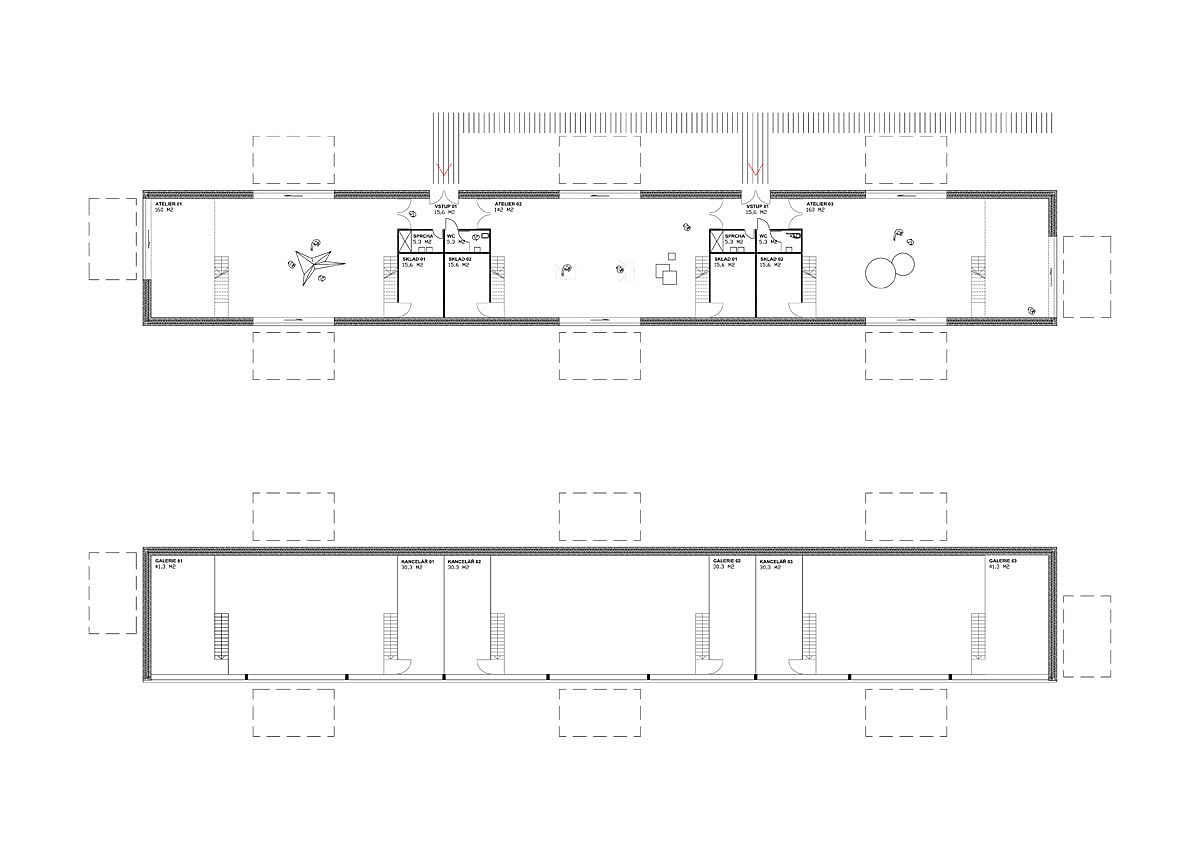
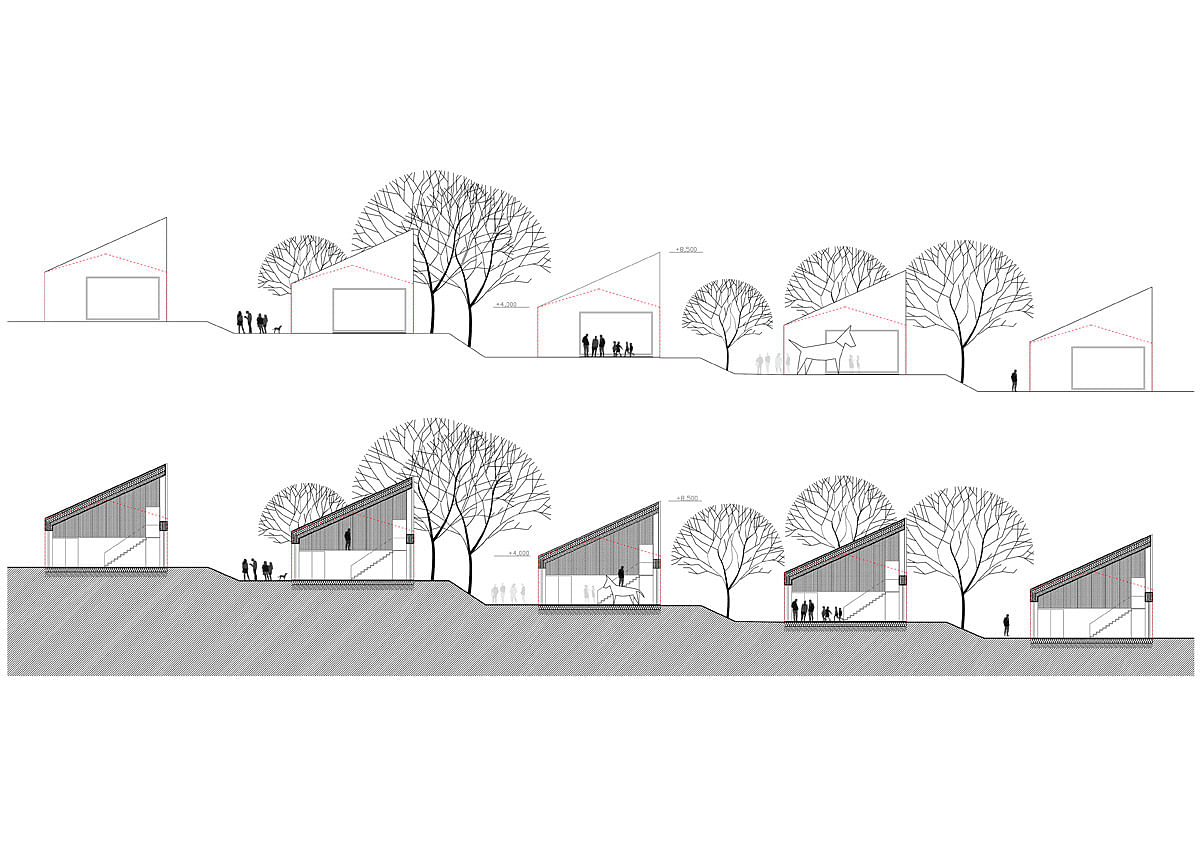
The basic unit of the architectonical structure is a pavilion situated on the existing built-up space with total dimensions of 67.5 m in length and 10 m in width. The characteristic motive is a counter roof ensuring optimal indirect illumination. The shape and the orientation of the roofs incite to use renewable solar energy. Natural window ventilation and individual air-conditioning heat recovering units will be put in place. The authorial team consulted the construction and the static solution, as well as the question of heating with specialised institutes of the Faculty of Civil Engineering of Brno University of Technology – the area could be rebuilt surprisingly simply and quite quickly. Some objects may serve as ateliers for young artists as a sort of incubators. This will steadily cover a part of school’s expenses. Moreover, the projected green zone of the park surpasses the actual state since it anticipates planting of new trees.
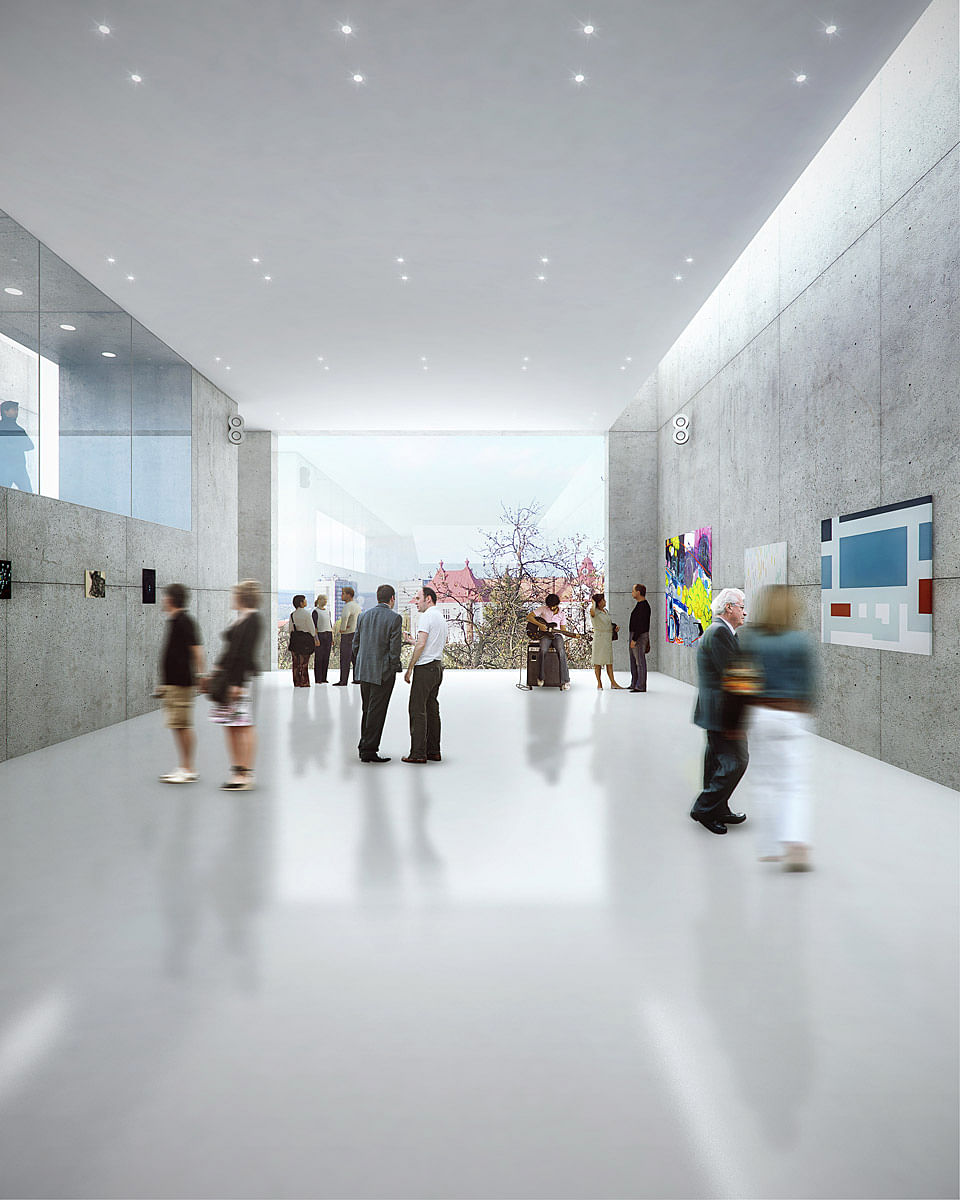
Interior view, Central Building, day (Image: CHYBIK+KRISTOF AA)

A campus endowed with public functions will aid to open the locality to wider and more socially varied user groups. One of the key developing strategies of Brno consisting in creating an image of Brno as a European academic city will be fulfilled.
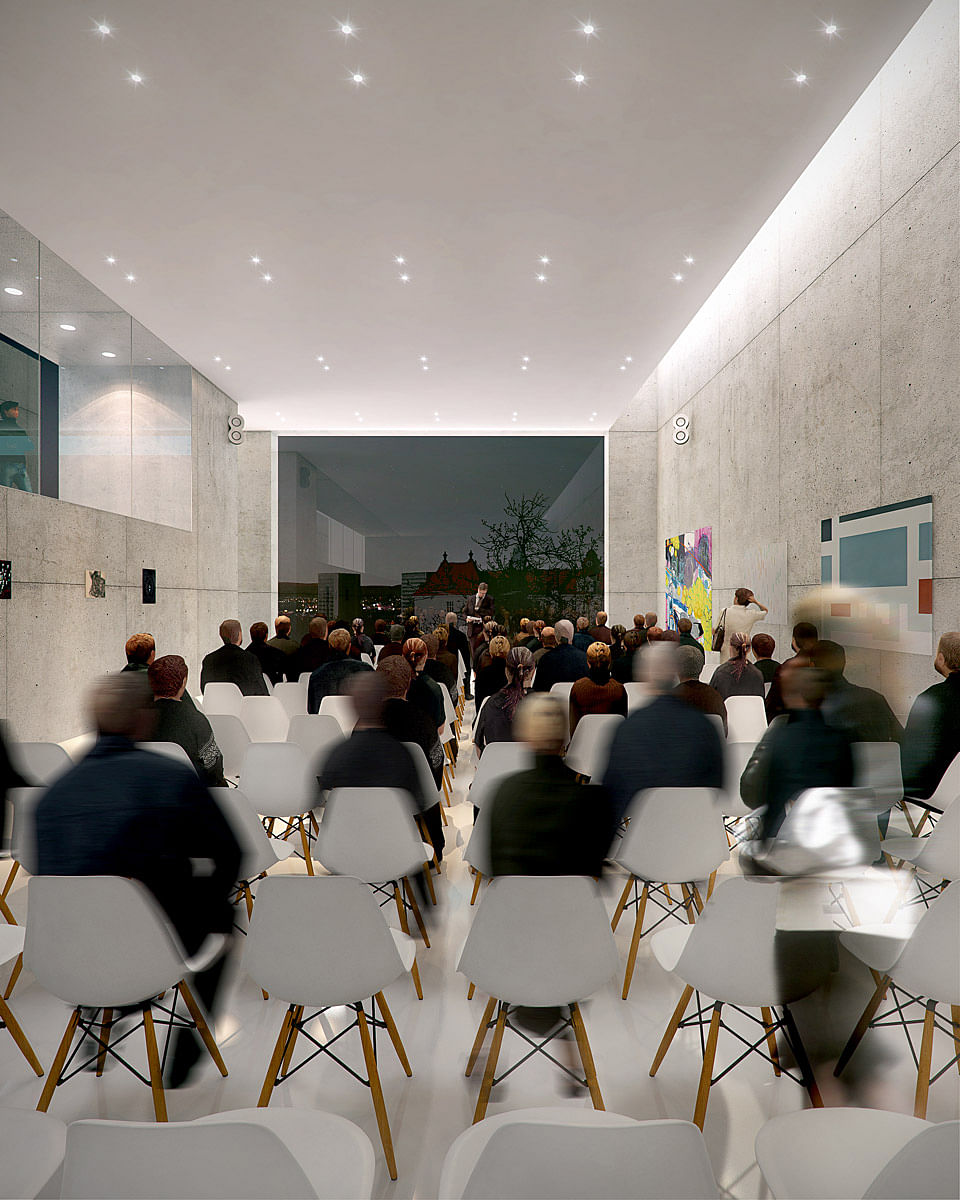
Interior view, Central Building, night (Image: CHYBIK+KRISTOF AA)

Project Details:

Location: Brno, Czech Republic
Use: University and creative incubator
Team: CHYBIK+KRISTOF ASSOCIATED ARCHITECTS, Ivan Ruller, Ondrej Stehlik
Structure: Petr Stepanek
Heating: Jiri Hirs
Construction: Josef Chybik
Consultants: Michal Gabriel, Tomas Ruller
Text: Marketa Zackova
Visualizations: Miss3
Size: 8,500 m2
Site Area: 48,000 m2
Project year: 2011
Type: Commission
Status: Ongoing
Related

university ● school ● europe ● czech republic ● chybik+kristof ● brno ● art

Share

  • Follow

    0 Comments

  • Comment as :

Faculty of Fine Arts, Brno University of Technology by CHYBIK+KRISTOF AA

Northwestern University selects 12-firm longlist to design new engineering building

New architecture and design competitions: Exploring 130 Years of American Design, Christo & Jeanne-Claude Center, 13 White Houses, and La Pyramide

Micro-architecture honored in latest Tiny House Architecture Competition

World’s most beautiful restaurants of 2026 chosen by Prix Versailles

Sponsored Post by Buildner

Design a wine tasting room in Italy! Valli Wine Tasting Room is launched!

10 can't-miss architecture & design events to see this June in London, Los Angeles, Chicago, San Francisco, Detroit, San Diego, Porto, and Barcelona

Sponsored Post by Buildner

Museum of Emotions / Edition #8 FINAL registration deadline is approaching!

Seven global projects make AR Public Awards shortlist 2026

Sign up for Bustler's Email Newsletters

Sponsored Post by Buildner

Design a slow-living restaurant in Portugal! Portugal Long Table Restaurant is launched!

World's best tall buildings honored at the CVU 2026 Award of Excellence

Sponsored Post by TWOPAGES

Final call: TWOPAGES X Design Contest 2026 submissions close June 5

Kengo Kuma & Paul Raff win Alberta national park visitor center competition with landscape-focused design

2026 Moira Gemmill and MJ Long prizes announced by W Awards

New architecture and design competitions: Kinderspace, Stewardson Keefe LeBrun Travel Grant, SMALL PROJECT BIG IMPACT, and Garden of University House, Bucharest

The Century of Gehry: New retrospective explores the late architect's work & collaborations

Next page » Loading

Faculty of Fine Arts, Brno University of Technology by CHYBIK+KRISTOF AA

By Bustler Editors|

Wednesday, Jan 11, 2012

Share

Exterior view of the Central Building (Image: CHYBIK+KRISTOF AA)

Related

university ● school ● europe ● czech republic ● chybik+kristof ● brno ● art

Czech firm CHYBIK+KRISTOF Associated Architects have shared with us their schematic design for the Faculty of Fine Arts at Brno University of Technology in Brno, Czech Republic. The project team also included Ivan Ruller and Ondrej Stehlik.

Project Description from the Architects:

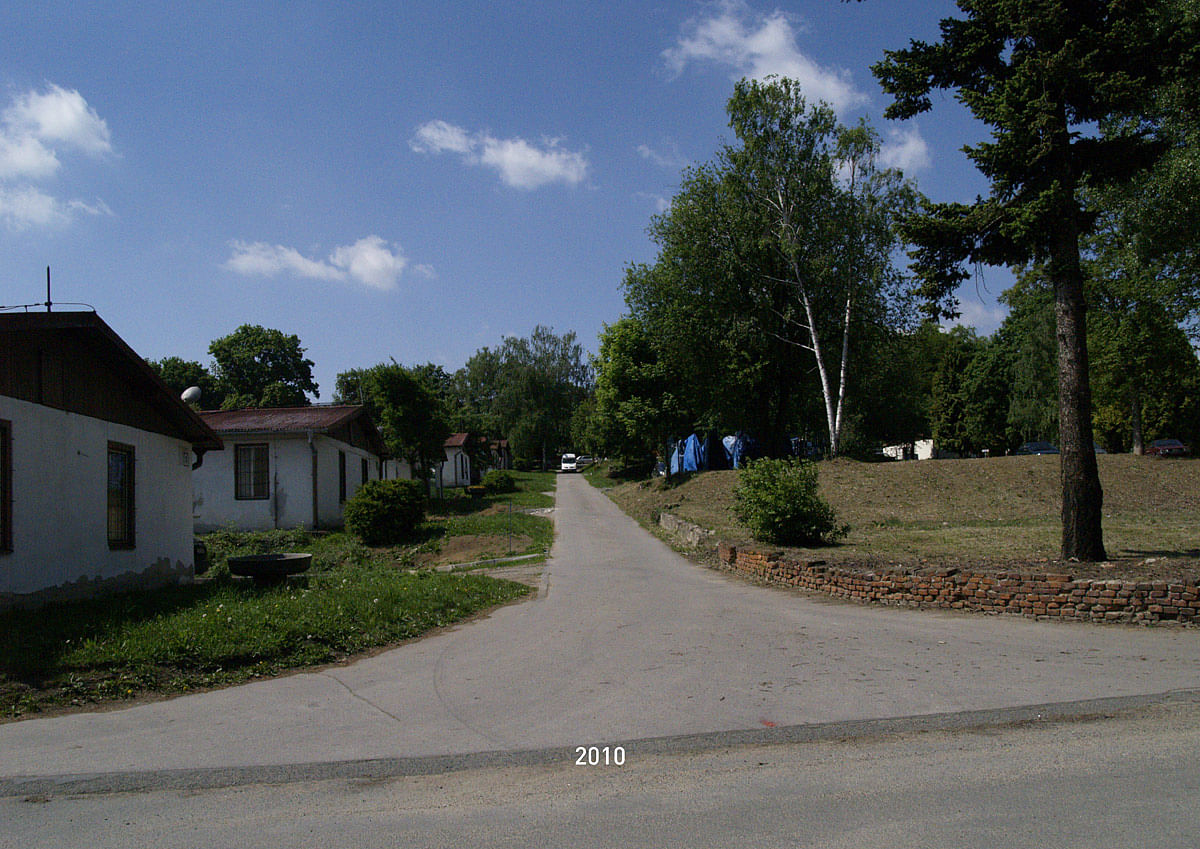
The project is based on the idea of maximal respect to the character of the park’s locality in the city centre for which it is designed. It is a complex of separate pavilions based on the floor plan of the existing build-up area of provisional assembled buildings, so-called likusáks. The concept of the project presupposes an interaction between education, culture and the public. Its realisation will significantly contribute to revitalise the neglected eastern part of the park on Kraví hora. The exclusively located area offers only a commercial use of the provisional built-up area, and even though it is situated in the wider city centre, it has not undergone a process of revitalisation yet. The joyless nature of the area with decrepit temporary objects contrasts dramatically with the surrounds of Kraví hora, being architectonically and socially highly attractive.

Aerial view, day (Image: CHYBIK+KRISTOF AA)
Aerial view, night (Image: CHYBIK+KRISTOF AA)

Historically, the most significant urbanistic intention to fully exploit the area was the project of the Academic Square from 1920s and 1930s which had counted on building up Kraví hora for the newly founded Masaryk University. Successive competitions were attended by renowned representatives of the Czech interwar architecture, e. g. Alois Dryák, Bohuslav Fuchs, Jindřich Kumpošt, Miloš Laml, Jan Víšek, Ernst Wiesner etc. However, due to the antagonism of both the architectural and academic community, the only building realised was the Faculty of Law by Alois Dryák. The project of the new campus of the Faculty of Arts follows the historic continuity of the first-republican idea of building a campus. Nevertheless, it differs significantly in the fact that it preserves desirable green zones in this area.

Exterior view, Pavilion (Image: CHYBIK+KRISTOF AA)

An optimal space for art presentation in public will be created within the new premises of the Faculty of Arts. The educational function will be completed with a cultural and social function: in one of its variants, the project includes a public-accessible gallery, a club, a library and rooms for organising lectures and workshops. These rooms will be situated in the central object which will act as a spine of the area. The project’s realisation will bring a complex use of the whole area – it will include science and education (observatory and planetarium, technical and art schooling), culture (gallery, art presentations in public) and sport (sport and recreational area with a pool, baseball field). At the same time, a new dominant feature will emerge within the city structure connecting the Veveří Street to the square náměstí Míru. Thanks to this, the whole area will get more open and less obstructed.

Interior view, Pavilion (Image: CHYBIK+KRISTOF AA)

The basic unit of the architectonical structure is a pavilion situated on the existing built-up space with total dimensions of 67.5 m in length and 10 m in width. The characteristic motive is a counter roof ensuring optimal indirect illumination. The shape and the orientation of the roofs incite to use renewable solar energy. Natural window ventilation and individual air-conditioning heat recovering units will be put in place. The authorial team consulted the construction and the static solution, as well as the question of heating with specialised institutes of the Faculty of Civil Engineering of Brno University of Technology – the area could be rebuilt surprisingly simply and quite quickly. Some objects may serve as ateliers for young artists as a sort of incubators. This will steadily cover a part of school’s expenses. Moreover, the projected green zone of the park surpasses the actual state since it anticipates planting of new trees.

Interior view, Central Building, day (Image: CHYBIK+KRISTOF AA)

A campus endowed with public functions will aid to open the locality to wider and more socially varied user groups. One of the key developing strategies of Brno consisting in creating an image of Brno as a European academic city will be fulfilled.

Interior view, Central Building, night (Image: CHYBIK+KRISTOF AA)

Project Details:

Location: Brno, Czech Republic
Use: University and creative incubator
Team: CHYBIK+KRISTOF ASSOCIATED ARCHITECTS, Ivan Ruller, Ondrej Stehlik
Structure: Petr Stepanek
Heating: Jiri Hirs
Construction: Josef Chybik
Consultants: Michal Gabriel, Tomas Ruller
Text: Marketa Zackova
Visualizations: Miss3
Size: 8,500 m2
Site Area: 48,000 m2
Project year: 2011
Type: Commission
Status: Ongoing
Share

  • Follow

    0 Comments

  • Comment as :

Archinect JobsArchinect Jobs

The Archinect Job Board attracts the world's top architectural design talents.

VIEW ALL JOBS POST A JOB

Project Architect/ Designer

Nandinee Phookan Architect, P.C.

Project Architect/ Designer

New York, NY, US

Architect

mani colaku architects

Architect

New York, NY, US

Senior Designer / Architect

NardiHaus

Senior Designer / Architect

Pasadena, CA, US

Architectural Designer

1100 Architect

Architectural Designer

New York, NY, US

Intermediate Architect

IMC Architecture

Intermediate Architect

Brooklyn, NY, US

Architectural Designer

Equal Equal

Architectural Designer

Brooklyn, NY, US

Architectural Job Captain

Christopher Courts Inc.

Architectural Job Captain

Los Angeles, CA, US

Intermediate Designer - 3+ Years Experience (NY)

Cass Calder Smith

Intermediate Designer - 3+ Years Experience (NY)

New York, NY, US

Junior Architect

Elizabeth Roberts Architecture & Design

Junior Architect

Brooklyn, NY, US

Junior Architect

Eric Colbert & Associates

Junior Architect

Washington, DC, US

Next page » Loading