• Login / Join
  • About
  • •
  • Contact
  • •
  • Advertising
bustler logo
bustler logo
  • News
  • Competitions
  • Events
  • Bustler is powered by Archinect
  • Sign up for Bustler's Email Newsletters

  • Follow these Bustler feeds:

  • Search

    Search in

  • Submit

    What are you submitting?

    News Pitch
    Competition
    Event
  • Login / Join
  • News|Competitions|Events
  • Search
    | Submit
    | Follow
  • Search in

    What are you submitting?

    News Pitch
    Competition
    Event

    Follow these Bustler feeds:

  • About|Contact|Advertising
  • Login / Join

More Photos of Studio 400's "White" Installation

By Bustler Editors|

Tuesday, Apr 3, 2012
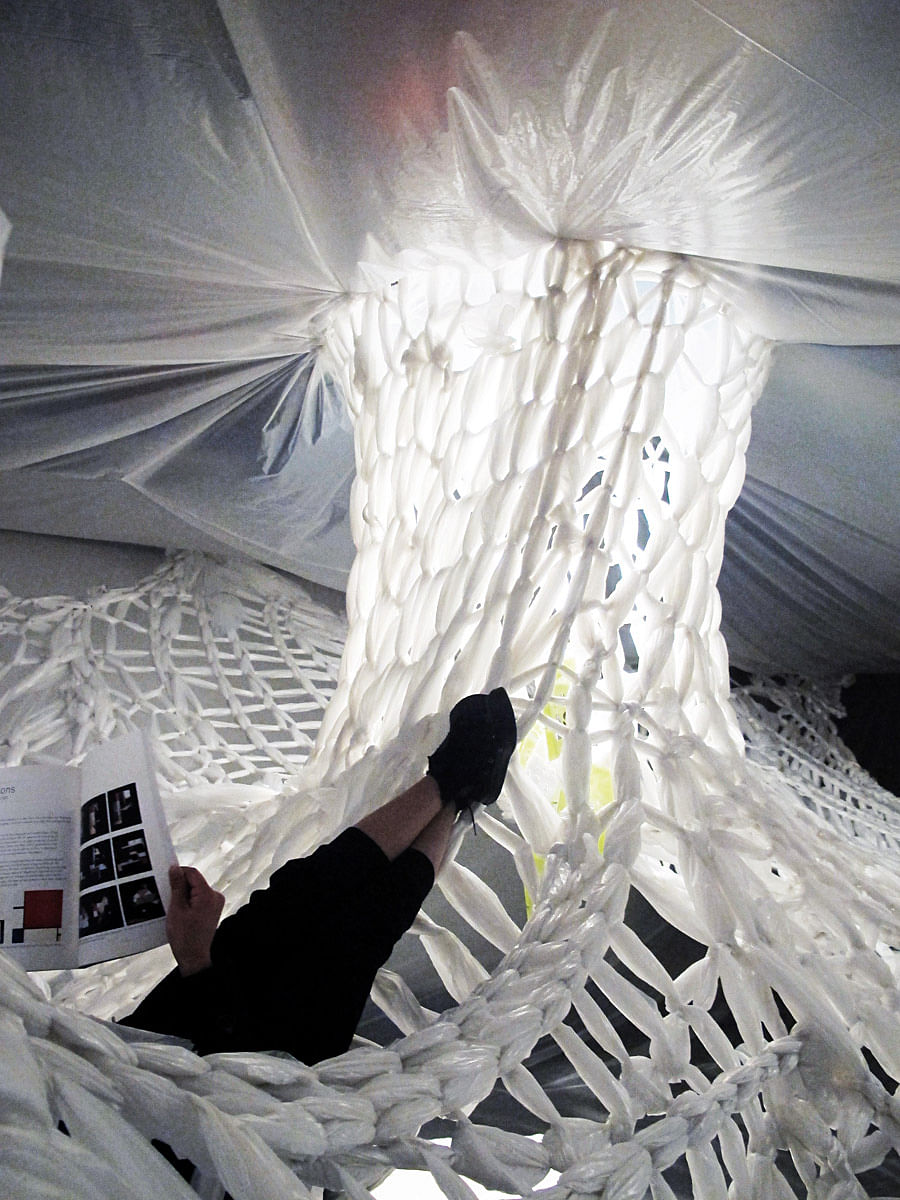
During the exhibition (Photo: Studio 400 Team)

A few days ago, we posted a video of the gallery installation White, the thesis book show by the 20 fifth-year architecture students of Professor Karen Lange at Cal Poly San Luis Obispo College of Architecture and Environmental Design. Now we have also received plenty of exhibition photos from the students, as well as images of the construction process.

Quote from one of the team members: "We wanted to create a continuous surface that would bring spatial interest and social interaction to the gallery. The woven installation is a solution to providing students and faculty a setting to not only read about our projects, but also to enjoy the space."

Project Description from the Students:

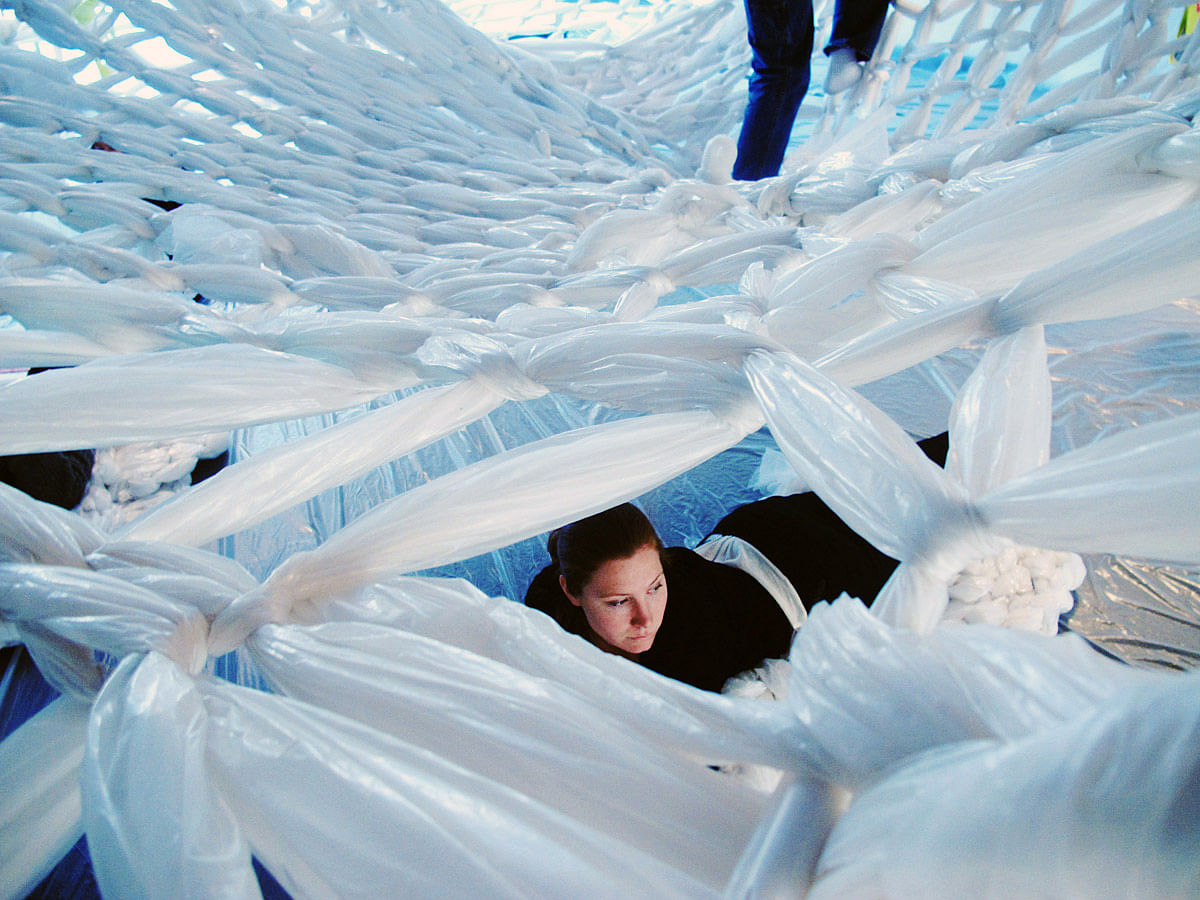
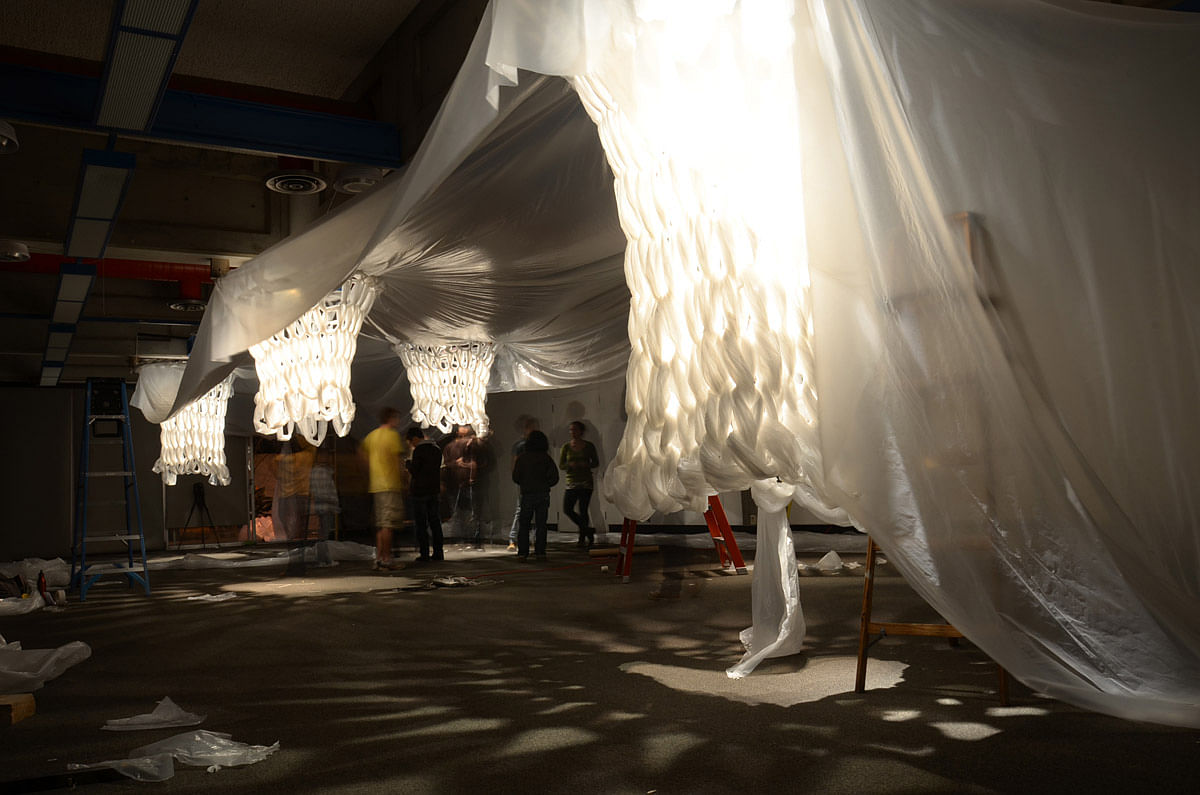
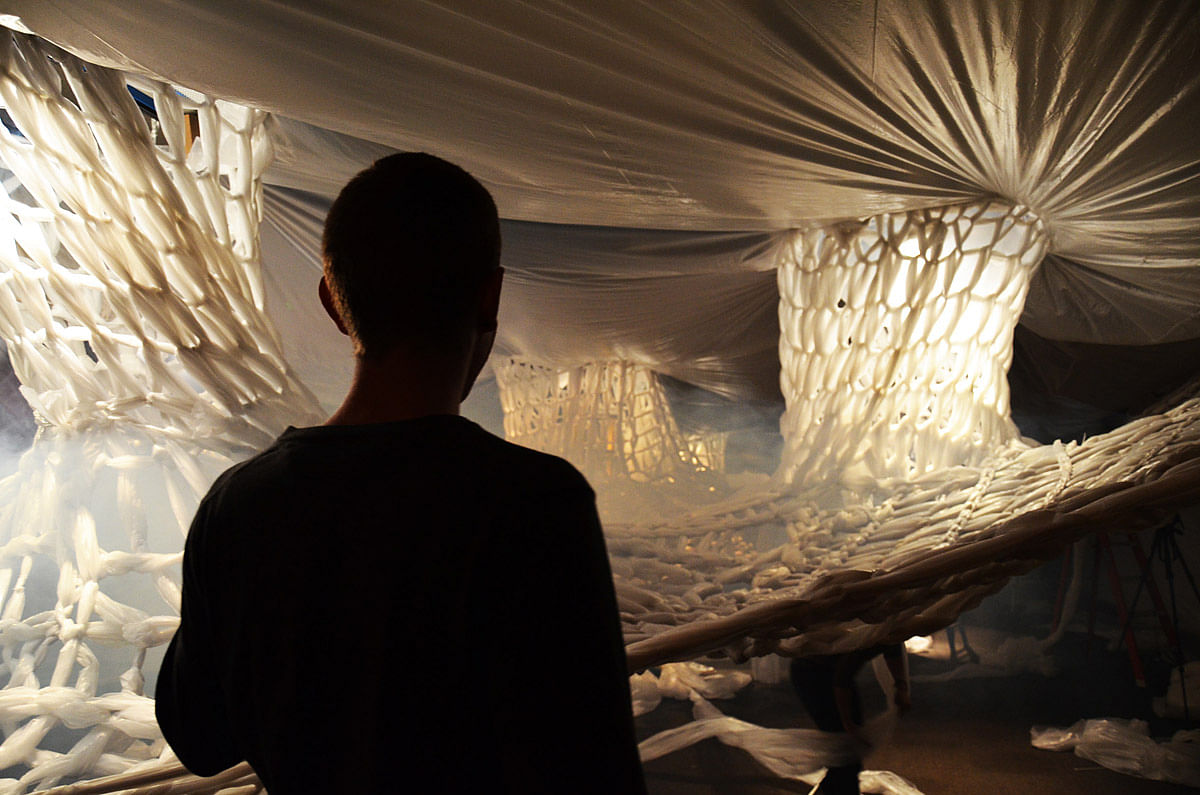
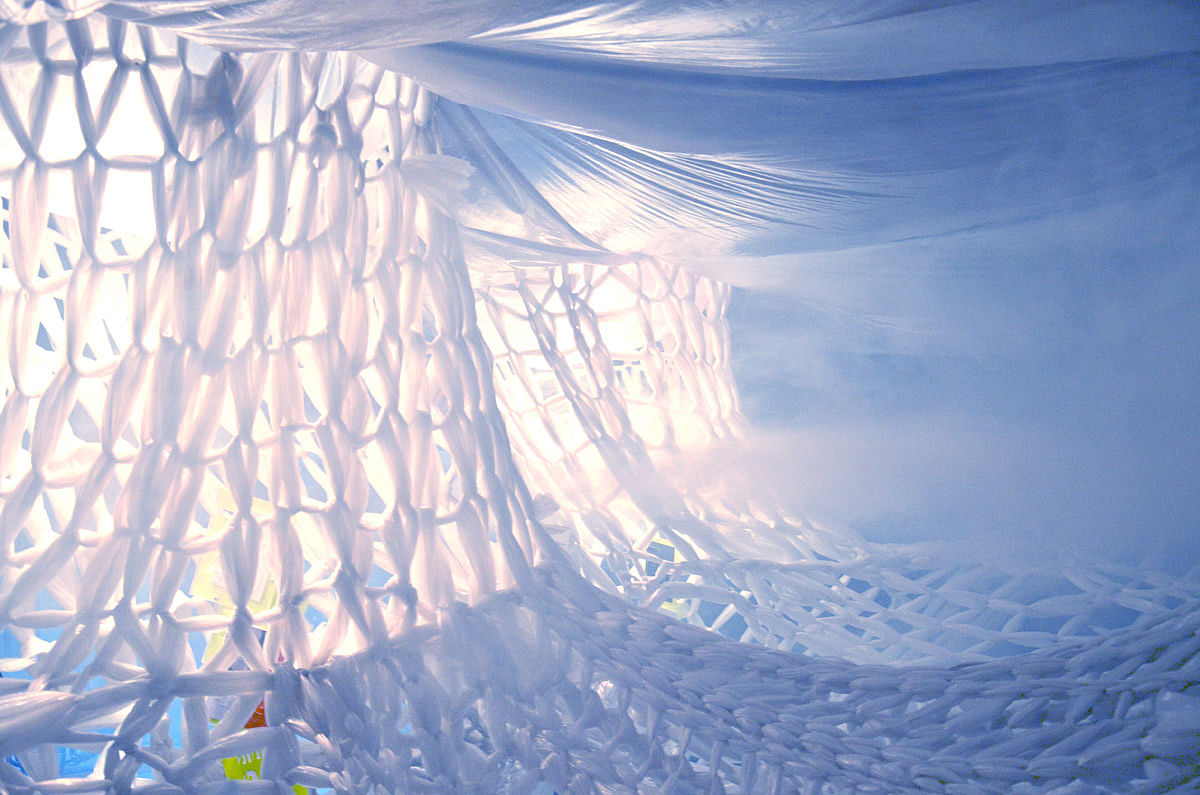
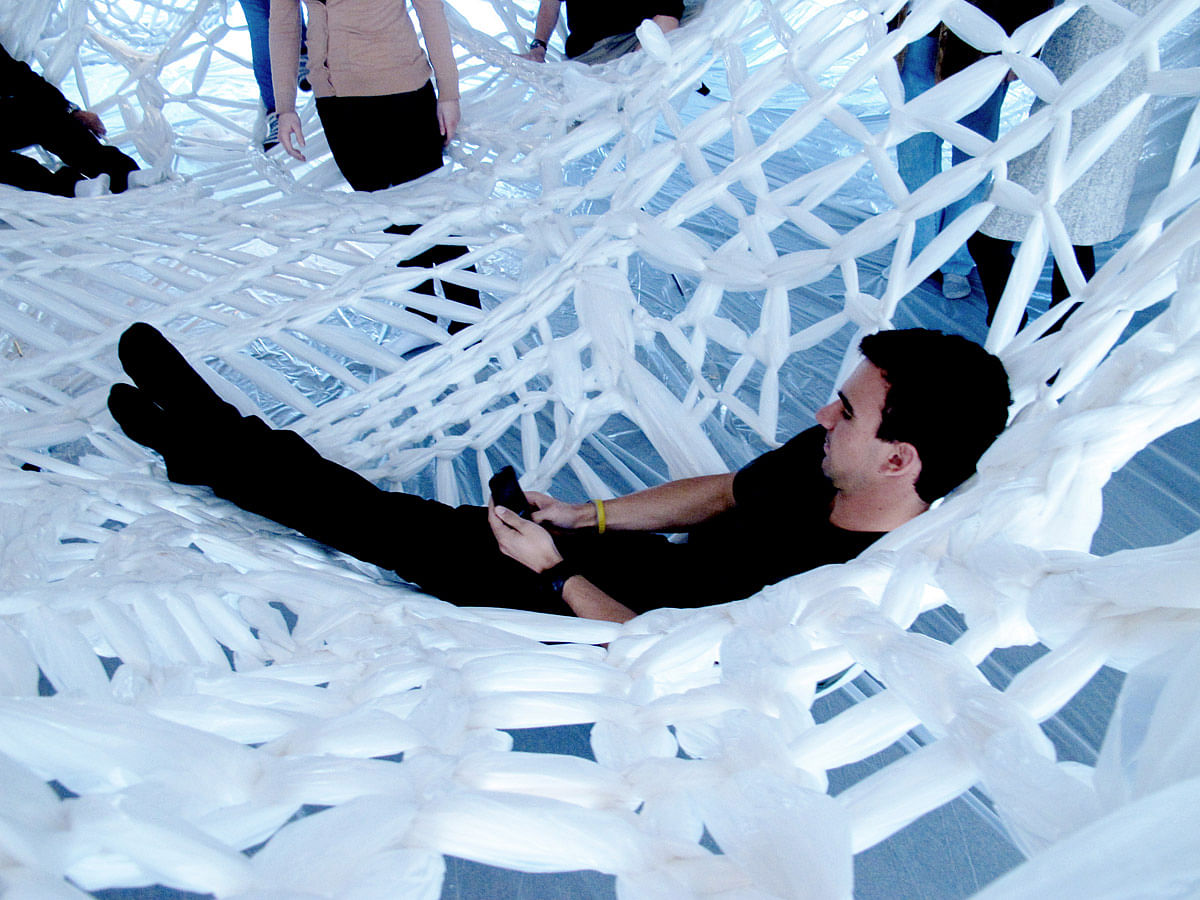
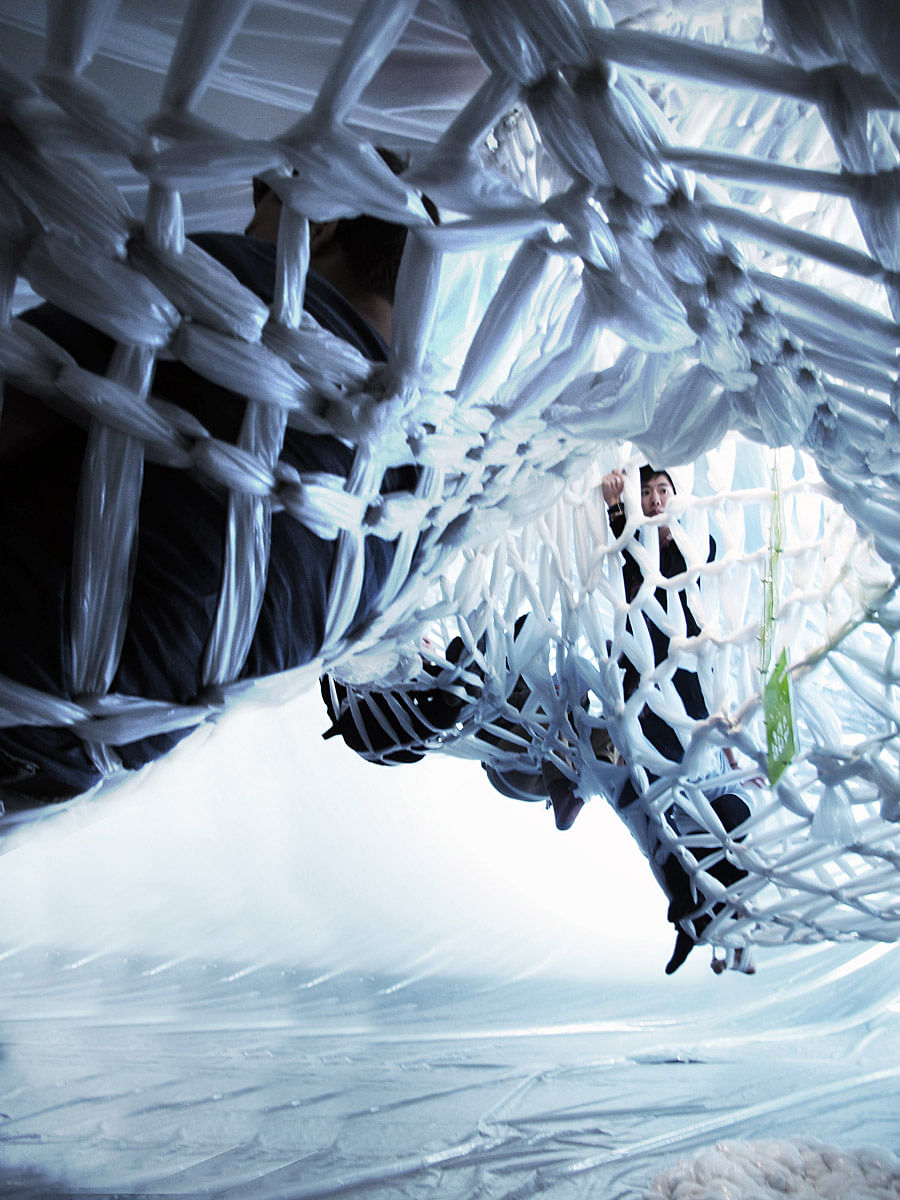
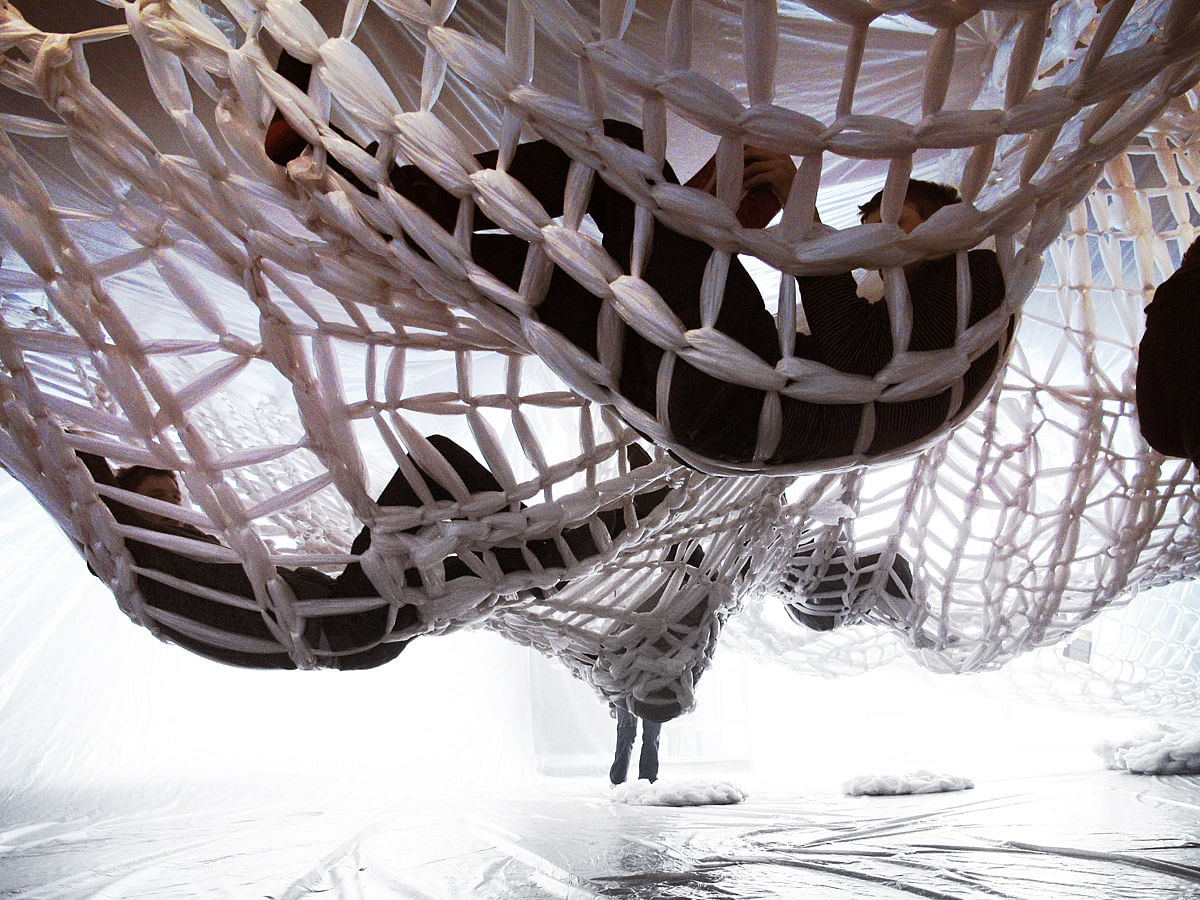
"White" was a gallery installation produced by the 20 students of Studio 400, a fifth-year architectural design studio at California Polytechnic State University, San Luis Obispo. The installation, which served to present each of the student's research books, was designed, developed, fabricated, and installed by the studio in a collaborative effort. The students developed the design over a period of about a month, with fabrication and installation occurring over a five day period.  80,000 square feet of plastic sheeting was sliced, loomed, woven, stapled, taped and tied to provide a climbable and malleable surface in the 4,500 square foot gallery.  "White" supported a variety of interactive experiences above and below this dynamic surface, opening and exploring the relationships between book, user, material, space, and collective group.
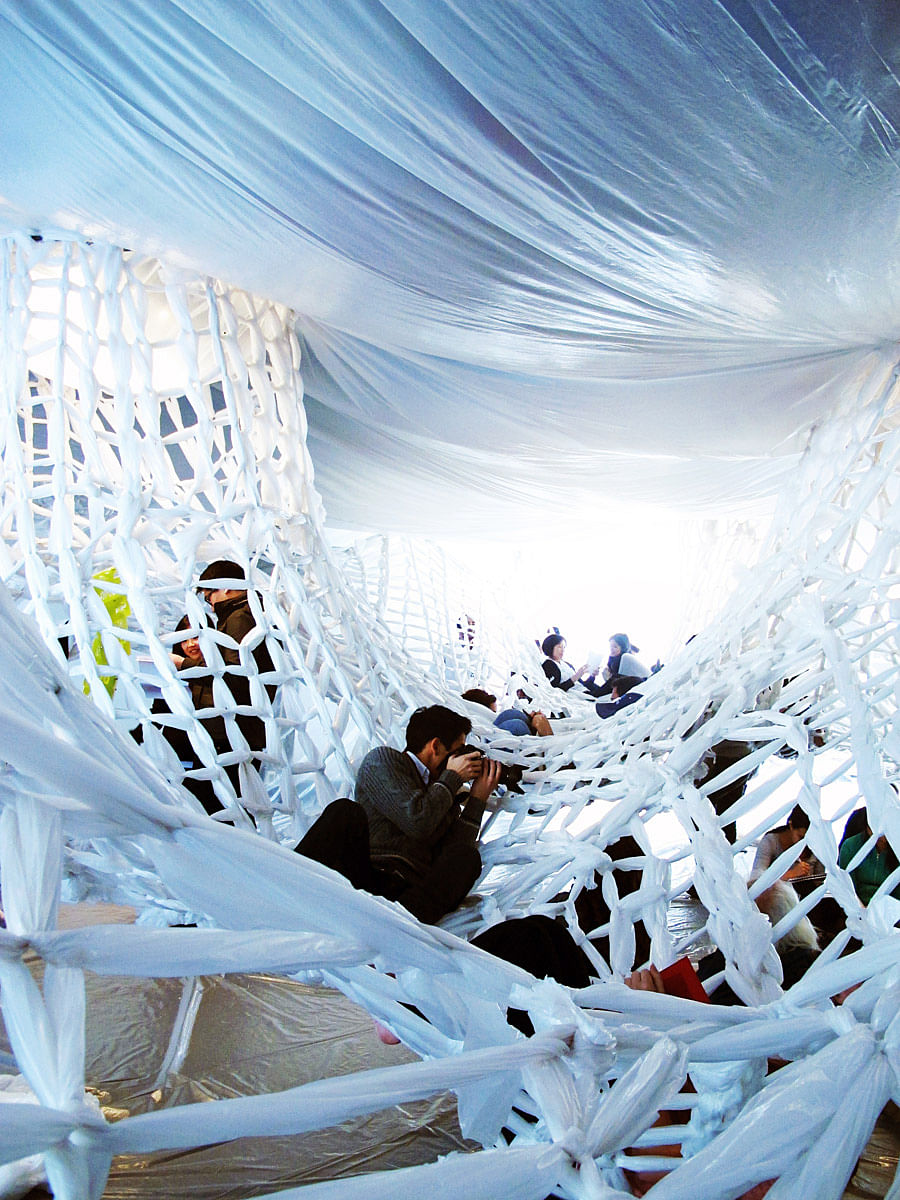
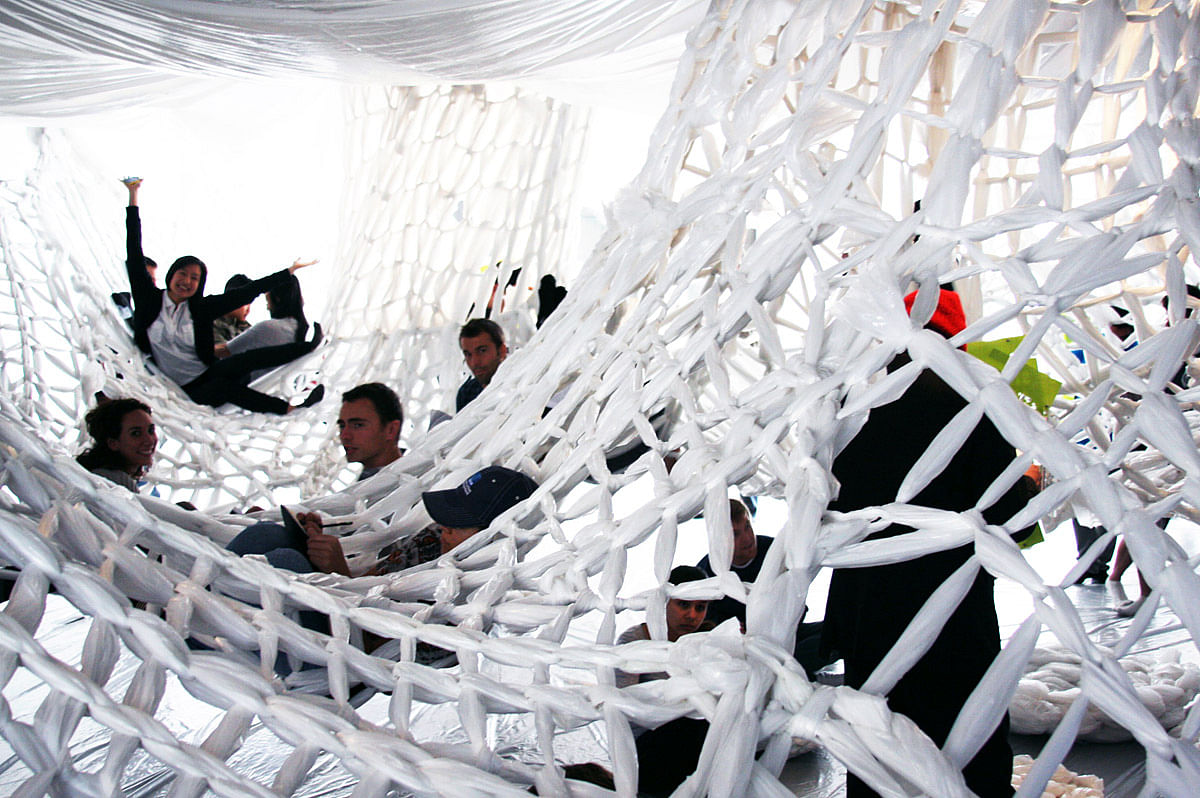
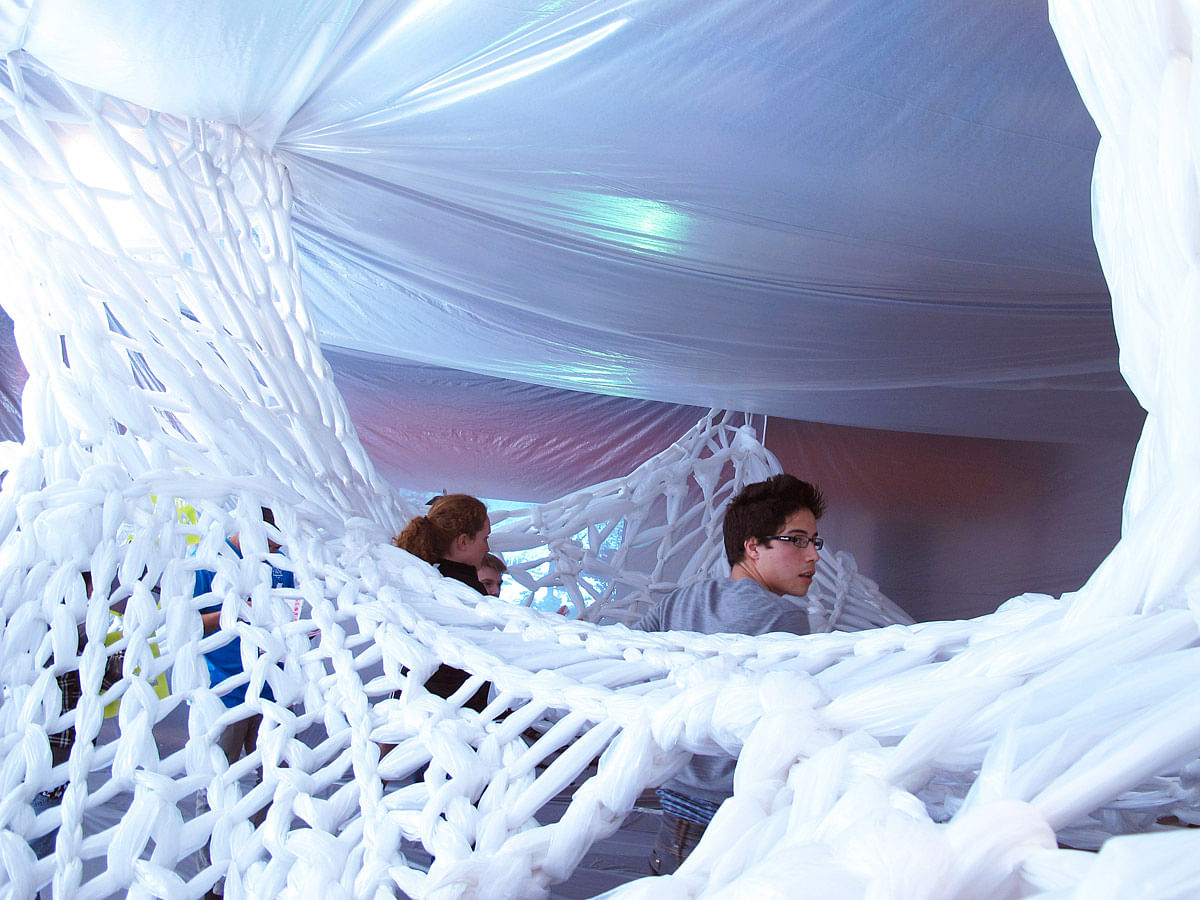
During the exhibition (Photo: Studio 400 Team)

Design Intent

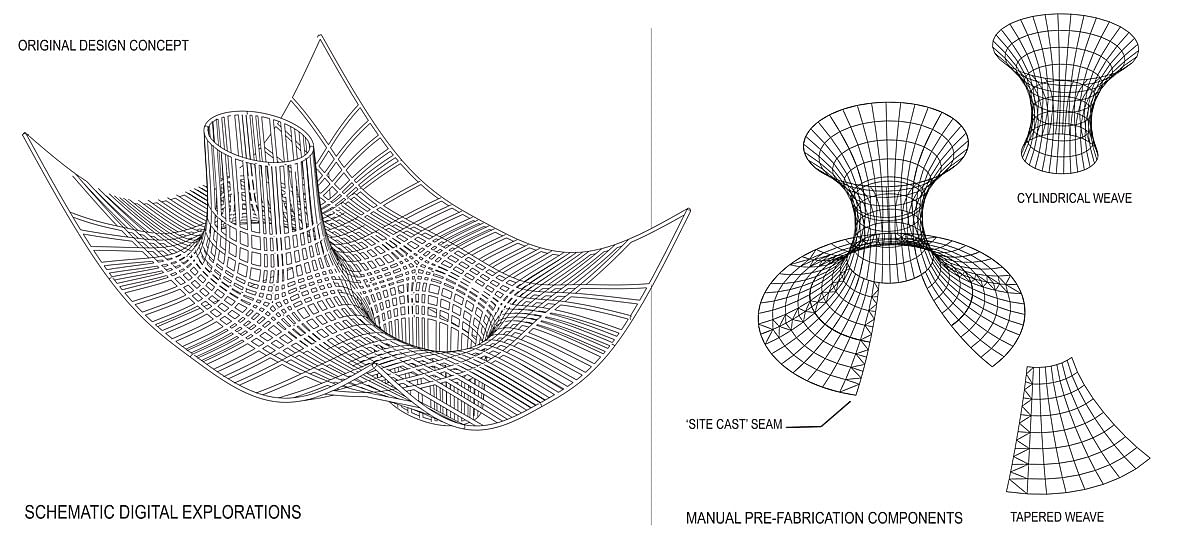
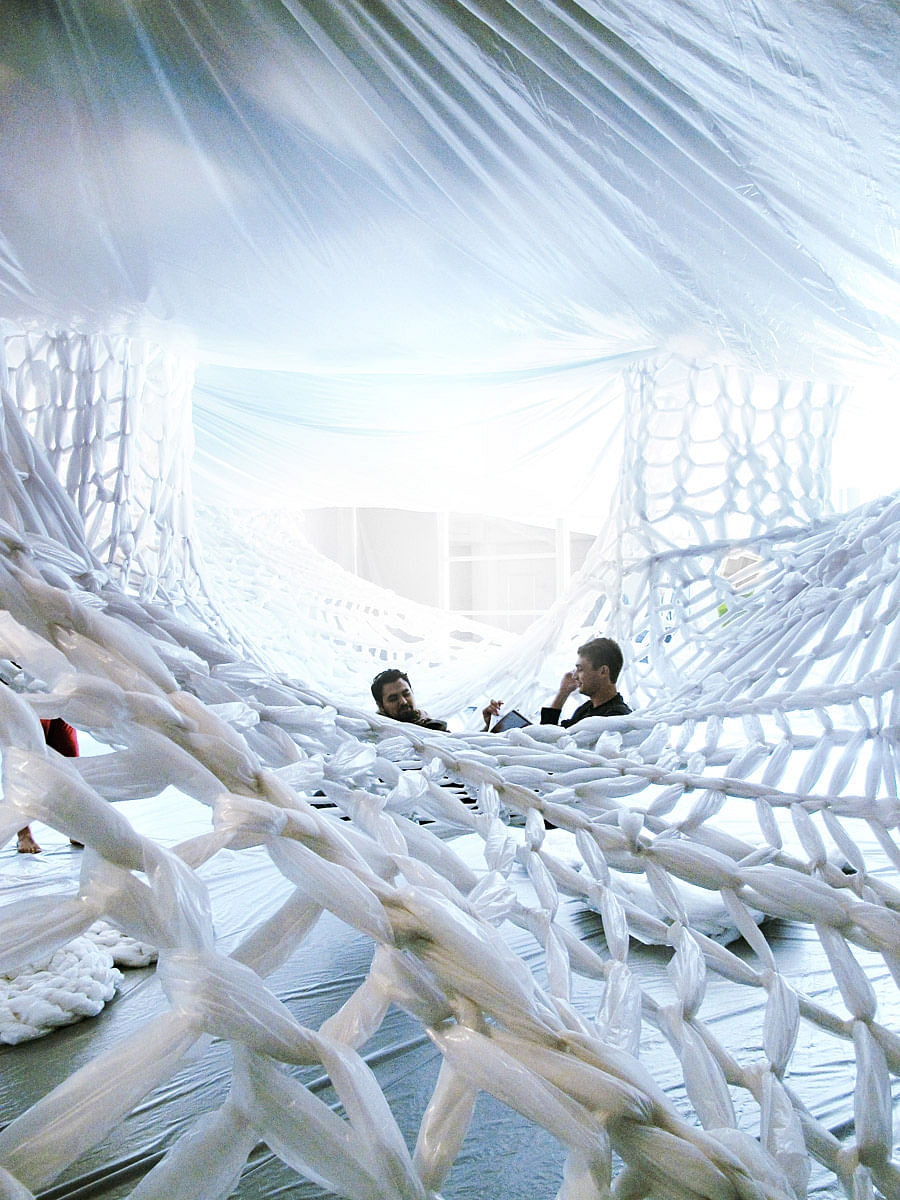
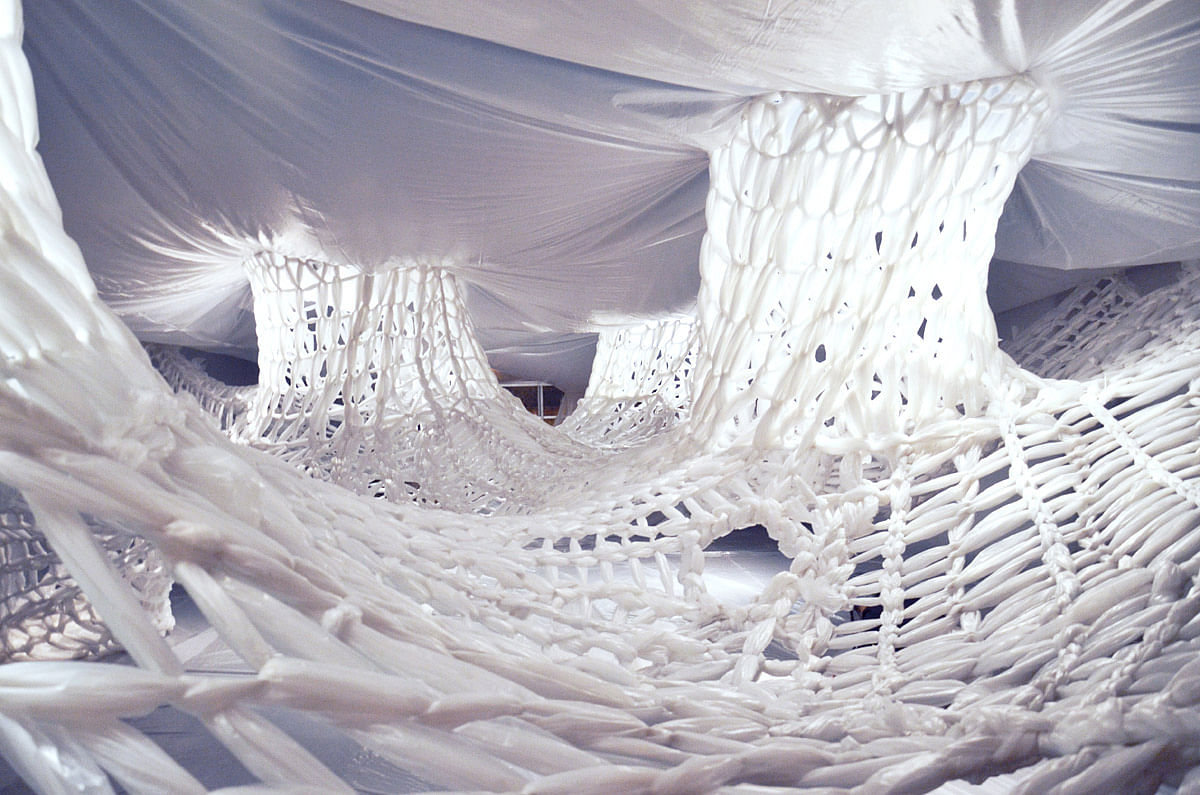
The installation design began with a brainstorming session that involved direct participation by each of the studio's 20 students. After proposals were presented, it was decided that a climbable surface would divide the space, providing seating for the comfortable reading of the books.  An exploration of materials looked at rope, tape, and plastic to create the surface; sheet plastic was ultimately chosen for its flexibility and strength, economic viability given the large space, and its abilities to be easily modified and reused. Once the material was chosen and acquired, studies of traditional weaving methods and full scale mock-ups helped determine the characteristics of the surface. This resulted in a woven surface that could hang in the gallery as well as support the weight of users on it. It was determined that a flexible system of pre-fabricated hanging columns and infill panels would allow the surface to form to specific constraints of the gallery site.
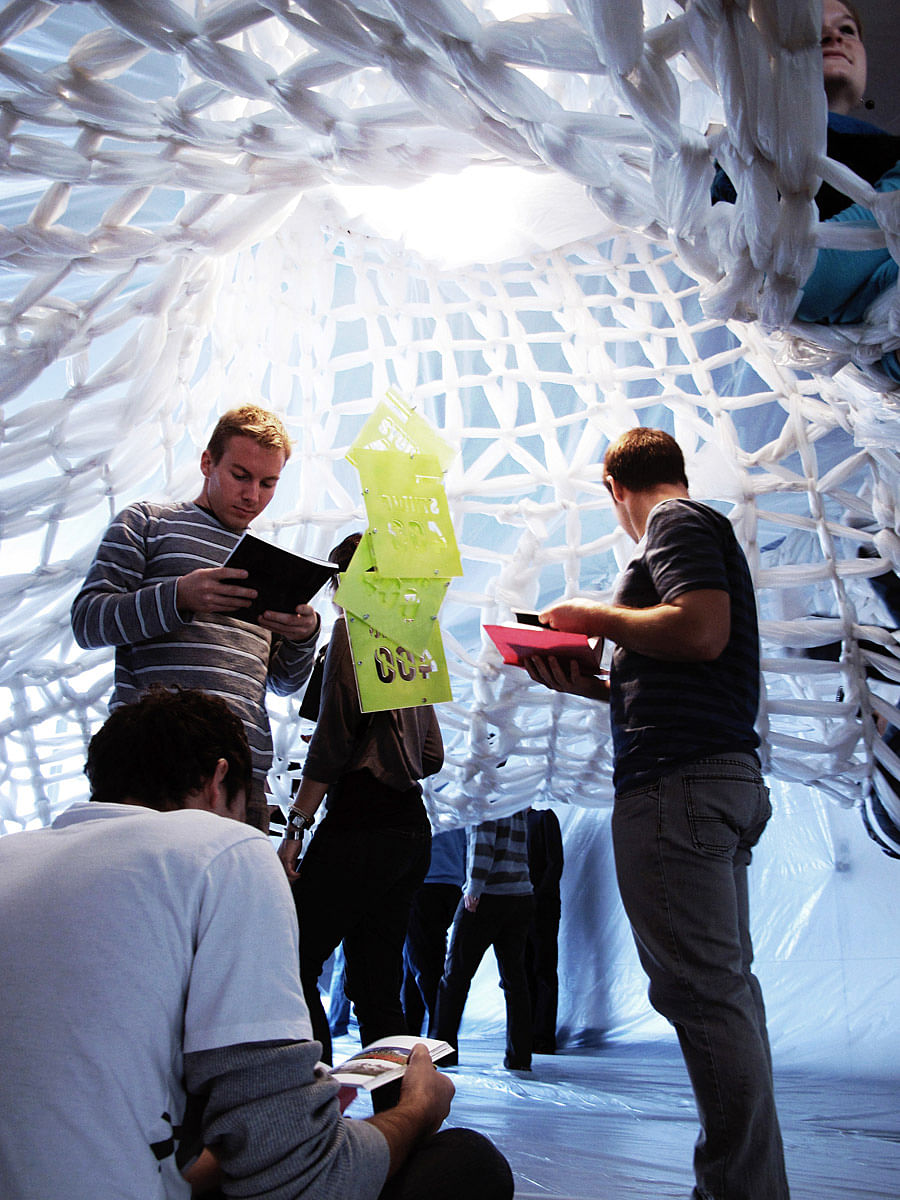
During the exhibition (Photo: Studio 400 Team)
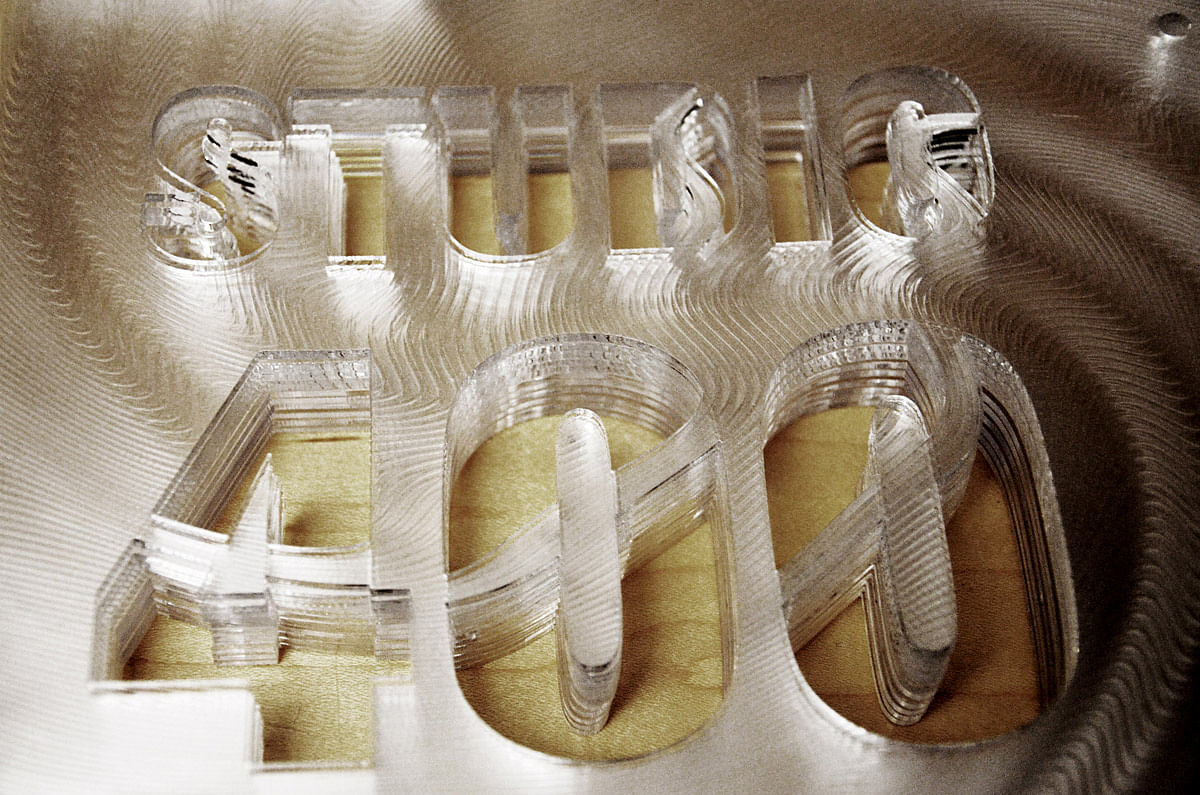
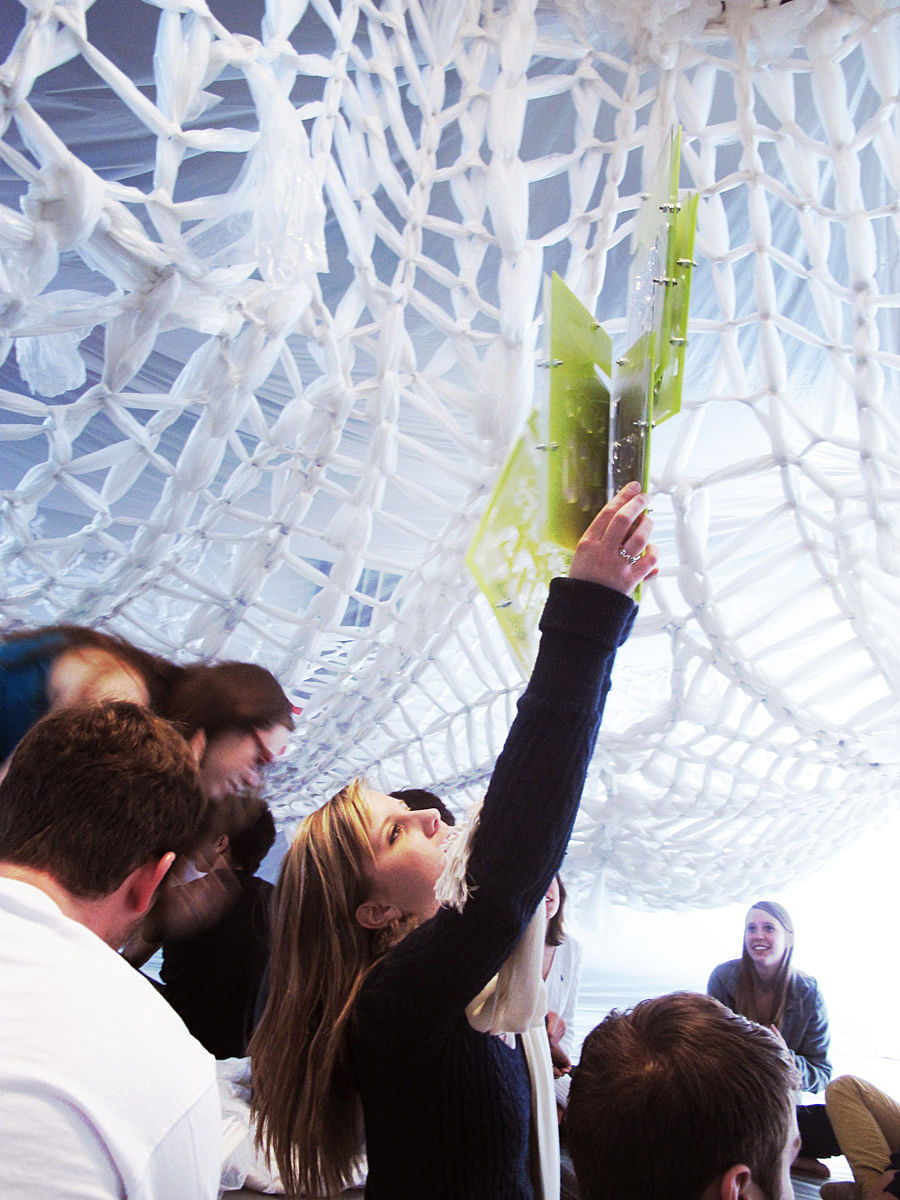
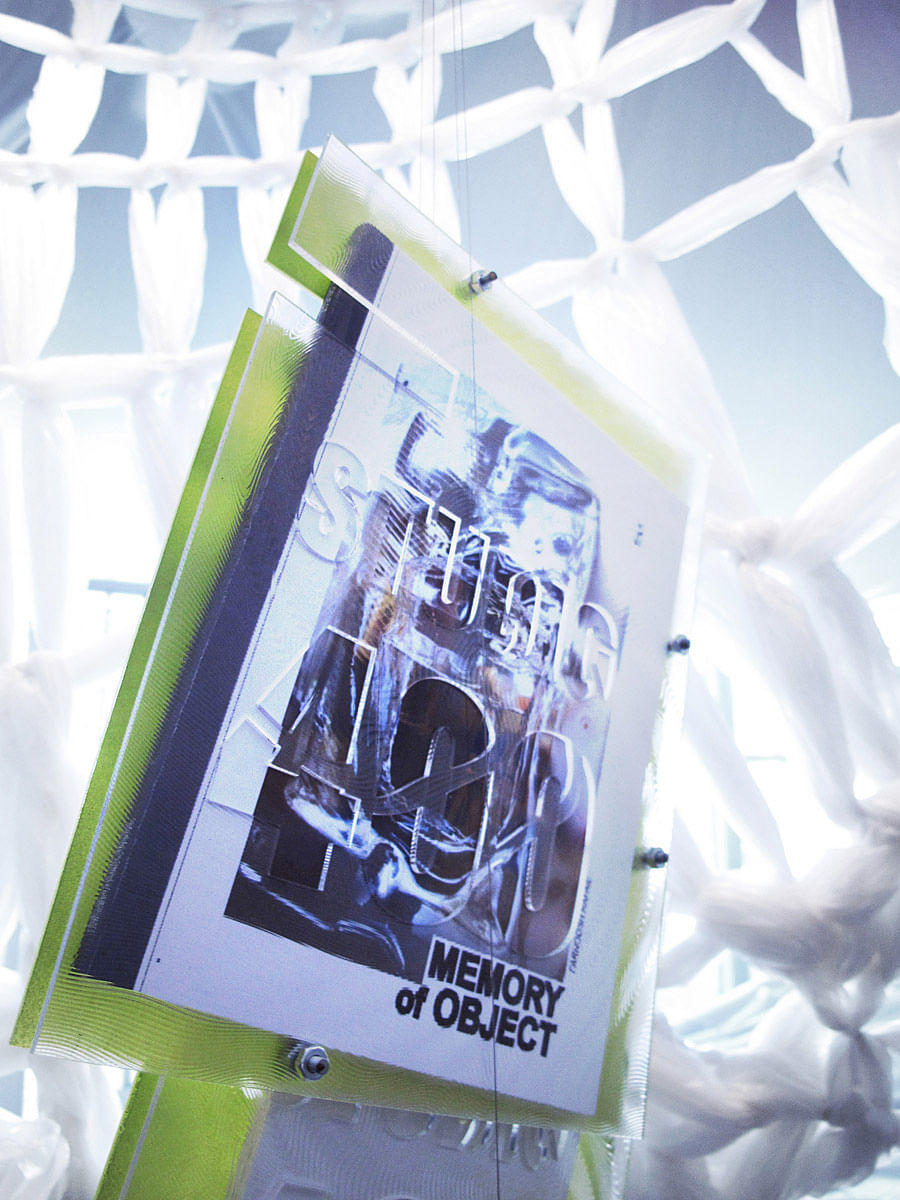
Laser-cut book cases within exhibition (Photo: Studio 400 Team)
During the exhibition (Photo: Studio 400 Team)

Fabrication and Installation

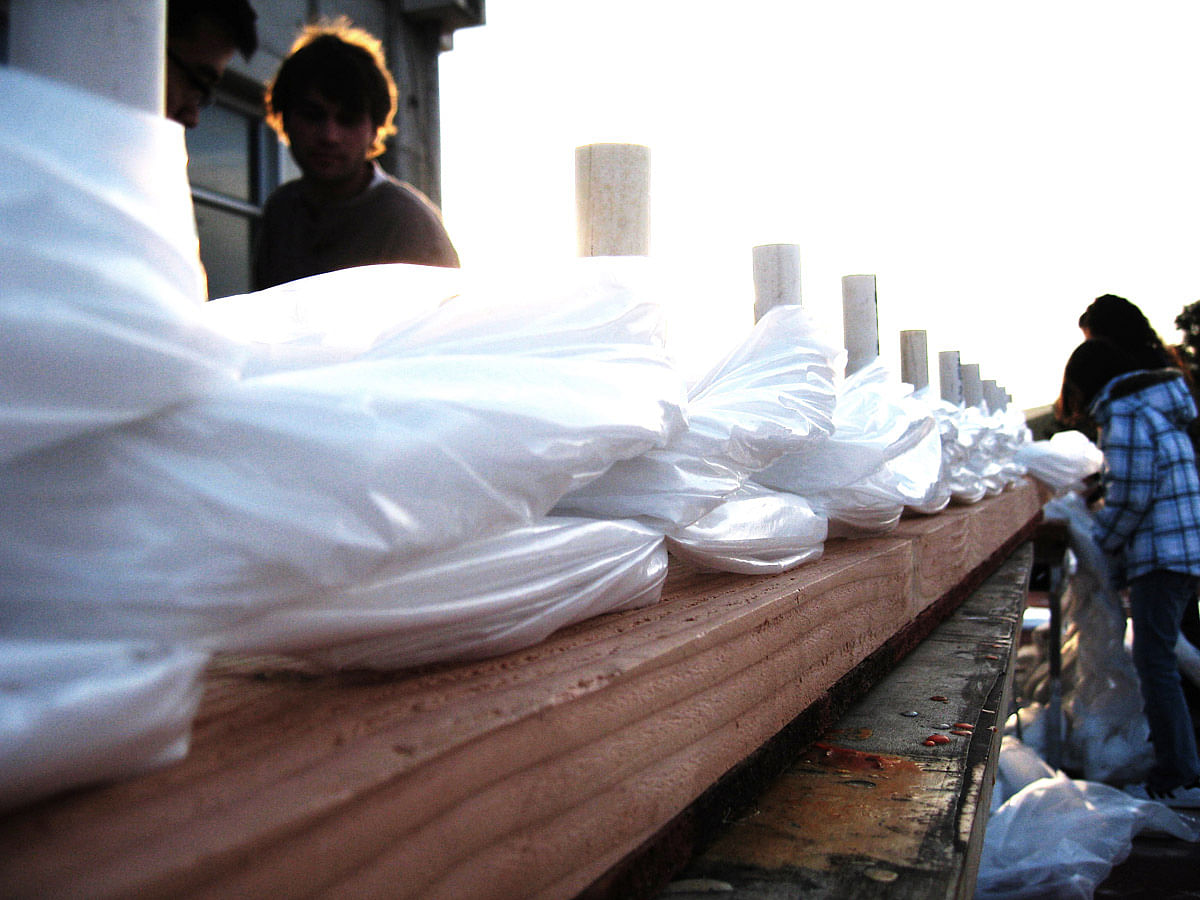
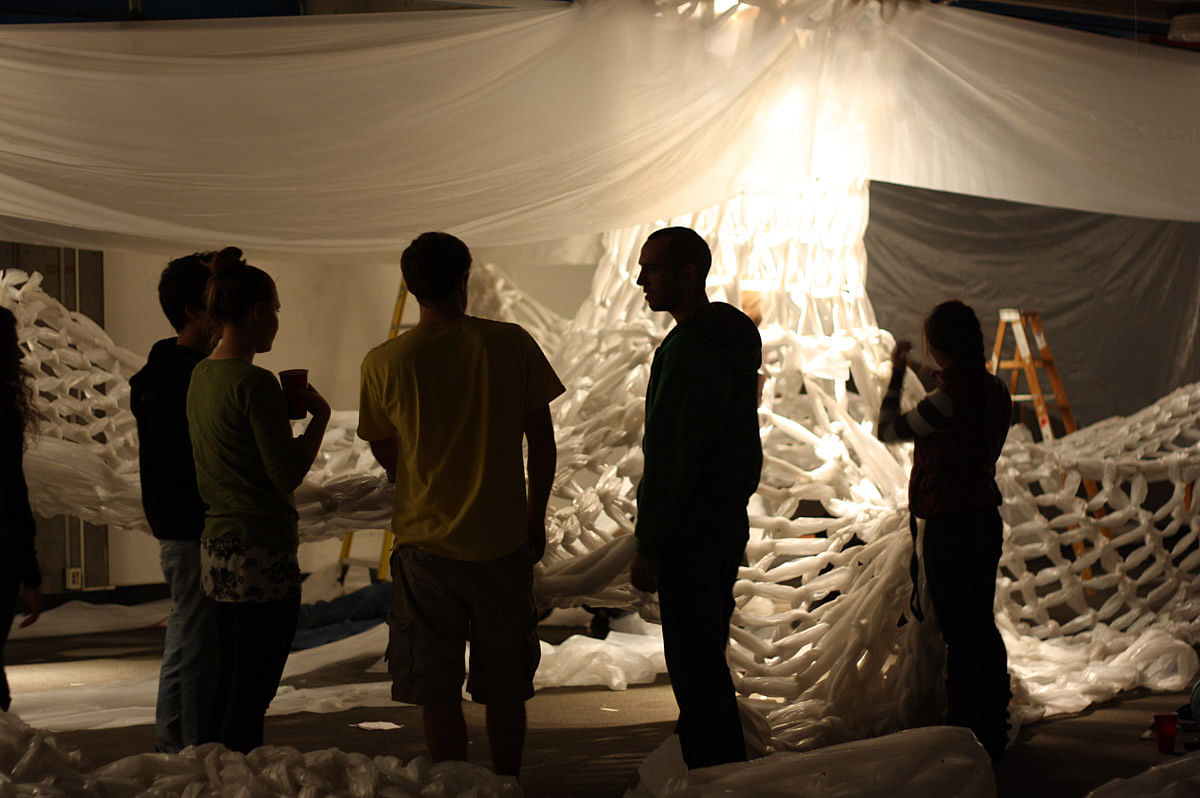
Students participated in a collaborative, two-day effort to construct the components for the piece. Circular and straight weaving looms (assembled from re-used materials) allowed for the quick and precise weaving of the columns and panels. Round steel rod was hand-bent into five foot diameter rings that provided a transitional structure between the gallery space and the woven vertical columns. The foresight of using of pre-fabricated elements allowed the piece to be custom-fitted to the gallery space within a three-day time period.

Installation began with placing the vertical columns where the existing structure of the gallery could support them, creating a staggered plan. A sheet of plastic was then hung from the ceiling, the first piece of several that would entirely wrap the gallery space, effectively separating the piece from the distinct characteristics of the Brutalist-style gallery. The pre-constructed infill panels were then woven between the vertical columns, fitted to provide the desired tension and surface form. When the surface was finally installed, the remaining walls and floors of the gallery were covered in sheet plastic. Videos of student work could also be projected onto one of these walls and extra plastic sheeting was woven into various shapes and sizes of pillows that were used as seating under the surface and beneath the vertical columns.

Fabrication of the book's slipcases also occurred during the installation period. Laser-cut, clear acrylic panels served as the faces of these hanging elements that would be the interface between the installation and the user. The front of each case was laser-etched with a wave-like parametric pattern that complemented the compound curves of the woven plastic surface. The clear front allowed the identity of each student's book to reveal itself, while the chartreuse back cover served as a unifying element that subtly distinguished the books from their white surroundings.

During the exhibition (Photo: Studio 400 Team)

Book Show Opening

The opening of "White" was a great success. Students and faculty were introduced to the studio's research books in an interactive and novel environment. As one faculty member stated, "[White] effectively separates the book show from the gallery. Where other shows seem to be installations occurring within the distinctive gallery, this one seems like a totally different space." Users were encouraged to crouch or crawl under the surface, rising into the vertical columns where the books were located. They could then engage the books in the intimate space under the surface, or take the books to the more socially interactive space created above the surface.

Construction process (Photo: Studio 400 Team)
Loom (Photo: Studio 400 Team)
Looming process (Photo: Studio 400 Team)
Surface construction (Photo: Studio 400 Team)
Process work (Photo: Studio 400 Team)
Schematic design diagram (Image: Studio 400 Team)

Project Credits:

Advisor: Professor Karen Lange

Studio 400 Team (in no particular order): Annie Bui, Ben Hait-Campbell, Ian Carney, Hanya Chen, Dion Dekker, Christina Hackett, Nathan Kiatkulpiboone, Mariko Kobayashi, Emily Kirwan, Mike Loree, Ross Majewski, Isshin Morimoto, Ryan Nevius, Nick Pappas, Alma Padilla-Iriarte, Farnoosh Rafaie, Pablo Sandoval, Shanna Sullivan, Joe Varholick, Cory Walker­

Related

thesis ● school ● san luis obispo ● installation ● exhibition ● event ● california ● cal poly ● books

Share

  • Follow

    0 Comments

  • Comment as :

More Photos of Studio 400's "White" Installation

Northwestern University selects 12-firm longlist to design new engineering building

New architecture and design competitions: Exploring 130 Years of American Design, Christo & Jeanne-Claude Center, 13 White Houses, and La Pyramide

Micro-architecture honored in latest Tiny House Architecture Competition

World’s most beautiful restaurants of 2026 chosen by Prix Versailles

Sponsored Post by Buildner

Design a wine tasting room in Italy! Valli Wine Tasting Room is launched!

10 can't-miss architecture & design events to see this June in London, Los Angeles, Chicago, San Francisco, Detroit, San Diego, Porto, and Barcelona

Sponsored Post by Buildner

Museum of Emotions / Edition #8 FINAL registration deadline is approaching!

Seven global projects make AR Public Awards shortlist 2026

Sign up for Bustler's Email Newsletters

Sponsored Post by Buildner

Design a slow-living restaurant in Portugal! Portugal Long Table Restaurant is launched!

World's best tall buildings honored at the CVU 2026 Award of Excellence

Sponsored Post by TWOPAGES

Final call: TWOPAGES X Design Contest 2026 submissions close June 5

Kengo Kuma & Paul Raff win Alberta national park visitor center competition with landscape-focused design

2026 Moira Gemmill and MJ Long prizes announced by W Awards

New architecture and design competitions: Kinderspace, Stewardson Keefe LeBrun Travel Grant, SMALL PROJECT BIG IMPACT, and Garden of University House, Bucharest

The Century of Gehry: New retrospective explores the late architect's work & collaborations

Next page » Loading

More Photos of Studio 400's "White" Installation

By Bustler Editors|

Tuesday, Apr 3, 2012

Share

During the exhibition (Photo: Studio 400 Team)

Related

thesis ● school ● san luis obispo ● installation ● exhibition ● event ● california ● cal poly ● books

A few days ago, we posted a video of the gallery installation White, the thesis book show by the 20 fifth-year architecture students of Professor Karen Lange at Cal Poly San Luis Obispo College of Architecture and Environmental Design. Now we have also received plenty of exhibition photos from the students, as well as images of the construction process.

Quote from one of the team members: "We wanted to create a continuous surface that would bring spatial interest and social interaction to the gallery. The woven installation is a solution to providing students and faculty a setting to not only read about our projects, but also to enjoy the space."

Project Description from the Students:

"White" was a gallery installation produced by the 20 students of Studio 400, a fifth-year architectural design studio at California Polytechnic State University, San Luis Obispo. The installation, which served to present each of the student's research books, was designed, developed, fabricated, and installed by the studio in a collaborative effort. The students developed the design over a period of about a month, with fabrication and installation occurring over a five day period.  80,000 square feet of plastic sheeting was sliced, loomed, woven, stapled, taped and tied to provide a climbable and malleable surface in the 4,500 square foot gallery.  "White" supported a variety of interactive experiences above and below this dynamic surface, opening and exploring the relationships between book, user, material, space, and collective group.

During the exhibition (Photo: Studio 400 Team)

Design Intent

The installation design began with a brainstorming session that involved direct participation by each of the studio's 20 students. After proposals were presented, it was decided that a climbable surface would divide the space, providing seating for the comfortable reading of the books.  An exploration of materials looked at rope, tape, and plastic to create the surface; sheet plastic was ultimately chosen for its flexibility and strength, economic viability given the large space, and its abilities to be easily modified and reused. Once the material was chosen and acquired, studies of traditional weaving methods and full scale mock-ups helped determine the characteristics of the surface. This resulted in a woven surface that could hang in the gallery as well as support the weight of users on it. It was determined that a flexible system of pre-fabricated hanging columns and infill panels would allow the surface to form to specific constraints of the gallery site.
During the exhibition (Photo: Studio 400 Team)
Laser-cut book cases within exhibition (Photo: Studio 400 Team)
During the exhibition (Photo: Studio 400 Team)

Fabrication and Installation

Students participated in a collaborative, two-day effort to construct the components for the piece. Circular and straight weaving looms (assembled from re-used materials) allowed for the quick and precise weaving of the columns and panels. Round steel rod was hand-bent into five foot diameter rings that provided a transitional structure between the gallery space and the woven vertical columns. The foresight of using of pre-fabricated elements allowed the piece to be custom-fitted to the gallery space within a three-day time period.

Installation began with placing the vertical columns where the existing structure of the gallery could support them, creating a staggered plan. A sheet of plastic was then hung from the ceiling, the first piece of several that would entirely wrap the gallery space, effectively separating the piece from the distinct characteristics of the Brutalist-style gallery. The pre-constructed infill panels were then woven between the vertical columns, fitted to provide the desired tension and surface form. When the surface was finally installed, the remaining walls and floors of the gallery were covered in sheet plastic. Videos of student work could also be projected onto one of these walls and extra plastic sheeting was woven into various shapes and sizes of pillows that were used as seating under the surface and beneath the vertical columns.

Fabrication of the book's slipcases also occurred during the installation period. Laser-cut, clear acrylic panels served as the faces of these hanging elements that would be the interface between the installation and the user. The front of each case was laser-etched with a wave-like parametric pattern that complemented the compound curves of the woven plastic surface. The clear front allowed the identity of each student's book to reveal itself, while the chartreuse back cover served as a unifying element that subtly distinguished the books from their white surroundings.
During the exhibition (Photo: Studio 400 Team)

Book Show Opening

The opening of "White" was a great success. Students and faculty were introduced to the studio's research books in an interactive and novel environment. As one faculty member stated, "[White] effectively separates the book show from the gallery. Where other shows seem to be installations occurring within the distinctive gallery, this one seems like a totally different space." Users were encouraged to crouch or crawl under the surface, rising into the vertical columns where the books were located. They could then engage the books in the intimate space under the surface, or take the books to the more socially interactive space created above the surface.
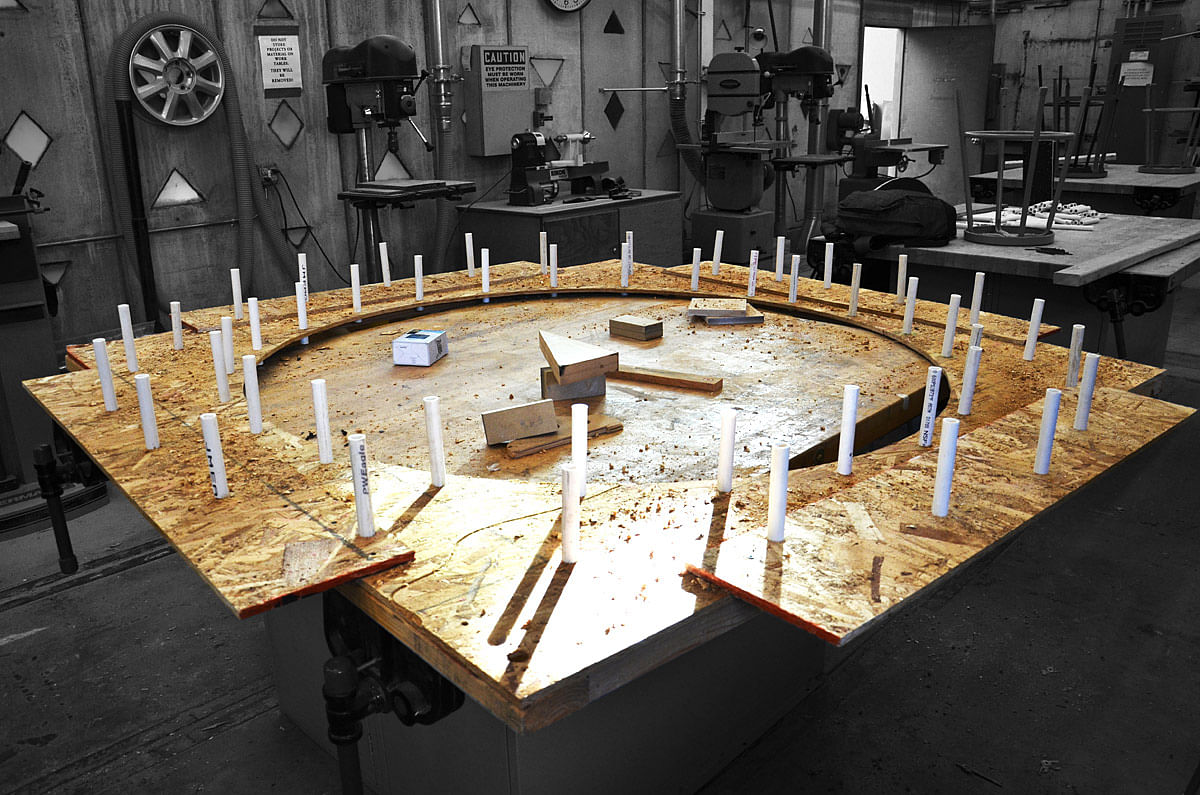
Construction process (Photo: Studio 400 Team)
Loom (Photo: Studio 400 Team)
Looming process (Photo: Studio 400 Team)
Surface construction (Photo: Studio 400 Team)
Process work (Photo: Studio 400 Team)
Schematic design diagram (Image: Studio 400 Team)

Project Credits:

Advisor: Professor Karen Lange

Studio 400 Team (in no particular order): Annie Bui, Ben Hait-Campbell, Ian Carney, Hanya Chen, Dion Dekker, Christina Hackett, Nathan Kiatkulpiboone, Mariko Kobayashi, Emily Kirwan, Mike Loree, Ross Majewski, Isshin Morimoto, Ryan Nevius, Nick Pappas, Alma Padilla-Iriarte, Farnoosh Rafaie, Pablo Sandoval, Shanna Sullivan, Joe Varholick, Cory Walker­

Share

  • Follow

    0 Comments

  • Comment as :

Archinect JobsArchinect Jobs

The Archinect Job Board attracts the world's top architectural design talents.

VIEW ALL JOBS POST A JOB

Architectural Designer

jones | haydu

Architectural Designer

San Francisco, CA, US

Marketing and Architectural Assistant

AGENCIE / Architecture & Engineering

Marketing and Architectural Assistant

New York, NY, US

Intermediate Architectural Designer

David Smotrich & Partners LLP

Intermediate Architectural Designer

New York, NY, US

Senior Designer - Residential Design

Laura U Design Collective

Senior Designer - Residential Design

Houston, TX, US

Intermediate Architect

FROM Architecture DPC

Intermediate Architect

New York, NY, US

Senior Interior Designer

IMC Architecture

Senior Interior Designer

Brooklyn, NY, US

Professor/Associate Professor/Assistant Professor of Architecture

Harvard University

Professor/Associate Professor/Assistant Professor of Architecture

Cambridge, MA, US

Project Architect

Arrowstreet

Project Architect

Boston, MA, US

Associate - Interior Designer

FitzGerald Associates Architects

Associate - Interior Designer

Chicago, IL, US

Job Captain / Project Manager

Breland – Harper

Job Captain / Project Manager

Los Angeles, CA, US

Next page » Loading