• Login / Join
  • About
  • •
  • Contact
  • •
  • Advertising
bustler logo
bustler logo
  • News
  • Competitions
  • Events
  • Bustler is powered by Archinect
  • Sign up for Bustler's Email Newsletters

  • Follow these Bustler feeds:

  • Search

    Search in

  • Submit

    What are you submitting?

    News Pitch
    Competition
    Event
  • Login / Join
  • News|Competitions|Events
  • Search
    | Submit
    | Follow
  • Search in

    What are you submitting?

    News Pitch
    Competition
    Event

    Follow these Bustler feeds:

  • About|Contact|Advertising
  • Login / Join

Wuxi Grand Theatre by PES-Architects

By Bustler Editors|

Friday, Aug 24, 2012
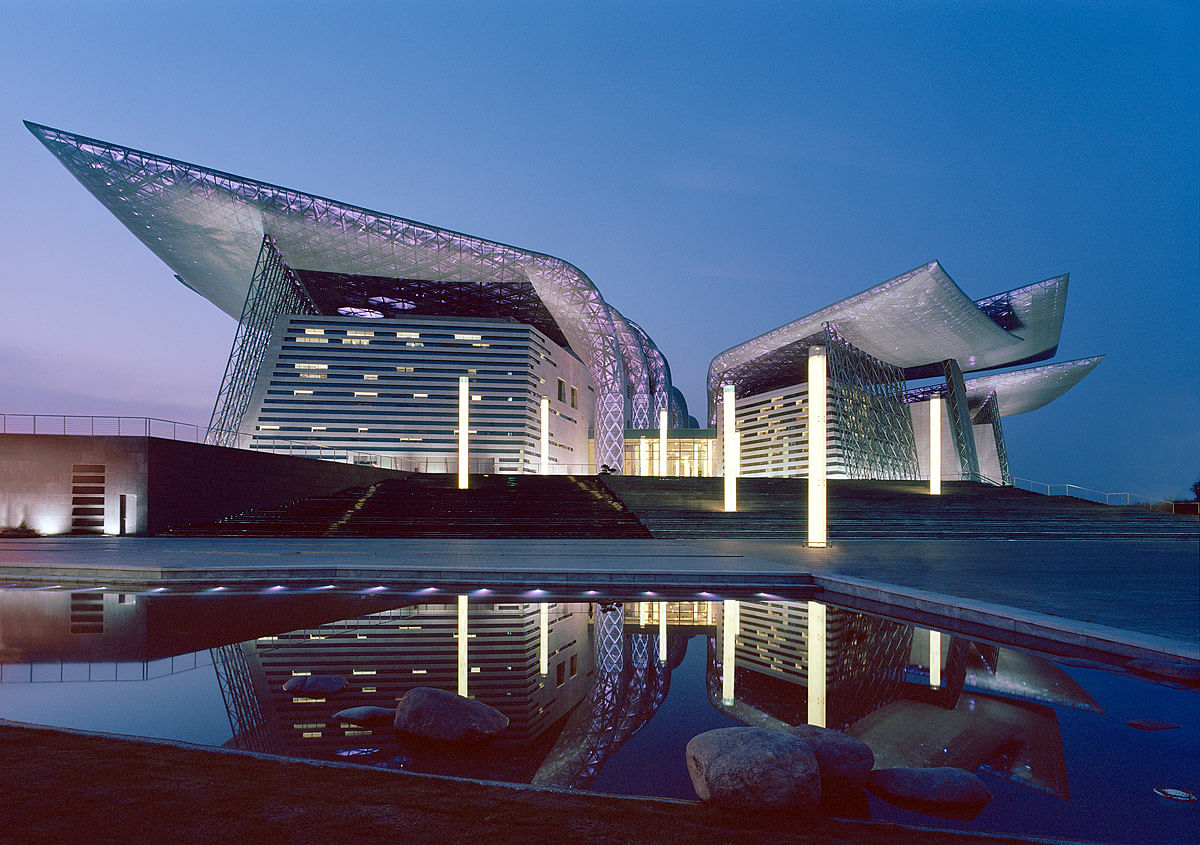
Image of the main entrance plaza at night time (Photo: Jussi Tiainen)

We have received plenty of photos of the recently completed Wuxi Grand Theatre in Wuxi, China. Designed by Helsinki-based PES-Architects, the 78,000 m2 (839,600 sq ft) project was the competition-winning entry back in 2008 and is the first large scale example of Finnish design in China.

Project Description from the Architects:

Introduction

Finnish Design is internationally reknown for its concepts of clear and functional style, which meet the needs of the users from a long term perspective.  The first large scale example of Finnish design in China was completed by the opening of the Wuxi Grand Theatre in April 2012.  Its design was not only a question of architecture, but the whole design - from functional program to interior design, landscape design, theatre technology, lighting and acoustic design - was controlled by the PES-Architects’ team.
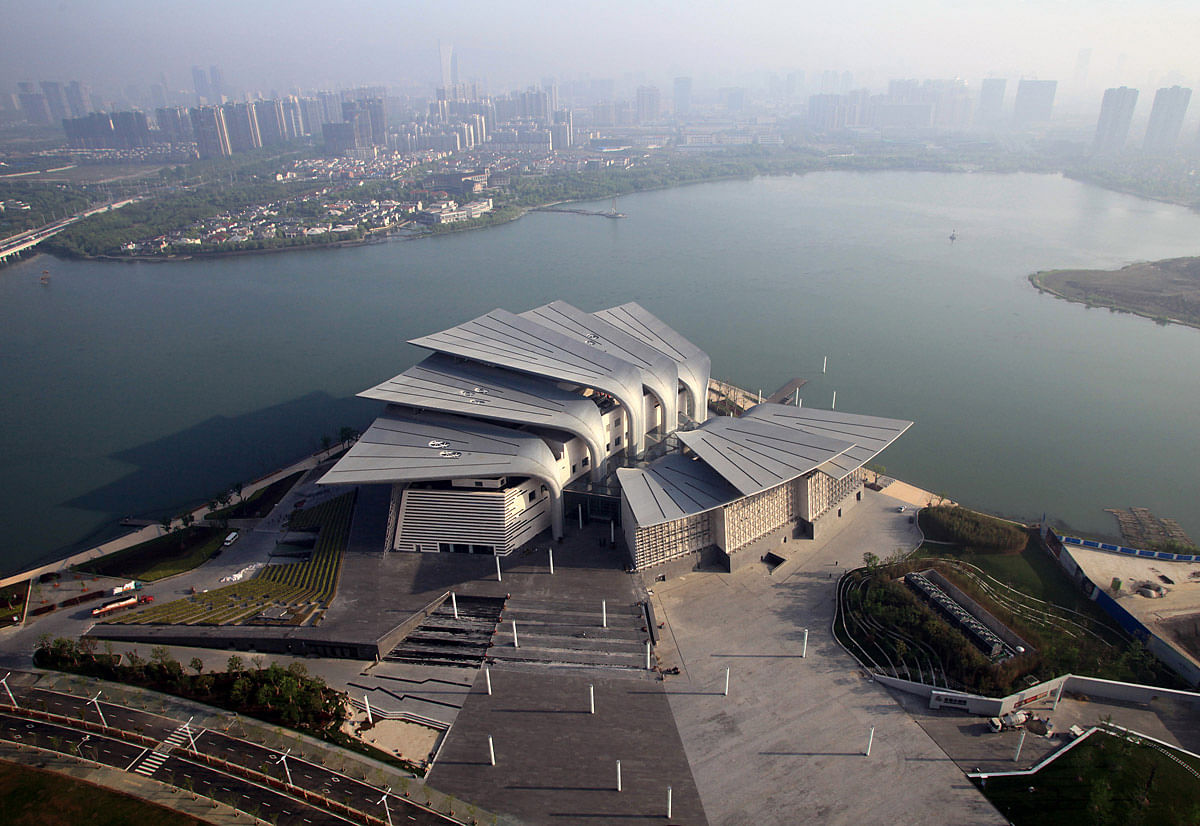
Birdview with the main entrance plaza in the foreground and Wuli Lake in the background (Photo: Pan Weijun)

Normally in Finland the architect holistically designs important public buildings from the client’s first thoughts to the interior design details and is in charge of coordinating the works of all special consultants.  Professor Pekka Salminen, the founder of PES-Architects, and his design partner, architect Tuomas Silvennoinen, want to promote this type of “Design Thinking” in China.
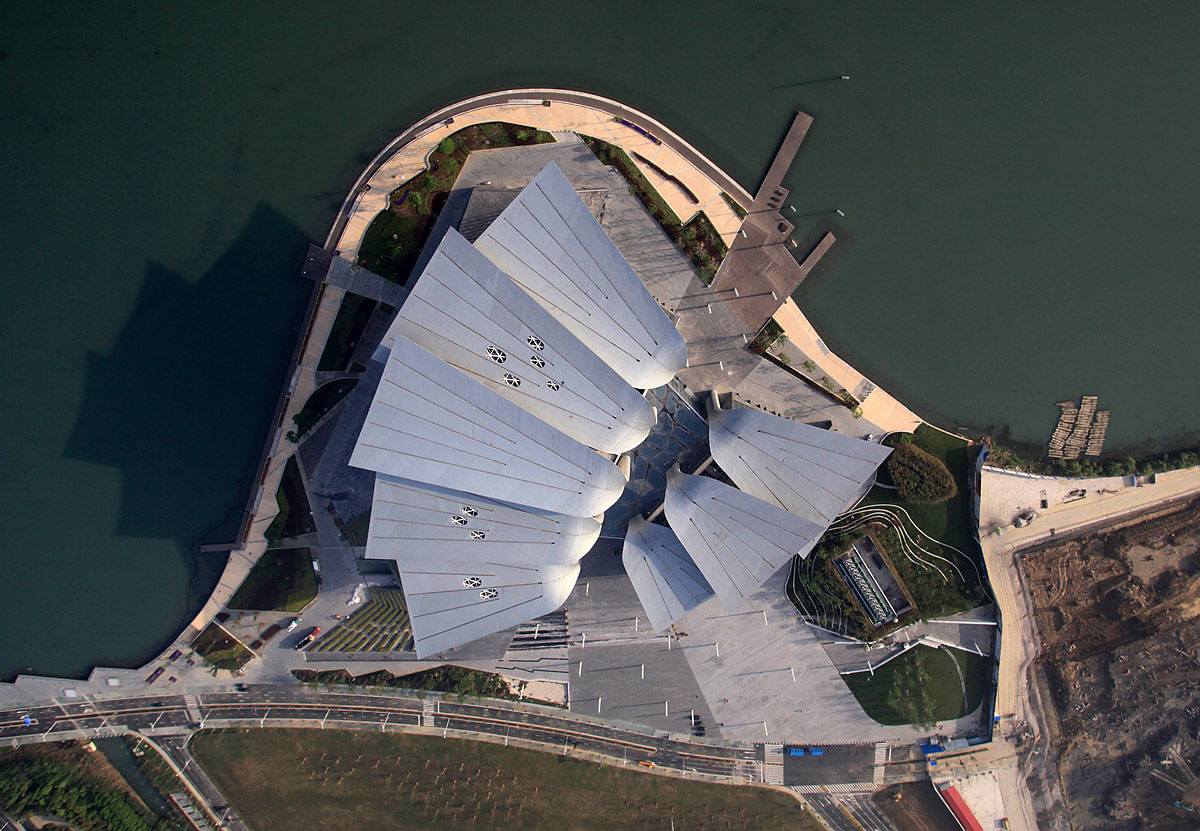
View from top showing the Wuli Lake surrounding the building and the landscaping on the man-made peninsula (Photo: Pan Weijun)

Their argument is, that without a head designer with an overall understanding and knowledge of the entire design and construction process, the criterions for sustainable development cannot be realised.  Time shows the long-lasting values of architecture.  This is particularly important and acute in China, which is the largest construction site in the world and where all building projects are realised with astonishing speed.
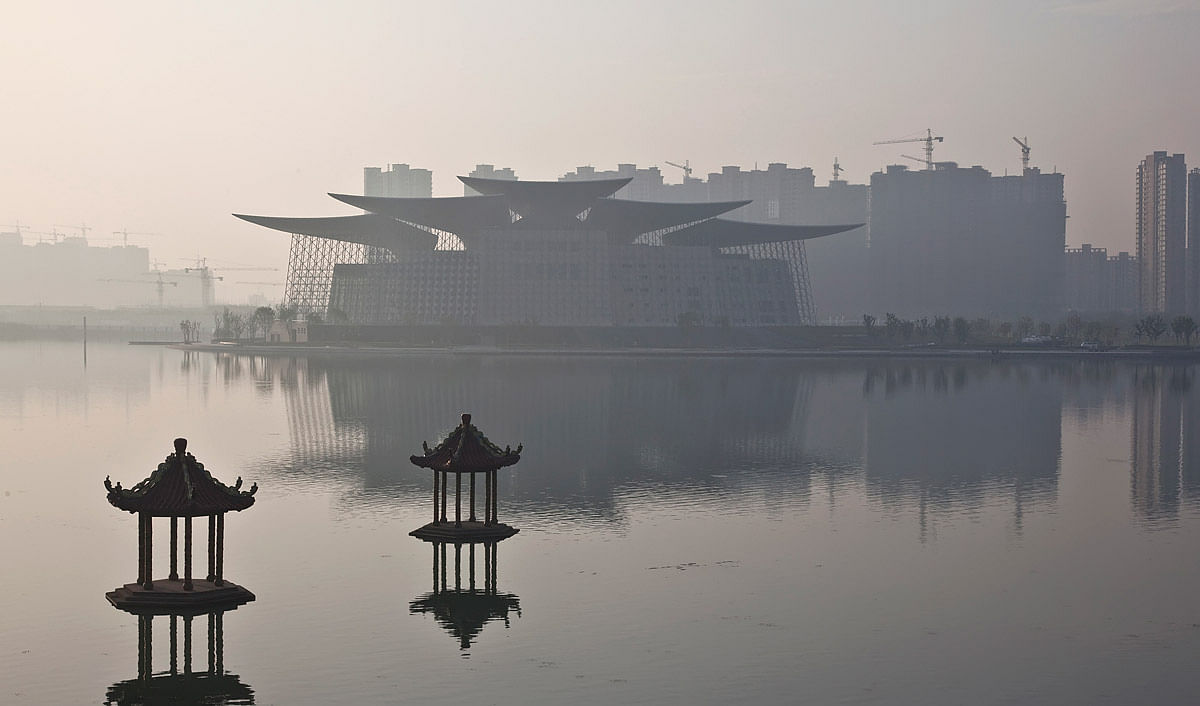
The building as seen from the Wuli Lake Bridge (Photo: Kari Palsila)

Wuxi Grand Theatre

In 2008, PES-Architects won the first prize in the invited international architectural competition for Wuxi Grand Theatre. The other competitors were established and well-known practices from Germany, France, Japan and Denmark.

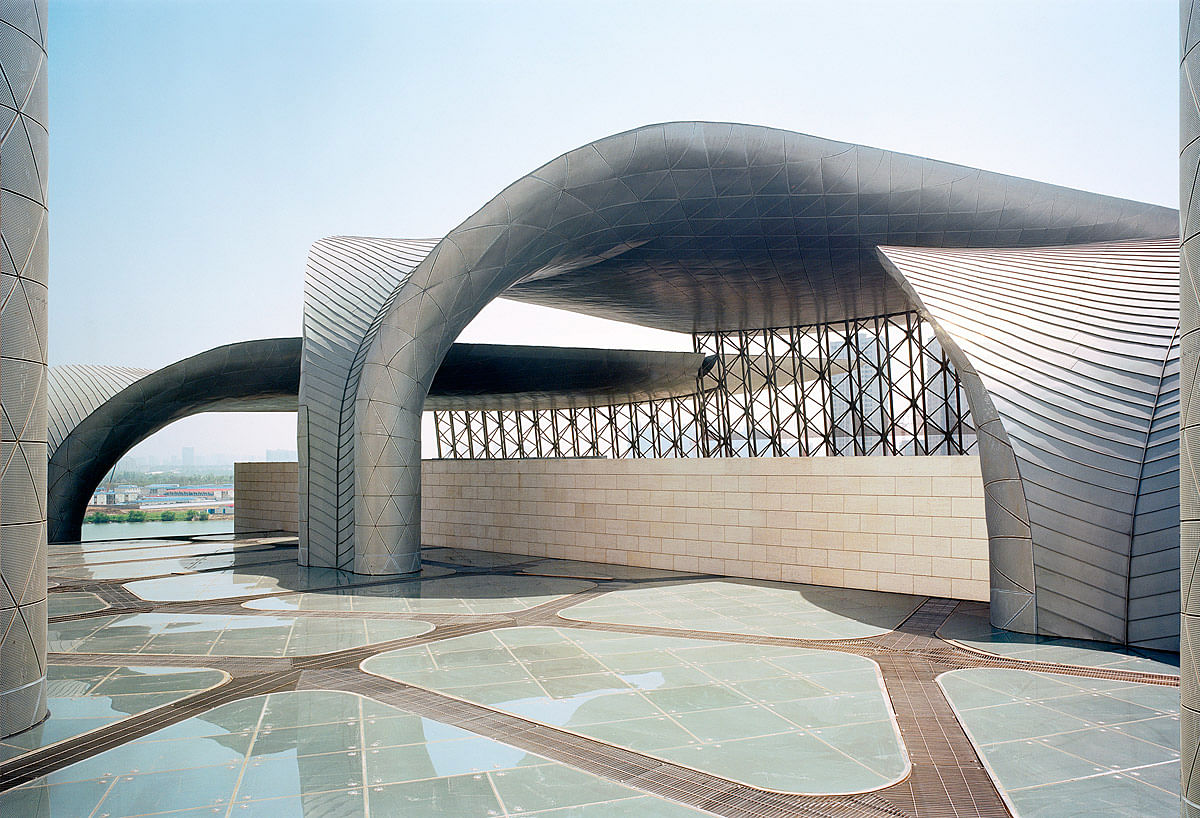
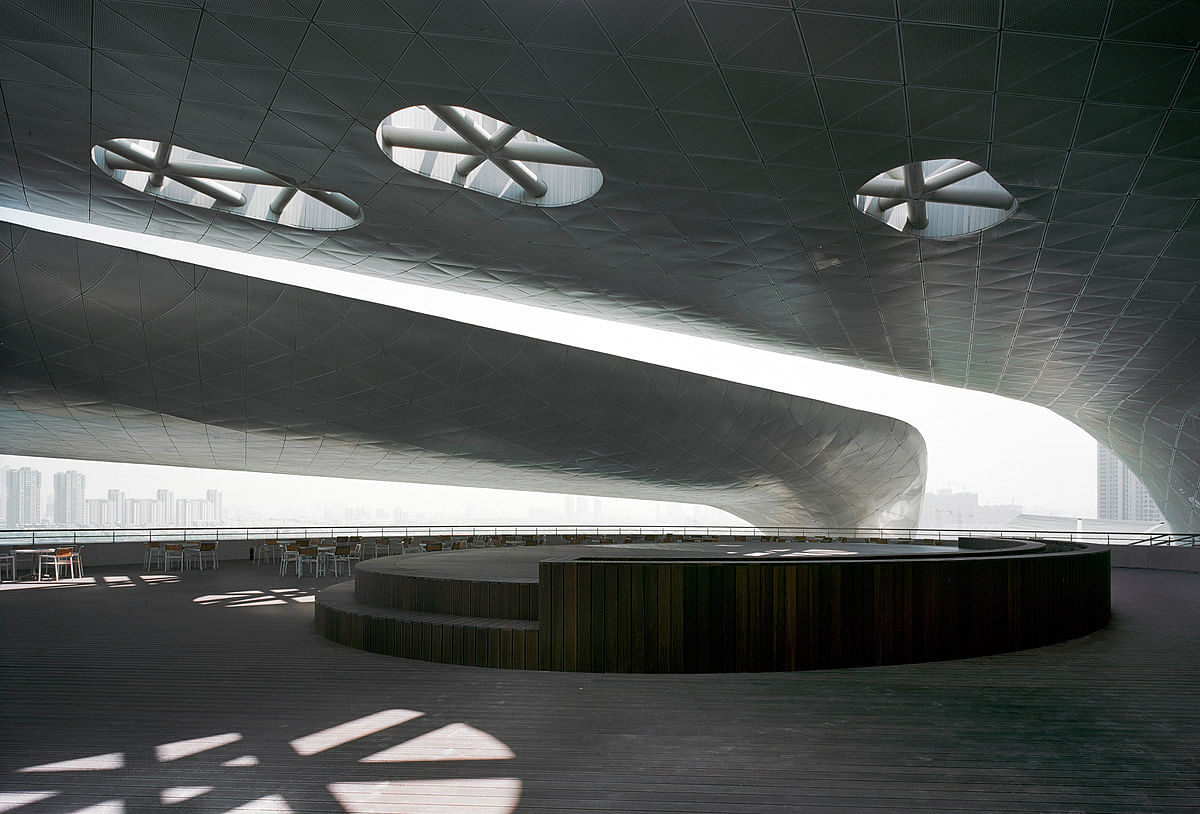
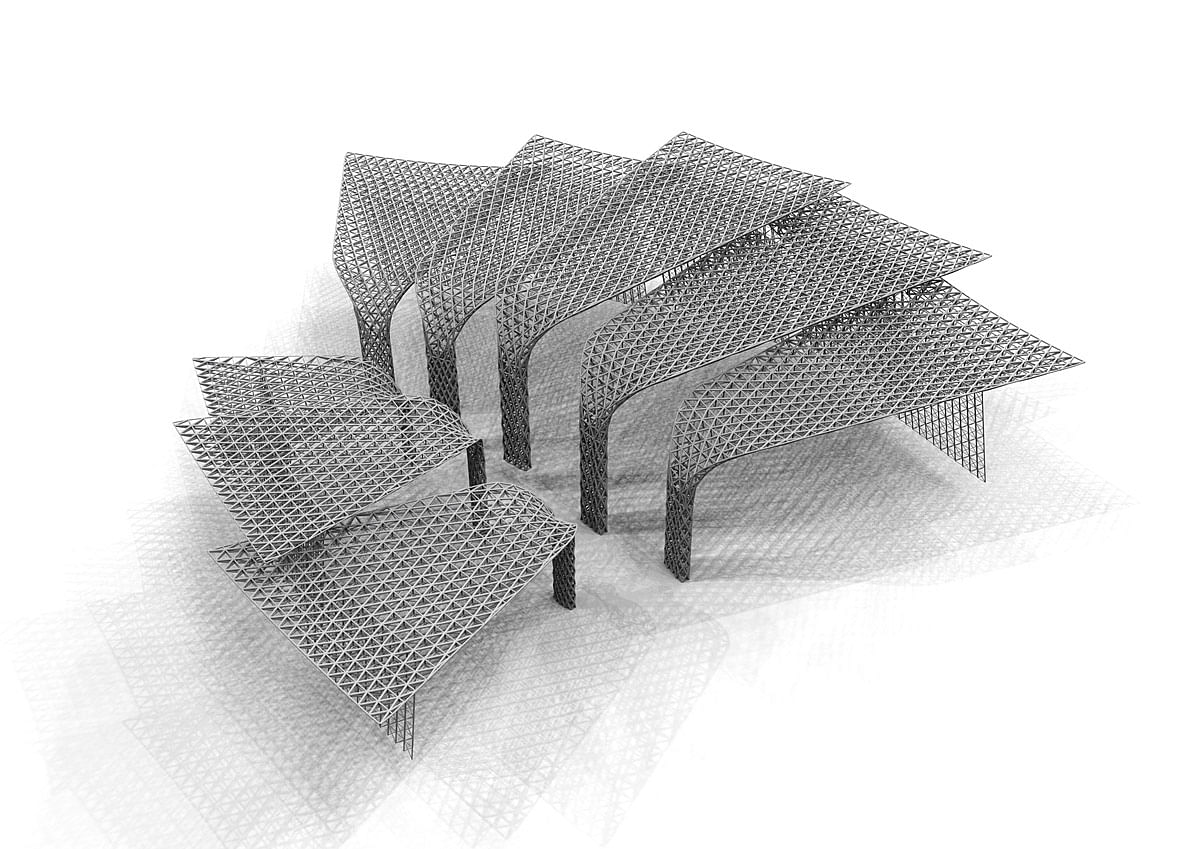
The main idea of Wuxi Grand Theatre is based on its location.  The manmade peninsula on the northern shore area of Taihu Lake and the highway bridge nearby make this location comparable to that of Sydney Opera House.  Due to this location the building is an impressive landmark, rising up to a total height of 50 meters like a big sculpture from the terraced base.  Its eight gigantic roof wings stretch far over the facades, giving the building a character of a butterfly, while protecting the building from the heat of the sun.
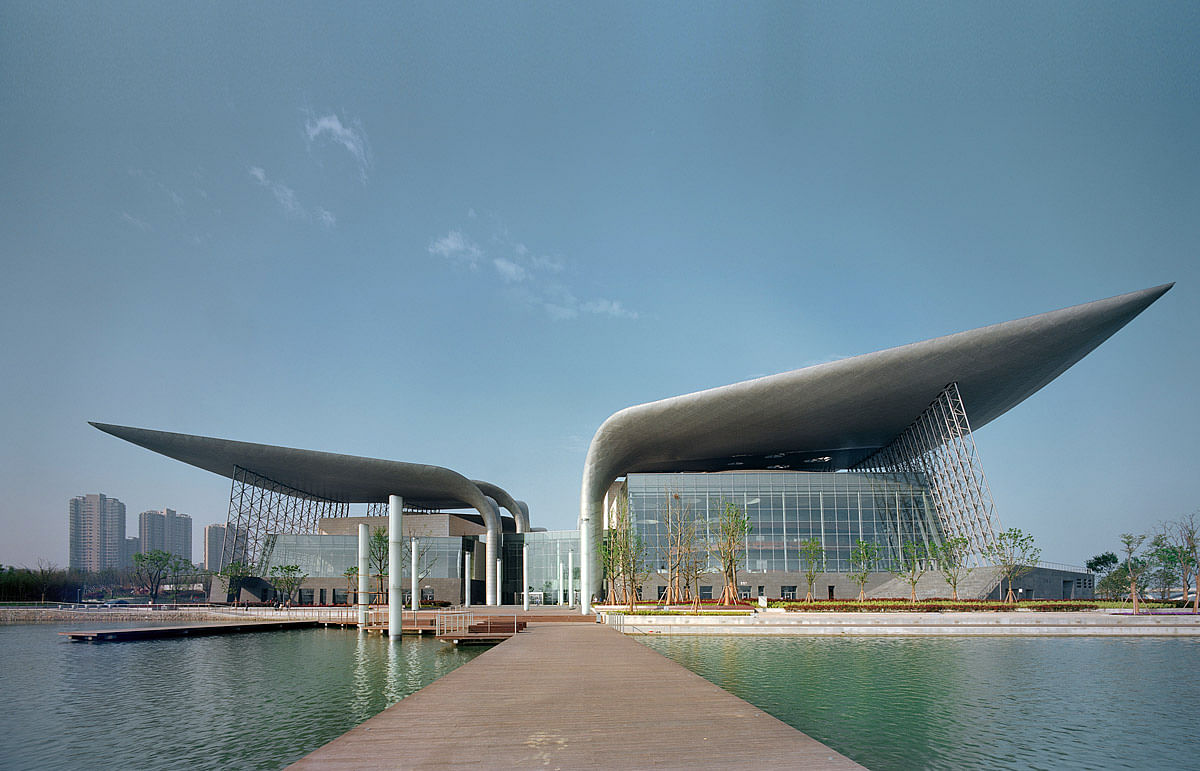
The building as seen from the boat pier (Photo: Jussi Tiainen)

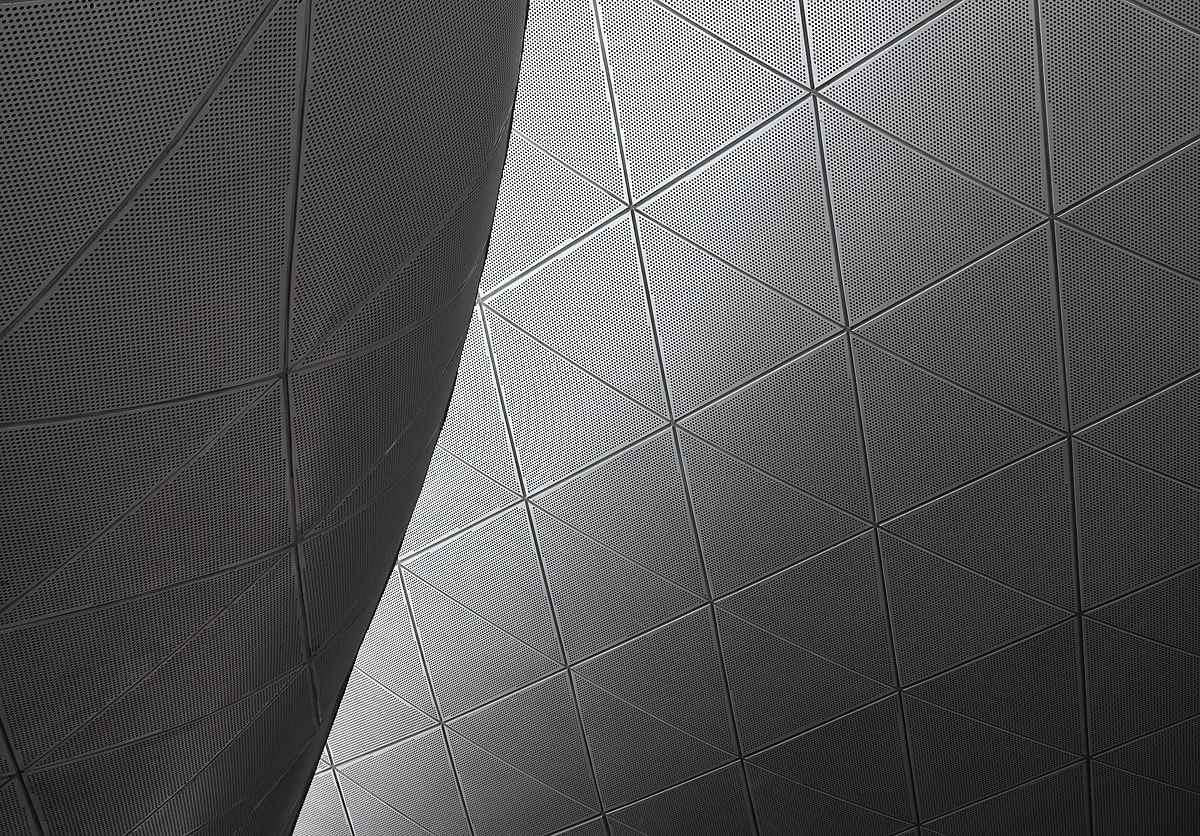
The architectural concept is unique: inside the steel wings are thousands of LED lights, which make it possible to change the colour of the wings according to the character of the performances.  This is possible, because the underside of the wings is covered by perforated aluminium panels.  Another special feature is the “forest” of 50 light columns, each 9 meter high, which start from the main entrance square, support the roof of the central lobby and continue outside of the lakeside entrance into the lake.
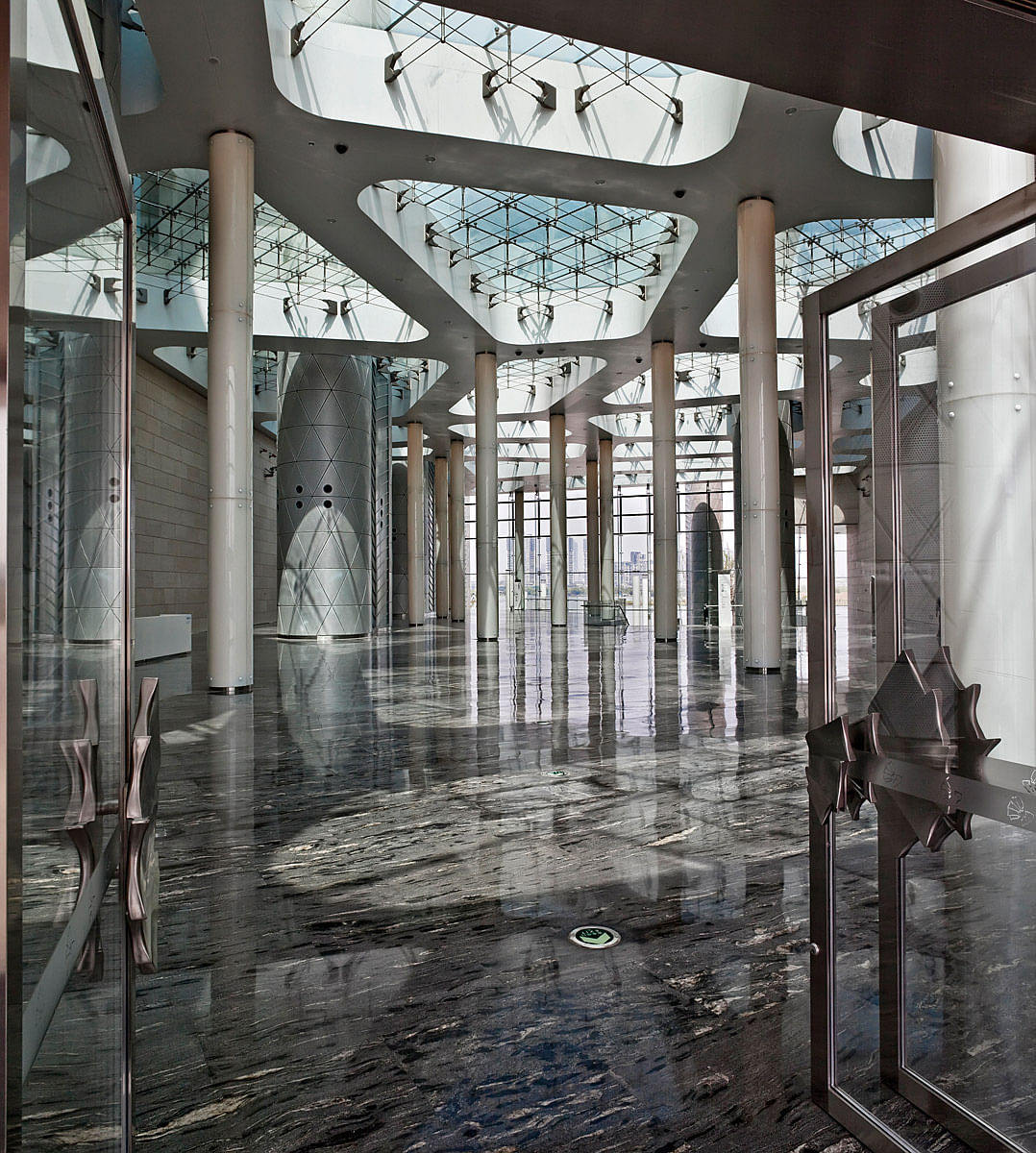
The main entrance foyer with the light columns, the transparent roof and the butterfly door handles on the main entrance doors. (Photo: Kari Palsila)

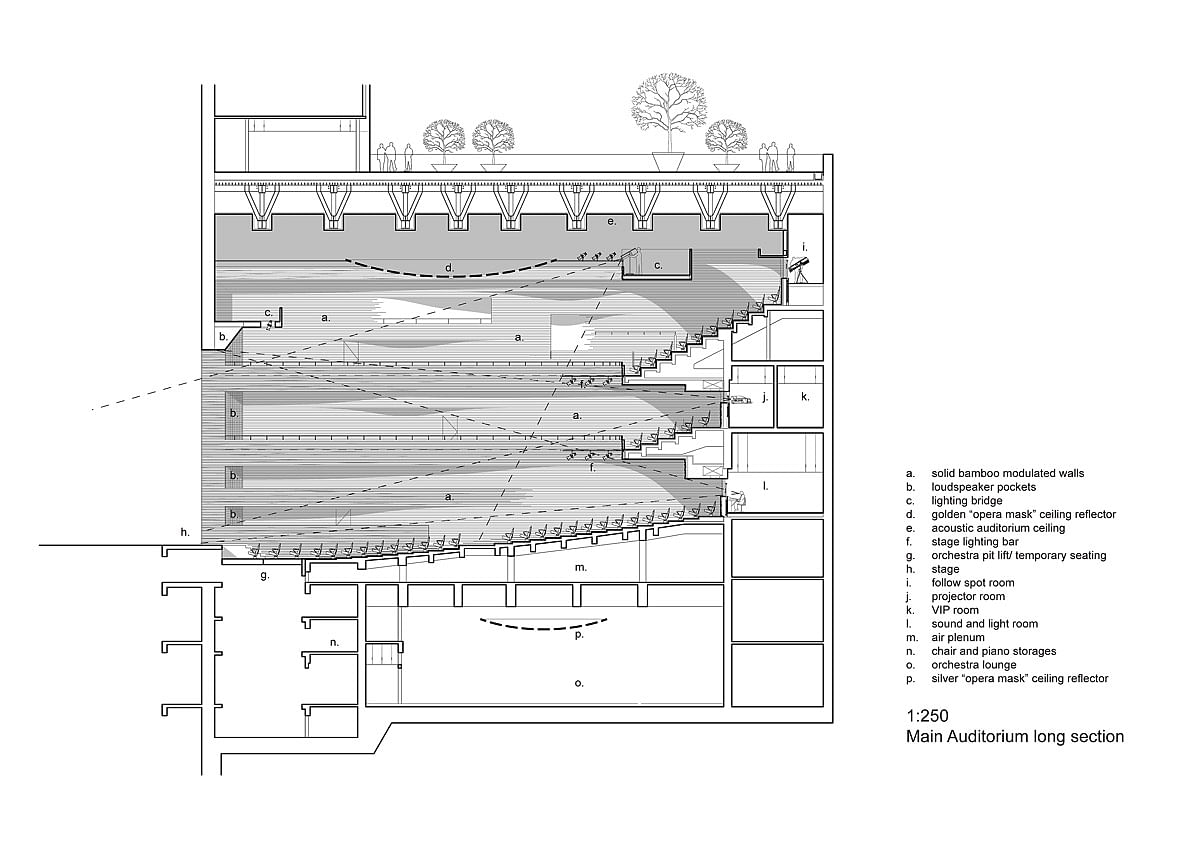
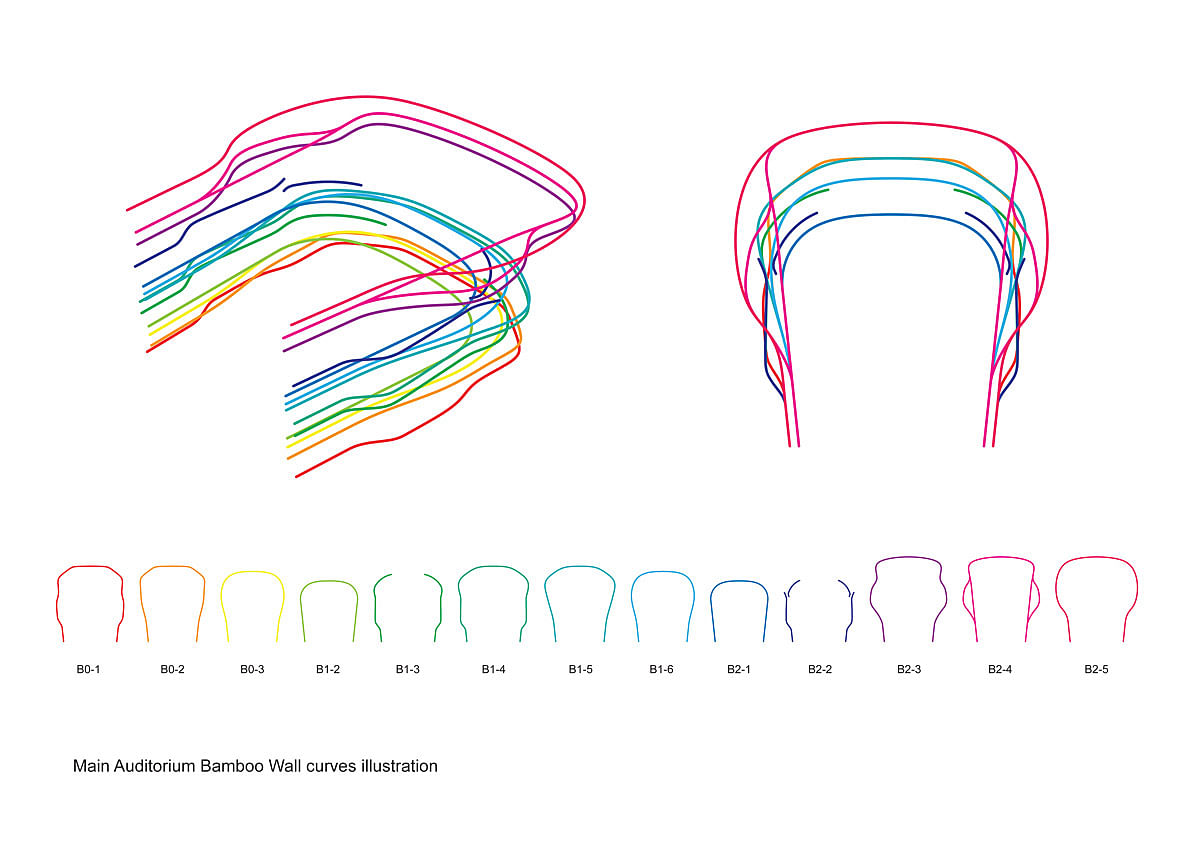
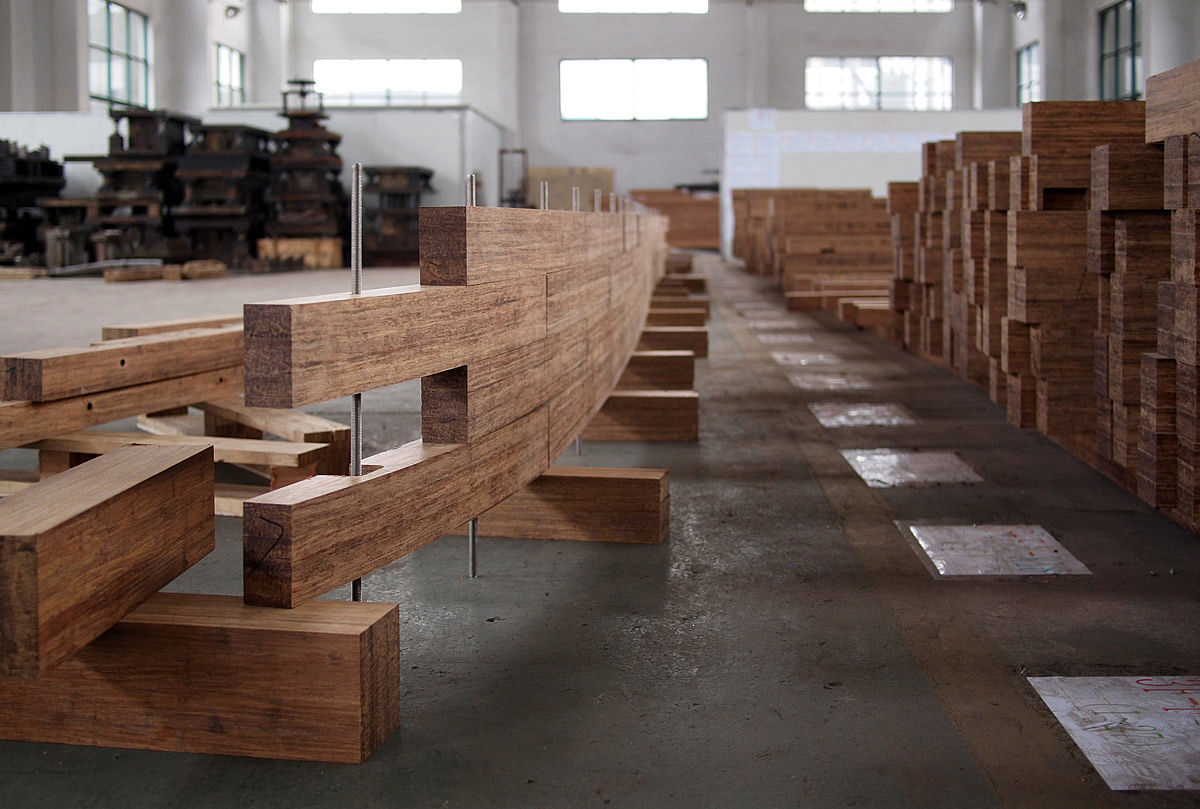
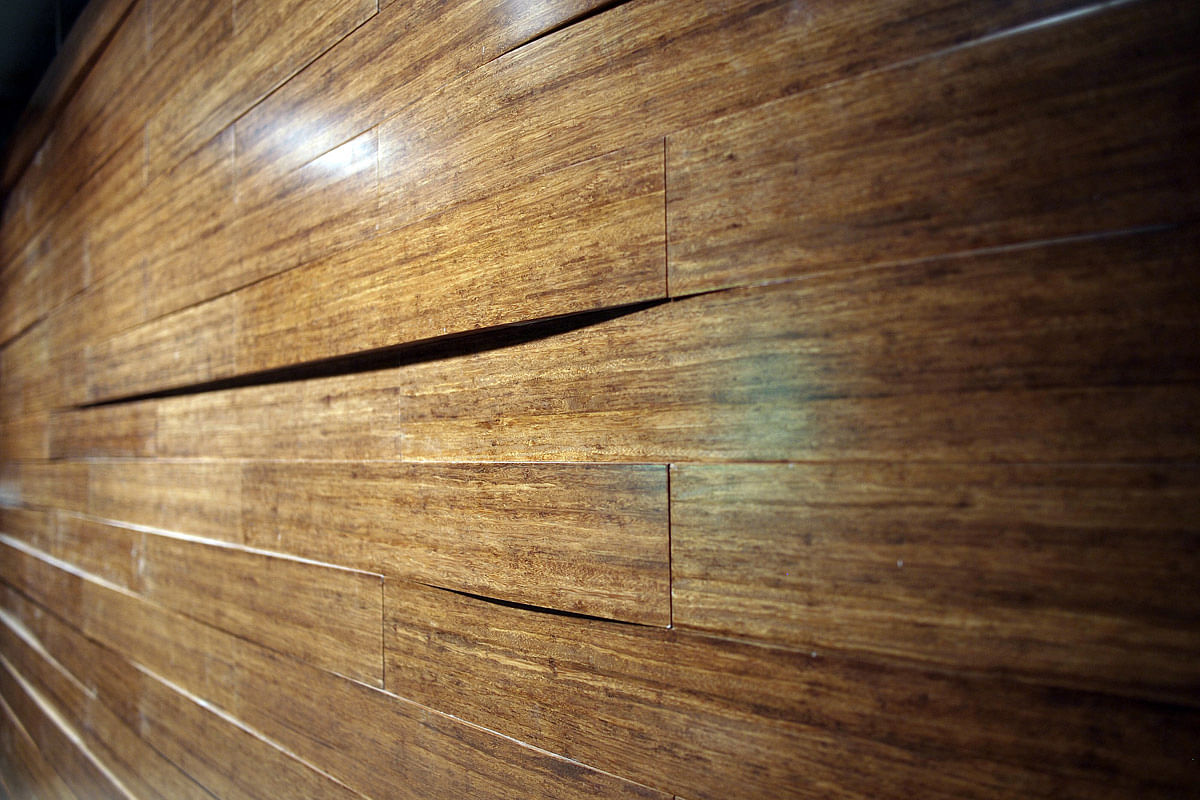
There is a strong Chinese feature that runs throughout the whole building: the large scale use of bamboo which is both a traditional and a modern Chinese material.  Recently new methods for the production and use of bamboo have made it possible to cover the Main Opera Auditorium with over fifteen thousand solid bamboo blocks, all individually shaped according to acoustic needs and architectural image.
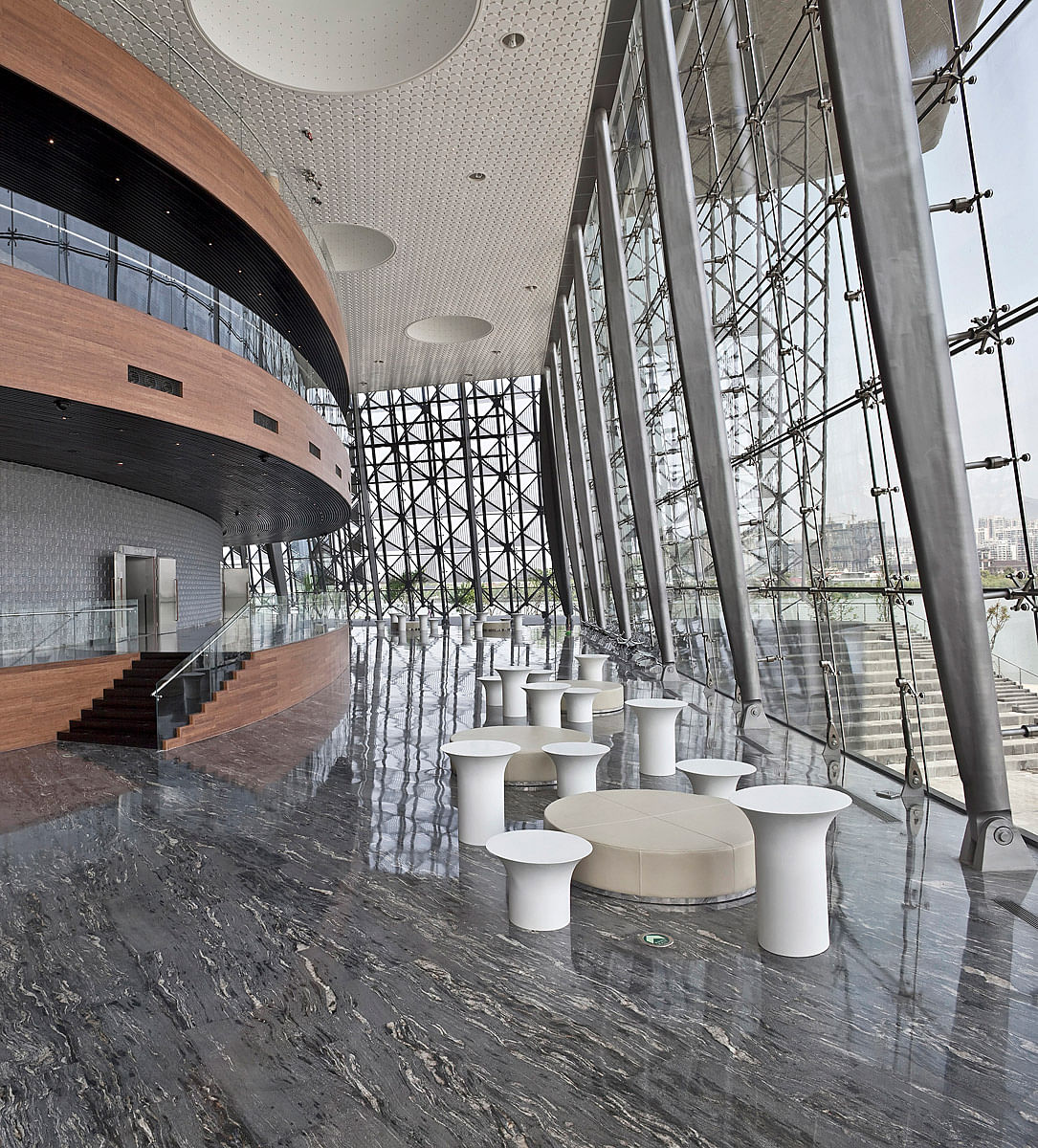
The lake side lobby of the main auditorium. This elevated space is providing great views over the Wuli Lake. The auditorium is accessed via bamboo balconies. The curved auditorium wall is covered with a custom designed glass brick wall. (Photo: Kari Palsila)

There is also a material with a Finnish character: almost twenty thousand specially designed glass bricks cover the curved wall of the opera auditorium in the lakeside lobby.  Finnish nature, lakes and ice, were the architectural inspiration.
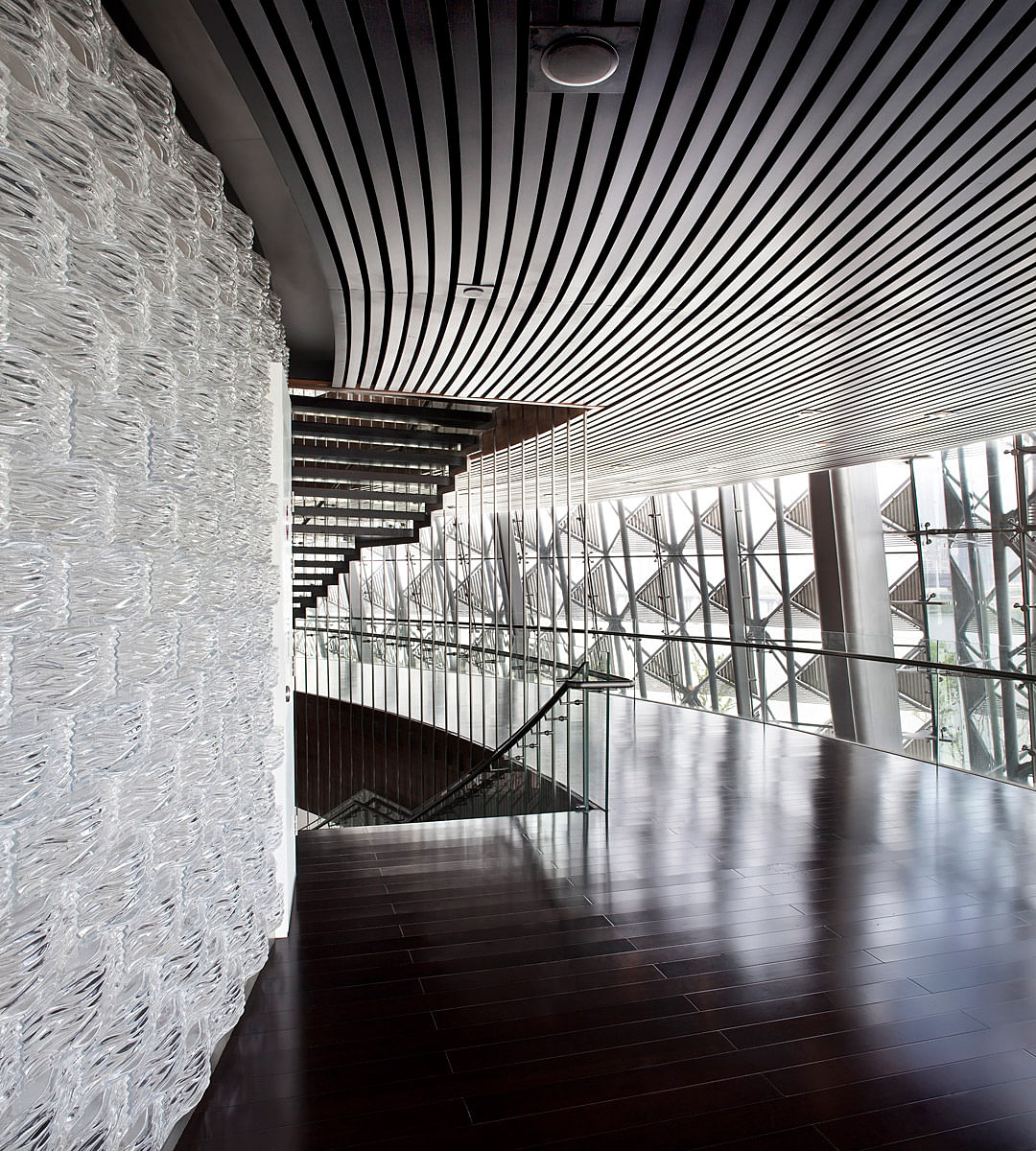
The glass brick wall in the main auditorium lake side lobby is made of 20.000 glass bricks with a wave pattern relating to the surrounding lake and to the curved bamboo block wall inside the auditorium. (Photo: Kari Palsila)

Earlier references of PES-Architects international projects include St Mary’s Concert Hall in Germany and Helsinki-Vantaa Airport in Finland.  In China, a mix-use 192m high-rise building in is currently under construction in the city of Chengdu, the result of a first prize in an international architectural competition in 2009.

To emphasize the experience of being 8 years in China design and construction market, PES-Architects in Autumn 2011 opened the Chinese design company PES-Architects Consulting (Shanghai) Co. Ltd.
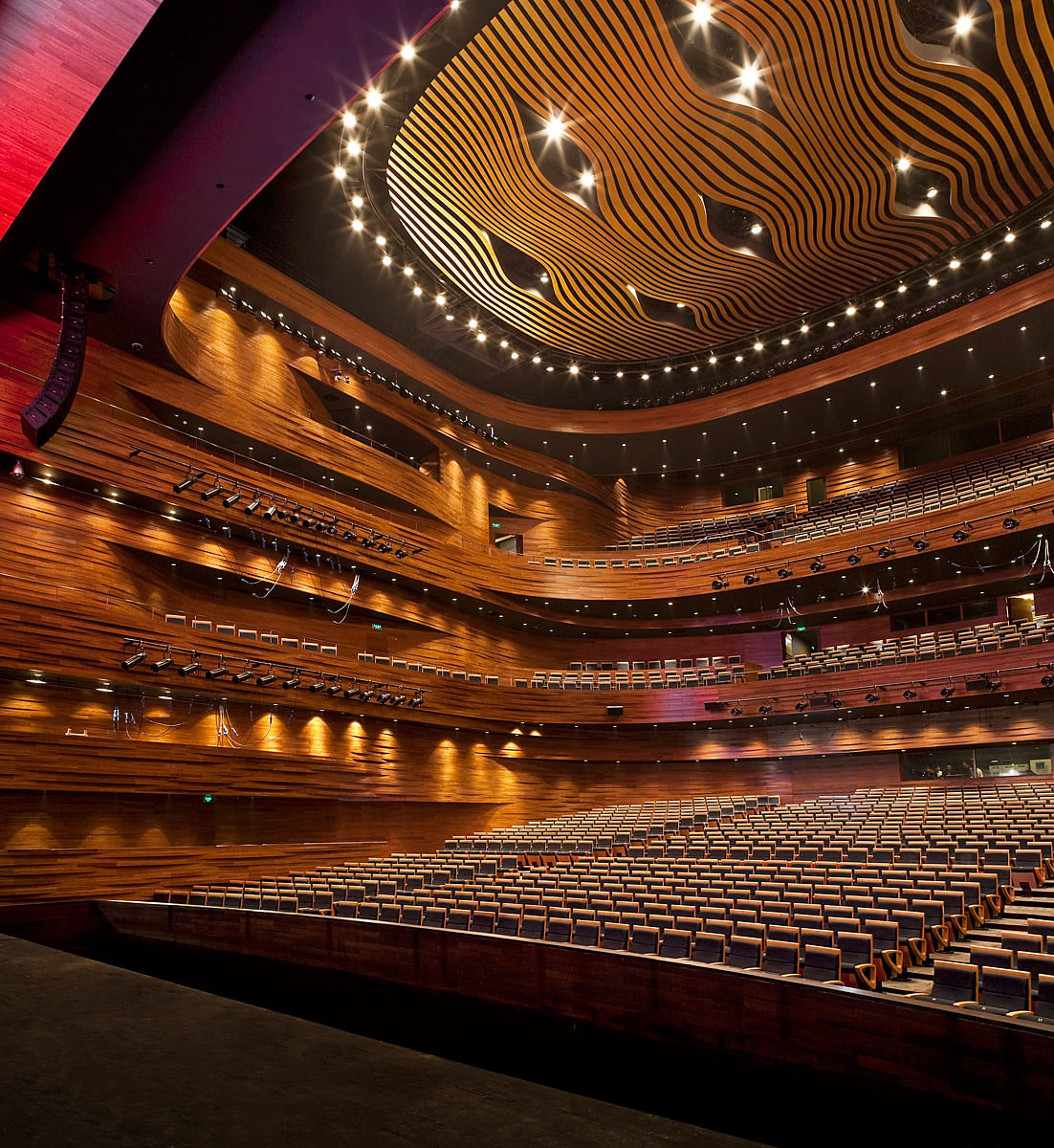
The main auditorium holds 1680 seats. The curved walls are made of 16.000 CNC cut solid bamboo blocks. The golden ceiling reflector design is inspired by the tradition Chinese opera mask. (Photo: Kari Palsila)

Project Credits:

Architects:

Competition, 2 phases:

  • PES-Architects: Pekka Salminen and Tuomas Silvennoinen (main designers), Tristan Hughes, Jouni Rekola, Michael Bossert, Heikki Riitahuhta, Tomi Laine, Miguel Pereira, Emanuel Lopez, Elina Modeen, LaiLinLi, Fang Hai
  • UDG: Sun LiYang, Gu ZhiPeng, Guan XiaoJing

SD-, DD- and CD-phases:

  • PES-Architects: Pekka Salminen (project leader and chief designer), Martin Lukasczyk (project architect/ project manager), Elina Modeen (project manager China), LaiLinLi (project manager China), Fang Hai, Julia Hertell, Tristan Hughes, Vesa Hinkola, Willem-Anne van Bolderen, Miguel Pereira, Nicholas Capone, Marcelo Diez, Jani Koivula, Heikki Riitahuhta, Tomi Laine, Yang Yue
  • UDG: Zhang Min, Guan XiaoJing, Teng Xu
A side balcony in the main auditorium. (Photo: Jussi Tiainen)

Interior design:

  • PES-Architects: Pekka Salminen, Martin Lukasczyk, Kai Lindvall, Satu Ristola

Landscape design Finland:

  • Maisemasuunnittelu Hemgård: Gretel Hemgård, Vilja Larjosto

Landscape design China:

  • Feiscape, Shanghai

Structural design Finland:

  • Vahanen Group: Matti Haaramo

Structural design China:

  • Shanghai Institute for Architectural Design and Research SIADR, Shanghai
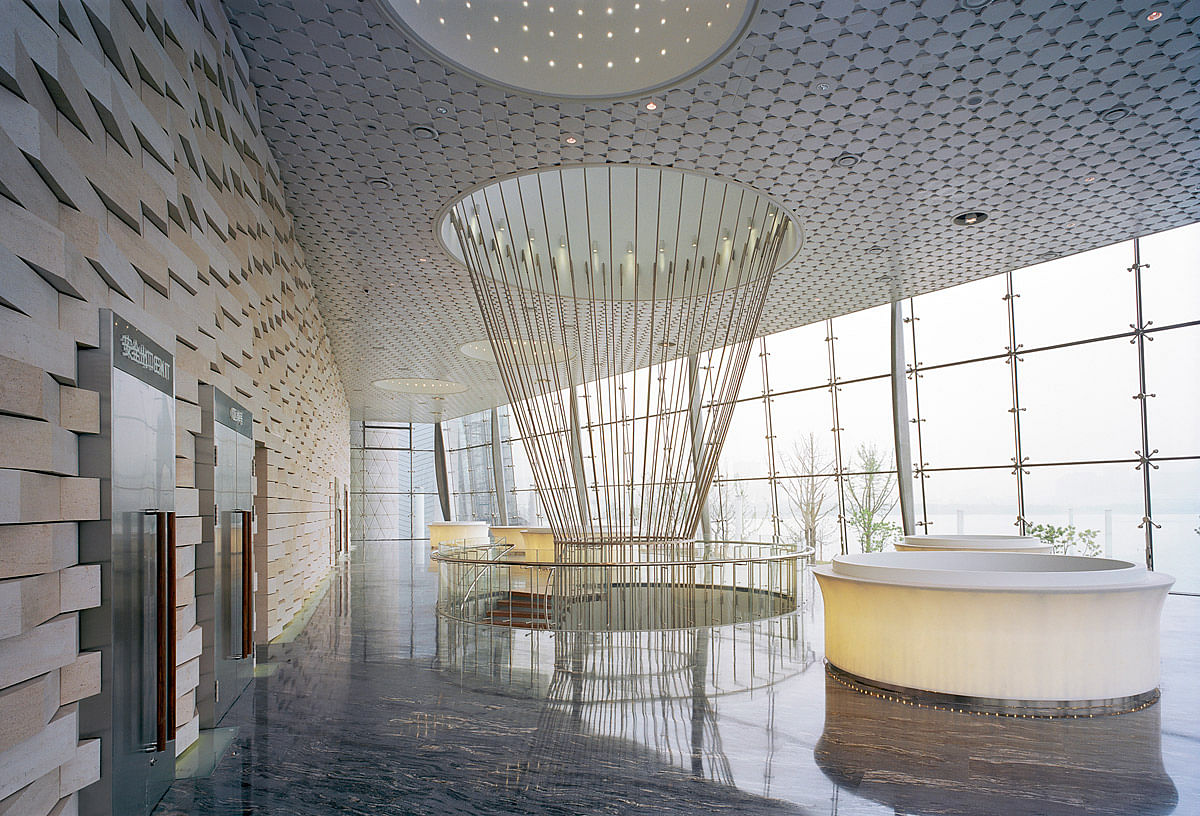
The lake side lobby of the small auditorium. This elevated space is providing great views over the Wuli Lake. The auditorium is accessed via two levels which are connected by a suspended spiral staircase. The entrance wall to the auditorium is covered with special designed CNC cut stone blocks relating to the angulated black brick wall inside the auditorium. (Photo: Jussi Tiainen)

HVAC design Finland:

  • Climaconsult: Harri Ripatti

HVAC design China:

  • SIADR, Shanghai

Lighting design Finland:

  • Valoa Design: Roope Siiroinen, Marko Kuusisto

Lighting design China:

  • Enjoy, Shanghai

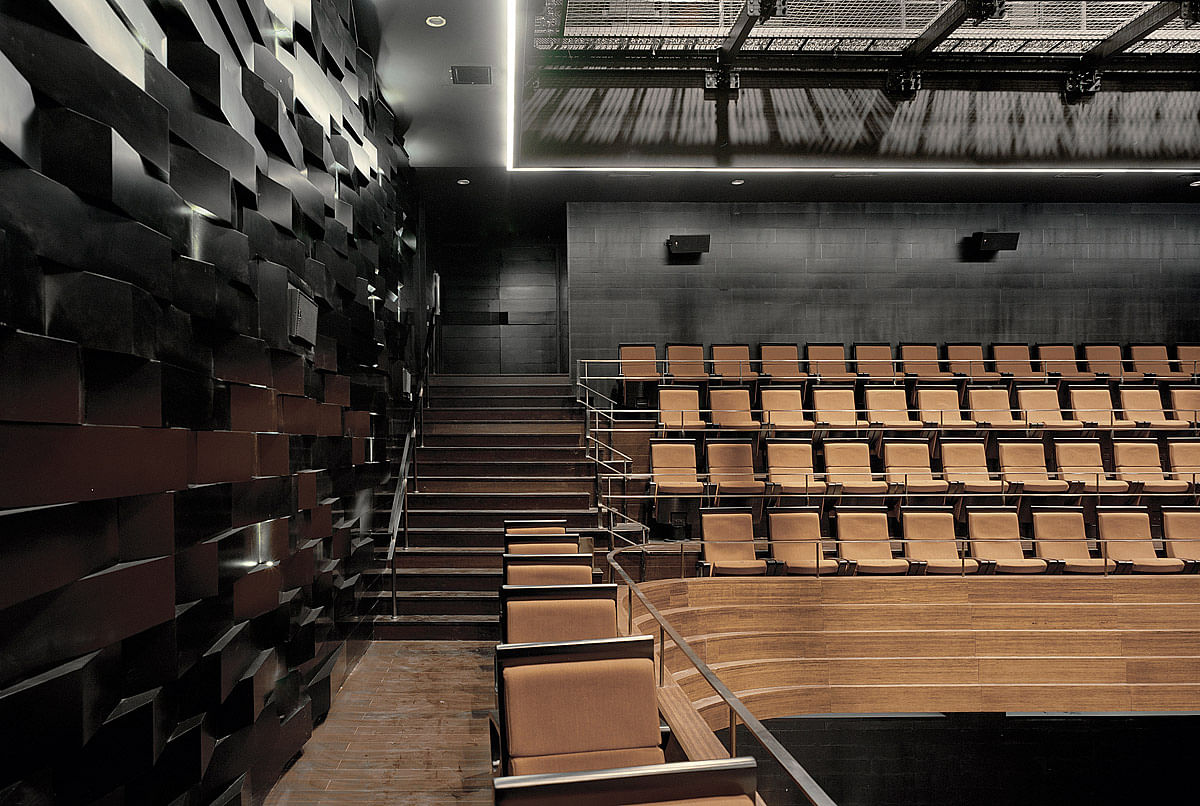
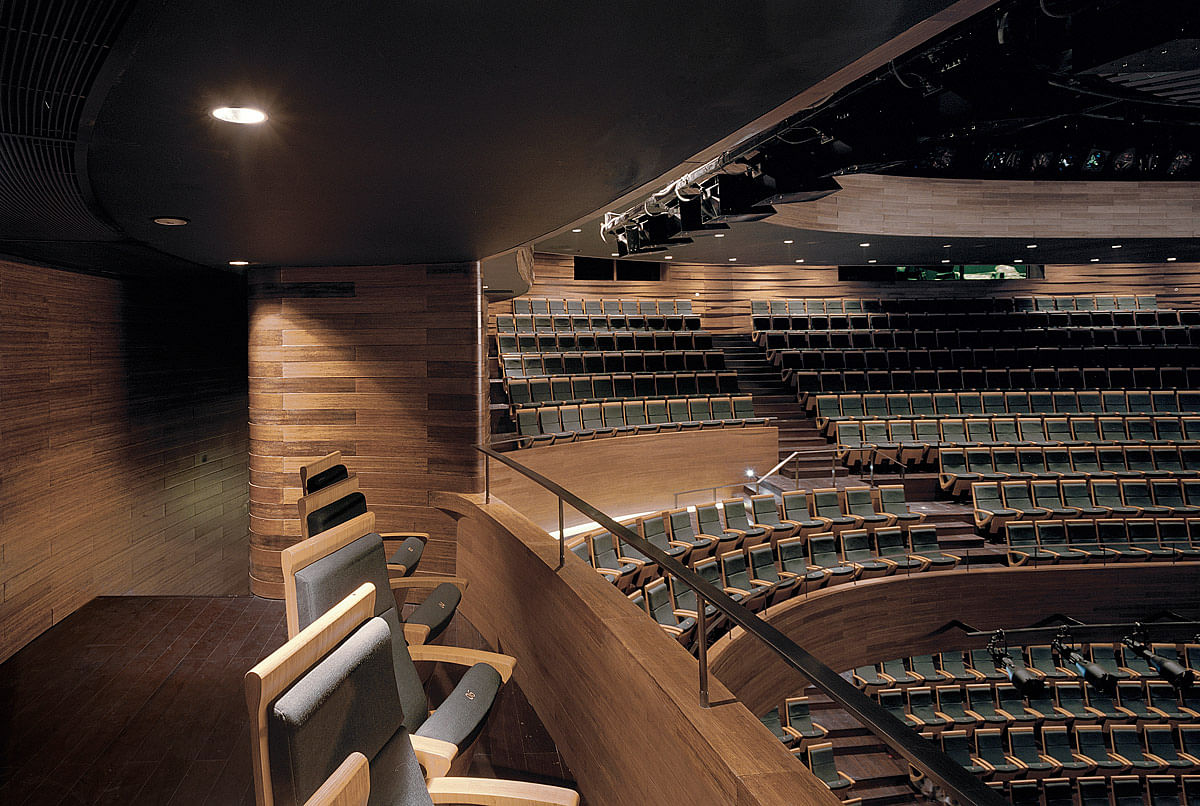
The side balcony of the small auditorium. The material for the wall is black GRG, and the balconies are made of solid bamboo. (Photo: Jussi Tiainen)

Acoustic design Finland:

  • Akukon & Kahle Acoustics: Henrik Möller, Ekhard Kahle, Thomas Wulfrank

Acoustic design China:

  • Zhang Kuiseng, Shanghai

Stage design Finland:

  • Akukon: Henrik Möller, Janne Auvinen

Stage design China:

  • SBS, Beijing

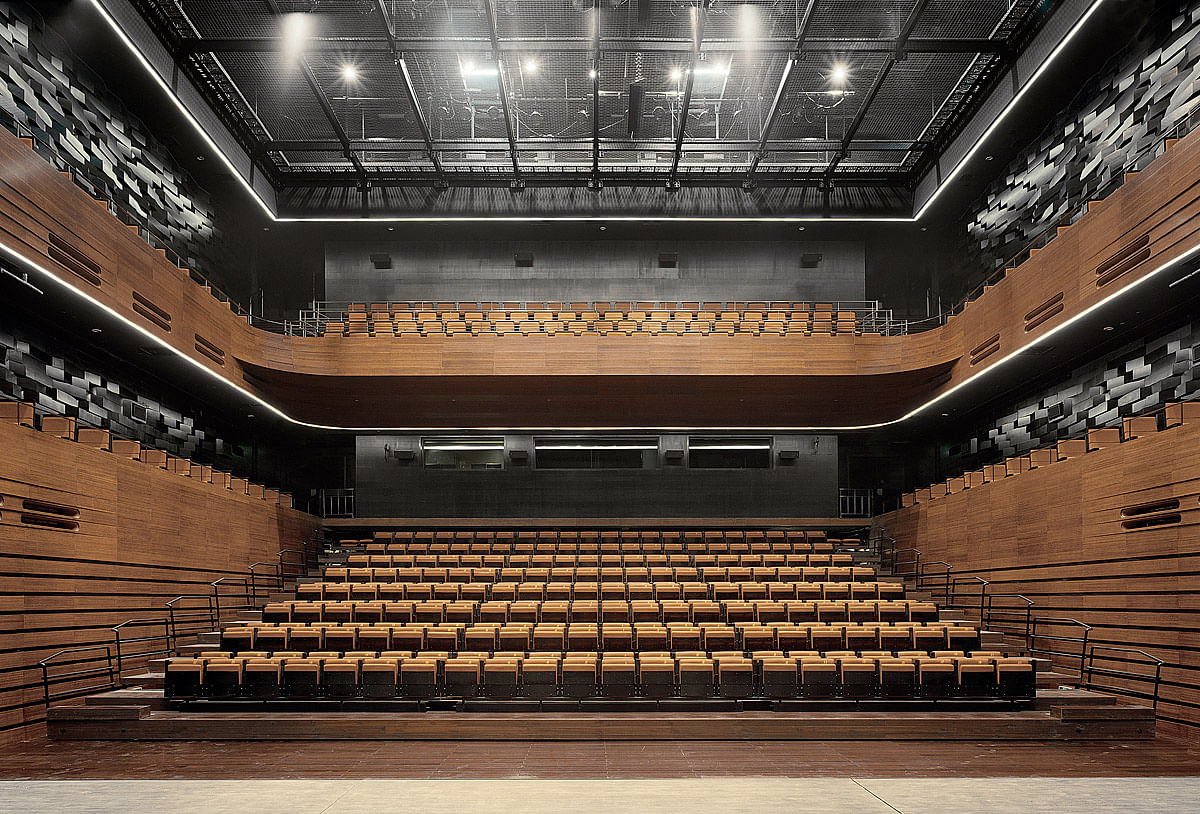
The small auditorium as seen from stage. The 700 seats are partly retractable to enable a multifunctional usage of the space. (Photo: Jussi Tiainen)

Other participants:

  • Bamboo: Yrjö Kukkapuro, Fang Hai
  • Space programme: Finnish National Opera/ Timo Tuovila
  • Special glass bricks: Tapio Yli-Viikari and Kirsti Taiviola (Aalto University), Niu Fanzheng, Lu Ye
  • Glass column consulting: Glaston: Pekka Nieminen

Local partners:

  • Shanghai Institute of Architectural Design and Research Co. SIADR (DD and CD phases)
  • Gold Mantis, Suzhou  (interior design DD and CD phases)
  • United Design Group Co.Ltd. UDG, Shanghai (competition phase and SD phase)

Material suppliers:

  • Bamboo interiors: Dasso Co, Hangzhou
  • Roof material: Rheinzink Co, Shanghai
  • Glass elevations: Pilkingtong Co, Shanghai
  • Glass Bricks: SIP Pengli Visual Mastermind & Design Co. Ltd.
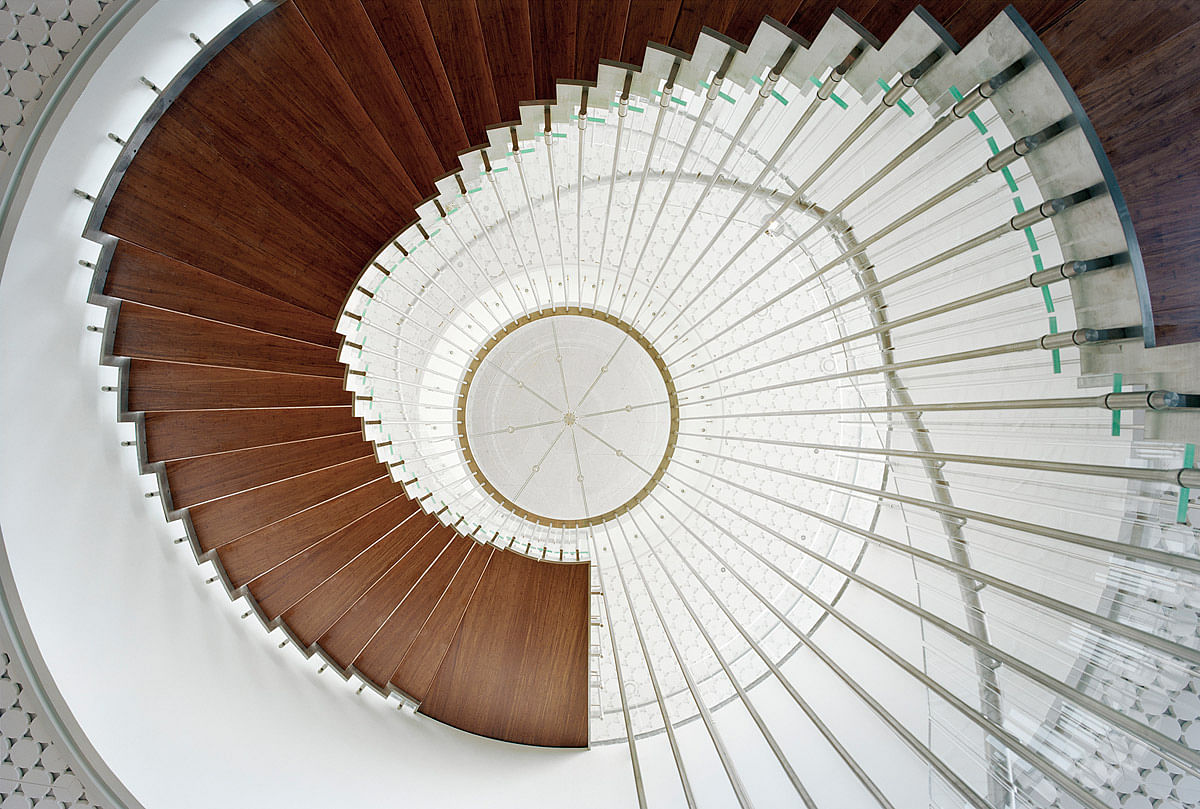
The suspended spiral stair as seen from below. The steps are made of solid bamboo material, and the entire structure is suspended from the ceiling with stainless steel rods. (Photo: Jussi Tiainen)

Contractors:

  • Construction administration & client: Office for the Important Urban Projects in Wuxi/ Fan Chun Yu, Zhou Jian
  • Construction supervision: Zhejiang Tiangnan Project Management Co. Ltd
  • Main construction company: China Construction 3rd Engineering Bureau/ CSCEC
  • Steel structure construction: Jiangsu Huning Steel Mechanism Co. Ltd
  • MEP: China Construction Industrial Equipment Installation Co. Ltd
  • Stage machinery: SBS Bühnentechnik GmbH/ SBS Stage Equipment Technology (Hangzhou) Co. Ltd
  • Stage machinery supervision: ENFI
  • Acoustics: Huisitong Acoustic Technology Enineering Co. Ltd
  • Stage lighting: Hangzhou EKO Light
  • Facades: Wuxi Jingcheng Curtain Wall Engineering Co. Ltd
  • Interior construction: Gold Mantis, Decoration Co. Ltd. of China Construction 3rd Engineering Bureau, JiangSu XinHuaDong Construction Decoration Engineering Co. Ltd, Hua Ding Construction Decoration Engineering Co. Ltd
  • Landscape construction: Shanghai Landscape Construction & Design Co. Ltd, Yixing Hydo-Engineering Co. Ltd
  • Building automation: ZheDa Innovation Technology Co. Ltd
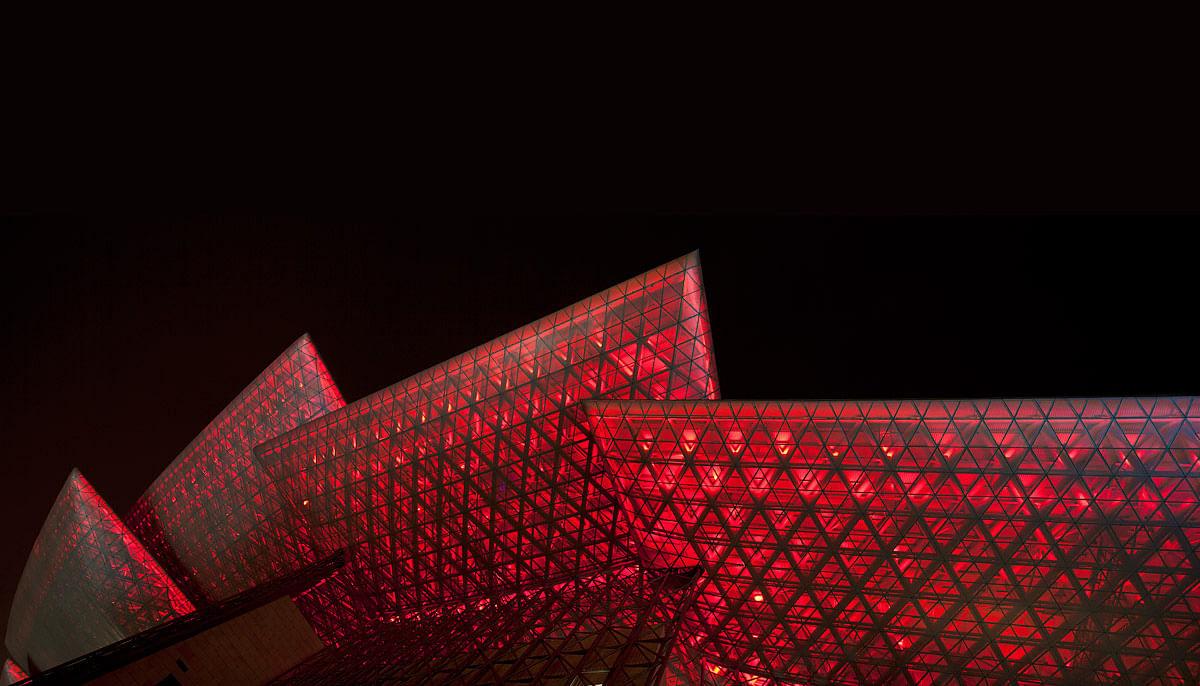
At night time the perforated wing surfaces expose the space truss structures of the wings. The color of the LED lighting is changeable so that the building has a different appearance on different performance nights. (Photo: Jussi Tiainen)

Project Details:

Architecture and interior design: PES-Architects
Project: Wuxi Grand Theatre
Address: to the North of Jinshi Road, North bank of Lake Li, Taihu New City, Wuxi, P.R.China
Client: Office for the Important Urban Projects in Wuxi /Fan Chun Yu, Zhou Jian
User: Wuxi Culture and Art Administration Center
Floor area: 78,000 m2
Year of completion: 2012
Start of design: 2008
Competition: June 2008

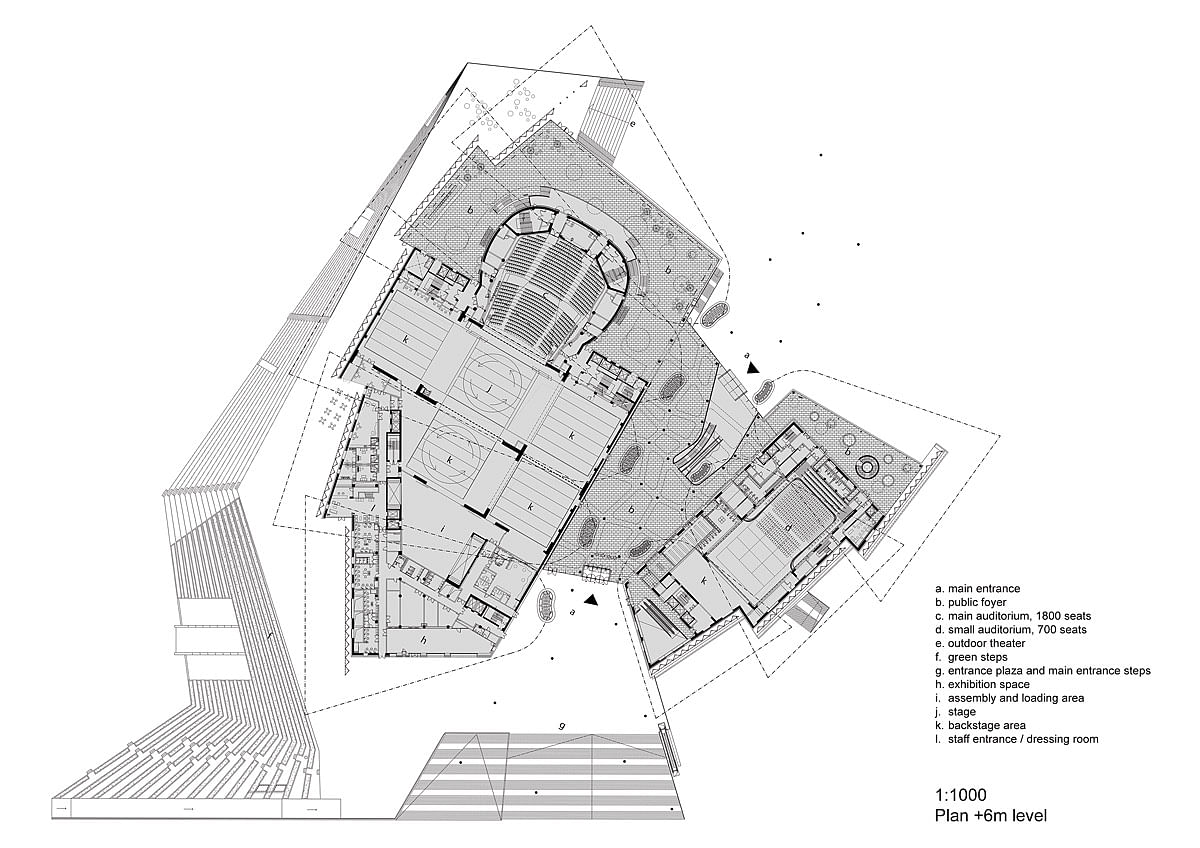
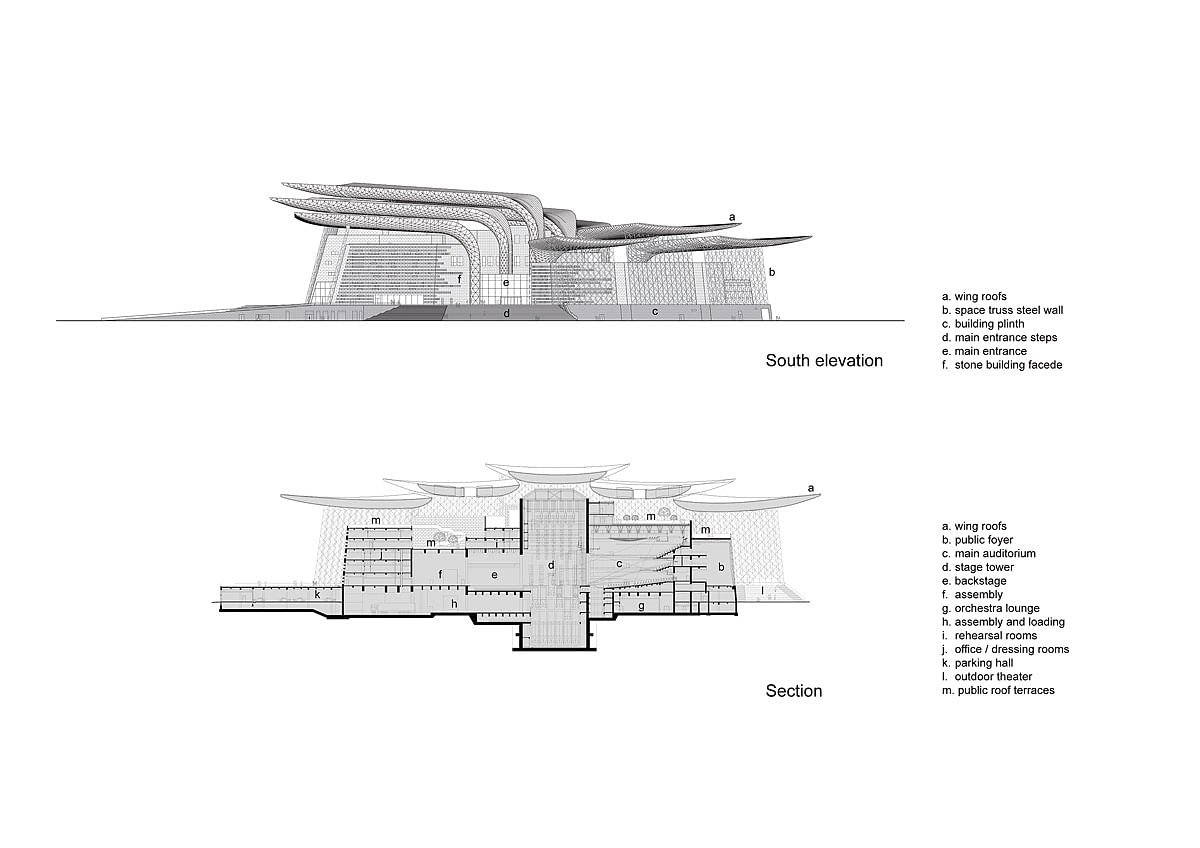
Find more photographs and drawings of Wuxi Grand Theatre in the image gallery below.
Related

asia ● china ● theater ● pes-architects ● wuxi

Share

  • Follow

    0 Comments

  • Comment as :

Wuxi Grand Theatre by PES-Architects

New architecture and design competitions: Brick in Architecture Awards, Study Architecture Student Showcase, N.Y.C. Groceries, and New York High Falls Riverfront Market

SmithGroup’s ‘pioneering’ Philip Merrill Environmental Center wins AIA Twenty-five Year Award

Sponsored Post by Buildner

Museum of Emotions / Edition #8 FINAL registration deadline is in 5 DAYS!

Here are the winners of the 2026 AIA Architecture Awards

40 emerging architects and designers under 40 from Europe honored

Northwestern University selects 12-firm longlist to design new engineering building

New architecture and design competitions: Exploring 130 Years of American Design, Christo & Jeanne-Claude Center, 13 White Houses, and La Pyramide

Micro-architecture honored in latest Tiny House Architecture Competition

Sign up for Bustler's Email Newsletters

World’s most beautiful restaurants of 2026 chosen by Prix Versailles

Sponsored Post by Buildner

Design a wine tasting room in Italy! Valli Wine Tasting Room is launched!

10 can't-miss architecture & design events to see this June in London, Los Angeles, Chicago, San Francisco, Detroit, San Diego, Porto, and Barcelona

Sponsored Post by Buildner

Museum of Emotions / Edition #8 FINAL registration deadline is approaching!

Seven global projects make AR Public Awards shortlist 2026

Sponsored Post by Buildner

Design a slow-living restaurant in Portugal! Portugal Long Table Restaurant is launched!

World's best tall buildings honored at the CVU 2026 Award of Excellence

Next page » Loading

Wuxi Grand Theatre by PES-Architects

By Bustler Editors|

Friday, Aug 24, 2012

Share

Image of the main entrance plaza at night time (Photo: Jussi Tiainen)

Related

asia ● china ● theater ● pes-architects ● wuxi

We have received plenty of photos of the recently completed Wuxi Grand Theatre in Wuxi, China. Designed by Helsinki-based PES-Architects, the 78,000 m2 (839,600 sq ft) project was the competition-winning entry back in 2008 and is the first large scale example of Finnish design in China.

Project Description from the Architects:

Introduction

Finnish Design is internationally reknown for its concepts of clear and functional style, which meet the needs of the users from a long term perspective.  The first large scale example of Finnish design in China was completed by the opening of the Wuxi Grand Theatre in April 2012.  Its design was not only a question of architecture, but the whole design - from functional program to interior design, landscape design, theatre technology, lighting and acoustic design - was controlled by the PES-Architects’ team.

Birdview with the main entrance plaza in the foreground and Wuli Lake in the background (Photo: Pan Weijun)

Normally in Finland the architect holistically designs important public buildings from the client’s first thoughts to the interior design details and is in charge of coordinating the works of all special consultants.  Professor Pekka Salminen, the founder of PES-Architects, and his design partner, architect Tuomas Silvennoinen, want to promote this type of “Design Thinking” in China.

View from top showing the Wuli Lake surrounding the building and the landscaping on the man-made peninsula (Photo: Pan Weijun)

Their argument is, that without a head designer with an overall understanding and knowledge of the entire design and construction process, the criterions for sustainable development cannot be realised.  Time shows the long-lasting values of architecture.  This is particularly important and acute in China, which is the largest construction site in the world and where all building projects are realised with astonishing speed.

The building as seen from the Wuli Lake Bridge (Photo: Kari Palsila)

Wuxi Grand Theatre

In 2008, PES-Architects won the first prize in the invited international architectural competition for Wuxi Grand Theatre. The other competitors were established and well-known practices from Germany, France, Japan and Denmark.

The main idea of Wuxi Grand Theatre is based on its location.  The manmade peninsula on the northern shore area of Taihu Lake and the highway bridge nearby make this location comparable to that of Sydney Opera House.  Due to this location the building is an impressive landmark, rising up to a total height of 50 meters like a big sculpture from the terraced base.  Its eight gigantic roof wings stretch far over the facades, giving the building a character of a butterfly, while protecting the building from the heat of the sun.

The building as seen from the boat pier (Photo: Jussi Tiainen)

The architectural concept is unique: inside the steel wings are thousands of LED lights, which make it possible to change the colour of the wings according to the character of the performances.  This is possible, because the underside of the wings is covered by perforated aluminium panels.  Another special feature is the “forest” of 50 light columns, each 9 meter high, which start from the main entrance square, support the roof of the central lobby and continue outside of the lakeside entrance into the lake.

The main entrance foyer with the light columns, the transparent roof and the butterfly door handles on the main entrance doors. (Photo: Kari Palsila)

There is a strong Chinese feature that runs throughout the whole building: the large scale use of bamboo which is both a traditional and a modern Chinese material.  Recently new methods for the production and use of bamboo have made it possible to cover the Main Opera Auditorium with over fifteen thousand solid bamboo blocks, all individually shaped according to acoustic needs and architectural image.

The lake side lobby of the main auditorium. This elevated space is providing great views over the Wuli Lake. The auditorium is accessed via bamboo balconies. The curved auditorium wall is covered with a custom designed glass brick wall. (Photo: Kari Palsila)

There is also a material with a Finnish character: almost twenty thousand specially designed glass bricks cover the curved wall of the opera auditorium in the lakeside lobby.  Finnish nature, lakes and ice, were the architectural inspiration.

The glass brick wall in the main auditorium lake side lobby is made of 20.000 glass bricks with a wave pattern relating to the surrounding lake and to the curved bamboo block wall inside the auditorium. (Photo: Kari Palsila)

Earlier references of PES-Architects international projects include St Mary’s Concert Hall in Germany and Helsinki-Vantaa Airport in Finland.  In China, a mix-use 192m high-rise building in is currently under construction in the city of Chengdu, the result of a first prize in an international architectural competition in 2009.

To emphasize the experience of being 8 years in China design and construction market, PES-Architects in Autumn 2011 opened the Chinese design company PES-Architects Consulting (Shanghai) Co. Ltd.

The main auditorium holds 1680 seats. The curved walls are made of 16.000 CNC cut solid bamboo blocks. The golden ceiling reflector design is inspired by the tradition Chinese opera mask. (Photo: Kari Palsila)

Project Credits:

Architects:

Competition, 2 phases:

  • PES-Architects: Pekka Salminen and Tuomas Silvennoinen (main designers), Tristan Hughes, Jouni Rekola, Michael Bossert, Heikki Riitahuhta, Tomi Laine, Miguel Pereira, Emanuel Lopez, Elina Modeen, LaiLinLi, Fang Hai
  • UDG: Sun LiYang, Gu ZhiPeng, Guan XiaoJing

SD-, DD- and CD-phases:

  • PES-Architects: Pekka Salminen (project leader and chief designer), Martin Lukasczyk (project architect/ project manager), Elina Modeen (project manager China), LaiLinLi (project manager China), Fang Hai, Julia Hertell, Tristan Hughes, Vesa Hinkola, Willem-Anne van Bolderen, Miguel Pereira, Nicholas Capone, Marcelo Diez, Jani Koivula, Heikki Riitahuhta, Tomi Laine, Yang Yue
  • UDG: Zhang Min, Guan XiaoJing, Teng Xu

A side balcony in the main auditorium. (Photo: Jussi Tiainen)

Interior design:

  • PES-Architects: Pekka Salminen, Martin Lukasczyk, Kai Lindvall, Satu Ristola

Landscape design Finland:

  • Maisemasuunnittelu Hemgård: Gretel Hemgård, Vilja Larjosto

Landscape design China:

  • Feiscape, Shanghai

Structural design Finland:

  • Vahanen Group: Matti Haaramo

Structural design China:

  • Shanghai Institute for Architectural Design and Research SIADR, Shanghai

The lake side lobby of the small auditorium. This elevated space is providing great views over the Wuli Lake. The auditorium is accessed via two levels which are connected by a suspended spiral staircase. The entrance wall to the auditorium is covered with special designed CNC cut stone blocks relating to the angulated black brick wall inside the auditorium. (Photo: Jussi Tiainen)

HVAC design Finland:

  • Climaconsult: Harri Ripatti

HVAC design China:

  • SIADR, Shanghai

Lighting design Finland:

  • Valoa Design: Roope Siiroinen, Marko Kuusisto

Lighting design China:

  • Enjoy, Shanghai

The side balcony of the small auditorium. The material for the wall is black GRG, and the balconies are made of solid bamboo. (Photo: Jussi Tiainen)

Acoustic design Finland:

  • Akukon & Kahle Acoustics: Henrik Möller, Ekhard Kahle, Thomas Wulfrank

Acoustic design China:

  • Zhang Kuiseng, Shanghai

Stage design Finland:

  • Akukon: Henrik Möller, Janne Auvinen

Stage design China:

  • SBS, Beijing

The small auditorium as seen from stage. The 700 seats are partly retractable to enable a multifunctional usage of the space. (Photo: Jussi Tiainen)

Other participants:

  • Bamboo: Yrjö Kukkapuro, Fang Hai
  • Space programme: Finnish National Opera/ Timo Tuovila
  • Special glass bricks: Tapio Yli-Viikari and Kirsti Taiviola (Aalto University), Niu Fanzheng, Lu Ye
  • Glass column consulting: Glaston: Pekka Nieminen

Local partners:

  • Shanghai Institute of Architectural Design and Research Co. SIADR (DD and CD phases)
  • Gold Mantis, Suzhou  (interior design DD and CD phases)
  • United Design Group Co.Ltd. UDG, Shanghai (competition phase and SD phase)

Material suppliers:

  • Bamboo interiors: Dasso Co, Hangzhou
  • Roof material: Rheinzink Co, Shanghai
  • Glass elevations: Pilkingtong Co, Shanghai
  • Glass Bricks: SIP Pengli Visual Mastermind & Design Co. Ltd.

The suspended spiral stair as seen from below. The steps are made of solid bamboo material, and the entire structure is suspended from the ceiling with stainless steel rods. (Photo: Jussi Tiainen)

Contractors:

  • Construction administration & client: Office for the Important Urban Projects in Wuxi/ Fan Chun Yu, Zhou Jian
  • Construction supervision: Zhejiang Tiangnan Project Management Co. Ltd
  • Main construction company: China Construction 3rd Engineering Bureau/ CSCEC
  • Steel structure construction: Jiangsu Huning Steel Mechanism Co. Ltd
  • MEP: China Construction Industrial Equipment Installation Co. Ltd
  • Stage machinery: SBS Bühnentechnik GmbH/ SBS Stage Equipment Technology (Hangzhou) Co. Ltd
  • Stage machinery supervision: ENFI
  • Acoustics: Huisitong Acoustic Technology Enineering Co. Ltd
  • Stage lighting: Hangzhou EKO Light
  • Facades: Wuxi Jingcheng Curtain Wall Engineering Co. Ltd
  • Interior construction: Gold Mantis, Decoration Co. Ltd. of China Construction 3rd Engineering Bureau, JiangSu XinHuaDong Construction Decoration Engineering Co. Ltd, Hua Ding Construction Decoration Engineering Co. Ltd
  • Landscape construction: Shanghai Landscape Construction & Design Co. Ltd, Yixing Hydo-Engineering Co. Ltd
  • Building automation: ZheDa Innovation Technology Co. Ltd

At night time the perforated wing surfaces expose the space truss structures of the wings. The color of the LED lighting is changeable so that the building has a different appearance on different performance nights. (Photo: Jussi Tiainen)

Project Details:

Architecture and interior design: PES-Architects
Project: Wuxi Grand Theatre
Address: to the North of Jinshi Road, North bank of Lake Li, Taihu New City, Wuxi, P.R.China
Client: Office for the Important Urban Projects in Wuxi /Fan Chun Yu, Zhou Jian
User: Wuxi Culture and Art Administration Center
Floor area: 78,000 m2
Year of completion: 2012
Start of design: 2008
Competition: June 2008

Find more photographs and drawings of Wuxi Grand Theatre in the image gallery below.
Share

  • Follow

    0 Comments

  • Comment as :

Archinect JobsArchinect Jobs

The Archinect Job Board attracts the world's top architectural design talents.

VIEW ALL JOBS POST A JOB

Architectural/Structural Drafter

New Beginnings Engineering

Architectural/Structural Drafter

Irvine, CA, US

Architectural Project Manager - Residential

DAHLIN Architecture | Planning | Interiors

Architectural Project Manager - Residential

Pleasanton, CA, US

Intermediate Designer

Rafael Viñoly Architects

Intermediate Designer

New York, NY, US

Junior Architect

Elizabeth Roberts Architecture & Design

Junior Architect

Brooklyn, NY, US

Marketing Coordinator / EA

Stoss Landscape Urbanism

Marketing Coordinator / EA

Boston, MA, US

Project Manager - Residential

DAHLIN Architecture | Planning | Interiors

Project Manager - Residential

Bellevue, WA, US

Architectural Associate/Junior Architect

Goldstone Architecture

Architectural Associate/Junior Architect

Bennington, VT, US

Architectural Designer (3-5 Years) - Commercial & Hospitality Focus

Pfeffer Torode Architecture

Architectural Designer (3-5 Years) - Commercial & Hospitality Focus

Nashville, TN, US

Architect / Architectural Designer (3-5 years experience)

Resolution: 4 Architecture

Architect / Architectural Designer (3-5 years experience)

New York, NY, US

Architectural Designer

Build Block Inc.

Architectural Designer

Los Angeles, CA, US

Next page » Loading