• Login / Join
  • About
  • •
  • Contact
  • •
  • Advertising
bustler logo
bustler logo
  • News
  • Competitions
  • Events
  • Bustler is powered by Archinect
  • Sign up for Bustler's Email Newsletters

  • Follow these Bustler feeds:

  • Search

    Search in

  • Submit

    What are you submitting?

    News Pitch
    Competition
    Event
  • Login / Join
  • News|Competitions|Events
  • Search
    | Submit
    | Follow
  • Search in

    What are you submitting?

    News Pitch
    Competition
    Event

    Follow these Bustler feeds:

  • About|Contact|Advertising
  • Login / Join

Rethinking "Urban Routines" in the Strelka Institute's student exhibition in Moscow

By Bustler Editors|

Thursday, Jul 17, 2014
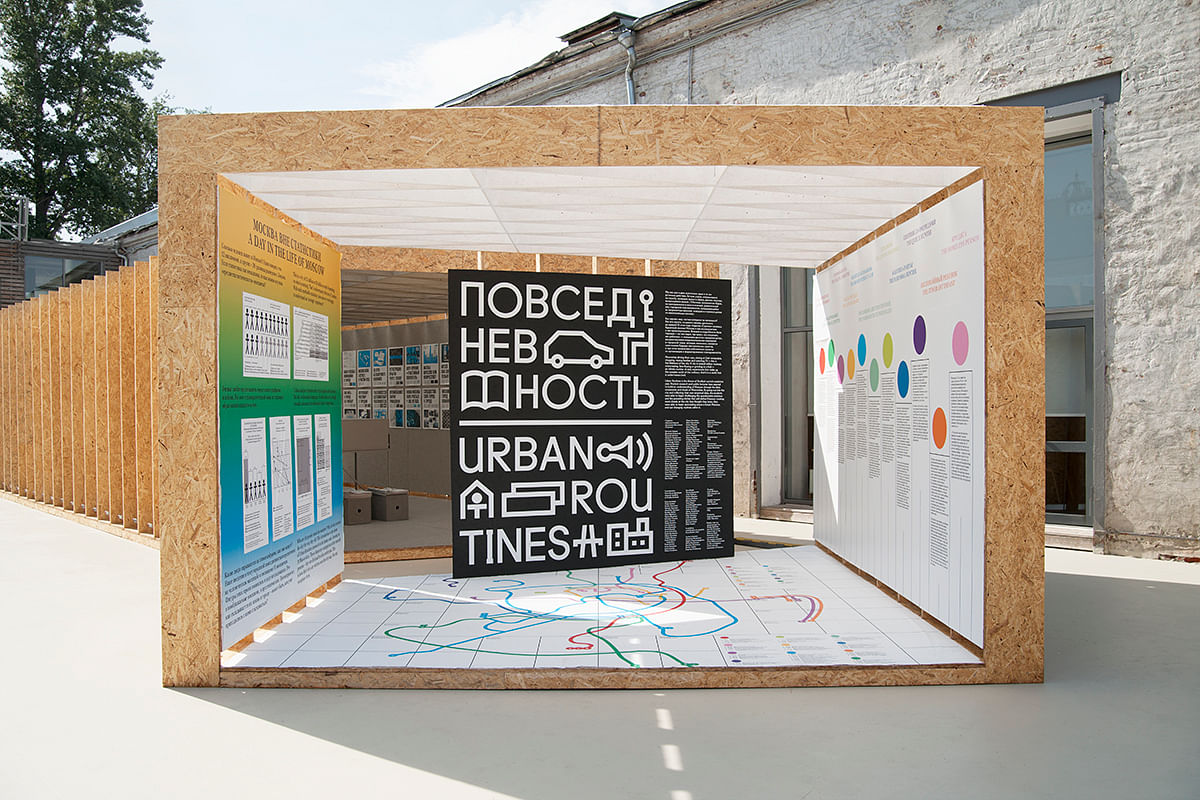
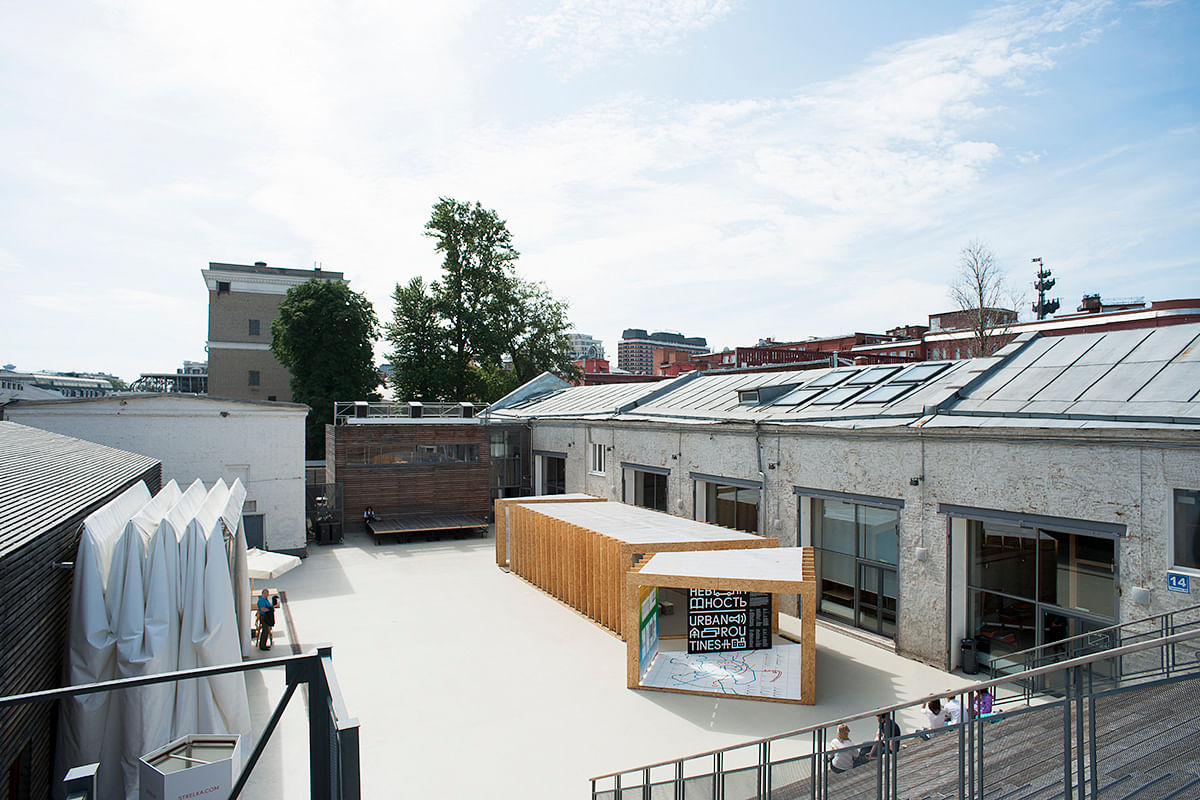
Pavilion "Urban Routines". Photo: Gleb Leonov/The Strelka Institute

The "Urban Routines" exhibition at the Strelka Institute for Media, Architecture, and Design in Moscow proves that statistics are the tip of the iceberg when it comes to studying urban spaces and the bustling life within them.

As the final exhibition of the Urban Routines education program, students designed a pavilion to present the nine months of research they spent discovering new, overlooked, and contradicting details of how Moscow's inhabitants go about their everyday lives.

Read more below.

"The traditional view of urban space through the prism of statistics is incapable of grasping all the complexities of the processes and phenomena of the megalopolis. Its data are often self-contradictory and fail to take into account many phenomena that are important in the daily lives of the citizens, their habits and perspectives of the city. Without ignoring the figures, students of the Strelka Institute set out, over a nine month period, to rethink the routine practices of Moscow’s inhabitants; how they work, live, make purchases and move around town. 

In their research, the students focused not on the generally known facts, but on new, little-noticed, and as-yet unresolved contradictions. Work on the research projects was carried out in the context of five studios: Cars, Retail, Dwelling, Offices, and the studio Links - dedicated to the city’s informal economy.

The educational program’s final exhibition is based on the results of this work and constitutes the utterance of Strelka’s students on the theme of daily routine in Moscow, taking the format of a newspaper – that most everyday form of communicative media."
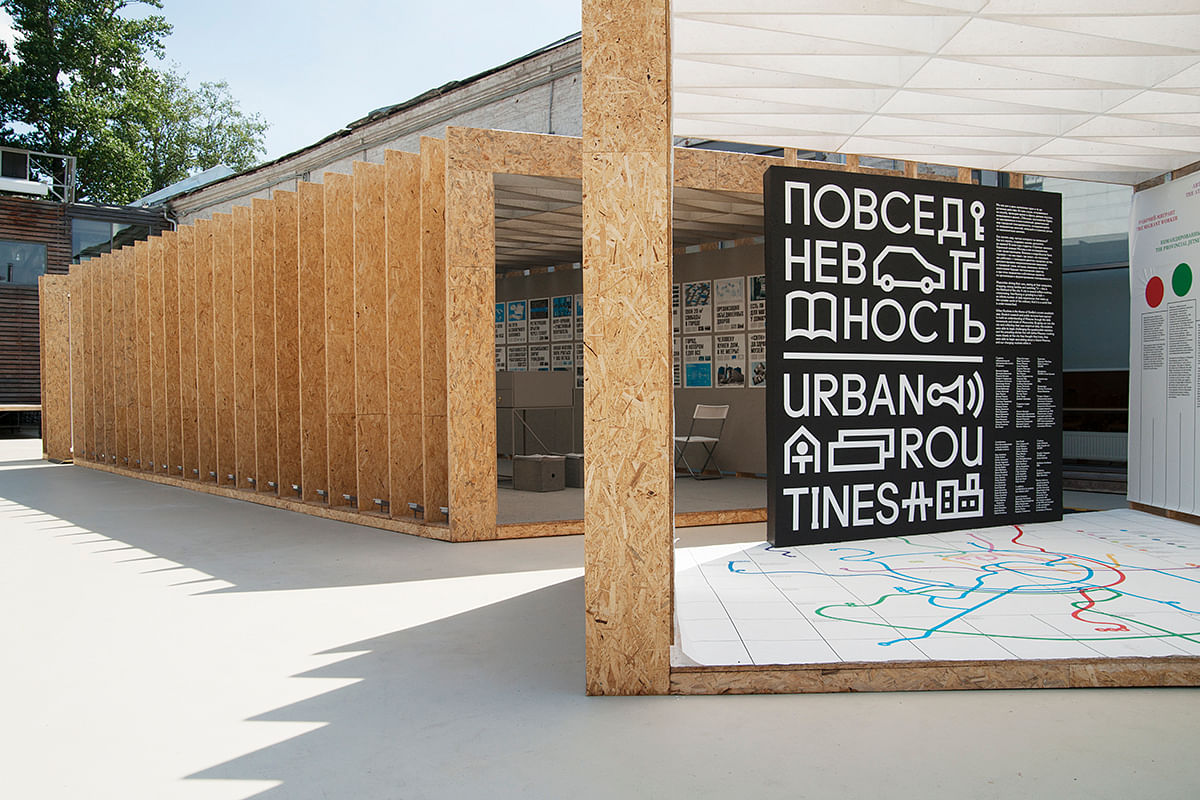
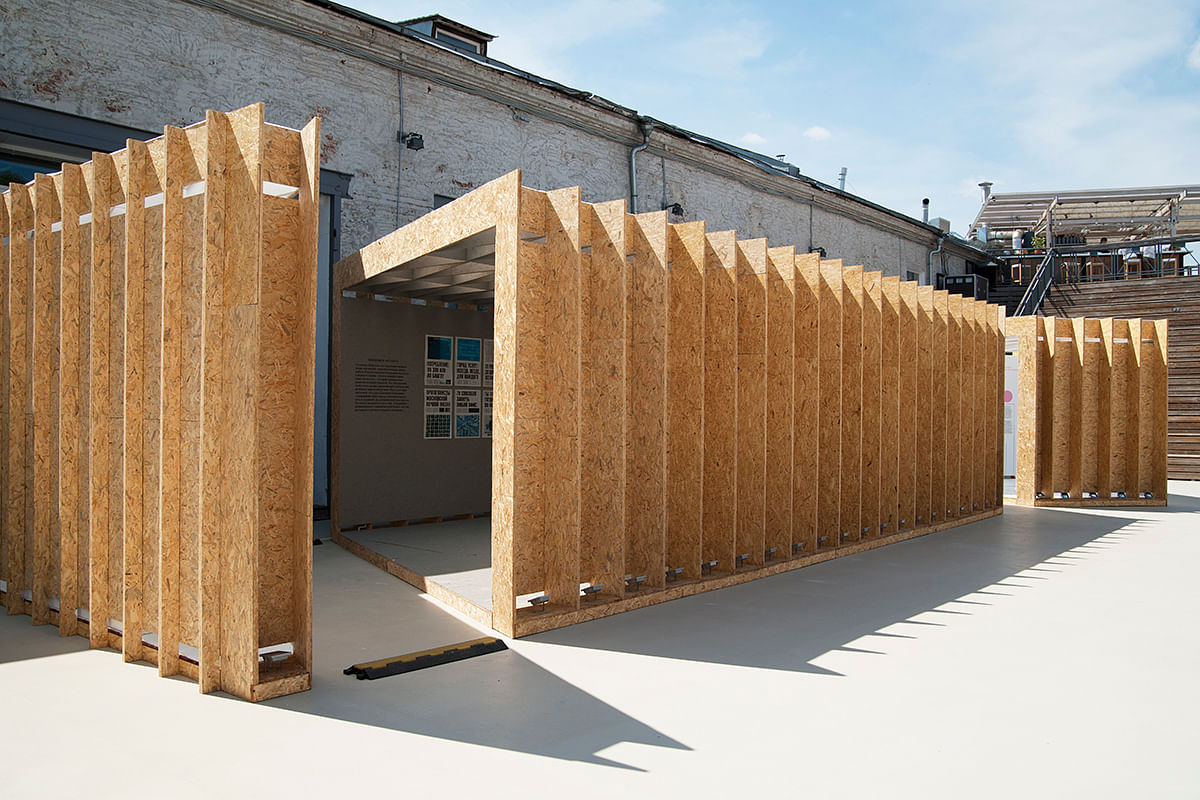
Pavilion "Urban Routines". Photo: Gleb Leonov/The Strelka Institute

"The pavilion holding the students’ exhibition is made up of three sections.  The first part, the entrance lobby, provides a general view of the urban routines theme and permits visitors to acquaint themselves with the basic archetypes peculiar to Moscow.  This is a cube-shaped space, on the walls of which recognisable portraits of townsfolk have been graphically depicted ('the Motorist,' 'the Metro Flower-Seller,' 'the Tramp' and so on) alongside brief descriptions of each character. 

One of the walls also shows the statistics for the most standard urban phenomena: the size of traffic jams, and the scale of office, retail and residential space in the city.  In this way, the visitor begins to immerse himself in the everyday routine."
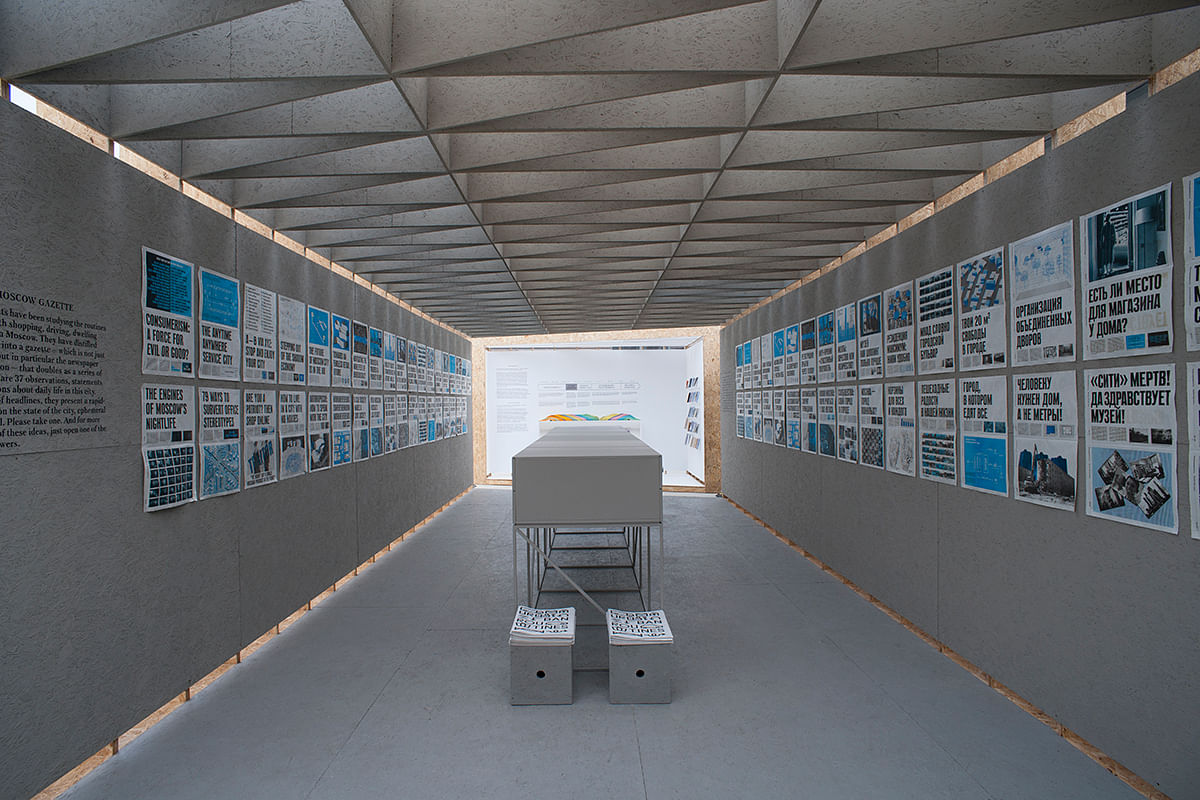
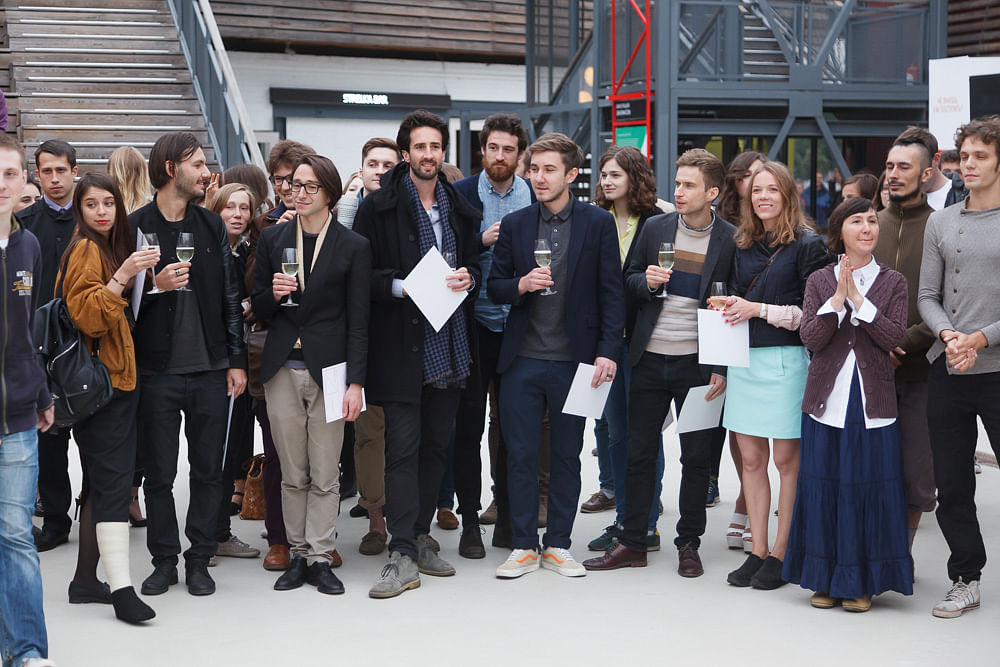
Student exhibition opening. Photo: Michail Goldenkov/The Strelka Institute

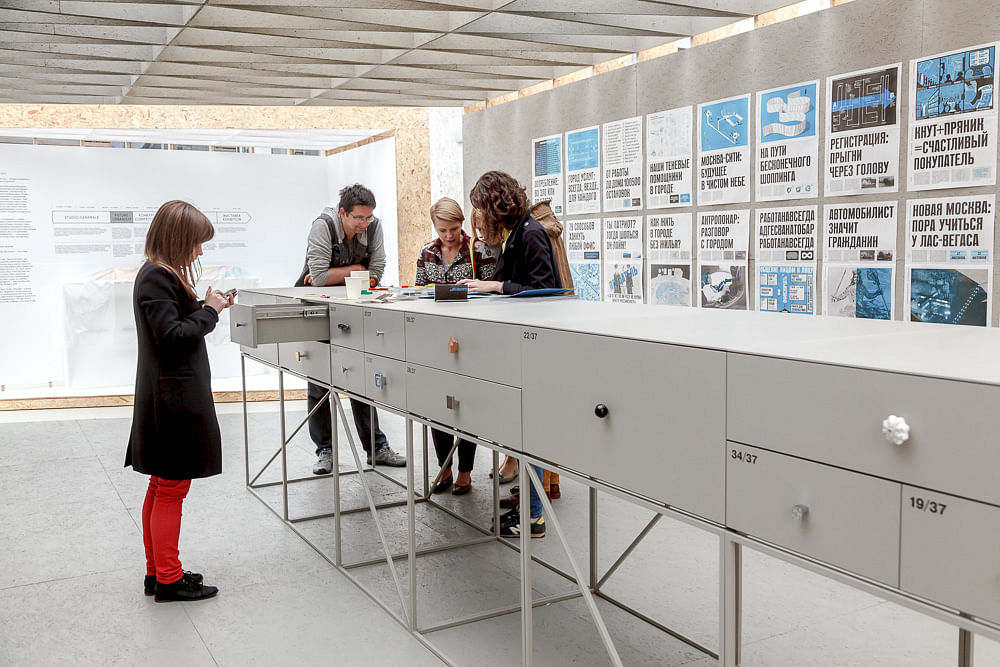
"The main part of the exhibition is a rectangular room whose walls are hung with newspaper-posters in two languages: Russian and English.  Each newspaper reveals one of the student projects.  Strelka student Pavel Ilyichov, for example, has used his broadsheet to discuss his research topic on the theme of shopping centers.  “Malls: Quality or Quantity?” he asks in his headline. 

The shopping center remains a convenient place for making purchases but, in 2016, new shopping complexes appear in Moscow, bringing new competition to the market.  The fundamental conclusion of his observations is that the most visited centers are not always the ones with the best quality.  Consumers, meanwhile, continue to become more demanding."
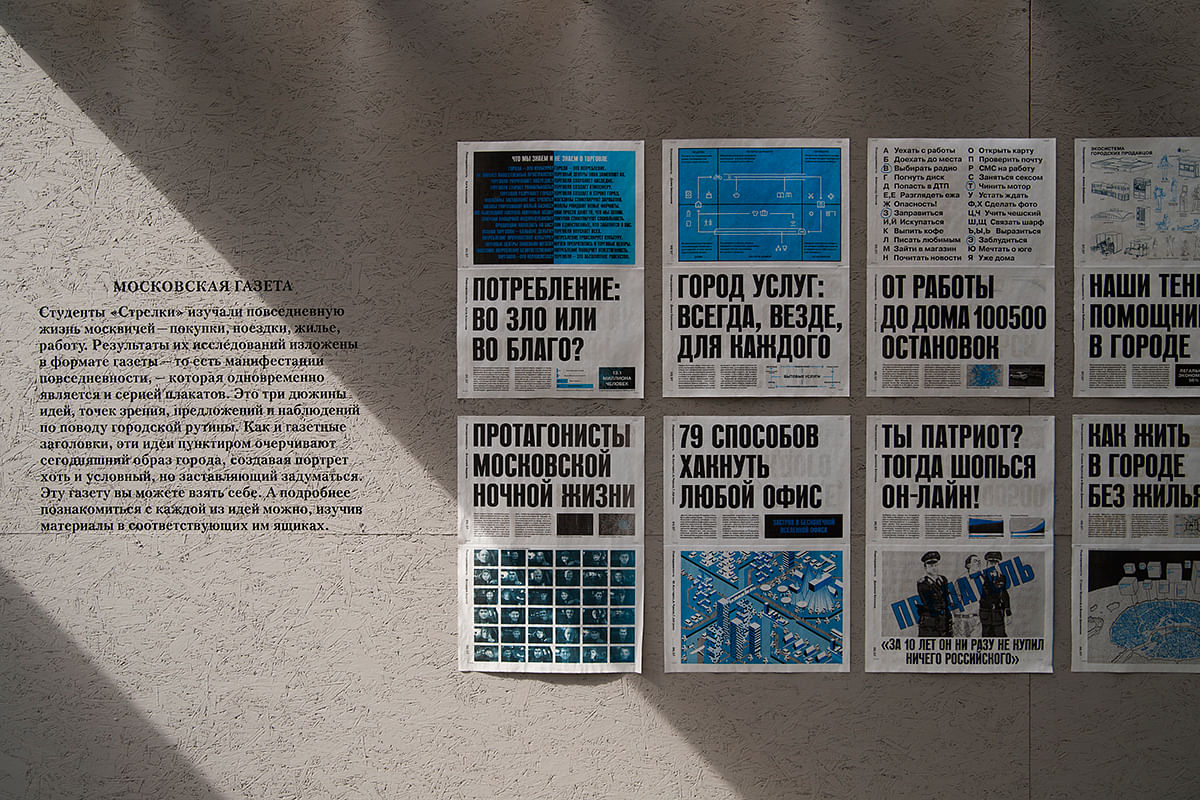
Pavilion "Urban Routines". Photo: Gleb Leonov/The Strelka Institute

"Student Elya Mazina investigated Moscow’s garage spaces.  Her newspaper – 'Your 20 m² of freedom in the city' – looks into the additional possibilities garages may hold, suggesting their use as dwelling space.  'The United Courtyards Organisation' is the headline for student Nicholas Moore’s broadsheet on Moscow’s courtyards.  These spaces take up 55% of the city’s area and have potential for transformation into landscaped urban attractions. 

Other themes touched upon include: a suggestion for the transferal of business centers to the Moscow periphery, an overview of the city as seen exclusively from the Metro system, as well as projects for the integration of office attributes into urban space."
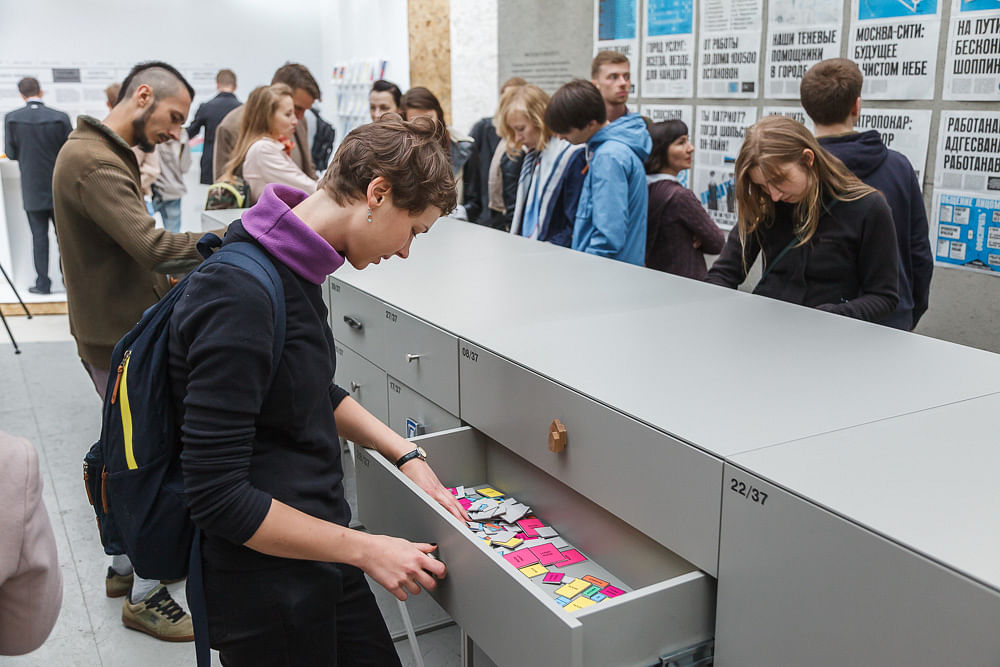
Student exhibition opening. Photo: Michail Goldenkov/The Strelka Institute

"In the center of this section of the exhibition, a structure has been installed containing drawers into which the students have placed various objects, creatively expanding on the themes of the newspaper-posters, such as:  A booklet on the beauty of Moscow courtyards, a selection of business cards from participants in the informal economy, a model of the Metro system, and a children’s construction set serving as a metaphor for Muscovites’ garages."
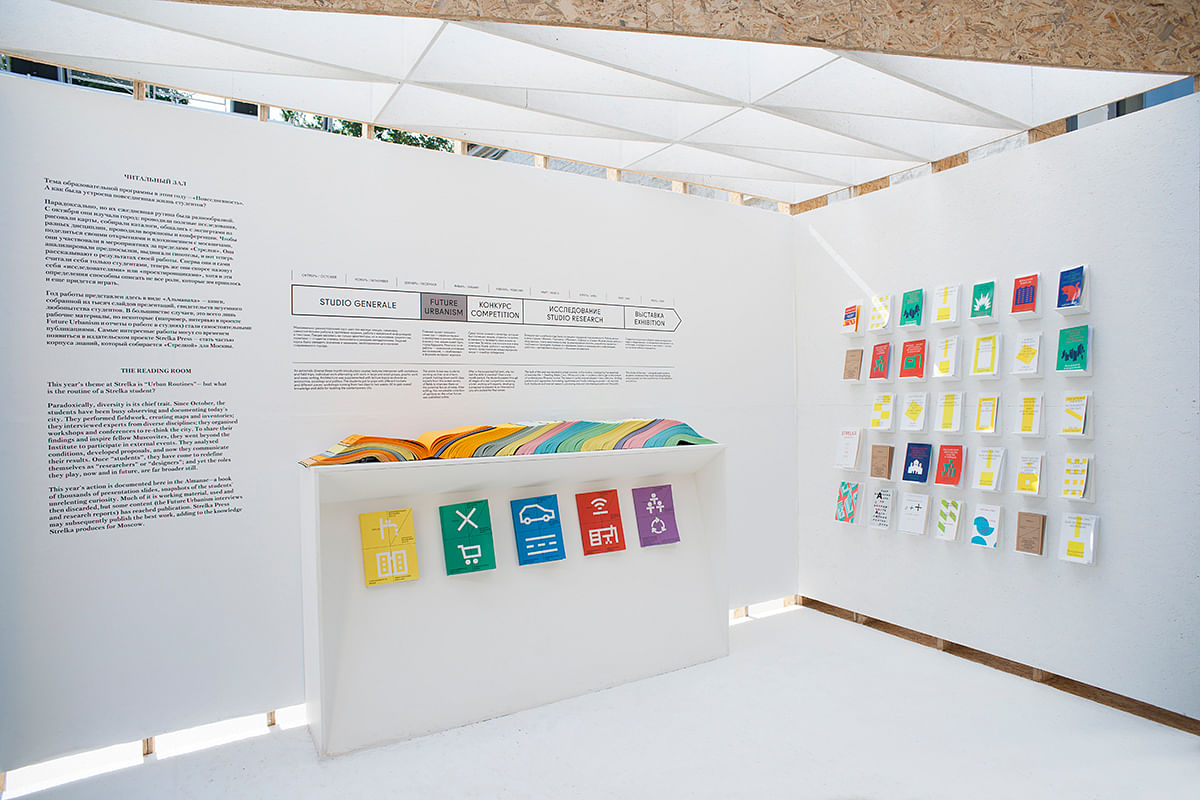
Pavilion "Urban Routines". Photo: Gleb Leonov/The Strelka Institute

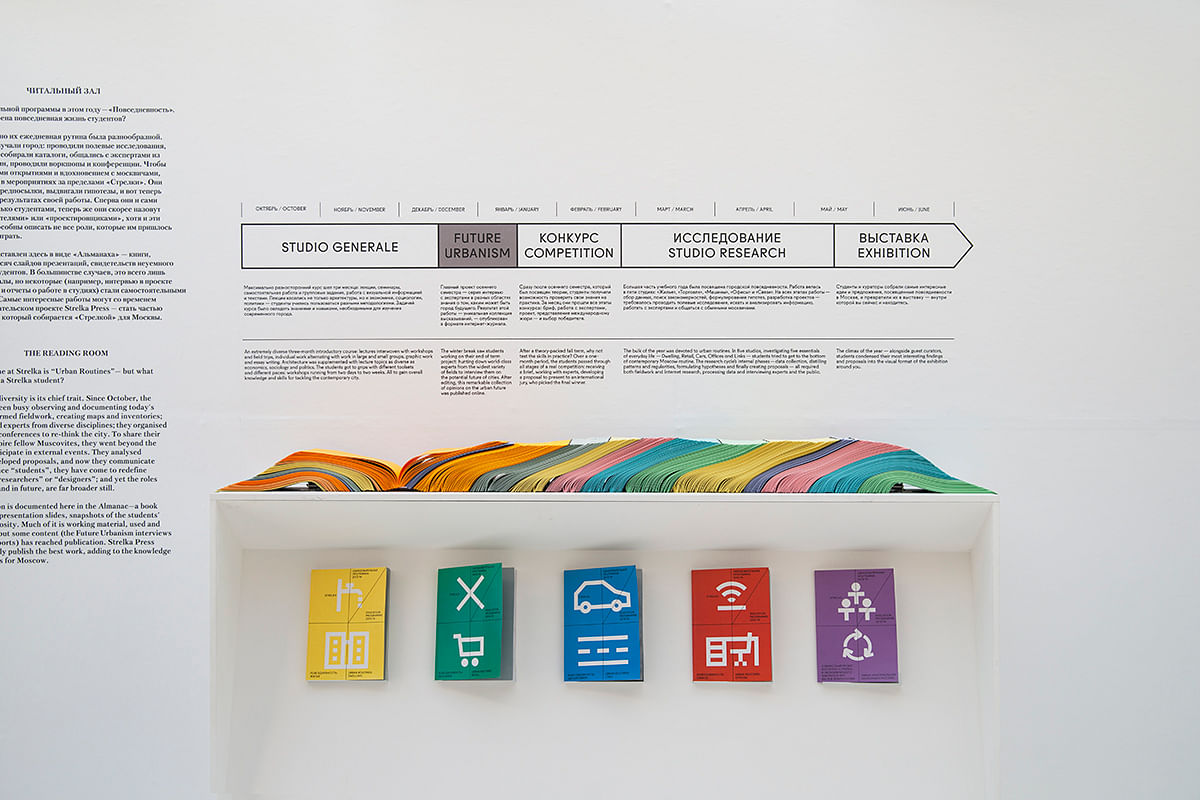
"Finally, the concluding section of the exhibition – a reading area – contains a large selection of slides produced by the students for presentations made in the course of the academic year.  Here, visitors are invited to browse through books on urbanistics published by Strelka Press."
Student exhibition opening. Photo: Michail Goldenkov/The Strelka Institute

"All in all, the exhibition gives a glimpse of a youthful, informal, future-oriented and simultaneously unexpected view of the city and its elements.  It is possible that these ideas may become the departure point for the emergence of new tendencies, to define the image of Moscow and other major Russian cities in years to come."

Photos courtesy of The Strelka Institute Urban Routines exhibition

Click the thumbnails below to see more photos.
Related

urbanism ● urban routines ● students ● student work ● strelka institute ● russia ● research ● moscow ● exhibition ● education ● design research

Share

  • Follow

    0 Comments

  • Comment as :

Rethinking "Urban Routines" in the Strelka Institute's student exhibition in Moscow

Best in urban planning recognized at AIA Regional & Urban Design Award 2026

Sponsored Post by Buildner

Re:Form - New Life for Old Spaces / Edition #3 advance registration deadline is approaching!

New architecture and design competitions: IDEAS Awards, UIA-HYP CUP International Student Competition, Vancouver Tall Challenge, and Memorial to the Sixth Extinction

Best small projects chosen at AIA Small Project Award 2026

10 standout sustainable projects honored at AIA COTE Top Ten Award 2026

Best residential architecture of 2026 honored at AIA Housing Award

Best new interiors of 2026 chosen at AIA Interior Architecture Awards

Best global architecture honored at RIBA International Awards 2026

Sign up for Bustler's Email Newsletters

World’s most beautiful airports of 2026 chosen by Prix Versailles

New architecture and design competitions: Brick in Architecture Awards, Study Architecture Student Showcase, N.Y.C. Groceries, and New York High Falls Riverfront Market

SmithGroup’s ‘pioneering’ Philip Merrill Environmental Center wins AIA Twenty-five Year Award

Sponsored Post by Buildner

Museum of Emotions / Edition #8 FINAL registration deadline is in 5 DAYS!

Here are the winners of the 2026 AIA Architecture Awards

40 emerging architects and designers under 40 from Europe honored

Northwestern University selects 12-firm longlist to design new engineering building

Next page » Loading

Rethinking "Urban Routines" in the Strelka Institute's student exhibition in Moscow

By Bustler Editors|

Thursday, Jul 17, 2014

Share

Pavilion "Urban Routines". Photo: Gleb Leonov/The Strelka Institute

Related

urbanism ● urban routines ● students ● student work ● strelka institute ● russia ● research ● moscow ● exhibition ● education ● design research

The "Urban Routines" exhibition at the Strelka Institute for Media, Architecture, and Design in Moscow proves that statistics are the tip of the iceberg when it comes to studying urban spaces and the bustling life within them.

As the final exhibition of the Urban Routines education program, students designed a pavilion to present the nine months of research they spent discovering new, overlooked, and contradicting details of how Moscow's inhabitants go about their everyday lives.

Read more below.

"The traditional view of urban space through the prism of statistics is incapable of grasping all the complexities of the processes and phenomena of the megalopolis. Its data are often self-contradictory and fail to take into account many phenomena that are important in the daily lives of the citizens, their habits and perspectives of the city. Without ignoring the figures, students of the Strelka Institute set out, over a nine month period, to rethink the routine practices of Moscow’s inhabitants; how they work, live, make purchases and move around town. 

In their research, the students focused not on the generally known facts, but on new, little-noticed, and as-yet unresolved contradictions. Work on the research projects was carried out in the context of five studios: Cars, Retail, Dwelling, Offices, and the studio Links - dedicated to the city’s informal economy.

The educational program’s final exhibition is based on the results of this work and constitutes the utterance of Strelka’s students on the theme of daily routine in Moscow, taking the format of a newspaper – that most everyday form of communicative media."

Pavilion "Urban Routines". Photo: Gleb Leonov/The Strelka Institute

"The pavilion holding the students’ exhibition is made up of three sections.  The first part, the entrance lobby, provides a general view of the urban routines theme and permits visitors to acquaint themselves with the basic archetypes peculiar to Moscow.  This is a cube-shaped space, on the walls of which recognisable portraits of townsfolk have been graphically depicted ('the Motorist,' 'the Metro Flower-Seller,' 'the Tramp' and so on) alongside brief descriptions of each character. 

One of the walls also shows the statistics for the most standard urban phenomena: the size of traffic jams, and the scale of office, retail and residential space in the city.  In this way, the visitor begins to immerse himself in the everyday routine."

Student exhibition opening. Photo: Michail Goldenkov/The Strelka Institute

"The main part of the exhibition is a rectangular room whose walls are hung with newspaper-posters in two languages: Russian and English.  Each newspaper reveals one of the student projects.  Strelka student Pavel Ilyichov, for example, has used his broadsheet to discuss his research topic on the theme of shopping centers.  “Malls: Quality or Quantity?” he asks in his headline. 

The shopping center remains a convenient place for making purchases but, in 2016, new shopping complexes appear in Moscow, bringing new competition to the market.  The fundamental conclusion of his observations is that the most visited centers are not always the ones with the best quality.  Consumers, meanwhile, continue to become more demanding."

Pavilion "Urban Routines". Photo: Gleb Leonov/The Strelka Institute

"Student Elya Mazina investigated Moscow’s garage spaces.  Her newspaper – 'Your 20 m² of freedom in the city' – looks into the additional possibilities garages may hold, suggesting their use as dwelling space.  'The United Courtyards Organisation' is the headline for student Nicholas Moore’s broadsheet on Moscow’s courtyards.  These spaces take up 55% of the city’s area and have potential for transformation into landscaped urban attractions. 

Other themes touched upon include: a suggestion for the transferal of business centers to the Moscow periphery, an overview of the city as seen exclusively from the Metro system, as well as projects for the integration of office attributes into urban space."

Student exhibition opening. Photo: Michail Goldenkov/The Strelka Institute

"In the center of this section of the exhibition, a structure has been installed containing drawers into which the students have placed various objects, creatively expanding on the themes of the newspaper-posters, such as:  A booklet on the beauty of Moscow courtyards, a selection of business cards from participants in the informal economy, a model of the Metro system, and a children’s construction set serving as a metaphor for Muscovites’ garages."

Pavilion "Urban Routines". Photo: Gleb Leonov/The Strelka Institute

"Finally, the concluding section of the exhibition – a reading area – contains a large selection of slides produced by the students for presentations made in the course of the academic year.  Here, visitors are invited to browse through books on urbanistics published by Strelka Press."

Student exhibition opening. Photo: Michail Goldenkov/The Strelka Institute

"All in all, the exhibition gives a glimpse of a youthful, informal, future-oriented and simultaneously unexpected view of the city and its elements.  It is possible that these ideas may become the departure point for the emergence of new tendencies, to define the image of Moscow and other major Russian cities in years to come."

Photos courtesy of The Strelka Institute Urban Routines exhibition

Click the thumbnails below to see more photos.
Share

  • Follow

    0 Comments

  • Comment as :

Archinect JobsArchinect Jobs

The Archinect Job Board attracts the world's top architectural design talents.

VIEW ALL JOBS POST A JOB

Interior Design Project Manager

DAHLIN Architecture | Planning | Interiors

Interior Design Project Manager

Bellevue, WA, US

Architect

Joe Serrins Studio

Architect

New York, NY, US

Project Architect

The American Housing Corporation

Project Architect

Austin, TX, US

Interior Designer

Fowlkes Studio

Interior Designer

Washington, DC, US

Miami Senior Project Coordinator

BMA Architects

Miami Senior Project Coordinator

Miami, FL, US

Project Designer

The Brooklyn Studio

Project Designer

Brooklyn, NY, US

Project Captain

Practice (formerly GGA+)

Project Captain

Pasadena, CA, US

Intermediate Architect

O'Neill Rose Architects

Intermediate Architect

Brooklyn, NY, US

Intermediate Designer

Rafael Viñoly Architects

Intermediate Designer

New York, NY, US

Marketing + Communications Specialist

Trahan Architects

Marketing + Communications Specialist

New York, NY, US

Next page » Loading