• Login / Join
  • About
  • •
  • Contact
  • •
  • Advertising
bustler logo
bustler logo
  • News
  • Competitions
  • Events
  • Bustler is powered by Archinect
  • Sign up for Bustler's Email Newsletters

  • Follow these Bustler feeds:

  • Search

    Search in

  • Submit

    What are you submitting?

    News Pitch
    Competition
    Event
  • Login / Join
  • News|Competitions|Events
  • Search
    | Submit
    | Follow
  • Search in

    What are you submitting?

    News Pitch
    Competition
    Event

    Follow these Bustler feeds:

  • About|Contact|Advertising
  • Login / Join

Finalists for the 2014 Buckminster Fuller Challenge

By Bustler Editors|

Friday, Sep 26, 2014
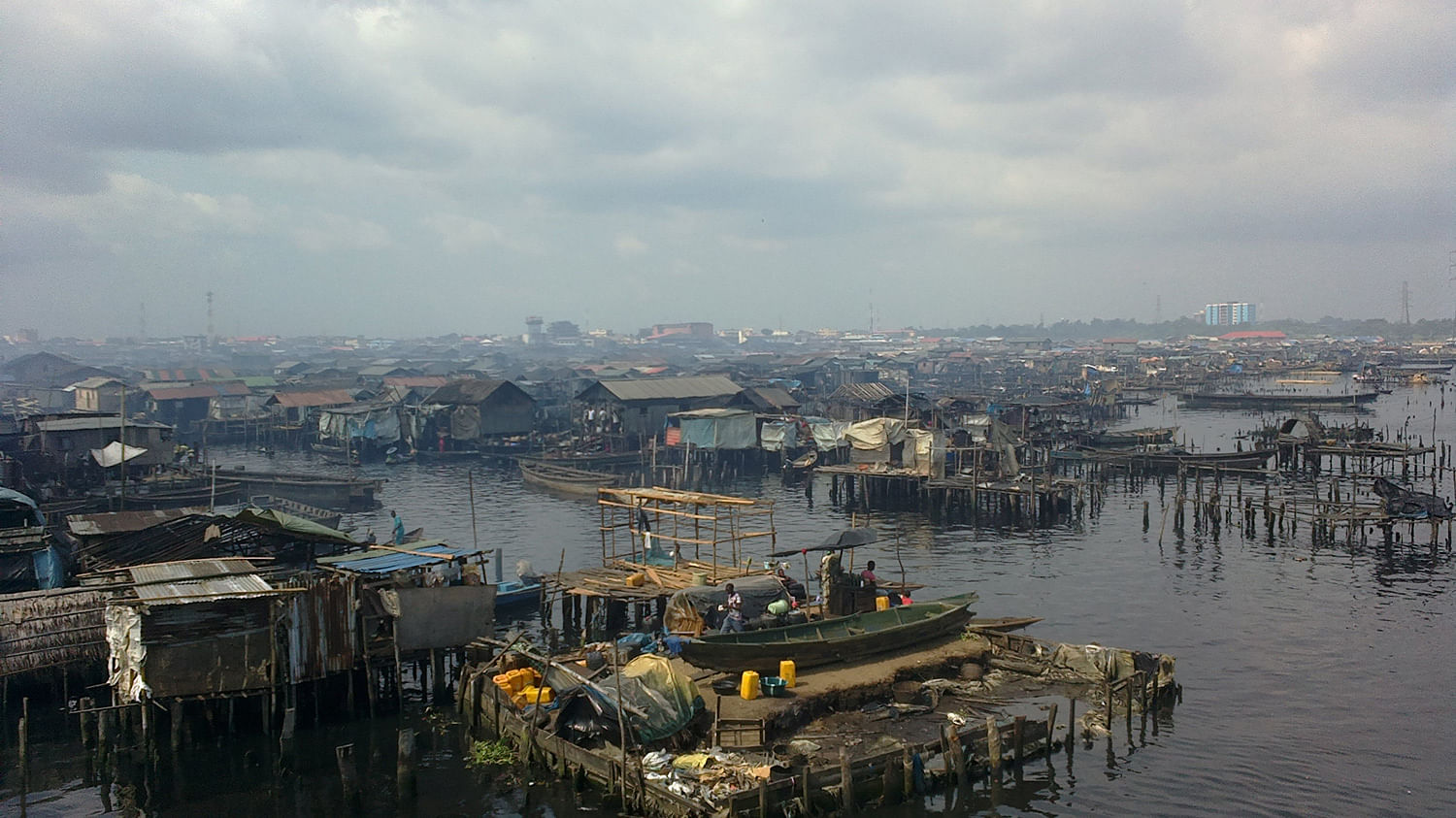
Makoko Iwaya Waterfront Regeneration Plan. Photo courtesy of the 2014 Buckminster Fuller Challenge.

Competition continues to grow fiercer in the 2014 Buckminster Fuller Challenge as architects, designers, activists, planners, entrepreneurs, and scientists worldwide collaborate to find innovative solutions for humanity's most pressing issues. Out of 20 semi-finalists, seven proposals are still in the running for the $100,000 grand prize, which will support ongoing development and implementation of the winning proposal.

Being chosen as a Challenge finalist is already quite an accomplishment. The Challenge Review Committee evaluated each finalist proposal through a rigorous, multi-stage review process for compliance with Challenge entry criteria, including targeted analysis and evaluation by a select group of experts and advisors. All semi-finalists and finalists will receive support from the Challenge's Catalyst Program.

Check out the finalists below.

Makoko Iwaya Waterfront Regeneration Plan

Project summary: "The Makoko/Iwaya Waterfront Regeneration Plan, submitted by Lookman Oshodi of Urban Spaces Innovation in Lagos, Nigeria on behalf of the Makoko/Iwaya Working Group, is a comprehensive master plan for the Makoko/Iwaya community that seeks to preserve local culture, revitalize the built environment with elegant, low-cost housing, increase economic opportunities, and ensure disaster resilience for over 40,000 residents. Its design and implementation hinges on rigorous and deeply inspiring community planning alliances and the buy in of key stakeholders—from local elders, women, and youth to academic institutions, professional organizations, and NGOs. The plan holds the preservation of traditional lagoon-front culture as a core value, presenting a compelling vision of a floating economy based on components such as sustainable aquaculture and tourism. Not only is the master plan hugely ambitious, but it is particularly compelling as a potential adaptive trim tab for other informal settlements across the globe threatened by forced evictions, climate instability, and the public health disasters that follow from a systemic lack of social amenities."

For further project info, click here.

Lake Tanganyika Floating Health Clinic
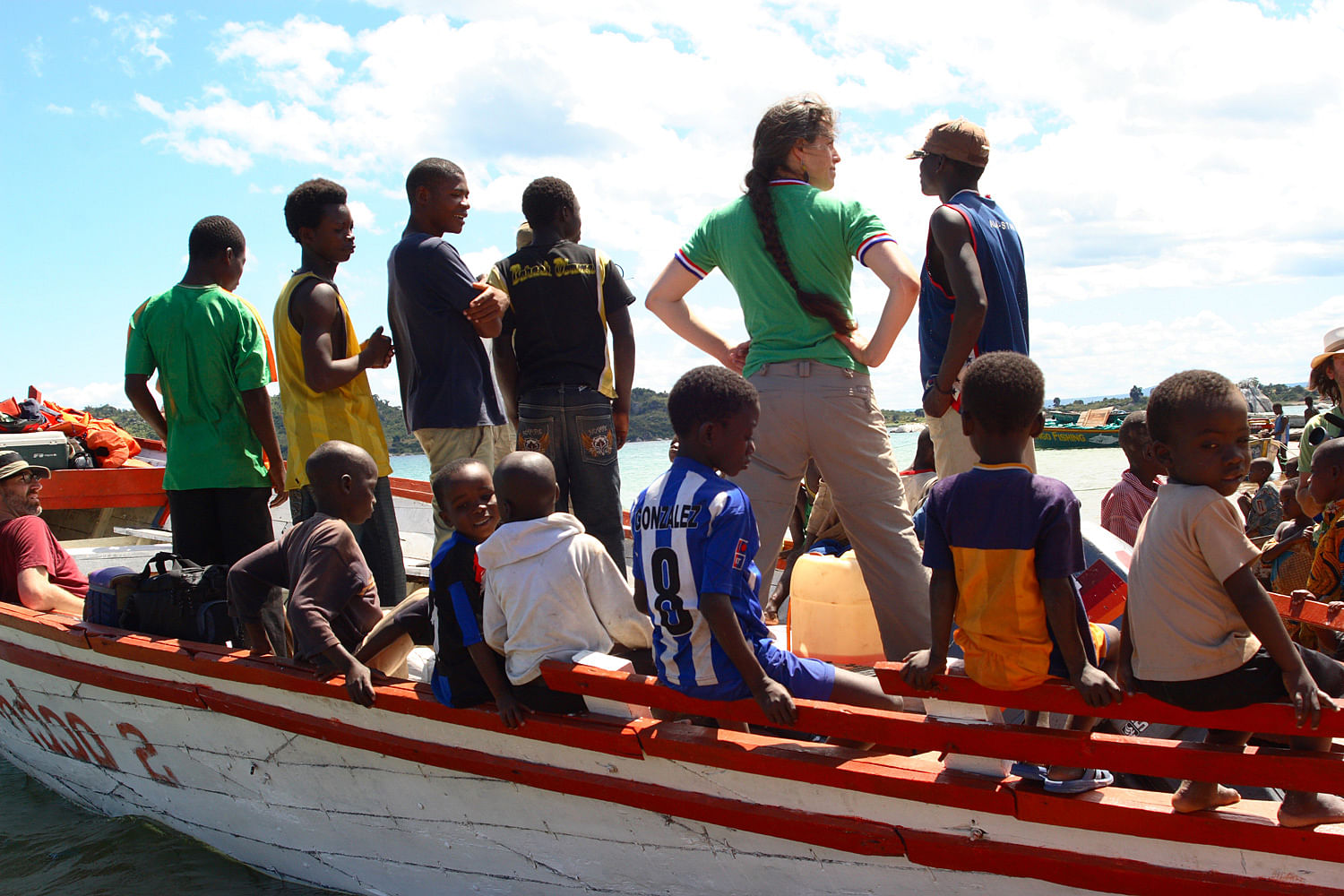
Lake Tanganyika Floating Health Clinic. Photo courtesy of the 2014 Buckminster Fuller Challenge.

Project summary: "The Lake Tanganyika Floating Health Clinic is a visionary, geopolitically savvy health-services initiative that seeks to address the logistical problems of providing healthcare to communities in a massive rural region where large populations are clustered on the lakeshore, but isolated from land-based networks of supplies and expertise. Its "hub & spoke" model for water-based health services, its low-carbon modes of transport, provision for capacity-building and education, its radio communications and data collection network, and its stewardship of the lake's ecological and economic destiny make it a dimensionally rich regional, and replicable, solution—effortlessly representing Bucky’s adage to "do more with less" in one of the earth’s richest freshwater ecosystems."

For further project info, click here.

Living Breakwaters
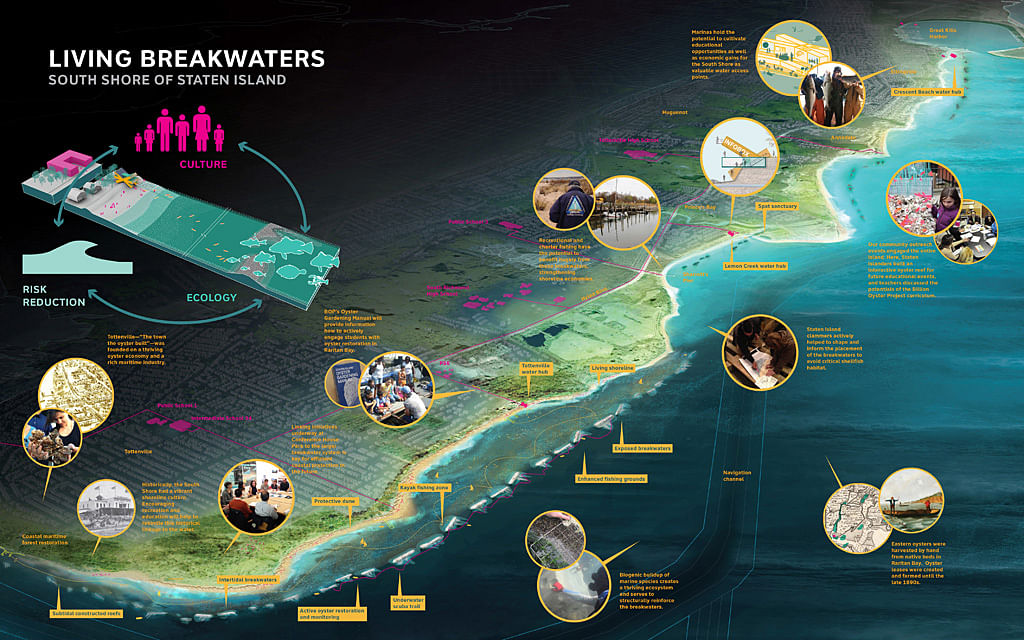
Living Breakwaters. Photo courtesy of the 2014 Buckminster Fuller Challenge.

Project summary: "Living Breakwaters is a comprehensive design for coastal resiliency along the Northeastern Seaboard of the United States and beyond. This approach to climate change adaptation and flood mitigation includes the deployment of innovative, layered ecologically-engineered breakwaters, the strengthening of biodiversity and coastal habitats through "reef streets", the nurturing and resuscitation of fisheries and historic livelihoods, and deep community engagement through diverse partnerships and innovative educational programs. The transformative educational dimension amplifies impact to the next generation of shoreline stewards while leveraging the expertise of the members of the SCAPE Architecture team, who are making groundbreaking inroads into state and federal agencies, setting new precedents for multi-layered and systemic approaches to infrastructure planning."

For further project info, click here.

Bonobo Peace Forest
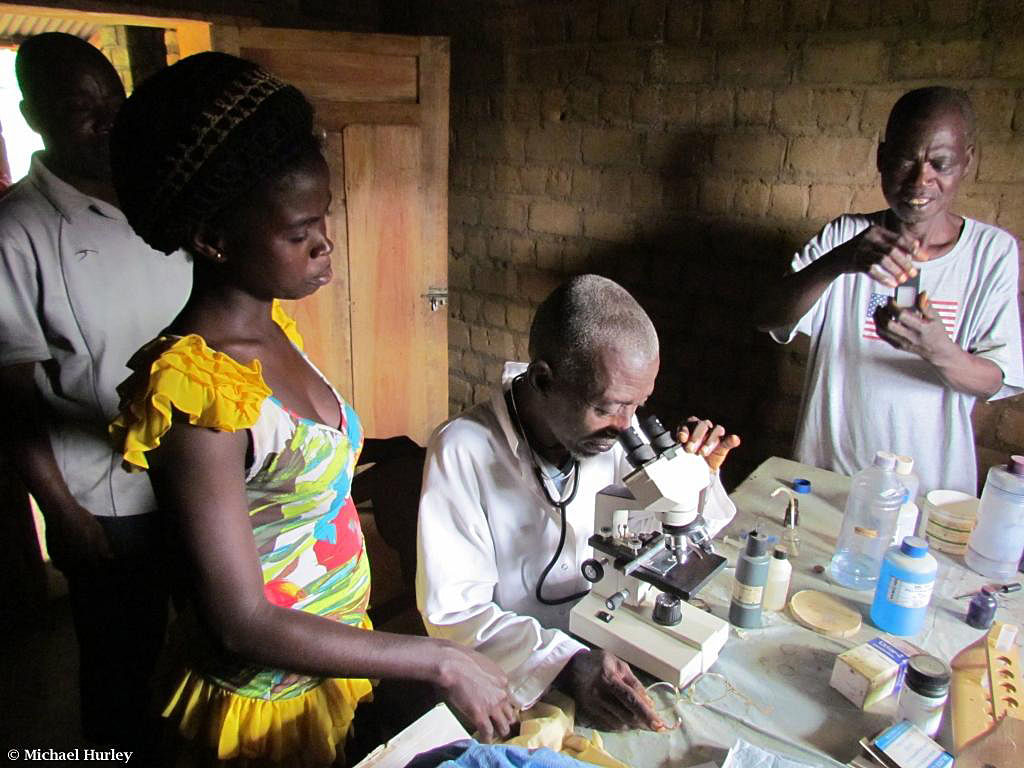
Bonobo Peace Forest. Photo courtesy of the 2014 Buckminster Fuller Challenge.

Project summary: "The Bonobo Peace Forest is a connected network of community-managed and protected forests in vast, remote, biodiversity-rich tracts of rainforest in the Congo Basin. Founded over two-decades ago, the project’s parent group, The Bonobo Conservation Initiative, uses an inspired and highly successful "viral conservation" strategy that partners with local indigenous peoples and is driven by a partnership approach to engender sustainable prosperity while preserving the habitat of our closest genetic relative, the endangered Bonobo. To succeed at their goal of species and biodiversity conservation, their holistic work has grown immensely to include such components as ecotourism, payment for ecosystem services, participatory budgeting, agricultural support and field research training and facilitation."

For further project info, click here.

The Food Commons
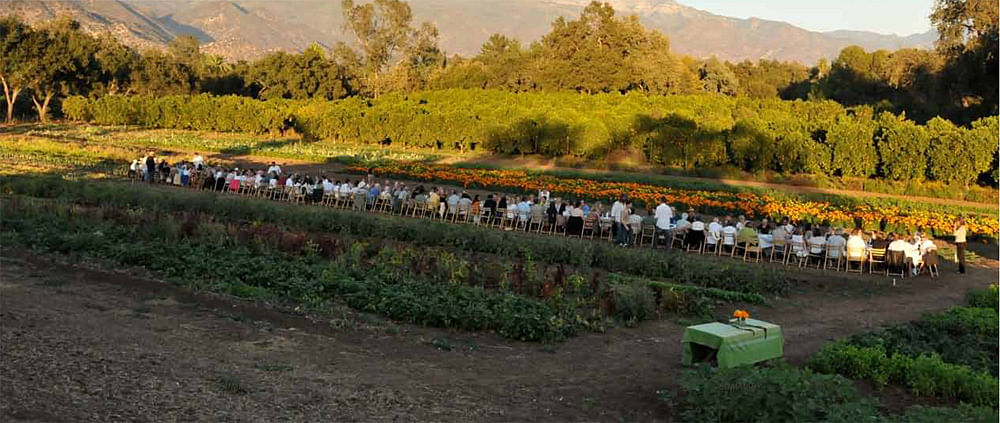
The Food Commons. Photo courtesy of the 2014 Buckminster Fuller Challenge.

Project summary: "The Food Commons marks a radical shift from a narrow focus on the production of food towards a whole systems approach in which the interests of farm communities, the land, watersheds and biodiversity are all considered. The Food Commons is conceived as the connective fiber that weaves together grassroots projects and vital support services: legal, financial, communications and organizational. A food system is a complex, dynamic process with uncountable moving parts that connect, compete, conflict, and cooperate to provide food choices to the end consumer. Part of the true innovation of The Food Commons is its vision for all-inclusive vertical integration; it is certainly an outstanding representation of Bucky’s audacious maxim: .to change something, build a new model that makes the existing model obsolete.'"

For further project info, click here.

The Force Majeure
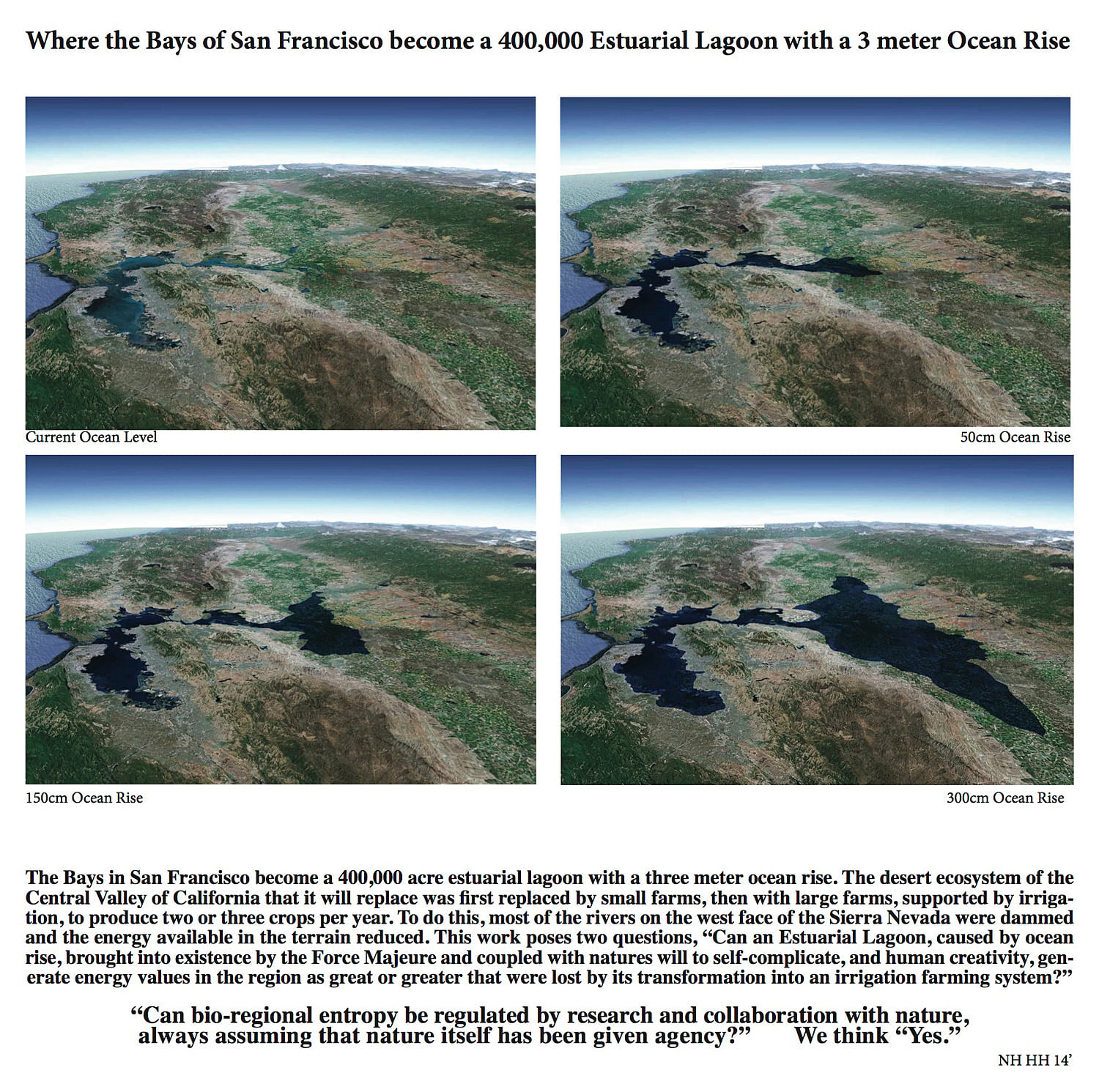
The Force Majeure. Photo courtesy of the 2014 Buckminster Fuller Challenge.

Project summary: "The Force Majeure, a bold, large-scale vision of the world-renowned artists Helen and Newton Harrison, proposes to "reduce the entropy of planetary ecosystems in the face of human-induced climate change". Their proposal is distinguished by its scale, holistic framework, and collaboration between artists and scientists. Their goal of developing Entropy Analysis as a new research field is just one example of their provocative attempts to engage individuals in, as Bucky would say, "thinking at the scale of the problem" by exposing people viscerally to the complexities of ecosystem change, huge issues such as global carrying capacity, and the role of indeterminacy in effective systems intervention. In their 2014 proposal, four research sites have been proposed in which the Harrisons and scientists will experiment with methods to assist nature in its response to massive system disturbances."

For further project info, click here.

Thunder Valley Regenerative Community Plan
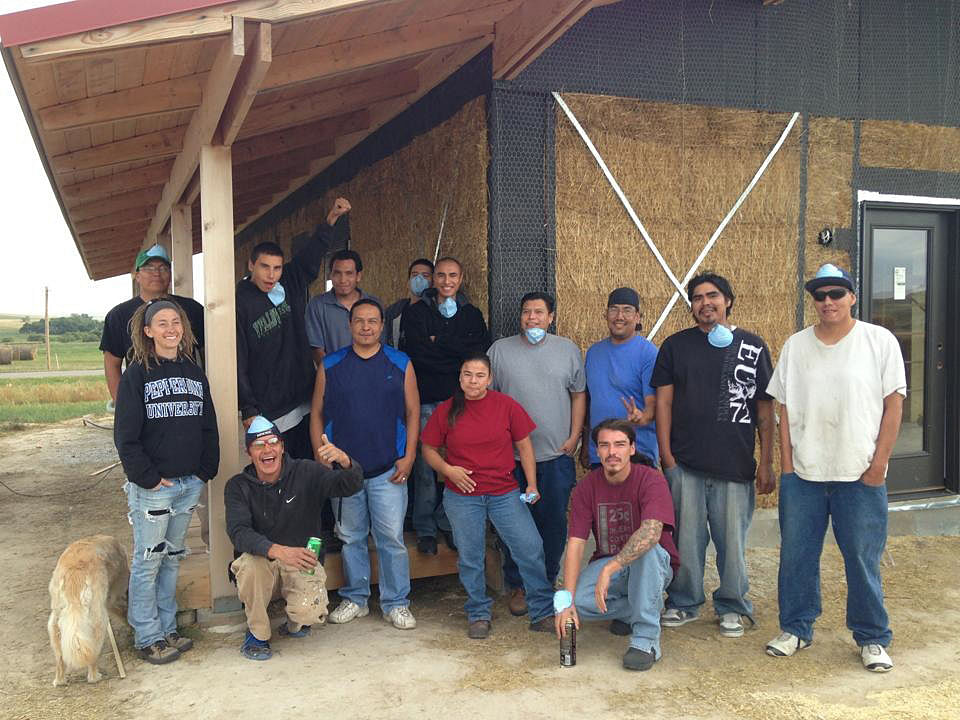
Thunder Valley Regenerative Community Plan. Photo courtesy of the 2014 Buckminster Fuller Challenge.

Project summary: "The Thunder Valley Regenerative Community Plan, born of a collective vision, is implementing a comprehensive strategy to build a locally owned and operated housing development in the geographic center of the Oglala Lakota Nation, on the Pine Ridge Indian Reservation in South Dakota. Through layered phases of construction and associated programs, their work addresses a critical and dire need in Indian Country for self-sufficiency, economic self-determination and ecological resilience. Through components such as a Native-owned construction cooperative and with outstanding youth leadership, the plan is poised to not only resuscitate the local economy and traditional culture by providing elegant housing in the context of a deeply sustainable community with a net-zero built environment, but also serve as a compelling, dynamic model for the rest of Indian country and the world."

For further project info, click here.

The grand prize winner will be announced this November at the awards ceremony in New York City.

Related

systemic problem solving ● solutions ● social issues ● interdisciplinary ● humanity ● finalists ● community ● collaborative ● buckminster fuller institute ● buckminster fuller challange

Share

  • Follow

    0 Comments

  • Comment as :

Finalists for the 2014 Buckminster Fuller Challenge

Micro-architecture honored in latest Tiny House Architecture Competition

World’s most beautiful restaurants of 2026 chosen by Prix Versailles

Sponsored Post by Buildner

Design a wine tasting room in Italy! Valli Wine Tasting Room is launched!

10 can't-miss architecture & design events to see this June in London, Los Angeles, Chicago, San Francisco, Detroit, San Diego, Porto, and Barcelona

Sponsored Post by Buildner

Museum of Emotions / Edition #8 FINAL registration deadline is approaching!

Seven global projects make AR Public Awards shortlist 2026

Sponsored Post by Buildner

Design a slow-living restaurant in Portugal! Portugal Long Table Restaurant is launched!

World's best tall buildings honored at the CVU 2026 Award of Excellence

Sign up for Bustler's Email Newsletters

Sponsored Post by TWOPAGES

Final call: TWOPAGES X Design Contest 2026 submissions close June 5

Kengo Kuma & Paul Raff win Alberta national park visitor center competition with landscape-focused design

2026 Moira Gemmill and MJ Long prizes announced by W Awards

New architecture and design competitions: Kinderspace, Stewardson Keefe LeBrun Travel Grant, SMALL PROJECT BIG IMPACT, and Garden of University House, Bucharest

The Century of Gehry: New retrospective explores the late architect's work & collaborations

Sponsored Post by Buildner

Rome Rain Rooms FINAL registration deadline is in 5 DAYS!

UIA and UN Habitat unveil sustainability-focused winners for UIA 2030 Award

Next page » Loading

Finalists for the 2014 Buckminster Fuller Challenge

By Bustler Editors|

Friday, Sep 26, 2014

Share

Makoko Iwaya Waterfront Regeneration Plan. Photo courtesy of the 2014 Buckminster Fuller Challenge.

Related

systemic problem solving ● solutions ● social issues ● interdisciplinary ● humanity ● finalists ● community ● collaborative ● buckminster fuller institute ● buckminster fuller challange

Competition continues to grow fiercer in the 2014 Buckminster Fuller Challenge as architects, designers, activists, planners, entrepreneurs, and scientists worldwide collaborate to find innovative solutions for humanity's most pressing issues. Out of 20 semi-finalists, seven proposals are still in the running for the $100,000 grand prize, which will support ongoing development and implementation of the winning proposal.

Being chosen as a Challenge finalist is already quite an accomplishment. The Challenge Review Committee evaluated each finalist proposal through a rigorous, multi-stage review process for compliance with Challenge entry criteria, including targeted analysis and evaluation by a select group of experts and advisors. All semi-finalists and finalists will receive support from the Challenge's Catalyst Program.

Check out the finalists below.

Makoko Iwaya Waterfront Regeneration Plan

Project summary: "The Makoko/Iwaya Waterfront Regeneration Plan, submitted by Lookman Oshodi of Urban Spaces Innovation in Lagos, Nigeria on behalf of the Makoko/Iwaya Working Group, is a comprehensive master plan for the Makoko/Iwaya community that seeks to preserve local culture, revitalize the built environment with elegant, low-cost housing, increase economic opportunities, and ensure disaster resilience for over 40,000 residents. Its design and implementation hinges on rigorous and deeply inspiring community planning alliances and the buy in of key stakeholders—from local elders, women, and youth to academic institutions, professional organizations, and NGOs. The plan holds the preservation of traditional lagoon-front culture as a core value, presenting a compelling vision of a floating economy based on components such as sustainable aquaculture and tourism. Not only is the master plan hugely ambitious, but it is particularly compelling as a potential adaptive trim tab for other informal settlements across the globe threatened by forced evictions, climate instability, and the public health disasters that follow from a systemic lack of social amenities."

For further project info, click here.

Lake Tanganyika Floating Health Clinic

Lake Tanganyika Floating Health Clinic. Photo courtesy of the 2014 Buckminster Fuller Challenge.

Project summary: "The Lake Tanganyika Floating Health Clinic is a visionary, geopolitically savvy health-services initiative that seeks to address the logistical problems of providing healthcare to communities in a massive rural region where large populations are clustered on the lakeshore, but isolated from land-based networks of supplies and expertise. Its "hub & spoke" model for water-based health services, its low-carbon modes of transport, provision for capacity-building and education, its radio communications and data collection network, and its stewardship of the lake's ecological and economic destiny make it a dimensionally rich regional, and replicable, solution—effortlessly representing Bucky’s adage to "do more with less" in one of the earth’s richest freshwater ecosystems."

For further project info, click here.

Living Breakwaters

Living Breakwaters. Photo courtesy of the 2014 Buckminster Fuller Challenge.

Project summary: "Living Breakwaters is a comprehensive design for coastal resiliency along the Northeastern Seaboard of the United States and beyond. This approach to climate change adaptation and flood mitigation includes the deployment of innovative, layered ecologically-engineered breakwaters, the strengthening of biodiversity and coastal habitats through "reef streets", the nurturing and resuscitation of fisheries and historic livelihoods, and deep community engagement through diverse partnerships and innovative educational programs. The transformative educational dimension amplifies impact to the next generation of shoreline stewards while leveraging the expertise of the members of the SCAPE Architecture team, who are making groundbreaking inroads into state and federal agencies, setting new precedents for multi-layered and systemic approaches to infrastructure planning."

For further project info, click here.

Bonobo Peace Forest

Bonobo Peace Forest. Photo courtesy of the 2014 Buckminster Fuller Challenge.

Project summary: "The Bonobo Peace Forest is a connected network of community-managed and protected forests in vast, remote, biodiversity-rich tracts of rainforest in the Congo Basin. Founded over two-decades ago, the project’s parent group, The Bonobo Conservation Initiative, uses an inspired and highly successful "viral conservation" strategy that partners with local indigenous peoples and is driven by a partnership approach to engender sustainable prosperity while preserving the habitat of our closest genetic relative, the endangered Bonobo. To succeed at their goal of species and biodiversity conservation, their holistic work has grown immensely to include such components as ecotourism, payment for ecosystem services, participatory budgeting, agricultural support and field research training and facilitation."

For further project info, click here.

The Food Commons

The Food Commons. Photo courtesy of the 2014 Buckminster Fuller Challenge.

Project summary: "The Food Commons marks a radical shift from a narrow focus on the production of food towards a whole systems approach in which the interests of farm communities, the land, watersheds and biodiversity are all considered. The Food Commons is conceived as the connective fiber that weaves together grassroots projects and vital support services: legal, financial, communications and organizational. A food system is a complex, dynamic process with uncountable moving parts that connect, compete, conflict, and cooperate to provide food choices to the end consumer. Part of the true innovation of The Food Commons is its vision for all-inclusive vertical integration; it is certainly an outstanding representation of Bucky’s audacious maxim: .to change something, build a new model that makes the existing model obsolete.'"

For further project info, click here.

The Force Majeure

The Force Majeure. Photo courtesy of the 2014 Buckminster Fuller Challenge.

Project summary: "The Force Majeure, a bold, large-scale vision of the world-renowned artists Helen and Newton Harrison, proposes to "reduce the entropy of planetary ecosystems in the face of human-induced climate change". Their proposal is distinguished by its scale, holistic framework, and collaboration between artists and scientists. Their goal of developing Entropy Analysis as a new research field is just one example of their provocative attempts to engage individuals in, as Bucky would say, "thinking at the scale of the problem" by exposing people viscerally to the complexities of ecosystem change, huge issues such as global carrying capacity, and the role of indeterminacy in effective systems intervention. In their 2014 proposal, four research sites have been proposed in which the Harrisons and scientists will experiment with methods to assist nature in its response to massive system disturbances."

For further project info, click here.

Thunder Valley Regenerative Community Plan

Thunder Valley Regenerative Community Plan. Photo courtesy of the 2014 Buckminster Fuller Challenge.

Project summary: "The Thunder Valley Regenerative Community Plan, born of a collective vision, is implementing a comprehensive strategy to build a locally owned and operated housing development in the geographic center of the Oglala Lakota Nation, on the Pine Ridge Indian Reservation in South Dakota. Through layered phases of construction and associated programs, their work addresses a critical and dire need in Indian Country for self-sufficiency, economic self-determination and ecological resilience. Through components such as a Native-owned construction cooperative and with outstanding youth leadership, the plan is poised to not only resuscitate the local economy and traditional culture by providing elegant housing in the context of a deeply sustainable community with a net-zero built environment, but also serve as a compelling, dynamic model for the rest of Indian country and the world."

For further project info, click here.

The grand prize winner will be announced this November at the awards ceremony in New York City.

Share

  • Follow

    0 Comments

  • Comment as :

Archinect JobsArchinect Jobs

The Archinect Job Board attracts the world's top architectural design talents.

VIEW ALL JOBS POST A JOB

Junior Architect

PRDG architecture + design

Junior Architect

New York, NY, US

Project Architect

Turpentine Design

Project Architect

Fuquay-Varina, NC, US

Senior Designer - Residential Design

Laura U Design Collective

Senior Designer - Residential Design

Houston, TX, US

Owner's Representative - Entry Level

McMahon-Baek Architecture

Owner's Representative - Entry Level

New York, NY, US

Architect / Urban Designer

Office for the Next Environment (OFTN)

Architect / Urban Designer

New York, NY, US

Junior Designer

Payette

Junior Designer

Boston, MA, US

Project Architect

Arrowstreet

Project Architect

Boston, MA, US

Designer

HATCH ARCHITECTURE

Designer

Los Angeles, CA, US

Senior Designer / Architect

NardiHaus

Senior Designer / Architect

Pasadena, CA, US

Project Manager

VanderHorn Architects

Project Manager

Greenwich, CT, US

Next page » Loading