• Login / Join
  • About
  • •
  • Contact
  • •
  • Advertising
bustler logo
bustler logo
  • News
  • Competitions
  • Events
  • Bustler is powered by Archinect
  • Sign up for Bustler's Email Newsletters

  • Follow these Bustler feeds:

  • Search

    Search in

  • Submit

    What are you submitting?

    News Pitch
    Competition
    Event
  • Login / Join
  • News|Competitions|Events
  • Search
    | Submit
    | Follow
  • Search in

    What are you submitting?

    News Pitch
    Competition
    Event

    Follow these Bustler feeds:

  • About|Contact|Advertising
  • Login / Join

Redesigning the voting experience: The results of Van Alen Institute's “Open Poll” competition

By Justine Testado|

Tuesday, Nov 8, 2016

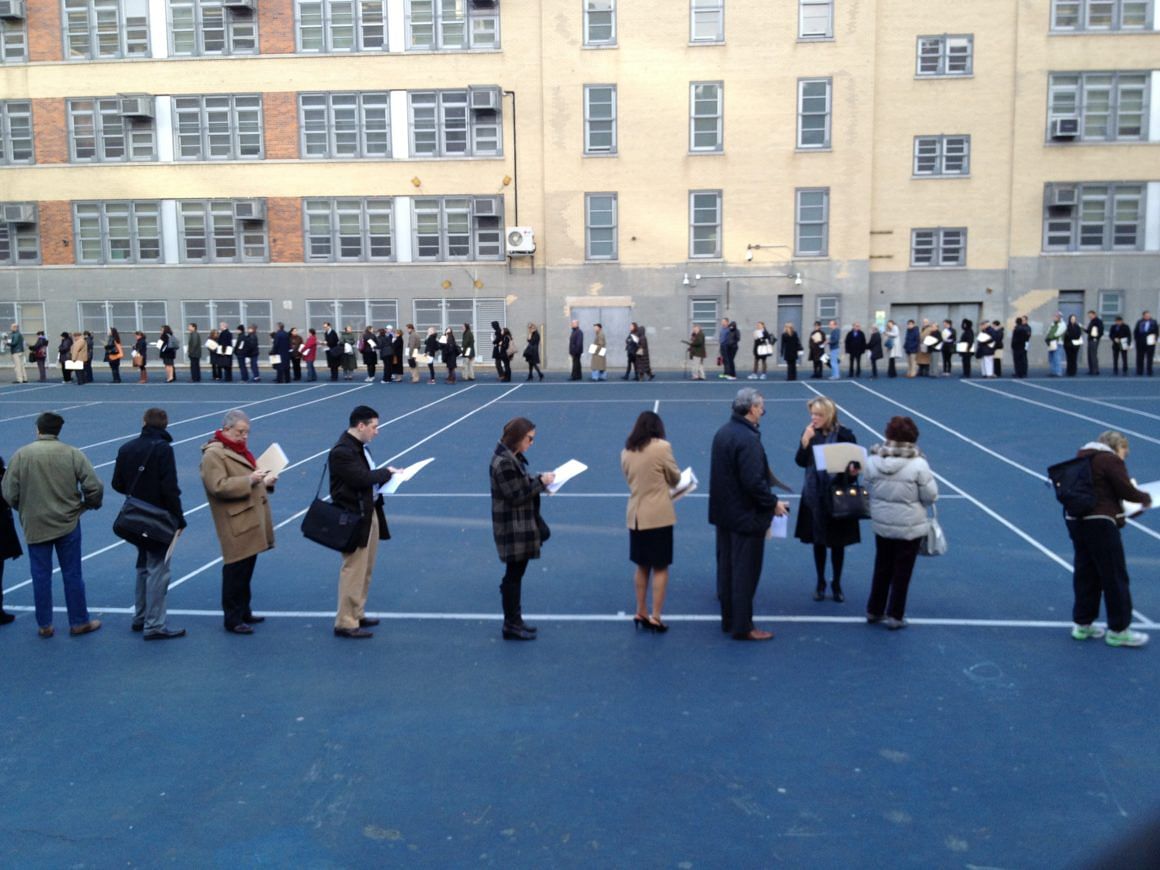
Photo: Jeff DaPuzzo, via Van Alen Institute.

From longer-than-expected lines to technological fumbles, voting polls in urban cities are typically a gnarly mess on Election Day — sometimes causing some voters to end up discouraged and ultimately skip out. Sad, but true. In response to this still-too-common situation, the Van Alen Institute launched the “Open Poll” flash competition, wherein interdisciplinary teams were invited to submit design proposals that create a more accessible, engaging voting experience for all. 

The three finalist teams presented their proposals to the judges and the public got to watch and vote for their favorite entry. By the end of the one-day charrette, the winning team was announced. 

Have a look at the finalist entries below.

Winner: “Voting at Your Fingertips: A National Celebration of the Democratic Process”
Team: Racha Daher, Alexandra Gonzalez, and Elena Kapompasopoulou
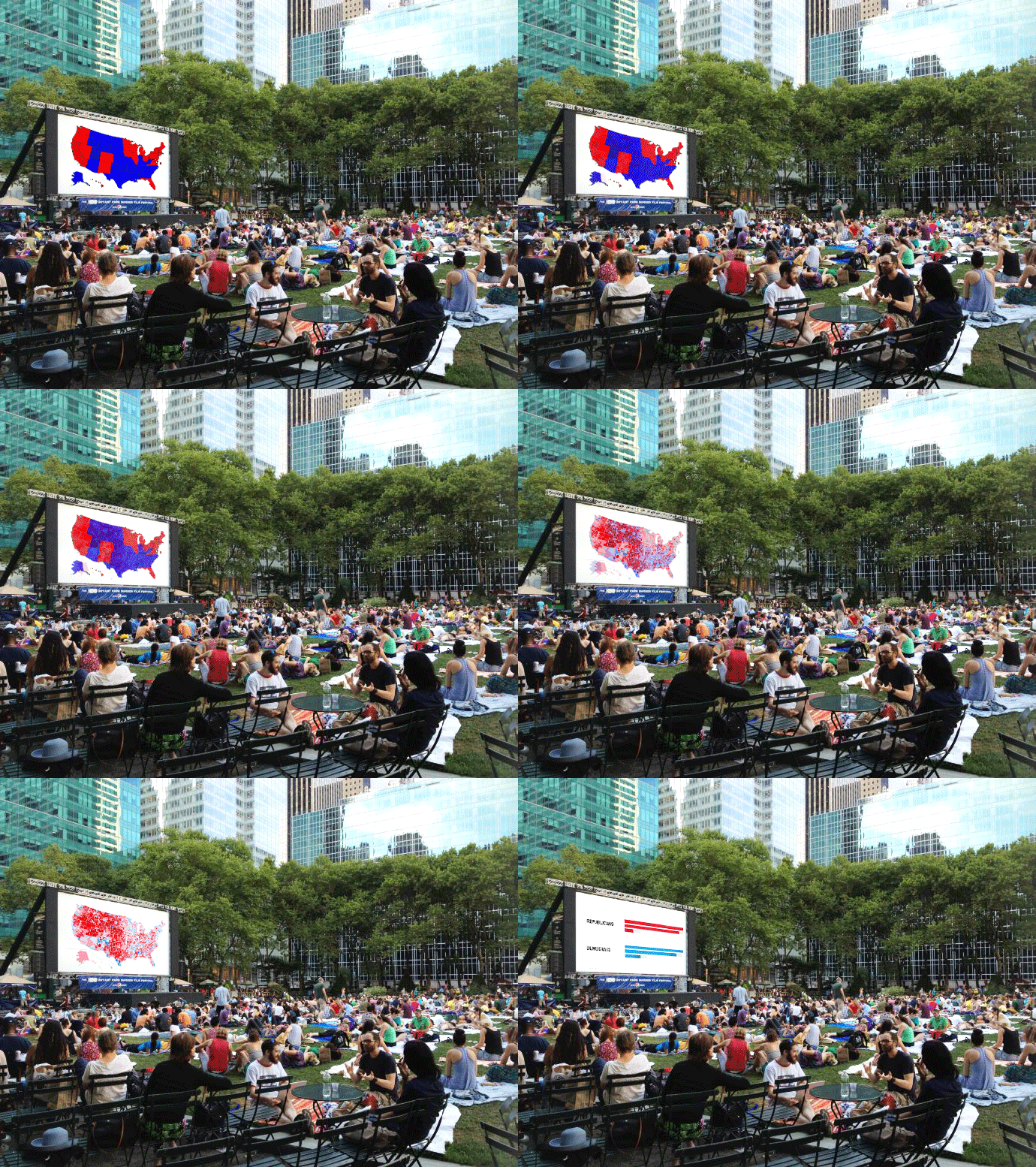
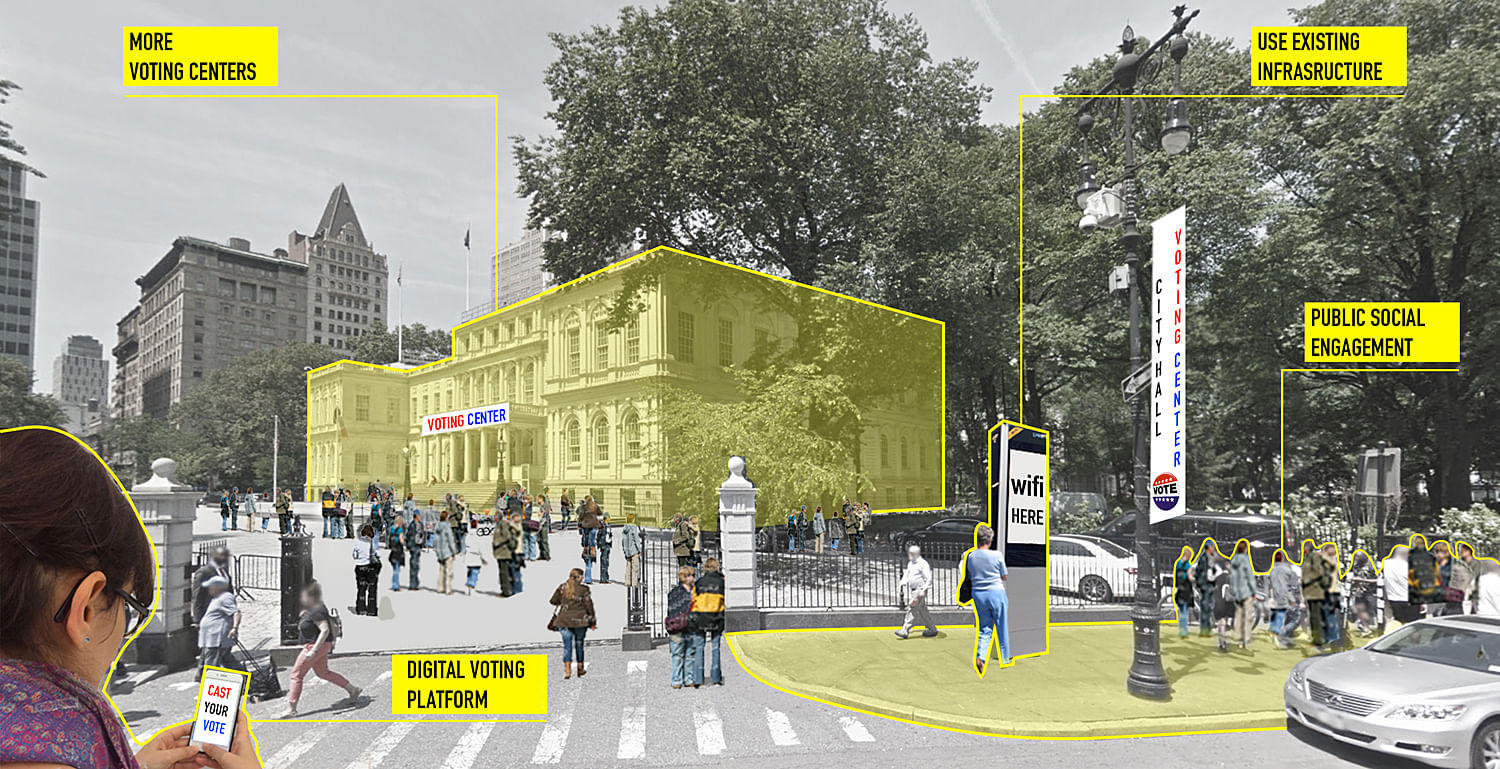
Winner: “Voting at Your Fingertips: A National Celebration of the Democratic Process”. Team: Racha Daher, Alexandra Gonzalez, and Elena Kapompasopoulou

Project description: “The current voting process is inefficient, strenuous, wasteful, non-inclusive, and prone to human error. This proposal aims to change the way the voting process works, so that it is easier and inclusive, and is accurate, secure and transparent. It aims to change the mindset of the voting experience so that it becomes a national celebration of the democratic process, strengthening social and community ties.

To do this several strategies are to be implemented:

1. Digitalize the voting platform to facilitate the democratic voting experience (multi-step identity verification: SSN number, fingerprints, photo).
2. Increase number of public institutions that serve as polling stations (churches, post offices, libraries, city halls, schools).
3. Change the voting day to Sunday to allow all-day family events.
4. Transform parks and public spaces into event areas, re-engaging in activities, while broadcasting voting results to promote transparency.
5. Utilize street infrastructure for political engagement.
6. Hold national festivities to celebrate the democratic process.”

Finalist Proposal: “In Between the Lines”
Team: Larissa Begault and Julia Borowicz

Finalist Proposal: “In Between the Lines”. Team: Larissa Begault and Julia Borowicz

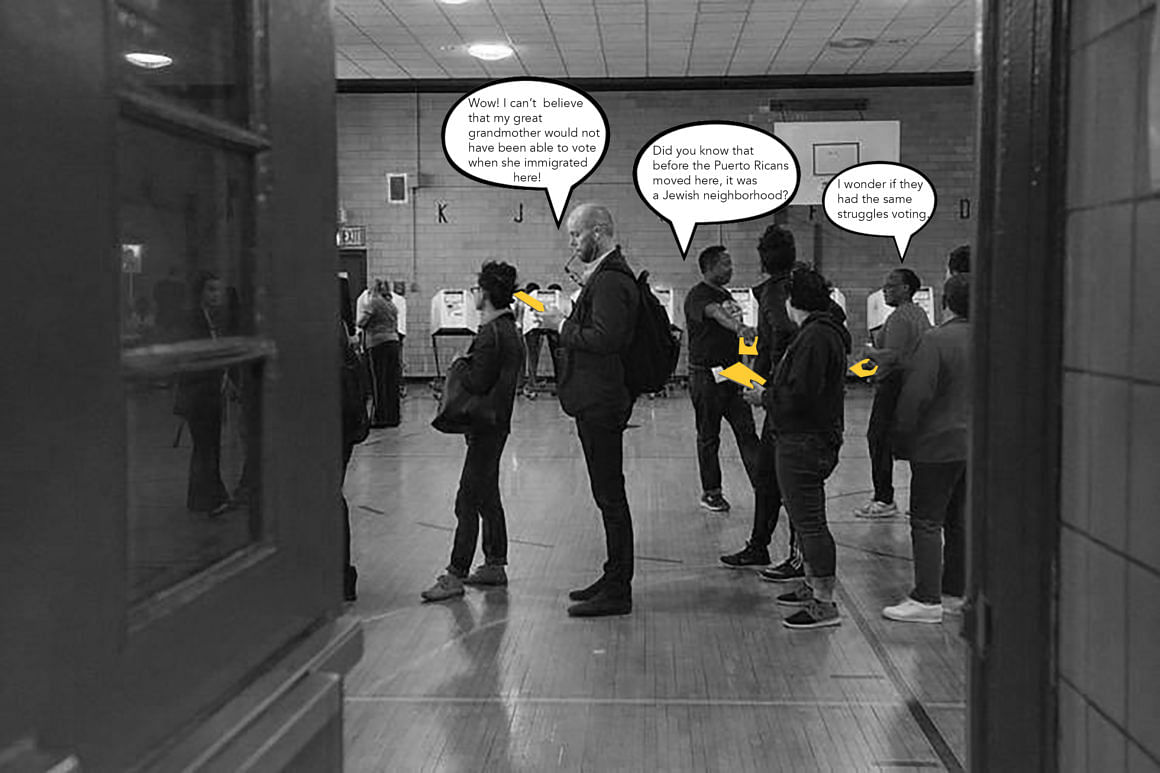
Project description: “Most voting in NYC takes place in public schools, which provides an opportunity for civic engagement to occur within these educational institutions. Our proposal offers a curriculum of collective storytelling and cultural archiving. Given the current political rhetoric around national identity we need to reflect on diversity. This curriculum engages parents through excavating their histories while empowering children as the future generation of voters. Students collect their family history, highlighting diverse heritages across the U.S. Once workshopped, the stories become an interactive artifact distributed to voters in line. Showcasing their plurality allows neighbors to find common ground through unexpected conversations around identity and difference. Addressing these themes bridges challenges around belonging and citizenship. This proposal offers an occasion to reflect on what unites us.”

Finalist Proposal: “Re-thinking Urban Elections”
Team: Vahhab Aboonour and George Dimos

Finalist Proposal: “Re-thinking Urban Elections”. Team: Vahhab Aboonour and George Dimos

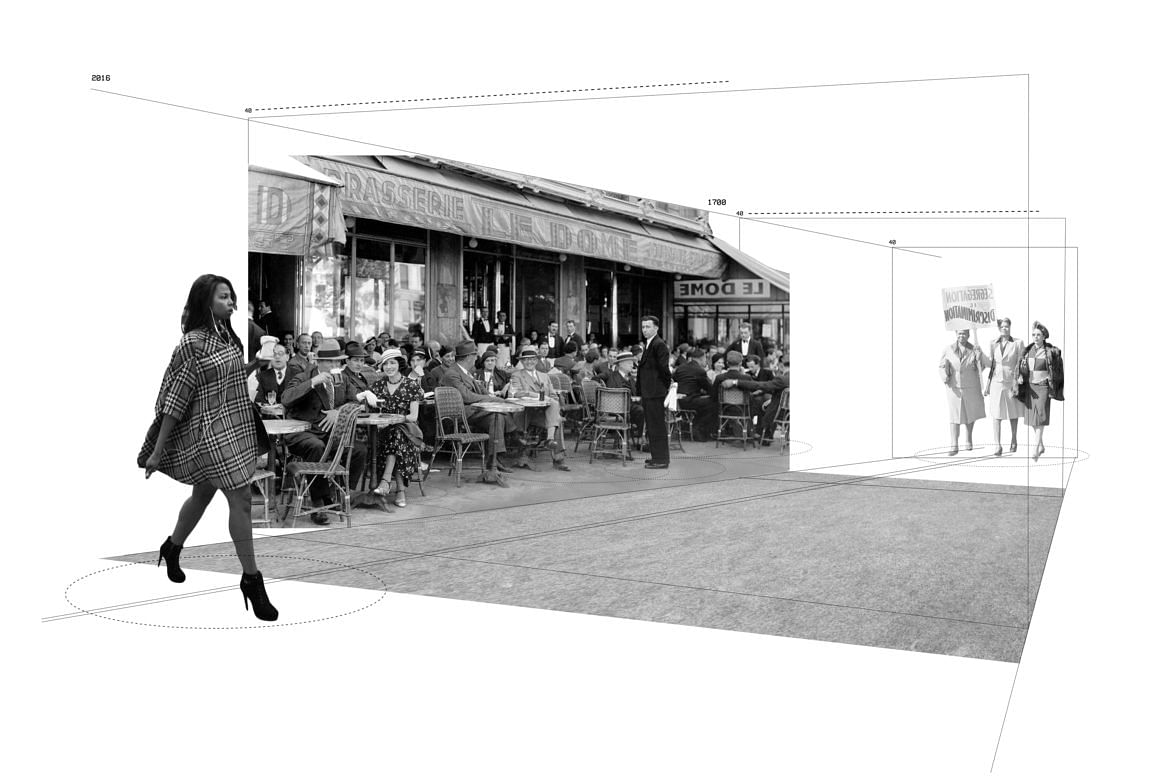
Project description: “Our proposal examines the importance of public spaces, like parks, plazas or college campuses, as democratic archetypes promoting social interaction and political education. We are re-thinking the poll site, incorporating elements from the ancient Greek agora and the Parisian café scene, as a place where political conversation can spontaneously occur. We propose that Election Day becomes a national holiday that both public and private organizations respect. Voters are therefore given more time to travel to their poll sites and share views with their communities. Furthermore, the private sector can actively participate in the electoral process, with college campuses serving as poll sites, and students working at the polls, getting paid through their work- study awards. Voting then becomes an educational and celebratory public event.”

Images and quoted text courtesy of Van Alen Institute.

RELATED EVENT Mandate

Related

van alen institute ● ideas competition ● flash competiton ● election ● politics ● competition ● community ● public space ● voting ● vote ● usa
Van Alen Institute
Van Alen Institute

Share

  • Follow

    0 Comments

  • Comment as :

Redesigning the voting experience: The results of Van Alen Institute's “Open Poll” competition

Excellence in sacred architecture reflected across the 2026 Faith & Form International Awards for Religious Architecture & Art winners

Sponsored Post by Buildner

Underbridge / Edition #2 advance registration deadline is approaching!

World’s most beautiful commercial stores of 2026 selected by Prix Versailles

Sponsored Post by Buildner

Buildner’s Unbuilt Award 2026 advance registration deadline is approaching!

Eight innovative timber projects honored at 2026 Wood in Architecture Awards

Beautiful brick architecture honored at BRICK AWARD 26

Over $500,000 awarded to architectural discourse projects by Graham Foundation

Best in urban planning recognized at AIA Regional & Urban Design Award 2026

Sign up for Bustler's Email Newsletters

Sponsored Post by Buildner

Re:Form - New Life for Old Spaces / Edition #3 advance registration deadline is approaching!

New architecture and design competitions: IDEAS Awards, UIA-HYP CUP International Student Competition, Vancouver Tall Challenge, and Memorial to the Sixth Extinction

Best small projects chosen at AIA Small Project Award 2026

10 standout sustainable projects honored at AIA COTE Top Ten Award 2026

Best residential architecture of 2026 honored at AIA Housing Award

Best new interiors of 2026 chosen at AIA Interior Architecture Awards

Best global architecture honored at RIBA International Awards 2026

Next page » Loading

Redesigning the voting experience: The results of Van Alen Institute's “Open Poll” competition

By Justine Testado|

Tuesday, Nov 8, 2016

Share

Photo: Jeff DaPuzzo, via Van Alen Institute.

Related

van alen institute ● ideas competition ● flash competiton ● election ● politics ● competition ● community ● public space ● voting ● vote ● usa
Van Alen Institute
Van Alen Institute

From longer-than-expected lines to technological fumbles, voting polls in urban cities are typically a gnarly mess on Election Day — sometimes causing some voters to end up discouraged and ultimately skip out. Sad, but true. In response to this still-too-common situation, the Van Alen Institute launched the “Open Poll” flash competition, wherein interdisciplinary teams were invited to submit design proposals that create a more accessible, engaging voting experience for all. 

The three finalist teams presented their proposals to the judges and the public got to watch and vote for their favorite entry. By the end of the one-day charrette, the winning team was announced. 

Have a look at the finalist entries below.

Winner: “Voting at Your Fingertips: A National Celebration of the Democratic Process”
Team: Racha Daher, Alexandra Gonzalez, and Elena Kapompasopoulou
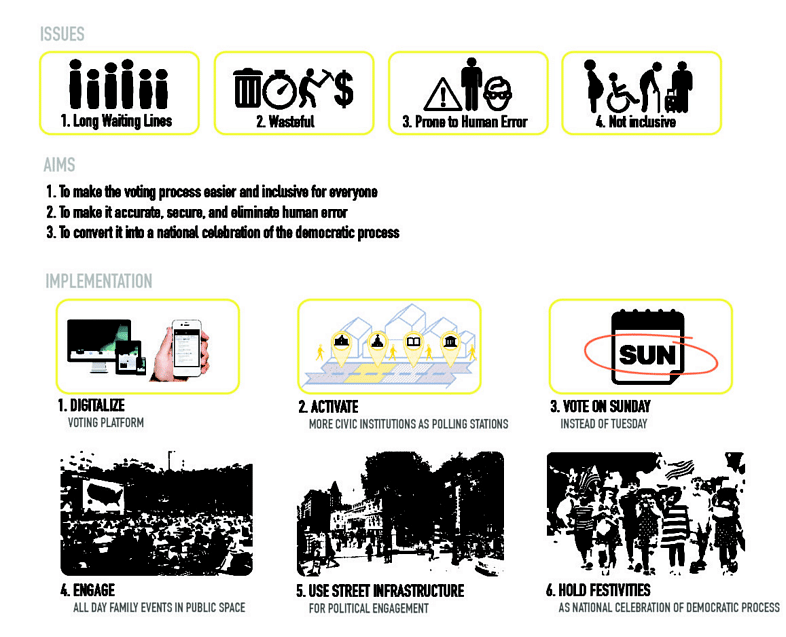
Winner: “Voting at Your Fingertips: A National Celebration of the Democratic Process”. Team: Racha Daher, Alexandra Gonzalez, and Elena Kapompasopoulou

Project description: “The current voting process is inefficient, strenuous, wasteful, non-inclusive, and prone to human error. This proposal aims to change the way the voting process works, so that it is easier and inclusive, and is accurate, secure and transparent. It aims to change the mindset of the voting experience so that it becomes a national celebration of the democratic process, strengthening social and community ties.

To do this several strategies are to be implemented:

1. Digitalize the voting platform to facilitate the democratic voting experience (multi-step identity verification: SSN number, fingerprints, photo).
2. Increase number of public institutions that serve as polling stations (churches, post offices, libraries, city halls, schools).
3. Change the voting day to Sunday to allow all-day family events.
4. Transform parks and public spaces into event areas, re-engaging in activities, while broadcasting voting results to promote transparency.
5. Utilize street infrastructure for political engagement.
6. Hold national festivities to celebrate the democratic process.”

Finalist Proposal: “In Between the Lines”
Team: Larissa Begault and Julia Borowicz
Finalist Proposal: “In Between the Lines”. Team: Larissa Begault and Julia Borowicz
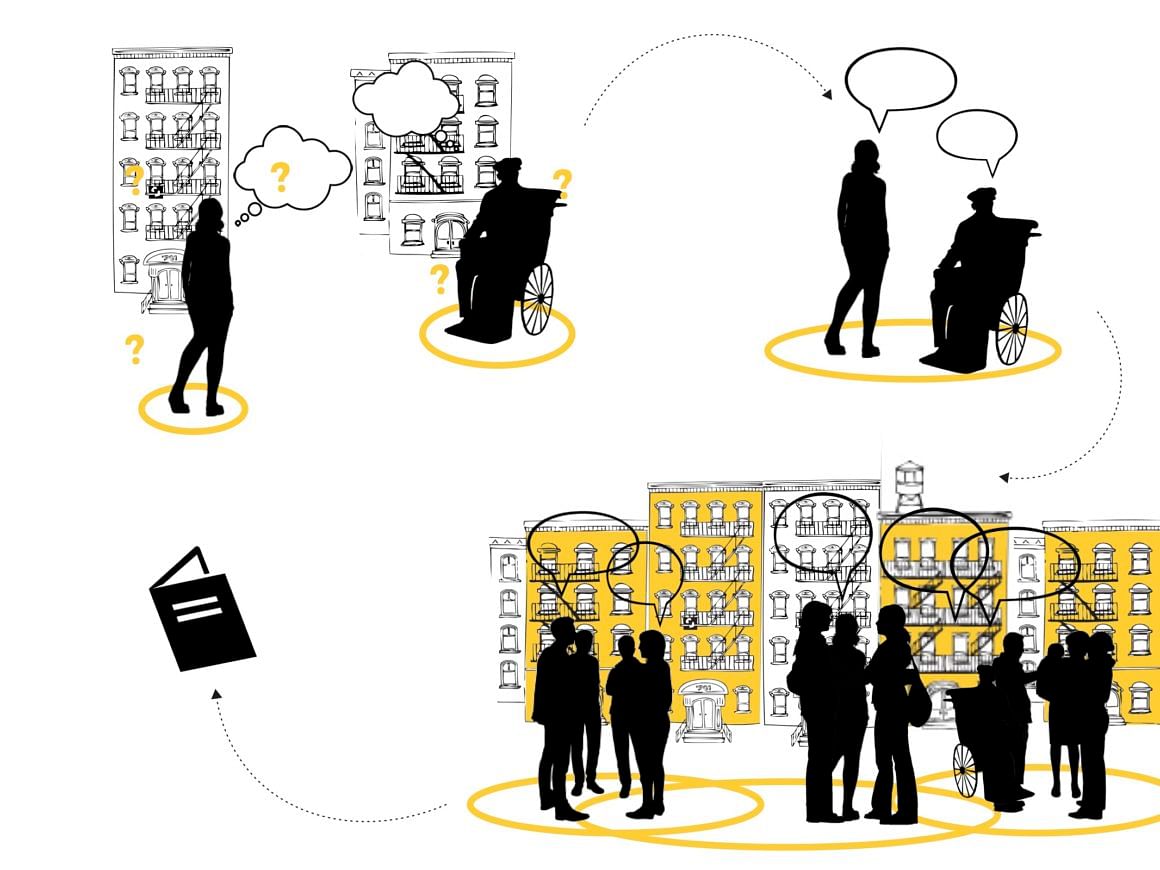
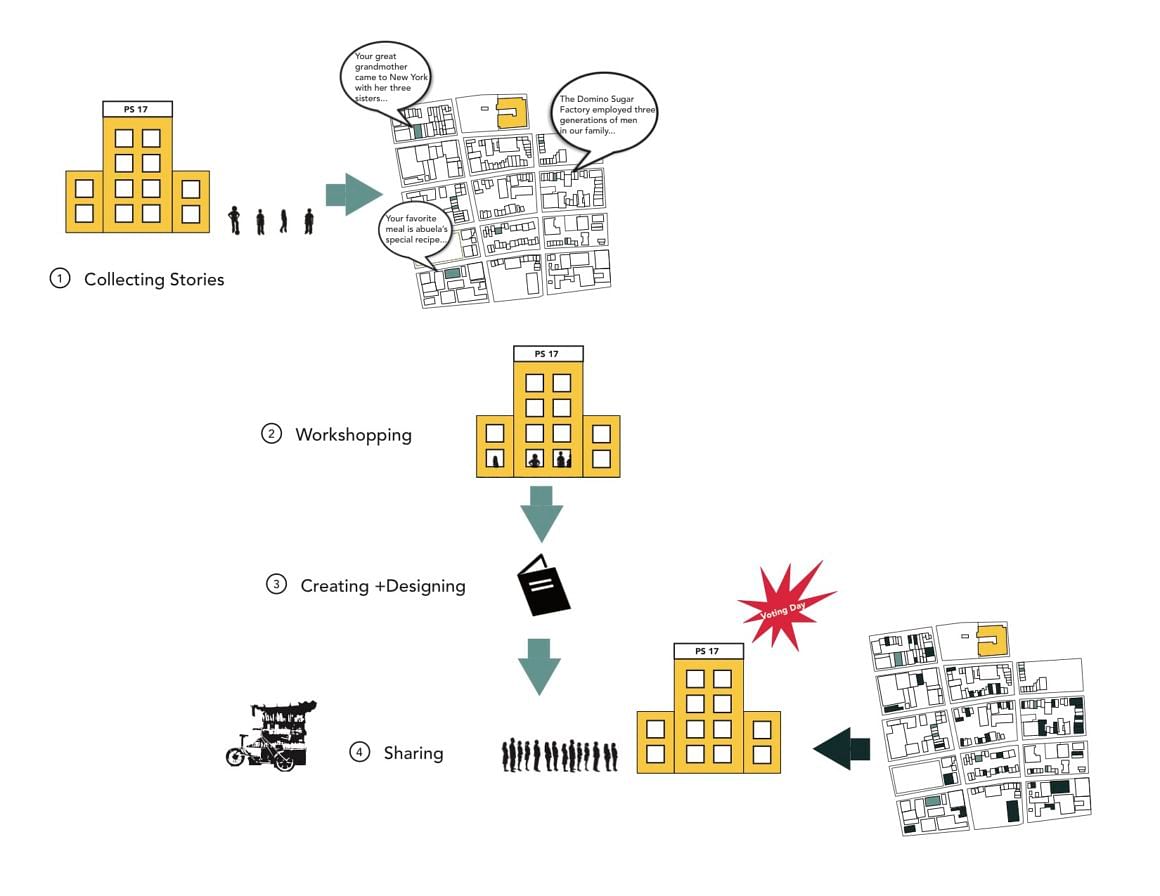

Project description: “Most voting in NYC takes place in public schools, which provides an opportunity for civic engagement to occur within these educational institutions. Our proposal offers a curriculum of collective storytelling and cultural archiving. Given the current political rhetoric around national identity we need to reflect on diversity. This curriculum engages parents through excavating their histories while empowering children as the future generation of voters. Students collect their family history, highlighting diverse heritages across the U.S. Once workshopped, the stories become an interactive artifact distributed to voters in line. Showcasing their plurality allows neighbors to find common ground through unexpected conversations around identity and difference. Addressing these themes bridges challenges around belonging and citizenship. This proposal offers an occasion to reflect on what unites us.”

Finalist Proposal: “Re-thinking Urban Elections”
Team: Vahhab Aboonour and George Dimos
Finalist Proposal: “Re-thinking Urban Elections”. Team: Vahhab Aboonour and George Dimos
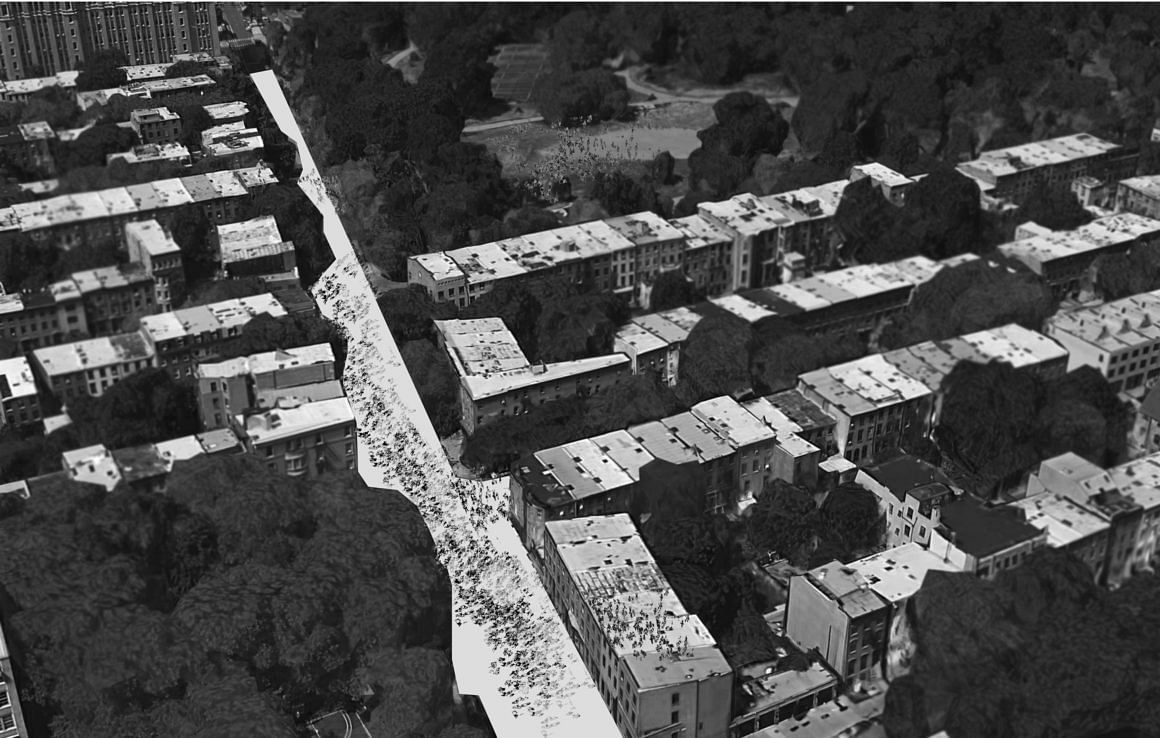
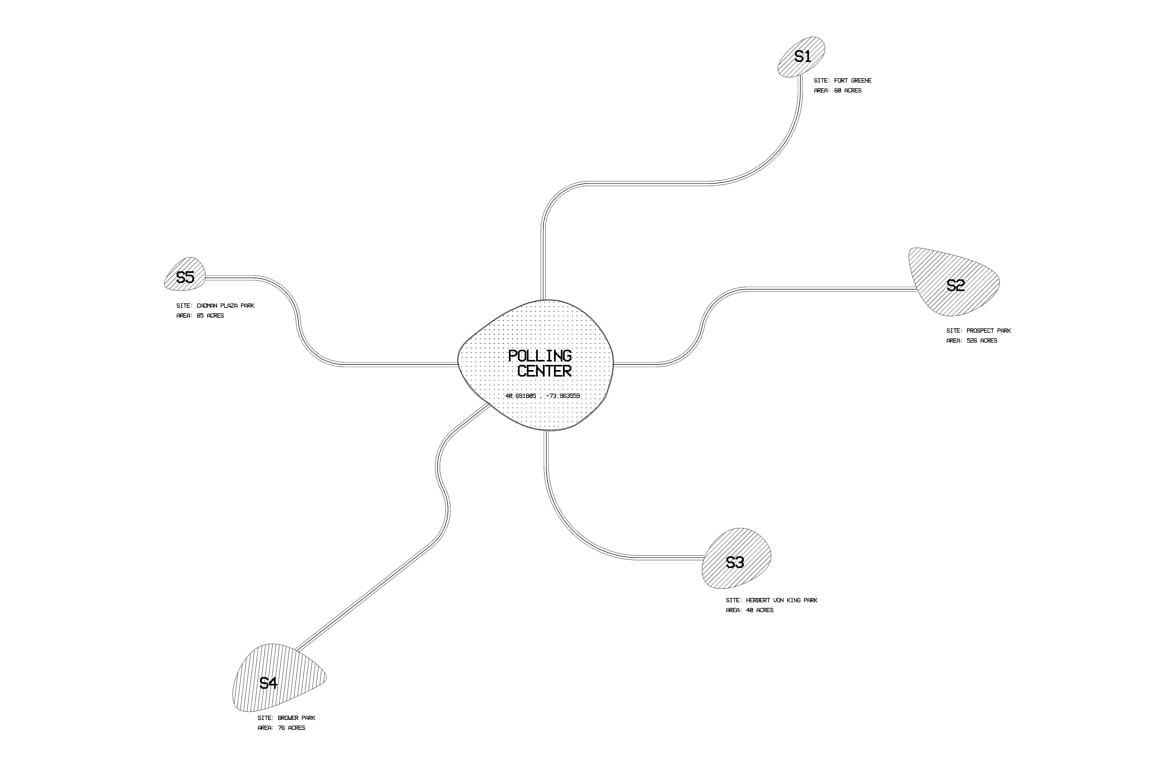

Project description: “Our proposal examines the importance of public spaces, like parks, plazas or college campuses, as democratic archetypes promoting social interaction and political education. We are re-thinking the poll site, incorporating elements from the ancient Greek agora and the Parisian café scene, as a place where political conversation can spontaneously occur. We propose that Election Day becomes a national holiday that both public and private organizations respect. Voters are therefore given more time to travel to their poll sites and share views with their communities. Furthermore, the private sector can actively participate in the electoral process, with college campuses serving as poll sites, and students working at the polls, getting paid through their work- study awards. Voting then becomes an educational and celebratory public event.”

Images and quoted text courtesy of Van Alen Institute.

RELATED EVENT Mandate

Share

  • Follow

    0 Comments

  • Comment as :

Archinect JobsArchinect Jobs

The Archinect Job Board attracts the world's top architectural design talents.

VIEW ALL JOBS POST A JOB

Lead Architect

Emaar Enterprise

Lead Architect

Fontana, CA, US

Senior Architectural Designer, Commercial Interiors - Boston Office

Fogarty Finger

Senior Architectural Designer, Commercial Interiors - Boston Office

Boston, MA, US

Job Captain

Studio AR&D Architects

Job Captain

Los Angeles, CA, US

Architect/Architectural Designer

ET Boggess Architects, Inc.

Architect/Architectural Designer

Princeton, WV, US

Project Manager- Architecture

Thompson & Litton

Project Manager- Architecture

Radford, VA, US

Intermediate Architectural Designer, Multifamily Interiors - New York Office

Fogarty Finger

Intermediate Architectural Designer, Multifamily Interiors - New York Office

New York, NY, US

Architect

ThinkForm Architects

Architect

Charleston, SC, US

Senior Architectural Designer, Commercial Interiors - New York Office

Fogarty Finger

Senior Architectural Designer, Commercial Interiors - New York Office

New York, NY, US

Assistant Professor Architecture

California State Polytechnic University, Pomona

Assistant Professor Architecture

Pomona, CA, US

Senior Architectural Planner

Payette

Senior Architectural Planner

Boston, MA, US

Next page » Loading