• Login / Join
  • About
  • •
  • Contact
  • •
  • Advertising
bustler logo
bustler logo
  • News
  • Competitions
  • Events
  • Bustler is powered by Archinect
  • Sign up for Bustler's Email Newsletters

  • Follow these Bustler feeds:

  • Search

    Search in

  • Submit

    What are you submitting?

    News Pitch
    Competition
    Event
  • Login / Join
  • News|Competitions|Events
  • Search
    | Submit
    | Follow
  • Search in

    What are you submitting?

    News Pitch
    Competition
    Event

    Follow these Bustler feeds:

  • About|Contact|Advertising
  • Login / Join

From vertical villages to Metabolist-inspired towers — the ​Hong Kong Pixel Homes winners reimagine modular living

By Justine Testado|

Thursday, Jun 15, 2017
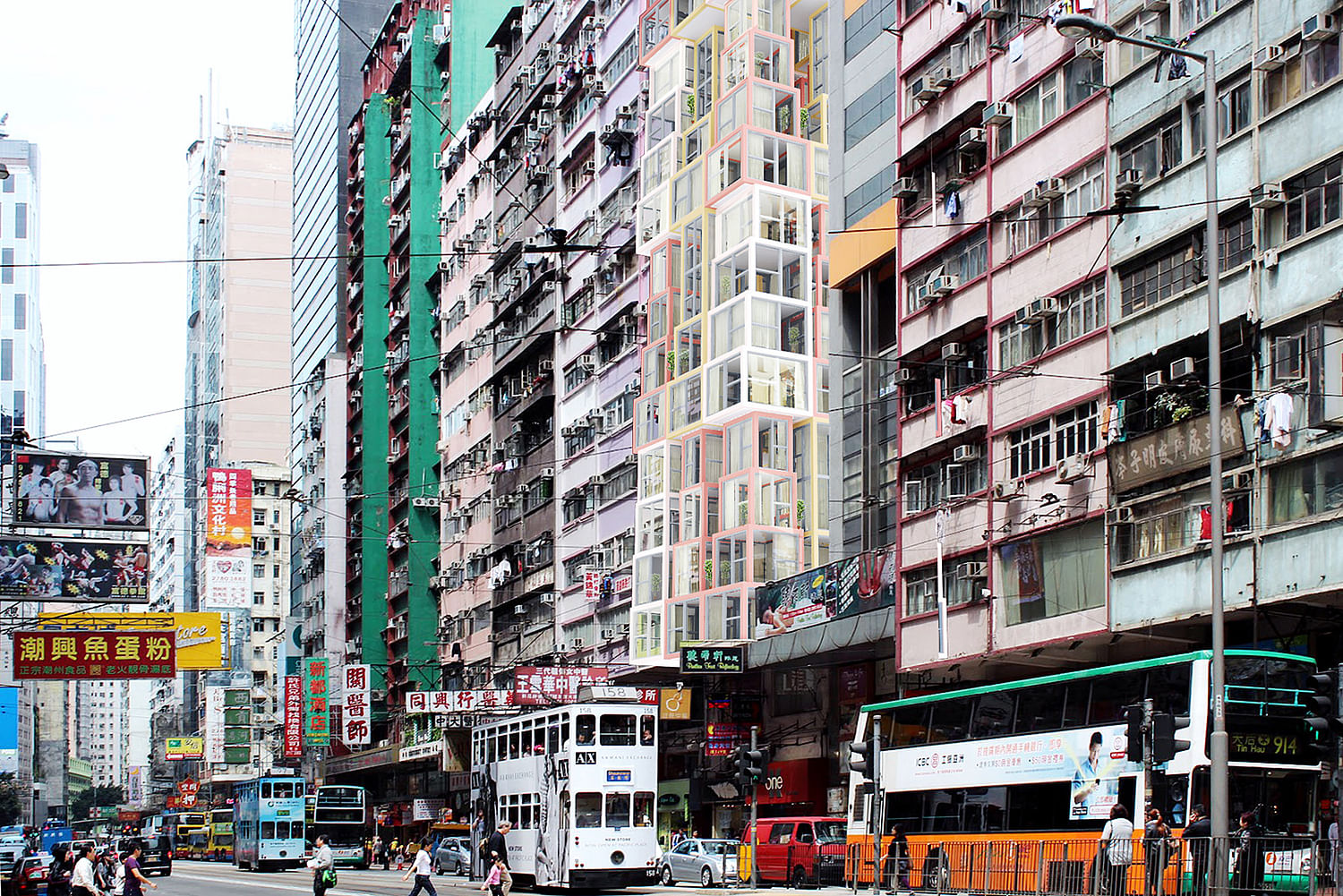
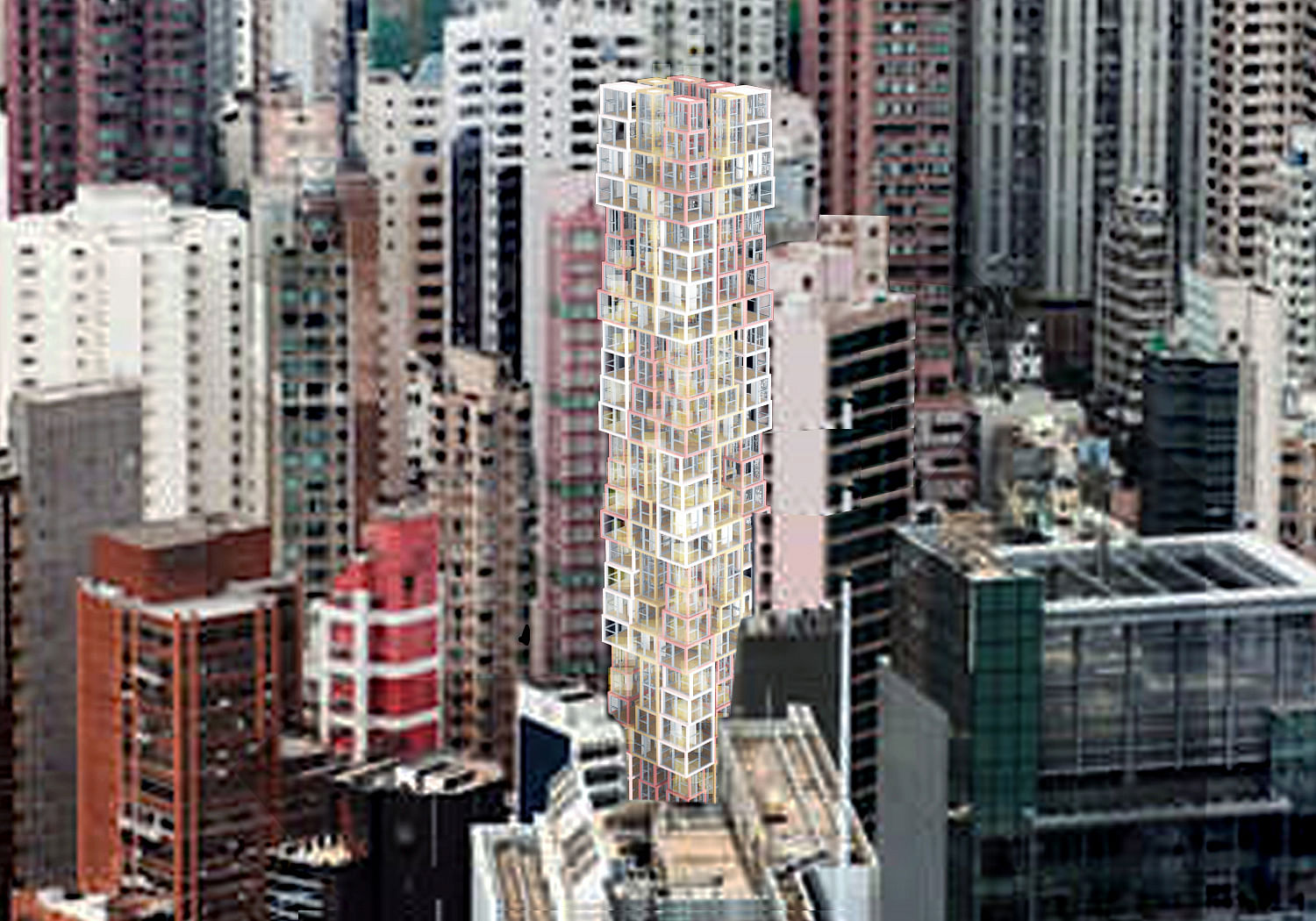
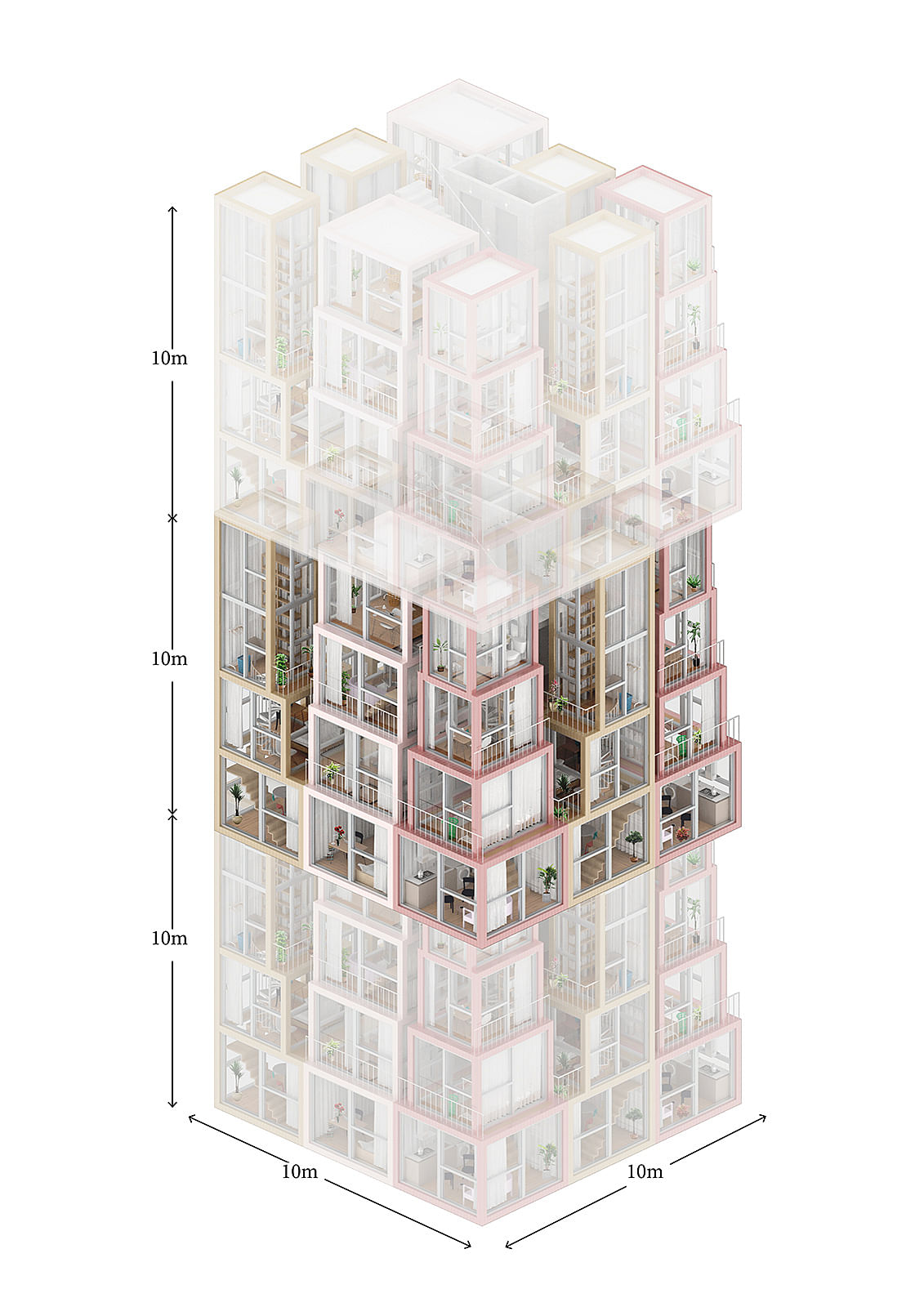
1st prize: “Towers within a Tower”. Project authors: Lap Chi Kwong, Alison Von Glinow, Kevin Lamyuktseung | United States

How can the multi-housing typology be reinvented, especially in a highly dense urban location like Hong Kong? What modular, vertical-living solutions are out there when housing shortages, increasing rent, and ever-present economic disparity are rampant in cities worldwide? These are some of the questions participants had to address in the Hong Kong Pixel Homes competition, organized by Bee Breeders.

The competition concluded with three top prize winners — including Kwong Von Glinow who won the New York Affordable Housing Challenge; a Student Award and a Green Award winner, and six honorable mentions. Scroll down to see some of the winning entries.

1st prize: “Towers within a Tower” 
Project authors: Kwong Von Glinow Design Office in collaboration with Kevin Lamyuktseung | United States
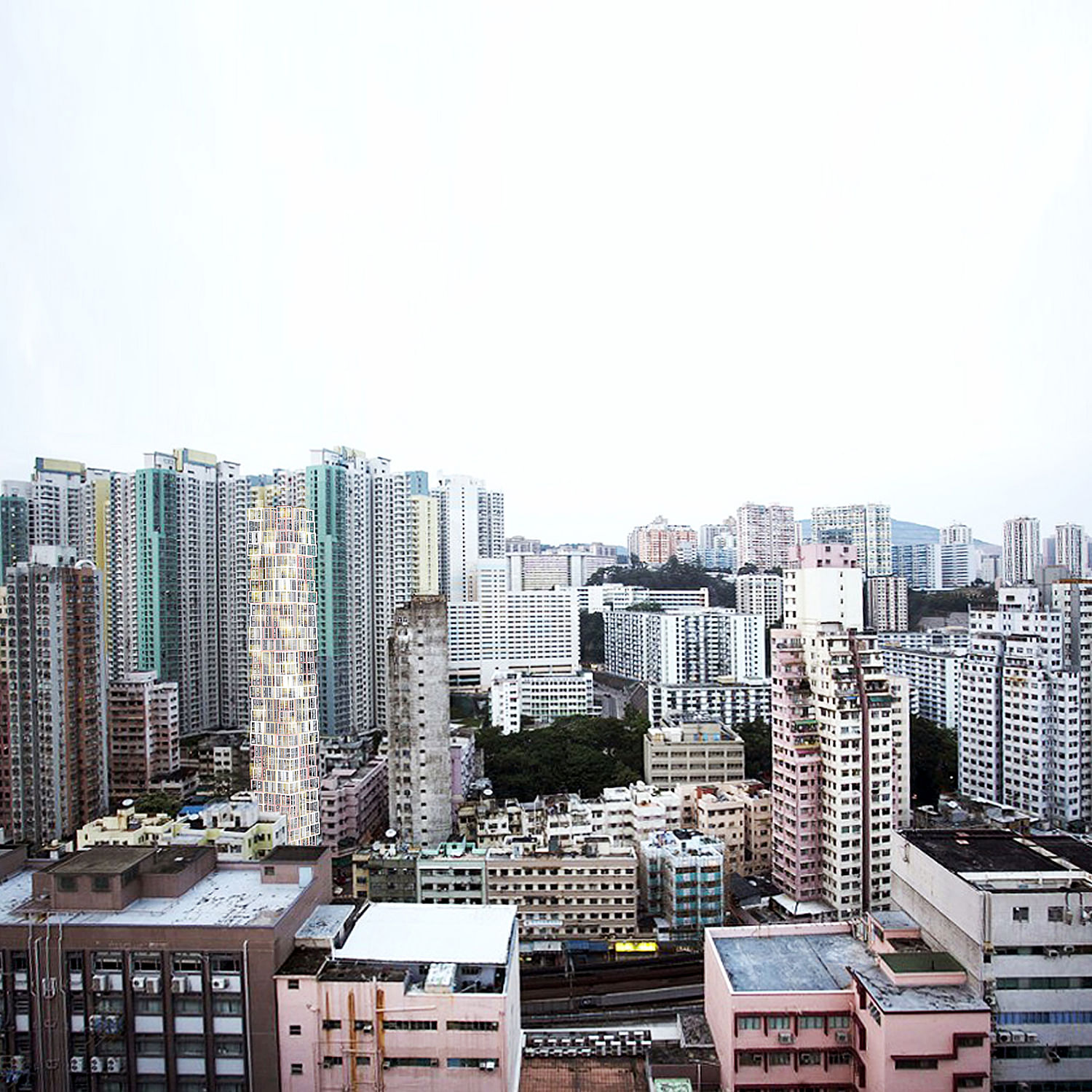
1st prize: “Towers within a Tower”. Project authors: Lap Chi Kwong, Alison Von Glinow, Kevin Lamyuktseung | United States

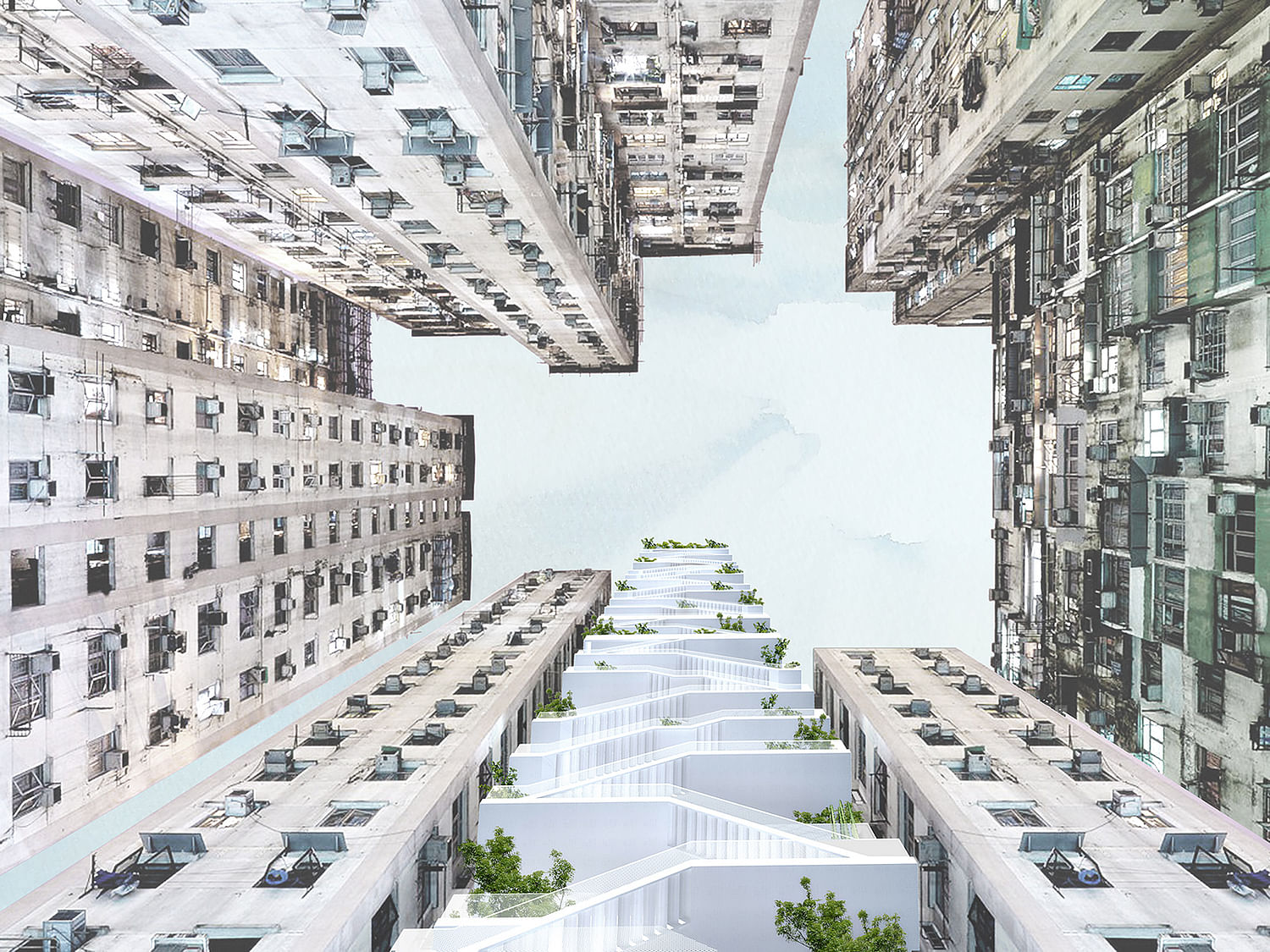
Jury commentary: “The first place proposal radically re-imagines the notion of vertical living, translating from the building scale to the individual unit typology. Rather than stack units floor to floor, each unit is layered and aggregated vertically, establishing a repetitive module, for adaptation to various sites in Hong Kong. By re-thinking the typical rental unit, the project re-postulates common urban housing, often internalized and tightly clustered per floor, left with little daylighting opportunity or exterior accessibility. As the unit progresses upward from floor to floor, the building envelope steps to maximize exterior exposure and increase availability of natural light. 

Organized in a nine square grid, the project takes full advantage of the perimeter, locating the public circulation at the core. Once aggregated, the receding volumes thread together varied perforations of outdoor space, providing both circulation and courtyard. The woven circulation offers opportunity for the chance encounter and shared narrative, re-imagining the idea of the street and neighborhood. The vertical stacking of individual units develops a new tower paradigm, taking advantage of amenities more commonly provided in the sprawling expanse of single family neighborhoods, while engaging the end user in direct dialogue with the scale of the city.”

2nd prize: Vertical Village 
Project authors: François Chantier, Maria Fernandez | France

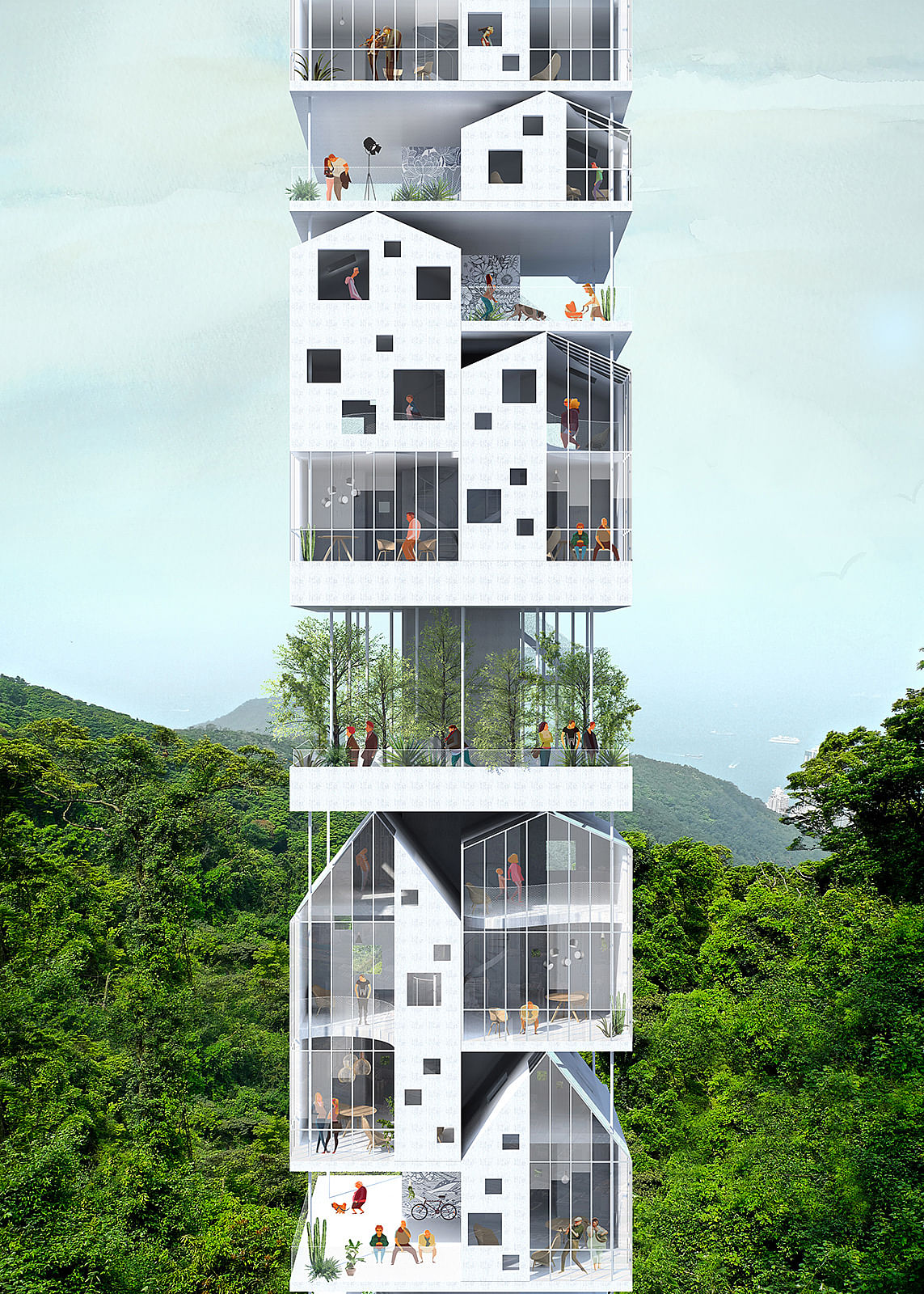
2nd prize: Vertical Village. Project authors: François Chantier, Maria Fernandez | France​

Jury commentary: “The second place proposal was chosen for its reformulation of a domestic typology as a solution for the housing crisis in Hong Kong. Composed of a 100 square meter prefabricated housing units, the aggregation of modules creates a vertical village that rethinks domestic space at the scale of the city. Through the use of the vernacular form of the home - the gable - the sectional variation of each housing module produces a rich spatial variety amongst the units - creating terraces, pocket gardens, and lofts each with a unique lighting condition. The proposal seeks to reclaim the scale of the city by inserting these vertical neighborhoods into the fabric of Hong Kong, interconnected by exterior passageways, shared spaces, and common gardens for collective activities such as worship, markets, and leisure. 

The robust morphology allows the project to adapt to the various sites, scales, and densities of Hong Kong. The simplified post-and-beam construction with prefabricated housing units inserted into the structural armature creates a low-cost and flexible system of construction. Paradoxically, although the units appear to be homes, their internal morphology radically alters typical domestic space from a series of rooms into an adaptable set of flexible functions and zones. The inhabitants can reappropriate and change the use of each space, enabled by the generosity of the layouts. The spaces between each prefabricated unit allows for light into the spaces and offer an opportunity for vegetation to occupy these interstitial voids.”

3rd prize + Student Award: Upside - Down Mechine
Project authors: Yukang Yang, Jingwen Cui - Beijing University of Technology | China

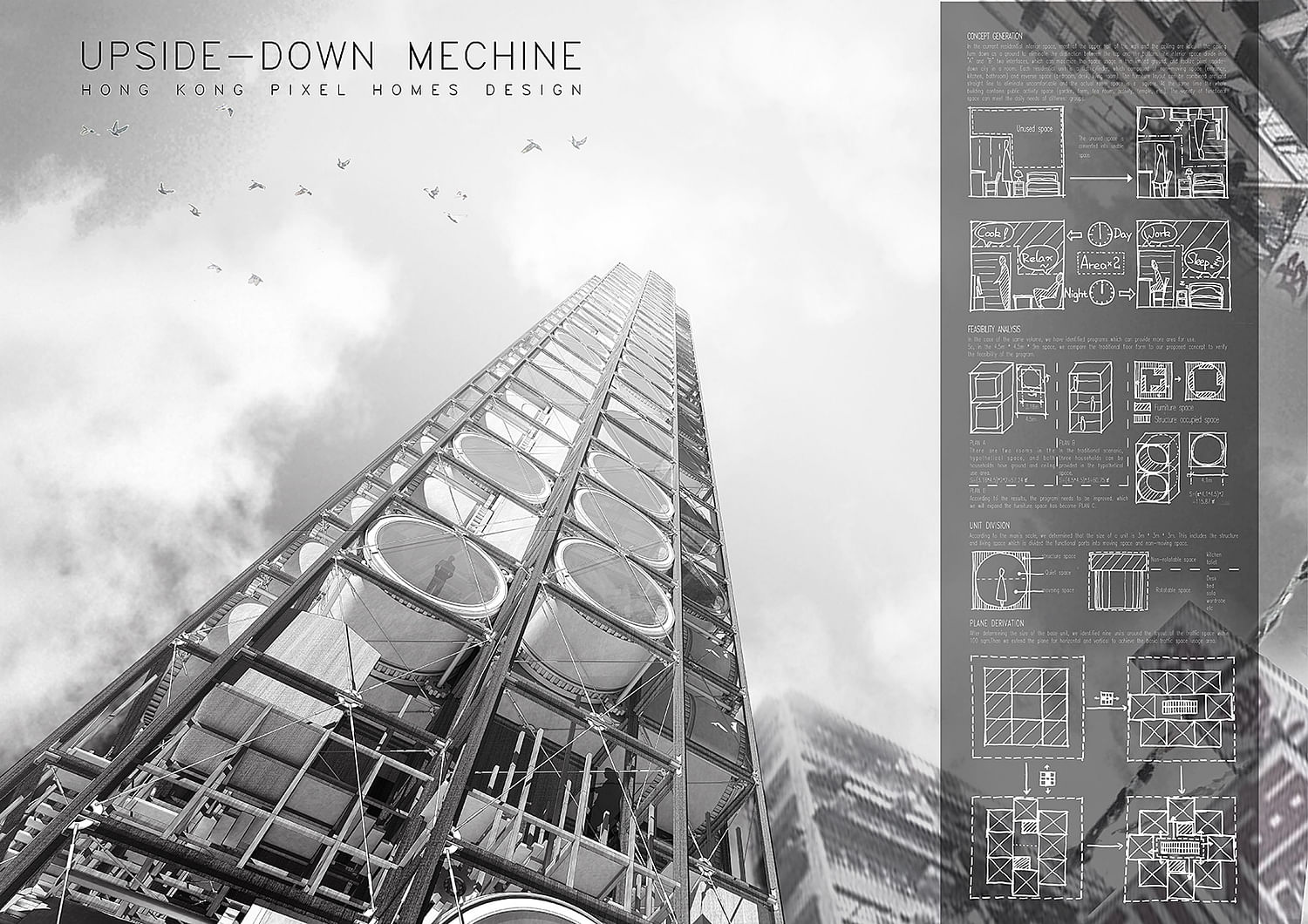
3rd prize + Student Award: Upside - Down Mechine Project authors: Yukang Yang, Jingwen Cui - Beijing University of Technology | China

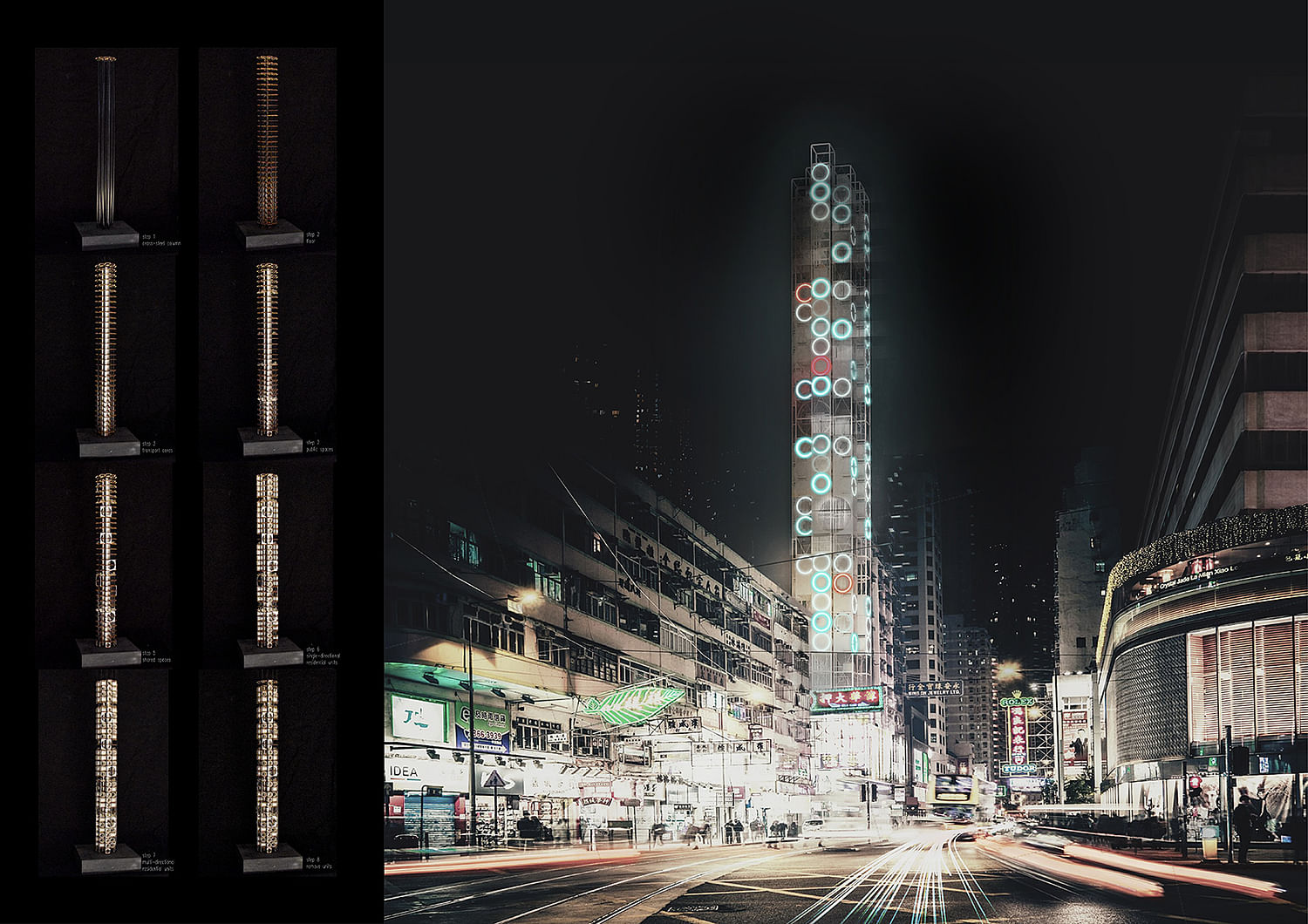
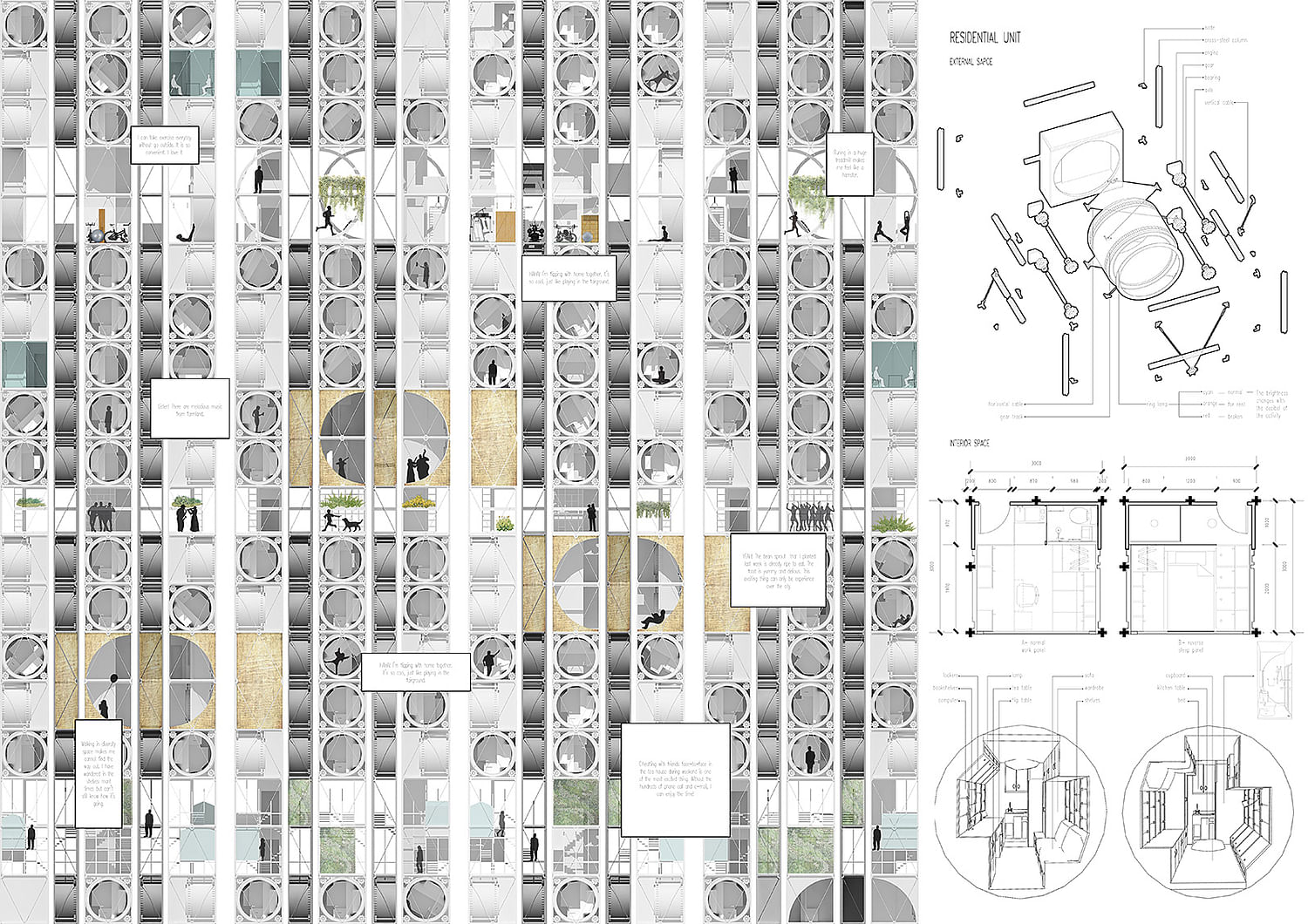
Jury commentary: “The third place proposal resuscitates the legacy of the Metabolist capsule tower, reimagining the micro-unit dwelling as a mechanized zone of spatial modification and efficiency while producing a marketable icon for the skyline of Hong Kong. The dwelling space occupies cylindrical drums set into a rigid structural frame, stackable and deployable in multiple height configurations. Through the mechanical rotation of the dwelling cylinder, the topology of the unit deprioritizes the ground as the space of primacy, allowing the tenant to gain access to different programmatic functions deployed on both the ground and ceiling. Circulation and bathroom facilities maintain a fixed position in the core, while the machinic dwelling space is constantly mutable, rhythmically rotating, and contorting to fit the needs of the body.

The inhabitant views the city through the porthole of each cylinder while the city observes the inhabitant by means of a ring of neon illumination around the cylinder’s edge: a lurid beacon of color-coded activity within. The ultimate success of the proposal is its embedded critique of the dystopian future of the technological solution to the crisis of housing in the urban environment. The project offers less of a solution than an exacerbation of the already problematic tendencies of our urban domestic culture: the impossibility of privacy through digital media in an ever-shrinking dwelling footprint. The optimism of the proposal, however, relies on the idea that this existence has the potential to be fun, if we find comfort in relaying the activity of the private domestic sphere in a theater of spectacle for the public realm.”

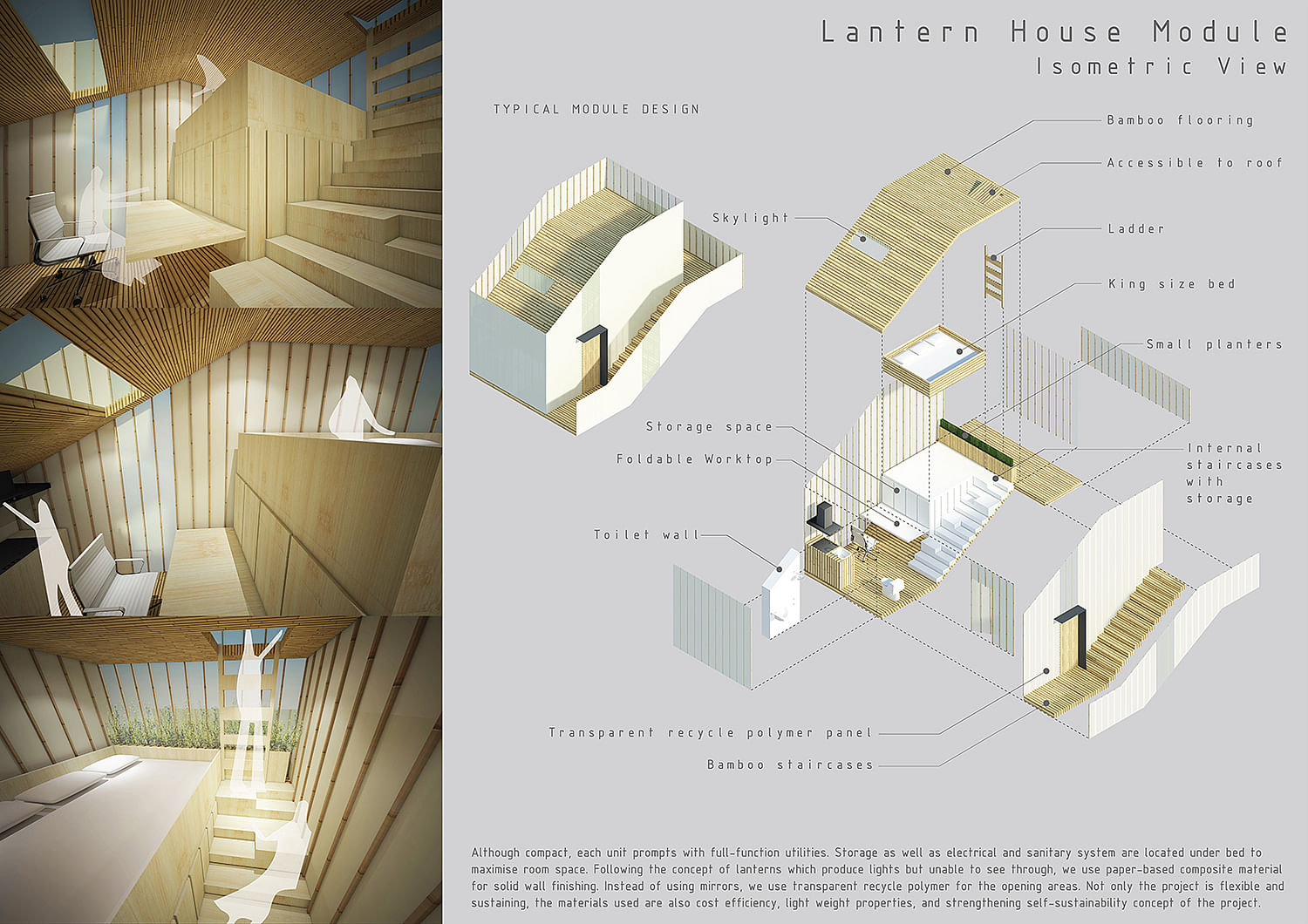
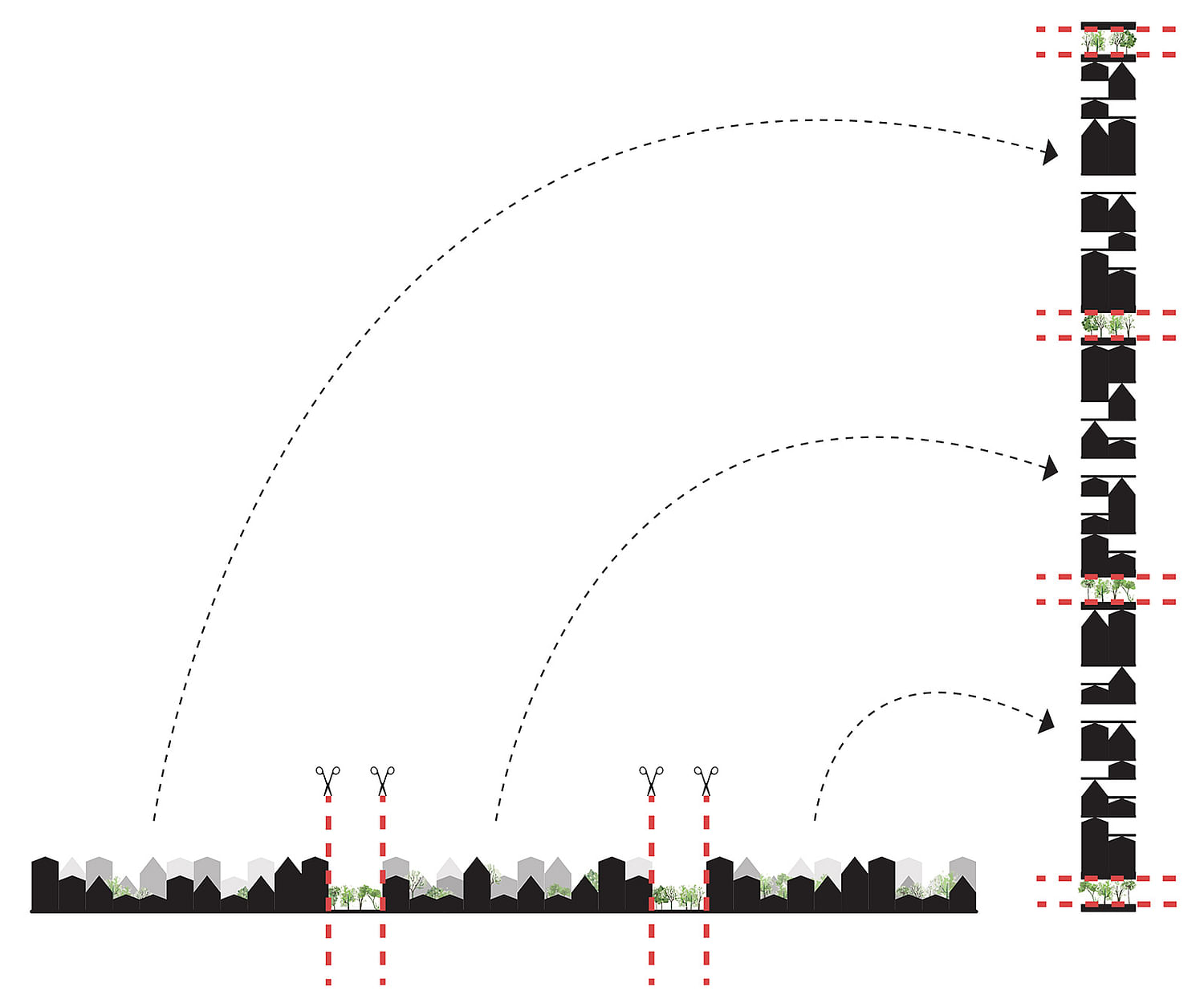
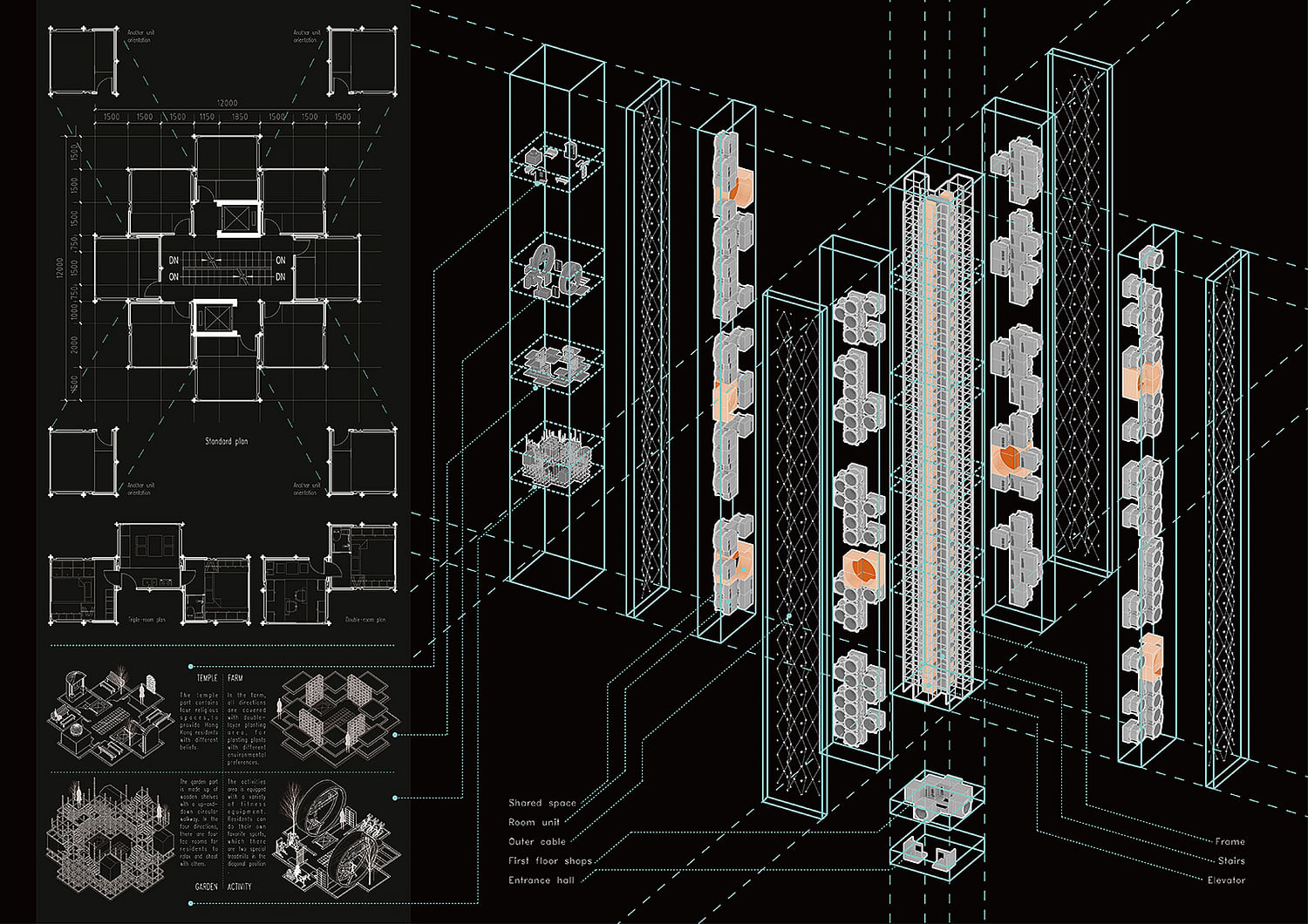
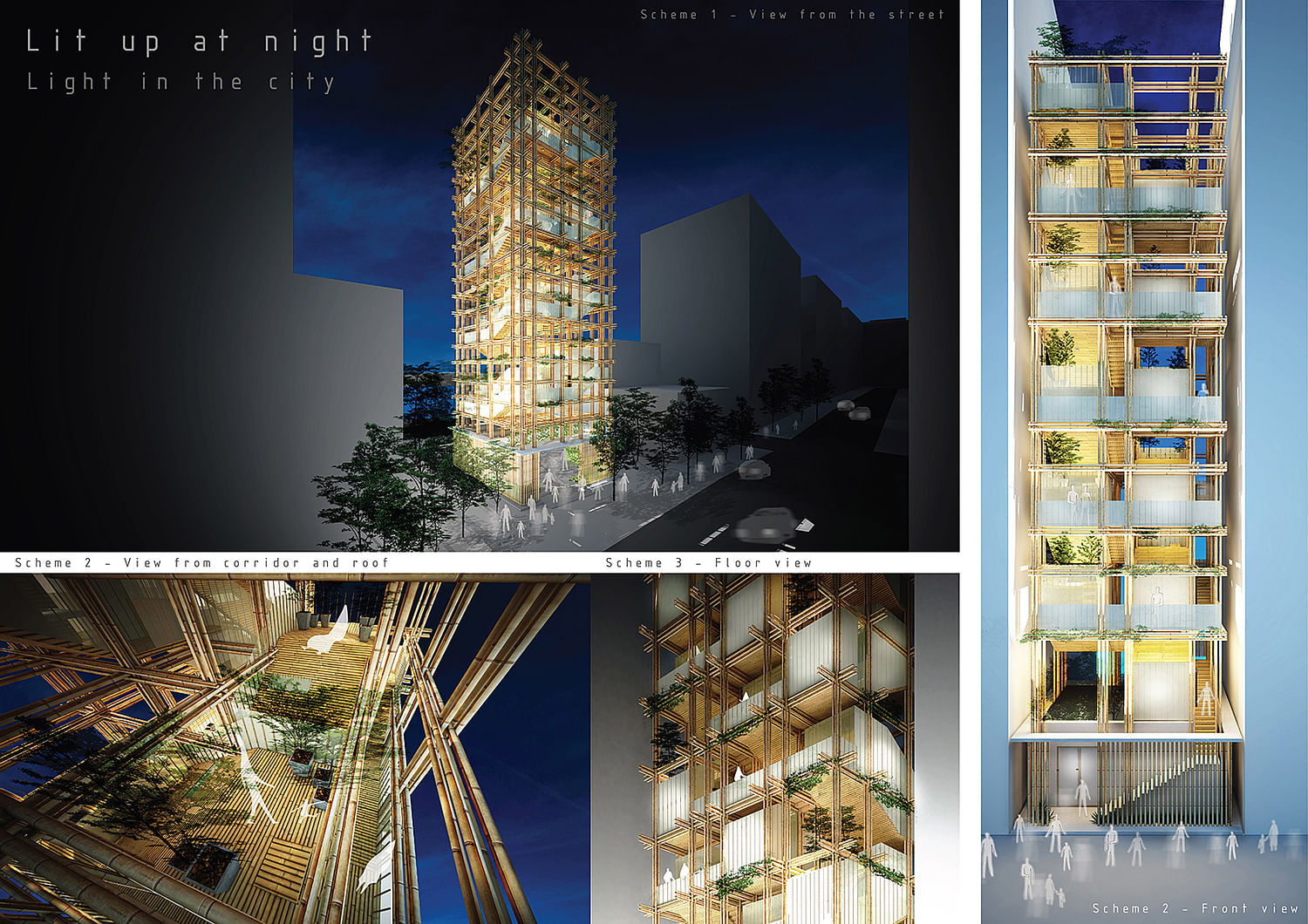
Green Prize: Hong Kong Pixel Homes - Lantern of Lives
Project authors: Danaiporn Pongamornprom, Thongchai Wongsrisuppakul, Veeramon Suwannasang | Thailand

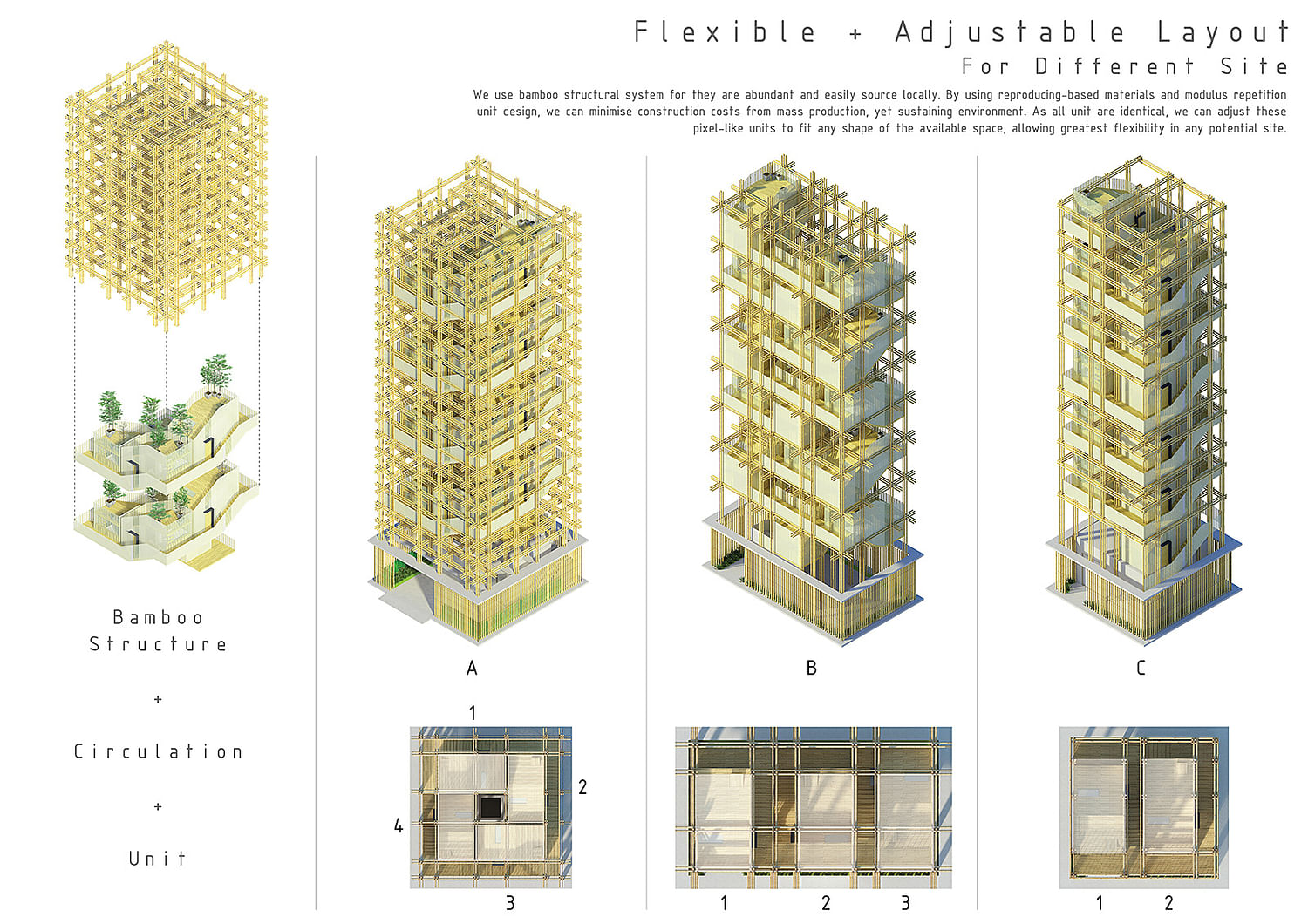
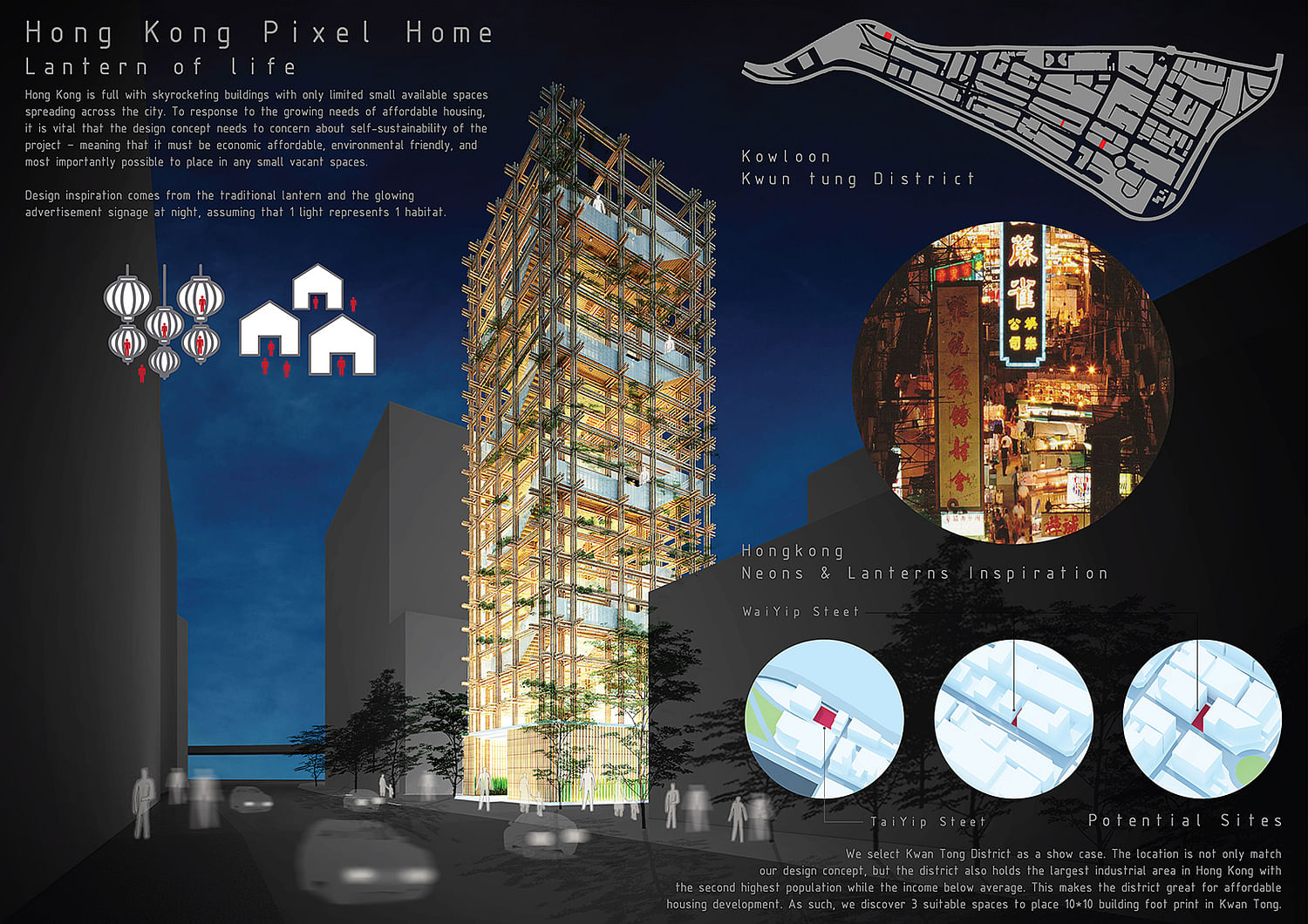
​Green Prize: Hong Kong Pixel Homes - Lantern of Lives. Project authors: Danaiporn Pongamornprom, Thongchai Wongsrisuppakul, Veeramon Suwannasang​ | Thailand

More project images in the gallery below. You can also check out more entries here.

Images courtesy of Bee Breeders.

RELATED COMPETITION Hong Kong Pixel Homes
RELATED NEWS The prize-winning proposals for the Mango Vinyl Hub in Latvia
RELATED NEWS Envisioning housing ideas for New York City's affordability crisis
RELATED NEWS Re-examining the role of cannabis through architecture in the Cannabis Bank competition

Related

bee breeders architecture competition ● bee breeders ● hong kong ● pixel ● alternative housing ● urban living ● competition ● ideas competition ● vertical ● modular architecture
Kwong Von Glinow
Kwong Von Glinow
Beijing University of Technology

Share

  • Follow

    0 Comments

  • Comment as :

From vertical villages to Metabolist-inspired towers — the ​Hong Kong Pixel Homes winners reimagine modular living

Best residential architecture of 2026 honored at AIA Housing Award

Best new interiors of 2026 chosen at AIA Interior Architecture Awards

Best global architecture honored at RIBA International Awards 2026

World’s most beautiful airports of 2026 chosen by Prix Versailles

New architecture and design competitions: Brick in Architecture Awards, Study Architecture Student Showcase, N.Y.C. Groceries, and New York High Falls Riverfront Market

SmithGroup’s ‘pioneering’ Philip Merrill Environmental Center wins AIA Twenty-five Year Award

Sponsored Post by Buildner

Museum of Emotions / Edition #8 FINAL registration deadline is in 5 DAYS!

Here are the winners of the 2026 AIA Architecture Awards

Sign up for Bustler's Email Newsletters

40 emerging architects and designers under 40 from Europe honored

Northwestern University selects 12-firm longlist to design new engineering building

New architecture and design competitions: Exploring 130 Years of American Design, Christo & Jeanne-Claude Center, 13 White Houses, and La Pyramide

Micro-architecture honored in latest Tiny House Architecture Competition

World’s most beautiful restaurants of 2026 chosen by Prix Versailles

Sponsored Post by Buildner

Design a wine tasting room in Italy! Valli Wine Tasting Room is launched!

10 can't-miss architecture & design events to see this June in London, Los Angeles, Chicago, San Francisco, Detroit, San Diego, Porto, and Barcelona

Next page » Loading

From vertical villages to Metabolist-inspired towers — the ​Hong Kong Pixel Homes winners reimagine modular living

By Justine Testado|

Thursday, Jun 15, 2017

Share

1st prize: “Towers within a Tower”. Project authors: Lap Chi Kwong, Alison Von Glinow, Kevin Lamyuktseung | United States

Related

bee breeders architecture competition ● bee breeders ● hong kong ● pixel ● alternative housing ● urban living ● competition ● ideas competition ● vertical ● modular architecture
Kwong Von Glinow
Kwong Von Glinow
Beijing University of Technology

How can the multi-housing typology be reinvented, especially in a highly dense urban location like Hong Kong? What modular, vertical-living solutions are out there when housing shortages, increasing rent, and ever-present economic disparity are rampant in cities worldwide? These are some of the questions participants had to address in the Hong Kong Pixel Homes competition, organized by Bee Breeders.

The competition concluded with three top prize winners — including Kwong Von Glinow who won the New York Affordable Housing Challenge; a Student Award and a Green Award winner, and six honorable mentions. Scroll down to see some of the winning entries.

1st prize: “Towers within a Tower” 
Project authors: Kwong Von Glinow Design Office in collaboration with Kevin Lamyuktseung | United States
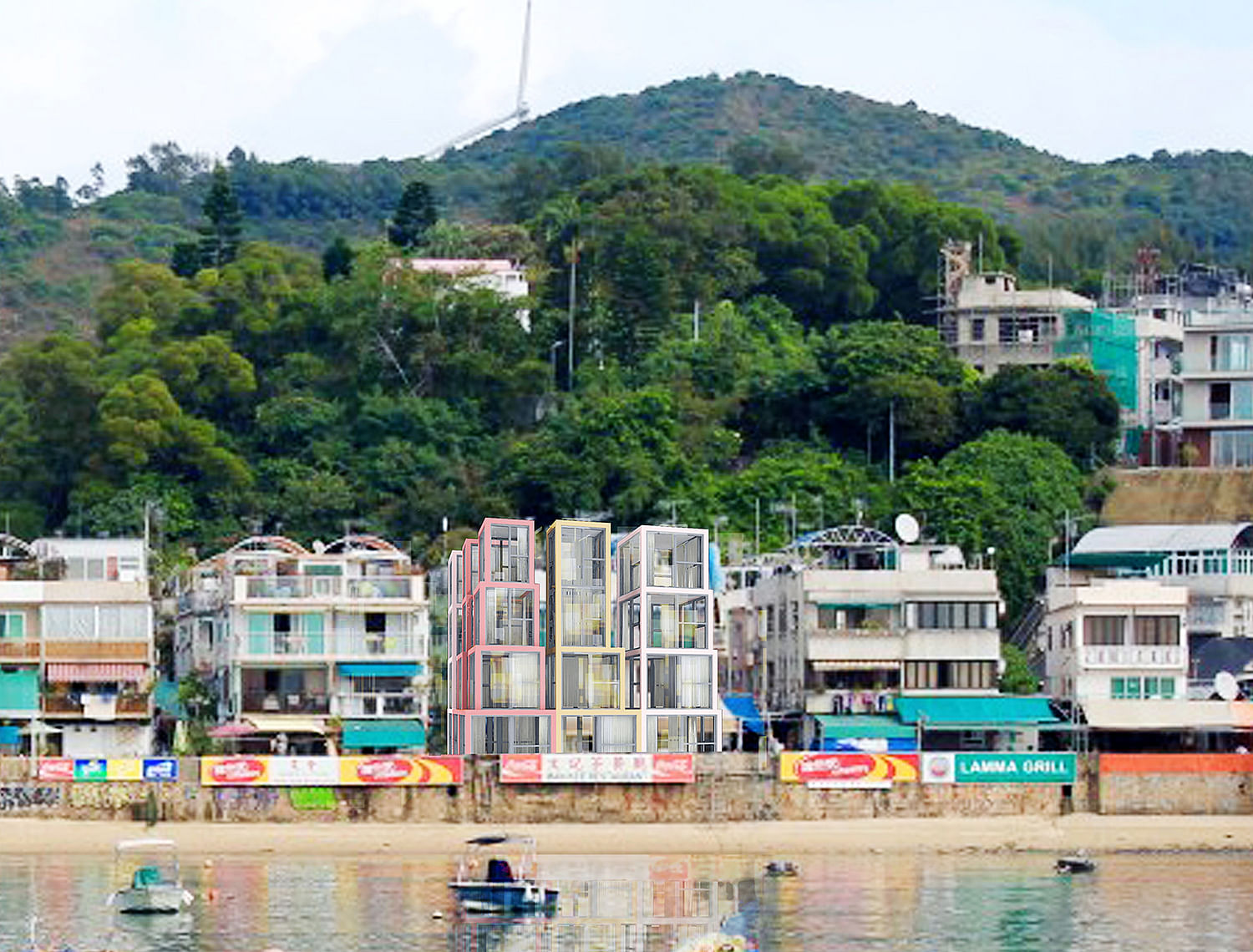
1st prize: “Towers within a Tower”. Project authors: Lap Chi Kwong, Alison Von Glinow, Kevin Lamyuktseung | United States

Jury commentary: “The first place proposal radically re-imagines the notion of vertical living, translating from the building scale to the individual unit typology. Rather than stack units floor to floor, each unit is layered and aggregated vertically, establishing a repetitive module, for adaptation to various sites in Hong Kong. By re-thinking the typical rental unit, the project re-postulates common urban housing, often internalized and tightly clustered per floor, left with little daylighting opportunity or exterior accessibility. As the unit progresses upward from floor to floor, the building envelope steps to maximize exterior exposure and increase availability of natural light. 

Organized in a nine square grid, the project takes full advantage of the perimeter, locating the public circulation at the core. Once aggregated, the receding volumes thread together varied perforations of outdoor space, providing both circulation and courtyard. The woven circulation offers opportunity for the chance encounter and shared narrative, re-imagining the idea of the street and neighborhood. The vertical stacking of individual units develops a new tower paradigm, taking advantage of amenities more commonly provided in the sprawling expanse of single family neighborhoods, while engaging the end user in direct dialogue with the scale of the city.”

2nd prize: Vertical Village 
Project authors: François Chantier, Maria Fernandez | France
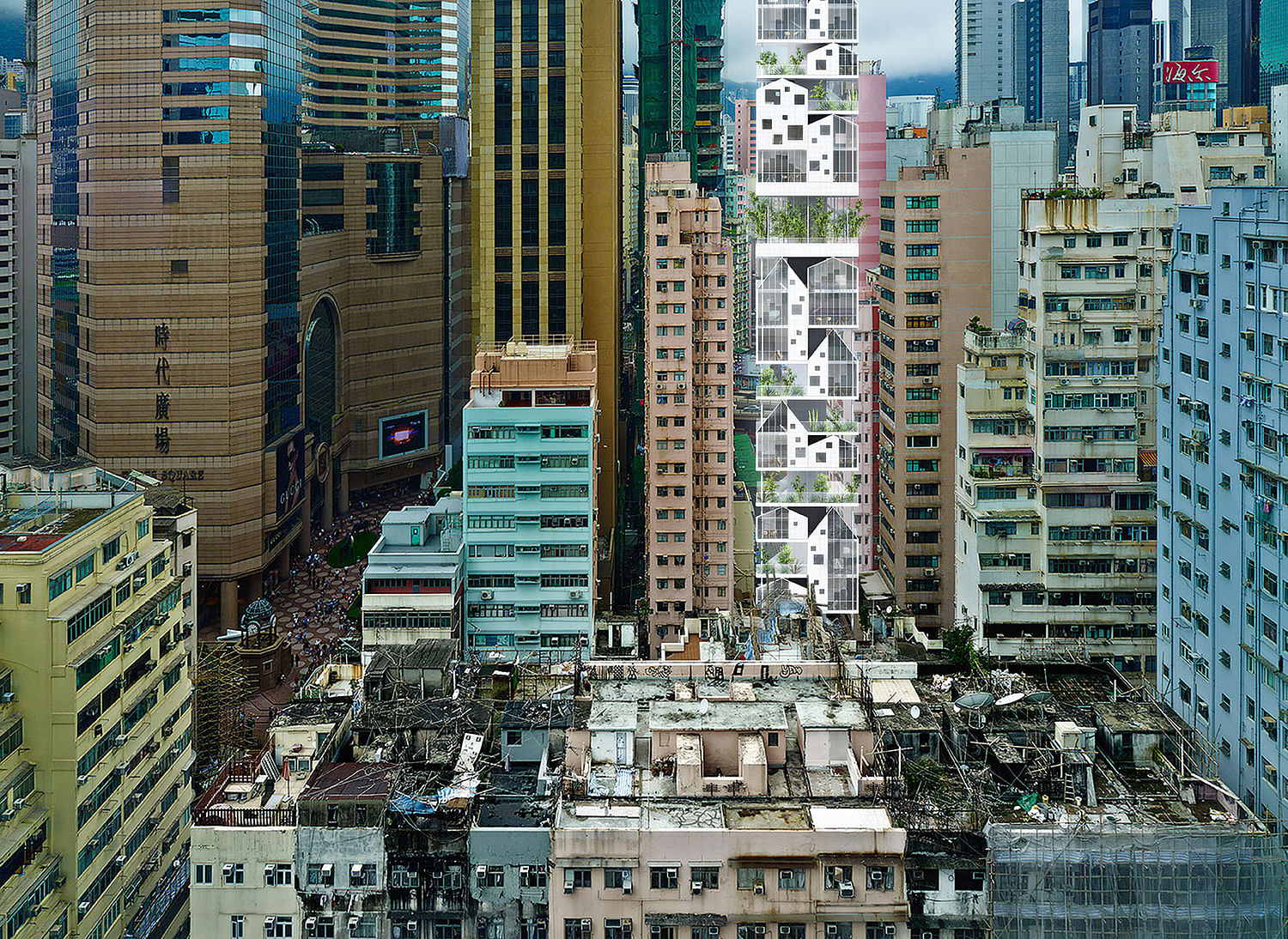
2nd prize: Vertical Village. Project authors: François Chantier, Maria Fernandez | France​

Jury commentary: “The second place proposal was chosen for its reformulation of a domestic typology as a solution for the housing crisis in Hong Kong. Composed of a 100 square meter prefabricated housing units, the aggregation of modules creates a vertical village that rethinks domestic space at the scale of the city. Through the use of the vernacular form of the home - the gable - the sectional variation of each housing module produces a rich spatial variety amongst the units - creating terraces, pocket gardens, and lofts each with a unique lighting condition. The proposal seeks to reclaim the scale of the city by inserting these vertical neighborhoods into the fabric of Hong Kong, interconnected by exterior passageways, shared spaces, and common gardens for collective activities such as worship, markets, and leisure. 

The robust morphology allows the project to adapt to the various sites, scales, and densities of Hong Kong. The simplified post-and-beam construction with prefabricated housing units inserted into the structural armature creates a low-cost and flexible system of construction. Paradoxically, although the units appear to be homes, their internal morphology radically alters typical domestic space from a series of rooms into an adaptable set of flexible functions and zones. The inhabitants can reappropriate and change the use of each space, enabled by the generosity of the layouts. The spaces between each prefabricated unit allows for light into the spaces and offer an opportunity for vegetation to occupy these interstitial voids.”

3rd prize + Student Award: Upside - Down Mechine
Project authors: Yukang Yang, Jingwen Cui - Beijing University of Technology | China
3rd prize + Student Award: Upside - Down Mechine Project authors: Yukang Yang, Jingwen Cui - Beijing University of Technology | China

Jury commentary: “The third place proposal resuscitates the legacy of the Metabolist capsule tower, reimagining the micro-unit dwelling as a mechanized zone of spatial modification and efficiency while producing a marketable icon for the skyline of Hong Kong. The dwelling space occupies cylindrical drums set into a rigid structural frame, stackable and deployable in multiple height configurations. Through the mechanical rotation of the dwelling cylinder, the topology of the unit deprioritizes the ground as the space of primacy, allowing the tenant to gain access to different programmatic functions deployed on both the ground and ceiling. Circulation and bathroom facilities maintain a fixed position in the core, while the machinic dwelling space is constantly mutable, rhythmically rotating, and contorting to fit the needs of the body.

The inhabitant views the city through the porthole of each cylinder while the city observes the inhabitant by means of a ring of neon illumination around the cylinder’s edge: a lurid beacon of color-coded activity within. The ultimate success of the proposal is its embedded critique of the dystopian future of the technological solution to the crisis of housing in the urban environment. The project offers less of a solution than an exacerbation of the already problematic tendencies of our urban domestic culture: the impossibility of privacy through digital media in an ever-shrinking dwelling footprint. The optimism of the proposal, however, relies on the idea that this existence has the potential to be fun, if we find comfort in relaying the activity of the private domestic sphere in a theater of spectacle for the public realm.”

Green Prize: Hong Kong Pixel Homes - Lantern of Lives
Project authors: Danaiporn Pongamornprom, Thongchai Wongsrisuppakul, Veeramon Suwannasang | Thailand
​Green Prize: Hong Kong Pixel Homes - Lantern of Lives. Project authors: Danaiporn Pongamornprom, Thongchai Wongsrisuppakul, Veeramon Suwannasang​ | Thailand

More project images in the gallery below. You can also check out more entries here.

Images courtesy of Bee Breeders.
RELATED COMPETITION Hong Kong Pixel Homes
RELATED NEWS The prize-winning proposals for the Mango Vinyl Hub in Latvia
RELATED NEWS Envisioning housing ideas for New York City's affordability crisis
RELATED NEWS Re-examining the role of cannabis through architecture in the Cannabis Bank competition

Share

  • Follow

    0 Comments

  • Comment as :

Archinect JobsArchinect Jobs

The Archinect Job Board attracts the world's top architectural design talents.

VIEW ALL JOBS POST A JOB

Marketing + Communications Specialist

Trahan Architects

Marketing + Communications Specialist

New York, NY, US

Architectural team Memeber

Meraki Architects, LLC

Architectural team Memeber

Middleburg Heights, OH, US

Hospitality Project Architect

bonetti/kozerski architecture DPC

Hospitality Project Architect

New York, NY, US

Associate - Interior Designer

FitzGerald Associates Architects

Associate - Interior Designer

Chicago, IL, US

Architectural Project Manager - Multifamily

DAHLIN Architecture | Planning | Interiors

Architectural Project Manager - Multifamily

San Diego, CA, US

Job Captain - Education

DAHLIN Architecture | Planning | Interiors

Job Captain - Education

San Diego, CA, US

Project Manager

Populous

Project Manager

San Francisco, CA, US

Junior Architect

Elizabeth Roberts Architecture & Design

Junior Architect

Brooklyn, NY, US

AutoCAD Drafter/Architectural Designer

Kari Whitman Interiors

AutoCAD Drafter/Architectural Designer

Boulder, CO, US

Digital Futures Fellow

The University of Tennessee - Knoxville

Digital Futures Fellow

Knoxville, TN, US

Next page » Loading