• Login / Join
  • About
  • •
  • Contact
  • •
  • Advertising
bustler logo
bustler logo
  • News
  • Competitions
  • Events
  • Bustler is powered by Archinect
  • Sign up for Bustler's Email Newsletters

  • Follow these Bustler feeds:

  • Search

    Search in

  • Submit

    What are you submitting?

    News Pitch
    Competition
    Event
  • Login / Join
  • News|Competitions|Events
  • Search
    | Submit
    | Follow
  • Search in

    What are you submitting?

    News Pitch
    Competition
    Event

    Follow these Bustler feeds:

  • About|Contact|Advertising
  • Login / Join

2018 AIA Institute Honor Award winners for Architecture, Interior Architecture, and Urban Design

By Justine Testado|

Friday, Jan 12, 2018
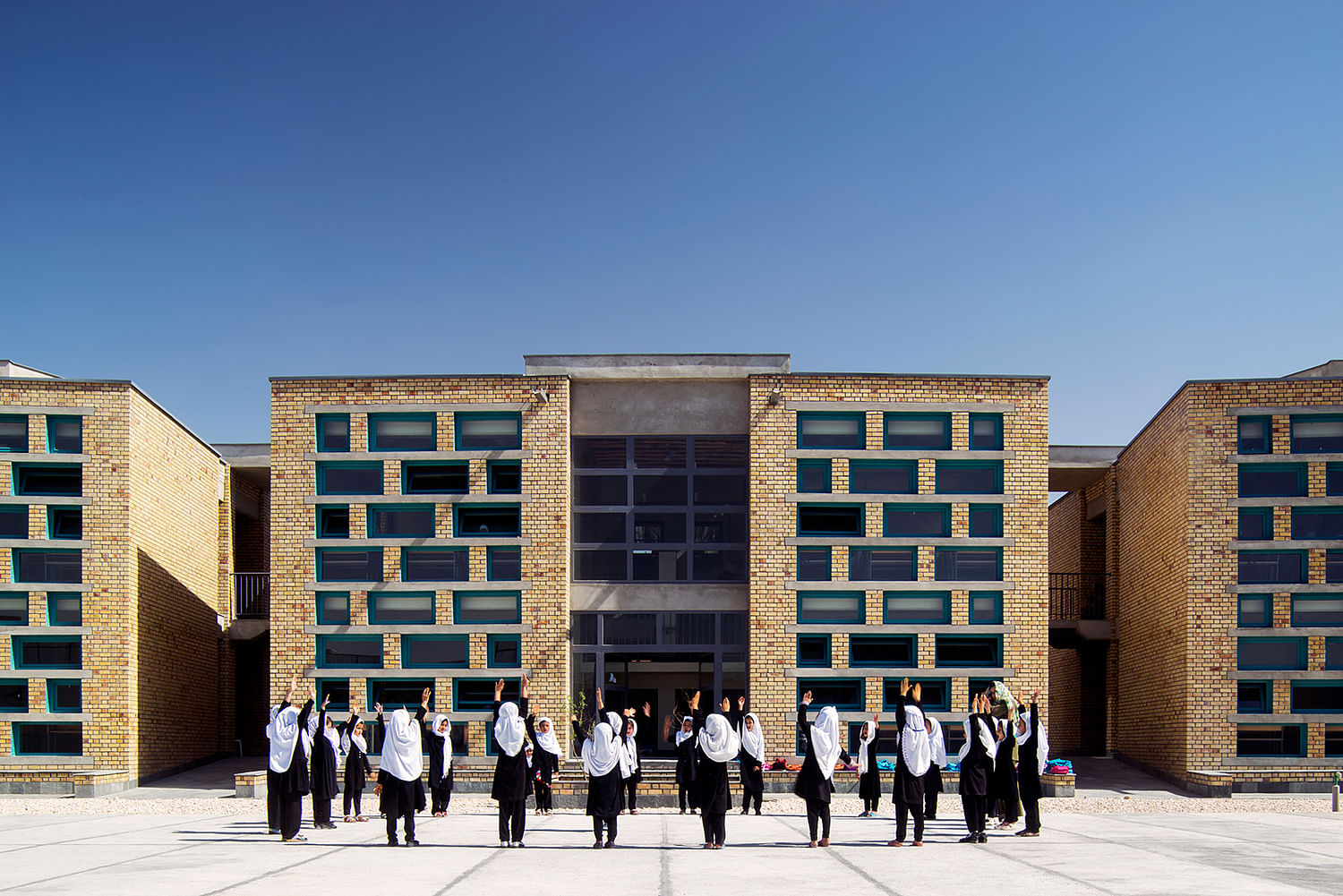
Gohar Khatoon Girls' School; Mazar-i-Sharif, Afghanistan by Robert Hull, FAIA, and the University of Washington, Department of Architecture. Photo: Nic Lehoux.

It's already time again for the AIA's big reveal of the winners for their Institute Honor Awards, regarded as one of the profession's highest recognitions for recent projects that exemplify excellence in architecture, interior architecture, and urban design. Out of roughly 500 competitive submissions for the 2018 edition, a total of 17 awards went to projects designed by firms like Patkau Architects, SOM, Marlon Blackwell Architects, Ross Barney Architects, and Bohlin Cywinski Jackson, to name a few.

The winners will be honored during the 2018 AIA Conference in New York City later this year. Scroll down to see the projects.

Institute Honor Awards for Architecture
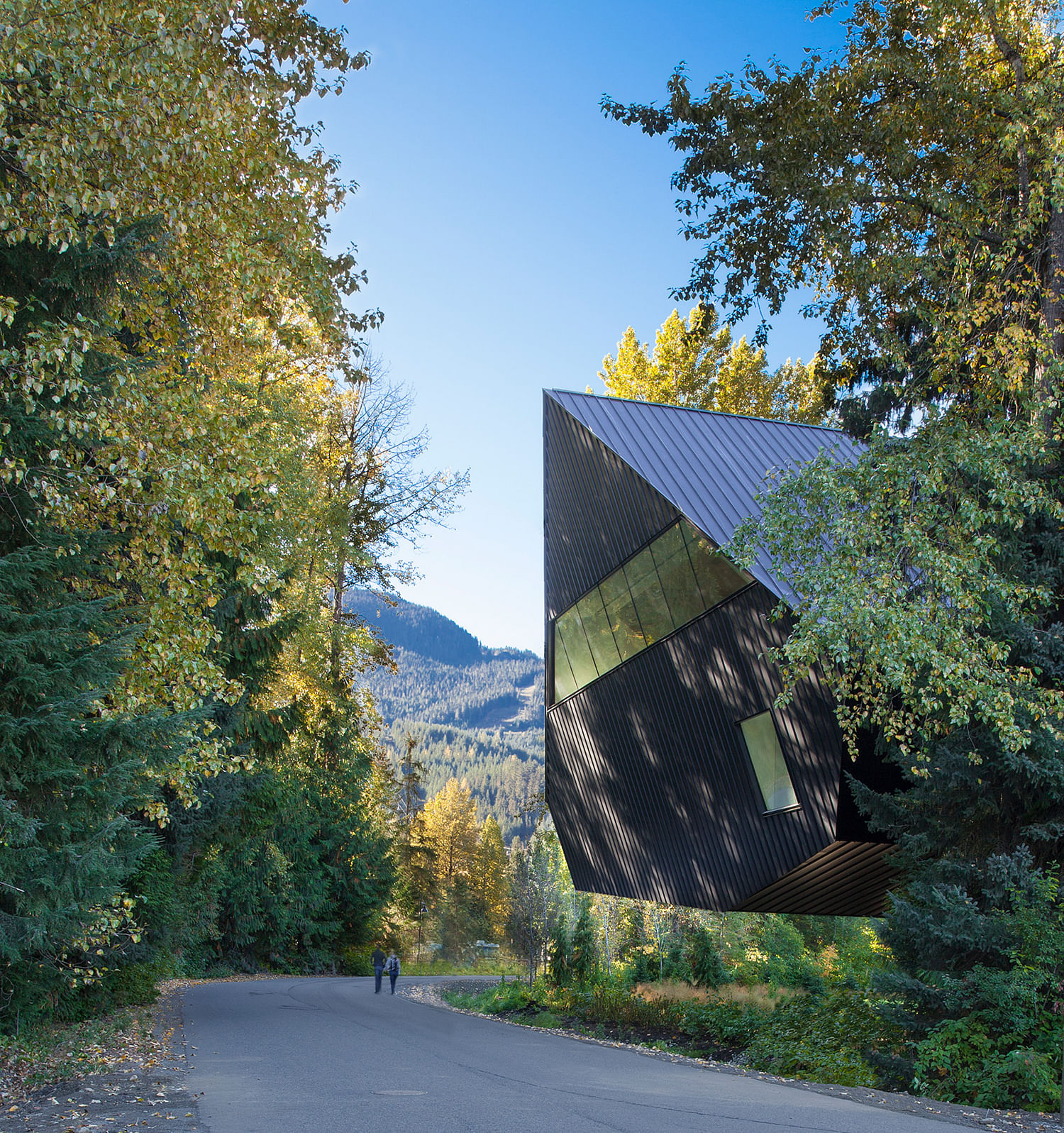
Audain Art Museum; Whistler, British Columbia, Canada by Patkau Architects Inc. Photo: James Dow / Patkau Architects

Audain Art Museum; Whistler, British Columbia, Canada
Patkau Architects Inc. 

Project summary: The Audain Art Museum is a private museum built to house and exhibit Michael Audain’s personal art collection, including British Columbia art from the late 18th century to the present. The design navigates three main determinants by connecting local culture with the permanent collection and traveling exhibits of all kinds, by spanning the revegetated floodplain of Fitzsimons Creek, and by strategically shedding the enormous snowfall typical of Whistler. The building’s minimal interiors recede behind the art and its calm exterior foregrounds the natural landscape.
RELATED NEWS Patkau Architects harmoniously balances nature and art in the Audain Art Museum
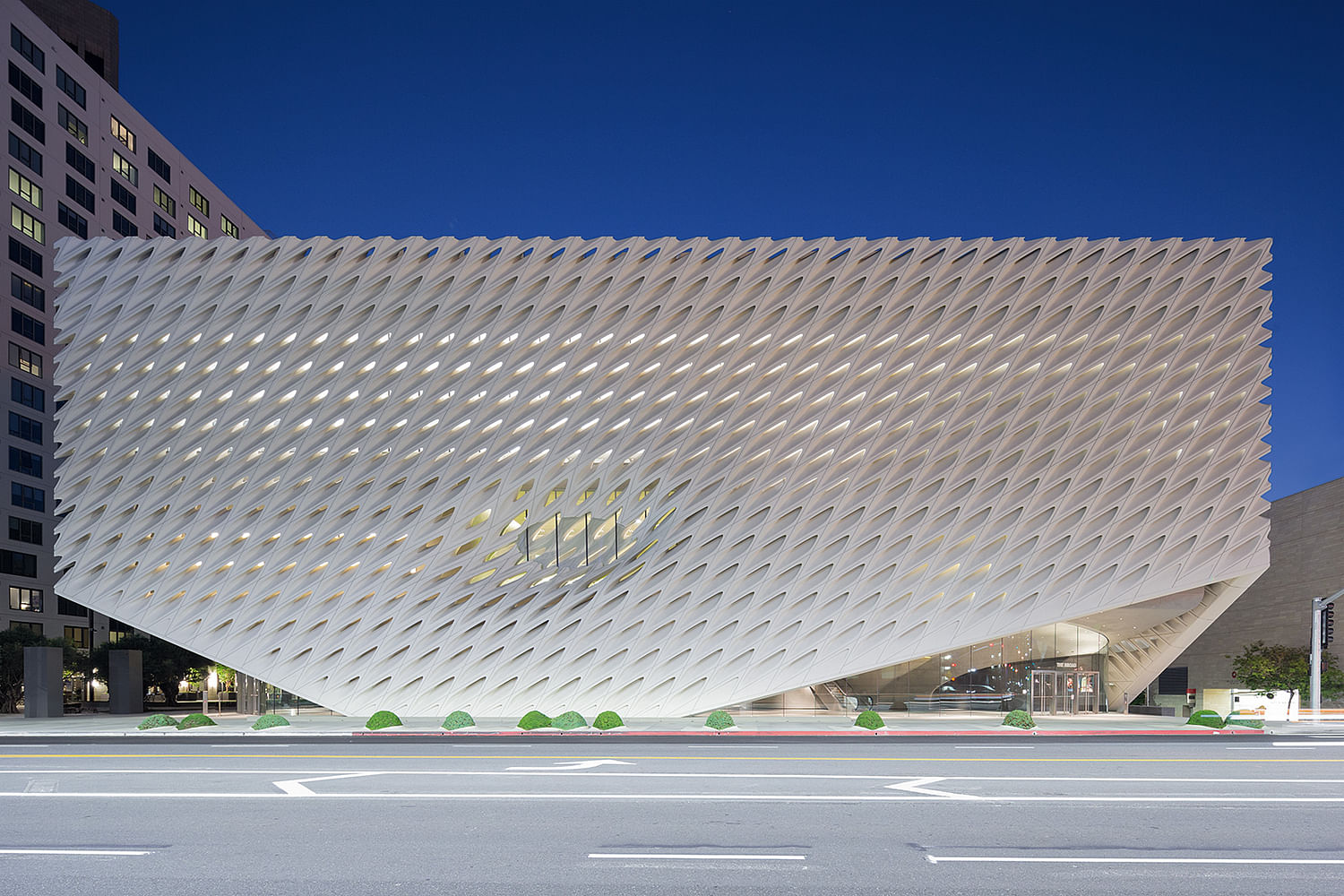
The Broad; Los Angeles by Diller Scofidio + Renfro, Associate Firm: Gensler. Photo: Iwan Baan.

The Broad; Los Angeles
Diller Scofidio + Renfro, Associate Firm: Gensler 

With its innovative “veil-and-vault” concept, The Broad showcases artworks from the 2,000+ works in the Broad collection. The “vault” storage holding shapes the museum experience for visitors who enter the lobby below its carved underside, shoot through it in the elevator, stand above it in the galleries, and peer in through viewing windows. The vault is enveloped by the “veil,” an airy, honeycomb-like structure that filters daylight into public galleries. Since opening in 2015, The Broad has welcomed more than 1.7 million visitors and has been heralded as a catalyst for urbanizing downtown Los Angeles.
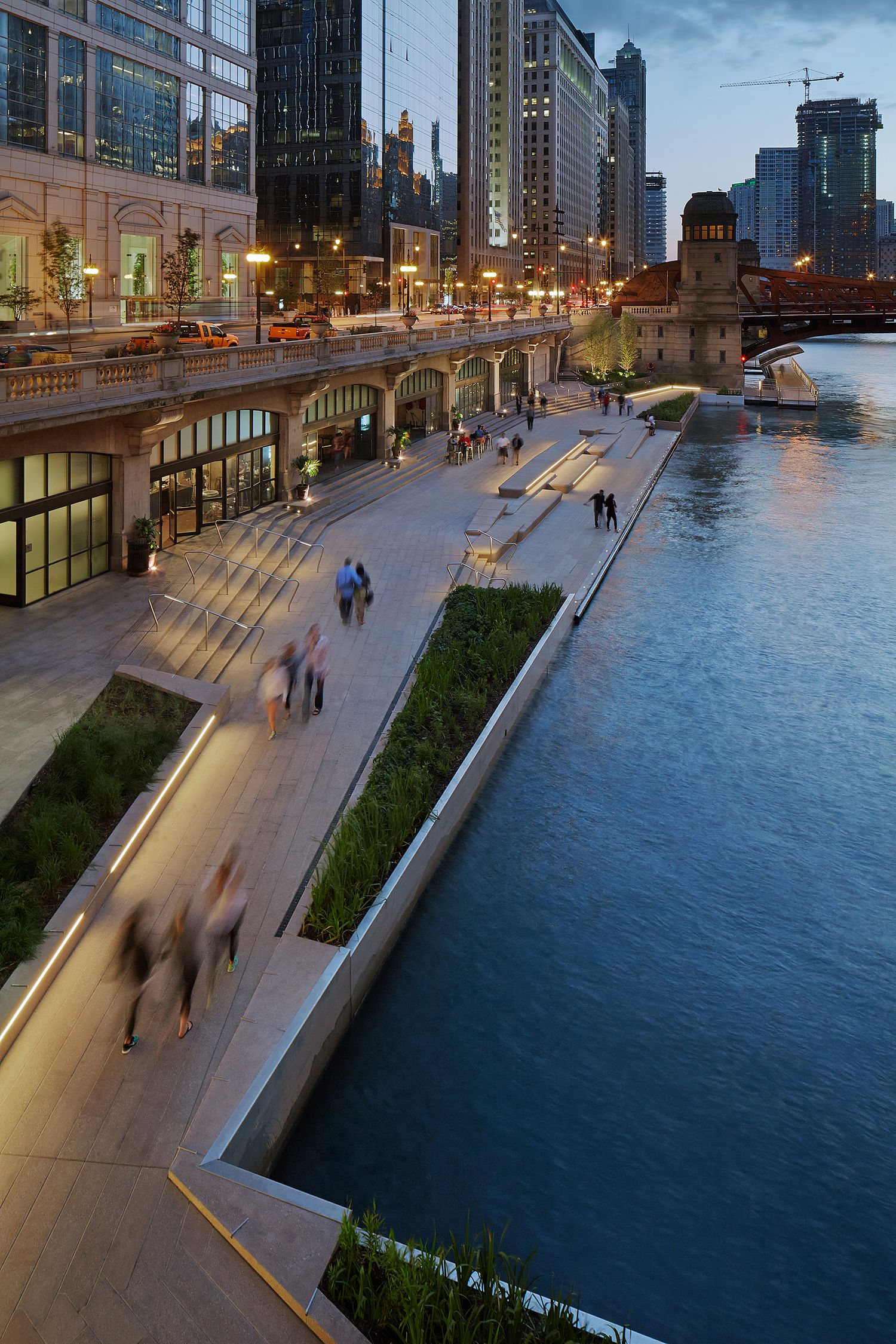
Chicago Riverwalk; Chicago (Also won an Honor Award for Regional and Urban Design) by Ross Barney Architects. Photo: Kate Joyce.

Chicago Riverwalk; Chicago (Also won an Honor Award for Regional and Urban Design)
Ross Barney Architects and Sasaki

As early as Burnham and Bennett’s 1909 “Plan of Chicago”, the Main Branch of Chicago River was envisioned as a place of both leisure and commerce. Nearly a century later the Chicago Riverwalk has realized this vision. Through changes in its shape and form, the continuous river level path drives a series of new programmatic connections to the water. Above all, the Riverwalk honors the iconic quality of the existing urban context by embracing and interpreting Chicago’s layered history.

Utilizing derelict infrastructure, the Chicago Riverwalk is a one-and-a-quarter-mile-long civic space between Lake Michigan and the confluence of the main, north, and south branches of the Chicago River. What might have been unimaginable years ago has been achieved: an activated riverfront in the heart of a booming urban core. The Riverwalk has transformed Chicago and in turn has become a beloved park for residents, visitors, and people of all backgrounds.
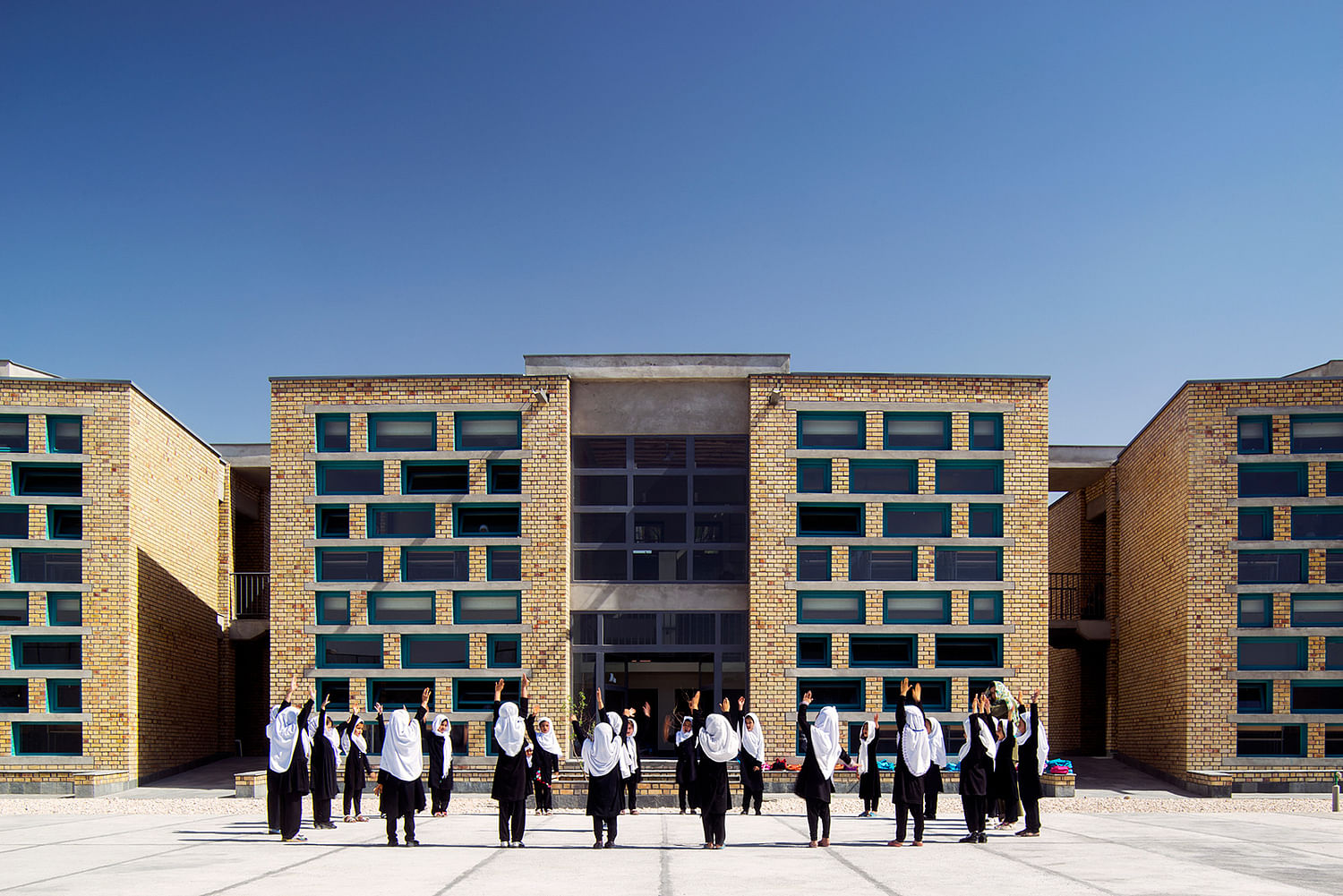
Gohar Khatoon Girls' School; Mazar-i-Sharif, Afghanistan by Robert Hull, FAIA, and the University of Washington, Department of Architecture. Photo: Nic Lehoux.

Gohar Khatoon Girls' School; Mazar-i-Sharif, Afghanistan
Robert Hull, FAIA, and the University of Washington, Department of Architecture 

Located in Mazar-i-Sharif, Afghanistan’s fourth largest city, the Gohar Khatoon Girls’ School is an important urban center educating several thousand girls every day. Commissioned by the Balkh Province Ministry of Education, in partnership with a U.S.-based non-profit organization, the school is integrated into the national education system expanding Afghanistan’s push toward the development of women and girls and their contribution and inclusion within Afghan society. Gohar Khatoon supports this process by promoting stability, comfort, and community engagement and has become a model for other girls’ schools in the country.
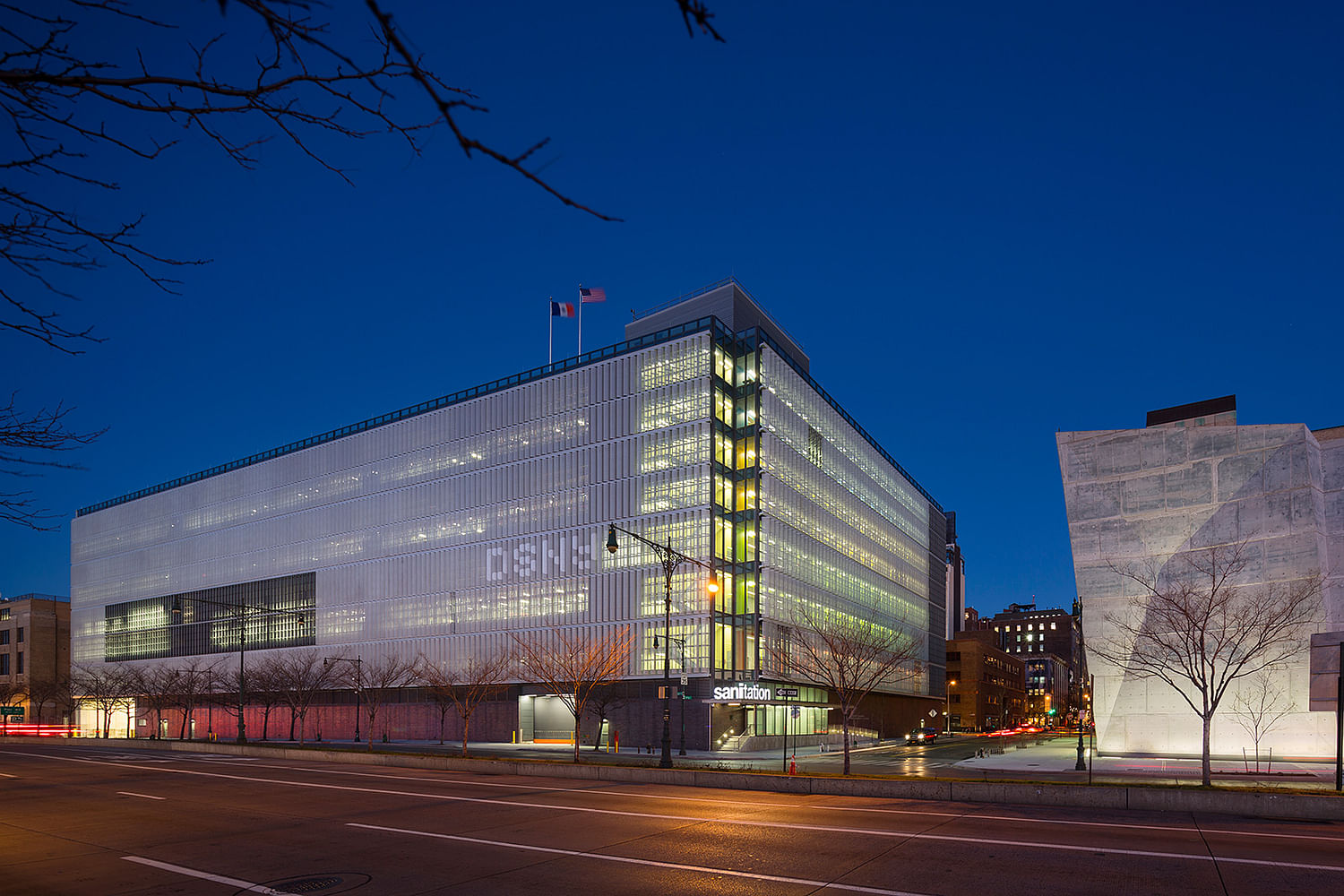
Manhattan Districts 1/2/5 & Spring Street Salt Shed; New York City by Dattner Architects in association with WXY architecture + urban design. Photo: Albert Vecerka / Esto.

Manhattan Districts 1/2/5 & Spring Street Salt Shed; New York City
Dattner Architects in association with WXY architecture + urban design 

Located at the edge of Manhattan in a dense mixed-use neighborhood, the Department of Sanitation’s garage and a salt shed were signature projects of NYC’s Design Excellence program. The 425,000-square-foot garage’s double skin façade is clad in perforated metal fins, reducing solar loading while providing a strong vertical articulation of the project’s mass. The 5,000-square-foot salt shed, with faceted concrete planes, has become an iconic structure, attracting photo shoots, architectural tourists, and curious locals. The design and siting of these two projects provide a dignified example of vital civic architecture.
RELATED NEWS The Manhattan Districts 1/2/5 Garage and Spring Street Salt Shed up the ante in municipal sanitation design
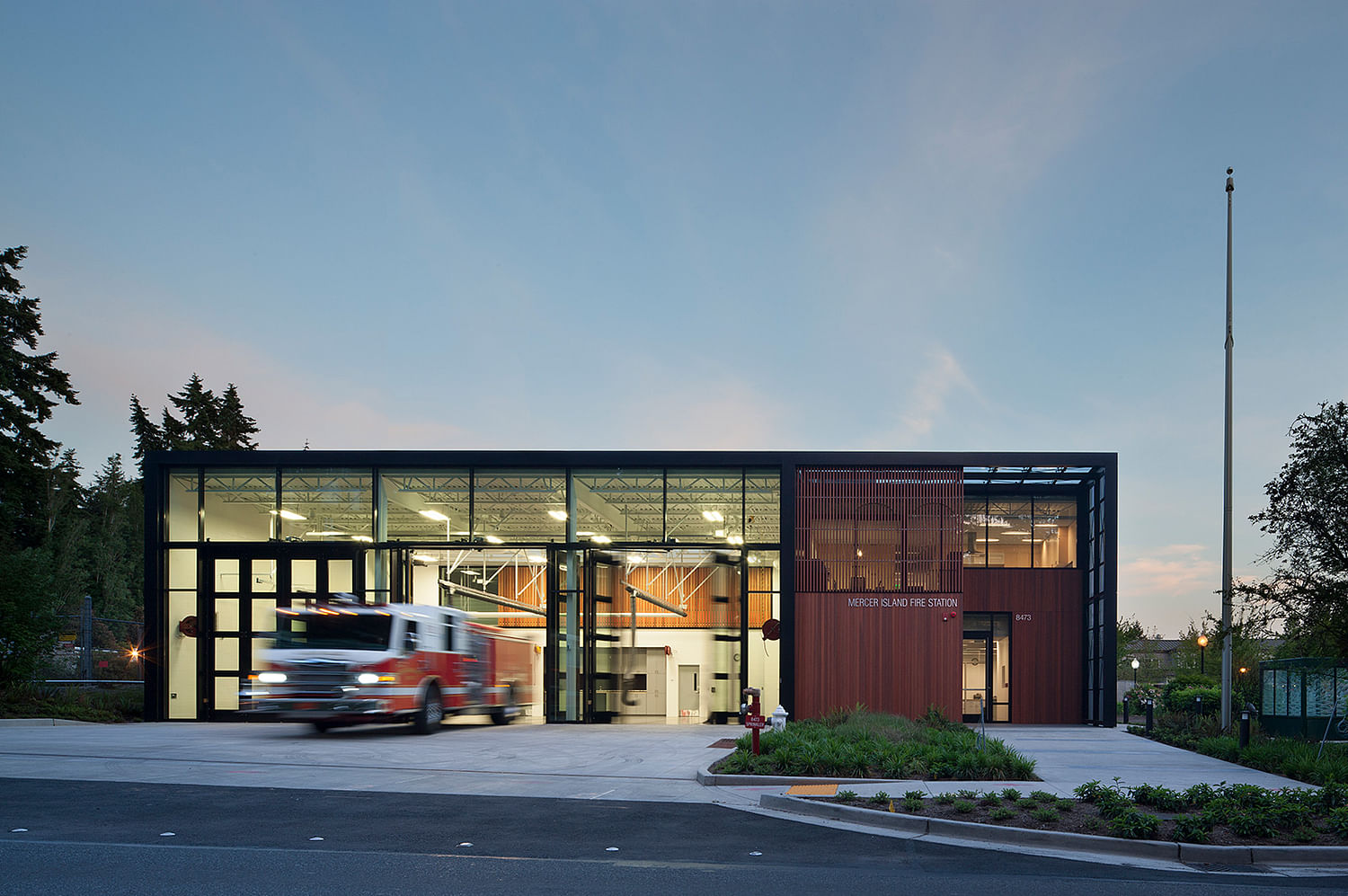
Mercer Island Fire Station 92; Mercer Island, Washington by Miller Hull Partnership. Photo: Lara Swimmer.

Mercer Island Fire Station 92; Mercer Island, Washington
Miller Hull Partnership 

From the earliest ages, we are drawn almost magically to the firefighters, firetrucks and the equipment contained in these civic landmarks. The design for the 8,000-square-foot replacement of FS92, originally built in 1962, embraces this attraction by providing inviting views into the apparatus bay from the main pedestrian and vehicular thoroughfare in this small island community. This visibility promotes a greater connection to the people that the fire station serves, resulting in increased awareness and vocal advocacy for these vital services. The design team incorporated a number of sustainable features to reduce energy use and provide thermal comfort for the firefighters. The station boasts a thermally efficient envelope, and fast-acting bi-fold doors in the vehicle bays reduce the amount of time the doors are opened following an emergency response.
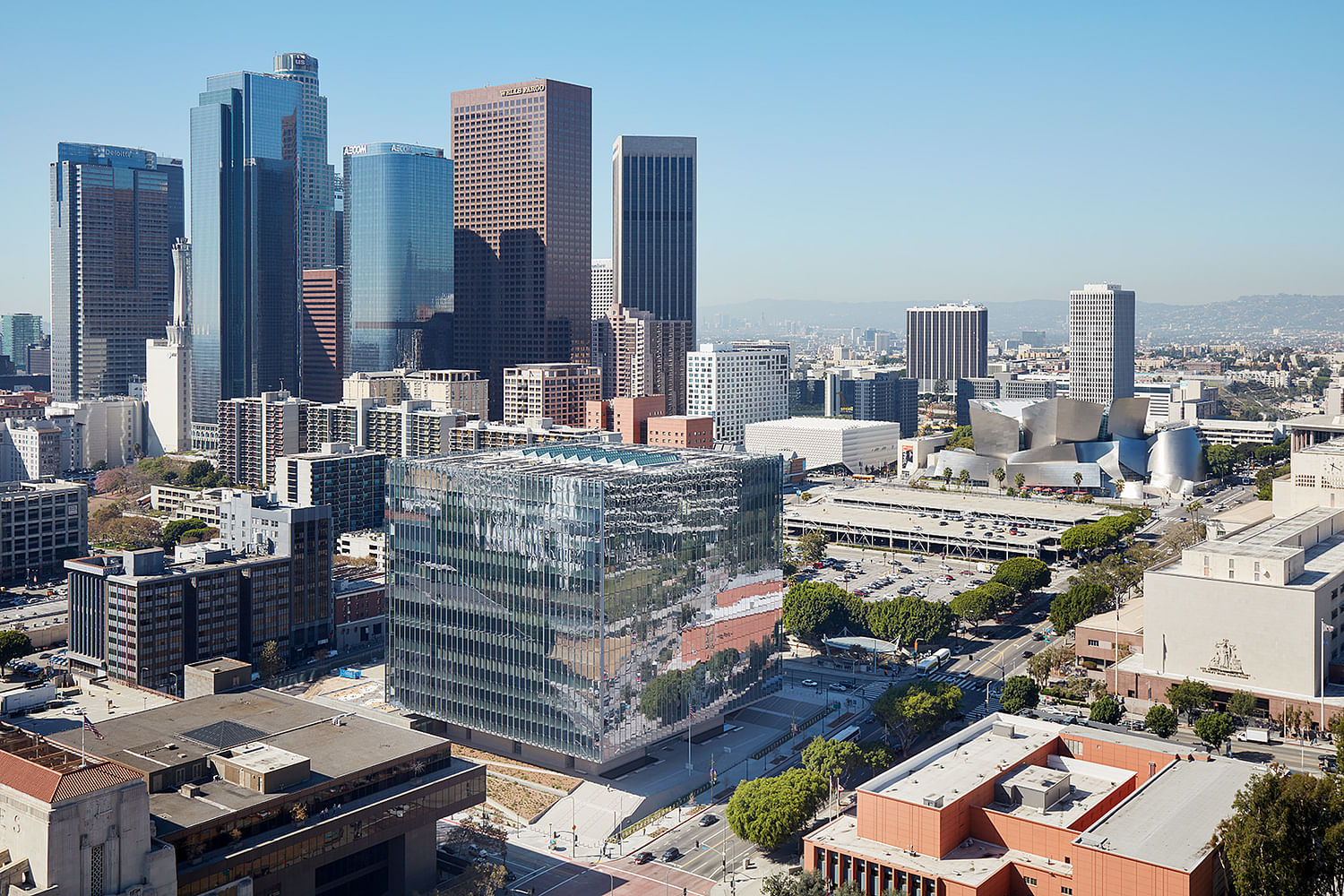
New United States Courthouse; Los Angeles by Skidmore, Owings & Merrill LLP. Photo: Skidmore, Owings & Merrill LLP | Bruce Damonte.

New United States Courthouse; Los Angeles
Skidmore, Owings & Merrill LLP 

The New United States Courthouse – Los Angeles houses the U.S. District Court, Central District of California. The building’s architectural expression is an inextricable union of site orientation, environmental performance and principles that honor the public realm. An innovative hat-truss structure allows this cubic form to “float” above a stone base, opening up new public spaces, giving the project a clear civic presence and separating it from its commercial neighbors. The design is rooted in classic principles of American civic architecture as seen through the lens of 21st Century Los Angeles.
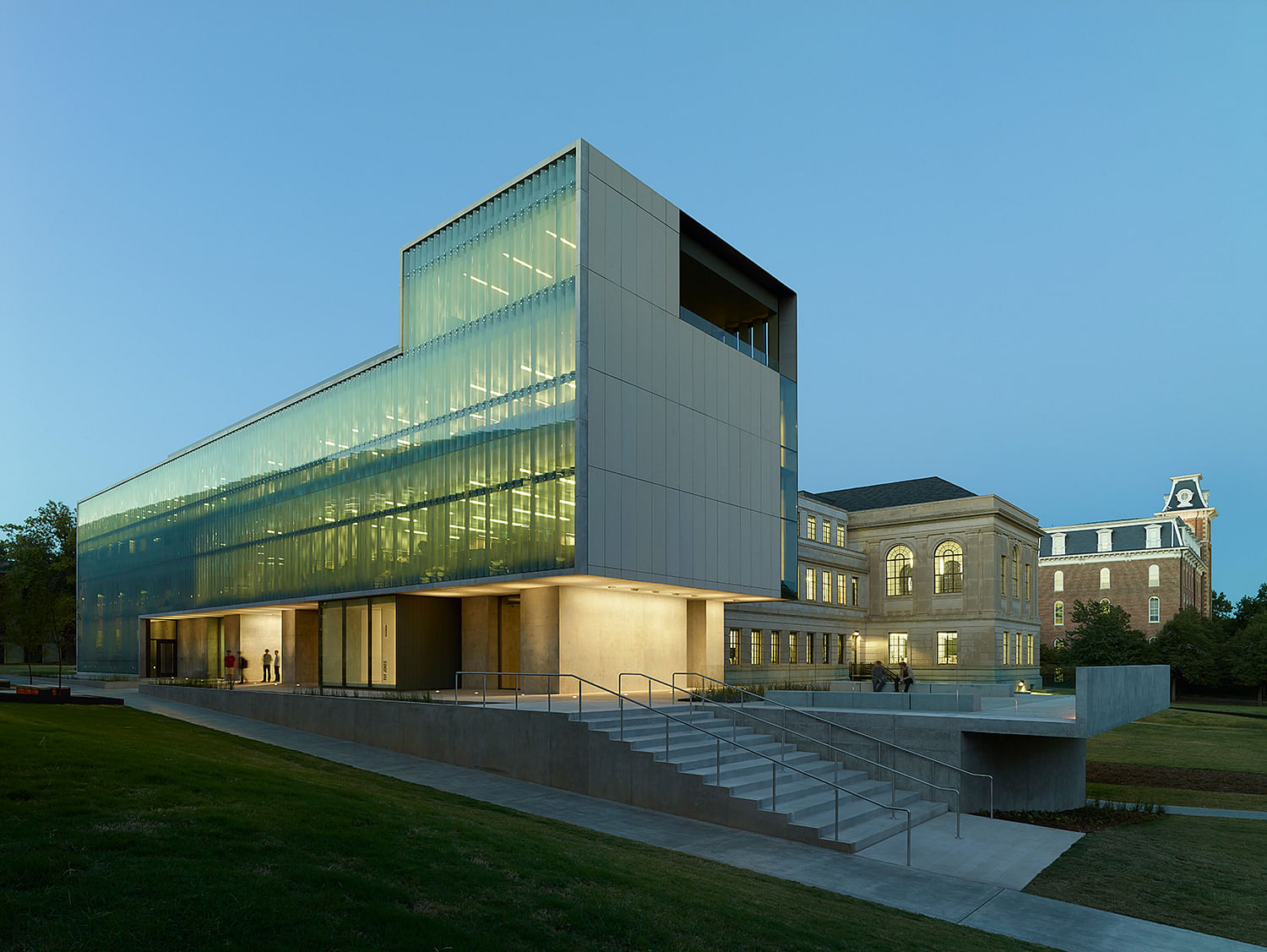
Vol Walker Hall & the Steven L. Anderson Design Center; Fayetteville, Arkansas by Marlon Blackwell Architects. Photo: Timothy Hursley.

Vol Walker Hall & the Steven L. Anderson Design Center; Fayetteville, Arkansas
Marlon Blackwell Architects 

The Steven L. Anderson Design Center is a contemporary addition to a carefully restored and renovated historical building, Vol Walker Hall, the University of Arkansas’s original library and home to the Fay Jones School of Architecture and Design since 1968. The coupling of old and new creates a striking hybrid, invigorating the historical center of the university’s campus and revitalizing the educational environment of the School. The expanded facility unites all three departments – architecture, landscape architecture, and interior design – under one roof for the first time, reinforcing the School’s identity and creating cross-disciplinary, collaborative learning environments.
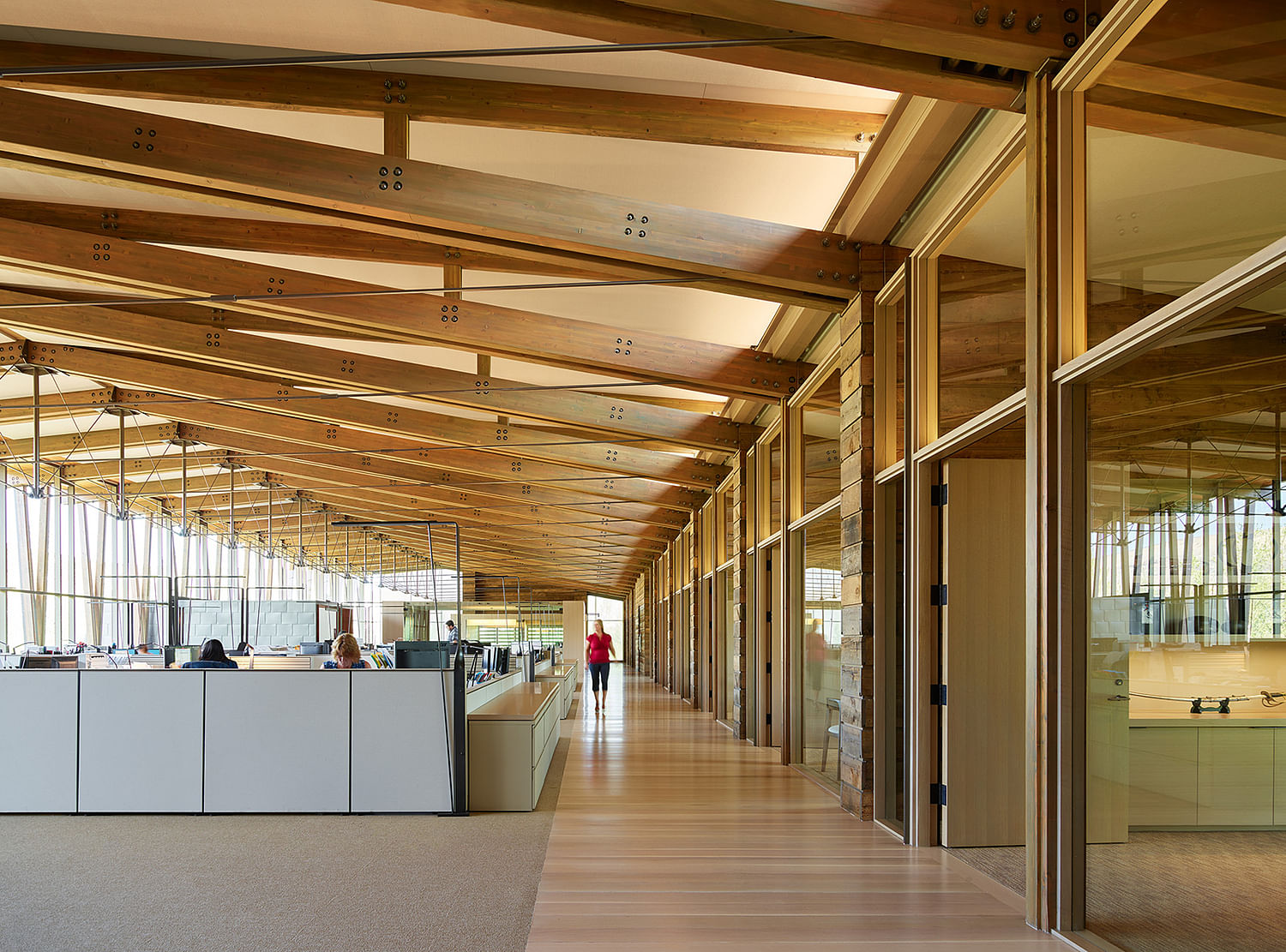
Washington Fruit & Produce Company Headquarters; Yakima, Washington by Graham Baba Architects. Photo: Kevin Scott.

Washington Fruit & Produce Company Headquarters; Yakima, Washington
Graham Baba Architects 

Company leaders desired a new office/headquarters that would serve as a refuge from the industrial agribusiness landscape that surround them. They asked for warmer materials, little-to-no concrete, non-boxlike forms, protection from the freeway, and a spare office aesthetic that minimized visible equipment or devices. The approach for the new 16,500-square-foot office was to create an inwardly focused oasis. The building is light, from the delicate, expressive structural beams to the ample amount of daylight throughout. The building tucks into its environment to merge with nature.

Institute Honor Awards for Interior Architecture
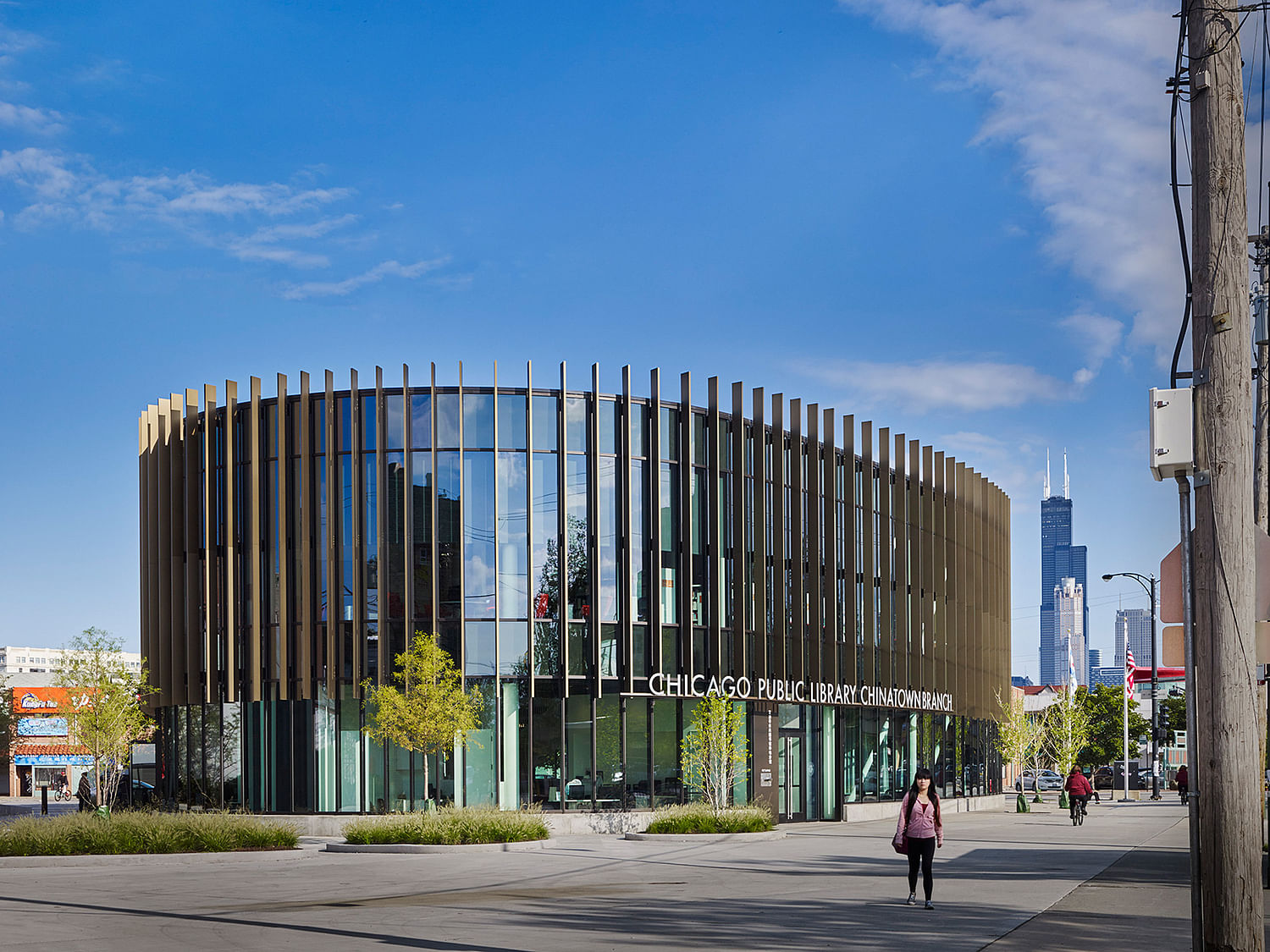
Chicago Public Library, Chinatown Branch; Chicago by Skidmore, Owings & Merrill LLP. Photo: Jon Miller | Hedrich Blessing.

Chicago Public Library, Chinatown Branch; Chicago
Skidmore, Owings & Merrill LLP 

The Chicago Public Library, Chinatown Branch serves as a civic, educational, and social hub for the city’s Chinatown neighborhood. The most visited branch in the Chicago Public Library system, the library provides a much-needed public gathering place geared toward community activities and technology-based learning. Anchored by a skylit two-story central atrium, the building’s interiors are open concept, flexible, and sustainable, and feature daylighting, panoramic neighborhood views, with bright, comfortable furnishings for visitors of all ages, including a vibrant site-specific 60-foot mural on the history of Chicago’s Chinatown painted by a local artist.
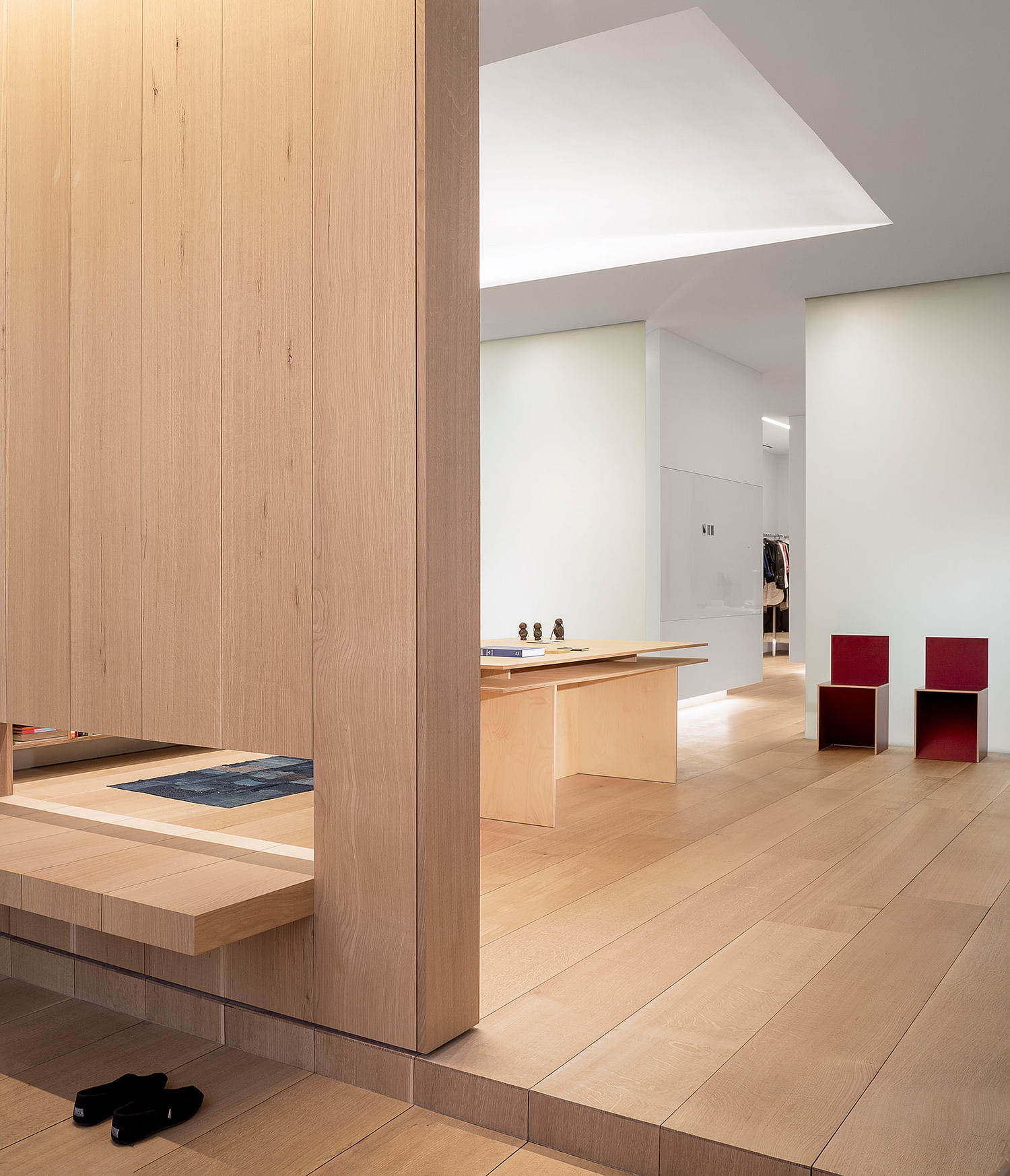
Photographer's Loft; New York City by Desai Chia Architecture. Photo: Paul Warchol Photography.

Photographer's Loft; New York City
Desai Chia Architecture 

This industrial loft renovation was designed for a photographer seeking a serene live-work environment. The library/reception area immediately off the entry vestibule serves as a hinge for two distinct zones – the east zone flows directly into the ‘private’ domain of her photography studio and private bedroom, while the south zone flows into the ‘public’ domain of her kitchen, dining, and living areas. By cutting and folding the ceiling planes, light gently bounces throughout and anchors the seating areas. Functional raw steel, wood, and resin elements artfully shape the environment throughout.
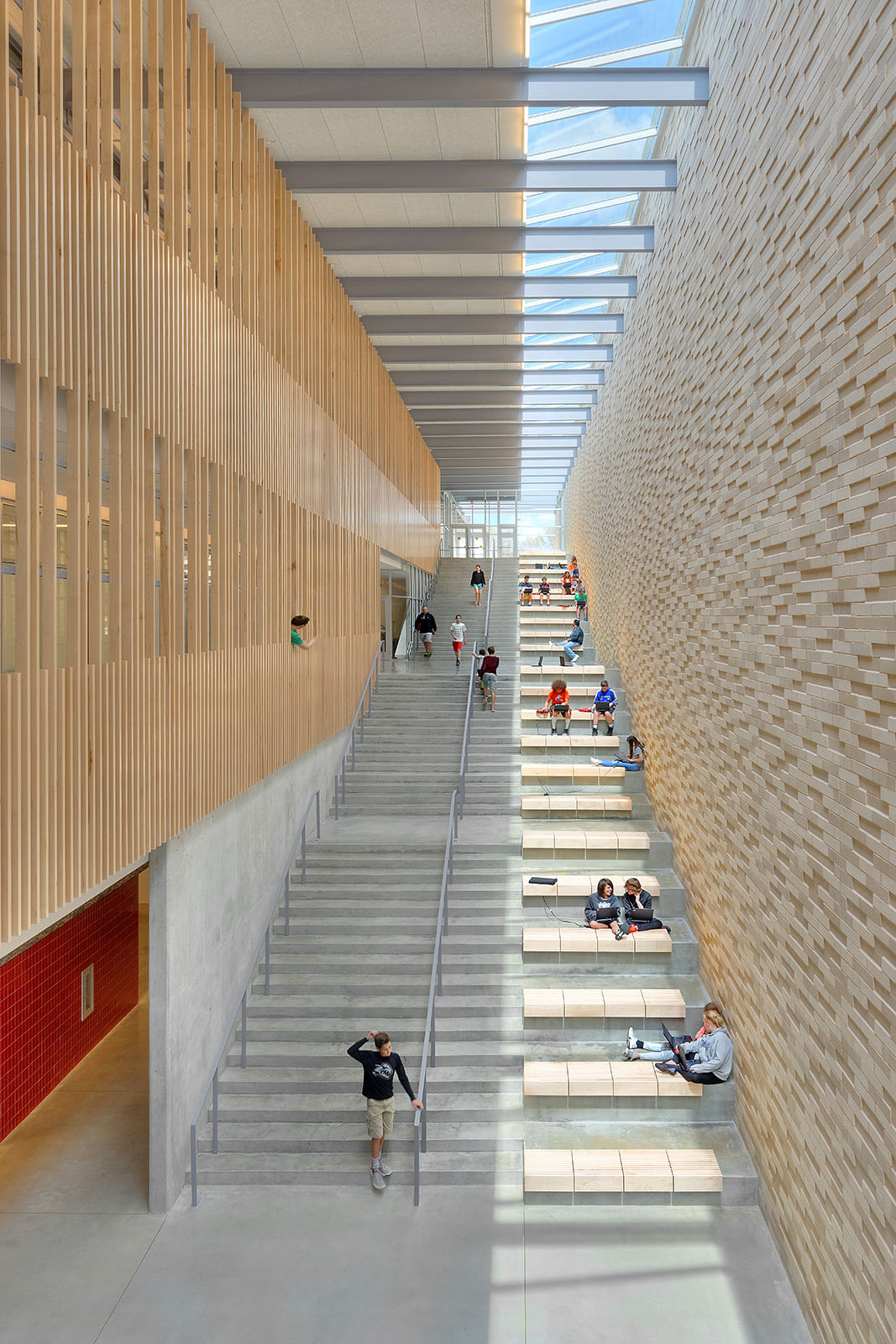
Reeds Spring Middle School; Reeds Spring, Missouri by Dake Wells Architecture. Photo: Architectural Imageworks, LLC.

Reeds Spring Middle School; Reeds Spring, Missouri
Dake Wells Architecture 

Taking advantage of the site’s dramatic topography, this new middle school places the two largest programmatic spaces below grade, providing energy efficiency and storm resiliency for nearly 400 students and teachers. A cascading atrium is the heart of the school, flooded with light and activity, connecting collaborative teaching zones and flexible learning environments. A wood screen references the nearby woods while providing added safety and warmth to the building interior.
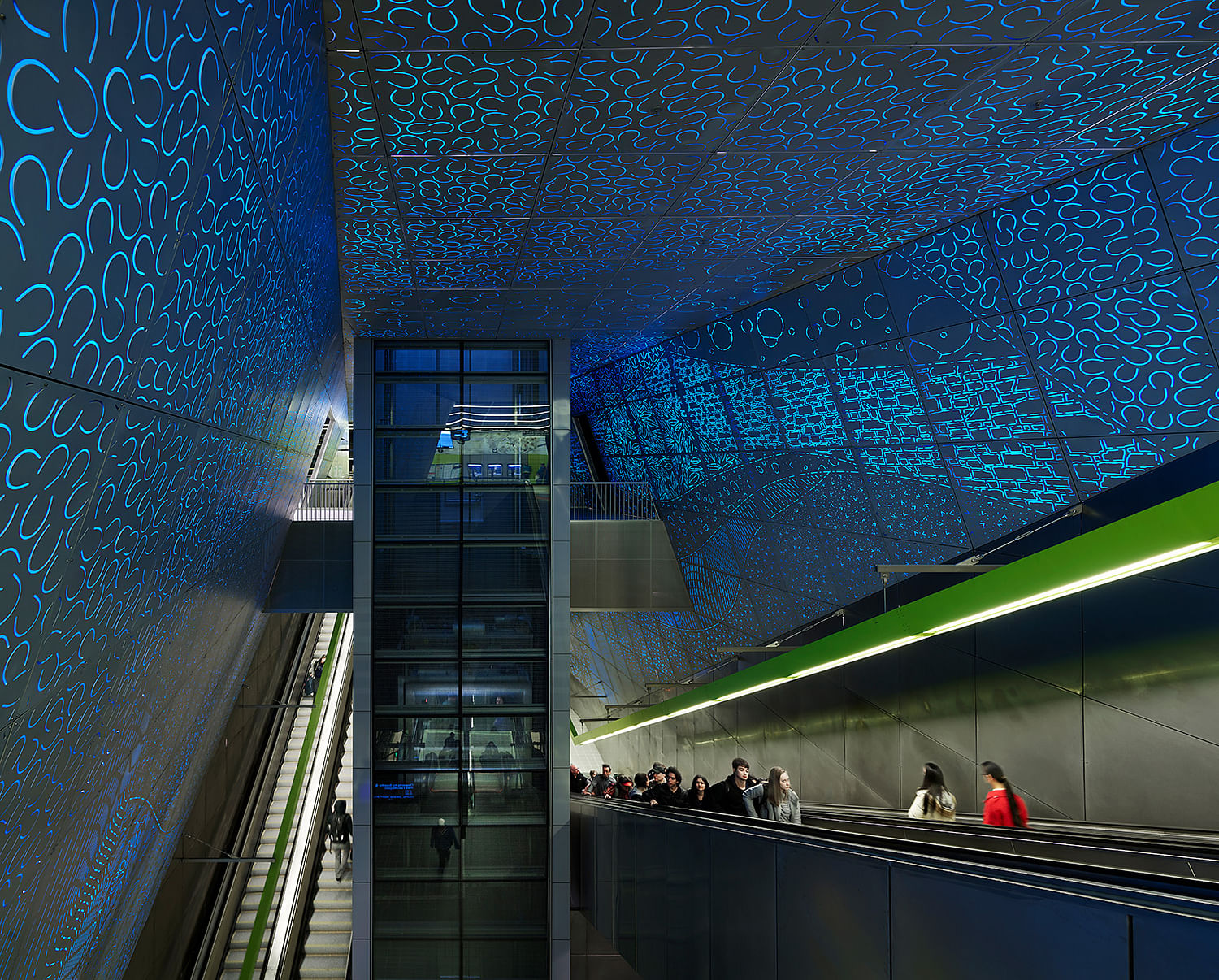
Sound Transit University of Washington Station; Seattle by LMN Architects. Photo: Kevin Scott.

Sound Transit University of Washington Station; Seattle
LMN Architects 

The Sound Transit University of Washington Station creates a unified solution at one of Seattle’s busiest intersections and provides a unique gateway to the UW campus through its above and below-grade experiences. At the heart of the 156,000-square-foot station, LMN Architects and artist Leo Saul Berk collaborated to create an integrated experience for travelers, where the architecture seamlessly merges with Berk’s artwork, Subterraneum. Backlit perforated metal panels clad the chamber walls, forming patterns of light that express the geological layers of earth, and suffuse the space with ambient light. The Station opened as the second of two stops on the University link in 2016, increasing system ridership by 80 percent.
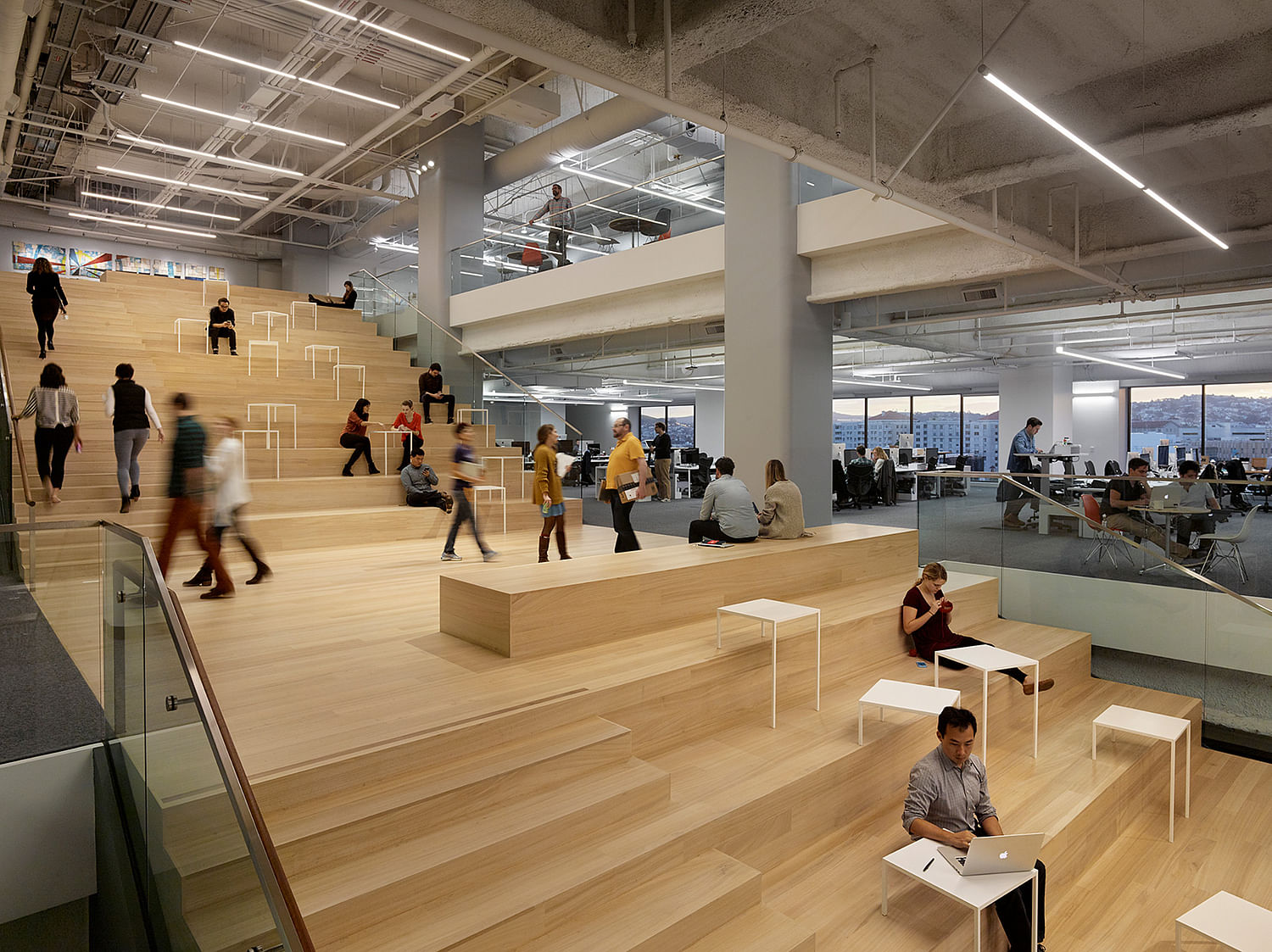
Square, Inc. Headquarters; San Francisco by Bohlin Cywinski Jackson. Photo: Matthew Millman.

Square, Inc. Headquarters; San Francisco
Bohlin Cywinski Jackson 

Square’s headquarters, spanning four floors of a converted data center, utilizes urban planning principles to transform vast floorplates into a vibrant workplace. A central boulevard, lined with landmarks that break down the scale of the expansive project, serves as the organizational spine of the 295,000-square-foot space. A monumental amphitheater unifies the office floors, providing a flexible venue for a host of activities. Clean lines and predominantly white interiors resonate with Square’s brand at both aesthetic and functional levels, highlighting the company’s core values to create a refined, seamless experience.

Institute Honor Awards for Regional and Urban Design
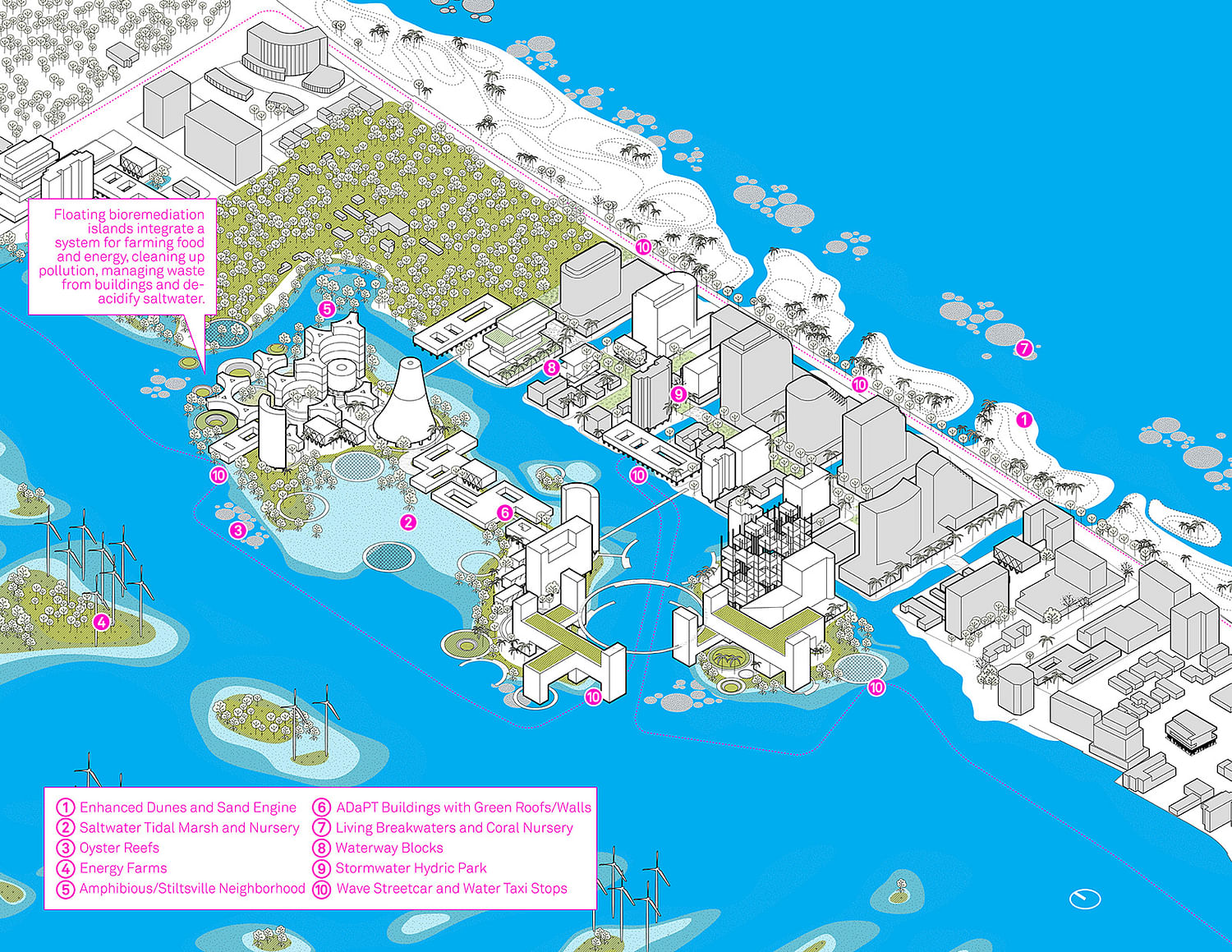
Salty Urbanism: Sea Level Rise Adaptation Strategies for Urban Areas; Ft. Lauderdale, Florida by Brooks + Scarpa, Florida Atlantic University, and University of Southern California. Image: Brooks + Scarpa.

Salty Urbanism: Sea Level Rise Adaptation Strategies for Urban Areas; Ft. Lauderdale, Florida
Brooks + Scarpa, Florida Atlantic University and University of Southern California 

Salty Urbanism is a sea-level rise adaptation design framework for urban areas that envisions and quantifies the experiential and ecological outcomes of alternative lifestyles within a future of saturated landscapes. As an integrative design tool, Salty Urbanism accommodates a variety of best management practices to be implemented over time. Tactics and techniques outlined are implemented step-wise and successively across various fronts to establish meaningful conversations among stakeholders as they reimagine and realize a prosperous way forward for the region while adapting to sea level rise and climate disruptions.
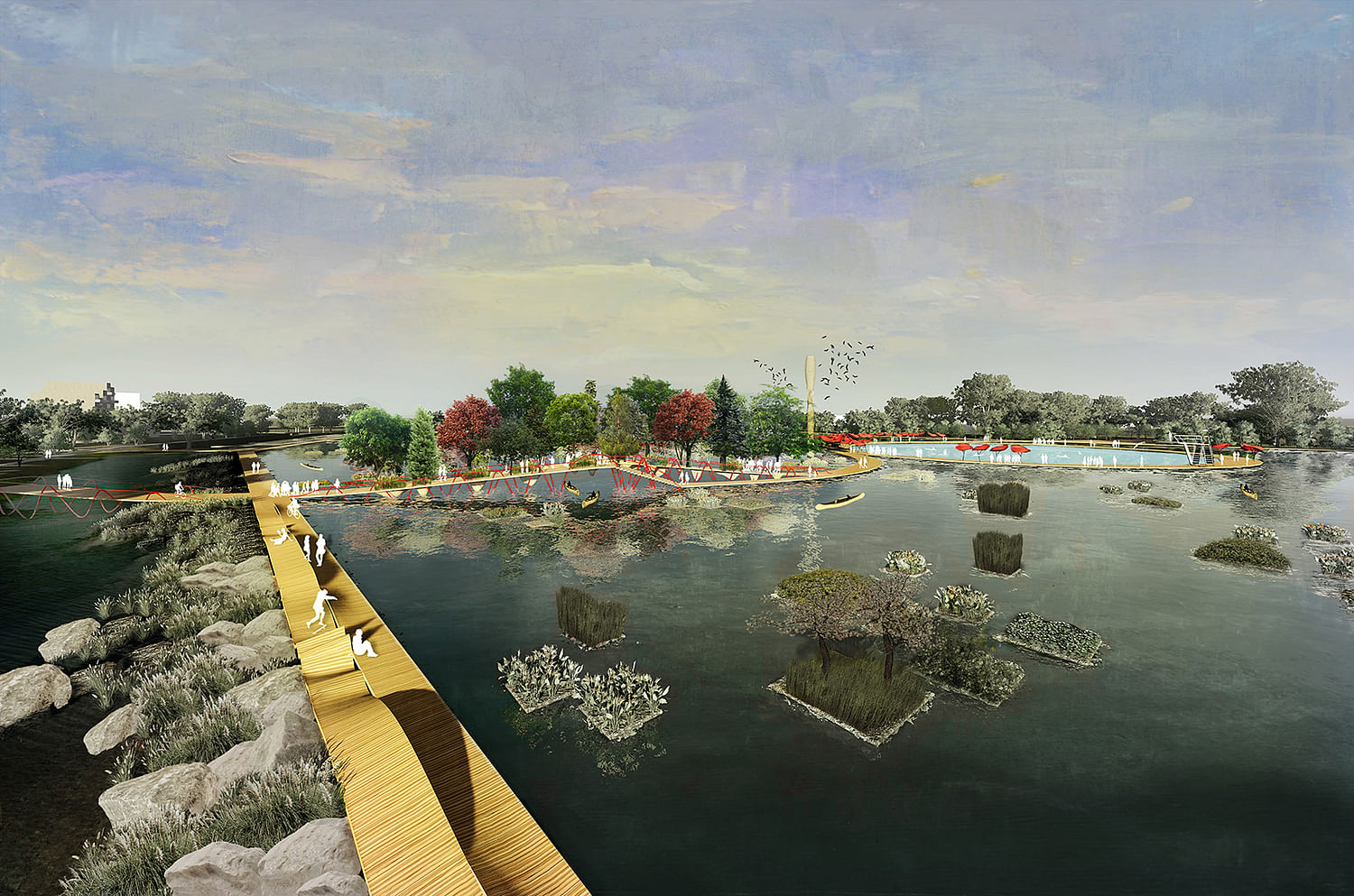
Urban Watershed Framework Plan: A Reconciliation Landscape for Conway, Arkansas by University of Arkansas Community Design Center. Image: University of Arkansas Community Design Center.

Urban Watershed Framework Plan: A Reconciliation Landscape for Conway, Arkansas
University of Arkansas Community Design Center

 In rapidly growing Conway, Arkansas, the Urban Watershed Framework Plan recalibrates urban infrastructure according to ideals espoused in the concepts of ecosystem services. The plan envisions highly livable green spaces developed through low-tech but high-concept enhancements to investments already servicing Conway’s growth. Employing green infrastructure to deliver ecosystem services, the plan includes a portfolio of retrofits that complement conventional infrastructure that can be transferred to any urban watershed. As ecological problems are often social problems, property owners and low-income residents downstream often suffer the most economic damage. To combat this, the plan bolsters social equity by providing a number of suggested policy revisions and holistic solutions that benefit all interests.

2018 Jury members

Architecture Jury: Lee Becker, FAIA (Chair), Hartman-Cox Architects; Anne Marie Decker, FAIA, Duvall Decker Architects; Susan Johnson, AIA, Strata; Anna Jones, Assoc. AIA, MOD Design; Caitlin Kessler, AIAS Student Representative, University of Arizona; Marilee Meacock, AIA, KSS Architects; Robert Miller, FAIA, Bohlin Cywinski Jackson; Sharon Prince, Grace Farms Foundation; and Rob Rogers, FAIA, Rogers Partners

Interior Architecture Jury: Brian Caldwell, AIA (Chair), THINKTANK Design Group; Joshua Aidlin, AIA, Aidlin Darling Design; Kiyomi Kurooka, AIA, DWL Architects + Planners Inc.; John Paquin, AIA, Statesville; and William T. Ruhl, AIA, RUHL WALKER Architects

Regional and Urban Design Jury: Roger Schluntz, FAIA (Chair), School of Architecture and Planning, University of Mexico; Lisa Chronister, AIA, City of Oklahoma City Planning Department; Suzanne DiGeronimo, FAIA, DiGeronimo Architects; Tim Griffin, AIA, Minnesota Design Center; and Gerry Tierney, AIA, Perkins+Will

RELATED NEWS Winners of the 2017 AIA Institute Honor Awards - Architecture
RELATED NEWS 2017 AIA Institute Honor Awards - Interior Architecture
RELATED NEWS 2017 AIA Institute Honor Awards - Regional & Urban Design
RELATED NEWS 2016 winners of the AIA Institute Honor Awards for Architecture, Interiors, and Urban Design

Related

aia institute honor awards ● aia ● competition ● interior architecture
Patkau Architects
Patkau Architects
Diller Scofidio + Renfro
Gensler
Gensler
University of Washington
Dattner Architects
Dattner Architects Hiring!
WXY Architecture + Urban Design
WXY Architecture + Urban Design Hiring!
The Miller Hull Partnership
Skidmore, Owings & Merrill (SOM)
Graham Baba Architects
Desai Chia Architecture
Dake Wells Architecture
LMN
LMN Hiring!
Bohlin Cywinski Jackson
BrooksScarpaHuber
BrooksScarpaHuber
Florida Atlantic University
University of Southern California (USC)
University of Arkansas Community Design Center
Sasaki
Sasaki

Share

  • Follow

    0 Comments

  • Comment as :

2018 AIA Institute Honor Award winners for Architecture, Interior Architecture, and Urban Design

Micro-architecture honored in latest Tiny House Architecture Competition

World’s most beautiful restaurants of 2026 chosen by Prix Versailles

Sponsored Post by Buildner

Design a wine tasting room in Italy! Valli Wine Tasting Room is launched!

10 can't-miss architecture & design events to see this June in London, Los Angeles, Chicago, San Francisco, Detroit, San Diego, Porto, and Barcelona

Sponsored Post by Buildner

Museum of Emotions / Edition #8 FINAL registration deadline is approaching!

Seven global projects make AR Public Awards shortlist 2026

Sponsored Post by Buildner

Design a slow-living restaurant in Portugal! Portugal Long Table Restaurant is launched!

World's best tall buildings honored at the CVU 2026 Award of Excellence

Sign up for Bustler's Email Newsletters

Sponsored Post by TWOPAGES

Final call: TWOPAGES X Design Contest 2026 submissions close June 5

Kengo Kuma & Paul Raff win Alberta national park visitor center competition with landscape-focused design

2026 Moira Gemmill and MJ Long prizes announced by W Awards

New architecture and design competitions: Kinderspace, Stewardson Keefe LeBrun Travel Grant, SMALL PROJECT BIG IMPACT, and Garden of University House, Bucharest

The Century of Gehry: New retrospective explores the late architect's work & collaborations

Sponsored Post by Buildner

Rome Rain Rooms FINAL registration deadline is in 5 DAYS!

UIA and UN Habitat unveil sustainability-focused winners for UIA 2030 Award

Next page » Loading

2018 AIA Institute Honor Award winners for Architecture, Interior Architecture, and Urban Design

By Justine Testado|

Friday, Jan 12, 2018

Share

Gohar Khatoon Girls' School; Mazar-i-Sharif, Afghanistan by Robert Hull, FAIA, and the University of Washington, Department of Architecture. Photo: Nic Lehoux.

Related

aia institute honor awards ● aia ● competition ● interior architecture
Patkau Architects
Patkau Architects
Diller Scofidio + Renfro
Gensler
Gensler
University of Washington
Dattner Architects
Dattner Architects Hiring!
WXY Architecture + Urban Design
WXY Architecture + Urban Design Hiring!
The Miller Hull Partnership
Skidmore, Owings & Merrill (SOM)
Graham Baba Architects
Desai Chia Architecture
Dake Wells Architecture
LMN
LMN Hiring!
Bohlin Cywinski Jackson
BrooksScarpaHuber
BrooksScarpaHuber
Florida Atlantic University
University of Southern California (USC)
University of Arkansas Community Design Center
Sasaki
Sasaki

It's already time again for the AIA's big reveal of the winners for their Institute Honor Awards, regarded as one of the profession's highest recognitions for recent projects that exemplify excellence in architecture, interior architecture, and urban design. Out of roughly 500 competitive submissions for the 2018 edition, a total of 17 awards went to projects designed by firms like Patkau Architects, SOM, Marlon Blackwell Architects, Ross Barney Architects, and Bohlin Cywinski Jackson, to name a few.

The winners will be honored during the 2018 AIA Conference in New York City later this year. Scroll down to see the projects.

Institute Honor Awards for Architecture

Audain Art Museum; Whistler, British Columbia, Canada by Patkau Architects Inc. Photo: James Dow / Patkau Architects

Audain Art Museum; Whistler, British Columbia, Canada
Patkau Architects Inc. 

Project summary: The Audain Art Museum is a private museum built to house and exhibit Michael Audain’s personal art collection, including British Columbia art from the late 18th century to the present. The design navigates three main determinants by connecting local culture with the permanent collection and traveling exhibits of all kinds, by spanning the revegetated floodplain of Fitzsimons Creek, and by strategically shedding the enormous snowfall typical of Whistler. The building’s minimal interiors recede behind the art and its calm exterior foregrounds the natural landscape.

RELATED NEWS Patkau Architects harmoniously balances nature and art in the Audain Art Museum
The Broad; Los Angeles by Diller Scofidio + Renfro, Associate Firm: Gensler. Photo: Iwan Baan.

The Broad; Los Angeles
Diller Scofidio + Renfro, Associate Firm: Gensler 

With its innovative “veil-and-vault” concept, The Broad showcases artworks from the 2,000+ works in the Broad collection. The “vault” storage holding shapes the museum experience for visitors who enter the lobby below its carved underside, shoot through it in the elevator, stand above it in the galleries, and peer in through viewing windows. The vault is enveloped by the “veil,” an airy, honeycomb-like structure that filters daylight into public galleries. Since opening in 2015, The Broad has welcomed more than 1.7 million visitors and has been heralded as a catalyst for urbanizing downtown Los Angeles.

Chicago Riverwalk; Chicago (Also won an Honor Award for Regional and Urban Design) by Ross Barney Architects. Photo: Kate Joyce.

Chicago Riverwalk; Chicago (Also won an Honor Award for Regional and Urban Design)
Ross Barney Architects and Sasaki

As early as Burnham and Bennett’s 1909 “Plan of Chicago”, the Main Branch of Chicago River was envisioned as a place of both leisure and commerce. Nearly a century later the Chicago Riverwalk has realized this vision. Through changes in its shape and form, the continuous river level path drives a series of new programmatic connections to the water. Above all, the Riverwalk honors the iconic quality of the existing urban context by embracing and interpreting Chicago’s layered history.

Utilizing derelict infrastructure, the Chicago Riverwalk is a one-and-a-quarter-mile-long civic space between Lake Michigan and the confluence of the main, north, and south branches of the Chicago River. What might have been unimaginable years ago has been achieved: an activated riverfront in the heart of a booming urban core. The Riverwalk has transformed Chicago and in turn has become a beloved park for residents, visitors, and people of all backgrounds.

Gohar Khatoon Girls' School; Mazar-i-Sharif, Afghanistan by Robert Hull, FAIA, and the University of Washington, Department of Architecture. Photo: Nic Lehoux.

Gohar Khatoon Girls' School; Mazar-i-Sharif, Afghanistan
Robert Hull, FAIA, and the University of Washington, Department of Architecture 

Located in Mazar-i-Sharif, Afghanistan’s fourth largest city, the Gohar Khatoon Girls’ School is an important urban center educating several thousand girls every day. Commissioned by the Balkh Province Ministry of Education, in partnership with a U.S.-based non-profit organization, the school is integrated into the national education system expanding Afghanistan’s push toward the development of women and girls and their contribution and inclusion within Afghan society. Gohar Khatoon supports this process by promoting stability, comfort, and community engagement and has become a model for other girls’ schools in the country.

Manhattan Districts 1/2/5 & Spring Street Salt Shed; New York City by Dattner Architects in association with WXY architecture + urban design. Photo: Albert Vecerka / Esto.

Manhattan Districts 1/2/5 & Spring Street Salt Shed; New York City
Dattner Architects in association with WXY architecture + urban design 

Located at the edge of Manhattan in a dense mixed-use neighborhood, the Department of Sanitation’s garage and a salt shed were signature projects of NYC’s Design Excellence program. The 425,000-square-foot garage’s double skin façade is clad in perforated metal fins, reducing solar loading while providing a strong vertical articulation of the project’s mass. The 5,000-square-foot salt shed, with faceted concrete planes, has become an iconic structure, attracting photo shoots, architectural tourists, and curious locals. The design and siting of these two projects provide a dignified example of vital civic architecture.

RELATED NEWS The Manhattan Districts 1/2/5 Garage and Spring Street Salt Shed up the ante in municipal sanitation design
Mercer Island Fire Station 92; Mercer Island, Washington by Miller Hull Partnership. Photo: Lara Swimmer.

Mercer Island Fire Station 92; Mercer Island, Washington
Miller Hull Partnership 

From the earliest ages, we are drawn almost magically to the firefighters, firetrucks and the equipment contained in these civic landmarks. The design for the 8,000-square-foot replacement of FS92, originally built in 1962, embraces this attraction by providing inviting views into the apparatus bay from the main pedestrian and vehicular thoroughfare in this small island community. This visibility promotes a greater connection to the people that the fire station serves, resulting in increased awareness and vocal advocacy for these vital services. The design team incorporated a number of sustainable features to reduce energy use and provide thermal comfort for the firefighters. The station boasts a thermally efficient envelope, and fast-acting bi-fold doors in the vehicle bays reduce the amount of time the doors are opened following an emergency response.

New United States Courthouse; Los Angeles by Skidmore, Owings & Merrill LLP. Photo: Skidmore, Owings & Merrill LLP | Bruce Damonte.

New United States Courthouse; Los Angeles
Skidmore, Owings & Merrill LLP 

The New United States Courthouse – Los Angeles houses the U.S. District Court, Central District of California. The building’s architectural expression is an inextricable union of site orientation, environmental performance and principles that honor the public realm. An innovative hat-truss structure allows this cubic form to “float” above a stone base, opening up new public spaces, giving the project a clear civic presence and separating it from its commercial neighbors. The design is rooted in classic principles of American civic architecture as seen through the lens of 21st Century Los Angeles.

Vol Walker Hall & the Steven L. Anderson Design Center; Fayetteville, Arkansas by Marlon Blackwell Architects. Photo: Timothy Hursley.

Vol Walker Hall & the Steven L. Anderson Design Center; Fayetteville, Arkansas
Marlon Blackwell Architects 

The Steven L. Anderson Design Center is a contemporary addition to a carefully restored and renovated historical building, Vol Walker Hall, the University of Arkansas’s original library and home to the Fay Jones School of Architecture and Design since 1968. The coupling of old and new creates a striking hybrid, invigorating the historical center of the university’s campus and revitalizing the educational environment of the School. The expanded facility unites all three departments – architecture, landscape architecture, and interior design – under one roof for the first time, reinforcing the School’s identity and creating cross-disciplinary, collaborative learning environments.

Washington Fruit & Produce Company Headquarters; Yakima, Washington by Graham Baba Architects. Photo: Kevin Scott.

Washington Fruit & Produce Company Headquarters; Yakima, Washington
Graham Baba Architects 

Company leaders desired a new office/headquarters that would serve as a refuge from the industrial agribusiness landscape that surround them. They asked for warmer materials, little-to-no concrete, non-boxlike forms, protection from the freeway, and a spare office aesthetic that minimized visible equipment or devices. The approach for the new 16,500-square-foot office was to create an inwardly focused oasis. The building is light, from the delicate, expressive structural beams to the ample amount of daylight throughout. The building tucks into its environment to merge with nature.

Institute Honor Awards for Interior Architecture

Chicago Public Library, Chinatown Branch; Chicago by Skidmore, Owings & Merrill LLP. Photo: Jon Miller | Hedrich Blessing.

Chicago Public Library, Chinatown Branch; Chicago
Skidmore, Owings & Merrill LLP 

The Chicago Public Library, Chinatown Branch serves as a civic, educational, and social hub for the city’s Chinatown neighborhood. The most visited branch in the Chicago Public Library system, the library provides a much-needed public gathering place geared toward community activities and technology-based learning. Anchored by a skylit two-story central atrium, the building’s interiors are open concept, flexible, and sustainable, and feature daylighting, panoramic neighborhood views, with bright, comfortable furnishings for visitors of all ages, including a vibrant site-specific 60-foot mural on the history of Chicago’s Chinatown painted by a local artist.

Photographer's Loft; New York City by Desai Chia Architecture. Photo: Paul Warchol Photography.

Photographer's Loft; New York City
Desai Chia Architecture 

This industrial loft renovation was designed for a photographer seeking a serene live-work environment. The library/reception area immediately off the entry vestibule serves as a hinge for two distinct zones – the east zone flows directly into the ‘private’ domain of her photography studio and private bedroom, while the south zone flows into the ‘public’ domain of her kitchen, dining, and living areas. By cutting and folding the ceiling planes, light gently bounces throughout and anchors the seating areas. Functional raw steel, wood, and resin elements artfully shape the environment throughout.

Reeds Spring Middle School; Reeds Spring, Missouri by Dake Wells Architecture. Photo: Architectural Imageworks, LLC.

Reeds Spring Middle School; Reeds Spring, Missouri
Dake Wells Architecture 

Taking advantage of the site’s dramatic topography, this new middle school places the two largest programmatic spaces below grade, providing energy efficiency and storm resiliency for nearly 400 students and teachers. A cascading atrium is the heart of the school, flooded with light and activity, connecting collaborative teaching zones and flexible learning environments. A wood screen references the nearby woods while providing added safety and warmth to the building interior.

Sound Transit University of Washington Station; Seattle by LMN Architects. Photo: Kevin Scott.

Sound Transit University of Washington Station; Seattle
LMN Architects 

The Sound Transit University of Washington Station creates a unified solution at one of Seattle’s busiest intersections and provides a unique gateway to the UW campus through its above and below-grade experiences. At the heart of the 156,000-square-foot station, LMN Architects and artist Leo Saul Berk collaborated to create an integrated experience for travelers, where the architecture seamlessly merges with Berk’s artwork, Subterraneum. Backlit perforated metal panels clad the chamber walls, forming patterns of light that express the geological layers of earth, and suffuse the space with ambient light. The Station opened as the second of two stops on the University link in 2016, increasing system ridership by 80 percent.

Square, Inc. Headquarters; San Francisco by Bohlin Cywinski Jackson. Photo: Matthew Millman.

Square, Inc. Headquarters; San Francisco
Bohlin Cywinski Jackson 

Square’s headquarters, spanning four floors of a converted data center, utilizes urban planning principles to transform vast floorplates into a vibrant workplace. A central boulevard, lined with landmarks that break down the scale of the expansive project, serves as the organizational spine of the 295,000-square-foot space. A monumental amphitheater unifies the office floors, providing a flexible venue for a host of activities. Clean lines and predominantly white interiors resonate with Square’s brand at both aesthetic and functional levels, highlighting the company’s core values to create a refined, seamless experience.

Institute Honor Awards for Regional and Urban Design

Salty Urbanism: Sea Level Rise Adaptation Strategies for Urban Areas; Ft. Lauderdale, Florida by Brooks + Scarpa, Florida Atlantic University, and University of Southern California. Image: Brooks + Scarpa.

Salty Urbanism: Sea Level Rise Adaptation Strategies for Urban Areas; Ft. Lauderdale, Florida
Brooks + Scarpa, Florida Atlantic University and University of Southern California 

Salty Urbanism is a sea-level rise adaptation design framework for urban areas that envisions and quantifies the experiential and ecological outcomes of alternative lifestyles within a future of saturated landscapes. As an integrative design tool, Salty Urbanism accommodates a variety of best management practices to be implemented over time. Tactics and techniques outlined are implemented step-wise and successively across various fronts to establish meaningful conversations among stakeholders as they reimagine and realize a prosperous way forward for the region while adapting to sea level rise and climate disruptions.

Urban Watershed Framework Plan: A Reconciliation Landscape for Conway, Arkansas by University of Arkansas Community Design Center. Image: University of Arkansas Community Design Center.

Urban Watershed Framework Plan: A Reconciliation Landscape for Conway, Arkansas
University of Arkansas Community Design Center

 In rapidly growing Conway, Arkansas, the Urban Watershed Framework Plan recalibrates urban infrastructure according to ideals espoused in the concepts of ecosystem services. The plan envisions highly livable green spaces developed through low-tech but high-concept enhancements to investments already servicing Conway’s growth. Employing green infrastructure to deliver ecosystem services, the plan includes a portfolio of retrofits that complement conventional infrastructure that can be transferred to any urban watershed. As ecological problems are often social problems, property owners and low-income residents downstream often suffer the most economic damage. To combat this, the plan bolsters social equity by providing a number of suggested policy revisions and holistic solutions that benefit all interests.

2018 Jury members

Architecture Jury: Lee Becker, FAIA (Chair), Hartman-Cox Architects; Anne Marie Decker, FAIA, Duvall Decker Architects; Susan Johnson, AIA, Strata; Anna Jones, Assoc. AIA, MOD Design; Caitlin Kessler, AIAS Student Representative, University of Arizona; Marilee Meacock, AIA, KSS Architects; Robert Miller, FAIA, Bohlin Cywinski Jackson; Sharon Prince, Grace Farms Foundation; and Rob Rogers, FAIA, Rogers Partners

Interior Architecture Jury: Brian Caldwell, AIA (Chair), THINKTANK Design Group; Joshua Aidlin, AIA, Aidlin Darling Design; Kiyomi Kurooka, AIA, DWL Architects + Planners Inc.; John Paquin, AIA, Statesville; and William T. Ruhl, AIA, RUHL WALKER Architects

Regional and Urban Design Jury: Roger Schluntz, FAIA (Chair), School of Architecture and Planning, University of Mexico; Lisa Chronister, AIA, City of Oklahoma City Planning Department; Suzanne DiGeronimo, FAIA, DiGeronimo Architects; Tim Griffin, AIA, Minnesota Design Center; and Gerry Tierney, AIA, Perkins+Will

RELATED NEWS Winners of the 2017 AIA Institute Honor Awards - Architecture
RELATED NEWS 2017 AIA Institute Honor Awards - Interior Architecture
RELATED NEWS 2017 AIA Institute Honor Awards - Regional & Urban Design
RELATED NEWS 2016 winners of the AIA Institute Honor Awards for Architecture, Interiors, and Urban Design

Share

  • Follow

    0 Comments

  • Comment as :

Archinect JobsArchinect Jobs

The Archinect Job Board attracts the world's top architectural design talents.

VIEW ALL JOBS POST A JOB

Design Architect

JLK Architects

Design Architect

Chicago, IL, US

Job Captain (3-5 years experience)

Evan Raabe Architecture Studio

Job Captain (3-5 years experience)

Los Angeles, CA, US

Site Planning and Master Development Consultant, Part-Time / Hybrid

Naim Associates Inc.

Site Planning and Master Development Consultant, Part-Time / Hybrid

West Hollywood, CA, US

Senior Technical Architect - Interiors - New York Office

Fogarty Finger

Senior Technical Architect - Interiors - New York Office

New York, NY, US

Architectural Associate/Junior Architect

Goldstone Architecture

Architectural Associate/Junior Architect

Bennington, VT, US

Project Architect at High End Boutique Townhouse Firm in BK

Steering House Design and Development

Project Architect at High End Boutique Townhouse Firm in BK

Brooklyn, NY, US

Project Architect

BuildingWork

Project Architect

Seattle, WA, US

Project Manager

VanderHorn Architects

Project Manager

Greenwich, CT, US

Junior Architect

VanderHorn Architects

Junior Architect

Greenwich, CT, US

Architecture Project Manager

RDH Architecture + Interior Design

Architecture Project Manager

Las Vegas, NV, US

Next page » Loading