• Login / Join
  • About
  • •
  • Contact
  • •
  • Advertising
bustler logo
bustler logo
  • News
  • Competitions
  • Events
  • Bustler is powered by Archinect
  • Sign up for Bustler's Email Newsletters

  • Follow these Bustler feeds:

  • Search

    Search in

  • Submit

    What are you submitting?

    News Pitch
    Competition
    Event
  • Login / Join
  • News|Competitions|Events
  • Search
    | Submit
    | Follow
  • Search in

    What are you submitting?

    News Pitch
    Competition
    Event

    Follow these Bustler feeds:

  • About|Contact|Advertising
  • Login / Join

Projects centered on key ecological and societal challenges unveiled as the WAFX 2018 Prize Winners

By Mackenzie Goldberg|

Friday, Sep 28, 2018
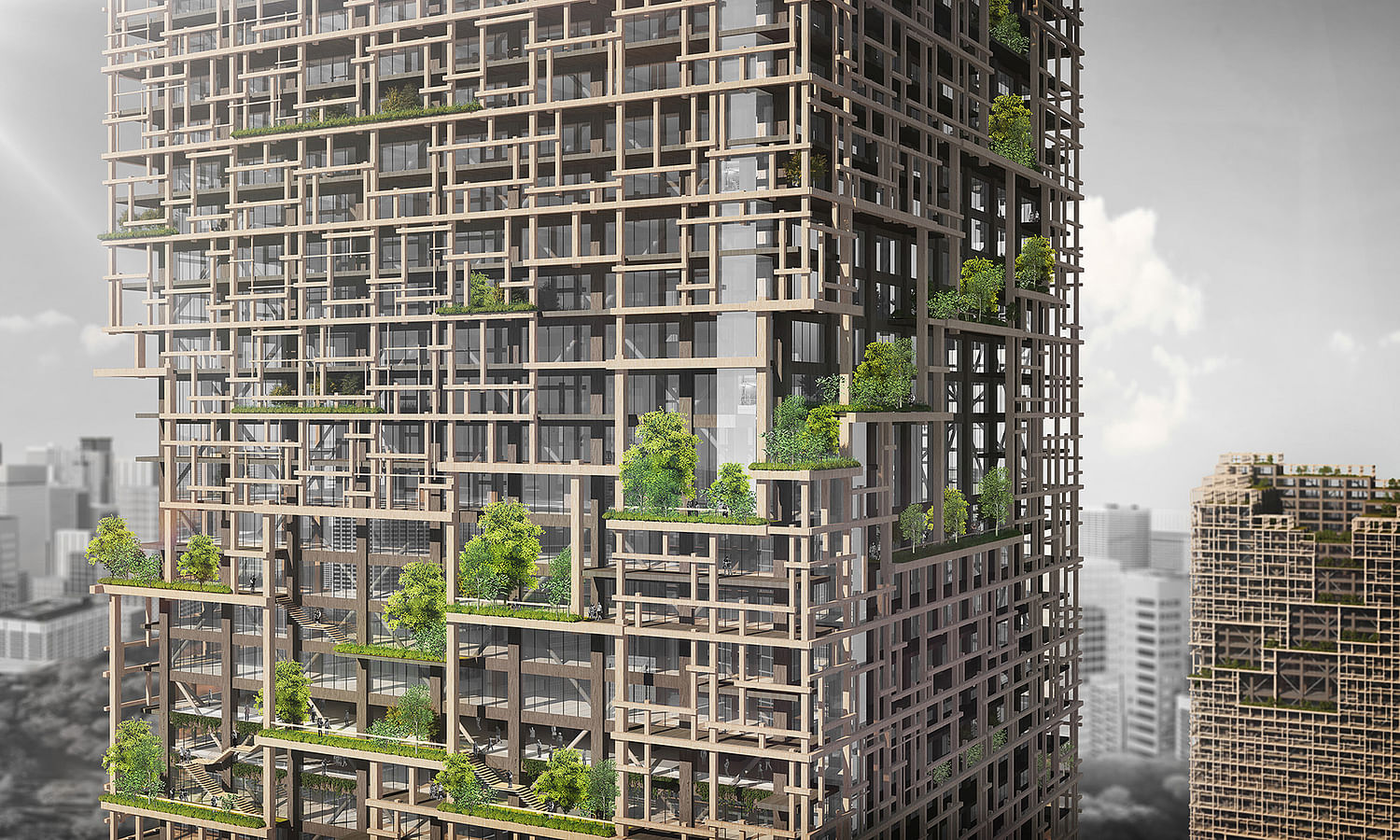
W350Project by Nikken Sekkei

The anticipated 2018 World Architecture Festival is still a couple weeks away, but the competition is already heating up. Organizers behind the three-day event have just arrolled out the early winners of their WAFX prize, which distinguishes forward-thinking architectural concepts that identify key issues that architects must address over the next decade.

Spanning categories like climate change, water, ageing and health, smart cities, and cultural identity, 10 projects were selected as winners which varied from innovative solar panel fields in The Netherlands, to urban green corridors in Bangkok, eco farms in rural Vietnam and river parks in Colombia.

"We have been amazed by the standard of entries across this year’s future project categories and the prize winners in addressing some of humanities greatest concerns," said Paul Finch, Program Director of WAF. "Rather than being purely ‘pie in the sky’ conceptual work, each is firmly grounded in reality, presenting practical solutions to issues around the world."

Read more about the category winners below.

'Ageing and Health' Category—The Alder Center by Allford Hall Monaghan Morris
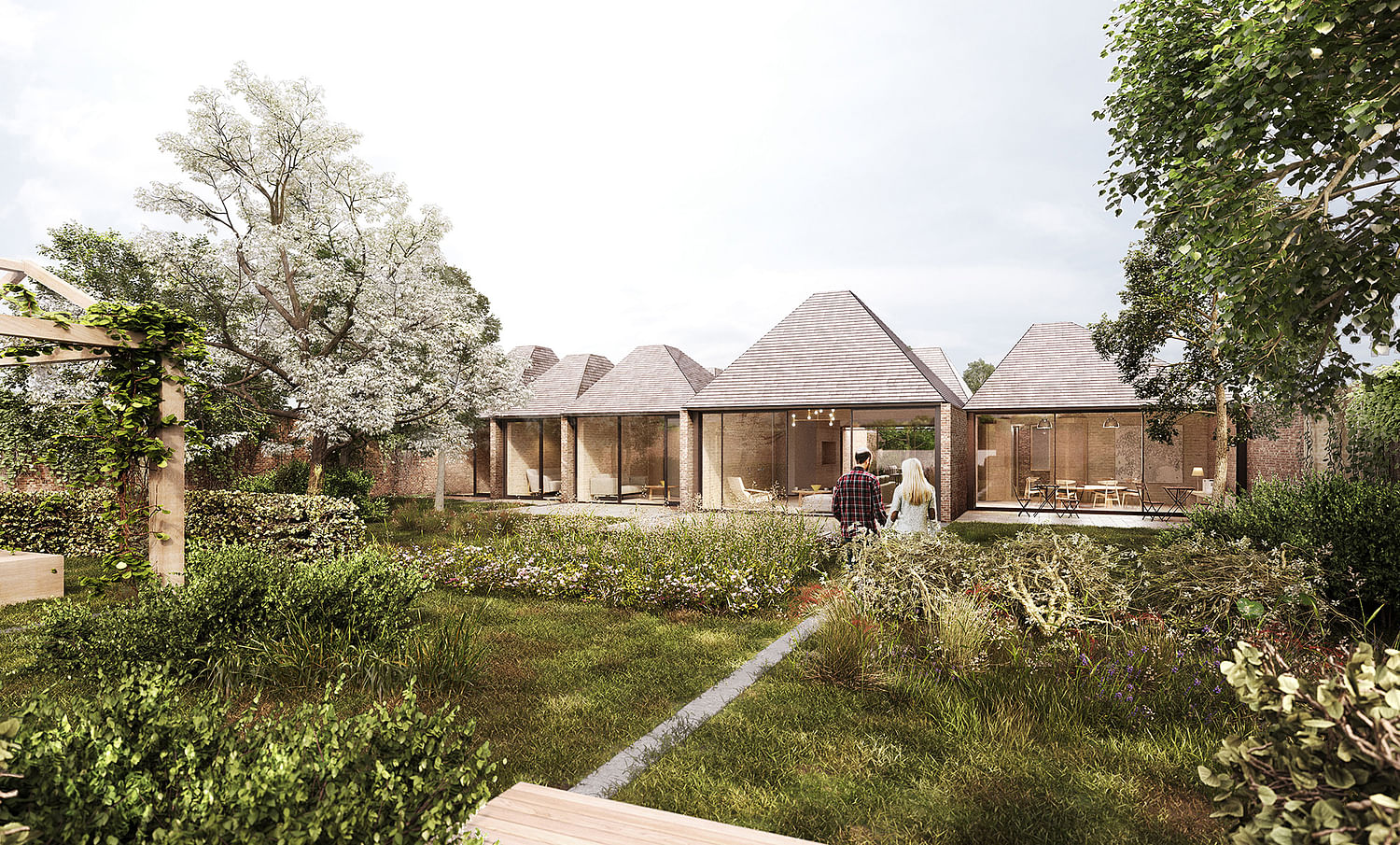
The Alder Centre was established in 1989 by a small group of health care professionals in partnership with bereaved parents who identified a gap in the services available. The Centre is unique within the NHS and internationally; providing bereavement counselling for families who have had a child pass away as well as a national telephone helpline and general counselling for hospital staff. A series of rooms configured like a big house, set inside a secret garden can be a familiar place for parents to meet, talk, grow things and have a cup of tea. The architecture is easy to use and simple to understand, informed by a conversational process with the counsellors, users and bereaved parents.

'Building and Technology' Category—W350Project by Nikken Sekkei
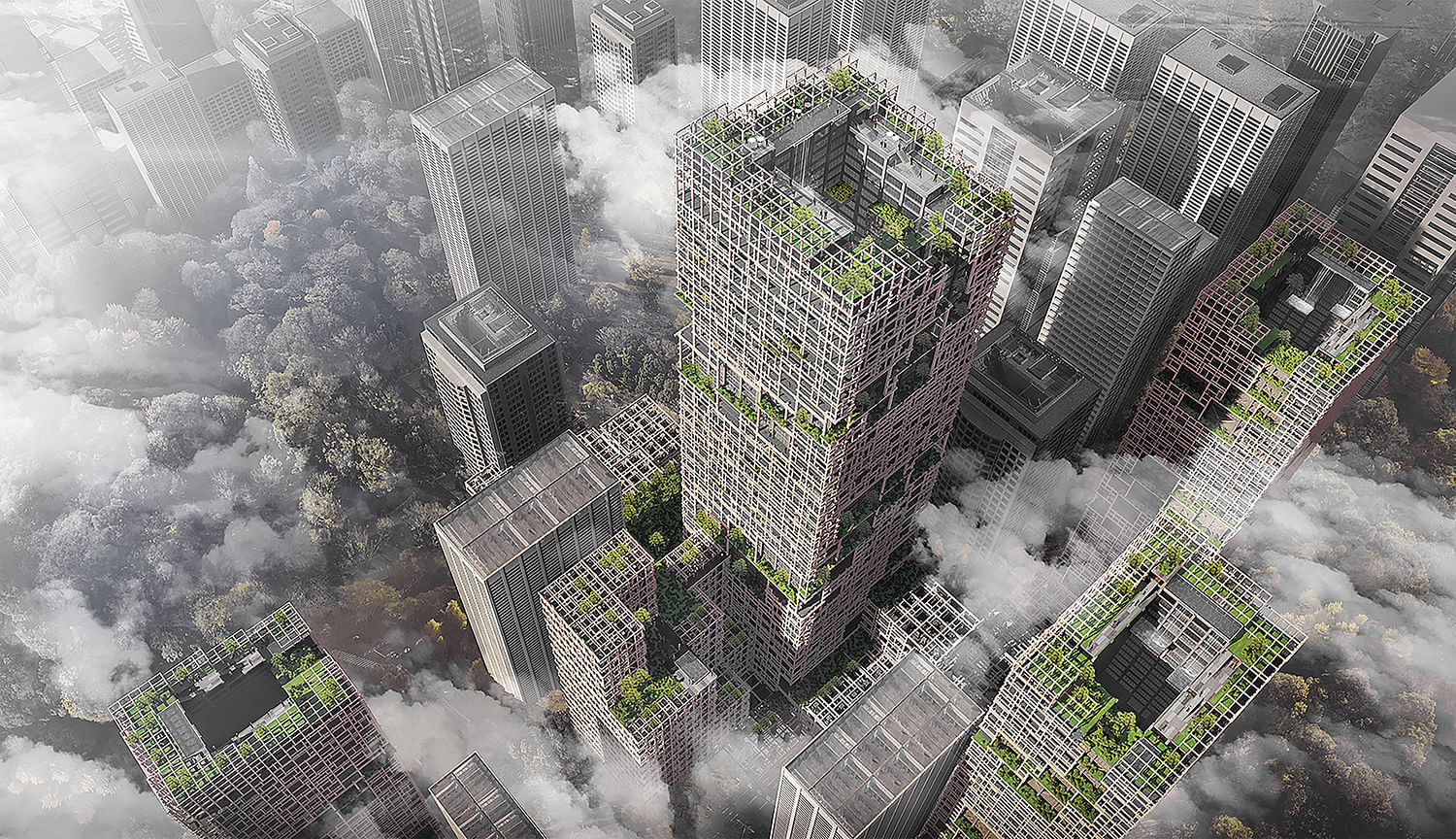
Nikken Sekkei’s research project seeks to demonstrate how developing a green city with timber structures can inspire a “more comfortable” global environment, and specifically how 350m super high-rise timber construction could be a symbol of future urban construction. The practice’s research focuses on challenges to the development of construction engineering technology for evolutionary timber buildings, as well as seeking solutions to global environment, nature, and urban environmental sustainability issues. The practice’s plan is to use ecologically sensitive methods, such as removing timber from dense forests that encourage healthy development, which will also help to bring the lumber industry back to life, revitalize local communities, improve habitat for forest creatures, and conserve biodiversity.

'Climate, Energy and Carbon' Category—Highway Solarpanel Field by 70F Architecture
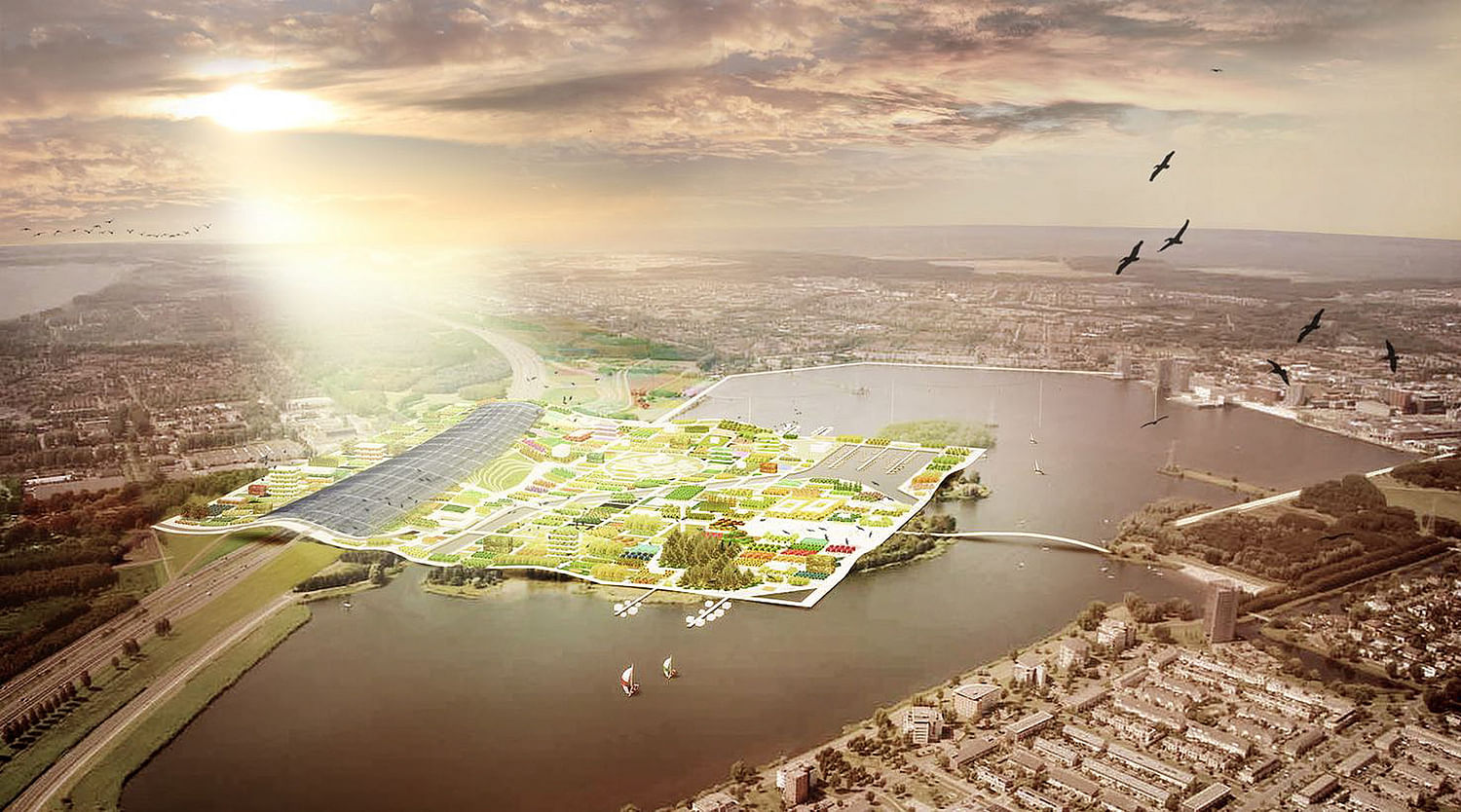
70F Architecture’s proposed project looks to suspend vast arrays of solar panels above highways, rather than on fields, leaving farmland free for farming and doubling the ground-usage of infrastructure. The secondary goal of the project is showing how sustainability can be beautiful as well as functional; the semi-transparent solar panels are placed in an open and airy angle, providing a cupola of light, air and rain ‘play’. As a bonus the solar panel field creates a noise barrier of 18dB in relation to its surroundings, which is double that of a conventional highway noise reduction wall. This directly increases the quality and size of the build-able area next to the highway.

'Cultural Identity' Category—Ataturk Culture Center by Tabanlioglu Architects
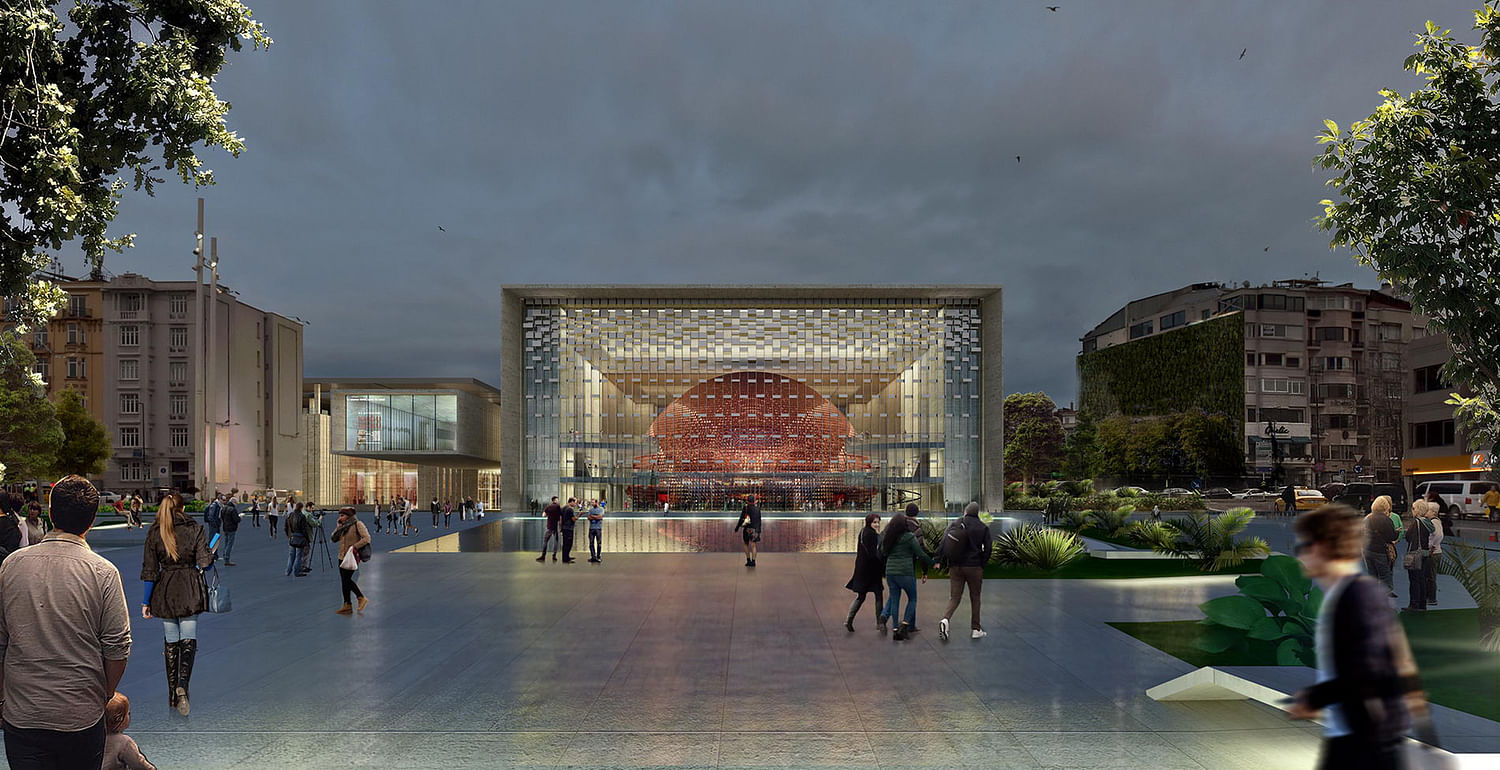
The Ataturk Culture Center in Istanbul, Turkey, has been a focal point for the city since the building was constructed in 1960s, and was redeveloped after it burned down in 1970. Tabanlioglu’s design reasserts its place at the heart of the city’s arts and culture scene. Not only will the new centre have one of the largest opera houses in the world, but will also feature galleries, libraries, cafes and restaurants for visitors. The new centre forms a bond between past, present, and future, and unites through design, the urban fabric and culture of Istanbul and the Turkish people.

'Ethics and Value' Category—Sheltainer: Where Humanity Meets Hope by Sheltainer
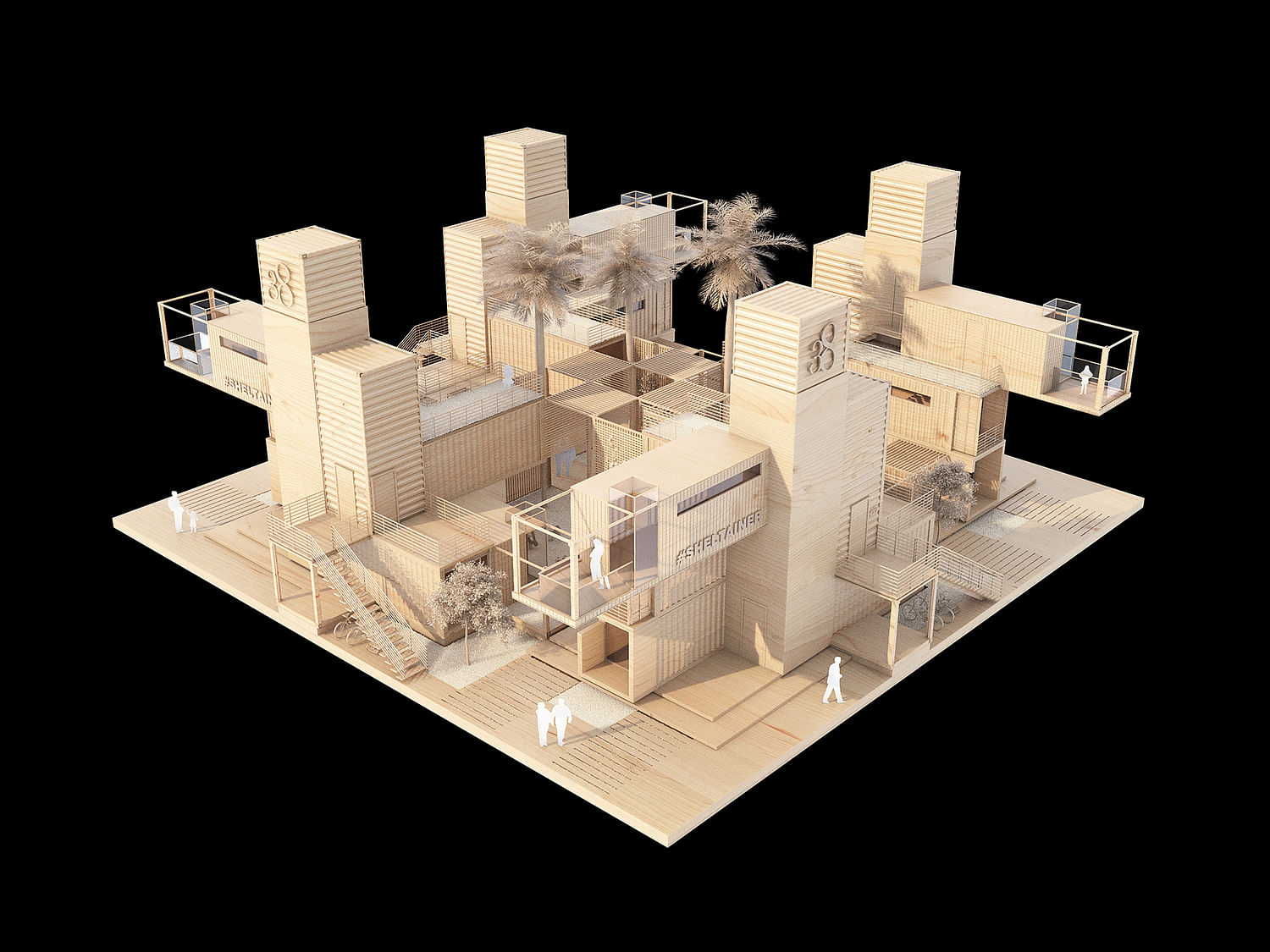
Sheltainer is a building initiative that targets different categories of people including refugees, asylum seekers, students and low-income families. It intends to provide a solution that can be readily built anywhere in the world, easy to construct and affordable – hence, the shipping containers. There are millions of unused shipping containers around the world and recycling them not only provides shelter, but also helps reserve the sustainability of a community. The design for a Sheltainer project consists of eight homes per cluster connected together through a courtyard and attached to other clusters through open corners.

'Food' Category—Cuchi Organic Eco Farm by IF
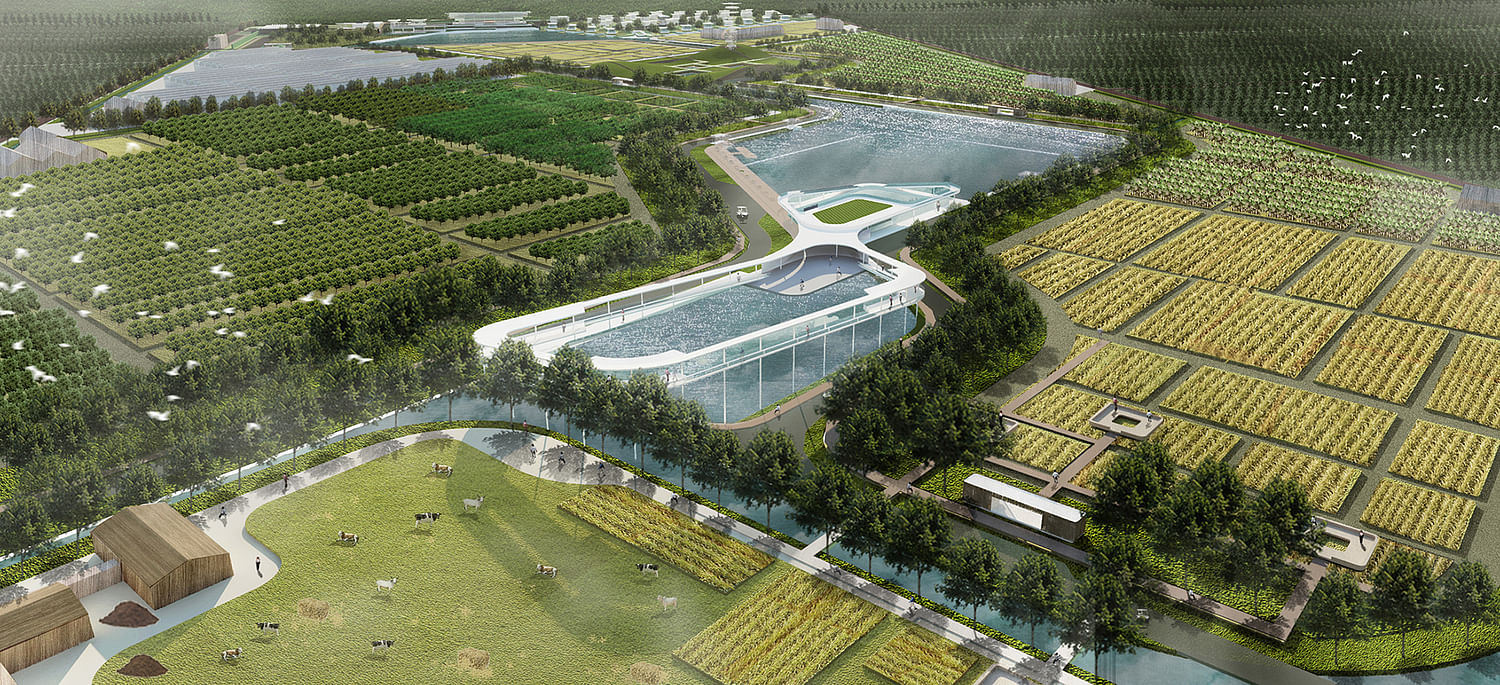
Dramatic urbanization and economic growth across Vietnam over the last 20 years has put pressure on the nation’s food industry. Cuchi Organic Eco Farm (COEF) is a masterplan design proposal for a 600 hectare decommissioned rubber plantation in Cuchi, Vietnam, aiming to transform the under-utilized site to be an organic farm focusing on the production of animal feed, livestock, fruit and vegetables in a closed-cycle operation. The first phase of 50 hectares is an agro-tourism destination that offers the visitor holistic experience of the food cycle. The project also offers facilities such as farm-stay accommodation, farm-to-table restaurant, farmers market, and co-farming area where one can rent varying sized plots of land specific to their needs.

'Power and Justice' Category—Tower Intern city by Savage Dodd Architects with UrbanWorks
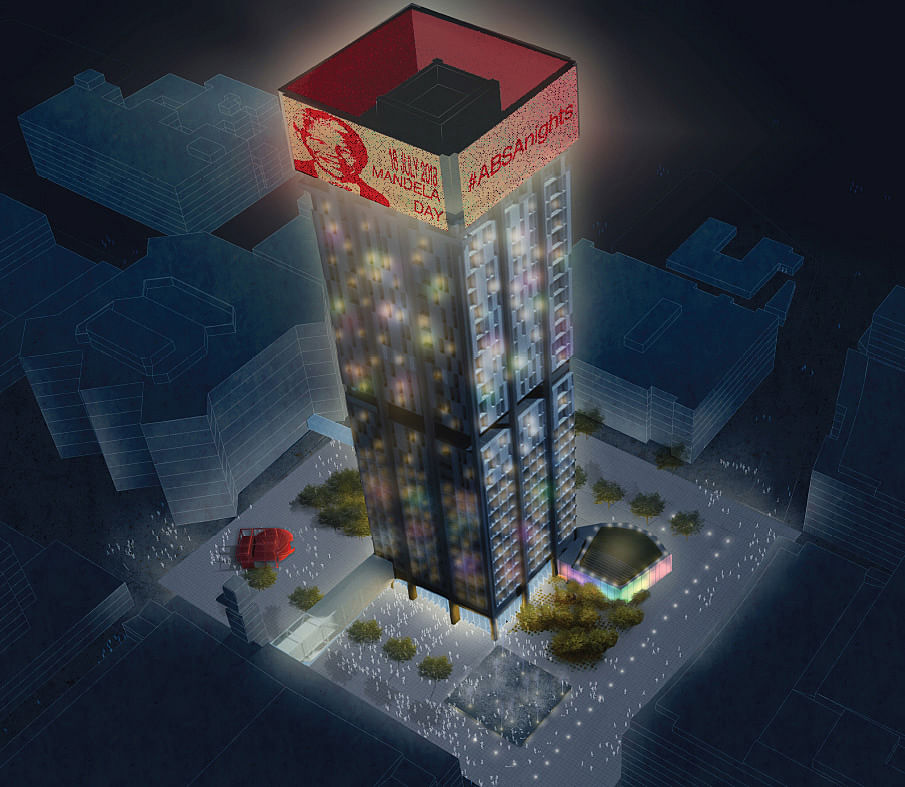
A range of spaces feature in this substantial mixed-use redevelopment of a tower in Johannesburg, South Africa, from dedicated event spaces at the top of the building, to residential and commercial office floors. Well-programmed and vertically distributed social spaces are integrated with the compact living units allowing both the inhabitants and public to find comfortable and accessible space to socialise and relax. Their program allows for public interaction to ensure a diverse cultural and social life in the tower – which would otherwise run the risk of being a vertical enclave. The lobby is conceptualized as a large urban living room that serves both building inhabitants as well as the public. Large pivot doors create a double volume public interior which an inserted mezzanine animates. The mezzanine wraps around the building core providing a variety of retail opportunities.

'Re-Use' Category—Beloit College Powerhouse by Studio Gang
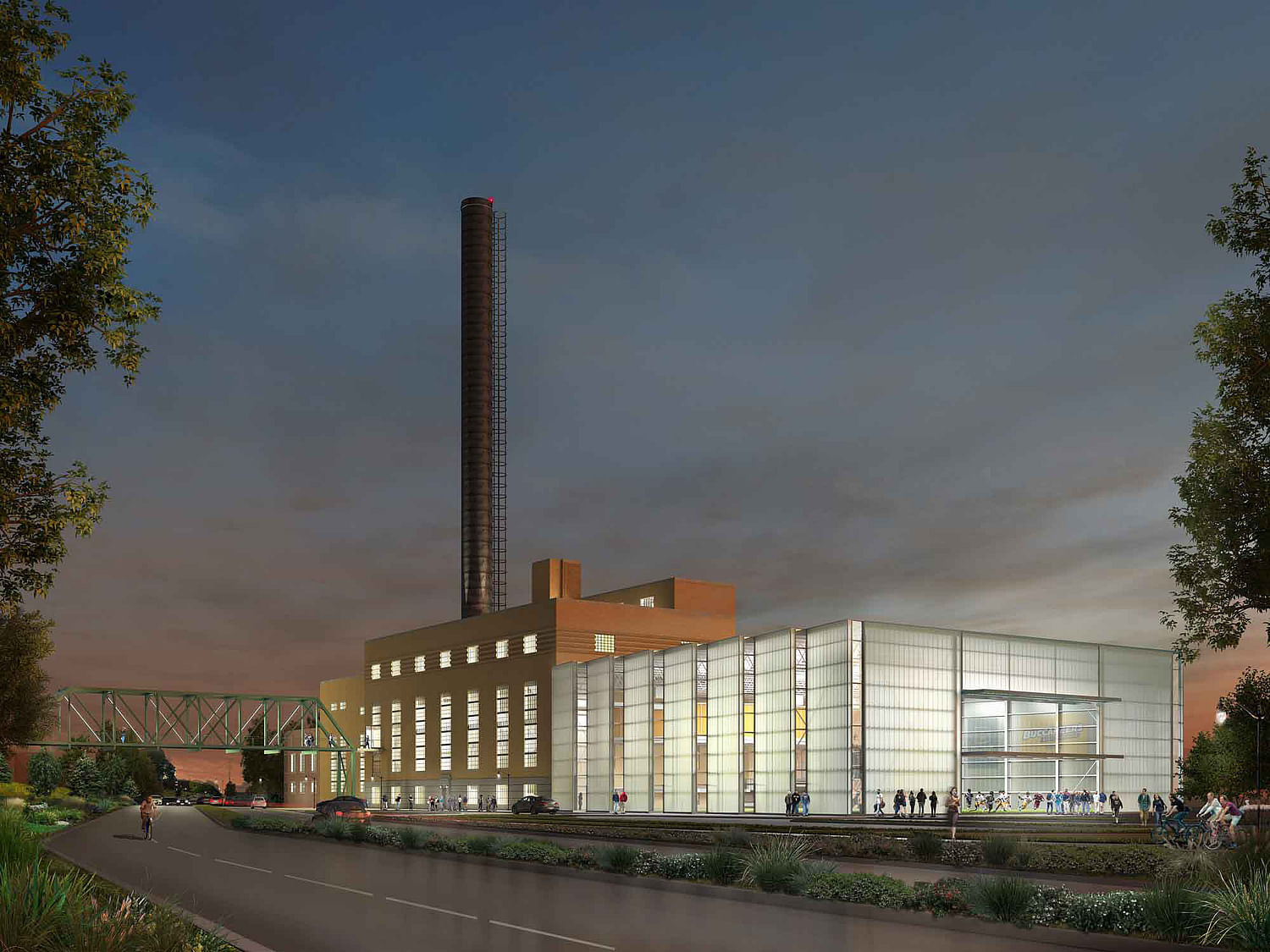
Transforming a former power plant into a student union and recreation facility, Studio Gang’s Beloit College Powerhouse Project seeks to replace an old model of energy with a new model to support the health and wellbeing of its many inhabitants. The Powerhouse is designed to become a centre for human energy, activity and health. Nestled between the Rock River and the college’s campus, the Powerhouse will serve as a recreational resource and a community forum, all the while fostering a public connection to the riverfront - embracing it rather than polluting it - that foregrounds the connection between human and environmental health. The judges were impressed not only with the repurposing of its cavernous industrial spaces, but with how the project maximizes its riverfront location, utilizing river water to manage the temperature of the building whilst also significantly minimizing total energy use.

'Smart Cities' Category—10KM by Shma Company Limited
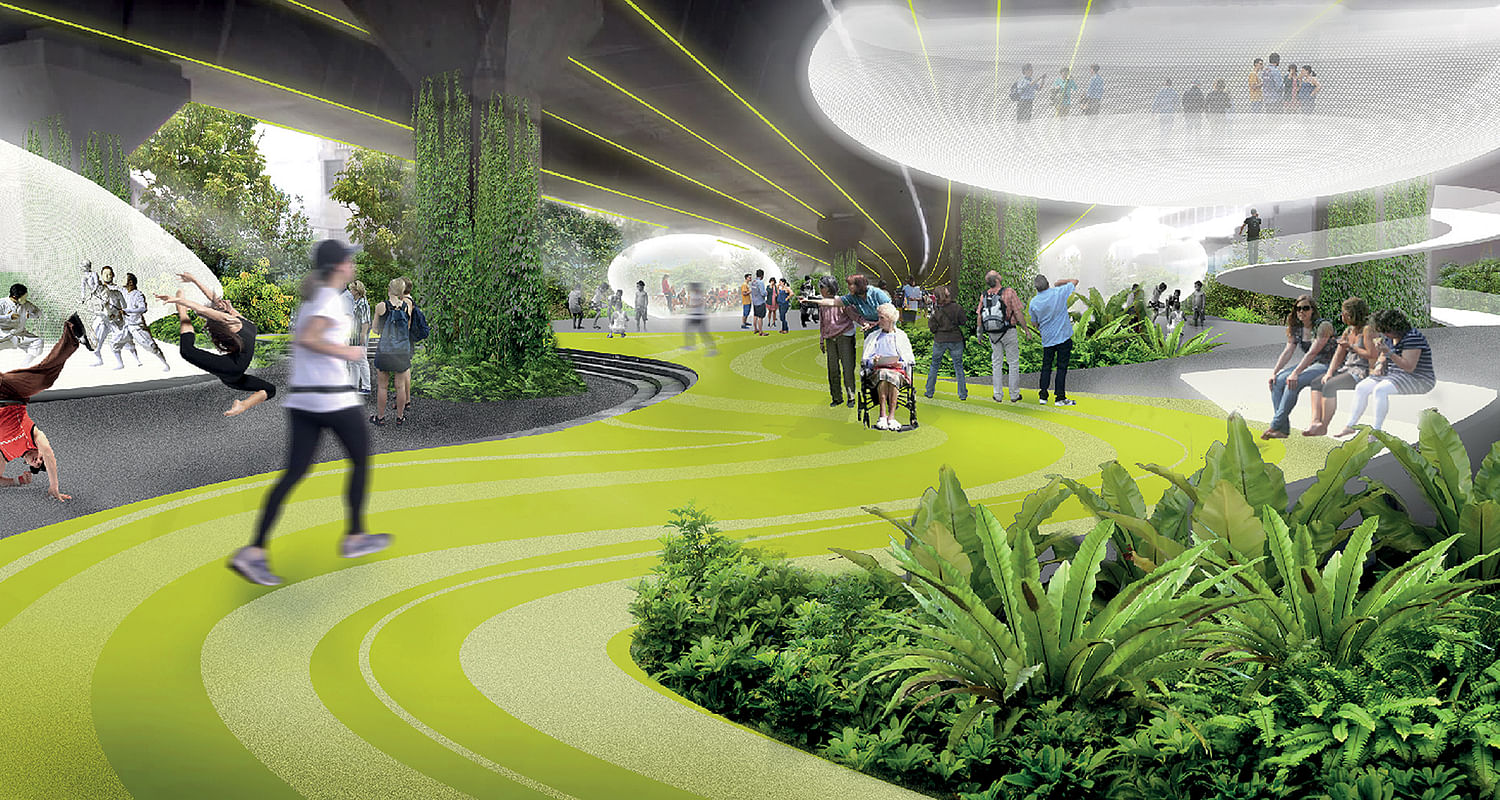
The 10km long green corridor proposed by Shma Company sets out a series of re-appropriated spaces, parks, footpaths and bridges to reconnect vast swathes of Bangkok along a north-south axis. Currently large and impassable highways have disconnected inner city areas with those adjacent to them, and the extensive use of concrete walls along canals has disrupted resident’s interaction with nature and the local environment. By breaking down these barriers and opening up the spaces, the designers hope to encourage healthier lifestyles, celebrate local urban cultures and spur sustainable development.

'Water' Category—Medellin River Parks/Botanical Park Master Plan by Sebastian Monsalve + Juan David Hoyos
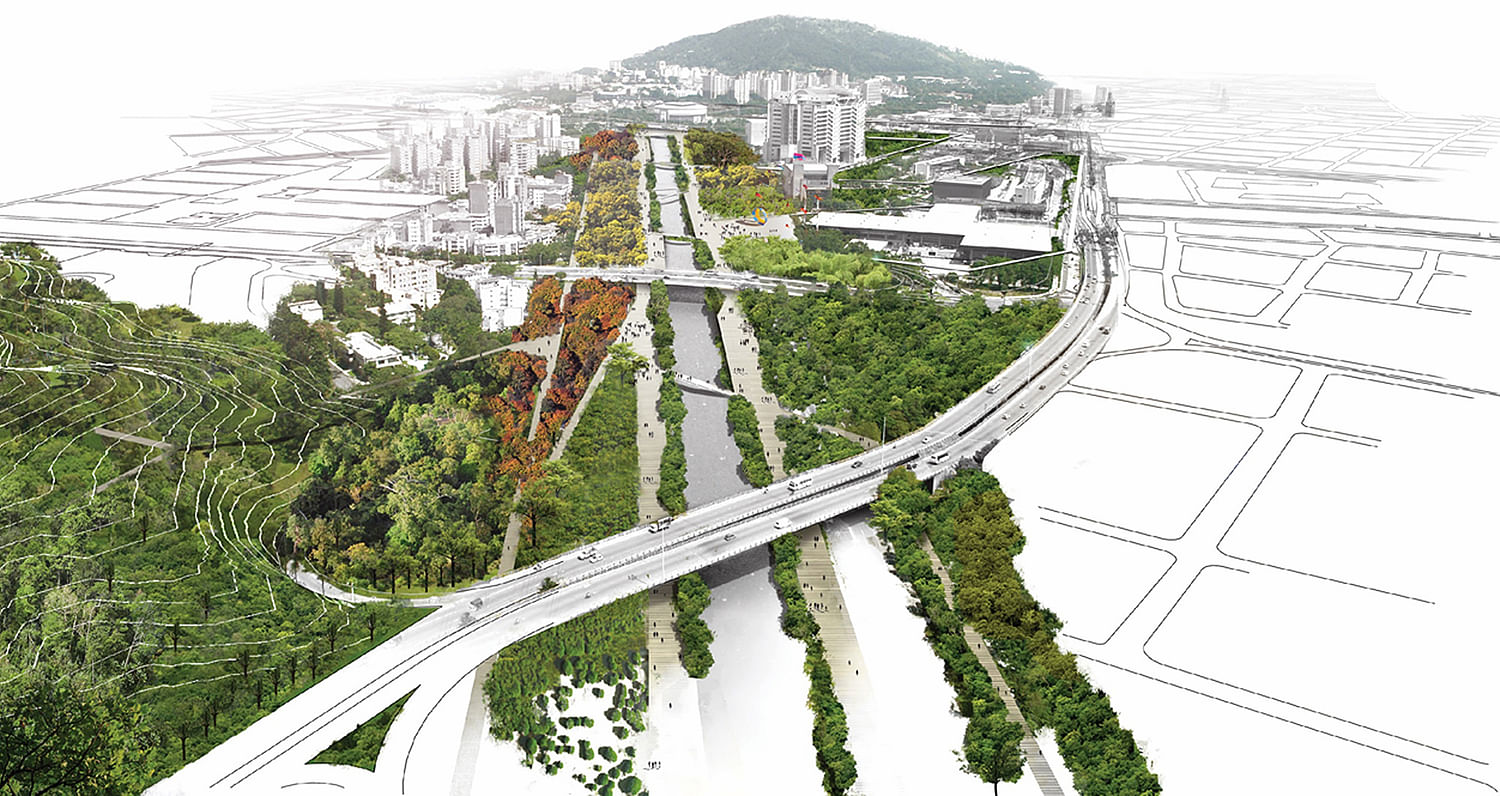
Based upon a system of integrated projects in Medellin, Colombia, creating new parks and public green spaces, the designers sought to address issues such as urban sprawl, global warming, urban conflict, poverty, segregation and inequality. By repositioning the city’s main arterial roads, that currently hug the Medellin river and effectively split the city, the project seeks to open up the Aburra Valley, making the area more accessible to residents and visitors alike.

Related

world architecture festival ● wafx prize ● waf awards ● competition ● design concept
Allford Hall Monaghan Morris (AHMM)
NIKKEN SEKKEI LTD
NIKKEN SEKKEI LTD
Tabanlıoğlu Architects
Studio Gang
Studio Gang

Share

  • Follow

    1 Comment

  • randomised
    randomised

    randomised ·  Oct 01, 18 6:46 AM

    Funny how 70F just uses an MVRDV image and badly photoshops some solar panels in it and wins a World Architecture Festival prize:


    source image: https://www.mvrdv.nl/news/alme...
  • Comment as :

Projects centered on key ecological and societal challenges unveiled as the WAFX 2018 Prize Winners

Micro-architecture honored in latest Tiny House Architecture Competition

World’s most beautiful restaurants of 2026 chosen by Prix Versailles

Sponsored Post by Buildner

Design a wine tasting room in Italy! Valli Wine Tasting Room is launched!

10 can't-miss architecture & design events to see this June in London, Los Angeles, Chicago, San Francisco, Detroit, San Diego, Porto, and Barcelona

Sponsored Post by Buildner

Museum of Emotions / Edition #8 FINAL registration deadline is approaching!

Seven global projects make AR Public Awards shortlist 2026

Sponsored Post by Buildner

Design a slow-living restaurant in Portugal! Portugal Long Table Restaurant is launched!

World's best tall buildings honored at the CVU 2026 Award of Excellence

Sign up for Bustler's Email Newsletters

Sponsored Post by TWOPAGES

Final call: TWOPAGES X Design Contest 2026 submissions close June 5

Kengo Kuma & Paul Raff win Alberta national park visitor center competition with landscape-focused design

2026 Moira Gemmill and MJ Long prizes announced by W Awards

New architecture and design competitions: Kinderspace, Stewardson Keefe LeBrun Travel Grant, SMALL PROJECT BIG IMPACT, and Garden of University House, Bucharest

The Century of Gehry: New retrospective explores the late architect's work & collaborations

Sponsored Post by Buildner

Rome Rain Rooms FINAL registration deadline is in 5 DAYS!

UIA and UN Habitat unveil sustainability-focused winners for UIA 2030 Award

Next page » Loading

Projects centered on key ecological and societal challenges unveiled as the WAFX 2018 Prize Winners

By Mackenzie Goldberg|

Friday, Sep 28, 2018

Share

W350Project by Nikken Sekkei

Related

world architecture festival ● wafx prize ● waf awards ● competition ● design concept
Allford Hall Monaghan Morris (AHMM)
NIKKEN SEKKEI LTD
NIKKEN SEKKEI LTD
Tabanlıoğlu Architects
Studio Gang
Studio Gang

The anticipated 2018 World Architecture Festival is still a couple weeks away, but the competition is already heating up. Organizers behind the three-day event have just arrolled out the early winners of their WAFX prize, which distinguishes forward-thinking architectural concepts that identify key issues that architects must address over the next decade.

Spanning categories like climate change, water, ageing and health, smart cities, and cultural identity, 10 projects were selected as winners which varied from innovative solar panel fields in The Netherlands, to urban green corridors in Bangkok, eco farms in rural Vietnam and river parks in Colombia.

"We have been amazed by the standard of entries across this year’s future project categories and the prize winners in addressing some of humanities greatest concerns," said Paul Finch, Program Director of WAF. "Rather than being purely ‘pie in the sky’ conceptual work, each is firmly grounded in reality, presenting practical solutions to issues around the world."

Read more about the category winners below.

'Ageing and Health' Category—The Alder Center by Allford Hall Monaghan Morris

The Alder Centre was established in 1989 by a small group of health care professionals in partnership with bereaved parents who identified a gap in the services available. The Centre is unique within the NHS and internationally; providing bereavement counselling for families who have had a child pass away as well as a national telephone helpline and general counselling for hospital staff. A series of rooms configured like a big house, set inside a secret garden can be a familiar place for parents to meet, talk, grow things and have a cup of tea. The architecture is easy to use and simple to understand, informed by a conversational process with the counsellors, users and bereaved parents.

'Building and Technology' Category—W350Project by Nikken Sekkei

Nikken Sekkei’s research project seeks to demonstrate how developing a green city with timber structures can inspire a “more comfortable” global environment, and specifically how 350m super high-rise timber construction could be a symbol of future urban construction. The practice’s research focuses on challenges to the development of construction engineering technology for evolutionary timber buildings, as well as seeking solutions to global environment, nature, and urban environmental sustainability issues. The practice’s plan is to use ecologically sensitive methods, such as removing timber from dense forests that encourage healthy development, which will also help to bring the lumber industry back to life, revitalize local communities, improve habitat for forest creatures, and conserve biodiversity.

'Climate, Energy and Carbon' Category—Highway Solarpanel Field by 70F Architecture

70F Architecture’s proposed project looks to suspend vast arrays of solar panels above highways, rather than on fields, leaving farmland free for farming and doubling the ground-usage of infrastructure. The secondary goal of the project is showing how sustainability can be beautiful as well as functional; the semi-transparent solar panels are placed in an open and airy angle, providing a cupola of light, air and rain ‘play’. As a bonus the solar panel field creates a noise barrier of 18dB in relation to its surroundings, which is double that of a conventional highway noise reduction wall. This directly increases the quality and size of the build-able area next to the highway.

'Cultural Identity' Category—Ataturk Culture Center by Tabanlioglu Architects

The Ataturk Culture Center in Istanbul, Turkey, has been a focal point for the city since the building was constructed in 1960s, and was redeveloped after it burned down in 1970. Tabanlioglu’s design reasserts its place at the heart of the city’s arts and culture scene. Not only will the new centre have one of the largest opera houses in the world, but will also feature galleries, libraries, cafes and restaurants for visitors. The new centre forms a bond between past, present, and future, and unites through design, the urban fabric and culture of Istanbul and the Turkish people.

'Ethics and Value' Category—Sheltainer: Where Humanity Meets Hope by Sheltainer

Sheltainer is a building initiative that targets different categories of people including refugees, asylum seekers, students and low-income families. It intends to provide a solution that can be readily built anywhere in the world, easy to construct and affordable – hence, the shipping containers. There are millions of unused shipping containers around the world and recycling them not only provides shelter, but also helps reserve the sustainability of a community. The design for a Sheltainer project consists of eight homes per cluster connected together through a courtyard and attached to other clusters through open corners.

'Food' Category—Cuchi Organic Eco Farm by IF

Dramatic urbanization and economic growth across Vietnam over the last 20 years has put pressure on the nation’s food industry. Cuchi Organic Eco Farm (COEF) is a masterplan design proposal for a 600 hectare decommissioned rubber plantation in Cuchi, Vietnam, aiming to transform the under-utilized site to be an organic farm focusing on the production of animal feed, livestock, fruit and vegetables in a closed-cycle operation. The first phase of 50 hectares is an agro-tourism destination that offers the visitor holistic experience of the food cycle. The project also offers facilities such as farm-stay accommodation, farm-to-table restaurant, farmers market, and co-farming area where one can rent varying sized plots of land specific to their needs.

'Power and Justice' Category—Tower Intern city by Savage Dodd Architects with UrbanWorks

A range of spaces feature in this substantial mixed-use redevelopment of a tower in Johannesburg, South Africa, from dedicated event spaces at the top of the building, to residential and commercial office floors. Well-programmed and vertically distributed social spaces are integrated with the compact living units allowing both the inhabitants and public to find comfortable and accessible space to socialise and relax. Their program allows for public interaction to ensure a diverse cultural and social life in the tower – which would otherwise run the risk of being a vertical enclave. The lobby is conceptualized as a large urban living room that serves both building inhabitants as well as the public. Large pivot doors create a double volume public interior which an inserted mezzanine animates. The mezzanine wraps around the building core providing a variety of retail opportunities.

'Re-Use' Category—Beloit College Powerhouse by Studio Gang

Transforming a former power plant into a student union and recreation facility, Studio Gang’s Beloit College Powerhouse Project seeks to replace an old model of energy with a new model to support the health and wellbeing of its many inhabitants. The Powerhouse is designed to become a centre for human energy, activity and health. Nestled between the Rock River and the college’s campus, the Powerhouse will serve as a recreational resource and a community forum, all the while fostering a public connection to the riverfront - embracing it rather than polluting it - that foregrounds the connection between human and environmental health. The judges were impressed not only with the repurposing of its cavernous industrial spaces, but with how the project maximizes its riverfront location, utilizing river water to manage the temperature of the building whilst also significantly minimizing total energy use.

'Smart Cities' Category—10KM by Shma Company Limited

The 10km long green corridor proposed by Shma Company sets out a series of re-appropriated spaces, parks, footpaths and bridges to reconnect vast swathes of Bangkok along a north-south axis. Currently large and impassable highways have disconnected inner city areas with those adjacent to them, and the extensive use of concrete walls along canals has disrupted resident’s interaction with nature and the local environment. By breaking down these barriers and opening up the spaces, the designers hope to encourage healthier lifestyles, celebrate local urban cultures and spur sustainable development.

'Water' Category—Medellin River Parks/Botanical Park Master Plan by Sebastian Monsalve + Juan David Hoyos

Based upon a system of integrated projects in Medellin, Colombia, creating new parks and public green spaces, the designers sought to address issues such as urban sprawl, global warming, urban conflict, poverty, segregation and inequality. By repositioning the city’s main arterial roads, that currently hug the Medellin river and effectively split the city, the project seeks to open up the Aburra Valley, making the area more accessible to residents and visitors alike.

Share

  • Follow

    1 Comment

  • randomised

    randomised ·  Oct 01, 18 6:46 AM

    Funny how 70F just uses an MVRDV image and badly photoshops some solar panels in it and wins a World Architecture Festival prize:


    source image: https://www.mvrdv.nl/news/alme...
  • Comment as :

Archinect JobsArchinect Jobs

The Archinect Job Board attracts the world's top architectural design talents.

VIEW ALL JOBS POST A JOB

Project Architect

BuildingWork

Project Architect

Seattle, WA, US

Architecture Project Manager

RDH Architecture + Interior Design

Architecture Project Manager

Las Vegas, NV, US

Architectural Designer

Build Block Inc.

Architectural Designer

Los Angeles, CA, US

Project Manager

Evan Raabe Architecture Studio

Project Manager

Los Angeles, CA, US

Intermediate Residential Architect

52XConsulting

Intermediate Residential Architect

New York, NY, US

Junior Architect

Eric Colbert & Associates

Junior Architect

Washington, DC, US

Project Architect / Senior Designer

Touloukian Touloukian Inc.

Project Architect / Senior Designer

Boston, MA, US

Project Architect/Job Captain

HLW International LLP

Project Architect/Job Captain

West Palm Beach, FL, US

Architectural Designer | 2-5 Years

LSM

Architectural Designer | 2-5 Years

Washington, DC, US

Architect / Urban Designer

Office for the Next Environment (OFTN)

Architect / Urban Designer

New York, NY, US

Next page » Loading