• Login / Join
  • About
  • •
  • Contact
  • •
  • Advertising
bustler logo
bustler logo
  • News
  • Competitions
  • Events
  • Bustler is powered by Archinect
  • Sign up for Bustler's Email Newsletters

  • Follow these Bustler feeds:

  • Search

    Search in

  • Submit

    What are you submitting?

    News Pitch
    Competition
    Event
  • Login / Join
  • News|Competitions|Events
  • Search
    | Submit
    | Follow
  • Search in

    What are you submitting?

    News Pitch
    Competition
    Event

    Follow these Bustler feeds:

  • About|Contact|Advertising
  • Login / Join

The winning ideas of SkyCity Challenge 19: The Future of Housing

By Justine Testado|

Friday, Nov 22, 2019

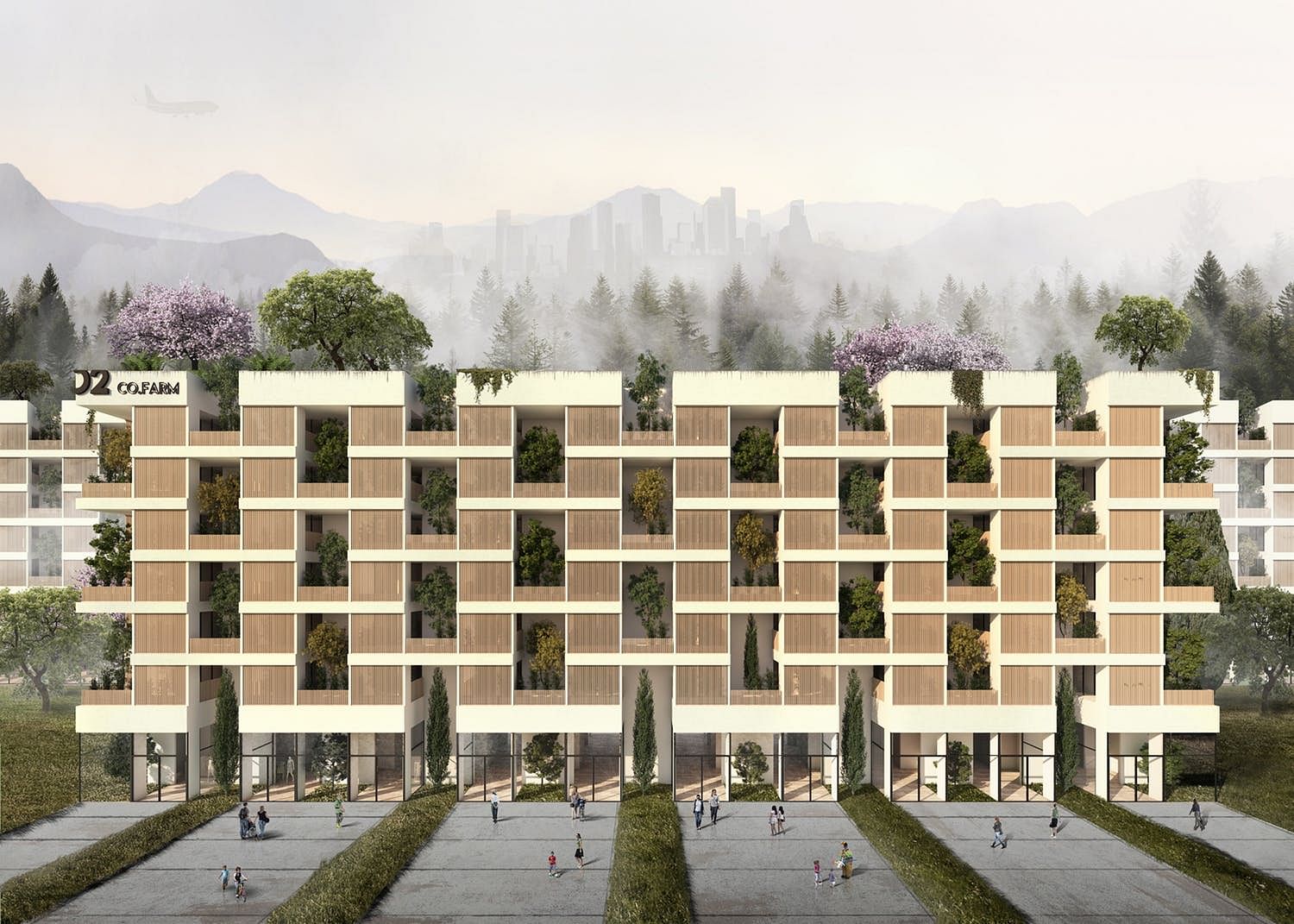
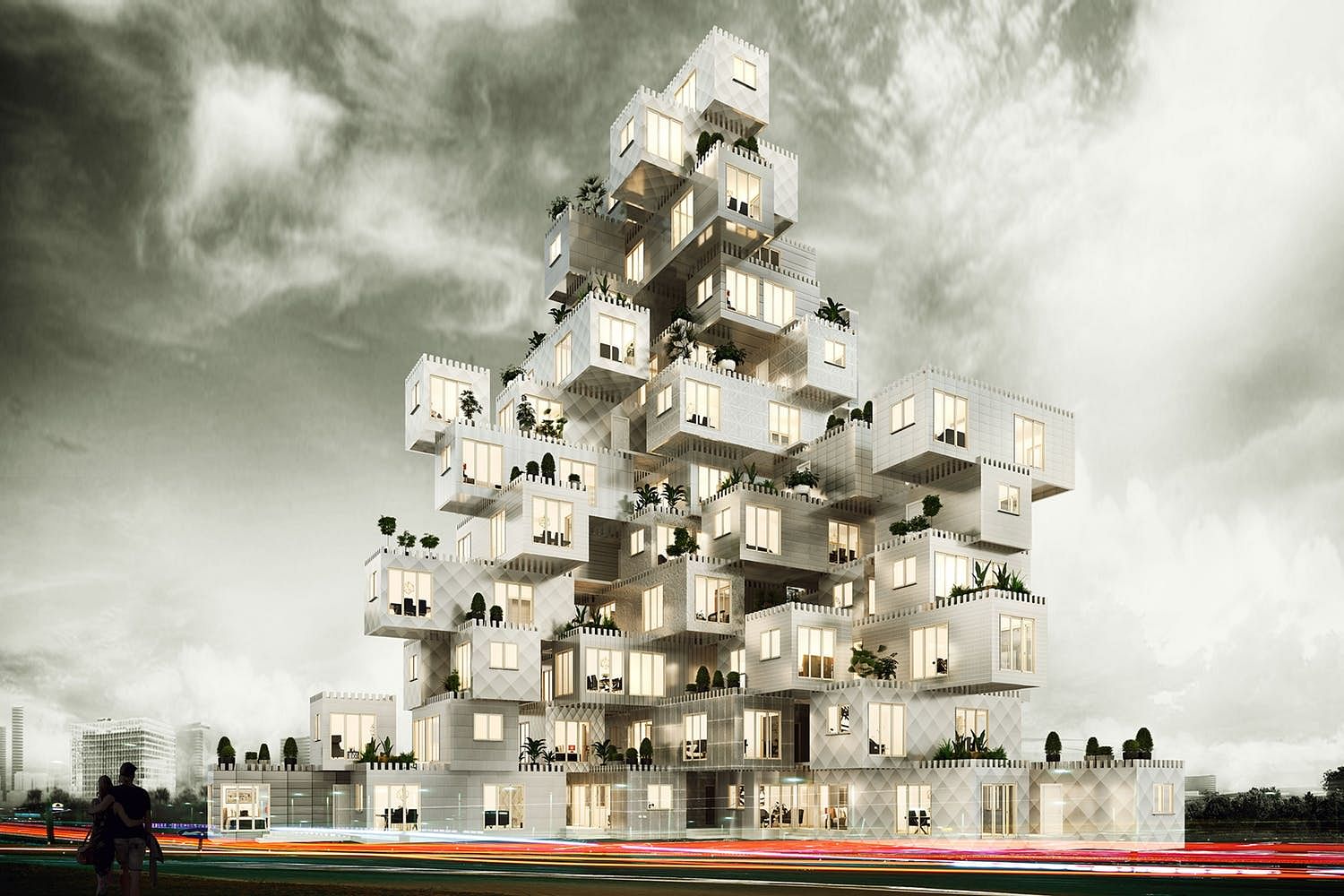
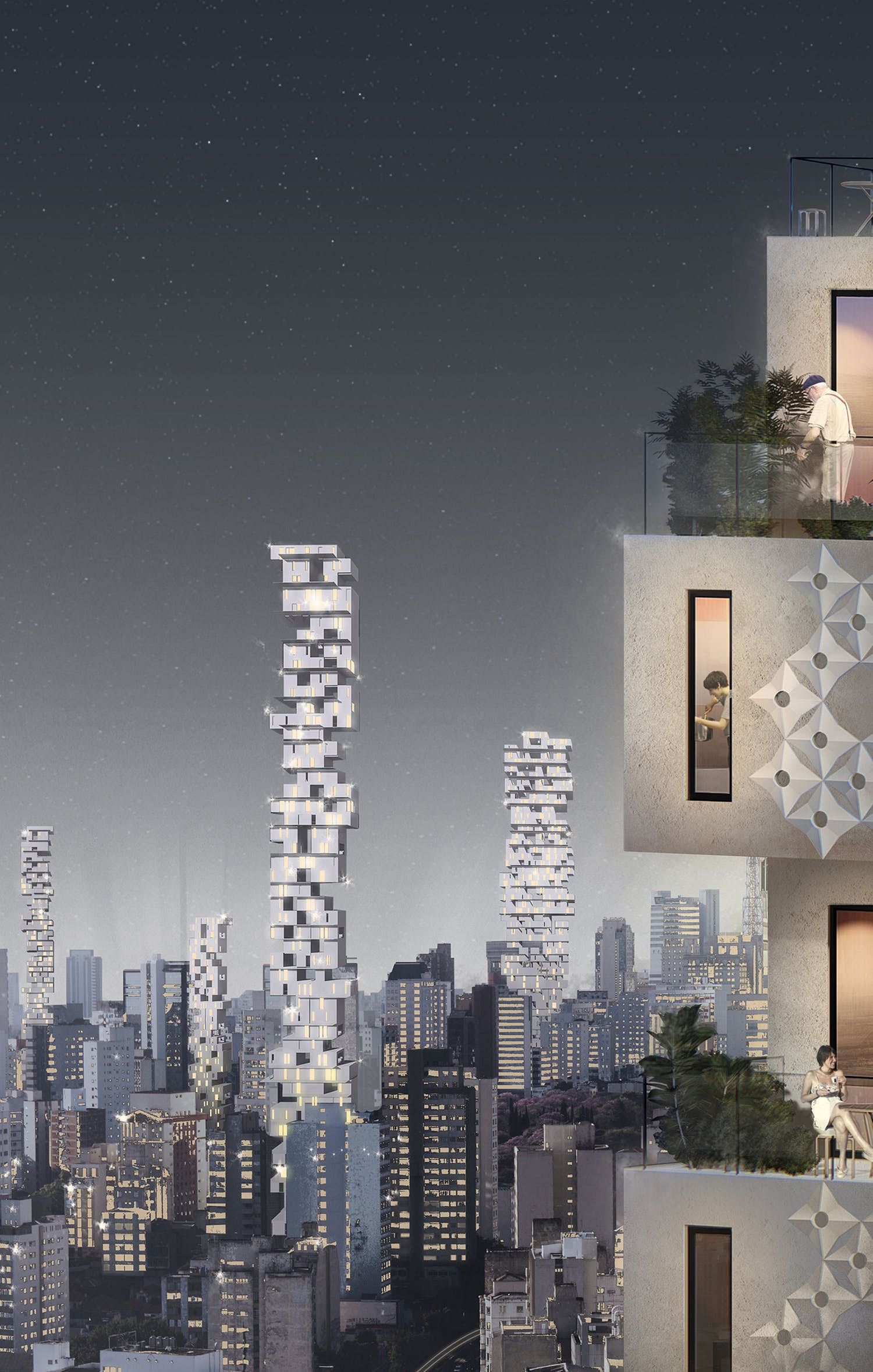
“Newthink” by Michał Kacprzyk (Poland)

Community-based architecture platform SkyCity recently announced the winners of their biannual “SkyCity Challenge”, which garnered over 180 entries from more than 50 countries for its 2019 edition. Established in 2016 in BROAD Town, China, SkyCity aims to confront today's pressing issues in housing.

Entrants were tasked with creating a build-system proposal for Broad Group, which is currently investigating their new material called BCORE. Entrants were challenged to design a modular home that can be dismantled after a period of time and used again. According to SkyCity, the prefabricated pieces of the home had to be easily transportable using traditional shipping containers which, when flat-packed, can be assembled by a small crew with equipment anywhere on the planet.

The jury highly valued proposals that explored BCORE directly and experimented with it, in both its structural capabilities and aesthetics. Scroll down for a look at the prize-winning entries and honorable mentions.
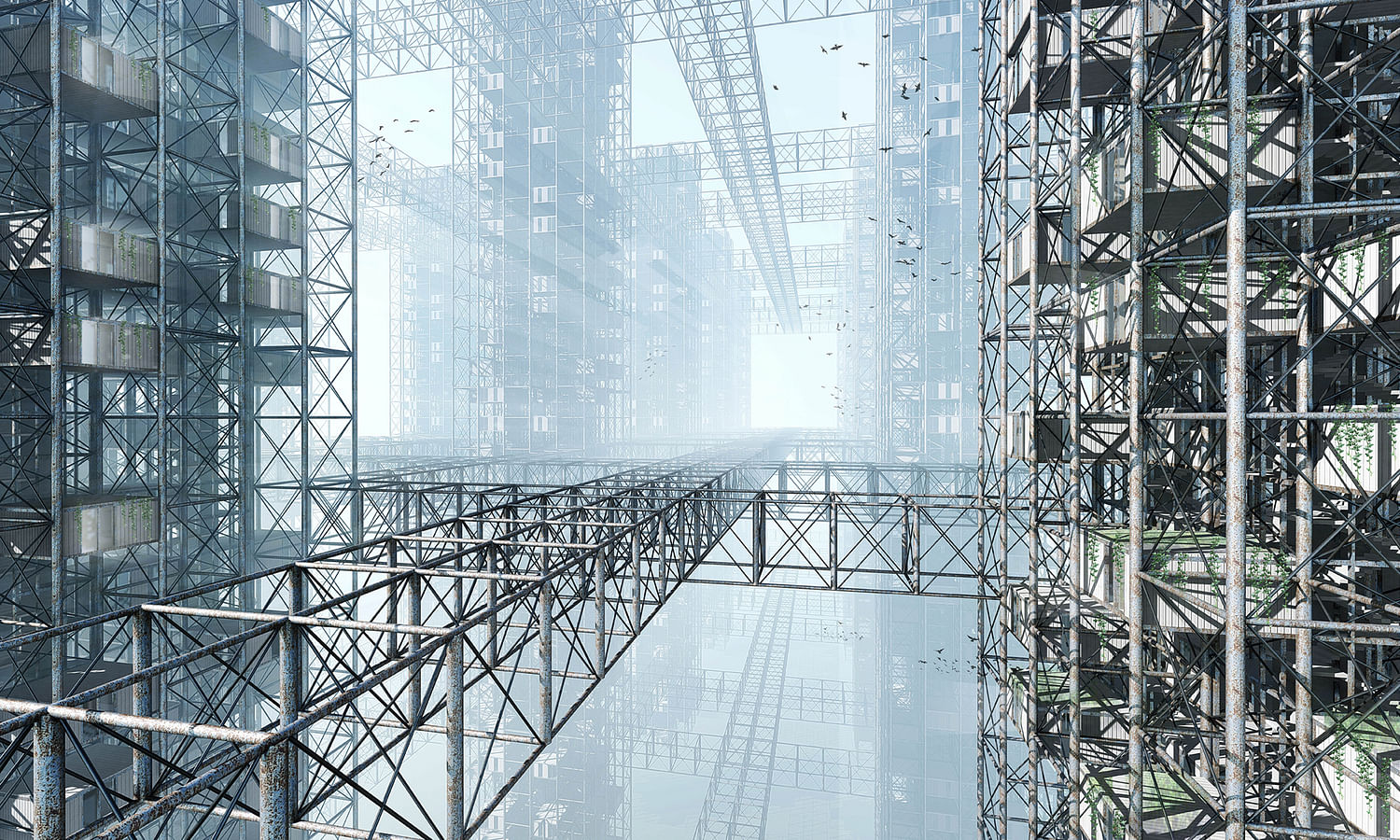
First Prize: “COLLECTIVE GEOMETRIES” by Manuel Lopes, Raphaelle Paire, Olga Litwa, Maya Iwdal (Sweden)

First Prize: “COLLECTIVE GEOMETRIES” by Manuel Lopes, Raphaelle Paire, Olga Litwa, Maya Iwdal (Sweden)

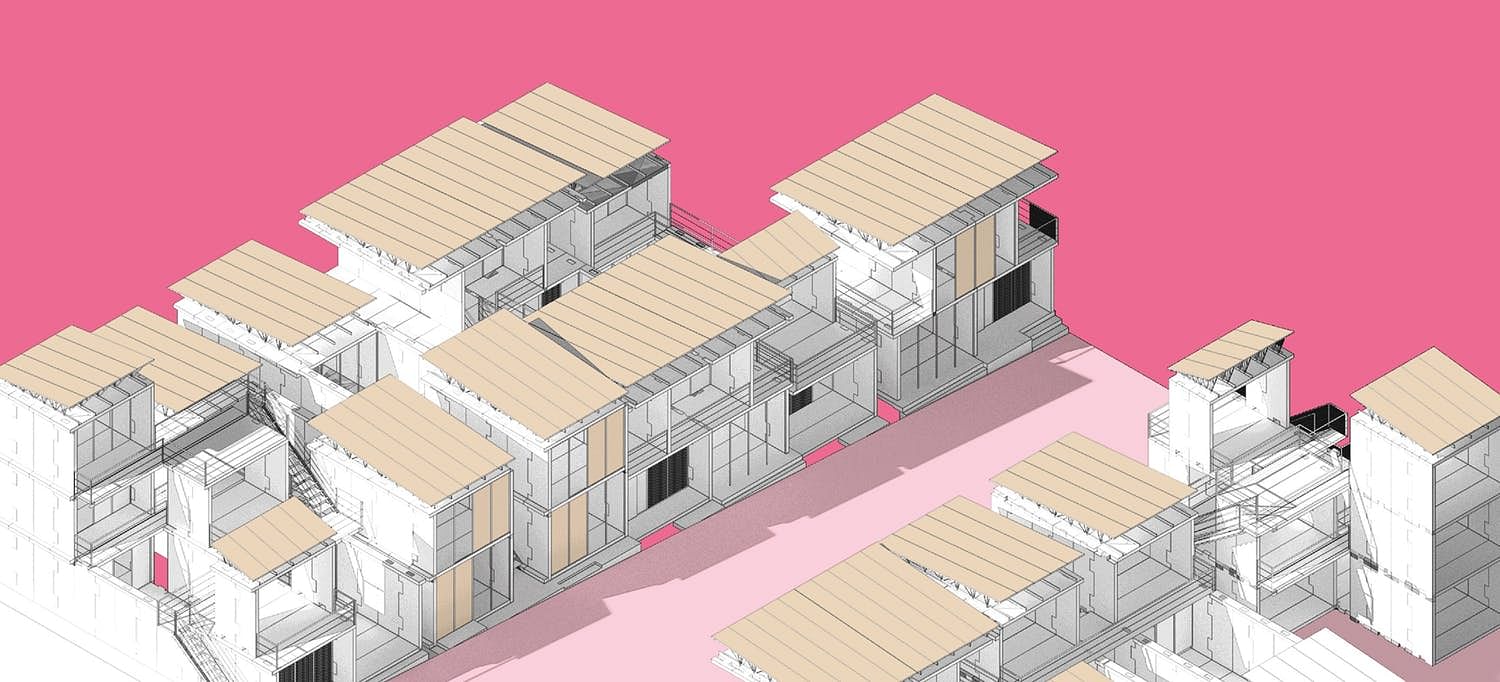
Project description: “Facing future housing shortages will require simple, fast produced systems with the capacity to adapt and respond to a great array of complex scenarios and demands. Instead of trying to imagine and predict how humans will live in the future, Collective Geometries aim to become a system that can flexibly face a great number of the potential range of future scenarios, from isolated off-grid cabins to dense collective housing arrangements. The whole project is represented by a few simple elements capable of being combined into smarter collective entities. The housing unit's size and weight are kept within a ‘two-man handling’ scale and they are joint together mechanically. The assembly and disassembly are designed to be done by simple users, except for bigger constructions where the size of a collective structure requires heavy machinery and implemented safety and work protocols. The segregation into simple pieces allows the projects to easily enlarge and shrink, trying to adapt to the end-user's changing needs and thus extending the lifecycle of individual systems.”
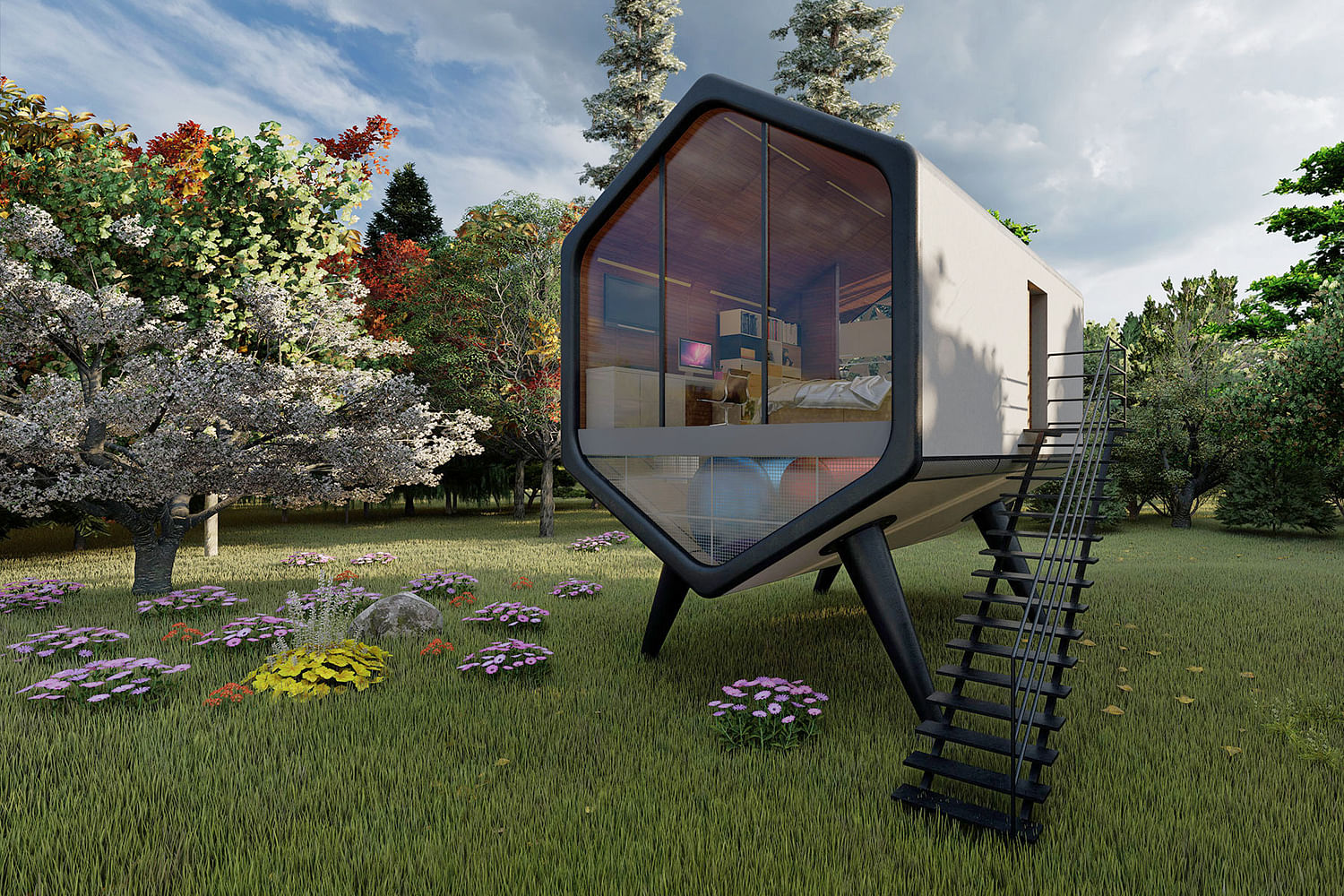
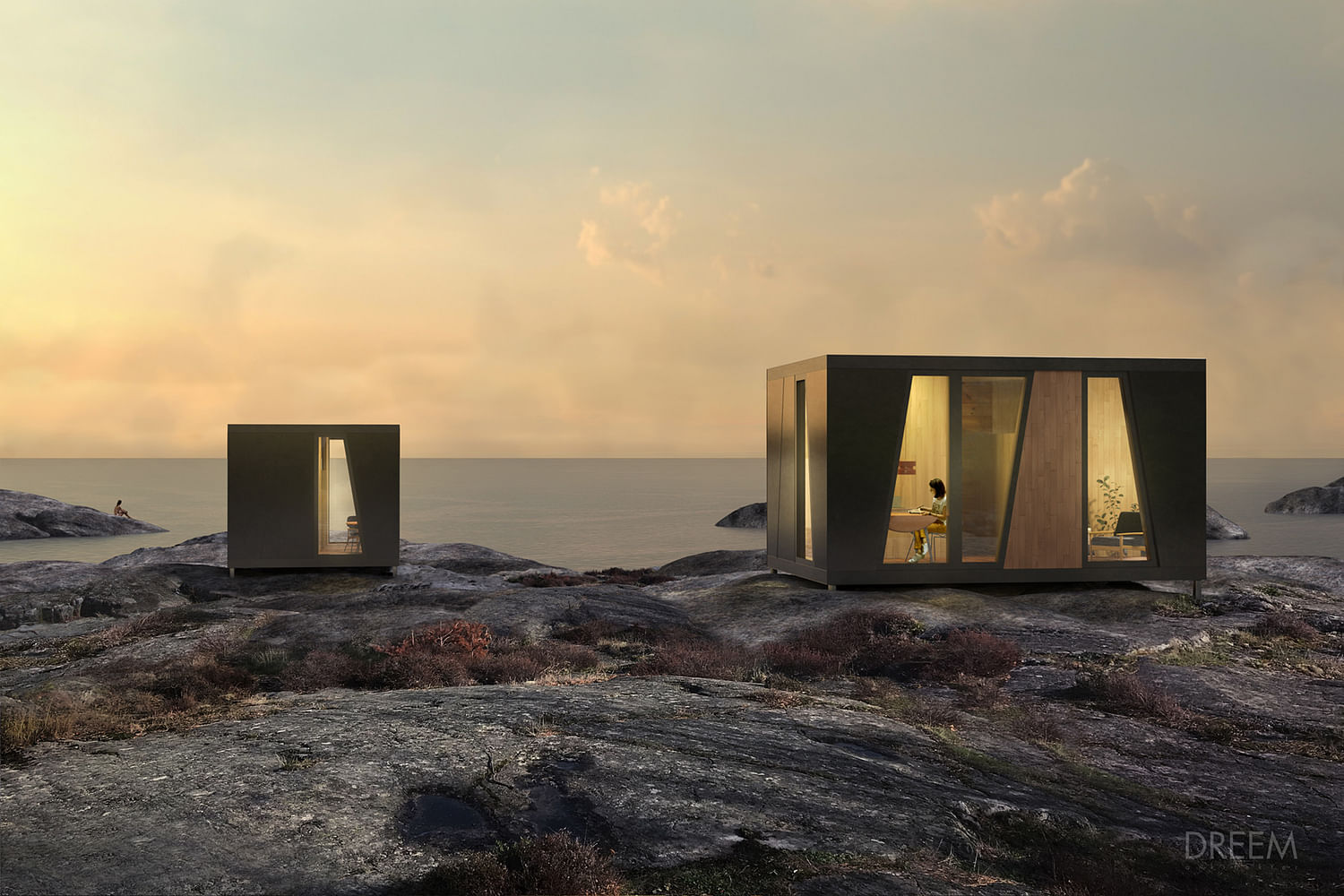
Second Prize: “CELL HOUSE” by Daniel Marin Parra, Juan Martin Arias Cardona (Colombia)

Second Prize: “CELL HOUSE” by Daniel Marin Parra, Juan Martin Arias Cardona (Colombia)

“The Cell House is aimed to be a completely self-sufficient housing unit, being able to provide a simple home in places that may not be the most convenient to inhabit. In order to make this home function off-grid, photovoltaic panels are positioned on the roof that is inclined towards the sun, ensuring the highest energy collection. The house will also be equipped with a rainwater collection and purification system. The collected water will be then stored in tanks located in the base compartment of the unit and a part of it will be available for daily use, while the other part will be heated through vacuum tube - solar collectors, later stored in specially insulated tanks to conserve the temperature of the water.”
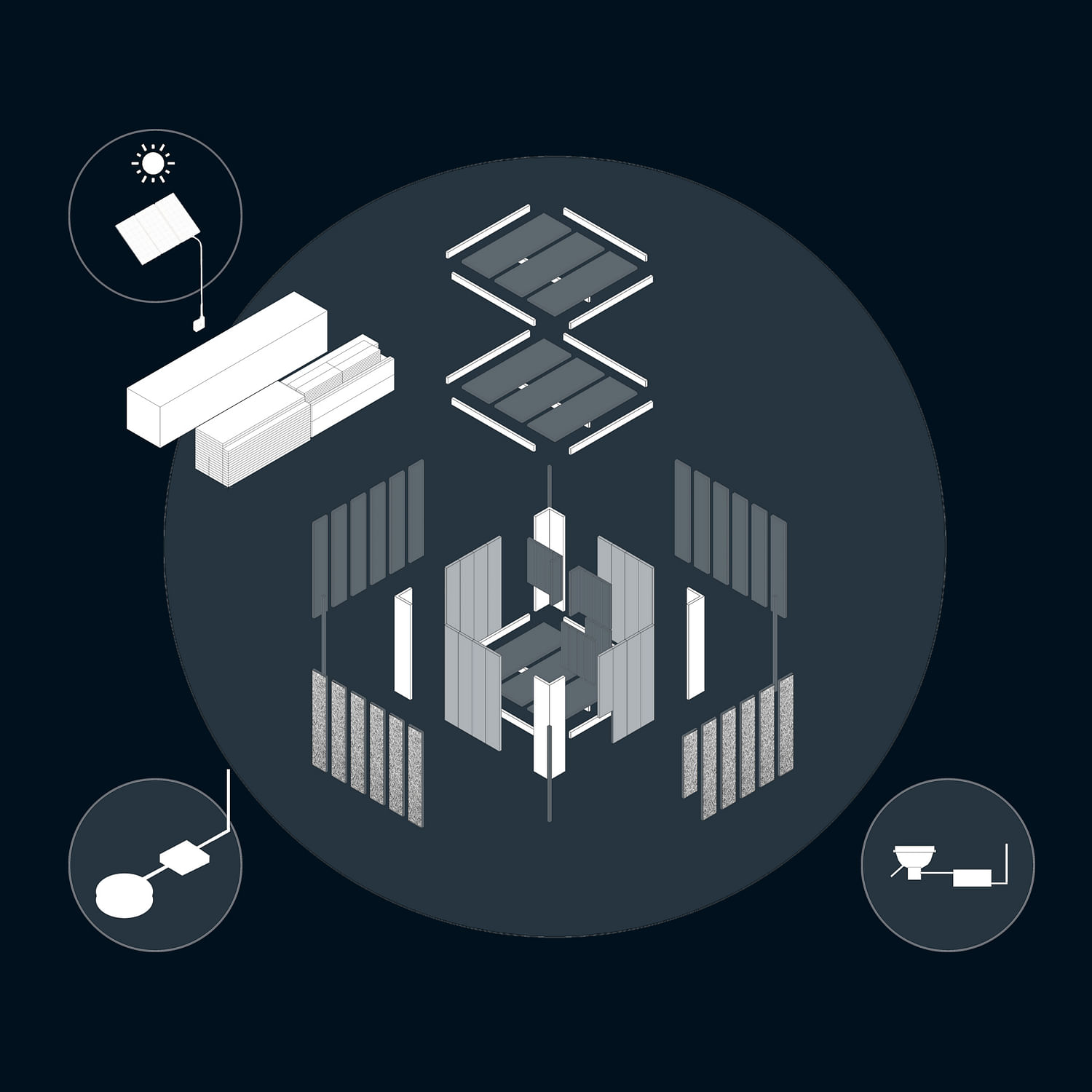
Third Prize: “GRASSROOTS ECO-HOME” by Soraya Somarathne, (Hong-Kong)

Third Prize: “GRASSROOTS ECO-HOME” by Soraya Somarathne, (Hong-Kong)

“When sustainability is no longer enough, we need to rebuild and re-grow. A low carbon footprint home which is also a garden in its entirety, would enable us to achieve both dreams, whilst providing new-age possibilities for rural and remote eco-living. The home is composed of standard but also two special modified BCORE slabs. The first, custom made slab, acts as a cladding system for vertical greening and the second slab operates as a semi-transparent window facade. The design intent is to pack soil behind the fine steel mesh to enable plant life such as grass to grow across the facades of the building. The core tubes could be plugged with transparent cylinders or covered with a glass finish to enable light to penetrate space, whilst providing views out.”
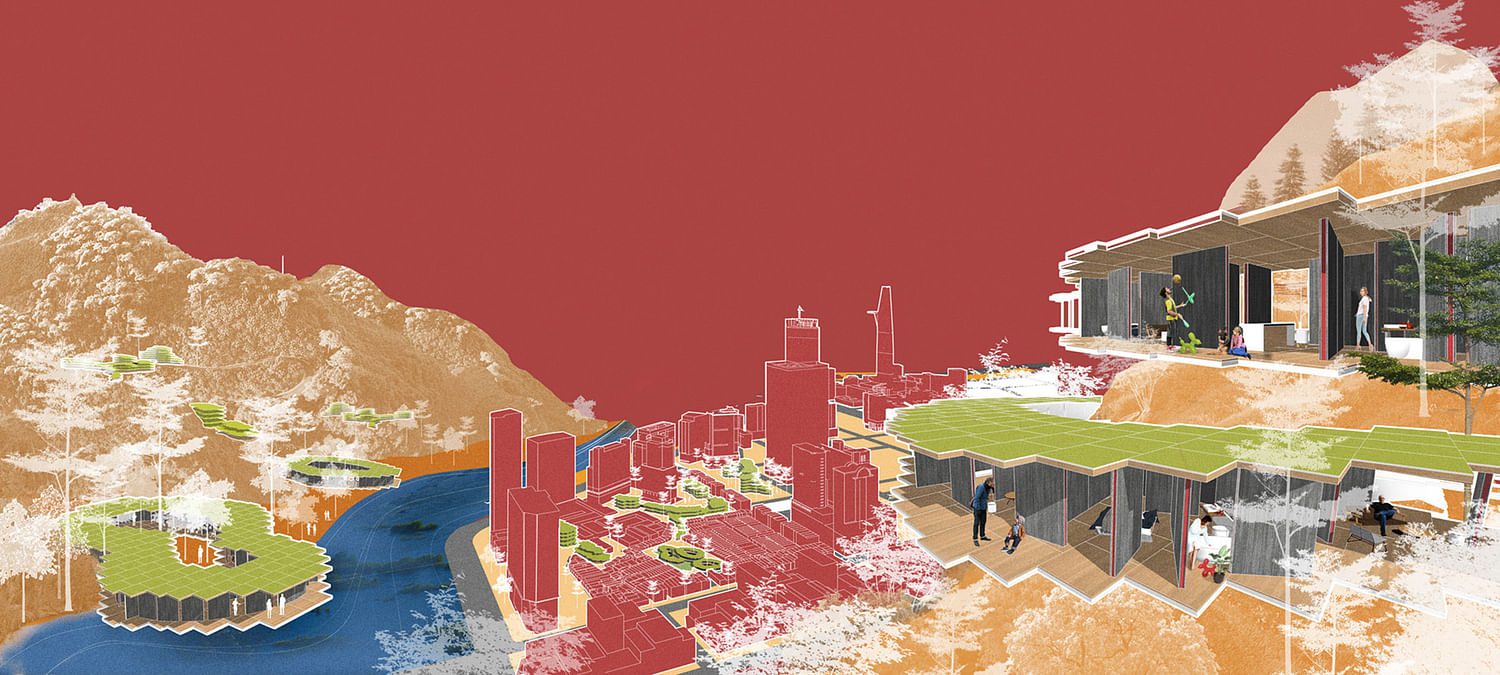
Fourth Prize: “ELASTIC HOME” by Quynh Nghi Nguyen, Tan Dat Le, Que Ly Tran, Tan Thang Nguyen (Vietnam)

Fourth Prize: “ELASTIC HOME” by Quynh Nghi Nguyen, Tan Dat Le, Que Ly Tran, Tan Thang Nguyen (Vietnam)

“Can a BCORE house be like water? Formless, shapeless or formed by the shape it is filled into? Can a space be big, small, opened or closed whenever it needs to? Unifying the cuts of a standard BCORE panel into four 2x3m panels, we minimize the complexity of fabrication and maximize its flexibility. Each wall (3x2m) can either rotate or slide on the 2m-offset, contour-like grid track attached to the ceiling, thus freeing floor space from joints and brackets. By rotating and sliding, the structure can enlarge or shrink, open or close, be triangular or rectangular; reflecting its owner personality.”
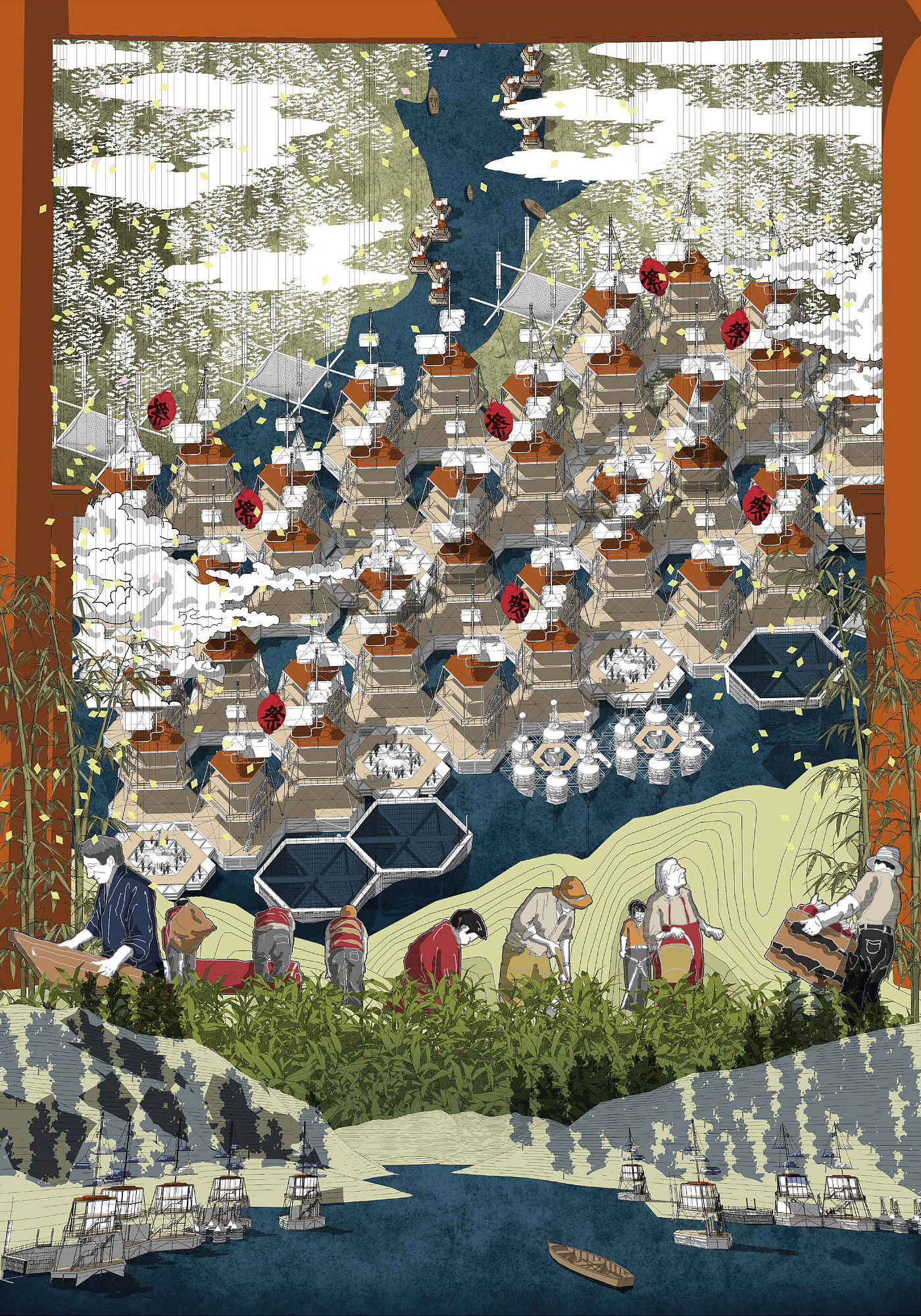
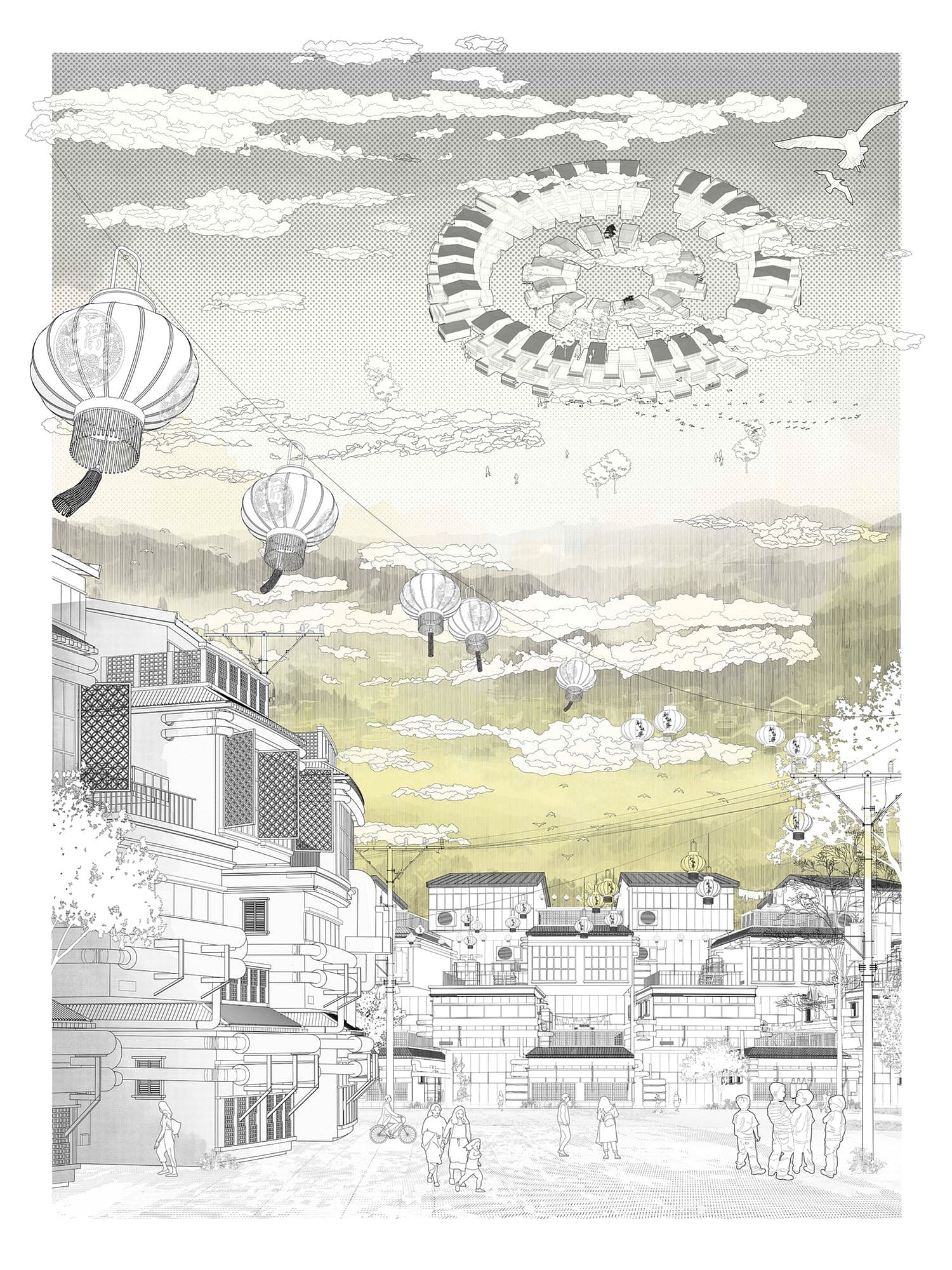
Fifth Prize: “NOSTALGIA UTOPIA” by Jiawei Liang, Tao Hong (China)

Fifth Prize: “NOSTALGIA UTOPIA” by Jiawei Liang, Tao Hong (China)

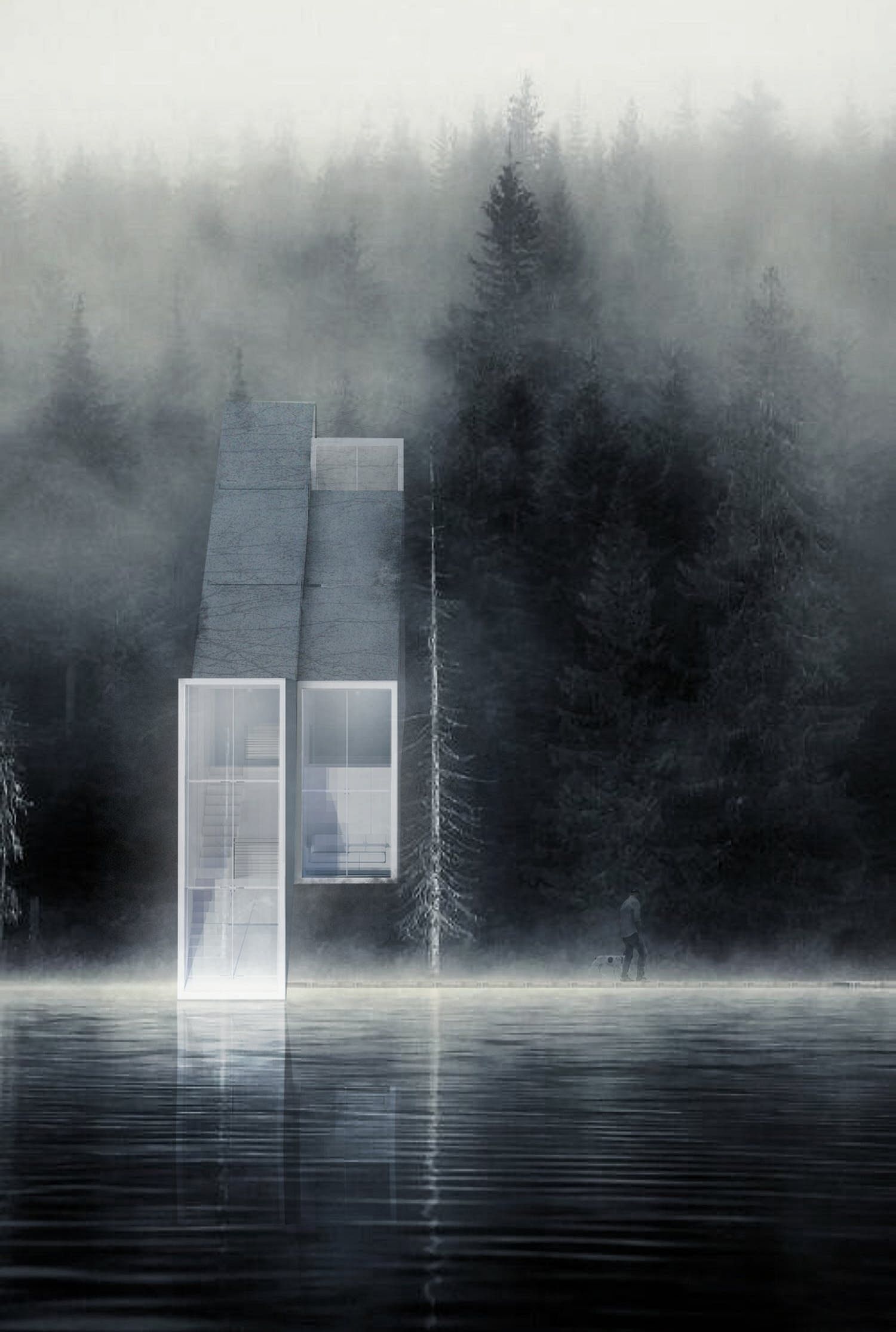
“The project seeks to recover the memory of the inhabitants affected by the construction of the Three Gorges Dam in China. Due to this colossal development, many villages were flooded and this proposal tries to recover the social and private spaces on the shore and at the surface of the new artificial lake. The lightness and non-corrosiveness of BCORE suit the structure of the village. Each hexagonal module is inter-attached forming a giant floating platform. The entire first floor is a conjugated public area, while the floors above form housing. The entire floating system is equipped with fish farms, air and water purification.”
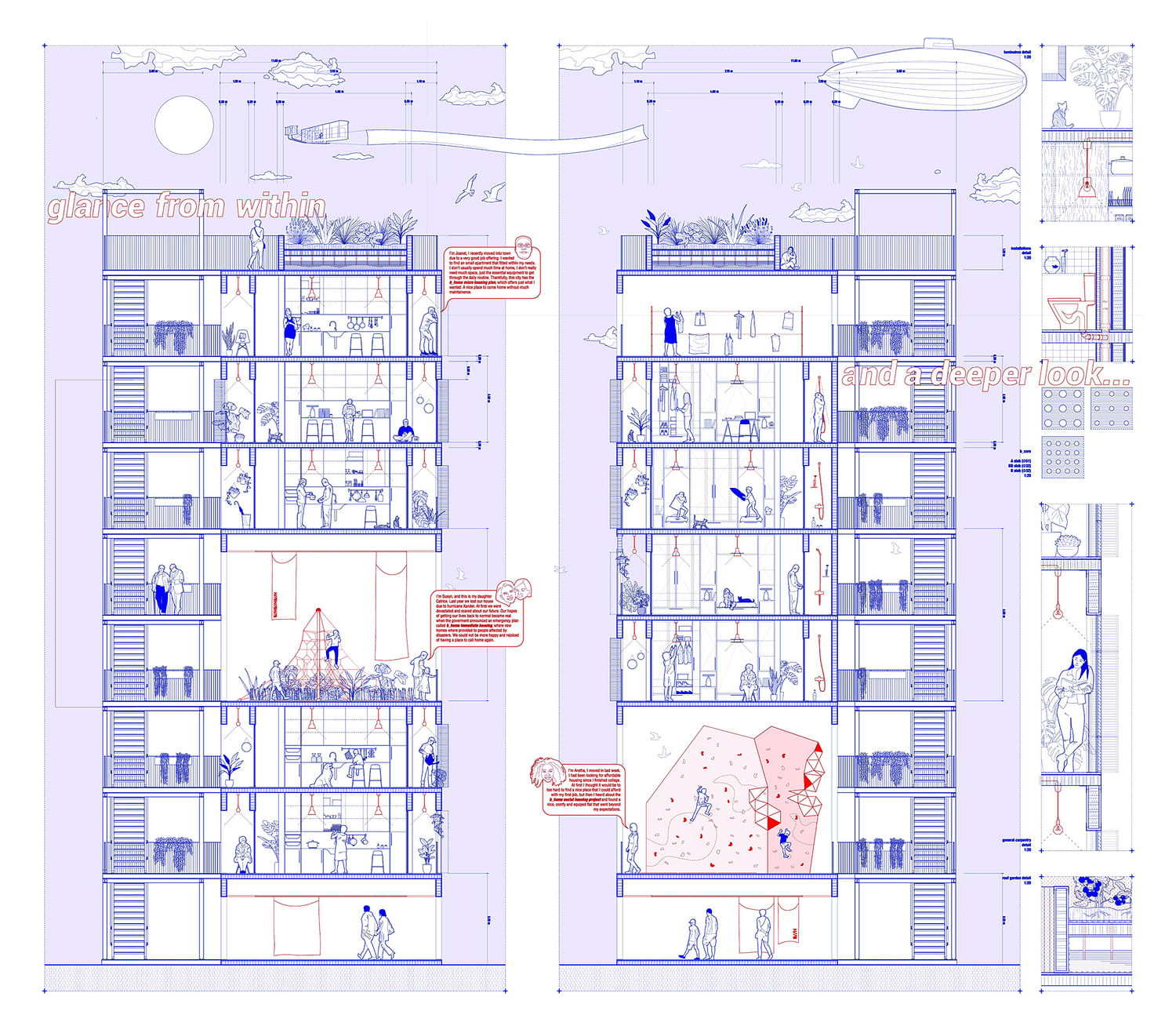
Sixth Prize: “b” by Miguel Morillas Machetti, Elena Llácer Velert, Raquel Cullen La Rosa (Spain)

Sixth Prize: “b” by Miguel Morillas Machetti, Elena Llácer Velert, Raquel Cullen La Rosa (Spain)    

“The ‘L’ & ‘I’ shaped cells grow in height and surface, repeating themselves in a chain and adapting to the terrain. The b-home allows building a temporary shelter quickly, covering the basic needs of the family for short or medium periods, enabling people to resume their normal lives rapidly. The pieces revalue the public space, for example, in urban areas which have been forgotten or temporarily create them. They can be used both in the suburbs and in urban centres during festivals, exhibitions or flea markets.” 
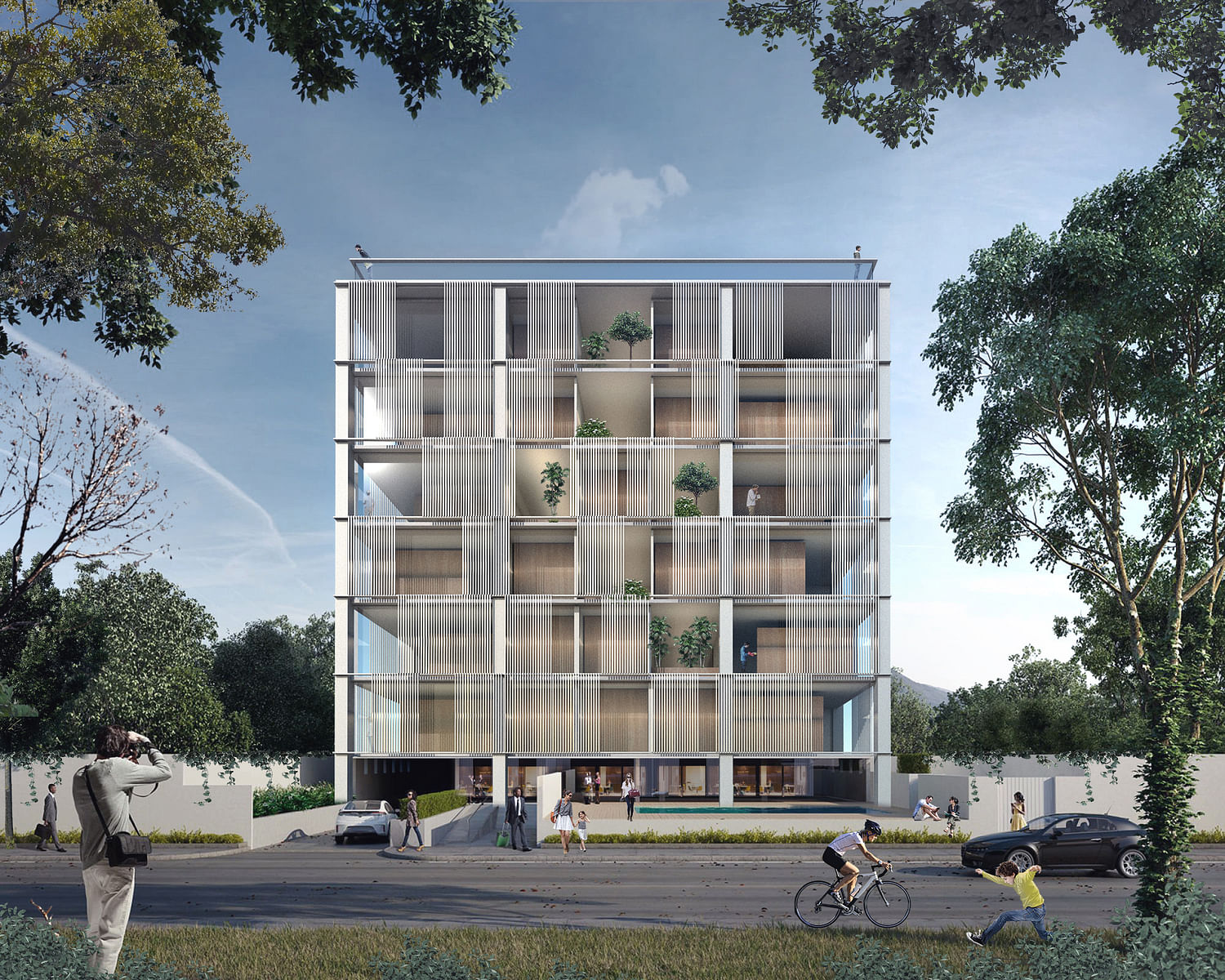
Seventh Prize: “LIVING FORMULA” by Jie Liu (Canada)

Seventh Prize: “LIVING FORMULA” by Jie Liu (Canada)

“Life should be as easy as typing a formula. Finding a place you love, choosing the spaces that you need and changing them whenever you want. Four basic modules form the project; living room, bedroom, recreation and balcony. Each unit could be enlarged by one or more modules, based on people’s living preferences and financial conditions. The mobile app of ‘Living Formula’ allows users to find and reserve the available space around the world to build their own space permanently or temporarily. Tenants this way regenerate their home’s layout by exchanging or adding new modules to it thus creating a vivid and dynamic community.”
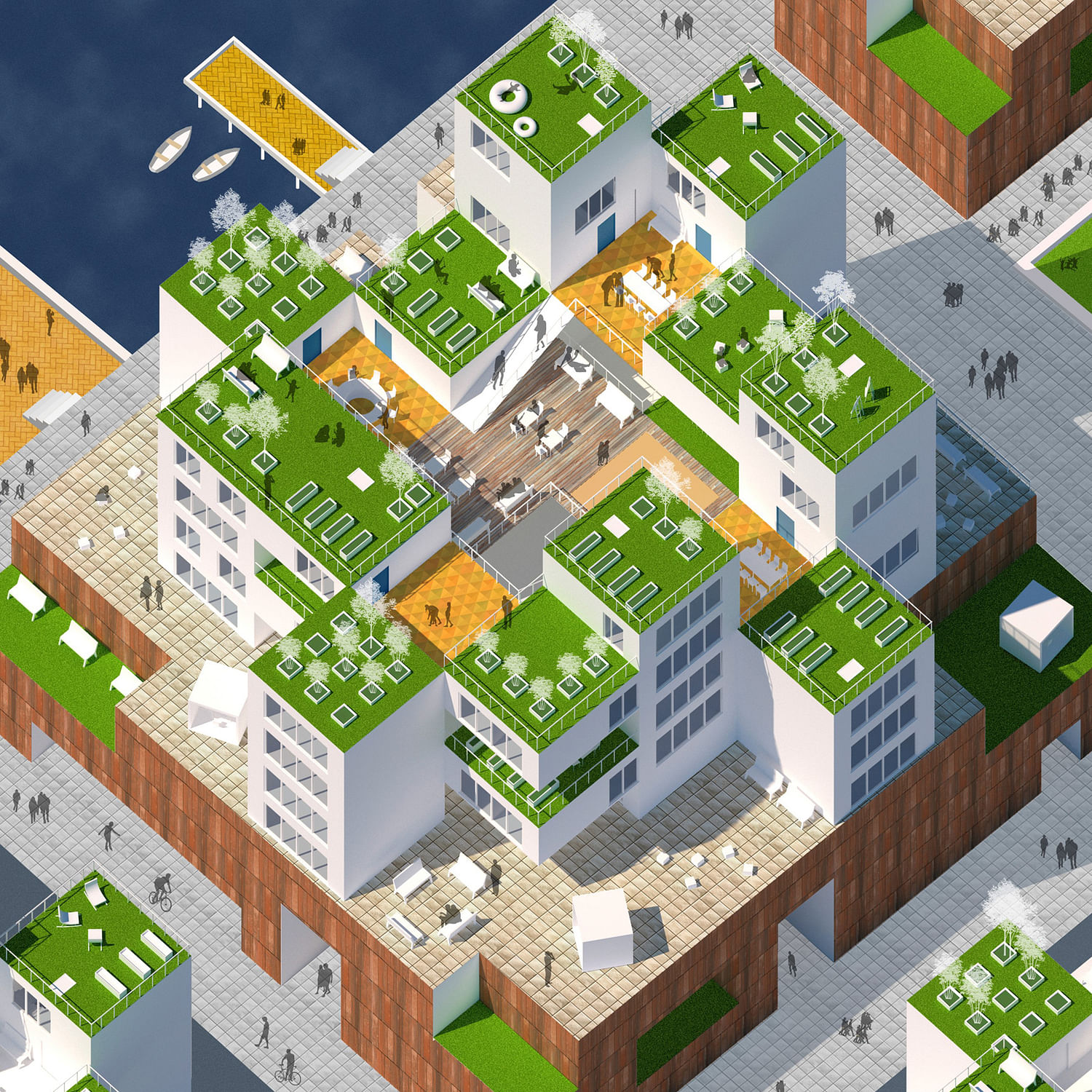
Eighth Prize: “SIMCITY 4.0” by Elizaveta Khaziakhmetova, Ilnar Akhtiamov, Rezeda Akhtiamova (Russia)

Eighth Prize: “SIMCITY 4.0” by Elizaveta Khaziakhmetova, Ilnar Akhtiamov, Rezeda Akhtiamova (Russia) 

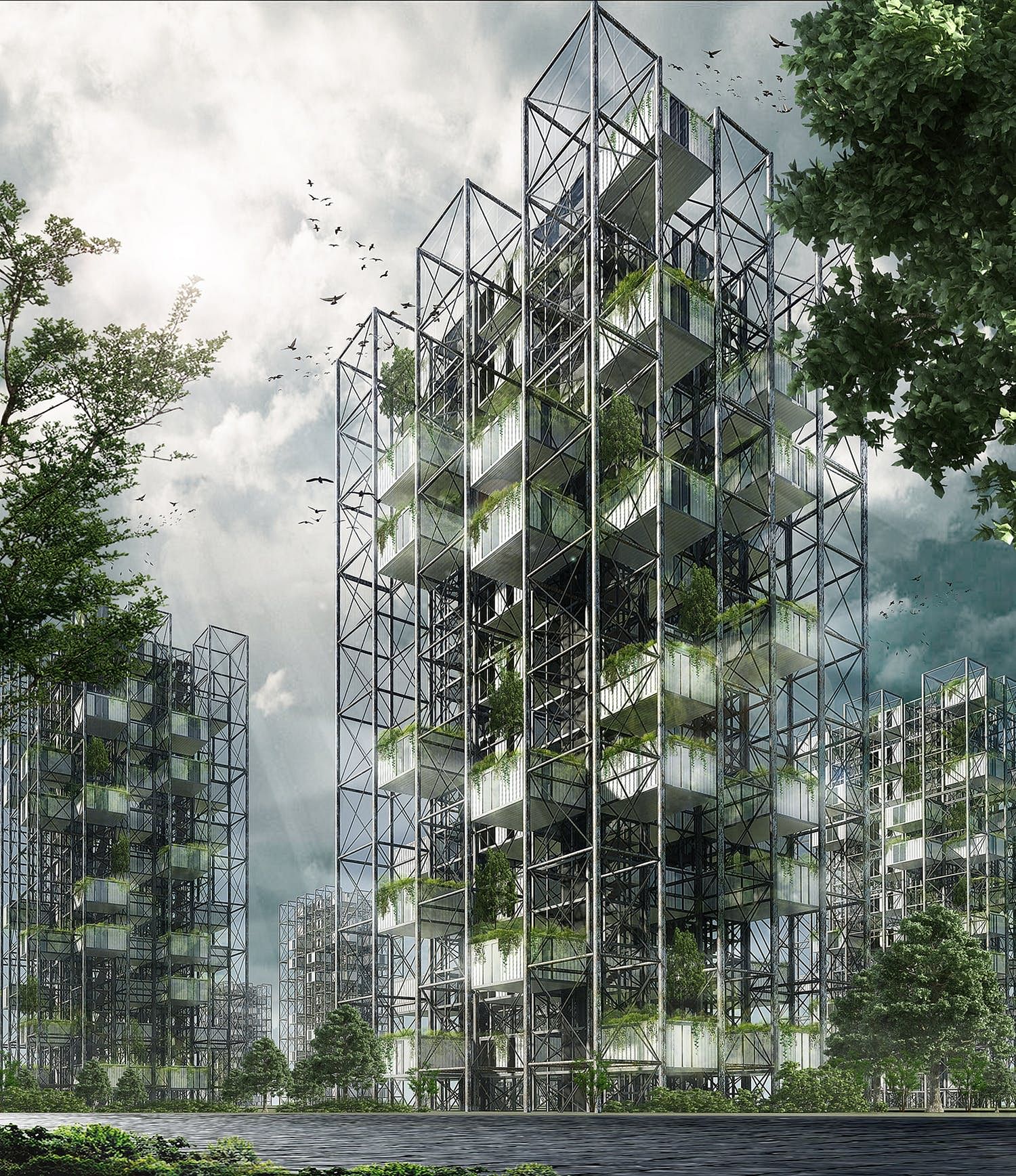
“The concept of this co-living space is a structure that allows different people to gather in one neighborhood. It combines various residential units and different public spaces for the interaction of their residents. The base is formed by a three-story stylobate with mixed functions, which nests home units of different sizes. There are five types of units; S, M, L, XL and XXL. All of them integrate into the structure just like a Tetris game.”

Check out the Honorable Mentions in the gallery below.
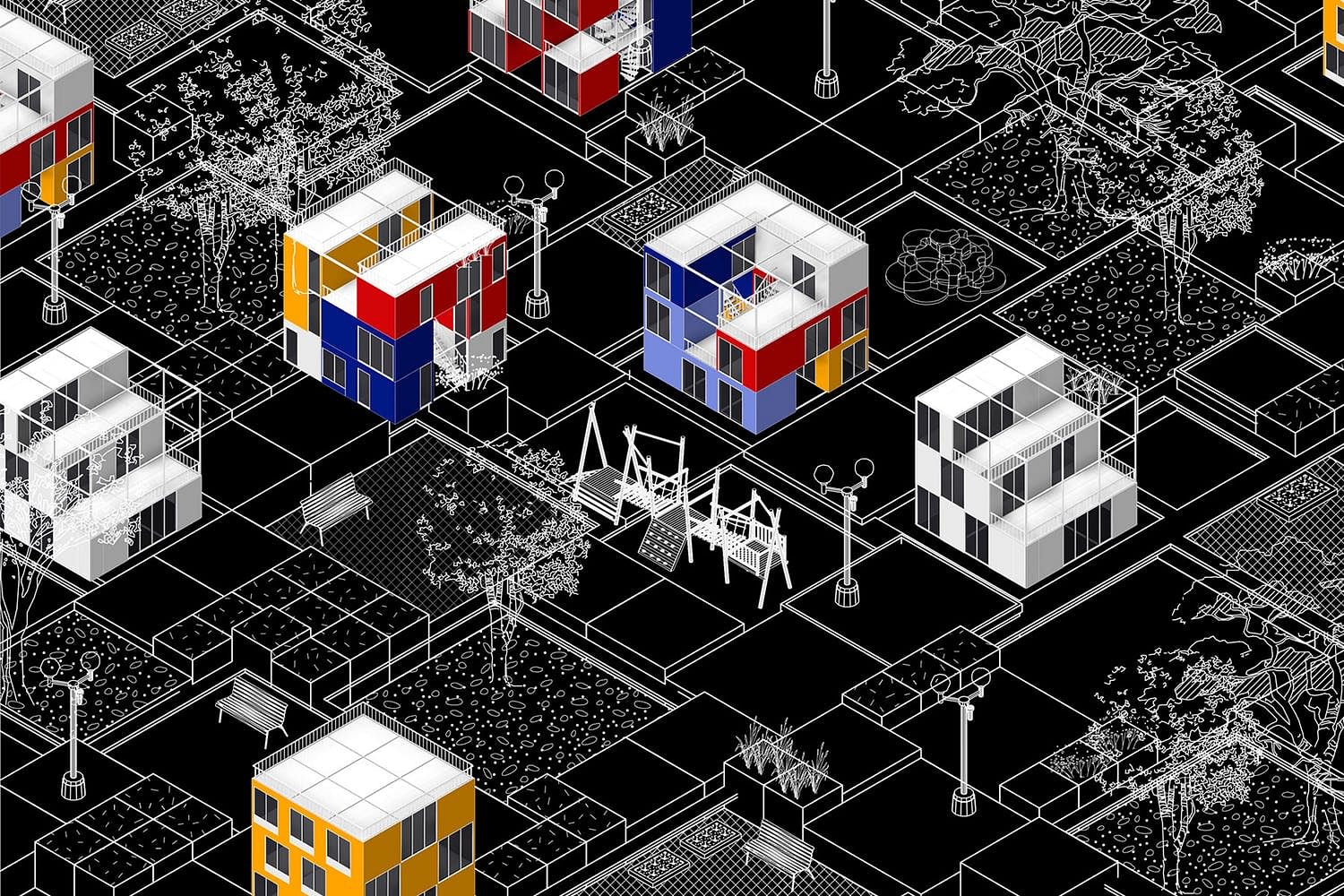
RELATED COMPETITION SkyCity Challenge 19: The Future of Housing
RELATED NEWS Affordable housing and community projects win in the 2019 AIA/HUD Secretary's Awards
RELATED NEWS Winners of the 'rise in the city' design competition allowed for designers to reimagine affordable housing in Maseru, Lesotho
RELATED NEWS “Home within House” wins Building Trust International's 2018 Affordable Housing Challenge in Phnom Penh

Related

competition ● skycity ● housing issues ● speculative architecture ● ideas competition ● building materials ● alternative housing

Share

  • Follow

    0 Comments

  • Comment as :

The winning ideas of SkyCity Challenge 19: The Future of Housing

Over $500,000 awarded to architectural discourse projects by Graham Foundation

Best in urban planning recognized at AIA Regional & Urban Design Award 2026

Sponsored Post by Buildner

Re:Form - New Life for Old Spaces / Edition #3 advance registration deadline is approaching!

New architecture and design competitions: IDEAS Awards, UIA-HYP CUP International Student Competition, Vancouver Tall Challenge, and Memorial to the Sixth Extinction

Best small projects chosen at AIA Small Project Award 2026

10 standout sustainable projects honored at AIA COTE Top Ten Award 2026

Best residential architecture of 2026 honored at AIA Housing Award

Best new interiors of 2026 chosen at AIA Interior Architecture Awards

Sign up for Bustler's Email Newsletters

Best global architecture honored at RIBA International Awards 2026

World’s most beautiful airports of 2026 chosen by Prix Versailles

New architecture and design competitions: Brick in Architecture Awards, Study Architecture Student Showcase, N.Y.C. Groceries, and New York High Falls Riverfront Market

SmithGroup’s ‘pioneering’ Philip Merrill Environmental Center wins AIA Twenty-five Year Award

Sponsored Post by Buildner

Museum of Emotions / Edition #8 FINAL registration deadline is in 5 DAYS!

Here are the winners of the 2026 AIA Architecture Awards

40 emerging architects and designers under 40 from Europe honored

Next page » Loading

The winning ideas of SkyCity Challenge 19: The Future of Housing

By Justine Testado|

Friday, Nov 22, 2019

Share

“Newthink” by Michał Kacprzyk (Poland)

Related

competition ● skycity ● housing issues ● speculative architecture ● ideas competition ● building materials ● alternative housing

Community-based architecture platform SkyCity recently announced the winners of their biannual “SkyCity Challenge”, which garnered over 180 entries from more than 50 countries for its 2019 edition. Established in 2016 in BROAD Town, China, SkyCity aims to confront today's pressing issues in housing.

Entrants were tasked with creating a build-system proposal for Broad Group, which is currently investigating their new material called BCORE. Entrants were challenged to design a modular home that can be dismantled after a period of time and used again. According to SkyCity, the prefabricated pieces of the home had to be easily transportable using traditional shipping containers which, when flat-packed, can be assembled by a small crew with equipment anywhere on the planet.

The jury highly valued proposals that explored BCORE directly and experimented with it, in both its structural capabilities and aesthetics. Scroll down for a look at the prize-winning entries and honorable mentions.

First Prize: “COLLECTIVE GEOMETRIES” by Manuel Lopes, Raphaelle Paire, Olga Litwa, Maya Iwdal (Sweden)

First Prize: “COLLECTIVE GEOMETRIES” by Manuel Lopes, Raphaelle Paire, Olga Litwa, Maya Iwdal (Sweden)

Project description: “Facing future housing shortages will require simple, fast produced systems with the capacity to adapt and respond to a great array of complex scenarios and demands. Instead of trying to imagine and predict how humans will live in the future, Collective Geometries aim to become a system that can flexibly face a great number of the potential range of future scenarios, from isolated off-grid cabins to dense collective housing arrangements. The whole project is represented by a few simple elements capable of being combined into smarter collective entities. The housing unit's size and weight are kept within a ‘two-man handling’ scale and they are joint together mechanically. The assembly and disassembly are designed to be done by simple users, except for bigger constructions where the size of a collective structure requires heavy machinery and implemented safety and work protocols. The segregation into simple pieces allows the projects to easily enlarge and shrink, trying to adapt to the end-user's changing needs and thus extending the lifecycle of individual systems.”

Second Prize: “CELL HOUSE” by Daniel Marin Parra, Juan Martin Arias Cardona (Colombia)

Second Prize: “CELL HOUSE” by Daniel Marin Parra, Juan Martin Arias Cardona (Colombia)

“The Cell House is aimed to be a completely self-sufficient housing unit, being able to provide a simple home in places that may not be the most convenient to inhabit. In order to make this home function off-grid, photovoltaic panels are positioned on the roof that is inclined towards the sun, ensuring the highest energy collection. The house will also be equipped with a rainwater collection and purification system. The collected water will be then stored in tanks located in the base compartment of the unit and a part of it will be available for daily use, while the other part will be heated through vacuum tube - solar collectors, later stored in specially insulated tanks to conserve the temperature of the water.”

Third Prize: “GRASSROOTS ECO-HOME” by Soraya Somarathne, (Hong-Kong)

Third Prize: “GRASSROOTS ECO-HOME” by Soraya Somarathne, (Hong-Kong)

“When sustainability is no longer enough, we need to rebuild and re-grow. A low carbon footprint home which is also a garden in its entirety, would enable us to achieve both dreams, whilst providing new-age possibilities for rural and remote eco-living. The home is composed of standard but also two special modified BCORE slabs. The first, custom made slab, acts as a cladding system for vertical greening and the second slab operates as a semi-transparent window facade. The design intent is to pack soil behind the fine steel mesh to enable plant life such as grass to grow across the facades of the building. The core tubes could be plugged with transparent cylinders or covered with a glass finish to enable light to penetrate space, whilst providing views out.”

Fourth Prize: “ELASTIC HOME” by Quynh Nghi Nguyen, Tan Dat Le, Que Ly Tran, Tan Thang Nguyen (Vietnam)

Fourth Prize: “ELASTIC HOME” by Quynh Nghi Nguyen, Tan Dat Le, Que Ly Tran, Tan Thang Nguyen (Vietnam)

“Can a BCORE house be like water? Formless, shapeless or formed by the shape it is filled into? Can a space be big, small, opened or closed whenever it needs to? Unifying the cuts of a standard BCORE panel into four 2x3m panels, we minimize the complexity of fabrication and maximize its flexibility. Each wall (3x2m) can either rotate or slide on the 2m-offset, contour-like grid track attached to the ceiling, thus freeing floor space from joints and brackets. By rotating and sliding, the structure can enlarge or shrink, open or close, be triangular or rectangular; reflecting its owner personality.”

Fifth Prize: “NOSTALGIA UTOPIA” by Jiawei Liang, Tao Hong (China)

Fifth Prize: “NOSTALGIA UTOPIA” by Jiawei Liang, Tao Hong (China)

“The project seeks to recover the memory of the inhabitants affected by the construction of the Three Gorges Dam in China. Due to this colossal development, many villages were flooded and this proposal tries to recover the social and private spaces on the shore and at the surface of the new artificial lake. The lightness and non-corrosiveness of BCORE suit the structure of the village. Each hexagonal module is inter-attached forming a giant floating platform. The entire first floor is a conjugated public area, while the floors above form housing. The entire floating system is equipped with fish farms, air and water purification.”

Sixth Prize: “b” by Miguel Morillas Machetti, Elena Llácer Velert, Raquel Cullen La Rosa (Spain)

Sixth Prize: “b” by Miguel Morillas Machetti, Elena Llácer Velert, Raquel Cullen La Rosa (Spain)    

“The ‘L’ & ‘I’ shaped cells grow in height and surface, repeating themselves in a chain and adapting to the terrain. The b-home allows building a temporary shelter quickly, covering the basic needs of the family for short or medium periods, enabling people to resume their normal lives rapidly. The pieces revalue the public space, for example, in urban areas which have been forgotten or temporarily create them. They can be used both in the suburbs and in urban centres during festivals, exhibitions or flea markets.” 

Seventh Prize: “LIVING FORMULA” by Jie Liu (Canada)

Seventh Prize: “LIVING FORMULA” by Jie Liu (Canada)

“Life should be as easy as typing a formula. Finding a place you love, choosing the spaces that you need and changing them whenever you want. Four basic modules form the project; living room, bedroom, recreation and balcony. Each unit could be enlarged by one or more modules, based on people’s living preferences and financial conditions. The mobile app of ‘Living Formula’ allows users to find and reserve the available space around the world to build their own space permanently or temporarily. Tenants this way regenerate their home’s layout by exchanging or adding new modules to it thus creating a vivid and dynamic community.”

Eighth Prize: “SIMCITY 4.0” by Elizaveta Khaziakhmetova, Ilnar Akhtiamov, Rezeda Akhtiamova (Russia)

Eighth Prize: “SIMCITY 4.0” by Elizaveta Khaziakhmetova, Ilnar Akhtiamov, Rezeda Akhtiamova (Russia) 

“The concept of this co-living space is a structure that allows different people to gather in one neighborhood. It combines various residential units and different public spaces for the interaction of their residents. The base is formed by a three-story stylobate with mixed functions, which nests home units of different sizes. There are five types of units; S, M, L, XL and XXL. All of them integrate into the structure just like a Tetris game.”

Check out the Honorable Mentions in the gallery below.
RELATED COMPETITION SkyCity Challenge 19: The Future of Housing
RELATED NEWS Affordable housing and community projects win in the 2019 AIA/HUD Secretary's Awards
RELATED NEWS Winners of the 'rise in the city' design competition allowed for designers to reimagine affordable housing in Maseru, Lesotho
RELATED NEWS “Home within House” wins Building Trust International's 2018 Affordable Housing Challenge in Phnom Penh

Share

  • Follow

    0 Comments

  • Comment as :

Archinect JobsArchinect Jobs

The Archinect Job Board attracts the world's top architectural design talents.

VIEW ALL JOBS POST A JOB

Project Manager

Populous

Project Manager

San Francisco, CA, US

Architectural team Memeber

Meraki Architects, LLC

Architectural team Memeber

Middleburg Heights, OH, US

BIM Application Specialist

Lake Flato Architects

BIM Application Specialist

San Antonio, TX, US

Junior Designer/Architect

O'Neill Rose Architects

Junior Designer/Architect

Brooklyn, NY, US

Miami Senior Project Coordinator

BMA Architects

Miami Senior Project Coordinator

Miami, FL, US

Senior Architectural Planner

Payette

Senior Architectural Planner

Boston, MA, US

Intermediate Architect

GF55 Architects

Intermediate Architect

New York, NY, US

Lead Design Architect

The American Housing Corporation

Lead Design Architect

Austin, TX, US

Assistant Professor Architecture

California State Polytechnic University, Pomona

Assistant Professor Architecture

Pomona, CA, US

Architect / Project Architect - Remote (U.S. Based)

Joseph David Associates

Architect / Project Architect - Remote (U.S. Based)

Next page » Loading