• Login / Join
  • About
  • •
  • Contact
  • •
  • Advertising
bustler logo
bustler logo
  • News
  • Competitions
  • Events
  • Bustler is powered by Archinect
  • Sign up for Bustler's Email Newsletters

  • Follow these Bustler feeds:

  • Search

    Search in

  • Submit

    What are you submitting?

    News Pitch
    Competition
    Event
  • Login / Join
  • News|Competitions|Events
  • Search
    | Submit
    | Follow
  • Search in

    What are you submitting?

    News Pitch
    Competition
    Event

    Follow these Bustler feeds:

  • About|Contact|Advertising
  • Login / Join

Manchester School of Architecture Students Win Urban 2020 Competition

By Bustler Editors|

Wednesday, Mar 25, 2009

Commissioned by the global networking company Cisco to investigate how ‘connected’ the British public feel to their local communities, the ‘Urban 2020’ survey found that 87 per cent of the respondents believe that it’s the people that live there that make a community, while 64 per cent also believe it’s primarily the responsibility of the local residents, rather than the government or the local council, to make their communities better places to live.
image

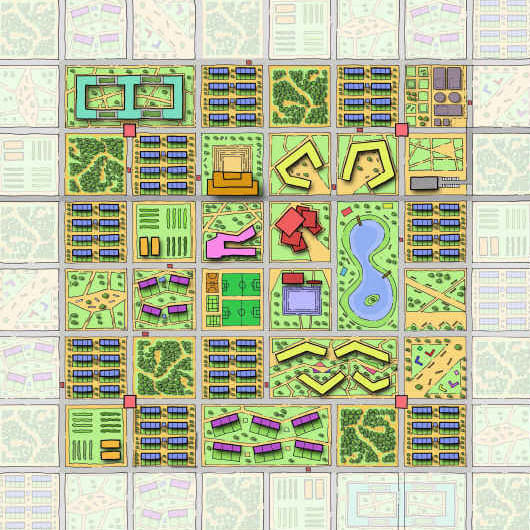
The proposal ‘Connect 4 Sustainability’ by Peter Sproule and James Hotson won the ‘Urban 2020’ competition.

The research looked at the attitudes of more than 1,000 people towards the social, environmental and economic factors that affect community life in Britain. Its release coincides with the end of ‘Urban 2020’, a national competition that invited university students to share their vision of how the UK’s communities could be more ‘connected’ in the future and be better adept at dealing with changing demographics and climate change.

Other research findings include:

  • Virtual reality trumps ‘real’ reality. Nearly a third (28 per cent) of the respondents feel more part of a virtual online community than a physical one.
  • ‘Green space’ and education top the league. Nearly 70 per cent rate the amount of green space available in their communities as good or very good, and 59 per cent rated schools in the same way. Affordable housing and community centers, however, scored lower, with just 5 per cent of the respondents rating them as very good.
  • ‘Green’ steals economy’s thunder. More people think that environmental issues (32 per cent) are top of the council’s agenda, than ‘economic’ (25 per cent) or social (19 per cent) ones.
  • Community facilities and good shops off the radar. People want to live in affordable, attractive places with large amounts of green space and low crime rates. Of less concern are community facilities or good local shops.
  • Downturn will forge greater community spirit. Nearly a quarter agree or strongly agree that the sense of community will improve as a result of the economic downturn.
image
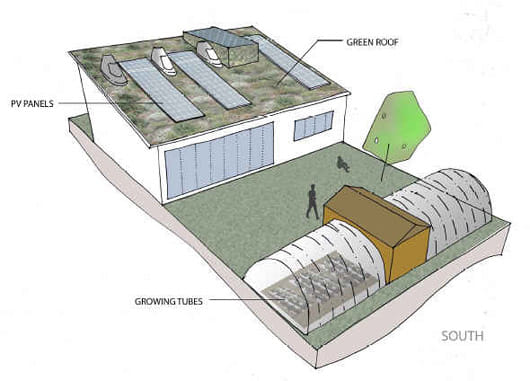
Connect 4 Sustainability - South view

While there is evidence of positive attitudes from people towards their local communities, the findings also highlight a need to make improvements to urban infrastructures, as more than half (62 per cent) of the respondents don’t think local communities support young people, and nearly half (45 per cent) are not convinced that their communities can support the number of families or the aging population either.
image

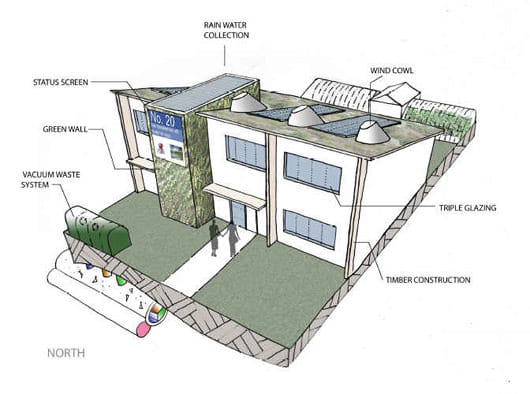
Connect 4 Sustainability - North view

Addressing these issues were submissions to the ‘Urban 2020’ competition. To secure their place in the final, students from Cambridge, Manchester, Sheffield and other universities came up with ideas ranging from a community that is formed virtually before coming together in reality, to a model that was inspired by patterns of the famous ‘Chinese knot’. Judged by a panel of influential figures in architecture, engineering, design and information technology, the winner was announced at the Royal Institute of British Architects (RIBA) in London.
image

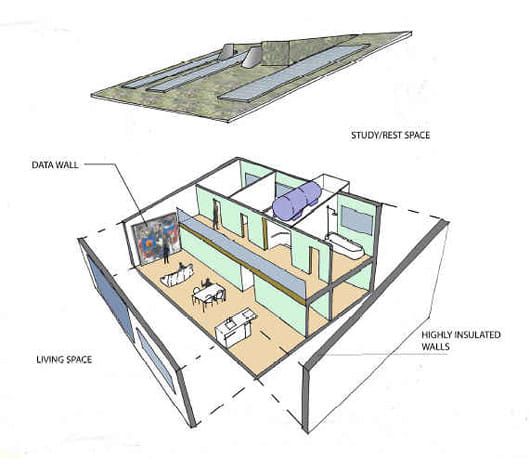
Connect 4 Sustainability - Interior

The winning entry, ‘Connect 4 Sustainability’, was designed by Peter Sproule and James Hotson from Manchester School of Architecture and was based on a community where people, transport, work and energy are at the forefront of the community. The design created connections throughout all aspects of life, creating a sustainable, energy-efficient environment as a result.
image

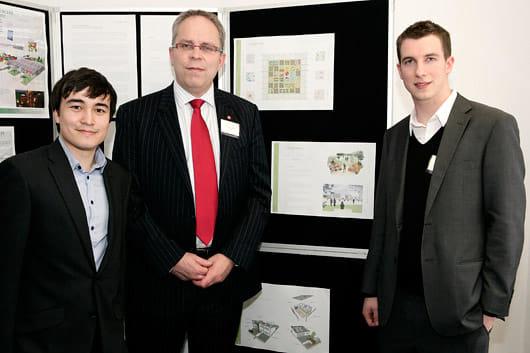
Competition winners Peter Sproule and James Hotson, Manchester School of Architecture, with Neil Crockett, director of Public Sector Operations at Cisco who chaired the judging panel

The Urban 2020 judging panel included Mike Perry from the Intelligent Buildings Group at Building Research Establishment (BRE); Andy Murdoch, group director of the Infrastructure Group at Buro Happold; Howard Jones, director of Human Networks at the Eden Project; Ken Shuttleworth, co-founder of MAKE Architects; Femi Adewole, Group Director of Operations at Notting Hill Housing; Dan Hill, senior consultant at Arup; John-Paul Nunes, head of Education Projects at the Royal Institute of British Architects (RIBA); Emily Campbell, director of Design at the Royal Society Arts (RSA) and Alison Benjamin, editor of the Society section, the Guardian. Neil Crockett, director of Public Sector Operations at Cisco, chaired the judging panel.
image

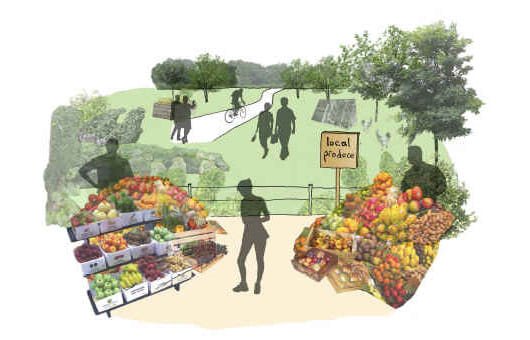
Connect 4 Sustainability - Public Space

Quotes:

Neil Crockett, director of Public Sector Operations at Cisco UK and Ireland, comments: “Today, more than half the world’s population lives in urban areas, and this phenomenon is set to rapidly increase. Cities consume 75 per cent of the world’s energy and are responsible for 80 per cent of greenhouse gas emissions. We need an architecture that boosts productivity, spurs economic growth, supports environmental sustainability, and enhances the quality of life in urban environments.”

“Whilst we were hugely impressed with the overall standard of the Urban 2020 entries, we were surprised that only a few had considered the role that technology must play in making our towns and cities better places to live. In these times of massive global change, cities must look to apply technology to the design and the development of sustainable communities to improve the quality of life and economic development, and to reduce the environmental impact.”

Images: Urban 2020, Peter Sproule, James Hotson

Related

urban 2020 ● united kingdom ● student ● school ● manchester ● london ● europe ● cisco

Share

  • Follow

    0 Comments

  • Comment as :

Manchester School of Architecture Students Win Urban 2020 Competition

Excellence in sacred architecture reflected across the 2026 Faith & Form International Awards for Religious Architecture & Art winners

Sponsored Post by Buildner

Underbridge / Edition #2 advance registration deadline is approaching!

World’s most beautiful commercial stores of 2026 selected by Prix Versailles

Sponsored Post by Buildner

Buildner’s Unbuilt Award 2026 advance registration deadline is approaching!

Eight innovative timber projects honored at 2026 Wood in Architecture Awards

Beautiful brick architecture honored at BRICK AWARD 26

Over $500,000 awarded to architectural discourse projects by Graham Foundation

Best in urban planning recognized at AIA Regional & Urban Design Award 2026

Sign up for Bustler's Email Newsletters

Sponsored Post by Buildner

Re:Form - New Life for Old Spaces / Edition #3 advance registration deadline is approaching!

New architecture and design competitions: IDEAS Awards, UIA-HYP CUP International Student Competition, Vancouver Tall Challenge, and Memorial to the Sixth Extinction

Best small projects chosen at AIA Small Project Award 2026

10 standout sustainable projects honored at AIA COTE Top Ten Award 2026

Best residential architecture of 2026 honored at AIA Housing Award

Best new interiors of 2026 chosen at AIA Interior Architecture Awards

Best global architecture honored at RIBA International Awards 2026

Next page » Loading

Manchester School of Architecture Students Win Urban 2020 Competition

By Bustler Editors|

Wednesday, Mar 25, 2009

Share

Related

urban 2020 ● united kingdom ● student ● school ● manchester ● london ● europe ● cisco

Commissioned by the global networking company Cisco to investigate how ‘connected’ the British public feel to their local communities, the ‘Urban 2020’ survey found that 87 per cent of the respondents believe that it’s the people that live there that make a community, while 64 per cent also believe it’s primarily the responsibility of the local residents, rather than the government or the local council, to make their communities better places to live.

image

The proposal ‘Connect 4 Sustainability’ by Peter Sproule and James Hotson won the ‘Urban 2020’ competition.

The research looked at the attitudes of more than 1,000 people towards the social, environmental and economic factors that affect community life in Britain. Its release coincides with the end of ‘Urban 2020’, a national competition that invited university students to share their vision of how the UK’s communities could be more ‘connected’ in the future and be better adept at dealing with changing demographics and climate change.

Other research findings include:

  • Virtual reality trumps ‘real’ reality. Nearly a third (28 per cent) of the respondents feel more part of a virtual online community than a physical one.
  • ‘Green space’ and education top the league. Nearly 70 per cent rate the amount of green space available in their communities as good or very good, and 59 per cent rated schools in the same way. Affordable housing and community centers, however, scored lower, with just 5 per cent of the respondents rating them as very good.
  • ‘Green’ steals economy’s thunder. More people think that environmental issues (32 per cent) are top of the council’s agenda, than ‘economic’ (25 per cent) or social (19 per cent) ones.
  • Community facilities and good shops off the radar. People want to live in affordable, attractive places with large amounts of green space and low crime rates. Of less concern are community facilities or good local shops.
  • Downturn will forge greater community spirit. Nearly a quarter agree or strongly agree that the sense of community will improve as a result of the economic downturn.
image
Connect 4 Sustainability - South view

While there is evidence of positive attitudes from people towards their local communities, the findings also highlight a need to make improvements to urban infrastructures, as more than half (62 per cent) of the respondents don’t think local communities support young people, and nearly half (45 per cent) are not convinced that their communities can support the number of families or the aging population either.

image

Connect 4 Sustainability - North view

Addressing these issues were submissions to the ‘Urban 2020’ competition. To secure their place in the final, students from Cambridge, Manchester, Sheffield and other universities came up with ideas ranging from a community that is formed virtually before coming together in reality, to a model that was inspired by patterns of the famous ‘Chinese knot’. Judged by a panel of influential figures in architecture, engineering, design and information technology, the winner was announced at the Royal Institute of British Architects (RIBA) in London.

image

Connect 4 Sustainability - Interior

The winning entry, ‘Connect 4 Sustainability’, was designed by Peter Sproule and James Hotson from Manchester School of Architecture and was based on a community where people, transport, work and energy are at the forefront of the community. The design created connections throughout all aspects of life, creating a sustainable, energy-efficient environment as a result.

image

Competition winners Peter Sproule and James Hotson, Manchester School of Architecture, with Neil Crockett, director of Public Sector Operations at Cisco who chaired the judging panel

The Urban 2020 judging panel included Mike Perry from the Intelligent Buildings Group at Building Research Establishment (BRE); Andy Murdoch, group director of the Infrastructure Group at Buro Happold; Howard Jones, director of Human Networks at the Eden Project; Ken Shuttleworth, co-founder of MAKE Architects; Femi Adewole, Group Director of Operations at Notting Hill Housing; Dan Hill, senior consultant at Arup; John-Paul Nunes, head of Education Projects at the Royal Institute of British Architects (RIBA); Emily Campbell, director of Design at the Royal Society Arts (RSA) and Alison Benjamin, editor of the Society section, the Guardian. Neil Crockett, director of Public Sector Operations at Cisco, chaired the judging panel.

image

Connect 4 Sustainability - Public Space

Quotes:

Neil Crockett, director of Public Sector Operations at Cisco UK and Ireland, comments: “Today, more than half the world’s population lives in urban areas, and this phenomenon is set to rapidly increase. Cities consume 75 per cent of the world’s energy and are responsible for 80 per cent of greenhouse gas emissions. We need an architecture that boosts productivity, spurs economic growth, supports environmental sustainability, and enhances the quality of life in urban environments.”

“Whilst we were hugely impressed with the overall standard of the Urban 2020 entries, we were surprised that only a few had considered the role that technology must play in making our towns and cities better places to live. In these times of massive global change, cities must look to apply technology to the design and the development of sustainable communities to improve the quality of life and economic development, and to reduce the environmental impact.”

Images: Urban 2020, Peter Sproule, James Hotson

Share

  • Follow

    0 Comments

  • Comment as :

Archinect JobsArchinect Jobs

The Archinect Job Board attracts the world's top architectural design talents.

VIEW ALL JOBS POST A JOB

Architect/Architectural Designer

ET Boggess Architects, Inc.

Architect/Architectural Designer

Princeton, WV, US

Intermediate Architect/Designer

Larson Architecture Works pllc

Intermediate Architect/Designer

New York, NY, US

Healthcare Project Manager

NK Architects

Healthcare Project Manager

New York, NY, US

Project Designer / Job Captain

Kadre Architects, Inc

Project Designer / Job Captain

Los Angeles, CA, US

Architectural Design Manager for Architectural Lighting Design Firm

Castelli-Design

Architectural Design Manager for Architectural Lighting Design Firm

New York, NY, US

Senior Architectural Designer, Ground Up - New York Office

Fogarty Finger

Senior Architectural Designer, Ground Up - New York Office

New York, NY, US

Executive Assistant & Office Manager To Principal

Danny Forster & Architecture

Executive Assistant & Office Manager To Principal

New York, NY, US

Job Captain

Studio AR&D Architects

Job Captain

Los Angeles, CA, US

Senior Designer / Project Manager

Robert Young Architects

Senior Designer / Project Manager

New York, NY, US

Architect / Project Architect - Remote (U.S. Based)

Joseph David Associates

Architect / Project Architect - Remote (U.S. Based)

Next page » Loading