• Login / Join
  • About
  • •
  • Contact
  • •
  • Advertising
bustler logo
bustler logo
  • News
  • Competitions
  • Events
  • Bustler is powered by Archinect
  • Sign up for Bustler's Email Newsletters

  • Follow these Bustler feeds:

  • Search

    Search in

  • Submit

    What are you submitting?

    News Pitch
    Competition
    Event
  • Login / Join
  • News|Competitions|Events
  • Search
    | Submit
    | Follow
  • Search in

    What are you submitting?

    News Pitch
    Competition
    Event

    Follow these Bustler feeds:

  • About|Contact|Advertising
  • Login / Join

Norman Foster's new Guggenheim exhibition tracks the impact of cars on high culture and design

By Josh Niland|

Thursday, Apr 7, 2022

Three General Motors Firebird models from the 1950s. Image courtesy GM Design DRIVE TEAM. All images provided by the Norman Foster Foundation.

In line with its namesake’s well-documented fondness for four-wheeled transportation methods, the Norman Foster Foundation has put together a new exhibition titled Motion. Autos, Art, Architecture that opens tomorrow at the Guggenheim Museum Bilbao.

Sponsored by Volkswagen and the local utility conglomerate Iberdrola, the exhibition will explore mobility through the lens of the car and its visual links to the creative arts and architecture as a kind of critical examination and “requiem” for the final days of gasoline-powered combustion engines. 
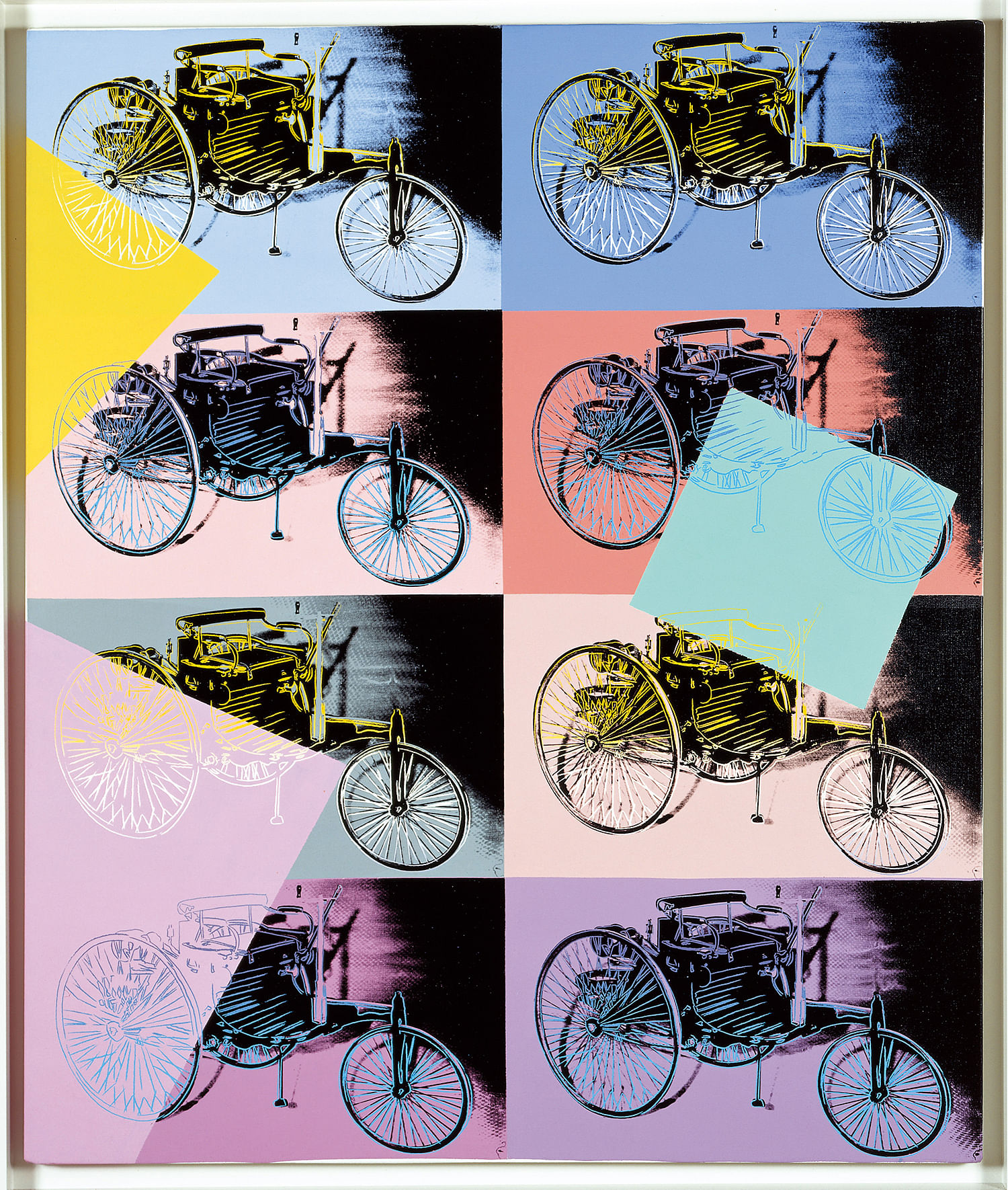
Andy Warhol, Daimler Motorkutsche, 1986.

Spread throughout ten spaces and arranged chronologically into seven different thematic galleries — Beginnings, Sculptures, Popularising, Sporting, Visionaries, Americana, and Future — that start off in the early days of the automobile and culminate in a four-part corridor enhanced with a clay model-making studio and immersive sound experience.

R. Buckminster Fuller, Dymaxion #4, 2010 (based on #1-3, 1933-34). Image © Gregory Gibbon / Foster + Partners
1952 Pegaso Z-102 Cupola

The first gallery uses the nascent technologies of film and photography to document the streamlining and eventual mass-manufacture of cars on their way to becoming an eventual “symbol of modernity,” showcasing the paradoxical notion that what started as a relief to the pollution caused by horse-drawn vehicles has evolved into a modern-day burden with an outsized role in our impending ecological collapse. 

Albert Khan, Ford Motor Company Highland Park Rendering bird’s eye view, 1924. Image courtesy Collection Cranbrook Art Museum, Gift of the Estate of John Bloom.

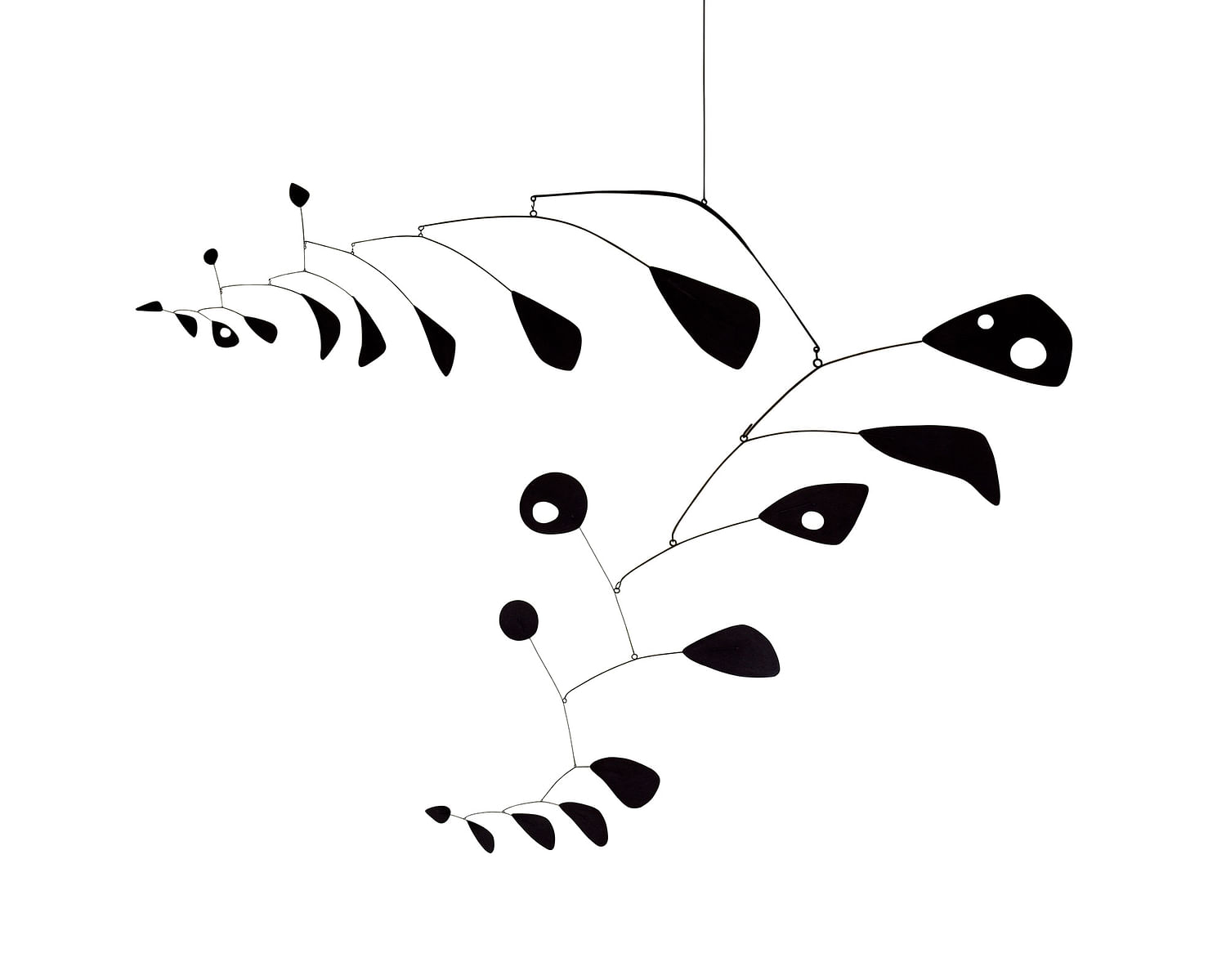
Next, the Sculptures gallery centers the Bugatti Type 57SC Atlantic and three other rare car models around superlative examples from Alexander Calder and Henry Moore to produce an affirmation of Arthur Drexler’s early-50s observation of the automobile’s artistic form. This is followed by a chronicling of the democratization of their availability and post-war transition into sporty, high-speed collector’s items as evidenced by their representation in fashion, and the cultural fascination with what Ralph Nader called “psychosexual dreamboats.”

1936 Bugatti 57SC Atlantic
Alexander Calder, Le 31 Janvier, 1950. Image courtesy Centre Pompidou, Paris.

Visionaries then takes visitors through a short history of the utopian notion of the vehicle presented by the juxtaposing of three General Motors examples with several works by Italian Futurist painters and models of Eero Saarinen’s landmarked 1956 design for the company’s Technical Center in Warren, Michigan.

Eero Saarinen, General Motors Technical Center, 1956.

Americana follows with an examination of the role cars play in U.S. popular culture, suburban development, and economics. A young Norman Foster was heavily impacted by a grad school road trip with Yale classmate Richard Rogers, and this romantic notion of setting out across a “big country” populated by the diners and filling stations of Ed Ruscha and Robert Indiana is presented side by side with even more sculptures and several typical examples of vehicular styling of the time.

Edward Ruscha, Standard Station, 1966. Image courtesy Gagosian Gallery.

Finally, the last gallery, Future, wraps things together with an exhibition featuring the works of students from sixteen different international design schools invited by the foundation to consider what might come next for the car ahead of its 200th anniversary at the end of this century.

The exhibition will run from April 8th until September 18th. More information about visiting the museum can be found here.

RELATED EVENT Motion. Autos, Art, Architecture
RELATED NEWS RIBA announces the winner of the 2021 Norman Foster Travelling Scholarship
RELATED NEWS Architectural investigation of global refugee camps wins 2020 RIBA Norman Foster Travelling Scholarship
RELATED NEWS Design for Shenzhen co-living space by Foster + Partners selected as competition winner

Related

norman foster ● norman foster foundation ● cars ● car design ● exhibition ● guggenheim ● guggenheim museum ● guggenheim museum bilbao ● transportation ● art ● design ● event ● spain ● bilbao
Foster + Partners
Foster + Partners

Share

  • Follow

    0 Comments

  • Comment as :

Norman Foster's new Guggenheim exhibition tracks the impact of cars on high culture and design

Eight innovative timber projects honored at 2026 Wood in Architecture Awards

Beautiful brick architecture honored at BRICK AWARD 26

Over $500,000 awarded to architectural discourse projects by Graham Foundation

Best in urban planning recognized at AIA Regional & Urban Design Award 2026

Sponsored Post by Buildner

Re:Form - New Life for Old Spaces / Edition #3 advance registration deadline is approaching!

New architecture and design competitions: IDEAS Awards, UIA-HYP CUP International Student Competition, Vancouver Tall Challenge, and Memorial to the Sixth Extinction

Best small projects chosen at AIA Small Project Award 2026

10 standout sustainable projects honored at AIA COTE Top Ten Award 2026

Sign up for Bustler's Email Newsletters

Best residential architecture of 2026 honored at AIA Housing Award

Best new interiors of 2026 chosen at AIA Interior Architecture Awards

Best global architecture honored at RIBA International Awards 2026

World’s most beautiful airports of 2026 chosen by Prix Versailles

New architecture and design competitions: Brick in Architecture Awards, Study Architecture Student Showcase, N.Y.C. Groceries, and New York High Falls Riverfront Market

SmithGroup’s ‘pioneering’ Philip Merrill Environmental Center wins AIA Twenty-five Year Award

Sponsored Post by Buildner

Museum of Emotions / Edition #8 FINAL registration deadline is in 5 DAYS!

Next page » Loading

Norman Foster's new Guggenheim exhibition tracks the impact of cars on high culture and design

By Josh Niland|

Thursday, Apr 7, 2022

Share

Three General Motors Firebird models from the 1950s. Image courtesy GM Design DRIVE TEAM. All images provided by the Norman Foster Foundation.

Related

norman foster ● norman foster foundation ● cars ● car design ● exhibition ● guggenheim ● guggenheim museum ● guggenheim museum bilbao ● transportation ● art ● design ● event ● spain ● bilbao
Foster + Partners
Foster + Partners

In line with its namesake’s well-documented fondness for four-wheeled transportation methods, the Norman Foster Foundation has put together a new exhibition titled Motion. Autos, Art, Architecture that opens tomorrow at the Guggenheim Museum Bilbao.

Sponsored by Volkswagen and the local utility conglomerate Iberdrola, the exhibition will explore mobility through the lens of the car and its visual links to the creative arts and architecture as a kind of critical examination and “requiem” for the final days of gasoline-powered combustion engines. 

Andy Warhol, Daimler Motorkutsche, 1986.

Spread throughout ten spaces and arranged chronologically into seven different thematic galleries — Beginnings, Sculptures, Popularising, Sporting, Visionaries, Americana, and Future — that start off in the early days of the automobile and culminate in a four-part corridor enhanced with a clay model-making studio and immersive sound experience.

R. Buckminster Fuller, Dymaxion #4, 2010 (based on #1-3, 1933-34). Image © Gregory Gibbon / Foster + Partners
1952 Pegaso Z-102 Cupola

The first gallery uses the nascent technologies of film and photography to document the streamlining and eventual mass-manufacture of cars on their way to becoming an eventual “symbol of modernity,” showcasing the paradoxical notion that what started as a relief to the pollution caused by horse-drawn vehicles has evolved into a modern-day burden with an outsized role in our impending ecological collapse. 

Albert Khan, Ford Motor Company Highland Park Rendering bird’s eye view, 1924. Image courtesy Collection Cranbrook Art Museum, Gift of the Estate of John Bloom.

Next, the Sculptures gallery centers the Bugatti Type 57SC Atlantic and three other rare car models around superlative examples from Alexander Calder and Henry Moore to produce an affirmation of Arthur Drexler’s early-50s observation of the automobile’s artistic form. This is followed by a chronicling of the democratization of their availability and post-war transition into sporty, high-speed collector’s items as evidenced by their representation in fashion, and the cultural fascination with what Ralph Nader called “psychosexual dreamboats.”

1936 Bugatti 57SC Atlantic
Alexander Calder, Le 31 Janvier, 1950. Image courtesy Centre Pompidou, Paris.

Visionaries then takes visitors through a short history of the utopian notion of the vehicle presented by the juxtaposing of three General Motors examples with several works by Italian Futurist painters and models of Eero Saarinen’s landmarked 1956 design for the company’s Technical Center in Warren, Michigan.

Eero Saarinen, General Motors Technical Center, 1956.

Americana follows with an examination of the role cars play in U.S. popular culture, suburban development, and economics. A young Norman Foster was heavily impacted by a grad school road trip with Yale classmate Richard Rogers, and this romantic notion of setting out across a “big country” populated by the diners and filling stations of Ed Ruscha and Robert Indiana is presented side by side with even more sculptures and several typical examples of vehicular styling of the time.

Edward Ruscha, Standard Station, 1966. Image courtesy Gagosian Gallery.

Finally, the last gallery, Future, wraps things together with an exhibition featuring the works of students from sixteen different international design schools invited by the foundation to consider what might come next for the car ahead of its 200th anniversary at the end of this century.

The exhibition will run from April 8th until September 18th. More information about visiting the museum can be found here.

RELATED EVENT Motion. Autos, Art, Architecture
RELATED NEWS RIBA announces the winner of the 2021 Norman Foster Travelling Scholarship
RELATED NEWS Architectural investigation of global refugee camps wins 2020 RIBA Norman Foster Travelling Scholarship
RELATED NEWS Design for Shenzhen co-living space by Foster + Partners selected as competition winner

Share

  • Follow

    0 Comments

  • Comment as :

Archinect JobsArchinect Jobs

The Archinect Job Board attracts the world's top architectural design talents.

VIEW ALL JOBS POST A JOB

Designer

Jayson Architecture

Designer

San Francisco, CA, US

Project Manager

The Brooklyn Studio

Project Manager

Brooklyn, NY, US

Computational Design Expert Leaders

Urban A&O

Computational Design Expert Leaders

New York, NY, US

Associate Designer - Architecture

IS Architecture

Associate Designer - Architecture

La Jolla, CA, US

Advanced Architectural Designer

Selldorf Architects

Advanced Architectural Designer

New York, NY, US

Architectural Designer II

mdg | m-design group

Architectural Designer II

New York, NY, US

Project Designer / Job Captain

Kadre Architects, Inc

Project Designer / Job Captain

Los Angeles, CA, US

Architecture & Design Manager

7th Street Burger

Architecture & Design Manager

New York, NY, US

Intermediate Architect

GF55 Architects

Intermediate Architect

New York, NY, US

Healthcare Project Manager

NK Architects

Healthcare Project Manager

New York, NY, US

Next page » Loading