• Login / Join
  • About
  • •
  • Contact
  • •
  • Advertising
bustler logo
bustler logo
  • News
  • Competitions
  • Events
  • Bustler is powered by Archinect
  • Sign up for Bustler's Email Newsletters

  • Follow these Bustler feeds:

  • Search

    Search in

  • Submit

    What are you submitting?

    News Pitch
    Competition
    Event
  • Login / Join
  • News|Competitions|Events
  • Search
    | Submit
    | Follow
  • Search in

    What are you submitting?

    News Pitch
    Competition
    Event

    Follow these Bustler feeds:

  • About|Contact|Advertising
  • Login / Join

MoMA's upcoming exhibition charts the rise of ecological and environmental designs by architects from the 1930s –1990s

By Josh Niland|

Wednesday, May 31, 2023
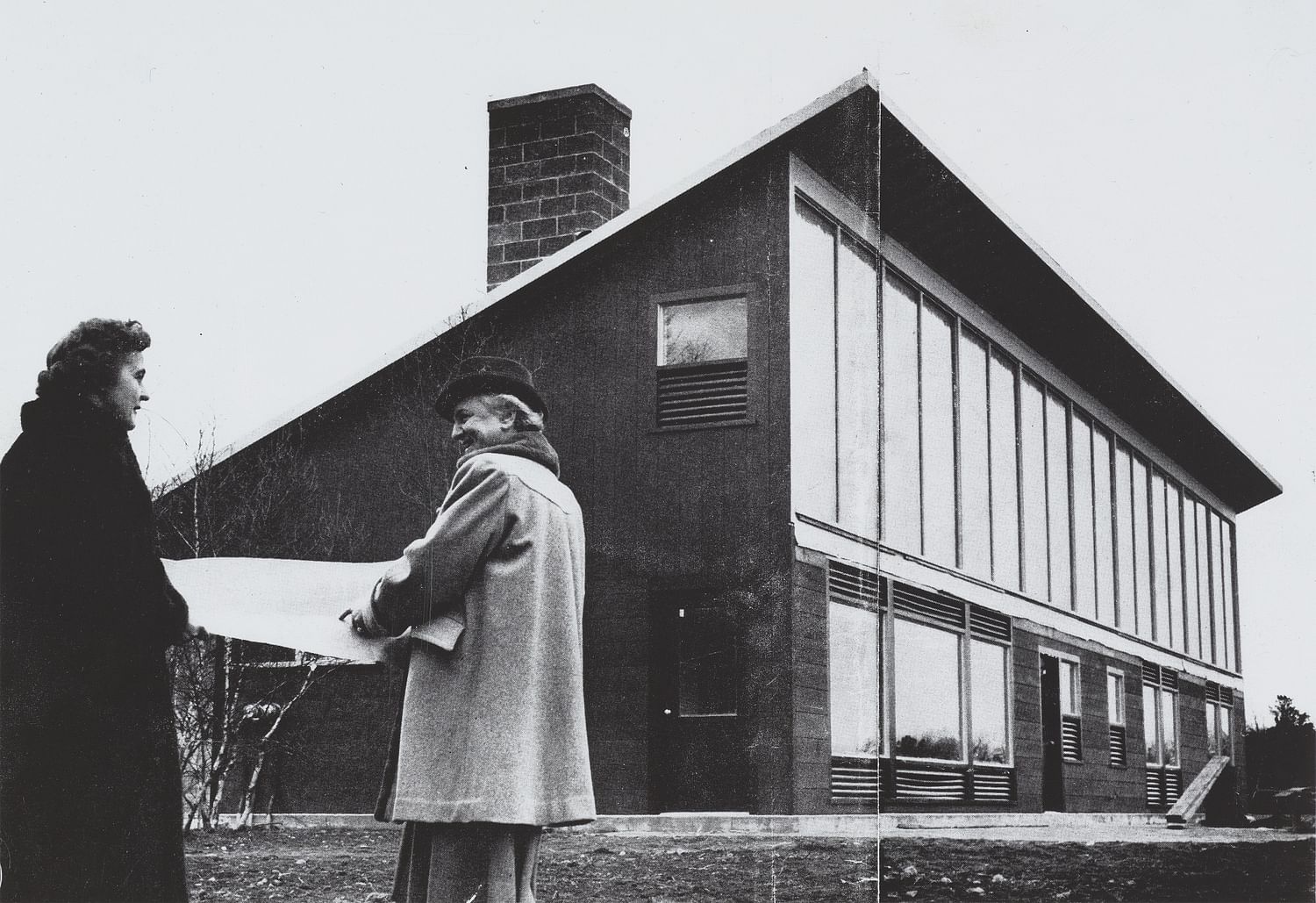
Eleanor Raymond (American, 1887–1989) and Mária Telkes (Hungarian, 1900–1995). Dover Sun House, Dover, Massachusetts. 1948. Eleanor Raymond and Mária Telkes at the Dover Sun House. 1948. Harvard University Graduate School of Design. Frances Loeb Library/C

The important early works of environmentally forward-thinking architects of the 20th century will be on display at New York’s Museum of Modern Art beginning in September. As the seasons change, audiences will look to the institution for yet another timely showcase of the power of design.

Curated by the new Emilio Ambasz Institute for the Joint Study of the Built and the Natural Environment, "Emerging Ecologies: Architecture and the Rise of Environmentalism” offers a deeper perspective on the rise of environmentalism through the lens of the movement’s initial pioneering architectural champions whose forays carved a path for further progress between the 1930s and 1990s.
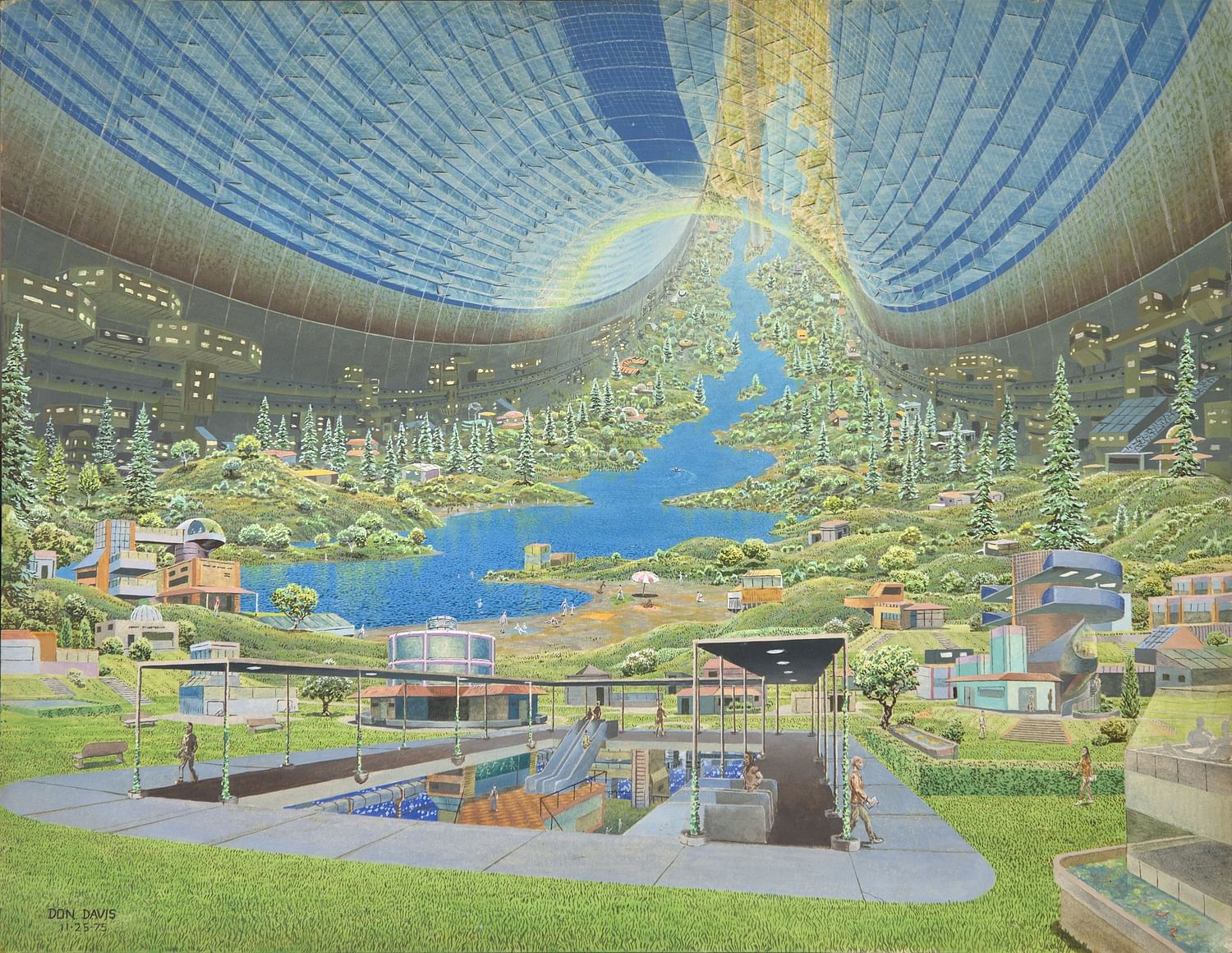
Don Davis (American, born 1952). Stanford torus interior view. 1975. Acrylic on board, 17 × 22″ (43.1 × 55.9 cm). Commissioned by NASA for Richard D. Johnson and Charles Holbrow, eds., Space Settlements: A Design Study (Washington, DC: NASA Scientific and Technical Information Office, 1977). Illustration never used. Collection Don Davis/Courtesy of MoMA.

The Institute’s first-ever public exhibition takes places on the museum’s Third Floor North Galleries and will feature over 150 examples, both realized and never built, of prescient designs that were considerably far ahead of their time in terms of their ability to address some of the most concerning ecological and environmental health issues of our equally tumultuous ages.
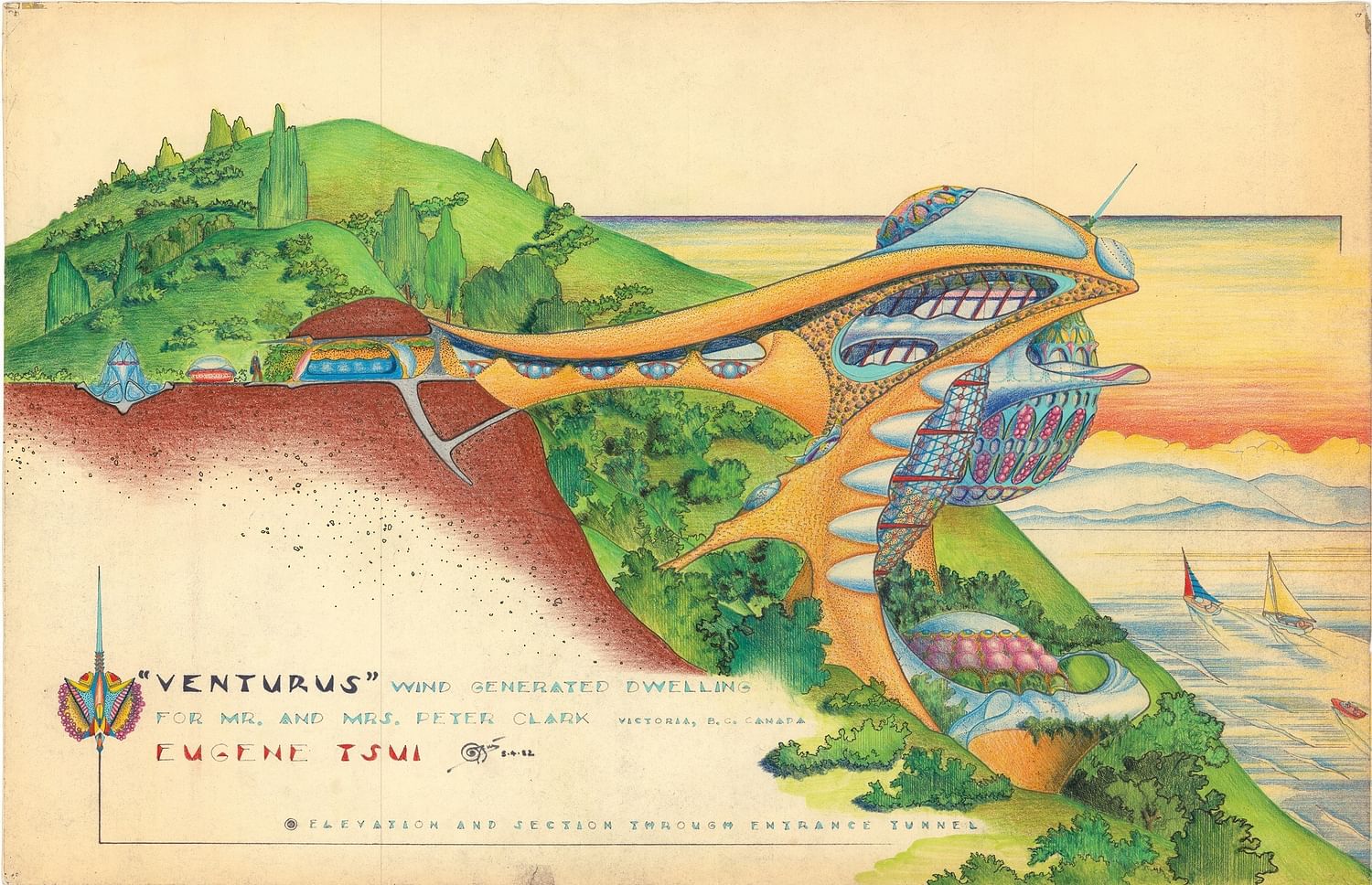
Eugene Tssui (American, b. 1954). “Venturus,” wind-generated dwelling for Mr. and Mrs. Peter Cook, Victoria, BC, Canada. Project, 1982. Elevation and section through entrance tunnel. Watercolor, Prismacolor pencil, pastel chalk, and colored ink on paper, 21 × 32″ (53.3 × 81.3 cm). Collection Eugene Tssui/Courtesy of MoMA.

MoMA tells us: “By highlighting projects that both foreshadowed and anticipated the ecological effects of overpopulation, the depletion of natural resources, and rampant industrial pollution, the exhibition looks to the past to suggest solutions for the future.”

Aladar Olgyay (Hungarian, 1910–1963) and Victor Olgyay (Hungarian, 1910–1970). Thermoheliodon. 1955–56. The Olgyay brothers with their Thermoheliodon device at the Princeton Architectural Laboratory, Princeton, New Jersey. From Collier’s, October 26, 1956. Photograph: Guy Gillette/Courtesy of MoMA.

Audio recordings from contemporary practitioners like Jeanne Gang and others will supplement the Institute’s curated selection of objects, which includes models, sketches, photographs, and diagrams, that are placed in context with archival material to present a narrative charting the rise in influence of environmentalist notions in architecture as the profession changed and started to become more socially and scientifically self-aware. 
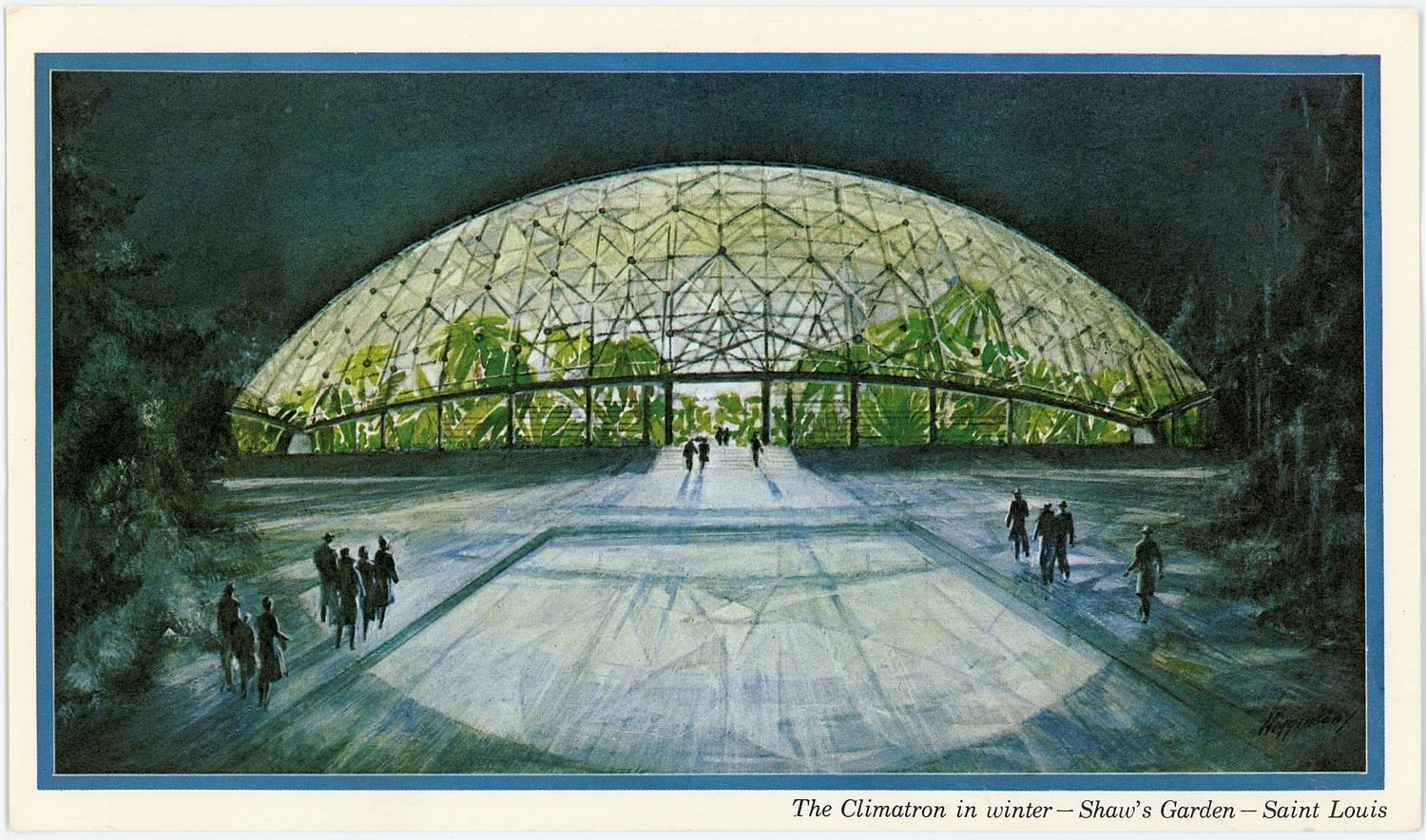
Unknown artist. “The Climatron in winter–Shaw’s Garden–Saint Louis.” c. 1960. Postcard. 4 × 8″ (10.2 × 20.3 cm). The Missouri Botanical Garden Archives/Courtesy of MoMA.

The exhibition is broken down into five thematic groups: Environment as Information; Environmental Enclosures; Multispecies Design; Counterculture Experiments; and Green Poetics, which illustrate the approaches and individual philosophies that were essential in spurring change.

Frank Lloyd Wright's 1937 Fallingwater design is offered as an entryway into the timeline, which includes several other noteworthy talismans from James Wines, NASA, the Fort McDowell Yavapai Nation, and the man considered by some to be the "father of American environmental design," R. Buckminster Fuller. 
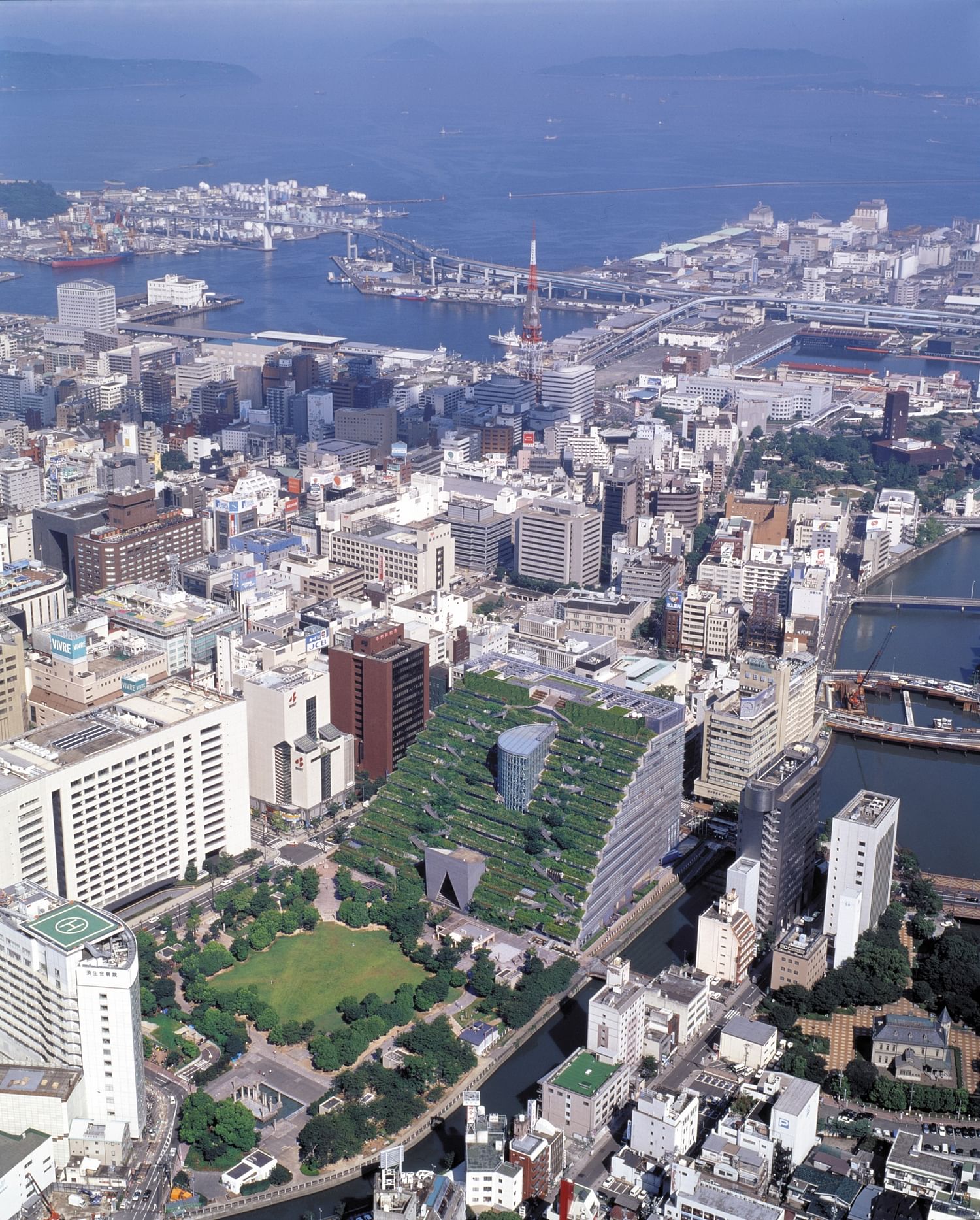
Emilio Ambasz (Argentine, born 1943). Prefectural International Hall, Fukuoka, Japan. 1990. Aerial view. 1990. Collection Emilio Ambasz. Photograph: Hiromi Watanabe/Courtesy of MoMA.

The show is being presented by Alianz and is accompanied by a publication from the Institute’s Carson Chan and Matthew Wagstaffe that further examine the influence of discourse upon the discipline. "Emerging Ecologies: Architecture and the Rise of Environmentalism" opens on September 17th and will run through the 24th of January next year. Information about visiting the museum can be found here.

RELATED EVENT Emerging Ecologies: Architecture and the Rise of Environmentalism
RELATED NEWS Architecture Now: New York, New Publics opens at MoMA
RELATED NEWS MoMA PS1's Life Between Buildings provides a glimpse of engagement in New York City's unheralded interstitial spaces

Related

museum of modern art ● ecological architecture ● environmentalism ● sustainable design ● emilio ambasz ● buckminster fuller ● frank lloyd wright ● jeanne gang ● exhibition ● moma
The Museum of Modern Art (MoMA)

Share

  • Follow

    0 Comments

  • Comment as :

MoMA's upcoming exhibition charts the rise of ecological and environmental designs by architects from the 1930s –1990s

Micro-architecture honored in latest Tiny House Architecture Competition

World’s most beautiful restaurants of 2026 chosen by Prix Versailles

Sponsored Post by Buildner

Design a wine tasting room in Italy! Valli Wine Tasting Room is launched!

10 can't-miss architecture & design events to see this June in London, Los Angeles, Chicago, San Francisco, Detroit, San Diego, Porto, and Barcelona

Sponsored Post by Buildner

Museum of Emotions / Edition #8 FINAL registration deadline is approaching!

Seven global projects make AR Public Awards shortlist 2026

Sponsored Post by Buildner

Design a slow-living restaurant in Portugal! Portugal Long Table Restaurant is launched!

World's best tall buildings honored at the CVU 2026 Award of Excellence

Sign up for Bustler's Email Newsletters

Sponsored Post by TWOPAGES

Final call: TWOPAGES X Design Contest 2026 submissions close June 5

Kengo Kuma & Paul Raff win Alberta national park visitor center competition with landscape-focused design

2026 Moira Gemmill and MJ Long prizes announced by W Awards

New architecture and design competitions: Kinderspace, Stewardson Keefe LeBrun Travel Grant, SMALL PROJECT BIG IMPACT, and Garden of University House, Bucharest

The Century of Gehry: New retrospective explores the late architect's work & collaborations

Sponsored Post by Buildner

Rome Rain Rooms FINAL registration deadline is in 5 DAYS!

UIA and UN Habitat unveil sustainability-focused winners for UIA 2030 Award

Next page » Loading

MoMA's upcoming exhibition charts the rise of ecological and environmental designs by architects from the 1930s –1990s

By Josh Niland|

Wednesday, May 31, 2023

Share

Eleanor Raymond (American, 1887–1989) and Mária Telkes (Hungarian, 1900–1995). Dover Sun House, Dover, Massachusetts. 1948. Eleanor Raymond and Mária Telkes at the Dover Sun House. 1948. Harvard University Graduate School of Design. Frances Loeb Library/C

Related

museum of modern art ● ecological architecture ● environmentalism ● sustainable design ● emilio ambasz ● buckminster fuller ● frank lloyd wright ● jeanne gang ● exhibition ● moma
The Museum of Modern Art (MoMA)

The important early works of environmentally forward-thinking architects of the 20th century will be on display at New York’s Museum of Modern Art beginning in September. As the seasons change, audiences will look to the institution for yet another timely showcase of the power of design.

Curated by the new Emilio Ambasz Institute for the Joint Study of the Built and the Natural Environment, "Emerging Ecologies: Architecture and the Rise of Environmentalism” offers a deeper perspective on the rise of environmentalism through the lens of the movement’s initial pioneering architectural champions whose forays carved a path for further progress between the 1930s and 1990s.

Don Davis (American, born 1952). Stanford torus interior view. 1975. Acrylic on board, 17 × 22″ (43.1 × 55.9 cm). Commissioned by NASA for Richard D. Johnson and Charles Holbrow, eds., Space Settlements: A Design Study (Washington, DC: NASA Scientific and Technical Information Office, 1977). Illustration never used. Collection Don Davis/Courtesy of MoMA.

The Institute’s first-ever public exhibition takes places on the museum’s Third Floor North Galleries and will feature over 150 examples, both realized and never built, of prescient designs that were considerably far ahead of their time in terms of their ability to address some of the most concerning ecological and environmental health issues of our equally tumultuous ages.

Eugene Tssui (American, b. 1954). “Venturus,” wind-generated dwelling for Mr. and Mrs. Peter Cook, Victoria, BC, Canada. Project, 1982. Elevation and section through entrance tunnel. Watercolor, Prismacolor pencil, pastel chalk, and colored ink on paper, 21 × 32″ (53.3 × 81.3 cm). Collection Eugene Tssui/Courtesy of MoMA.

MoMA tells us: “By highlighting projects that both foreshadowed and anticipated the ecological effects of overpopulation, the depletion of natural resources, and rampant industrial pollution, the exhibition looks to the past to suggest solutions for the future.”

Aladar Olgyay (Hungarian, 1910–1963) and Victor Olgyay (Hungarian, 1910–1970). Thermoheliodon. 1955–56. The Olgyay brothers with their Thermoheliodon device at the Princeton Architectural Laboratory, Princeton, New Jersey. From Collier’s, October 26, 1956. Photograph: Guy Gillette/Courtesy of MoMA.

Audio recordings from contemporary practitioners like Jeanne Gang and others will supplement the Institute’s curated selection of objects, which includes models, sketches, photographs, and diagrams, that are placed in context with archival material to present a narrative charting the rise in influence of environmentalist notions in architecture as the profession changed and started to become more socially and scientifically self-aware. 

Unknown artist. “The Climatron in winter–Shaw’s Garden–Saint Louis.” c. 1960. Postcard. 4 × 8″ (10.2 × 20.3 cm). The Missouri Botanical Garden Archives/Courtesy of MoMA.

The exhibition is broken down into five thematic groups: Environment as Information; Environmental Enclosures; Multispecies Design; Counterculture Experiments; and Green Poetics, which illustrate the approaches and individual philosophies that were essential in spurring change.

Frank Lloyd Wright's 1937 Fallingwater design is offered as an entryway into the timeline, which includes several other noteworthy talismans from James Wines, NASA, the Fort McDowell Yavapai Nation, and the man considered by some to be the "father of American environmental design," R. Buckminster Fuller. 

Emilio Ambasz (Argentine, born 1943). Prefectural International Hall, Fukuoka, Japan. 1990. Aerial view. 1990. Collection Emilio Ambasz. Photograph: Hiromi Watanabe/Courtesy of MoMA.

The show is being presented by Alianz and is accompanied by a publication from the Institute’s Carson Chan and Matthew Wagstaffe that further examine the influence of discourse upon the discipline. "Emerging Ecologies: Architecture and the Rise of Environmentalism" opens on September 17th and will run through the 24th of January next year. Information about visiting the museum can be found here.

RELATED EVENT Emerging Ecologies: Architecture and the Rise of Environmentalism
RELATED NEWS Architecture Now: New York, New Publics opens at MoMA
RELATED NEWS MoMA PS1's Life Between Buildings provides a glimpse of engagement in New York City's unheralded interstitial spaces

Share

  • Follow

    0 Comments

  • Comment as :

Archinect JobsArchinect Jobs

The Archinect Job Board attracts the world's top architectural design talents.

VIEW ALL JOBS POST A JOB

Architectural Designer (3-5 Years) - Commercial & Hospitality Focus

Pfeffer Torode Architecture

Architectural Designer (3-5 Years) - Commercial & Hospitality Focus

Nashville, TN, US

Intermediate Designer / Architect [5+ years experience]

RO | ROCKETT DESIGN

Intermediate Designer / Architect [5+ years experience]

Sausalito, CA, US

Intermediate Architect

IMC Architecture

Intermediate Architect

Brooklyn, NY, US

Interior Designer | Education & Institutional Work

Berliner Architects

Interior Designer | Education & Institutional Work

Culver City, CA, US

Architect

mani colaku architects

Architect

New York, NY, US

Site Planning and Master Development Consultant, Part-Time / Hybrid

Naim Associates Inc.

Site Planning and Master Development Consultant, Part-Time / Hybrid

West Hollywood, CA, US

Junior Architect

Eric Colbert & Associates

Junior Architect

Washington, DC, US

Intermediate Architect

FAME Architecture & Interior Design

Intermediate Architect

Los Angeles, CA, US

Interior Project Manager

HLW International LLP

Interior Project Manager

New York, NY, US

Associate - Interior Designer

FitzGerald Associates Architects

Associate - Interior Designer

Chicago, IL, US

Next page » Loading