• Login / Join
  • About
  • •
  • Contact
  • •
  • Advertising
bustler logo
bustler logo
  • News
  • Competitions
  • Events
  • Bustler is powered by Archinect
  • Sign up for Bustler's Email Newsletters

  • Follow these Bustler feeds:

  • Search

    Search in

  • Submit

    What are you submitting?

    News Pitch
    Competition
    Event
  • Login / Join
  • News|Competitions|Events
  • Search
    | Submit
    | Follow
  • Search in

    What are you submitting?

    News Pitch
    Competition
    Event

    Follow these Bustler feeds:

  • About|Contact|Advertising
  • Login / Join

Urban Archaeology will go on display at Pulitzer Arts Foundation this Fall

By Josh Niland|

Wednesday, Jul 26, 2023
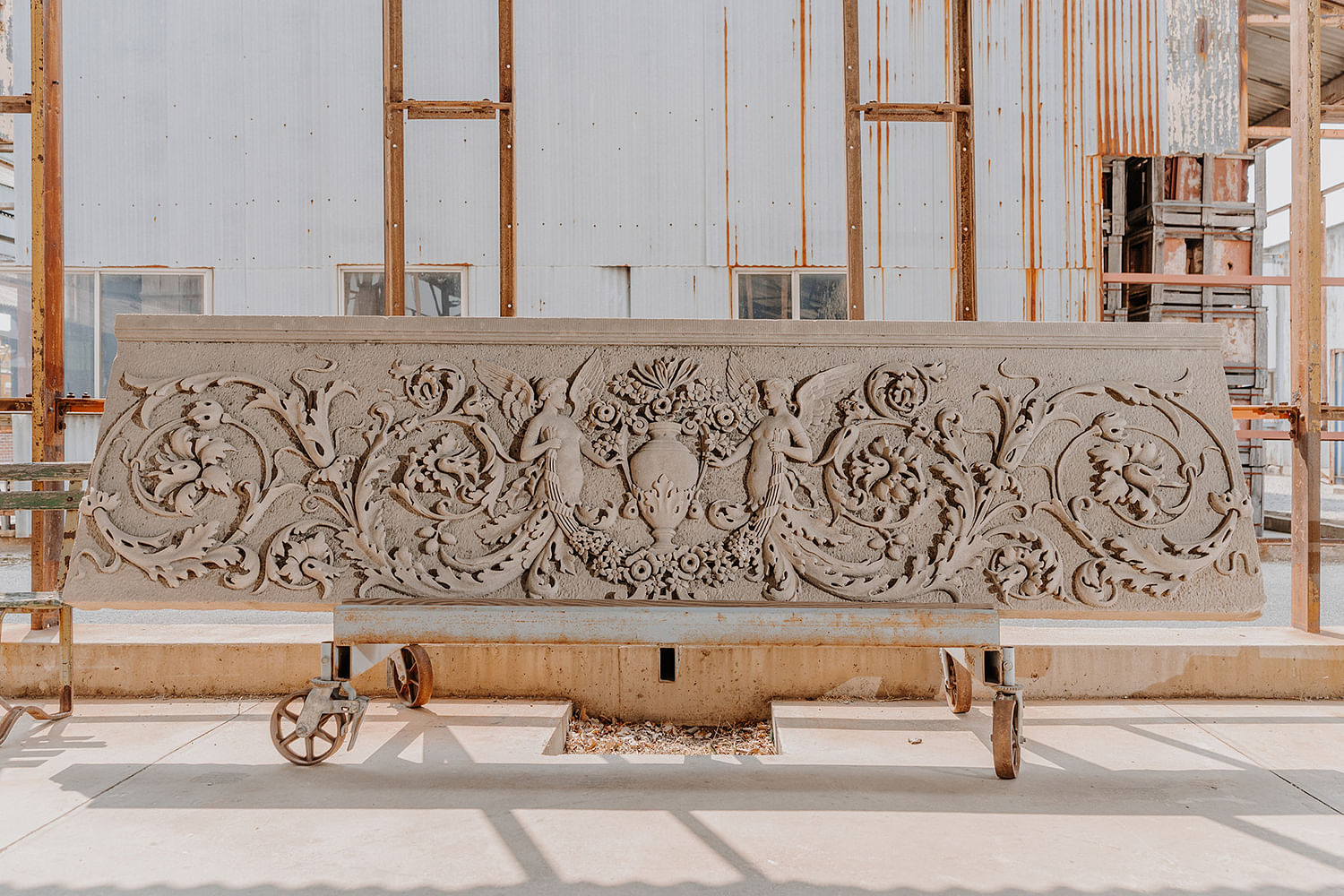
Pallet of ornamental bricks, 2023. Ceramic, 26 x 36 x 48 inches height includes 6 inches pallet. Photography by Virginia Harold, Collection of the National Building Arts Center

An up-close look at the architectural remains of some of the most famed designs the St. Louis metro area has lost to the ages will take over the city’s Pulitzer Arts Foundation this fall with the opening of Urban Archaeology: Lost Buildings of St. Louis on September 8th.

The exhibition is being organized by the Foundation's Stephanie Weissberg and Molly Moog in coordination with National Building Arts Center director Michael Allen. The curators say that by looking closely at the architectural remnants left in the wake of urban renewal’s yearslong churn, members of the public will be able to obtain a historical grasp and tactile knowledge of the city’s material past while considering questions about the role planners, preservationists, and architects have to play in securing its future.
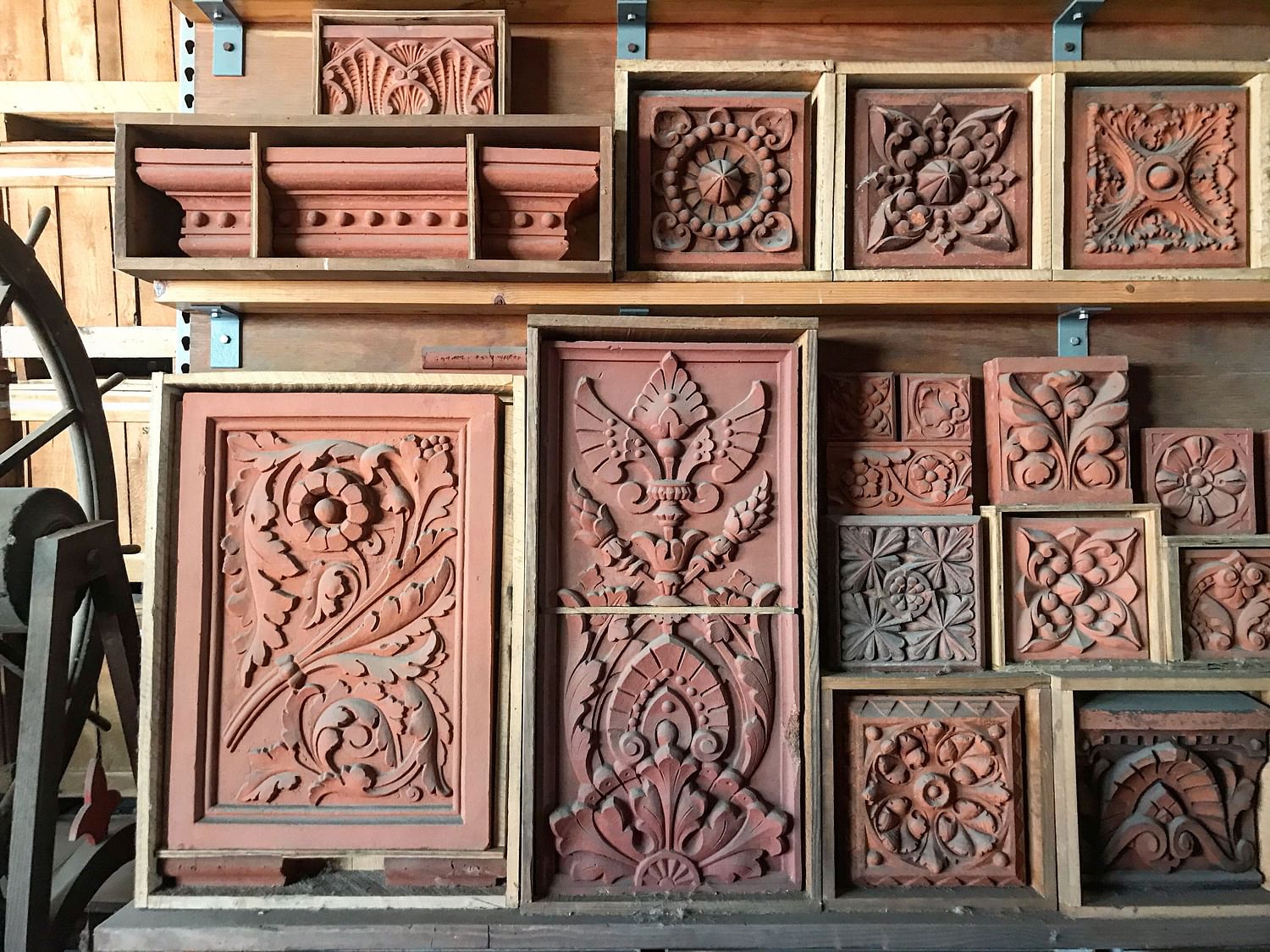
Unglazed terracotta panels on display at the National Building Arts Center, 2021. Collection of the National Building Arts Center

“Urbanists often cite St. Louis as a city that represents what has played out in other areas of the U.S.,” Weissberg explains. “If that’s so, and I think it is, this exhibition will contribute to a deeper understanding of the social and economic forces that have shaped our American cities.”

The centerpiece of the exhibition is shown in the main level’s Cube Gallery, where a few remaining segments of the former facade of the famed Rivoli Theater welcome visitors into a space remade to look like exactly as its downtown frontage appeared in the Depression Era.  
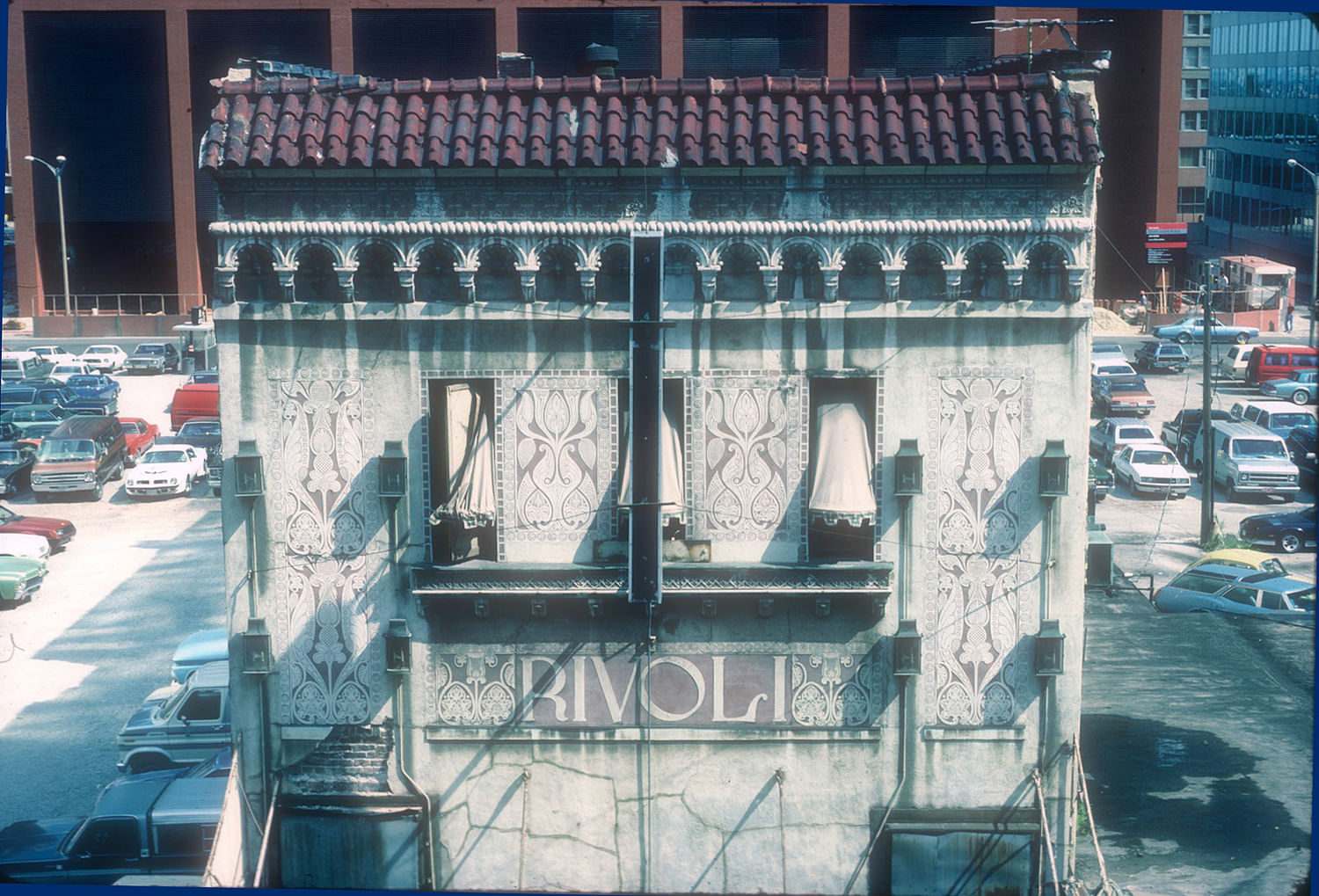
Rivoli Theatre, 1983. Collection of the National Building Arts Center

The museum shares: “The Pulitzer will intentionally break this spell by removing one of the panels and setting it aside. Presenting the facade in a dismantled state invites consideration of what happens when building fragments are removed from their architectural context and displayed in a museum. The questions of what salvage is, what it can tell us, and what it cannot, commence here.”

Cast iron columns, Clemens House, 1860. Iron, approximately 126 1/2 x 20 inches diameter. Photography by Virginia Harold, Collection of the National Building Arts Center.

The exhibition continues in the Lower South Gallery with a look at the influence of the city's many brickworks and skilled craftsmen, followed by an examination into the high-minded civic virtues of ornate pre-modern structures in a ten-block area of downtown in the East Gallery. 

A look at vacant lots and urban decay takes hold in the adjacent West Gallery, complete with examples of salvaged cast iron loggia columns from the 1860 Clemens House that itself carries additional references to slavery, the waves of immigration into the city, failures of preservation groups, and costs of economic shifts and social change.
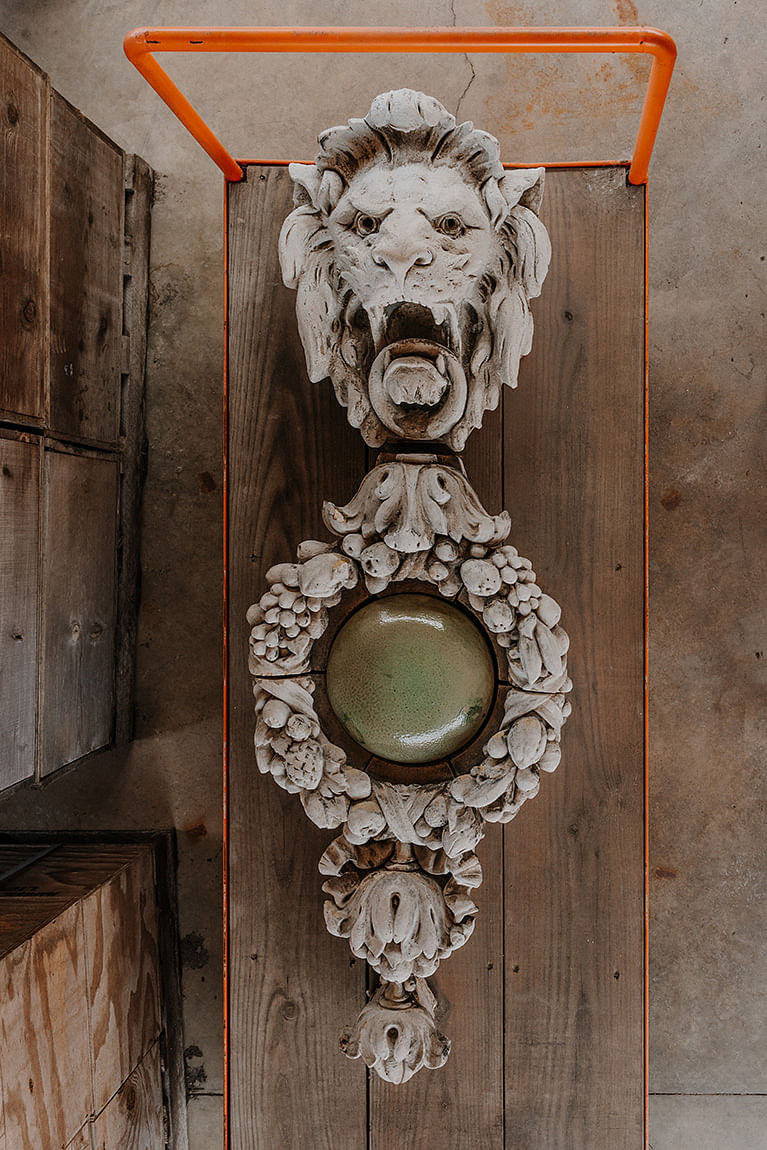
Terracotta lion and pendant assembly, Buder Building, 1904. Ceramic, Overall - 72 x 24.5 x 14 inches. Photography by Virginia Harold, Collection of the National Building Arts Center

An audio guide featuring oral histories from St. Louis residents compliments the exhibition, which culminates in a short documentary juxtaposing the histories of two neighborhoods – Jeff-Vander-Lou and Soulard – that have both been able to avoid being purloined by outside interests thanks to the hard work of dedicated community activists and grassroots organizers like Macler Shephard.

Another column from the Clemens House is installed in the Courtyard opposite Richard Serra's monumental Joe sculpture from 1999 to complete the exhibition. Urban Archaeology: Lost Buildings of St. Louis will remain on view until February 4th of next year. Read more about the exhibition here.

RELATED NEWS Winning design of the new St. Louis Gateway Arch Museum unveiled

Related

pulitzer arts foundation ● st. louis ● national building arts center ● urban renewal ● architectural preservation ● exhibition ● event ● missouri ● usa

Share

  • Follow

    1 Comment

  • Thayer-D
    Thayer-D

    Thayer-D ·  Jul 26, 23 8:30 PM

    Hard to believe anyone ever thought these ornaments where inappropriate for a building's facade.

  • Comment as :

Urban Archaeology will go on display at Pulitzer Arts Foundation this Fall

Sponsored Post by Buildner

Buildner’s Unbuilt Award 2026 advance registration deadline is approaching!

Eight innovative timber projects honored at 2026 Wood in Architecture Awards

Beautiful brick architecture honored at BRICK AWARD 26

Over $500,000 awarded to architectural discourse projects by Graham Foundation

Best in urban planning recognized at AIA Regional & Urban Design Award 2026

Sponsored Post by Buildner

Re:Form - New Life for Old Spaces / Edition #3 advance registration deadline is approaching!

New architecture and design competitions: IDEAS Awards, UIA-HYP CUP International Student Competition, Vancouver Tall Challenge, and Memorial to the Sixth Extinction

Best small projects chosen at AIA Small Project Award 2026

Sign up for Bustler's Email Newsletters

10 standout sustainable projects honored at AIA COTE Top Ten Award 2026

Best residential architecture of 2026 honored at AIA Housing Award

Best new interiors of 2026 chosen at AIA Interior Architecture Awards

Best global architecture honored at RIBA International Awards 2026

World’s most beautiful airports of 2026 chosen by Prix Versailles

New architecture and design competitions: Brick in Architecture Awards, Study Architecture Student Showcase, N.Y.C. Groceries, and New York High Falls Riverfront Market

SmithGroup’s ‘pioneering’ Philip Merrill Environmental Center wins AIA Twenty-five Year Award

Next page » Loading

Urban Archaeology will go on display at Pulitzer Arts Foundation this Fall

By Josh Niland|

Wednesday, Jul 26, 2023

Share

Pallet of ornamental bricks, 2023. Ceramic, 26 x 36 x 48 inches height includes 6 inches pallet. Photography by Virginia Harold, Collection of the National Building Arts Center

Related

pulitzer arts foundation ● st. louis ● national building arts center ● urban renewal ● architectural preservation ● exhibition ● event ● missouri ● usa

An up-close look at the architectural remains of some of the most famed designs the St. Louis metro area has lost to the ages will take over the city’s Pulitzer Arts Foundation this fall with the opening of Urban Archaeology: Lost Buildings of St. Louis on September 8th.

The exhibition is being organized by the Foundation's Stephanie Weissberg and Molly Moog in coordination with National Building Arts Center director Michael Allen. The curators say that by looking closely at the architectural remnants left in the wake of urban renewal’s yearslong churn, members of the public will be able to obtain a historical grasp and tactile knowledge of the city’s material past while considering questions about the role planners, preservationists, and architects have to play in securing its future.

Unglazed terracotta panels on display at the National Building Arts Center, 2021. Collection of the National Building Arts Center

“Urbanists often cite St. Louis as a city that represents what has played out in other areas of the U.S.,” Weissberg explains. “If that’s so, and I think it is, this exhibition will contribute to a deeper understanding of the social and economic forces that have shaped our American cities.”

The centerpiece of the exhibition is shown in the main level’s Cube Gallery, where a few remaining segments of the former facade of the famed Rivoli Theater welcome visitors into a space remade to look like exactly as its downtown frontage appeared in the Depression Era.  

Rivoli Theatre, 1983. Collection of the National Building Arts Center

The museum shares: “The Pulitzer will intentionally break this spell by removing one of the panels and setting it aside. Presenting the facade in a dismantled state invites consideration of what happens when building fragments are removed from their architectural context and displayed in a museum. The questions of what salvage is, what it can tell us, and what it cannot, commence here.”

Cast iron columns, Clemens House, 1860. Iron, approximately 126 1/2 x 20 inches diameter. Photography by Virginia Harold, Collection of the National Building Arts Center.

The exhibition continues in the Lower South Gallery with a look at the influence of the city's many brickworks and skilled craftsmen, followed by an examination into the high-minded civic virtues of ornate pre-modern structures in a ten-block area of downtown in the East Gallery. 

A look at vacant lots and urban decay takes hold in the adjacent West Gallery, complete with examples of salvaged cast iron loggia columns from the 1860 Clemens House that itself carries additional references to slavery, the waves of immigration into the city, failures of preservation groups, and costs of economic shifts and social change.

Terracotta lion and pendant assembly, Buder Building, 1904. Ceramic, Overall - 72 x 24.5 x 14 inches. Photography by Virginia Harold, Collection of the National Building Arts Center

An audio guide featuring oral histories from St. Louis residents compliments the exhibition, which culminates in a short documentary juxtaposing the histories of two neighborhoods – Jeff-Vander-Lou and Soulard – that have both been able to avoid being purloined by outside interests thanks to the hard work of dedicated community activists and grassroots organizers like Macler Shephard.

Another column from the Clemens House is installed in the Courtyard opposite Richard Serra's monumental Joe sculpture from 1999 to complete the exhibition. Urban Archaeology: Lost Buildings of St. Louis will remain on view until February 4th of next year. Read more about the exhibition here.

RELATED NEWS Winning design of the new St. Louis Gateway Arch Museum unveiled

Share

  • Follow

    1 Comment

  • Thayer-D

    Thayer-D ·  Jul 26, 23 8:30 PM

    Hard to believe anyone ever thought these ornaments where inappropriate for a building's facade.

  • Comment as :

Archinect JobsArchinect Jobs

The Archinect Job Board attracts the world's top architectural design talents.

VIEW ALL JOBS POST A JOB

Studio Coordinator

Sarah Jacoby Architect

Studio Coordinator

Long Island City, NY, US

Healthcare Project Manager

NK Architects

Healthcare Project Manager

New York, NY, US

Junior Architectural Designer, Ground-Up - New York Office

Fogarty Finger

Junior Architectural Designer, Ground-Up - New York Office

New York, NY, US

Project Manager - Planning

DAHLIN Architecture | Planning | Interiors

Project Manager - Planning

Pleasanton, CA, US

Project Architect

Fowlkes Studio

Project Architect

Washington, DC, US

Junior Designer/Architect

O'Neill Rose Architects

Junior Designer/Architect

Brooklyn, NY, US

Project Captain

Practice (formerly GGA+)

Project Captain

Pasadena, CA, US

Designer III

Newman Architects

Designer III

New Haven, CT, US

Architectural Job Captain (AIA Level III)

Parallax Architecture and Planning

Architectural Job Captain (AIA Level III)

Culver City, CA, US

Architectural Designer II

mdg | m-design group

Architectural Designer II

New York, NY, US

Next page » Loading