• Login / Join
  • About
  • •
  • Contact
  • •
  • Advertising
bustler logo
bustler logo
  • News
  • Competitions
  • Events
  • Bustler is powered by Archinect
  • Sign up for Bustler's Email Newsletters

  • Follow these Bustler feeds:

  • Search

    Search in

  • Submit

    What are you submitting?

    News Pitch
    Competition
    Event
  • Login / Join
  • News|Competitions|Events
  • Search
    | Submit
    | Follow
  • Search in

    What are you submitting?

    News Pitch
    Competition
    Event

    Follow these Bustler feeds:

  • About|Contact|Advertising
  • Login / Join

Holcim Awards Competition Winners Celebrated in Madrid

By Bustler Editors|

Wednesday, Oct 8, 2008

Madrid/Spain – Winners of the second European Holcim Awards competition for projects and visions in sustainable construction were announced at a ceremony in Madrid. Total prize money of $270,000 was presented to ten projects that demonstrate the latest in eco-friendly and sustainable approaches from the building and construction industry.

The competition is run in parallel in five regions of the world by the Swiss-based Holcim Foundation for Sustainable Construction to promote sustainable responses to the technological, environmental, socioeconomic and cultural issues affecting building and construction.

Gold Award to a government quarter development in Budapest
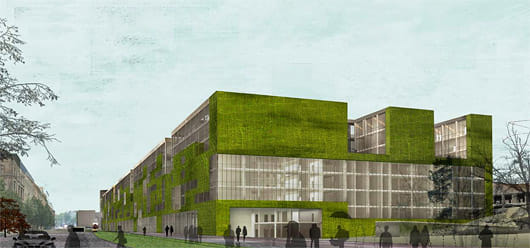
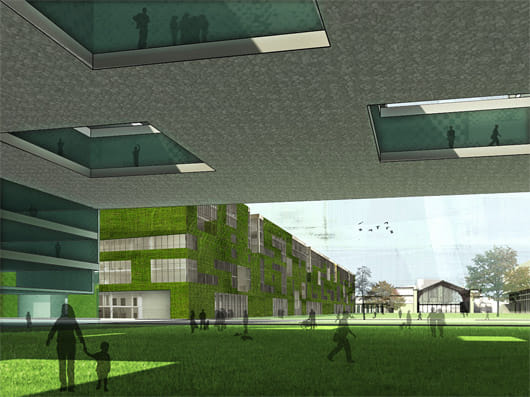
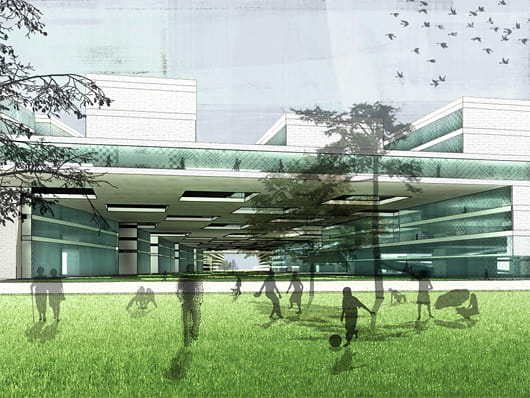
A project to house eleven ministries of the Hungarian government received the top prize of $100,000 and the Holcim Awards Gold 2008 trophy, for its comprehensive approach to urban renewal. The project led by Hungarian architect Peter Janesch provides energy-efficient space for government administration while at the same time revitalizing residential areas and parks and restoring an historic railway station.
image
Gold: Contextual government quarter development, Budapest, Hungary by Peter Janesch
image
Gold: Contextual government quarter development, Budapest, Hungary by Peter Janesch
image
Gold: Contextual government quarter development, Budapest, Hungary by Peter Janesch

Head of Jury and professor of architecture at the Swiss Federal Institute of Technology in Lausanne (EPFL), Harry Gugger, commented that the project provided a win-win solution since it enables both new development and improved conditions for the existing residents in an area neglected for many years. “The project demonstrates in a convincing manner how urban renewal should be tackled in order to deliver real improvements to degraded urban areas on a sustainable basis,” he said.

Silver for landscape design in Slovenia
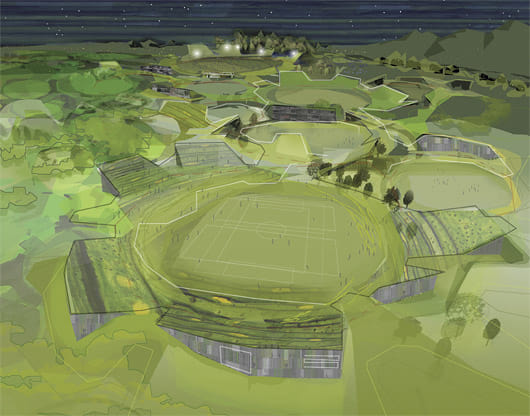
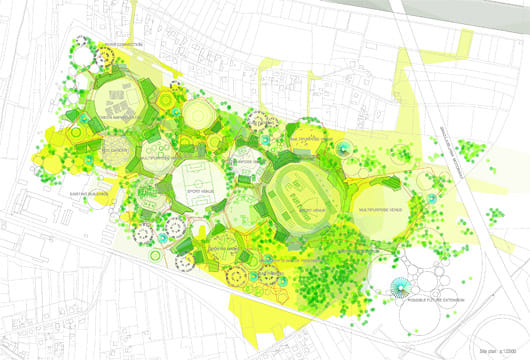
Second prize was awarded to an urban landscape extension project in Maribor, Slovenia designed by Spanish architectural firm ecosistema urbano led by Belinda Tato. The project creates an elevated landscape above the site of a former municipal waste dump, including space for sport, recreation and cultural events, as well as residential areas.
image
Silver: Temporary urban extension in a former landfill, Maribor, Slovenia by Belinda Tato
image
Silver: Temporary urban extension in a former landfill, Maribor, Slovenia by Belinda Tato

The striking concept comprises, in addition to traditional architectural and landscape elements, the dimension of time as a further design parameter. The buildings and newly-landscaped areas are temporary and designed for further relocation and re-use, making the project economically efficient and easily transferable.

Bronze to an alpine shelter in Switzerland
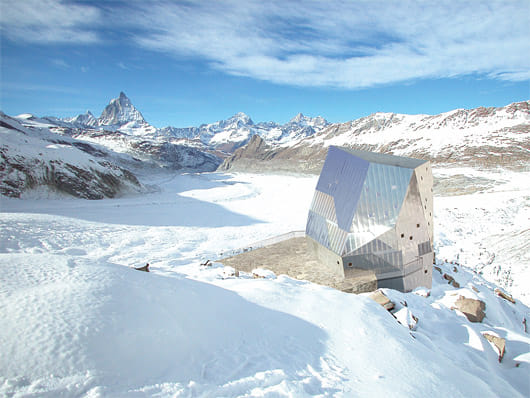
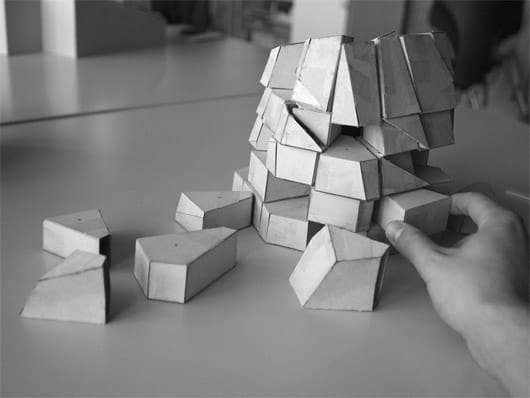
The new Monte Rosa hut, a project of the Swiss Federal Institute of Technology (ETH Zurich) that independently supplies its own energy and water needs received the Bronze award. Computer-aided design and computer-integrated manufacturing were used to create the glittering crystal shape of this iconic structure.
image
Bronze: Autonomous alpine shelter, Monte Rosa hut, Switzerland by Andrea Deplazes
image
Bronze: Autonomous alpine shelter, Monte Rosa hut, Switzerland by Andrea Deplazes

A convincing demonstration of state of the art technology, the design is the result of a series of inter-disciplinary studios conducted by the Department of Architecture at the ETH Zurich and led by Andrea Deplazes. The project generates a high degree of public sensitization to issues of sustainability and energy efficiency in architecture.

Acknowledgement prizes for projects in Belgium, Italy and Serbia
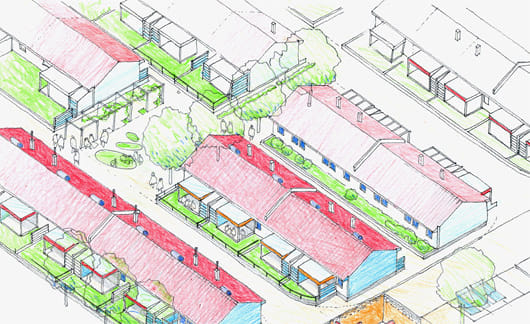
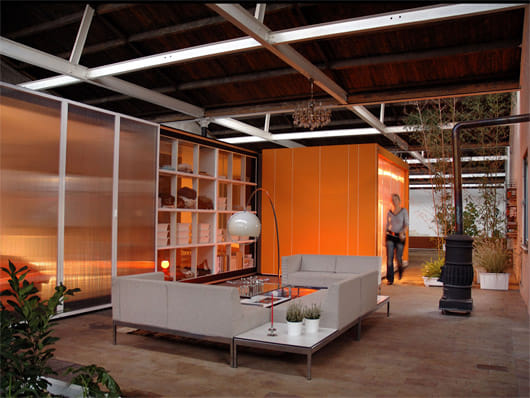
Four projects received Acknowledgement prizes. A culturally-responsive urban village for the local Romani community in Belgrade, Serbia headed by local architect Vladimir Macura, and a Low-cost residence in an industrial estate in Ghent, Belgium by architectural firm Weysen De Baere both provide environmentally-sensitive solutions that are economical and based on the specific needs of the residents.
image
Acknowledgement: Culturally-responsive urban village, Belgrade, Serbia by Vladimir Macura
image
Acknowledgement: Low-cost residence on industrial site, Ghent, Belgium by Edward Weysen and Lore De Baere

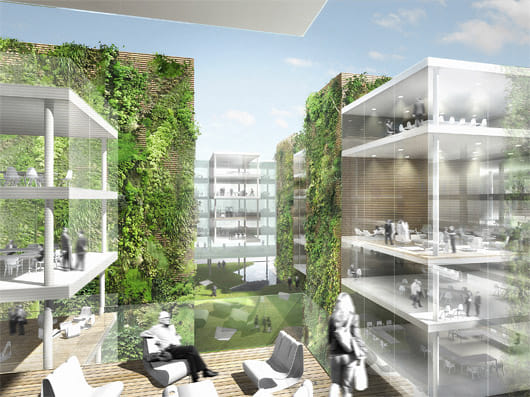
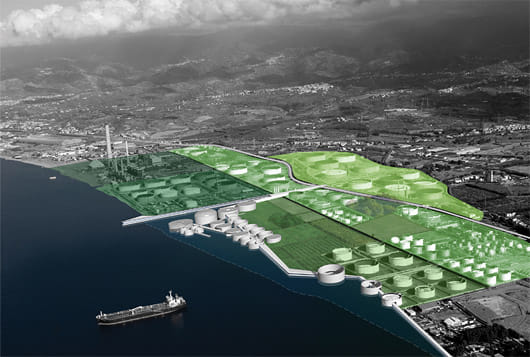
The use of passive design elements, natural ventilation, and incorporation of public spaces was applauded for an Office building with green “hypercore” in Milan, Italy by Zurich-based Hosoya Schaefer Architects. A Waterfront reclamation and remediation project in southern Italy by architect Luigi Centola was praised for its approach to recover degraded areas in a socially-driven, privately-initiated, and highly-transferable manner.
image
Acknowledgement: Office building with green hypercore, Milan, Italy by Hiromi Hosoya
image
Acknowledgement: Waterfront reclamation and remediation, Southern Italy by Luigi Centola

“Next Generation” prizes for architects from Sri Lanka, Spain and Finland
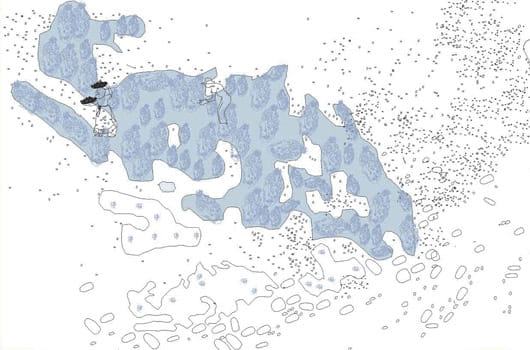
For the first time, the Holcim Awards competition included a category for the visions of young architects and designers. Semini Samarasinghe, a Sri Lankan architecture student, was awarded the “Next Generation” first prize for her design of a Production and ecological cluster in New Haven, UK. The project featuring a tea house and herbal tea production facility was commended for its sensitive combination of elements of sustainable construction and poetic design.
image
“Next Generation” 1st prize: Production and ecological cluster, New Haven, UK by Semini Pabodha Samarasinghe

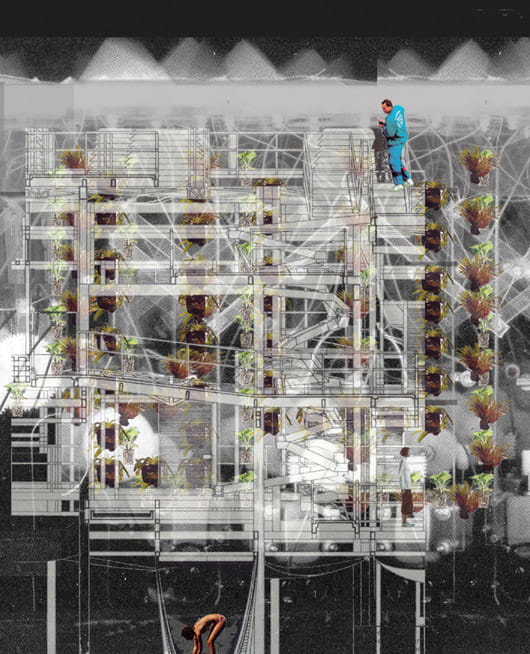
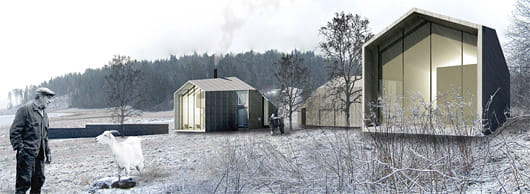
“Next Generation” second prize was awarded to an Urban greening and economic catalyst in Madrid, Spain, designed by Ana Castillo and Lieven De Groote of castillo de groote architects in Madrid. The proposal greens the city by placing open plantations and greenhouses on empty land fragments within three mainly residential districts and is coupled with a good sense of economic feasibility. Third prize was awarded to architecture students Heikki Riitahuhta, Heikki Muntola and Mikko Jakonen from Oulu for a Self-sufficient rural community project in Paimio, Finland. The project uses biogas production to increase the economic and environmental feasibility of living in rural areas.
image
“Next Generation” 2nd prize: Urban greening and economic catalyst, Madrid, Spain by Ana Castillo and Lieven De Groote
image
“Next Generation” 3rd prize: Self-sufficient rural community, Paimio, Finland by Heikki Riitahuhta

Independent jury of international experts in architecture and sustainability
Almost 5000 projects from 90 countries were entered in the second Holcim Awards competition. The European submissions were evaluated by an independent jury hosted by ETH Zurich: Harry Gugger (Head of Jury, Switzerland), Saverio Banchini (Spain), Luis Fernández-Galiano (Spain), Lucy Musgrave (UK), Hans-Rudolf Schalcher (Switzerland), Klaus Sedlbauer (Germany), Klaus Töpfer (Germany), Jean-Philippe Vassal (France), and Nathalie de Vries (Netherlands) used the “target issues” for sustainable construction developed by the Holcim Foundation to evaluate submissions. The “target issues” address the triple bottom line of balanced environmental performance, social responsibility, and economic efficiency. They are also relevant to building and architectural quality, and recognize the urgency of putting into action significant advancements that can be applied on a broad scale.

First in a series of five ceremonies
The prizes for the region Europe were conferred at the awards ceremony held in the CaixaForum in Madrid attended by more than 300 representatives of government, business, architecture and related disciplines from more than 20 countries. President of the regional government of Madrid, Esperanza Aguirre, and Holcim CEO and Chairman of the Board of the Holcim Foundation, Markus Akermann welcomed guests. Former President of the Spanish Congress of Deputies and long-time member of the European Commission, Manuel Marín González, provided a keynote speech emphasizing the important leverage of sustainable construction in the European context.

The announcement of the Holcim Awards winners for region Europe was the first of five ceremonies to be held. The results for North America, Latin America, Africa Middle East and Asia Pacific will be announced in the forthcoming weeks. The three best projects (gold, silver and bronze) from each region automatically qualify the global Holcim Awards competition. The projects will be further evaluated by a global jury and the winners announced in Switzerland in May 2009.

The Holcim Awards is an international competition of the Holcim Foundation for Sustainable Construction. The competition seeks innovative, future-oriented and tangible sustainable construction projects and provides prize money of USD 2 million per three-year competition cycle. The Holcim Awards are run in cooperation with renowned partner universities on all continents: ETH Zurich, Switzerland; Massachusetts Institute of Technology, USA; Tongji University, China; Universidad Iberoamericana, Mexico; and the University of the Witwatersrand, South Africa.

All images: Holcim Foundation

Related

winners ● sustainable ● social ● results ● international ● holcim ● europe ● award

Share

  • Follow

    0 Comments

  • Comment as :

Holcim Awards Competition Winners Celebrated in Madrid

New architecture and design competitions: Exploring 130 Years of American Design, Christo & Jeanne-Claude Center, 13 White Houses, and La Pyramide

Micro-architecture honored in latest Tiny House Architecture Competition

World’s most beautiful restaurants of 2026 chosen by Prix Versailles

Sponsored Post by Buildner

Design a wine tasting room in Italy! Valli Wine Tasting Room is launched!

10 can't-miss architecture & design events to see this June in London, Los Angeles, Chicago, San Francisco, Detroit, San Diego, Porto, and Barcelona

Sponsored Post by Buildner

Museum of Emotions / Edition #8 FINAL registration deadline is approaching!

Seven global projects make AR Public Awards shortlist 2026

Sponsored Post by Buildner

Design a slow-living restaurant in Portugal! Portugal Long Table Restaurant is launched!

Sign up for Bustler's Email Newsletters

World's best tall buildings honored at the CVU 2026 Award of Excellence

Sponsored Post by TWOPAGES

Final call: TWOPAGES X Design Contest 2026 submissions close June 5

Kengo Kuma & Paul Raff win Alberta national park visitor center competition with landscape-focused design

2026 Moira Gemmill and MJ Long prizes announced by W Awards

New architecture and design competitions: Kinderspace, Stewardson Keefe LeBrun Travel Grant, SMALL PROJECT BIG IMPACT, and Garden of University House, Bucharest

The Century of Gehry: New retrospective explores the late architect's work & collaborations

Sponsored Post by Buildner

Rome Rain Rooms FINAL registration deadline is in 5 DAYS!

Next page » Loading

Holcim Awards Competition Winners Celebrated in Madrid

By Bustler Editors|

Wednesday, Oct 8, 2008

Share

Related

winners ● sustainable ● social ● results ● international ● holcim ● europe ● award

Madrid/Spain – Winners of the second European Holcim Awards competition for projects and visions in sustainable construction were announced at a ceremony in Madrid. Total prize money of $270,000 was presented to ten projects that demonstrate the latest in eco-friendly and sustainable approaches from the building and construction industry.

The competition is run in parallel in five regions of the world by the Swiss-based Holcim Foundation for Sustainable Construction to promote sustainable responses to the technological, environmental, socioeconomic and cultural issues affecting building and construction.

Gold Award to a government quarter development in Budapest
A project to house eleven ministries of the Hungarian government received the top prize of $100,000 and the Holcim Awards Gold 2008 trophy, for its comprehensive approach to urban renewal. The project led by Hungarian architect Peter Janesch provides energy-efficient space for government administration while at the same time revitalizing residential areas and parks and restoring an historic railway station.

image
Gold: Contextual government quarter development, Budapest, Hungary by Peter Janesch

image
Gold: Contextual government quarter development, Budapest, Hungary by Peter Janesch

image
Gold: Contextual government quarter development, Budapest, Hungary by Peter Janesch

Head of Jury and professor of architecture at the Swiss Federal Institute of Technology in Lausanne (EPFL), Harry Gugger, commented that the project provided a win-win solution since it enables both new development and improved conditions for the existing residents in an area neglected for many years. “The project demonstrates in a convincing manner how urban renewal should be tackled in order to deliver real improvements to degraded urban areas on a sustainable basis,” he said.

Silver for landscape design in Slovenia
Second prize was awarded to an urban landscape extension project in Maribor, Slovenia designed by Spanish architectural firm ecosistema urbano led by Belinda Tato. The project creates an elevated landscape above the site of a former municipal waste dump, including space for sport, recreation and cultural events, as well as residential areas.

image
Silver: Temporary urban extension in a former landfill, Maribor, Slovenia by Belinda Tato

image
Silver: Temporary urban extension in a former landfill, Maribor, Slovenia by Belinda Tato

The striking concept comprises, in addition to traditional architectural and landscape elements, the dimension of time as a further design parameter. The buildings and newly-landscaped areas are temporary and designed for further relocation and re-use, making the project economically efficient and easily transferable.

Bronze to an alpine shelter in Switzerland
The new Monte Rosa hut, a project of the Swiss Federal Institute of Technology (ETH Zurich) that independently supplies its own energy and water needs received the Bronze award. Computer-aided design and computer-integrated manufacturing were used to create the glittering crystal shape of this iconic structure.

image
Bronze: Autonomous alpine shelter, Monte Rosa hut, Switzerland by Andrea Deplazes

image
Bronze: Autonomous alpine shelter, Monte Rosa hut, Switzerland by Andrea Deplazes

A convincing demonstration of state of the art technology, the design is the result of a series of inter-disciplinary studios conducted by the Department of Architecture at the ETH Zurich and led by Andrea Deplazes. The project generates a high degree of public sensitization to issues of sustainability and energy efficiency in architecture.

Acknowledgement prizes for projects in Belgium, Italy and Serbia
Four projects received Acknowledgement prizes. A culturally-responsive urban village for the local Romani community in Belgrade, Serbia headed by local architect Vladimir Macura, and a Low-cost residence in an industrial estate in Ghent, Belgium by architectural firm Weysen De Baere both provide environmentally-sensitive solutions that are economical and based on the specific needs of the residents.

image
Acknowledgement: Culturally-responsive urban village, Belgrade, Serbia by Vladimir Macura

image
Acknowledgement: Low-cost residence on industrial site, Ghent, Belgium by Edward Weysen and Lore De Baere

The use of passive design elements, natural ventilation, and incorporation of public spaces was applauded for an Office building with green “hypercore” in Milan, Italy by Zurich-based Hosoya Schaefer Architects. A Waterfront reclamation and remediation project in southern Italy by architect Luigi Centola was praised for its approach to recover degraded areas in a socially-driven, privately-initiated, and highly-transferable manner.

image
Acknowledgement: Office building with green hypercore, Milan, Italy by Hiromi Hosoya

image
Acknowledgement: Waterfront reclamation and remediation, Southern Italy by Luigi Centola

“Next Generation” prizes for architects from Sri Lanka, Spain and Finland
For the first time, the Holcim Awards competition included a category for the visions of young architects and designers. Semini Samarasinghe, a Sri Lankan architecture student, was awarded the “Next Generation” first prize for her design of a Production and ecological cluster in New Haven, UK. The project featuring a tea house and herbal tea production facility was commended for its sensitive combination of elements of sustainable construction and poetic design.

image
“Next Generation” 1st prize: Production and ecological cluster, New Haven, UK by Semini Pabodha Samarasinghe

“Next Generation” second prize was awarded to an Urban greening and economic catalyst in Madrid, Spain, designed by Ana Castillo and Lieven De Groote of castillo de groote architects in Madrid. The proposal greens the city by placing open plantations and greenhouses on empty land fragments within three mainly residential districts and is coupled with a good sense of economic feasibility. Third prize was awarded to architecture students Heikki Riitahuhta, Heikki Muntola and Mikko Jakonen from Oulu for a Self-sufficient rural community project in Paimio, Finland. The project uses biogas production to increase the economic and environmental feasibility of living in rural areas.

image
“Next Generation” 2nd prize: Urban greening and economic catalyst, Madrid, Spain by Ana Castillo and Lieven De Groote

image
“Next Generation” 3rd prize: Self-sufficient rural community, Paimio, Finland by Heikki Riitahuhta

Independent jury of international experts in architecture and sustainability
Almost 5000 projects from 90 countries were entered in the second Holcim Awards competition. The European submissions were evaluated by an independent jury hosted by ETH Zurich: Harry Gugger (Head of Jury, Switzerland), Saverio Banchini (Spain), Luis Fernández-Galiano (Spain), Lucy Musgrave (UK), Hans-Rudolf Schalcher (Switzerland), Klaus Sedlbauer (Germany), Klaus Töpfer (Germany), Jean-Philippe Vassal (France), and Nathalie de Vries (Netherlands) used the “target issues” for sustainable construction developed by the Holcim Foundation to evaluate submissions. The “target issues” address the triple bottom line of balanced environmental performance, social responsibility, and economic efficiency. They are also relevant to building and architectural quality, and recognize the urgency of putting into action significant advancements that can be applied on a broad scale.

First in a series of five ceremonies
The prizes for the region Europe were conferred at the awards ceremony held in the CaixaForum in Madrid attended by more than 300 representatives of government, business, architecture and related disciplines from more than 20 countries. President of the regional government of Madrid, Esperanza Aguirre, and Holcim CEO and Chairman of the Board of the Holcim Foundation, Markus Akermann welcomed guests. Former President of the Spanish Congress of Deputies and long-time member of the European Commission, Manuel Marín González, provided a keynote speech emphasizing the important leverage of sustainable construction in the European context.

The announcement of the Holcim Awards winners for region Europe was the first of five ceremonies to be held. The results for North America, Latin America, Africa Middle East and Asia Pacific will be announced in the forthcoming weeks. The three best projects (gold, silver and bronze) from each region automatically qualify the global Holcim Awards competition. The projects will be further evaluated by a global jury and the winners announced in Switzerland in May 2009.

The Holcim Awards is an international competition of the Holcim Foundation for Sustainable Construction. The competition seeks innovative, future-oriented and tangible sustainable construction projects and provides prize money of USD 2 million per three-year competition cycle. The Holcim Awards are run in cooperation with renowned partner universities on all continents: ETH Zurich, Switzerland; Massachusetts Institute of Technology, USA; Tongji University, China; Universidad Iberoamericana, Mexico; and the University of the Witwatersrand, South Africa.

All images: Holcim Foundation

Share

  • Follow

    0 Comments

  • Comment as :

Archinect JobsArchinect Jobs

The Archinect Job Board attracts the world's top architectural design talents.

VIEW ALL JOBS POST A JOB

Designer

HATCH ARCHITECTURE

Designer

Los Angeles, CA, US

Intermediate Architect

FROM Architecture DPC

Intermediate Architect

New York, NY, US

Architectural Designer

Build Block Inc.

Architectural Designer

Los Angeles, CA, US

Marketing Coordinator / EA

Stoss Landscape Urbanism

Marketing Coordinator / EA

Boston, MA, US

Senior Architectural Project Manager (Systems Driven, Human-Centric) (Hourly)

Local Parti Architecture, PC

Senior Architectural Project Manager (Systems Driven, Human-Centric) (Hourly)

New York, NY, US

AutoCAD Drafter/Architectural Designer

Kari Whitman Interiors

AutoCAD Drafter/Architectural Designer

Boulder, CO, US

Project Architect / Senior Designer

Touloukian Touloukian Inc.

Project Architect / Senior Designer

Boston, MA, US

Interior Project Manager

HLW International LLP

Interior Project Manager

New York, NY, US

Project Designer (3 to 5 years)

Swift Lee Office

Project Designer (3 to 5 years)

Los Angeles, CA, US

Project Architect

BuildingWork

Project Architect

Seattle, WA, US

Next page » Loading