• Login / Join
  • About
  • •
  • Contact
  • •
  • Advertising
bustler logo
bustler logo
  • News
  • Competitions
  • Events
  • Bustler is powered by Archinect
  • Sign up for Bustler's Email Newsletters

  • Follow these Bustler feeds:

  • Search

    Search in

  • Submit

    What are you submitting?

    News Pitch
    Competition
    Event
  • Login / Join
  • News|Competitions|Events
  • Search
    | Submit
    | Follow
  • Search in

    What are you submitting?

    News Pitch
    Competition
    Event

    Follow these Bustler feeds:

  • About|Contact|Advertising
  • Login / Join

JET, JCI, and Terraplan to Build Eco Community Development in Bangladesh

By Bustler Editors|

Monday, Jan 9, 2012
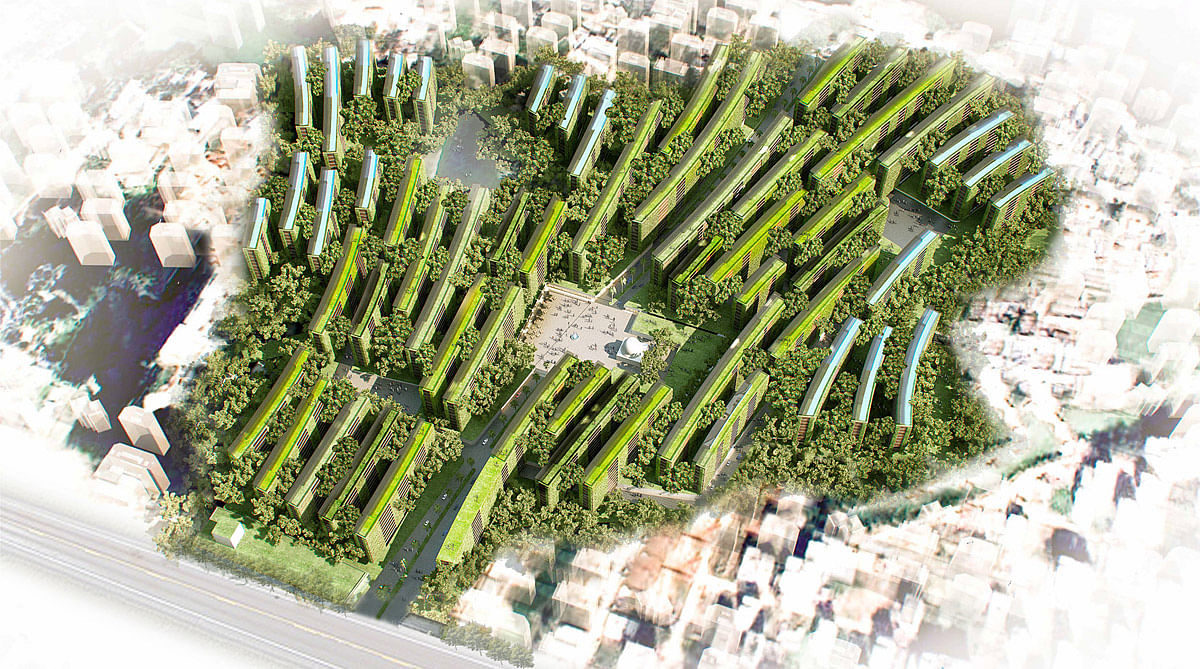
Aerial view of the proposed Shobuj Pata Eco Community Development by JET Architecture, JCI Architects, and Terraplan Landscape Architects (Image: JET)

The collaboration of three Toronto-based firms, JET Architecture, JCI Architects, and Terraplan Landscape Architects, has won the commission to build the "Shobuj Pata" (Green Leaf) Eco Community Development in Dhaka, Bangladesh.

Project description from the architects:

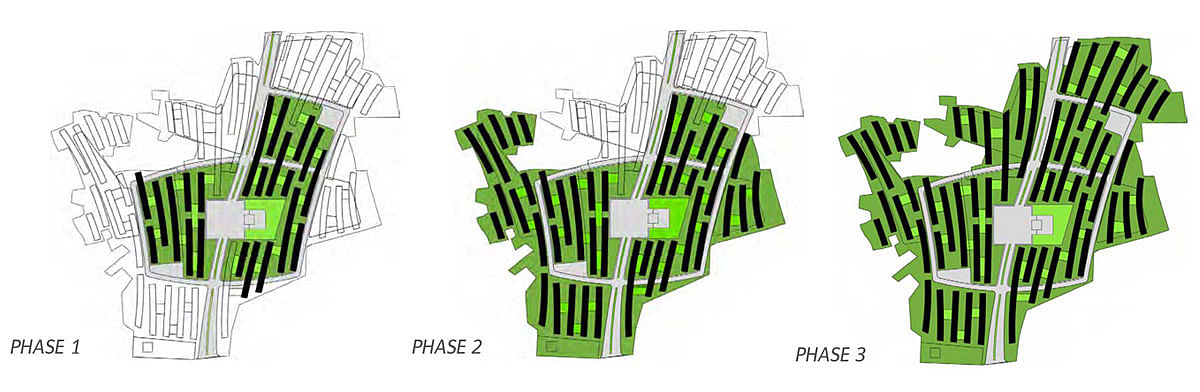
The landmark “Shobuj Pata” (Green Leaf) Eco Community Development by Rupayan Housing Estate Ltd., one of the largest developers in Bangledesh, will be an oasis with green trees, plants and vegetation.   This sustainable garden city of the future will be located on the outskirts of Dhaka, the capital of the Bangladesh. Named after “Green Leaf” in Bengali, the construction of Shobuj Pata garden city begins in 2012. The project will be ready to house 10,000 people in 2015, with habitable space for 2300 – 2400 dwelling units and convention centre, mosque, retail, school, etc. Green Leaf will become a livable low-carbon community incorporating landscape elements with architecture.
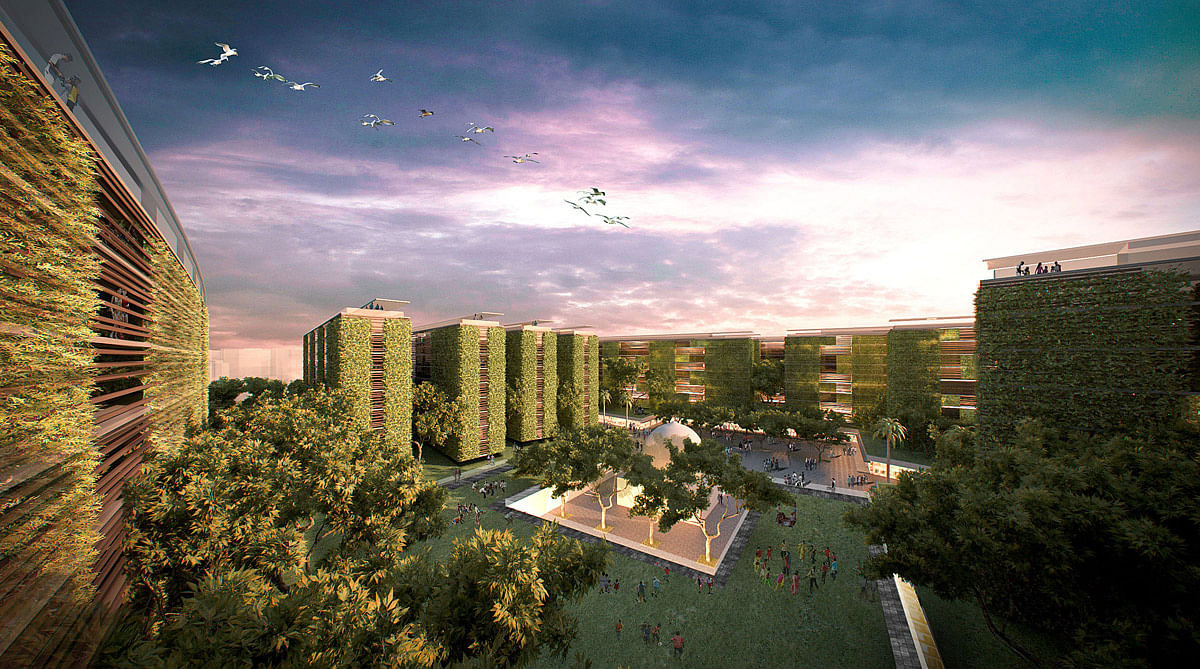
Penthouse view (Image: JET)

JET Architecture was invited by JCI Architects along with  Terraplan Landscape Architects, to joint venture in the design of the Green Leaf project.   After winning the commission earlier in 2011, on December 16th, 2011, the final negotiations were completed to enable the project to move forward quickly.   The team will be working together, helping Bangladesh to design a sustainable community with an innovative green concept.  Green Leaf is green landscape architecture and built form which takes full advantages of the local natural resources to create a hybrid habitable space combining architecture and nature. The concept is inspired by adopting current and green innovative technology to make the design construction economic and feasible.
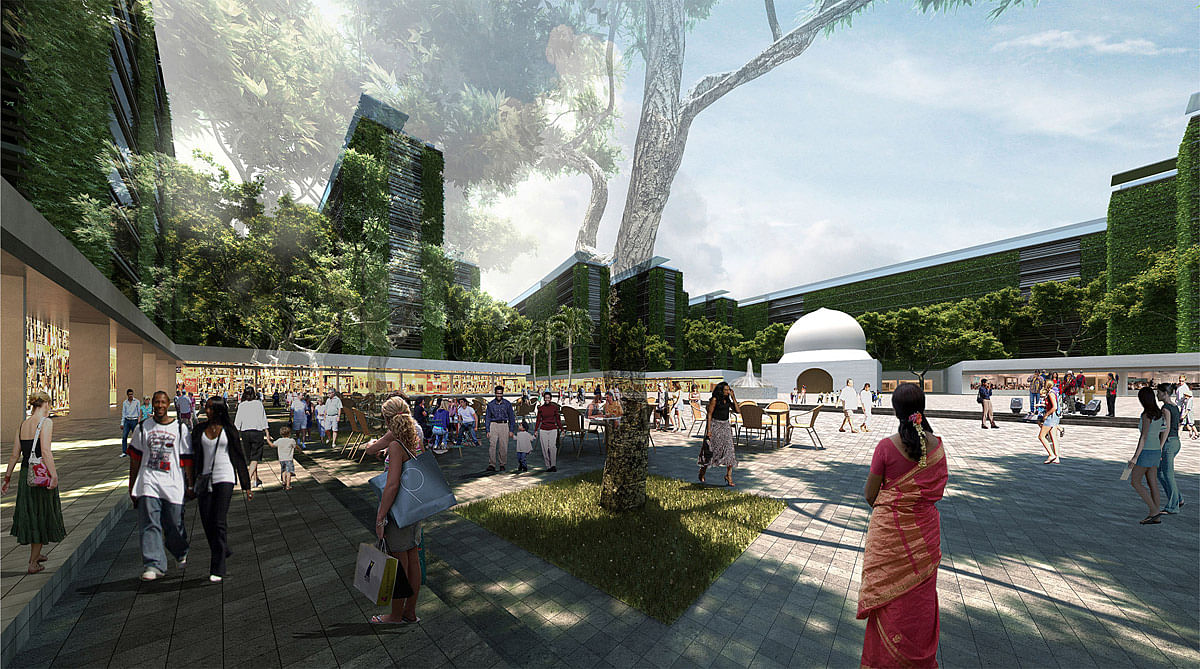
Town square (Image: JET)

Bangladesh is a naturally lush green country with abundant rainfall every year. It is actually the country with the highest annual average rainfall in the world. Due to the hot and humid climate, a heat island effect occurs naturally in Dhaka. In order to deal with these extreme conditions, local ecology, micro climate and natural environment must all be key architectural influences during the design stage. Another challenge in Green Leaf is to find the balance by combining passive and technologically sustainable strategies in order to achieve high energy efficiency and performance within a high density atmosphere. The design team has found the perfect solution to form the complex by designing the building envelope with vernacular textures and vegetation. Green Leaf’s open-air architecture becomes an extension of the natural landscape, where interior and exterior spaces become interchangeable. The façade has used local vegetation as the design element to bring Bengali landscape into the heart of the built form, which stretches from the ground up to the rooftops.

Site plan (Image: JET)

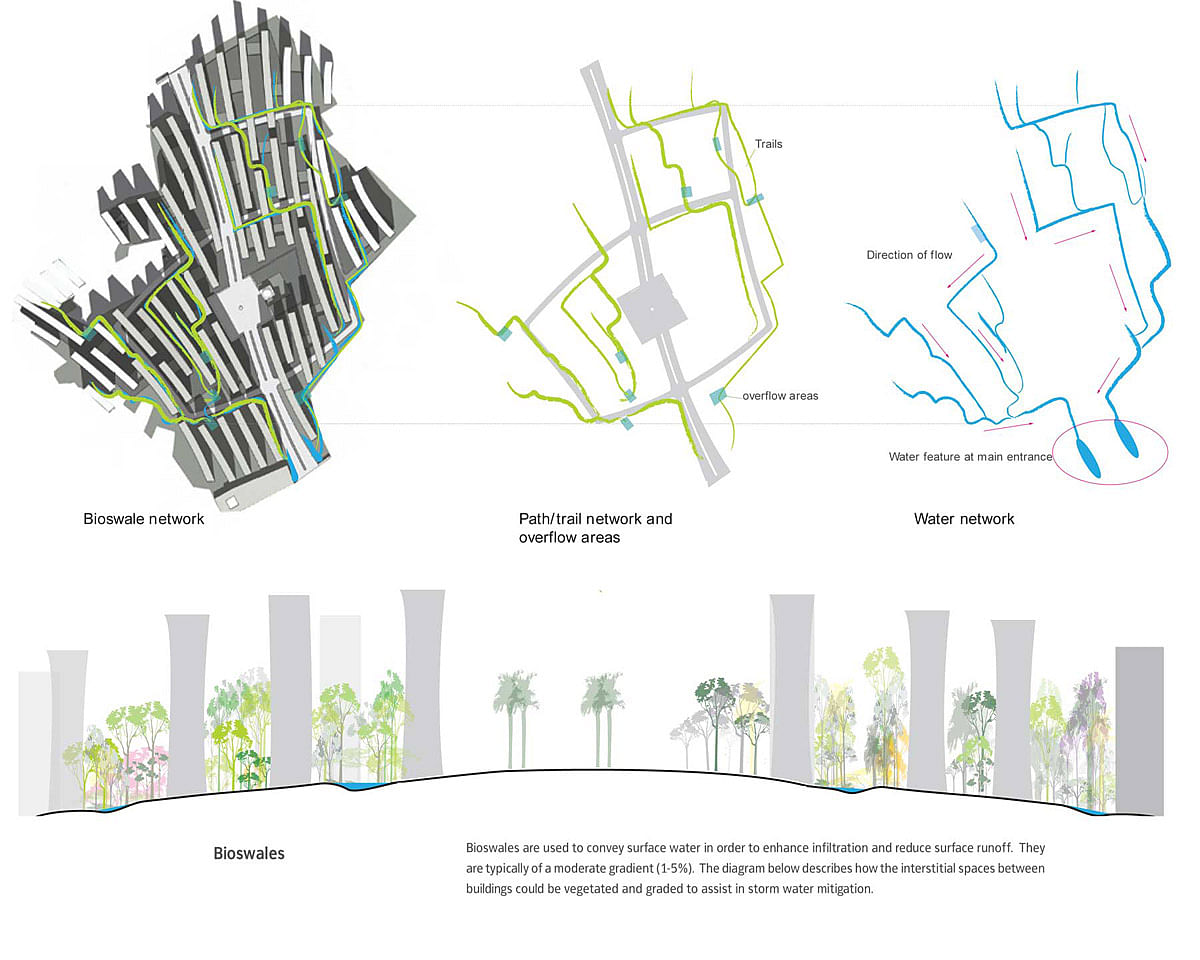
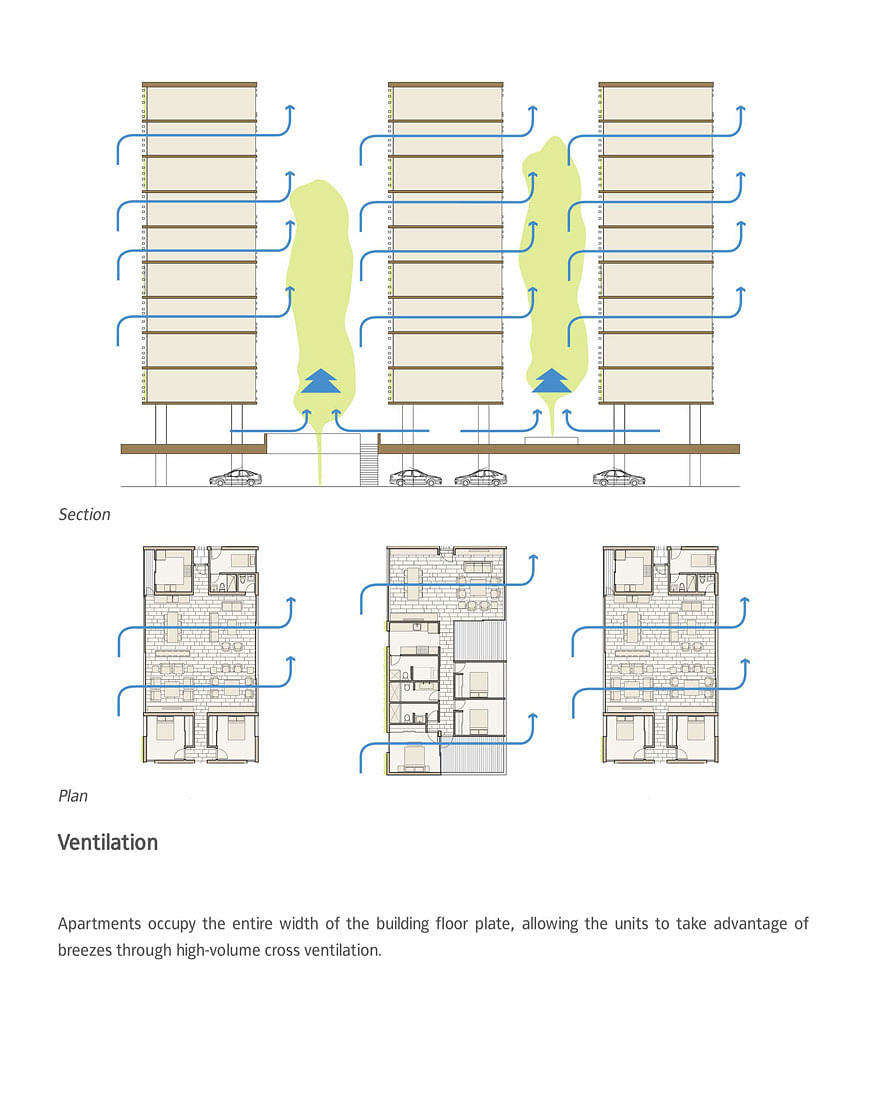
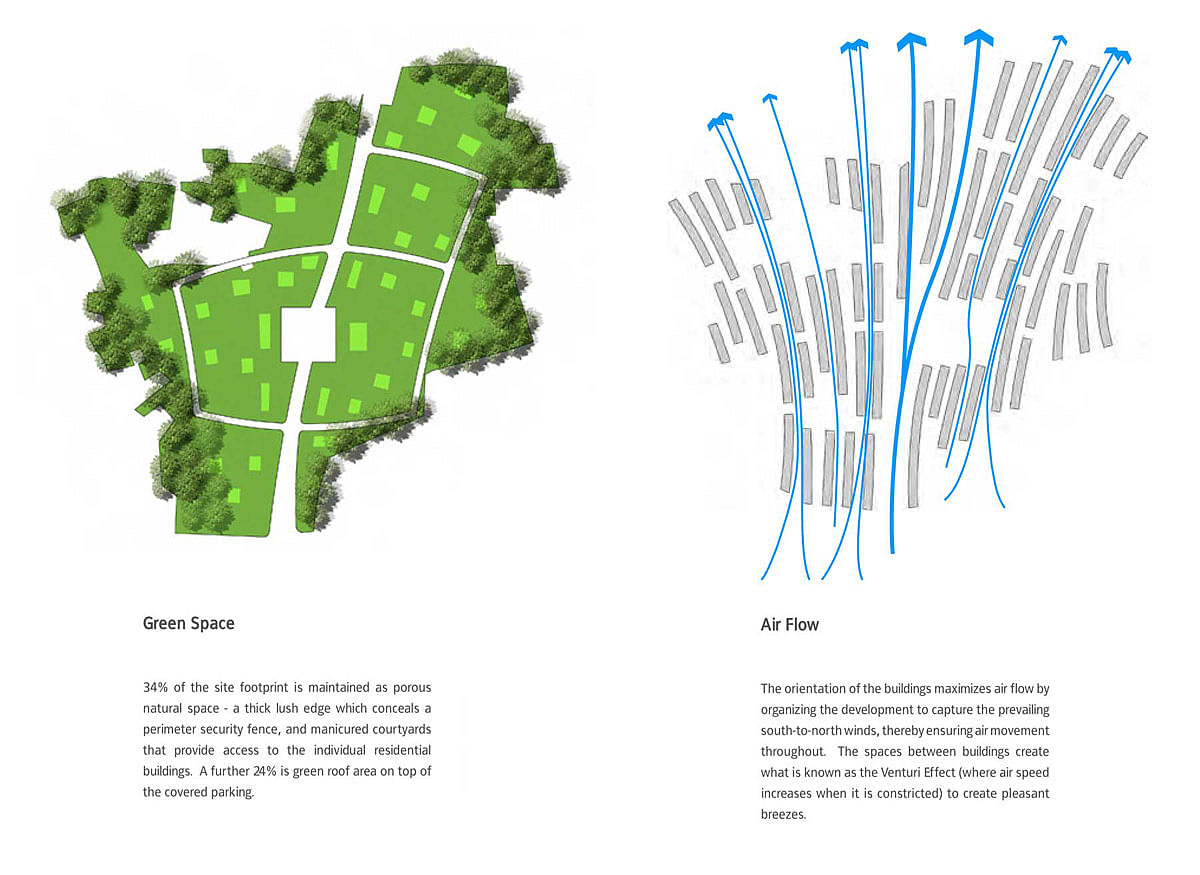
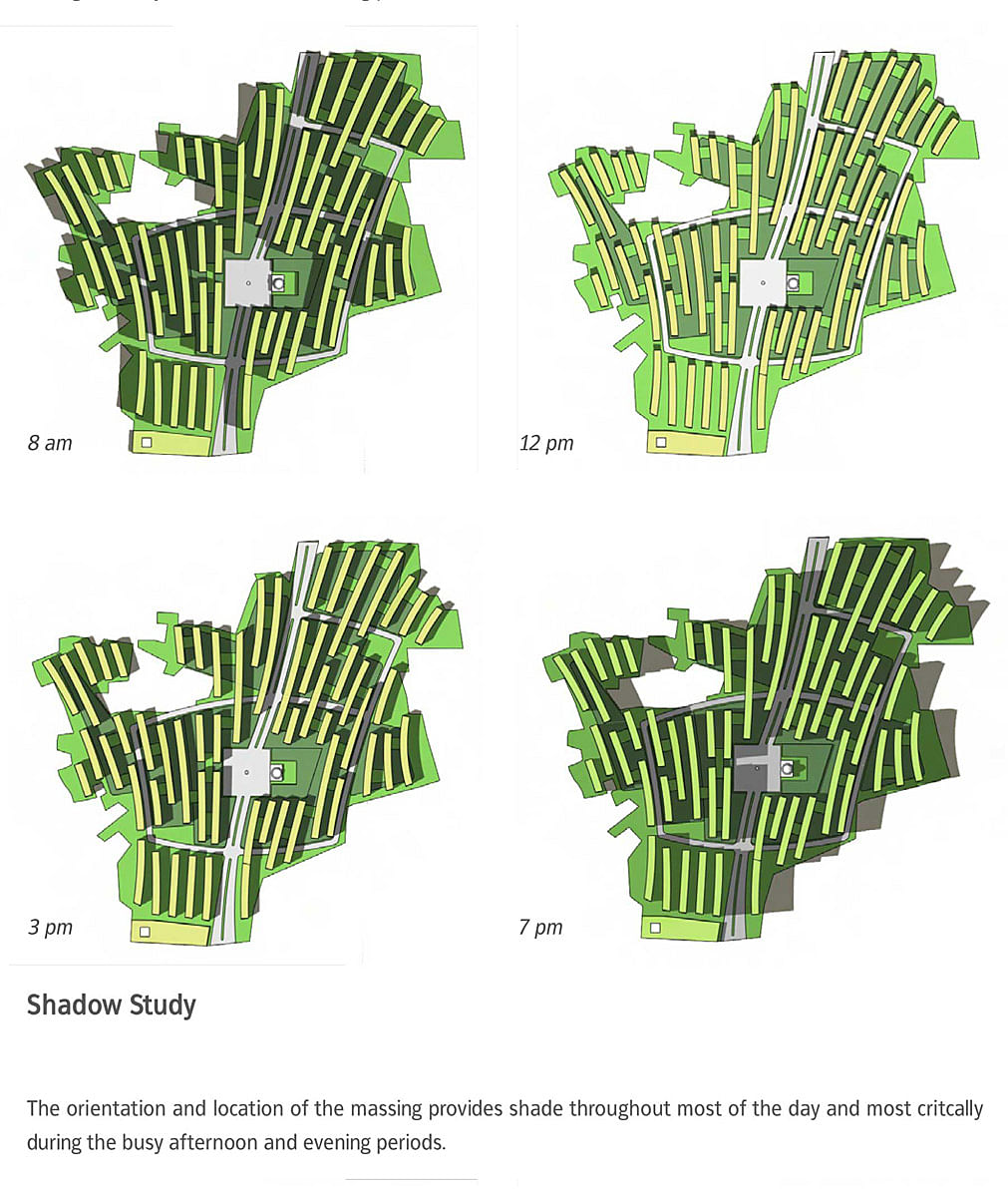
To direct rainwater runoff away from buildings, and to prevent water overflow, bioswales are incorporated along the street edges throughout the ground plane. The bioswales also act as a rainwater filtration system retaining excess water for irrigation of the gardens and parks within the development. In the dry seasons, these water featured areas can function as additional water recreation space. In case of excessive storm water, green roofs are designed to mitigate the runoff and assist water and air purification. Furthermore, these systems can also reduce overall building energy consumption and moderate the urban heat island effects. The green wall acts as an air filtration system and creates its own microclimate which mitigates heat gain in the units as well as reducing both indoor air and outdoor radiated temperature. Reinforcing the idea of cross-ventilation, the thin profile and shallow floor plates which align with the local main wind direction generate a stunning configuration and provide opportunities for natural daylight to be accessible on both sides of the units.
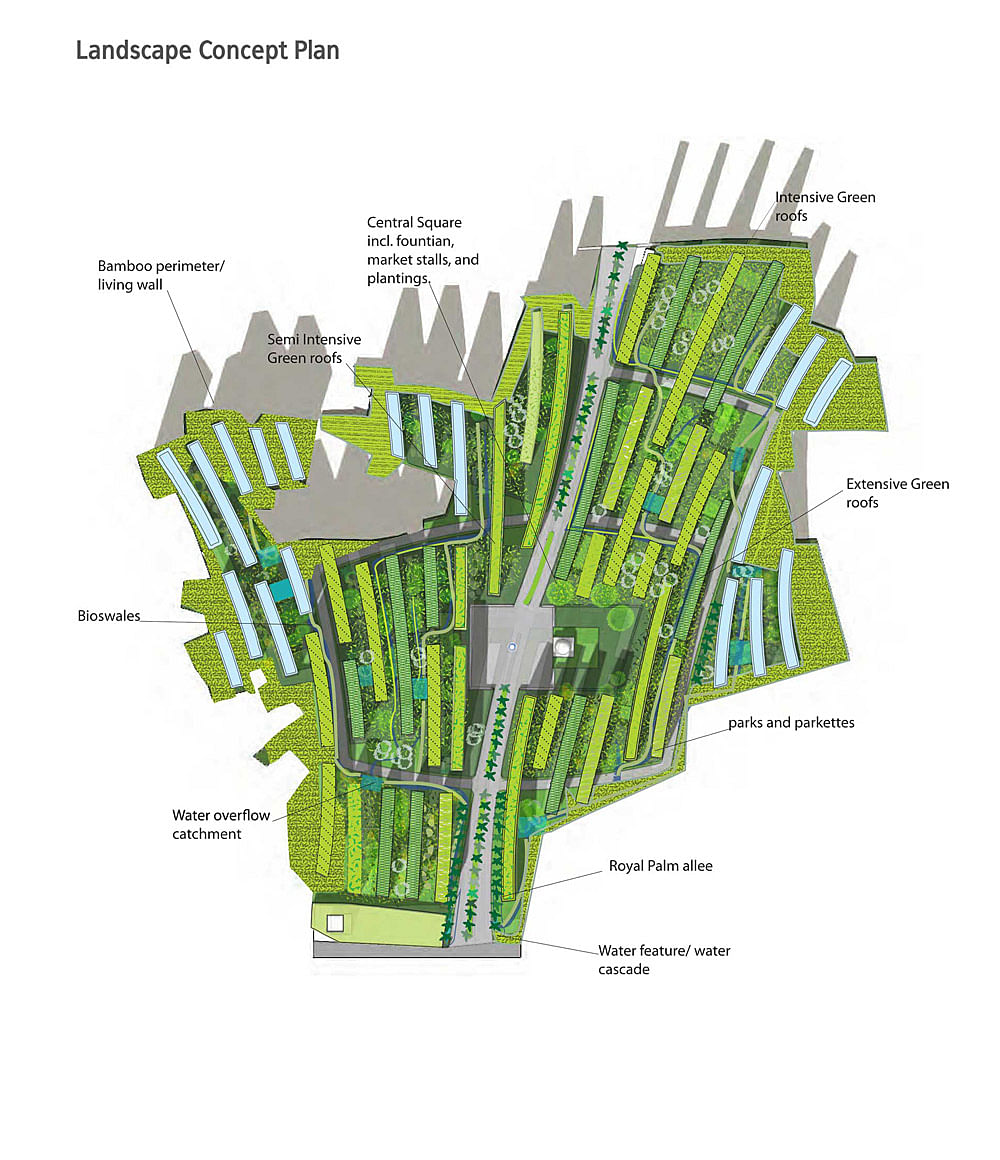
Landscape concept (Image: JET)

Green Leaf is not only acting as natural demarcation for spaces and activities; the various vegetated landscapes also create a green network that reconnects the urban population with the natural landscape of Bangladesh through a system of parks, paths and open public spaces. The planting species include fast-growing trees which create a comfortable microclimate for residents and visitors. One of the most important functions of the green façade is that it offers shade during intense heat and helps oxygenate surrounding air. The hedges, inspired by gardens that are carefully designed and organized, become the buildings in the Green Leaf plan, defining habitable space within the natural landscapes. They create a sense of living among trees, differentiated from a typical urban context. Smaller squares and parkettes closer to the centre contrast soft edges with hardscape materials that are necessary for active spaces. The landscape contains the key functions of this urban enclave. The garden city contains a central square with a market, commercial spaces, and educational and religious institutions that become an accessible public focus for gathering and events, encouraging the experience of city and nature simultaneously.
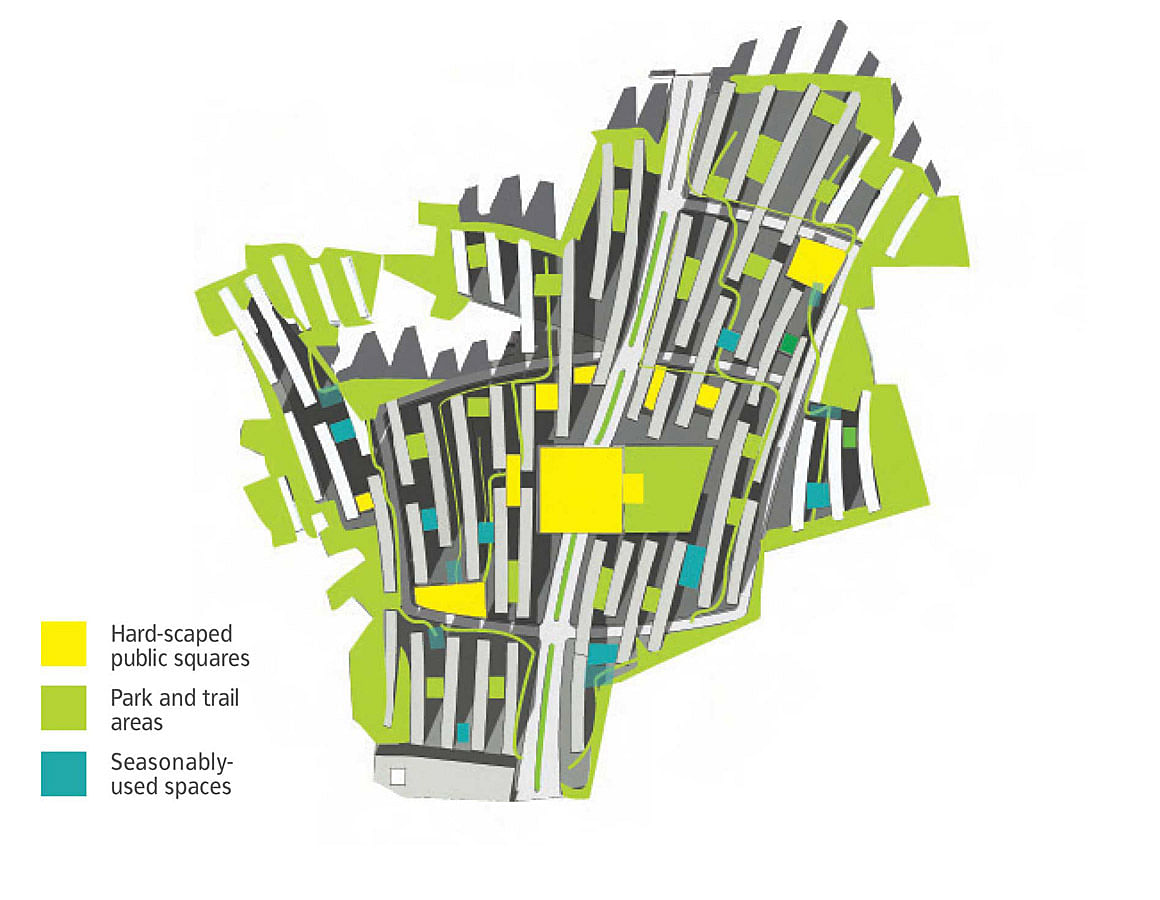
Open space (Image: JET)

With private courtyards and gardens aligned with the spaces between buildings and bioswales preventing potential water overflow, this bio-integration of architecture and natural landscape will define a new development paradigm for Bangladesh that maximizes density, value and returns, both ecologically and economically. Exhibiting sustainable designs that embrace vernacular landscapes, Green Leaf architecture draws from the lushness of the Bengali landscape and gives both beauty and function back to its surroundings.
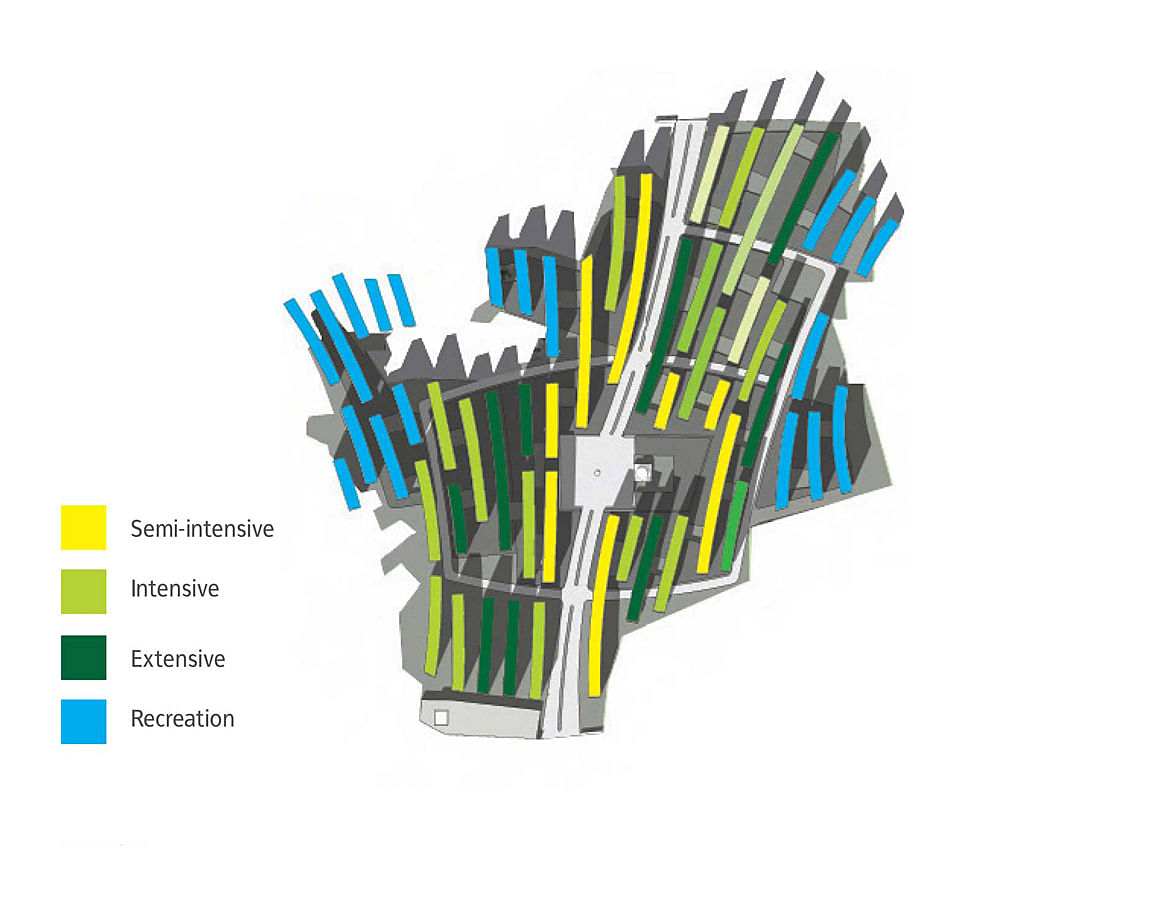
Green roof strategies (Image: JET)

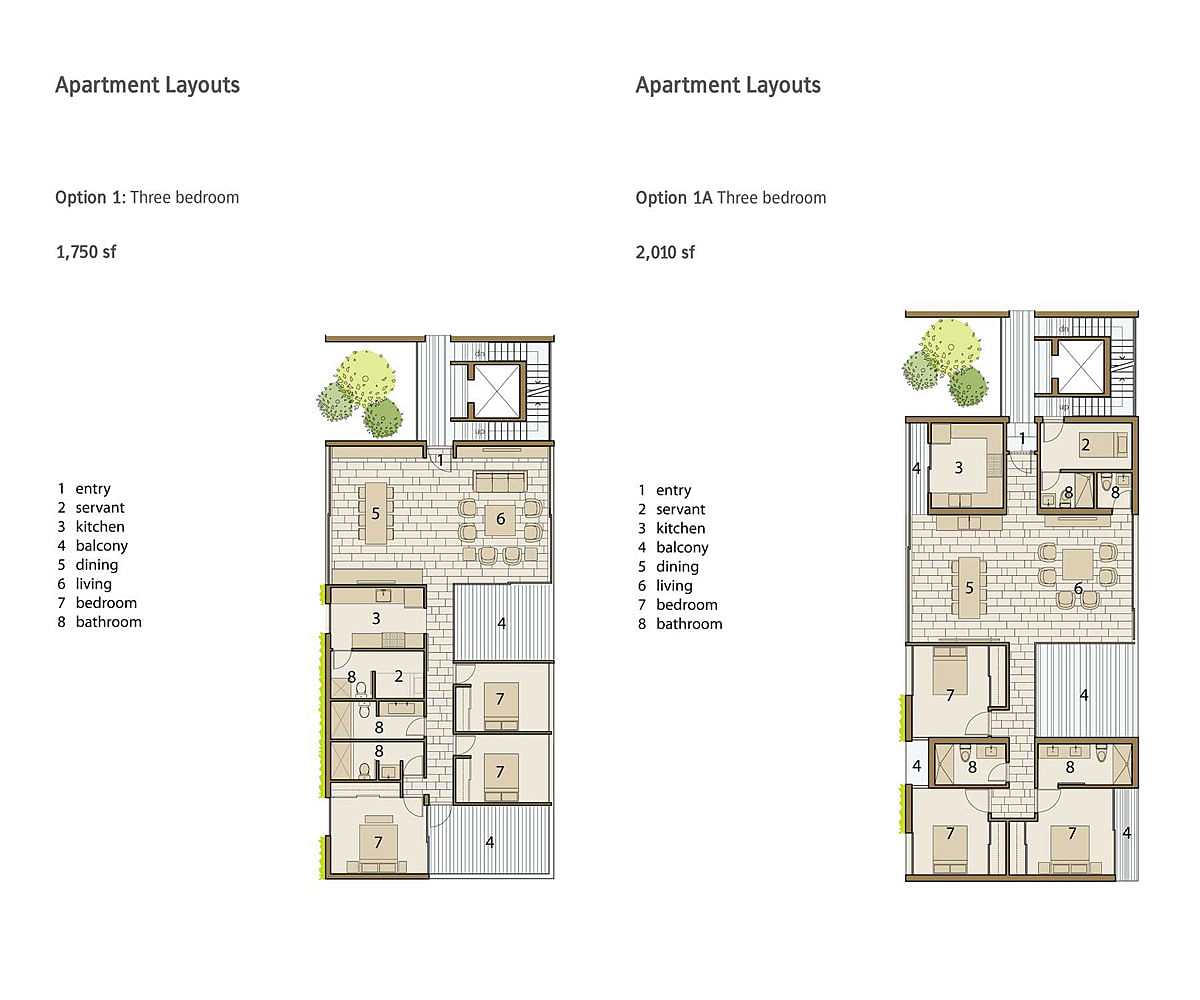
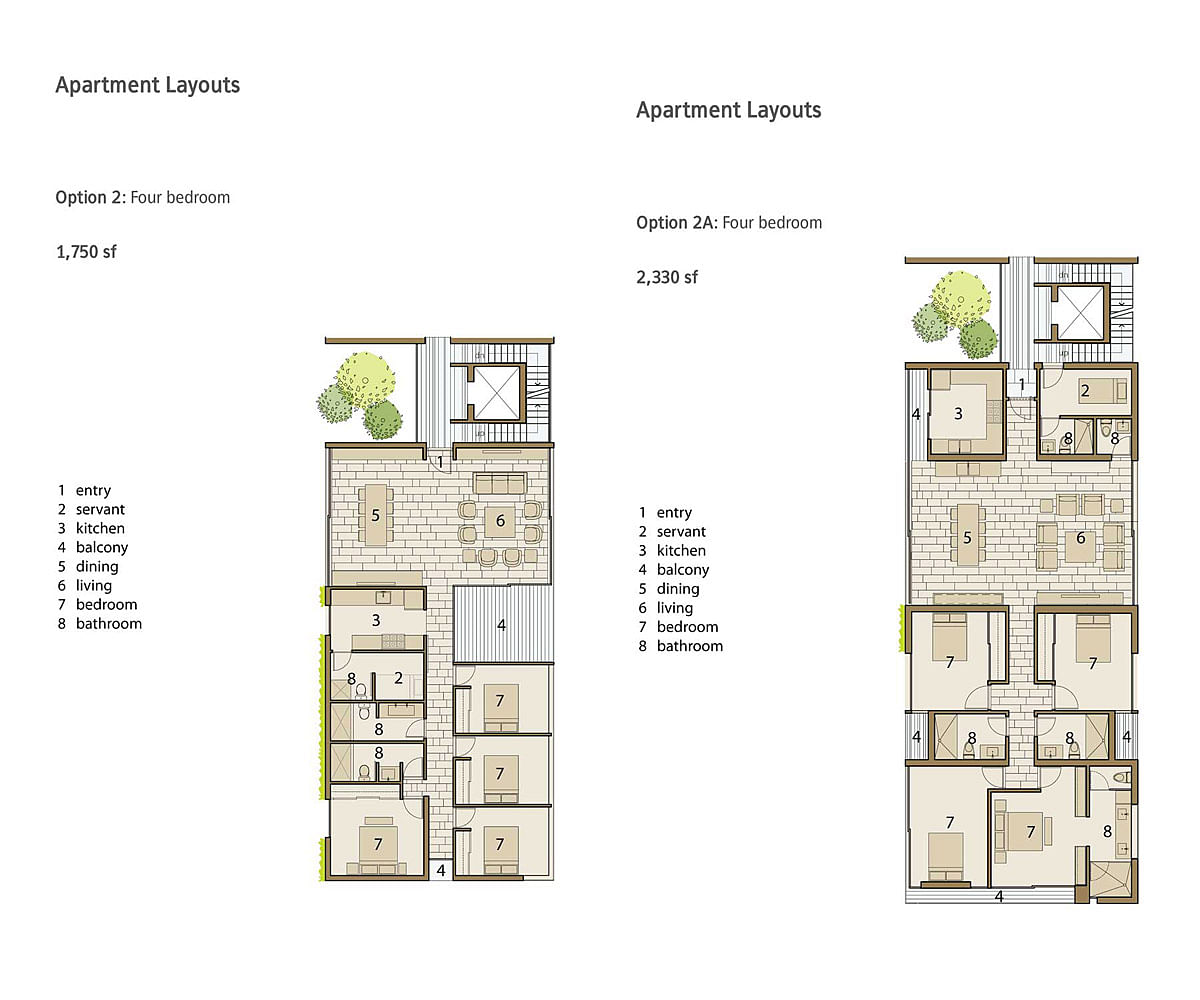
Find more diagrams and floor plans of the residential units in the image gallery below.
Related

asia ● bangladesh ● green ● housing ● residential ● sustainability ● jet architecture ● jci architects ● terraplan landscape architects ● dhaka

Share

  • Follow

    0 Comments

  • Comment as :

JET, JCI, and Terraplan to Build Eco Community Development in Bangladesh

Here are the winners of the 2026 AIA Architecture Awards

40 emerging architects and designers under 40 from Europe honored

Northwestern University selects 12-firm longlist to design new engineering building

New architecture and design competitions: Exploring 130 Years of American Design, Christo & Jeanne-Claude Center, 13 White Houses, and La Pyramide

Micro-architecture honored in latest Tiny House Architecture Competition

World’s most beautiful restaurants of 2026 chosen by Prix Versailles

Sponsored Post by Buildner

Design a wine tasting room in Italy! Valli Wine Tasting Room is launched!

10 can't-miss architecture & design events to see this June in London, Los Angeles, Chicago, San Francisco, Detroit, San Diego, Porto, and Barcelona

Sign up for Bustler's Email Newsletters

Sponsored Post by Buildner

Museum of Emotions / Edition #8 FINAL registration deadline is approaching!

Seven global projects make AR Public Awards shortlist 2026

Sponsored Post by Buildner

Design a slow-living restaurant in Portugal! Portugal Long Table Restaurant is launched!

World's best tall buildings honored at the CVU 2026 Award of Excellence

Sponsored Post by TWOPAGES

Final call: TWOPAGES X Design Contest 2026 submissions close June 5

Kengo Kuma & Paul Raff win Alberta national park visitor center competition with landscape-focused design

2026 Moira Gemmill and MJ Long prizes announced by W Awards

Next page » Loading

JET, JCI, and Terraplan to Build Eco Community Development in Bangladesh

By Bustler Editors|

Monday, Jan 9, 2012

Share

Aerial view of the proposed Shobuj Pata Eco Community Development by JET Architecture, JCI Architects, and Terraplan Landscape Architects (Image: JET)

Related

asia ● bangladesh ● green ● housing ● residential ● sustainability ● jet architecture ● jci architects ● terraplan landscape architects ● dhaka

The collaboration of three Toronto-based firms, JET Architecture, JCI Architects, and Terraplan Landscape Architects, has won the commission to build the "Shobuj Pata" (Green Leaf) Eco Community Development in Dhaka, Bangladesh.

Project description from the architects:

The landmark “Shobuj Pata” (Green Leaf) Eco Community Development by Rupayan Housing Estate Ltd., one of the largest developers in Bangledesh, will be an oasis with green trees, plants and vegetation.   This sustainable garden city of the future will be located on the outskirts of Dhaka, the capital of the Bangladesh. Named after “Green Leaf” in Bengali, the construction of Shobuj Pata garden city begins in 2012. The project will be ready to house 10,000 people in 2015, with habitable space for 2300 – 2400 dwelling units and convention centre, mosque, retail, school, etc. Green Leaf will become a livable low-carbon community incorporating landscape elements with architecture.

Penthouse view (Image: JET)

JET Architecture was invited by JCI Architects along with  Terraplan Landscape Architects, to joint venture in the design of the Green Leaf project.   After winning the commission earlier in 2011, on December 16th, 2011, the final negotiations were completed to enable the project to move forward quickly.   The team will be working together, helping Bangladesh to design a sustainable community with an innovative green concept.  Green Leaf is green landscape architecture and built form which takes full advantages of the local natural resources to create a hybrid habitable space combining architecture and nature. The concept is inspired by adopting current and green innovative technology to make the design construction economic and feasible.

Town square (Image: JET)

Bangladesh is a naturally lush green country with abundant rainfall every year. It is actually the country with the highest annual average rainfall in the world. Due to the hot and humid climate, a heat island effect occurs naturally in Dhaka. In order to deal with these extreme conditions, local ecology, micro climate and natural environment must all be key architectural influences during the design stage. Another challenge in Green Leaf is to find the balance by combining passive and technologically sustainable strategies in order to achieve high energy efficiency and performance within a high density atmosphere. The design team has found the perfect solution to form the complex by designing the building envelope with vernacular textures and vegetation. Green Leaf’s open-air architecture becomes an extension of the natural landscape, where interior and exterior spaces become interchangeable. The façade has used local vegetation as the design element to bring Bengali landscape into the heart of the built form, which stretches from the ground up to the rooftops.

Site plan (Image: JET)

To direct rainwater runoff away from buildings, and to prevent water overflow, bioswales are incorporated along the street edges throughout the ground plane. The bioswales also act as a rainwater filtration system retaining excess water for irrigation of the gardens and parks within the development. In the dry seasons, these water featured areas can function as additional water recreation space. In case of excessive storm water, green roofs are designed to mitigate the runoff and assist water and air purification. Furthermore, these systems can also reduce overall building energy consumption and moderate the urban heat island effects. The green wall acts as an air filtration system and creates its own microclimate which mitigates heat gain in the units as well as reducing both indoor air and outdoor radiated temperature. Reinforcing the idea of cross-ventilation, the thin profile and shallow floor plates which align with the local main wind direction generate a stunning configuration and provide opportunities for natural daylight to be accessible on both sides of the units.

Landscape concept (Image: JET)

Green Leaf is not only acting as natural demarcation for spaces and activities; the various vegetated landscapes also create a green network that reconnects the urban population with the natural landscape of Bangladesh through a system of parks, paths and open public spaces. The planting species include fast-growing trees which create a comfortable microclimate for residents and visitors. One of the most important functions of the green façade is that it offers shade during intense heat and helps oxygenate surrounding air. The hedges, inspired by gardens that are carefully designed and organized, become the buildings in the Green Leaf plan, defining habitable space within the natural landscapes. They create a sense of living among trees, differentiated from a typical urban context. Smaller squares and parkettes closer to the centre contrast soft edges with hardscape materials that are necessary for active spaces. The landscape contains the key functions of this urban enclave. The garden city contains a central square with a market, commercial spaces, and educational and religious institutions that become an accessible public focus for gathering and events, encouraging the experience of city and nature simultaneously.

Open space (Image: JET)

With private courtyards and gardens aligned with the spaces between buildings and bioswales preventing potential water overflow, this bio-integration of architecture and natural landscape will define a new development paradigm for Bangladesh that maximizes density, value and returns, both ecologically and economically. Exhibiting sustainable designs that embrace vernacular landscapes, Green Leaf architecture draws from the lushness of the Bengali landscape and gives both beauty and function back to its surroundings.

Green roof strategies (Image: JET)

Find more diagrams and floor plans of the residential units in the image gallery below.
Share

  • Follow

    0 Comments

  • Comment as :

Archinect JobsArchinect Jobs

The Archinect Job Board attracts the world's top architectural design talents.

VIEW ALL JOBS POST A JOB

Senior Technical Designer, Commercial Interiors - New York Office

Fogarty Finger

Senior Technical Designer, Commercial Interiors - New York Office

New York, NY, US

Junior Designer

Shadow Architect, P.C.

Junior Designer

New York, NY, US

Architectural Designer (5-7 Years) - Commercial & Hospitality Focus

Pfeffer Torode Architecture

Architectural Designer (5-7 Years) - Commercial & Hospitality Focus

Nashville, TN, US

Architect / Project Manager

Curtis + Ginsberg Architects LLP

Architect / Project Manager

New York, NY, US

Architectural Designer

1100 Architect

Architectural Designer

New York, NY, US

Project Architect at High End Boutique Townhouse Firm in BK

Steering House Design and Development

Project Architect at High End Boutique Townhouse Firm in BK

Brooklyn, NY, US

Intermediate Designer - 3+ Years Experience (NY)

Cass Calder Smith

Intermediate Designer - 3+ Years Experience (NY)

New York, NY, US

Design Architect

JLK Architects

Design Architect

Chicago, IL, US

Job Captain - Residential

DAHLIN Architecture | Planning | Interiors

Job Captain - Residential

Pleasanton, CA, US

Project Architect / Senior Designer

Touloukian Touloukian Inc.

Project Architect / Senior Designer

Boston, MA, US

Next page » Loading