• Login / Join
  • About
  • •
  • Contact
  • •
  • Advertising
bustler logo
bustler logo
  • News
  • Competitions
  • Events
  • Bustler is powered by Archinect
  • Sign up for Bustler's Email Newsletters

  • Follow these Bustler feeds:

  • Search

    Search in

  • Submit

    What are you submitting?

    News Pitch
    Competition
    Event
  • Login / Join
  • News|Competitions|Events
  • Search
    | Submit
    | Follow
  • Search in

    What are you submitting?

    News Pitch
    Competition
    Event

    Follow these Bustler feeds:

  • About|Contact|Advertising
  • Login / Join

Olympic Village Wins LEED Gold Award for 'Green' Design

By Bustler Editors|

Friday, Aug 15, 2008

The sprawling Beijing Olympic Village won its own gold medal today for going green.

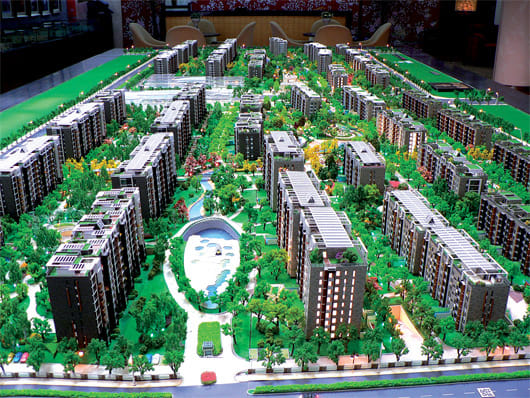
U.S. Treasury Secretary Henry Paulson presented Chinese officials with the Leadership in Energy and Environmental Design (LEED) Gold award during a short ceremony, saying the 160-acre Olympic Village could serve as a future prototype for energy efficiency and environmentally friendly design.
image
Model of the Olympic Village (Image: United Nations Environment Programme)

“China’s leaders know the development of green buildings is a critical need and the Olympic Village can serve as a model for this development,” Paulson said.

The award, based on standards set by the U.S. Green Building Council, is an international benchmark for high performance in “green” design and construction. The village’s 42 six- and nine-story residential high-rises, which house more than 16,000 Olympic athletes, are 50 percent more energy efficient than most buildings in Beijing, using solar panels for energy and recycling wastewater for heating and cooling.

“With this award, the Olympic Village is being recognized for its contributions to making this year’s Olympics the greenest ever,” said Paulson.
image
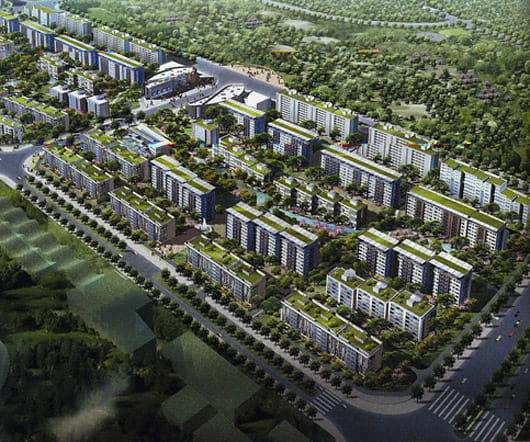
Rendering of the Olympic Village

Though much attention has focused on the country’s efforts to curb its air pollution, China’s huge push to achieve its goal of a “Green Olympics” has also meant a major investment in other environmental efforts, including the construction of “green” Olympic venues.

Many of the 31 athletic arenas, including the iconic National Stadium and the Water Cube, were built to incorporate environmentally friendly design.

“On day one, we were given instructions in terms of implementing a green agenda,” said Michael Kwok, the Olympic project director for the British-based design and engineering firm Arup, which has been involved in building some of Beijing’s signature new architecture.
image
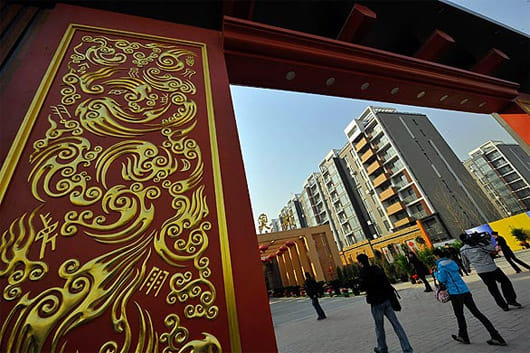
Entrance gate to the Olympic Village which will host 16,000 athletes and officials during the games (Photo: LA Times)

“There was a general objective that this was the ‘Green Olympics’ so we had to consider energy conservation and water recycling. But in terms of details, it was up to designers to come up with solutions,” Kwok said.

At the Water Cube, where Olympic swimming events are held, builders used material similar to plastic wrap to create 4,000 translucent bubbles as the outer shell, allowing sunlight to filter in. The “skin” lets the building use natural lighting, while a rainwater capture system on the roof saves water for irrigation and landscape purposes, said Kwok.

“The Water Cube is very much a green building because of the way the building’s features work. It had inherent advantages of saving energy and also retaining and recycling rainwater,” he said.

Solar panels in the 91,000-seat stadium, known as the Bird’s Nest, generate enough energy to power the huge underground parking lot. The arena’s open design, with its intricate external latticework, allows for natural ventilation instead of having a heating and cooling system, while the rainwater collection system uses 108 water tanks, said Kwok.
image
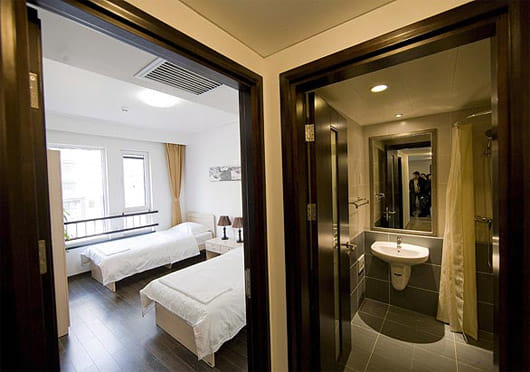
Typical accomodation in the village (Photo: LA Times)

“China is going through a ‘green’ push and there’s a lot of buildings that have these elements - water recycling, maximizing natural light, etc. Its all moving in that direction,” Kwok said.

The Olympic Village, the largest non-competition venue at the Games, includes the showcase “near-zero energy” welcome center, which generates nearly as much energy as it consumes using a combination of solar cells and geothermal heat pumps. The village’s developers, the Guo Ao Development Co., received technical assistance from the U.S. Department of Energy.

Though several individual buildings in Beijing have gotten the LEED award, the Olympic Village is the first residential neighborhood to merit one. The developers plan to convert the development into luxury apartments in early 2009. The cachet and amenities of the Olympic residences have proven very popular with the public - 80 percent have already been sold.

China’s motivations for looking at sustainable design and development go far beyond the Olympics, Kwok said.

“They know that the high rate of urbanization is going on in China so there is an urgent need to find a solution where they can sustain growth but at the same time, not create so much problems in terms of energy and pollution that they are facing,” he said.

Related

asia ● award ● beijing ● china ● green ● leed ● sustainable ● usgbc ● winner ● olympic village ● olympic games

Share

  • Follow

    0 Comments

  • Comment as :

Olympic Village Wins LEED Gold Award for 'Green' Design

Best in urban planning recognized at AIA Regional & Urban Design Award 2026

Sponsored Post by Buildner

Re:Form - New Life for Old Spaces / Edition #3 advance registration deadline is approaching!

New architecture and design competitions: IDEAS Awards, UIA-HYP CUP International Student Competition, Vancouver Tall Challenge, and Memorial to the Sixth Extinction

Best small projects chosen at AIA Small Project Award 2026

10 standout sustainable projects honored at AIA COTE Top Ten Award 2026

Best residential architecture of 2026 honored at AIA Housing Award

Best new interiors of 2026 chosen at AIA Interior Architecture Awards

Best global architecture honored at RIBA International Awards 2026

Sign up for Bustler's Email Newsletters

World’s most beautiful airports of 2026 chosen by Prix Versailles

New architecture and design competitions: Brick in Architecture Awards, Study Architecture Student Showcase, N.Y.C. Groceries, and New York High Falls Riverfront Market

SmithGroup’s ‘pioneering’ Philip Merrill Environmental Center wins AIA Twenty-five Year Award

Sponsored Post by Buildner

Museum of Emotions / Edition #8 FINAL registration deadline is in 5 DAYS!

Here are the winners of the 2026 AIA Architecture Awards

40 emerging architects and designers under 40 from Europe honored

Northwestern University selects 12-firm longlist to design new engineering building

Next page » Loading

Olympic Village Wins LEED Gold Award for 'Green' Design

By Bustler Editors|

Friday, Aug 15, 2008

Share

Related

asia ● award ● beijing ● china ● green ● leed ● sustainable ● usgbc ● winner ● olympic village ● olympic games

The sprawling Beijing Olympic Village won its own gold medal today for going green.

U.S. Treasury Secretary Henry Paulson presented Chinese officials with the Leadership in Energy and Environmental Design (LEED) Gold award during a short ceremony, saying the 160-acre Olympic Village could serve as a future prototype for energy efficiency and environmentally friendly design.

image
Model of the Olympic Village (Image: United Nations Environment Programme)

“China’s leaders know the development of green buildings is a critical need and the Olympic Village can serve as a model for this development,” Paulson said.

The award, based on standards set by the U.S. Green Building Council, is an international benchmark for high performance in “green” design and construction. The village’s 42 six- and nine-story residential high-rises, which house more than 16,000 Olympic athletes, are 50 percent more energy efficient than most buildings in Beijing, using solar panels for energy and recycling wastewater for heating and cooling.

“With this award, the Olympic Village is being recognized for its contributions to making this year’s Olympics the greenest ever,” said Paulson.

image
Rendering of the Olympic Village

Though much attention has focused on the country’s efforts to curb its air pollution, China’s huge push to achieve its goal of a “Green Olympics” has also meant a major investment in other environmental efforts, including the construction of “green” Olympic venues.

Many of the 31 athletic arenas, including the iconic National Stadium and the Water Cube, were built to incorporate environmentally friendly design.

“On day one, we were given instructions in terms of implementing a green agenda,” said Michael Kwok, the Olympic project director for the British-based design and engineering firm Arup, which has been involved in building some of Beijing’s signature new architecture.

image
Entrance gate to the Olympic Village which will host 16,000 athletes and officials during the games (Photo: LA Times)

“There was a general objective that this was the ‘Green Olympics’ so we had to consider energy conservation and water recycling. But in terms of details, it was up to designers to come up with solutions,” Kwok said.

At the Water Cube, where Olympic swimming events are held, builders used material similar to plastic wrap to create 4,000 translucent bubbles as the outer shell, allowing sunlight to filter in. The “skin” lets the building use natural lighting, while a rainwater capture system on the roof saves water for irrigation and landscape purposes, said Kwok.

“The Water Cube is very much a green building because of the way the building’s features work. It had inherent advantages of saving energy and also retaining and recycling rainwater,” he said.

Solar panels in the 91,000-seat stadium, known as the Bird’s Nest, generate enough energy to power the huge underground parking lot. The arena’s open design, with its intricate external latticework, allows for natural ventilation instead of having a heating and cooling system, while the rainwater collection system uses 108 water tanks, said Kwok.

image
Typical accomodation in the village (Photo: LA Times)

“China is going through a ‘green’ push and there’s a lot of buildings that have these elements - water recycling, maximizing natural light, etc. Its all moving in that direction,” Kwok said.

The Olympic Village, the largest non-competition venue at the Games, includes the showcase “near-zero energy” welcome center, which generates nearly as much energy as it consumes using a combination of solar cells and geothermal heat pumps. The village’s developers, the Guo Ao Development Co., received technical assistance from the U.S. Department of Energy.

Though several individual buildings in Beijing have gotten the LEED award, the Olympic Village is the first residential neighborhood to merit one. The developers plan to convert the development into luxury apartments in early 2009. The cachet and amenities of the Olympic residences have proven very popular with the public - 80 percent have already been sold.

China’s motivations for looking at sustainable design and development go far beyond the Olympics, Kwok said.

“They know that the high rate of urbanization is going on in China so there is an urgent need to find a solution where they can sustain growth but at the same time, not create so much problems in terms of energy and pollution that they are facing,” he said.

Share

  • Follow

    0 Comments

  • Comment as :

Archinect JobsArchinect Jobs

The Archinect Job Board attracts the world's top architectural design talents.

VIEW ALL JOBS POST A JOB

Computational Design Expert Leaders

Urban A&O

Computational Design Expert Leaders

New York, NY, US

Interior Designer - Intermediate Level (3-7 Years)

Yazdani Studio of Cannon Design

Interior Designer - Intermediate Level (3-7 Years)

Los Angeles, CA, US

Project Architect

Pickard Architects

Project Architect

Whittier, CA, US

Project Designer

The Brooklyn Studio

Project Designer

Brooklyn, NY, US

Design Technologist / BIM Lead

The American Housing Corporation

Design Technologist / BIM Lead

Austin, TX, US

Project Captain

Practice (formerly GGA+)

Project Captain

Pasadena, CA, US

Job Captain - Residential

DAHLIN Architecture | Planning | Interiors

Job Captain - Residential

Pleasanton, CA, US

Intermediate Designer

Rafael Viñoly Architects

Intermediate Designer

New York, NY, US

Project Manager

Populous

Project Manager

San Francisco, CA, US

Senior Associate/ Project Manager

DWY Landscape Architects

Senior Associate/ Project Manager

Sarasota, FL, US

Next page » Loading