• Login / Join
  • About
  • •
  • Contact
  • •
  • Advertising
bustler logo
bustler logo
  • News
  • Competitions
  • Events
  • Bustler is powered by Archinect
  • Sign up for Bustler's Email Newsletters

  • Follow these Bustler feeds:

  • Search

    Search in

  • Submit

    What are you submitting?

    News Pitch
    Competition
    Event
  • Login / Join
  • News|Competitions|Events
  • Search
    | Submit
    | Follow
  • Search in

    What are you submitting?

    News Pitch
    Competition
    Event

    Follow these Bustler feeds:

  • About|Contact|Advertising
  • Login / Join

Women-led teams win 2018 Global LafargeHolcim Awards + inaugural Ideas Prize winners announced

By Justine Testado|

Thursday, Mar 29, 2018
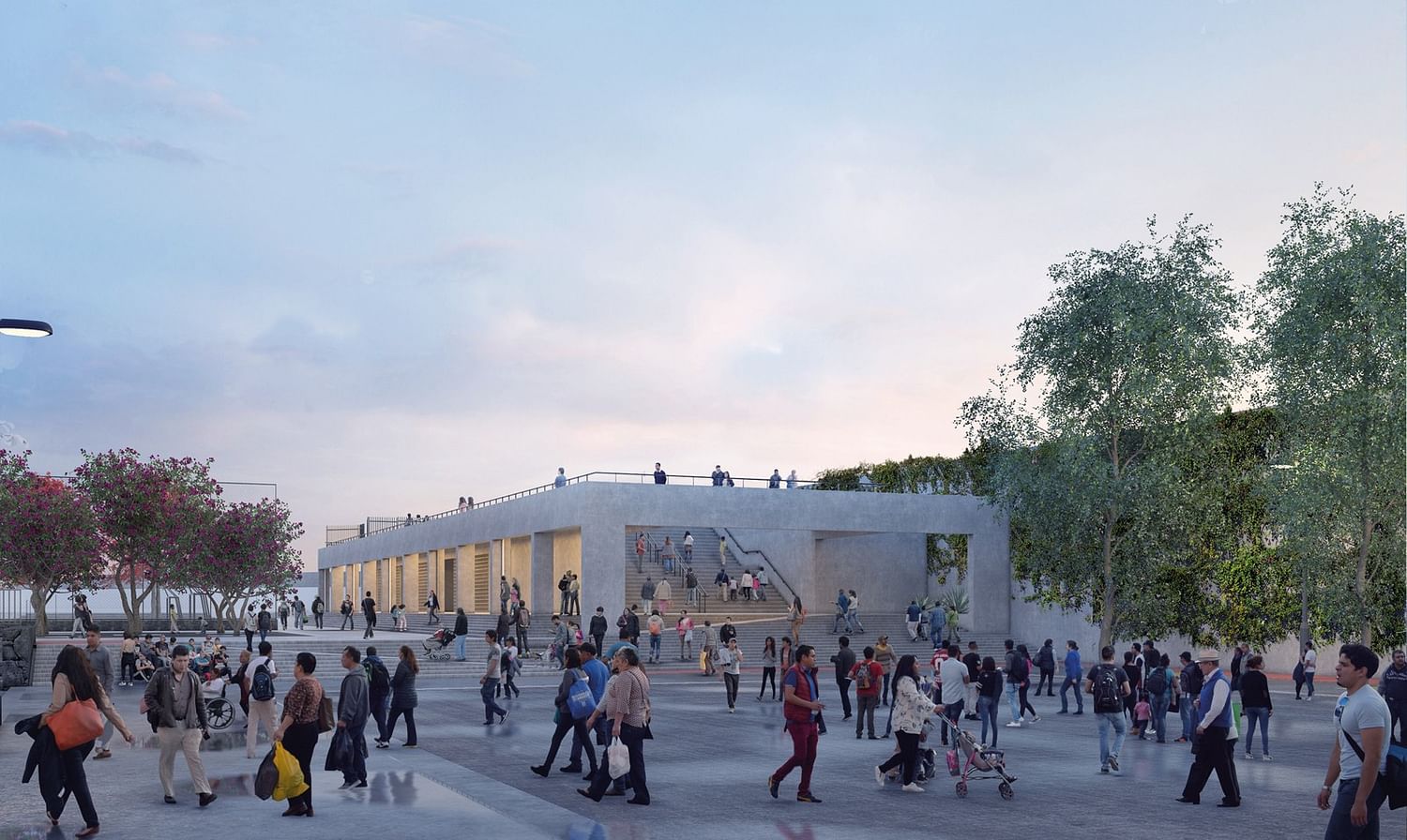
GOLD: Hydropuncture – Publicly accessible water retention and treatment complex in Mexico City, Mexico​ by Loreta Castro Reguera, Taller Capital; and Manuel Perló Cohen, Universidad Nacional Autónoma de México | Mexico City, Mexico​

The 2018 Global LafargeHolcim Awards competition was as big as ever, attracting more than 5,000 submissions this time around. When the regional competition winners were selected, the 15 regional finalists went on to compete for the big global prizes. The global awards jury awarded the gold, silver, and bronze cash prizes to projects in Mexico, Niger, and the U.S., respectively. Plus, as diverse as the winning projects are, they were all designed by teams led by women.

For the first time, the jury picked three LafargeHolcim Awards Ideas cash prizes out of the 40 Acknowledgement- and Next Generation-winning projects, which were selected during regional competitions. “We felt that they offer exciting and novel ideas, even within proposals that are not yet fully developed,” jury head Alejandro Aravena stated. The prizes went to “Refrigerating Jar” in Ghana, “Cooling Roof” in California, and “Territorial Figure” in Argentina.  

Read on to see the winning projects.

GOLD: Hydropuncture – Publicly accessible water retention and treatment complex | Mexico City, Mexico
By Loreta Castro Reguera, Taller Capital; and Manuel Perló Cohen, Universidad Nacional Autónoma de México | Mexico City, Mexico
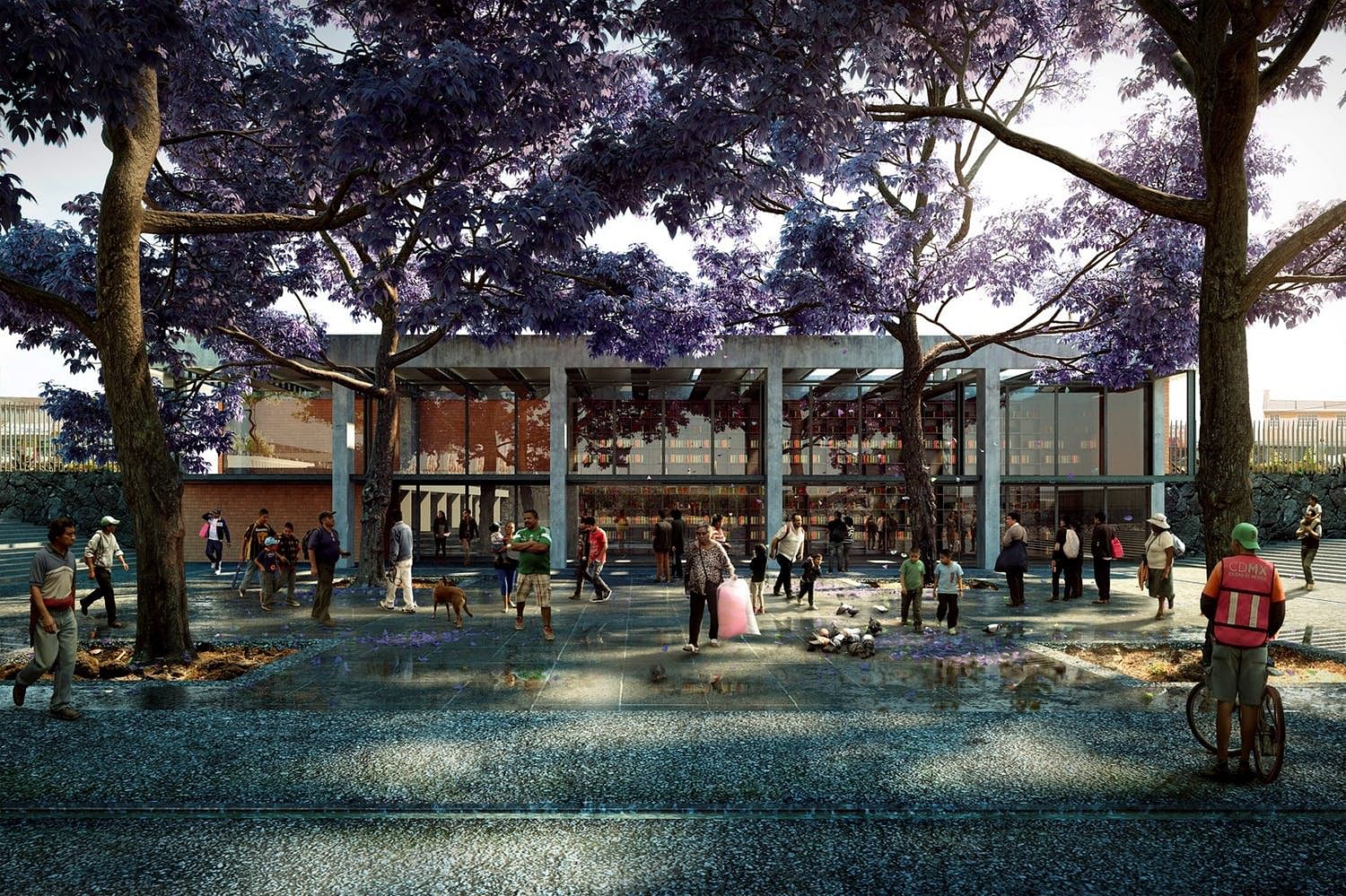
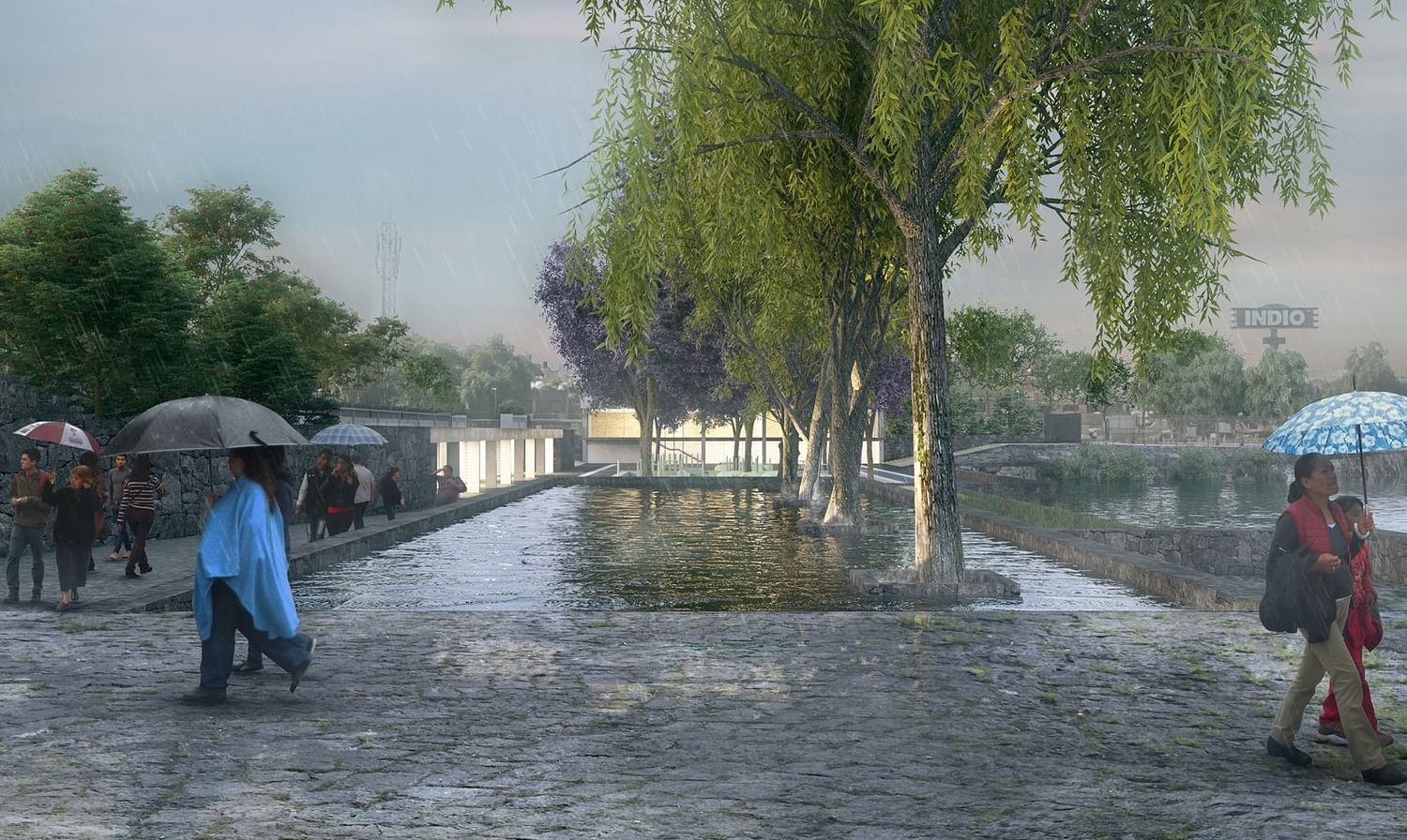
GOLD: Hydropuncture – Publicly accessible water retention and treatment complex in Mexico City, Mexico​ by Loreta Castro Reguera, Taller Capital; and Manuel Perló Cohen, Universidad Nacional Autónoma de México | Mexico City, Mexico​

Project summary: Serving a dense, impoverished neighborhood of Mexico City, this project combines much-needed water infrastructure with a new type of public space. Stepped terrain and a series of public buildings form a rich variety of courtyards. Low basins host wetlands and provide storage capacity to mitigate flooding during heavy rainfall. Upper levels move from soft landscape to hard paving, from park to plaza. By interweaving water management with public amenities, the project reintroduces water to the civic realm. More info.

SILVER: Legacy Restored – Religious and secular complex | Dandaji, Niger
By Mariam Kamara, atelier masomi, Niamey, Niger; and Yasaman Esmaili, studio chahar, Tehran, Iran

SILVER: Legacy Restored – Religious and secular complex in Dandaji, Niger by Mariam Kamara, atelier masomi, Niamey, Niger; and Yasaman Esmaili, studio chahar, Tehran, Iran

Project summary: The project for a religious and secular complex in the village of Dandaji promotes economic growth in the region through innovation in environmental technologies. The proposed new mosque as well as the restoration of an existing house of worship are accordingly conceived as test beds for sustainable research, exploring new techniques pertaining to the use of renewable resources – energy for heating and cooling, rainwater retention, temperature control, daylight, and natural ventilation. At the core of the scheme is the intention to establish a careful balance between the natural and fabricated realm – an objective most clearly expressed in the project’s landscape strategy, which aims to integrate the buildings into their natural setting. More info.

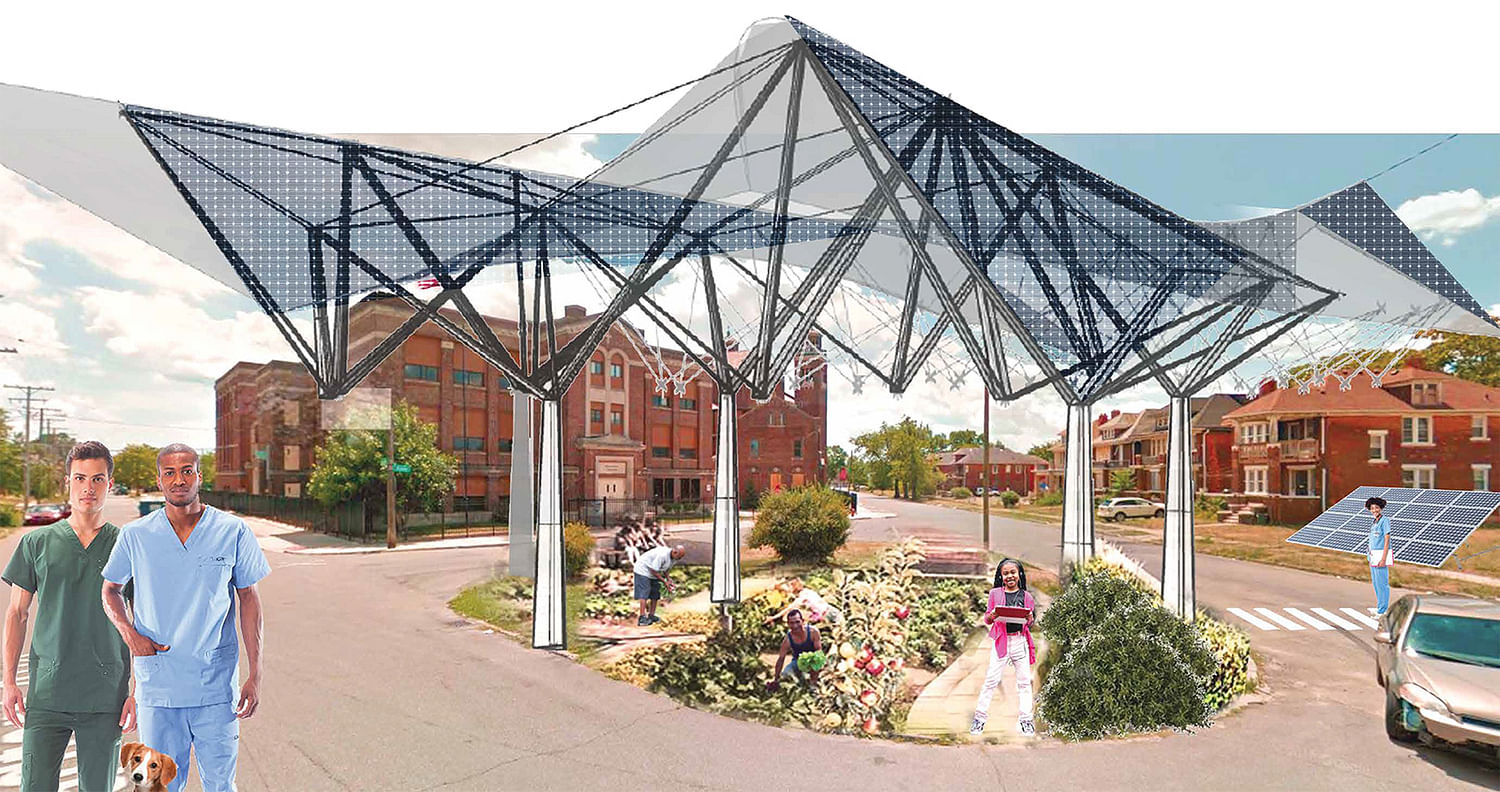
BRONZE: Grassroots Microgrid – Bottom-up neighborhood planning | Detroit, USA
By Constance C. Bodurow, studio[Ci], Detroit, USA, and a team of further authors

BRONZE: Grassroots Microgrid – Bottom-up neighborhood planning in Detroit, USA by Constance C. Bodurow, studio[Ci], Detroit, USA, and a team of further authors.

Project summary: The design proposal for a neighborhood in Detroit repositions infrastructure as a civic project, under the name of The Seebaldt Pilot (TSP). Building on longterm community engagement, the large group of collaborators proposes a pilot project for local energy and food production, water and waste management, and community empowerment. Solar photovoltaic canopies, rainwater collection, geothermal wells, and community gardens are stitched through the existing neighborhood on currently empty lots. The collectively owned and managed infrastructure is both a gathering point and a new revenue stream for additional community services and an enhanced public realm. More info.

LafargeHolcim Awards Ideas prize winners

Refrigerating Jar – Shea butter storage for Nyingali community, Karaga District, Ghana
By Wonjoon Han, Gahee Van, VHAN; and Sookhee Yuk, Make Africa Better, Seoul, South Korea

Refrigerating Jar – Shea butter storage for Nyingali community, Karaga District, Ghana. By Wonjoon Han, Gahee Van, VHAN; and Sookhee Yuk, Make Africa Better, Seoul, South Korea

Project summary: The striking storage tower for the Nyingali community is designed to induce a chimney effect to keep shea nuts cool and fresh before processing. By storing the nuts and processing them incrementally, the community will be able to sell processed shea butter for skin moisturizing when it commands a higher price in the market cycle. The base of the tower is a storage space with a double layer masonry construction designed to keep the interior cool. Its ceiling is made of glass foam, which is designed to act as a heat exchanger when damp. The volume above is cross-ventilated and draws hot air upwards. This project, which also includes a range of training programs, is part of a long-term engagement by the NGO Make Africa Better (MA ) to improve the production of shea butter in the village. The facilities are built in cooperation with volunteers from the village and the resulting structures are owned locally. More info.

Cooling Roof – Prototype for an evaporative roof for radiant cooling, Cherry Valley, CA, USA
By Georgina Baronian, Princeton University, Princeton, NJ, USA

Cooling Roof – Prototype for an evaporative roof for radiant cooling, Cherry Valley, CA, USA. By Georgina Baronian, Princeton University, Princeton, NJ, USA​

Project summary: Taking on the challenges of logistics centers at the periphery of cities as a point of the departure, the project unfolds as a research undertaking investigating the question of how to cool large structures with minimal means. With the objective in mind to reduce the building’s energy load, (particularly the deployment of non-renewable resources), a thin layer of water is introduced as an additional roof layer – acting as a solar reflector, while providing thermal insulation. Whereas technical considerations are at the core of the project, the study culminates in a design of a big box structure that is as reduced in its formal manifestation as it is beautiful in its aesthetic simplicity. More info.

Territorial Figure – Tidal energy landscape, Punta Loyola, Argentina.
By Stefano Romagnoli, Juan Cruz Serafini, and Tomás Pont Apóstolo, Universidad Nacional de Córdoba, Córdoba, Argentina

Territorial Figure – Tidal energy landscape, Punta Loyola, Argentina. By Stefano Romagnoli, Juan Cruz Serafini, and Tomás Pont Apóstolo, Universidad Nacional de Córdoba, Córdoba, Argentina​

Project summary: Addressing the potential ramifications of human-induced climate change on the natural environment, the authors propose an infrastructure for the use of tidal energy in Río Gallegos estuary at Punta Loyola in Argentina. Impressive in its territorial and geographic dimension, the project transcends the scales normally associated with the domains of architecture. This said, the design nonetheless is treated as an architectural intervention within the landscape, carefully designed as a figure drawn on water to incorporate a range of functions for humans, while providing an environment suitable for flora and fauna – a project merging infrastructure, landscape, and architecture in a magnificent natural setting. More info.

RELATED NEWS studio[Ci], Kennedy & Violich, Johnston Marklee among winners of 2017 LafargeHolcim Awards North America
RELATED NEWS Winners of the 2017 LafargeHolcim Awards Latin America competition
RELATED NEWS Eleven winners announced in LafargeHolcim Awards 2017 Europe competition
RELATED NEWS ​Eleven winners for LafargeHolcim Awards 2017's Middle East + Africa competition
RELATED NEWS Colombia, Sri Lanka, and U.S. projects win big in 2015 Holcim Awards
RELATED NEWS Global Holcim Award 2012 Winners Announced

Related

lafargeholcim ● global holcim awards ● holcim awards ● competition ● social issues ● humanitarian architecture ● environmental issues ● holcim

Share

  • Follow

    0 Comments

  • Comment as :

Women-led teams win 2018 Global LafargeHolcim Awards + inaugural Ideas Prize winners announced

10 standout sustainable projects honored at AIA COTE Top Ten Award 2026

Best residential architecture of 2026 honored at AIA Housing Award

Best new interiors of 2026 chosen at AIA Interior Architecture Awards

Best global architecture honored at RIBA International Awards 2026

World’s most beautiful airports of 2026 chosen by Prix Versailles

New architecture and design competitions: Brick in Architecture Awards, Study Architecture Student Showcase, N.Y.C. Groceries, and New York High Falls Riverfront Market

SmithGroup’s ‘pioneering’ Philip Merrill Environmental Center wins AIA Twenty-five Year Award

Sponsored Post by Buildner

Museum of Emotions / Edition #8 FINAL registration deadline is in 5 DAYS!

Sign up for Bustler's Email Newsletters

Here are the winners of the 2026 AIA Architecture Awards

40 emerging architects and designers under 40 from Europe honored

Northwestern University selects 12-firm longlist to design new engineering building

New architecture and design competitions: Exploring 130 Years of American Design, Christo & Jeanne-Claude Center, 13 White Houses, and La Pyramide

Micro-architecture honored in latest Tiny House Architecture Competition

World’s most beautiful restaurants of 2026 chosen by Prix Versailles

Sponsored Post by Buildner

Design a wine tasting room in Italy! Valli Wine Tasting Room is launched!

Next page » Loading

Women-led teams win 2018 Global LafargeHolcim Awards + inaugural Ideas Prize winners announced

By Justine Testado|

Thursday, Mar 29, 2018

Share

GOLD: Hydropuncture – Publicly accessible water retention and treatment complex in Mexico City, Mexico​ by Loreta Castro Reguera, Taller Capital; and Manuel Perló Cohen, Universidad Nacional Autónoma de México | Mexico City, Mexico​

Related

lafargeholcim ● global holcim awards ● holcim awards ● competition ● social issues ● humanitarian architecture ● environmental issues ● holcim

The 2018 Global LafargeHolcim Awards competition was as big as ever, attracting more than 5,000 submissions this time around. When the regional competition winners were selected, the 15 regional finalists went on to compete for the big global prizes. The global awards jury awarded the gold, silver, and bronze cash prizes to projects in Mexico, Niger, and the U.S., respectively. Plus, as diverse as the winning projects are, they were all designed by teams led by women.

For the first time, the jury picked three LafargeHolcim Awards Ideas cash prizes out of the 40 Acknowledgement- and Next Generation-winning projects, which were selected during regional competitions. “We felt that they offer exciting and novel ideas, even within proposals that are not yet fully developed,” jury head Alejandro Aravena stated. The prizes went to “Refrigerating Jar” in Ghana, “Cooling Roof” in California, and “Territorial Figure” in Argentina.  

Read on to see the winning projects.

GOLD: Hydropuncture – Publicly accessible water retention and treatment complex | Mexico City, Mexico
By Loreta Castro Reguera, Taller Capital; and Manuel Perló Cohen, Universidad Nacional Autónoma de México | Mexico City, Mexico
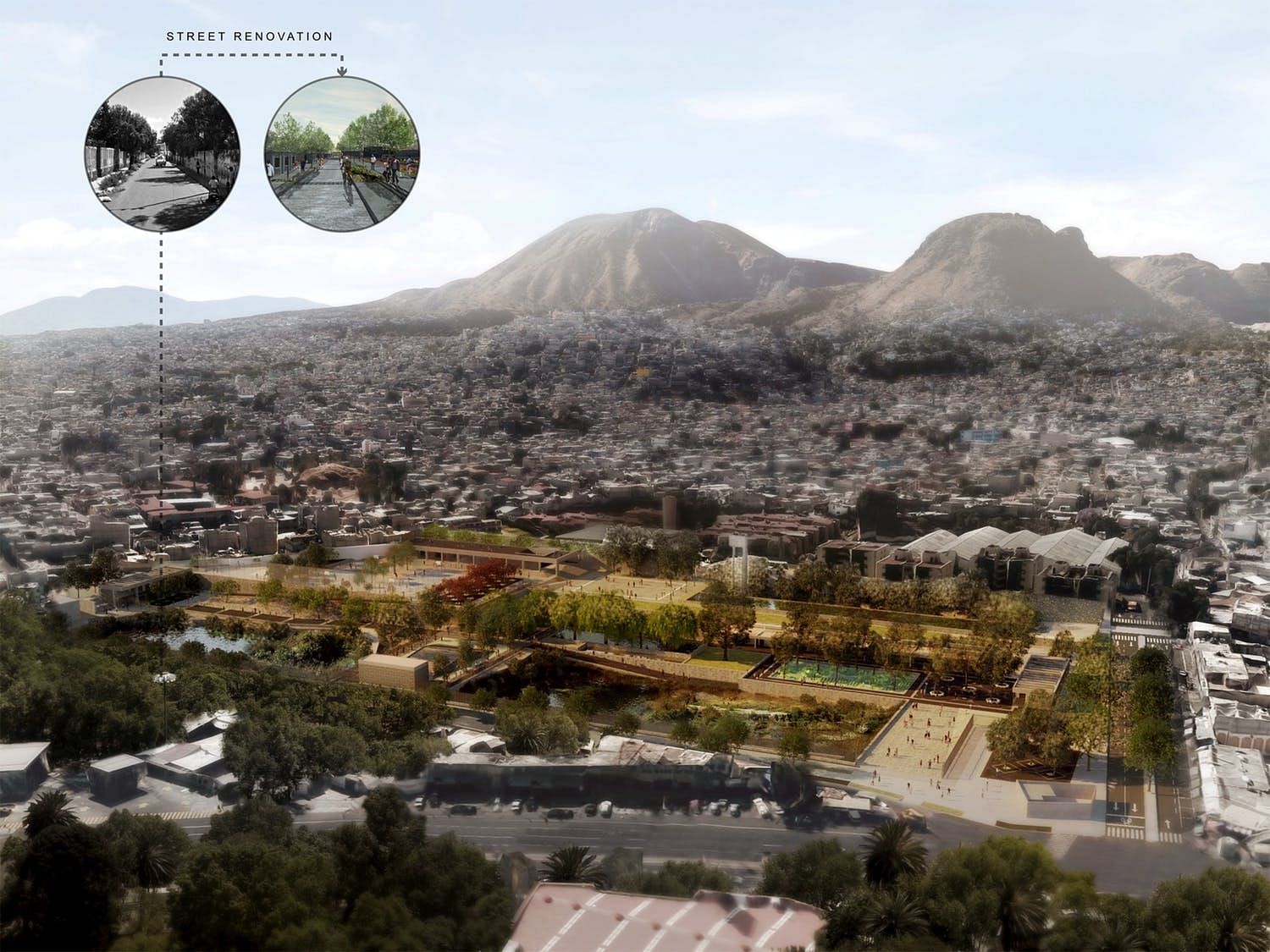
GOLD: Hydropuncture – Publicly accessible water retention and treatment complex in Mexico City, Mexico​ by Loreta Castro Reguera, Taller Capital; and Manuel Perló Cohen, Universidad Nacional Autónoma de México | Mexico City, Mexico​

Project summary: Serving a dense, impoverished neighborhood of Mexico City, this project combines much-needed water infrastructure with a new type of public space. Stepped terrain and a series of public buildings form a rich variety of courtyards. Low basins host wetlands and provide storage capacity to mitigate flooding during heavy rainfall. Upper levels move from soft landscape to hard paving, from park to plaza. By interweaving water management with public amenities, the project reintroduces water to the civic realm. More info.

SILVER: Legacy Restored – Religious and secular complex | Dandaji, Niger
By Mariam Kamara, atelier masomi, Niamey, Niger; and Yasaman Esmaili, studio chahar, Tehran, Iran
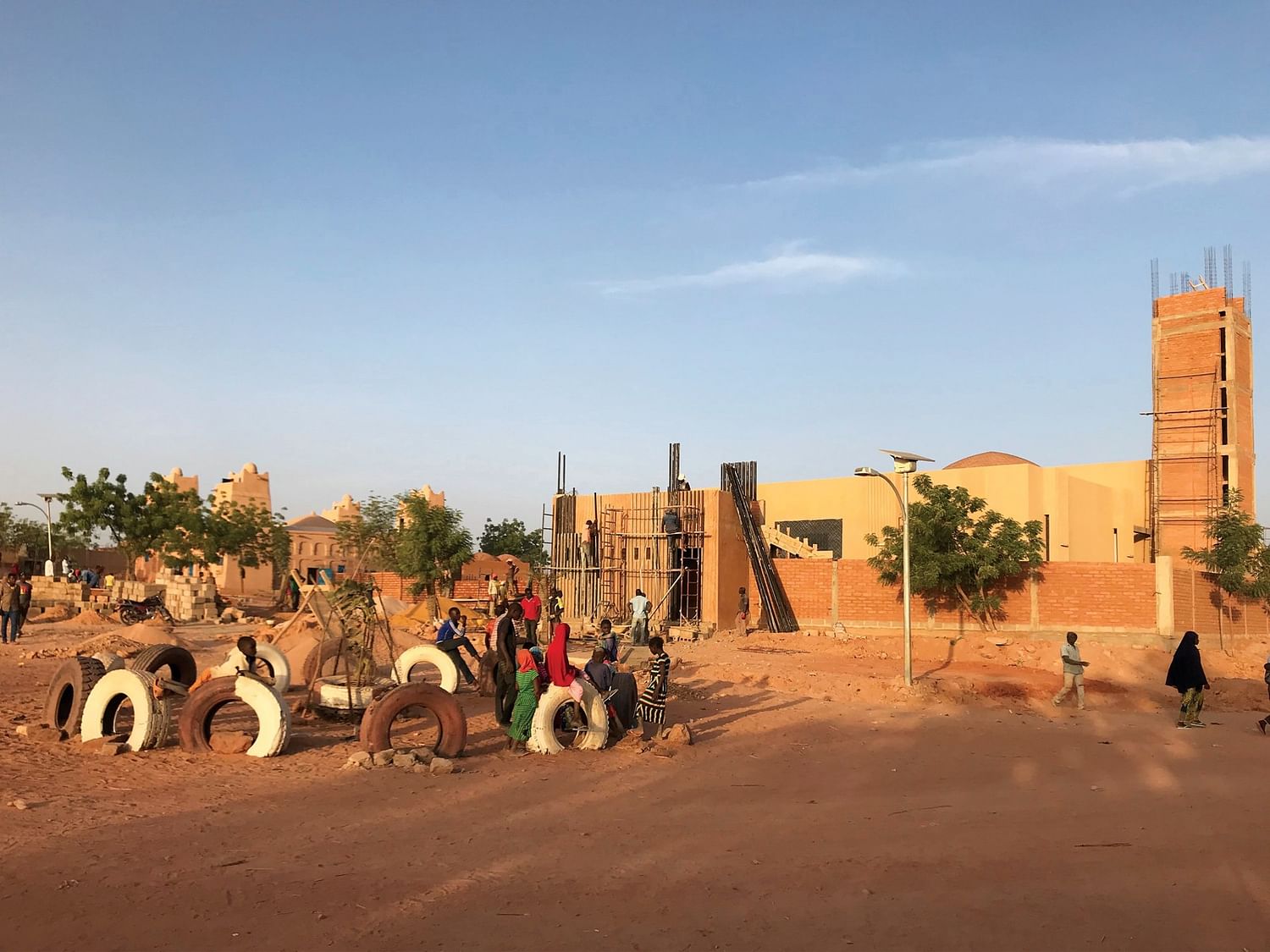
SILVER: Legacy Restored – Religious and secular complex in Dandaji, Niger by Mariam Kamara, atelier masomi, Niamey, Niger; and Yasaman Esmaili, studio chahar, Tehran, Iran
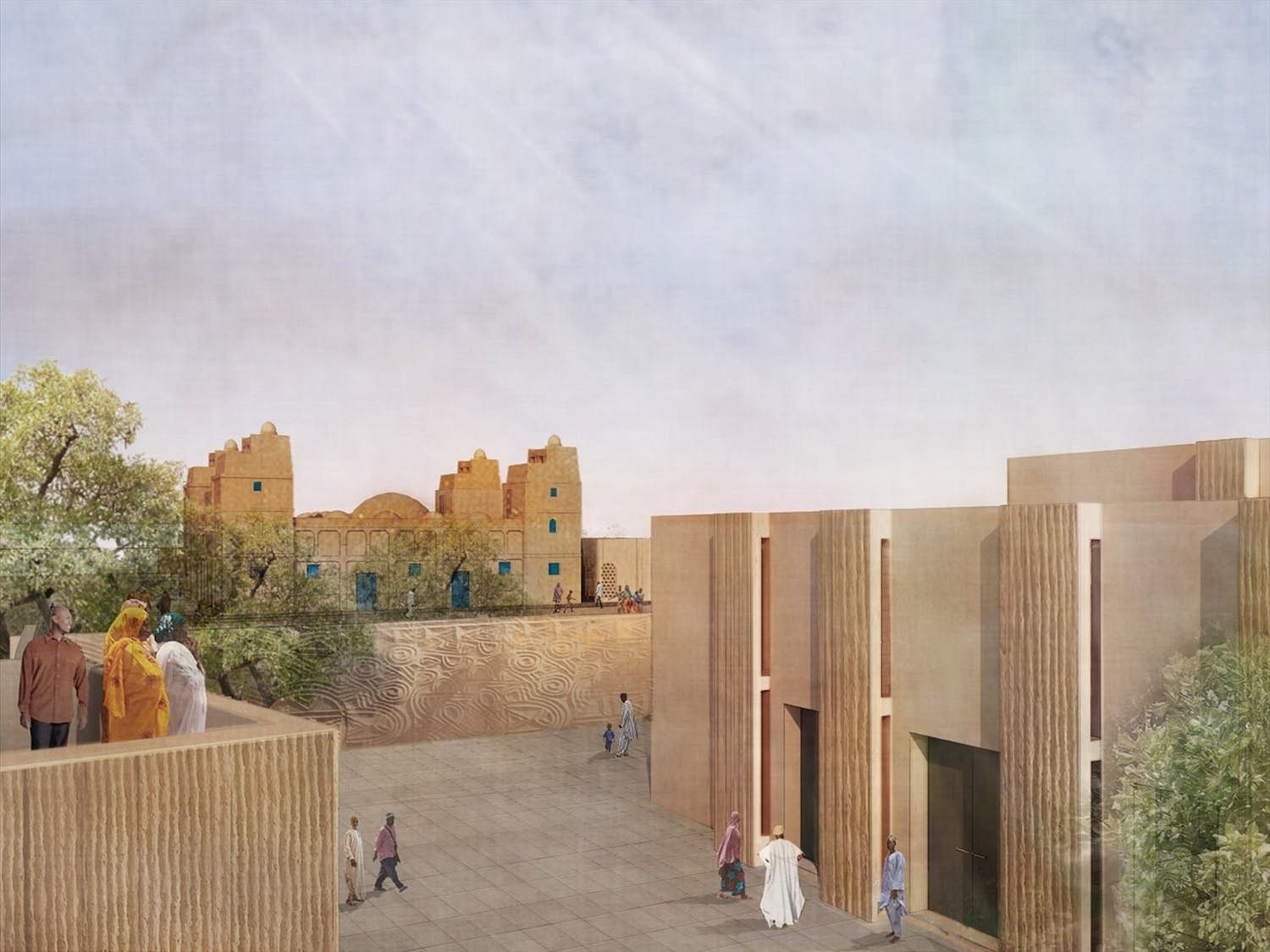
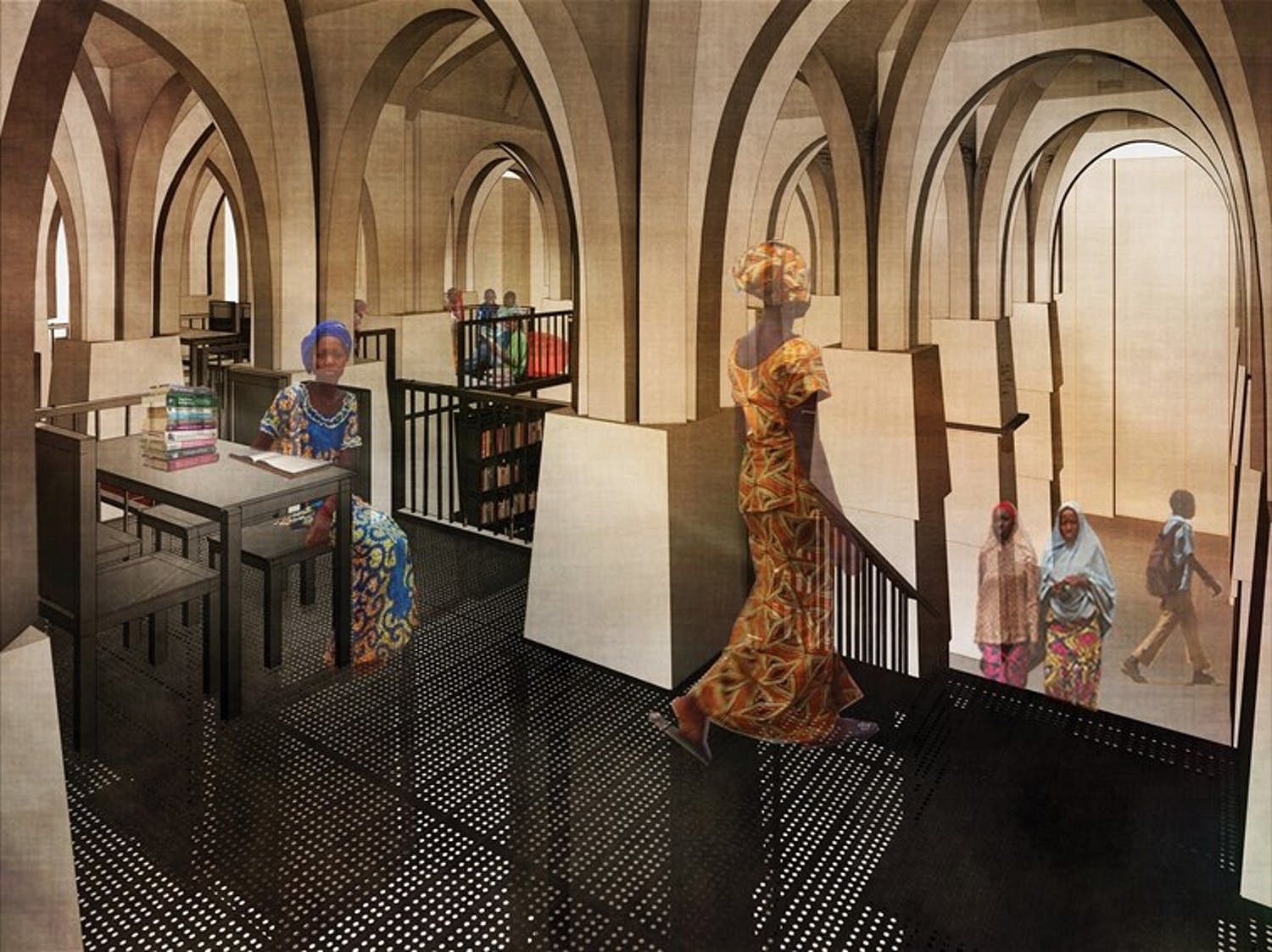

Project summary: The project for a religious and secular complex in the village of Dandaji promotes economic growth in the region through innovation in environmental technologies. The proposed new mosque as well as the restoration of an existing house of worship are accordingly conceived as test beds for sustainable research, exploring new techniques pertaining to the use of renewable resources – energy for heating and cooling, rainwater retention, temperature control, daylight, and natural ventilation. At the core of the scheme is the intention to establish a careful balance between the natural and fabricated realm – an objective most clearly expressed in the project’s landscape strategy, which aims to integrate the buildings into their natural setting. More info.

BRONZE: Grassroots Microgrid – Bottom-up neighborhood planning | Detroit, USA
By Constance C. Bodurow, studio[Ci], Detroit, USA, and a team of further authors
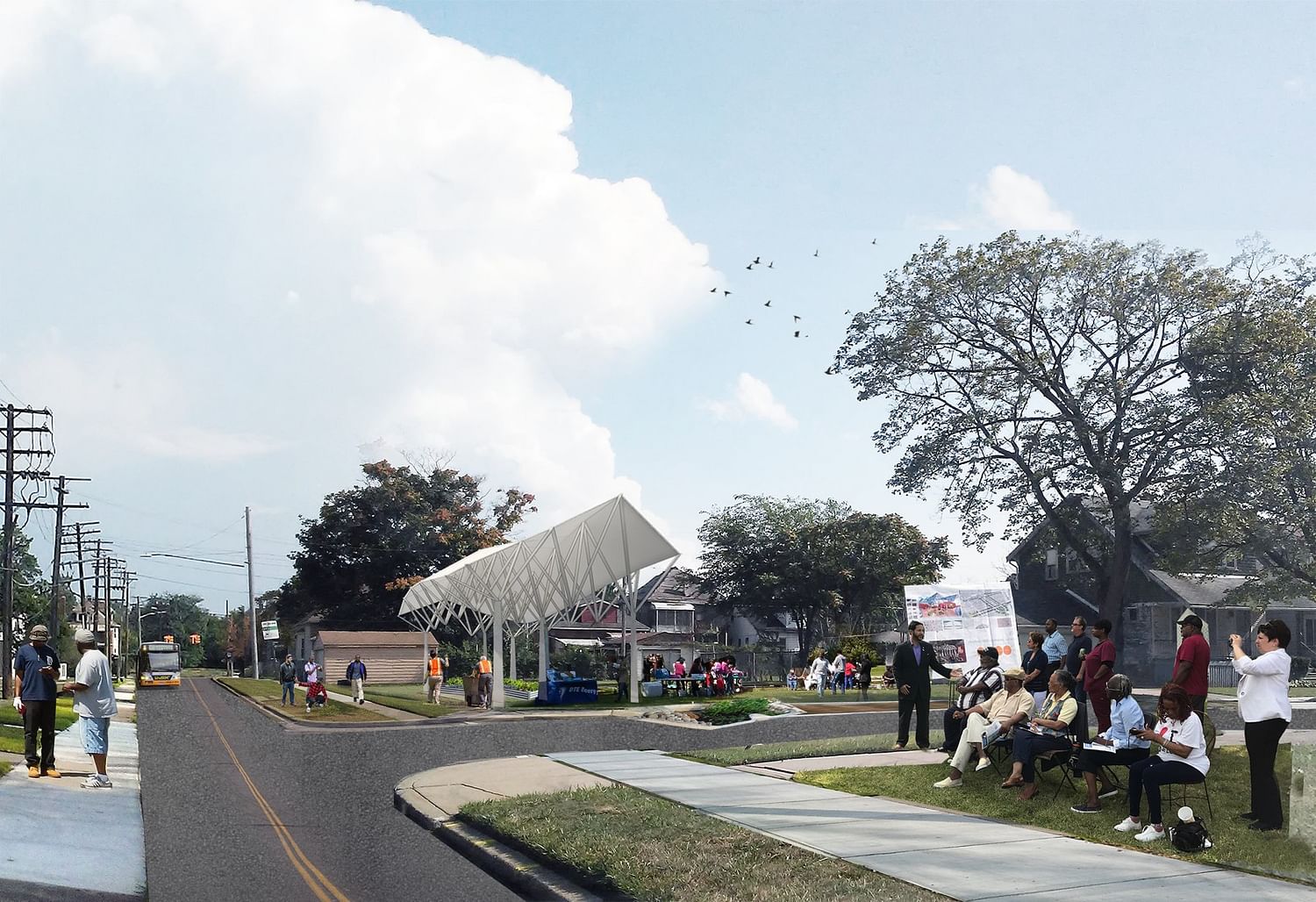
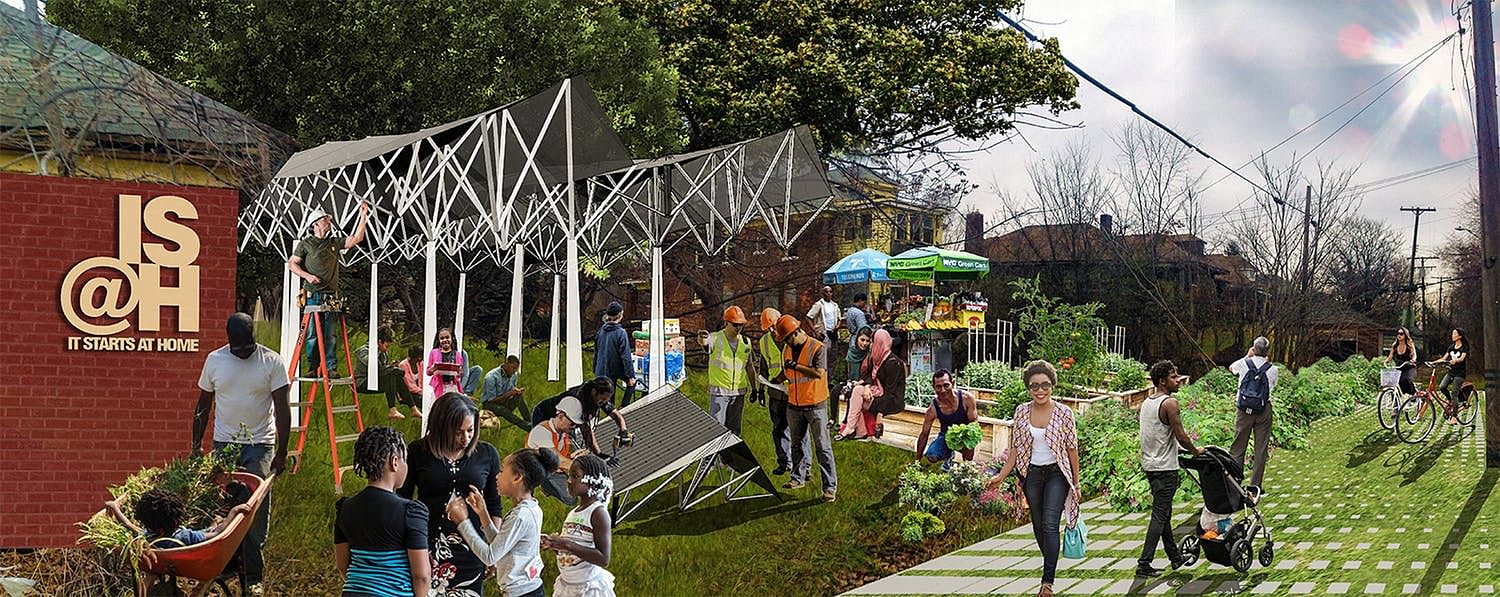
BRONZE: Grassroots Microgrid – Bottom-up neighborhood planning in Detroit, USA by Constance C. Bodurow, studio[Ci], Detroit, USA, and a team of further authors.

Project summary: The design proposal for a neighborhood in Detroit repositions infrastructure as a civic project, under the name of The Seebaldt Pilot (TSP). Building on longterm community engagement, the large group of collaborators proposes a pilot project for local energy and food production, water and waste management, and community empowerment. Solar photovoltaic canopies, rainwater collection, geothermal wells, and community gardens are stitched through the existing neighborhood on currently empty lots. The collectively owned and managed infrastructure is both a gathering point and a new revenue stream for additional community services and an enhanced public realm. More info.

LafargeHolcim Awards Ideas prize winners

Refrigerating Jar – Shea butter storage for Nyingali community, Karaga District, Ghana
By Wonjoon Han, Gahee Van, VHAN; and Sookhee Yuk, Make Africa Better, Seoul, South Korea
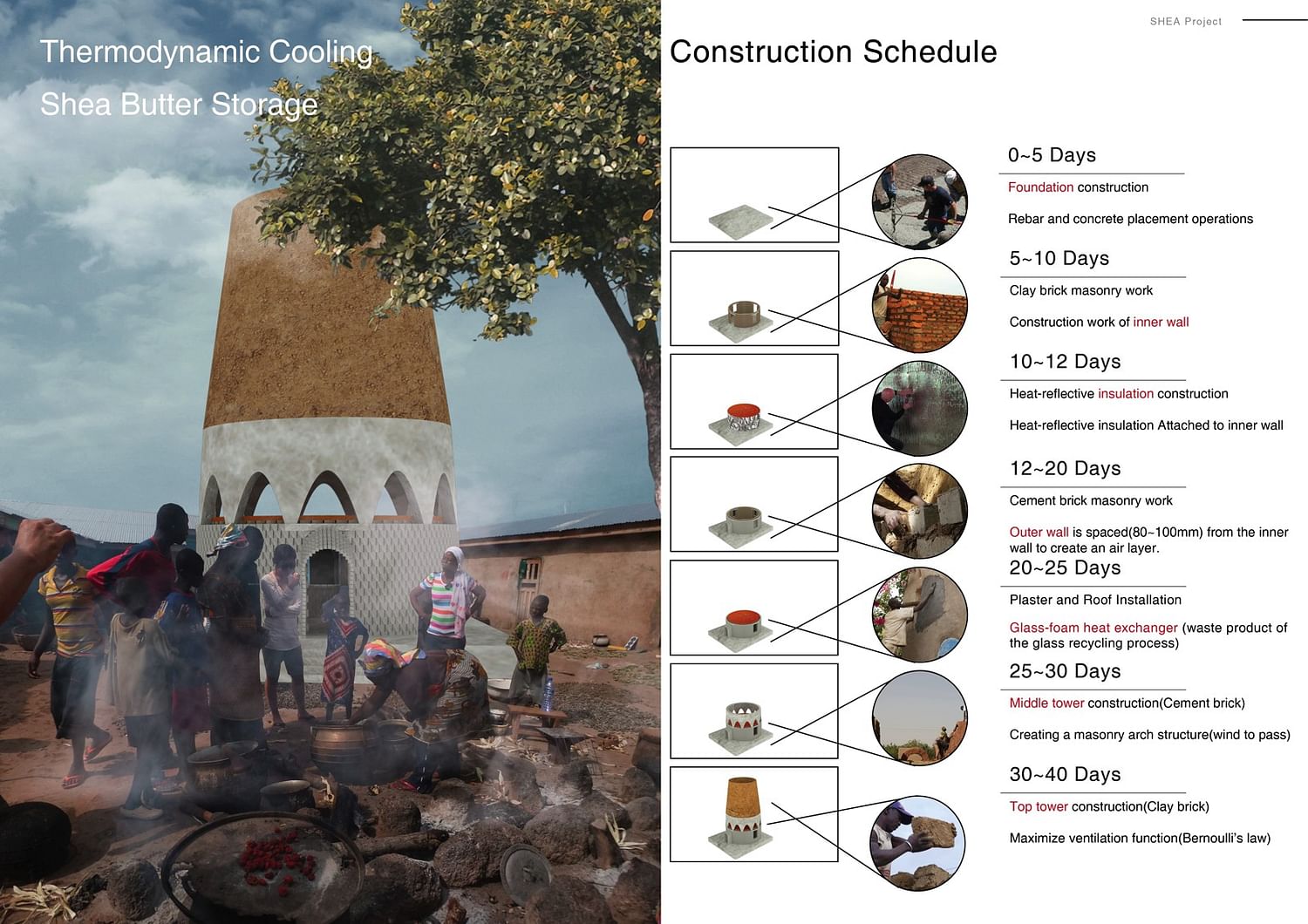
Refrigerating Jar – Shea butter storage for Nyingali community, Karaga District, Ghana. By Wonjoon Han, Gahee Van, VHAN; and Sookhee Yuk, Make Africa Better, Seoul, South Korea

Project summary: The striking storage tower for the Nyingali community is designed to induce a chimney effect to keep shea nuts cool and fresh before processing. By storing the nuts and processing them incrementally, the community will be able to sell processed shea butter for skin moisturizing when it commands a higher price in the market cycle. The base of the tower is a storage space with a double layer masonry construction designed to keep the interior cool. Its ceiling is made of glass foam, which is designed to act as a heat exchanger when damp. The volume above is cross-ventilated and draws hot air upwards. This project, which also includes a range of training programs, is part of a long-term engagement by the NGO Make Africa Better (MA ) to improve the production of shea butter in the village. The facilities are built in cooperation with volunteers from the village and the resulting structures are owned locally. More info.

Cooling Roof – Prototype for an evaporative roof for radiant cooling, Cherry Valley, CA, USA
By Georgina Baronian, Princeton University, Princeton, NJ, USA

Cooling Roof – Prototype for an evaporative roof for radiant cooling, Cherry Valley, CA, USA. By Georgina Baronian, Princeton University, Princeton, NJ, USA​

Project summary: Taking on the challenges of logistics centers at the periphery of cities as a point of the departure, the project unfolds as a research undertaking investigating the question of how to cool large structures with minimal means. With the objective in mind to reduce the building’s energy load, (particularly the deployment of non-renewable resources), a thin layer of water is introduced as an additional roof layer – acting as a solar reflector, while providing thermal insulation. Whereas technical considerations are at the core of the project, the study culminates in a design of a big box structure that is as reduced in its formal manifestation as it is beautiful in its aesthetic simplicity. More info.

Territorial Figure – Tidal energy landscape, Punta Loyola, Argentina.
By Stefano Romagnoli, Juan Cruz Serafini, and Tomás Pont Apóstolo, Universidad Nacional de Córdoba, Córdoba, Argentina
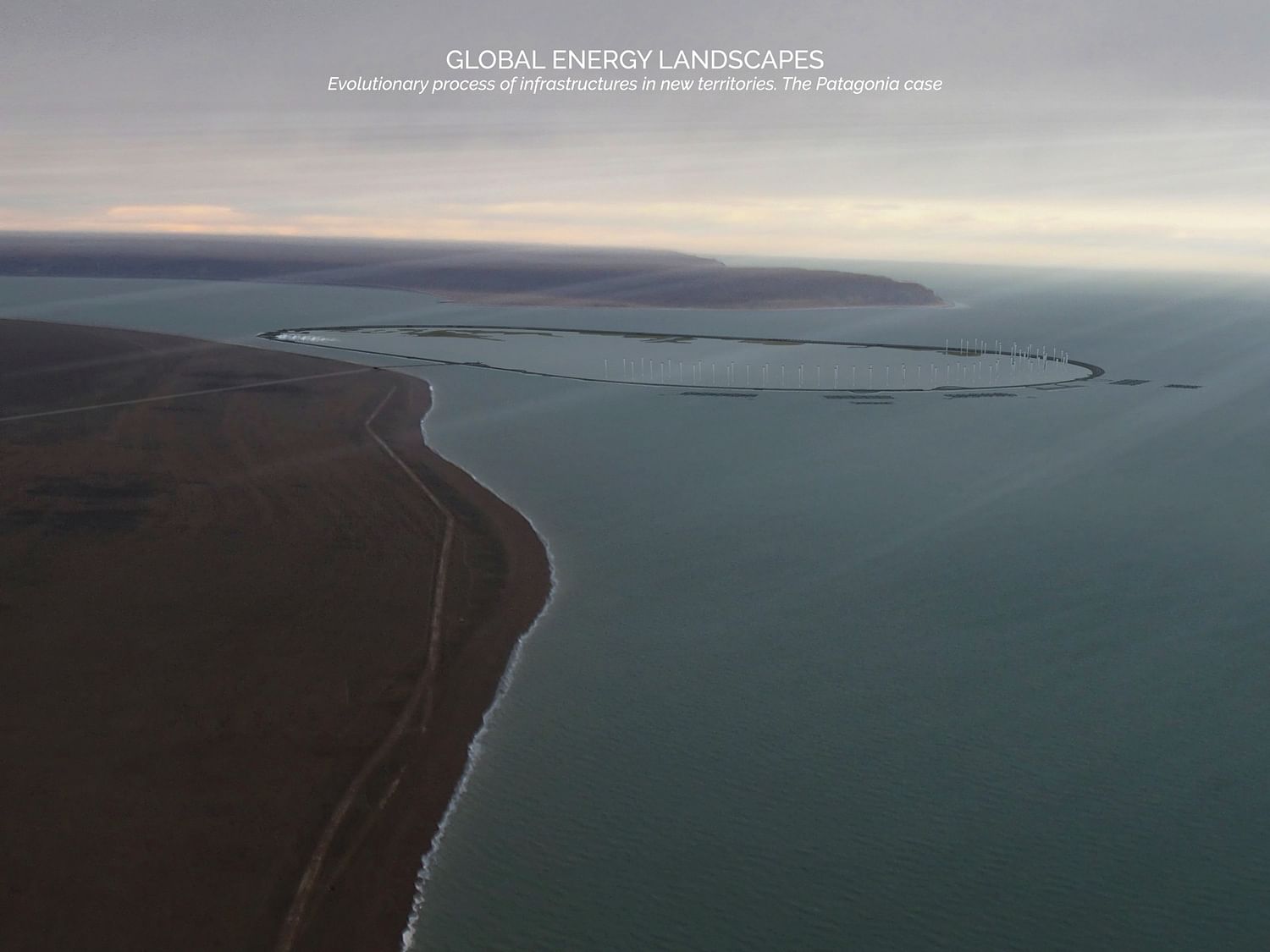
Territorial Figure – Tidal energy landscape, Punta Loyola, Argentina. By Stefano Romagnoli, Juan Cruz Serafini, and Tomás Pont Apóstolo, Universidad Nacional de Córdoba, Córdoba, Argentina​

Project summary: Addressing the potential ramifications of human-induced climate change on the natural environment, the authors propose an infrastructure for the use of tidal energy in Río Gallegos estuary at Punta Loyola in Argentina. Impressive in its territorial and geographic dimension, the project transcends the scales normally associated with the domains of architecture. This said, the design nonetheless is treated as an architectural intervention within the landscape, carefully designed as a figure drawn on water to incorporate a range of functions for humans, while providing an environment suitable for flora and fauna – a project merging infrastructure, landscape, and architecture in a magnificent natural setting. More info.

RELATED NEWS studio[Ci], Kennedy & Violich, Johnston Marklee among winners of 2017 LafargeHolcim Awards North America
RELATED NEWS Winners of the 2017 LafargeHolcim Awards Latin America competition
RELATED NEWS Eleven winners announced in LafargeHolcim Awards 2017 Europe competition
RELATED NEWS ​Eleven winners for LafargeHolcim Awards 2017's Middle East + Africa competition
RELATED NEWS Colombia, Sri Lanka, and U.S. projects win big in 2015 Holcim Awards
RELATED NEWS Global Holcim Award 2012 Winners Announced

Share

  • Follow

    0 Comments

  • Comment as :

Archinect JobsArchinect Jobs

The Archinect Job Board attracts the world's top architectural design talents.

VIEW ALL JOBS POST A JOB

Architect / Project Manager

Curtis + Ginsberg Architects LLP

Architect / Project Manager

New York, NY, US

Architectural team Memeber

Meraki Architects, LLC

Architectural team Memeber

Middleburg Heights, OH, US

Senior Associate/ Project Manager

DWY Landscape Architects

Senior Associate/ Project Manager

Sarasota, FL, US

Project Architect

AYON Studio

Project Architect

New York, NY, US

Architect / Architectural Designer (3-5 years experience)

Resolution: 4 Architecture

Architect / Architectural Designer (3-5 years experience)

New York, NY, US

Project Manager / Project Architect (5–10 Years’ Experience)

Millan Architect / Studio Inc.

Project Manager / Project Architect (5–10 Years’ Experience)

Venice, CA, US

Intermediate Architect

GF55 Architects

Intermediate Architect

New York, NY, US

Architecture & Design Manager

7th Street Burger

Architecture & Design Manager

New York, NY, US

Project Architect/ Designer

Nandinee Phookan Architect, P.C.

Project Architect/ Designer

New York, NY, US

Junior Designer

Shadow Architect, P.C.

Junior Designer

New York, NY, US

Next page » Loading