• Login / Join
  • About
  • •
  • Contact
  • •
  • Advertising
bustler logo
bustler logo
  • News
  • Competitions
  • Events
  • Bustler is powered by Archinect
  • Sign up for Bustler's Email Newsletters

  • Follow these Bustler feeds:

  • Search

    Search in

  • Submit

    What are you submitting?

    News Pitch
    Competition
    Event
  • Login / Join
  • News|Competitions|Events
  • Search
    | Submit
    | Follow
  • Search in

    What are you submitting?

    News Pitch
    Competition
    Event

    Follow these Bustler feeds:

  • About|Contact|Advertising
  • Login / Join

Kwong Von Glinow's Moon Gate-inspired “Gateways to Chinatown” competition entry

By Justine Testado|

Friday, Jan 12, 2018
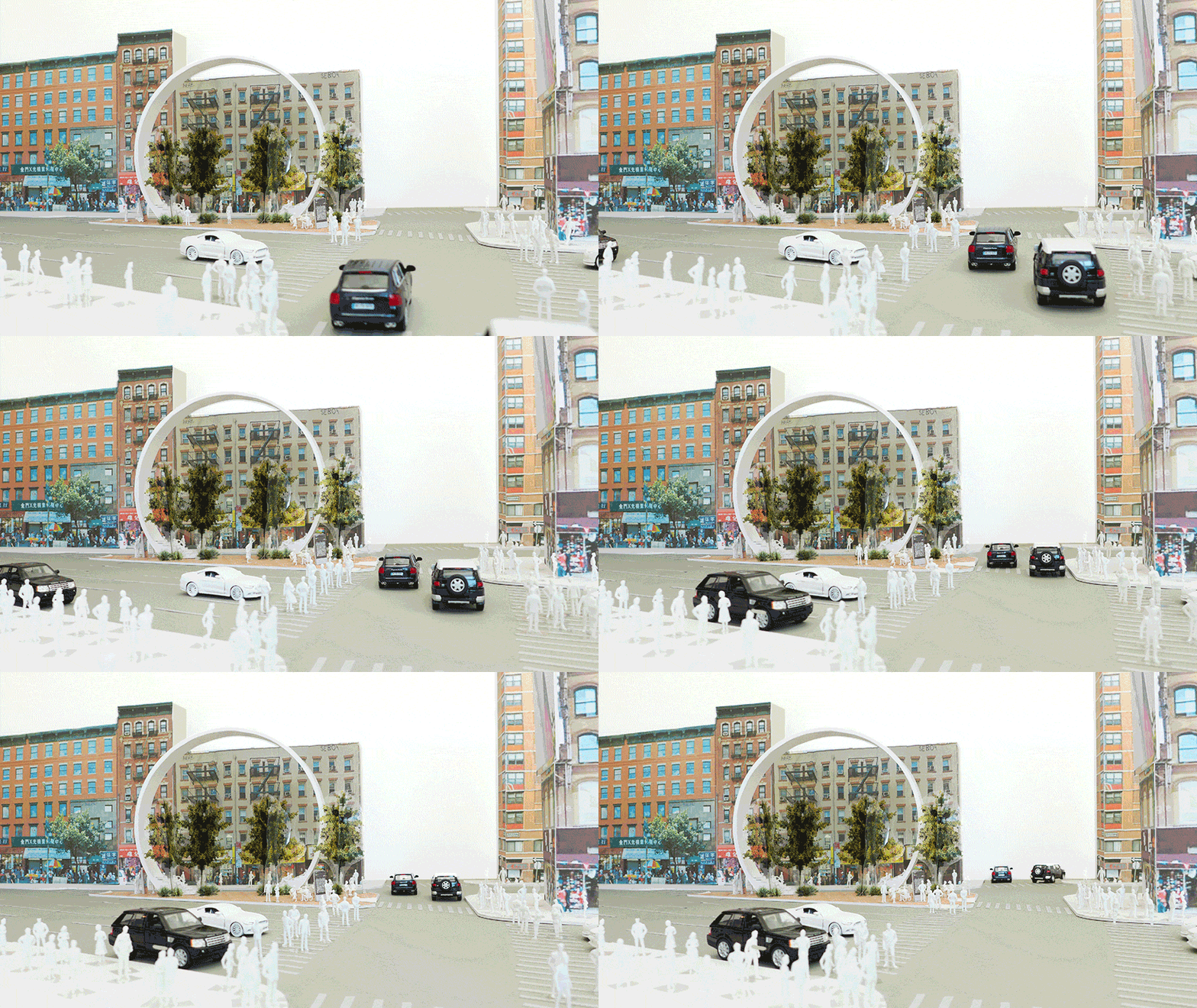
The Gateway will act as a threshold, a boundary, and an icon that speaks both to and for the greater New York community. Image © Kwong Von Glinow Design Office.

Kwong Von Glinow Design Office was one of the many teams who took part in the Gateways to Chinatown competition (the winners are still yet to be announced). Co-launched by the New York City Department of Transportation, the Chinatown Partnership, and Van Alen Institute, the competition sought the best design proposal for a new neighborhood landmark along Canal Street. Located between Manhattan's Chinatown and the southern entrance to Little Italy’s Mott Street, Canal Street is one of New York City's busiest thoroughfares.

Kwong Von Glinow shared their competition entry (which didn't win) with Bustler. Check it out below.
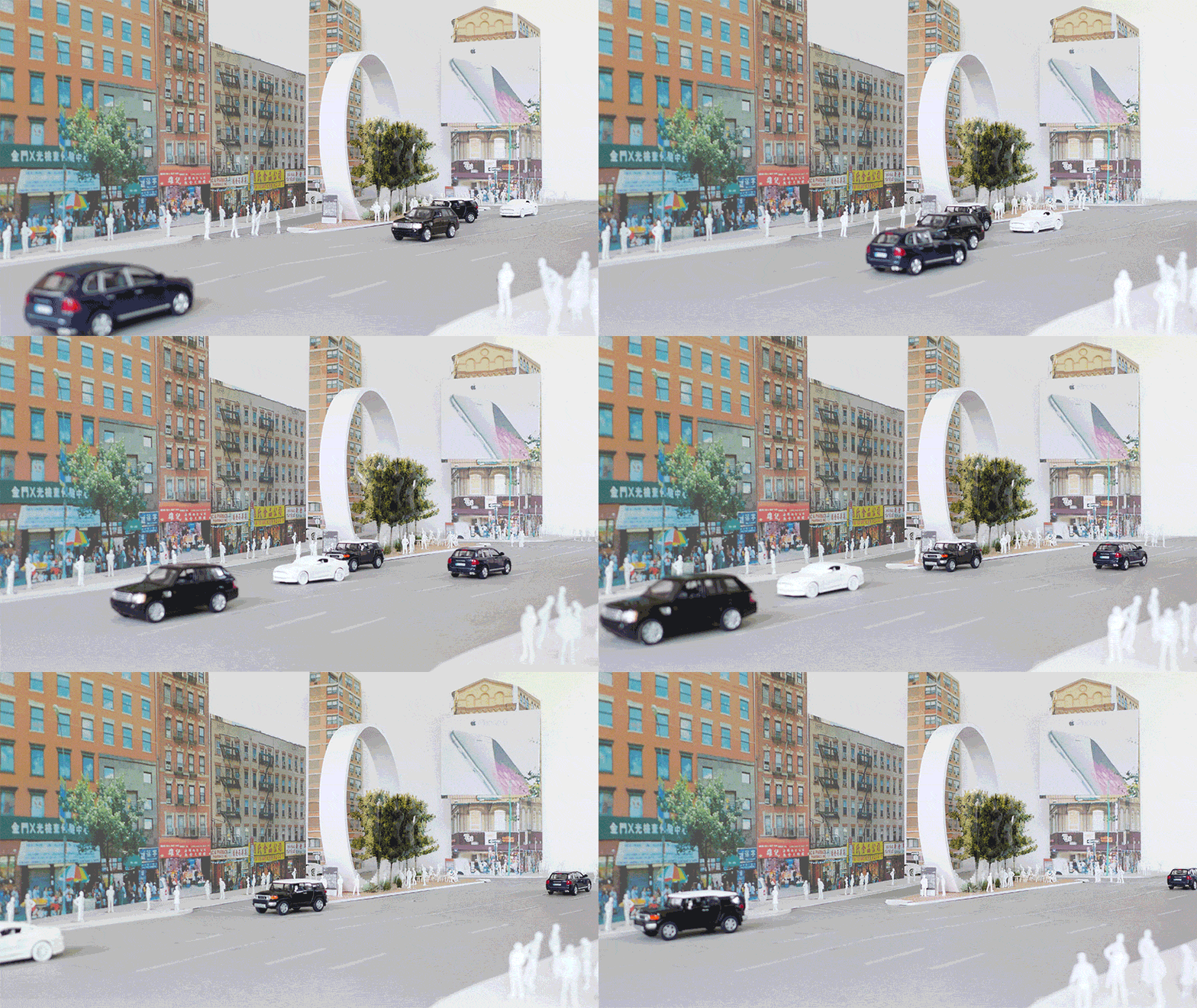
Immediately iconic, the Archway’s distinctive silhouette also serves as a wayfinding beacon bridging Chinatown and Little Italy. Image © Kwong Von Glinow Design Office.

Project description:

“Manhattan’s Chinatown is alone among the major Chinese enclaves in the United States not to have a proper gateway.  Inspired by the Moon Gate’s duality as gateway and window, we are inspired to reimagine the Chinatown Gateway as a circular archway. Standing 48’ tall, this archway greets visitors to Chinatown to a unique circular form - the universal symbol of inclusion and harmony. Balancing respect for Chinese design heritage and serving an expanded role as a marker not just for Chinatown but Lower Manhattan at large, the Gateway captures the ever-changing streetscapes of Chinatown and its vicinity within its portal.

Labeled an ‘under-utilized area’ in the 1976 revitalization study, the Canal Street Triangle remains an island more than forty years later, whose unique geometry offers both challenges and opportunities for a new kind of gateway – one that is a tourist attraction, an urban icon, and most importantly, a place for the communities of Chinatown and its vicinity to gather and enjoy public space.  The Chinatown Gateway’s design draws upon three core design principles:”

It can serve as a lasting icon to celebrate the various cultures that have contributed to this vibrant community. Image © Kwong Von Glinow Design Office.

“Traditional yet Transformative: A staple of classical Chinese architecture, the Moon Gate captures lush garden landscapes within its circular frame. Inspired by the Moon Gate’s duality as gateway and window, we are inspired to reimagine the Chinatown Gateway as a circular archway. Standing 48’ tall, this archway greets visitors to Chinatown to a unique circular form - the universal symbol of inclusion and harmony. Balancing respect for Chinese design heritage and serving an expanded role as a marker not just for Chinatown but Lower Manhattan at large, the Gateway captures the ever-changing streetscapes of Chinatown and its vicinity within its portal.”

Views to the Chinatown Archway are far-reaching. Image © Kwong Von Glinow Design Office.

“Iconic yet Welcoming: The Gateway is monumental without sacrificing humanism: too often, “iconic” public spaces intimidate rather than accommodate. The Chinatown Gateway draws upon history to look to the future. It is a new urban icon that does not merely mark the entrance to Chinatown but stands as a unifying beacon for the entire neighborhood.  Nestled within the Gateway is seating for 40, a performance space, and a garden containing the 5 Gingko trees currently on site. Bleacher seating on either side of the archway brings together a sheltered plaza for cultural events.  Located in the garden of the Canal Street Triangle are two information totems that leverage the successful existing WalkNYC wayfinding system while providing a customized display on the flipside in English, Mandarin, and Cantonese for the local community.”

Inspired by the Moon Gate’s duality as gateway and window, we are inspired to re-imagine the Chinatown Gateway as a circular archway - a portal to our collective Chinatown experience. Image © Kwong Von Glinow Design Office.
The Canal Street Triangle with surrounding neighborhoods Tribeca, Little Italy, and the Lower East Side. Image © Kwong Von Glinow Design Office.

“Flexible and Efficient: Eschewing predetermined programming for flexibility, the Archway is future-proofed against obsolescence. Arrayed along its underside are hooks from which banners, lanterns, and other devices could be hung. This activates the Gateway throughout the year: from the Spring Lantern Festival to the Mid-Autumn Festival, and Christmas, allowing it to host a wide range of events and communicate these festivities on a larger urban scale. While simple, the Gateway is not low-tech: embedded on its outer surface is a cost-effective but crowd-pleasing interactive lighting system that responds to visitor’s motions via an app. The Archway thus becomes more than a gate to Chinatown but a destination unto itself.  A modular system of construction reduces time and cost of construction. Prefabricated off-site in Brooklyn, 50 aluminum modules make up the Gateway, each a 8’x3’x’1’ “brick” that will be assembled into the full Gateway within two weeks.”

The circular form captures the urban life of the traffic triangle. It frames the passer-bys, the ginko trees that form an urban garden, and the festive banners that seasonally decorate its interior. Image © Kwong Von Glinow Design Office.
An array of lanterns during the Chinese Lantern Festival. Image © Kwong Von Glinow Design Office.

Status: Competition Entry
Location: Chinatown, NY, US
Additional Credits: Team: Kwong Von Glinow Design Office
Lap Chi Kwong
Alison Von Glinow
Chieh Chih Chiang
Winee Lau
In collaboration with Justin Donnelly
With consultants: Patten Studio, Silman Structural Engineers

Images and project text courtesy of Kwong Von Glinow Design Office.

Find more project images in the gallery below. You can also check out Kwong Von Glinow's previous competition winning entries.

RELATED NEWS Gateways to Chinatown — Submit your proposals for a new district landmark in NYC's Chinatown
RELATED COMPETITION Gateways to Chinatown
RELATED NEWS Closer look at 2016 Chicago Prize: On the Edge winner, “Lattices on the Drive”
RELATED NEWS Closer look: “The Table Top Apartments” by Kwong Von Glinow Design Office, 1st-place winner of NY Affordable Housing Challenge
RELATED NEWS From vertical villages to Metabolist-inspired towers — the ​Hong Kong Pixel Homes winners reimagine modular living

Related

new york ● kwong von glinow ● gateway ● chinatown ● new york city ● landmark ● competition ● van alen institute ● usa ● little italy ● community
Kwong Von Glinow
Kwong Von Glinow

Share

  • Follow

    0 Comments

  • Comment as :

Kwong Von Glinow's Moon Gate-inspired “Gateways to Chinatown” competition entry

Over $500,000 awarded to architectural discourse projects by Graham Foundation

Best in urban planning recognized at AIA Regional & Urban Design Award 2026

Sponsored Post by Buildner

Re:Form - New Life for Old Spaces / Edition #3 advance registration deadline is approaching!

New architecture and design competitions: IDEAS Awards, UIA-HYP CUP International Student Competition, Vancouver Tall Challenge, and Memorial to the Sixth Extinction

Best small projects chosen at AIA Small Project Award 2026

10 standout sustainable projects honored at AIA COTE Top Ten Award 2026

Best residential architecture of 2026 honored at AIA Housing Award

Best new interiors of 2026 chosen at AIA Interior Architecture Awards

Sign up for Bustler's Email Newsletters

Best global architecture honored at RIBA International Awards 2026

World’s most beautiful airports of 2026 chosen by Prix Versailles

New architecture and design competitions: Brick in Architecture Awards, Study Architecture Student Showcase, N.Y.C. Groceries, and New York High Falls Riverfront Market

SmithGroup’s ‘pioneering’ Philip Merrill Environmental Center wins AIA Twenty-five Year Award

Sponsored Post by Buildner

Museum of Emotions / Edition #8 FINAL registration deadline is in 5 DAYS!

Here are the winners of the 2026 AIA Architecture Awards

40 emerging architects and designers under 40 from Europe honored

Next page » Loading

Kwong Von Glinow's Moon Gate-inspired “Gateways to Chinatown” competition entry

By Justine Testado|

Friday, Jan 12, 2018

Share

The Gateway will act as a threshold, a boundary, and an icon that speaks both to and for the greater New York community. Image © Kwong Von Glinow Design Office.

Related

new york ● kwong von glinow ● gateway ● chinatown ● new york city ● landmark ● competition ● van alen institute ● usa ● little italy ● community
Kwong Von Glinow
Kwong Von Glinow

Kwong Von Glinow Design Office was one of the many teams who took part in the Gateways to Chinatown competition (the winners are still yet to be announced). Co-launched by the New York City Department of Transportation, the Chinatown Partnership, and Van Alen Institute, the competition sought the best design proposal for a new neighborhood landmark along Canal Street. Located between Manhattan's Chinatown and the southern entrance to Little Italy’s Mott Street, Canal Street is one of New York City's busiest thoroughfares.

Kwong Von Glinow shared their competition entry (which didn't win) with Bustler. Check it out below.

Immediately iconic, the Archway’s distinctive silhouette also serves as a wayfinding beacon bridging Chinatown and Little Italy. Image © Kwong Von Glinow Design Office.

Project description:

“Manhattan’s Chinatown is alone among the major Chinese enclaves in the United States not to have a proper gateway.  Inspired by the Moon Gate’s duality as gateway and window, we are inspired to reimagine the Chinatown Gateway as a circular archway. Standing 48’ tall, this archway greets visitors to Chinatown to a unique circular form - the universal symbol of inclusion and harmony. Balancing respect for Chinese design heritage and serving an expanded role as a marker not just for Chinatown but Lower Manhattan at large, the Gateway captures the ever-changing streetscapes of Chinatown and its vicinity within its portal.

Labeled an ‘under-utilized area’ in the 1976 revitalization study, the Canal Street Triangle remains an island more than forty years later, whose unique geometry offers both challenges and opportunities for a new kind of gateway – one that is a tourist attraction, an urban icon, and most importantly, a place for the communities of Chinatown and its vicinity to gather and enjoy public space.  The Chinatown Gateway’s design draws upon three core design principles:”

It can serve as a lasting icon to celebrate the various cultures that have contributed to this vibrant community. Image © Kwong Von Glinow Design Office.

“Traditional yet Transformative: A staple of classical Chinese architecture, the Moon Gate captures lush garden landscapes within its circular frame. Inspired by the Moon Gate’s duality as gateway and window, we are inspired to reimagine the Chinatown Gateway as a circular archway. Standing 48’ tall, this archway greets visitors to Chinatown to a unique circular form - the universal symbol of inclusion and harmony. Balancing respect for Chinese design heritage and serving an expanded role as a marker not just for Chinatown but Lower Manhattan at large, the Gateway captures the ever-changing streetscapes of Chinatown and its vicinity within its portal.”

Views to the Chinatown Archway are far-reaching. Image © Kwong Von Glinow Design Office.

“Iconic yet Welcoming: The Gateway is monumental without sacrificing humanism: too often, “iconic” public spaces intimidate rather than accommodate. The Chinatown Gateway draws upon history to look to the future. It is a new urban icon that does not merely mark the entrance to Chinatown but stands as a unifying beacon for the entire neighborhood.  Nestled within the Gateway is seating for 40, a performance space, and a garden containing the 5 Gingko trees currently on site. Bleacher seating on either side of the archway brings together a sheltered plaza for cultural events.  Located in the garden of the Canal Street Triangle are two information totems that leverage the successful existing WalkNYC wayfinding system while providing a customized display on the flipside in English, Mandarin, and Cantonese for the local community.”

Inspired by the Moon Gate’s duality as gateway and window, we are inspired to re-imagine the Chinatown Gateway as a circular archway - a portal to our collective Chinatown experience. Image © Kwong Von Glinow Design Office.
The Canal Street Triangle with surrounding neighborhoods Tribeca, Little Italy, and the Lower East Side. Image © Kwong Von Glinow Design Office.

“Flexible and Efficient: Eschewing predetermined programming for flexibility, the Archway is future-proofed against obsolescence. Arrayed along its underside are hooks from which banners, lanterns, and other devices could be hung. This activates the Gateway throughout the year: from the Spring Lantern Festival to the Mid-Autumn Festival, and Christmas, allowing it to host a wide range of events and communicate these festivities on a larger urban scale. While simple, the Gateway is not low-tech: embedded on its outer surface is a cost-effective but crowd-pleasing interactive lighting system that responds to visitor’s motions via an app. The Archway thus becomes more than a gate to Chinatown but a destination unto itself.  A modular system of construction reduces time and cost of construction. Prefabricated off-site in Brooklyn, 50 aluminum modules make up the Gateway, each a 8’x3’x’1’ “brick” that will be assembled into the full Gateway within two weeks.”

The circular form captures the urban life of the traffic triangle. It frames the passer-bys, the ginko trees that form an urban garden, and the festive banners that seasonally decorate its interior. Image © Kwong Von Glinow Design Office.
An array of lanterns during the Chinese Lantern Festival. Image © Kwong Von Glinow Design Office.

Status: Competition Entry
Location: Chinatown, NY, US
Additional Credits: Team: Kwong Von Glinow Design Office
Lap Chi Kwong
Alison Von Glinow
Chieh Chih Chiang
Winee Lau
In collaboration with Justin Donnelly
With consultants: Patten Studio, Silman Structural Engineers

Images and project text courtesy of Kwong Von Glinow Design Office.

Find more project images in the gallery below. You can also check out Kwong Von Glinow's previous competition winning entries.

RELATED NEWS Gateways to Chinatown — Submit your proposals for a new district landmark in NYC's Chinatown
RELATED COMPETITION Gateways to Chinatown
RELATED NEWS Closer look at 2016 Chicago Prize: On the Edge winner, “Lattices on the Drive”
RELATED NEWS Closer look: “The Table Top Apartments” by Kwong Von Glinow Design Office, 1st-place winner of NY Affordable Housing Challenge
RELATED NEWS From vertical villages to Metabolist-inspired towers — the ​Hong Kong Pixel Homes winners reimagine modular living

Share

  • Follow

    0 Comments

  • Comment as :

Archinect JobsArchinect Jobs

The Archinect Job Board attracts the world's top architectural design talents.

VIEW ALL JOBS POST A JOB

Computational Design Expert Leaders

Urban A&O

Computational Design Expert Leaders

New York, NY, US

BIM Application Specialist

Lake Flato Architects

BIM Application Specialist

San Antonio, TX, US

Interior Designer - Intermediate Level (3-7 Years)

Yazdani Studio of Cannon Design

Interior Designer - Intermediate Level (3-7 Years)

Los Angeles, CA, US

Interior Architect / Interior Designer

Annum Architects (formerly Ann Beha Architects)

Interior Architect / Interior Designer

Boston, MA, US

Senior Architectural Planner

Payette

Senior Architectural Planner

Boston, MA, US

Architectural Designer II

Studio AR&D Architects

Architectural Designer II

Los Angeles, CA, US

Job Captain

Studio AR&D Architects

Job Captain

Los Angeles, CA, US

Executive Assistant & Office Manager To Principal

Danny Forster & Architecture

Executive Assistant & Office Manager To Principal

New York, NY, US

Project Architect

The American Housing Corporation

Project Architect

Austin, TX, US

Assistant Professor Architecture

California State Polytechnic University, Pomona

Assistant Professor Architecture

Pomona, CA, US

Next page » Loading