• Login / Join
  • About
  • •
  • Contact
  • •
  • Advertising
bustler logo
bustler logo
  • News
  • Competitions
  • Events
  • Bustler is powered by Archinect
  • Sign up for Bustler's Email Newsletters

  • Follow these Bustler feeds:

  • Search

    Search in

  • Submit

    What are you submitting?

    News Pitch
    Competition
    Event
  • Login / Join
  • News|Competitions|Events
  • Search
    | Submit
    | Follow
  • Search in

    What are you submitting?

    News Pitch
    Competition
    Event

    Follow these Bustler feeds:

  • About|Contact|Advertising
  • Login / Join

From the ’60s to today, the “Night Fever” exhibition chronicles the vibrant design history of the nightclub

By Justine Testado|

Friday, May 4, 2018
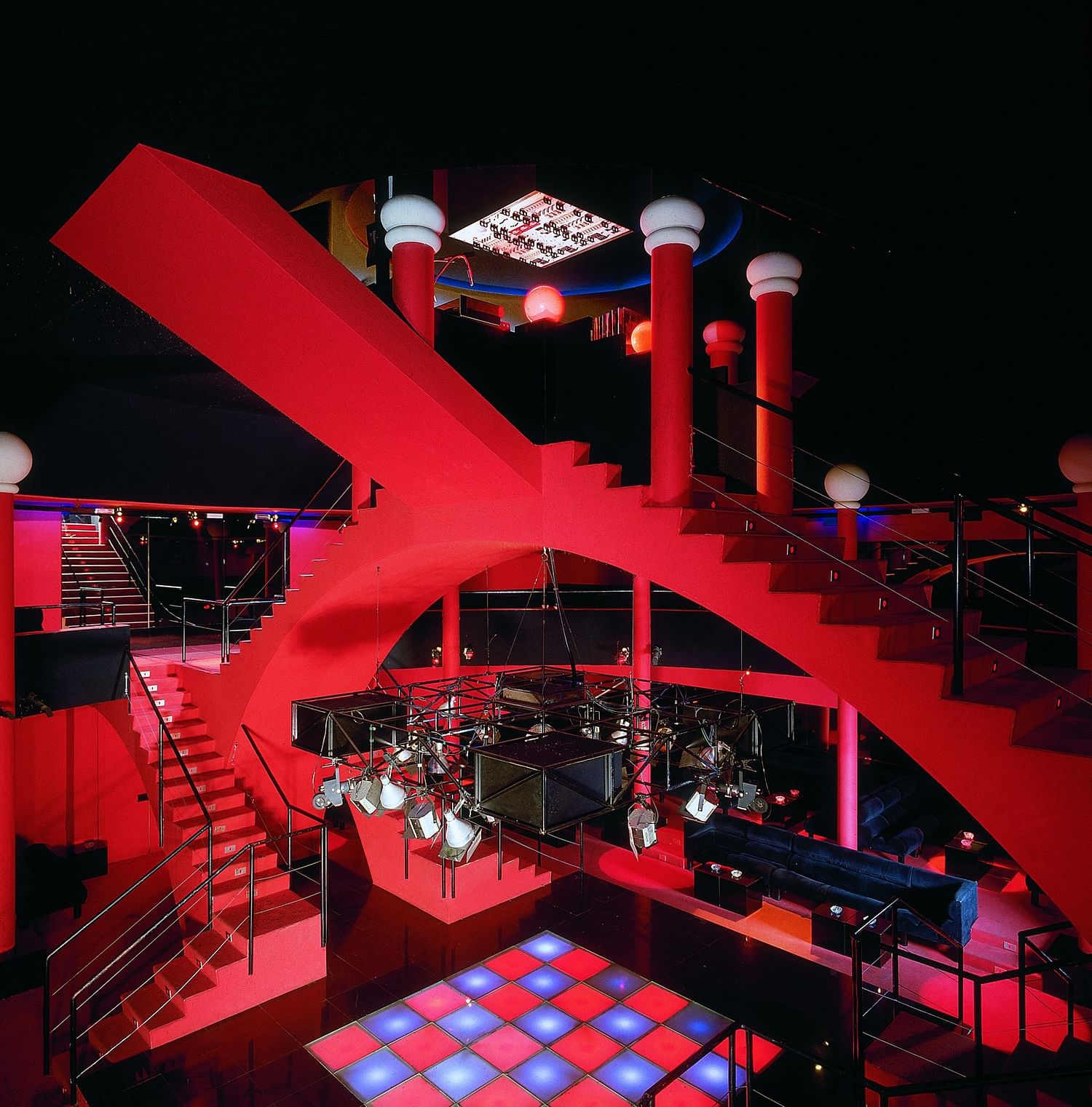
Discotheque Flash Back, Borgo San Dalmazzo, ca. 1972. Interior Design: Studio65. © Paolo Mussat Sartor.

The nightclub scene is as fantastically eccentric as it has always been, as the “Night Fever: Designing Club Culture 1960 – Today” exhibition shows. Currently on display at the Vitra Design Museum in Weil am Rhein, the exhibition explores the design history of nightclub and it examines its cultural context as thriving hubs for experimenting with interior design, new forms of media, and alternative lifestyles.
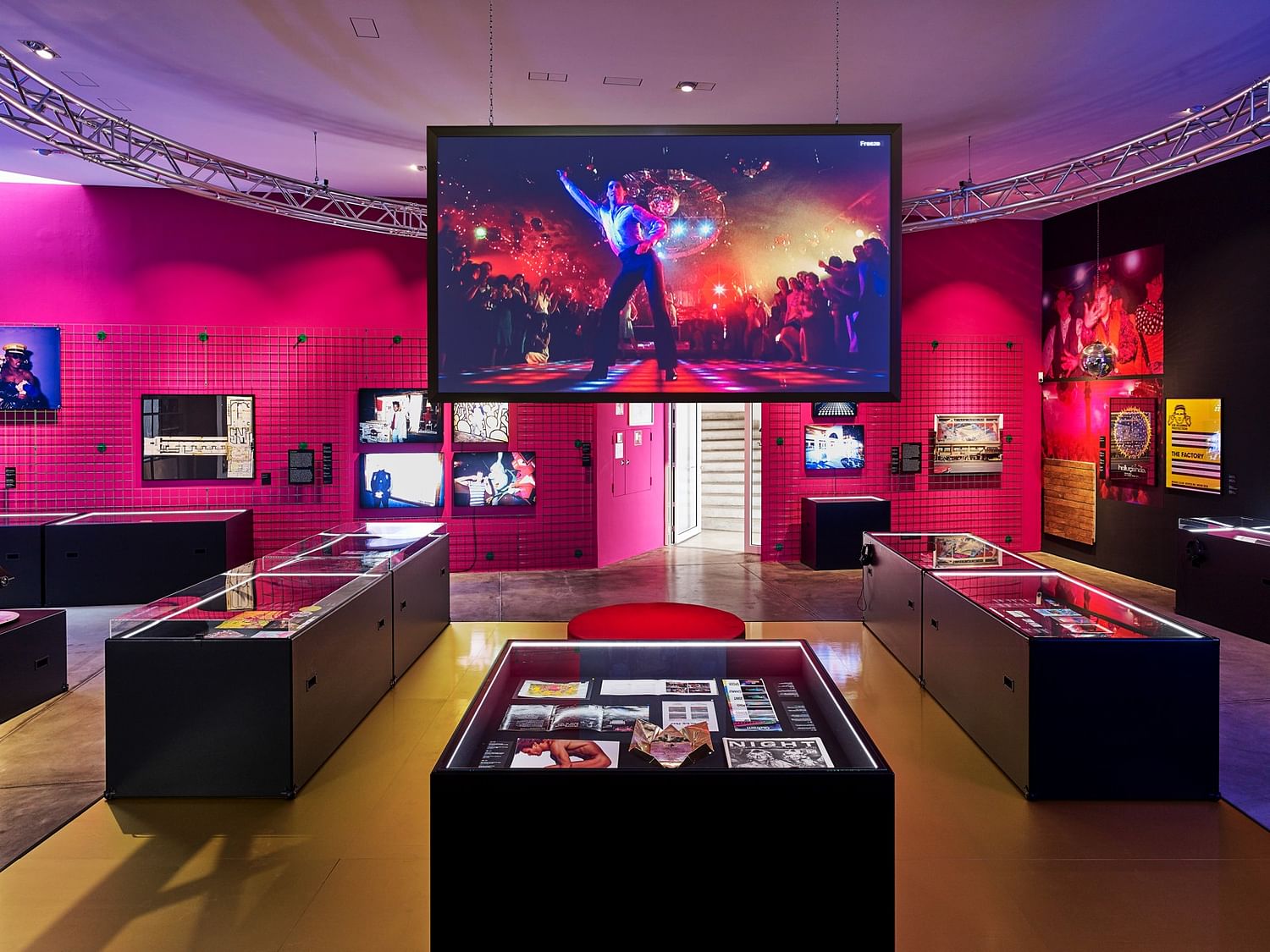
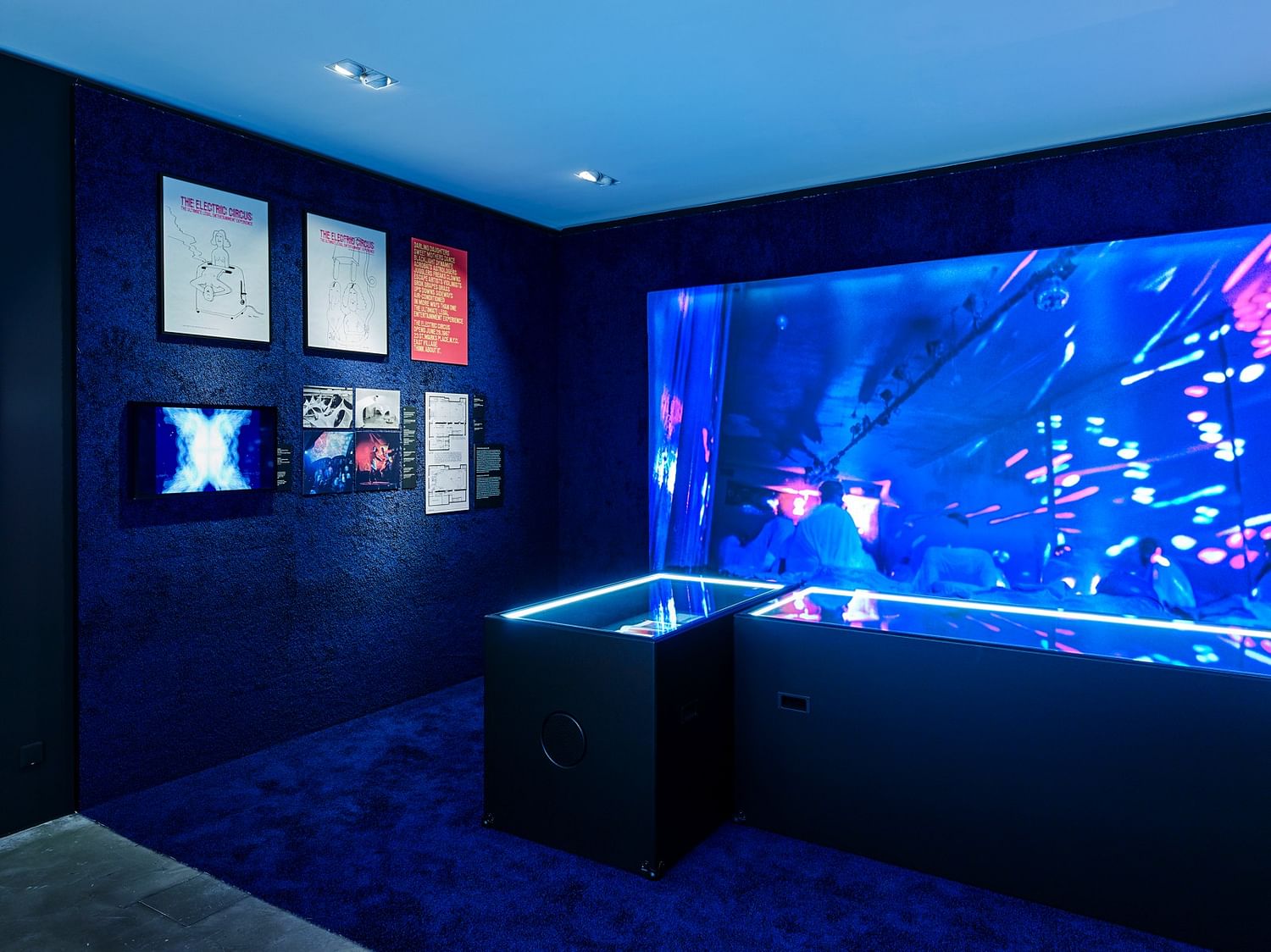
Installation view Vitra Design Museum “Night Fever. Designing Club Culture 1960 – Today”, 2018 © Vitra Design Museum, photo: Mark Niedermann.

“Night Fever” showcases a diverse range of chronically arranged material, like architectural models, furniture, graphic designs, fashion, film, and photography. The exhibition starts with the beginnings of the nightclub scene in the late 1960s and iconic clubs in New York and Europe — such as The Electric Circus designed by architect Charles Forberg in New York and Grupo 9999's Space Electronic in Florence, Italy. It also highlights the rise of disco in the 1970s and the release of “Saturday Night Fever”, which in turn sparked a backlash of homophobic and racist overtones that peaked at Disco Demolition Night in Chicago.
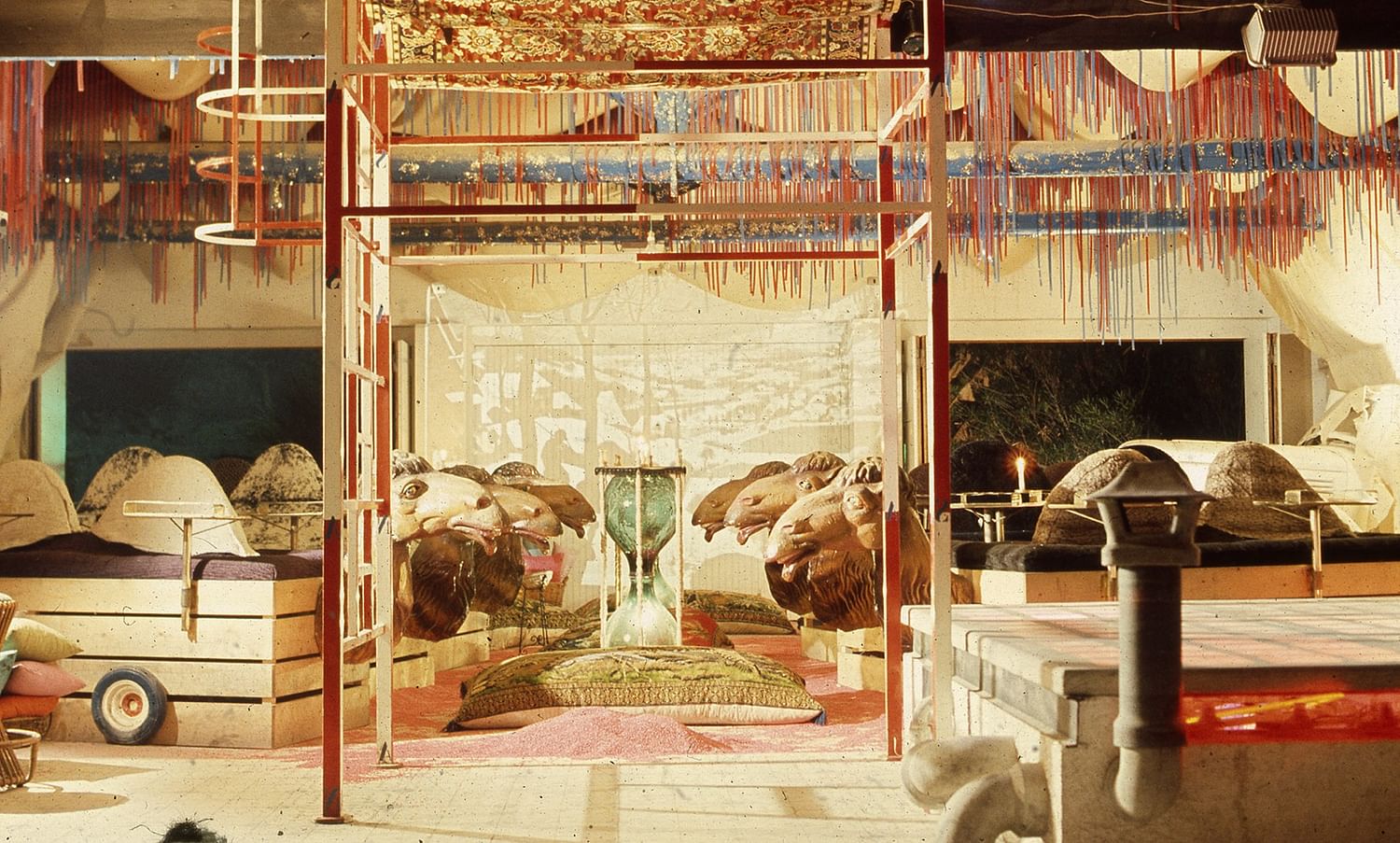
Gruppo UFO, Bamba Issa, Night Shelter for the Beach Rescue Camels, Bamba Issa, 1969. © photo: Carlo Bachi / Courtesy of Gruppo UFO.
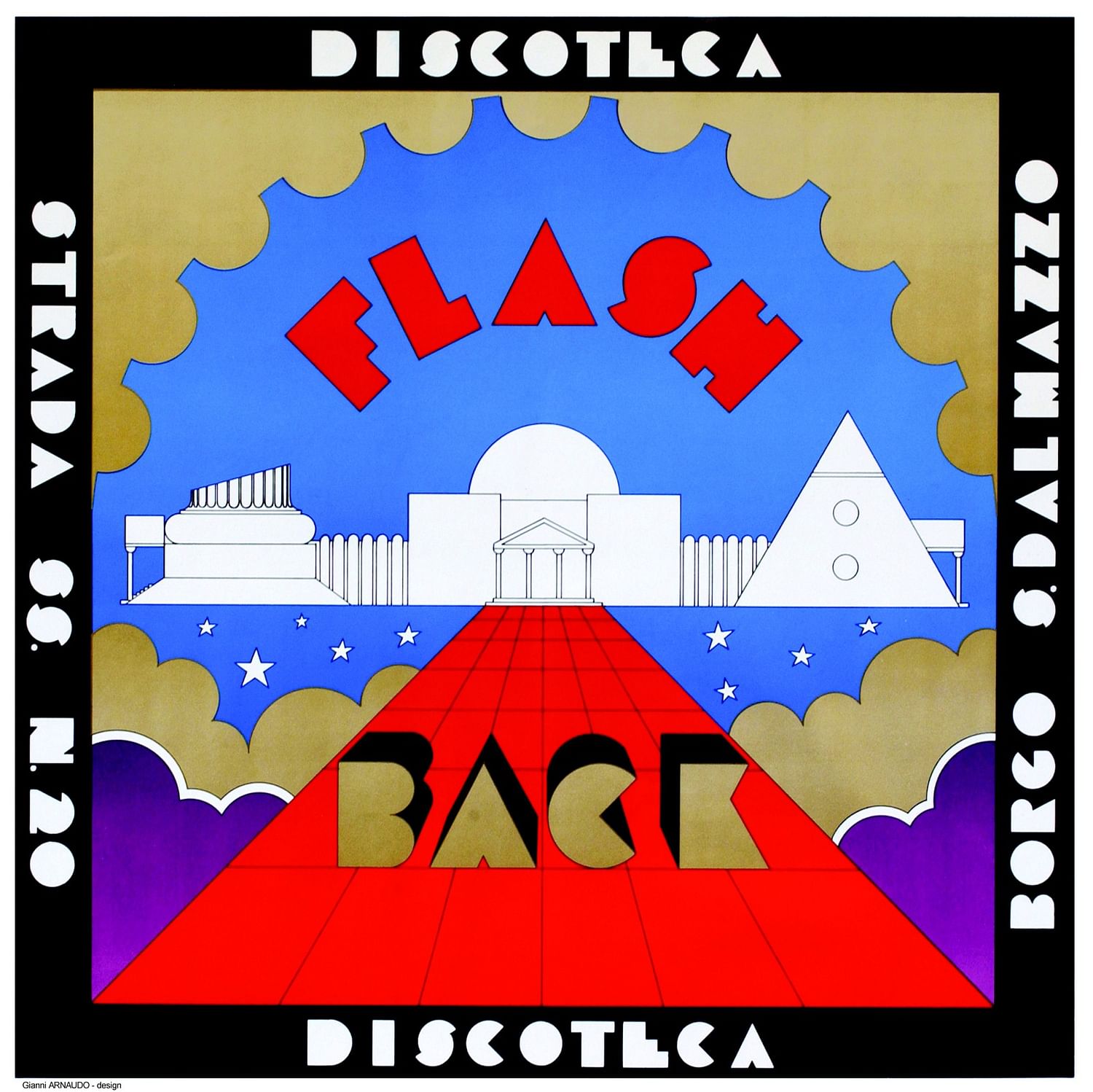
Poster for the Discotheque Flash Back, Borgo San Dalmazzo, 1972. Design: Gianni Arnaudo / Studio65.
Hasse Persson, Calvin Klein Party, 1978 © Hasse Persson.
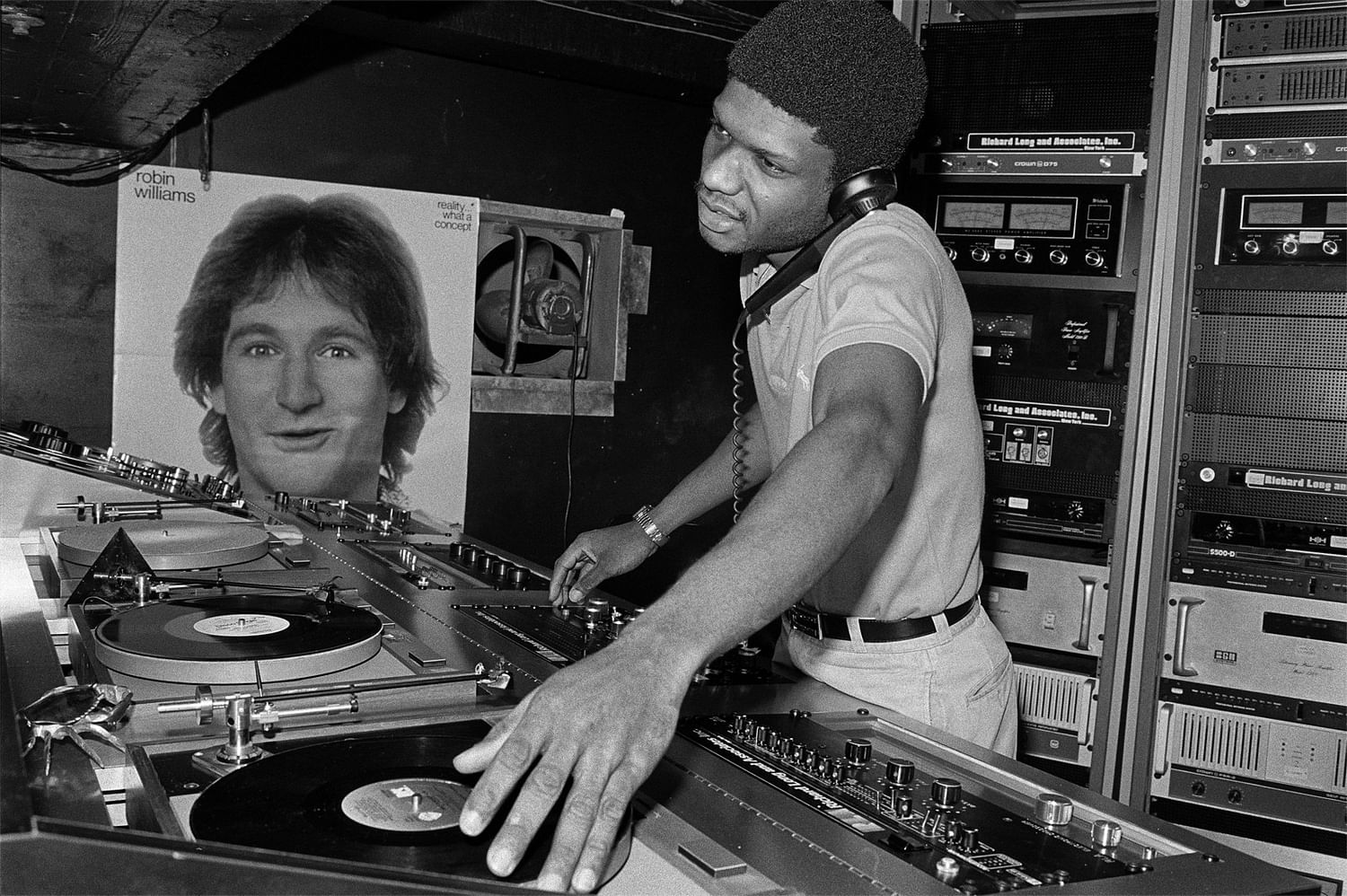
DJ Larry Levan in Paradise Garage, New York, 1979. © Bill Bernstein, David Hill Gallery, London.
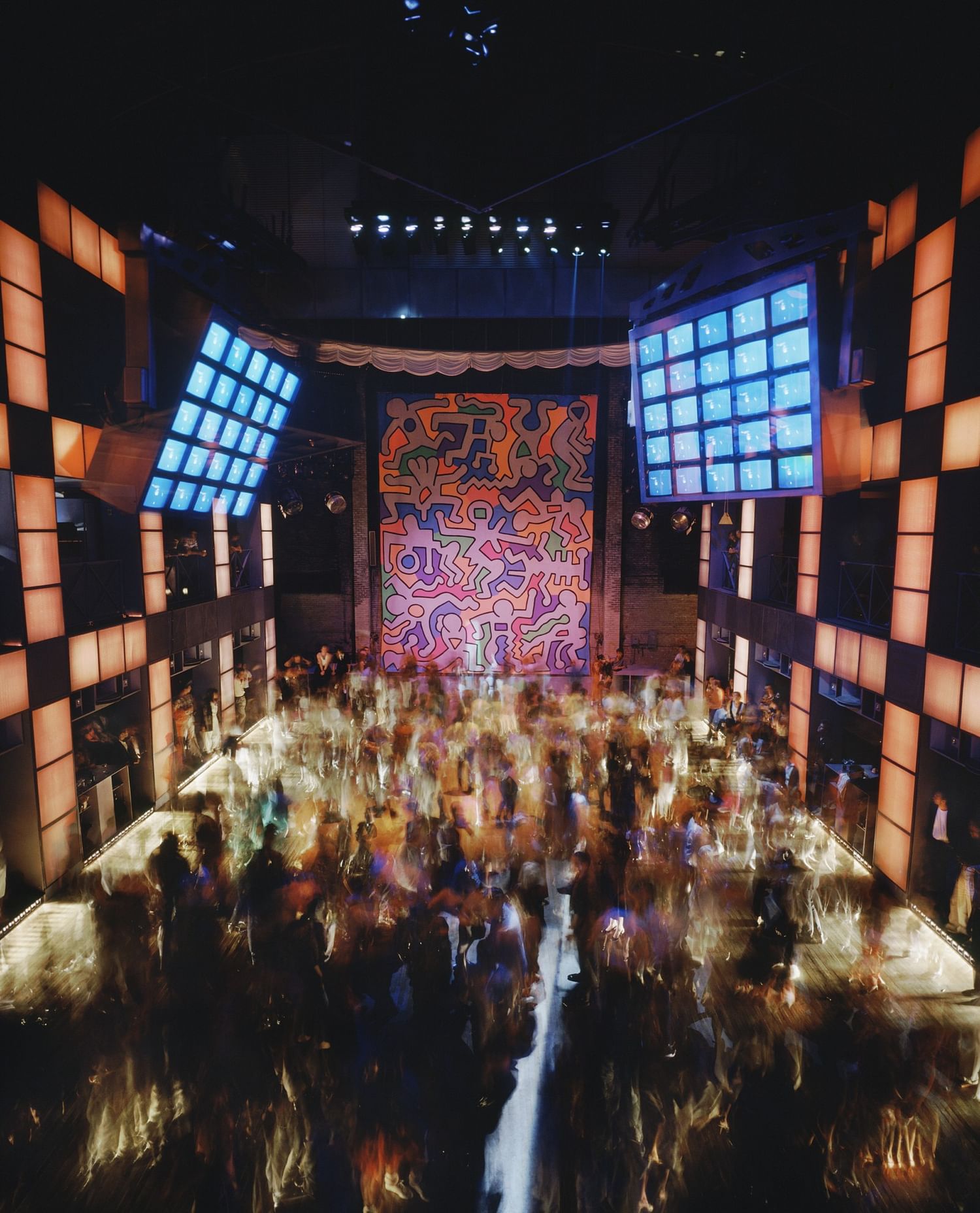
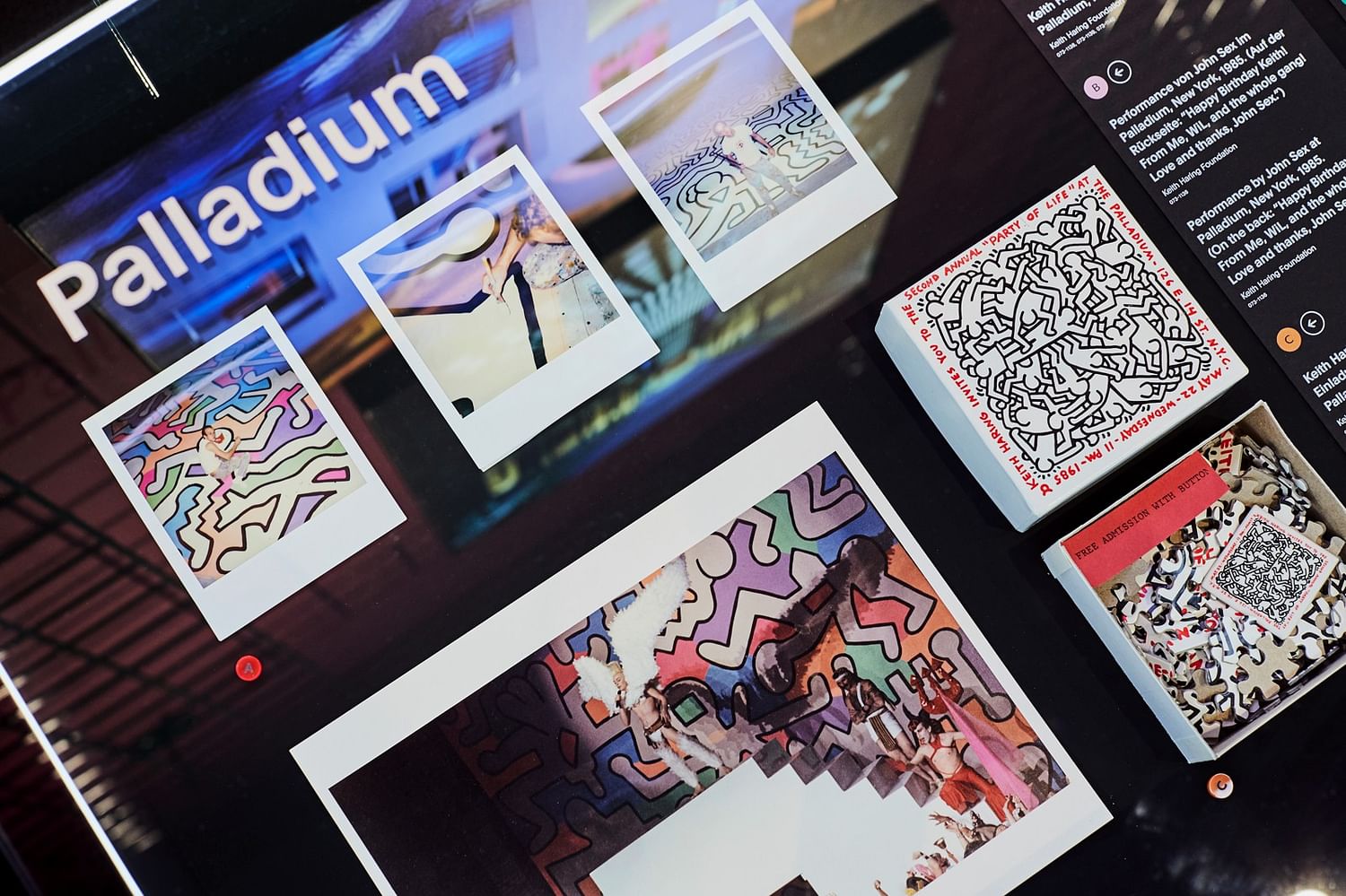
Palladium, New York, 1985. Architect: Arata Isozaki, mural by Keith Haring. © Timothy Hursley, Garvey|Simon Gallery New York.
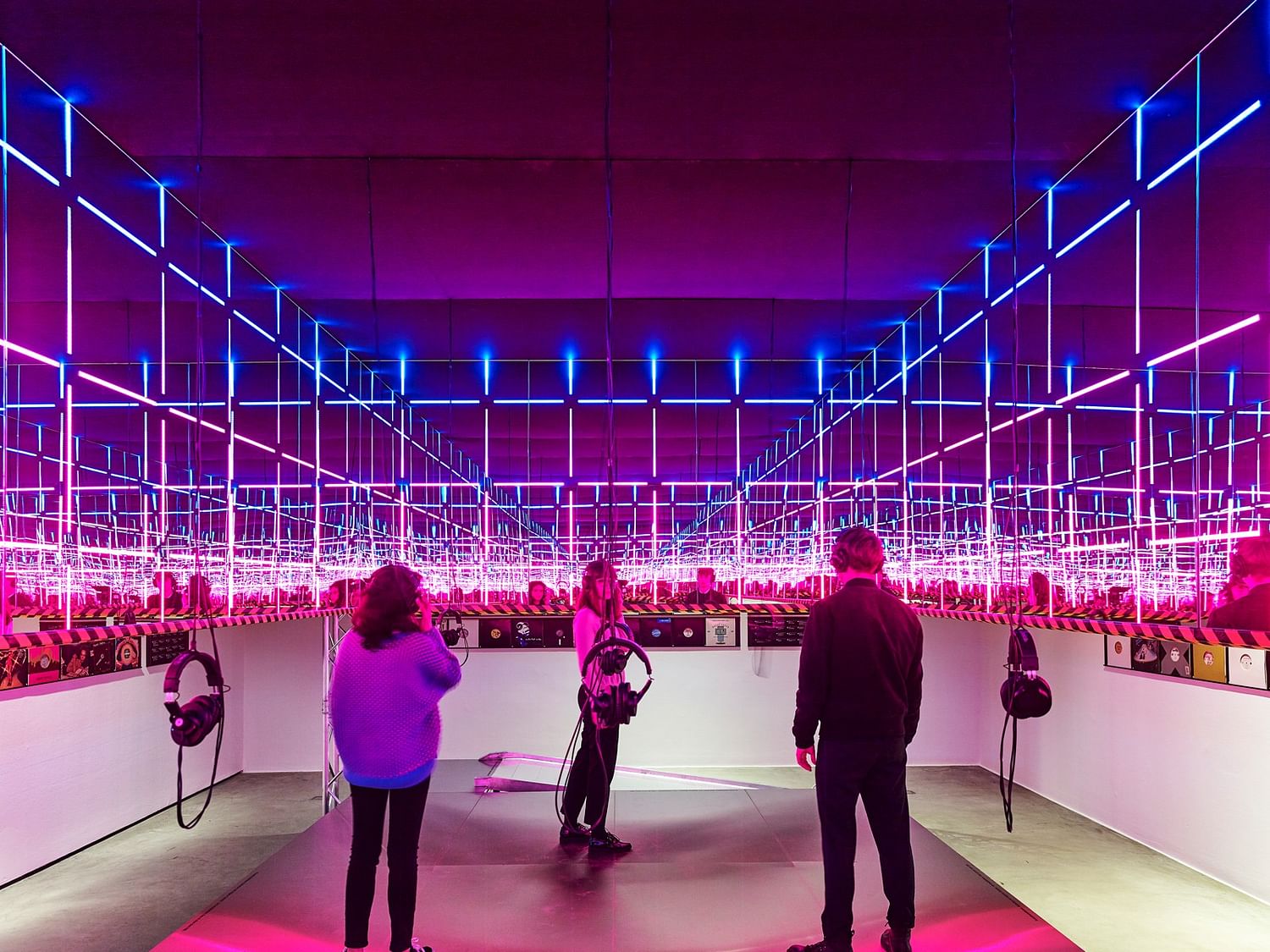
Installation view Vitra Design Museum »Night Fever. Designing Club Culture 1960 – Today«, 2018 © Vitra Design Museum, photo: Mark Niedermann.

Exhibition designer Konstantin Grcic and lighting designer Matthias Singer created a  music and light installation that lets visitors explore the visual effects, sounds, and sensations of nightclub design. Outside the installation's perimeter is a display of dance records that include Peter Saville's designs for Factory Records, Grace Jones' “Nightclubbing” album cover, and more.

Installation view Vitra Design Museum »Night Fever. Designing Club Culture 1960 – Today«, 2018 © Vitra Design Museum, photo: Mark Niedermann
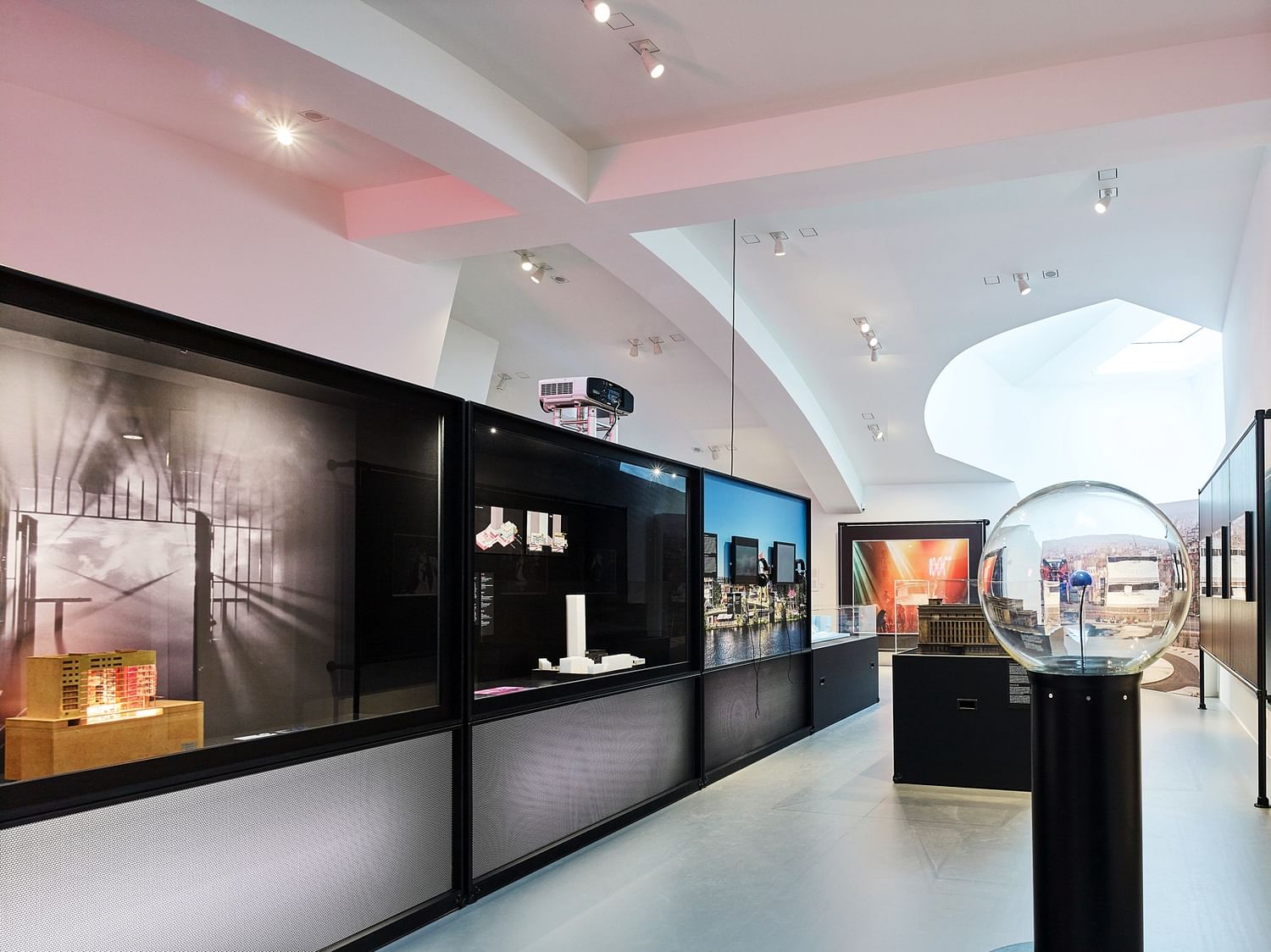
Installation view Vitra Design Museum »Night Fever. Designing Club Culture 1960 – Today«, 2018 © Vitra Design Museum, photo: Mark Niedermann.

As club culture has been increasingly adopted by global brands and yearly music festivals in recent years, other historic nightclubs from decades past have been pushed out of the city or only survive today as “modern ruins of a hedonistic past”. 

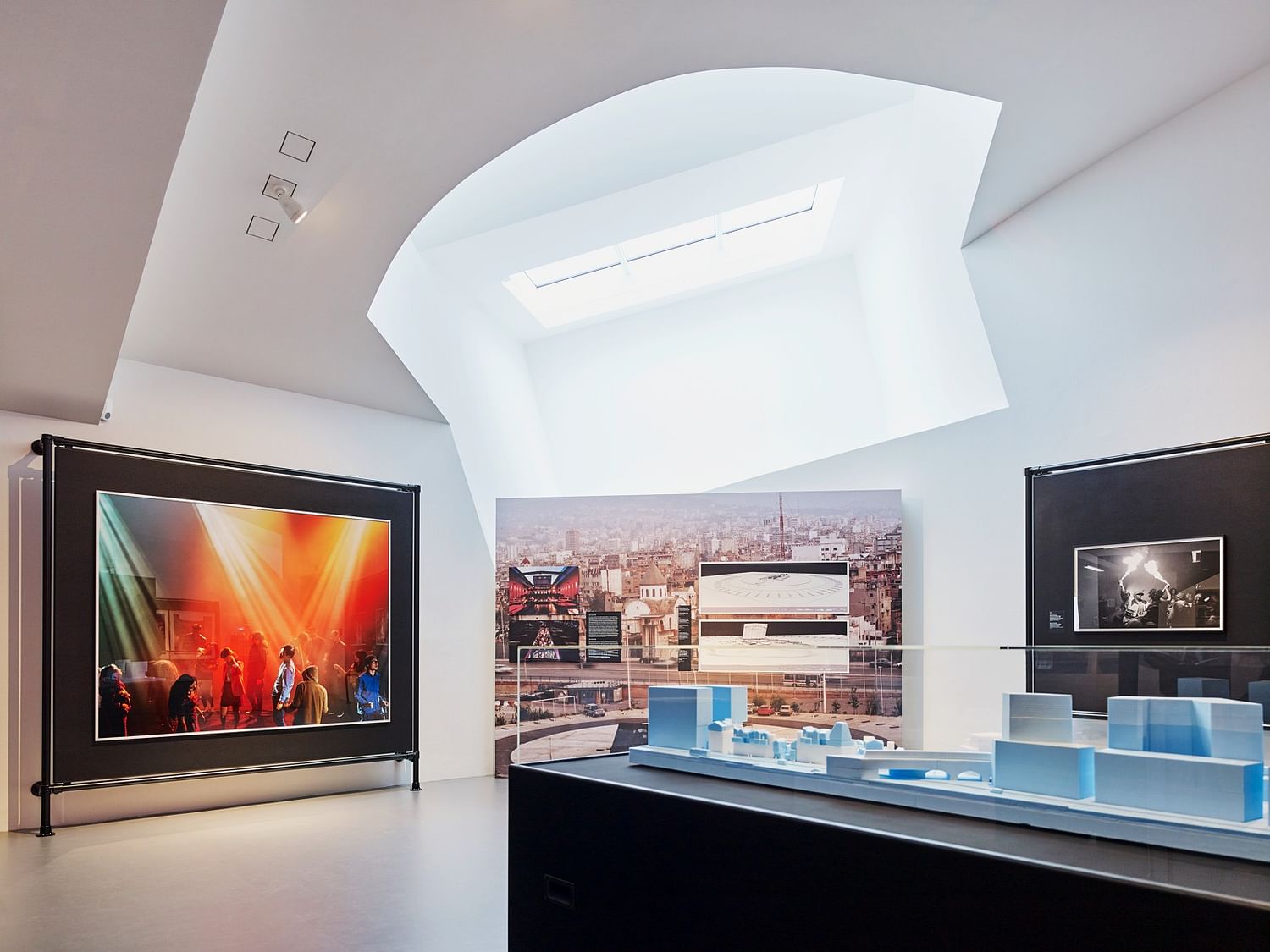
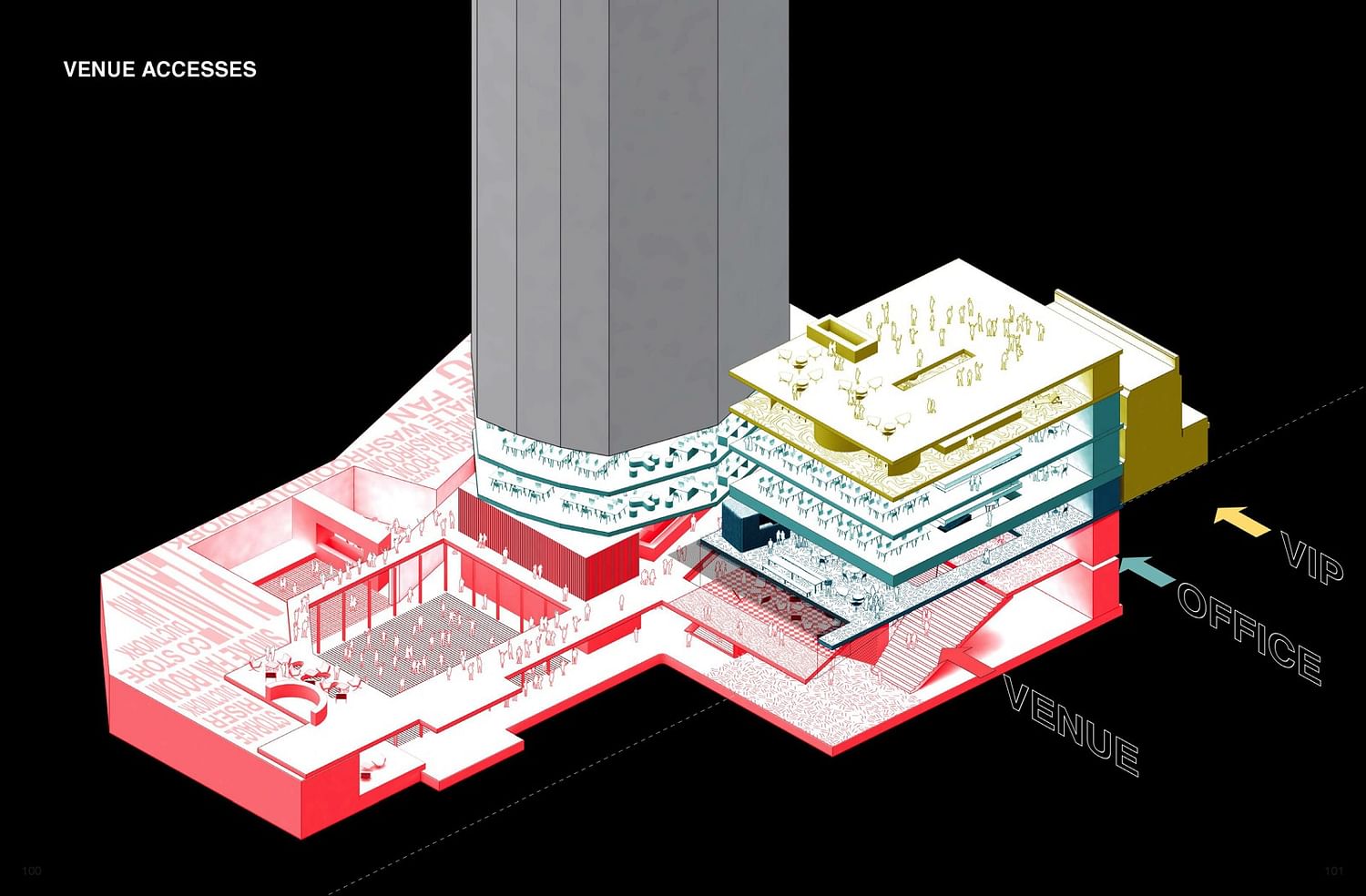
The exhibition also showcases how architects are approaching the nightclub typology. Rem Koolhaas' OMA developed a proposal for a 21st-century Ministry of Sound II for London, while Akoaki from Detroit created a fun DJ booth called “The Mothership” to celebrate the rich club heritage of their hometown.

Akoaki, Mobile DJ Booth, The Mothership Detroit, 2014. © Akoaki.
OMA/Rem Koolhaas, Isometric Plan Ministry of Sound II, London, 2015. © OMA.
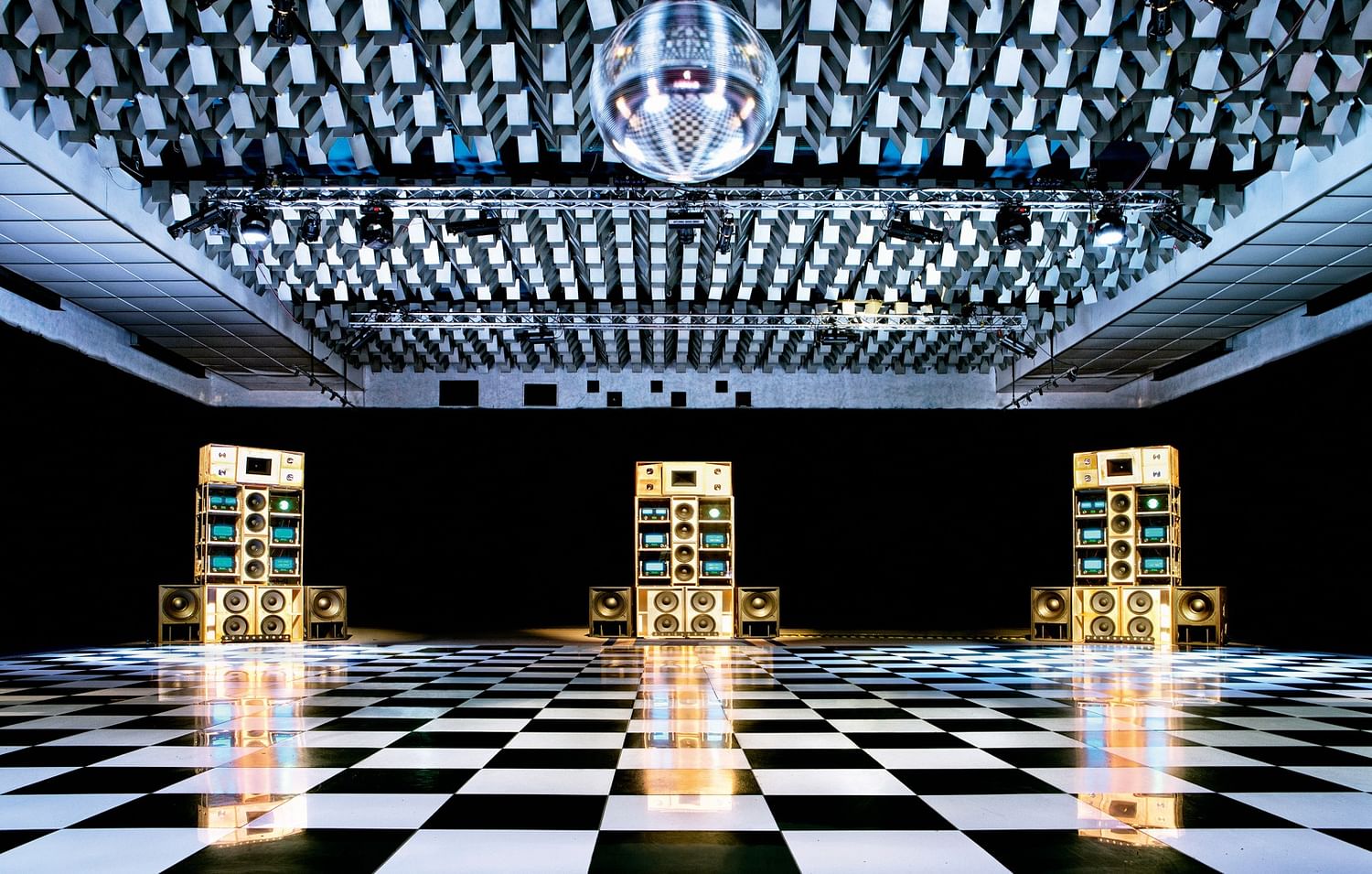
Despacio Sound System, New Century Hall, Manchester International Festival, July 2013. © Rod Lewis
Installation view Vitra Design Museum “Night Fever. Designing Club Culture 1960 – Today”, 2018 © Vitra Design Museum, photo: Mark Niedermann.

“Night Fever: Designing Club Culture 1960 – Today” is open through September 9.

RELATED EVENT Night Fever: Designing Club Culture 1960 – Today

Related

nightclub ● vitra design museum ● weil am rhein ● germany ● europe ● event ● subculture ● history

Share

  • Follow

    0 Comments

  • Comment as :

From the ’60s to today, the “Night Fever” exhibition chronicles the vibrant design history of the nightclub

New architecture and design competitions: Exploring 130 Years of American Design, Christo & Jeanne-Claude Center, 13 White Houses, and La Pyramide

Micro-architecture honored in latest Tiny House Architecture Competition

World’s most beautiful restaurants of 2026 chosen by Prix Versailles

Sponsored Post by Buildner

Design a wine tasting room in Italy! Valli Wine Tasting Room is launched!

10 can't-miss architecture & design events to see this June in London, Los Angeles, Chicago, San Francisco, Detroit, San Diego, Porto, and Barcelona

Sponsored Post by Buildner

Museum of Emotions / Edition #8 FINAL registration deadline is approaching!

Seven global projects make AR Public Awards shortlist 2026

Sponsored Post by Buildner

Design a slow-living restaurant in Portugal! Portugal Long Table Restaurant is launched!

Sign up for Bustler's Email Newsletters

World's best tall buildings honored at the CVU 2026 Award of Excellence

Sponsored Post by TWOPAGES

Final call: TWOPAGES X Design Contest 2026 submissions close June 5

Kengo Kuma & Paul Raff win Alberta national park visitor center competition with landscape-focused design

2026 Moira Gemmill and MJ Long prizes announced by W Awards

New architecture and design competitions: Kinderspace, Stewardson Keefe LeBrun Travel Grant, SMALL PROJECT BIG IMPACT, and Garden of University House, Bucharest

The Century of Gehry: New retrospective explores the late architect's work & collaborations

Sponsored Post by Buildner

Rome Rain Rooms FINAL registration deadline is in 5 DAYS!

Next page » Loading

From the ’60s to today, the “Night Fever” exhibition chronicles the vibrant design history of the nightclub

By Justine Testado|

Friday, May 4, 2018

Share

Discotheque Flash Back, Borgo San Dalmazzo, ca. 1972. Interior Design: Studio65. © Paolo Mussat Sartor.

Related

nightclub ● vitra design museum ● weil am rhein ● germany ● europe ● event ● subculture ● history

The nightclub scene is as fantastically eccentric as it has always been, as the “Night Fever: Designing Club Culture 1960 – Today” exhibition shows. Currently on display at the Vitra Design Museum in Weil am Rhein, the exhibition explores the design history of nightclub and it examines its cultural context as thriving hubs for experimenting with interior design, new forms of media, and alternative lifestyles.

Installation view Vitra Design Museum “Night Fever. Designing Club Culture 1960 – Today”, 2018 © Vitra Design Museum, photo: Mark Niedermann.

“Night Fever” showcases a diverse range of chronically arranged material, like architectural models, furniture, graphic designs, fashion, film, and photography. The exhibition starts with the beginnings of the nightclub scene in the late 1960s and iconic clubs in New York and Europe — such as The Electric Circus designed by architect Charles Forberg in New York and Grupo 9999's Space Electronic in Florence, Italy. It also highlights the rise of disco in the 1970s and the release of “Saturday Night Fever”, which in turn sparked a backlash of homophobic and racist overtones that peaked at Disco Demolition Night in Chicago.
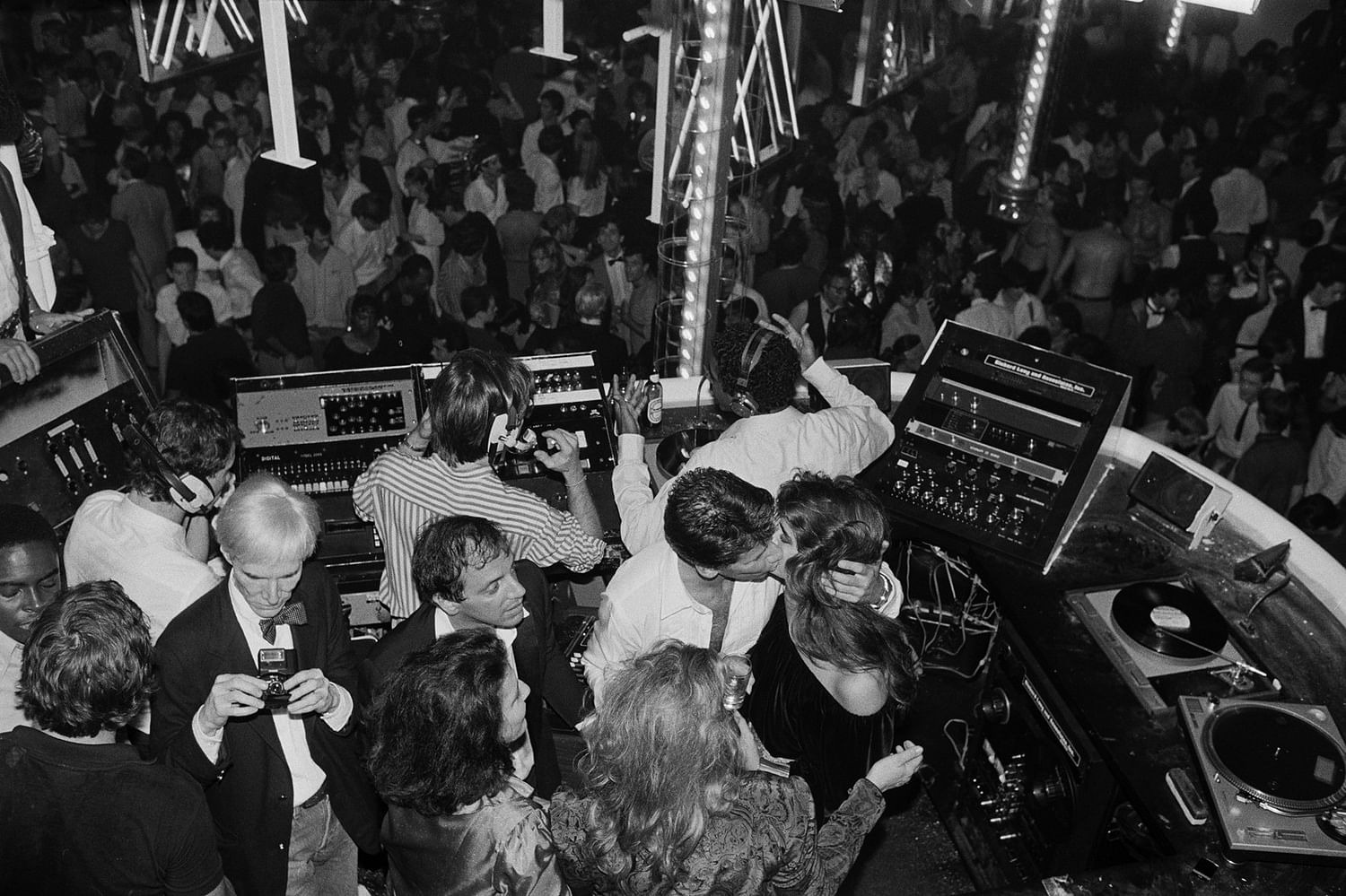
Gruppo UFO, Bamba Issa, Night Shelter for the Beach Rescue Camels, Bamba Issa, 1969. © photo: Carlo Bachi / Courtesy of Gruppo UFO.
Poster for the Discotheque Flash Back, Borgo San Dalmazzo, 1972. Design: Gianni Arnaudo / Studio65.
Hasse Persson, Calvin Klein Party, 1978 © Hasse Persson.
DJ Larry Levan in Paradise Garage, New York, 1979. © Bill Bernstein, David Hill Gallery, London.
Palladium, New York, 1985. Architect: Arata Isozaki, mural by Keith Haring. © Timothy Hursley, Garvey|Simon Gallery New York.
Installation view Vitra Design Museum »Night Fever. Designing Club Culture 1960 – Today«, 2018 © Vitra Design Museum, photo: Mark Niedermann.

Exhibition designer Konstantin Grcic and lighting designer Matthias Singer created a  music and light installation that lets visitors explore the visual effects, sounds, and sensations of nightclub design. Outside the installation's perimeter is a display of dance records that include Peter Saville's designs for Factory Records, Grace Jones' “Nightclubbing” album cover, and more.
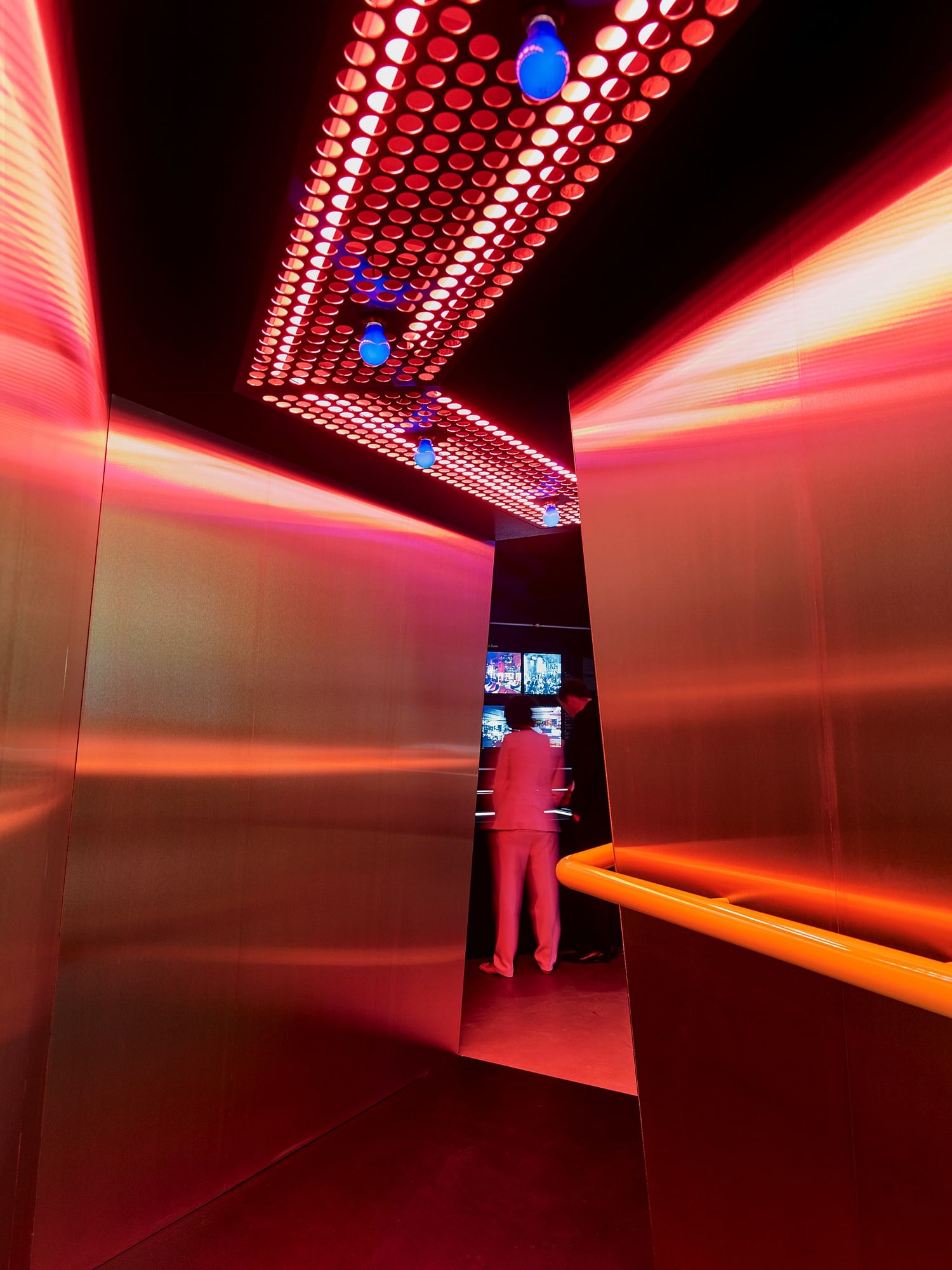
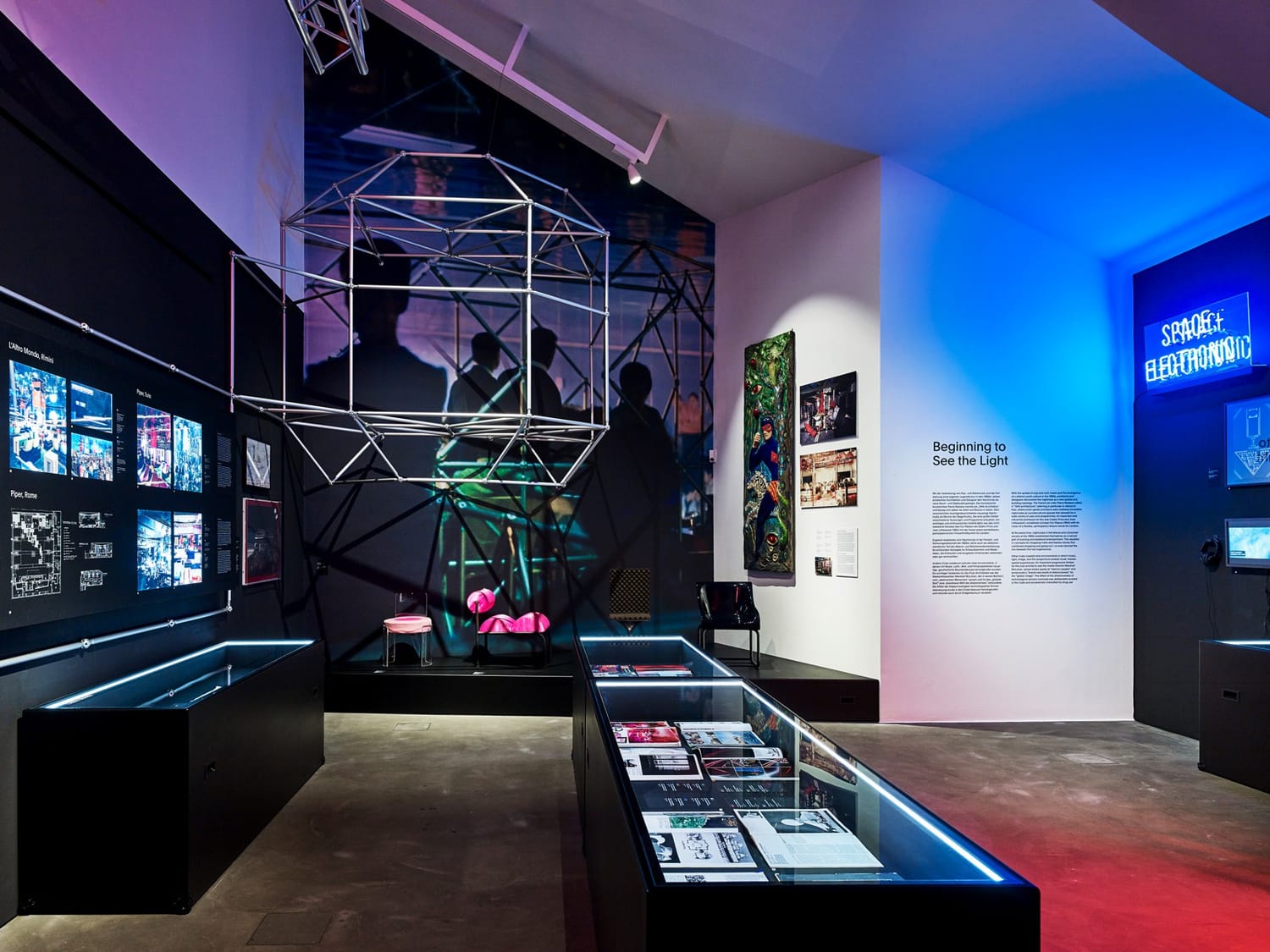
Installation view Vitra Design Museum »Night Fever. Designing Club Culture 1960 – Today«, 2018 © Vitra Design Museum, photo: Mark Niedermann
Installation view Vitra Design Museum »Night Fever. Designing Club Culture 1960 – Today«, 2018 © Vitra Design Museum, photo: Mark Niedermann.

As club culture has been increasingly adopted by global brands and yearly music festivals in recent years, other historic nightclubs from decades past have been pushed out of the city or only survive today as “modern ruins of a hedonistic past”. 

The exhibition also showcases how architects are approaching the nightclub typology. Rem Koolhaas' OMA developed a proposal for a 21st-century Ministry of Sound II for London, while Akoaki from Detroit created a fun DJ booth called “The Mothership” to celebrate the rich club heritage of their hometown.
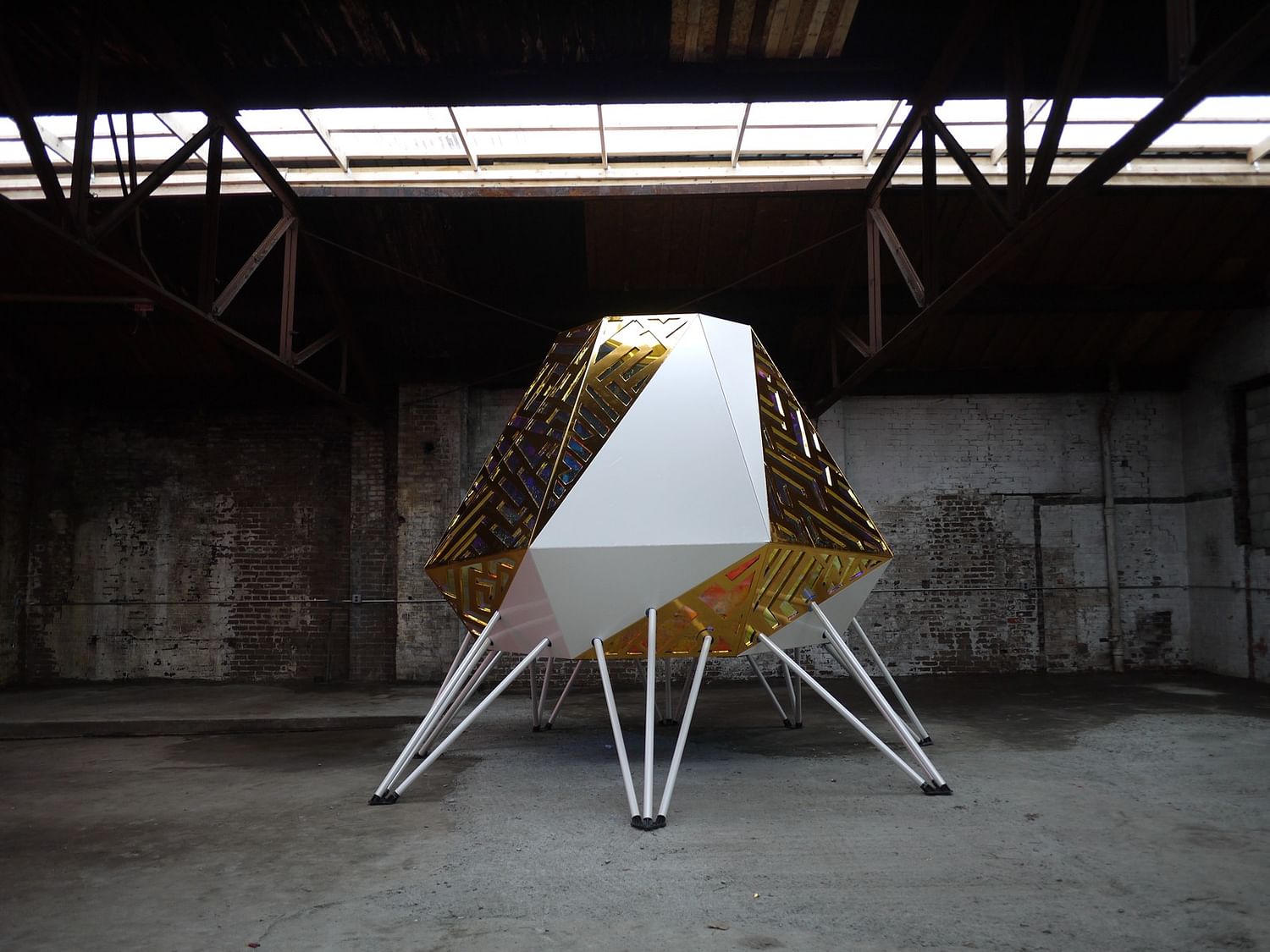
Akoaki, Mobile DJ Booth, The Mothership Detroit, 2014. © Akoaki.
OMA/Rem Koolhaas, Isometric Plan Ministry of Sound II, London, 2015. © OMA.
Despacio Sound System, New Century Hall, Manchester International Festival, July 2013. © Rod Lewis
Installation view Vitra Design Museum “Night Fever. Designing Club Culture 1960 – Today”, 2018 © Vitra Design Museum, photo: Mark Niedermann.

“Night Fever: Designing Club Culture 1960 – Today” is open through September 9.

RELATED EVENT Night Fever: Designing Club Culture 1960 – Today

Share

  • Follow

    0 Comments

  • Comment as :

Archinect JobsArchinect Jobs

The Archinect Job Board attracts the world's top architectural design talents.

VIEW ALL JOBS POST A JOB

Senior Designer / Architect

NardiHaus

Senior Designer / Architect

Pasadena, CA, US

Intermediate Residential Architect

52XConsulting

Intermediate Residential Architect

New York, NY, US

Project Architect / Senior Designer

Touloukian Touloukian Inc.

Project Architect / Senior Designer

Boston, MA, US

Senior Interior Architect/ Designer

Silverstone Group

Senior Interior Architect/ Designer

Washington, DC, US

Junior Designer

OLIVER FREUNDLICH DESIGN

Junior Designer

New York, NY, US

Business Development Manager

WORKac

Business Development Manager

New York, NY, US

Intermediate Architect

FAME Architecture & Interior Design

Intermediate Architect

Los Angeles, CA, US

Architectural Designer II

Studio AR&D Architects

Architectural Designer II

Los Angeles, CA, US

Design Architect

JLK Architects

Design Architect

Chicago, IL, US

Senior Architectural Project Manager (Systems Driven, Human-Centric) (Hourly)

Local Parti Architecture, PC

Senior Architectural Project Manager (Systems Driven, Human-Centric) (Hourly)

New York, NY, US

Next page » Loading