• Login / Join
  • About
  • •
  • Contact
  • •
  • Advertising
bustler logo
bustler logo
  • News
  • Competitions
  • Events
  • Bustler is powered by Archinect
  • Sign up for Bustler's Email Newsletters

  • Follow these Bustler feeds:

  • Search

    Search in

  • Submit

    What are you submitting?

    News Pitch
    Competition
    Event
  • Login / Join
  • News|Competitions|Events
  • Search
    | Submit
    | Follow
  • Search in

    What are you submitting?

    News Pitch
    Competition
    Event

    Follow these Bustler feeds:

  • About|Contact|Advertising
  • Login / Join

The six Richard Rogers Fellows for 2019

By Justine Testado|

Monday, Dec 10, 2018
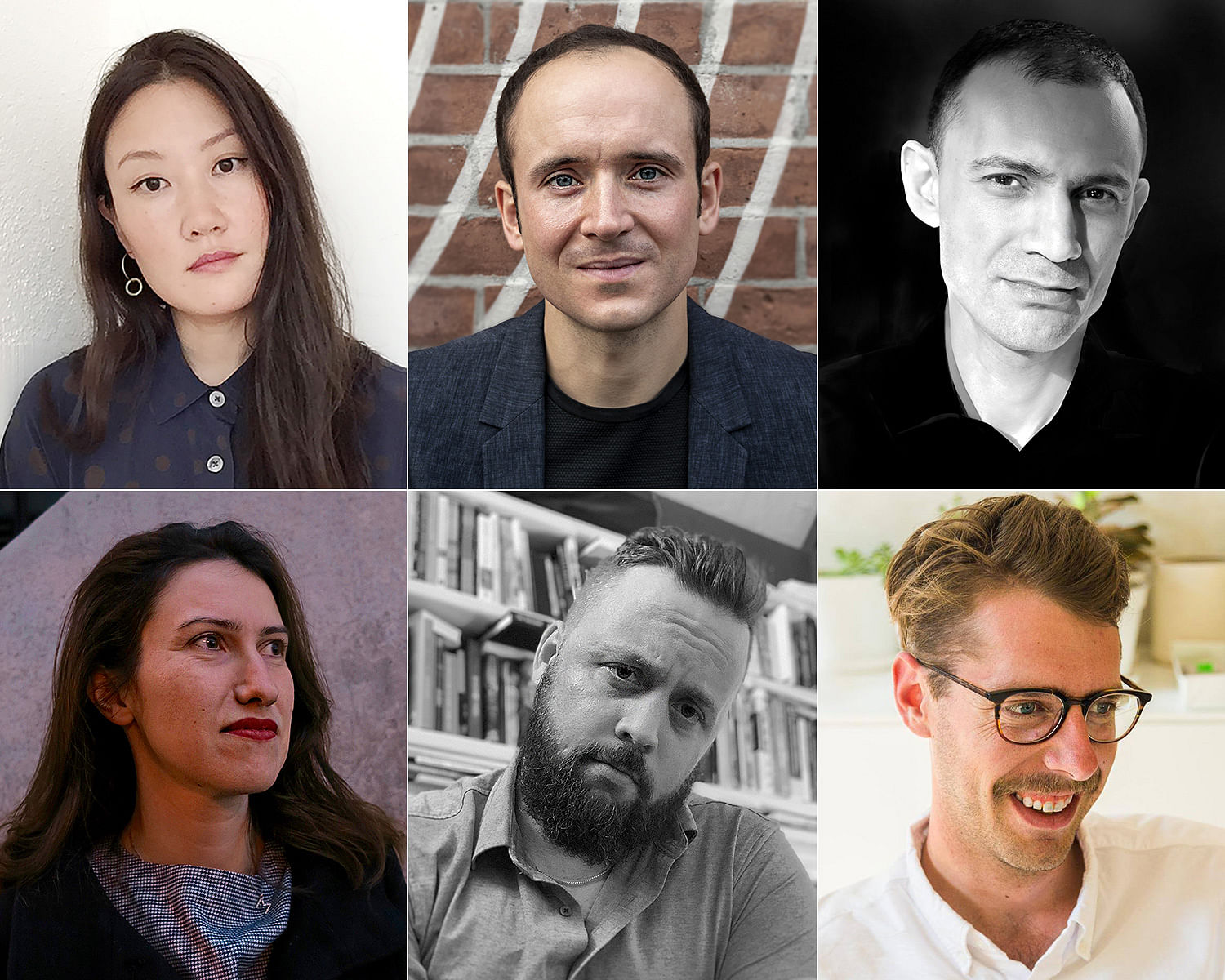
2019 Richard Rogers Fellows.

Selected from 140 applicants from around the world, the six winners of the 2019 Richard Rogers Fellowship were announced today by the Harvard GSD. Launched in 2017, the fellowship is a residency program inspired by architect Richard Rogers' longtime commitment to cross-disciplinary practice. 

Open to professionals and scholars working in any design-related field, the unique fellowship includes a three-month residency at the iconic Richard Rogers-designed Wimbledon House in London, access to the city's cultural institutions and academic resources, and a $10,000 stipend. In 2015, Richard and Ruth Rogers donated the Wimbledon House to the GSD so that it can continue to be used as a residence and as a space for research opportunities for future generations of scholars and practitioners.

The 2019 fellows will reside in London in pairs during the spring, summer, and fall, researching a variety of issues like the materiality of steel and brick in London, to multimedia investigations of the city's estates and markets.

Read more about the 2019 fellows below.

Wimbledon House. Photo © Iwan Baan.

SPRING 2019 FELLOWS

Esther Choi (Brooklyn, NY): “The Organization of Life: Architecture and the Life Sciences in Great Britain, 1929-1951” 

Esther Choi is a PhD candidate in the History and Theory of Architecture and the Interdisciplinary Doctoral Program in the Humanities at Princeton University. She received a Master of Arts in the History and Theory of Architecture from Princeton in 2014, and a Master in Design Studies from Harvard GSD in 2008. Her research interests center on the entanglements between architecture and the life sciences in the nineteenth and twentieth centuries, and the intersections between artistic and architectural movements throughout the twentieth century. Her Richard Rogers Fellowship proposal will explore the exchanges that took place between scientists, architects, artists, and designers to reimagine Great Britain as a scientifically-ordered world after the economic crash of 1929. Spanning twenty years, four case studies organized according to evolutionary themes—natural selection, adaptation, heredity and mutation—revisit schemes that championed the belief that the human mind and behavior are thoroughly shaped by the environment. 

John Paul Rysavy (New York, NY): “A Brick is a Brick: Material and its Image in Postwar London” 

John Paul Rysavy is an architect and Senior Associate at SHoP Architects in New York City where he has overseen work on the Botswana Innovation Hub, Uber Headquarters, Wave/Cave Pavilion, and US Embassy in Tegucigalpa. He has been a collaborator with Jenna Dezinski in the design and research practice And-Either-Or and worked previously with Will Bruder, Brian MacKay-Lyons, and David Heymann. He has been a Visiting Scholar at the American Academy in Rome and the Charles Moore Foundation. Rysavy received a Master of Architecture from the University of Texas at Austin following study at the University of Illinois at Urbana-Champaign. He is a recipient of the Stewardson Keefe LeBrun Grant from the Center for Architecture Foundation and the Francis J. Plym Fellowship from the Illinois School of Architecture. He taught previously at University of Texas at Austin. While in London, Rysavy will explore cultures of brick construction associated with late modern and postmodern practice. Through writing and photogrammetry, research expands from a larger study investigating technical and rhetorical applications of brick following introduction of the cavity wall in Western Europe. The project traces antecedent models of material representation as an image and graphic in contemporary architectural production.

Wimbledon House. Photo © Iwan Baan.

SUMMER 2019 FELLOWS

Sarosh Anklesaria (Ithaca, NY): “Embedded Resistances within Neoliberal Regimes: Activist-Architects and the Contested Spaces of London’s Traditional Markets”

Sarosh Anklesaria is an architect and educator. He has worked extensively as an architect with Diller Scofidio + Renfro, New York City, Herzog & de Meuron, Basel, and Sangath, the office of Balkrishna Doshi in Ahmedabad. He is currently a Visiting Critic at Cornell University’s College of Architecture, Art and Planning and has taught design studios at The Pratt Institute and Syracuse University. Anklesaria has a diploma in architecture from CEPT University and a Master of Architecture from Cornell University. He runs an independent practice based in New York and Ahmedabad and has been a member of the Architecture and Design panel at NYSCA. His writing, work and research has been published in a variety of media including Architectural Review, Domus, Architect’s Newspaper, and Design Today, among others. His proposal stitches together two broad themes of research that have occupied his creative pursuits: architecture’s capacity to generate inclusive forms of public space, especially in the context of the neoliberal city, and the traditional market as the site of these contestations. The primary objective of the research is to study the traditional markets of London as well as the role of activist architects in generating spaces of empowerment within, or of consequence to, traditional markets.

Maria Letizia Garzoli (Trecate, Italy): “The Leasehold Uncanny Persistency: Shaping London Great Estates” 

Maria Letizia Garzoli is an architect and researcher. She holds an architecture degree from the Politecnico di Milano and a Master in Design Studies from Harvard GSD. She has worked at practices including Machado Silvetti and Johnston Marklee, and is currently a researcher at Foster + Partners. As she argues in her proposal, the leasehold property is a centuries-old form of ownership that corroborated the lasting presence of large aristocratic estates in West London. Today, given the transition of these family holdings into proper corporate investment companies and the increased levels of frustration among small homeowners, the meaning and study of this persistent structure is especially important. The land ownership monopoly entails a monopoly of culture, form, and identity. Her Richard Rogers Fellowship research seeks to represent how this form of property law shaped and shapes the architectural and social panorama on the lands of the great estates of West London. The final product will consist of an illustrated atlas. 

Wimbledon House. Photo © Iwan Baan.

FALL 2019 FELLOWS

Peter Christensen (Rochester, NY): “Materialized: the Global Life of Architectural Steel” 

Peter Christensen is Assistant Professor of Art History at the University of Rochester, and earned a PhD from Harvard University in 2014. His specialization is modern architectural and environmental history, particularly of Germany, Central Europe and the Middle East. His theoretical interests center on issues of geopolitics and multiculturalism. He also maintains a strong interest in infrastructure and its history. Christensen plans to use the Richard Rogers Fellowship towards research for his forthcoming second book. By following the life of steel from the collection of raw minerals and metals to the distribution of finished goods in the long nineteenth century, instead of examining heroic architectural forms made from steel, Christenen’s book aims to challenge the traditional narrative that architectural steel was the primary and heroic material responsible for architectural modernism. He intends to achieve this revisionist interpretation by combining the methods of environmental history, which focuses on ecology and the macro scale, with localized sources of business and trade history, especially corporate archives.

Michael Waldrep (Berlin, Germany): “Finding the Green Belt: Preservation, New Towns, and Development on the Urban-Rural Landscapes of Greater London” 

Michael Waldrep is a media artist and researcher focused on architecture and urban planning. With degrees in Film Studies and City Planning from the University of California at Berkeley and the Massachusetts Institute of Technology, respectively, he was selected as a member of the first generation of Fulbright - National Geographic Digital Storytelling Fellows in 2014. Currently, he works in research and filmmaking at Studio Olafur Eliasson. As a culmination of an ongoing multimedia investigation into the global spread and differentiation of suburban planning and architecture, his proposal for the Richard Rogers Fellowship is to document the edges of Greater London. Waldrep’s practice, as a trained city planner and media artist, has been honed through similar studies of Mexico City, Cape Town, and Berlin. His project will seek to bring to light, through writing, interviews, archival research, and, above all else, first-hand photographic investigation, the myriad interacting factors that permeate the Metropolitan Green Belt and the symbiotic New Towns can be teased apart and brought to light.

The 2019 Fellowship Selection Committee includes: Alison Brooks, K. Michael Hays, Sharon Johnston, Hanif Kara, Mohsen Mostafavi, Patricia Roberts, Lord Richard Rogers, and Simon Smithson.

RELATED COMPETITION 2019 Richard Rogers Fellowship
RELATED NEWS Harvard GSD announces 2018 Richard Rogers Fellows

Related

richard rogers fellowship ● harvard graduate school of design ● harvard gsd ● architecture fellowship ● academia ● competition ● residency
Rogers Stirk Harbour + Partners
Harvard University
Harvard University

Share

  • Follow

    1 Comment

  • Studio CL
    Studio CL

    Studio CL ·  Dec 27, 18 9:59 PM

    Is this a social studies fellowship?

  • Comment as :

The six Richard Rogers Fellows for 2019

Micro-architecture honored in latest Tiny House Architecture Competition

World’s most beautiful restaurants of 2026 chosen by Prix Versailles

Sponsored Post by Buildner

Design a wine tasting room in Italy! Valli Wine Tasting Room is launched!

10 can't-miss architecture & design events to see this June in London, Los Angeles, Chicago, San Francisco, Detroit, San Diego, Porto, and Barcelona

Sponsored Post by Buildner

Museum of Emotions / Edition #8 FINAL registration deadline is approaching!

Seven global projects make AR Public Awards shortlist 2026

Sponsored Post by Buildner

Design a slow-living restaurant in Portugal! Portugal Long Table Restaurant is launched!

World's best tall buildings honored at the CVU 2026 Award of Excellence

Sign up for Bustler's Email Newsletters

Sponsored Post by TWOPAGES

Final call: TWOPAGES X Design Contest 2026 submissions close June 5

Kengo Kuma & Paul Raff win Alberta national park visitor center competition with landscape-focused design

2026 Moira Gemmill and MJ Long prizes announced by W Awards

New architecture and design competitions: Kinderspace, Stewardson Keefe LeBrun Travel Grant, SMALL PROJECT BIG IMPACT, and Garden of University House, Bucharest

The Century of Gehry: New retrospective explores the late architect's work & collaborations

Sponsored Post by Buildner

Rome Rain Rooms FINAL registration deadline is in 5 DAYS!

UIA and UN Habitat unveil sustainability-focused winners for UIA 2030 Award

Next page » Loading

The six Richard Rogers Fellows for 2019

By Justine Testado|

Monday, Dec 10, 2018

Share

2019 Richard Rogers Fellows.

Related

richard rogers fellowship ● harvard graduate school of design ● harvard gsd ● architecture fellowship ● academia ● competition ● residency
Rogers Stirk Harbour + Partners
Harvard University
Harvard University

Selected from 140 applicants from around the world, the six winners of the 2019 Richard Rogers Fellowship were announced today by the Harvard GSD. Launched in 2017, the fellowship is a residency program inspired by architect Richard Rogers' longtime commitment to cross-disciplinary practice. 

Open to professionals and scholars working in any design-related field, the unique fellowship includes a three-month residency at the iconic Richard Rogers-designed Wimbledon House in London, access to the city's cultural institutions and academic resources, and a $10,000 stipend. In 2015, Richard and Ruth Rogers donated the Wimbledon House to the GSD so that it can continue to be used as a residence and as a space for research opportunities for future generations of scholars and practitioners.

The 2019 fellows will reside in London in pairs during the spring, summer, and fall, researching a variety of issues like the materiality of steel and brick in London, to multimedia investigations of the city's estates and markets.

Read more about the 2019 fellows below.

Wimbledon House. Photo © Iwan Baan.

SPRING 2019 FELLOWS

Esther Choi (Brooklyn, NY): “The Organization of Life: Architecture and the Life Sciences in Great Britain, 1929-1951” 

Esther Choi is a PhD candidate in the History and Theory of Architecture and the Interdisciplinary Doctoral Program in the Humanities at Princeton University. She received a Master of Arts in the History and Theory of Architecture from Princeton in 2014, and a Master in Design Studies from Harvard GSD in 2008. Her research interests center on the entanglements between architecture and the life sciences in the nineteenth and twentieth centuries, and the intersections between artistic and architectural movements throughout the twentieth century. Her Richard Rogers Fellowship proposal will explore the exchanges that took place between scientists, architects, artists, and designers to reimagine Great Britain as a scientifically-ordered world after the economic crash of 1929. Spanning twenty years, four case studies organized according to evolutionary themes—natural selection, adaptation, heredity and mutation—revisit schemes that championed the belief that the human mind and behavior are thoroughly shaped by the environment. 

John Paul Rysavy (New York, NY): “A Brick is a Brick: Material and its Image in Postwar London” 

John Paul Rysavy is an architect and Senior Associate at SHoP Architects in New York City where he has overseen work on the Botswana Innovation Hub, Uber Headquarters, Wave/Cave Pavilion, and US Embassy in Tegucigalpa. He has been a collaborator with Jenna Dezinski in the design and research practice And-Either-Or and worked previously with Will Bruder, Brian MacKay-Lyons, and David Heymann. He has been a Visiting Scholar at the American Academy in Rome and the Charles Moore Foundation. Rysavy received a Master of Architecture from the University of Texas at Austin following study at the University of Illinois at Urbana-Champaign. He is a recipient of the Stewardson Keefe LeBrun Grant from the Center for Architecture Foundation and the Francis J. Plym Fellowship from the Illinois School of Architecture. He taught previously at University of Texas at Austin. While in London, Rysavy will explore cultures of brick construction associated with late modern and postmodern practice. Through writing and photogrammetry, research expands from a larger study investigating technical and rhetorical applications of brick following introduction of the cavity wall in Western Europe. The project traces antecedent models of material representation as an image and graphic in contemporary architectural production.

Wimbledon House. Photo © Iwan Baan.

SUMMER 2019 FELLOWS

Sarosh Anklesaria (Ithaca, NY): “Embedded Resistances within Neoliberal Regimes: Activist-Architects and the Contested Spaces of London’s Traditional Markets”

Sarosh Anklesaria is an architect and educator. He has worked extensively as an architect with Diller Scofidio + Renfro, New York City, Herzog & de Meuron, Basel, and Sangath, the office of Balkrishna Doshi in Ahmedabad. He is currently a Visiting Critic at Cornell University’s College of Architecture, Art and Planning and has taught design studios at The Pratt Institute and Syracuse University. Anklesaria has a diploma in architecture from CEPT University and a Master of Architecture from Cornell University. He runs an independent practice based in New York and Ahmedabad and has been a member of the Architecture and Design panel at NYSCA. His writing, work and research has been published in a variety of media including Architectural Review, Domus, Architect’s Newspaper, and Design Today, among others. His proposal stitches together two broad themes of research that have occupied his creative pursuits: architecture’s capacity to generate inclusive forms of public space, especially in the context of the neoliberal city, and the traditional market as the site of these contestations. The primary objective of the research is to study the traditional markets of London as well as the role of activist architects in generating spaces of empowerment within, or of consequence to, traditional markets.

Maria Letizia Garzoli (Trecate, Italy): “The Leasehold Uncanny Persistency: Shaping London Great Estates” 

Maria Letizia Garzoli is an architect and researcher. She holds an architecture degree from the Politecnico di Milano and a Master in Design Studies from Harvard GSD. She has worked at practices including Machado Silvetti and Johnston Marklee, and is currently a researcher at Foster + Partners. As she argues in her proposal, the leasehold property is a centuries-old form of ownership that corroborated the lasting presence of large aristocratic estates in West London. Today, given the transition of these family holdings into proper corporate investment companies and the increased levels of frustration among small homeowners, the meaning and study of this persistent structure is especially important. The land ownership monopoly entails a monopoly of culture, form, and identity. Her Richard Rogers Fellowship research seeks to represent how this form of property law shaped and shapes the architectural and social panorama on the lands of the great estates of West London. The final product will consist of an illustrated atlas. 

Wimbledon House. Photo © Iwan Baan.

FALL 2019 FELLOWS

Peter Christensen (Rochester, NY): “Materialized: the Global Life of Architectural Steel” 

Peter Christensen is Assistant Professor of Art History at the University of Rochester, and earned a PhD from Harvard University in 2014. His specialization is modern architectural and environmental history, particularly of Germany, Central Europe and the Middle East. His theoretical interests center on issues of geopolitics and multiculturalism. He also maintains a strong interest in infrastructure and its history. Christensen plans to use the Richard Rogers Fellowship towards research for his forthcoming second book. By following the life of steel from the collection of raw minerals and metals to the distribution of finished goods in the long nineteenth century, instead of examining heroic architectural forms made from steel, Christenen’s book aims to challenge the traditional narrative that architectural steel was the primary and heroic material responsible for architectural modernism. He intends to achieve this revisionist interpretation by combining the methods of environmental history, which focuses on ecology and the macro scale, with localized sources of business and trade history, especially corporate archives.

Michael Waldrep (Berlin, Germany): “Finding the Green Belt: Preservation, New Towns, and Development on the Urban-Rural Landscapes of Greater London” 

Michael Waldrep is a media artist and researcher focused on architecture and urban planning. With degrees in Film Studies and City Planning from the University of California at Berkeley and the Massachusetts Institute of Technology, respectively, he was selected as a member of the first generation of Fulbright - National Geographic Digital Storytelling Fellows in 2014. Currently, he works in research and filmmaking at Studio Olafur Eliasson. As a culmination of an ongoing multimedia investigation into the global spread and differentiation of suburban planning and architecture, his proposal for the Richard Rogers Fellowship is to document the edges of Greater London. Waldrep’s practice, as a trained city planner and media artist, has been honed through similar studies of Mexico City, Cape Town, and Berlin. His project will seek to bring to light, through writing, interviews, archival research, and, above all else, first-hand photographic investigation, the myriad interacting factors that permeate the Metropolitan Green Belt and the symbiotic New Towns can be teased apart and brought to light.

The 2019 Fellowship Selection Committee includes: Alison Brooks, K. Michael Hays, Sharon Johnston, Hanif Kara, Mohsen Mostafavi, Patricia Roberts, Lord Richard Rogers, and Simon Smithson.

RELATED COMPETITION 2019 Richard Rogers Fellowship
RELATED NEWS Harvard GSD announces 2018 Richard Rogers Fellows

Share

  • Follow

    1 Comment

  • Studio CL

    Studio CL ·  Dec 27, 18 9:59 PM

    Is this a social studies fellowship?

  • Comment as :

Archinect JobsArchinect Jobs

The Archinect Job Board attracts the world's top architectural design talents.

VIEW ALL JOBS POST A JOB

Architectural Designer

Equal Equal

Architectural Designer

Brooklyn, NY, US

Intermediate Architect (Advanced Revit User)

O'Neil Langan Architects

Intermediate Architect (Advanced Revit User)

New York, NY, US

Intermediate Designer - 3+ Years Experience (NY)

Cass Calder Smith

Intermediate Designer - 3+ Years Experience (NY)

New York, NY, US

Senior Project Architect

IMC Architecture

Senior Project Architect

Brooklyn, NY, US

Architectural Designer

McMahon-Baek Architecture

Architectural Designer

New York, NY, US

Design Architect

JLK Architects

Design Architect

Chicago, IL, US

Project Designer (3-5 years)

Edmonds + Lee Architects

Project Designer (3-5 years)

San Francisco, CA, US

Job Captain

Ana Williamson Architect

Job Captain

Menlo Park, CA, US

Project Manager

Trimble Architecture

Project Manager

New York, NY, US

Project Architect

jones | haydu

Project Architect

San Francisco, CA, US

Next page » Loading