• Login / Join
  • About
  • •
  • Contact
  • •
  • Advertising
bustler logo
bustler logo
  • News
  • Competitions
  • Events
  • Bustler is powered by Archinect
  • Sign up for Bustler's Email Newsletters

  • Follow these Bustler feeds:

  • Search

    Search in

  • Submit

    What are you submitting?

    News Pitch
    Competition
    Event
  • Login / Join
  • News|Competitions|Events
  • Search
    | Submit
    | Follow
  • Search in

    What are you submitting?

    News Pitch
    Competition
    Event

    Follow these Bustler feeds:

  • About|Contact|Advertising
  • Login / Join
Tagged: ager

Gowanus Lowline: Connections - Entry "Domestic Laundry"

By Bustler Editors|

Wednesday, Aug 3, 2011
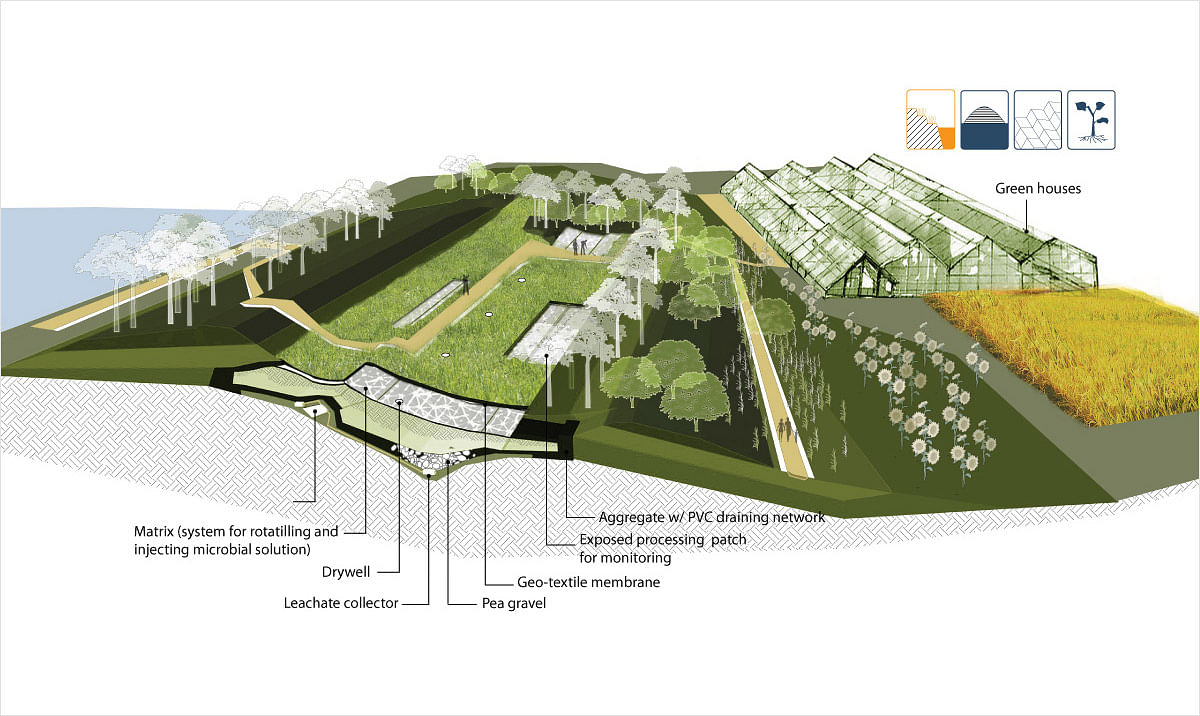
Mattress Pillow (Image: AGER Group)

AGER Group's Boston Office has shared with us their proposal "Domestic Laundry: Flush Basin Curtain Mattress Pillow" that won the team an Honorable Mention in the Gowanus Lowline: Connections competition (previously on Bustler). Team members included Jessica Leete, Albert Chung, Winnie Lai, Shan Shan Lu, and Claire Ji Kim.

The competition, hosted by Gowanus by Design, seeks a new strategy for the development of Brooklyn's Gowanus area, showcasing different options for the Gowanus canal.

Project Description from the Architects:

The Gowanus Canal is located in the Brooklyn borough of New York City and is one of the only underdeveloped areas left for good reason.  In 2010 the EPA put Gowanus Canal on the Superfund National Priorities List.  The approximately mile long canal was built on an existing creek in 1869 and acted as a major cargo transportation hub between Brooklyn and New York City with manufactured gas plants, mills, tanneries, and chemical plants among the industries located there. In addressing the Gowanus Canal site and community, AGER focused on industry past, present, and future looking for connections that allow the legacy of this place to continue.  The competition organizers, Gowanus by Design, set speculation on the value of urban development of postindustrial lands, and the possibility of dynamic, pedestrian-oriented architecture that either passively or actively engages with the canal and surrounding watershed as the main competition objectives.

AGER’s design approach is based on the belief that we can transform retrograde materialism into a healthy working industrial ecology where wastes are recycled, resources conserved, and community regenerated based on the existing foundations of a site.  Using a variety of bioremediation and site cultivation methods our “Domestic Laundry” is aired through the language of the “Flushing Basin” or cleansing wetland, “Curtain” or vertical filter, “Mattress” or microbial matrix medium, and “Pillow” or soil cleansing berm.  Through an opportunity for observation and participation in the processes of site remediation people are connected to place and the industry that makes it so.

Mattress Pillow 

The remediation process of land farming is articulated through landforms that are designed with infrastructure necessary to accelerate the soil cleansing process. Sod attached to a geo-textile membrane provides a movable surface of containment over layers of contaminated soil and layers of bio-augmented material.  A network of tubing connected to vertical drywells provides a means for monitoring contamination, maintaining moisture levels, and injecting the biomatrix mixture specific to the soil being treated.
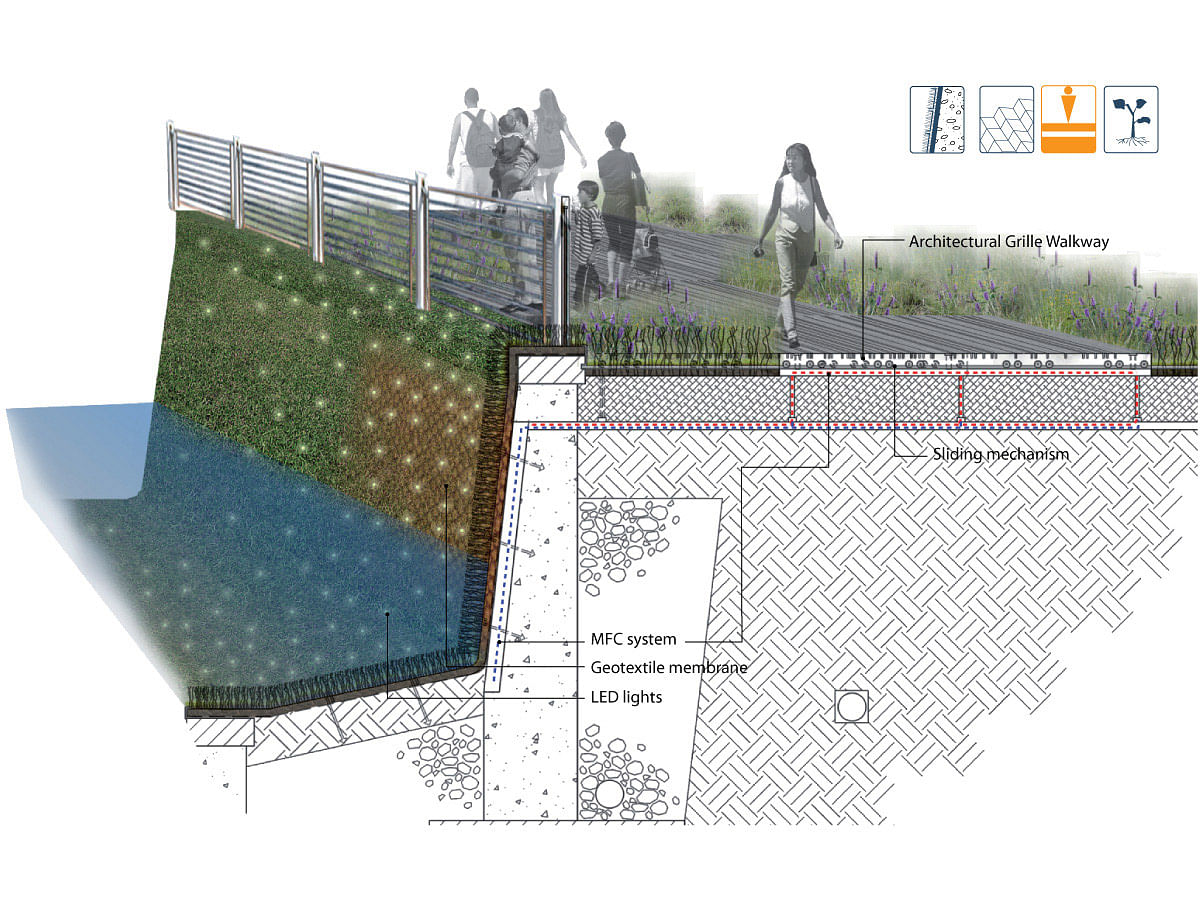
Curtain mattress (Image: AGER Group)

Curtain Mattress 

A Microbial Fuel Cell (MFC) mechanism uses contaminated soil as a fuel to generate energy. The MFC is integrated into a geotextile retaining wall and sliding walkway powering the LED display that is woven into the geotextile membrane. The greater the contamination the more power generated for the LED lighting. The LED lighting becomes a performance indicator, which informs passerby of the level of soil contamination.
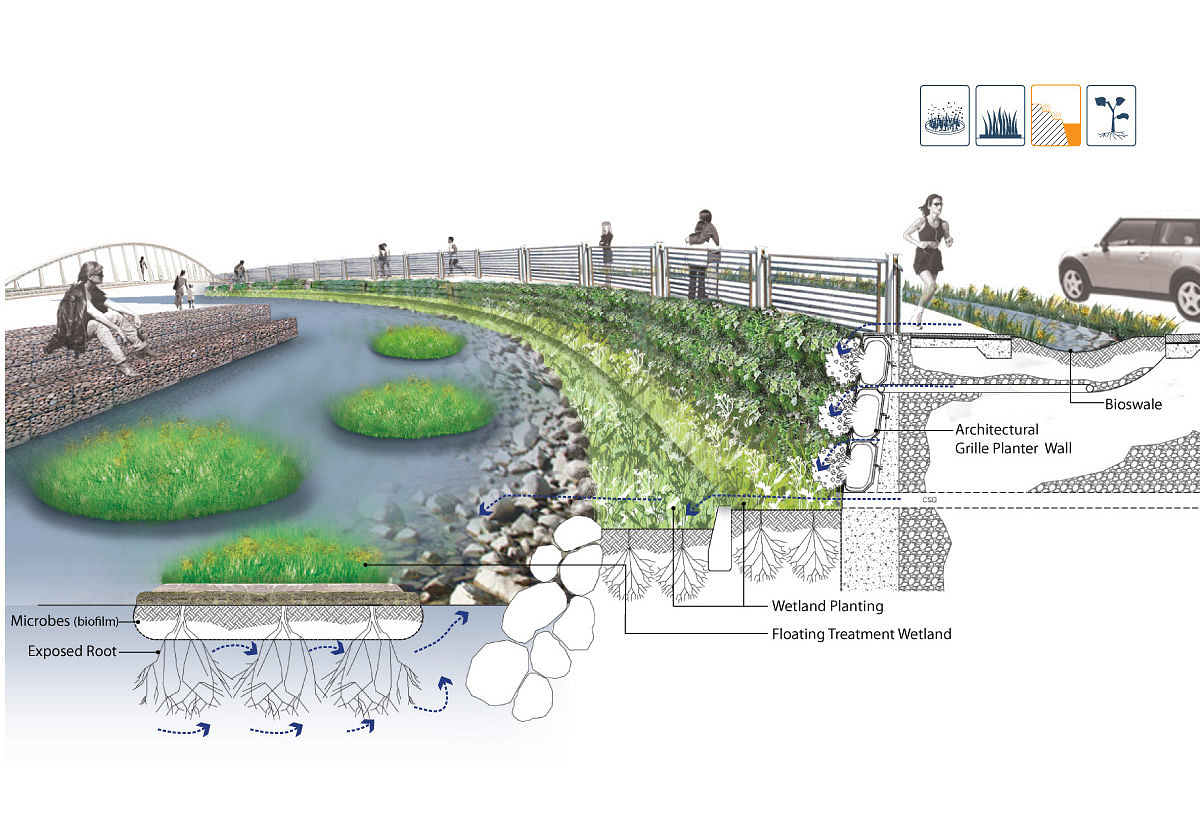
Flush basin curtain (Image: AGER Group)

Flush Basin Curtain 

Future canal basin contamination is limited by flushing water through a variety of remediation methods including floating microbe islands, phytoremediation terraces, and a curtain wall made from custom fabricated architectural grill by a local industry that filters all site run off through biomatrix and phytoremediation layers.
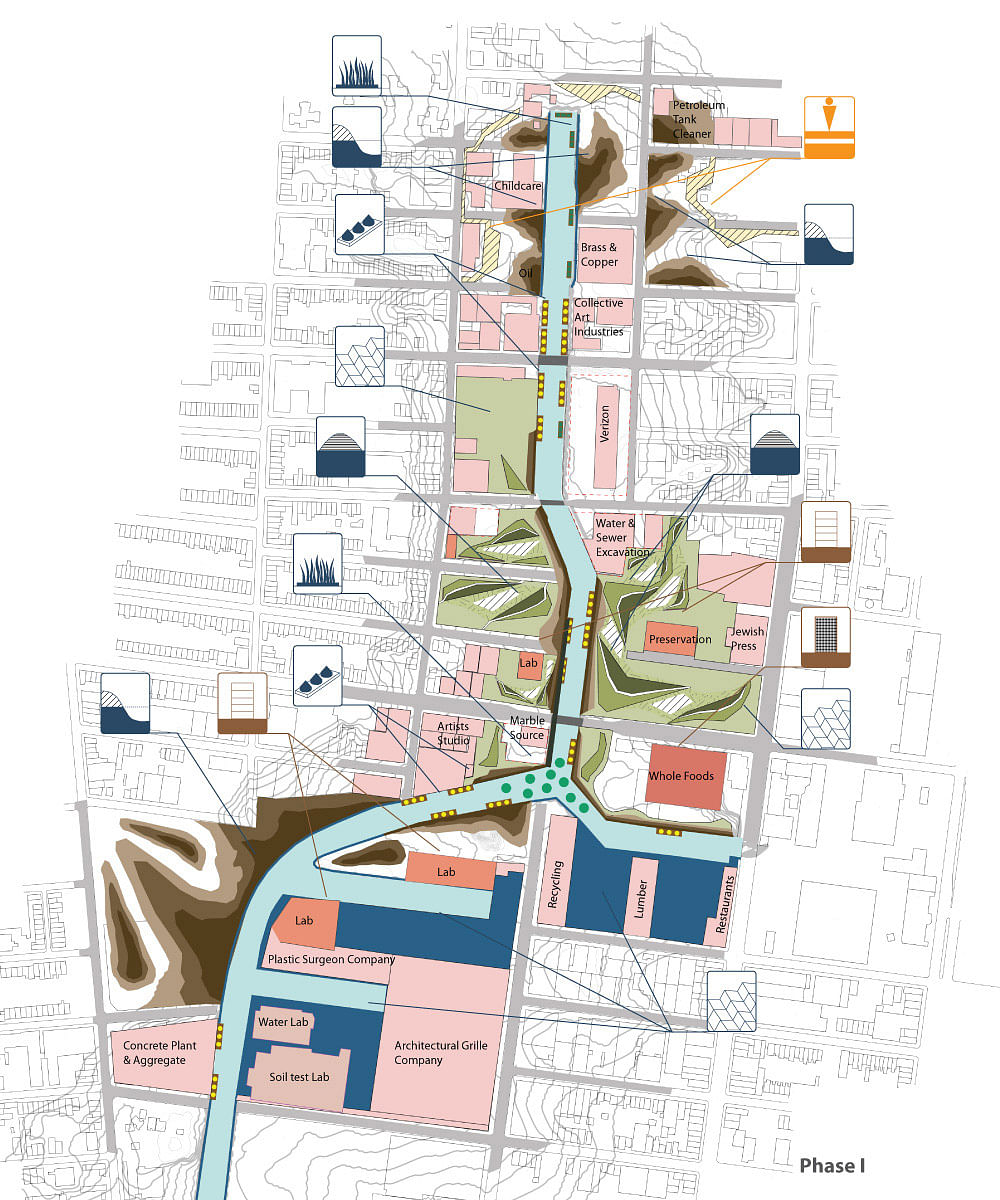
Phase I (Image: AGER Group)

Phase I

Based on the EPA’s site analysis the most polluted sites are aggressively excavated into a laboratory for testing innovative means of site remediation.  Rather than resorting to expensive methods that just relocate the problem to another site we see all sites as connected and use this as an opportunity to exhibit affordable effective methods for remediation of contaminated sites that could be implemented world wide.  Cleansing wetlands are located at all CSO’s and soil barges are used to treat contaminated canal sludge onsite.  Existing business and community groups are considered resources and integrated into this process thus establishing an identity for the Gowanus Canal as one of innovation and industry.  
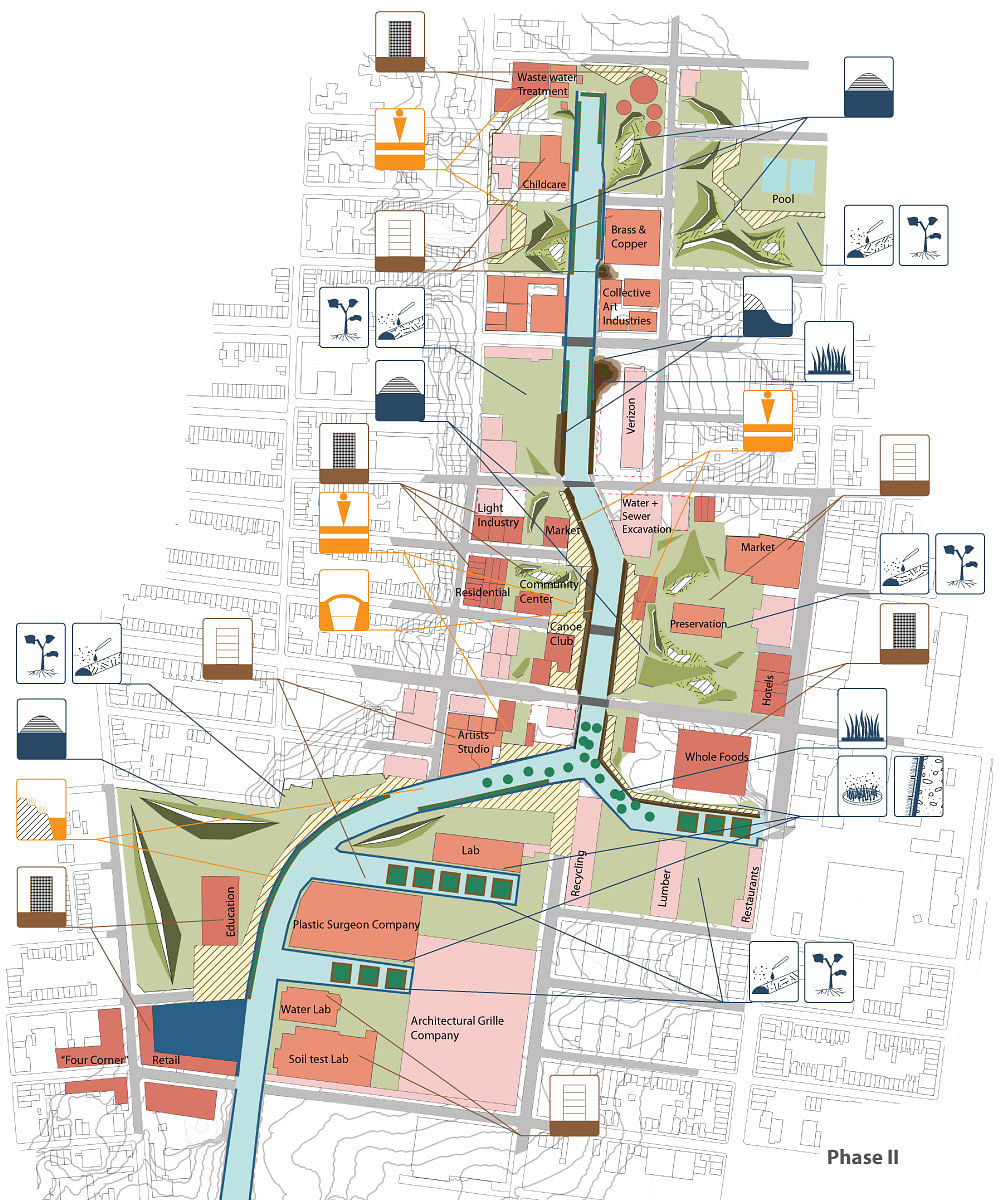
Phase II (Image: AGER Group)

Phase II

After evaluation of the initial laboratory of remediation methods the most effective are intensified and soon public access and observation can be realized at more locations.  Pedestrian, bike, and water taxi connections can be established with ongoing efforts in the Brooklyn area toward the end of this phase and commercial and mixed use development can ensue.
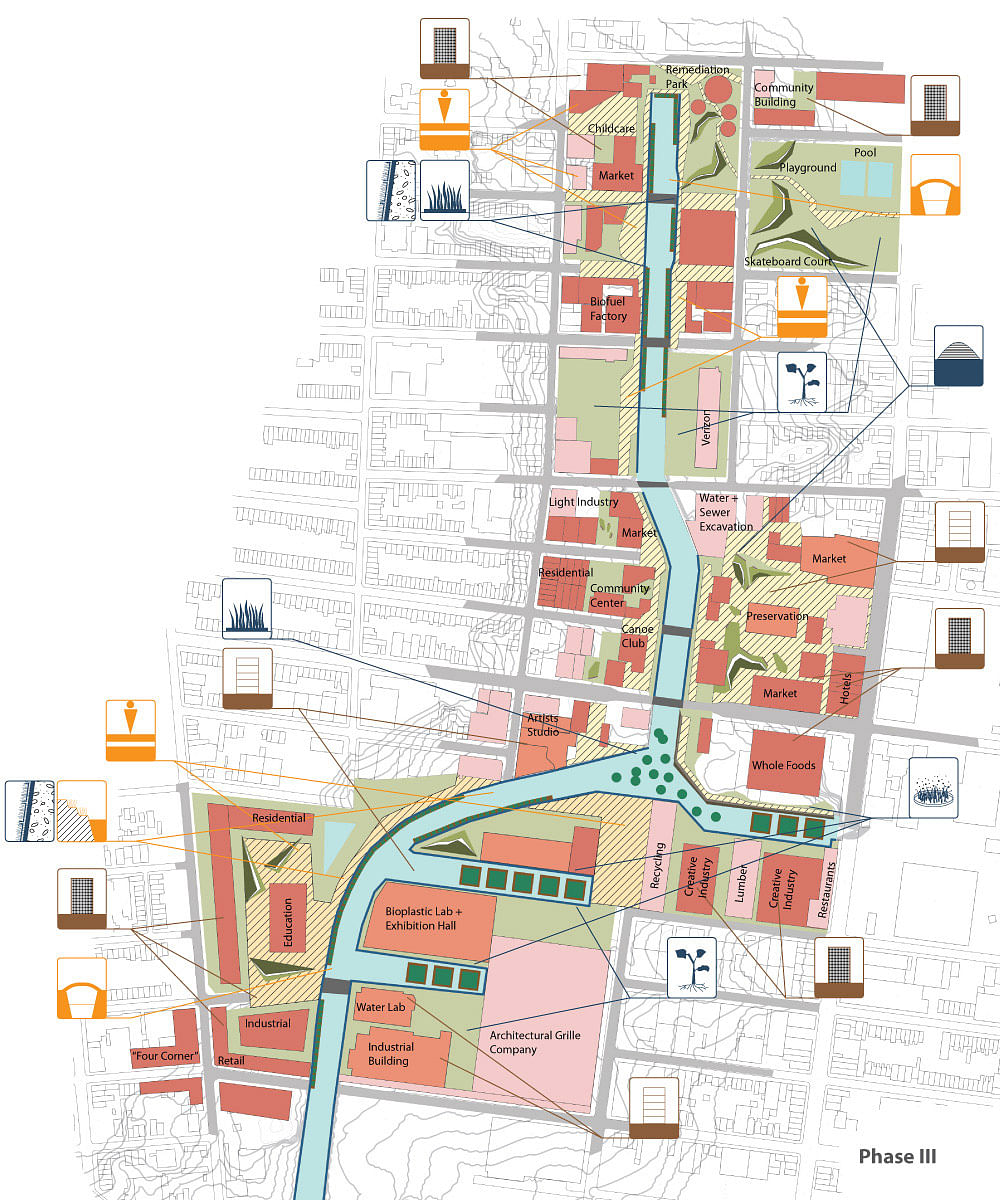
Phase III (Image: AGER Group)

Phase III

By the third phase the soil and water cleansing processes maintain neighborhood health and are well established contained industries offering technology resources to the region.  Residents can take pride in the Gowanus canal as an epic example of our sustainable future.  The once contaminated canal has become an amenity and residents and visitors stroll along the promenade in leisure or to view the diverse examples of industrial innovation and urban ecology. 
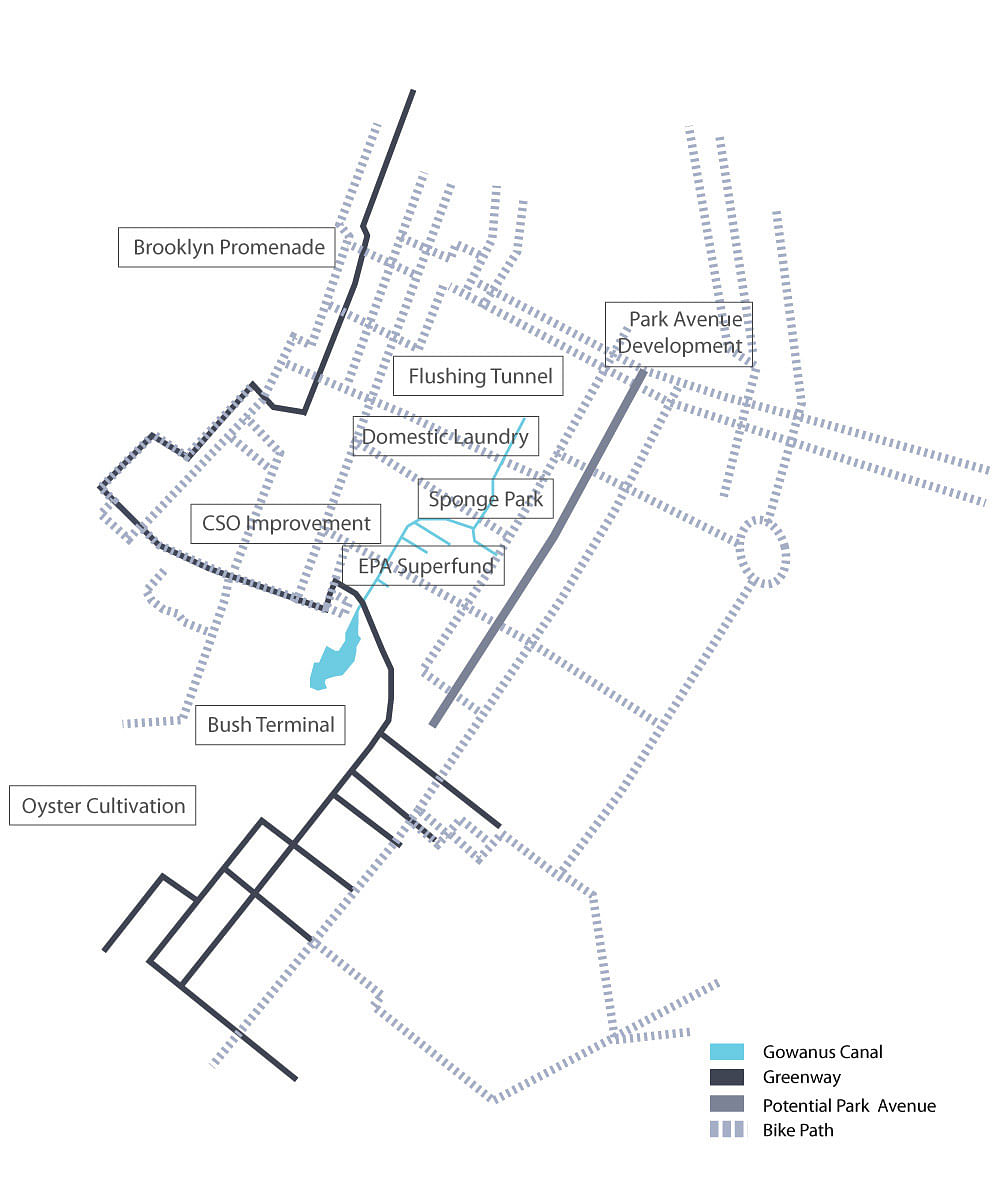
Proposal and development context (Image: AGER Group)
Icon legend and phases (Image: AGER Group)


Related

wetland ● water ● usa ● redevelopment ● new york ● honorable mention ● gowanus lowline ● gowanus ● canal ● brooklyn ● ager

Share

  • Follow

    0 Comments

  • Comment as :

Gowanus Lowline: Connections - Entry "Domestic Laundry"

Sign up for Bustler's Email Newsletters

Next page » Loading

Gowanus Lowline: Connections - Entry "Domestic Laundry"

By Bustler Editors|

Wednesday, Aug 3, 2011

Share

Mattress Pillow (Image: AGER Group)

Related

wetland ● water ● usa ● redevelopment ● new york ● honorable mention ● gowanus lowline ● gowanus ● canal ● brooklyn ● ager

AGER Group's Boston Office has shared with us their proposal "Domestic Laundry: Flush Basin Curtain Mattress Pillow" that won the team an Honorable Mention in the Gowanus Lowline: Connections competition (previously on Bustler). Team members included Jessica Leete, Albert Chung, Winnie Lai, Shan Shan Lu, and Claire Ji Kim.

The competition, hosted by Gowanus by Design, seeks a new strategy for the development of Brooklyn's Gowanus area, showcasing different options for the Gowanus canal.

Project Description from the Architects:

The Gowanus Canal is located in the Brooklyn borough of New York City and is one of the only underdeveloped areas left for good reason.  In 2010 the EPA put Gowanus Canal on the Superfund National Priorities List.  The approximately mile long canal was built on an existing creek in 1869 and acted as a major cargo transportation hub between Brooklyn and New York City with manufactured gas plants, mills, tanneries, and chemical plants among the industries located there. In addressing the Gowanus Canal site and community, AGER focused on industry past, present, and future looking for connections that allow the legacy of this place to continue.  The competition organizers, Gowanus by Design, set speculation on the value of urban development of postindustrial lands, and the possibility of dynamic, pedestrian-oriented architecture that either passively or actively engages with the canal and surrounding watershed as the main competition objectives.

AGER’s design approach is based on the belief that we can transform retrograde materialism into a healthy working industrial ecology where wastes are recycled, resources conserved, and community regenerated based on the existing foundations of a site.  Using a variety of bioremediation and site cultivation methods our “Domestic Laundry” is aired through the language of the “Flushing Basin” or cleansing wetland, “Curtain” or vertical filter, “Mattress” or microbial matrix medium, and “Pillow” or soil cleansing berm.  Through an opportunity for observation and participation in the processes of site remediation people are connected to place and the industry that makes it so.

Mattress Pillow 

The remediation process of land farming is articulated through landforms that are designed with infrastructure necessary to accelerate the soil cleansing process. Sod attached to a geo-textile membrane provides a movable surface of containment over layers of contaminated soil and layers of bio-augmented material.  A network of tubing connected to vertical drywells provides a means for monitoring contamination, maintaining moisture levels, and injecting the biomatrix mixture specific to the soil being treated.

Curtain mattress (Image: AGER Group)

Curtain Mattress 

A Microbial Fuel Cell (MFC) mechanism uses contaminated soil as a fuel to generate energy. The MFC is integrated into a geotextile retaining wall and sliding walkway powering the LED display that is woven into the geotextile membrane. The greater the contamination the more power generated for the LED lighting. The LED lighting becomes a performance indicator, which informs passerby of the level of soil contamination.

Flush basin curtain (Image: AGER Group)

Flush Basin Curtain 

Future canal basin contamination is limited by flushing water through a variety of remediation methods including floating microbe islands, phytoremediation terraces, and a curtain wall made from custom fabricated architectural grill by a local industry that filters all site run off through biomatrix and phytoremediation layers.

Phase I (Image: AGER Group)

Phase I

Based on the EPA’s site analysis the most polluted sites are aggressively excavated into a laboratory for testing innovative means of site remediation.  Rather than resorting to expensive methods that just relocate the problem to another site we see all sites as connected and use this as an opportunity to exhibit affordable effective methods for remediation of contaminated sites that could be implemented world wide.  Cleansing wetlands are located at all CSO’s and soil barges are used to treat contaminated canal sludge onsite.  Existing business and community groups are considered resources and integrated into this process thus establishing an identity for the Gowanus Canal as one of innovation and industry.  

Phase II (Image: AGER Group)

Phase II

After evaluation of the initial laboratory of remediation methods the most effective are intensified and soon public access and observation can be realized at more locations.  Pedestrian, bike, and water taxi connections can be established with ongoing efforts in the Brooklyn area toward the end of this phase and commercial and mixed use development can ensue.

Phase III (Image: AGER Group)

Phase III

By the third phase the soil and water cleansing processes maintain neighborhood health and are well established contained industries offering technology resources to the region.  Residents can take pride in the Gowanus canal as an epic example of our sustainable future.  The once contaminated canal has become an amenity and residents and visitors stroll along the promenade in leisure or to view the diverse examples of industrial innovation and urban ecology. 

Proposal and development context (Image: AGER Group)
Icon legend and phases (Image: AGER Group)


Share

  • Follow

    0 Comments

  • Comment as :

Archinect JobsArchinect Jobs

The Archinect Job Board attracts the world's top architectural design talents.

VIEW ALL JOBS POST A JOB

Project Designer / Job Captain

Solutions Architecture Corp

Project Designer / Job Captain

Verona, NJ, US

Project Architect

Arrowstreet

Project Architect

Boston, MA, US

Intermediate Architect

NDKazalas Architecture PC

Intermediate Architect

New York, NY, US

Intermediate Architectural Designer

David Smotrich & Partners LLP

Intermediate Architectural Designer

New York, NY, US

Project Architect/ Designer

Nandinee Phookan Architect, P.C.

Project Architect/ Designer

New York, NY, US

Senior Project Architect

Breland – Harper

Senior Project Architect

Los Angeles, CA, US

Junior Designer

OLIVER FREUNDLICH DESIGN

Junior Designer

New York, NY, US

Junior Architect

Eric Colbert & Associates

Junior Architect

Washington, DC, US

Architects with 4-10 Years' Experience

Adamson Associates, Inc.

Architects with 4-10 Years' Experience

Los Angeles, CA, US

Designer

HATCH ARCHITECTURE

Designer

Los Angeles, CA, US

Next page » Loading