• Login / Join
  • About
  • •
  • Contact
  • •
  • Advertising
bustler logo
bustler logo
  • News
  • Competitions
  • Events
  • Bustler is powered by Archinect
  • Sign up for Bustler's Email Newsletters

  • Follow these Bustler feeds:

  • Search

    Search in

  • Submit

    What are you submitting?

    News Pitch
    Competition
    Event
  • Login / Join
  • News|Competitions|Events
  • Search
    | Submit
    | Follow
  • Search in

    What are you submitting?

    News Pitch
    Competition
    Event

    Follow these Bustler feeds:

  • About|Contact|Advertising
  • Login / Join
Tagged: de architekten cie

De Architekten Cie. Wins Kaohsiung Port Station Urban Design Competition

By Bustler Editors|

Thursday, Jul 14, 2011
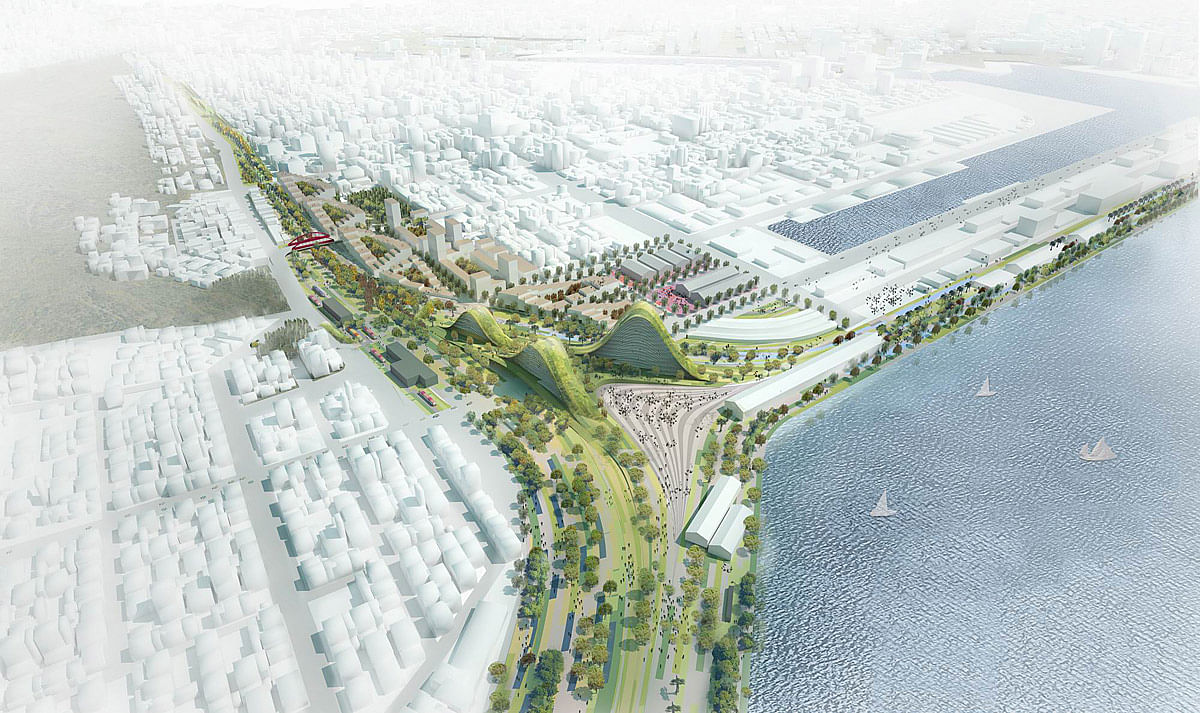
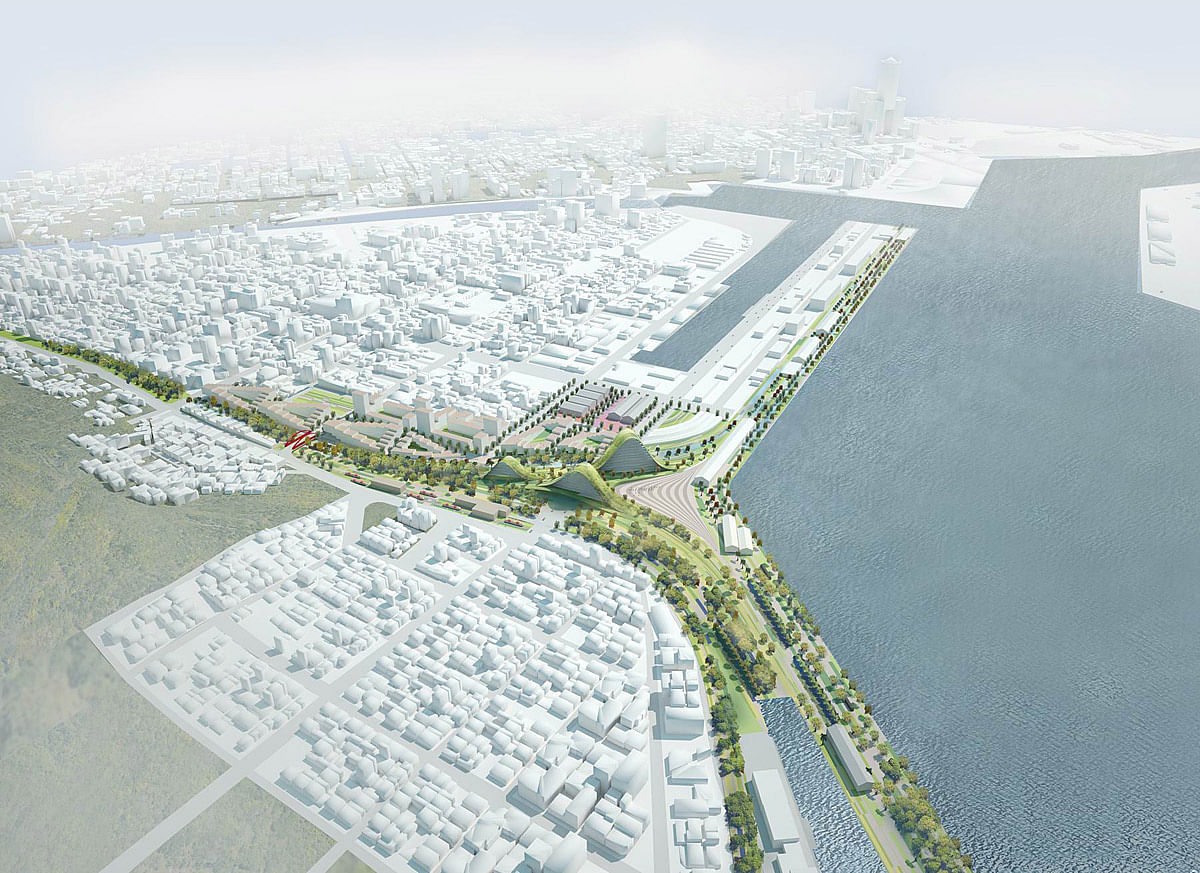
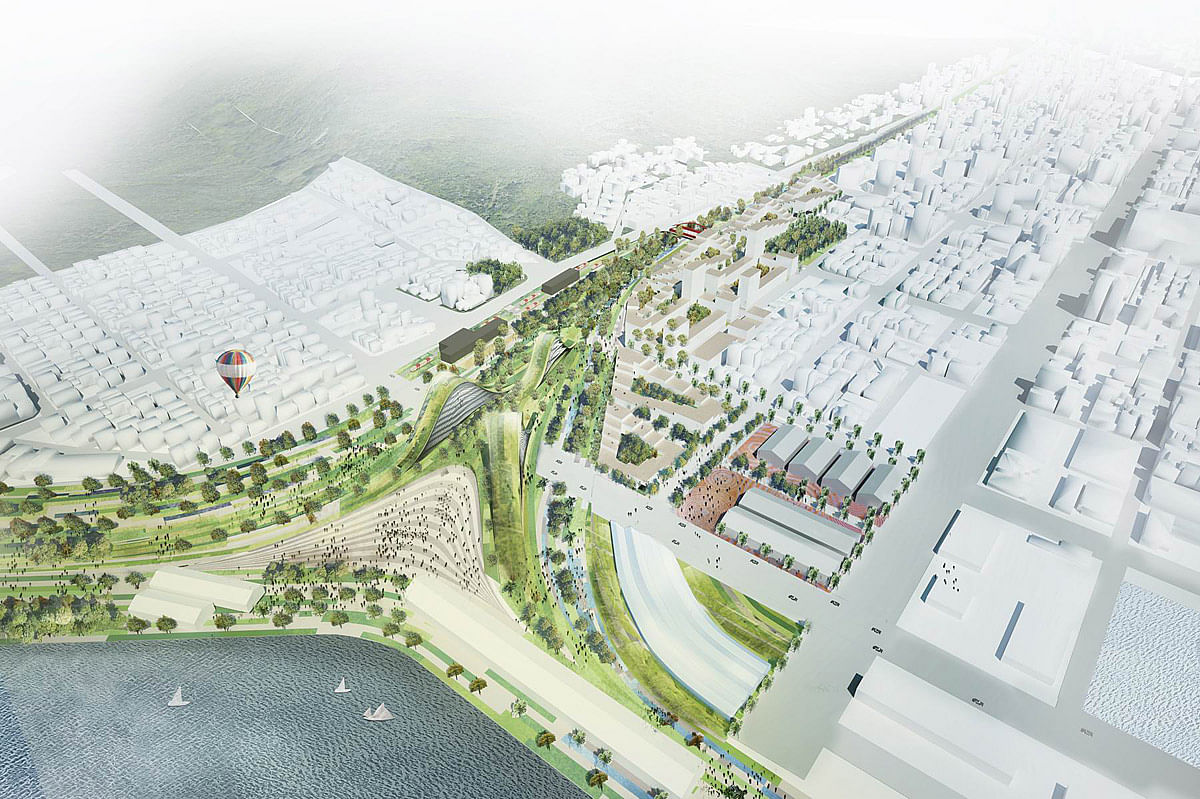
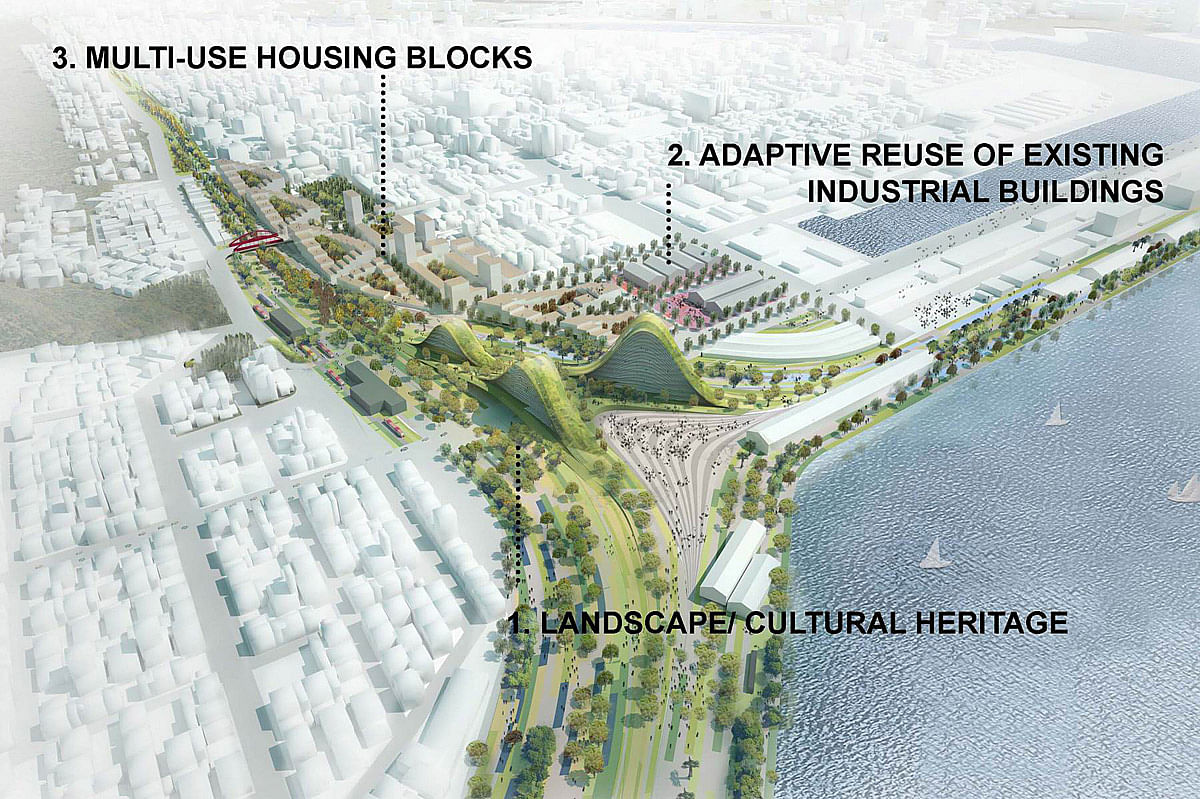
Aerial view of the competition-winning Kaohsiung Port Station concept by De Architekten Cie., in collaboration with Rosetta Elkin/RSE Landscape (Image: De Architekten Cie.)

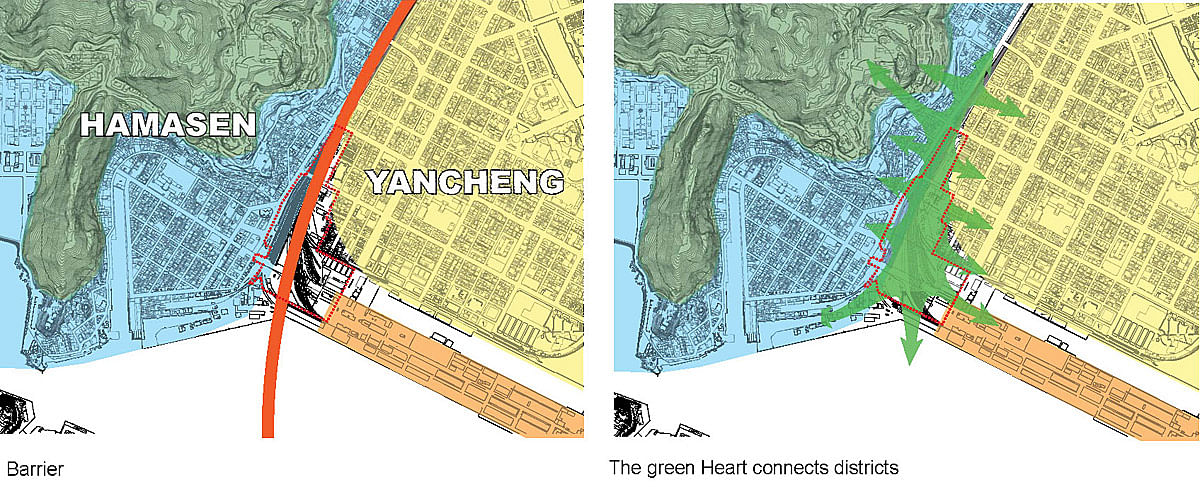
Amsterdam-based practice De Architekten Cie., in collaboration with Rosetta Elkin of RSE Landscape, has won the open international Kaohsiung Port Station Urban Design competition in Kaohsiung, Taiwan. The competition was initiated by the city government of Kaohsiung to transform the derelict site of the old railyards and port station from a barrier between two important areas of the city (the Hamasen and Yancheng districts), into a connective piece of the urban fabric.

The stated ambitions by the client for the 15.42 hectare site are to highlight the cultural heritage of the site’s former function while introducing new programs and building volume to accommodate city expansion.  These twin objectives are to be achieved in a phaseable and highly sustainable manner. Since a large portion of the site and existing railway buildings are designated as historical monuments, the central challenge of the brief was to strike a balance between the desire for cultural preservation/revitalization, introducing new development onto the site, and establishing enough connections across site to transform the area from an urban barrier into an urban connector. 
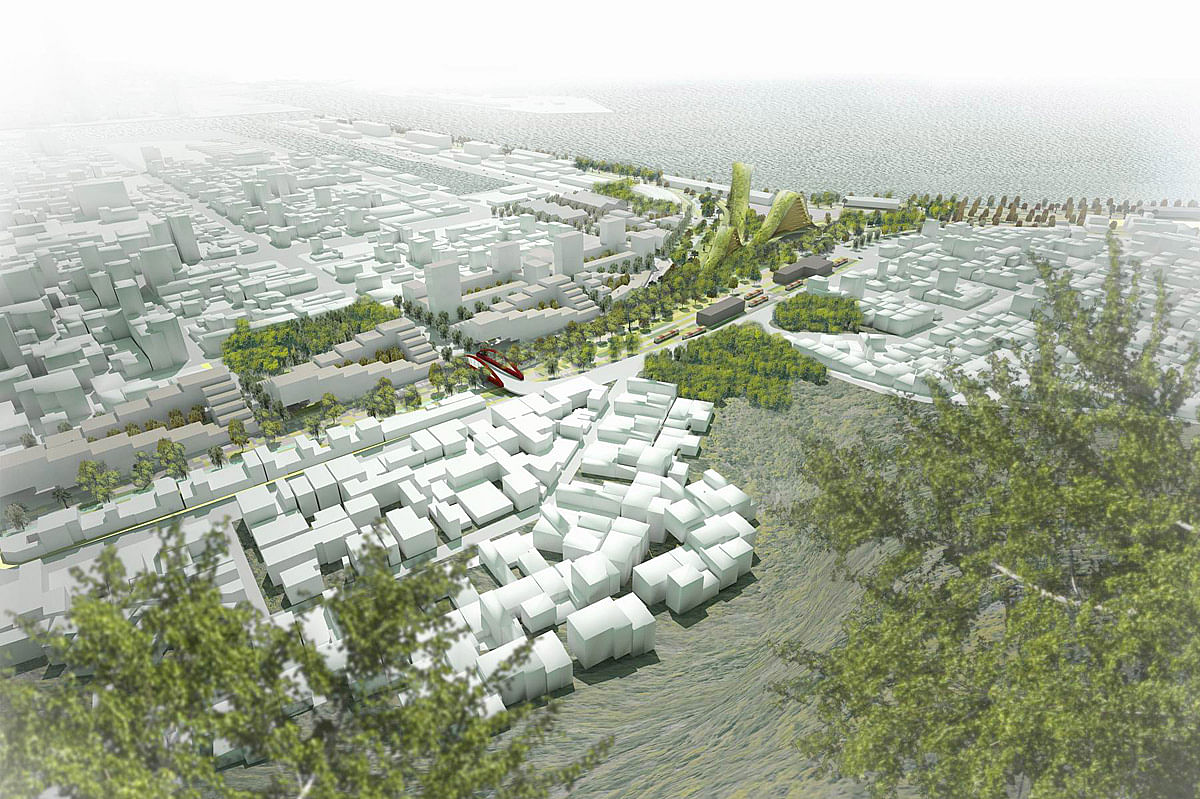
Aerial view (Image: De Architekten Cie.)

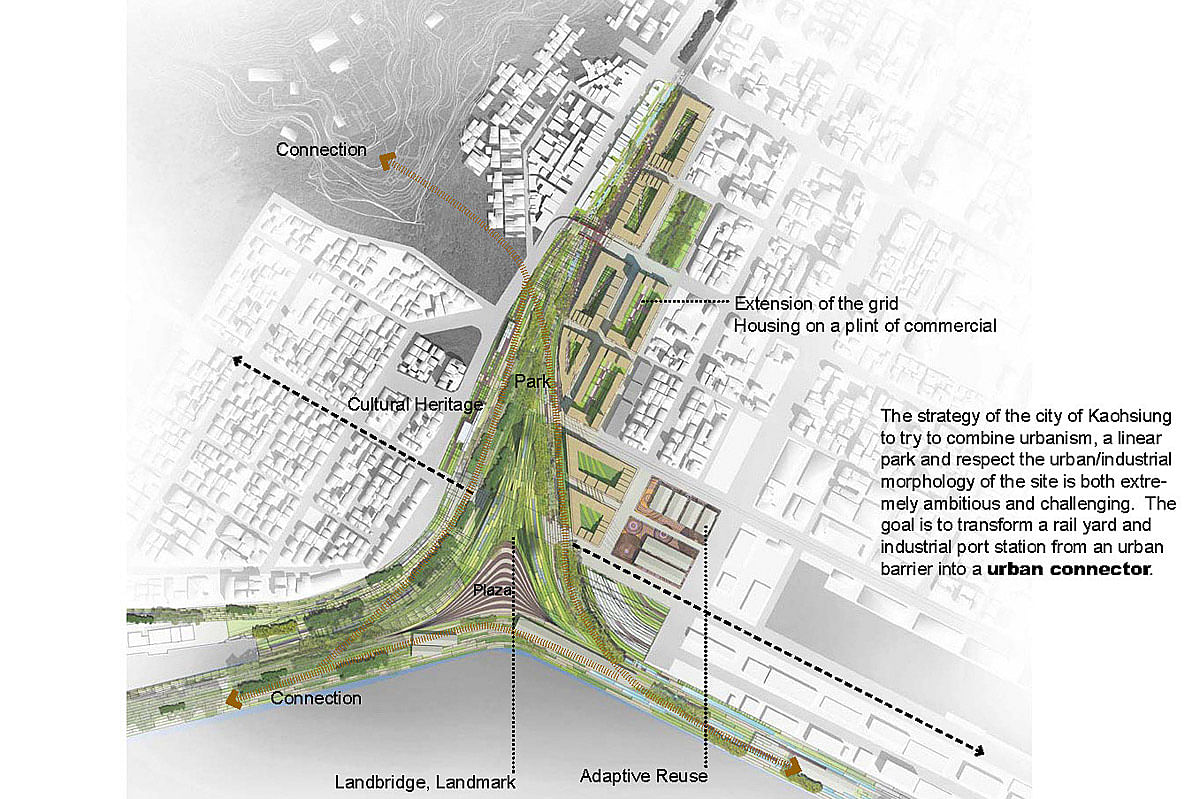
Far from being a tabula rasa condition, the richness and variety of historical and cultural artifacts on the site mean that the urban design must sensitively respond to the various conditions. In Cie’s proposal, new mixed-use urban blocks, commercial areas, renovation/restoration of industrial buildings for artist studios and galleries, railyards, rail lines, and station buildings were interwoven with a new linear park whose central program is an indoor/outdoor historical museum about the industrial history of the are and city. By combining the museological program with the park, the proposal is able to meet the twin objectives of historical preservation/revitalization, and environmental sustainability.

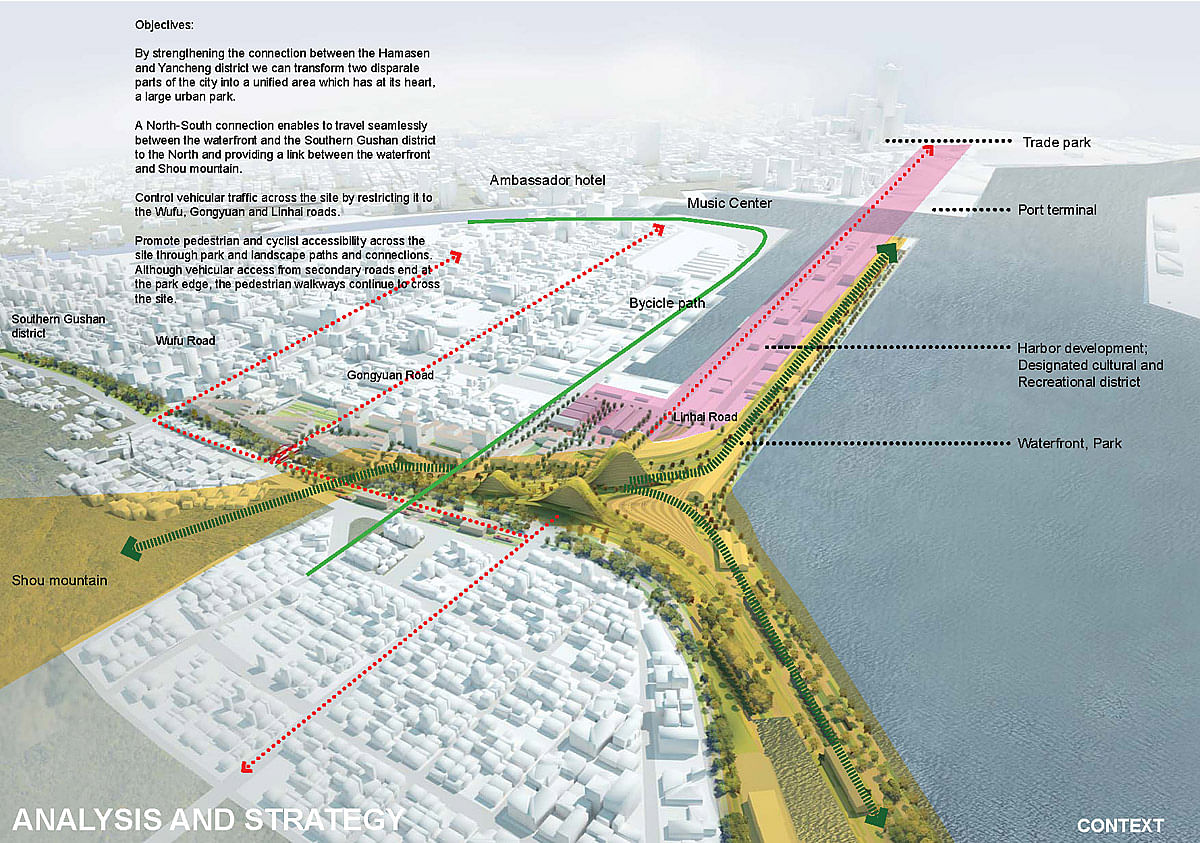
The design of the park itself, draws from historical rail lines and prioritizes a continuous pedestrian and cyclists route along the parks length. Specifically, the landscape surface is organized in such a way that vehicular connections across the site never intersect pedestrian and cyclist traffic through the park. As such, one of the iconic elements in the plan is the landmark/landbridge, a combination of landbridge, museological programs, and other functions.

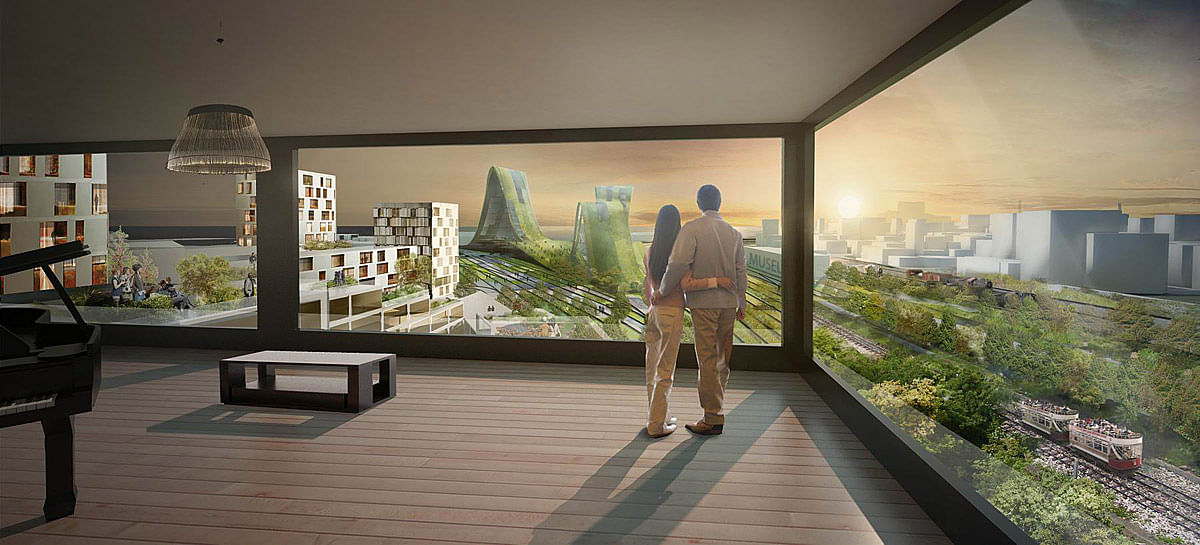
Park view (Image: De Architekten Cie.)
Panorama view (Image: De Architekten Cie.)

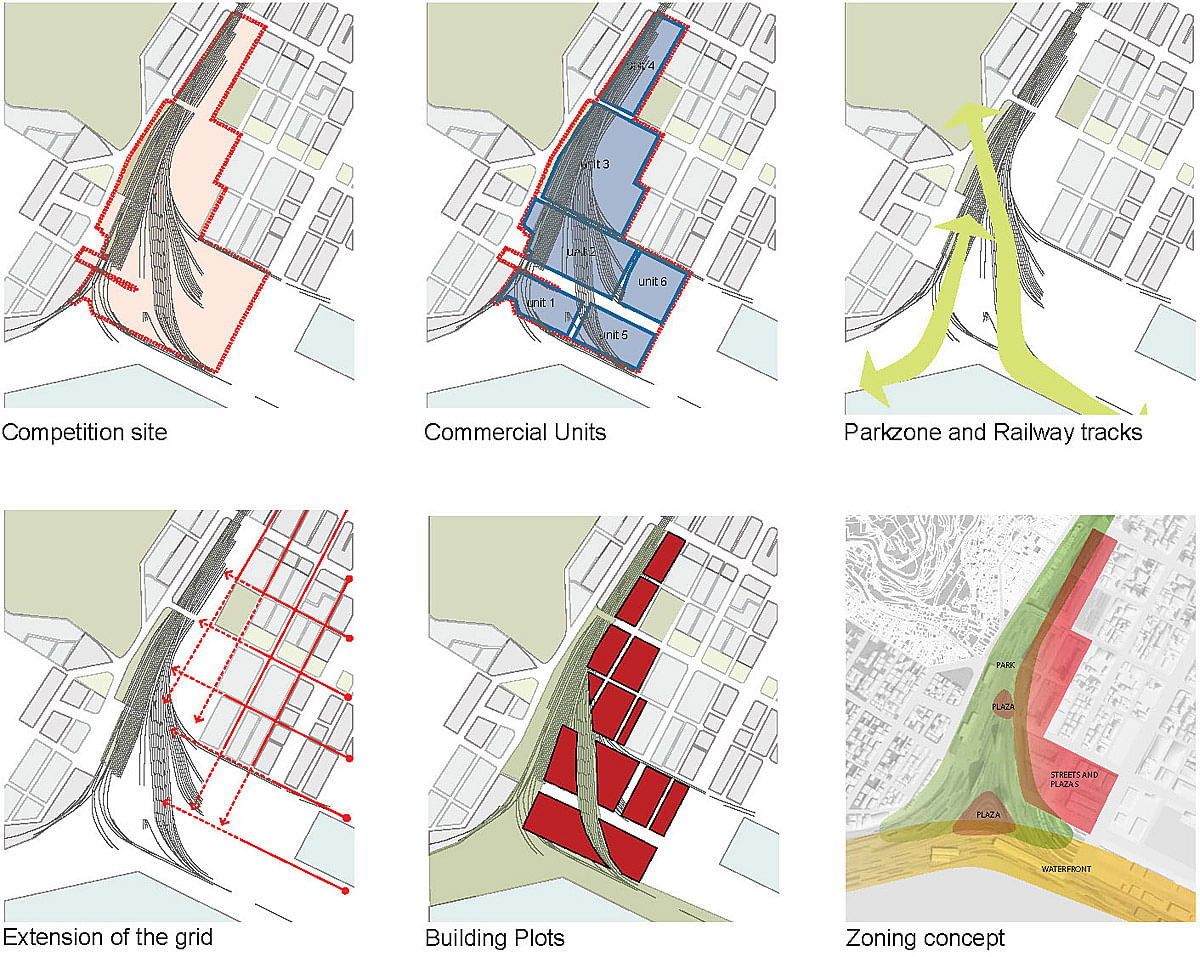
For the perspective of urbanism, the ambition of the proposal was not to raze the site and start fresh.  Rather, it aims to sensitively extend the existing urban block morphology onto the site with appropriate programmatic mixes (from fully commercial to fully residential blocks) based on their adjacencies and individual conditions. 

Furthermore, the envelope and orientation of the building volume of each block is intended to minimize solar heat gain, maximize cross ventilation through the block, and provide excellent views for all the occupants.

Top view (Image: De Architekten Cie.)

“With the myriad of cultural monuments, the complex adjacencies, and rich history of the site, we tried to envision a place which is both sensitive to the historical urban context and ambitious in terms of environmental sustainability and the transformation the existing urban morphology. We feel strongly that, as the economy of Taiwan, gradually transforms from its manufacturing and industrial past, to one based on cultural production and tourism, our proposal can make a significant contribution to the evolution of the city of Kaohsiung,” say Cie associates Jason Lee and Patrick Koschuch.

Find more project diagrams in the image gallery below.

Related

urban ● taiwan ● port ● kaohsiung ● harbor ● de architekten cie ● city ● asia

Share

  • Follow

    0 Comments

  • Comment as :

De Architekten Cie. Wins Kaohsiung Port Station Urban Design Competition

Three Winning A101 Block City Entries by de Architekten Cie/SVESMI

Sign up for Bustler's Email Newsletters

Next page » Loading

De Architekten Cie. Wins Kaohsiung Port Station Urban Design Competition

By Bustler Editors|

Thursday, Jul 14, 2011

Share

Aerial view of the competition-winning Kaohsiung Port Station concept by De Architekten Cie., in collaboration with Rosetta Elkin/RSE Landscape (Image: De Architekten Cie.)

Related

urban ● taiwan ● port ● kaohsiung ● harbor ● de architekten cie ● city ● asia

Amsterdam-based practice De Architekten Cie., in collaboration with Rosetta Elkin of RSE Landscape, has won the open international Kaohsiung Port Station Urban Design competition in Kaohsiung, Taiwan. The competition was initiated by the city government of Kaohsiung to transform the derelict site of the old railyards and port station from a barrier between two important areas of the city (the Hamasen and Yancheng districts), into a connective piece of the urban fabric.

The stated ambitions by the client for the 15.42 hectare site are to highlight the cultural heritage of the site’s former function while introducing new programs and building volume to accommodate city expansion.  These twin objectives are to be achieved in a phaseable and highly sustainable manner. Since a large portion of the site and existing railway buildings are designated as historical monuments, the central challenge of the brief was to strike a balance between the desire for cultural preservation/revitalization, introducing new development onto the site, and establishing enough connections across site to transform the area from an urban barrier into an urban connector. 
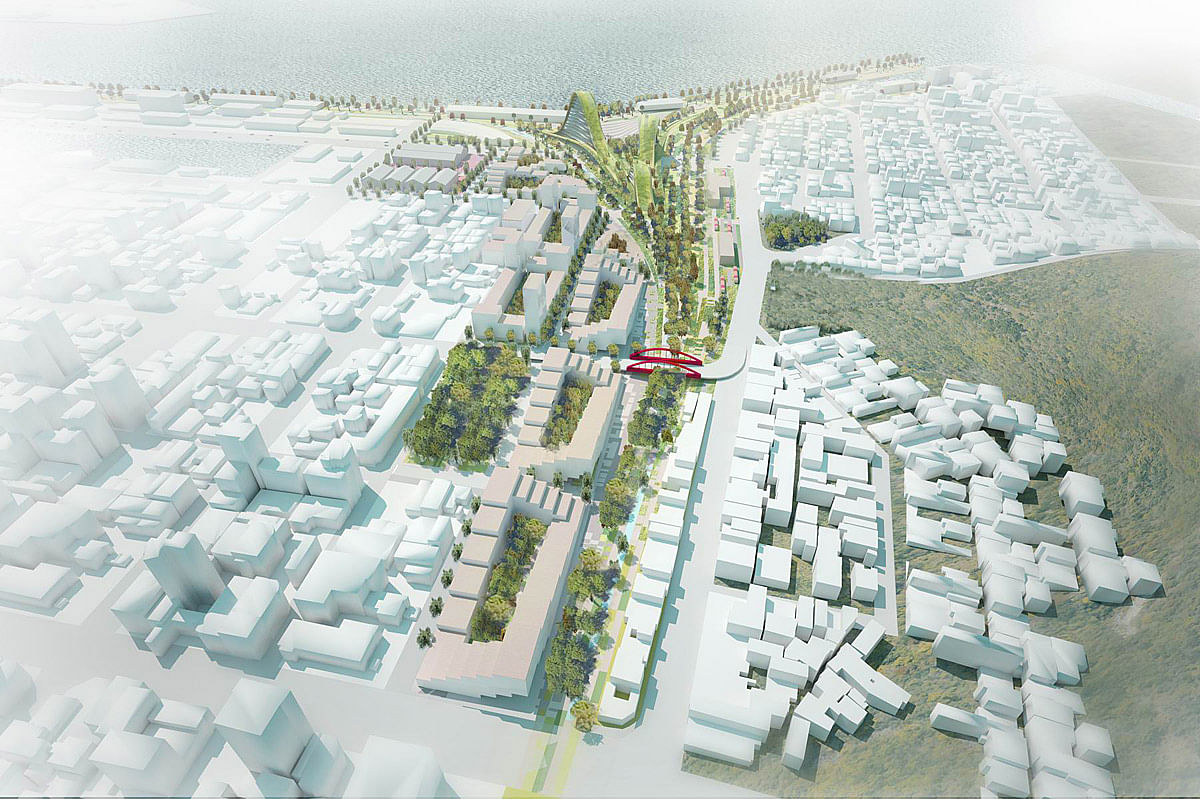
Aerial view (Image: De Architekten Cie.)

Far from being a tabula rasa condition, the richness and variety of historical and cultural artifacts on the site mean that the urban design must sensitively respond to the various conditions. In Cie’s proposal, new mixed-use urban blocks, commercial areas, renovation/restoration of industrial buildings for artist studios and galleries, railyards, rail lines, and station buildings were interwoven with a new linear park whose central program is an indoor/outdoor historical museum about the industrial history of the are and city. By combining the museological program with the park, the proposal is able to meet the twin objectives of historical preservation/revitalization, and environmental sustainability.

The design of the park itself, draws from historical rail lines and prioritizes a continuous pedestrian and cyclists route along the parks length. Specifically, the landscape surface is organized in such a way that vehicular connections across the site never intersect pedestrian and cyclist traffic through the park. As such, one of the iconic elements in the plan is the landmark/landbridge, a combination of landbridge, museological programs, and other functions.
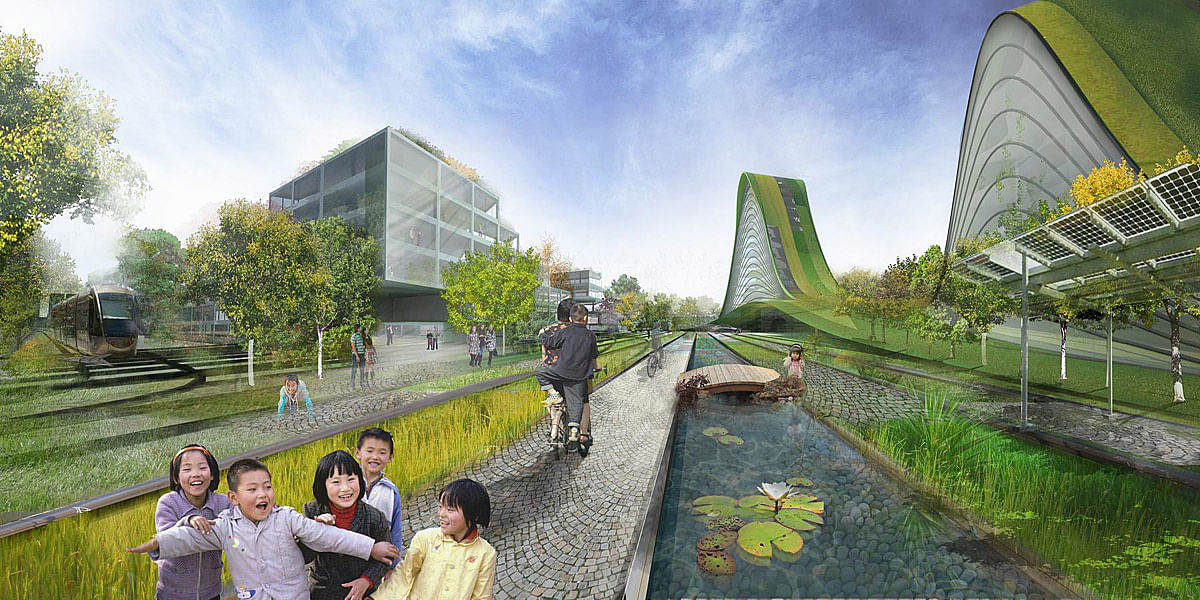
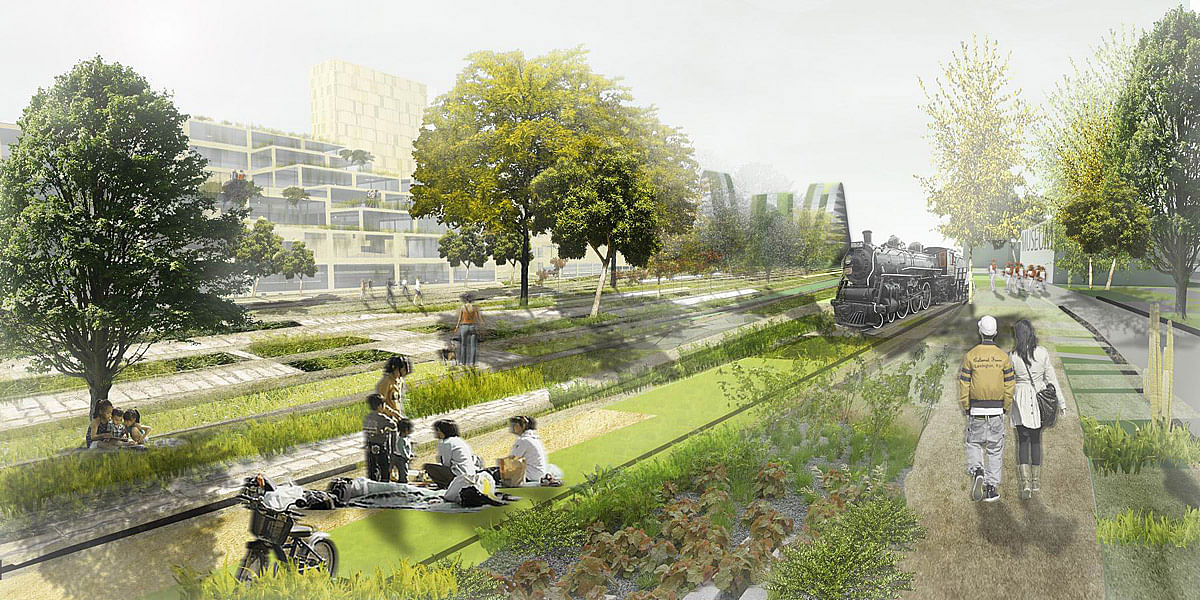
Park view (Image: De Architekten Cie.)
Panorama view (Image: De Architekten Cie.)

For the perspective of urbanism, the ambition of the proposal was not to raze the site and start fresh.  Rather, it aims to sensitively extend the existing urban block morphology onto the site with appropriate programmatic mixes (from fully commercial to fully residential blocks) based on their adjacencies and individual conditions. 

Furthermore, the envelope and orientation of the building volume of each block is intended to minimize solar heat gain, maximize cross ventilation through the block, and provide excellent views for all the occupants.
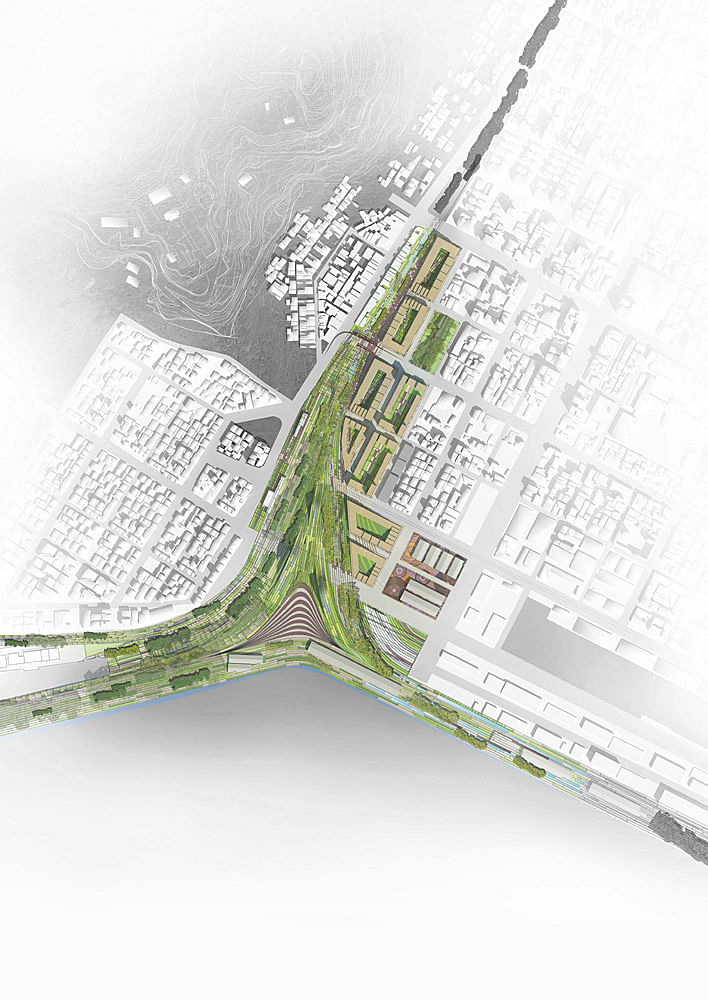
Top view (Image: De Architekten Cie.)

“With the myriad of cultural monuments, the complex adjacencies, and rich history of the site, we tried to envision a place which is both sensitive to the historical urban context and ambitious in terms of environmental sustainability and the transformation the existing urban morphology. We feel strongly that, as the economy of Taiwan, gradually transforms from its manufacturing and industrial past, to one based on cultural production and tourism, our proposal can make a significant contribution to the evolution of the city of Kaohsiung,” say Cie associates Jason Lee and Patrick Koschuch.

Find more project diagrams in the image gallery below.
Share

  • Follow

    0 Comments

  • Comment as :

Archinect JobsArchinect Jobs

The Archinect Job Board attracts the world's top architectural design talents.

VIEW ALL JOBS POST A JOB

Architect / Architectural Designer (3-5 years experience)

Resolution: 4 Architecture

Architect / Architectural Designer (3-5 years experience)

New York, NY, US

Healthcare Project Manager

NK Architects

Healthcare Project Manager

New York, NY, US

Marketing & Business Development Manager

KPB Architects

Marketing & Business Development Manager

Anchorage, AK, US

Hospitality Project Architect

bonetti/kozerski architecture DPC

Hospitality Project Architect

New York, NY, US

Intermediate Architect

GF55 Architects

Intermediate Architect

New York, NY, US

Project Manager

Populous

Project Manager

San Francisco, CA, US

Junior to Intermediate Architect

Totum

Junior to Intermediate Architect

Sherman Oaks, CA, US

Project Architect

Fowlkes Studio

Project Architect

Washington, DC, US

Intermediate Architect

O'Neill Rose Architects

Intermediate Architect

Brooklyn, NY, US

Project Designer / Manager

BuiltIN Studio

Project Designer / Manager

New York, NY, US

Next page » Loading