• Login / Join
  • About
  • •
  • Contact
  • •
  • Advertising
bustler logo
bustler logo
  • News
  • Competitions
  • Events
  • Bustler is powered by Archinect
  • Sign up for Bustler's Email Newsletters

  • Follow these Bustler feeds:

  • Search

    Search in

  • Submit

    What are you submitting?

    News Pitch
    Competition
    Event
  • Login / Join
  • News|Competitions|Events
  • Search
    | Submit
    | Follow
  • Search in

    What are you submitting?

    News Pitch
    Competition
    Event

    Follow these Bustler feeds:

  • About|Contact|Advertising
  • Login / Join
Tagged: design slam

AU Design Slam Exposed Lots of 3D Design Talent

By Bustler Editors|

Monday, Jan 5, 2009

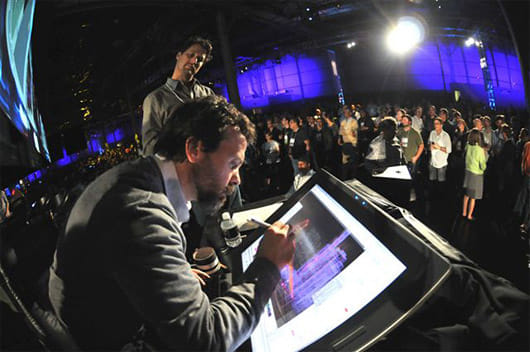
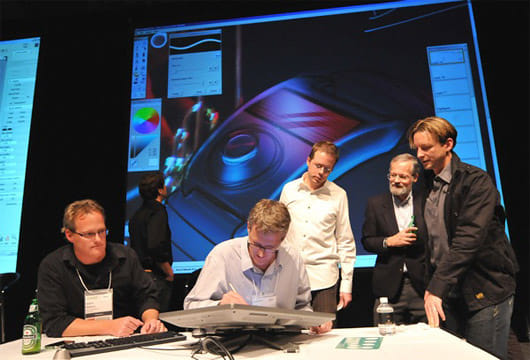
A heart-pounding contest of slick computer tricks, quick-witted design, and high-energy showmanship, the AU Design Slam marked Cut&Paste’s first foray into 3D design.

The live event, taking place over two days at the Autodesk University 2008 conference, put the spotlight on architects and industrial designers as they created original 3D designs in trio of short, 20-minute competition rounds. The fast-paced format tested their skill, speed, and stage presence, as judges roamed the stage, hovering over their shoulders, and an audience of thousands watched closely while the competitors’ work was shown in real time on giant projection screens. Despite the pressure and the inevitable drama of a few technical snags, the competing designers kept their cool and raced to the finish, with results that proved this to be a groundbreaking event in the arena of digital architecture and industrial design.
image

AU Design Slam - event photo

image

AU Design Slam - event photo

image

AU Design Slam - event photo

The AU Design Slam featured the “Less Is More” architecture competition and Round One of the “Watch This” industrial design competition when it kicked off on December 3, 2008. The “Less AND More” architecture competition and Round Two of “Watch This” took center stage on December 4, 2008, at the AU Final Night Party. Winners of each competition—Craig Barbieri for “Less Is More,” David Fano for “Less AND More,” and Henry Goecke for “Watch This”—received the HP iPAQ 310 Travel Companion, courtesy of HP.

Less Is More
The rigor of geometry and materials—simple and smart architectural design in Revit

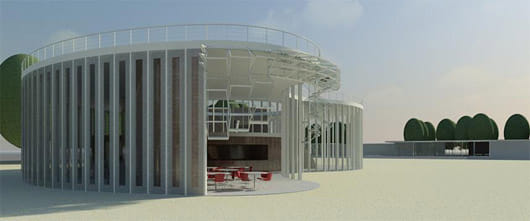
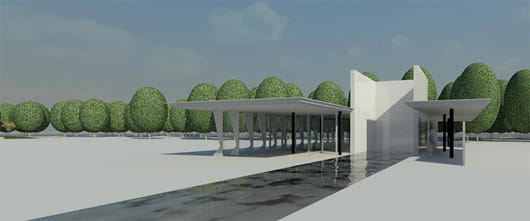
CHALLENGE: In the setting of the famous replica of Mies van der Rohe’s Barcelona pavilion (originally created 1929 and rebuilt around 1985), design an open forum pavilion with the following purposes and constraints in mind:

  • Celebrate 80 years of the Barcelona pavilion
  • Follow, interpret, or get inspired by the principles of van der Rohe and the Modern Movement
  • Provide open and closed space for meetings and lectures, day and night usage
  • Create a new vantage point for experiencing the Barcelona pavilion

All competitors used Revit to create their designs.

image

CRAIG BARBIERI (KlingStubbins) – WINNER

image

MARK BASSETT (Gensler)

image

MATTHEW JOGAN (H3 Hardy)

Less AND More
Wild architecture on new platforms—and a home for the future

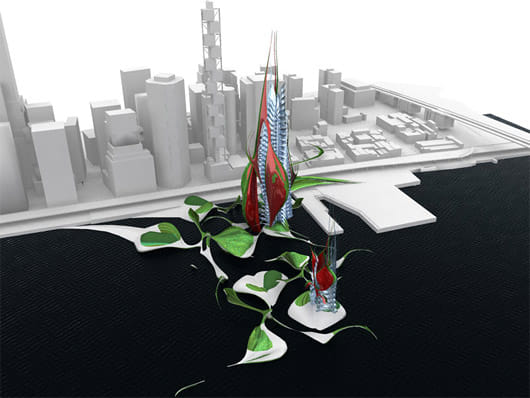
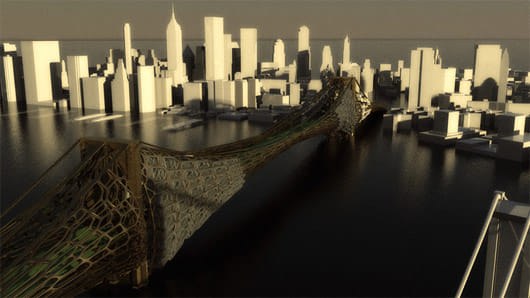
CHALLENGE: Working with a predetermined photo backdrop as reference, create a modern collective social dwelling for 500 families on the water between Manhattan and Brooklyn in New York City. Points of inspiration and practical considerations include:

  • Global warming and the potential need for habitats on water
  • New architectural responses to the problem of collective housing
  • Potential lessons learned from Le Corbusier’s Unité d’Habitation (aka Cité Radieuse) in Marseille
  • Capturing the spirit of New York City
  • Bridging cultures, ideas, and spaces

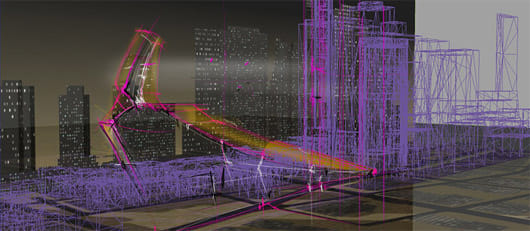
Competitors chose to use different software tools to create their designs: James O’Toole used AliasStudio, David Fano used 3ds Max, and Mark Foster Gage used Maya.

image

DAVID FANO (CASE Design) – WINNER

image

JAMES O’TOOLE (Burt Hill)

image

MARK FOSTER GAGE (Gage/ Clemenceau)

Watch This
A two-round industrial design challenge—creating the next big thing in time-keeping

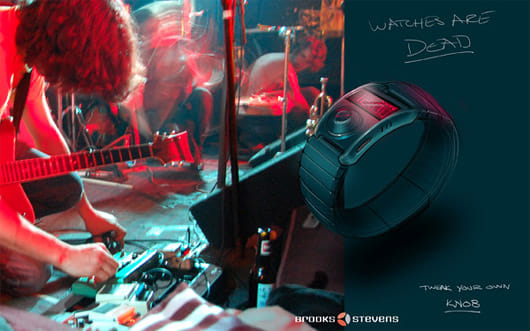
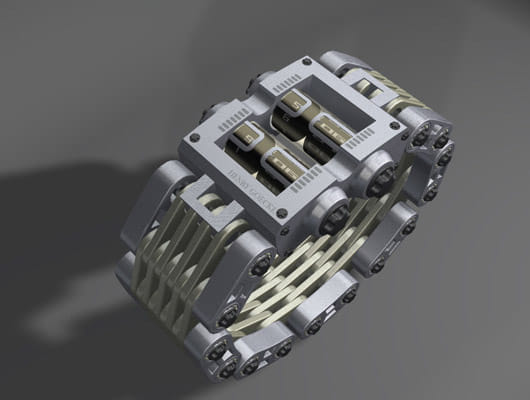
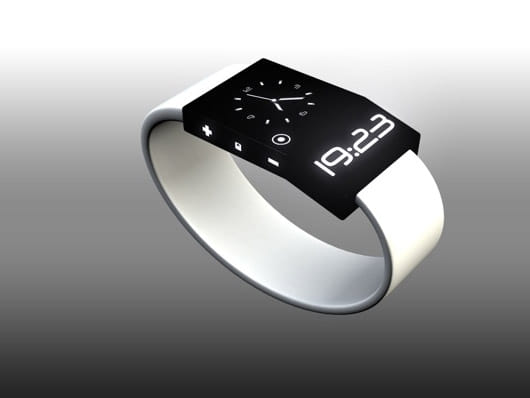
CHALLENGE: Design a timepiece of any size, shape, or model that targets the 16–25 age group in present-day society, narrowing down the market by identifying a particular lifestyle and culture that relates to this demographic. Teams may split the design duties between its two members by having each person carry out one round of design, or they may work as a tag team, switching turns at the computer during a round.

Round One—Conceptual Sketches. Express the concept for the timepiece, creating an image board that captures the key themes, ideas behind the concept, and the proposed form factor (design intent). Communicate the target user’s lifestyle, the direction of the styling, unique functional aspects, and the design intent.

Round Two—3D Modeling. Based on conceptual sketches from Round One, create a 3D comp of the timepiece. The primary body of the time piece must be made on the spot from scratch.

All teams used AliasStudio to create their designs. Henry Goecke chose to compete solo and used SketchBook Pro for his Round One work.

image

HENRY GOECKE (Armstrong & White) – WINNER

image

CORALEE SANDEE (Kohler) & ROB WURM (Independent)

image

RICH WALTERS (Brooks Stevens) & GLENN WALTERS (Brooks Stevens)

Photos & Images: Cut&Paste

Related

winners ● event ● digital ● design slam ● cut&paste;conference ● autodesk university ● autodesk ● au

Share

  • Follow

    0 Comments

  • Comment as :

AU Design Slam Exposed Lots of 3D Design Talent

Sign up for Bustler's Email Newsletters

Next page » Loading

AU Design Slam Exposed Lots of 3D Design Talent

By Bustler Editors|

Monday, Jan 5, 2009

Share

Related

winners ● event ● digital ● design slam ● cut&paste;conference ● autodesk university ● autodesk ● au

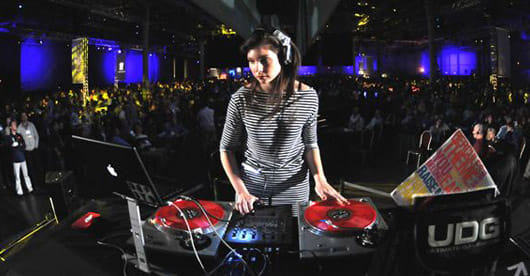
A heart-pounding contest of slick computer tricks, quick-witted design, and high-energy showmanship, the AU Design Slam marked Cut&Paste’s first foray into 3D design.

The live event, taking place over two days at the Autodesk University 2008 conference, put the spotlight on architects and industrial designers as they created original 3D designs in trio of short, 20-minute competition rounds. The fast-paced format tested their skill, speed, and stage presence, as judges roamed the stage, hovering over their shoulders, and an audience of thousands watched closely while the competitors’ work was shown in real time on giant projection screens. Despite the pressure and the inevitable drama of a few technical snags, the competing designers kept their cool and raced to the finish, with results that proved this to be a groundbreaking event in the arena of digital architecture and industrial design.
image

AU Design Slam - event photo

image

AU Design Slam - event photo

image

AU Design Slam - event photo

The AU Design Slam featured the “Less Is More” architecture competition and Round One of the “Watch This” industrial design competition when it kicked off on December 3, 2008. The “Less AND More” architecture competition and Round Two of “Watch This” took center stage on December 4, 2008, at the AU Final Night Party. Winners of each competition—Craig Barbieri for “Less Is More,” David Fano for “Less AND More,” and Henry Goecke for “Watch This”—received the HP iPAQ 310 Travel Companion, courtesy of HP.

Less Is More
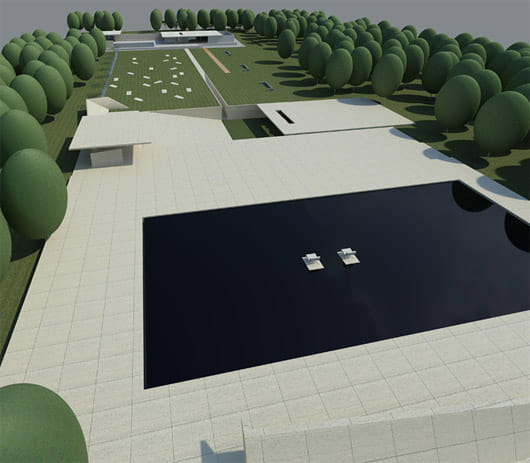
The rigor of geometry and materials—simple and smart architectural design in Revit

CHALLENGE: In the setting of the famous replica of Mies van der Rohe’s Barcelona pavilion (originally created 1929 and rebuilt around 1985), design an open forum pavilion with the following purposes and constraints in mind:

  • Celebrate 80 years of the Barcelona pavilion
  • Follow, interpret, or get inspired by the principles of van der Rohe and the Modern Movement
  • Provide open and closed space for meetings and lectures, day and night usage
  • Create a new vantage point for experiencing the Barcelona pavilion

All competitors used Revit to create their designs.
image

CRAIG BARBIERI (KlingStubbins) – WINNER

image

MARK BASSETT (Gensler)

image

MATTHEW JOGAN (H3 Hardy)

Less AND More
Wild architecture on new platforms—and a home for the future

CHALLENGE: Working with a predetermined photo backdrop as reference, create a modern collective social dwelling for 500 families on the water between Manhattan and Brooklyn in New York City. Points of inspiration and practical considerations include:

  • Global warming and the potential need for habitats on water
  • New architectural responses to the problem of collective housing
  • Potential lessons learned from Le Corbusier’s Unité d’Habitation (aka Cité Radieuse) in Marseille
  • Capturing the spirit of New York City
  • Bridging cultures, ideas, and spaces

Competitors chose to use different software tools to create their designs: James O’Toole used AliasStudio, David Fano used 3ds Max, and Mark Foster Gage used Maya.
image

DAVID FANO (CASE Design) – WINNER

image

JAMES O’TOOLE (Burt Hill)

image

MARK FOSTER GAGE (Gage/ Clemenceau)

Watch This
A two-round industrial design challenge—creating the next big thing in time-keeping

CHALLENGE: Design a timepiece of any size, shape, or model that targets the 16–25 age group in present-day society, narrowing down the market by identifying a particular lifestyle and culture that relates to this demographic. Teams may split the design duties between its two members by having each person carry out one round of design, or they may work as a tag team, switching turns at the computer during a round.

Round One—Conceptual Sketches. Express the concept for the timepiece, creating an image board that captures the key themes, ideas behind the concept, and the proposed form factor (design intent). Communicate the target user’s lifestyle, the direction of the styling, unique functional aspects, and the design intent.

Round Two—3D Modeling. Based on conceptual sketches from Round One, create a 3D comp of the timepiece. The primary body of the time piece must be made on the spot from scratch.

All teams used AliasStudio to create their designs. Henry Goecke chose to compete solo and used SketchBook Pro for his Round One work.
image

HENRY GOECKE (Armstrong & White) – WINNER

image

CORALEE SANDEE (Kohler) & ROB WURM (Independent)

image

RICH WALTERS (Brooks Stevens) & GLENN WALTERS (Brooks Stevens)

Photos & Images: Cut&Paste

Share

  • Follow

    0 Comments

  • Comment as :

Archinect JobsArchinect Jobs

The Archinect Job Board attracts the world's top architectural design talents.

VIEW ALL JOBS POST A JOB

Intermediate Architect

FAME Architecture & Interior Design

Intermediate Architect

Los Angeles, CA, US

Senior Project Architect

IMC Architecture

Senior Project Architect

Brooklyn, NY, US

Project Designer (3 to 5 years)

Swift Lee Office

Project Designer (3 to 5 years)

Los Angeles, CA, US

Senior Interior Designer

IMC Architecture

Senior Interior Designer

Brooklyn, NY, US

Project Manager / Project Architect (5–10 Years’ Experience)

Millan Architect / Studio Inc.

Project Manager / Project Architect (5–10 Years’ Experience)

Venice, CA, US

Intermediate Designer / Architect [5+ years experience]

RO | ROCKETT DESIGN

Intermediate Designer / Architect [5+ years experience]

Sausalito, CA, US

Project Architect

Turpentine Design

Project Architect

Fuquay-Varina, NC, US

Project Architect/Job Captain

HLW International LLP

Project Architect/Job Captain

West Palm Beach, FL, US

Job Captain / Project Manager

Breland – Harper

Job Captain / Project Manager

Los Angeles, CA, US

Designer

HATCH ARCHITECTURE

Designer

Los Angeles, CA, US

Next page » Loading