• Login / Join
  • About
  • •
  • Contact
  • •
  • Advertising
bustler logo
bustler logo
  • News
  • Competitions
  • Events
  • Bustler is powered by Archinect
  • Sign up for Bustler's Email Newsletters

  • Follow these Bustler feeds:

  • Search

    Search in

  • Submit

    What are you submitting?

    News Pitch
    Competition
    Event
  • Login / Join
  • News|Competitions|Events
  • Search
    | Submit
    | Follow
  • Search in

    What are you submitting?

    News Pitch
    Competition
    Event

    Follow these Bustler feeds:

  • About|Contact|Advertising
  • Login / Join
Tagged: emergency exit

"Emergency Exit" - Polish Pavilion at the 12th International Architecture Exhibition in Venice

By Bustler Editors|

Friday, Aug 27, 2010
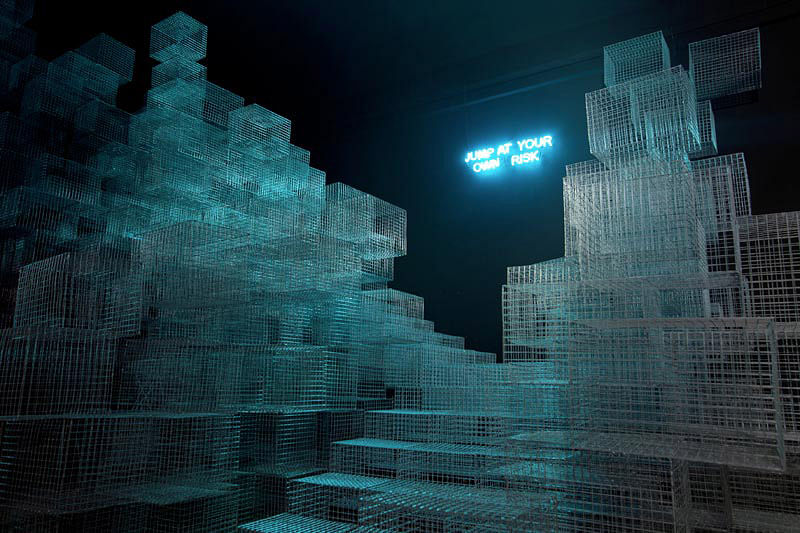
Emergency Exit - Polish Pavilion at the Venice Biennale

Today, Emergency Exit, the Polish Pavilion at the 12th International Architecture Exhibition in Venice, had its opening reception, and we're happy to share images and a description of this fascinating installation. The exhibition will be open to the public starting this Sunday, August 29, until November 21.

Wanna see more Biennale projects? Get your fix and head over to our sister site Archinect where flying reporter Heather Ring is reporting live from Venice:

  • Venice Field Notes #1
  • Venice Fields Notes #2: Villa Frankenstein
  • Venice Field Notes #3: Jump at Your Own Risk

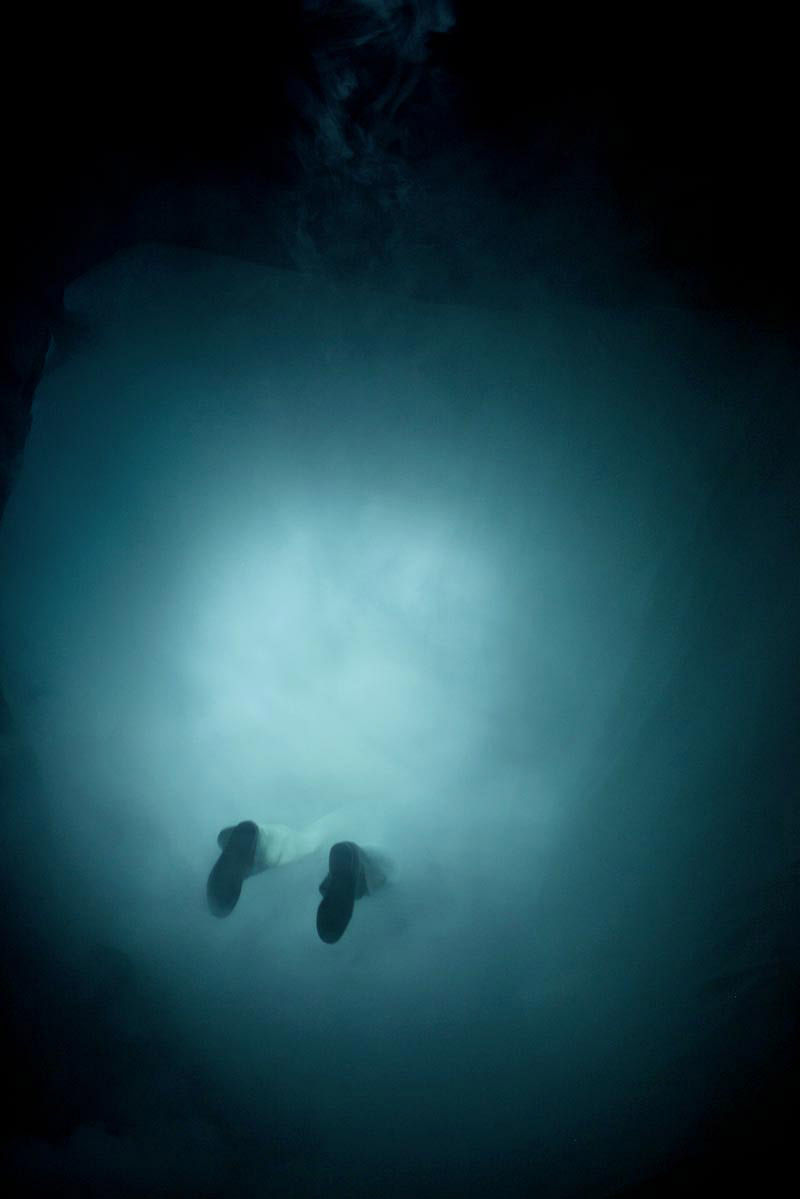
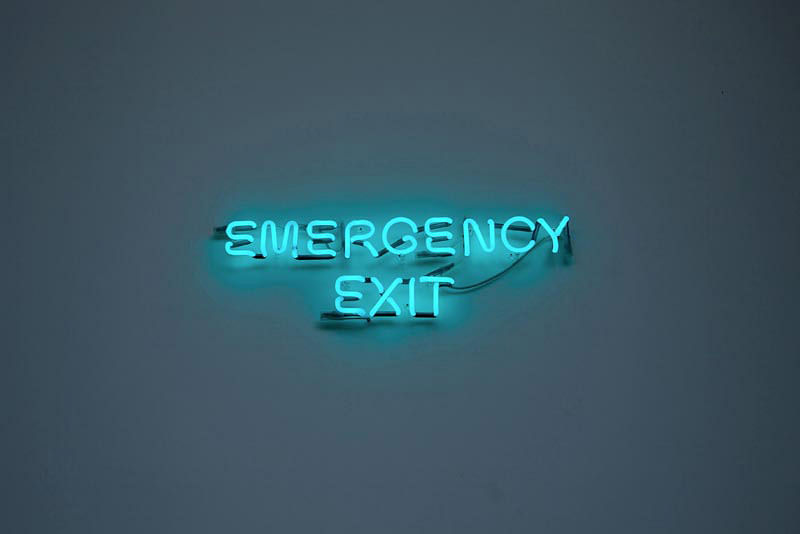
‘A neon Emergency Exit sign hangs on the facade of the Polish Pavilion. Inside, a surreal structure made of hundreds of reclaimed bird cages hides a path to its summit. It is lit from within, suggesting a night landscape, a fantastical de-materialized world containing an object and an action. You climb the seemingly precarious structure. At the height of the summit you look down into a churning sea of clouds. Your breath catches, your pulse quickens; you look down, then out, and then leap blindly into the void. . .’
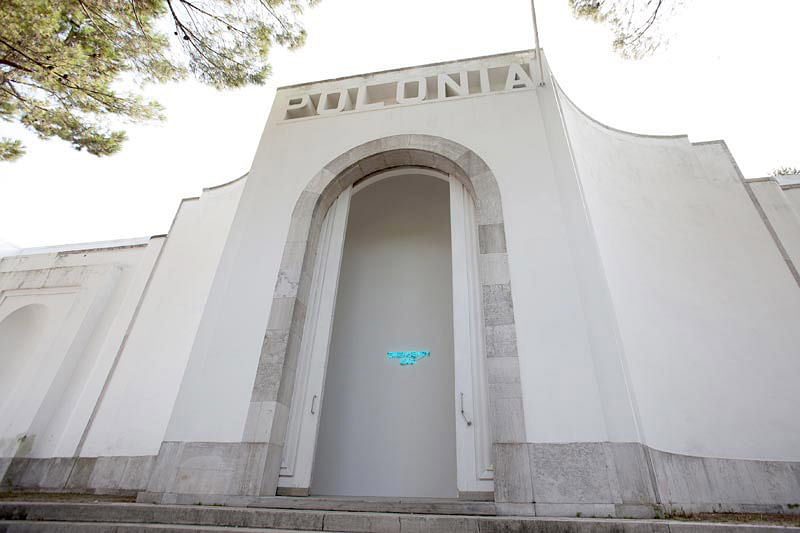
Emergency Exit - Polish Pavilion at the Venice Biennale

The installation Emergency Exit by artist Agnieszka Kurant and architect Aleksandra Wasilkowska seeks to go beyond the logic of urban reality through the creation of ‘urban portable holes’: in-between spaces, places of uncertainty and doubt, of time-space discontinuity, such as abandoned or unfinished buildings, sites of catastrophe or accidents, illegal markets, rooftops and tunnels. The title refers ironically to the health and safety regulations in buildings and urban space that seek to plan, control risk and eliminate the accidental and unexpected.
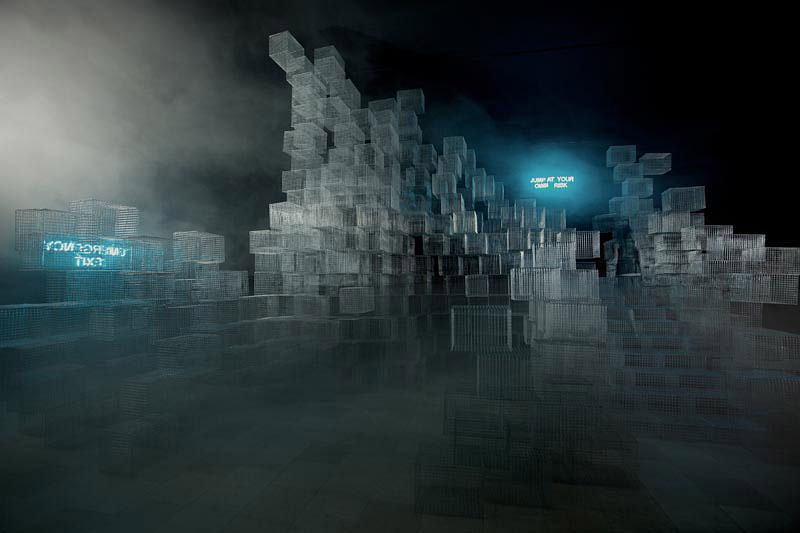
Emergency Exit - Polish Pavilion at the Venice Biennale

The installation is constructed from an aggregate of metal cages, more commonly used to contain birds and prevent flight, to create a new fictional sport within the urban context. The design makes reference to the forms of decaying sports monuments, such as the ski jump in Mokotów, Warsaw—a surrealistic icon of socialist era architecture that is now in ruins. During a test phase, visitors will be able to climb to the top of the structure and jump out into artificially generated clouds, representing ultimate freedom and urban escapism. The Polish Pavilion acts as a laboratory within which Emergency Exit engages with the public directly to provoke, inspire and excite the collective body. These actions will be documented and then presented within the Pavilion.
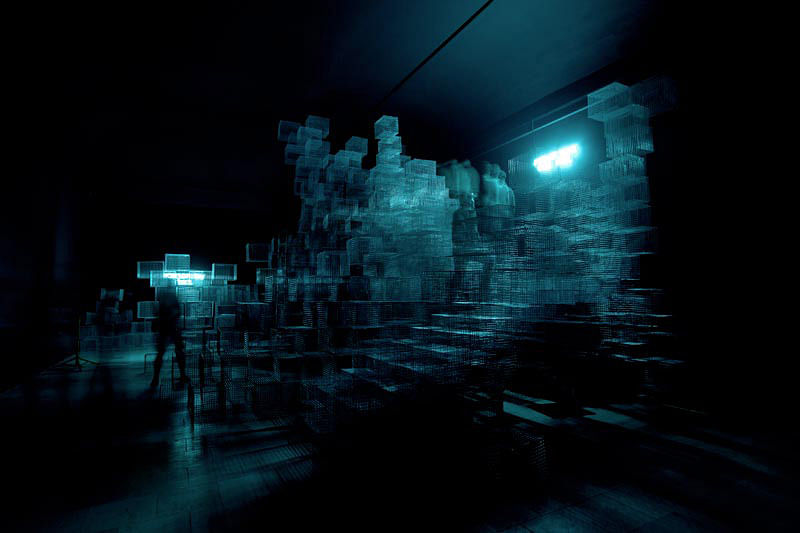
Emergency Exit - Polish Pavilion at the Venice Biennale

Kurant and Wasilkowska interpret the city as an unpredictable, complex system whose collective understanding is composed of intersecting real and imaginary spaces changed through extremely rare events. Nine out of ten things that influence our behaviour and thinking are invisible or intangible. Factors such as myths, rumours and legends overlay themselves onto the physical environment to create an urban morphology of augmented landscapes. At the same time, spontaneity and risk exist as human characteristics that can work against a rational layer of control within the urban fabric. Both invisible phenomena and social actions can change the dynamic of a street, borough, or even the entire city. Architects and planners are therefore unable to precisely anticipate all the needs and transformations of the city. If a rigid and deterministic master plan is unable to integrate emergent needs and changes then the whole city looses its equilibrium.
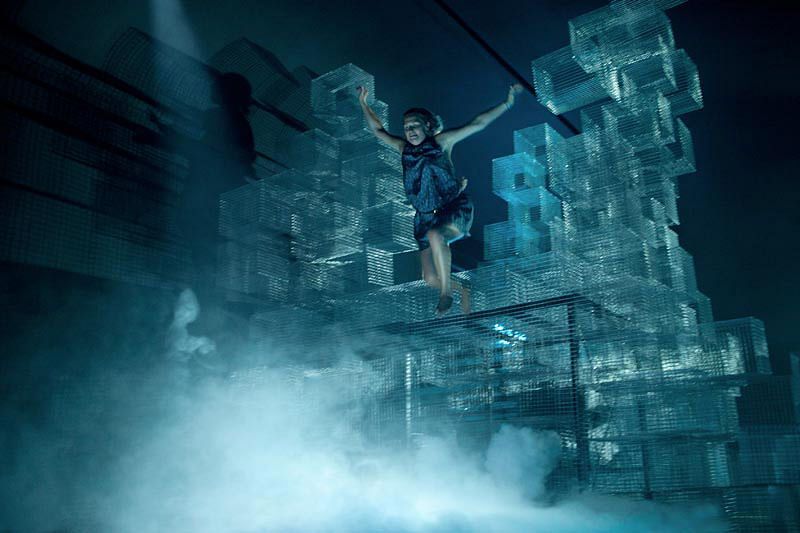
Emergency Exit - Polish Pavilion at the Venice Biennale

Emergency Exit is conceived as a hybrid machine for the transfer to other realities, perforating the system of the city. It is a portable hole to the unknown; a catalyst for different, contradictory emotions and needs. Through the transfer, people fill in the gaps with their own emotions, ideas and desires. Kurant and Wasilkowska see the moment of jumping as an exit from the modernist paradigm in architecture where emotional, affective space was ignored and considered an obsolete ornament. The activity materialises the need and desire to lose control, to free oneself both physically and metaphorically from the current system; from a dominant paradigm, logic or state. To get out of here.

Emergency Exit - Polish Pavilion at the Venice Biennale

The project promotes an approach to architecture and urbanism that reverses the logic of a unilaterally defined urban reality and deterministic master plan; it embraces the unknown phenomena of the city; introduces a higher flexibility of the urban tissue through integrating interstices, gaps and pores, and leaving people space to plug-in or plug-out of dominant urban structures through developing individual, self-organising activities and actions.
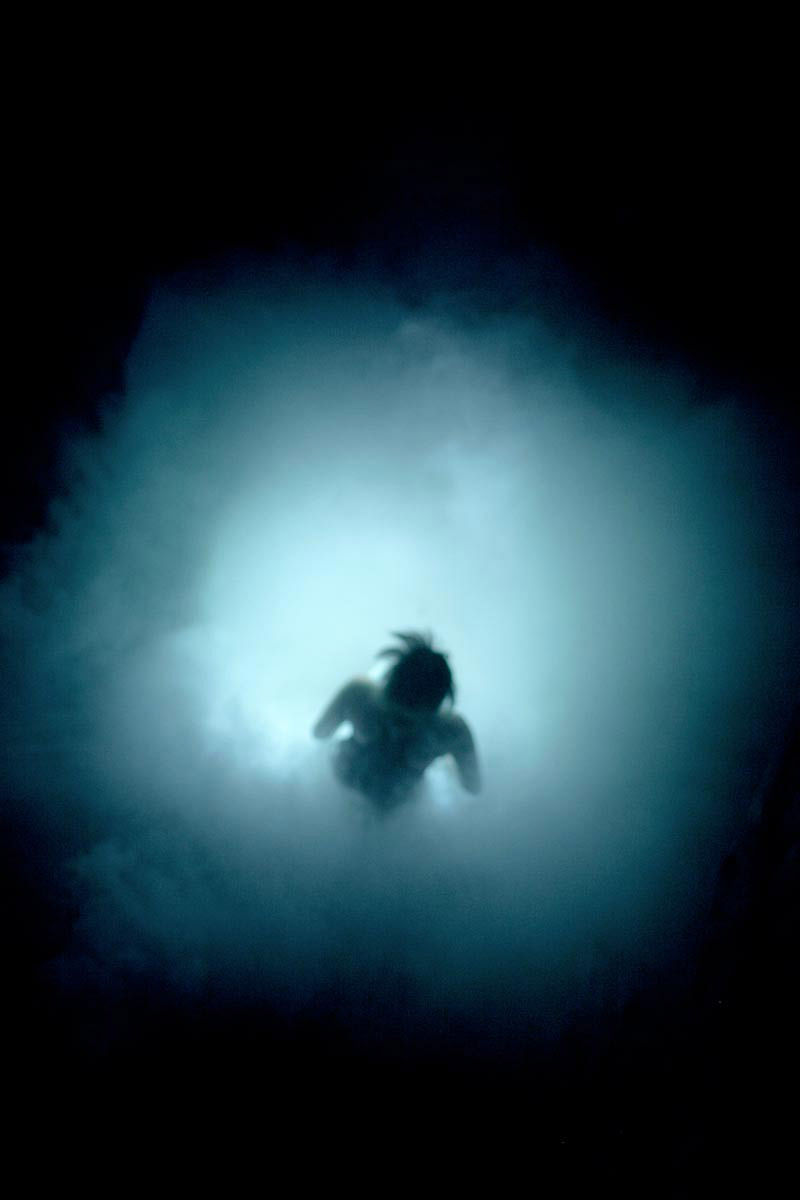
Emergency Exit - Polish Pavilion at the Venice Biennale

Organization of the Exhibition: Zachęta National Gallery of Art, Warsaw, Poland
Pavilion Commissioner: Agnieszka Morawińska
Curator: Elias Redstone
Assistant Commissioner: Joanna Waśko
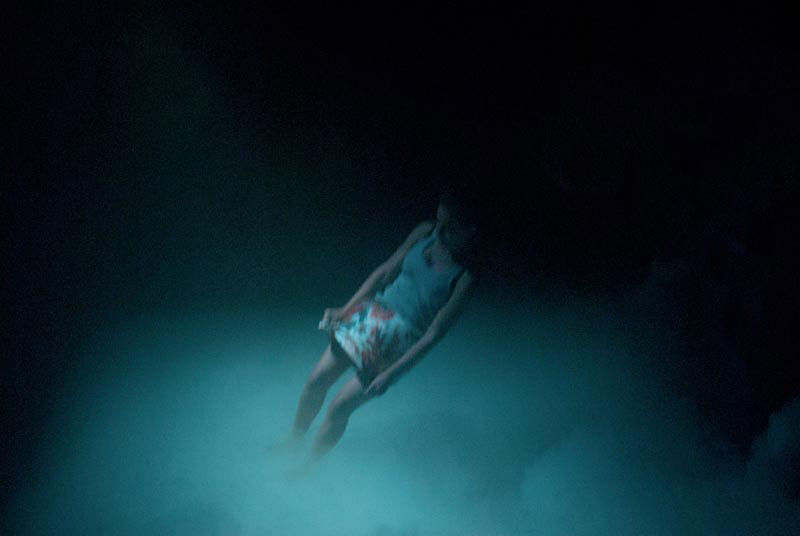
 

Emergency Exit - Polish Pavilion at the Venice Biennale

Special effects: Artur Etiop Bartos ETIOP FX productions
Audio-Video: Eidotech
Video documentation: Mirek Szewczyk with special thanks to EBH Polska
Installation engineer: Monika Bodurkiewicz
Construction: Befstal
Cages: Net–Kar
Neons: Neoneon
Lighting: Lumiere essence Małgorzata Baj
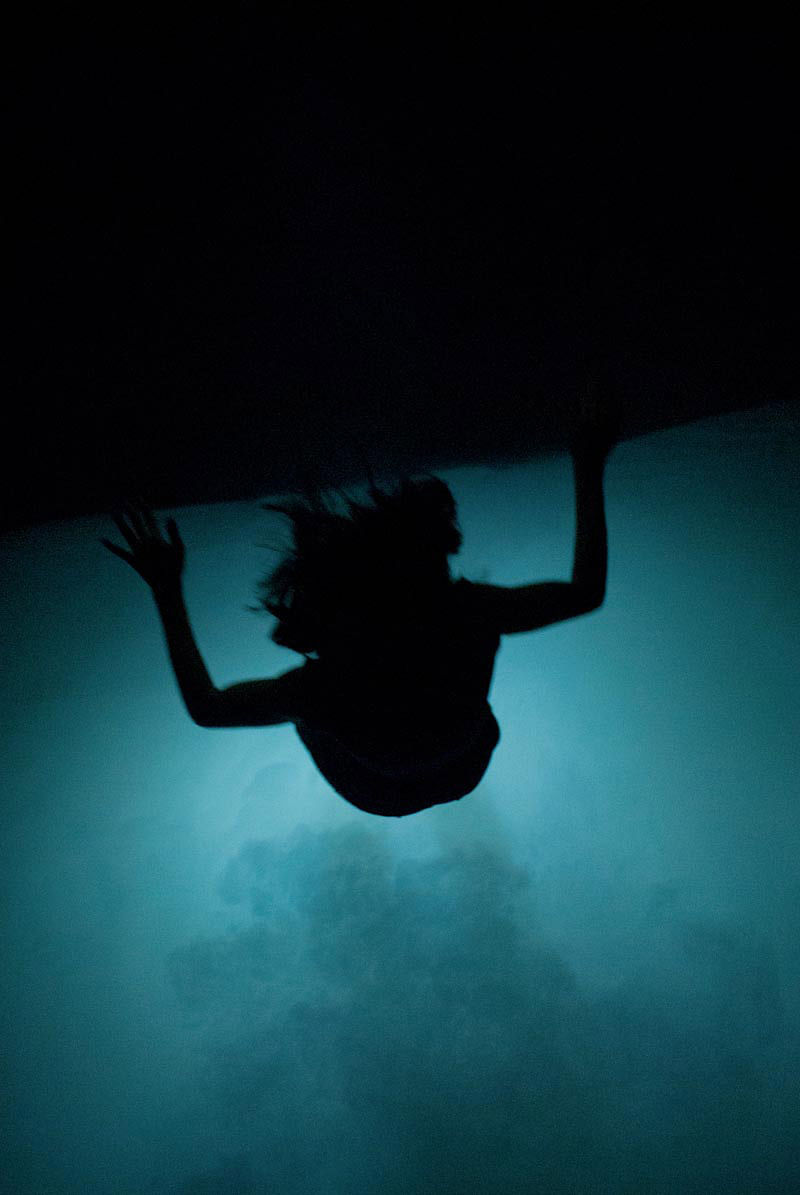
Emergency Exit - Polish Pavilion at the Venice Biennale

Related

venice ● poland ● pavilion ● neon ● italy ● installation ● exhibition ● europe ● emergency exit ● biennale ● art

Share

  • Follow

    0 Comments

  • Comment as :

"Emergency Exit" - Polish Pavilion at the 12th International Architecture Exhibition in Venice

Sign up for Bustler's Email Newsletters

Next page » Loading

"Emergency Exit" - Polish Pavilion at the 12th International Architecture Exhibition in Venice

By Bustler Editors|

Friday, Aug 27, 2010

Share

Emergency Exit - Polish Pavilion at the Venice Biennale

Related

venice ● poland ● pavilion ● neon ● italy ● installation ● exhibition ● europe ● emergency exit ● biennale ● art

Today, Emergency Exit, the Polish Pavilion at the 12th International Architecture Exhibition in Venice, had its opening reception, and we're happy to share images and a description of this fascinating installation. The exhibition will be open to the public starting this Sunday, August 29, until November 21.

Wanna see more Biennale projects? Get your fix and head over to our sister site Archinect where flying reporter Heather Ring is reporting live from Venice:

  • Venice Field Notes #1
  • Venice Fields Notes #2: Villa Frankenstein
  • Venice Field Notes #3: Jump at Your Own Risk

‘A neon Emergency Exit sign hangs on the facade of the Polish Pavilion. Inside, a surreal structure made of hundreds of reclaimed bird cages hides a path to its summit. It is lit from within, suggesting a night landscape, a fantastical de-materialized world containing an object and an action. You climb the seemingly precarious structure. At the height of the summit you look down into a churning sea of clouds. Your breath catches, your pulse quickens; you look down, then out, and then leap blindly into the void. . .’

Emergency Exit - Polish Pavilion at the Venice Biennale

The installation Emergency Exit by artist Agnieszka Kurant and architect Aleksandra Wasilkowska seeks to go beyond the logic of urban reality through the creation of ‘urban portable holes’: in-between spaces, places of uncertainty and doubt, of time-space discontinuity, such as abandoned or unfinished buildings, sites of catastrophe or accidents, illegal markets, rooftops and tunnels. The title refers ironically to the health and safety regulations in buildings and urban space that seek to plan, control risk and eliminate the accidental and unexpected.

Emergency Exit - Polish Pavilion at the Venice Biennale

The installation is constructed from an aggregate of metal cages, more commonly used to contain birds and prevent flight, to create a new fictional sport within the urban context. The design makes reference to the forms of decaying sports monuments, such as the ski jump in Mokotów, Warsaw—a surrealistic icon of socialist era architecture that is now in ruins. During a test phase, visitors will be able to climb to the top of the structure and jump out into artificially generated clouds, representing ultimate freedom and urban escapism. The Polish Pavilion acts as a laboratory within which Emergency Exit engages with the public directly to provoke, inspire and excite the collective body. These actions will be documented and then presented within the Pavilion.

Emergency Exit - Polish Pavilion at the Venice Biennale

Kurant and Wasilkowska interpret the city as an unpredictable, complex system whose collective understanding is composed of intersecting real and imaginary spaces changed through extremely rare events. Nine out of ten things that influence our behaviour and thinking are invisible or intangible. Factors such as myths, rumours and legends overlay themselves onto the physical environment to create an urban morphology of augmented landscapes. At the same time, spontaneity and risk exist as human characteristics that can work against a rational layer of control within the urban fabric. Both invisible phenomena and social actions can change the dynamic of a street, borough, or even the entire city. Architects and planners are therefore unable to precisely anticipate all the needs and transformations of the city. If a rigid and deterministic master plan is unable to integrate emergent needs and changes then the whole city looses its equilibrium.

Emergency Exit - Polish Pavilion at the Venice Biennale

Emergency Exit is conceived as a hybrid machine for the transfer to other realities, perforating the system of the city. It is a portable hole to the unknown; a catalyst for different, contradictory emotions and needs. Through the transfer, people fill in the gaps with their own emotions, ideas and desires. Kurant and Wasilkowska see the moment of jumping as an exit from the modernist paradigm in architecture where emotional, affective space was ignored and considered an obsolete ornament. The activity materialises the need and desire to lose control, to free oneself both physically and metaphorically from the current system; from a dominant paradigm, logic or state. To get out of here.

Emergency Exit - Polish Pavilion at the Venice Biennale

The project promotes an approach to architecture and urbanism that reverses the logic of a unilaterally defined urban reality and deterministic master plan; it embraces the unknown phenomena of the city; introduces a higher flexibility of the urban tissue through integrating interstices, gaps and pores, and leaving people space to plug-in or plug-out of dominant urban structures through developing individual, self-organising activities and actions.

Emergency Exit - Polish Pavilion at the Venice Biennale

Organization of the Exhibition: Zachęta National Gallery of Art, Warsaw, Poland
Pavilion Commissioner: Agnieszka Morawińska
Curator: Elias Redstone
Assistant Commissioner: Joanna Waśko
 

Emergency Exit - Polish Pavilion at the Venice Biennale

Special effects: Artur Etiop Bartos ETIOP FX productions
Audio-Video: Eidotech
Video documentation: Mirek Szewczyk with special thanks to EBH Polska
Installation engineer: Monika Bodurkiewicz
Construction: Befstal
Cages: Net–Kar
Neons: Neoneon
Lighting: Lumiere essence Małgorzata Baj
Emergency Exit - Polish Pavilion at the Venice Biennale

Share

  • Follow

    0 Comments

  • Comment as :

Archinect JobsArchinect Jobs

The Archinect Job Board attracts the world's top architectural design talents.

VIEW ALL JOBS POST A JOB

Intermediate Architect

O'Neill Rose Architects

Intermediate Architect

Brooklyn, NY, US

Junior Designer

Shadow Architect, P.C.

Junior Designer

New York, NY, US

Architectural Designer II

Studio AR&D Architects

Architectural Designer II

Los Angeles, CA, US

Architect

OBRA Architects

Architect

New York, NY, US

Architectural Project Manager - Residential

DAHLIN Architecture | Planning | Interiors

Architectural Project Manager - Residential

Pleasanton, CA, US

Junior Designer/Architect

O'Neill Rose Architects

Junior Designer/Architect

Brooklyn, NY, US

Marketing Coordinator / EA

Stoss Landscape Urbanism

Marketing Coordinator / EA

Boston, MA, US

Interior Designer

Fowlkes Studio

Interior Designer

Washington, DC, US

Project Manager

Populous

Project Manager

San Francisco, CA, US

Senior Associate/ Project Manager

DWY Landscape Architects

Senior Associate/ Project Manager

Sarasota, FL, US

Next page » Loading