• Login / Join
  • About
  • •
  • Contact
  • •
  • Advertising
bustler logo
bustler logo
  • News
  • Competitions
  • Events
  • Bustler is powered by Archinect
  • Sign up for Bustler's Email Newsletters

  • Follow these Bustler feeds:

  • Search

    Search in

  • Submit

    What are you submitting?

    News Pitch
    Competition
    Event
  • Login / Join
  • News|Competitions|Events
  • Search
    | Submit
    | Follow
  • Search in

    What are you submitting?

    News Pitch
    Competition
    Event

    Follow these Bustler feeds:

  • About|Contact|Advertising
  • Login / Join
Tagged: internet

MoMA acquires original Emoji for permanent collection, will debut installation in December

By Justine Testado|

Wednesday, Oct 26, 2016
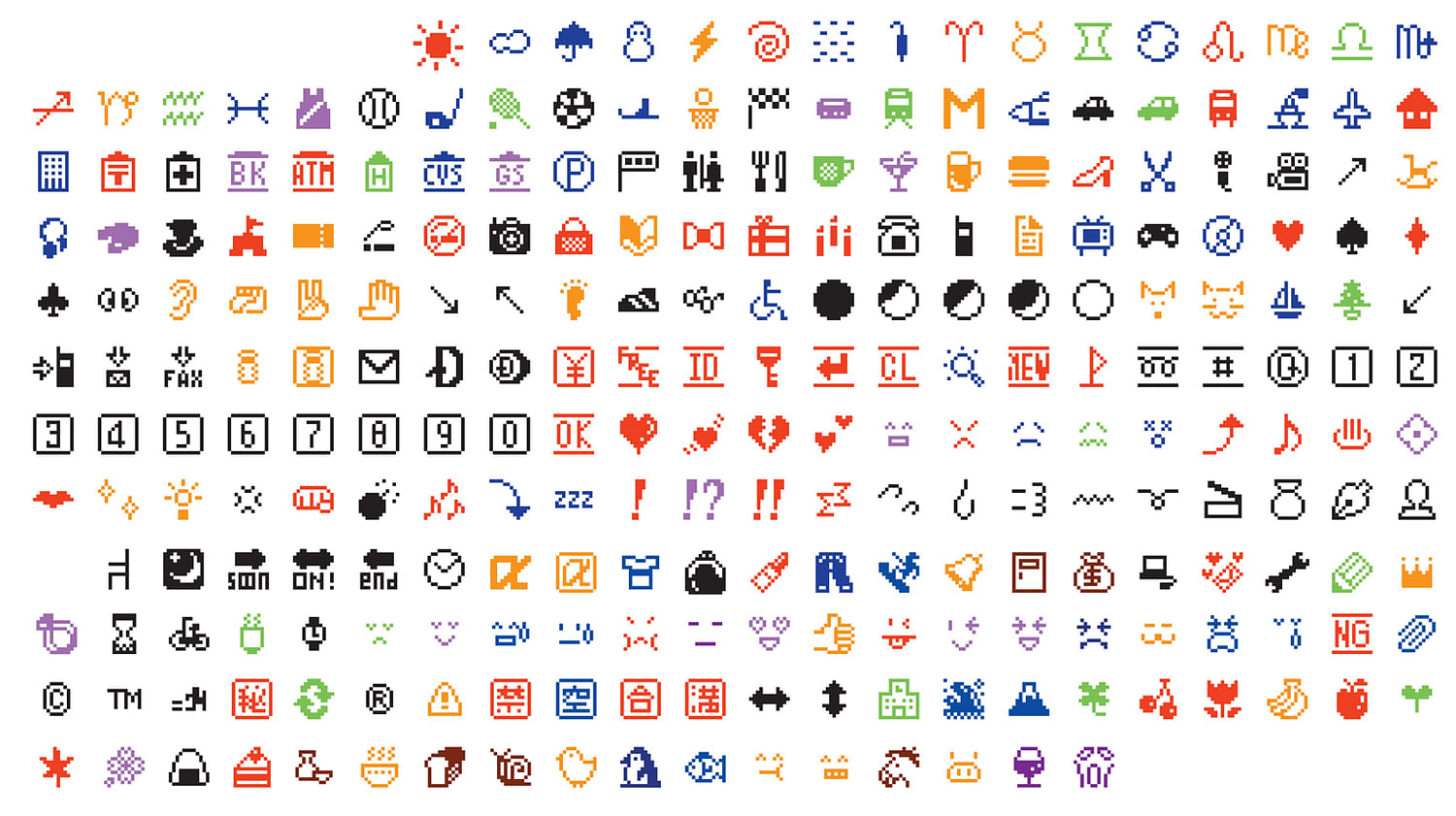
Shigetaka Kurita, Emoji (original set of 176), 1999, Digital image, Gift of NTT DOCOMO, Inc., © 2016 NTT DOCOMO. Courtesy of Museum of Modern Art.

Who would have thought that emoji would be revered within the same museum walls that display the paintings of Van Gogh and Picasso? The Museum of Modern Art recently added NTT DoCoMo's original set of 176 emoji to their permanent collection as a gift — or more specifically, as a successful licensing agreement — from the company. In early December, MoMA will debut an installation detailing the evolution of emoji and “will present them in a new light (and no doubt inspire a few selfies)”, says Paul Galloway, MoMA Collection Specialist in the Department of Architecture and Design. 

Emoji are a powerful, contemporary example of how design can alter the way people behave. The mini expressive characters had their humble beginnings as 12 x 12 pixellated drawings that were developed under the supervision of Shigetaka Kurita, who looked to various sources like manga, Zapf dingbats, and Western-style emoticons for inspiration. When DoCoMo released Kurita's emoji set for cell phones in 1999, they were an instant hit and revolutionized digital communication throughout Japan. The impact of emoji became global when they were translated into Unicode in 2010, and when Apple released a larger set of emoji for the iPhone in 2011. (And if you use Gmail, you might have noticed that the original emoji set is included.)

“Emoji tap into a long tradition of expressive visual language. Images and patterns have been incorporated within text since antiquity,” writes Paul Galloway. “When combined with text, these simple images allow for more nuanced intonation. Filling in for body language, emoticons, kaomoji, and emoji reassert the human in the deeply impersonal, abstract space of electronic communication.”

MoMA hasn't officially revealed too many details about the installation yet, but The New York Times writes that the emoji will be displayed as 2-D graphics and animations in the museum lobby.

Related

moma ● internet ● communication design ● digital design ● art exhibition ● museum of modern art ● new york city ● new york ● usa ● history ● communication

Share

  • Follow

    0 Comments

  • Comment as :

MoMA acquires original Emoji for permanent collection, will debut installation in December

Glimpsing into the World Wide Web's past + future in the London Internet Museum

Sign up for Bustler's Email Newsletters

Next page » Loading

MoMA acquires original Emoji for permanent collection, will debut installation in December

By Justine Testado|

Wednesday, Oct 26, 2016

Share

Shigetaka Kurita, Emoji (original set of 176), 1999, Digital image, Gift of NTT DOCOMO, Inc., © 2016 NTT DOCOMO. Courtesy of Museum of Modern Art.

Related

moma ● internet ● communication design ● digital design ● art exhibition ● museum of modern art ● new york city ● new york ● usa ● history ● communication

Who would have thought that emoji would be revered within the same museum walls that display the paintings of Van Gogh and Picasso? The Museum of Modern Art recently added NTT DoCoMo's original set of 176 emoji to their permanent collection as a gift — or more specifically, as a successful licensing agreement — from the company. In early December, MoMA will debut an installation detailing the evolution of emoji and “will present them in a new light (and no doubt inspire a few selfies)”, says Paul Galloway, MoMA Collection Specialist in the Department of Architecture and Design. 

Emoji are a powerful, contemporary example of how design can alter the way people behave. The mini expressive characters had their humble beginnings as 12 x 12 pixellated drawings that were developed under the supervision of Shigetaka Kurita, who looked to various sources like manga, Zapf dingbats, and Western-style emoticons for inspiration. When DoCoMo released Kurita's emoji set for cell phones in 1999, they were an instant hit and revolutionized digital communication throughout Japan. The impact of emoji became global when they were translated into Unicode in 2010, and when Apple released a larger set of emoji for the iPhone in 2011. (And if you use Gmail, you might have noticed that the original emoji set is included.)

“Emoji tap into a long tradition of expressive visual language. Images and patterns have been incorporated within text since antiquity,” writes Paul Galloway. “When combined with text, these simple images allow for more nuanced intonation. Filling in for body language, emoticons, kaomoji, and emoji reassert the human in the deeply impersonal, abstract space of electronic communication.”

MoMA hasn't officially revealed too many details about the installation yet, but The New York Times writes that the emoji will be displayed as 2-D graphics and animations in the museum lobby.

Share

  • Follow

    0 Comments

  • Comment as :

Archinect JobsArchinect Jobs

The Archinect Job Board attracts the world's top architectural design talents.

VIEW ALL JOBS POST A JOB

Project Architect

jones | haydu

Project Architect

San Francisco, CA, US

Project Designer (3 to 5 years)

Swift Lee Office

Project Designer (3 to 5 years)

Los Angeles, CA, US

Project Architect

Turpentine Design

Project Architect

Fuquay-Varina, NC, US

Project Architect/Job Captain

HLW International LLP

Project Architect/Job Captain

West Palm Beach, FL, US

Junior Architect

VanderHorn Architects

Junior Architect

Greenwich, CT, US

Interior Designer

SIMIDA DESIGN

Interior Designer

Chicago, IL, US

Business Development Manager

WORKac

Business Development Manager

New York, NY, US

Designer

Jayson Architecture

Designer

San Francisco, CA, US

Architectural Designer

Equal Equal

Architectural Designer

Brooklyn, NY, US

Project Architect

BuildingWork

Project Architect

Seattle, WA, US

Next page » Loading