• Login / Join
  • About
  • •
  • Contact
  • •
  • Advertising
bustler logo
bustler logo
  • News
  • Competitions
  • Events
  • Bustler is powered by Archinect
  • Sign up for Bustler's Email Newsletters

  • Follow these Bustler feeds:

  • Search

    Search in

  • Submit

    What are you submitting?

    News Pitch
    Competition
    Event
  • Login / Join
  • News|Competitions|Events
  • Search
    | Submit
    | Follow
  • Search in

    What are you submitting?

    News Pitch
    Competition
    Event

    Follow these Bustler feeds:

  • About|Contact|Advertising
  • Login / Join
Tagged: metro

Kengo Kuma & Associates to design Saint-Denis Pleyel Metro Station in Paris

By Bustler Editors|

Tuesday, Mar 24, 2015
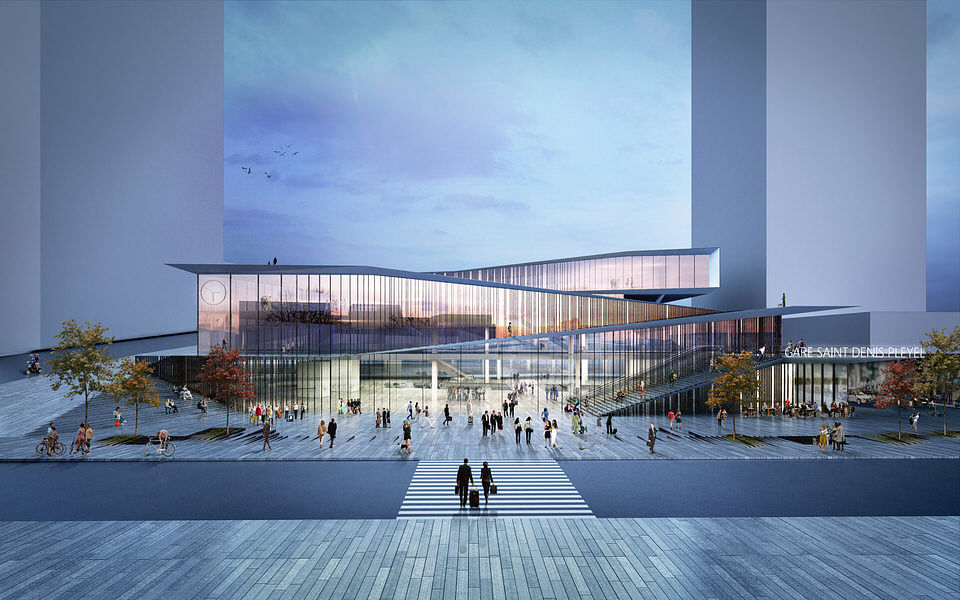
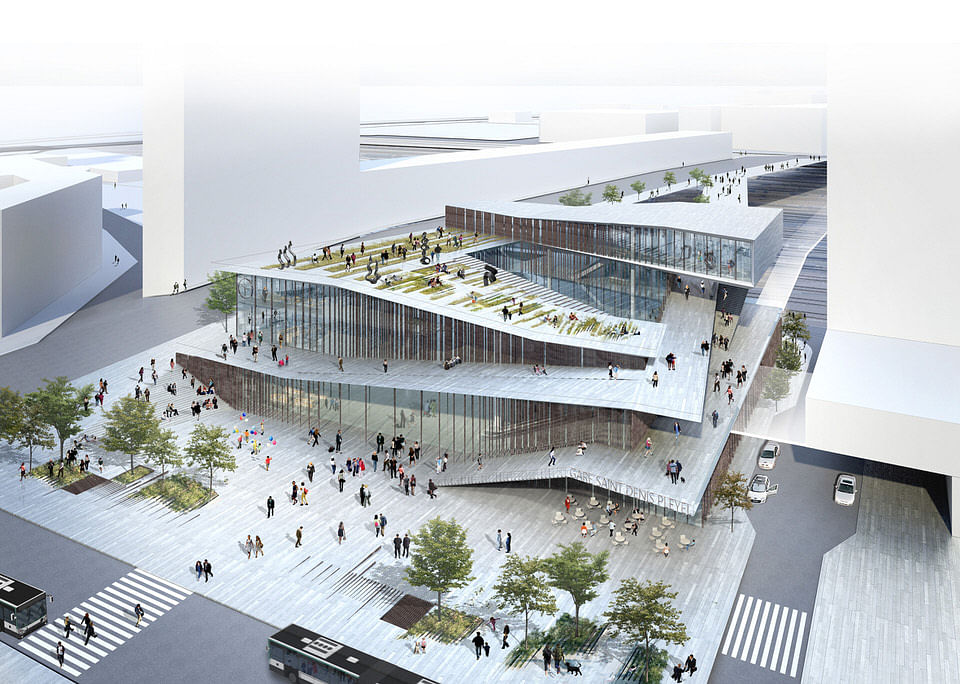
View from piazza. Image courtesy of Kengo Kuma & Associates.

The Saint-Denis Pleyel Emblematic Train Station marks the beginning of big urban development slated for the Saint-Denis Pleyel region in Paris, France. Kengo Kuma & Associates recently won the competition to design the train station, which will function as a central station of the upcoming Grand Paris Express. The steel-clad structure will also include shops, a multimedia library, and a business center.

Kengo Kuma & Associates shared more project details with us below.

Project description:

"The train station will be the first stone of a future global urban project in the site of Saint-Denis Pleyel. It will enable the site and the city to increase its metropolitan scale significantly. The project is designed as a unique opportunity to open up the district by connecting the two sides of the city over a huge railway network of the Parisian North station."
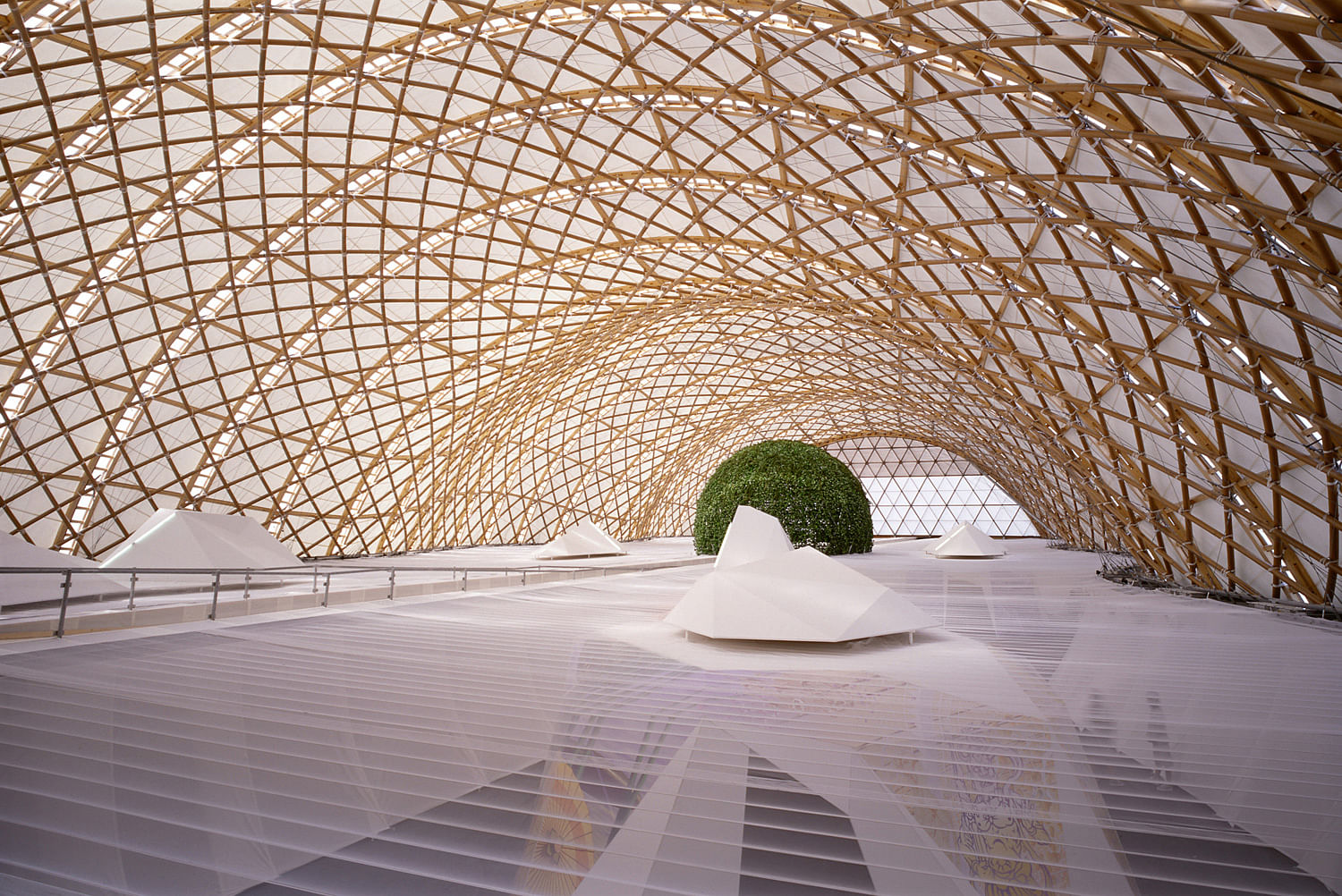
Japan Pavilion, Expo 2000 Hannover, 2000, Hannover, Germany. Photo by Hiroyuki Hirai

"Mr. Otto is best known for the roofing for the main sports facilities in the Munich Olympic Park for the 1972 Summer Olympics (with Behnisch + Partner and others), for the German pavilion at the 1967 International and Universal Exposition (Expo 67), the Japan Pavilion at Expo 2000 in Hannover, Germany (in 2000, with Shigeru Ban (2014 laureate of the Pritzker Architecture Prize)), a series of tent structures for German Federal Exhibitions in the 1950’s, and for his work in the Middle East."
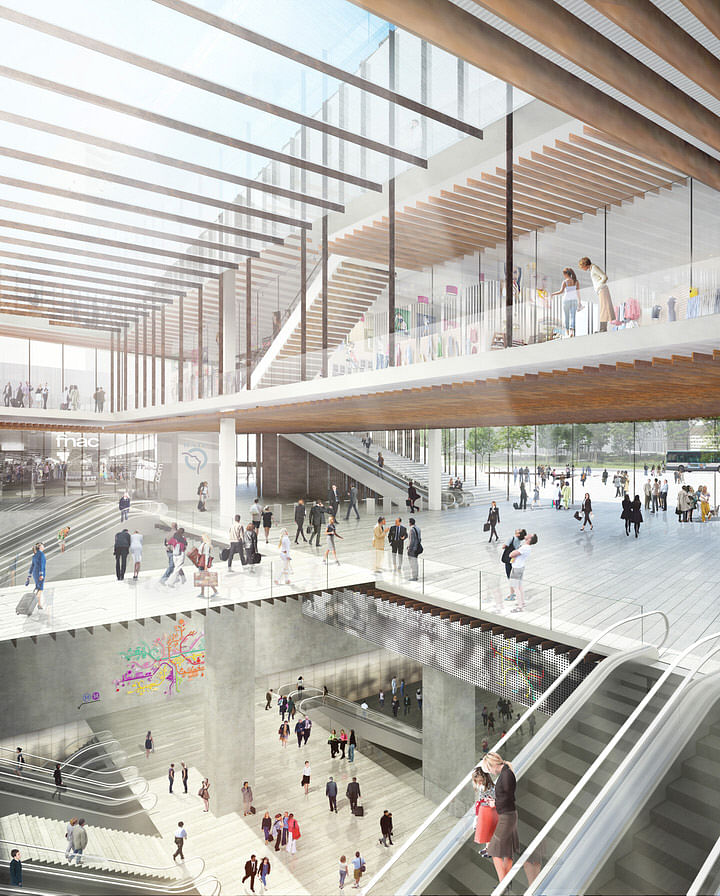
View from atrium. Image courtesy of Kengo Kuma & Associates.

"The station becomes an extension of the public spaces on many levels. Multiple levels continue in spiral, so the station functions as a complex that brings in streets in vertical layer. Steel frames that evoke rail tracks are used in the curtain wall and many other parts of the structure, to emphasize the passage of time and history. This approach will make people be aware that the station is theirs and give them pleasant passing-by every day, connected with the network of the city. "
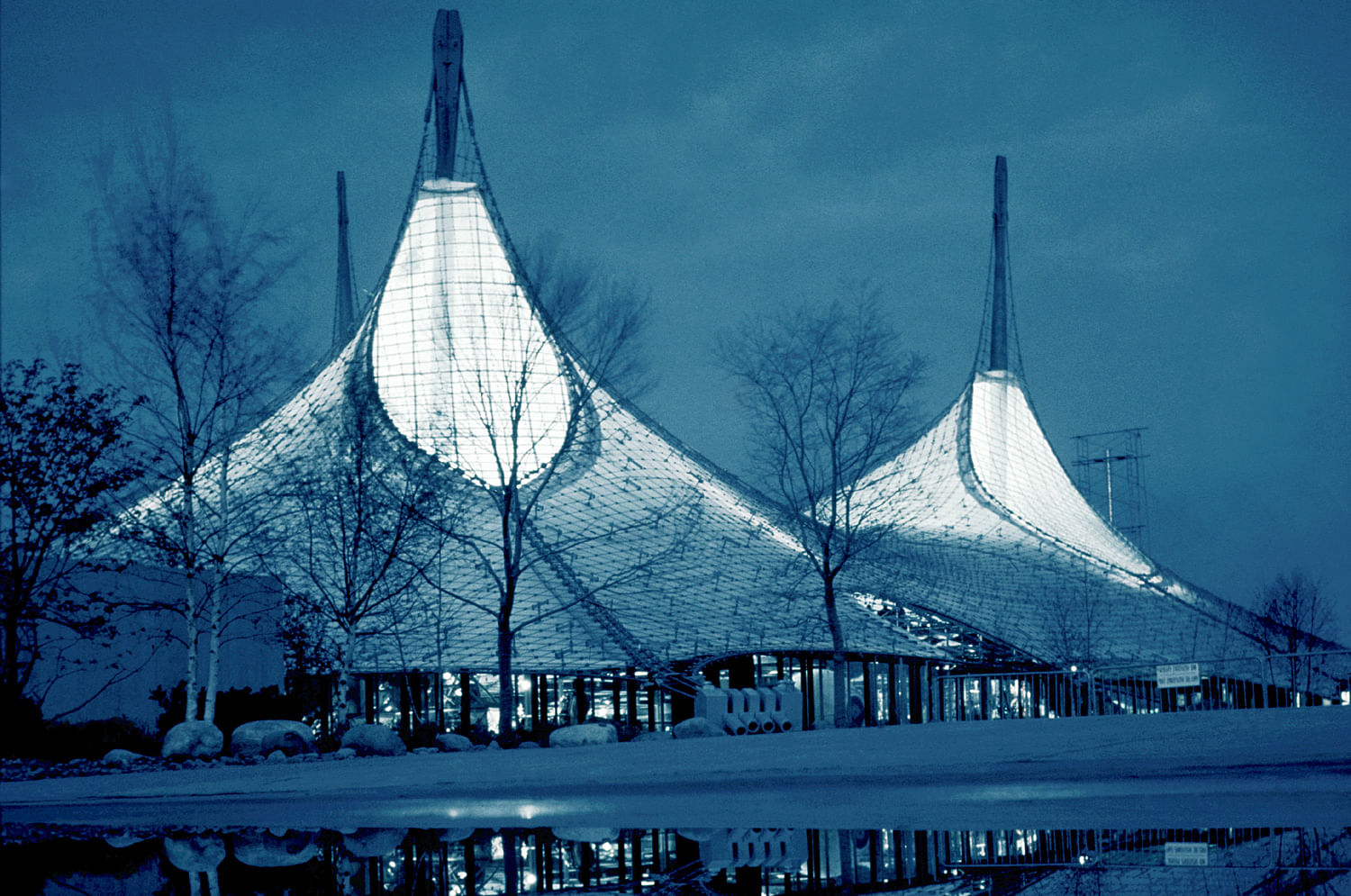
The 1967 International and Universal Exposition or Expo 67, 1967, Montreal, Canada. Photo © Atelier Frei Otto Warmbronn
Aerial view. Image courtesy of Kengo Kuma & Associates.

"Through a multi-sensory sequence of spaces, stressful daily metropolitan movements will be changed to an open and interactive experience. From this project, the station will be a new center of the city, and its complementary program will bring about a dynamic social and cultural dimension to the district of Pleyel."
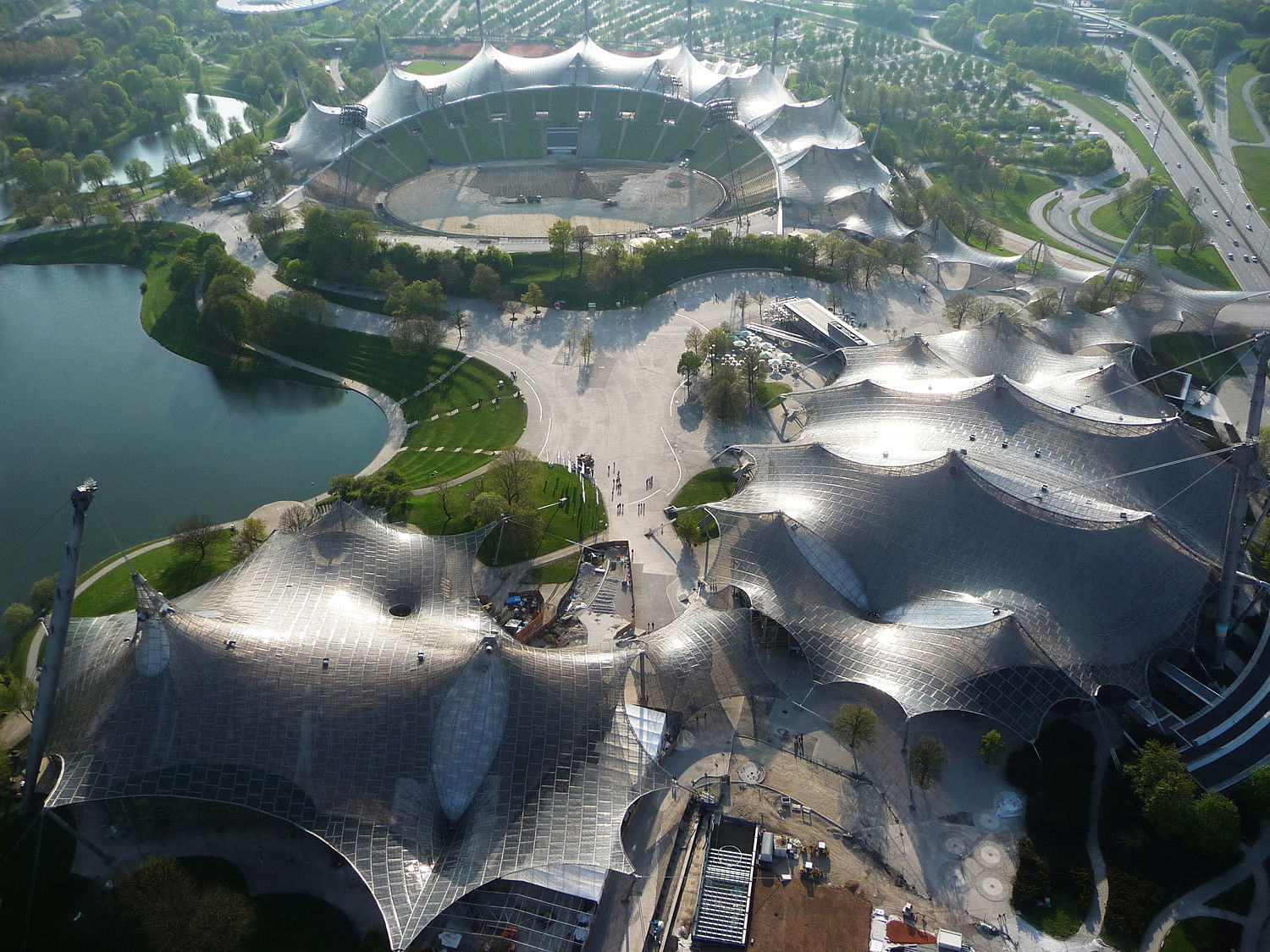
Roofing for main sports facilities in the Munich Olympic Park for the 1972 Summer Olympics, 1968–1972, Munich, Germany. Photo © Atelier Frei Otto Warmbronn

"Mr. Otto practiced a holistic and collaborative approach to architecture, working with environmentalists, biologists, engineers, philosophers, historians, naturalists, artists, and other architects. A distinguished teacher and author, Otto pioneered the use of modern lightweight tent-like structures for many uses. He was attracted to them partly for their economical and ecological values. He believed in making efficient, responsible use of materials, and that architecture should make a minimal impact on the environment. Frei Otto was a utopian who never stopped believing that architecture can make a better world for all.

In contrast to the heavy, columned, stone and masonry architecture preferred by the National Socialists in the Germany in which he grew up — Otto’s work was lightweight, open to nature and natural light, non-hierarchical, democratic, low-cost, energy-efficient, and sometimes designed to be temporary."
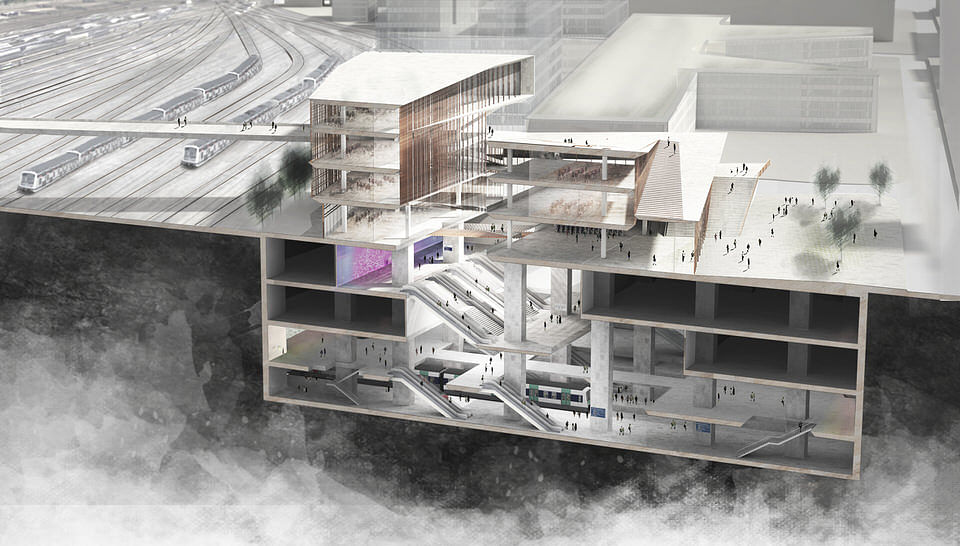
Section. Image courtesy of Kengo Kuma & Associates.

Project details

Developer: Société du Grand Paris
Site: Saint-Denis – Paris, France
Main use: Main train station of the “Grand Paris”, shops, multimedia library, business center
Total floor area: 45 000 m2
Height: 5 stories above ground and 4 below

Quantity Surveyor: LTA
Landscape design: AC&T Paysage
Lighting design: 8’18’’
Acoustician: PEUTZ & Associés
Sustainability: AIA Studio Environnement
Façade engineer: RFR
Security/Fire consultant : VULCANEO

All images courtesy of Kengo Kuma & Associates.
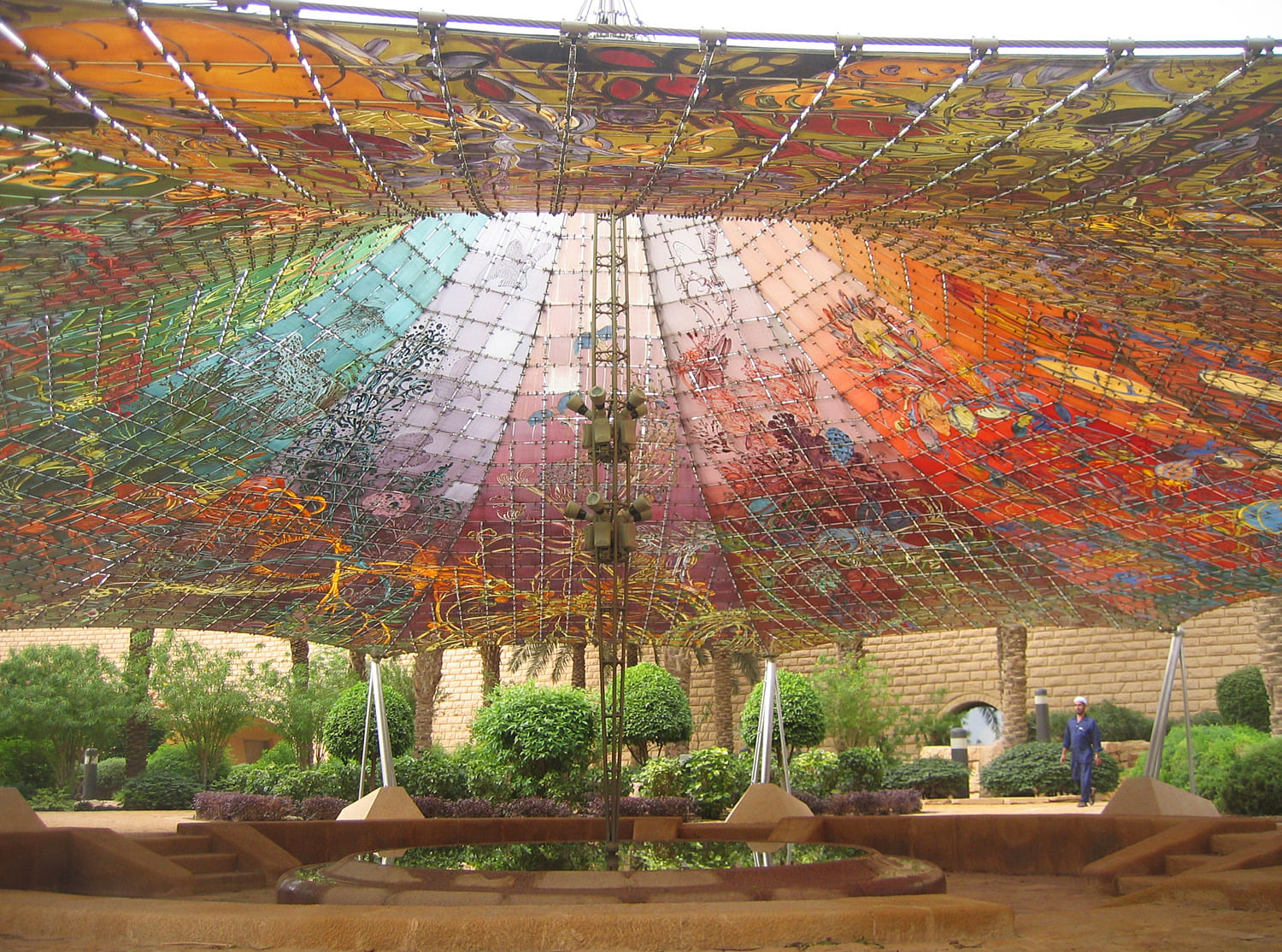
Diplomatic Club Heart Tent, 1980, Riyadh, Saudi Arabia. Photo © Atelier Frei Otto Warmbronn
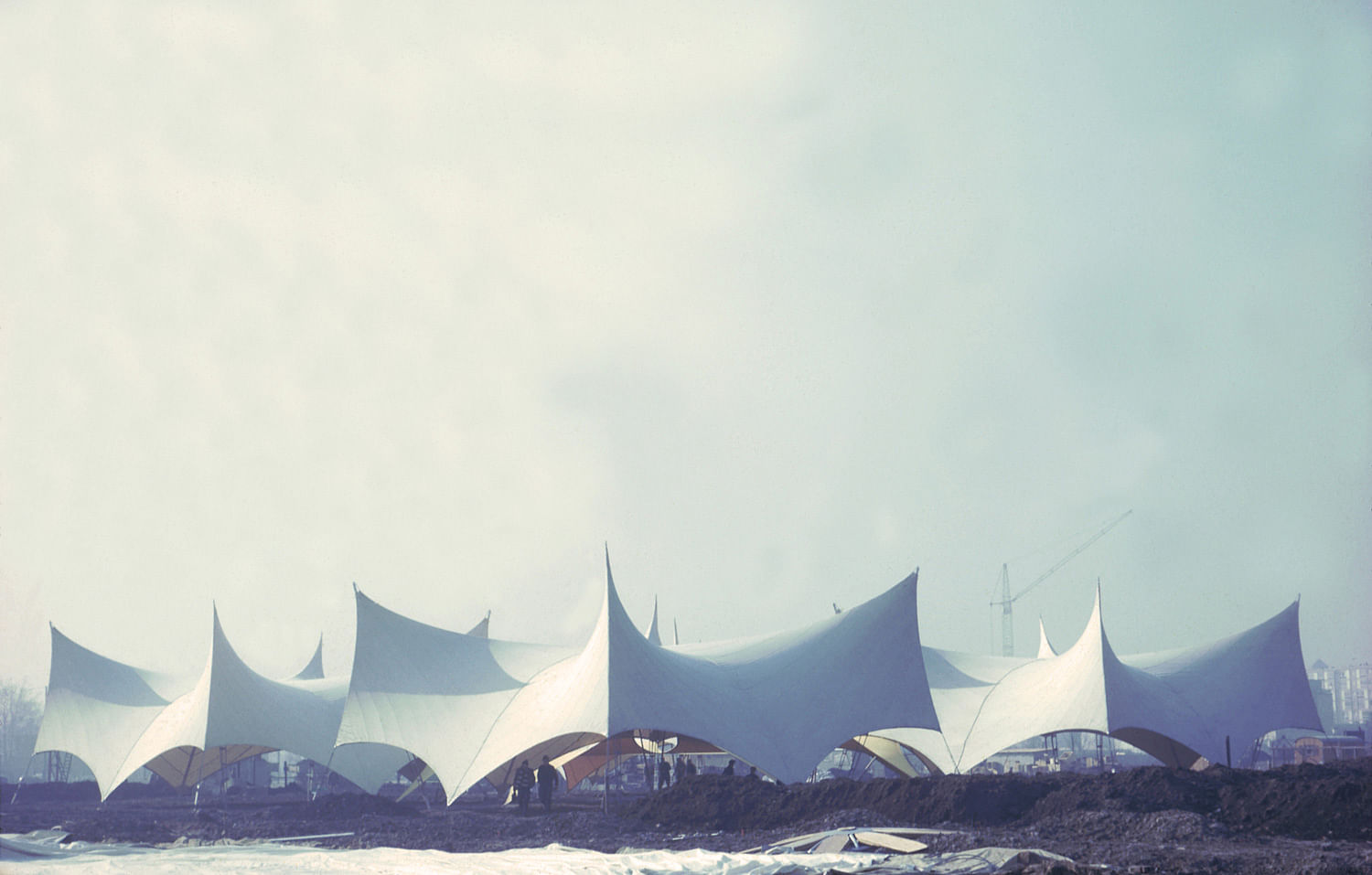
Hall at the International Garden Exhibition, 1963, Hamburg, Germany. Photo © Atelier Frei Otto Warmbronn

"The Chair of the jury of the Pritzker Architecture Prize, Lord Peter Palumbo, said today: 'Time waits for no man. If anyone doubts this aphorism, the death yesterday of Frei Otto, a titan of modern architecture, a few weeks short of his 90th birthday, and a few short weeks before his receipt of the Pritzker Architecture Prize in Miami in May, represents a sad and striking example of this truism. His loss will be felt wherever the art of architecture is practiced the world over, for he was a universal citizen; whilst his influence will continue to gather momentum by those who are aware of it, and equally, by those who are not.

 'Frei stands for Freedom, as free and as liberating as a bird in flight, swooping and soaring in elegant and joyful arcs, unrestrained by the dogma of the past, and as compelling in its economy of line and in the improbability of its engineering as it is possible to imagine, giving the marriage of form and function the invisibility of the air we breathe, and the beauty we see in Nature.'”

Diplomatic Club, 1980, Riyadh, Saudi Arabia. Photo © Atelier Frei Otto Warmbronn
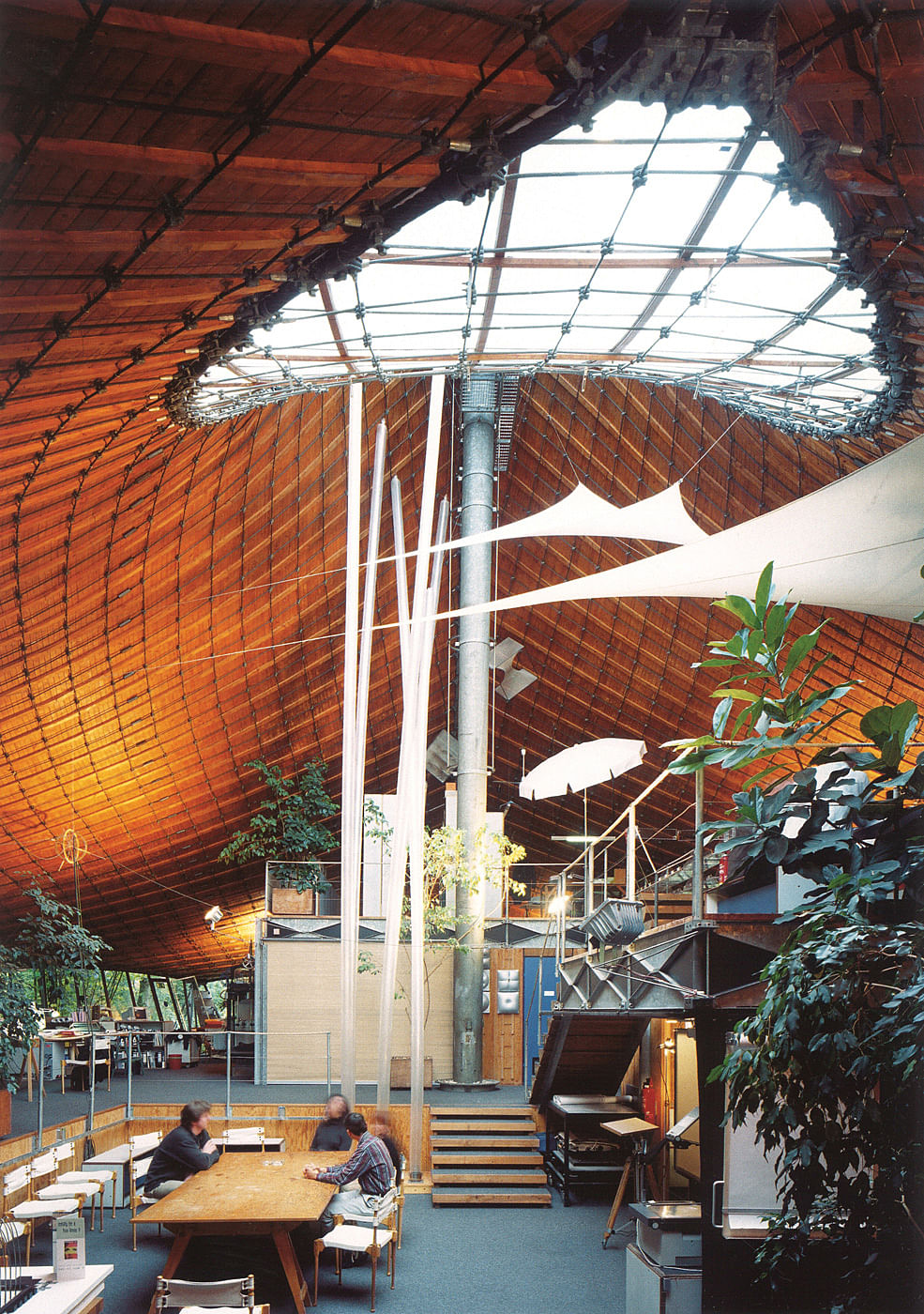
Institute for Lightweight Structures, interior, 1967, University of Stuttgart in Vaihingen. Photo © Atelier Frei Otto Warmbronn

"The distinguished jury that selected the 2015 Pritzker Laureate consists of its chairman, Lord Palumbo, architectural patron, Chairman Emeritus of the Trustees, Serpentine Galleries, former Chairman of the Arts Council of Great Britain, and former Chairman of the Tate Gallery Foundation; Alejandro Aravena, architect and Executive Director of Elemental in Santiago, Chile; Stephen Breyer, U.S. Supreme Court Justice, Washington, D.C.; Yung Ho Chang, architect and educator, Beijing, The People’s Republic of China; Kristin Feireiss, architecture curator, writer, and editor, Berlin, Germany; Glenn Murcutt, architect and 2002 Pritzker Laureate, Sydney, Australia; Richard Rogers, architect and 2007 Pritzker Laureate, London, United Kingdom; Benedetta Tagliabue, architect and director of EMBT Miralles Tagliabue, Barcelona, Spain; and Ratan N. Tata, Chairman Emeritus of Tata Sons, the holding company of the Tata Group, Mumbai, India. Martha Thorne, Associate Dean for External Relations, IE School of Architecture & Design, Madrid, Spain, is the Executive Director of the Prize."

Related

transportation ● train station ● public transportation ● paris ● metro ● kengo kuma & associates ● kengo kuma ● grand paris

Share

  • Follow

    0 Comments

  • Comment as :

Kengo Kuma & Associates to design Saint-Denis Pleyel Metro Station in Paris

UNStudio reveals latest designs for the new Doha Metro Network in Qatar

AIA Twenty-five Year Award given to Washington D.C., Metro

A/ZC Wins Four Metro Stations in Rennes, France

Austin-Smith:Lord Vision for Nairobi 2030

Ideas Competition for the Redevelopment of Montréal Champ-de-Mars Metro Station - The Winners

Sign up for Bustler's Email Newsletters

Next page » Loading

Kengo Kuma & Associates to design Saint-Denis Pleyel Metro Station in Paris

By Bustler Editors|

Tuesday, Mar 24, 2015

Share

View from piazza. Image courtesy of Kengo Kuma & Associates.

Related

transportation ● train station ● public transportation ● paris ● metro ● kengo kuma & associates ● kengo kuma ● grand paris

The Saint-Denis Pleyel Emblematic Train Station marks the beginning of big urban development slated for the Saint-Denis Pleyel region in Paris, France. Kengo Kuma & Associates recently won the competition to design the train station, which will function as a central station of the upcoming Grand Paris Express. The steel-clad structure will also include shops, a multimedia library, and a business center.

Kengo Kuma & Associates shared more project details with us below.

Project description:

"The train station will be the first stone of a future global urban project in the site of Saint-Denis Pleyel. It will enable the site and the city to increase its metropolitan scale significantly. The project is designed as a unique opportunity to open up the district by connecting the two sides of the city over a huge railway network of the Parisian North station."

Japan Pavilion, Expo 2000 Hannover, 2000, Hannover, Germany. Photo by Hiroyuki Hirai

"Mr. Otto is best known for the roofing for the main sports facilities in the Munich Olympic Park for the 1972 Summer Olympics (with Behnisch + Partner and others), for the German pavilion at the 1967 International and Universal Exposition (Expo 67), the Japan Pavilion at Expo 2000 in Hannover, Germany (in 2000, with Shigeru Ban (2014 laureate of the Pritzker Architecture Prize)), a series of tent structures for German Federal Exhibitions in the 1950’s, and for his work in the Middle East."

View from atrium. Image courtesy of Kengo Kuma & Associates.

"The station becomes an extension of the public spaces on many levels. Multiple levels continue in spiral, so the station functions as a complex that brings in streets in vertical layer. Steel frames that evoke rail tracks are used in the curtain wall and many other parts of the structure, to emphasize the passage of time and history. This approach will make people be aware that the station is theirs and give them pleasant passing-by every day, connected with the network of the city. "

The 1967 International and Universal Exposition or Expo 67, 1967, Montreal, Canada. Photo © Atelier Frei Otto Warmbronn
Aerial view. Image courtesy of Kengo Kuma & Associates.

"Through a multi-sensory sequence of spaces, stressful daily metropolitan movements will be changed to an open and interactive experience. From this project, the station will be a new center of the city, and its complementary program will bring about a dynamic social and cultural dimension to the district of Pleyel."

Roofing for main sports facilities in the Munich Olympic Park for the 1972 Summer Olympics, 1968–1972, Munich, Germany. Photo © Atelier Frei Otto Warmbronn

"Mr. Otto practiced a holistic and collaborative approach to architecture, working with environmentalists, biologists, engineers, philosophers, historians, naturalists, artists, and other architects. A distinguished teacher and author, Otto pioneered the use of modern lightweight tent-like structures for many uses. He was attracted to them partly for their economical and ecological values. He believed in making efficient, responsible use of materials, and that architecture should make a minimal impact on the environment. Frei Otto was a utopian who never stopped believing that architecture can make a better world for all.

In contrast to the heavy, columned, stone and masonry architecture preferred by the National Socialists in the Germany in which he grew up — Otto’s work was lightweight, open to nature and natural light, non-hierarchical, democratic, low-cost, energy-efficient, and sometimes designed to be temporary."

Section. Image courtesy of Kengo Kuma & Associates.

Project details

Developer: Société du Grand Paris
Site: Saint-Denis – Paris, France
Main use: Main train station of the “Grand Paris”, shops, multimedia library, business center
Total floor area: 45 000 m2
Height: 5 stories above ground and 4 below

Quantity Surveyor: LTA
Landscape design: AC&T Paysage
Lighting design: 8’18’’
Acoustician: PEUTZ & Associés
Sustainability: AIA Studio Environnement
Façade engineer: RFR
Security/Fire consultant : VULCANEO

All images courtesy of Kengo Kuma & Associates.
Diplomatic Club Heart Tent, 1980, Riyadh, Saudi Arabia. Photo © Atelier Frei Otto Warmbronn
Hall at the International Garden Exhibition, 1963, Hamburg, Germany. Photo © Atelier Frei Otto Warmbronn

"The Chair of the jury of the Pritzker Architecture Prize, Lord Peter Palumbo, said today: 'Time waits for no man. If anyone doubts this aphorism, the death yesterday of Frei Otto, a titan of modern architecture, a few weeks short of his 90th birthday, and a few short weeks before his receipt of the Pritzker Architecture Prize in Miami in May, represents a sad and striking example of this truism. His loss will be felt wherever the art of architecture is practiced the world over, for he was a universal citizen; whilst his influence will continue to gather momentum by those who are aware of it, and equally, by those who are not.

 'Frei stands for Freedom, as free and as liberating as a bird in flight, swooping and soaring in elegant and joyful arcs, unrestrained by the dogma of the past, and as compelling in its economy of line and in the improbability of its engineering as it is possible to imagine, giving the marriage of form and function the invisibility of the air we breathe, and the beauty we see in Nature.'”
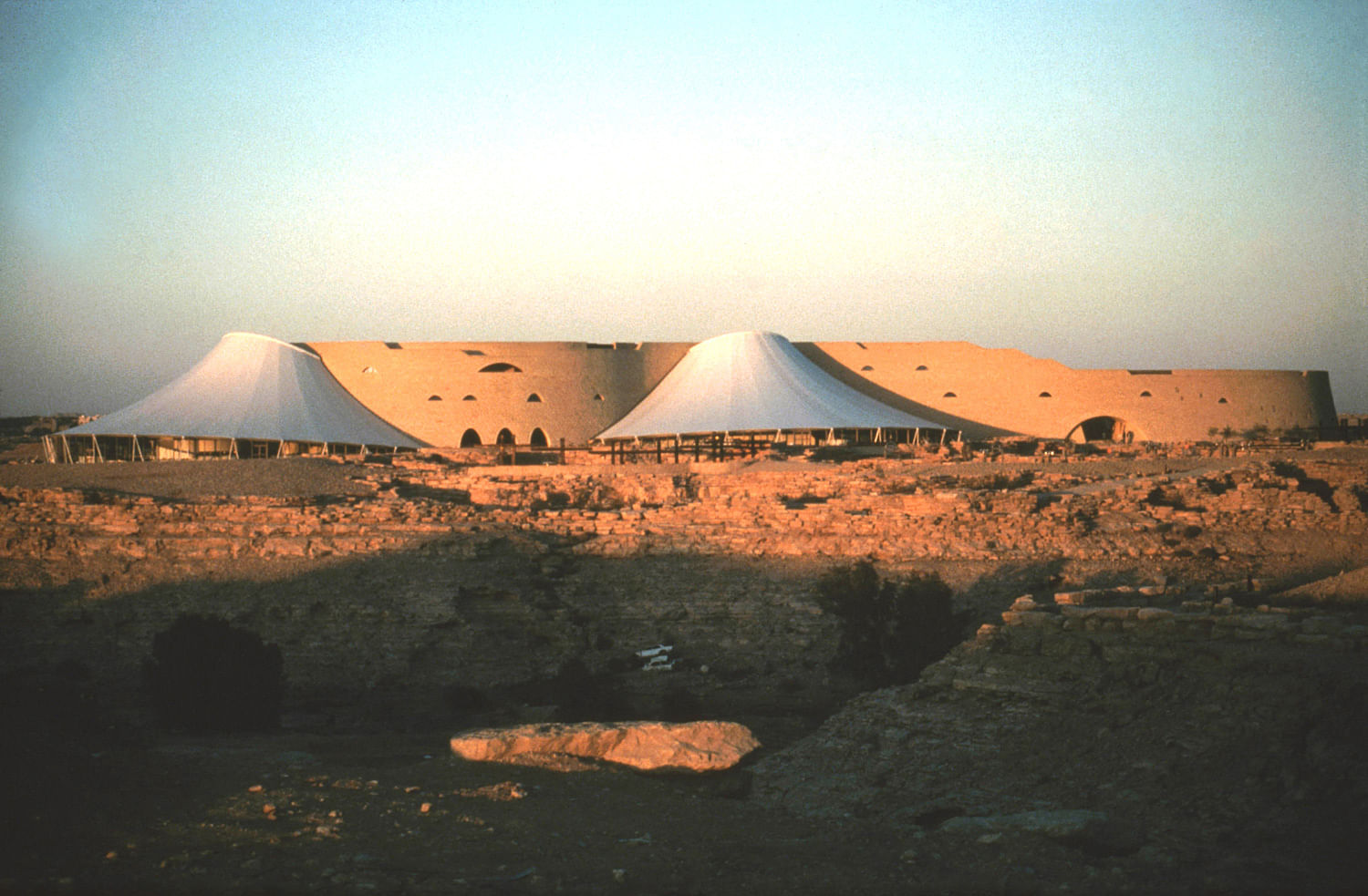
Diplomatic Club, 1980, Riyadh, Saudi Arabia. Photo © Atelier Frei Otto Warmbronn
Institute for Lightweight Structures, interior, 1967, University of Stuttgart in Vaihingen. Photo © Atelier Frei Otto Warmbronn

"The distinguished jury that selected the 2015 Pritzker Laureate consists of its chairman, Lord Palumbo, architectural patron, Chairman Emeritus of the Trustees, Serpentine Galleries, former Chairman of the Arts Council of Great Britain, and former Chairman of the Tate Gallery Foundation; Alejandro Aravena, architect and Executive Director of Elemental in Santiago, Chile; Stephen Breyer, U.S. Supreme Court Justice, Washington, D.C.; Yung Ho Chang, architect and educator, Beijing, The People’s Republic of China; Kristin Feireiss, architecture curator, writer, and editor, Berlin, Germany; Glenn Murcutt, architect and 2002 Pritzker Laureate, Sydney, Australia; Richard Rogers, architect and 2007 Pritzker Laureate, London, United Kingdom; Benedetta Tagliabue, architect and director of EMBT Miralles Tagliabue, Barcelona, Spain; and Ratan N. Tata, Chairman Emeritus of Tata Sons, the holding company of the Tata Group, Mumbai, India. Martha Thorne, Associate Dean for External Relations, IE School of Architecture & Design, Madrid, Spain, is the Executive Director of the Prize."

Share

  • Follow

    0 Comments

  • Comment as :

Archinect JobsArchinect Jobs

The Archinect Job Board attracts the world's top architectural design talents.

VIEW ALL JOBS POST A JOB

Intermediate Architect (Advanced Revit User)

O'Neil Langan Architects

Intermediate Architect (Advanced Revit User)

New York, NY, US

Project Architect

jones | haydu

Project Architect

San Francisco, CA, US

Job Captain (3-5 years experience)

Evan Raabe Architecture Studio

Job Captain (3-5 years experience)

Los Angeles, CA, US

Junior Designer

Payette

Junior Designer

Boston, MA, US

Registered Architect

Advantage Point Group, Inc.

Registered Architect

Saint Paul, MN, US

High-End Single-Family Residential Project Designer (6-8 years experience)

LUNO Design Studio

High-End Single-Family Residential Project Designer (6-8 years experience)

Los Angeles, CA, US

Owner's Representative - Entry Level

McMahon-Baek Architecture

Owner's Representative - Entry Level

New York, NY, US

Architect

mani colaku architects

Architect

New York, NY, US

Job Captain

Ana Williamson Architect

Job Captain

Menlo Park, CA, US

Architectural Designer

Build Block Inc.

Architectural Designer

Los Angeles, CA, US

Next page » Loading