• Login / Join
  • About
  • •
  • Contact
  • •
  • Advertising
bustler logo
bustler logo
  • News
  • Competitions
  • Events
  • Bustler is powered by Archinect
  • Sign up for Bustler's Email Newsletters

  • Follow these Bustler feeds:

  • Search

    Search in

  • Submit

    What are you submitting?

    News Pitch
    Competition
    Event
  • Login / Join
  • News|Competitions|Events
  • Search
    | Submit
    | Follow
  • Search in

    What are you submitting?

    News Pitch
    Competition
    Event

    Follow these Bustler feeds:

  • About|Contact|Advertising
  • Login / Join
Tagged: open architecture challenge

Winners of Open Architecture Challenge: [UN]RESTRICTED ACCESS

By Bustler Editors|

Thursday, Aug 9, 2012
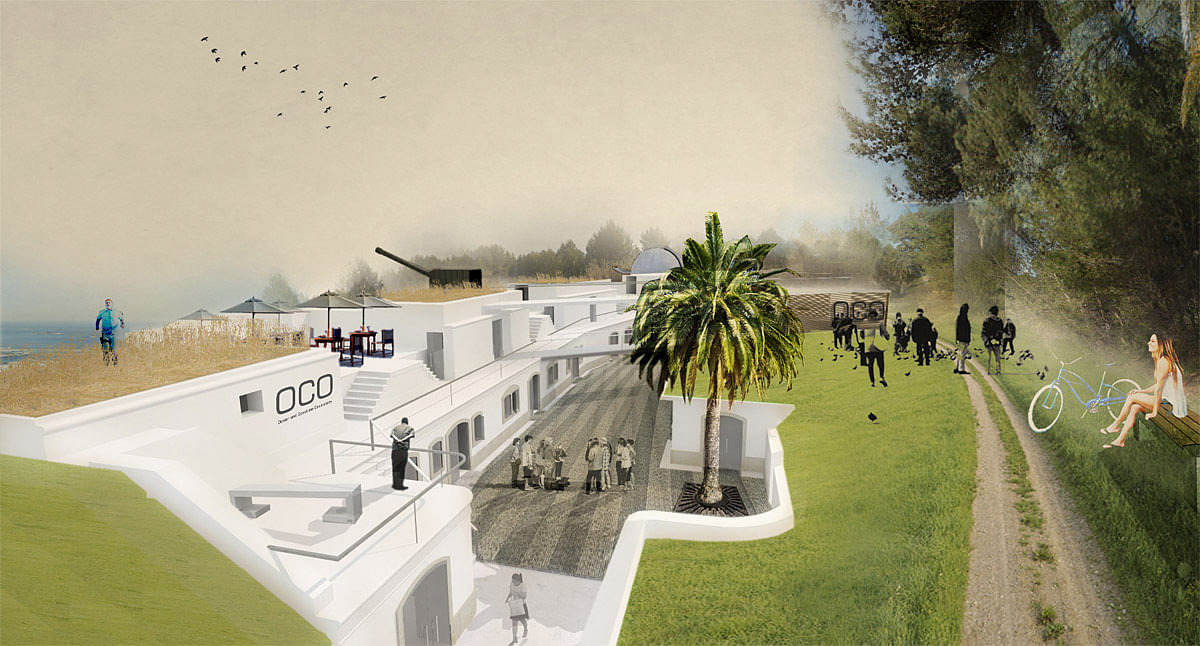
Detail of the Challenge Winner "Ocean & Coastline Observatory"

Architecture for Humanity has just recently announced the winners of its latest Open Architecture Challenge, [UN]RESTRICTED ACCESS. The prestigious, bi-annual humanitarian design competition focused on re-imagining former military sites.

A Portuguese proposal to reassign the Trafaria defense batteries outside Lisbon, the "OCO" or Ocean Coastline Observatory has been declared the Open Architecture Challenge winner, placed first in a field of 508 teams from around the world. Designed by the Lisbon Architecture Collective, OCO re-interprets coastline protection by assigning the cannon-laden battery to defend against threats of environmental abuse. "More than an economic asset," the design team relates, "the ocean...defines our identity." The design proposes reusing the military buildings to supervise the sustainable preservation of the coast, and help preserve Portuguese heritage.
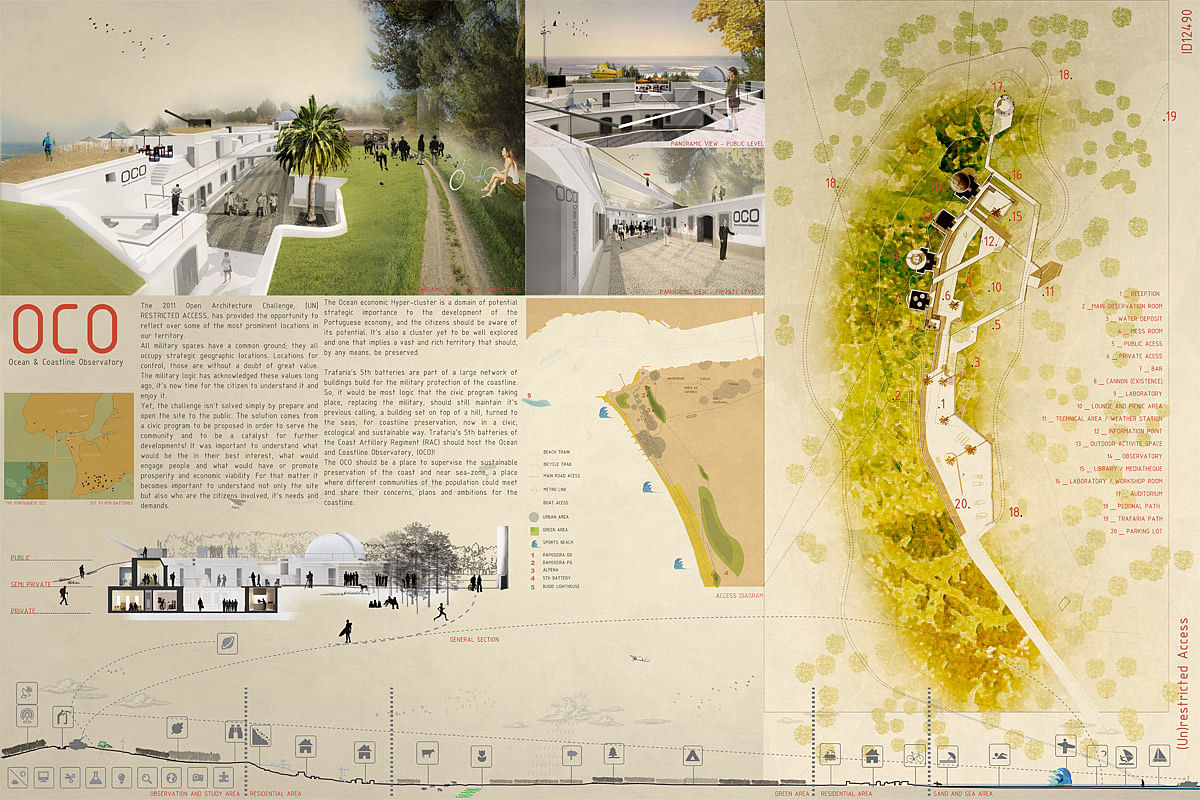
Challenge Winner - Ocean & Coastline Observatory, near Lisbon, Portugal

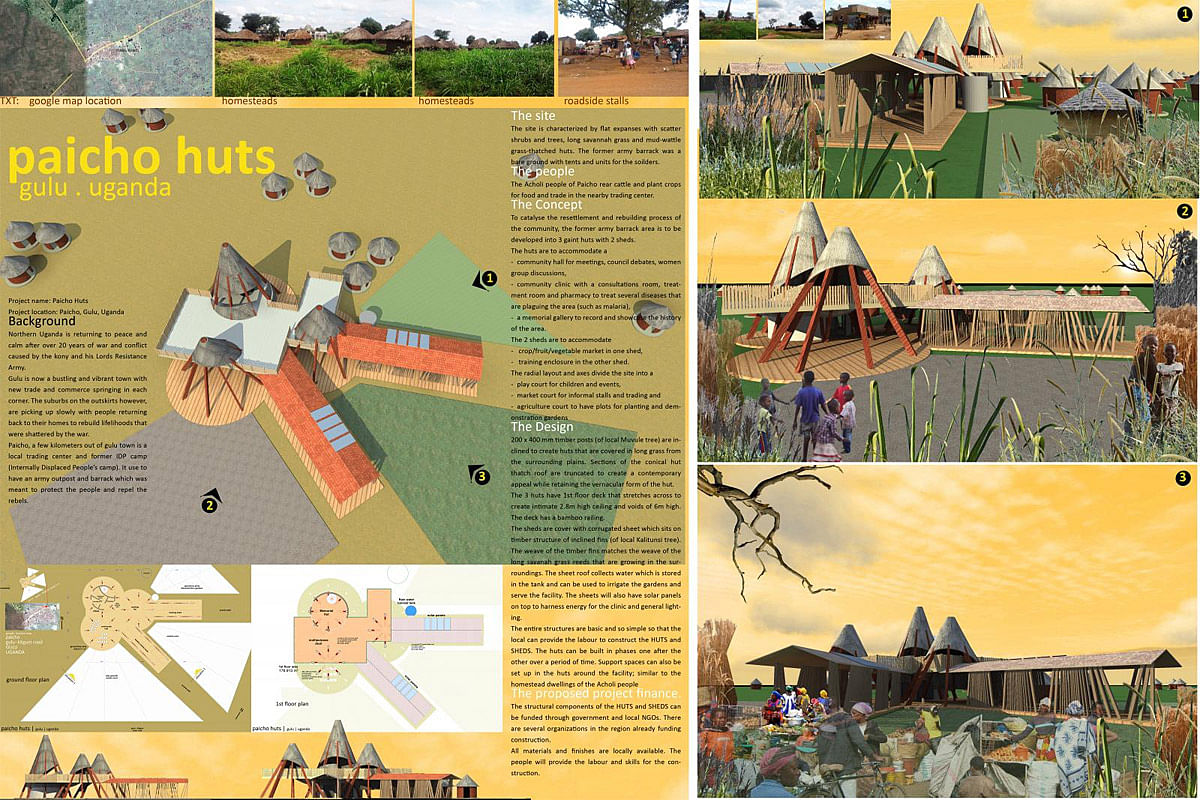
For every Open Architecture Challenge, the Founders' Award goes to the entry that most reflects the mission of Architecture for Humanity. In 2012, the honor goes to a Ugandan proposal designed by Andrew Amara to augment a former army outpost and IDP (Internally Displaced Persons) camp for use as a cultural center and marketplace for those who have become permanent residents there.
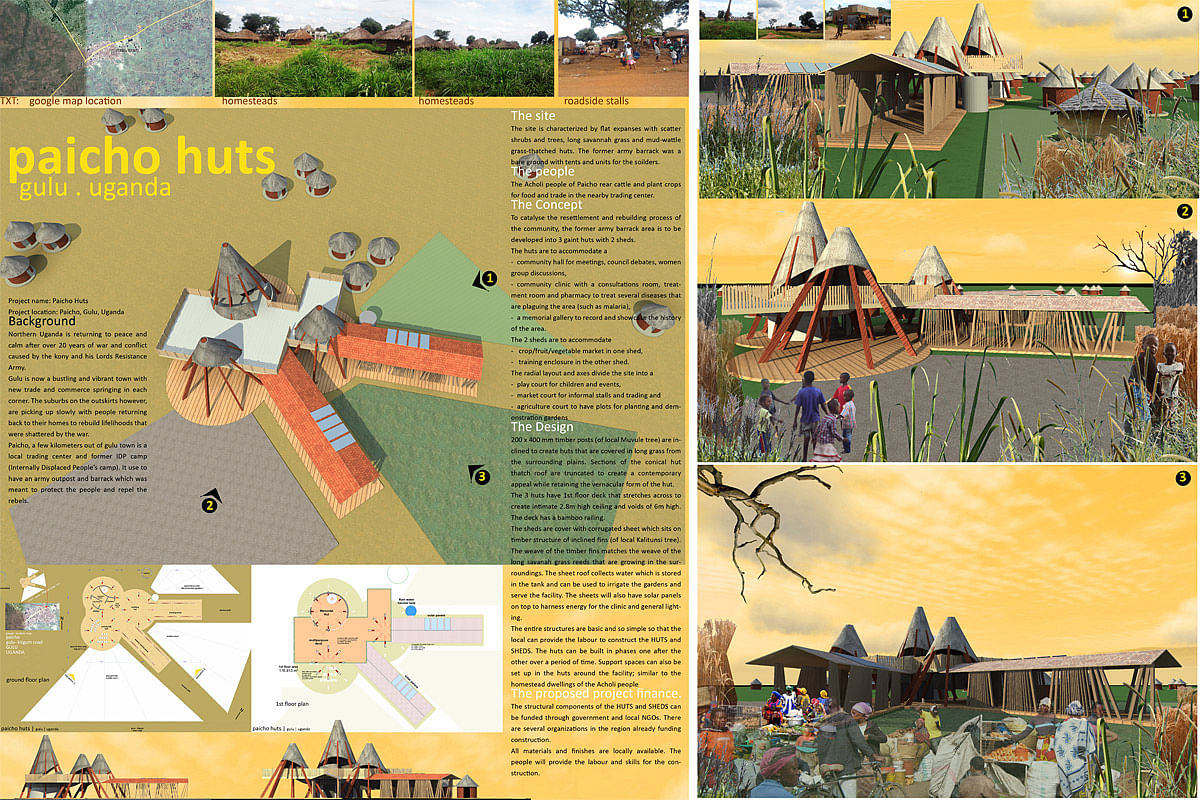
Founders' Award - Paicho Huts, near Gulu, Uganda

The Challenge asked architects and designers to partner with community groups around the world and develop innovative solutions to re-envision closed, abandoned and decommissioned military sites. In this way designers worked with communities surrounding these former places of conflict to transform oftentimes hostile locations into civic spaces built for the public good.  

Each design submission resonated with hope, admiration, and reverence for the prospect of redeveloping ex-military bases. A total of 508 teams from 71 countries registered to enter the Challenge. Entries were evaluated by an interdisciplinary jury of 33 professionals for suitability with five criteria: Community impact; Contextual appropriateness; Ecological footprint; Economic viability; and Design quality. Jury members included the Renzo Piano Building Workshop, Bahram Shirdel, Patricia Arquette, and Tom Kundig.

Other finalists targeted hot topic issues regarding environmental impact, political reaction, small-scale intervention, and economic development, for sites as varied as Old City Hebron, (Palestinian Territory), defunct World War II infrastructure in the Netherlands, seaside bunkers in New Zealand, "Peacewalls" in Northern Ireland, and Muammar Gaddafi's former palace grounds in Tripoli, Libya. Teams outlined scenarios for public community outreach which, in some cases, have already instigated larger municipal discussions of feasibility.

Here are the twelve finalists arranged by jury-determined categories.

Environmental Impact
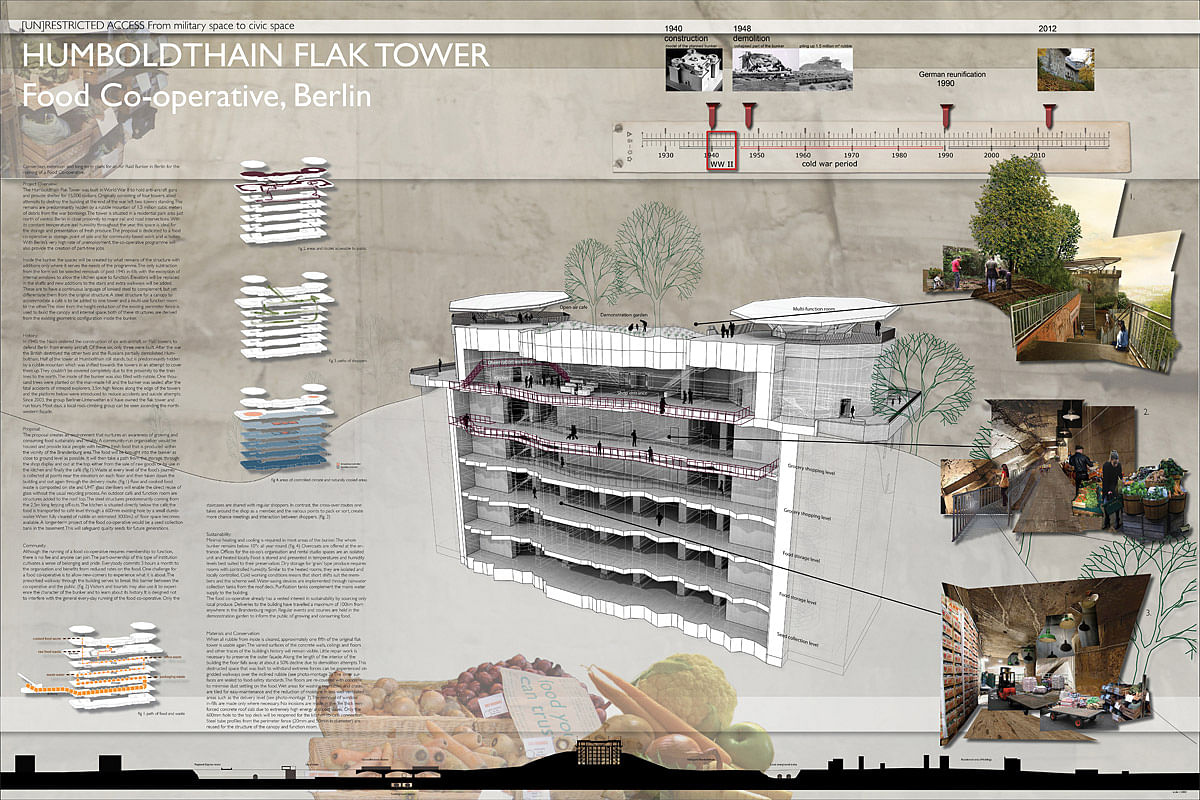
Environmental Impact, First Place: Humboldthain Food Cooperative, Berlin, Germany
Environmental Impact, Second Place: Ecological Processing Zone (EPZ), Oakland, United States
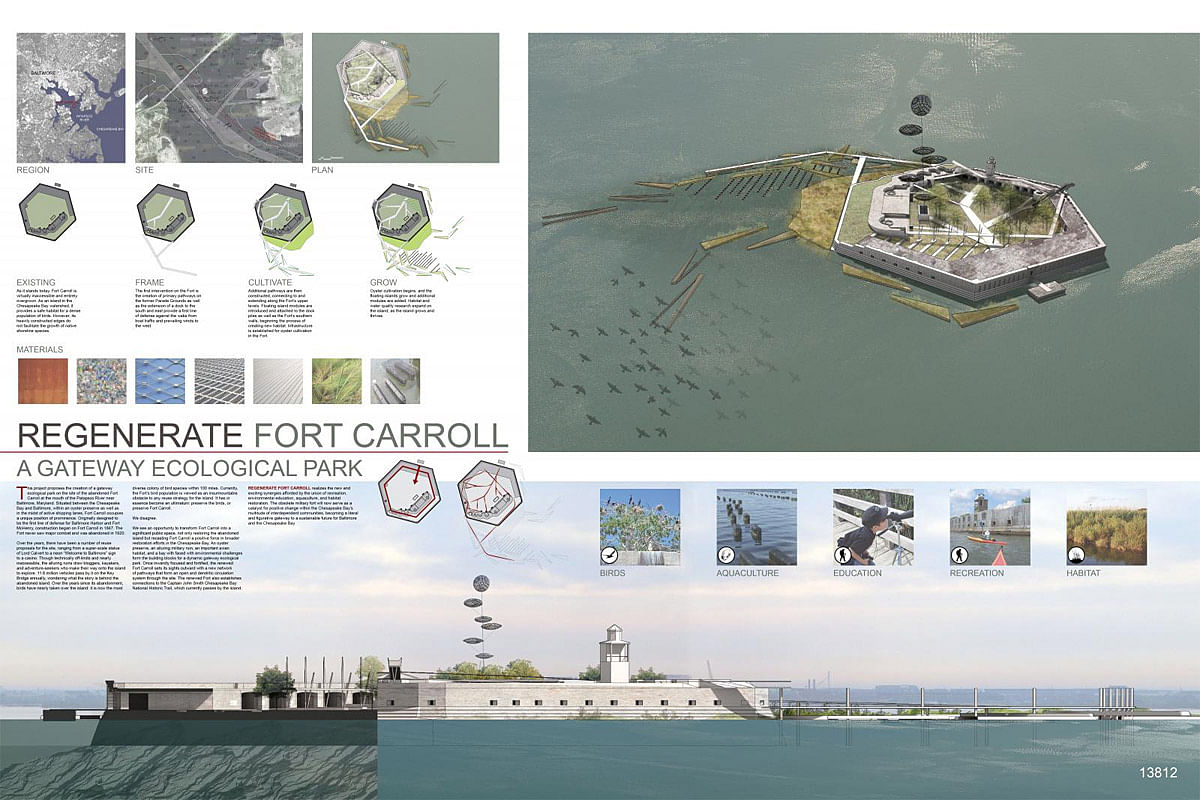
Environmental Impact, Third Place: REGENERATE FT. CARROLL: a gateway ecological park, Baltimore, United States

Political Response

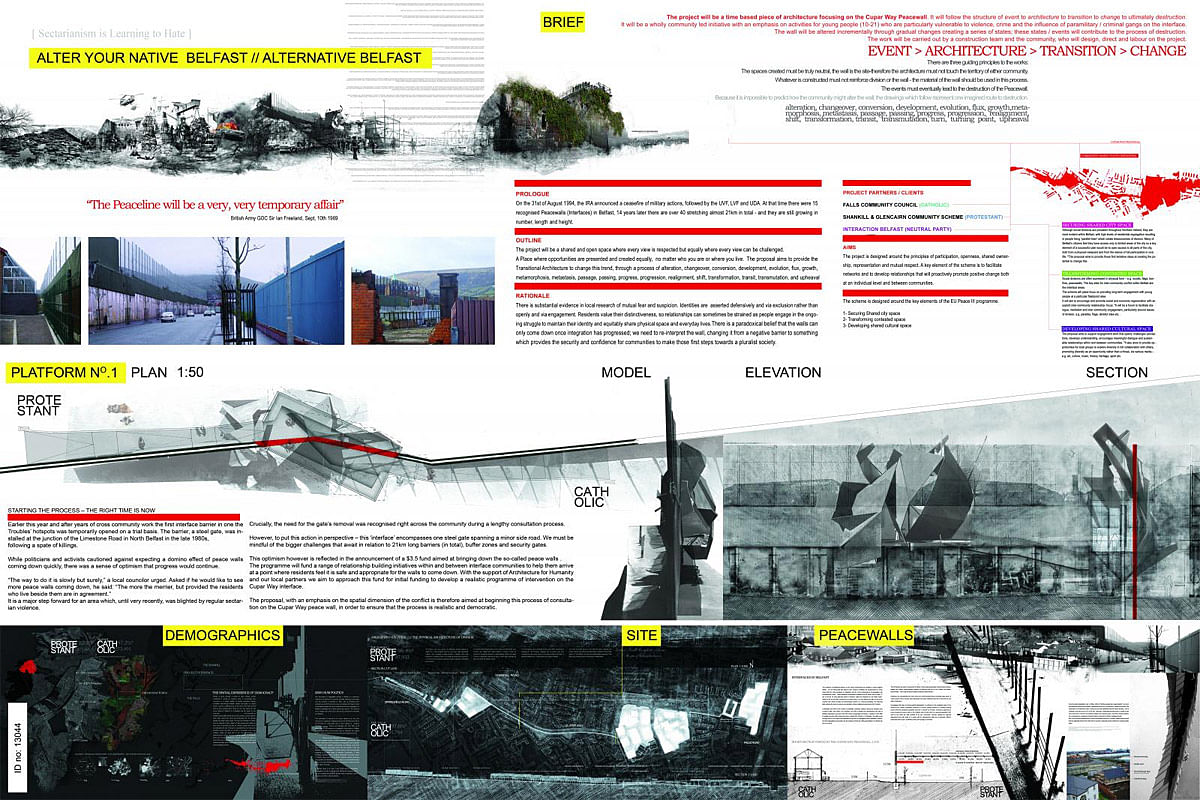
Political Response, First Place: ALTER YOUR NATIVE BELFAST//ALTERNATIVE BELFAST, Belfast, United Kingdom
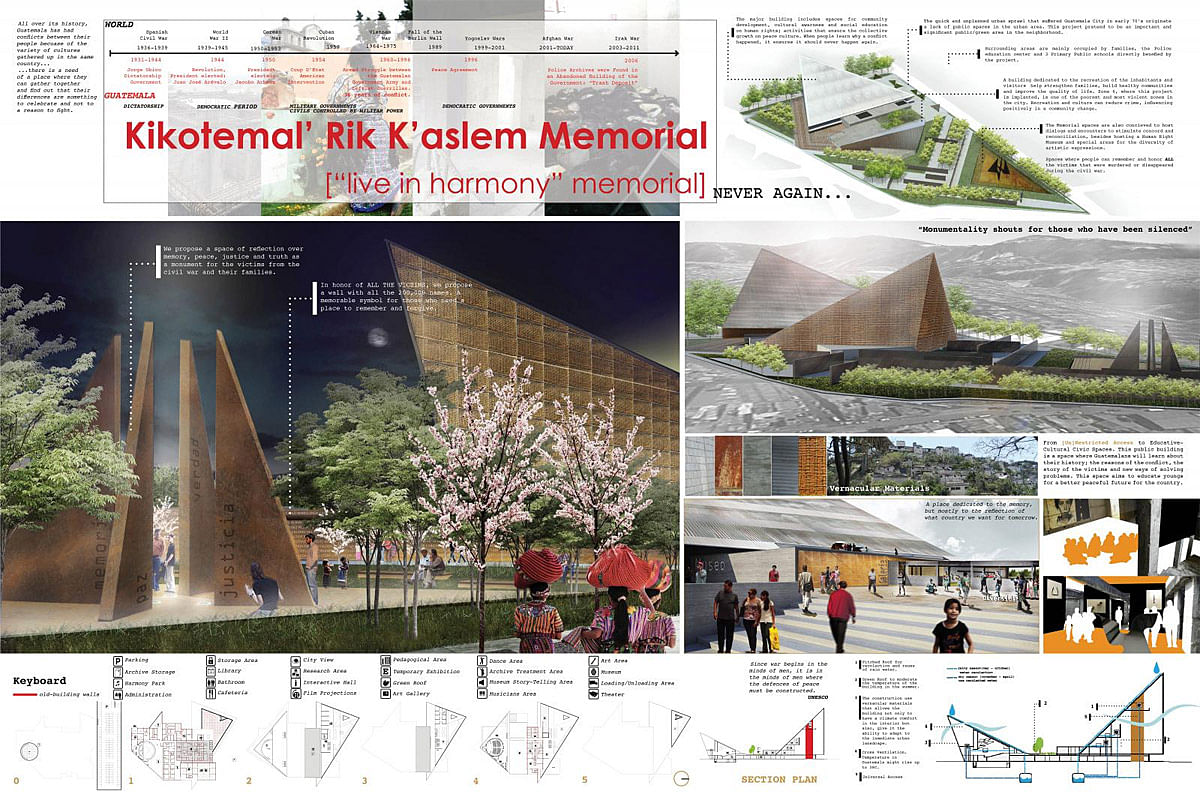
Political Response, Second Place: Kikotemal' Rik K'aslem Memorial, Guatemala City, Guatemala
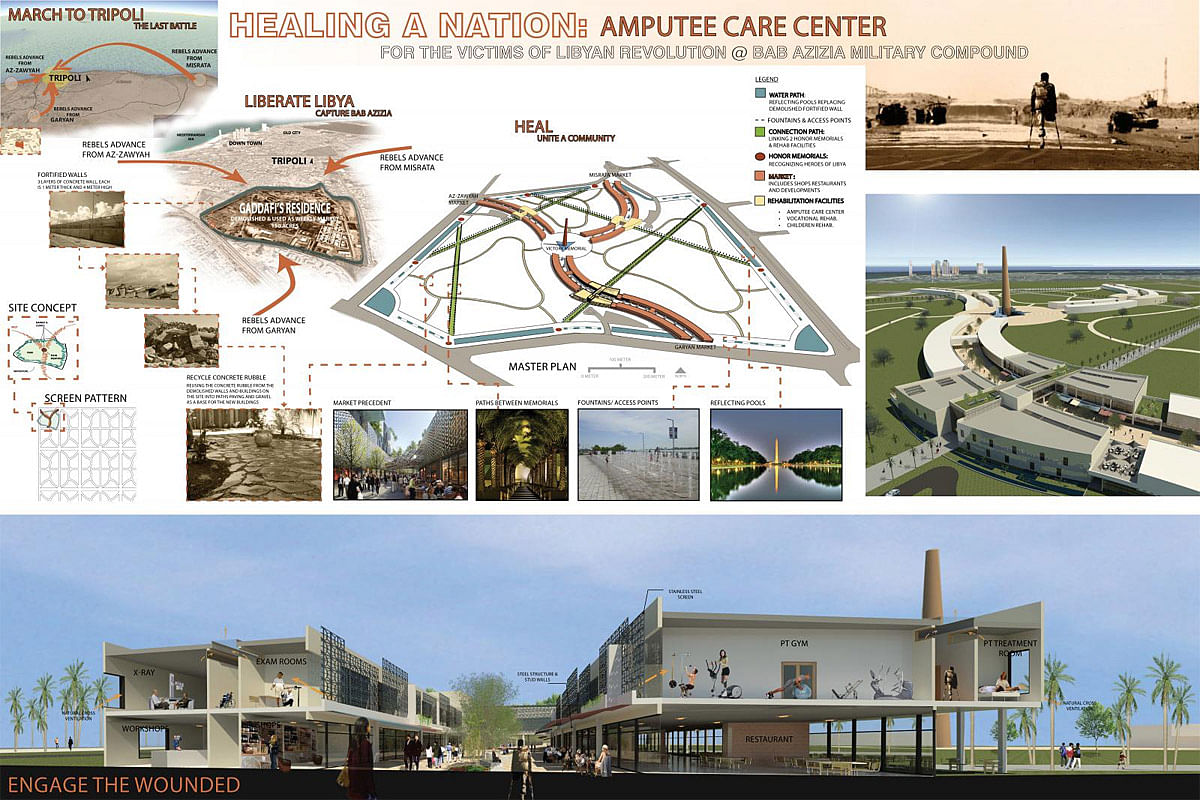
Political Response, Third Place: Healing a Nation: Healing the Wounded, Tripoli, Libya

Economic Development

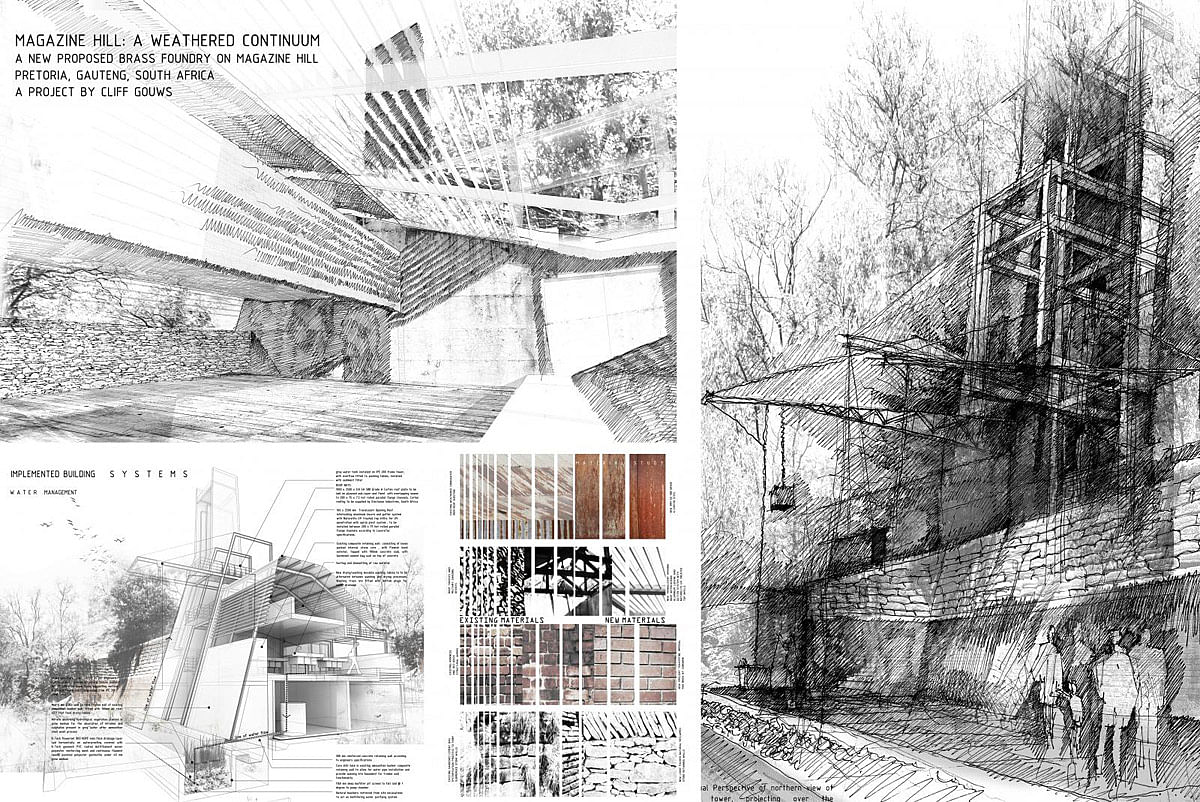
Economic Development, First Place: Magazine Hill: a weathered continuum, Pretoria, South Africa
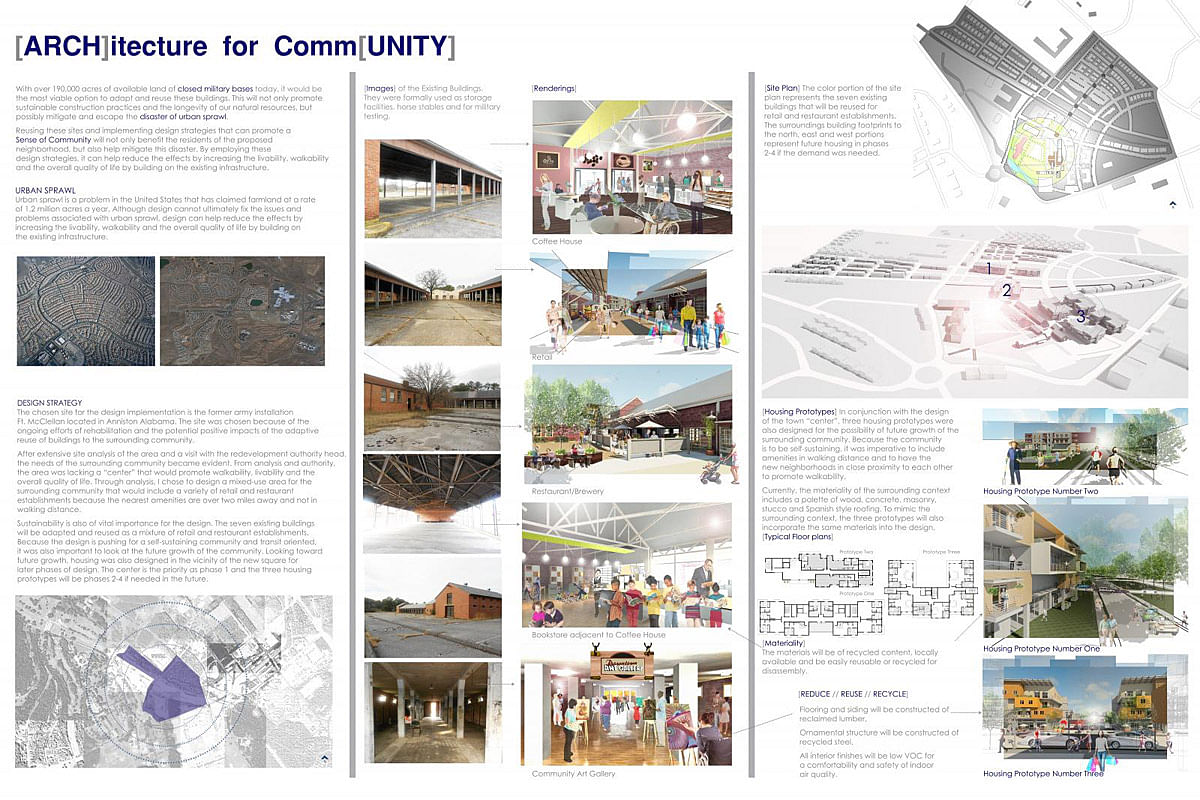
Economic Development, Second Place: [ARCH]itecture for Comm[UNITY], Anniston, Alabama, United States
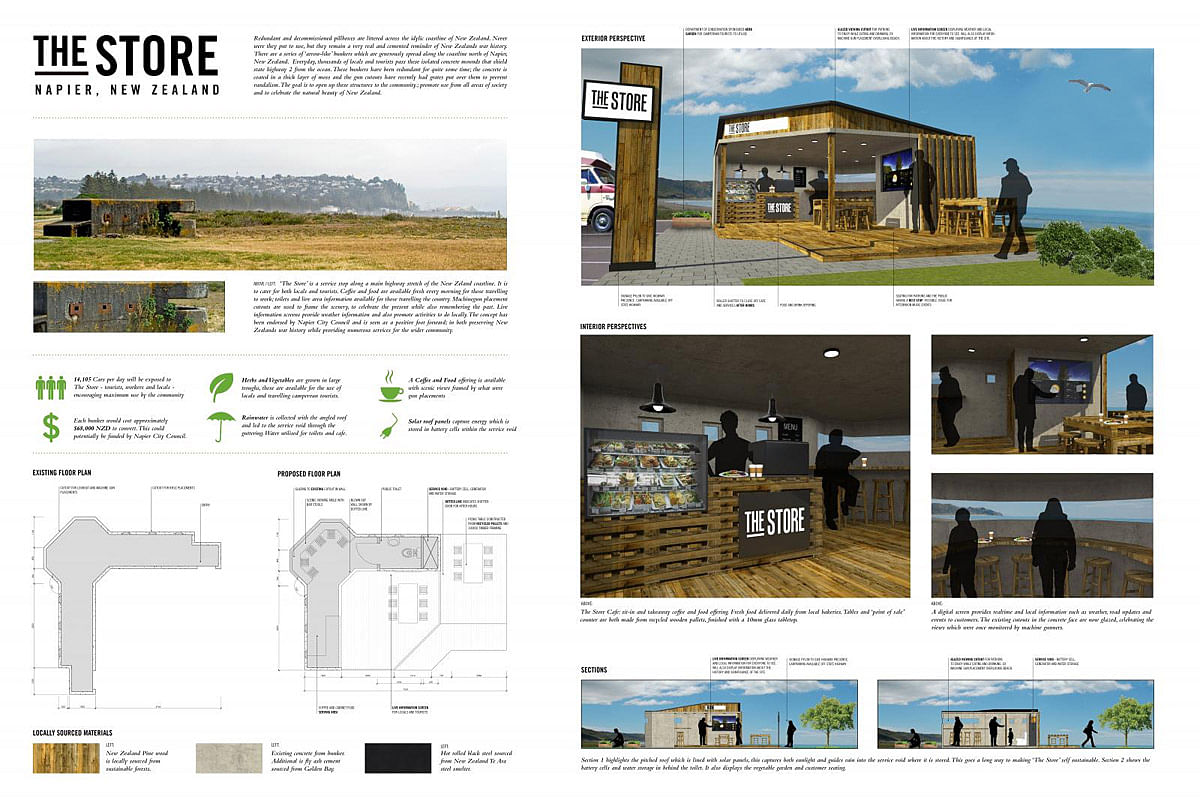
Economic Development, Third Place: The Store - Pillbox Conversion, Napier, New Zealand

Small-scale Intervention

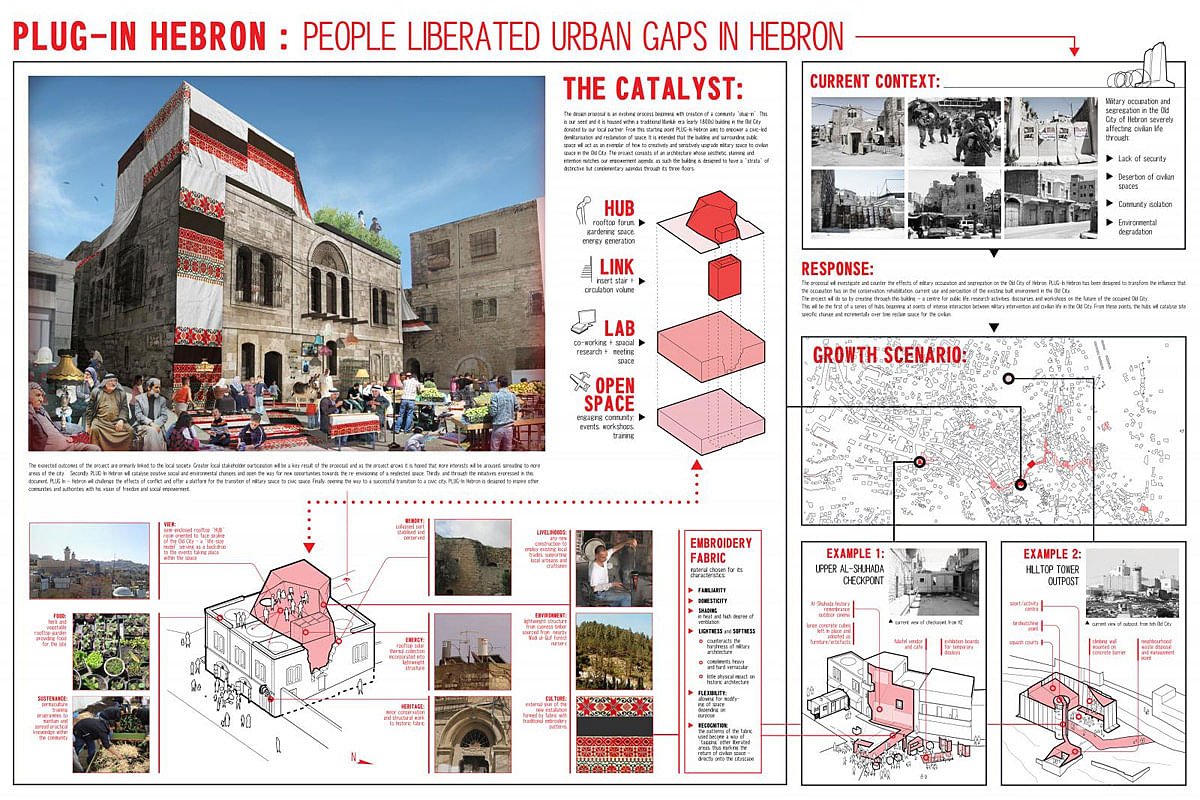
Small-scale Intervention, First Place: PLUG-In HEBRON - People Liberated Urban Gaps In Hebron, Old City Hebron, Israeli Occupied Palestinian West Bank
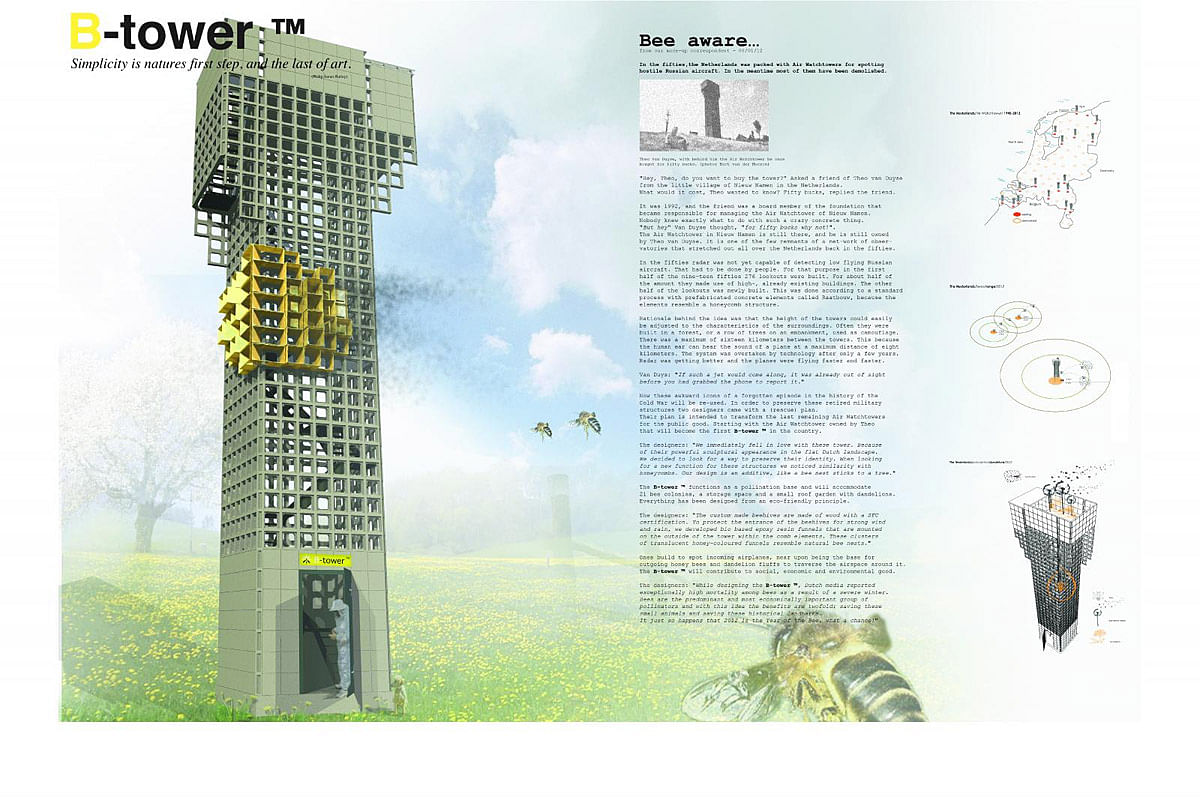
Small-scale Intervention, Second Place: B-Tower (TM), various sites, Netherlands
Small-scale Intervention, Third Place: Paicho Huts, outside Gulu, Uganda (recipient: Founders' Award)

Support for the Challenge to date comes from the National Endowment for the Arts, Autodesk (who has donated over $12,000 worth of software toward winning prizes), and Hewlett Packard Italy (donating materials for 2012 Venice Biennale exhibition).  

The next stage of the Challenge is the traveling exhibition, whose first stop will be the Venice Biennale. Launching August 27th in the Palazzo Bembo, [UN]RESTRICTED ACCESS joins the palace's theme, "Traces of Centuries & Future Steps." The exhibition will then visit various locations in Europe throughout the Fall. Architecture for Humanity hopes to feature the exhibition in every city hosting a decommissioned bases targeted by a finalist, and seeks continued support for the exhibition and an accompanying photography series of these locations as they exist today.

Related

open architecture challenge ● military ● architecture for humanity ● [un]restricted access

Share

  • Follow

    0 Comments

  • Comment as :

Winners of Open Architecture Challenge: [UN]RESTRICTED ACCESS

2009 Open Architecture Challenge: Classroom Announces Winner

Sign up for Bustler's Email Newsletters

Next page » Loading

Winners of Open Architecture Challenge: [UN]RESTRICTED ACCESS

By Bustler Editors|

Thursday, Aug 9, 2012

Share

Detail of the Challenge Winner "Ocean & Coastline Observatory"

Related

open architecture challenge ● military ● architecture for humanity ● [un]restricted access

Architecture for Humanity has just recently announced the winners of its latest Open Architecture Challenge, [UN]RESTRICTED ACCESS. The prestigious, bi-annual humanitarian design competition focused on re-imagining former military sites.

A Portuguese proposal to reassign the Trafaria defense batteries outside Lisbon, the "OCO" or Ocean Coastline Observatory has been declared the Open Architecture Challenge winner, placed first in a field of 508 teams from around the world. Designed by the Lisbon Architecture Collective, OCO re-interprets coastline protection by assigning the cannon-laden battery to defend against threats of environmental abuse. "More than an economic asset," the design team relates, "the ocean...defines our identity." The design proposes reusing the military buildings to supervise the sustainable preservation of the coast, and help preserve Portuguese heritage.

Challenge Winner - Ocean & Coastline Observatory, near Lisbon, Portugal

For every Open Architecture Challenge, the Founders' Award goes to the entry that most reflects the mission of Architecture for Humanity. In 2012, the honor goes to a Ugandan proposal designed by Andrew Amara to augment a former army outpost and IDP (Internally Displaced Persons) camp for use as a cultural center and marketplace for those who have become permanent residents there.

Founders' Award - Paicho Huts, near Gulu, Uganda

The Challenge asked architects and designers to partner with community groups around the world and develop innovative solutions to re-envision closed, abandoned and decommissioned military sites. In this way designers worked with communities surrounding these former places of conflict to transform oftentimes hostile locations into civic spaces built for the public good.  

Each design submission resonated with hope, admiration, and reverence for the prospect of redeveloping ex-military bases. A total of 508 teams from 71 countries registered to enter the Challenge. Entries were evaluated by an interdisciplinary jury of 33 professionals for suitability with five criteria: Community impact; Contextual appropriateness; Ecological footprint; Economic viability; and Design quality. Jury members included the Renzo Piano Building Workshop, Bahram Shirdel, Patricia Arquette, and Tom Kundig.

Other finalists targeted hot topic issues regarding environmental impact, political reaction, small-scale intervention, and economic development, for sites as varied as Old City Hebron, (Palestinian Territory), defunct World War II infrastructure in the Netherlands, seaside bunkers in New Zealand, "Peacewalls" in Northern Ireland, and Muammar Gaddafi's former palace grounds in Tripoli, Libya. Teams outlined scenarios for public community outreach which, in some cases, have already instigated larger municipal discussions of feasibility.

Here are the twelve finalists arranged by jury-determined categories.

Environmental Impact
Environmental Impact, First Place: Humboldthain Food Cooperative, Berlin, Germany
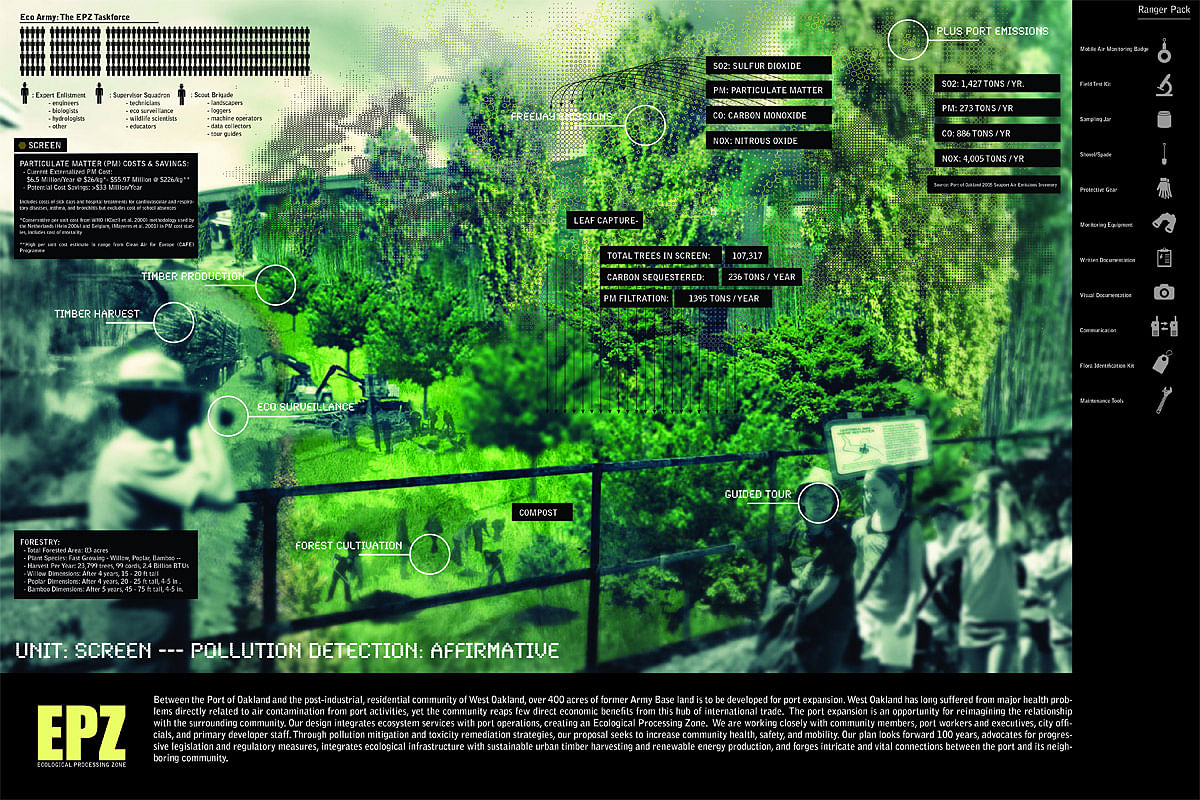
Environmental Impact, Second Place: Ecological Processing Zone (EPZ), Oakland, United States
Environmental Impact, Third Place: REGENERATE FT. CARROLL: a gateway ecological park, Baltimore, United States

Political Response

Political Response, First Place: ALTER YOUR NATIVE BELFAST//ALTERNATIVE BELFAST, Belfast, United Kingdom
Political Response, Second Place: Kikotemal' Rik K'aslem Memorial, Guatemala City, Guatemala
Political Response, Third Place: Healing a Nation: Healing the Wounded, Tripoli, Libya

Economic Development

Economic Development, First Place: Magazine Hill: a weathered continuum, Pretoria, South Africa
Economic Development, Second Place: [ARCH]itecture for Comm[UNITY], Anniston, Alabama, United States
Economic Development, Third Place: The Store - Pillbox Conversion, Napier, New Zealand

Small-scale Intervention

Small-scale Intervention, First Place: PLUG-In HEBRON - People Liberated Urban Gaps In Hebron, Old City Hebron, Israeli Occupied Palestinian West Bank
Small-scale Intervention, Second Place: B-Tower (TM), various sites, Netherlands
Small-scale Intervention, Third Place: Paicho Huts, outside Gulu, Uganda (recipient: Founders' Award)

Support for the Challenge to date comes from the National Endowment for the Arts, Autodesk (who has donated over $12,000 worth of software toward winning prizes), and Hewlett Packard Italy (donating materials for 2012 Venice Biennale exhibition).  

The next stage of the Challenge is the traveling exhibition, whose first stop will be the Venice Biennale. Launching August 27th in the Palazzo Bembo, [UN]RESTRICTED ACCESS joins the palace's theme, "Traces of Centuries & Future Steps." The exhibition will then visit various locations in Europe throughout the Fall. Architecture for Humanity hopes to feature the exhibition in every city hosting a decommissioned bases targeted by a finalist, and seeks continued support for the exhibition and an accompanying photography series of these locations as they exist today.

Share

  • Follow

    0 Comments

  • Comment as :

Archinect JobsArchinect Jobs

The Archinect Job Board attracts the world's top architectural design talents.

VIEW ALL JOBS POST A JOB

Designer

HATCH ARCHITECTURE

Designer

Los Angeles, CA, US

Intermediate Designer - 3+ Years Experience (NY)

Cass Calder Smith

Intermediate Designer - 3+ Years Experience (NY)

New York, NY, US

Project Architect/Job Captain

HLW International LLP

Project Architect/Job Captain

West Palm Beach, FL, US

Intermediate Residential Architect

52XConsulting

Intermediate Residential Architect

New York, NY, US

Architectural Designer

Equal Equal

Architectural Designer

Brooklyn, NY, US

Office Assistant / Studio Coordinator

Beinfield Architecture PC

Office Assistant / Studio Coordinator

Norwalk, CT, US

Project Designer (3 to 5 years)

Swift Lee Office

Project Designer (3 to 5 years)

Los Angeles, CA, US

Junior Architect

Eric Colbert & Associates

Junior Architect

Washington, DC, US

Interior Designer | Education & Institutional Work

Berliner Architects

Interior Designer | Education & Institutional Work

Culver City, CA, US

Registered Architect

Advantage Point Group, Inc.

Registered Architect

Saint Paul, MN, US

Next page » Loading