• Login / Join
  • About
  • •
  • Contact
  • •
  • Advertising
bustler logo
bustler logo
  • News
  • Competitions
  • Events
  • Bustler is powered by Archinect
  • Sign up for Bustler's Email Newsletters

  • Follow these Bustler feeds:

  • Search

    Search in

  • Submit

    What are you submitting?

    News Pitch
    Competition
    Event
  • Login / Join
  • News|Competitions|Events
  • Search
    | Submit
    | Follow
  • Search in

    What are you submitting?

    News Pitch
    Competition
    Event

    Follow these Bustler feeds:

  • About|Contact|Advertising
  • Login / Join
Tagged: petropolis of tomorrow

Petropolis of Tomorrow's "FrequenCity", currently at the FRAC's "The City as a Vision"

By Bustler Editors|

Friday, Oct 10, 2014
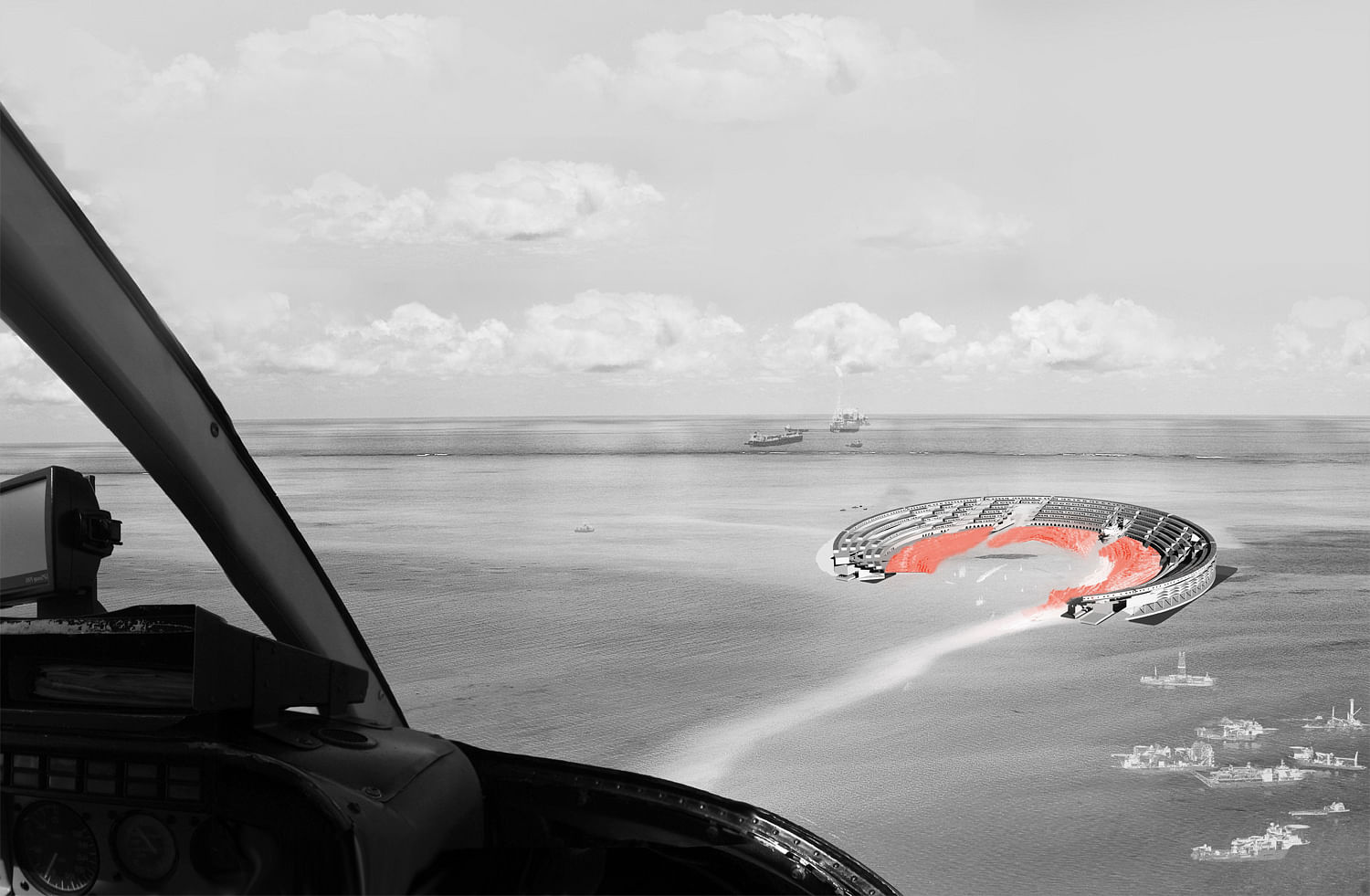
Image courtesy of Neeraj Bhatia.

Petropolis of Tomorrow's "FrequenCity" is part of an impressive collection of projects in the current "The City as a Vision" exhibition at the FRAC Centre in France, happening now until February 22, 2015.

As a tribute to historian and critic Michel Ragon -- who wrote about the issues of experimental architecture throughout the mid-1960s and 1970s -- the projects in the exhibition examine the necessity to reimagine new uses for cities. They explore new ways to generate resources and how to connect the micro-scale of the individual to the macro-scale of the expanding urban territory.

For a glimpse of what's at the "City as Vision" exhibit, check out Petropolis of Tomorrow's "FrequenCity" below. Designed by Bomin Park and Peter Stone (with Neeraj Bhatia as advisor), the project gives an alternative vision of oil industry logistics.

Cidade Recorrente from Petropolis on Vimeo.

CIDADE RECORRENTE (FrequenCity)
Designers: Bomin Park & Peter Stone
Advisor: Neeraj Bhatia
Project: Petropolis of Tomorrow — Floating Frontiers

Project description:

"In the middle of the ocean, water both isolates islands of activity and connects these objects within a broader network. The scale of mobility at sea has no dry analogue—ships can transport cargo the size of city blocks with relative ease. With such capacity, it is possible to condense the spatially dispersed population of the oil fields into a single network scheduled through time. While land-based mobility remains relatively limited, by way of the ocean, people and city can move omnidirectionally. Optimizing this condition, Frequencity deploys a diverse range of programme shared through three moving networks that interface between a series of static points to offer the complexity and diversity of the city in a dispersed logistical environment."
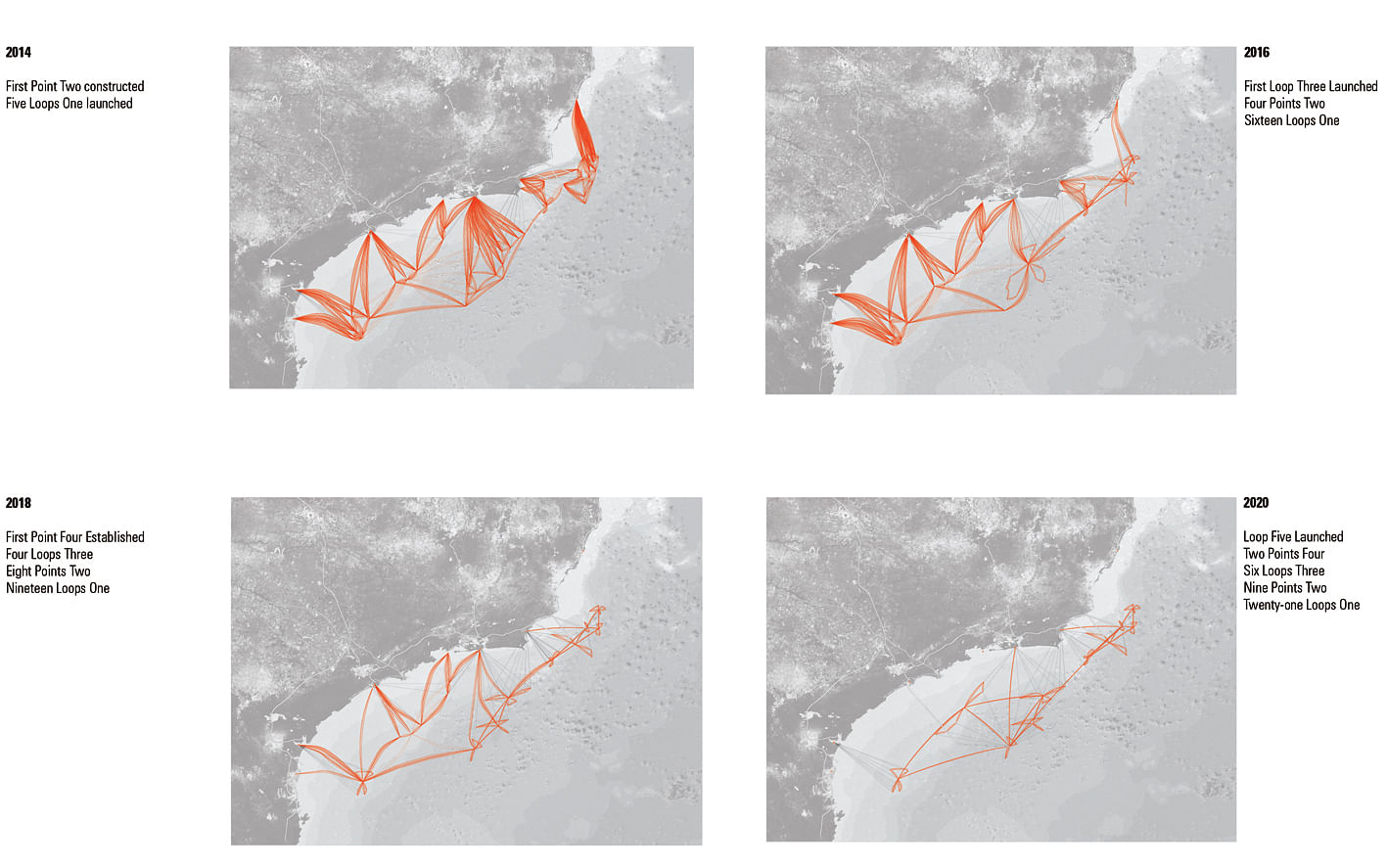
Image courtesy of Neeraj Bhatia.

"The interplay of various components of a city and their systemic organization could be characterized through a principle of association. For Team 10, scale was the defining factor in classifying associat ion. These scales were linked to organizational types—hou se, street, district, and city. The systemic association of these types, however, was largely ba sed on the organizational principles of infrastructure as mobility¹.

The use of hard, static infrastructure on land, h owever, never allowed the associative integration that Team 10 imagined. Frequencity re-investigates Team 10’s theory as a basis for design, taking advantage of the unique constraints and oppo rtunities offered by urbanism on water. The incredible mobility of the ocean enables a dynamic system that can achieve what Team 10 intended but could not actualize on land. What follows is a fram ework for urbanism planned not just through a hierarchy in scale but also in time. The problem of density is replaced by the opportunity of frequency."
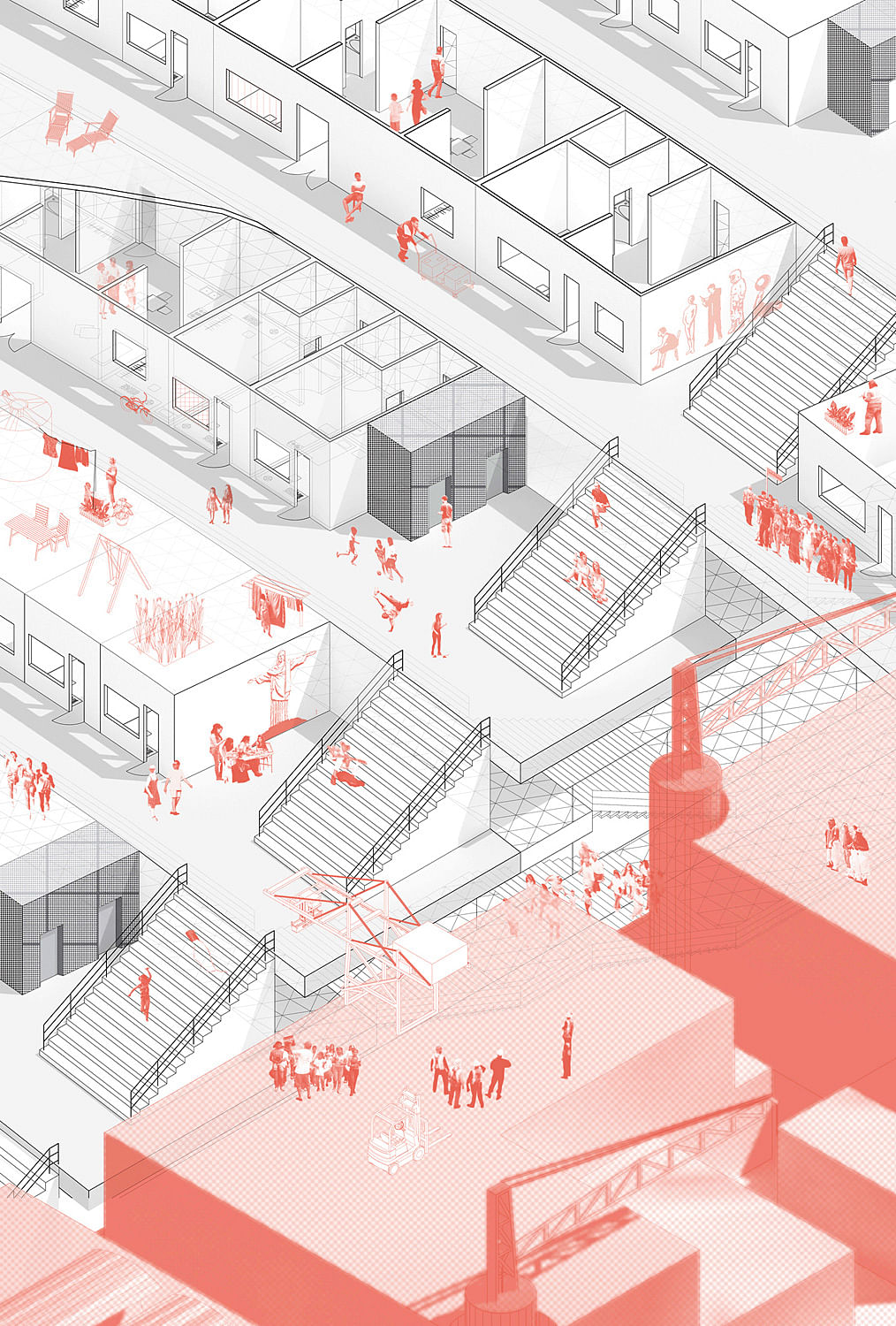
Image courtesy of Neeraj Bhatia.

"Aquamobility allows both the programmatic diversity of a city and the intimacy of a street to exist in a single space over time. In a typical city, diversit y and scales of programme are limited to certain core populations that can support such use. Frequencity uses the mobility of the water to move programme throughout the water so the various islands—despite their size—are afforded a diversity of programmes at differential frequencies. This becomes an urbani sm of logistics, revolving around a complex schedul e, capable of aggregating bits into pieces and pieces into wholes."
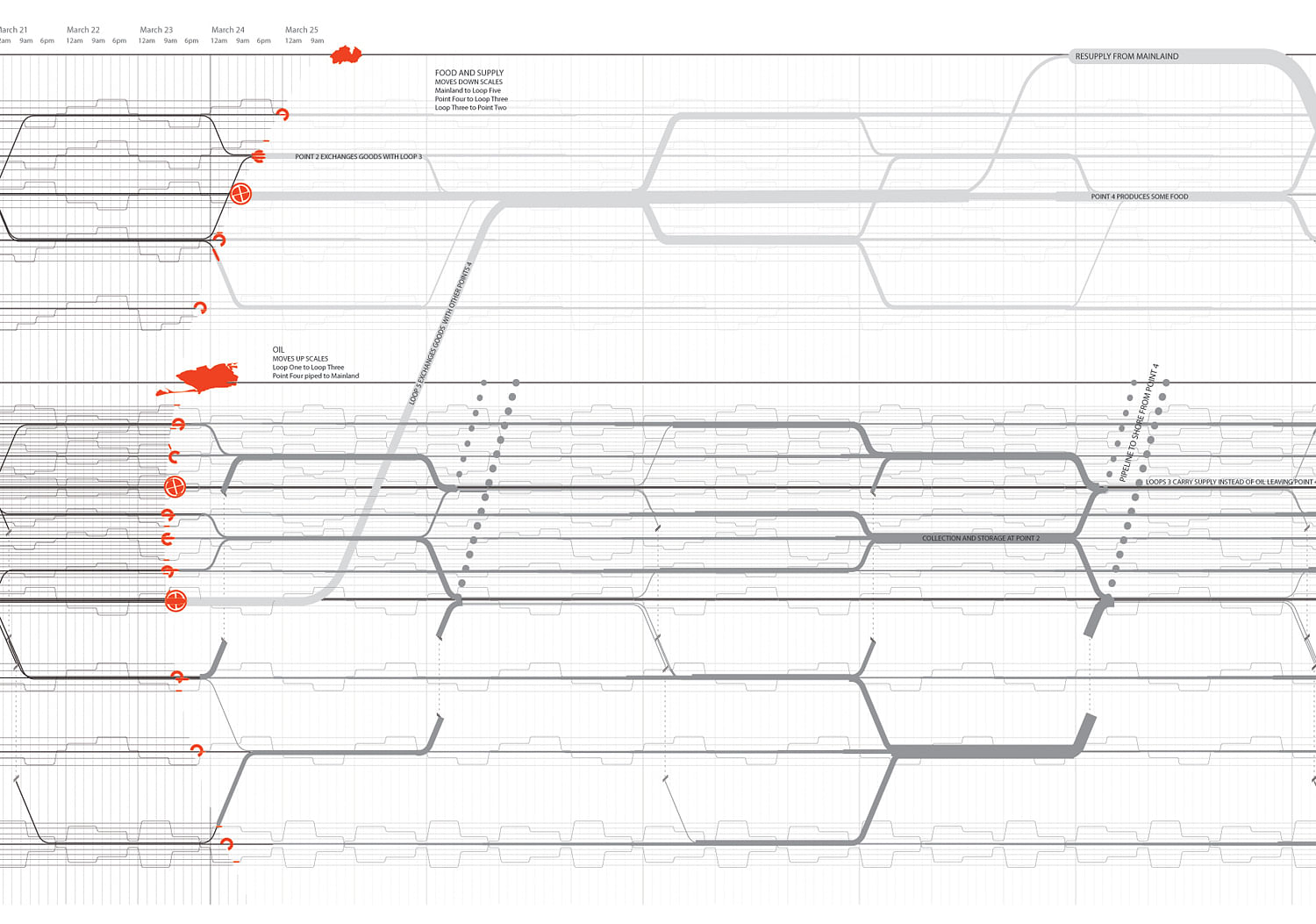
Image courtesy of Neeraj Bhatia.

"While wholes may never be physically contiguous, mobile programmes and opportunities for exchange forge connection between them. Streets, districts, and cities are bound by the associations they share across time rather than space; scheduled aggregations and separations replace proximity to e stablish subdivisions of the city. The range of choice we experience in the city can be broadened by surrendering some modicum of control."
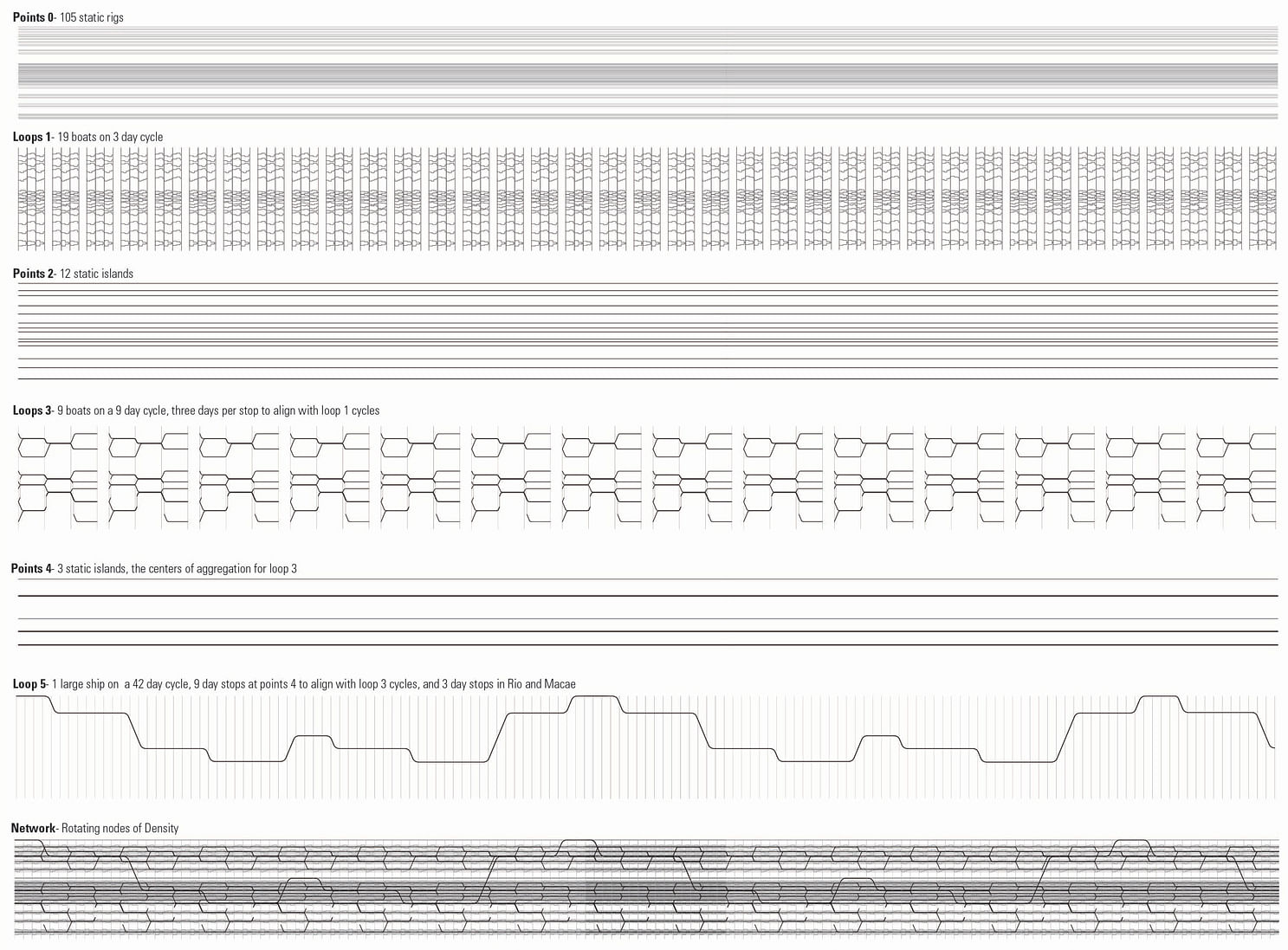
Image courtesy of Neeraj Bhatia.

"The master schedule correlates frequency of availability with frequency of use. By extending programme across the polynuclear network, the range of services and amen ities found in a large metropolis are made availabl e to the offshore city of sixty thousand. When a ship docks, people may flock to temporary programmes not always available and return home afterwards to the locality of their neighbourhood. Frequencity therefore manages both the diversity of a city and the intimacy of a neighbourhood."
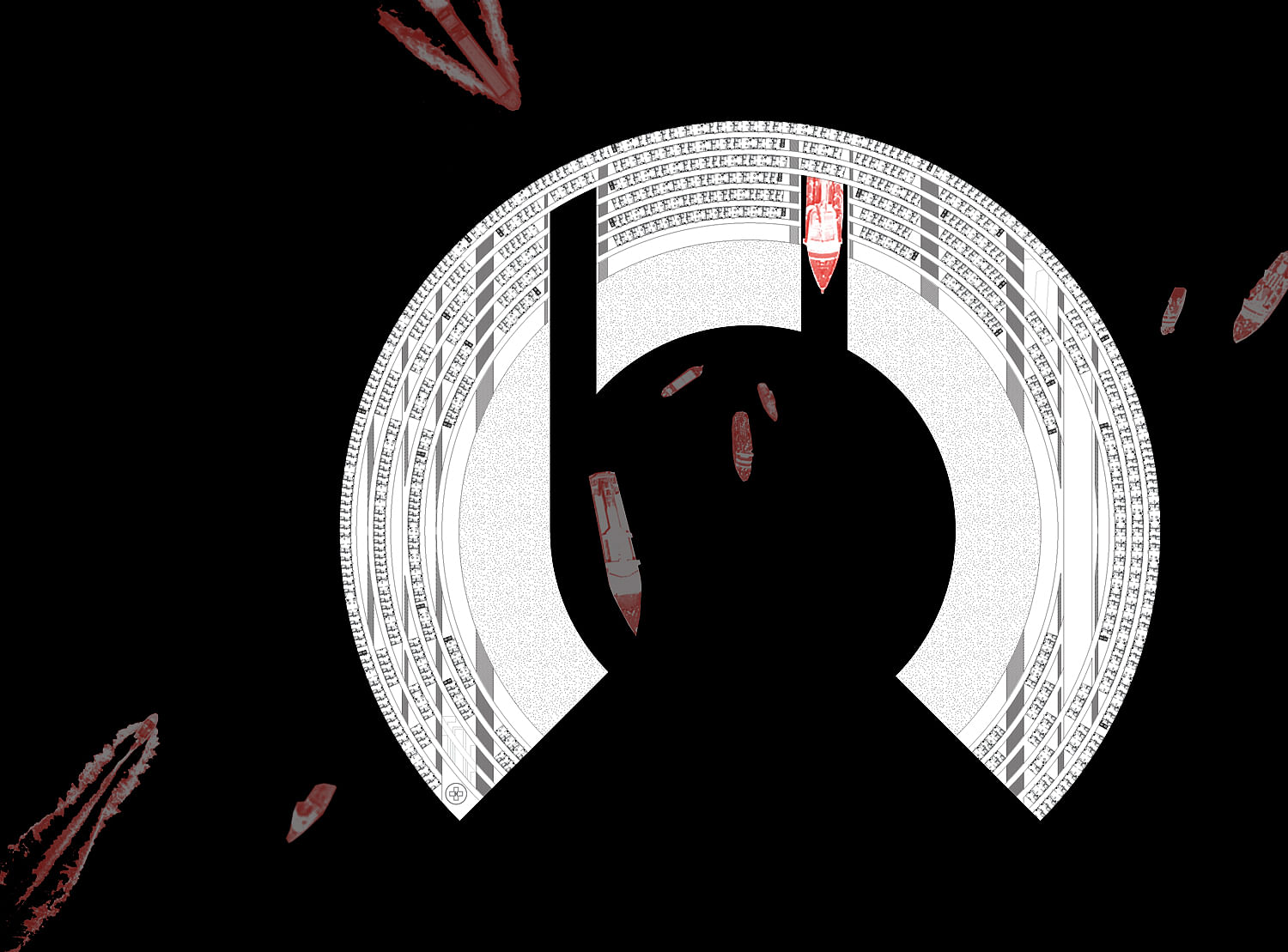
Image courtesy of Neeraj Bhatia.

"A mobile system can adjust much like an ecological system of association. It can grow and shrink in response to local stimulus, such as the excitement of Carnival or to broad shifts, such as the inevitable migration to the Santos Basin as reserves in the Campos decline. The inherent malleability of the schedule makes this form of urbanism resilient to transformation. The project derives its name from its constant condition of flux and cycle. Restaurants, schools, and churches appear and disappear. Entire districts are reoriented, consolidated and isolated over time. This schedule is typical of land-based cities, except that in Frequencity, programmes move rather than users. "
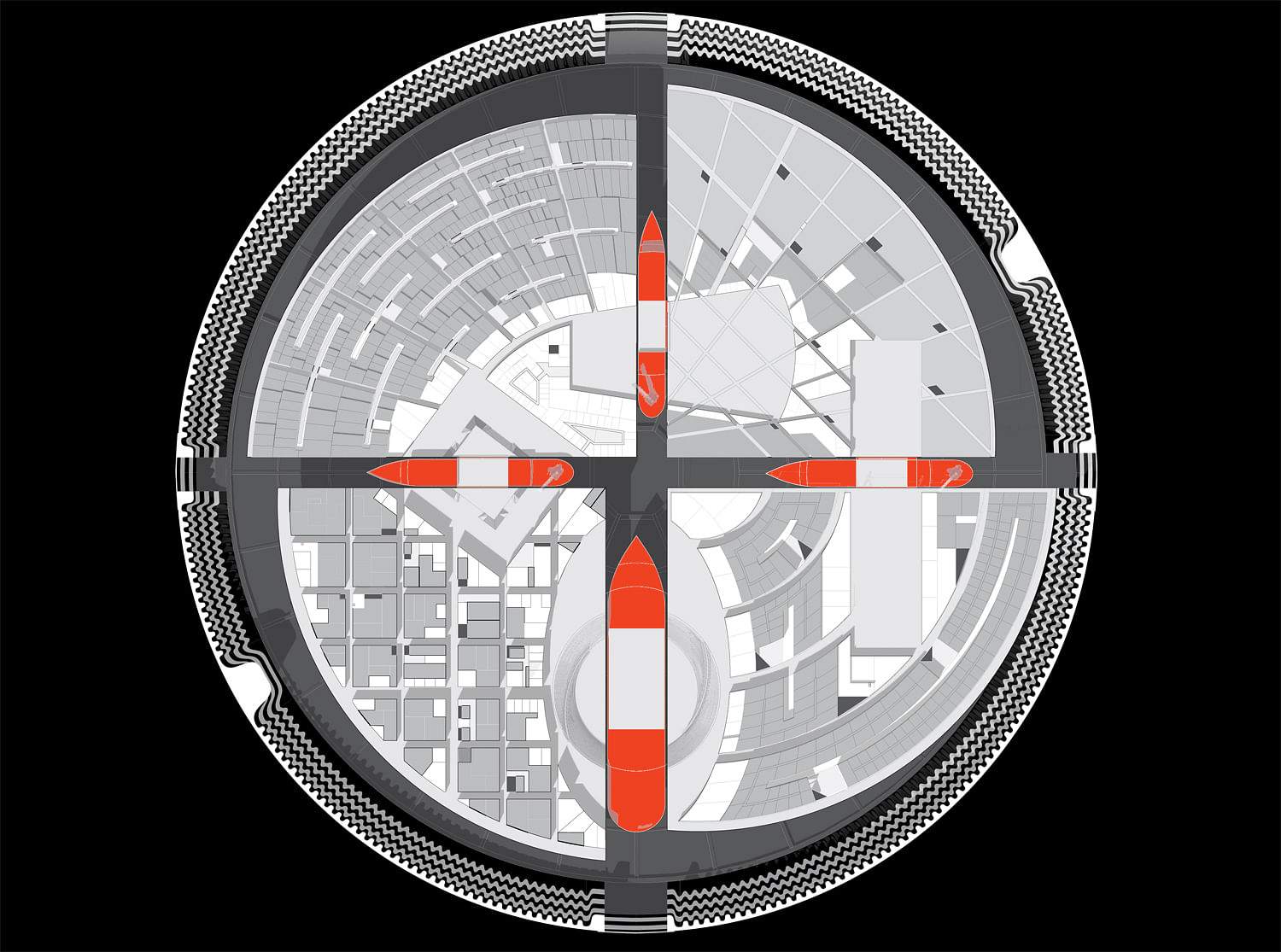
Image courtesy of Neeraj Bhatia.

"As mobile programmes interact with static points over time, each point becomes tied to the system as a whole. The city itself becomes an accumulation of people tied together through schedule rather than proximity. Frequencity suggests that the contact and exchange allowed across time can be comparable to the contact and exchange allowed across land. Designed in time, this becomes an urbanism of movement defined by its logistical schedule."

Notes: 
¹ Alison Smithson and Peter Smithson.  Team 10 Primer, (Cambridge: MIT Press, 1968), 51. The Smithsons state, “Mobility has become the characteristic of our period. Social and physical mobility, the feeling of a certain sort of freedom, is one of the things that keeps our society together, Mobility is not only concerned with roads, but with the whole concept of a mobile, fragmented, community. The roads (together with the main power lines and drains) form the essential physical infrastructure of the community.”

For more about "The City as a Vision" exhibition, click here.

Related

visionary ● petropolis of tomorrow ● future ● france ● frac ● exhibition ● europe ● city as vision ● alternative architecture ● alternative ● visions

Share

  • Follow

    0 Comments

  • Comment as :

Petropolis of Tomorrow's "FrequenCity", currently at the FRAC's "The City as a Vision"

Sign up for Bustler's Email Newsletters

Next page » Loading

Petropolis of Tomorrow's "FrequenCity", currently at the FRAC's "The City as a Vision"

By Bustler Editors|

Friday, Oct 10, 2014

Share

Image courtesy of Neeraj Bhatia.

Related

visionary ● petropolis of tomorrow ● future ● france ● frac ● exhibition ● europe ● city as vision ● alternative architecture ● alternative ● visions

Petropolis of Tomorrow's "FrequenCity" is part of an impressive collection of projects in the current "The City as a Vision" exhibition at the FRAC Centre in France, happening now until February 22, 2015.

As a tribute to historian and critic Michel Ragon -- who wrote about the issues of experimental architecture throughout the mid-1960s and 1970s -- the projects in the exhibition examine the necessity to reimagine new uses for cities. They explore new ways to generate resources and how to connect the micro-scale of the individual to the macro-scale of the expanding urban territory.

For a glimpse of what's at the "City as Vision" exhibit, check out Petropolis of Tomorrow's "FrequenCity" below. Designed by Bomin Park and Peter Stone (with Neeraj Bhatia as advisor), the project gives an alternative vision of oil industry logistics.

Cidade Recorrente from Petropolis on Vimeo.

CIDADE RECORRENTE (FrequenCity)
Designers: Bomin Park & Peter Stone
Advisor: Neeraj Bhatia
Project: Petropolis of Tomorrow — Floating Frontiers

Project description:

"In the middle of the ocean, water both isolates islands of activity and connects these objects within a broader network. The scale of mobility at sea has no dry analogue—ships can transport cargo the size of city blocks with relative ease. With such capacity, it is possible to condense the spatially dispersed population of the oil fields into a single network scheduled through time. While land-based mobility remains relatively limited, by way of the ocean, people and city can move omnidirectionally. Optimizing this condition, Frequencity deploys a diverse range of programme shared through three moving networks that interface between a series of static points to offer the complexity and diversity of the city in a dispersed logistical environment."

Image courtesy of Neeraj Bhatia.

"The interplay of various components of a city and their systemic organization could be characterized through a principle of association. For Team 10, scale was the defining factor in classifying associat ion. These scales were linked to organizational types—hou se, street, district, and city. The systemic association of these types, however, was largely ba sed on the organizational principles of infrastructure as mobility¹.

The use of hard, static infrastructure on land, h owever, never allowed the associative integration that Team 10 imagined. Frequencity re-investigates Team 10’s theory as a basis for design, taking advantage of the unique constraints and oppo rtunities offered by urbanism on water. The incredible mobility of the ocean enables a dynamic system that can achieve what Team 10 intended but could not actualize on land. What follows is a fram ework for urbanism planned not just through a hierarchy in scale but also in time. The problem of density is replaced by the opportunity of frequency."

Image courtesy of Neeraj Bhatia.

"Aquamobility allows both the programmatic diversity of a city and the intimacy of a street to exist in a single space over time. In a typical city, diversit y and scales of programme are limited to certain core populations that can support such use. Frequencity uses the mobility of the water to move programme throughout the water so the various islands—despite their size—are afforded a diversity of programmes at differential frequencies. This becomes an urbani sm of logistics, revolving around a complex schedul e, capable of aggregating bits into pieces and pieces into wholes."

Image courtesy of Neeraj Bhatia.

"While wholes may never be physically contiguous, mobile programmes and opportunities for exchange forge connection between them. Streets, districts, and cities are bound by the associations they share across time rather than space; scheduled aggregations and separations replace proximity to e stablish subdivisions of the city. The range of choice we experience in the city can be broadened by surrendering some modicum of control."

Image courtesy of Neeraj Bhatia.

"The master schedule correlates frequency of availability with frequency of use. By extending programme across the polynuclear network, the range of services and amen ities found in a large metropolis are made availabl e to the offshore city of sixty thousand. When a ship docks, people may flock to temporary programmes not always available and return home afterwards to the locality of their neighbourhood. Frequencity therefore manages both the diversity of a city and the intimacy of a neighbourhood."

Image courtesy of Neeraj Bhatia.

"A mobile system can adjust much like an ecological system of association. It can grow and shrink in response to local stimulus, such as the excitement of Carnival or to broad shifts, such as the inevitable migration to the Santos Basin as reserves in the Campos decline. The inherent malleability of the schedule makes this form of urbanism resilient to transformation. The project derives its name from its constant condition of flux and cycle. Restaurants, schools, and churches appear and disappear. Entire districts are reoriented, consolidated and isolated over time. This schedule is typical of land-based cities, except that in Frequencity, programmes move rather than users. "

Image courtesy of Neeraj Bhatia.

"As mobile programmes interact with static points over time, each point becomes tied to the system as a whole. The city itself becomes an accumulation of people tied together through schedule rather than proximity. Frequencity suggests that the contact and exchange allowed across time can be comparable to the contact and exchange allowed across land. Designed in time, this becomes an urbanism of movement defined by its logistical schedule."

Notes: 
¹ Alison Smithson and Peter Smithson.  Team 10 Primer, (Cambridge: MIT Press, 1968), 51. The Smithsons state, “Mobility has become the characteristic of our period. Social and physical mobility, the feeling of a certain sort of freedom, is one of the things that keeps our society together, Mobility is not only concerned with roads, but with the whole concept of a mobile, fragmented, community. The roads (together with the main power lines and drains) form the essential physical infrastructure of the community.”

For more about "The City as a Vision" exhibition, click here.

Share

  • Follow

    0 Comments

  • Comment as :

Archinect JobsArchinect Jobs

The Archinect Job Board attracts the world's top architectural design talents.

VIEW ALL JOBS POST A JOB

Senior Associate/ Project Manager

DWY Landscape Architects

Senior Associate/ Project Manager

Sarasota, FL, US

Landscape Architect

EDR - Environmental Design & Research

Landscape Architect

Syracuse, NY, US

Job Captain / Project Manager

Breland – Harper

Job Captain / Project Manager

Los Angeles, CA, US

Job Captain / Designer

Heather Young Architects

Job Captain / Designer

Palo Alto, CA, US

Project Designer

The Brooklyn Studio

Project Designer

Brooklyn, NY, US

BIM Application Specialist

Lake Flato Architects

BIM Application Specialist

San Antonio, TX, US

Project Manager/architect

MKNH Architects

Project Manager/architect

New York, NY, US

Project Manager / Project Architect (5–10 Years’ Experience)

Millan Architect / Studio Inc.

Project Manager / Project Architect (5–10 Years’ Experience)

Venice, CA, US

Project Designer / Manager

BuiltIN Studio

Project Designer / Manager

New York, NY, US

Project Manager - Residential

DAHLIN Architecture | Planning | Interiors

Project Manager - Residential

Bellevue, WA, US

Next page » Loading