• Login / Join
  • About
  • •
  • Contact
  • •
  • Advertising
bustler logo
bustler logo
  • News
  • Competitions
  • Events
  • Bustler is powered by Archinect
  • Sign up for Bustler's Email Newsletters

  • Follow these Bustler feeds:

  • Search

    Search in

  • Submit

    What are you submitting?

    News Pitch
    Competition
    Event
  • Login / Join
  • News|Competitions|Events
  • Search
    | Submit
    | Follow
  • Search in

    What are you submitting?

    News Pitch
    Competition
    Event

    Follow these Bustler feeds:

  • About|Contact|Advertising
  • Login / Join
Tagged: planetarium

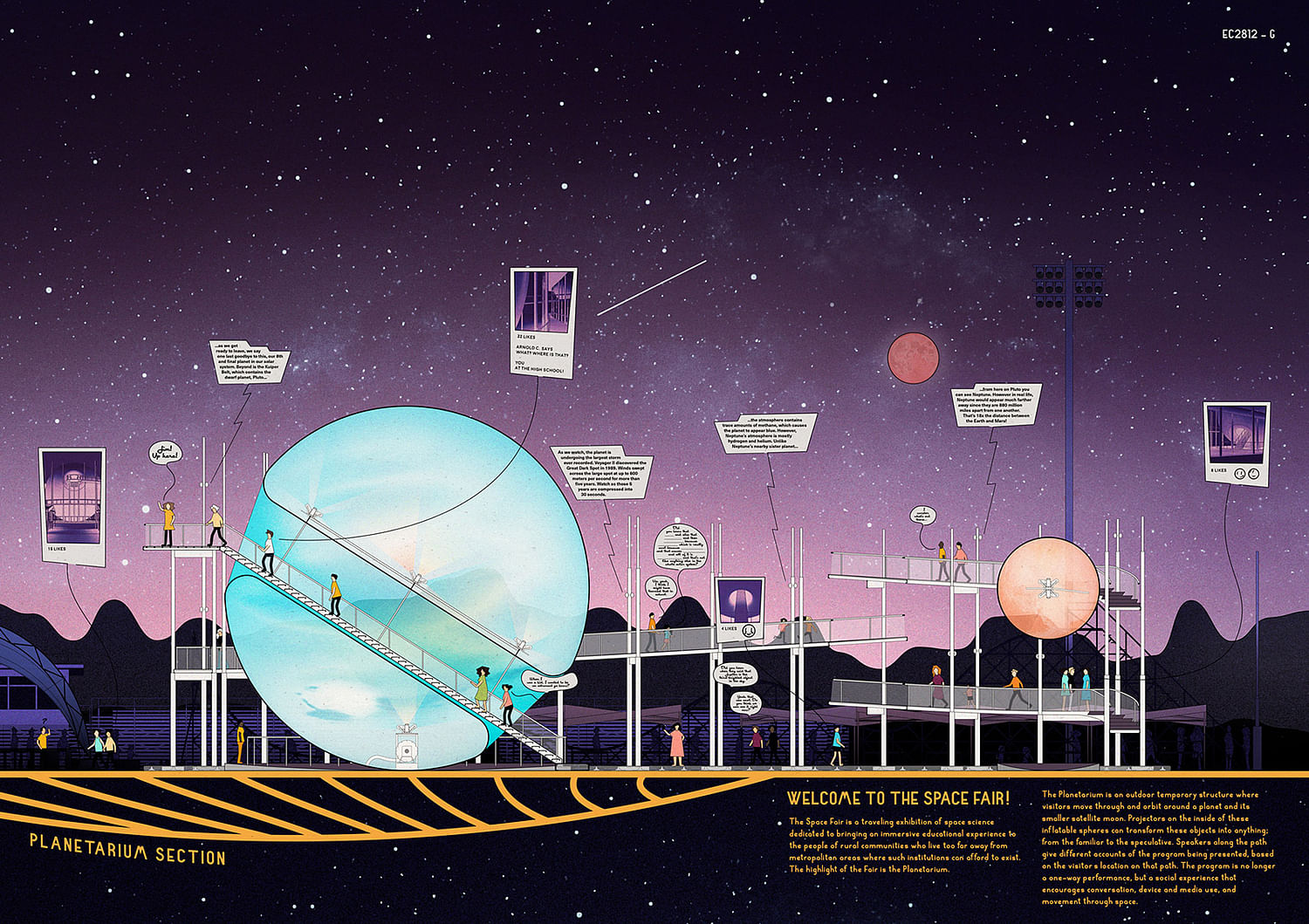
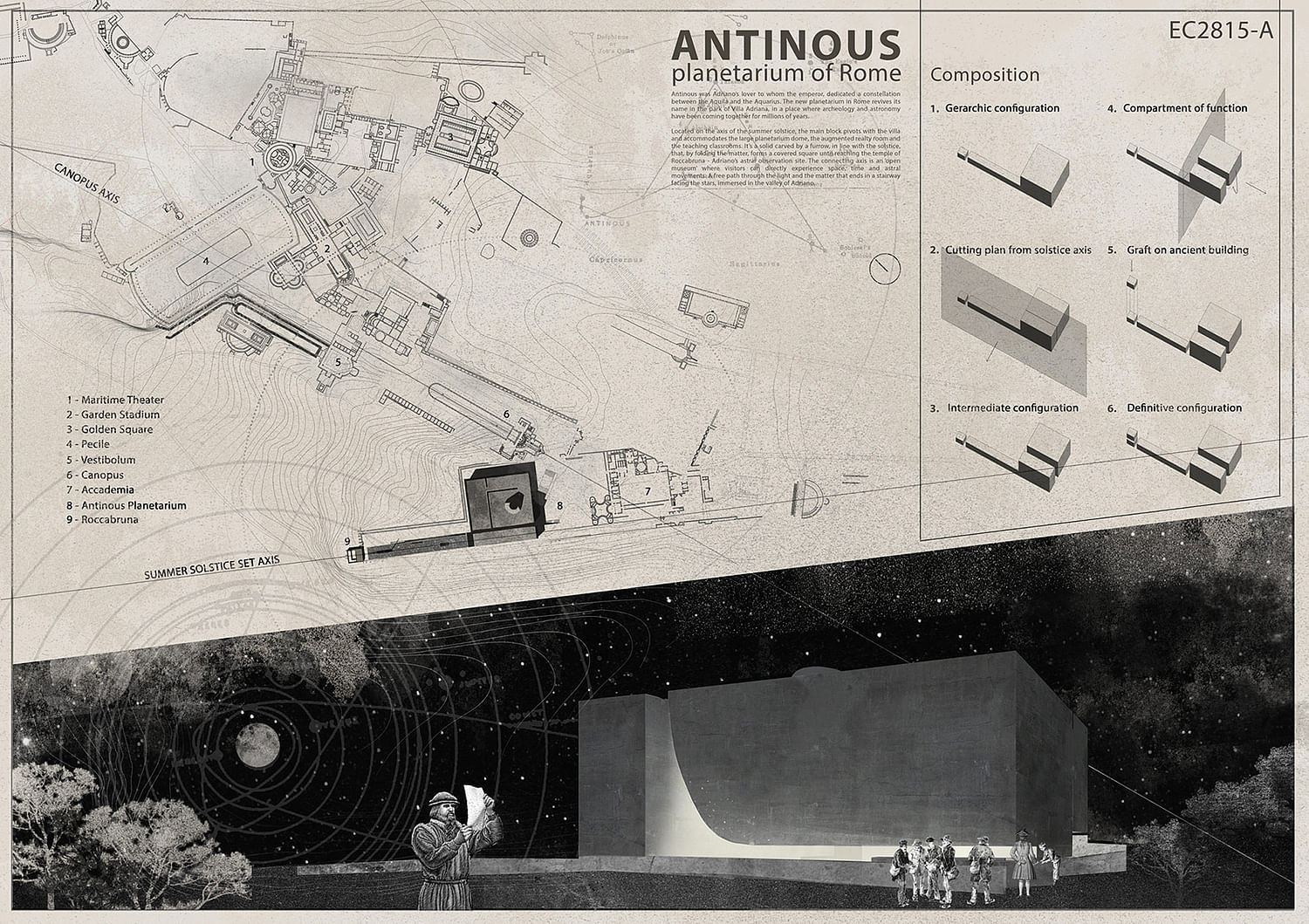
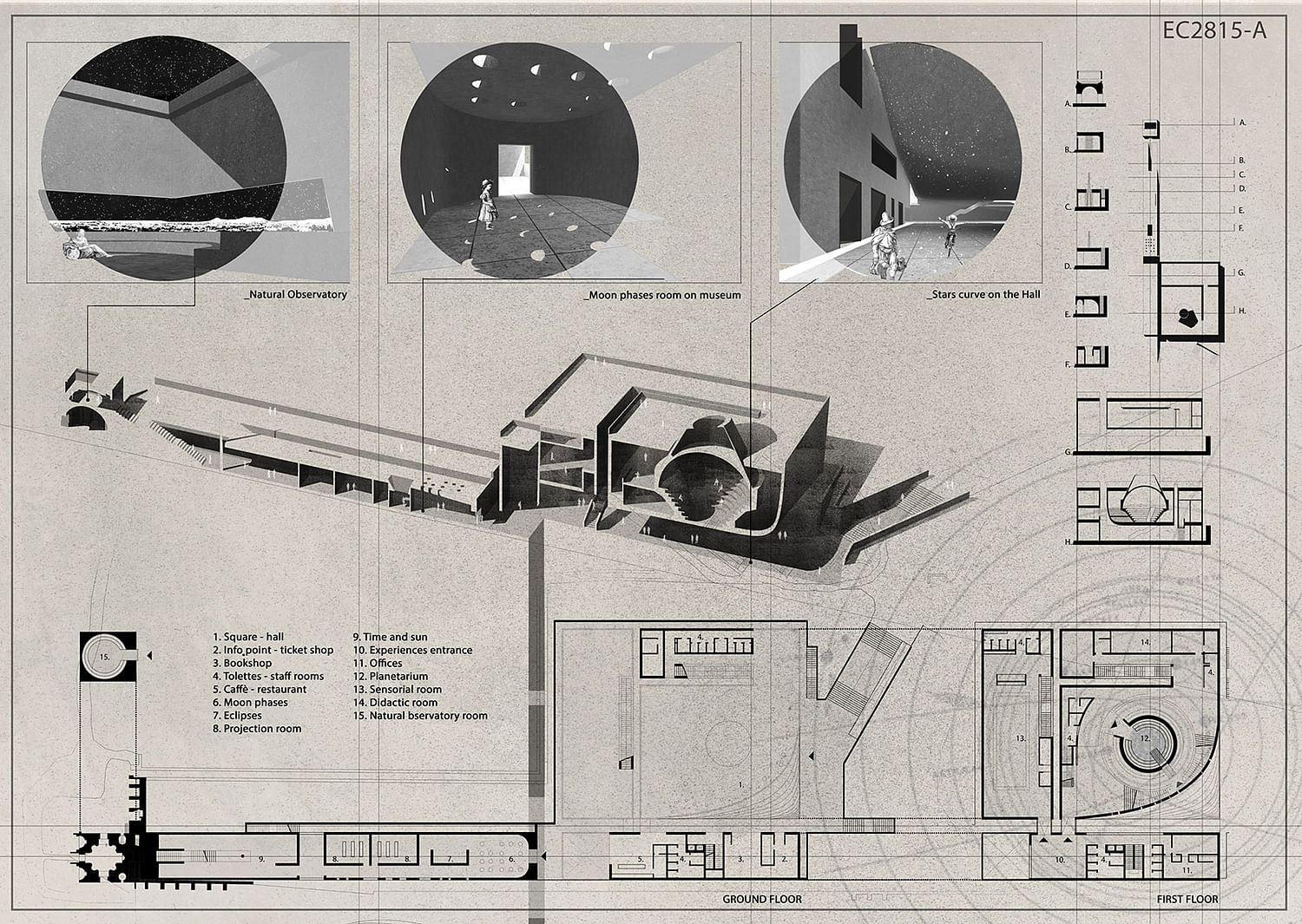
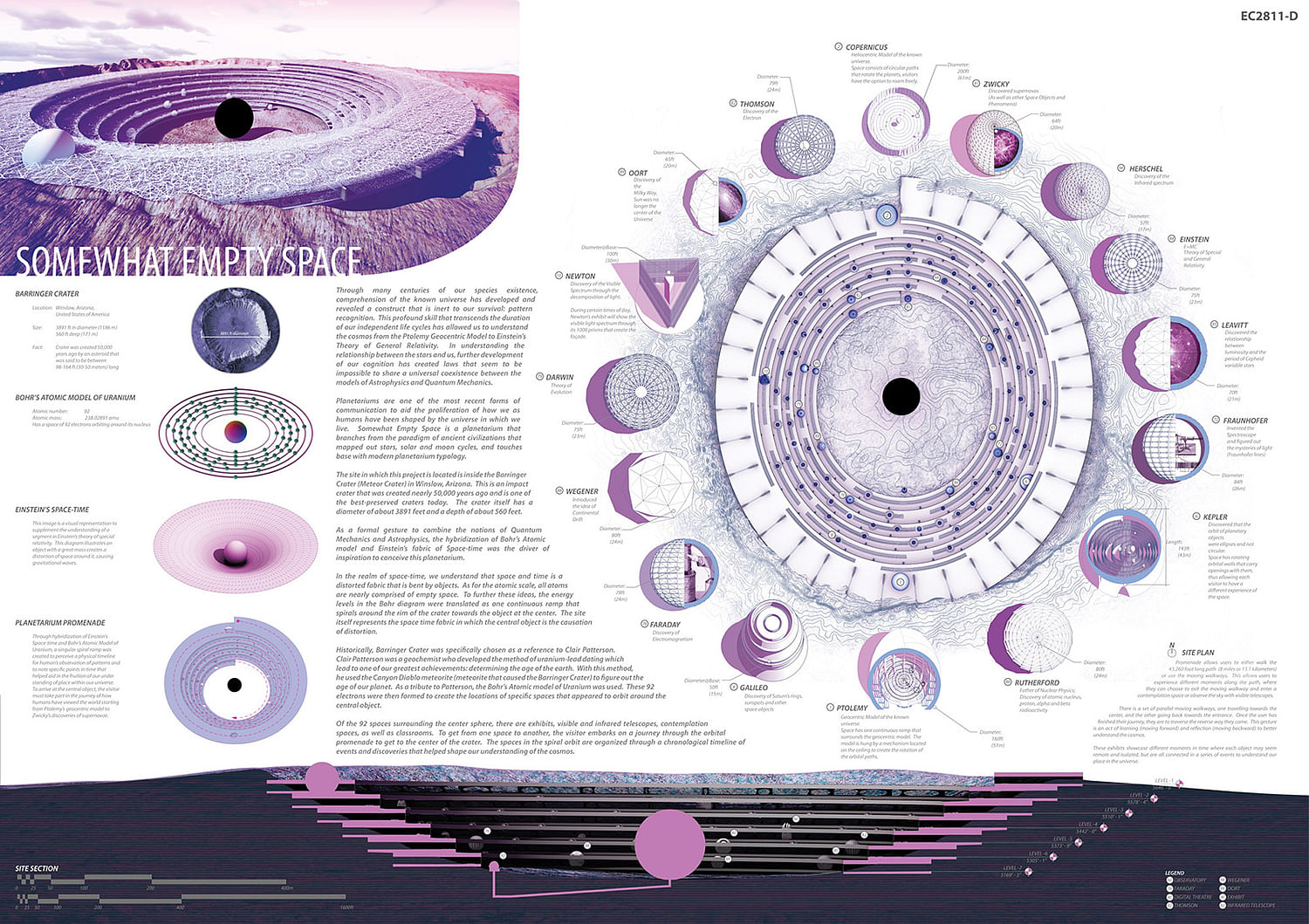
Winners of the Planetarium: The Experience of Space competition envision the next generation of space observation

By Alexander Walter|

Friday, Oct 20, 2017

Winner and People’s Choice Award​: GREENWICH DEEP SPACE EXPLORATORIUM

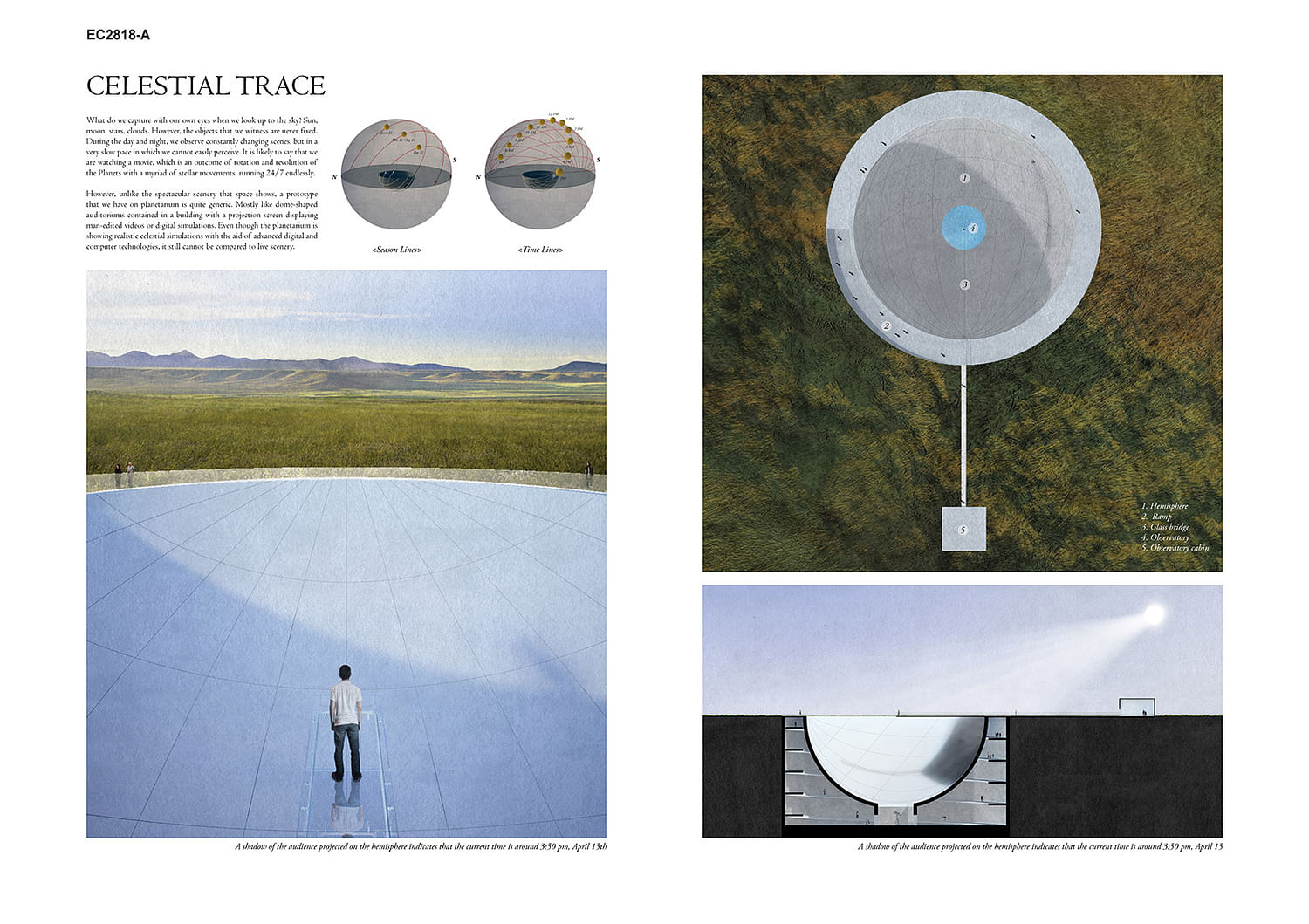
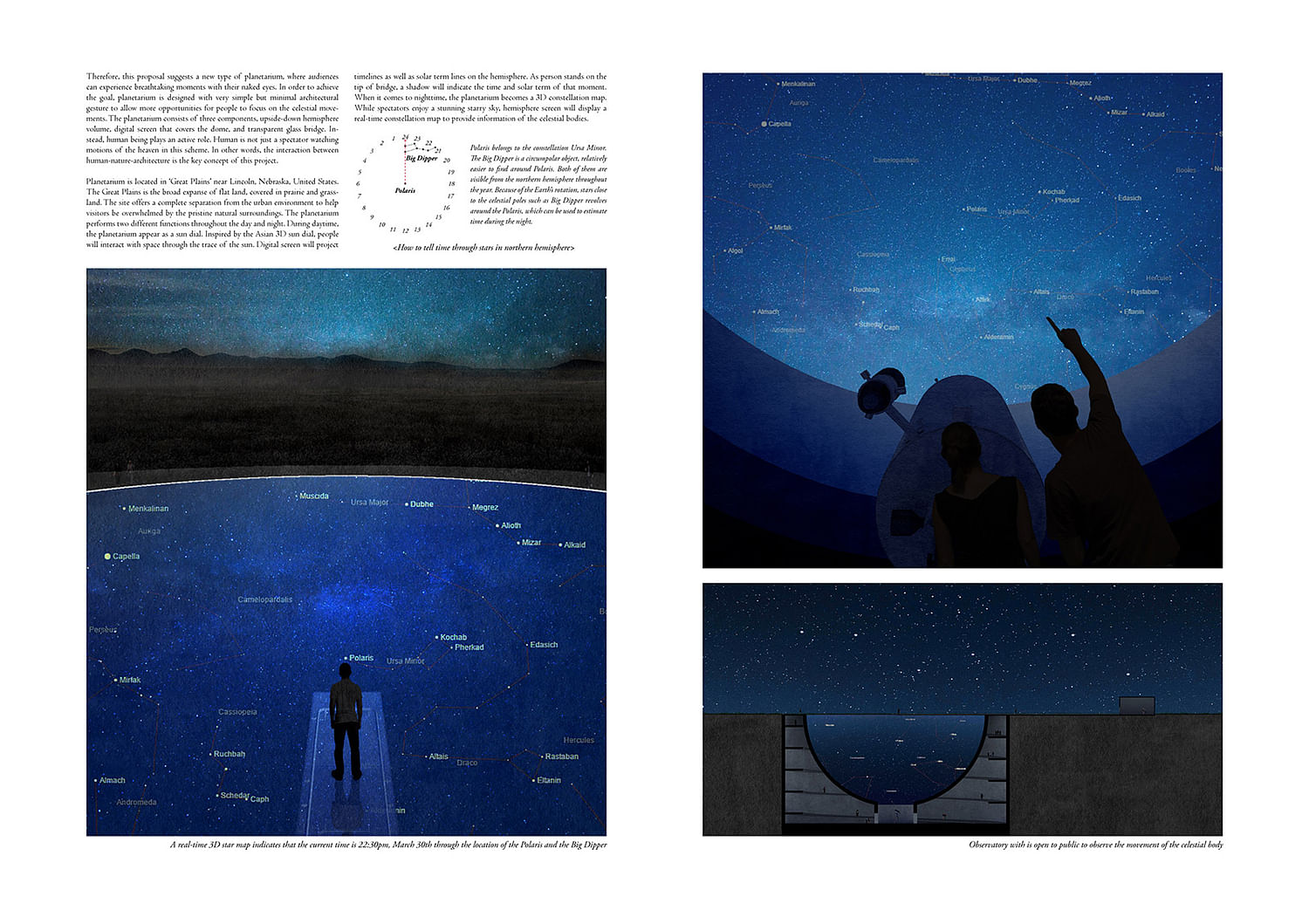
No smaller subject than the cosmos itself stood at the center of Eleven Magazine's sixth and recently concluded ideas competition — well, make that the architecture of cosmos observation, or the planetarium in particular. The challenge asked participants to rethink the typology of planetariums, considering technological advances and how architecture and design could 'play a more central role in the experience of space,' as the brief puts it.

After jury deliberation and online public voting, the entry "Greenwich Deep Space Exploratorium" by a joint UK/Singapore-based team emerged victoriously — taking home the First Prize as well as People's Choice Award.

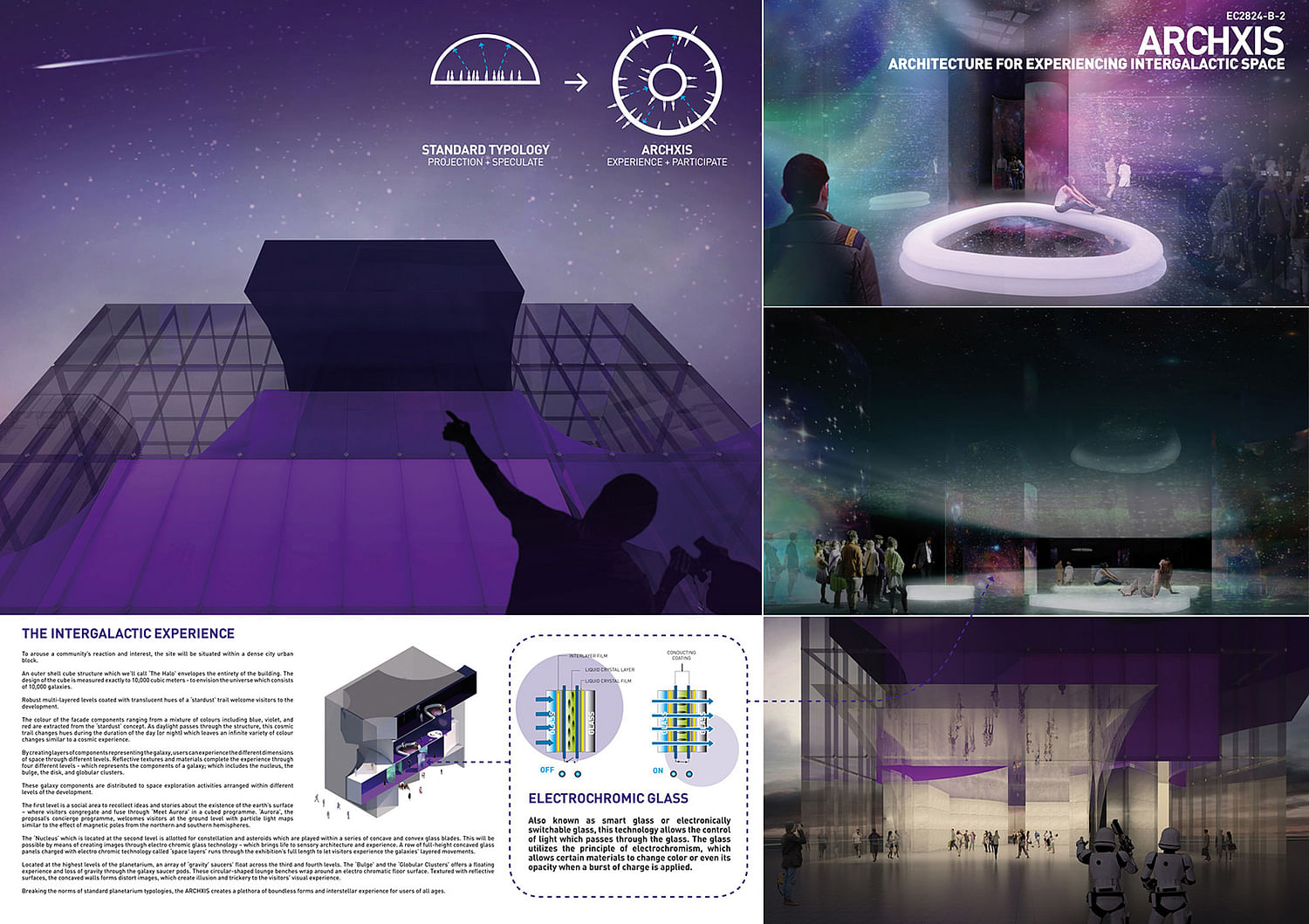
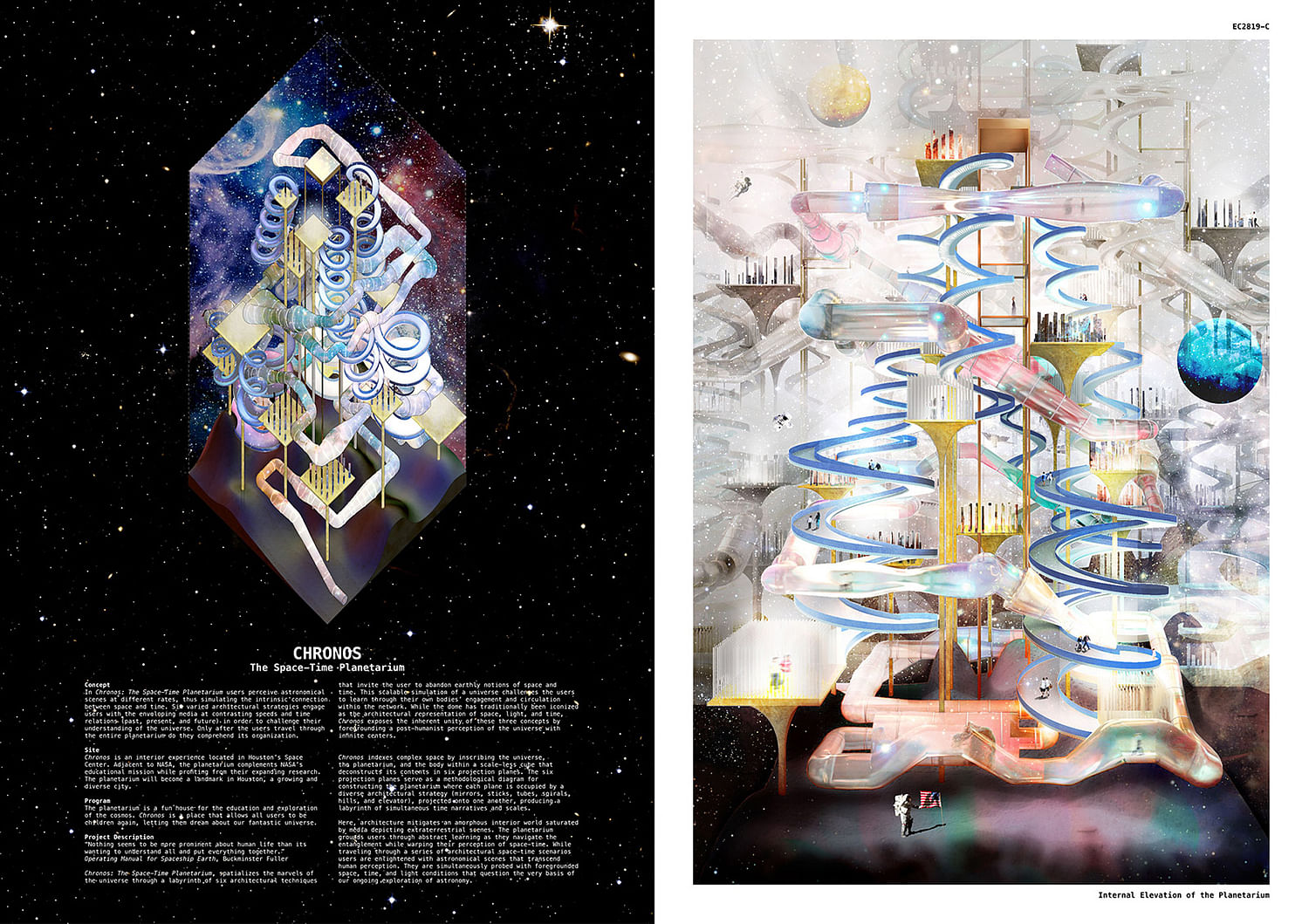
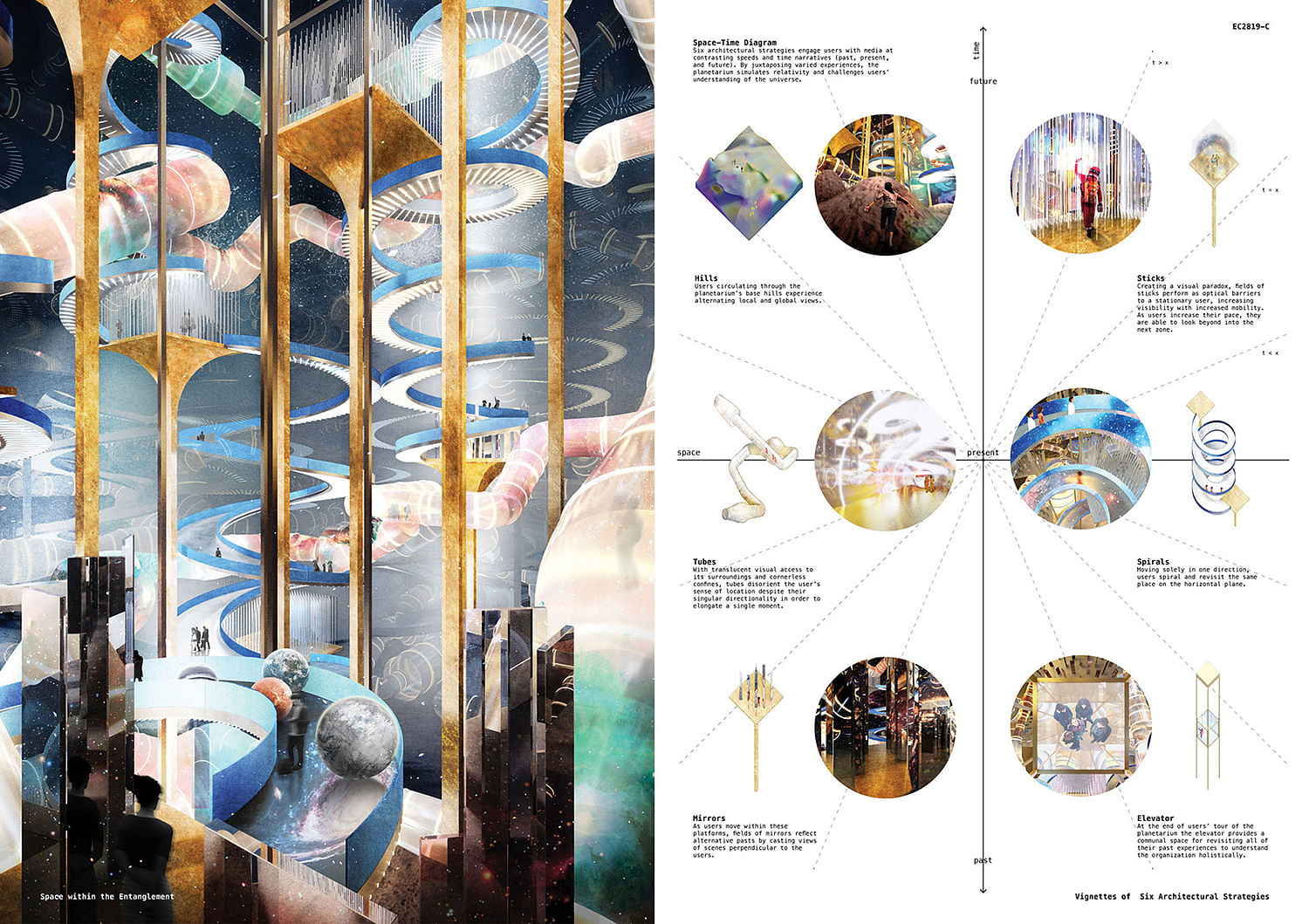
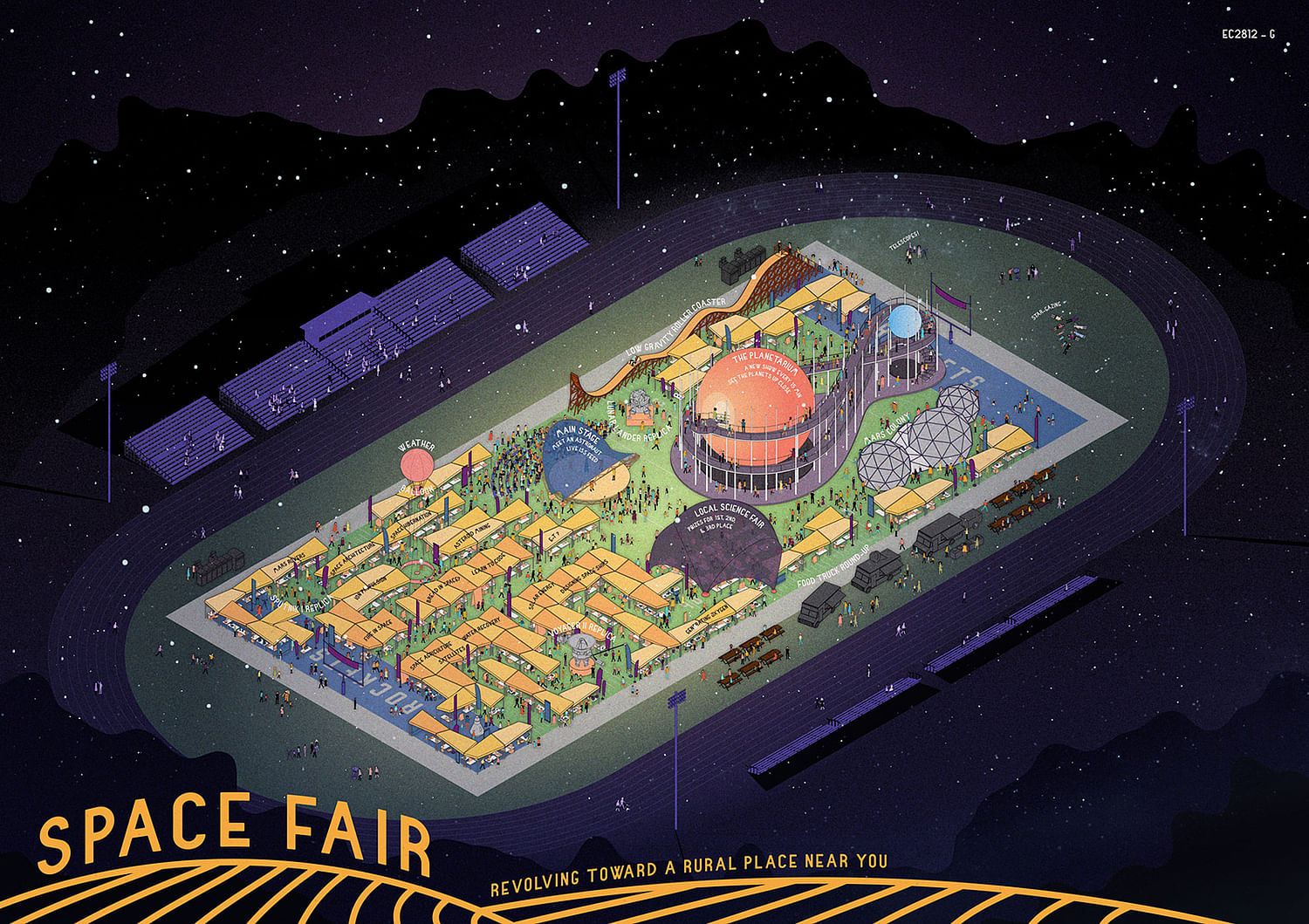
Find the two top-winning submissions below and the six Honorable Mentions in the image gallery.

Winner and People’s Choice Award:
GREENWICH DEEP SPACE EXPLORATORIUM
by Jonathan Law, Cheryl Lim & Ashirai Zeyn Musikavanhu (UK / Singapore)
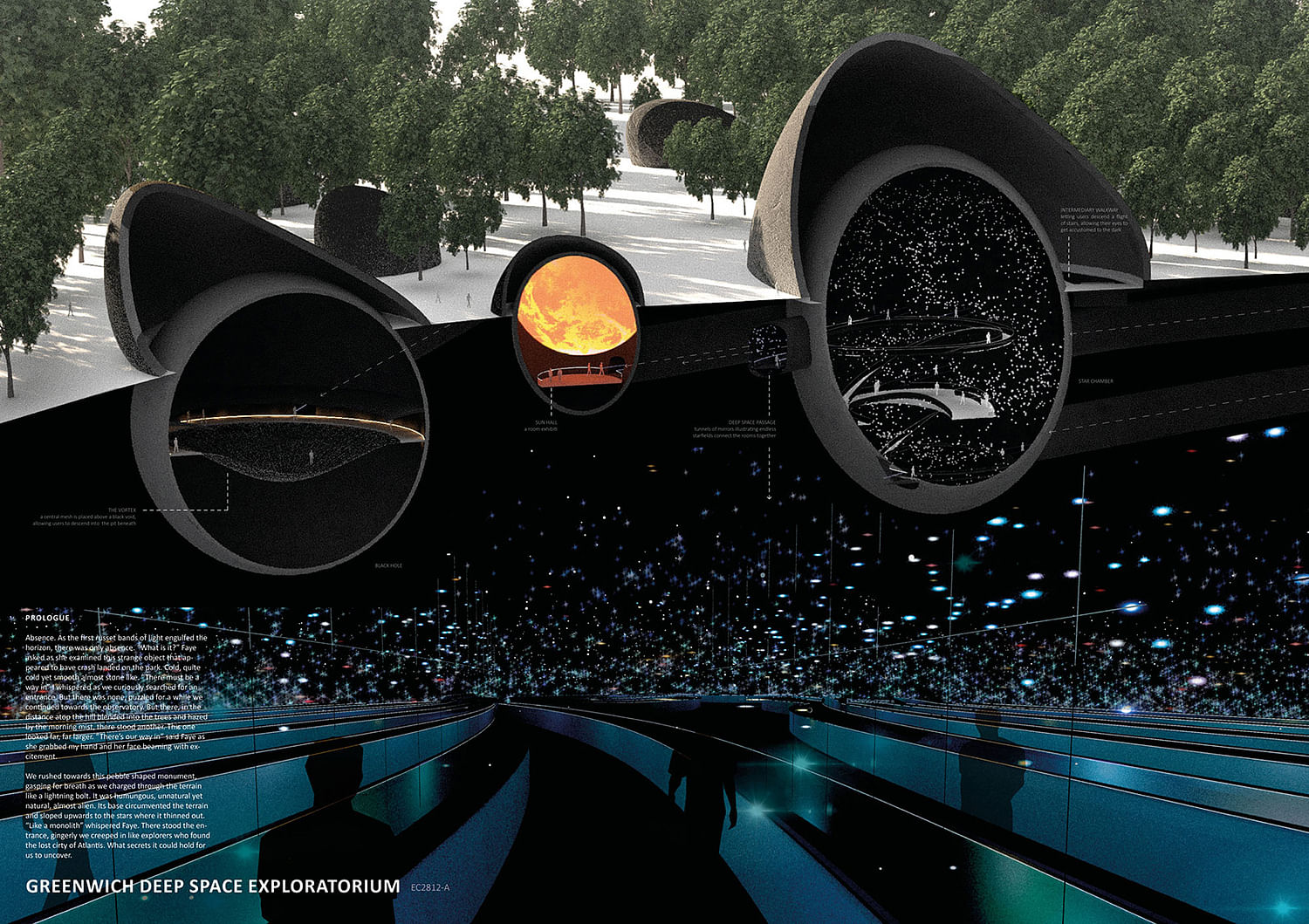
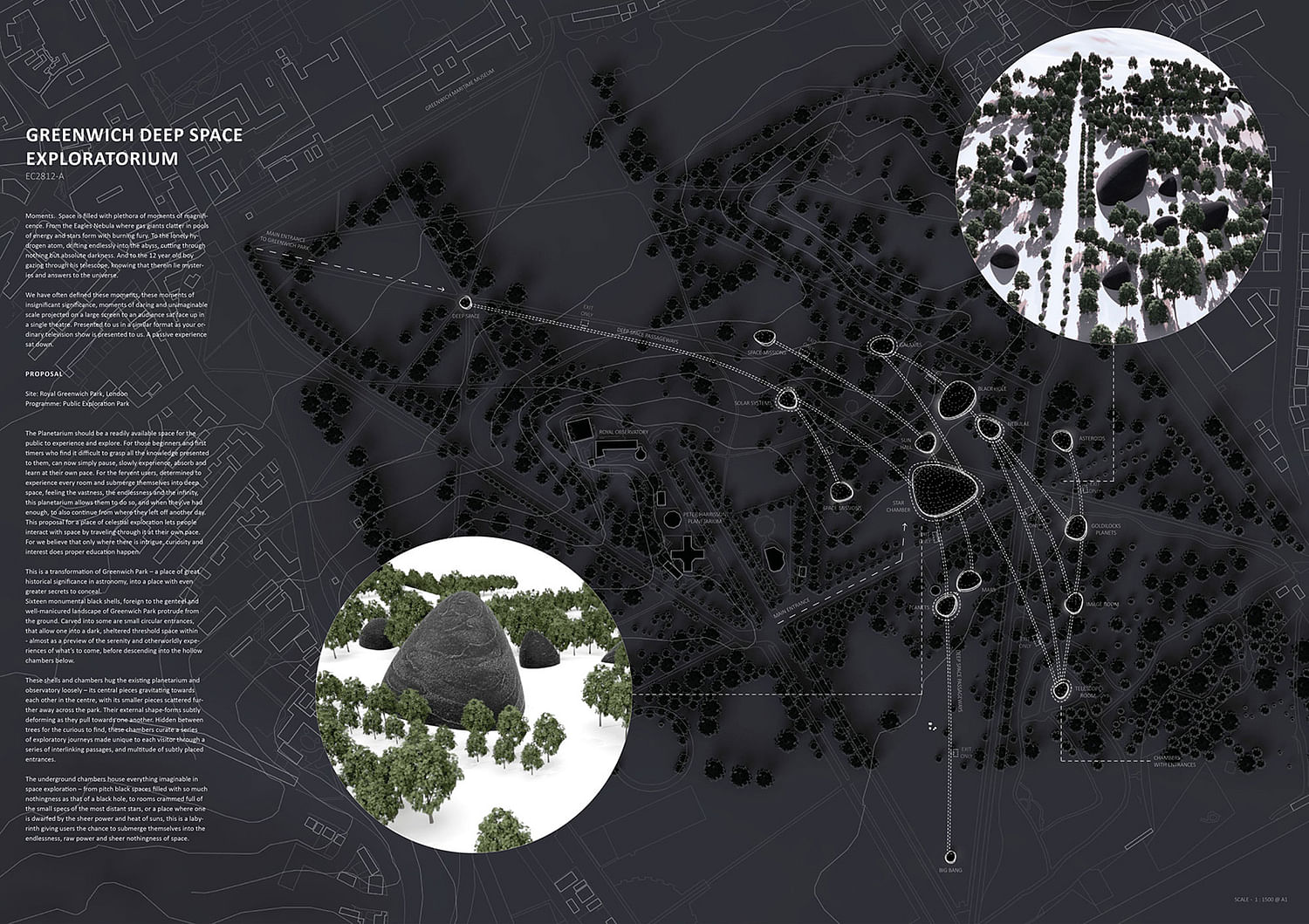
Winner and People’s Choice Award​: GREENWICH DEEP SPACE EXPLORATORIUM

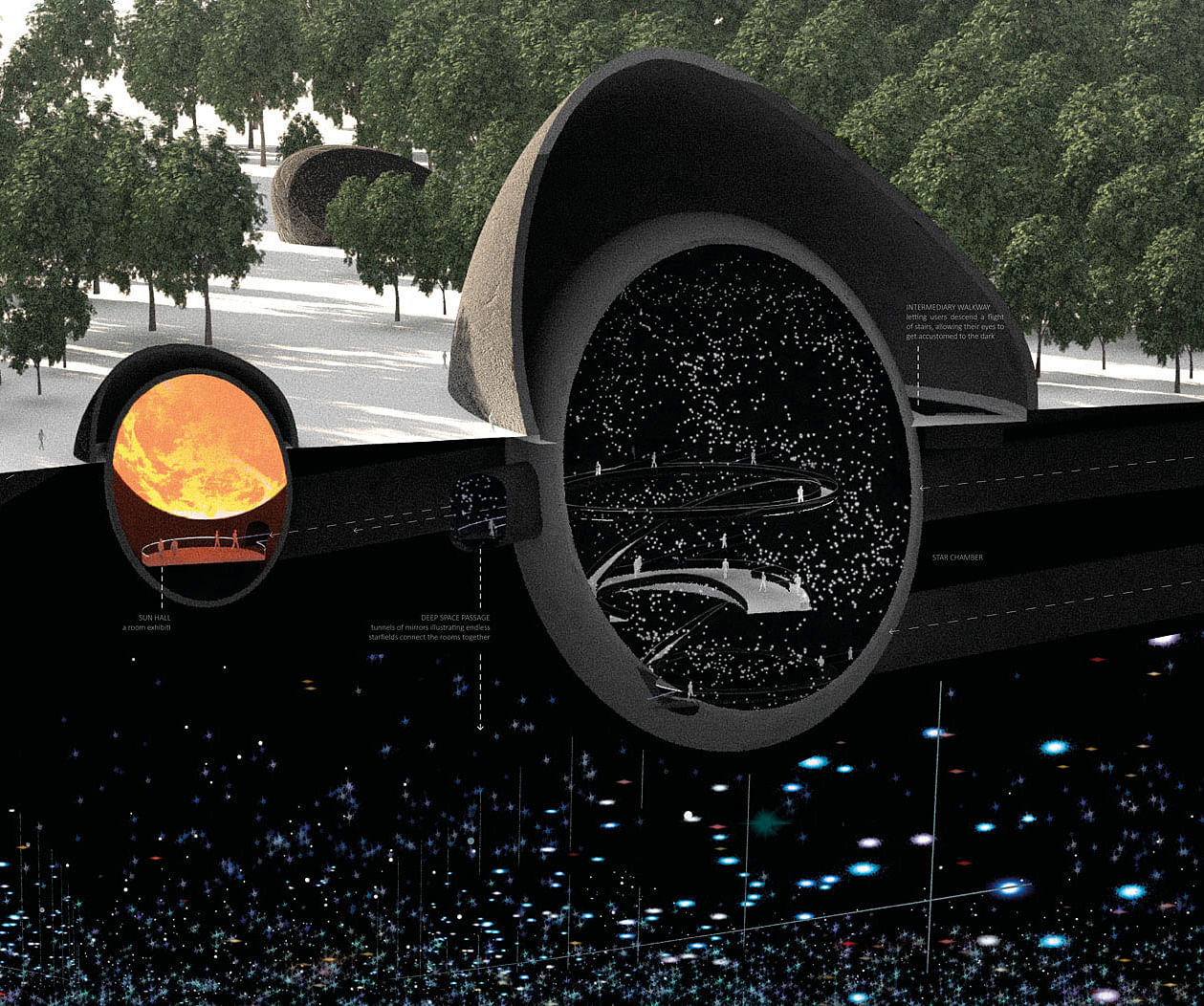
Project excerpt: "[...] This is a transformation of Greenwich Park – a place of great historical significance in astronomy, into a place with even greater secrets to conceal. Sixteen monumental black shells, foreign to the genteel and well-manicured landscape of Greenwich Park protrude from the ground. Carved into some are small circular entrances, that allow one into a dark, sheltered threshold space within – almost as a preview of the serenity and otherworldly experiences of what’s to come, before descending into the hollow chambers below. These shells and chambers hug the existing planetarium and observatory loosely – its central pieces gravitating towards each other in the centre, with its smaller pieces scattered further away across the park. Their external shape-forms subtly deforming as they pull towards one another. Hidden between trees for the curious to find, these chambers curate a series of exploratory journeys made unique to each visitor through a series of interlinking passages, and multitude of subtly placed entrances. [...]" — full text

Runner-Up:
MICROSPHERE
by Christian Gabbiani & Elisa Porro (Italy)
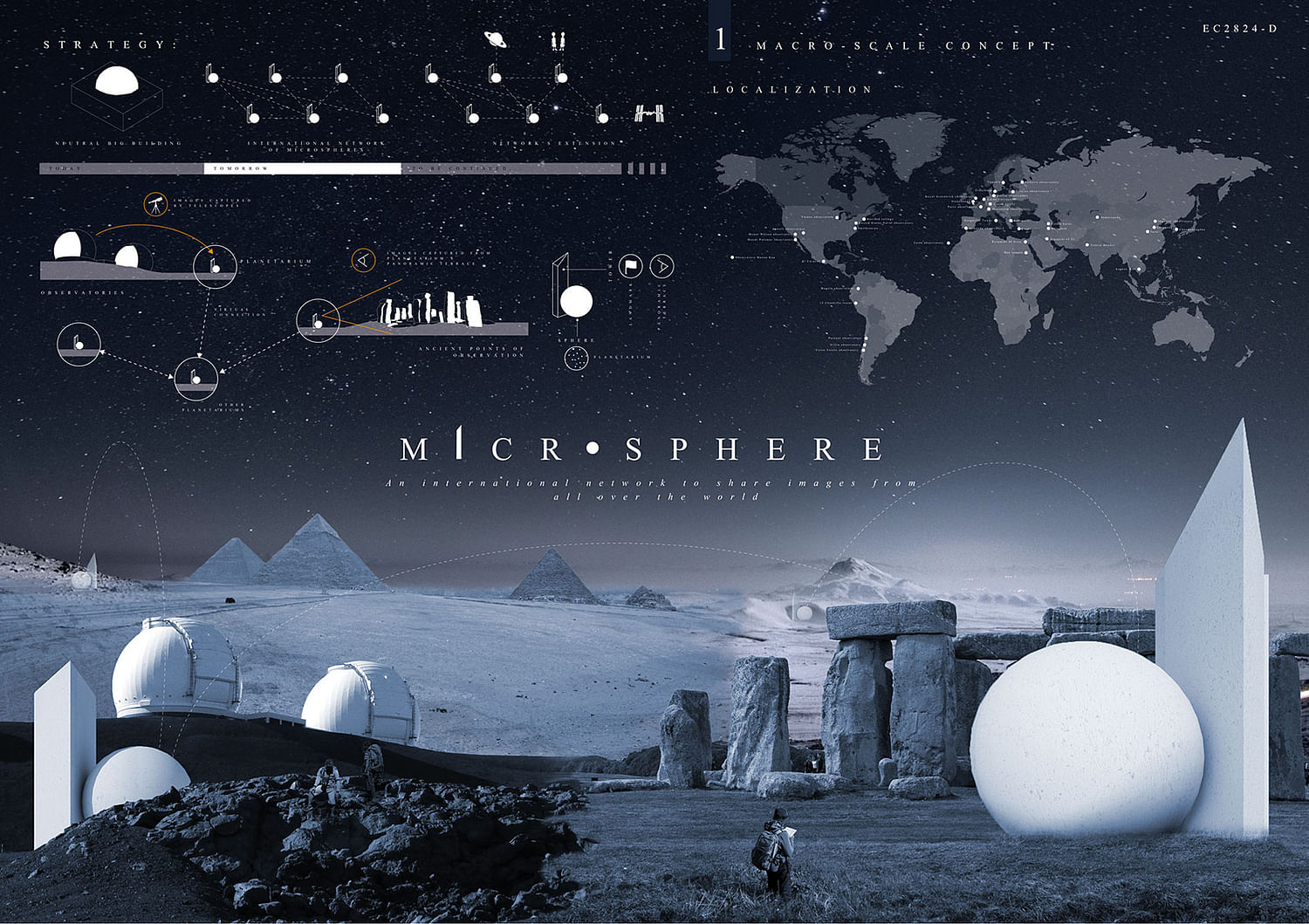
​Runner-Up: MICROSPHERE

Project excerpt: "[...] The project is based on a network of little planetariums scattered all over the world. Every planetarium corresponds to a sphere with limited dimensions (5 m x 5 m) and its localization is absolutely not casual.  In fact, micro-spheres are located next to the most important astronomic observation points in the world: starting from primitive constructions until contemporary observatories.  This choice produces many advantages. First of all observatories and ancient buildings have usually a provision of services for visitors that makes our microspheres free from any activity different from pure experience of space. Additionally, astronomic observation points are essentially for network’s definition. Every observatory for example could capture pictures and videos to share them in live stream with its microsphere. Meanwhile, in ancient observation sites (where there are no telescopes), it’s possible to capture images of the sky and of astronomical phenomena, seen from the Earth without any instrument. Then, all this images could be transmitted to other microspheres thanks to virtual connection, defining an international network and an extreme variety of possible projections.  Finally, why not think about expanding the network beyond the Earth? Maybe including images taken from spatial stations or from other planets [...]" — full text

Be sure to also check out the Honorable Mentions in the image gallery below. Click here to view the winning proposals in full.

All images courtesy of Eleven Magazine.

RELATED COMPETITION PLANETARIUM: The Experience of Space
RELATED NEWS Nine lunar habitat proposals win in Moontopia competition
RELATED NEWS Announcing the winners of Eleven's “Biomimicry” ideas competition
RELATED NEWS Resurrecting Rome's River Tiber: Eleven's Rome 2017 Competition announces winners

Related

eleven ● eleven magazine ● planetarium ● competition ● space

Share

  • Follow

    0 Comments

  • Comment as :

Winners of the Planetarium: The Experience of Space competition envision the next generation of space observation

Sponsored Post by Eleven Magazine

Come and design the Planetarium of the future. Join Eleven’s star-studded competition ‘Planetarium: The Experience of Space’ now!

Sponsored Post by Eleven Magazine

Eleven launches their sixth international architecture & design competition to design a Planetarium of the future

Cardin + Ramirez Win Montréal Rio Tinto Alcan Planetarium Competition

Montréal Rio Tinto Alcan Planetarium Launches Architectural Competition

Sign up for Bustler's Email Newsletters

Next page » Loading

Winners of the Planetarium: The Experience of Space competition envision the next generation of space observation

By Alexander Walter|

Friday, Oct 20, 2017

Share

Winner and People’s Choice Award​: GREENWICH DEEP SPACE EXPLORATORIUM

Related

eleven ● eleven magazine ● planetarium ● competition ● space

No smaller subject than the cosmos itself stood at the center of Eleven Magazine's sixth and recently concluded ideas competition — well, make that the architecture of cosmos observation, or the planetarium in particular. The challenge asked participants to rethink the typology of planetariums, considering technological advances and how architecture and design could 'play a more central role in the experience of space,' as the brief puts it.

After jury deliberation and online public voting, the entry "Greenwich Deep Space Exploratorium" by a joint UK/Singapore-based team emerged victoriously — taking home the First Prize as well as People's Choice Award.

Find the two top-winning submissions below and the six Honorable Mentions in the image gallery.

Winner and People’s Choice Award:
GREENWICH DEEP SPACE EXPLORATORIUM
by Jonathan Law, Cheryl Lim & Ashirai Zeyn Musikavanhu (UK / Singapore)

Winner and People’s Choice Award​: GREENWICH DEEP SPACE EXPLORATORIUM

Project excerpt: "[...] This is a transformation of Greenwich Park – a place of great historical significance in astronomy, into a place with even greater secrets to conceal. Sixteen monumental black shells, foreign to the genteel and well-manicured landscape of Greenwich Park protrude from the ground. Carved into some are small circular entrances, that allow one into a dark, sheltered threshold space within – almost as a preview of the serenity and otherworldly experiences of what’s to come, before descending into the hollow chambers below. These shells and chambers hug the existing planetarium and observatory loosely – its central pieces gravitating towards each other in the centre, with its smaller pieces scattered further away across the park. Their external shape-forms subtly deforming as they pull towards one another. Hidden between trees for the curious to find, these chambers curate a series of exploratory journeys made unique to each visitor through a series of interlinking passages, and multitude of subtly placed entrances. [...]" — full text

Runner-Up:
MICROSPHERE
by Christian Gabbiani & Elisa Porro (Italy)
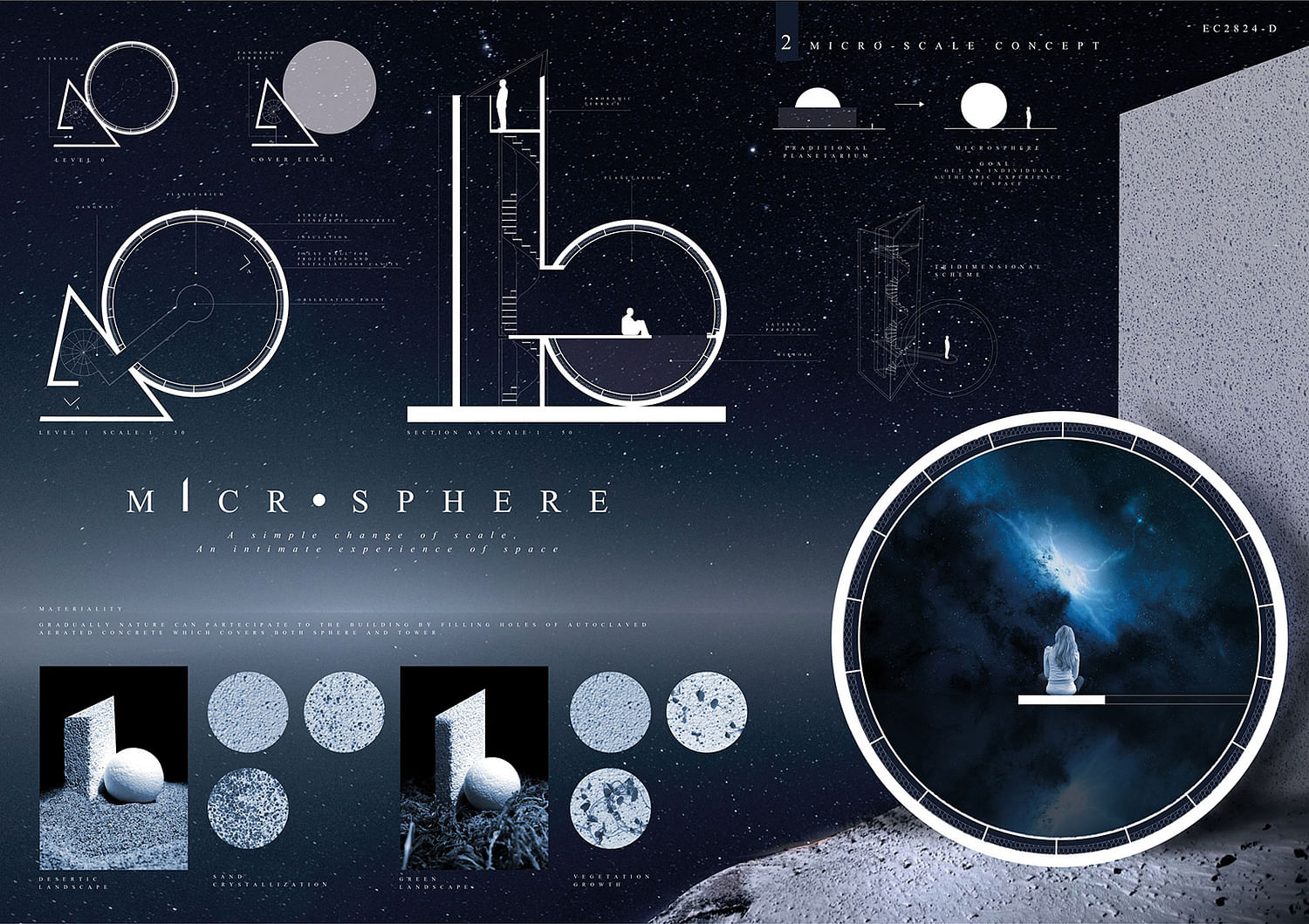
​Runner-Up: MICROSPHERE

Project excerpt: "[...] The project is based on a network of little planetariums scattered all over the world. Every planetarium corresponds to a sphere with limited dimensions (5 m x 5 m) and its localization is absolutely not casual.  In fact, micro-spheres are located next to the most important astronomic observation points in the world: starting from primitive constructions until contemporary observatories.  This choice produces many advantages. First of all observatories and ancient buildings have usually a provision of services for visitors that makes our microspheres free from any activity different from pure experience of space. Additionally, astronomic observation points are essentially for network’s definition. Every observatory for example could capture pictures and videos to share them in live stream with its microsphere. Meanwhile, in ancient observation sites (where there are no telescopes), it’s possible to capture images of the sky and of astronomical phenomena, seen from the Earth without any instrument. Then, all this images could be transmitted to other microspheres thanks to virtual connection, defining an international network and an extreme variety of possible projections.  Finally, why not think about expanding the network beyond the Earth? Maybe including images taken from spatial stations or from other planets [...]" — full text

Be sure to also check out the Honorable Mentions in the image gallery below. Click here to view the winning proposals in full.

All images courtesy of Eleven Magazine.
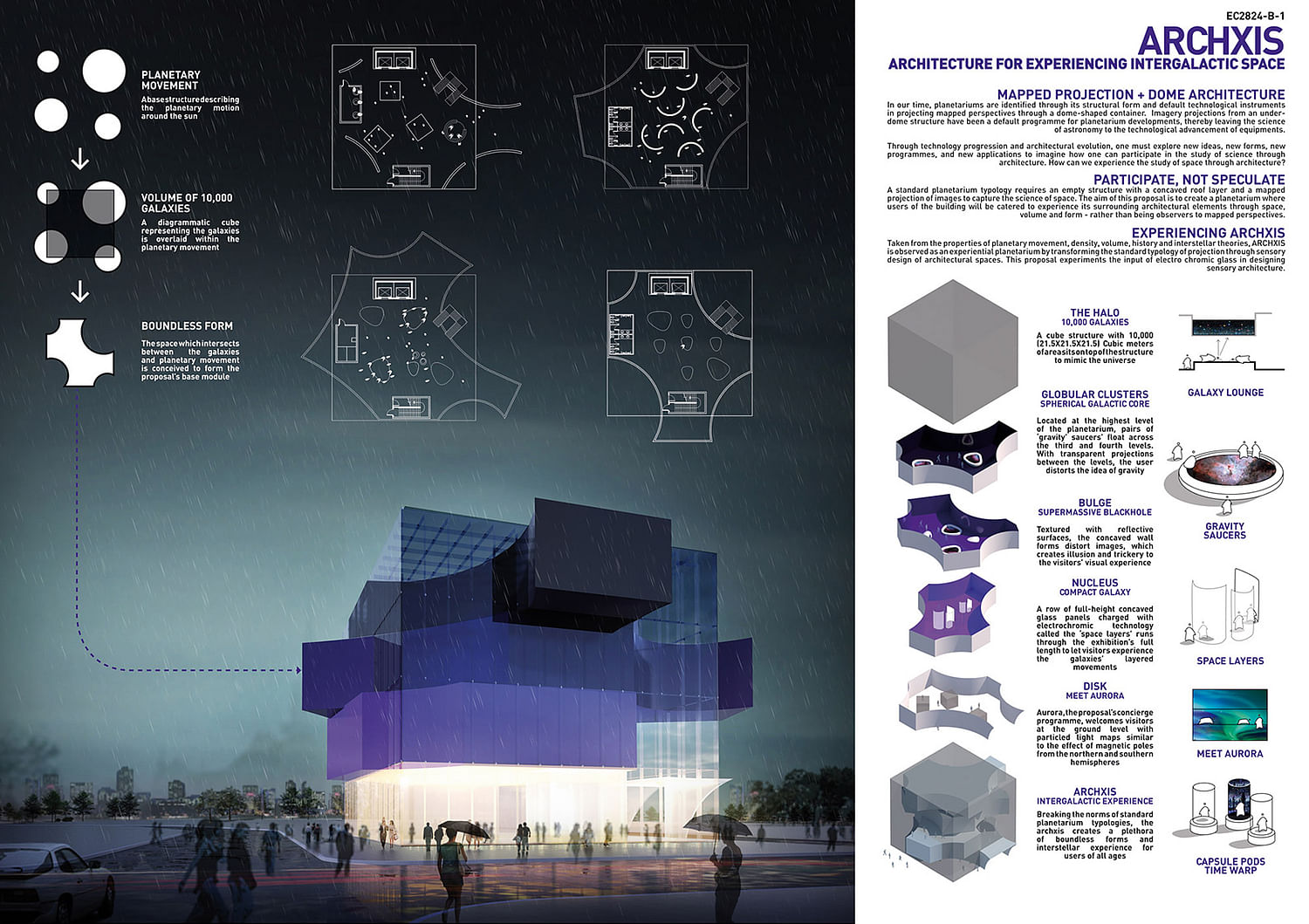
RELATED COMPETITION PLANETARIUM: The Experience of Space
RELATED NEWS Nine lunar habitat proposals win in Moontopia competition
RELATED NEWS Announcing the winners of Eleven's “Biomimicry” ideas competition
RELATED NEWS Resurrecting Rome's River Tiber: Eleven's Rome 2017 Competition announces winners

Share

  • Follow

    0 Comments

  • Comment as :

Archinect JobsArchinect Jobs

The Archinect Job Board attracts the world's top architectural design talents.

VIEW ALL JOBS POST A JOB

Architect / Urban Designer

Office for the Next Environment (OFTN)

Architect / Urban Designer

New York, NY, US

Project Architect

Lang Architecture

Project Architect

New York, NY, US

Interior Designer | Education & Institutional Work

Berliner Architects

Interior Designer | Education & Institutional Work

Culver City, CA, US

Project Manager

VanderHorn Architects

Project Manager

Greenwich, CT, US

Architectural Designer (3-5 Years) - Commercial & Hospitality Focus

Pfeffer Torode Architecture

Architectural Designer (3-5 Years) - Commercial & Hospitality Focus

Nashville, TN, US

Project Designer (3-5 years)

Edmonds + Lee Architects

Project Designer (3-5 years)

San Francisco, CA, US

Job Captain

Field Architecture

Job Captain

Palo Alto, CA, US

Job Captain (3-5 years experience)

Evan Raabe Architecture Studio

Job Captain (3-5 years experience)

Los Angeles, CA, US

Intermediate Architect/Designer

DXA Studio

Intermediate Architect/Designer

New York, NY, US

Project Architect

Arrowstreet

Project Architect

Boston, MA, US

Next page » Loading