• Login / Join
  • About
  • •
  • Contact
  • •
  • Advertising
bustler logo
bustler logo
  • News
  • Competitions
  • Events
  • Bustler is powered by Archinect
  • Sign up for Bustler's Email Newsletters

  • Follow these Bustler feeds:

  • Search

    Search in

  • Submit

    What are you submitting?

    News Pitch
    Competition
    Event
  • Login / Join
  • News|Competitions|Events
  • Search
    | Submit
    | Follow
  • Search in

    What are you submitting?

    News Pitch
    Competition
    Event

    Follow these Bustler feeds:

  • About|Contact|Advertising
  • Login / Join
Tagged: street smart

Street Smart winning proposal revamps Bangalore, India with local perspective

By Bustler Editors|

Tuesday, Jan 28, 2014
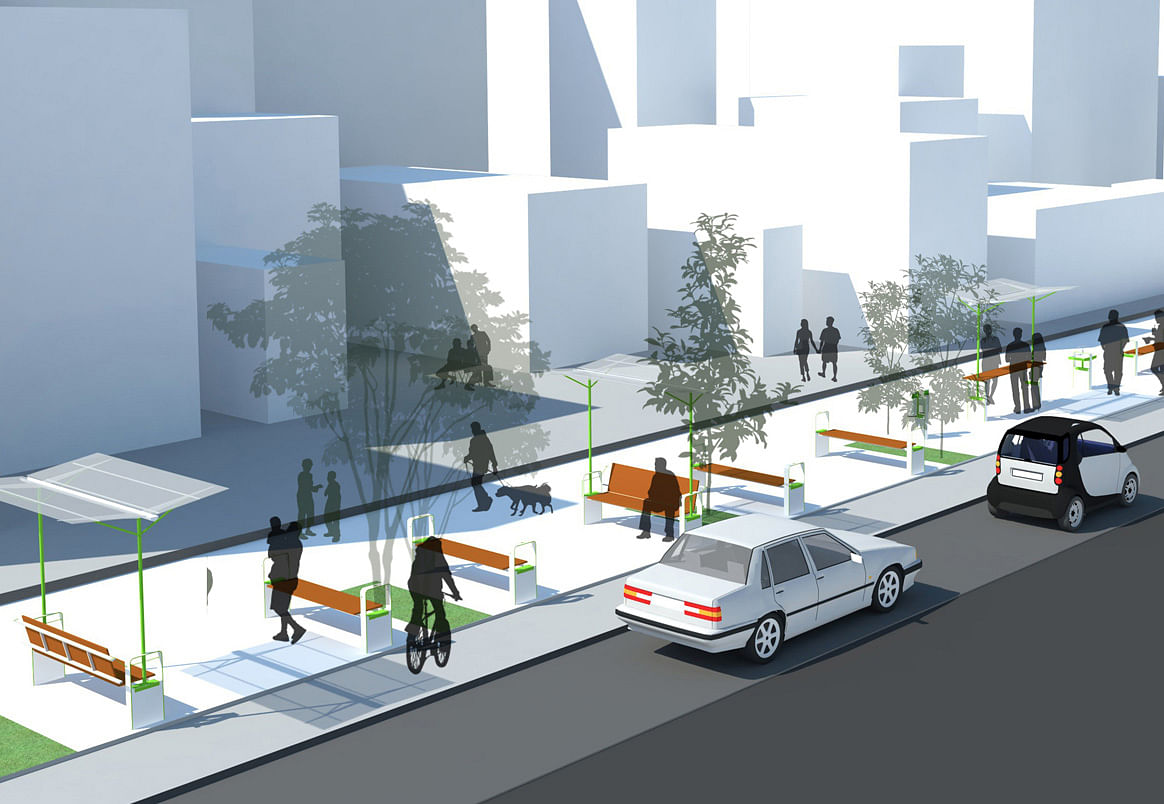
Street Smart winning proposal by Febin Frederick & Naveen Nair. Image courtesy of project authors.

There's nothing more reliable than a local's perspective when it comes to redesigning urban cities. Focusing on India's cityscapes, the Street Smart International Design Competition invited all design professionals to propose ready-to-build designs that reimagine Indian city streets based on the feedback and everyday experience of each city's urban dwellers.

Febin Frederick & Naveen Nair of A Cube Paradigms won first place in the competition with their entry for the city of Bangalore.

Check out the winning proposal below.

Project description:

Introduction: "Streets occupy approximately 20 percent of the total land area in a typical city and they are the most important and ubiquitous form of public space. Streets make a city livable. They not just allow residents to travel from one place to another but act as a place for people to meet, interact, share, do business and thus develop a social contact and community living. Indian streets are deeply associated with the traditions, culture and social relationship of the place. 

As private motor vehicle ownership grows at alarming rate and inadequate measures of government to accommodate the existing and new vehicles on street disturbs the entire urban life. Over time, streets lack social gathering spaces, shared spaces and markets. In many cities streets are disappearing with the increase of traffic volume. This inconsistency will affect the city life not just by physical aspects; instead it degrades the social values and the security of living together. Eventually our great tradition, culture and social values will not be visible in urban life. 

Identifying the problems and its influencing factors was the prime measure. It includes the population growth rate, migration, unsafe and insecure factors in society, crime rates, transportation, waste management etc. The activities on street reflect the conditions of urban community and it transforms the traffic composition of a city drastically; it has direct act on accident rate and safety, pollution and environmental issues, obesity and health of people."
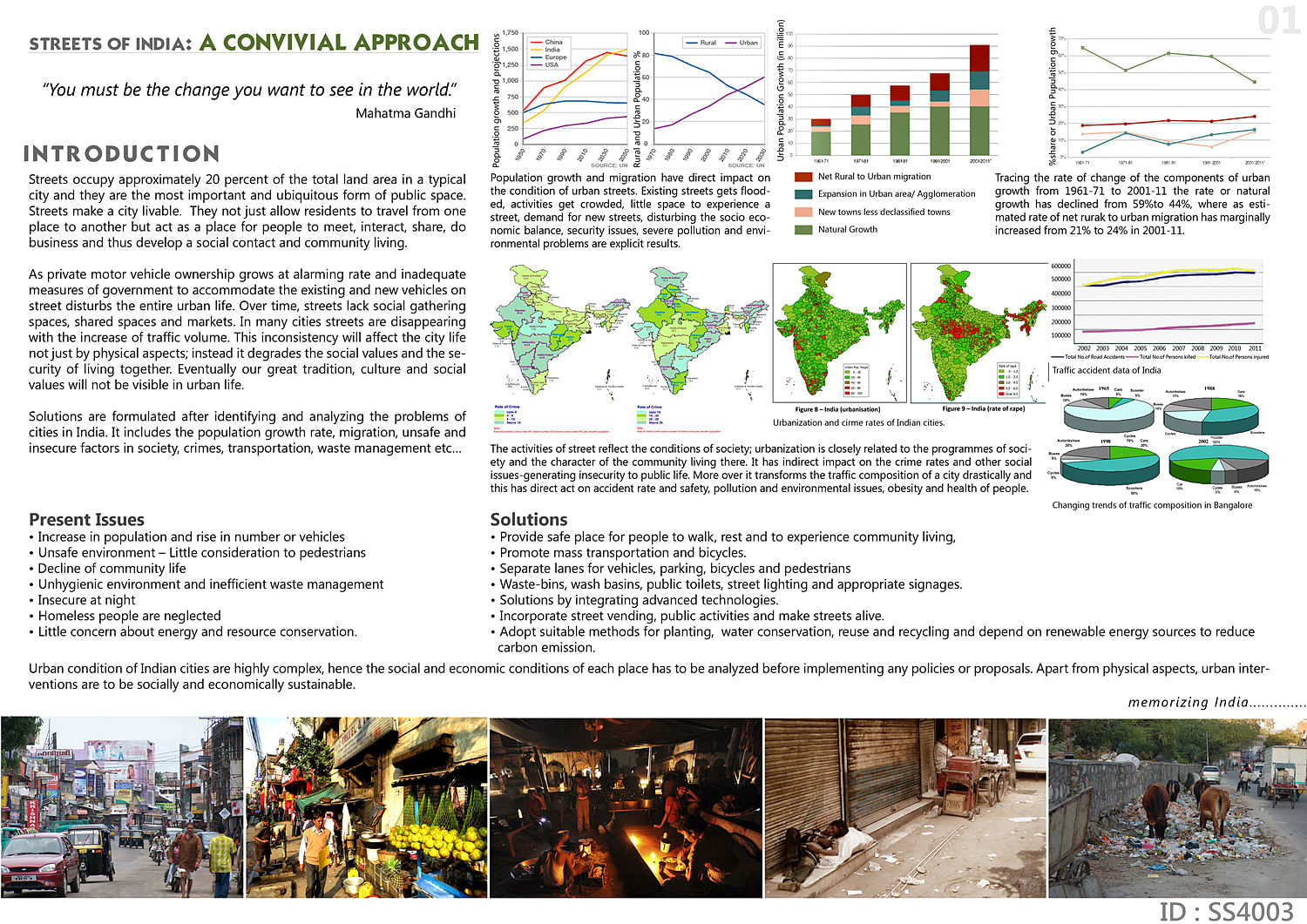
Image courtesy of project authors.

"Process 
Major issues and challenges faced by people living in urban conditions were studied. The problems identified specifically in the Indian context were then listed out. From the analysis we’ve found that many of the problems do not exist in isolation; rather they were interconnected and were direct or indirect consequences of one another. The duality also exist in the solving process i.e., each problem could either be specifically addressed with independent solutions or by interdependent solutions. The second approach seemed more smart and economical. Hence a single prototype was developed with could be adopted in most of the solutions to achieve satisfactory output. 

Problems Identified 
Major ones are listed below; analyzing them changed the way we looked at the streets.    

  • Increase in population increases and number of vehicles    
  • Unsafe environment – Little consideration to pedestrians    
  • Decline of community life    
  • Unhygienic environment and inefficient waste management    
  • Insecure at night    
  • Homeless people are neglected    
  • Little concern about energy and resource conservation."
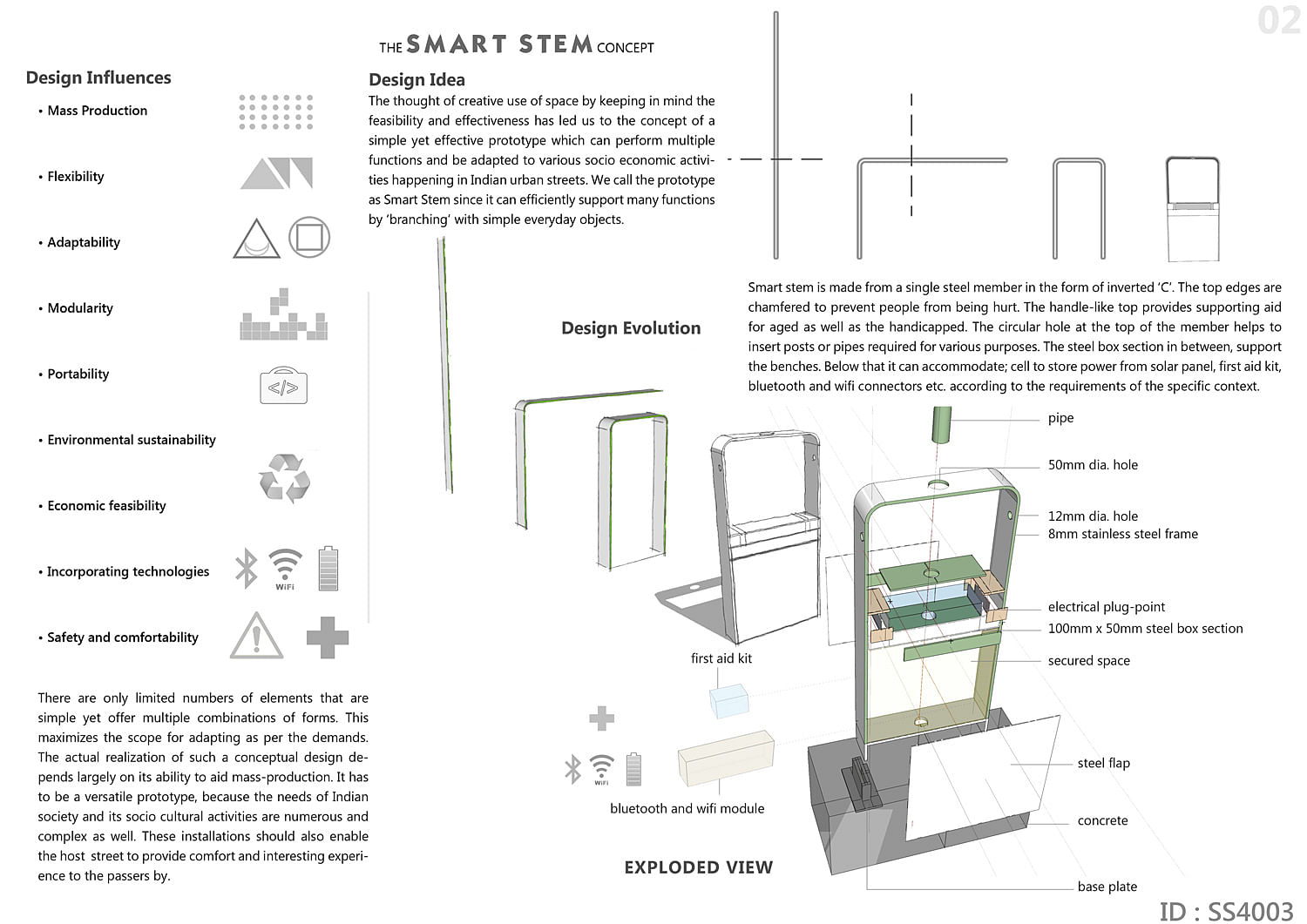
Image courtesy of project authors.

"Solutions     

  • Provide safe place for people to walk, rest and to experience community living,    
  • Promote mass transportation and bicycles.    
  • Separate lanes for vehicles, parking, bicycles and pedestrians    
  • Waste-bins, wash basins, public toilets, street lighting and appropriate signage  
  • Solutions by integrating advanced technologies.   
  • Incorporate street vending, public activities and make streets alive.    
  • Adopt suitable methods of  planting, water conservation, reuse and recycling and depend on renewable energy sources to reduce carbon emission

Urban condition of Indian cities are highly complex, hence the social and economic conditions of each place has to be analyzed before implementing any policies or proposals. Apart from physical aspects, urban interventions are to be socially and economically sustainable.    

Design Influences     

  • Mass Production   
  • Flexibility    
  • Adaptability    
  • Modularity    
  • Portability    
  • Environmentally sustainable and economically feasible   
  • Incorporating technologies    
  • Safety and comfortable "

Image courtesy of project authors.

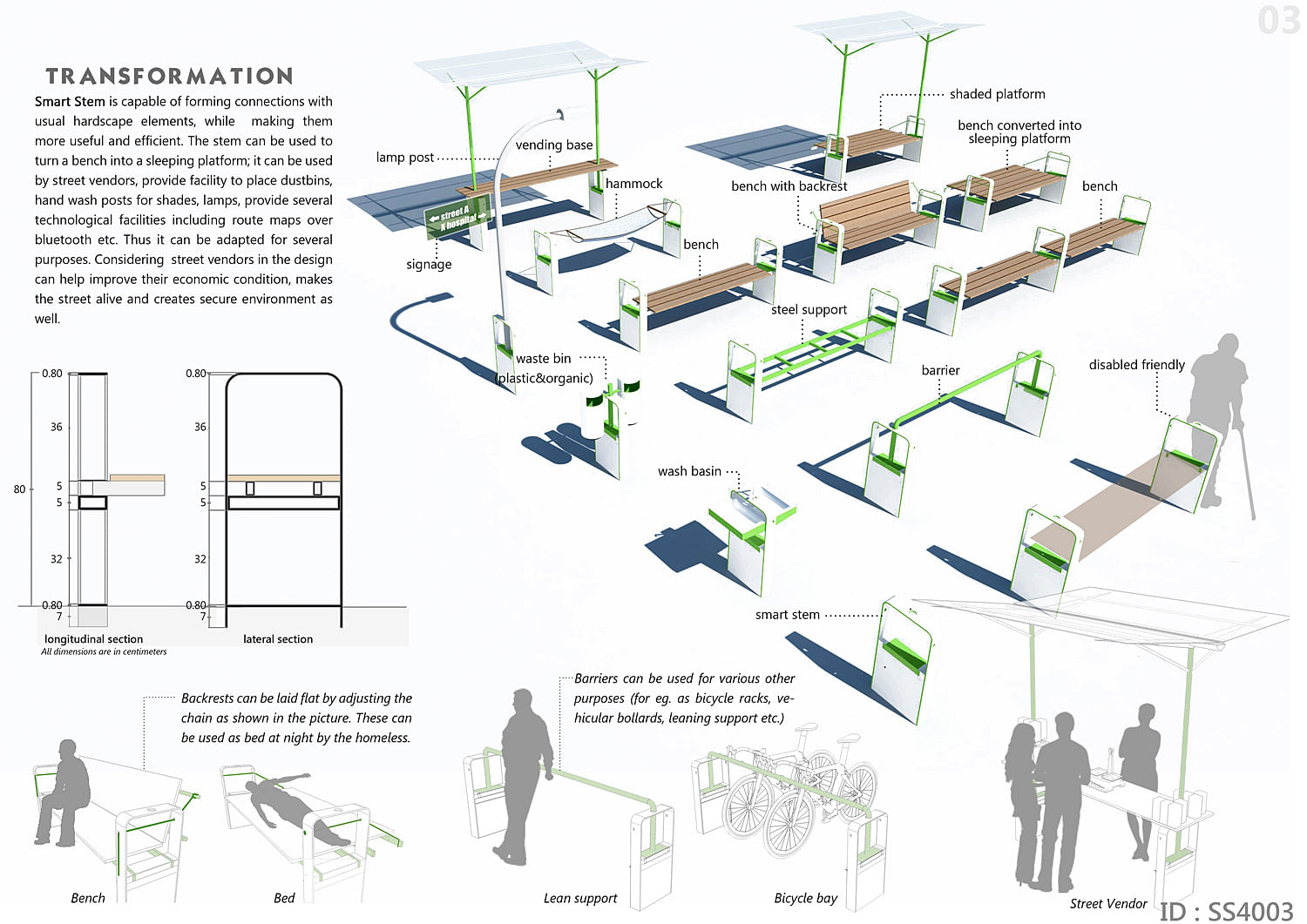
"Transformation Abilities: Smart Stem is capable of forming connections with usual hardscape elements, while making them more useful and efficient. The stem can be used to turn a bench into a sleeping platform; it can be used by street vendors, provide facility to place dustbins, hand wash posts for shades, lamps, provide several technological facilities including route maps over bluetooth etc. Smart Stem can be transformed to wash basin, dustbin, lamp post and signage, bench, bench with back rest, bed, barrier, lean support, hammock, vending base, urban shades and bicycle bay everything friendly to disabled group."
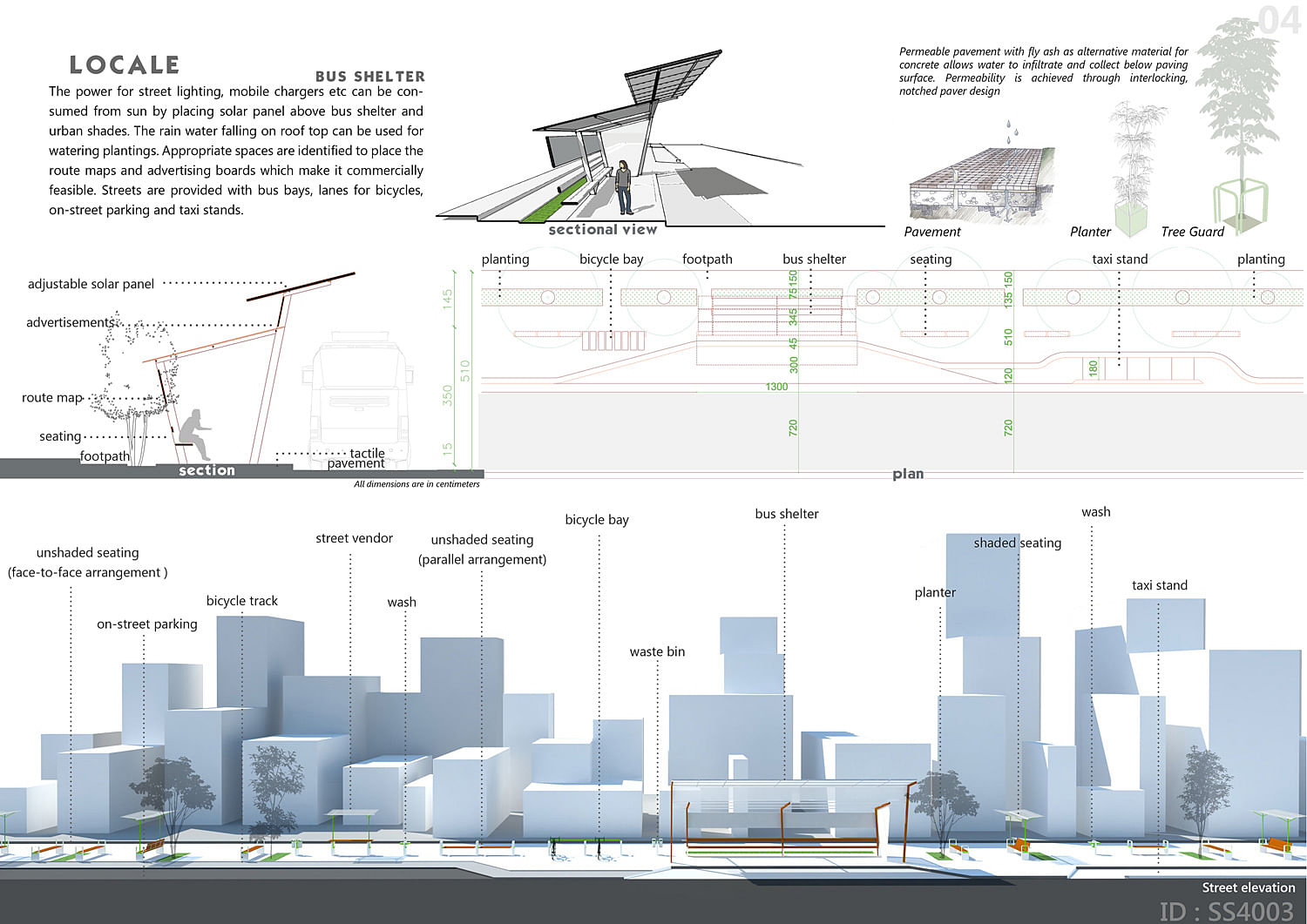
Image courtesy of project authors.

"Energy and Environmental aspects: The power for street lighting, mobile chargers etc can be consumed from sun by placing solar panels above bus shelter and urban shades. The rain water falling on roof top can be used for watering plantings. Appropriate spaces are identified to place the route maps and advertising boards which make it commercially feasible. Streets are provided with bus bays, lanes for bicycles, on-street parking and taxi stands." 
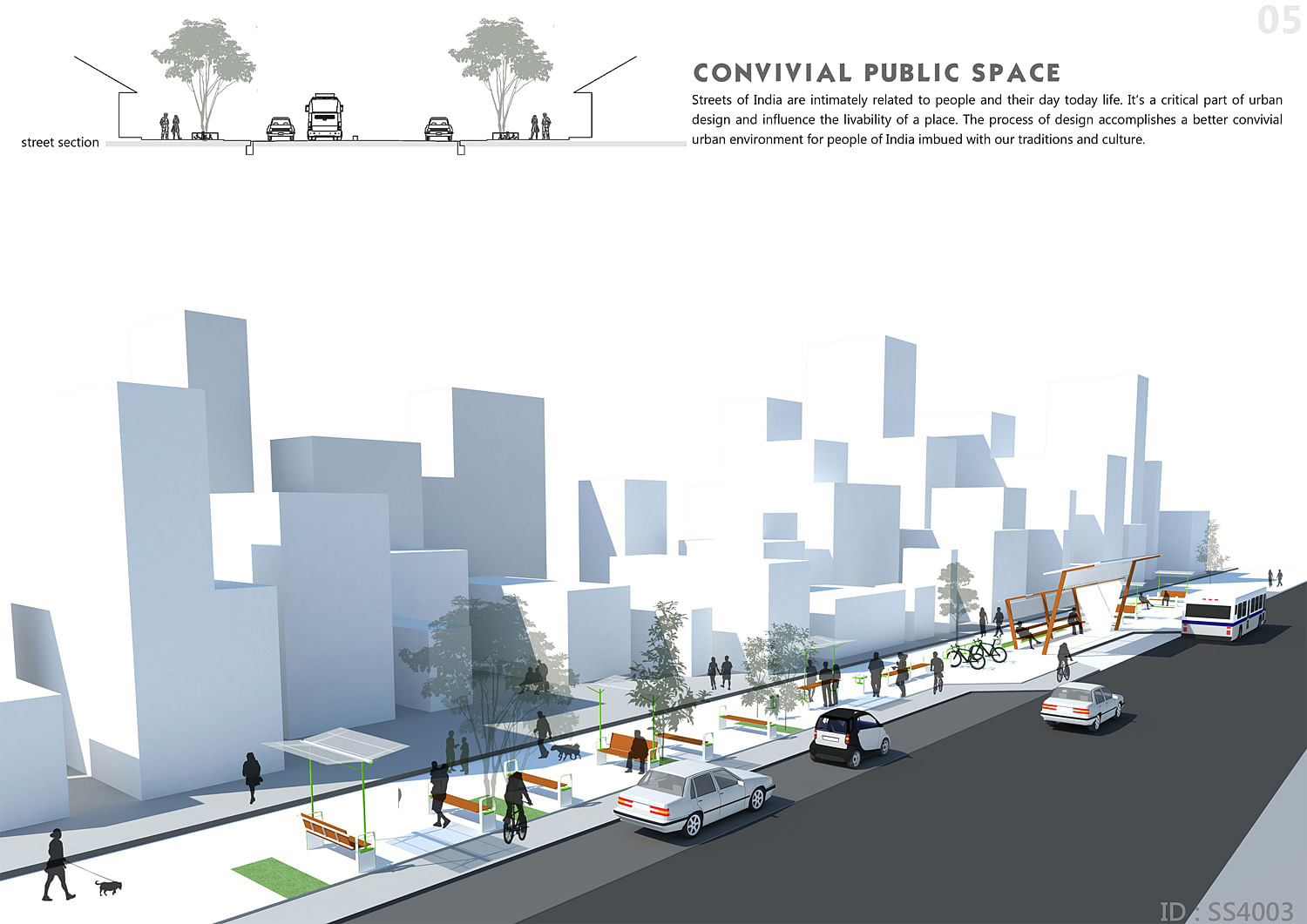
Image courtesy of project authors.

"Conclusion: Streets of India are intimately related to people and their day today life. It’s a critical part of urban design and influence the livability of a place. The process of design accomplishes a better convivial urban environment for people of India imbued with our traditions and culture."

Project details:

Location: Bangalore City, IN
Additional Credits: Ar. Ankur Bardhan

Related

urban renewal ● urban design ● street smart ● social issues ● local ● india ● civic ● bangalore ● asia

Share

  • Follow

    0 Comments

  • Comment as :

Street Smart winning proposal revamps Bangalore, India with local perspective

Sign up for Bustler's Email Newsletters

Next page » Loading

Street Smart winning proposal revamps Bangalore, India with local perspective

By Bustler Editors|

Tuesday, Jan 28, 2014

Share

Street Smart winning proposal by Febin Frederick & Naveen Nair. Image courtesy of project authors.

Related

urban renewal ● urban design ● street smart ● social issues ● local ● india ● civic ● bangalore ● asia

There's nothing more reliable than a local's perspective when it comes to redesigning urban cities. Focusing on India's cityscapes, the Street Smart International Design Competition invited all design professionals to propose ready-to-build designs that reimagine Indian city streets based on the feedback and everyday experience of each city's urban dwellers.

Febin Frederick & Naveen Nair of A Cube Paradigms won first place in the competition with their entry for the city of Bangalore.

Check out the winning proposal below.

Project description:

Introduction: "Streets occupy approximately 20 percent of the total land area in a typical city and they are the most important and ubiquitous form of public space. Streets make a city livable. They not just allow residents to travel from one place to another but act as a place for people to meet, interact, share, do business and thus develop a social contact and community living. Indian streets are deeply associated with the traditions, culture and social relationship of the place. 

As private motor vehicle ownership grows at alarming rate and inadequate measures of government to accommodate the existing and new vehicles on street disturbs the entire urban life. Over time, streets lack social gathering spaces, shared spaces and markets. In many cities streets are disappearing with the increase of traffic volume. This inconsistency will affect the city life not just by physical aspects; instead it degrades the social values and the security of living together. Eventually our great tradition, culture and social values will not be visible in urban life. 

Identifying the problems and its influencing factors was the prime measure. It includes the population growth rate, migration, unsafe and insecure factors in society, crime rates, transportation, waste management etc. The activities on street reflect the conditions of urban community and it transforms the traffic composition of a city drastically; it has direct act on accident rate and safety, pollution and environmental issues, obesity and health of people."

Image courtesy of project authors.

"Process 
Major issues and challenges faced by people living in urban conditions were studied. The problems identified specifically in the Indian context were then listed out. From the analysis we’ve found that many of the problems do not exist in isolation; rather they were interconnected and were direct or indirect consequences of one another. The duality also exist in the solving process i.e., each problem could either be specifically addressed with independent solutions or by interdependent solutions. The second approach seemed more smart and economical. Hence a single prototype was developed with could be adopted in most of the solutions to achieve satisfactory output. 

Problems Identified 
Major ones are listed below; analyzing them changed the way we looked at the streets.    

  • Increase in population increases and number of vehicles    
  • Unsafe environment – Little consideration to pedestrians    
  • Decline of community life    
  • Unhygienic environment and inefficient waste management    
  • Insecure at night    
  • Homeless people are neglected    
  • Little concern about energy and resource conservation."

Image courtesy of project authors.

"Solutions     

  • Provide safe place for people to walk, rest and to experience community living,    
  • Promote mass transportation and bicycles.    
  • Separate lanes for vehicles, parking, bicycles and pedestrians    
  • Waste-bins, wash basins, public toilets, street lighting and appropriate signage  
  • Solutions by integrating advanced technologies.   
  • Incorporate street vending, public activities and make streets alive.    
  • Adopt suitable methods of  planting, water conservation, reuse and recycling and depend on renewable energy sources to reduce carbon emission

Urban condition of Indian cities are highly complex, hence the social and economic conditions of each place has to be analyzed before implementing any policies or proposals. Apart from physical aspects, urban interventions are to be socially and economically sustainable.    

Design Influences     

  • Mass Production   
  • Flexibility    
  • Adaptability    
  • Modularity    
  • Portability    
  • Environmentally sustainable and economically feasible   
  • Incorporating technologies    
  • Safety and comfortable "

Image courtesy of project authors.

"Transformation Abilities: Smart Stem is capable of forming connections with usual hardscape elements, while making them more useful and efficient. The stem can be used to turn a bench into a sleeping platform; it can be used by street vendors, provide facility to place dustbins, hand wash posts for shades, lamps, provide several technological facilities including route maps over bluetooth etc. Smart Stem can be transformed to wash basin, dustbin, lamp post and signage, bench, bench with back rest, bed, barrier, lean support, hammock, vending base, urban shades and bicycle bay everything friendly to disabled group."

Image courtesy of project authors.

"Energy and Environmental aspects: The power for street lighting, mobile chargers etc can be consumed from sun by placing solar panels above bus shelter and urban shades. The rain water falling on roof top can be used for watering plantings. Appropriate spaces are identified to place the route maps and advertising boards which make it commercially feasible. Streets are provided with bus bays, lanes for bicycles, on-street parking and taxi stands." 

Image courtesy of project authors.

"Conclusion: Streets of India are intimately related to people and their day today life. It’s a critical part of urban design and influence the livability of a place. The process of design accomplishes a better convivial urban environment for people of India imbued with our traditions and culture."

Project details:

Location: Bangalore City, IN
Additional Credits: Ar. Ankur Bardhan

Share

  • Follow

    0 Comments

  • Comment as :

Archinect JobsArchinect Jobs

The Archinect Job Board attracts the world's top architectural design talents.

VIEW ALL JOBS POST A JOB

Junior Architect / Architectural Designer

S20M

Junior Architect / Architectural Designer

New York, NY, US

Project Architect/ Designer

Nandinee Phookan Architect, P.C.

Project Architect/ Designer

New York, NY, US

Architectural Designer II

Studio AR&D Architects

Architectural Designer II

Los Angeles, CA, US

Hospitality Project Architect

bonetti/kozerski architecture DPC

Hospitality Project Architect

New York, NY, US

Architectural/Structural Drafter

New Beginnings Engineering

Architectural/Structural Drafter

Irvine, CA, US

Job Captain - Residential

DAHLIN Architecture | Planning | Interiors

Job Captain - Residential

Pleasanton, CA, US

 Intermediate Architect

Curtis + Ginsberg Architects LLP

Intermediate Architect

New York, NY, US

Project Manager - Residential

DAHLIN Architecture | Planning | Interiors

Project Manager - Residential

Bellevue, WA, US

Marketing and Architectural Assistant

AGENCIE / Architecture & Engineering

Marketing and Architectural Assistant

New York, NY, US

Architectural Designer Level 2

Arthur Chabon Architect

Architectural Designer Level 2

New York, NY, US

Next page » Loading