• Login / Join
  • About
  • •
  • Contact
  • •
  • Advertising
bustler logo
bustler logo
  • News
  • Competitions
  • Events
  • Bustler is powered by Archinect
  • Sign up for Bustler's Email Newsletters

  • Follow these Bustler feeds:

  • Search

    Search in

  • Submit

    What are you submitting?

    News Pitch
    Competition
    Event
  • Login / Join
  • News|Competitions|Events
  • Search
    | Submit
    | Follow
  • Search in

    What are you submitting?

    News Pitch
    Competition
    Event

    Follow these Bustler feeds:

  • About|Contact|Advertising
  • Login / Join
Tagged: theartling

Details of the 2nd-prize Artling Pavilion entry by 23.5 G-Architects, Bence Pap, and Parsa Khalili

By Bustler Editors|

Wednesday, Jun 10, 2015
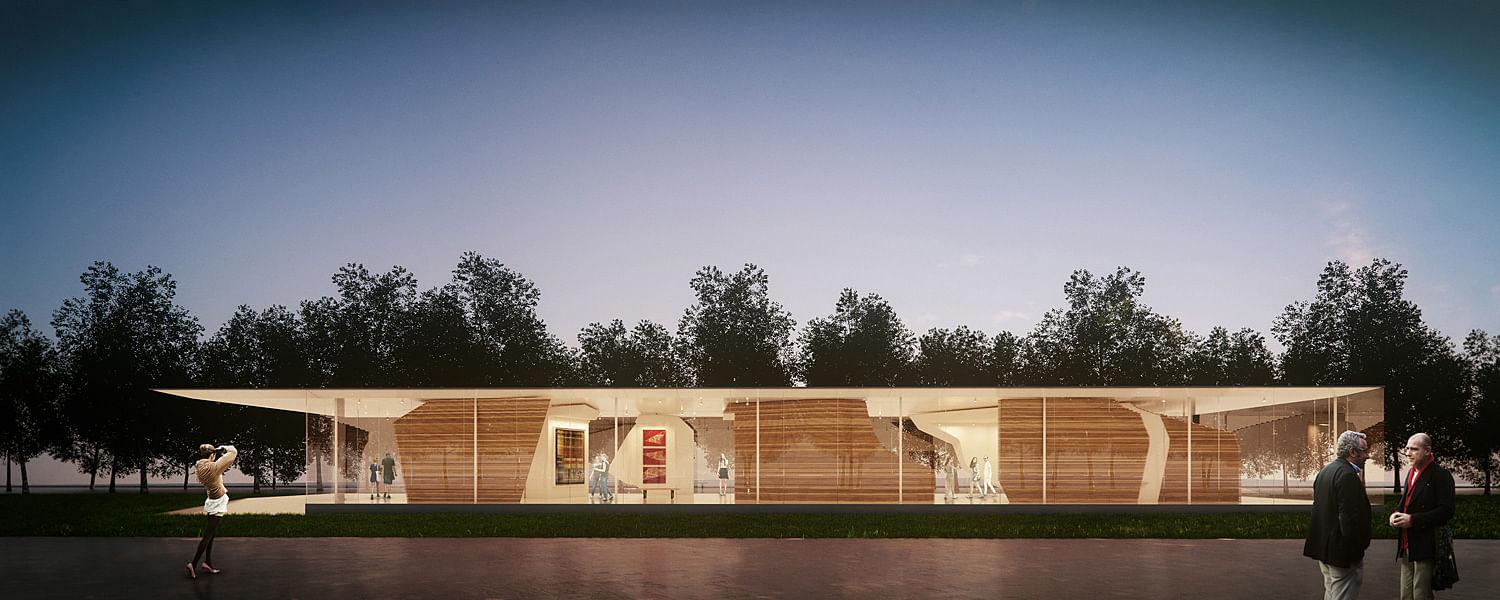
Image courtesy of Bence Pap.

Singaporean online art gallery, The Artling, concluded an open competition earlier this year for the design of a weather-resilient 8,000 sq.ft pavilion structure that would house a Contemporary Asian Art exhibition. Young Singapore-based architectural practices less than 10 years old were invited to submit their proposals.

Locally based 23.5 G-Architects, Bence Pap, and Parsa Khalili won second prize for their entry. Based on the team's concept of "Reconfiguring the pART to Whole", their design consists of movable tectonic pieces to create a highly flexible and adaptable exhibition space.

Scroll down to check out their entry.

Project description:

"Art, understood broadly as the expression of creative  capital depicted using a wide array of visual media with the underlyin  ambition to convey conceptual,  phenomenological, or literal translations of the human condition, stands at a critical cross road today. The institutions that harbor  products of art are stuck between the oppositional a nd often contrary needs to either raise a socially motivated consciousness or to engender a purely aesthetic and metaphysical body of work, and thus  oscillating between conforming to and completely defying the sociocultural structure it is to serve.  As such,  the twenty-first century is burdened with the difficult task of making art not only approachable and consumable, but also to ensure its critical reception and preservation." 
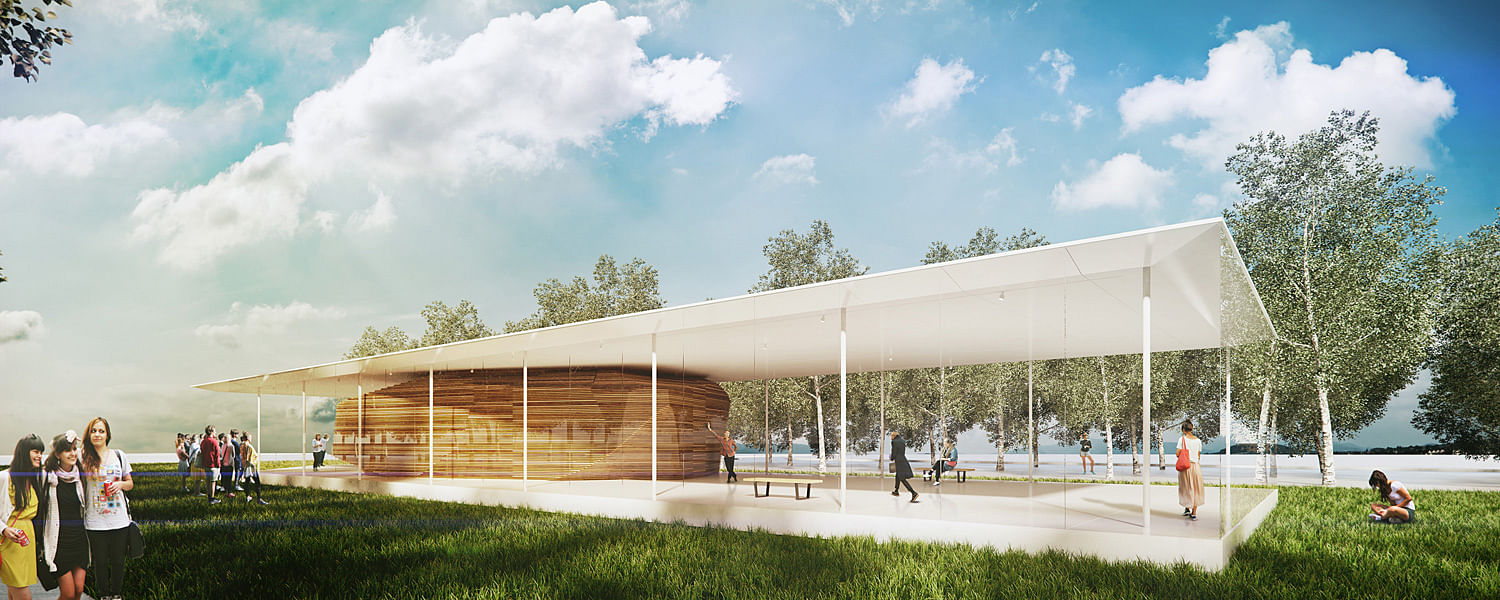
Image courtesy of Bence Pap.

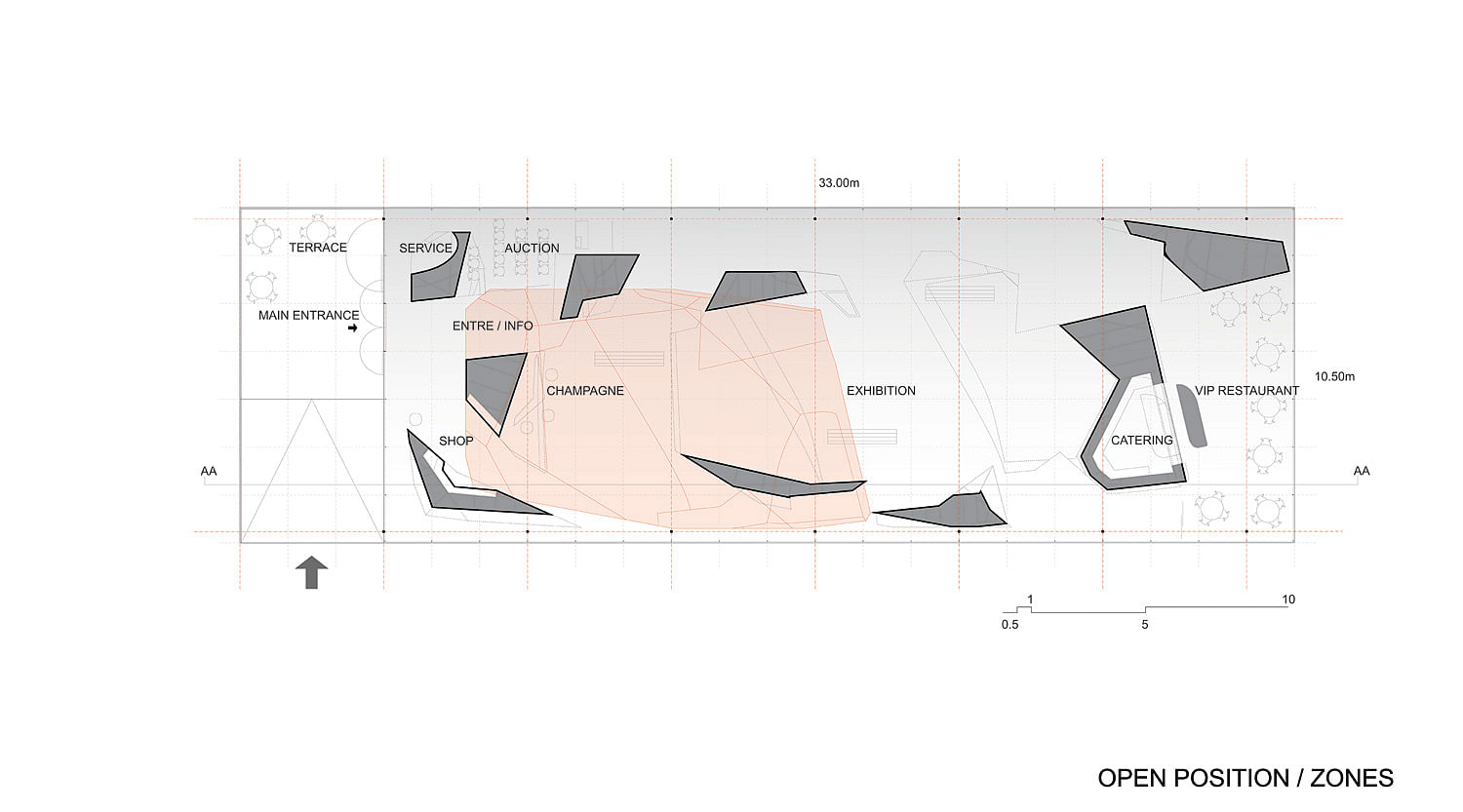
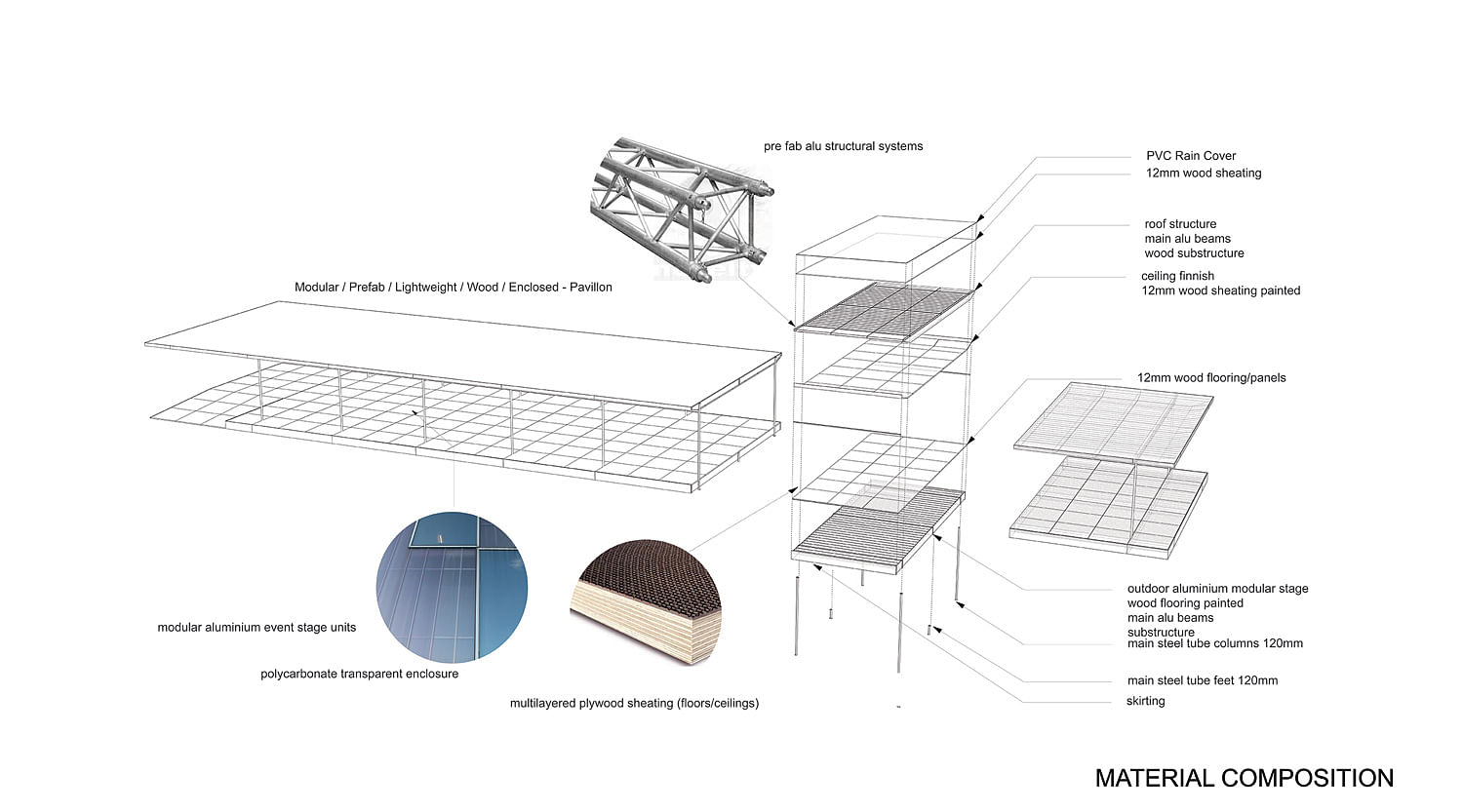
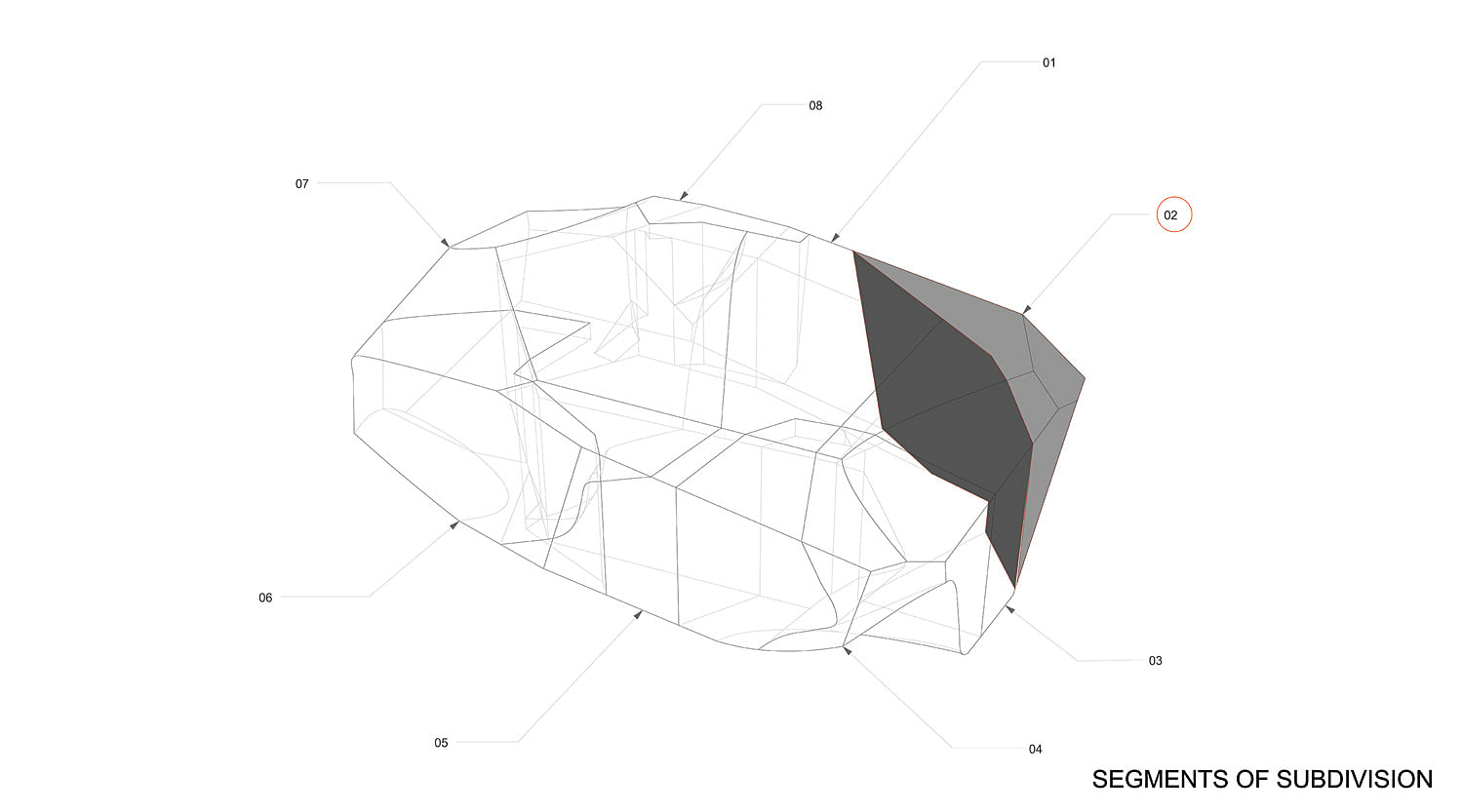
"With this in mind, the Artling Pavilion is designed as a multi-use and highly flexible structure which  may serve the needs of the institution both in its o peration during exhibitions and thereafter. The concept begins by the creation of a completely neutral and minimal platform, enclosed and conditioned to provide an empty hull for which a figural architectural object will reside. This hull space, fabricated from a simple and modular construction system, is constructed of readymade standardized industrial elements, is not dissimilar to those used for outdoor events and stage set ups for performances. The figural object will be fragmented in such a way that it may operate both in its closed and open form -- providing two fixed arrangements for the consumption of art and a myriad of possibilities through its open configurability."
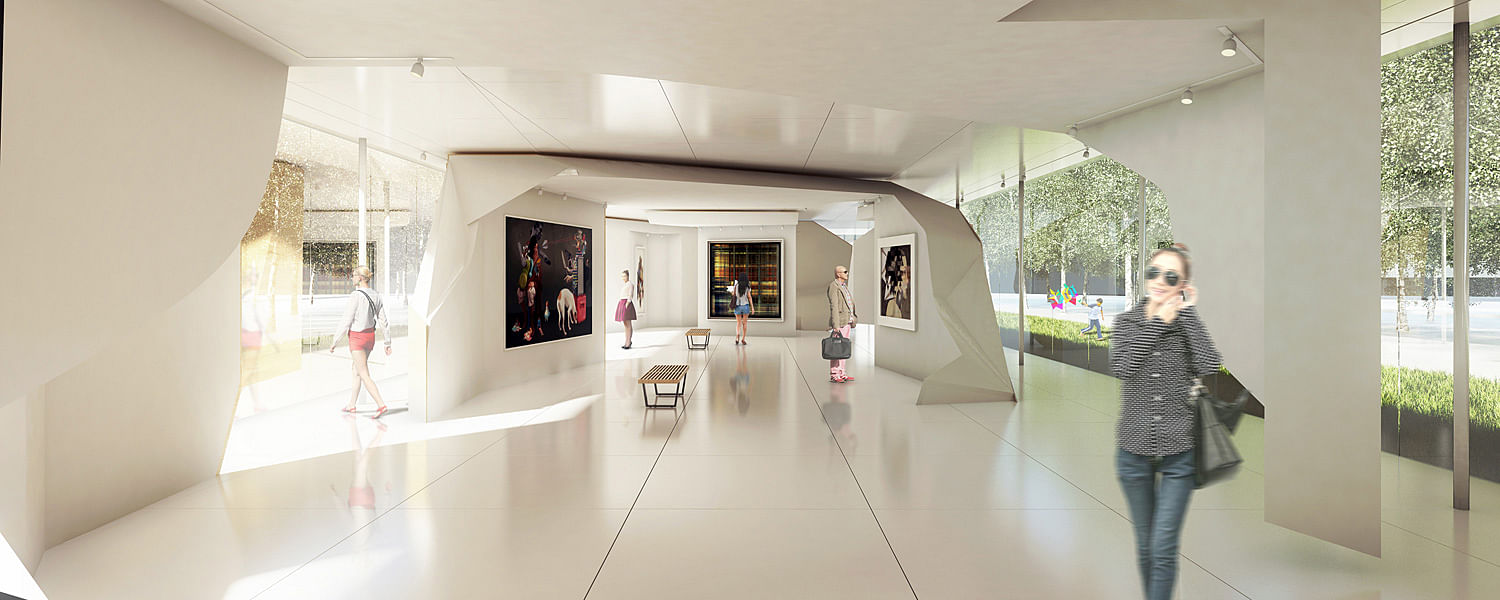
Image courtesy of Bence Pap.

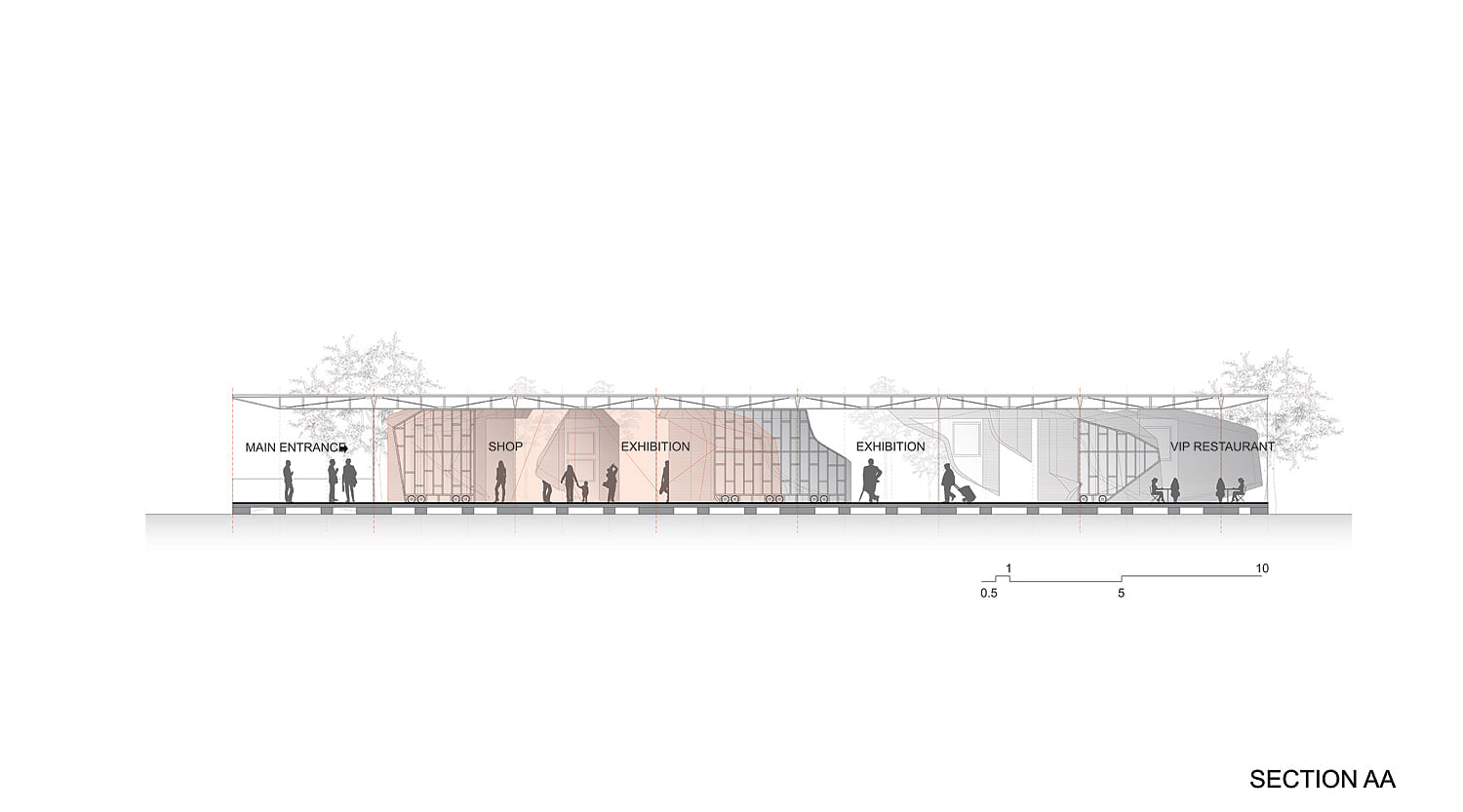
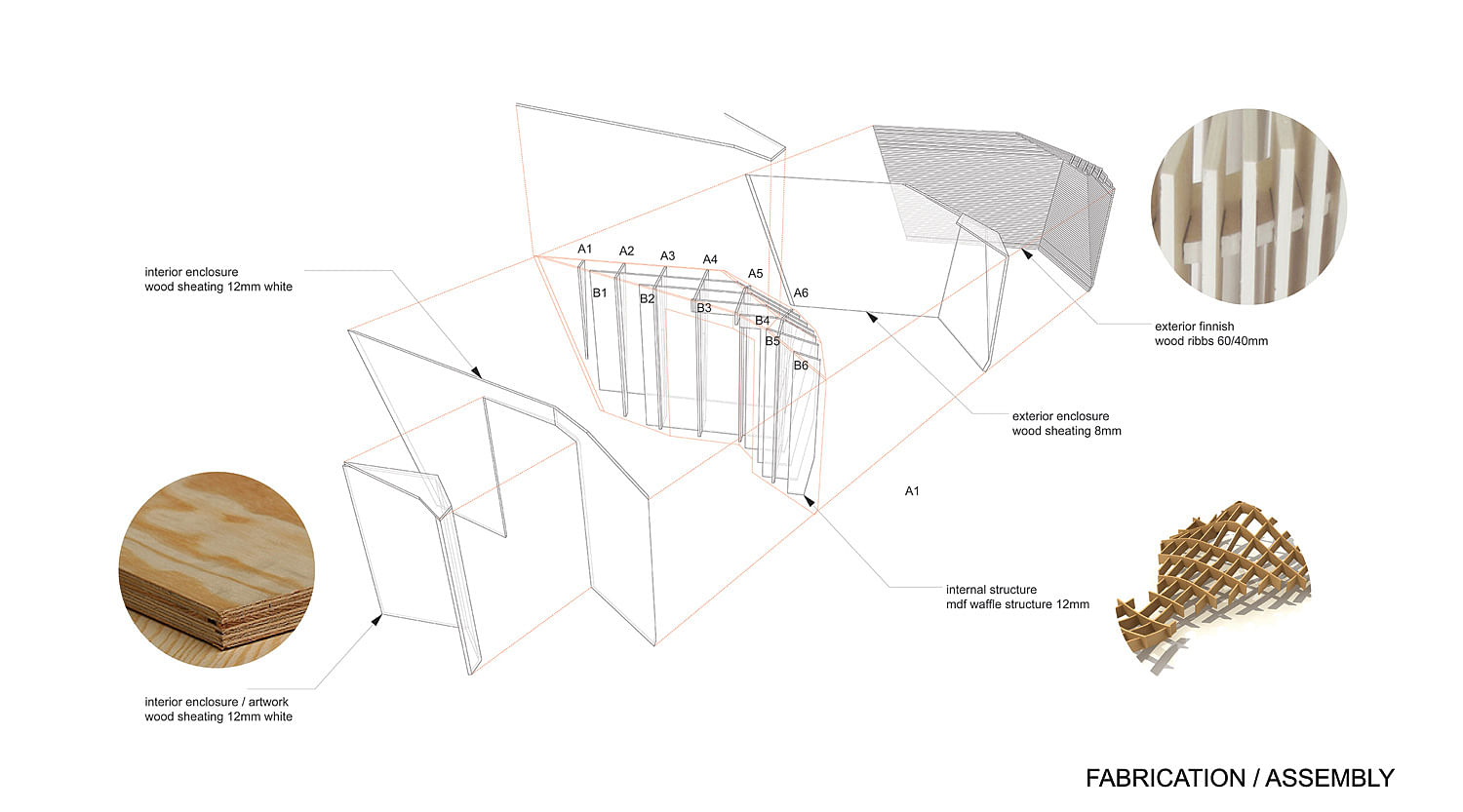
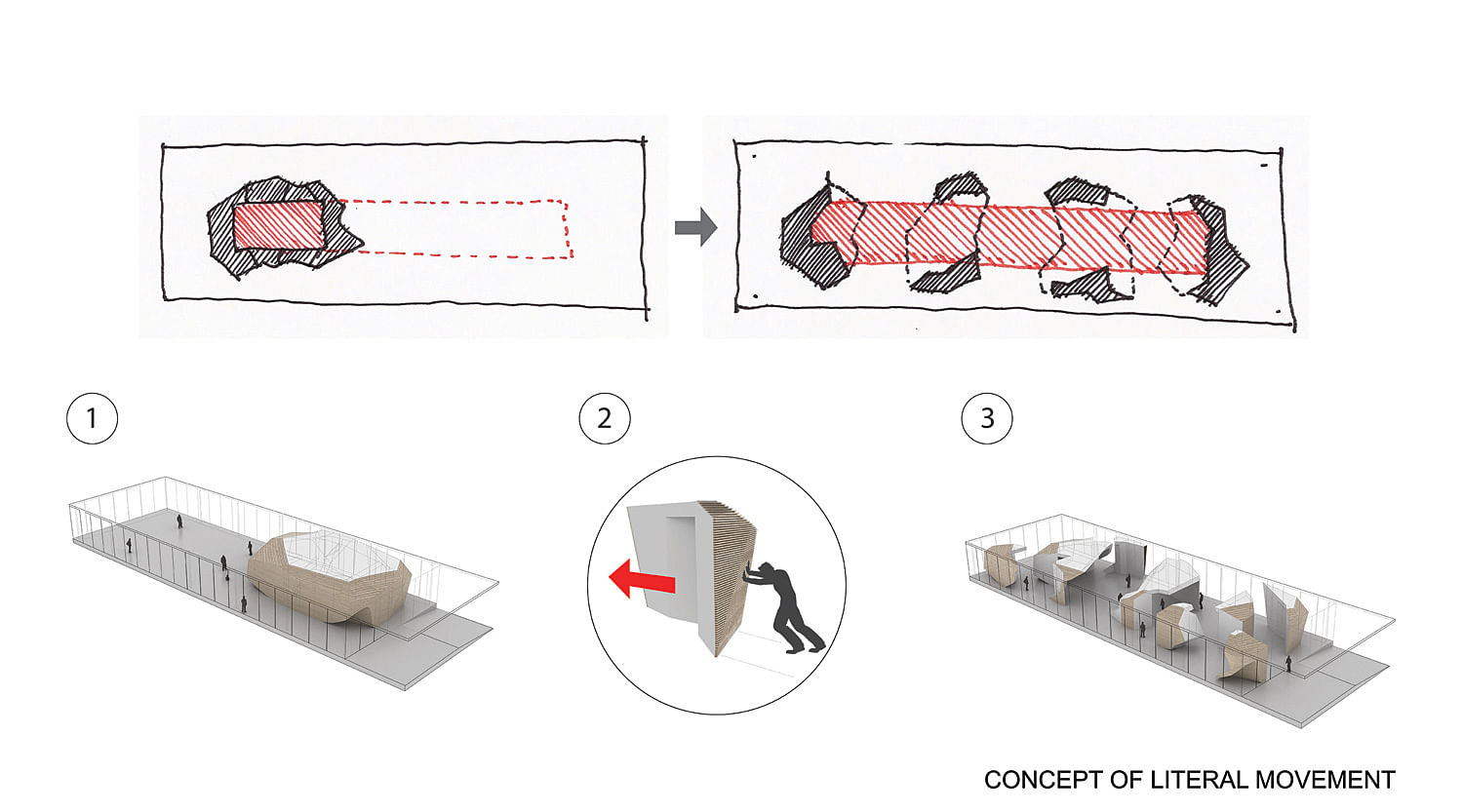
"In its closed orientation, it provides fo  a highly intimate and completely interiorized space for private showing and an unobstructed zone within the platform’s limits for open  receptions or performances.  While in its open orientation,  the  highly articulated  objects  breaks  apart  into  a  number of semi-autonomous pieces which both more th an doubles the amount of display surface  for  larger art  showings but also  creates  privatized  pockets  of  space  for  the  possibility of other programmatic needs. It will be fabricated using digital tools of design and fabrication to minimize material waste and maximize efficiency in construction.

Zones of various scales -- such as the VIP dining room, the small auction room, a champagne bar, etc. -- can all be easily implemented and fine-tuned in their absolute dimensions, adjusting to needs of its inhabitants at any given time. The figural objects are situated on light tracks with wheels on the floor to enable the transformation process  from  their open to  closed  states. The architecture is reimagined, logistically speaking, almost similar to large scale pieces of urban furniture. The tabula rasa of the empty pavilion hull is thus rendered as a dynamic space; the discrete parts which create the figural object can be recomposed ad infinitum, reconfiguring the use of the space and creating smaller compartments for other uses."
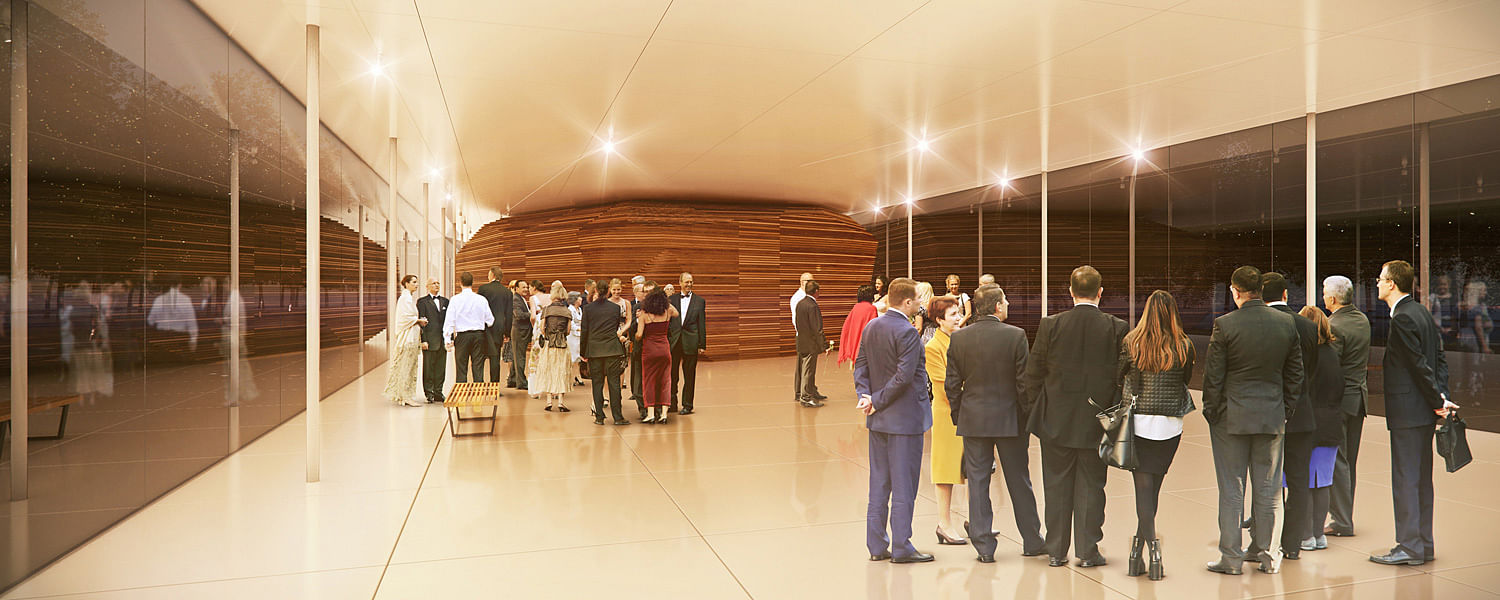
Image courtesy of Bence Pap.

"Additionally, the fractured pieced may also be used bef ore and after the final installation in Marina  Bay, working as small kiosks or coffee shops or inf ormation centers throughout the city in any of Singapore’s bustling young neighborhoods, or simply used as  marketing tool to promote the Artling organization and raise awareness of its pres ence in the city. Conceptually, the project relies  on this notion of flexibility and adaptability to provide a burgeoning new art institution the mobility it needs. 

A new generation of art, art production, and art consumption demands an institution which can revitalize its trajectory, aiming to synthesize the dialogue of creation and exhibition while simultaneously redefining its architecture in itself as a work of art.  A temporary, movable, and reconfigurable  structure possesses the possibility of  resolving the adaptive needs of this new understanding of art today."

Find more project images in the thumbnails below.
Related

theartling ● southeast asia ● singapore ● museum ● multifunctional ● gallery ● flexible ● exhibition design ● bence pap ● asia

Share

  • Follow

    0 Comments

  • Comment as :

Details of the 2nd-prize Artling Pavilion entry by 23.5 G-Architects, Bence Pap, and Parsa Khalili

Sign up for Bustler's Email Newsletters

Next page » Loading

Details of the 2nd-prize Artling Pavilion entry by 23.5 G-Architects, Bence Pap, and Parsa Khalili

By Bustler Editors|

Wednesday, Jun 10, 2015

Share

Image courtesy of Bence Pap.

Related

theartling ● southeast asia ● singapore ● museum ● multifunctional ● gallery ● flexible ● exhibition design ● bence pap ● asia

Singaporean online art gallery, The Artling, concluded an open competition earlier this year for the design of a weather-resilient 8,000 sq.ft pavilion structure that would house a Contemporary Asian Art exhibition. Young Singapore-based architectural practices less than 10 years old were invited to submit their proposals.

Locally based 23.5 G-Architects, Bence Pap, and Parsa Khalili won second prize for their entry. Based on the team's concept of "Reconfiguring the pART to Whole", their design consists of movable tectonic pieces to create a highly flexible and adaptable exhibition space.

Scroll down to check out their entry.

Project description:

"Art, understood broadly as the expression of creative  capital depicted using a wide array of visual media with the underlyin  ambition to convey conceptual,  phenomenological, or literal translations of the human condition, stands at a critical cross road today. The institutions that harbor  products of art are stuck between the oppositional a nd often contrary needs to either raise a socially motivated consciousness or to engender a purely aesthetic and metaphysical body of work, and thus  oscillating between conforming to and completely defying the sociocultural structure it is to serve.  As such,  the twenty-first century is burdened with the difficult task of making art not only approachable and consumable, but also to ensure its critical reception and preservation." 

Image courtesy of Bence Pap.

"With this in mind, the Artling Pavilion is designed as a multi-use and highly flexible structure which  may serve the needs of the institution both in its o peration during exhibitions and thereafter. The concept begins by the creation of a completely neutral and minimal platform, enclosed and conditioned to provide an empty hull for which a figural architectural object will reside. This hull space, fabricated from a simple and modular construction system, is constructed of readymade standardized industrial elements, is not dissimilar to those used for outdoor events and stage set ups for performances. The figural object will be fragmented in such a way that it may operate both in its closed and open form -- providing two fixed arrangements for the consumption of art and a myriad of possibilities through its open configurability."

Image courtesy of Bence Pap.

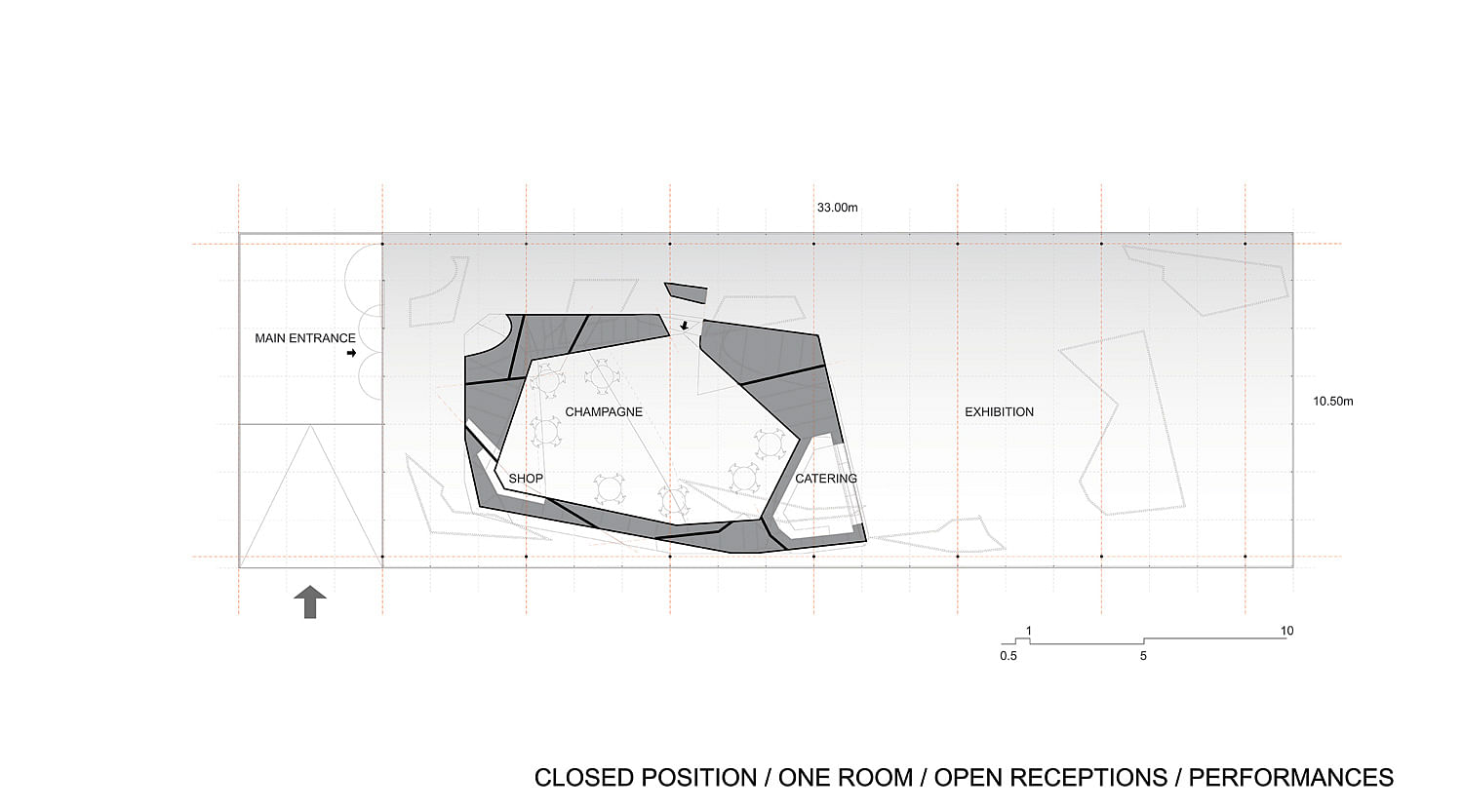
"In its closed orientation, it provides fo  a highly intimate and completely interiorized space for private showing and an unobstructed zone within the platform’s limits for open  receptions or performances.  While in its open orientation,  the  highly articulated  objects  breaks  apart  into  a  number of semi-autonomous pieces which both more th an doubles the amount of display surface  for  larger art  showings but also  creates  privatized  pockets  of  space  for  the  possibility of other programmatic needs. It will be fabricated using digital tools of design and fabrication to minimize material waste and maximize efficiency in construction.

Zones of various scales -- such as the VIP dining room, the small auction room, a champagne bar, etc. -- can all be easily implemented and fine-tuned in their absolute dimensions, adjusting to needs of its inhabitants at any given time. The figural objects are situated on light tracks with wheels on the floor to enable the transformation process  from  their open to  closed  states. The architecture is reimagined, logistically speaking, almost similar to large scale pieces of urban furniture. The tabula rasa of the empty pavilion hull is thus rendered as a dynamic space; the discrete parts which create the figural object can be recomposed ad infinitum, reconfiguring the use of the space and creating smaller compartments for other uses."

Image courtesy of Bence Pap.

"Additionally, the fractured pieced may also be used bef ore and after the final installation in Marina  Bay, working as small kiosks or coffee shops or inf ormation centers throughout the city in any of Singapore’s bustling young neighborhoods, or simply used as  marketing tool to promote the Artling organization and raise awareness of its pres ence in the city. Conceptually, the project relies  on this notion of flexibility and adaptability to provide a burgeoning new art institution the mobility it needs. 

A new generation of art, art production, and art consumption demands an institution which can revitalize its trajectory, aiming to synthesize the dialogue of creation and exhibition while simultaneously redefining its architecture in itself as a work of art.  A temporary, movable, and reconfigurable  structure possesses the possibility of  resolving the adaptive needs of this new understanding of art today."

Find more project images in the thumbnails below.
Share

  • Follow

    0 Comments

  • Comment as :

Archinect JobsArchinect Jobs

The Archinect Job Board attracts the world's top architectural design talents.

VIEW ALL JOBS POST A JOB

Project Architect

Westside Design

Project Architect

Santa Monica, CA, US

Architects with 4-10 Years' Experience

Adamson Associates, Inc.

Architects with 4-10 Years' Experience

Los Angeles, CA, US

Senior Technical Designer, Commercial Interiors - New York Office

Fogarty Finger

Senior Technical Designer, Commercial Interiors - New York Office

New York, NY, US

Interior Designer, 5+ Years Experience

Cass Calder Smith

Interior Designer, 5+ Years Experience

San Francisco, CA, US

Design Architect

JLK Architects

Design Architect

Chicago, IL, US

Office Assistant / Studio Coordinator

Beinfield Architecture PC

Office Assistant / Studio Coordinator

Norwalk, CT, US

Architectural Designer II

Studio AR&D Architects

Architectural Designer II

Los Angeles, CA, US

Project Architect at High End Boutique Townhouse Firm in BK

Steering House Design and Development

Project Architect at High End Boutique Townhouse Firm in BK

Brooklyn, NY, US

Business Development Manager

WORKac

Business Development Manager

New York, NY, US

Architectural Job Captain

Christopher Courts Inc.

Architectural Job Captain

Los Angeles, CA, US

Next page » Loading