• Login / Join
  • About
  • •
  • Contact
  • •
  • Advertising
bustler logo
bustler logo
  • News
  • Competitions
  • Events
  • Bustler is powered by Archinect
  • Sign up for Bustler's Email Newsletters

  • Follow these Bustler feeds:

  • Search

    Search in

  • Submit

    What are you submitting?

    News Pitch
    Competition
    Event
  • Login / Join
  • News|Competitions|Events
  • Search
    | Submit
    | Follow
  • Search in

    What are you submitting?

    News Pitch
    Competition
    Event

    Follow these Bustler feeds:

  • About|Contact|Advertising
  • Login / Join
Tagged: wireless

Winners of the Workplace of the Future Competition

By Bustler Editors|

Wednesday, Nov 20, 2013
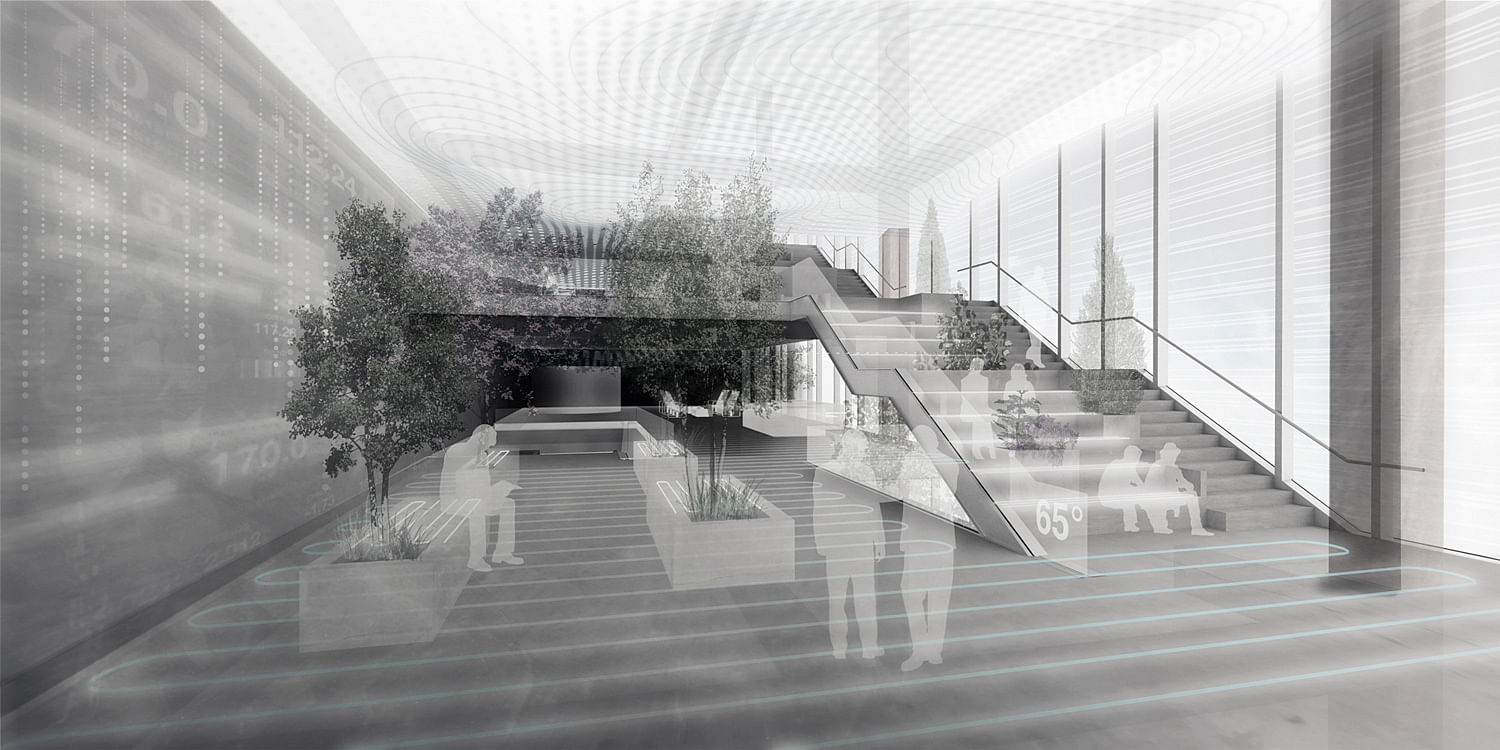
Winner (first place): Vertical Flux: The Office Tower as Fluctuating Atmospheres by Joseph Filippelli.

The results are in for the Workplace of the Future Design Competition, presented by Metropolis and Business Interiors by Staples. The design competition questions the blurred definition of the workplace and the present-day possibility that work can be done just about anywhere now, with wireless and cloud technology readily available. With this in mind, entrants were challenged to design an ideal workspace fit for the mobile work environment.

The jury, which featured Tom Krizmanic — a principal at STUDIOS Architecture — and other esteemed members in leading corporations, selected three winning projects:

  • First place: Vertical Flux: The Office Tower as Fluctuating Atmospheres by Joseph Filippelli
  • Runner-up (Second place): CoLAB by Eckhart, team: Teun van den Dries, Frank van Haalen, Britt Brijder, Sander Mulders, Pauline Quast
  • Honorable mention (Third place): NEXUS: The locomotion of business by Sara Willhoite, Angie Tjisnoyo, Matthew Ford, Mina Lee

Check 'em out right below.

Winners' info, provided by Metropolis:

WINNER (1st Place): Vertical Flux: The Office Tower as Fluctuating Atmospheres
Designer: Joseph Filippelli (freelancer)

Project Description:

"Technological advancements in the late twentieth century gave rise to visions of a post office future, where the business of work could be carried out anywhere. Yet today, more than ever, spaces of collective work remain vital to maintaining a healthy balance of living and working. Instead of making the office redundant, technology is allowing for greater flexibility for places of communication and collaborative teamwork."
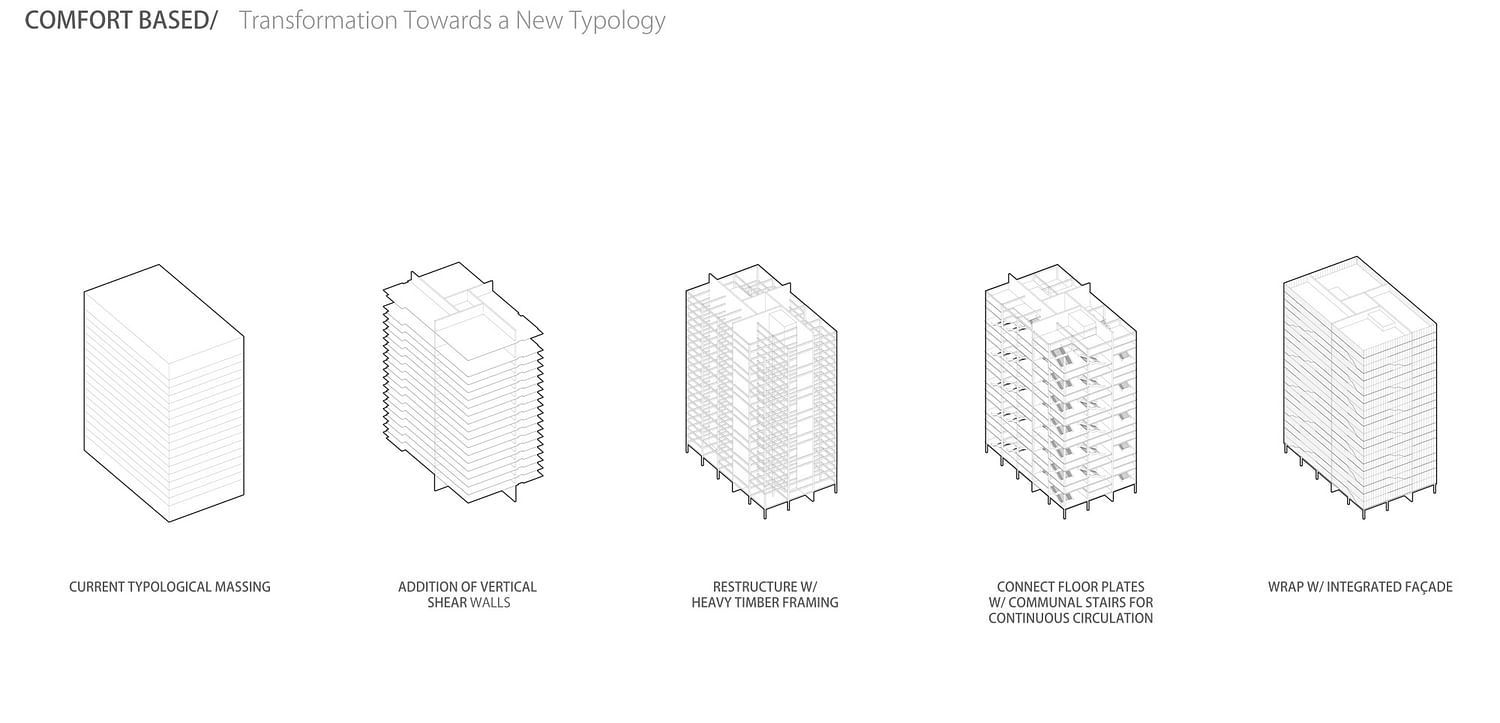
Vertical Flux: The Office Tower as Fluctuating Atmospheres

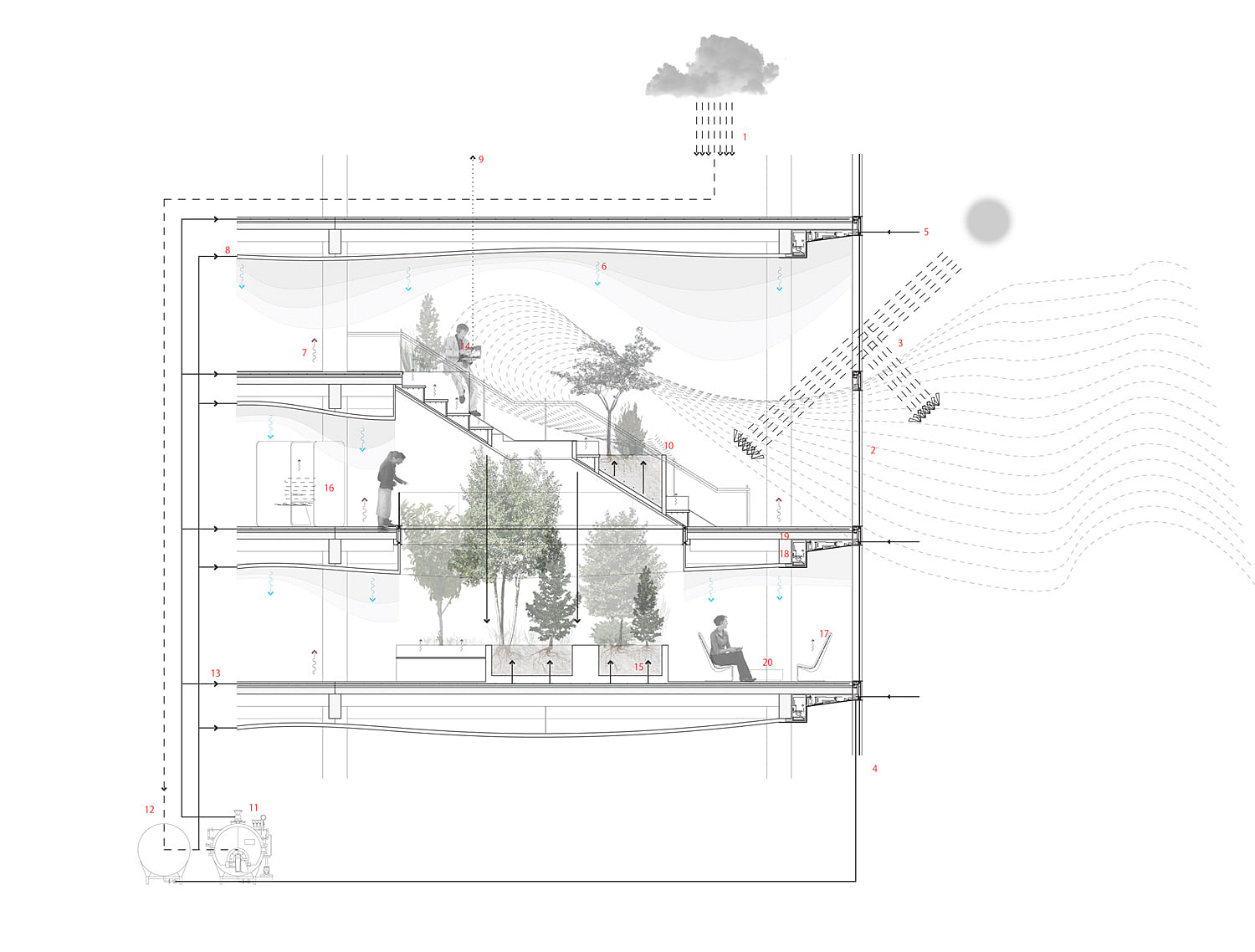
"This proposal breaks away from an organizational model which has remained relatively unchanged for almost a century and re-imagines the office tower as a fluctuating gradient of vertically distributed atmospheres. By rejecting the typical homogeneous interior environment, occupants are free to move vertically through a variety of comfort zones."
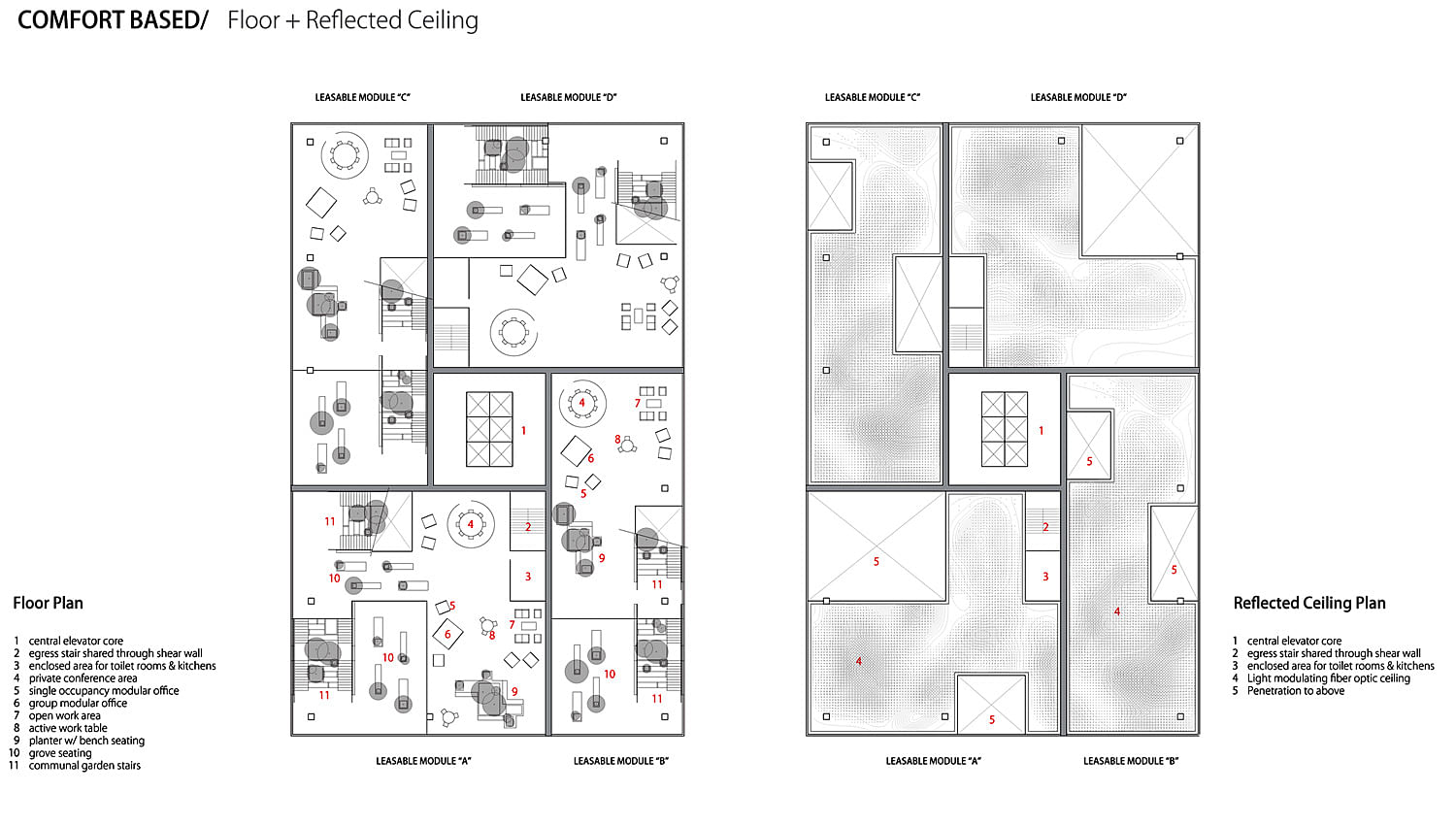
Vertical Flux: The Office Tower as Fluctuating Atmospheres

"A new approach to spatial organization challenges the paradigm of static, indoor environments and speculates upon the concept of thermal comfort as something malleable by employing relevant technologies combined with the natural properties of temperature and light."
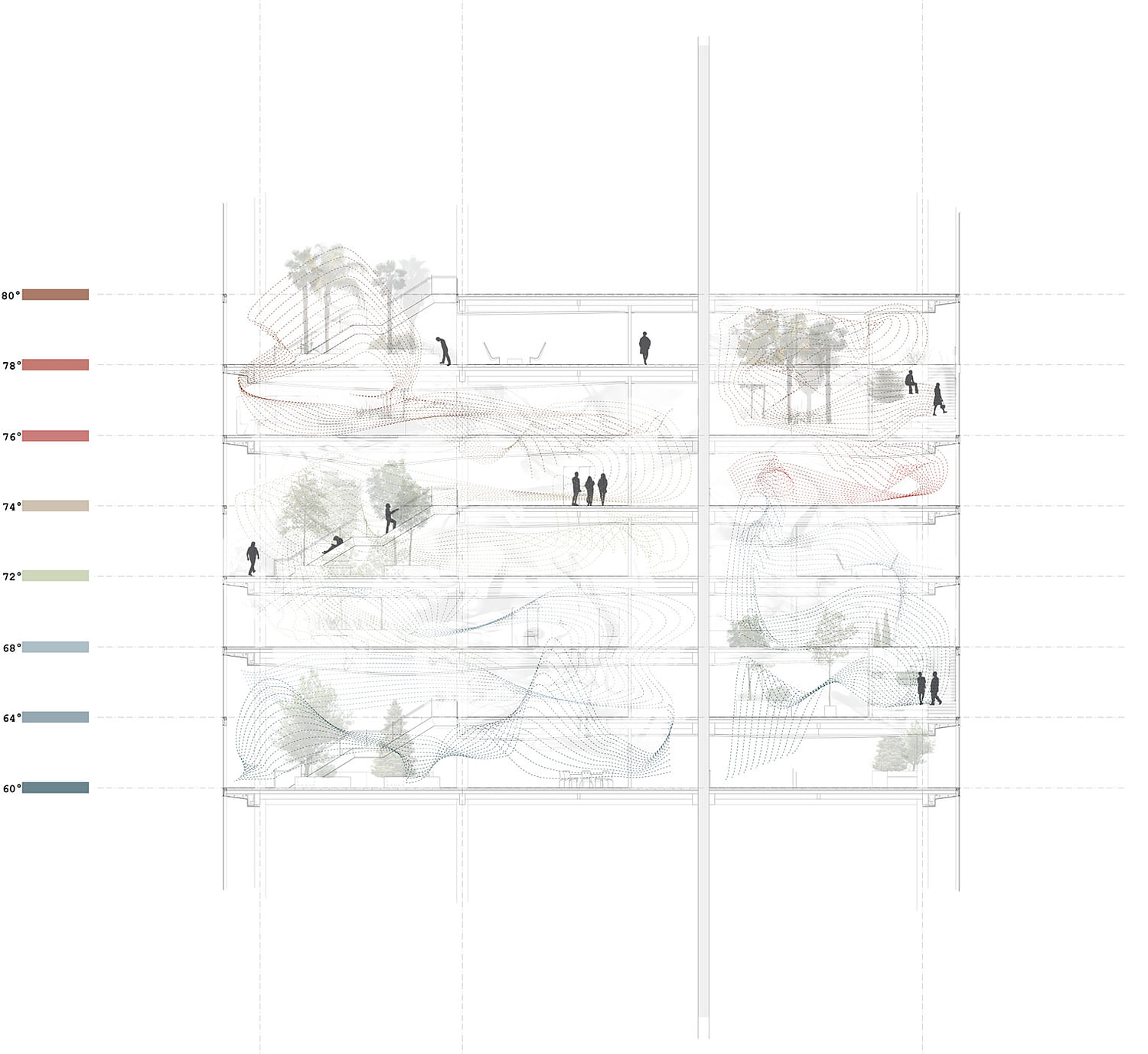
Vertical Flux: The Office Tower as Fluctuating Atmospheres

"A new approach to spatial organization challenges the paradigm of static, indoor environments and speculates upon the concept of thermal comfort as something malleable by employing relevant technologies combined with the natural properties of temperature and light."
Vertical Flux: The Office Tower as Fluctuating Atmospheres

RUNNER-UP (2nd Place): CoLAB
Design lead: Teun van den Dries (Eckhart)
Team: Frank van Haalen, Britt Brijder, Sander Mulders, Pauline Quast

Project Description:

"The digital development in the work environment shows two clear changes in office space. The first is the reduction of storage space. In 1985 there was no digital storage, since people worked on typewriters. Nowadays filing cabinets have been replaced by server rooms and storage has moved to the Cloud."
Runner-up (second place): CoLAB by Eckhart, team: Teun van den Dries, Frank van Haalen, Britt Brijder, Sander Mulders, Pauline Quast

"Second is the reduction of workspace per worker. The large desktop computers have been replaced by slim laptops and tablets. These are easy to take with you, making it possible to work everywhere you are, always able to access your documents, decreasing the need for a physical workplace for every worker. This flexibility increases the ability to quickly switch location and collaborate in different teams day-by-day."
CoLAB

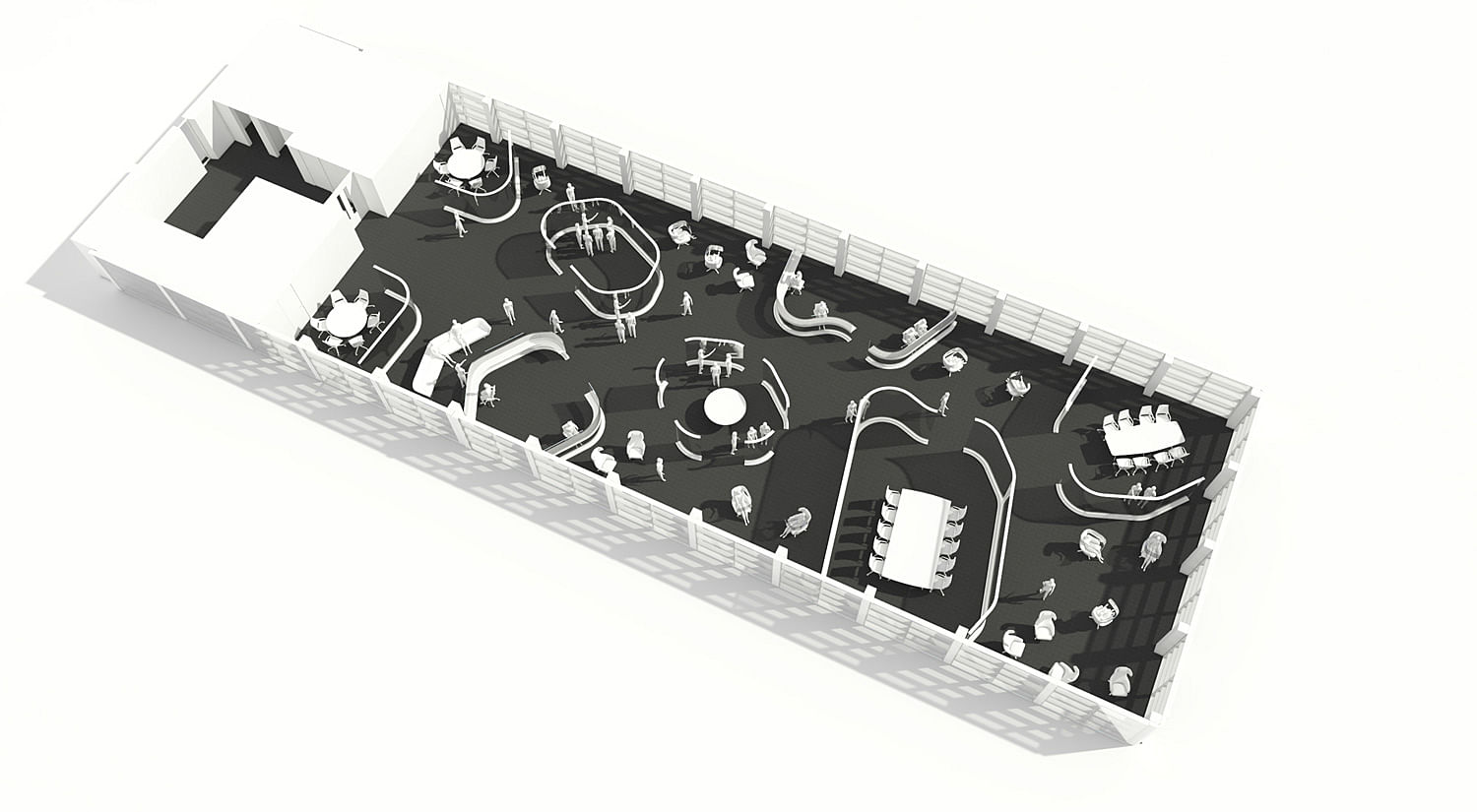
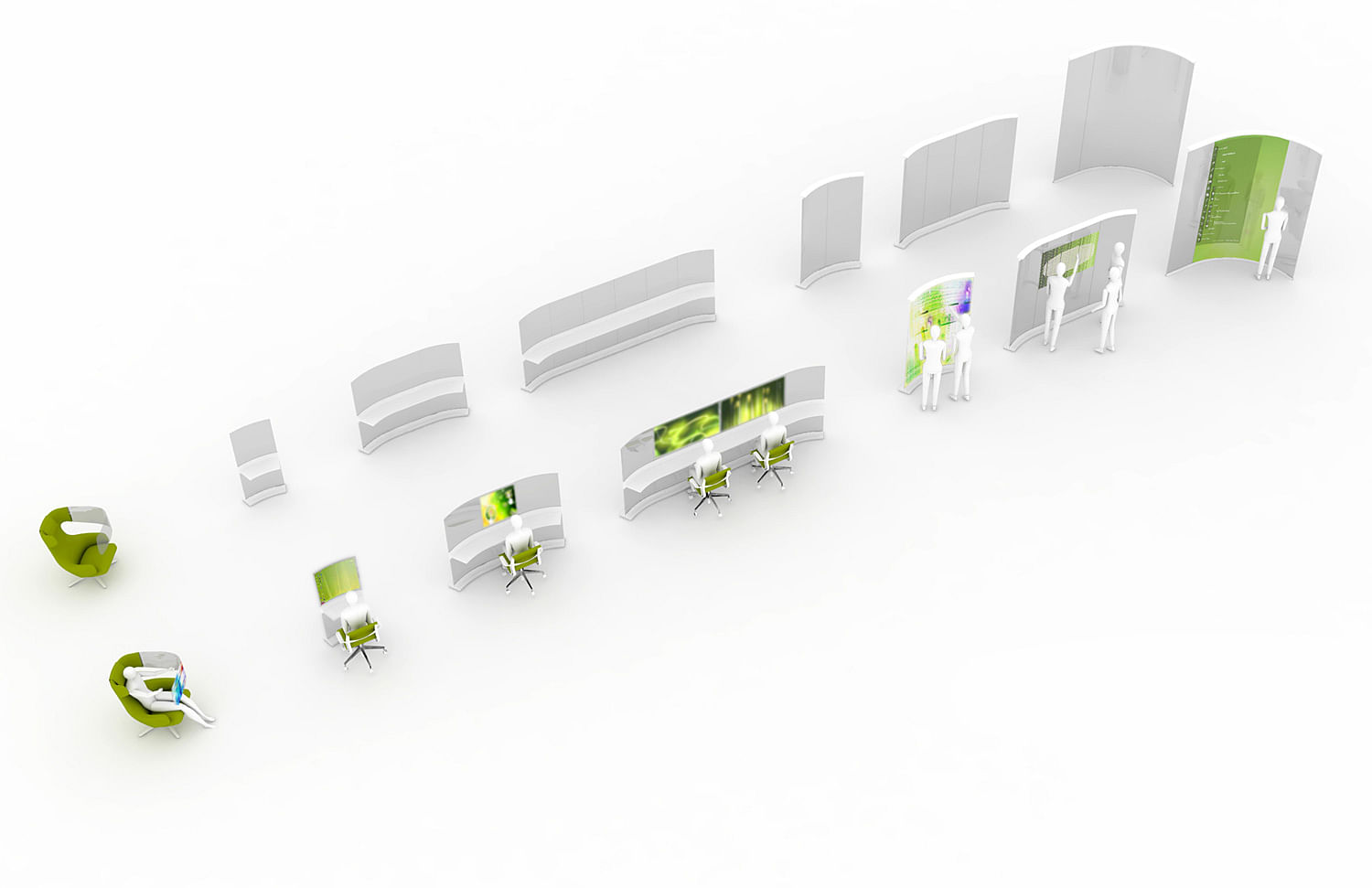
"Our vision for the office in 2020, CoLab, continues in that line and allows for workers to work at any location throughout the office and collaborate with co-workers in any imaginable configuration. We envision the future workspace as a gathering place for network/meta-organizations, focusing on collaboration and interaction versus classic concentrated work and formal meetings. The spatial structure addresses the need for flexibility and variety, with fluid and flexible partitions creating a wide range of different spatial types for different functions. The spatial structure is not just a partition, but becomes the cornerstone of the new CoLAB office."
CoLAB

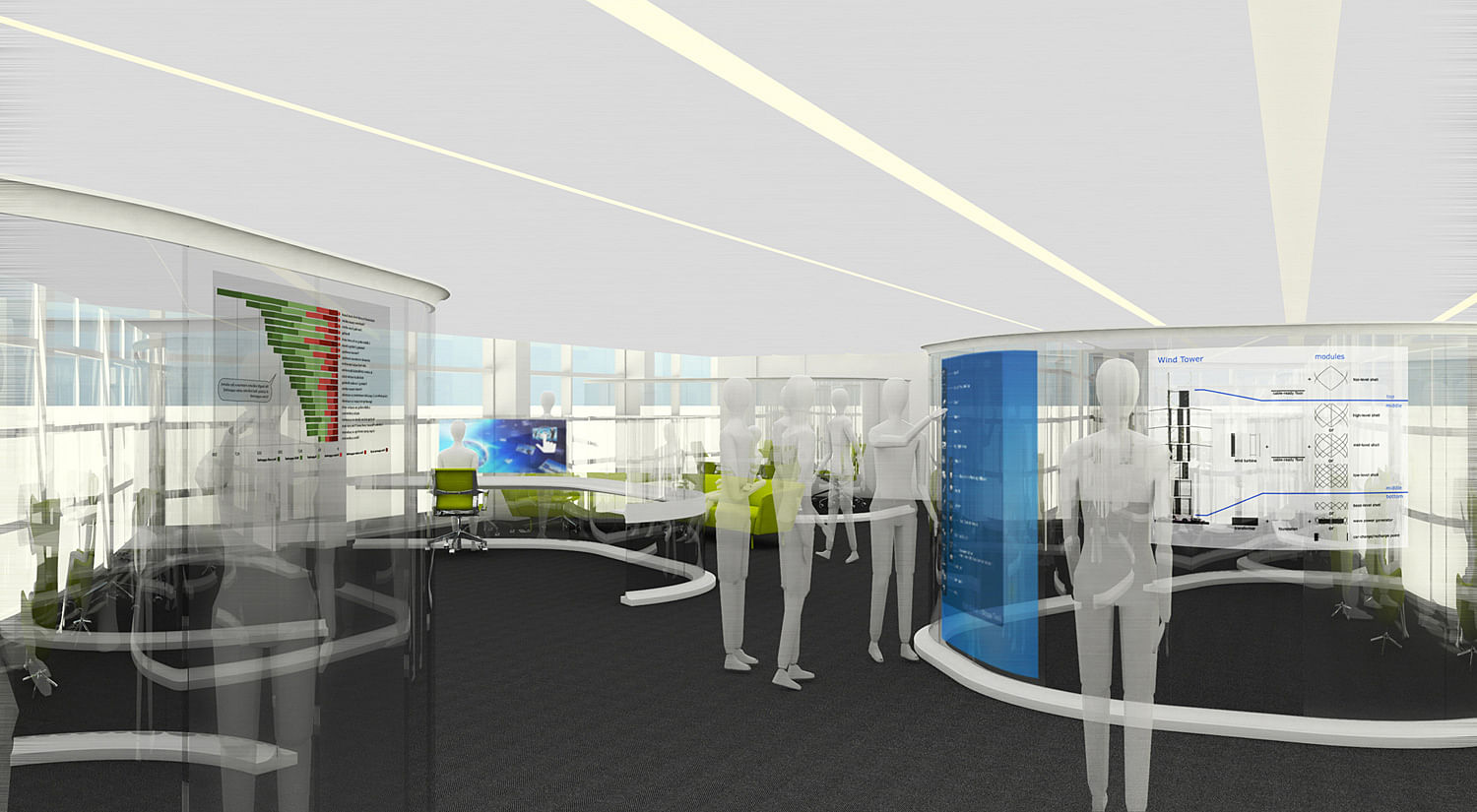
"Every surface becomes a display, with integrated interface technology. Space partitioning is based on functionality and typology of use, instead of internal hierarchy or departmental structure. The future workday will include much more variety in different activities, facilitated in both task-specific spaces and multifunctional/flexible space."

HONORABLE MENTION (3rd Place): NEXUS: The locomotion of business
Design lead: Sara Willhoite (University of Cincinnati / SAID)
Team: Angie Tjisnoyo, Matthew Ford, Mina Lee

Project Description:

"In the future, there will be an increase of mobile workers, making it essential to harness the time spent traveling to service productivity. In an ever-growing environmentally conscious society, more workers are taking public transportation. Yet, most cities currently lack efficient transportation. The United States is making an effort to connect major cities by high-speed railways."
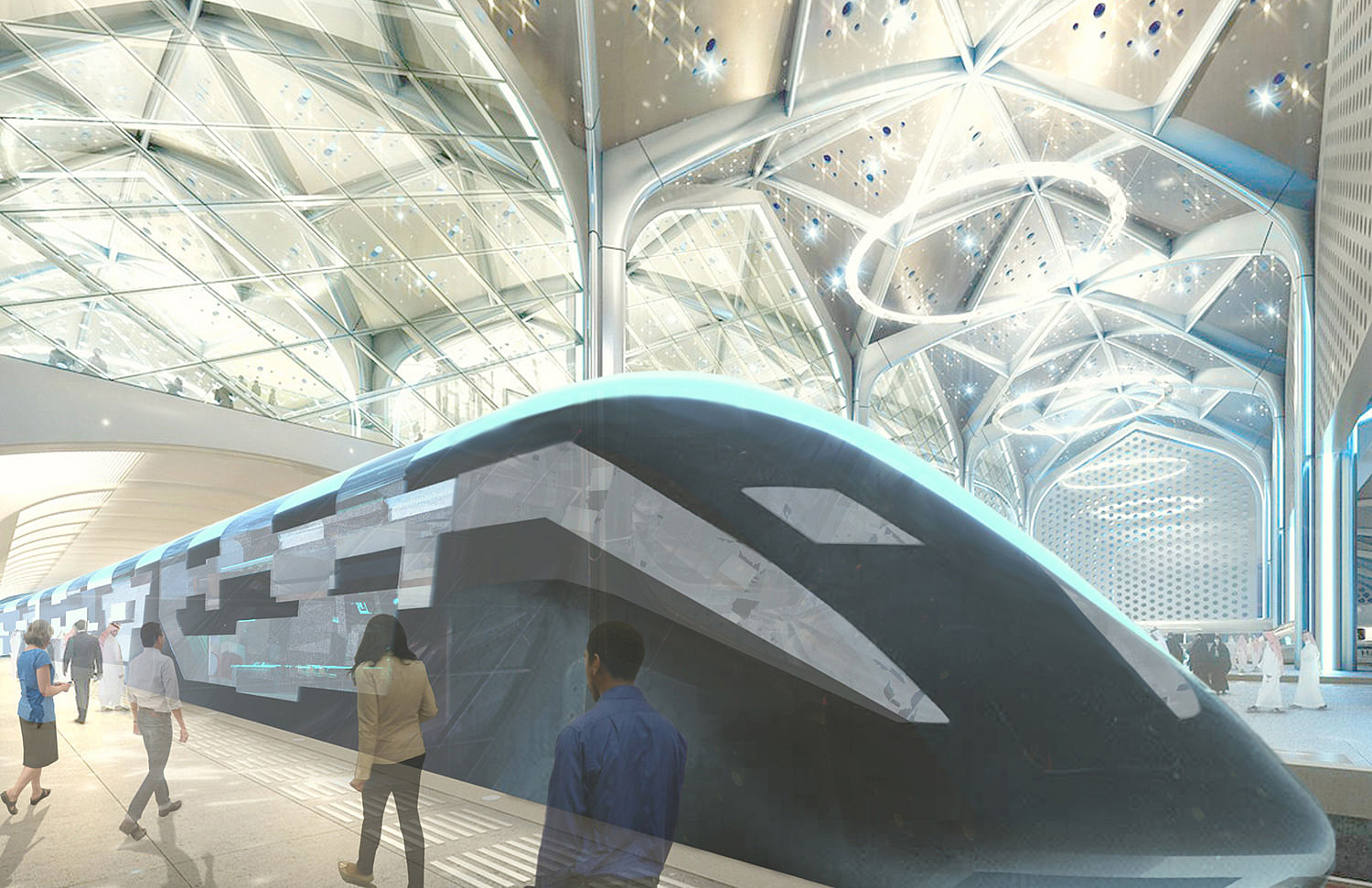
Honorable mention (third place): NEXUS: The locomotion of business by Sara Willhoite, Angie Tjisnoyo, Matthew Ford, Mina Lee

"These trains will travel at top speeds of 300 mph and is projected to hit major cities by 2015. High-speed rail will reduce congestion significantly and provide high-capacity, fast transportation. By creating unique spaces on public trains, travel time will be more productive. Nexus provides the various environments people prefer to work and lets them control the conditions in which they work."
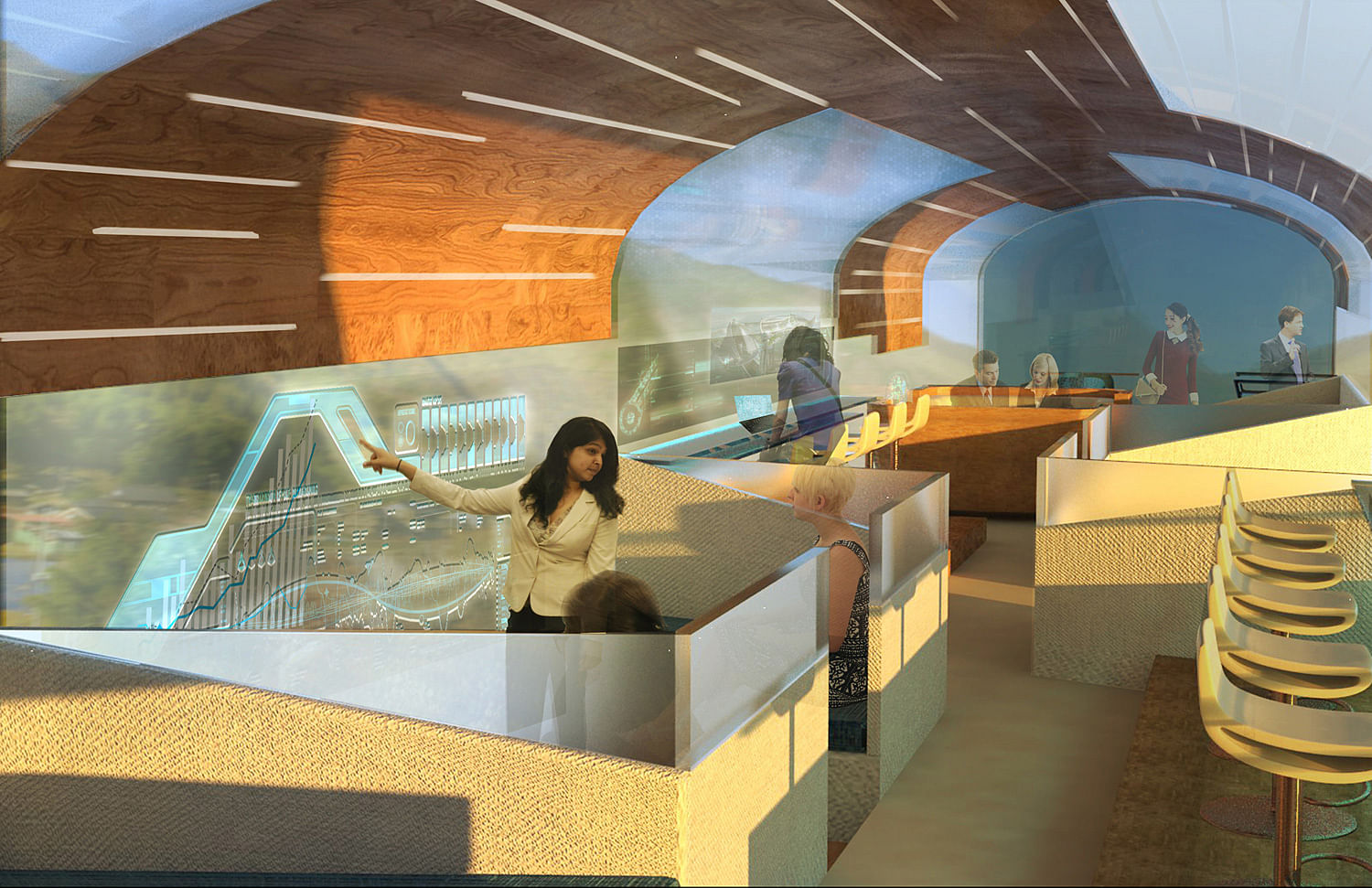
NEXUS: The locomotion of business

"The variety of spaces on this train allows for both quick commuter trips, with touch down kiosks, as well as long cross-country trips, with comfortable long-term seating options. The spaces inside the unit reflect the independent and individual workers of the future."
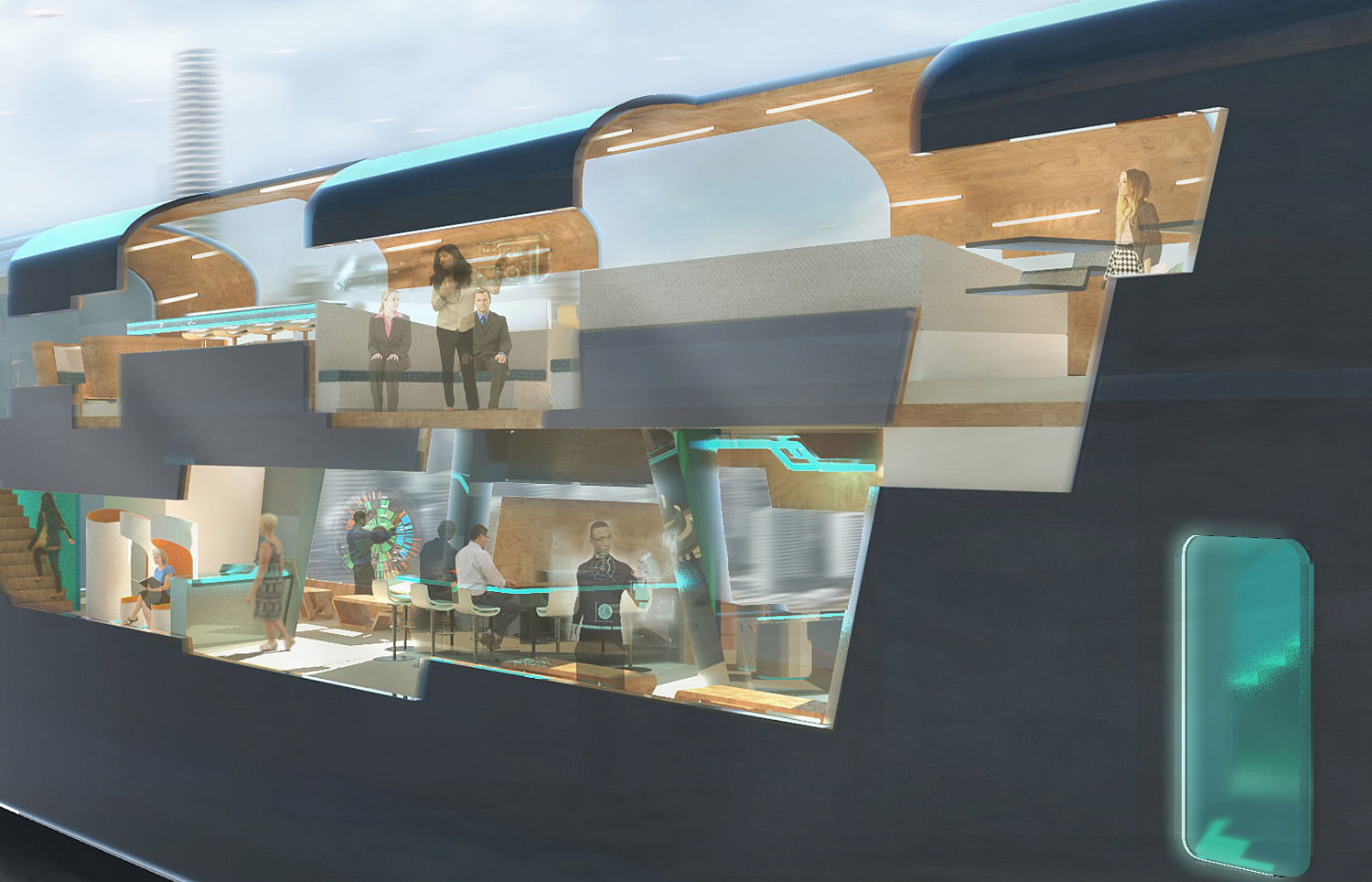
NEXUS: The locomotion of business

"Since mobile workers are on the rise, Nexus offers the option to work and travel through providing group, individual, private, and public spaces. Introverts may work well in the closed off Cega chair or in small groups in the Entente. Extroverts will thrive in the café and presentation lounge areas. Nexus is designed for every user’s needs."

All images courtesy of Metropolis.

For a more in-depth look into the competition, check out this recent article from Metropolis.

Related

workplace of the future ● work ● wireless ● winners ● office ● metropolis ● cloud technology

Share

  • Follow

    0 Comments

  • Comment as :

Winners of the Workplace of the Future Competition

Sign up for Bustler's Email Newsletters

Next page » Loading

Winners of the Workplace of the Future Competition

By Bustler Editors|

Wednesday, Nov 20, 2013

Share

Winner (first place): Vertical Flux: The Office Tower as Fluctuating Atmospheres by Joseph Filippelli.

Related

workplace of the future ● work ● wireless ● winners ● office ● metropolis ● cloud technology

The results are in for the Workplace of the Future Design Competition, presented by Metropolis and Business Interiors by Staples. The design competition questions the blurred definition of the workplace and the present-day possibility that work can be done just about anywhere now, with wireless and cloud technology readily available. With this in mind, entrants were challenged to design an ideal workspace fit for the mobile work environment.

The jury, which featured Tom Krizmanic — a principal at STUDIOS Architecture — and other esteemed members in leading corporations, selected three winning projects:

  • First place: Vertical Flux: The Office Tower as Fluctuating Atmospheres by Joseph Filippelli
  • Runner-up (Second place): CoLAB by Eckhart, team: Teun van den Dries, Frank van Haalen, Britt Brijder, Sander Mulders, Pauline Quast
  • Honorable mention (Third place): NEXUS: The locomotion of business by Sara Willhoite, Angie Tjisnoyo, Matthew Ford, Mina Lee

Check 'em out right below.

Winners' info, provided by Metropolis:

WINNER (1st Place): Vertical Flux: The Office Tower as Fluctuating Atmospheres
Designer: Joseph Filippelli (freelancer)

Project Description:

"Technological advancements in the late twentieth century gave rise to visions of a post office future, where the business of work could be carried out anywhere. Yet today, more than ever, spaces of collective work remain vital to maintaining a healthy balance of living and working. Instead of making the office redundant, technology is allowing for greater flexibility for places of communication and collaborative teamwork."

Vertical Flux: The Office Tower as Fluctuating Atmospheres

"This proposal breaks away from an organizational model which has remained relatively unchanged for almost a century and re-imagines the office tower as a fluctuating gradient of vertically distributed atmospheres. By rejecting the typical homogeneous interior environment, occupants are free to move vertically through a variety of comfort zones."

Vertical Flux: The Office Tower as Fluctuating Atmospheres

"A new approach to spatial organization challenges the paradigm of static, indoor environments and speculates upon the concept of thermal comfort as something malleable by employing relevant technologies combined with the natural properties of temperature and light."

Vertical Flux: The Office Tower as Fluctuating Atmospheres

"A new approach to spatial organization challenges the paradigm of static, indoor environments and speculates upon the concept of thermal comfort as something malleable by employing relevant technologies combined with the natural properties of temperature and light."

Vertical Flux: The Office Tower as Fluctuating Atmospheres

RUNNER-UP (2nd Place): CoLAB
Design lead: Teun van den Dries (Eckhart)
Team: Frank van Haalen, Britt Brijder, Sander Mulders, Pauline Quast

Project Description:

"The digital development in the work environment shows two clear changes in office space. The first is the reduction of storage space. In 1985 there was no digital storage, since people worked on typewriters. Nowadays filing cabinets have been replaced by server rooms and storage has moved to the Cloud."

Runner-up (second place): CoLAB by Eckhart, team: Teun van den Dries, Frank van Haalen, Britt Brijder, Sander Mulders, Pauline Quast

"Second is the reduction of workspace per worker. The large desktop computers have been replaced by slim laptops and tablets. These are easy to take with you, making it possible to work everywhere you are, always able to access your documents, decreasing the need for a physical workplace for every worker. This flexibility increases the ability to quickly switch location and collaborate in different teams day-by-day."

CoLAB

"Our vision for the office in 2020, CoLab, continues in that line and allows for workers to work at any location throughout the office and collaborate with co-workers in any imaginable configuration. We envision the future workspace as a gathering place for network/meta-organizations, focusing on collaboration and interaction versus classic concentrated work and formal meetings. The spatial structure addresses the need for flexibility and variety, with fluid and flexible partitions creating a wide range of different spatial types for different functions. The spatial structure is not just a partition, but becomes the cornerstone of the new CoLAB office."

CoLAB

"Every surface becomes a display, with integrated interface technology. Space partitioning is based on functionality and typology of use, instead of internal hierarchy or departmental structure. The future workday will include much more variety in different activities, facilitated in both task-specific spaces and multifunctional/flexible space."

HONORABLE MENTION (3rd Place): NEXUS: The locomotion of business
Design lead: Sara Willhoite (University of Cincinnati / SAID)
Team: Angie Tjisnoyo, Matthew Ford, Mina Lee

Project Description:

"In the future, there will be an increase of mobile workers, making it essential to harness the time spent traveling to service productivity. In an ever-growing environmentally conscious society, more workers are taking public transportation. Yet, most cities currently lack efficient transportation. The United States is making an effort to connect major cities by high-speed railways."

Honorable mention (third place): NEXUS: The locomotion of business by Sara Willhoite, Angie Tjisnoyo, Matthew Ford, Mina Lee

"These trains will travel at top speeds of 300 mph and is projected to hit major cities by 2015. High-speed rail will reduce congestion significantly and provide high-capacity, fast transportation. By creating unique spaces on public trains, travel time will be more productive. Nexus provides the various environments people prefer to work and lets them control the conditions in which they work."

NEXUS: The locomotion of business

"The variety of spaces on this train allows for both quick commuter trips, with touch down kiosks, as well as long cross-country trips, with comfortable long-term seating options. The spaces inside the unit reflect the independent and individual workers of the future."

NEXUS: The locomotion of business

"Since mobile workers are on the rise, Nexus offers the option to work and travel through providing group, individual, private, and public spaces. Introverts may work well in the closed off Cega chair or in small groups in the Entente. Extroverts will thrive in the café and presentation lounge areas. Nexus is designed for every user’s needs."

All images courtesy of Metropolis.

For a more in-depth look into the competition, check out this recent article from Metropolis.

Share

  • Follow

    0 Comments

  • Comment as :

Archinect JobsArchinect Jobs

The Archinect Job Board attracts the world's top architectural design talents.

VIEW ALL JOBS POST A JOB

Job Captain / Project Manager

Breland – Harper

Job Captain / Project Manager

Los Angeles, CA, US

Intermediate Architect (Advanced Revit User)

O'Neil Langan Architects

Intermediate Architect (Advanced Revit User)

New York, NY, US

Business Development Manager

WORKac

Business Development Manager

New York, NY, US

Project Designer (3-5 years)

Edmonds + Lee Architects

Project Designer (3-5 years)

San Francisco, CA, US

Project Architect/Job Captain

HLW International LLP

Project Architect/Job Captain

West Palm Beach, FL, US

Design Architect

JLK Architects

Design Architect

Chicago, IL, US

Architectural Job Captain

Christopher Courts Inc.

Architectural Job Captain

Los Angeles, CA, US

Interior Designer, 5+ Years Experience

Cass Calder Smith

Interior Designer, 5+ Years Experience

San Francisco, CA, US

Intermediate Designer - 3+ Years Experience (NY)

Cass Calder Smith

Intermediate Designer - 3+ Years Experience (NY)

New York, NY, US

Project Manager - Civic/Community

DAHLIN ARCHITECTURE | PLANNING | INTERIORS

Project Manager - Civic/Community

Irvine, CA, US

Next page » Loading