• Login / Join
  • About
  • •
  • Contact
  • •
  • Advertising
bustler logo
bustler logo
  • News
  • Competitions
  • Events
  • Bustler is powered by Archinect
  • Sign up for Bustler's Email Newsletters

  • Follow these Bustler feeds:

  • Search

    Search in

  • Submit

    What are you submitting?

    News Pitch
    Competition
    Event
  • Login / Join
  • News|Competitions|Events
  • Search
    | Submit
    | Follow
  • Search in

    What are you submitting?

    News Pitch
    Competition
    Event

    Follow these Bustler feeds:

  • About|Contact|Advertising
  • Login / Join
Tagged: xml

XML's Arts Pavilion proposal for the West Kowloon Cultural District

By Bustler Editors|

Monday, Feb 3, 2014
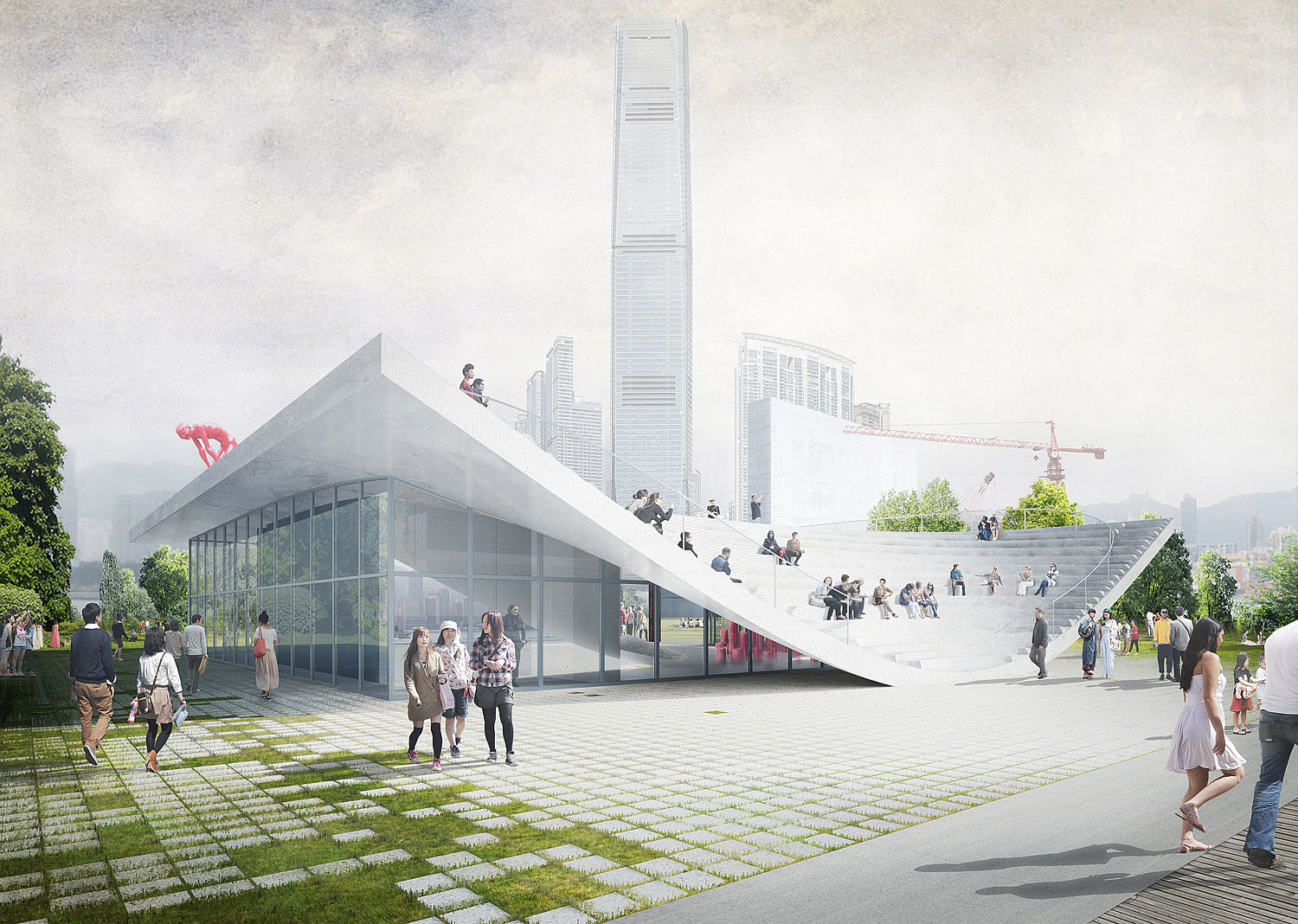
A² - WKCD Arts Pavilion proposal by XML.

In light of the recent conclusion of the Arts Pavilion Design Competition for Hong Kong's developing West Kowloon Cultural District, Dutch design practice XML shared their competition entry "A²" with us.

Although they were met with stiff competition and didn't place, their proposal is still worth knowing about.

Keep reading to see how XML would've designed the pavilion.

Project description:

"For the West Kowloon Cultural District in Hong Kong, XML designed a new Arts Pavilion. By reimagining the classical Miesian pavilion typology of a glass box and roof, the XML proposal sets out to create a pavilion that offers two distinct types of exhibition spaces.

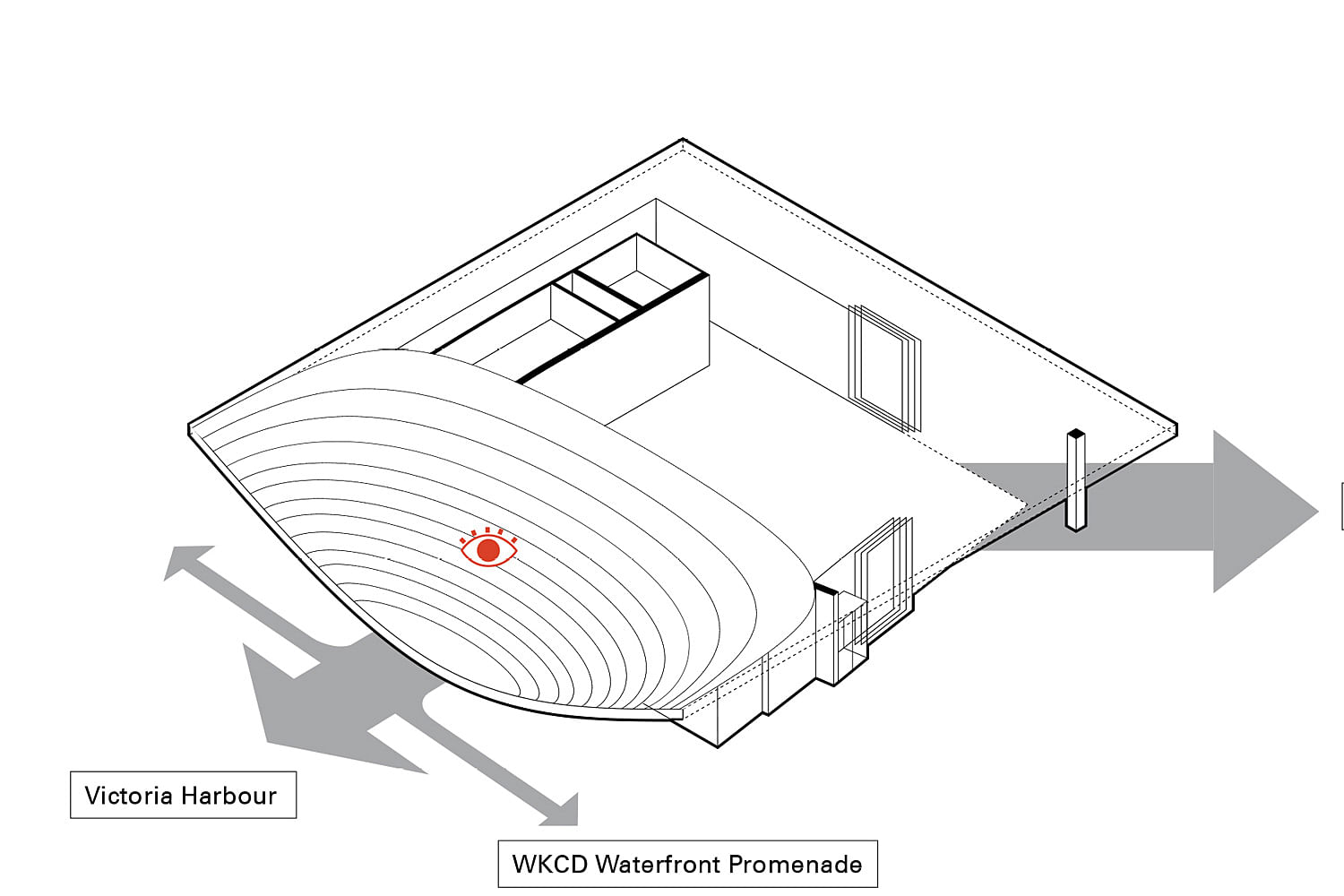
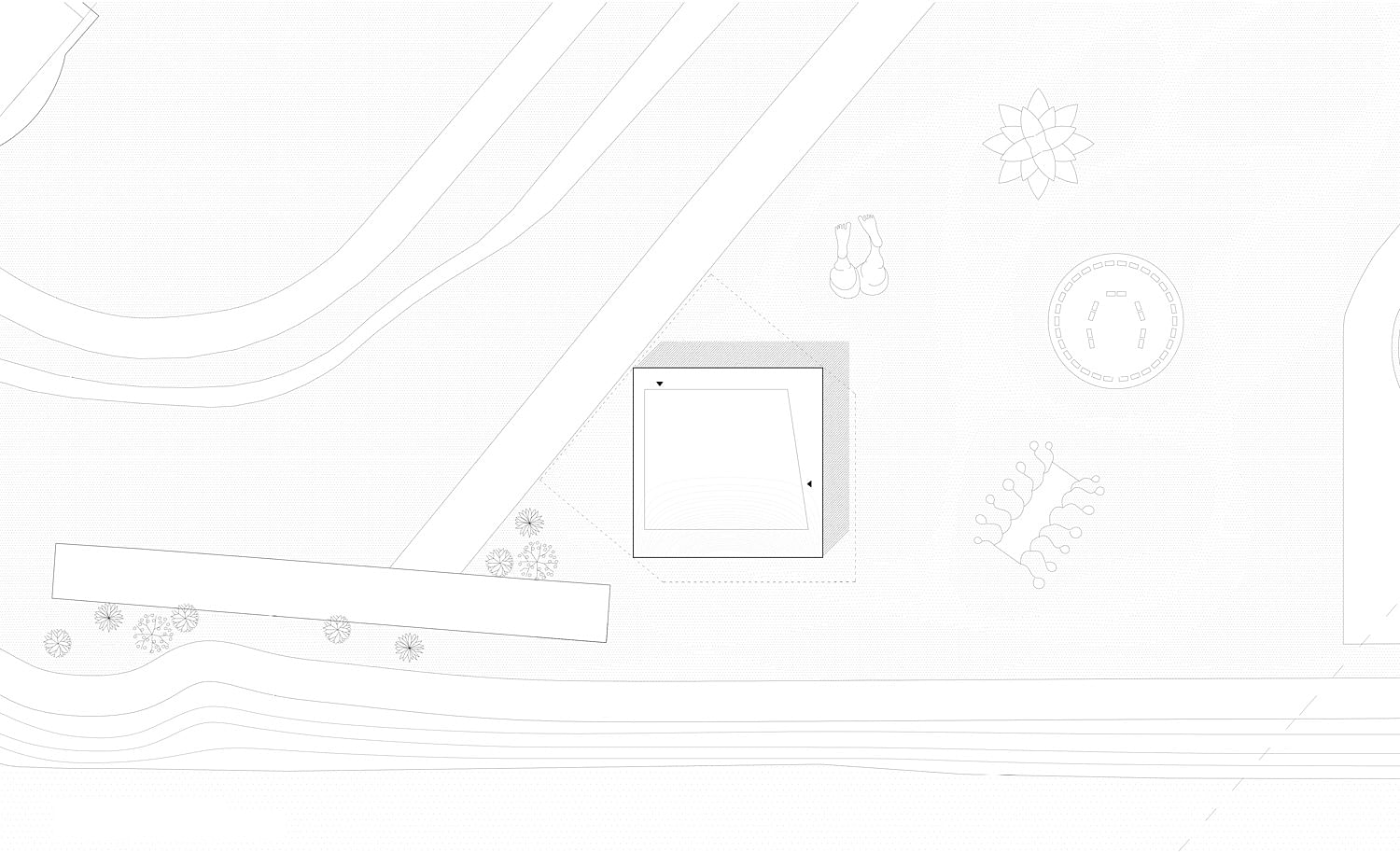
Under a large canopy, a glass-enclosed box offers a 4.5meter high unobstructed space, that can be adapted to an infinite amount of layouts for the exhibition of painting, sculpture, video, photography and other media. The northeast corner of this glass façade can slide open, allowing the exhibition area to be extended outdoors towards the future M+ Museum."
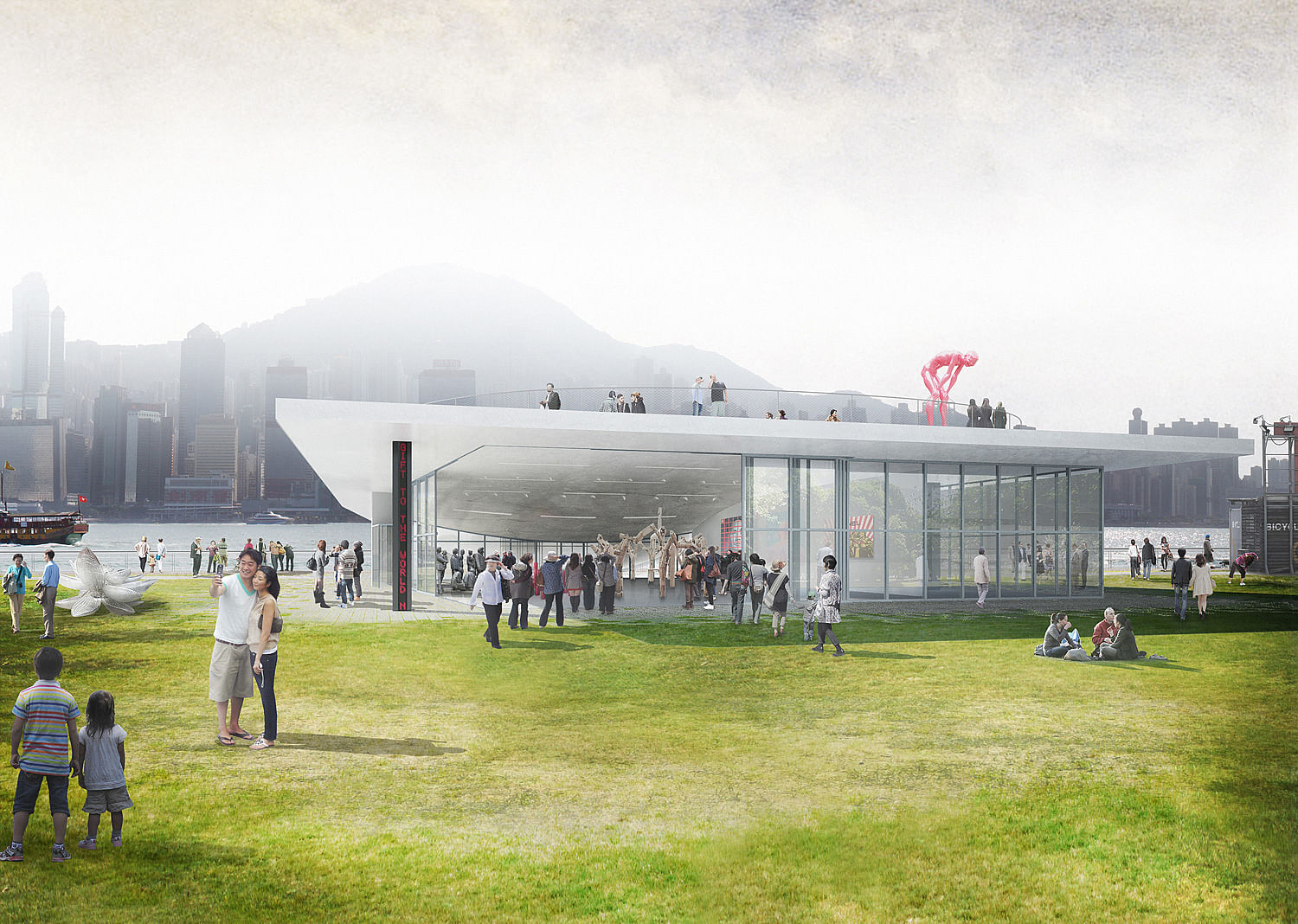
View towards Victoria Harbour.

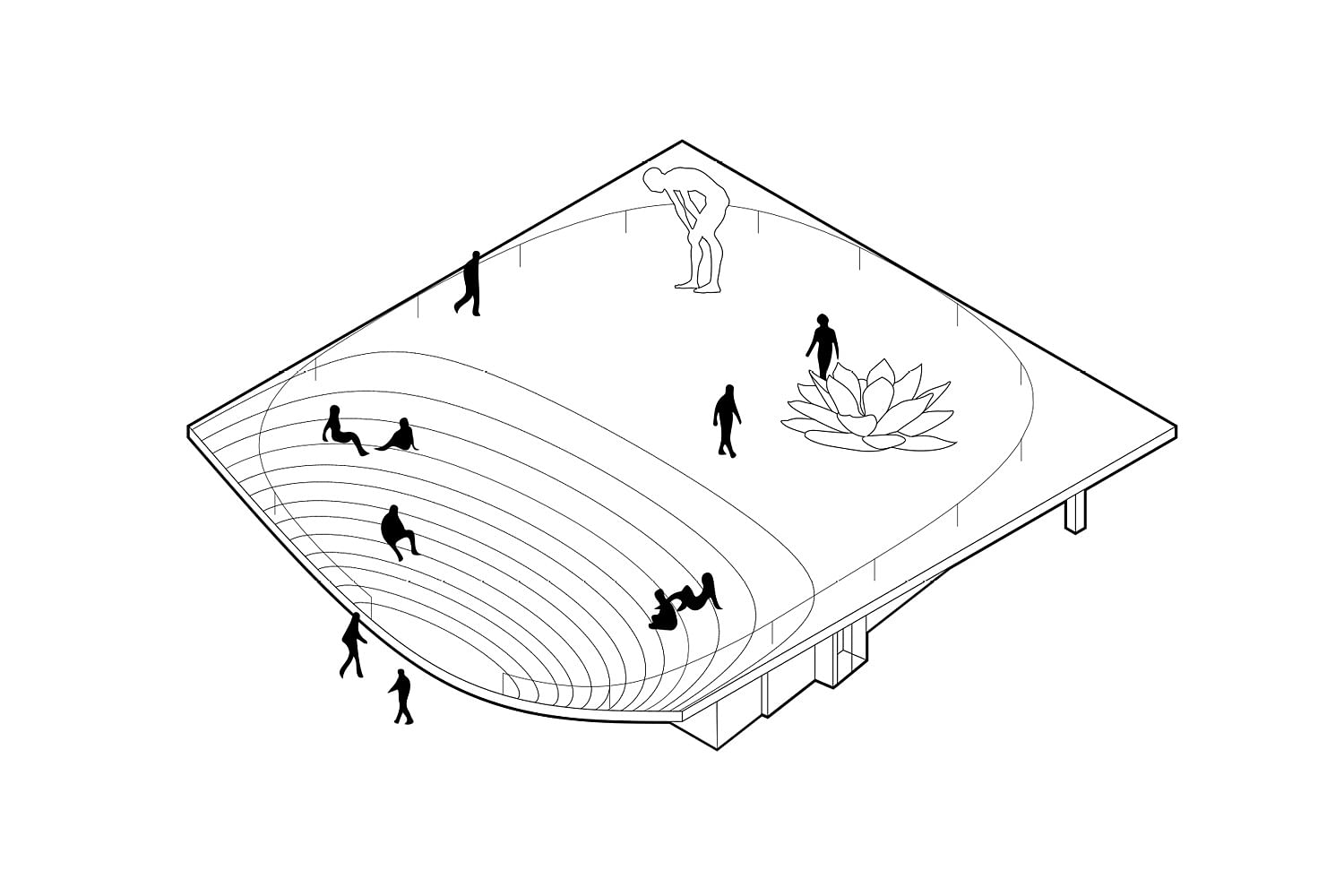
"On the waterfront, the canopy slopes downward and becomes a public ‘art square’ as a second exhibition space. This square connects to the water as a welcome differentiation of the waterfront promenade. From here, the steps onto the roof create a small amphitheatre offering views to Central and Victoria Harbour, as well as an elevated platform for exhibiting outdoor art. In this way, the pavilion can accommodate art in all its disciplines: whereas the inside space lends itself primarily to the visual arts, the outside space can also be a platform for time-based arts such as performance, theatre, music and cinema."
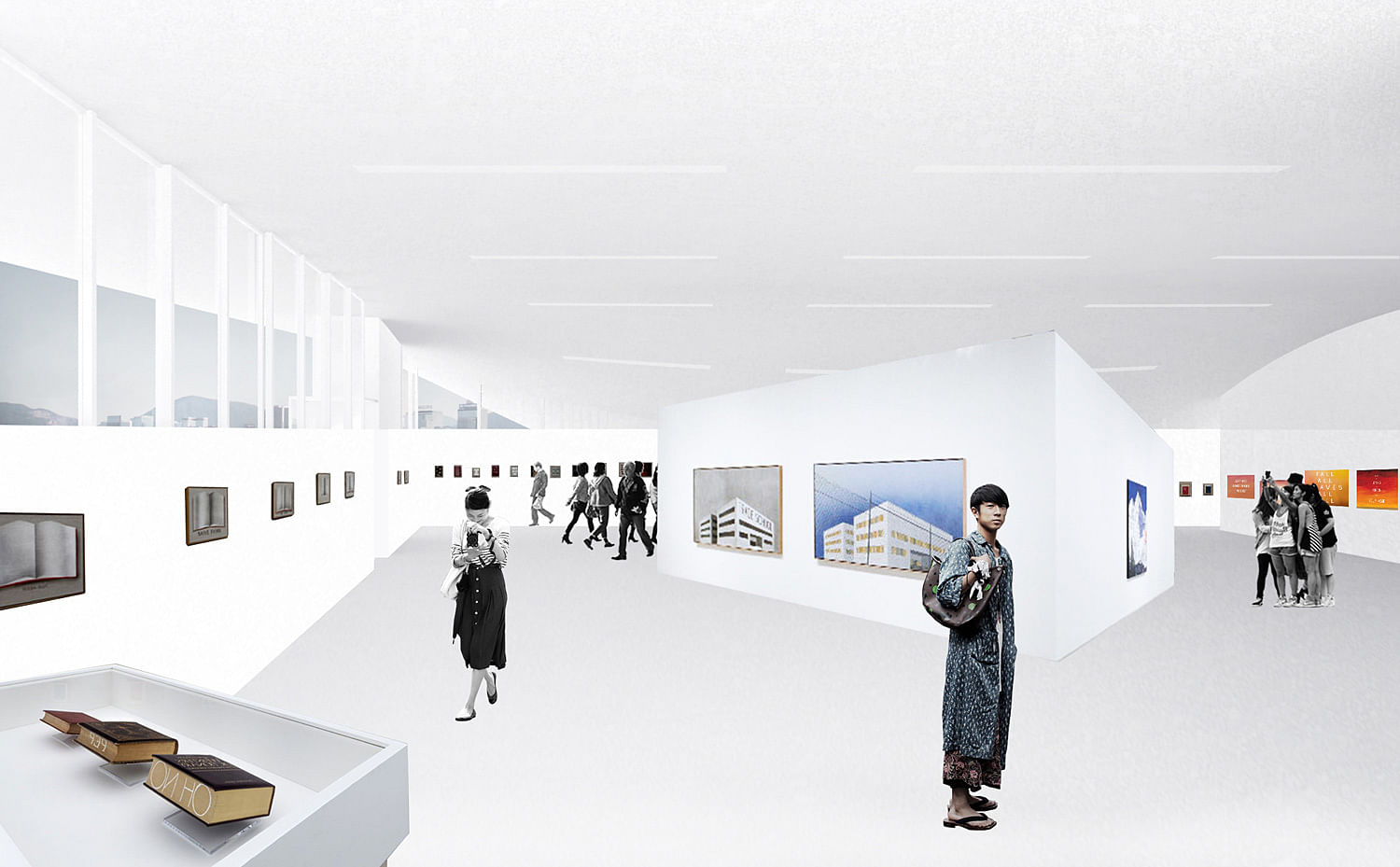
Temporary exhibition

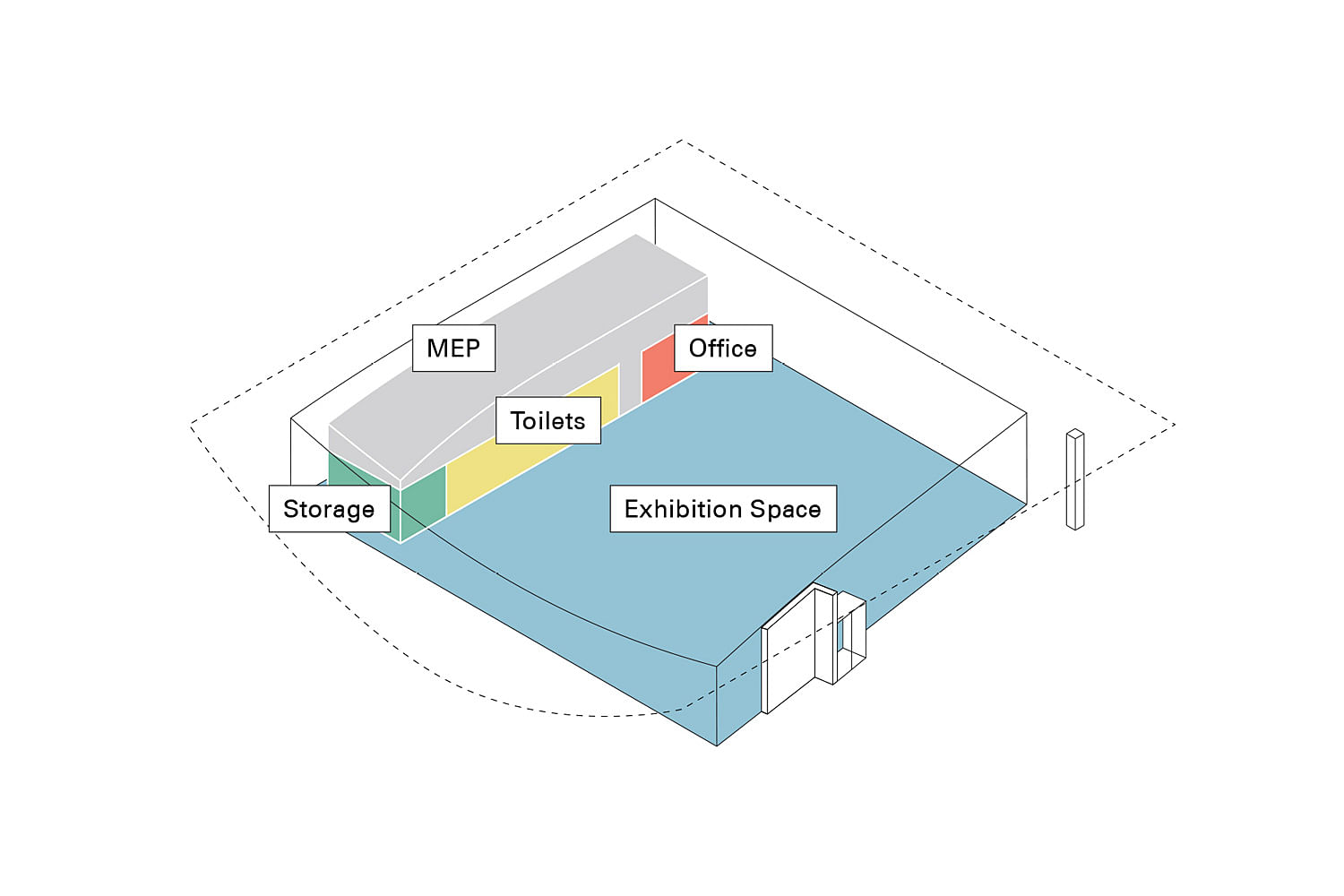
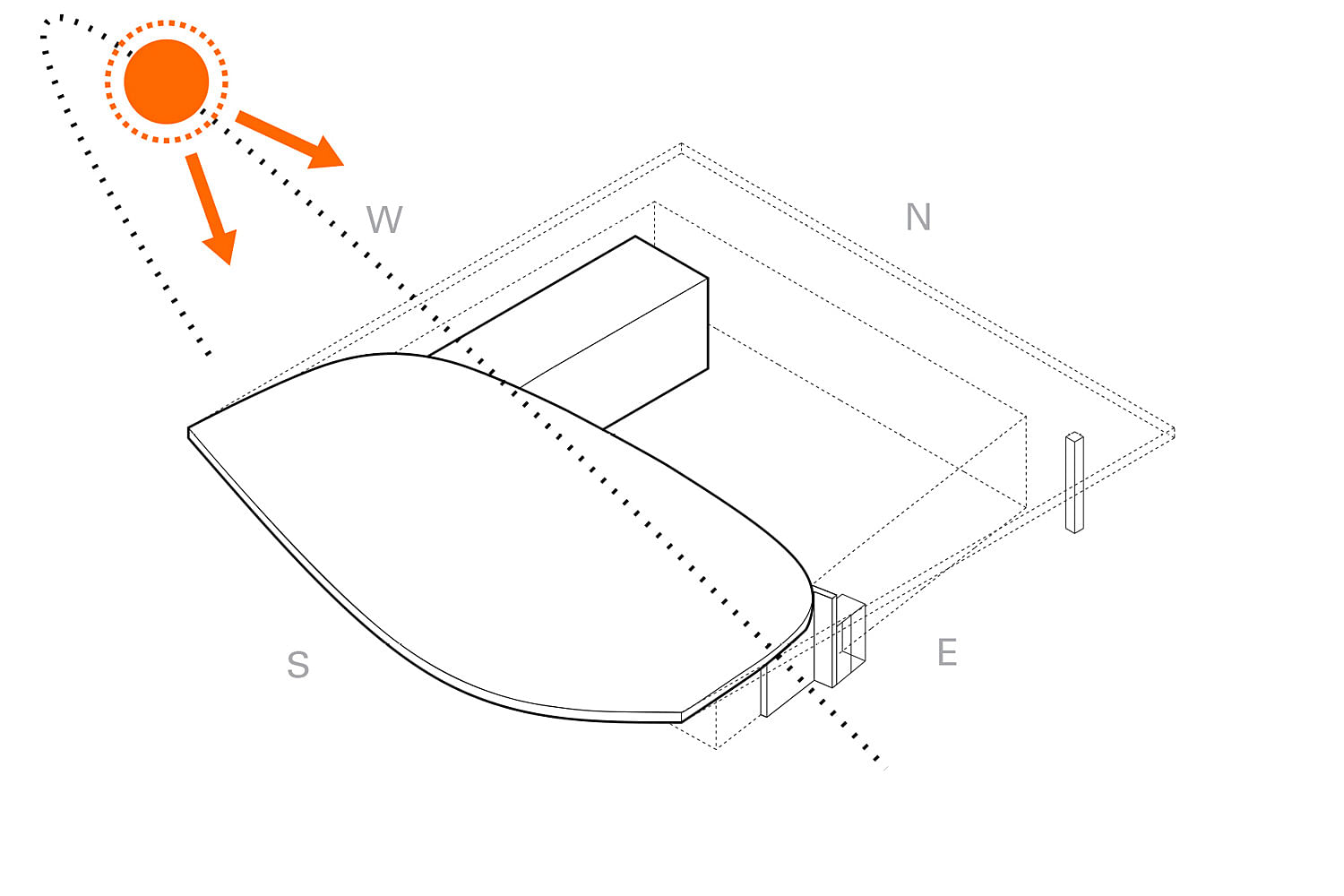
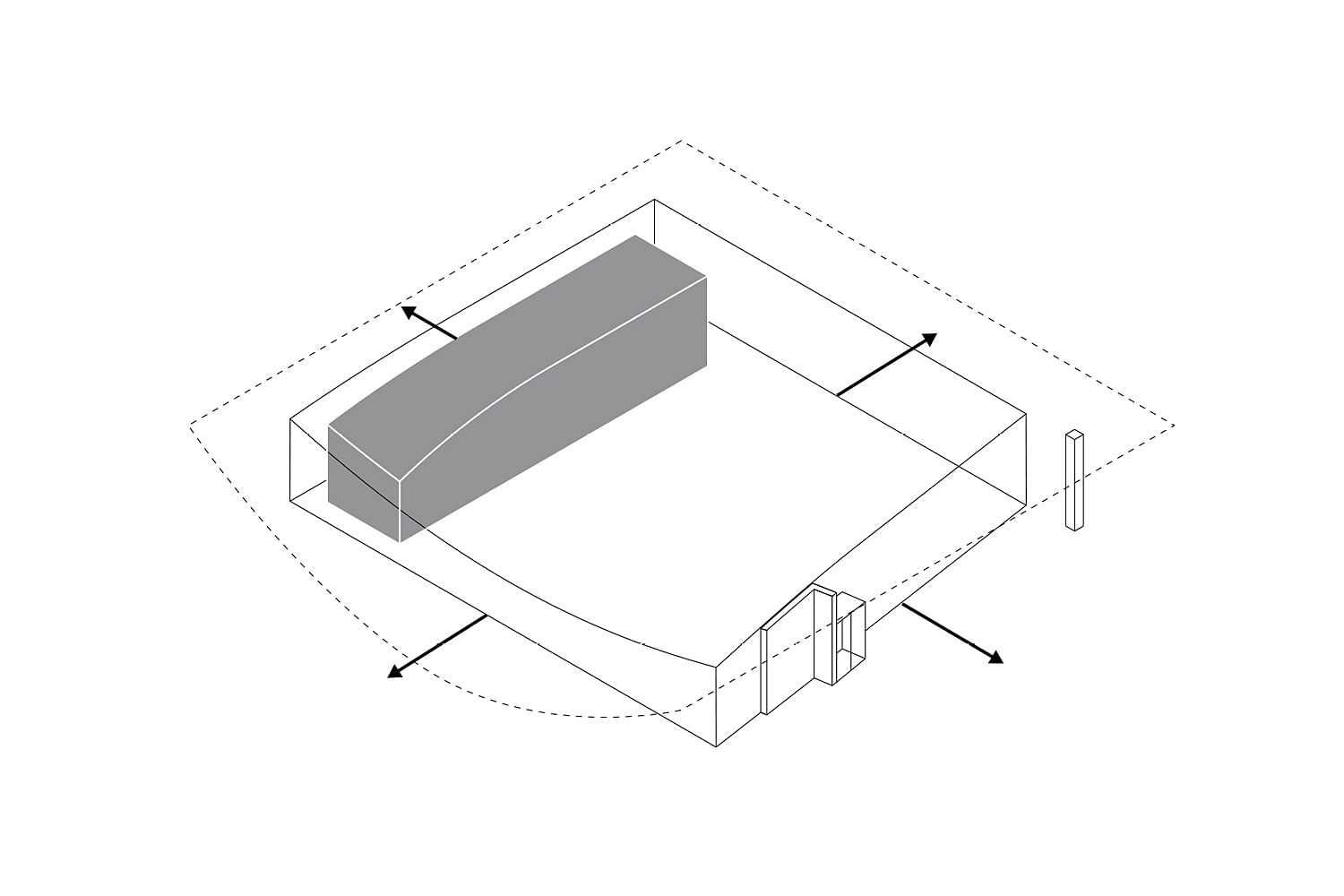
"The required secondary program of office, storage and toilets is organized in a long rectangular core that is located towards the west side of the building. This volume along the west façade and the slope of the roof on the south side block direct sunlight from the gallery, creating good conditions for exhibiting art as well as significantly reducing the need for cooling. In addition to the glass walls, a grid of lighting boxes for ambient light is integrated in the roof with adjacent tracks for LED spots, allowing for maximum flexibility in exhibition lighting plans."
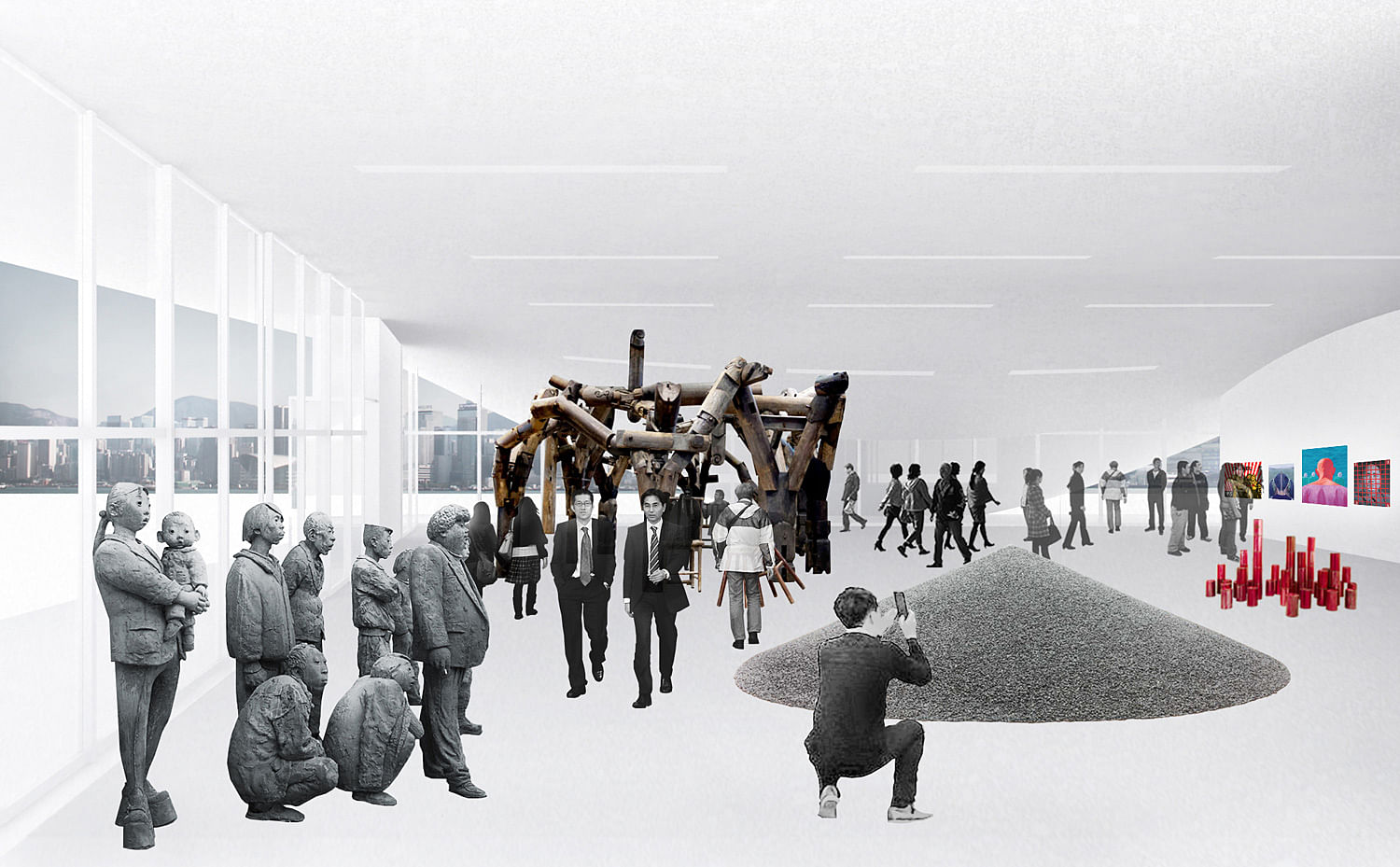
Permanent collection

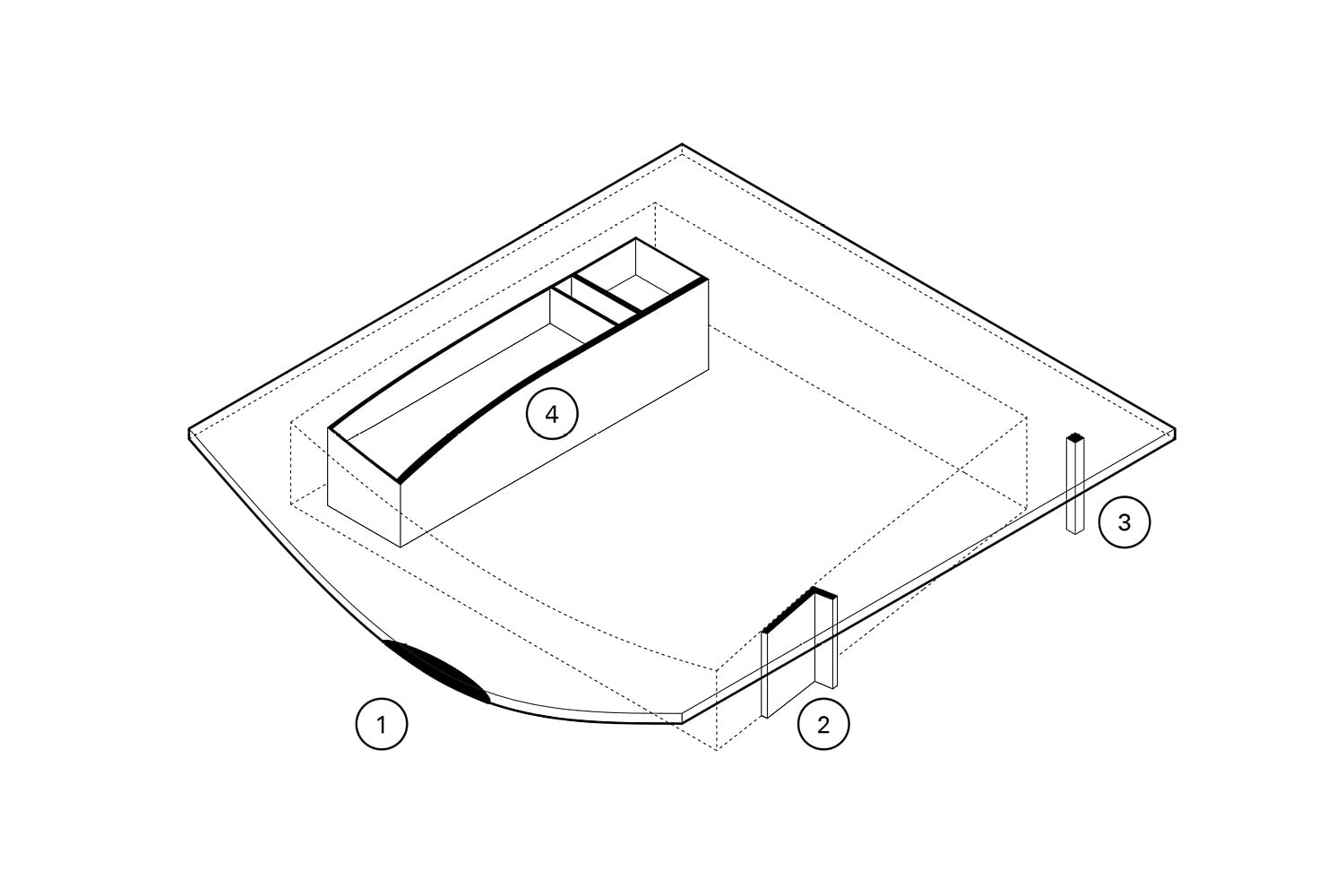
"The large roof of the pavilion has been designed as an in-situ reinforced concrete slab supported by a number of irregularly placed components for structural support: the long wall on the east side of the space that is part of the consolidated box of secondary program, an L-shaped structural element near the main entrance and a single large column that includes a Jenny Holzer-inspired LED band of lights, announcing the pavilions’ program. Accordingly, through a minimal and mostly hidden structure, the design offers an unobstructed space open for experimentation and production. The floor and ceiling finishings have deliberately been proposed as  industrial inexpensive materials so as to allow curators to drill, paint or nail at will."
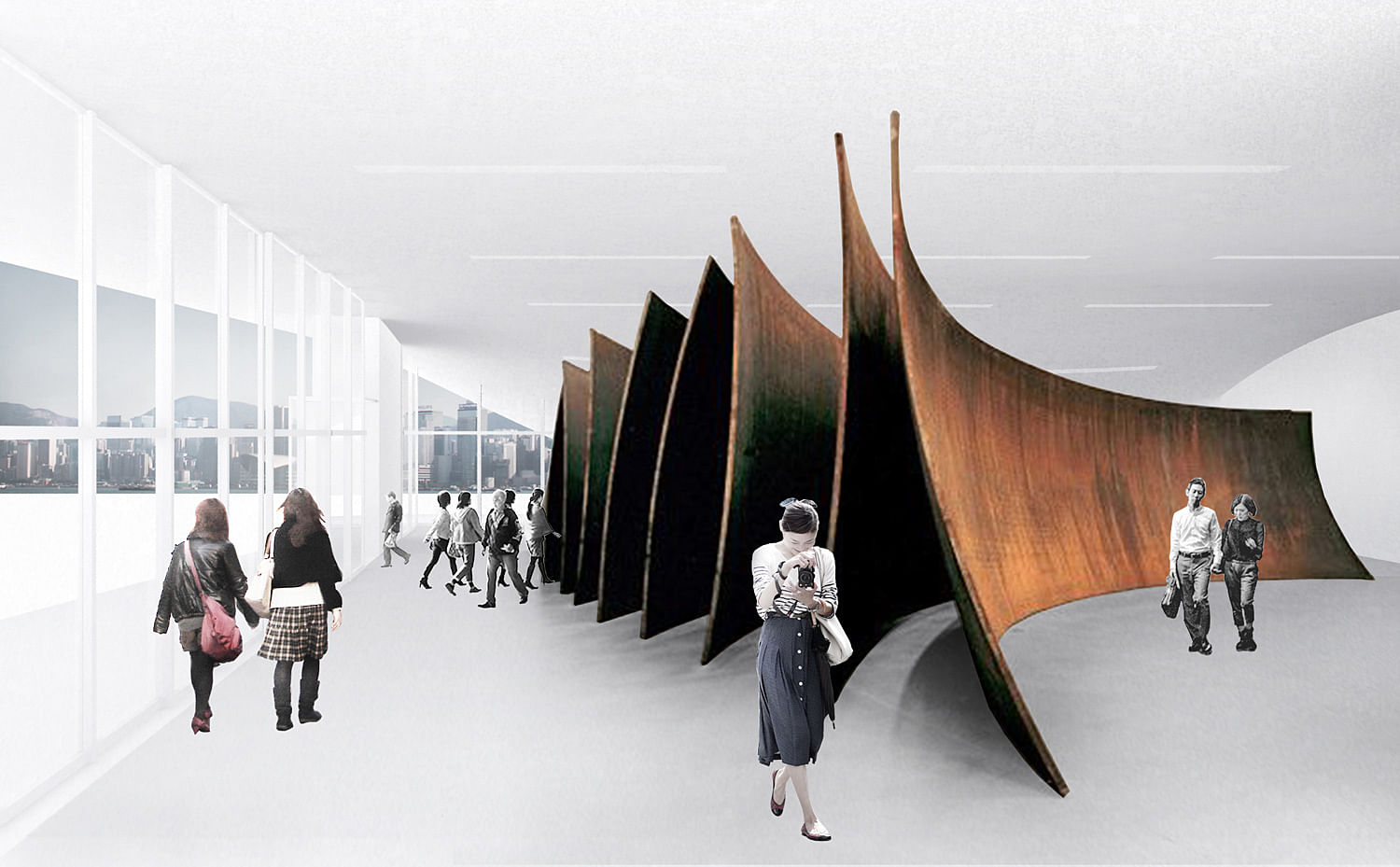
Single artist

"The potent yet simple shape together with the wide array of possible configurations for exhibiting art will give the pavilion prominence in the large new development of  the WKCD. Here, the architecture of the pavilion serves art by adding public space to Hong Kong’s urban life and by bringing together different audiences. Hence, the pavilion – A² – is not only a place for experiencing art, but also a place that offers a new perspective to contemplate and reflect the city itself."
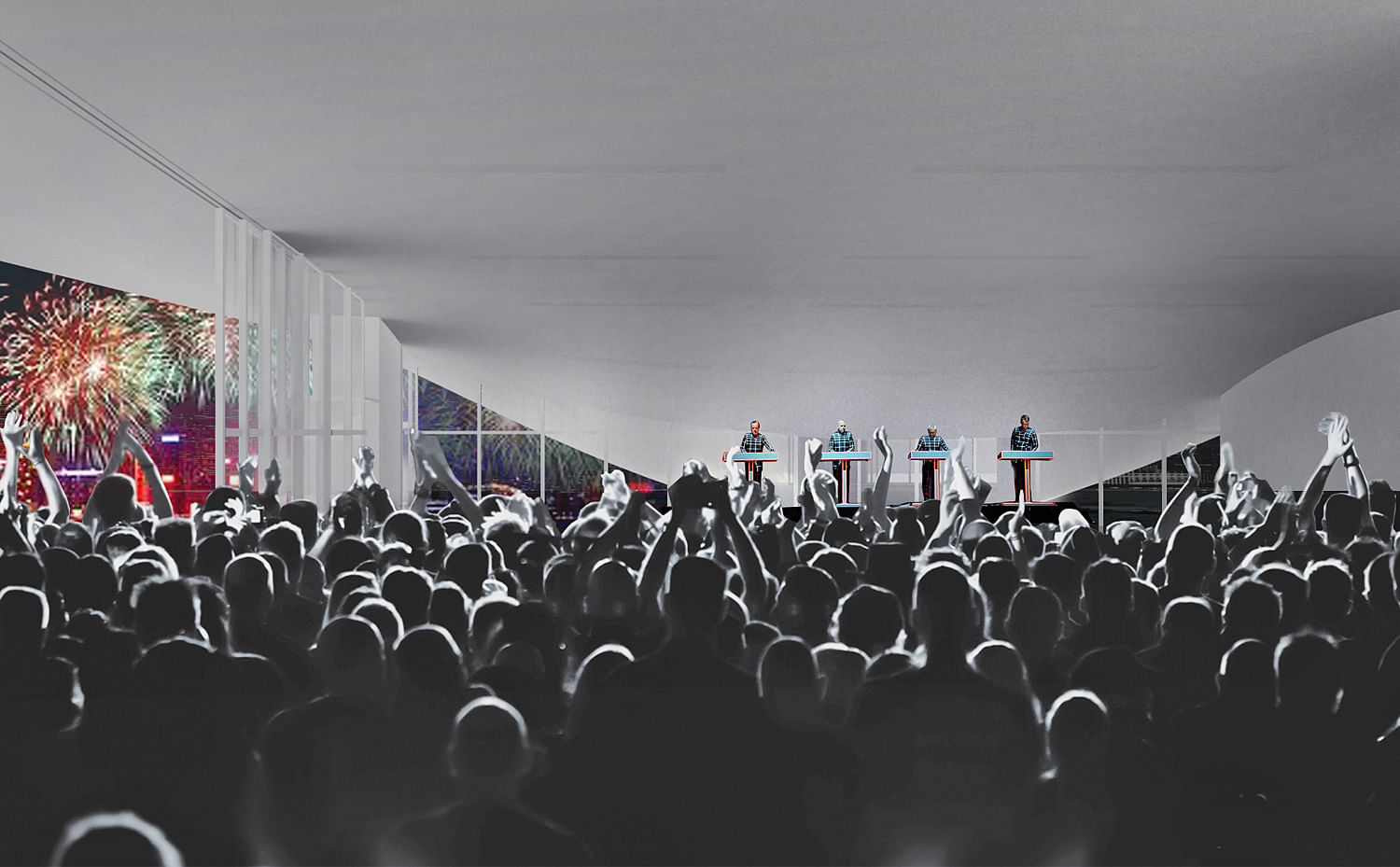
Events

Project data:

A²

Client: The West Kowloon Cultural District Authority (WKCDA) 
Location: Hong Kong, China 
Program: Arts pavilion 
Size: 470 m2 GFA 
Collaborator: Stefan Al 
Advisers: AGC Design Ltd (local architect); Arup Hong Kong (structure, installations, sustainability); Sweett Group (cost analysis) 
Status: Competition

All images courtesy of XML.

For more Bustler articles about WKCD, click here.

Browse the thumbnails below to see more images.
Related

xml ● wkcd ● west kowloon cultural district ● pavilion ● hong kong ● cultural center ● china ● asia ● arts pavilion

Share

  • Follow

    0 Comments

  • Comment as :

XML's Arts Pavilion proposal for the West Kowloon Cultural District

Serlachius Art Museum Gösta Proposal by XML

XML Wins 1st Prize in Europan Competition Tallinn and Honorable Mentions in Madrid and Munich

Sign up for Bustler's Email Newsletters

Next page » Loading

XML's Arts Pavilion proposal for the West Kowloon Cultural District

By Bustler Editors|

Monday, Feb 3, 2014

Share

A² - WKCD Arts Pavilion proposal by XML.

Related

xml ● wkcd ● west kowloon cultural district ● pavilion ● hong kong ● cultural center ● china ● asia ● arts pavilion

In light of the recent conclusion of the Arts Pavilion Design Competition for Hong Kong's developing West Kowloon Cultural District, Dutch design practice XML shared their competition entry "A²" with us.

Although they were met with stiff competition and didn't place, their proposal is still worth knowing about.

Keep reading to see how XML would've designed the pavilion.

Project description:

"For the West Kowloon Cultural District in Hong Kong, XML designed a new Arts Pavilion. By reimagining the classical Miesian pavilion typology of a glass box and roof, the XML proposal sets out to create a pavilion that offers two distinct types of exhibition spaces.

Under a large canopy, a glass-enclosed box offers a 4.5meter high unobstructed space, that can be adapted to an infinite amount of layouts for the exhibition of painting, sculpture, video, photography and other media. The northeast corner of this glass façade can slide open, allowing the exhibition area to be extended outdoors towards the future M+ Museum."

View towards Victoria Harbour.

"On the waterfront, the canopy slopes downward and becomes a public ‘art square’ as a second exhibition space. This square connects to the water as a welcome differentiation of the waterfront promenade. From here, the steps onto the roof create a small amphitheatre offering views to Central and Victoria Harbour, as well as an elevated platform for exhibiting outdoor art. In this way, the pavilion can accommodate art in all its disciplines: whereas the inside space lends itself primarily to the visual arts, the outside space can also be a platform for time-based arts such as performance, theatre, music and cinema."

Temporary exhibition

"The required secondary program of office, storage and toilets is organized in a long rectangular core that is located towards the west side of the building. This volume along the west façade and the slope of the roof on the south side block direct sunlight from the gallery, creating good conditions for exhibiting art as well as significantly reducing the need for cooling. In addition to the glass walls, a grid of lighting boxes for ambient light is integrated in the roof with adjacent tracks for LED spots, allowing for maximum flexibility in exhibition lighting plans."

Permanent collection

"The large roof of the pavilion has been designed as an in-situ reinforced concrete slab supported by a number of irregularly placed components for structural support: the long wall on the east side of the space that is part of the consolidated box of secondary program, an L-shaped structural element near the main entrance and a single large column that includes a Jenny Holzer-inspired LED band of lights, announcing the pavilions’ program. Accordingly, through a minimal and mostly hidden structure, the design offers an unobstructed space open for experimentation and production. The floor and ceiling finishings have deliberately been proposed as  industrial inexpensive materials so as to allow curators to drill, paint or nail at will."

Single artist

"The potent yet simple shape together with the wide array of possible configurations for exhibiting art will give the pavilion prominence in the large new development of  the WKCD. Here, the architecture of the pavilion serves art by adding public space to Hong Kong’s urban life and by bringing together different audiences. Hence, the pavilion – A² – is not only a place for experiencing art, but also a place that offers a new perspective to contemplate and reflect the city itself."

Events

Project data:

A²

Client: The West Kowloon Cultural District Authority (WKCDA) 
Location: Hong Kong, China 
Program: Arts pavilion 
Size: 470 m2 GFA 
Collaborator: Stefan Al 
Advisers: AGC Design Ltd (local architect); Arup Hong Kong (structure, installations, sustainability); Sweett Group (cost analysis) 
Status: Competition

All images courtesy of XML.

For more Bustler articles about WKCD, click here.

Browse the thumbnails below to see more images.
Share

  • Follow

    0 Comments

  • Comment as :

Archinect JobsArchinect Jobs

The Archinect Job Board attracts the world's top architectural design talents.

VIEW ALL JOBS POST A JOB

Project Designer (3-5 years)

Edmonds + Lee Architects

Project Designer (3-5 years)

San Francisco, CA, US

Registered Architect

Advantage Point Group, Inc.

Registered Architect

Saint Paul, MN, US

Junior Architect

Eric Colbert & Associates

Junior Architect

Washington, DC, US

Designer

HATCH ARCHITECTURE

Designer

Los Angeles, CA, US

Architects with 4-10 Years' Experience

Adamson Associates, Inc.

Architects with 4-10 Years' Experience

Los Angeles, CA, US

Project Architect/Interior Designer

IMC Architecture

Project Architect/Interior Designer

Brooklyn, NY, US

Senior Project Architect

IMC Architecture

Senior Project Architect

Brooklyn, NY, US

Architecture Project Manager

RDH Architecture + Interior Design

Architecture Project Manager

Las Vegas, NV, US

Project Architect

AYON Studio

Project Architect

New York, NY, US

Architectural Designer

jones | haydu

Architectural Designer

San Francisco, CA, US

Next page » Loading