• Login / Join
  • About
  • •
  • Contact
  • •
  • Advertising
bustler logo
bustler logo
  • News
  • Competitions
  • Events
  • Bustler is powered by Archinect
  • Sign up for Bustler's Email Newsletters

  • Follow these Bustler feeds:

  • Search

    Search in

  • Submit

    What are you submitting?

    News Pitch
    Competition
    Event
  • Login / Join
  • News|Competitions|Events
  • Search
    | Submit
    | Follow
  • Search in

    What are you submitting?

    News Pitch
    Competition
    Event

    Follow these Bustler feeds:

  • About|Contact|Advertising
  • Login / Join

When innovation runs shallow: What's the commotion with eVolo winner New York Horizon?

By Justine Testado|

Friday, Apr 8, 2016
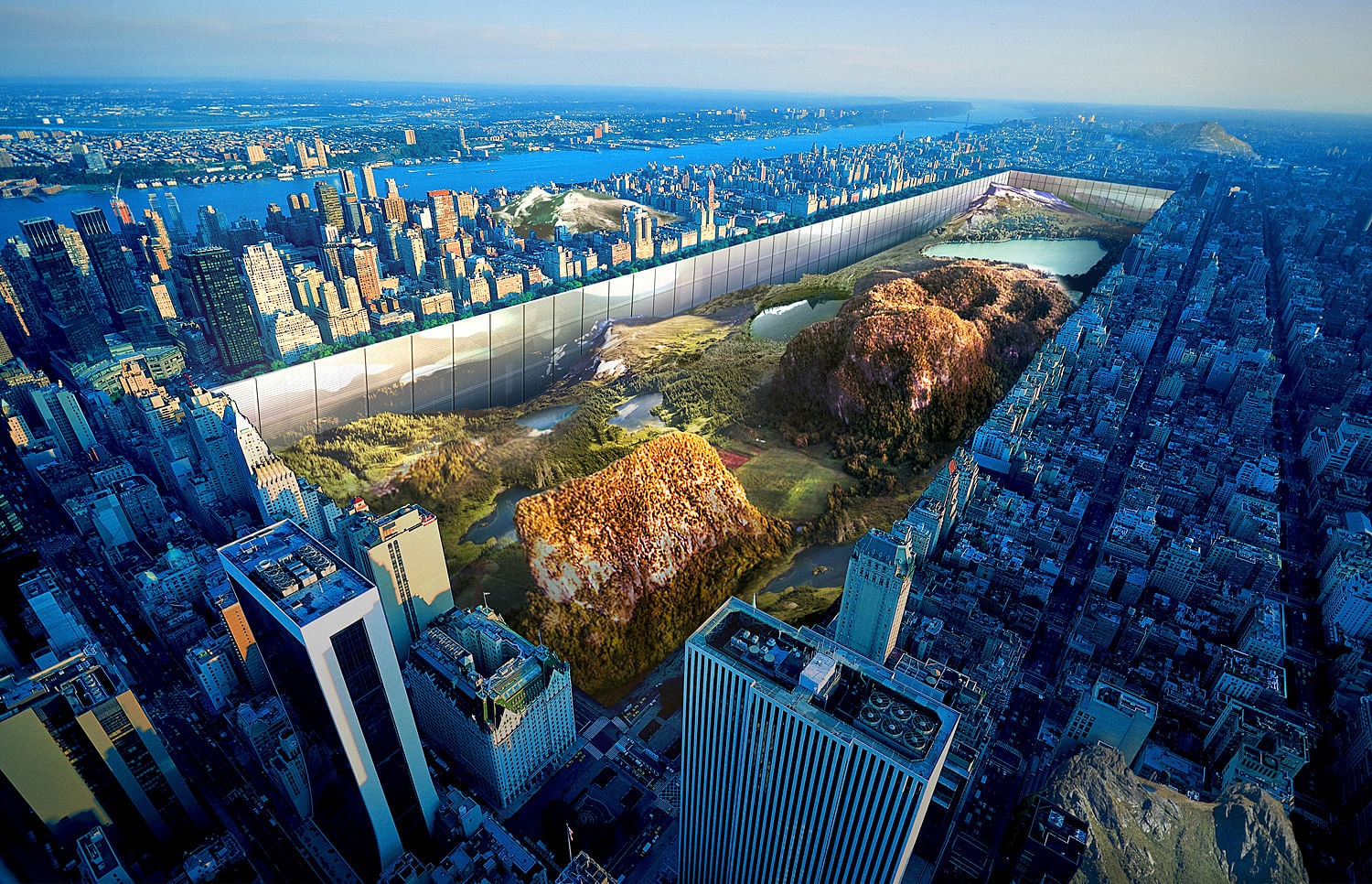
2016 eVolo Skyscraper Competition 1st prizewinner: “New York Horizon” by Jianshi Wu and Yitan Sun.

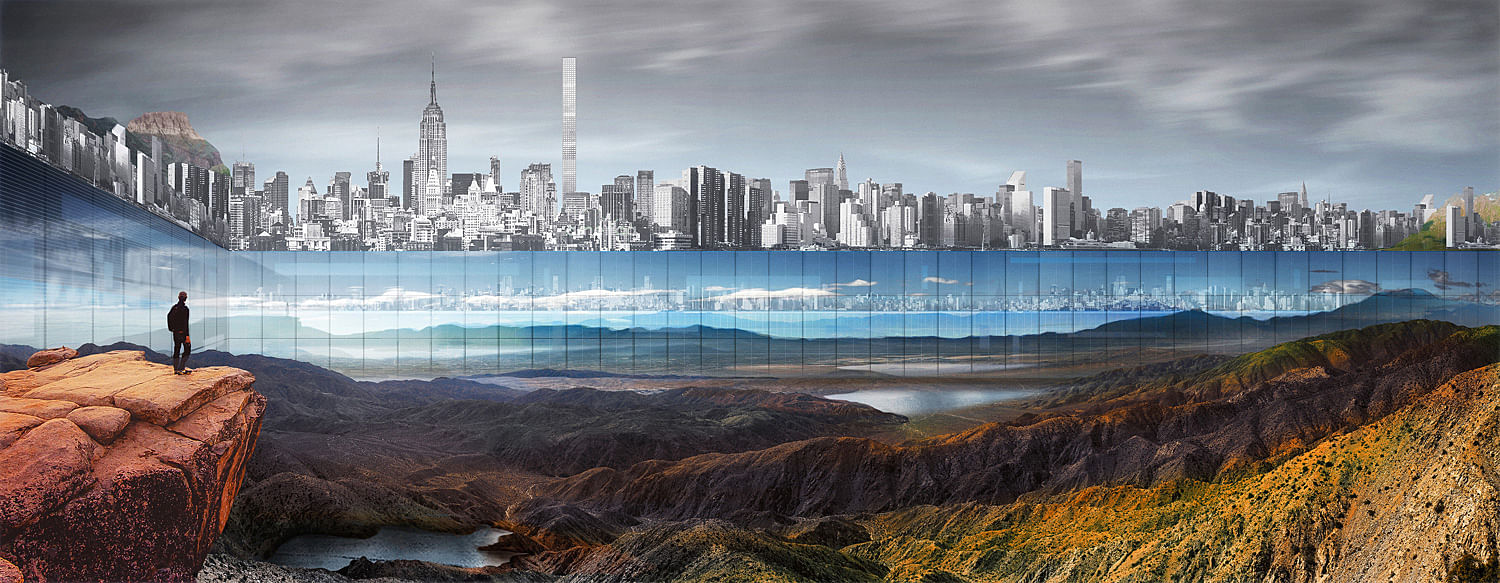
Developing ideas that fuse the natural and built environments are commonplace in design competitions alone. But what really grabs attention is the wilder approaches, which tend to appear in global idea-based contests like eVolo Magazine's yearly Skyscraper Competition. Recently concluding its tenth edition, the Skyscraper Competition gives participants complete freedom over their reinterpretations of the skyscraper typology. New York-based designers Jianshi Wu and Yitan Sun scooped this year's first-prize award with their entry titled “New York Horizon”, a 1,000-foot sunken horizontal “sidescraper” that unearths the bedrock hidden beneath New York City's Central Park and encases the exposed terrain in walls of glass built up to street level along the park's perimeter. At 100 feet wide, the glass walls would provide 7 square miles of housing spaces that offer unobstructed views of the underground park, as a way to “make Central Park available to more people”, the designers claimed in their project statement. In other words, the Central Park would be excavated.

As many critics have already pointed out, “New York Horizon” would be virtually impossible to implement in the real world, given the actual urban landscape of the proposed site, which includes some of NYC's subway lines for starters. That being said, the criticism “New York Horizon” has sparked in recent weeks raises bigger questions — particularly involving the rise of “meme-tecture”, the cultural value of landscape architecture, and re-evaluating the setup of open ideas competitions.

“New York Horizon” demonstrates the inevitable toll that viral media has taken on open architecture competitions.

Even just the thought of altering the beloved Central Park is touchy territory, let alone for landscape architects. Charles A. Birnbaum, a landscape architect who is the president and CEO of The Cultural Landscape Foundation, recently wrote in an opinion piece about how ideas like "New York Horizon" depict the constant sidelining of landscape architecture. He wrote:

“Designed by Frederick Law Olmsted Senior, (the "Founding Father" of landscape architecture) and Calvert Vaux, Central Park is arguably the most important work of art created in America in the 19th century. Yet, as we see constantly, designed landscapes are often viewed as merely incomplete or empty voids awaiting something to be placed within them, or, in this case, to be taken away [...] ["New York Horizon"], however, isn't just harmlessly provocative click bait. It perpetuates a broken value system in which architecture is seen as the great saviour, while landscape architecture is treated as ‘parsley around the roast,’ as the great Modernist landscape architect Thomas Church once observed.”
RELATED NEWS eVolo 2016 Skyscraper Competition winners reimagine vertical architecture
2016 eVolo Skyscraper Competition 1st prizewinner: “New York Horizon” by Jianshi Wu and Yitan Sun.

“New York Horizon” also demonstrates the inevitable toll that viral media has taken on open architecture competitions. On one hand, thanks to social media, these competitions — and the eye-candy renderings and shocking ideas they attract — can draw interest from broader audiences to learn more about architectural ideas. But some critics point out the problems that arise if the click-bait factor becomes prevalent, especially when it comes to a highly recognized contest like the Skyscraper Competition. CityLab writer Kriston Capps described "New York Horizon" as another example of Internet Contestist ideas, which he explains are “spectacles that are neither straightforward nor satirical [but instead, are] shallow and excessively social.”

“From London’s bridge fetish to the Guggenheim Helsinki, open design contests are responsible for producing some of the worst architectural renderings of the last year," Capps writes. “[O]pen design competitions encourage architects to volunteer their labor in an effort to grab the eyes of jury members and popular audiences alike. Open design contests encourage gambling. Factor in the accessible rendering software that lowers costs and barriers to use, and the trajectory converges at Contestism. The problem with Contestism isn’t ‘New York Horizon’ or any one single example. The problem may very well be the contests themselves.”

In a similar vein, other sources and users observe how the Skyscraper Competition entries tend to lean toward who creates the best-looking renderings or imagines the most outlandish dystopian scenario. “The idea of separating Central Park from the rest of the urban fabric of New York seems careless. It's shocking, so that makes it great for a rendering and a competition, but otherwise it's lazy design,” wrote one user on Bustler's sister site Archinect. “Nice art project,” another commenter wrote.” Hope it stays in the realm of academic naval [sic] gazing.”

Encouraging bold imaginative concepts and allowing designers full control and exploration of their own ideas are indeed vital in helping push architectural design forward. But how does broader society perceive these design competitions?

The scrutiny that a hypothetical concept like “New York Horizon” receives indicates that global idea contests like eVolo's Skyscraper Competition have an impact. Encouraging bold imaginative concepts and allowing designers full control and exploration of their own ideas are indeed vital in helping push architectural design forward. But how does broader society perceive these design competitions? What do non-architecturally involved folks get in encountering these ideas, other than ridicule or a few seconds ogling at pretty drawings? During a time when even architects themselves are questioning the relevance of their field to the rest of society, these popular ideas competitions have the visibility to show that they are more than cheap Internet click-bait. They can prove that outlandish ideas can become starting points that lead to something truly ground-breaking.

Have any thoughts on the criticism surrounding “New York Horizon”? What do you think open ideas competitions need to change? Share them in the comment section below.

RELATED COMPETITION eVolo 2016 Skyscraper Competition
RELATED NEWS Winners of the 2015 eVolo Skyscraper Competition

Related

evolo skyscraper competition ● new york city ● new york ● central park ● landscape architecture ● landscape design ● frederick law olmsted ● skyscraper competition ● evolo magazine ● competition ● ideas competitions ● design ideas ● cultural relevance ● innovation

Share

  • Follow

    0 Comments

  • Comment as :

When innovation runs shallow: What's the commotion with eVolo winner New York Horizon?

10 standout sustainable projects honored at AIA COTE Top Ten Award 2026

Best residential architecture of 2026 honored at AIA Housing Award

Best new interiors of 2026 chosen at AIA Interior Architecture Awards

Best global architecture honored at RIBA International Awards 2026

World’s most beautiful airports of 2026 chosen by Prix Versailles

New architecture and design competitions: Brick in Architecture Awards, Study Architecture Student Showcase, N.Y.C. Groceries, and New York High Falls Riverfront Market

SmithGroup’s ‘pioneering’ Philip Merrill Environmental Center wins AIA Twenty-five Year Award

Sponsored Post by Buildner

Museum of Emotions / Edition #8 FINAL registration deadline is in 5 DAYS!

Sign up for Bustler's Email Newsletters

Here are the winners of the 2026 AIA Architecture Awards

40 emerging architects and designers under 40 from Europe honored

Northwestern University selects 12-firm longlist to design new engineering building

New architecture and design competitions: Exploring 130 Years of American Design, Christo & Jeanne-Claude Center, 13 White Houses, and La Pyramide

Micro-architecture honored in latest Tiny House Architecture Competition

World’s most beautiful restaurants of 2026 chosen by Prix Versailles

Sponsored Post by Buildner

Design a wine tasting room in Italy! Valli Wine Tasting Room is launched!

Next page » Loading

When innovation runs shallow: What's the commotion with eVolo winner New York Horizon?

By Justine Testado|

Friday, Apr 8, 2016

Share

2016 eVolo Skyscraper Competition 1st prizewinner: “New York Horizon” by Jianshi Wu and Yitan Sun.

Related

evolo skyscraper competition ● new york city ● new york ● central park ● landscape architecture ● landscape design ● frederick law olmsted ● skyscraper competition ● evolo magazine ● competition ● ideas competitions ● design ideas ● cultural relevance ● innovation

Developing ideas that fuse the natural and built environments are commonplace in design competitions alone. But what really grabs attention is the wilder approaches, which tend to appear in global idea-based contests like eVolo Magazine's yearly Skyscraper Competition. Recently concluding its tenth edition, the Skyscraper Competition gives participants complete freedom over their reinterpretations of the skyscraper typology. New York-based designers Jianshi Wu and Yitan Sun scooped this year's first-prize award with their entry titled “New York Horizon”, a 1,000-foot sunken horizontal “sidescraper” that unearths the bedrock hidden beneath New York City's Central Park and encases the exposed terrain in walls of glass built up to street level along the park's perimeter. At 100 feet wide, the glass walls would provide 7 square miles of housing spaces that offer unobstructed views of the underground park, as a way to “make Central Park available to more people”, the designers claimed in their project statement. In other words, the Central Park would be excavated.

As many critics have already pointed out, “New York Horizon” would be virtually impossible to implement in the real world, given the actual urban landscape of the proposed site, which includes some of NYC's subway lines for starters. That being said, the criticism “New York Horizon” has sparked in recent weeks raises bigger questions — particularly involving the rise of “meme-tecture”, the cultural value of landscape architecture, and re-evaluating the setup of open ideas competitions.

“New York Horizon” demonstrates the inevitable toll that viral media has taken on open architecture competitions.

Even just the thought of altering the beloved Central Park is touchy territory, let alone for landscape architects. Charles A. Birnbaum, a landscape architect who is the president and CEO of The Cultural Landscape Foundation, recently wrote in an opinion piece about how ideas like "New York Horizon" depict the constant sidelining of landscape architecture. He wrote:

“Designed by Frederick Law Olmsted Senior, (the "Founding Father" of landscape architecture) and Calvert Vaux, Central Park is arguably the most important work of art created in America in the 19th century. Yet, as we see constantly, designed landscapes are often viewed as merely incomplete or empty voids awaiting something to be placed within them, or, in this case, to be taken away [...] ["New York Horizon"], however, isn't just harmlessly provocative click bait. It perpetuates a broken value system in which architecture is seen as the great saviour, while landscape architecture is treated as ‘parsley around the roast,’ as the great Modernist landscape architect Thomas Church once observed.”

RELATED NEWS eVolo 2016 Skyscraper Competition winners reimagine vertical architecture
2016 eVolo Skyscraper Competition 1st prizewinner: “New York Horizon” by Jianshi Wu and Yitan Sun.

“New York Horizon” also demonstrates the inevitable toll that viral media has taken on open architecture competitions. On one hand, thanks to social media, these competitions — and the eye-candy renderings and shocking ideas they attract — can draw interest from broader audiences to learn more about architectural ideas. But some critics point out the problems that arise if the click-bait factor becomes prevalent, especially when it comes to a highly recognized contest like the Skyscraper Competition. CityLab writer Kriston Capps described "New York Horizon" as another example of Internet Contestist ideas, which he explains are “spectacles that are neither straightforward nor satirical [but instead, are] shallow and excessively social.”

“From London’s bridge fetish to the Guggenheim Helsinki, open design contests are responsible for producing some of the worst architectural renderings of the last year," Capps writes. “[O]pen design competitions encourage architects to volunteer their labor in an effort to grab the eyes of jury members and popular audiences alike. Open design contests encourage gambling. Factor in the accessible rendering software that lowers costs and barriers to use, and the trajectory converges at Contestism. The problem with Contestism isn’t ‘New York Horizon’ or any one single example. The problem may very well be the contests themselves.”

In a similar vein, other sources and users observe how the Skyscraper Competition entries tend to lean toward who creates the best-looking renderings or imagines the most outlandish dystopian scenario. “The idea of separating Central Park from the rest of the urban fabric of New York seems careless. It's shocking, so that makes it great for a rendering and a competition, but otherwise it's lazy design,” wrote one user on Bustler's sister site Archinect. “Nice art project,” another commenter wrote.” Hope it stays in the realm of academic naval [sic] gazing.”

Encouraging bold imaginative concepts and allowing designers full control and exploration of their own ideas are indeed vital in helping push architectural design forward. But how does broader society perceive these design competitions?

The scrutiny that a hypothetical concept like “New York Horizon” receives indicates that global idea contests like eVolo's Skyscraper Competition have an impact. Encouraging bold imaginative concepts and allowing designers full control and exploration of their own ideas are indeed vital in helping push architectural design forward. But how does broader society perceive these design competitions? What do non-architecturally involved folks get in encountering these ideas, other than ridicule or a few seconds ogling at pretty drawings? During a time when even architects themselves are questioning the relevance of their field to the rest of society, these popular ideas competitions have the visibility to show that they are more than cheap Internet click-bait. They can prove that outlandish ideas can become starting points that lead to something truly ground-breaking.

Have any thoughts on the criticism surrounding “New York Horizon”? What do you think open ideas competitions need to change? Share them in the comment section below.

RELATED COMPETITION eVolo 2016 Skyscraper Competition
RELATED NEWS Winners of the 2015 eVolo Skyscraper Competition

Share

  • Follow

    0 Comments

  • Comment as :

Archinect JobsArchinect Jobs

The Archinect Job Board attracts the world's top architectural design talents.

VIEW ALL JOBS POST A JOB

Intermediate Architect - Retail (AutoCAD-based)

O'Neil Langan Architects

Intermediate Architect - Retail (AutoCAD-based)

New York, NY, US

Designer (Level 3)

KPMB

Designer (Level 3)

Cambridge, MA, US

Architect / Architectural Designer (3-5 years experience)

Resolution: 4 Architecture

Architect / Architectural Designer (3-5 years experience)

New York, NY, US

Junior Architect in nyc

Lara Apelian Studio

Junior Architect in nyc

New York, NY, US

Job Captain

Studio AR&D Architects

Job Captain

Los Angeles, CA, US

Project Manager

Populous

Project Manager

San Francisco, CA, US

Job Captain / Project Manager

Breland – Harper

Job Captain / Project Manager

Los Angeles, CA, US

Architectural Designer

7th Street Burger

Architectural Designer

New York, NY, US

Marketing & Business Development Manager

KPB Architects

Marketing & Business Development Manager

Anchorage, AK, US

Marketing and Architectural Assistant

AGENCIE / Architecture & Engineering

Marketing and Architectural Assistant

New York, NY, US

Next page » Loading