• Login / Join
  • About
  • •
  • Contact
  • •
  • Advertising
bustler logo
bustler logo
  • News
  • Competitions
  • Events
  • Bustler is powered by Archinect
  • Sign up for Bustler's Email Newsletters

  • Follow these Bustler feeds:

  • Search

    Search in

  • Submit

    What are you submitting?

    News Pitch
    Competition
    Event
  • Login / Join
  • News|Competitions|Events
  • Search
    | Submit
    | Follow
  • Search in

    What are you submitting?

    News Pitch
    Competition
    Event

    Follow these Bustler feeds:

  • About|Contact|Advertising
  • Login / Join
Tagged: arc13 architecture award

Villa Kogelhof by Paul de Ruiter Architects wins an ARC13 Architecture Award

By Bustler Editors|

Monday, Dec 2, 2013
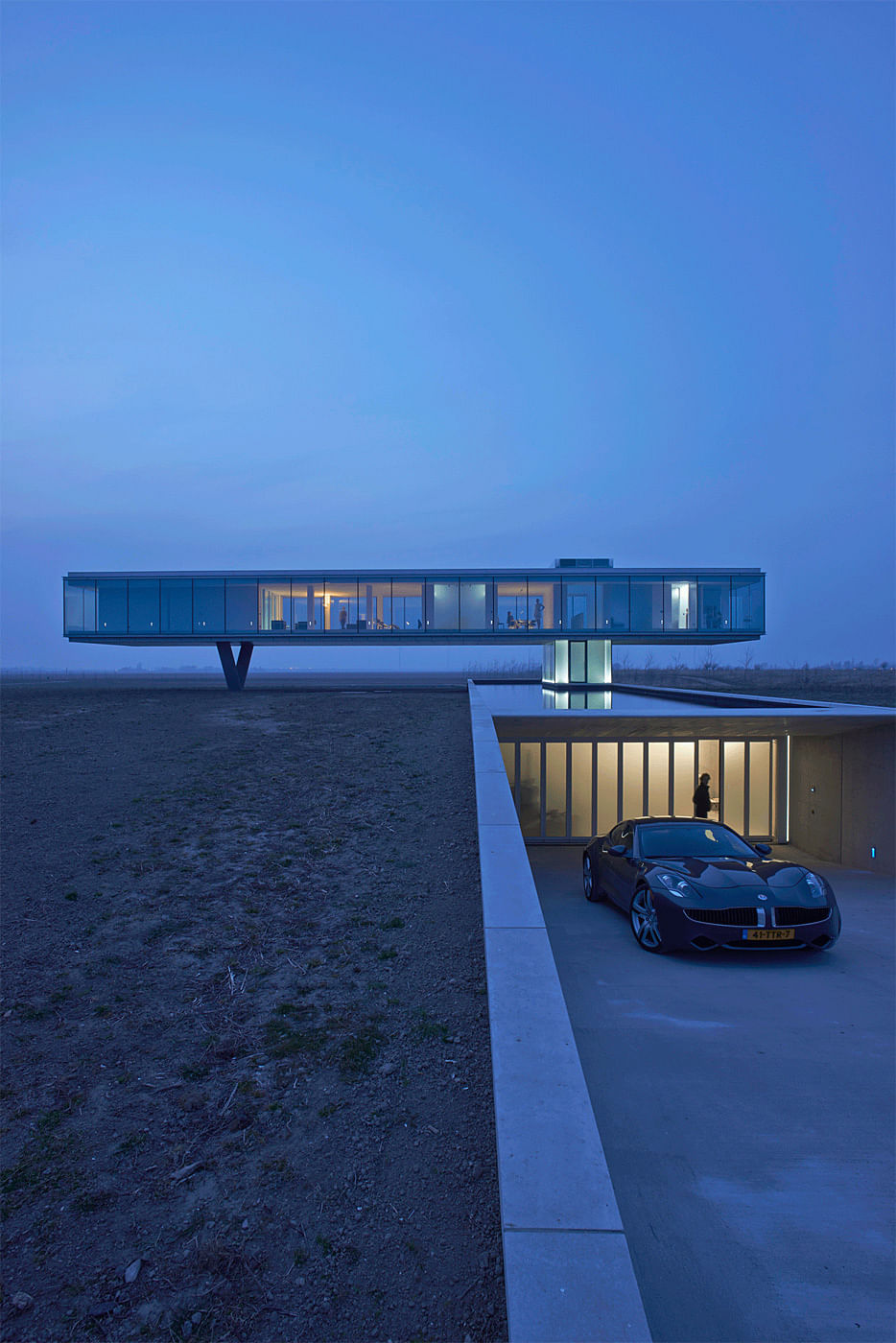
Winner of the ARC13 Architecture Award: Villa Kogelhof by Paul de Ruiter Architects. Photo: Jeroen Musch

The ultramodern Villa Kogelhof in Kamperland, the Netherlands has just been awarded one of the prestigious Dutch ARC13 Architecture Prize. The building's designers, Amsterdam-based Paul de Ruiter Architects, were honored with the prize — alongside three other award winners — at a festive award ceremony in Rotterdam.

The jury report said: "Villa Kogelhof is the unorthodox accommodation for an ambitious client with an unique architecture. The uncompromising design is a spartan interior coupled with a view of the stunning surrounding landscape of Zeeland. In addition, the villa makes a statement within a world of sustainability which is usually associated with eco-conscious tree huggers: but why should sustainability be no Prada?"

The ARC13 jury consisted of Don Murphy (VMX architects, chairman of the jury), Marjolein van Eig (Inbo), Tracy Metz (journalist and author), Bianca Seekles (ERA Contour) and Harm Tilman (de Architect, secretary of the jury).
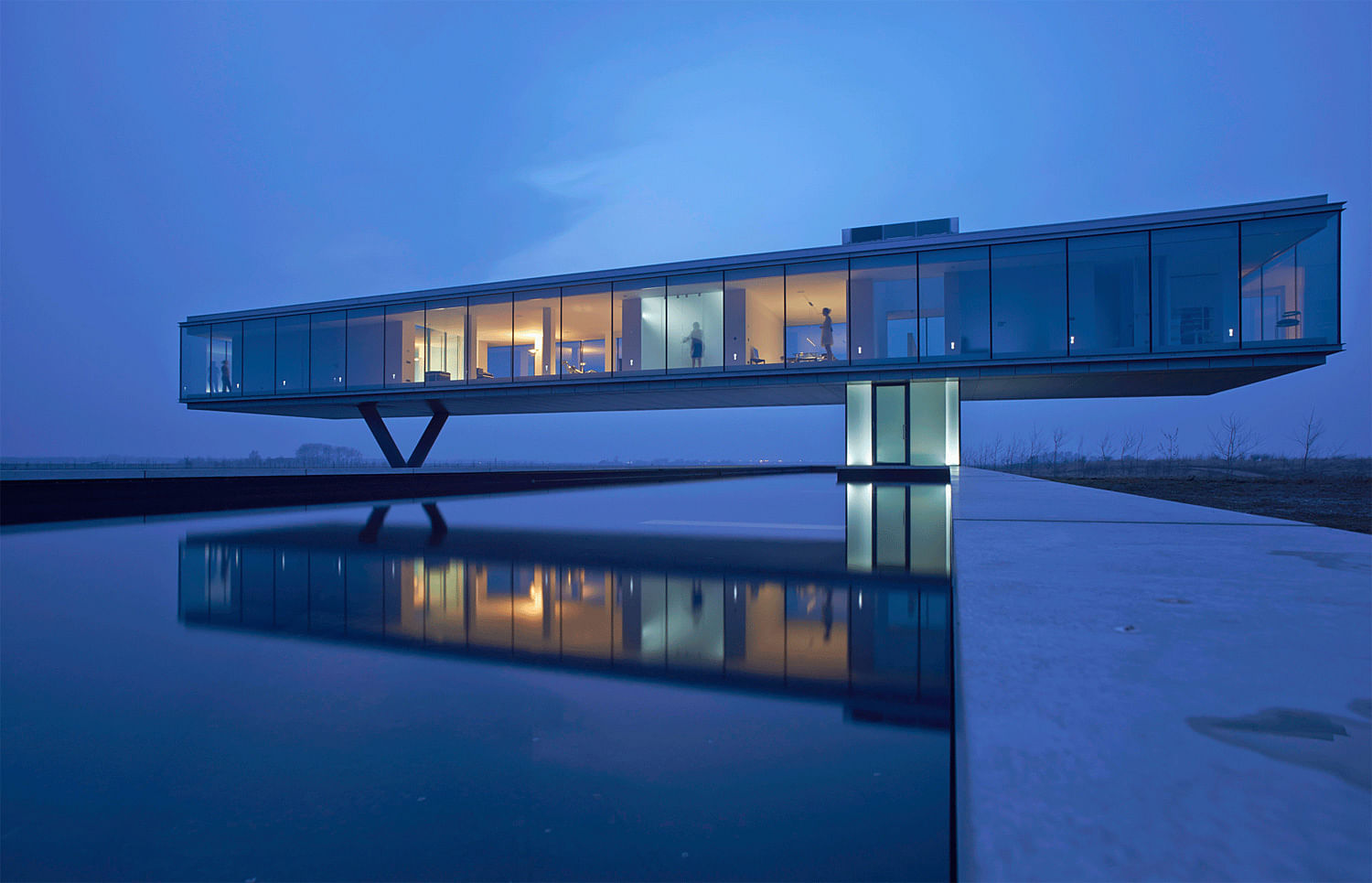
Photo: Jeroen Musch

Here's a project description from Paul de Ruiter Architects:

"Villa Kogelhof is designed based on complete autarky: therefore the house is energy neutral. By using several techniques, the villa will have a comfortable climate all seasons, whilst being extremely energy efficient. It was an important wish from our client to create a simple, abstract, yet spectacular villa. The result is a composition; consisting of two square stacked volumes: one underground and one floating above ground. It is designed as an uncompromising glass box, supported by a steel V-frame."
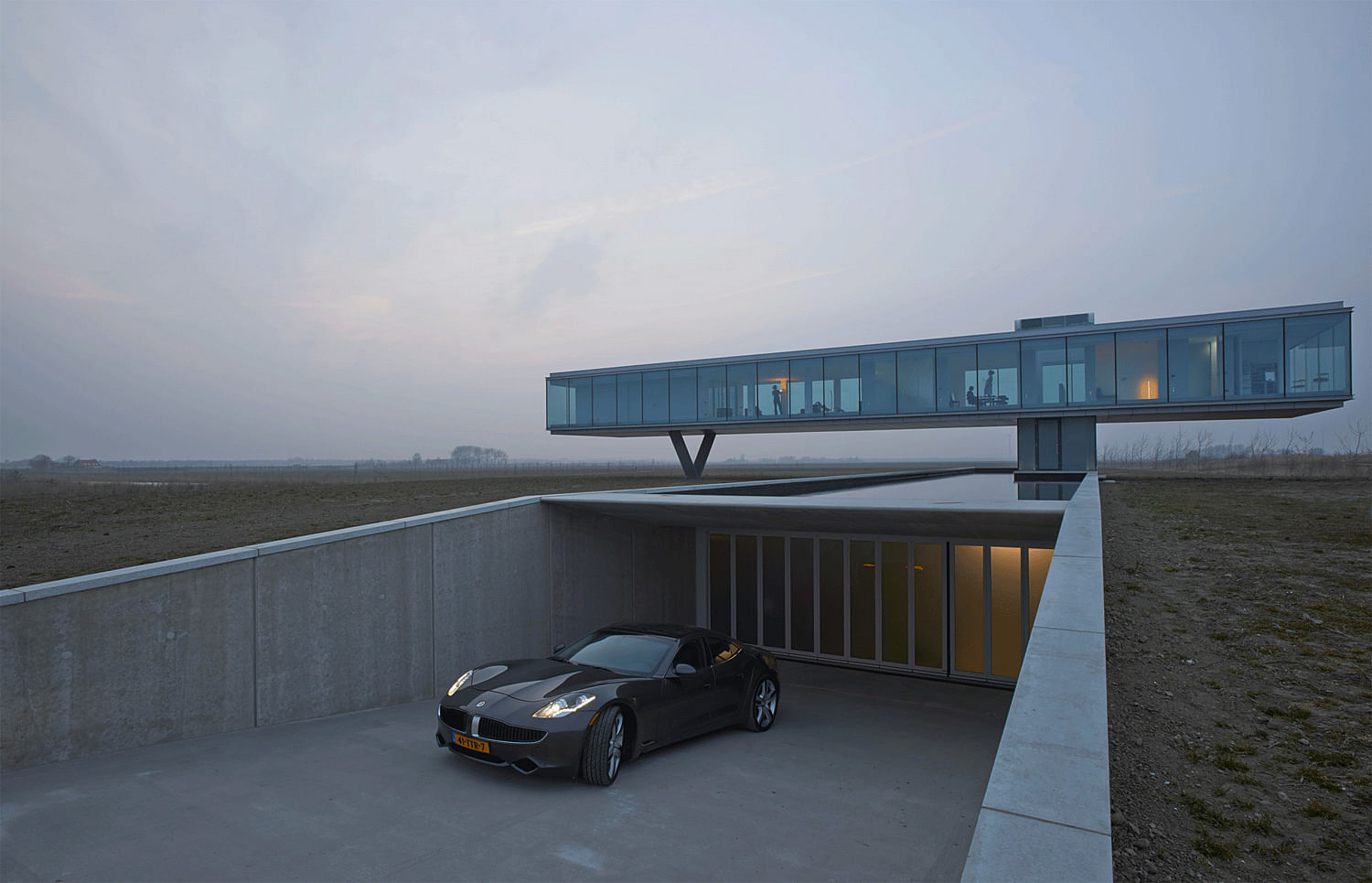
Photo: Jeroen Musch

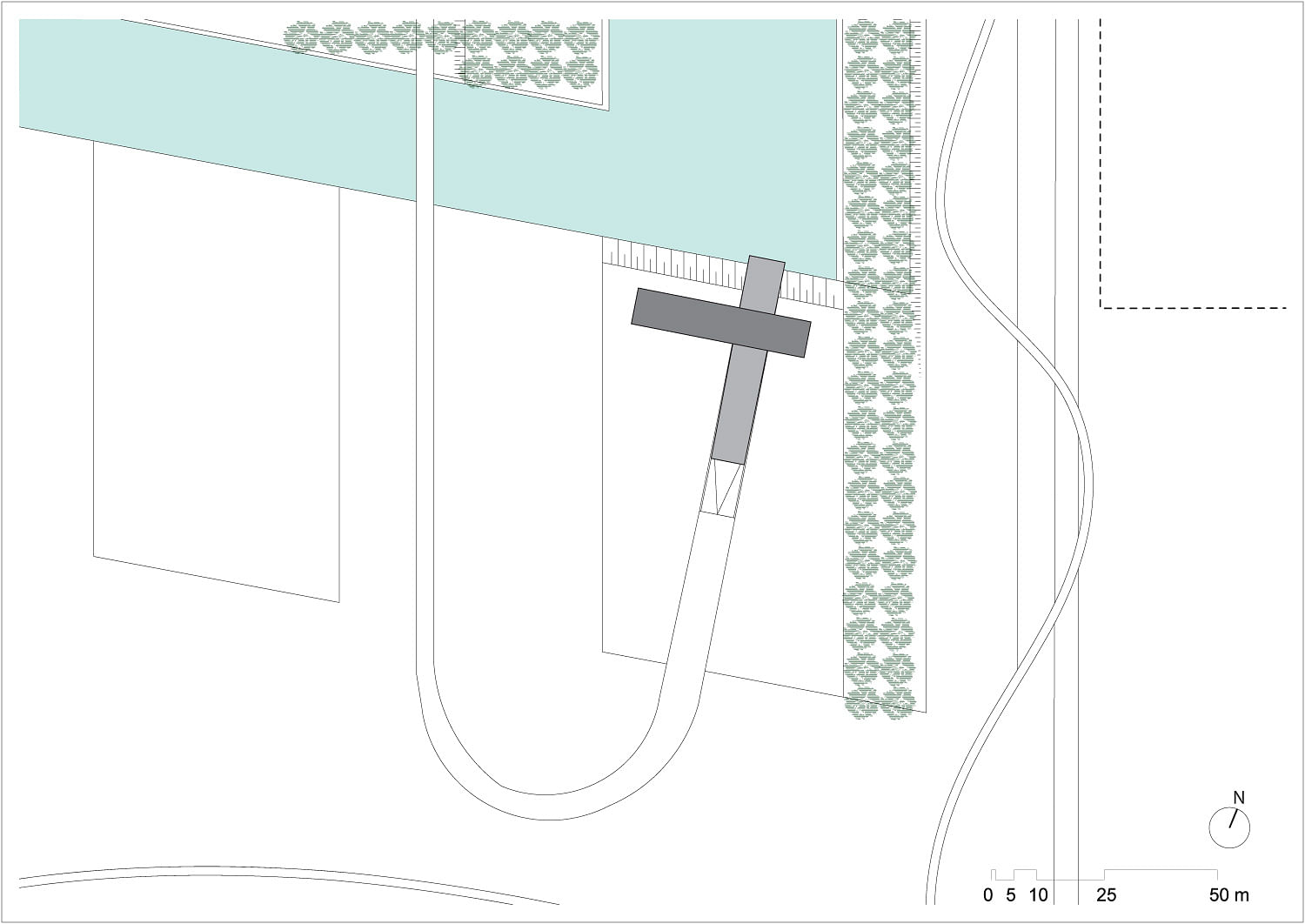
"To approach the villa there is a deserted road across the estate. The estate is part of a larger program initiated by the government, which aims to connect regional ecological zones throughout the country. The current owner bought the site, once farmland, seven years ago. It is a protected habitat for animals and plants and a major tourist draw in the area, open to the public. Permission to build a house on the land was given only on condition that it was returned to its pre-agricultural state. The planting of some 71,000 six-year-old trees hint at the future of the estate as ‘a villa in the woods’ and were planted already in 2006. A rectangular pond was digged, requiring the removal of 70,000 cubic metres of soil."
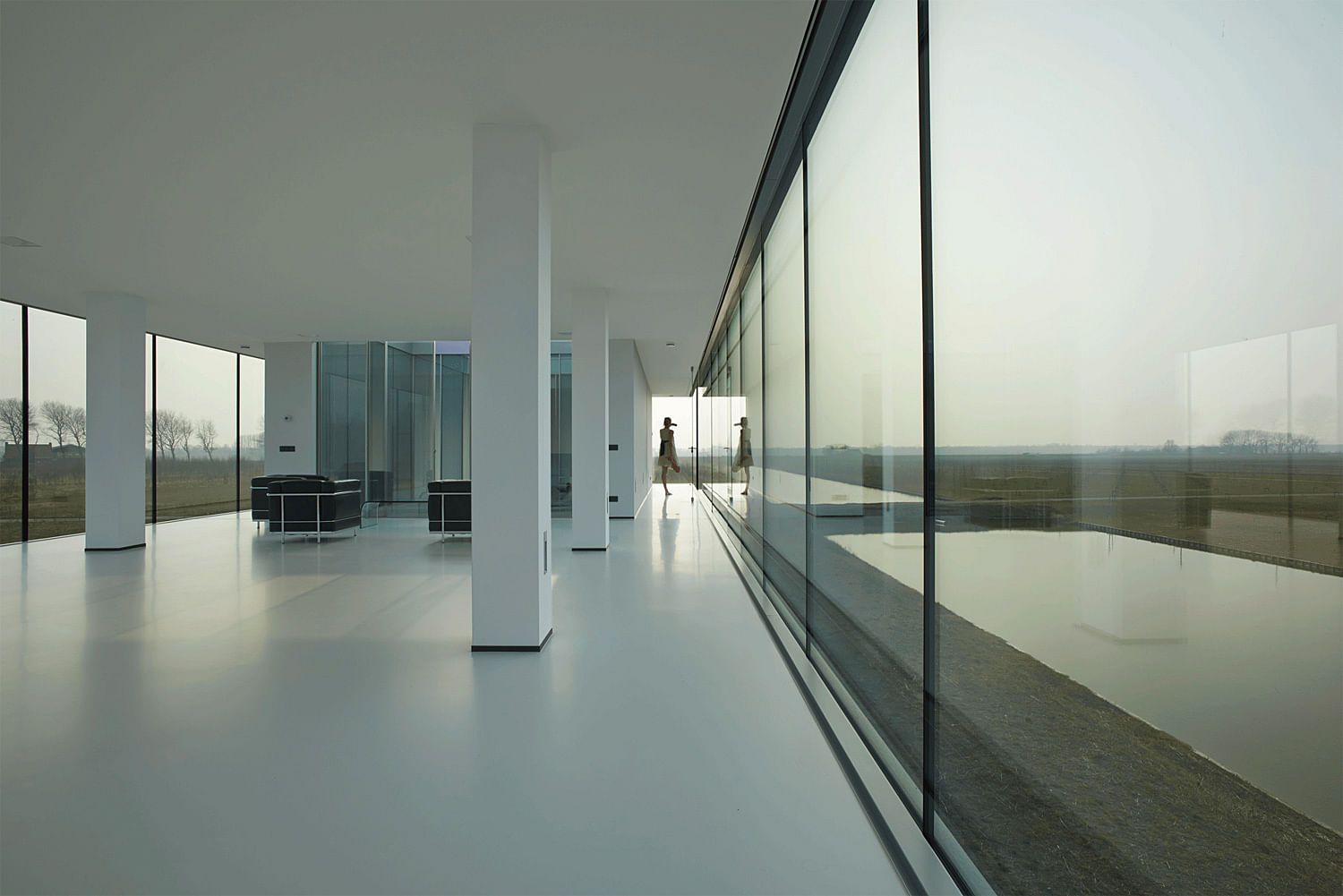
Photo: Jeroen Musch

"Contrast

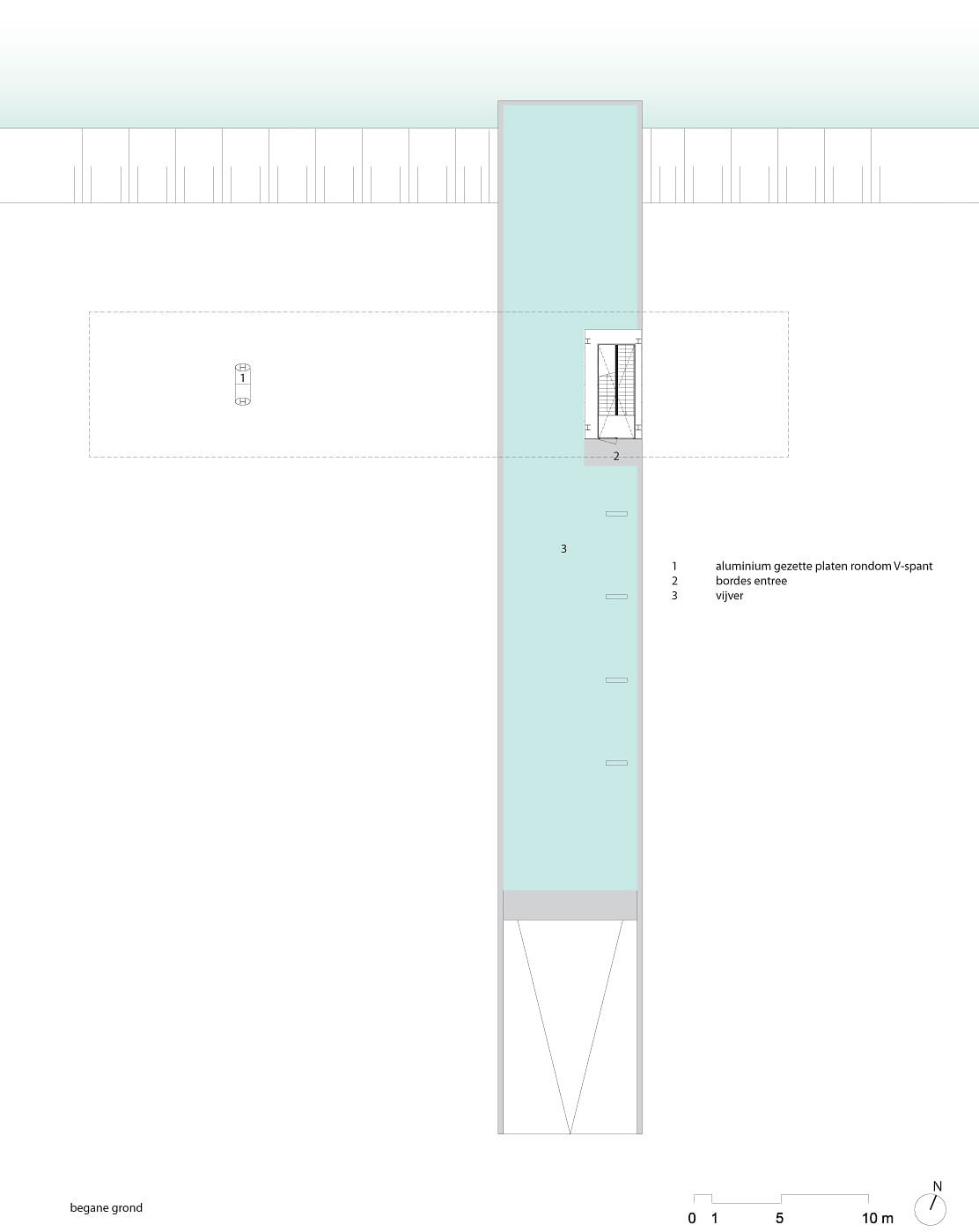
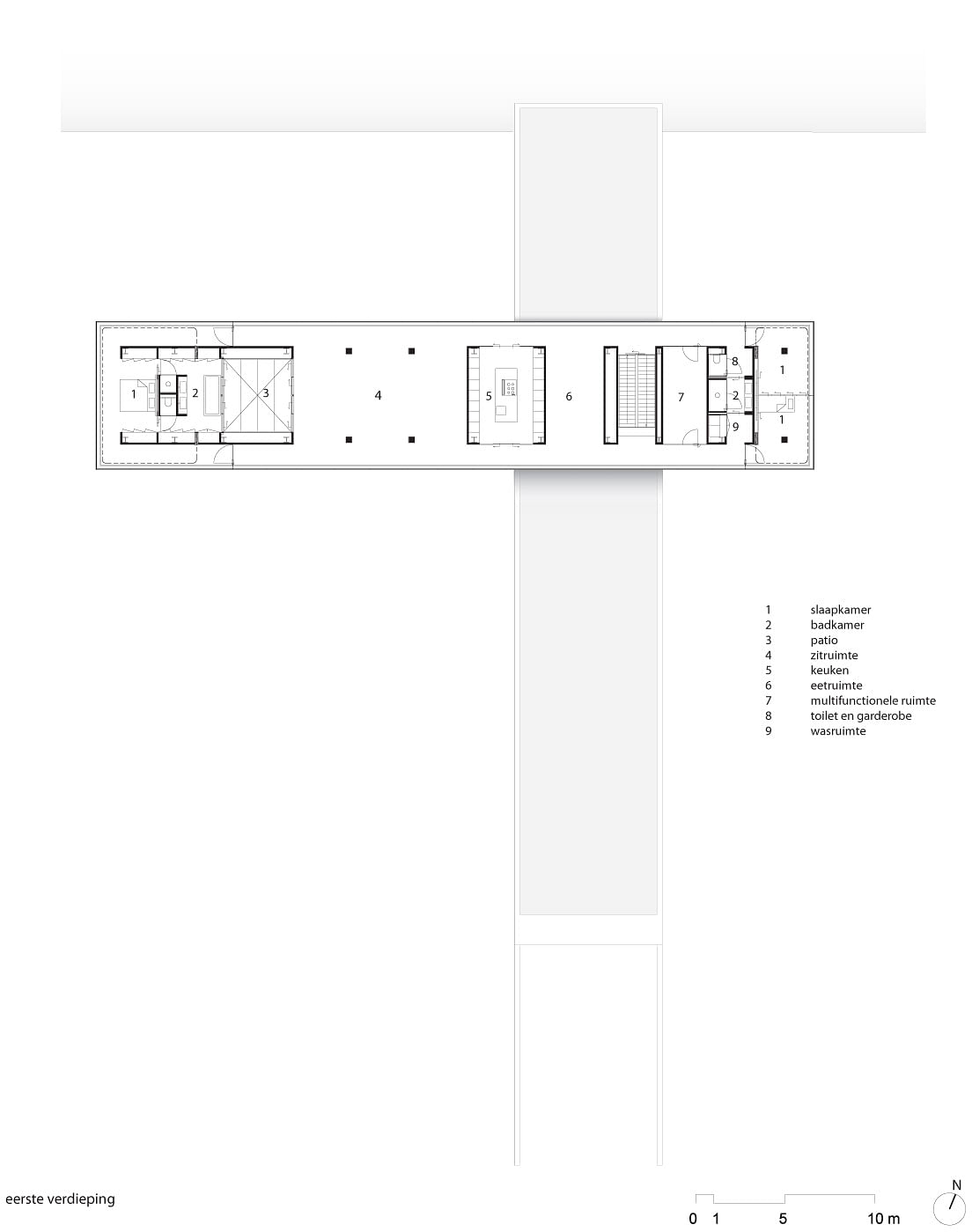
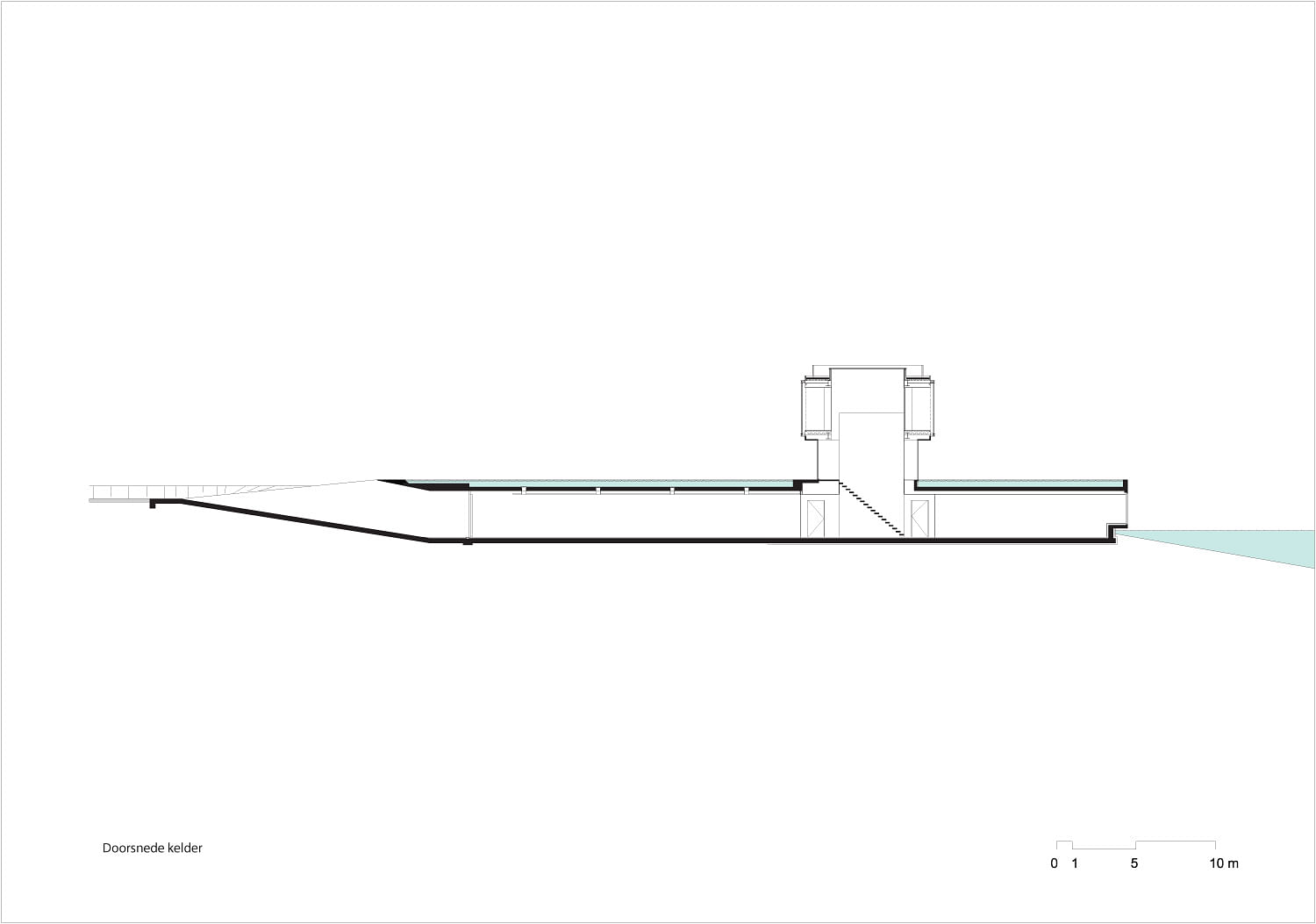
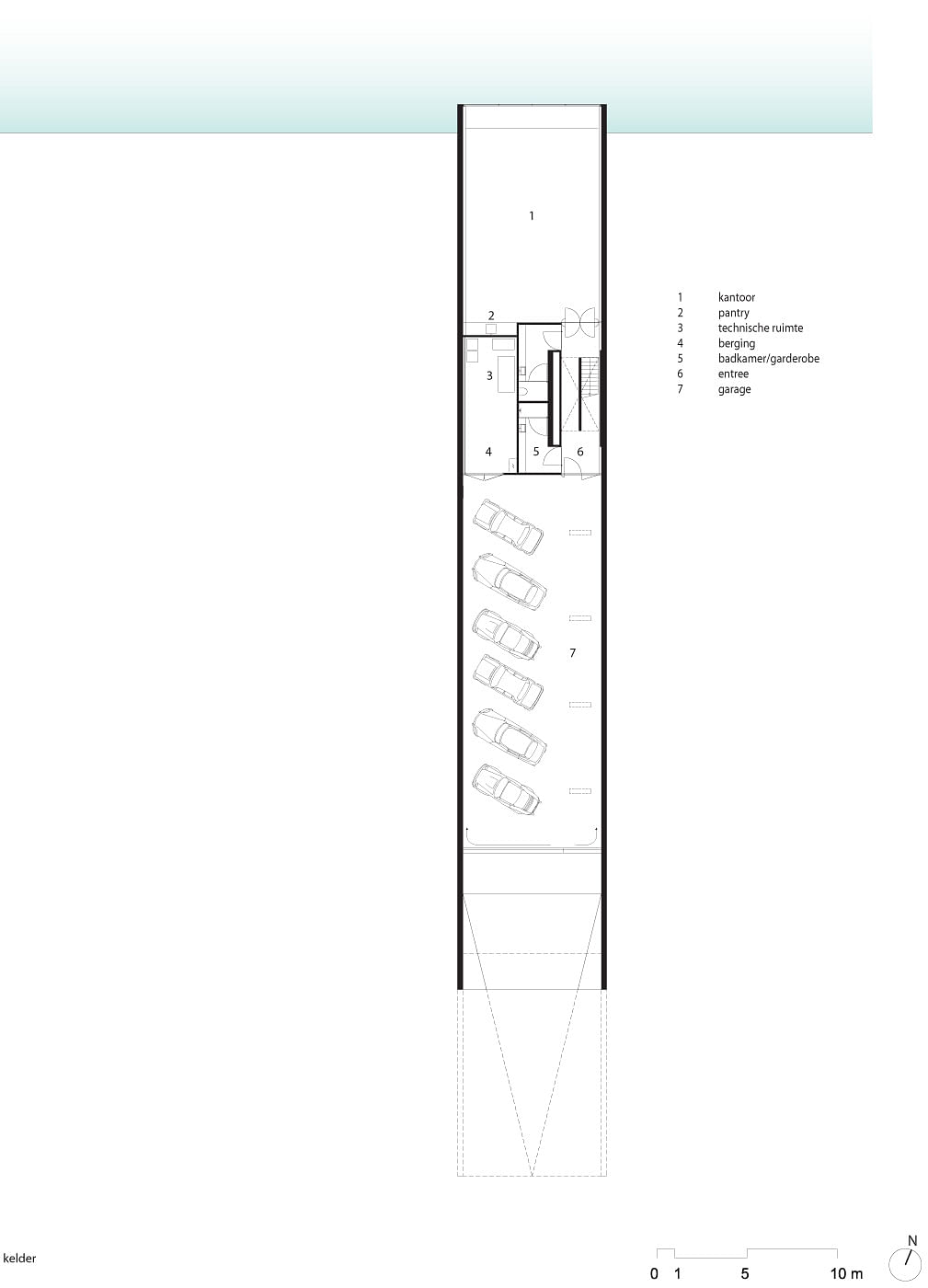
After ten minutes’ drive across the estate, you reach an underground volume via a sloping driveway. The underground volume of the house consists the entrance, parking, storage and a workspace which looks out over the pond. The living area is situated in the floating glass box above ground. It’s plan is open and consists of volumes for the living room, the kitchen, bedrooms, bathroom and a patio. The façade is completely made out of glass and offers a spectacular view over the surrounding landscape. The natural setting contrasts with the technical and modern appearance of the villa, that refers to the Dutch world famous coastal defence dams known as the Delta works."
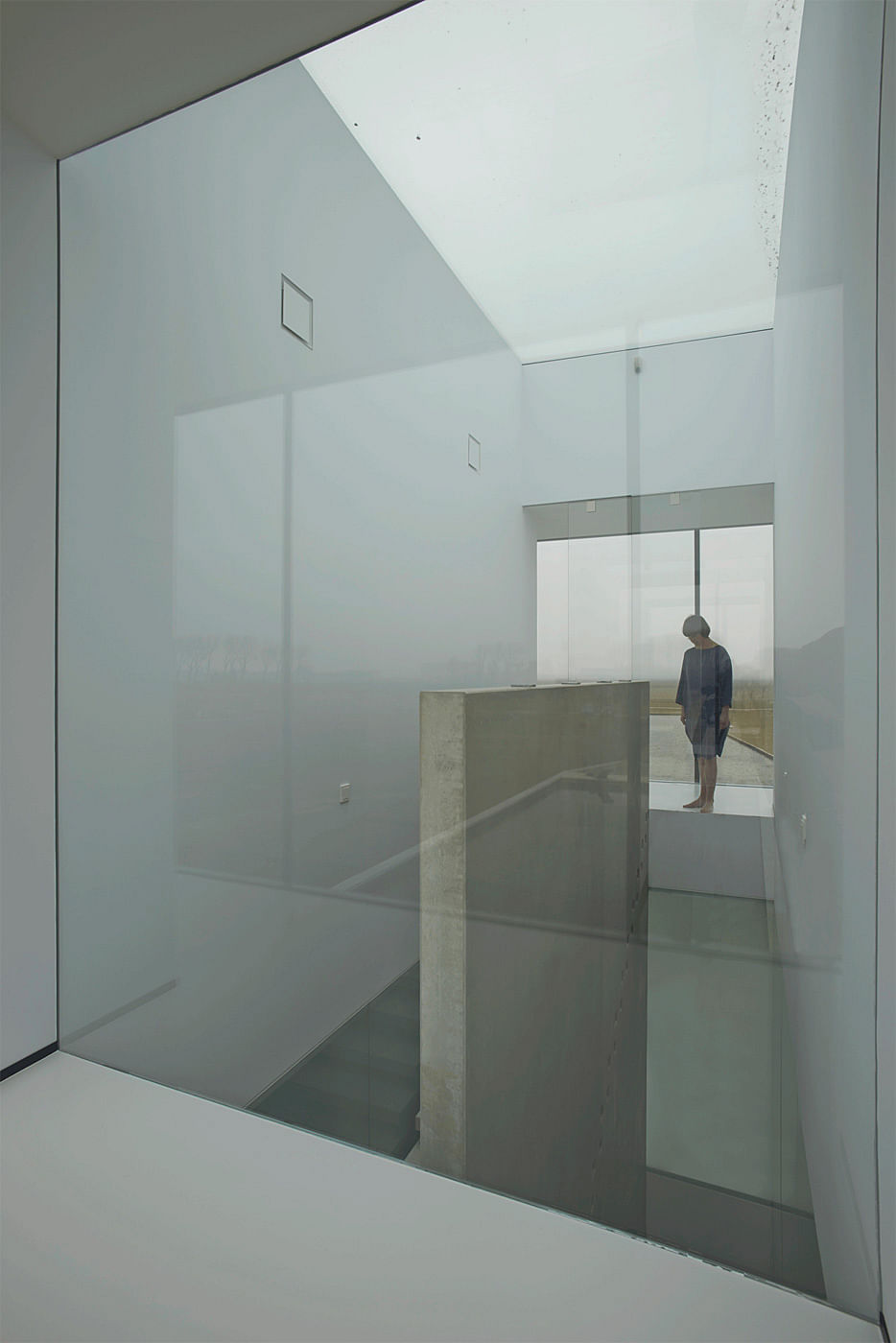
Photo: Jeroen Musch

"Self-sufficient

One of the main principles of Villa Kogelhof was to translate luxury into the happiness of independence. The goal for the villa was to be self-sufficient; to generate its own energy, to heat its own water and to recycle the garbage. To make sure Villa Kogelhof is energy neutral, the façade offers an important contribution. This so called climate-façade is composed of an outer layer of clear insulated glass from floor to ceiling and an inner layer of sun-reflecting fabric that can be rolled up and unrolled. When the fabric is lowered, an air cavity is formed in which the air from the villa is extracted of a central ventilation system. The house is heated by a central heating system combined with an air pump. Warm water will be generated using a biomass pellet stove, in which wood will be fired from the wood out of the private forest of the estate. Electricity will be generated from the PV-cells on the roof and in the near future also from the planned windmill."
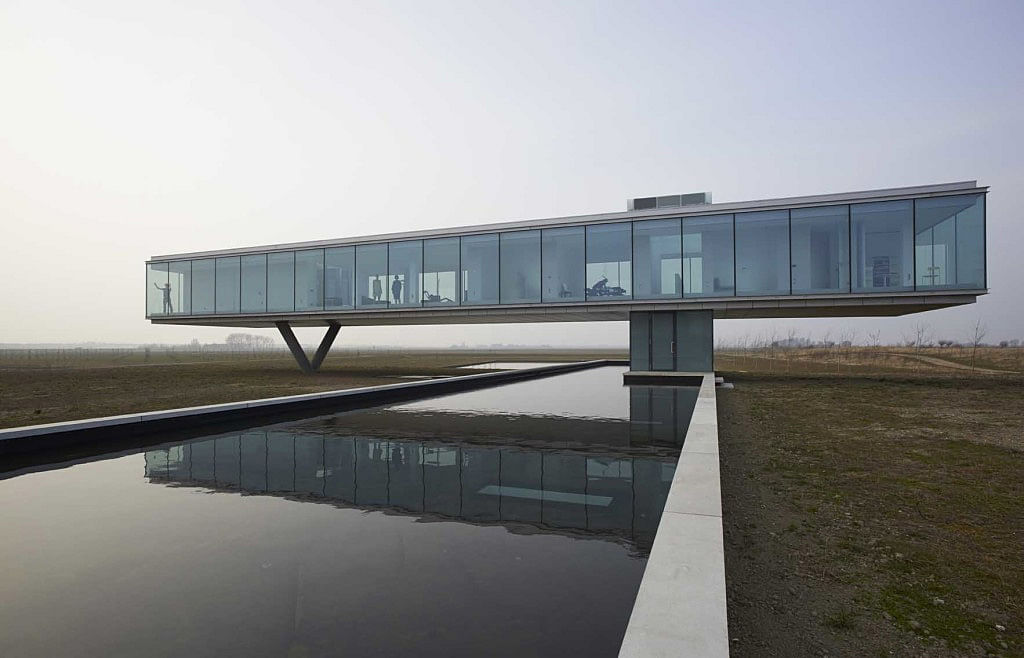
Photo: Jeroen Musch

Project Details:

Project: Villa Kogelhof
Location: Kamperland (Noord-Beveland), Zeeland, the Neterlands

Architect: Paul de Ruiter Architects
Client: Private
Gross floor area: 715 m²
Volume: 2,400 m³
Start design: October 2006
Start construction: February 2009
Completion: January2013

Project architect: Paul de Ruiter
Project team: Willem Jan Landman
Structural engineer: Broersma bv
Building physics: Smits van Burgst
Costs: Studio Bouwhaven
Installations: Intec
Glass: Si-X
Constructor: Bouwbedrijf J. van der Linde
Landscape architect: Bosch Slabbers

All images courtesy of Paul de Ruiter Architects, photography by Jeroen Musch.

Check the image gallery below for plans and sections of the project.
Related

the netherlands ● sustainability ● paul de ruiter architects ● netherlands ● house ● europe ● award ● arc13 architecture award

Share

  • Follow

    0 Comments

  • Comment as :

Villa Kogelhof by Paul de Ruiter Architects wins an ARC13 Architecture Award

Sign up for Bustler's Email Newsletters

Next page » Loading

Villa Kogelhof by Paul de Ruiter Architects wins an ARC13 Architecture Award

By Bustler Editors|

Monday, Dec 2, 2013

Share

Winner of the ARC13 Architecture Award: Villa Kogelhof by Paul de Ruiter Architects. Photo: Jeroen Musch

Related

the netherlands ● sustainability ● paul de ruiter architects ● netherlands ● house ● europe ● award ● arc13 architecture award

The ultramodern Villa Kogelhof in Kamperland, the Netherlands has just been awarded one of the prestigious Dutch ARC13 Architecture Prize. The building's designers, Amsterdam-based Paul de Ruiter Architects, were honored with the prize — alongside three other award winners — at a festive award ceremony in Rotterdam.

The jury report said: "Villa Kogelhof is the unorthodox accommodation for an ambitious client with an unique architecture. The uncompromising design is a spartan interior coupled with a view of the stunning surrounding landscape of Zeeland. In addition, the villa makes a statement within a world of sustainability which is usually associated with eco-conscious tree huggers: but why should sustainability be no Prada?"

The ARC13 jury consisted of Don Murphy (VMX architects, chairman of the jury), Marjolein van Eig (Inbo), Tracy Metz (journalist and author), Bianca Seekles (ERA Contour) and Harm Tilman (de Architect, secretary of the jury).

Photo: Jeroen Musch

Here's a project description from Paul de Ruiter Architects:

"Villa Kogelhof is designed based on complete autarky: therefore the house is energy neutral. By using several techniques, the villa will have a comfortable climate all seasons, whilst being extremely energy efficient. It was an important wish from our client to create a simple, abstract, yet spectacular villa. The result is a composition; consisting of two square stacked volumes: one underground and one floating above ground. It is designed as an uncompromising glass box, supported by a steel V-frame."

Photo: Jeroen Musch

"To approach the villa there is a deserted road across the estate. The estate is part of a larger program initiated by the government, which aims to connect regional ecological zones throughout the country. The current owner bought the site, once farmland, seven years ago. It is a protected habitat for animals and plants and a major tourist draw in the area, open to the public. Permission to build a house on the land was given only on condition that it was returned to its pre-agricultural state. The planting of some 71,000 six-year-old trees hint at the future of the estate as ‘a villa in the woods’ and were planted already in 2006. A rectangular pond was digged, requiring the removal of 70,000 cubic metres of soil."

Photo: Jeroen Musch

"Contrast

After ten minutes’ drive across the estate, you reach an underground volume via a sloping driveway. The underground volume of the house consists the entrance, parking, storage and a workspace which looks out over the pond. The living area is situated in the floating glass box above ground. It’s plan is open and consists of volumes for the living room, the kitchen, bedrooms, bathroom and a patio. The façade is completely made out of glass and offers a spectacular view over the surrounding landscape. The natural setting contrasts with the technical and modern appearance of the villa, that refers to the Dutch world famous coastal defence dams known as the Delta works."

Photo: Jeroen Musch

"Self-sufficient

One of the main principles of Villa Kogelhof was to translate luxury into the happiness of independence. The goal for the villa was to be self-sufficient; to generate its own energy, to heat its own water and to recycle the garbage. To make sure Villa Kogelhof is energy neutral, the façade offers an important contribution. This so called climate-façade is composed of an outer layer of clear insulated glass from floor to ceiling and an inner layer of sun-reflecting fabric that can be rolled up and unrolled. When the fabric is lowered, an air cavity is formed in which the air from the villa is extracted of a central ventilation system. The house is heated by a central heating system combined with an air pump. Warm water will be generated using a biomass pellet stove, in which wood will be fired from the wood out of the private forest of the estate. Electricity will be generated from the PV-cells on the roof and in the near future also from the planned windmill."

Photo: Jeroen Musch

Project Details:

Project: Villa Kogelhof
Location: Kamperland (Noord-Beveland), Zeeland, the Neterlands

Architect: Paul de Ruiter Architects
Client: Private
Gross floor area: 715 m²
Volume: 2,400 m³
Start design: October 2006
Start construction: February 2009
Completion: January2013

Project architect: Paul de Ruiter
Project team: Willem Jan Landman
Structural engineer: Broersma bv
Building physics: Smits van Burgst
Costs: Studio Bouwhaven
Installations: Intec
Glass: Si-X
Constructor: Bouwbedrijf J. van der Linde
Landscape architect: Bosch Slabbers

All images courtesy of Paul de Ruiter Architects, photography by Jeroen Musch.

Check the image gallery below for plans and sections of the project.
Share

  • Follow

    0 Comments

  • Comment as :

Archinect JobsArchinect Jobs

The Archinect Job Board attracts the world's top architectural design talents.

VIEW ALL JOBS POST A JOB

Project Architect / Senior Designer

Touloukian Touloukian Inc.

Project Architect / Senior Designer

Boston, MA, US

Marketing Coordinator

Blair + Mui Dowd Architects

Marketing Coordinator

New York, NY, US

Architect

mani colaku architects

Architect

New York, NY, US

Architectural Designer

Build Block Inc.

Architectural Designer

Los Angeles, CA, US

Registered Architect

Advantage Point Group, Inc.

Registered Architect

Saint Paul, MN, US

Project Architect

Arrowstreet

Project Architect

Boston, MA, US

Project Architect/Job Captain

HLW International LLP

Project Architect/Job Captain

West Palm Beach, FL, US

Project Architect

jones | haydu

Project Architect

San Francisco, CA, US

Project Architect

Westside Design

Project Architect

Santa Monica, CA, US

Project Architect/Interior Designer

IMC Architecture

Project Architect/Interior Designer

Brooklyn, NY, US

Next page » Loading