• Login / Join
  • About
  • •
  • Contact
  • •
  • Advertising
bustler logo
bustler logo
  • News
  • Competitions
  • Events
  • Bustler is powered by Archinect
  • Sign up for Bustler's Email Newsletters

  • Follow these Bustler feeds:

  • Search

    Search in

  • Submit

    What are you submitting?

    News Pitch
    Competition
    Event
  • Login / Join
  • News|Competitions|Events
  • Search
    | Submit
    | Follow
  • Search in

    What are you submitting?

    News Pitch
    Competition
    Event

    Follow these Bustler feeds:

  • About|Contact|Advertising
  • Login / Join
Tagged: bogdan chipara

A closer look into "Bridging", a Dallas Connected City finalist entry

By Bustler Editors|

Friday, Mar 21, 2014
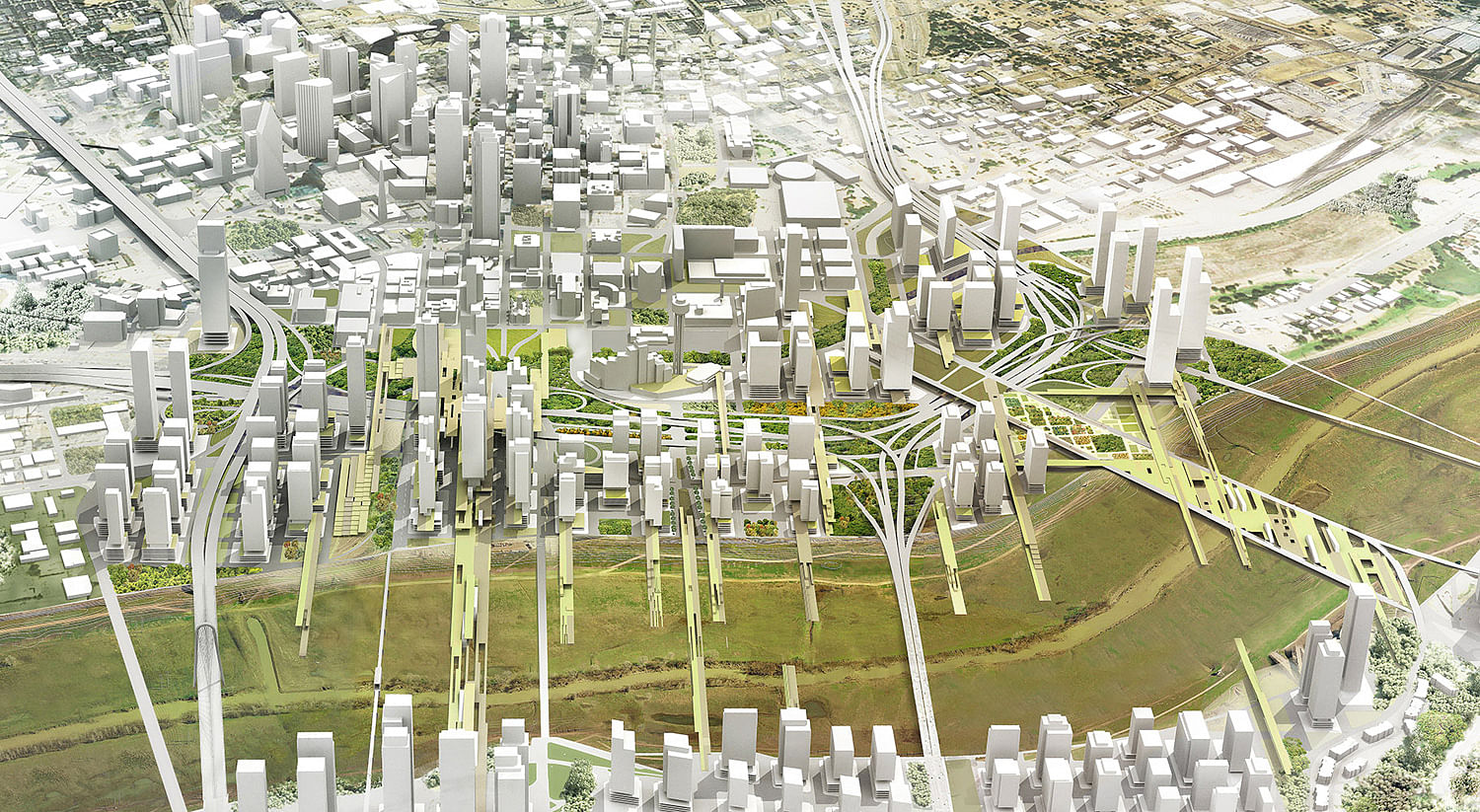
Image courtesy of Bogdan Chipara.

"Bridging" by architect Bogdan Chipara from Constanta, Romania scored as a finalist in the Open Competition in the Dallas Connected City Design Challenge results we posted last week.

For Downtown Dallas' future development, Professional and Open category participants around the globe contributed their ideas on how to better connect the city to the Trinity River.

See Bogdan's approach right below.

Project description:

Bridging by Architect Bogdan Chipara
An Urban Design Solution for “The Connected City” International Competition

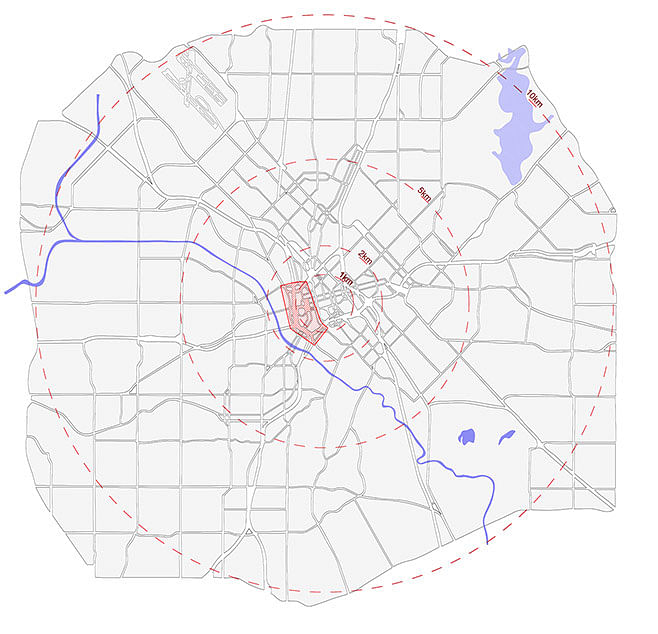
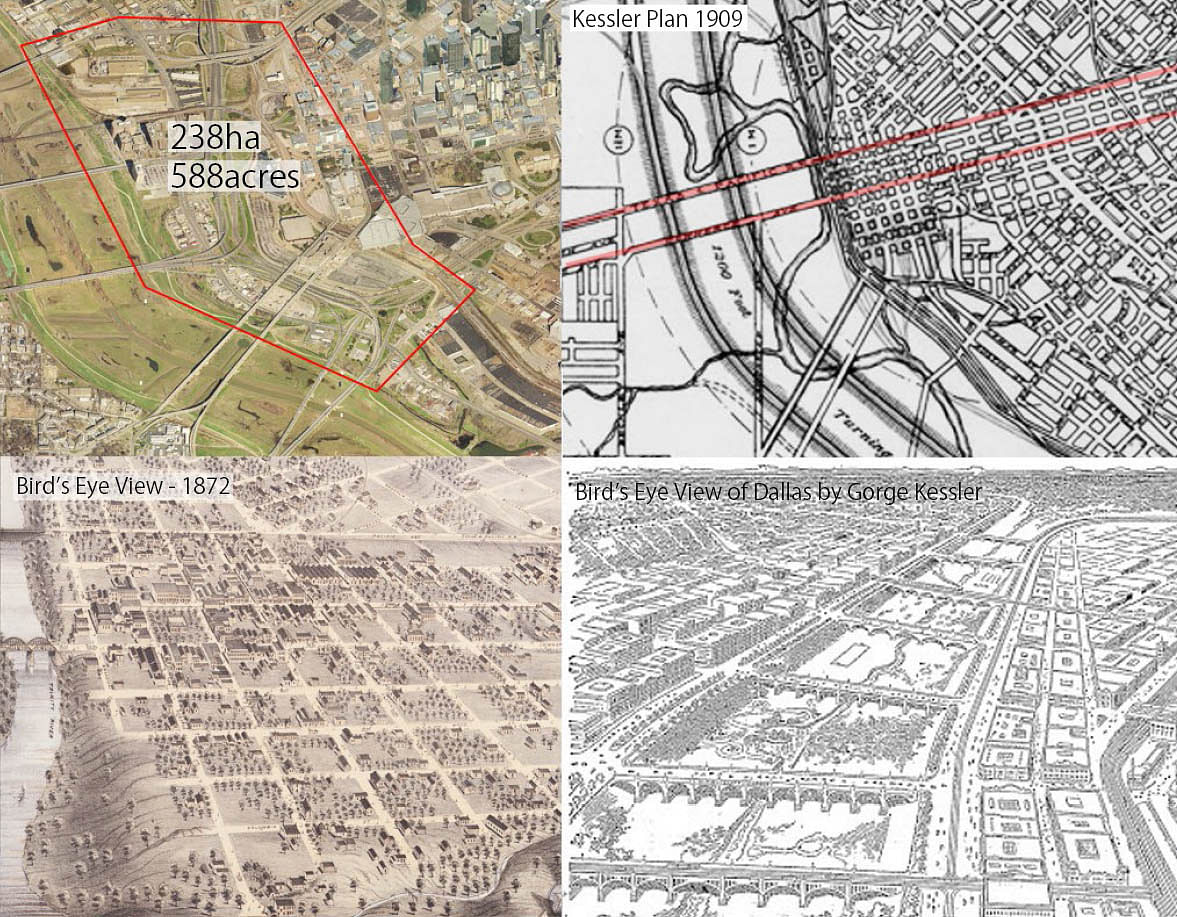
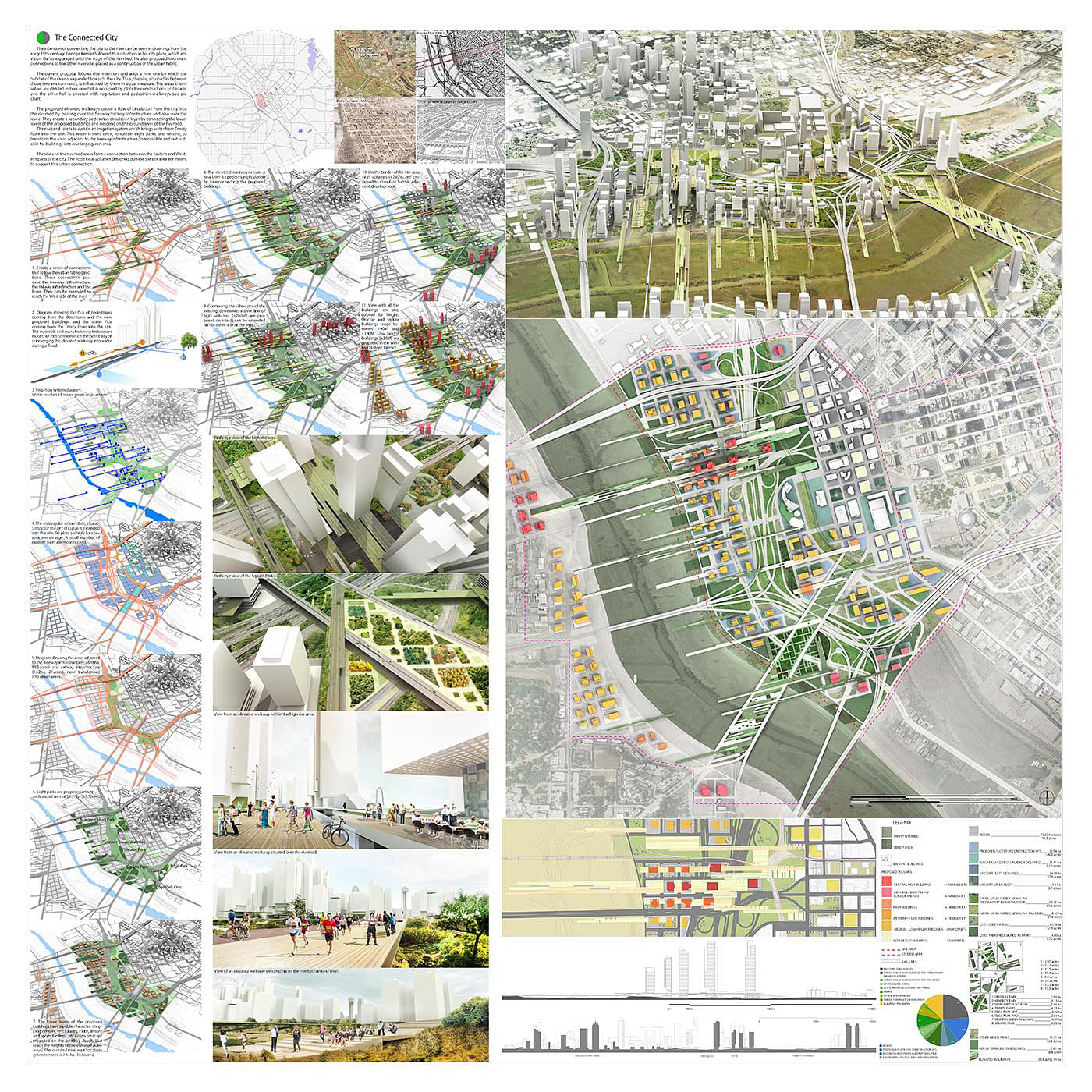
"The intention of connecting the city to the river can be seen in drawings from the early 19th century. George Kessler followed this intention in his city plans, which envision Dallas expanded until the edge of the riverbed. He also proposed two main connections to the other riverside, placed as a continuation of the urban fabric."
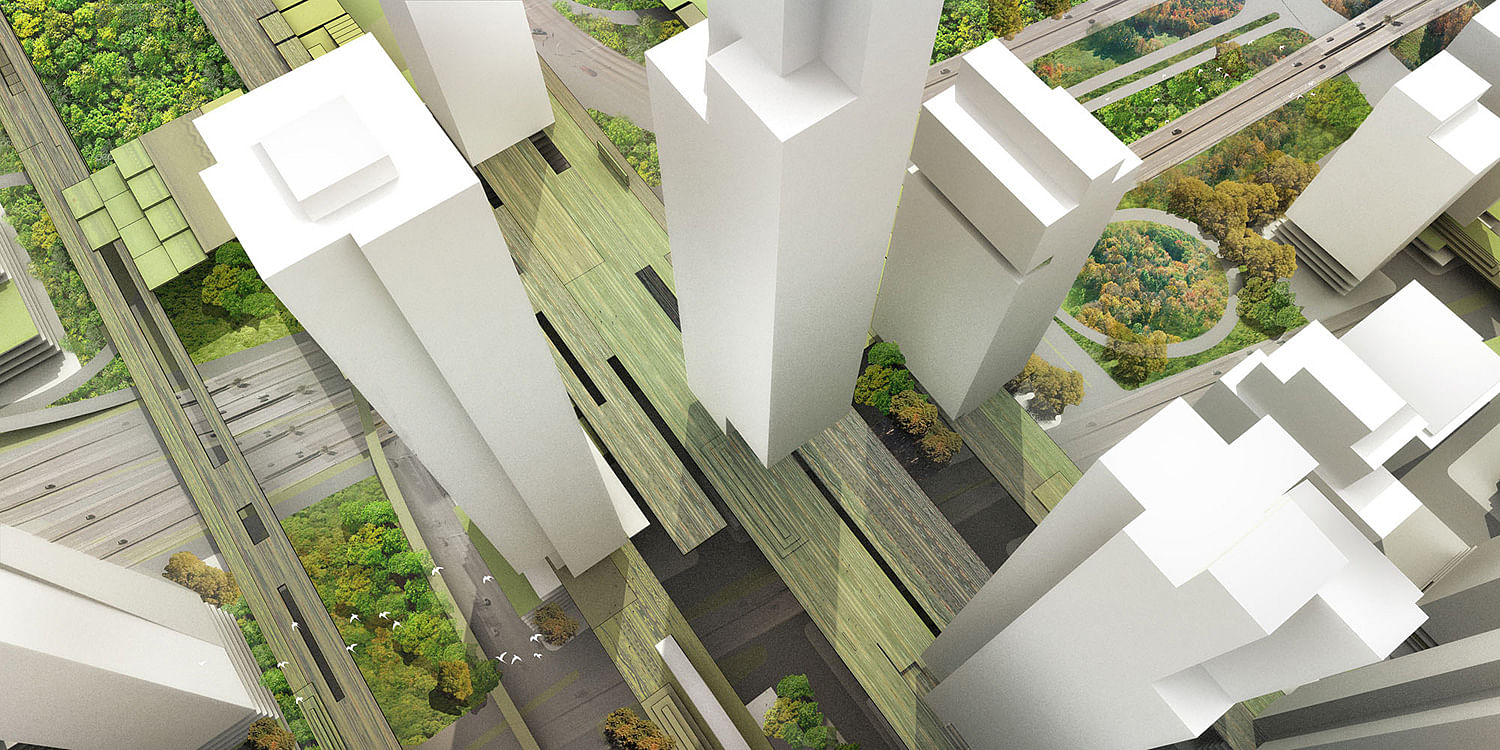
Image courtesy of Bogdan Chipara.

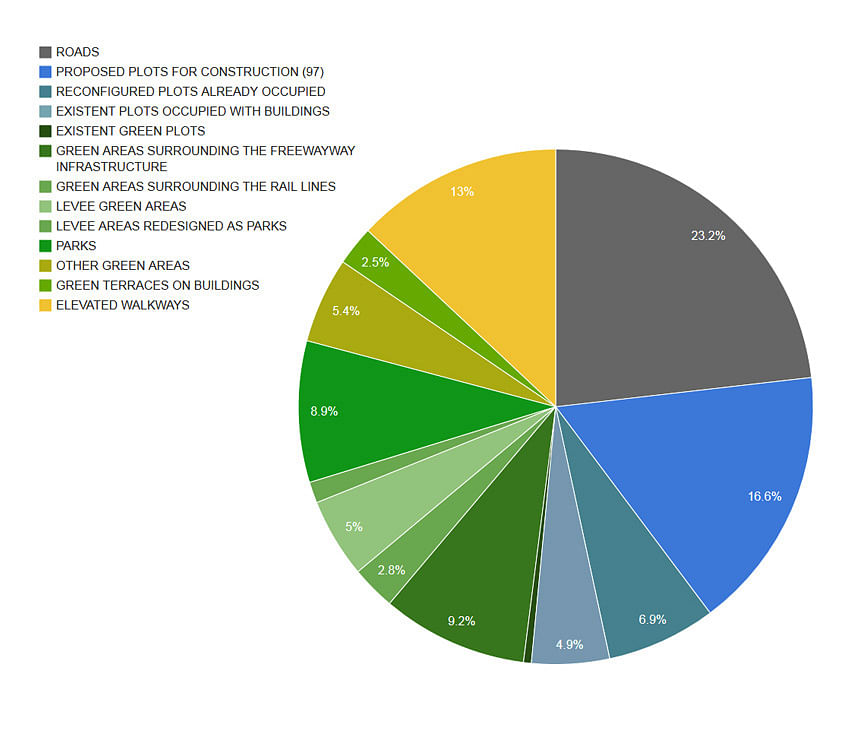
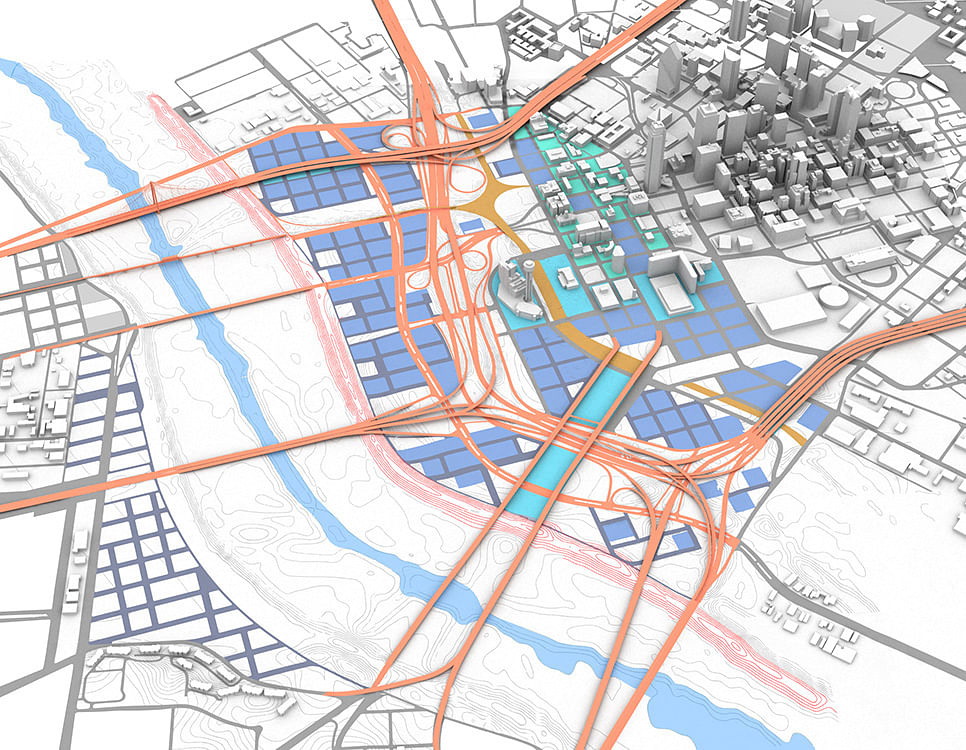
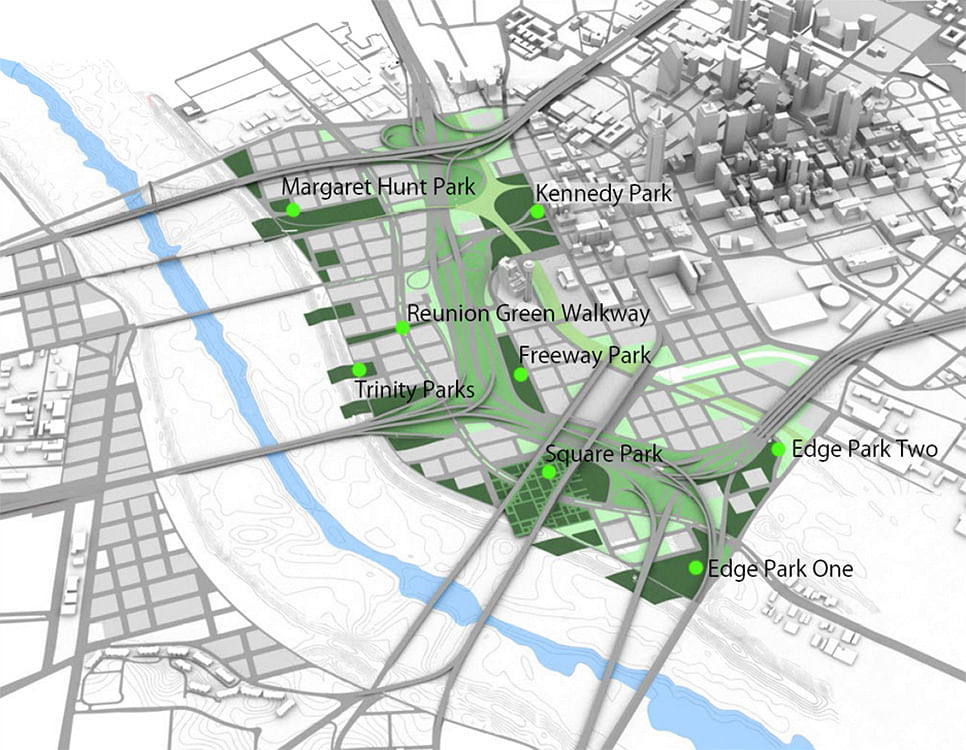
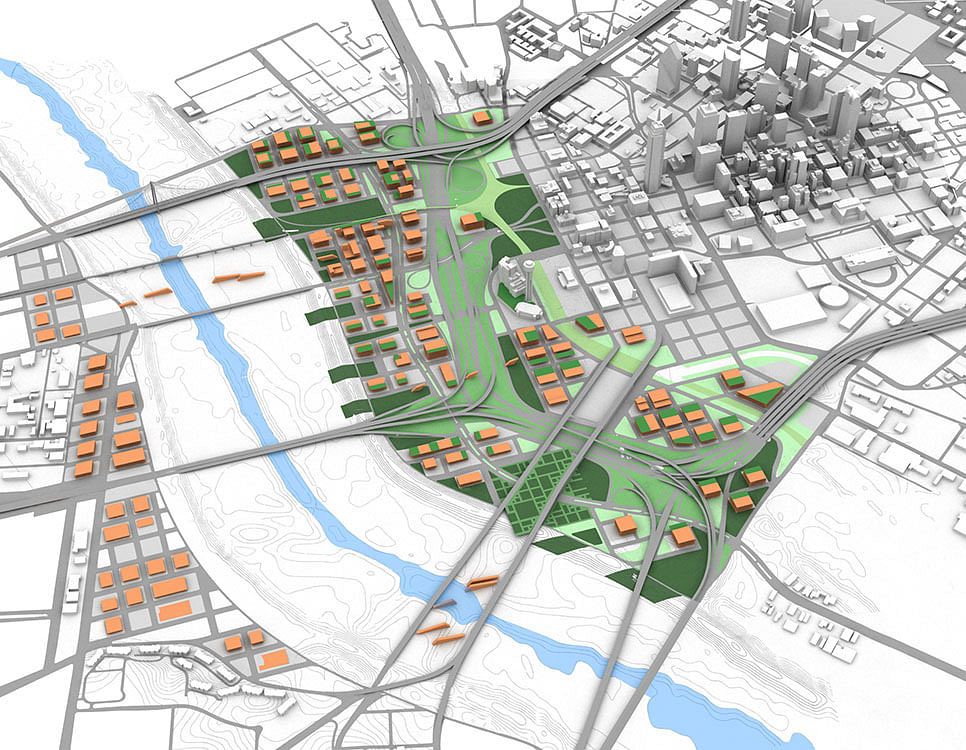
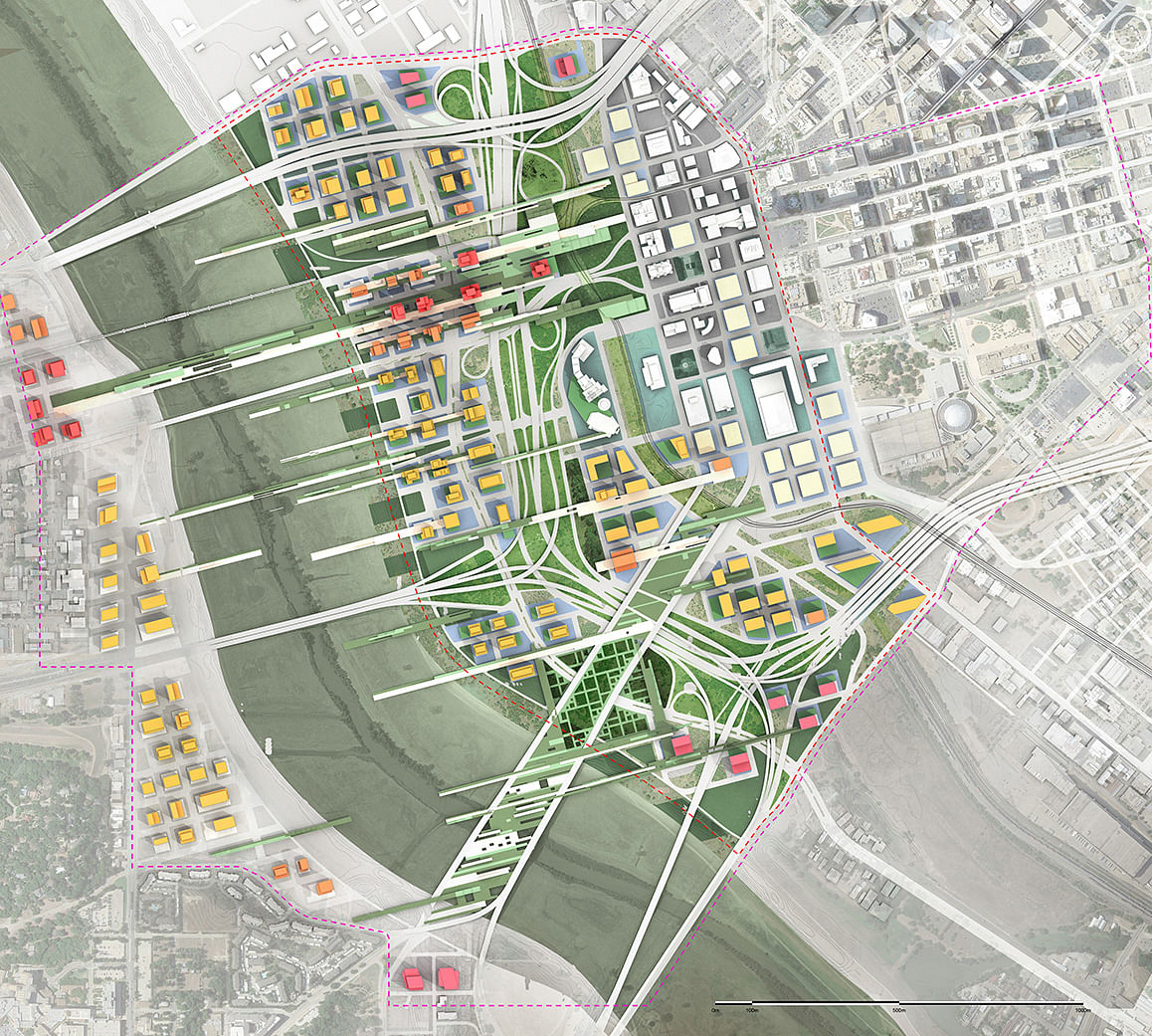
"The current proposal follows this intention, and adds a new one by which the habitat of the river is expanded towards the city. Thus, the site, situated in between those two environments, is influenced by them in equal measure. The areas themselves are divided in two: one half is occupied by plots for constructions and roads, and the other half is covered with vegetation and pedestrian walkways."

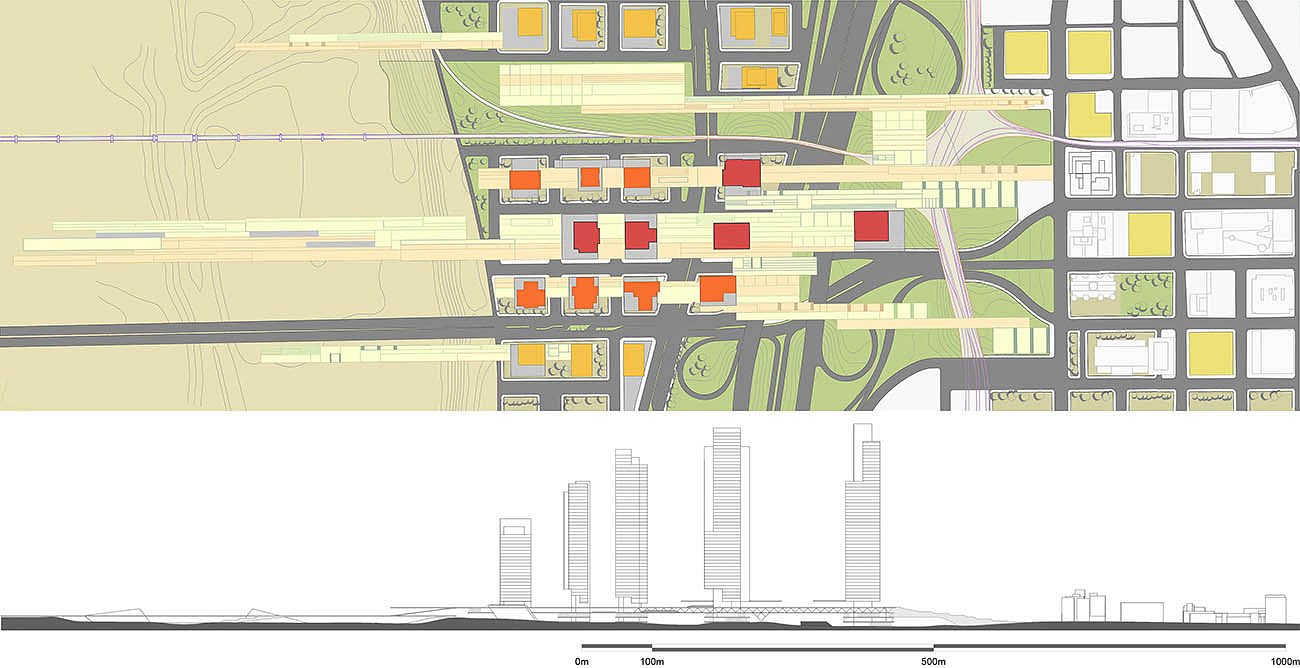
City section. Image courtesy of Bogdan Chipara.

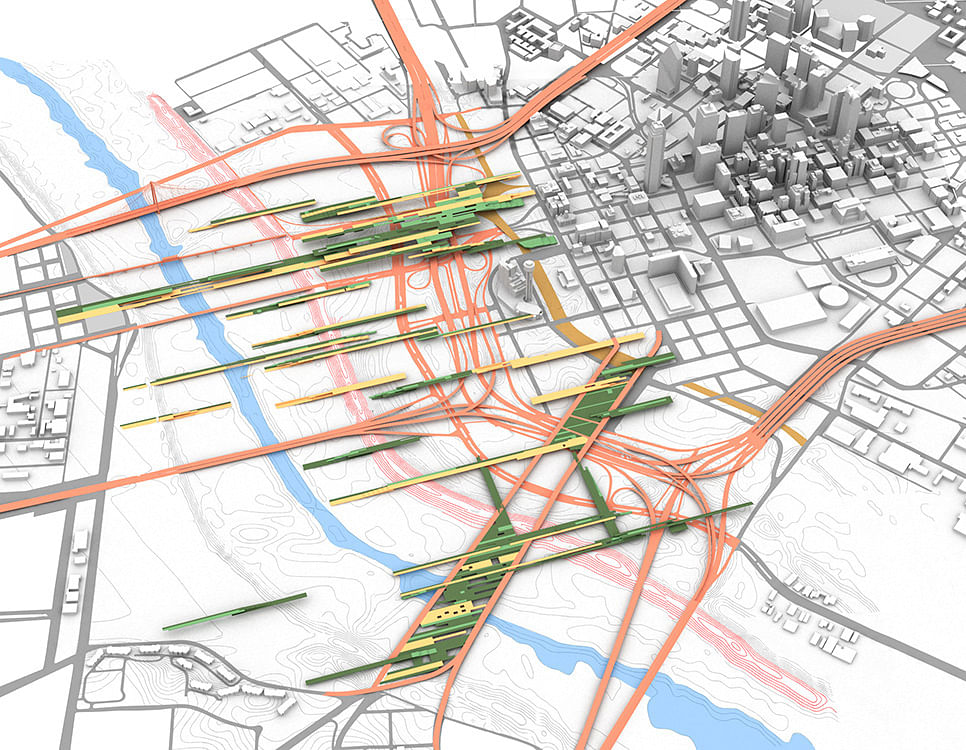
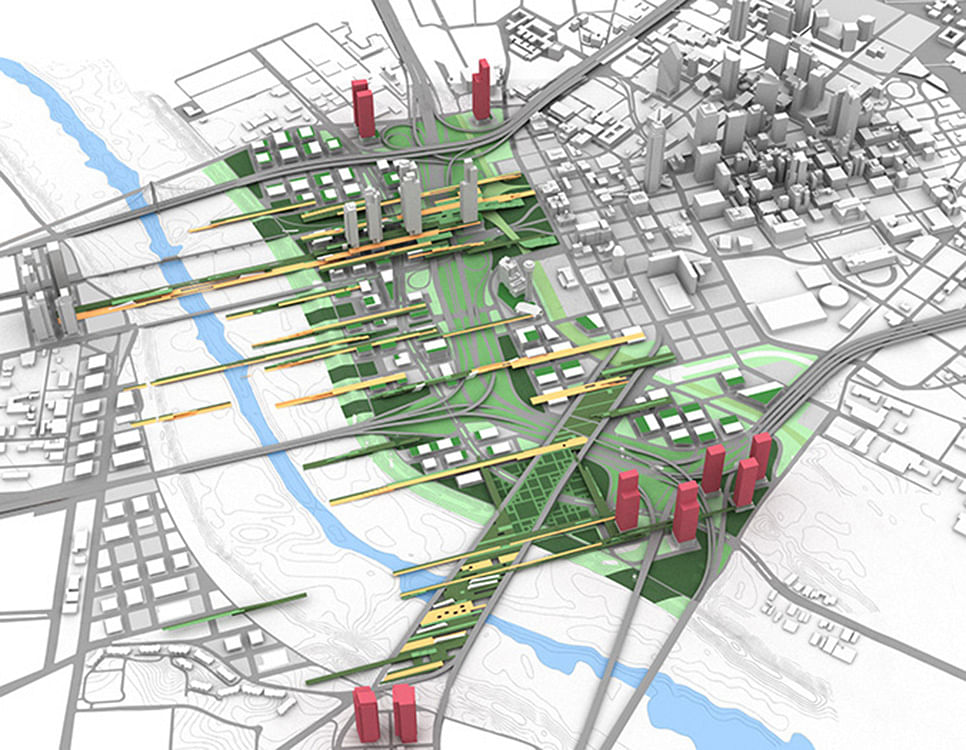
"The proposed elevated walkways create a flow of circulation from the city into the riverbed by passing over the freeway/railway infrastructure and also over the levee. They create a secondary pedestrian circulation layer by connecting the lower levels of the proposed buildings and descend on the ground level of the riverbed."
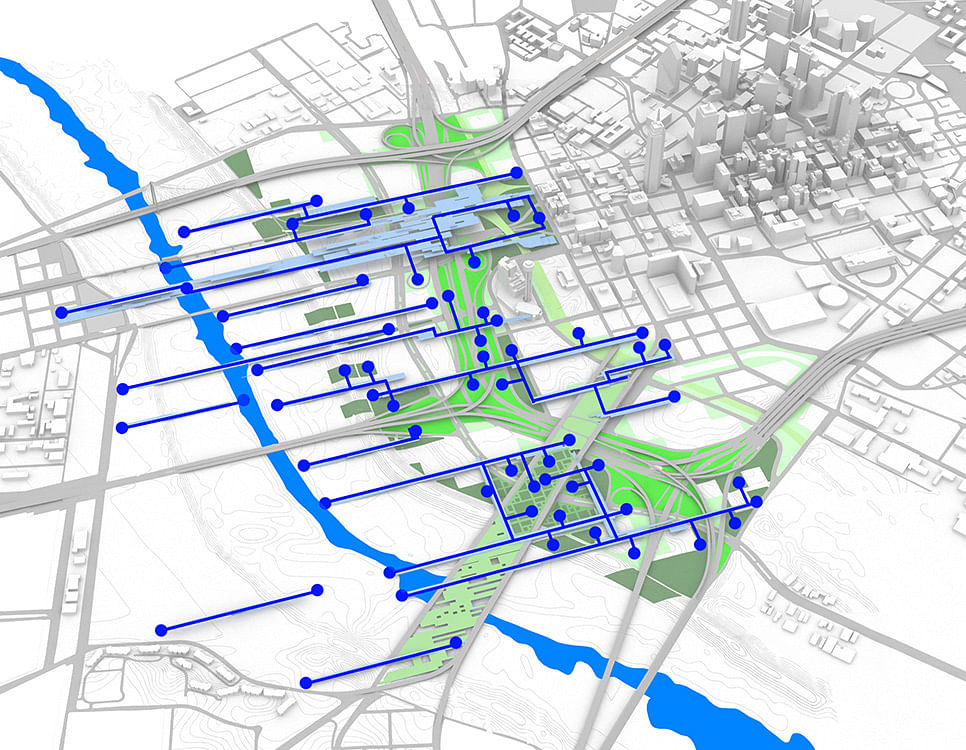
Irrigation system. Image courtesy of Bogdan Chipara.

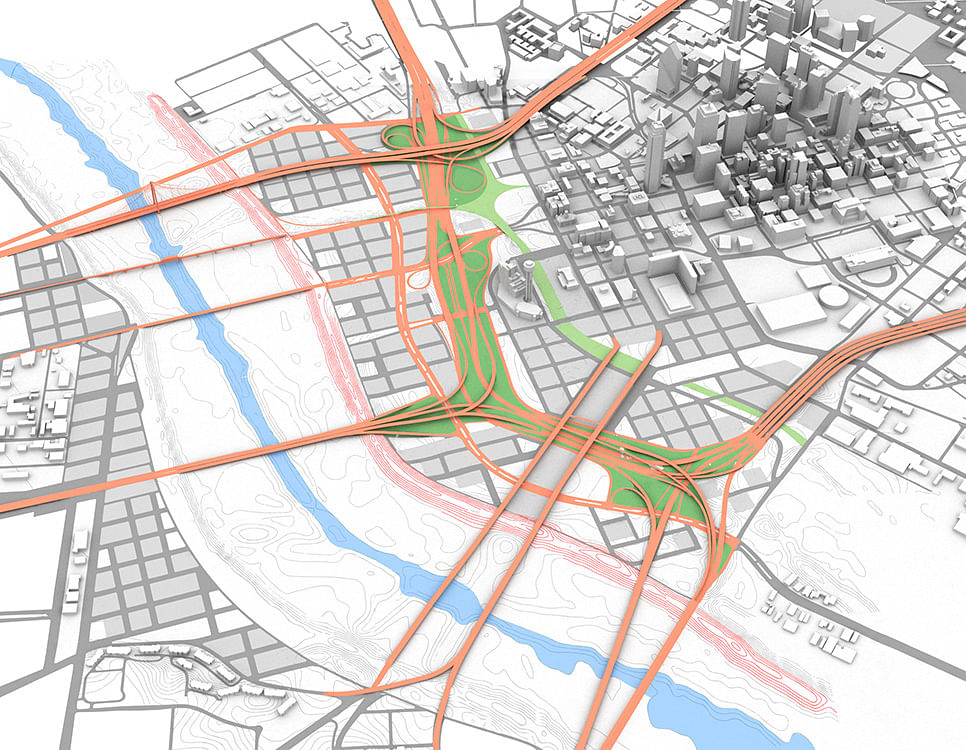
"Their second role is to sustain an irrigation system which brings water from Trinity River into the site. This water is used once, to sustain eight parks, and second, to transform the areas adjacent to the freeway infrastructure (inaccessible and not suitable for building) into one large green area."
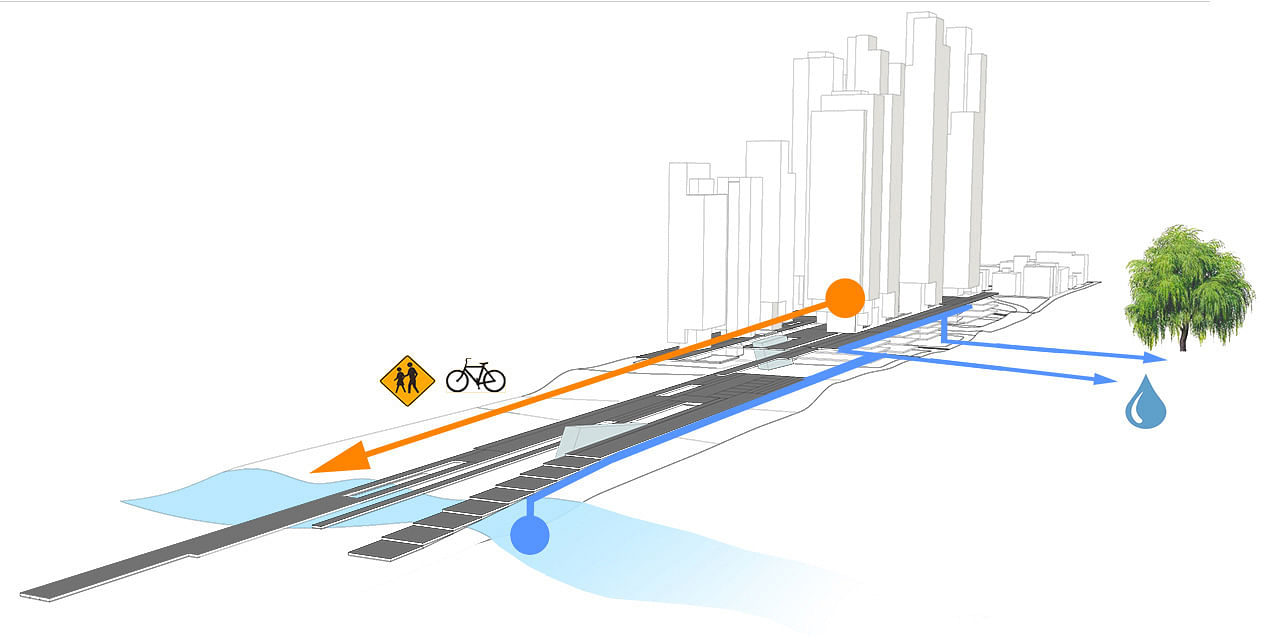
Water-Pedestrian Flux. Image courtesy of Bogdan Chipara.

"Diagram showing the flux of pedestrians coming from the downtown and the new proposed buildings, and the water flux coming from the Trinity River into the site. The materials and manufacturing techniques must take into consideration the possibility of submerging the elevated walkway into water during a flood."
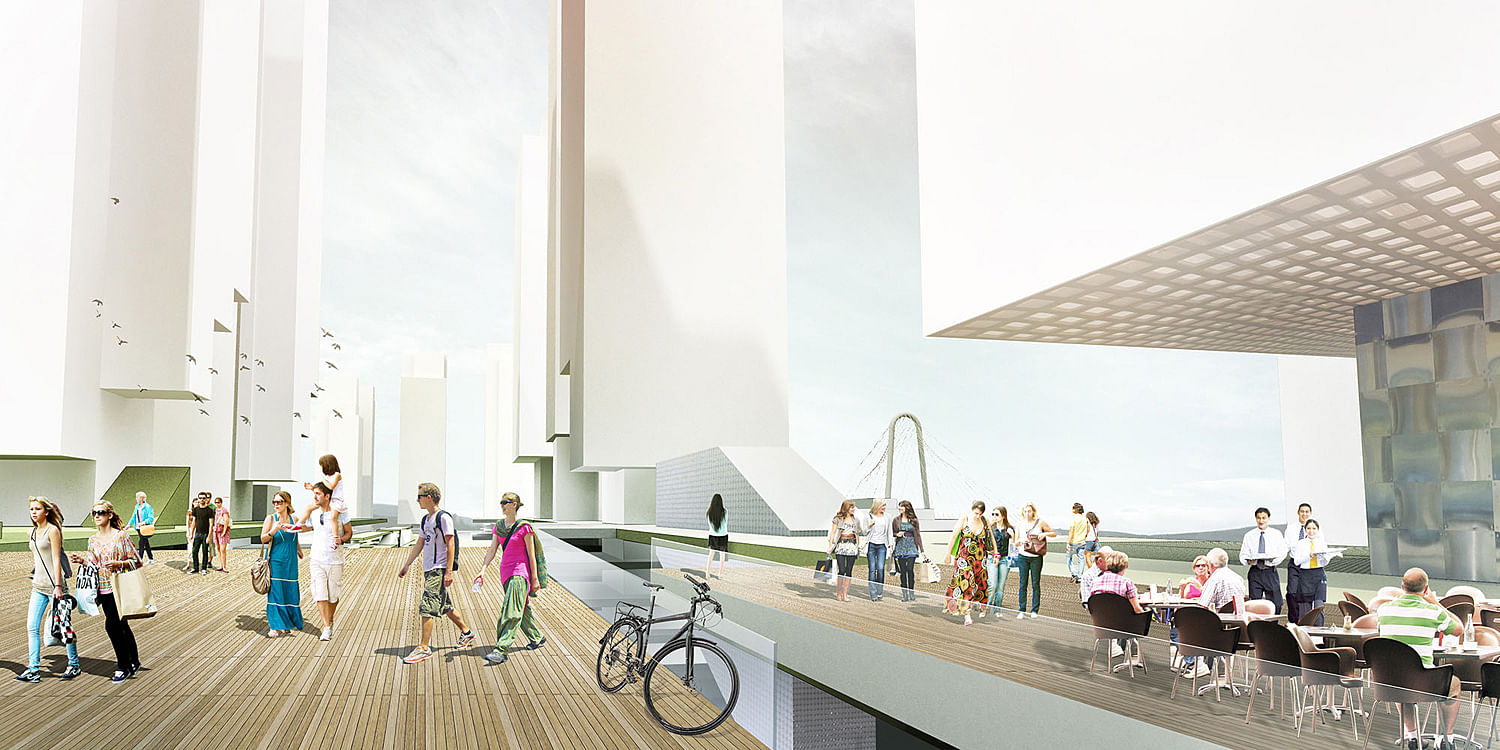
Image courtesy of Bogdan Chipara.

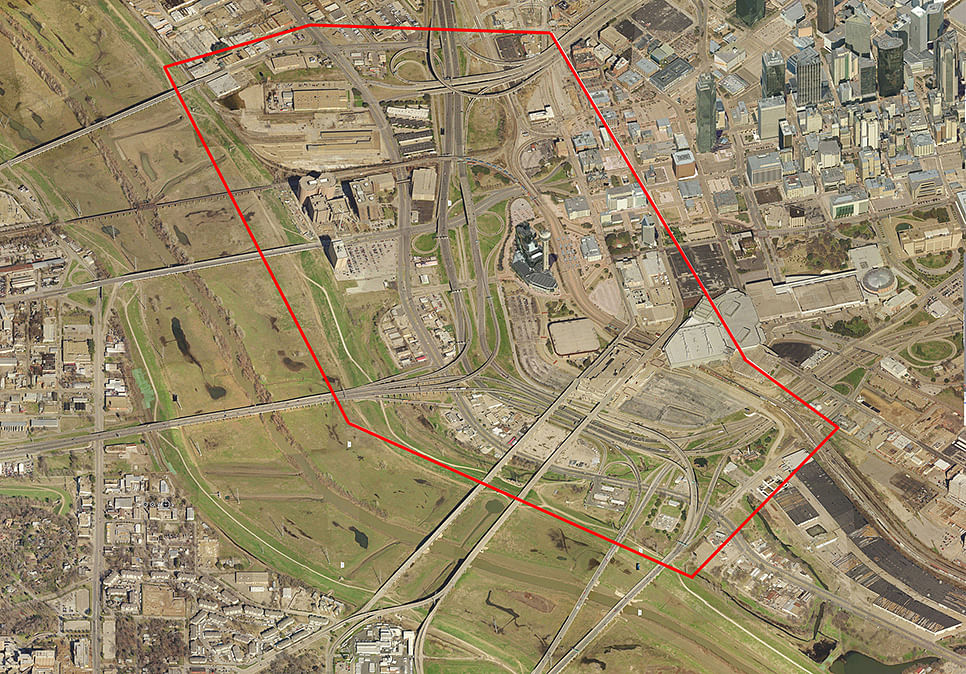
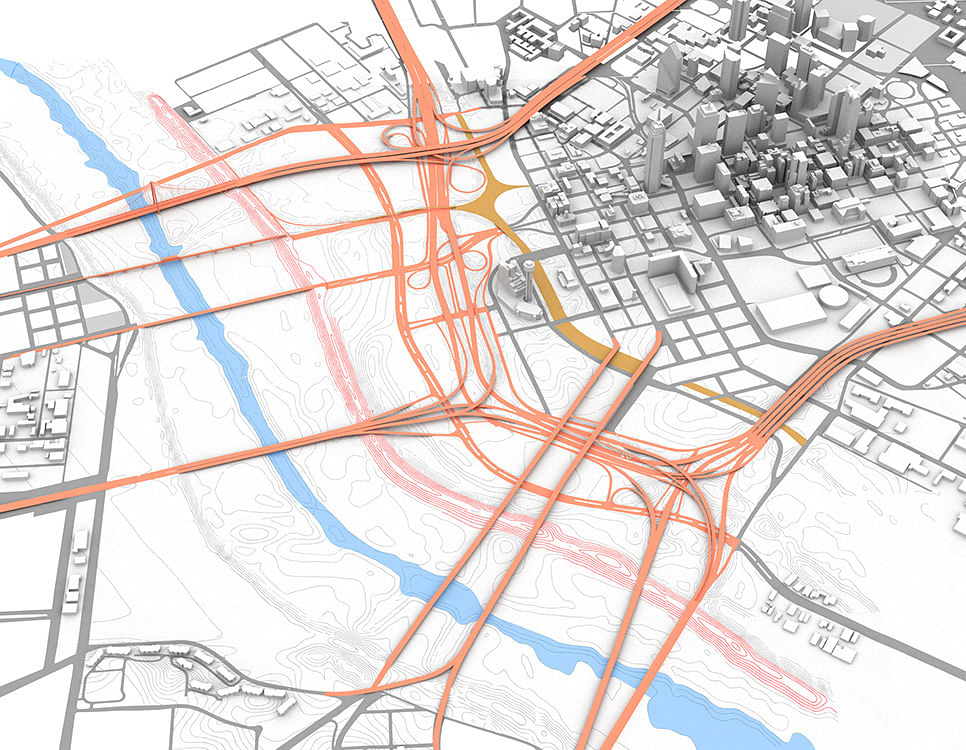
"'The Challenge area is also the home to some of the most significant freeway infrastructure within Dallas. Multiple freeways converge in this area creating vital regional connections that have influenced Dallas’ growth since the late 1960s...'"
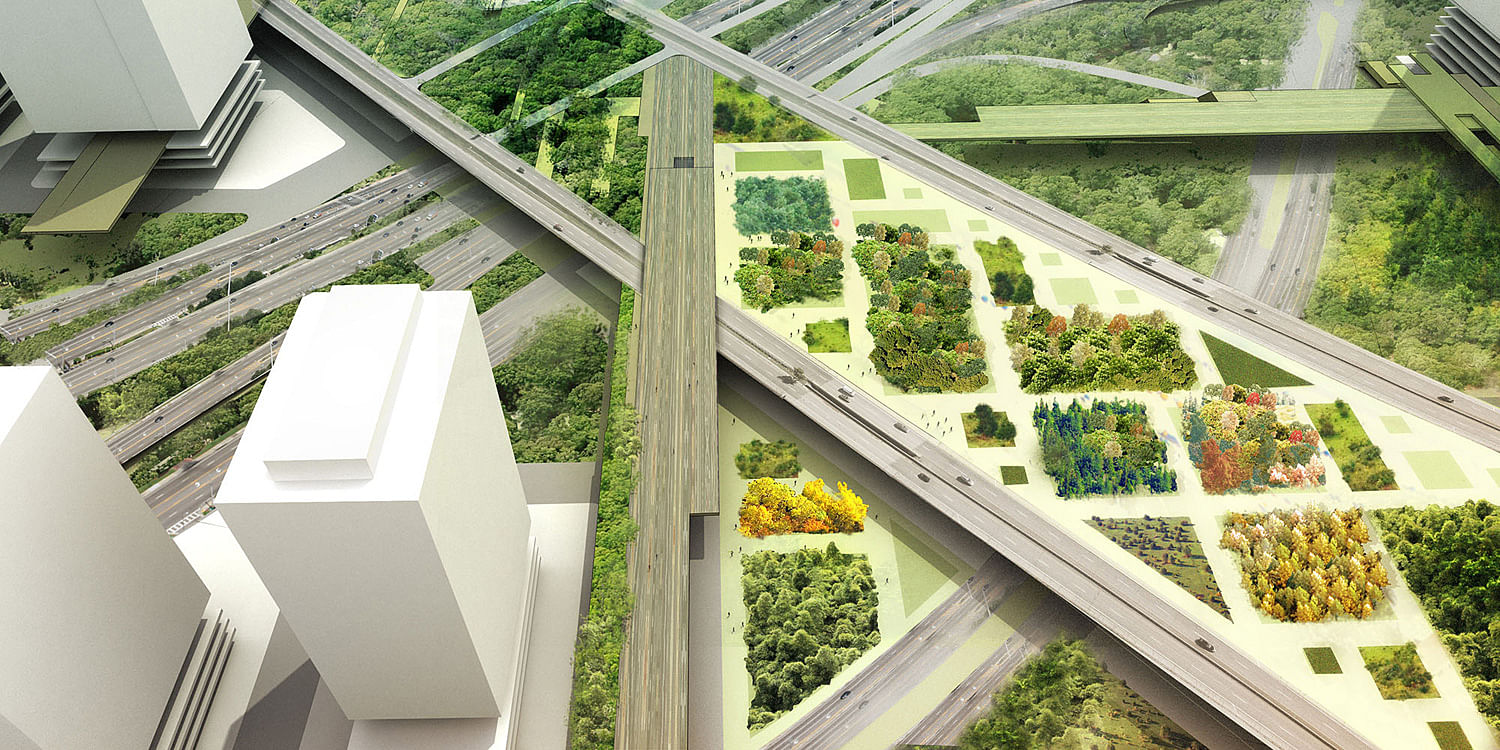
Image courtesy of Bogdan Chipara.

"'...They are significantly important as a part of the larger North Texas highway system. Their functionality is key to many areas of our city and their presence has influenced the development of this area for decades.' - from the competition brief."
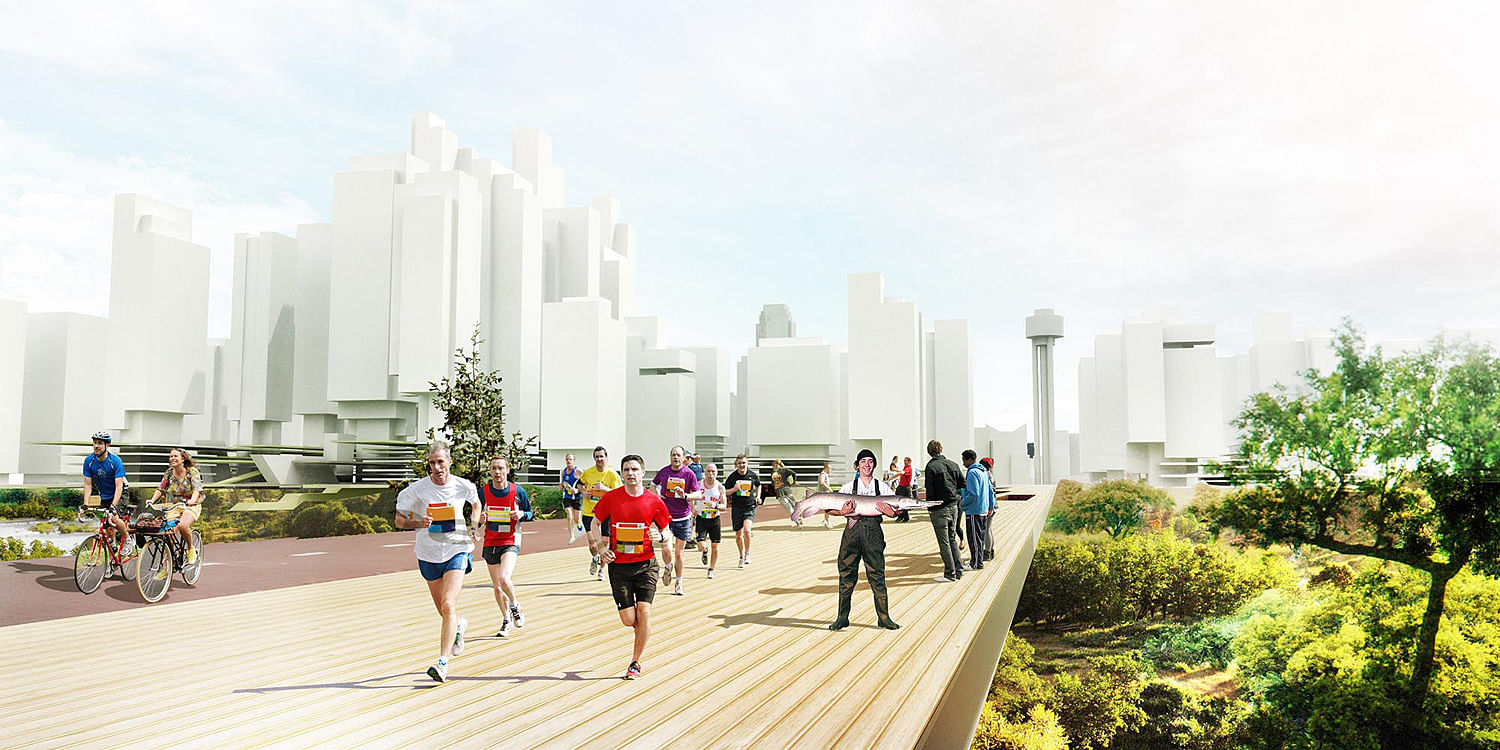
Image courtesy of Bogdan Chipara.

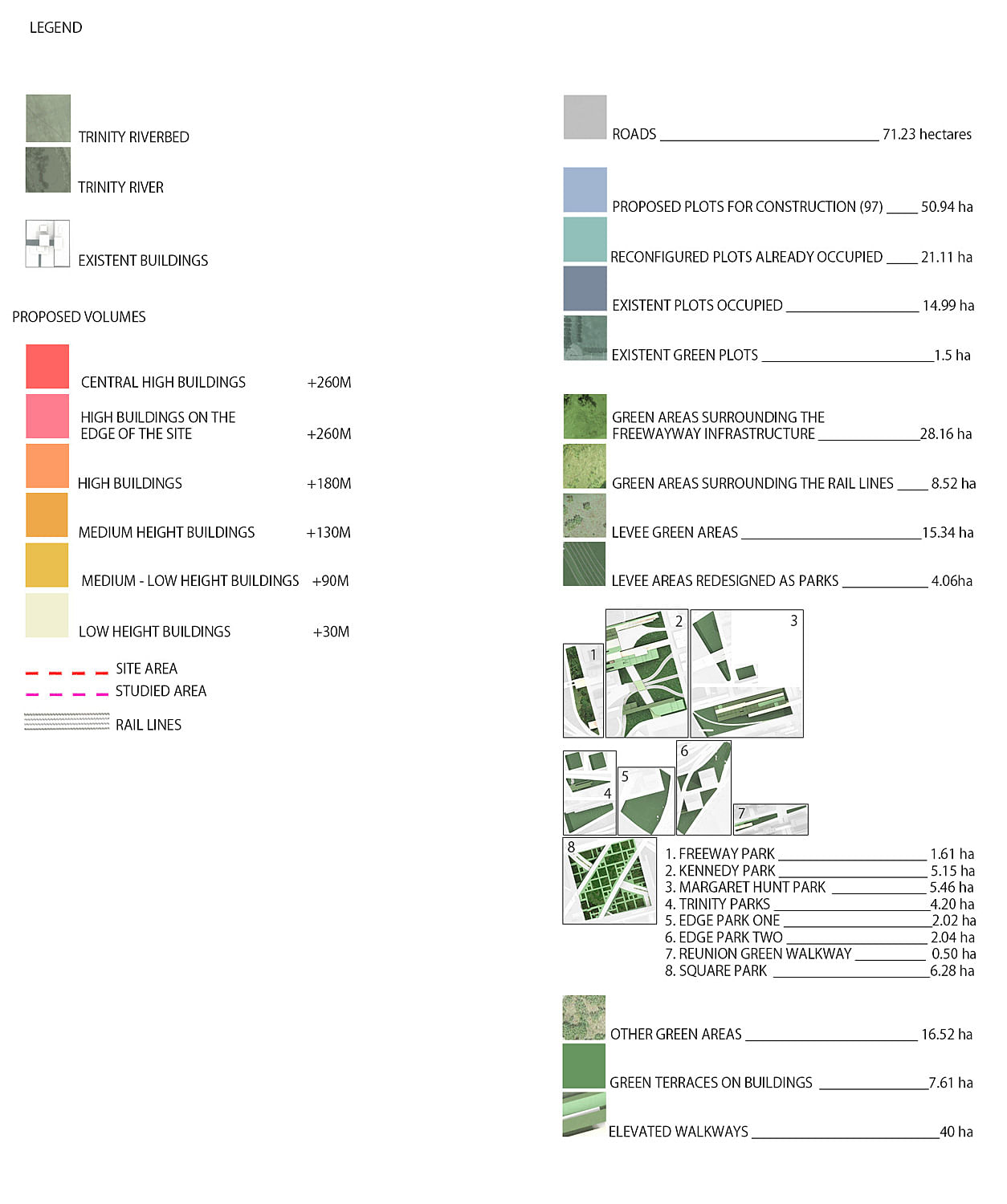
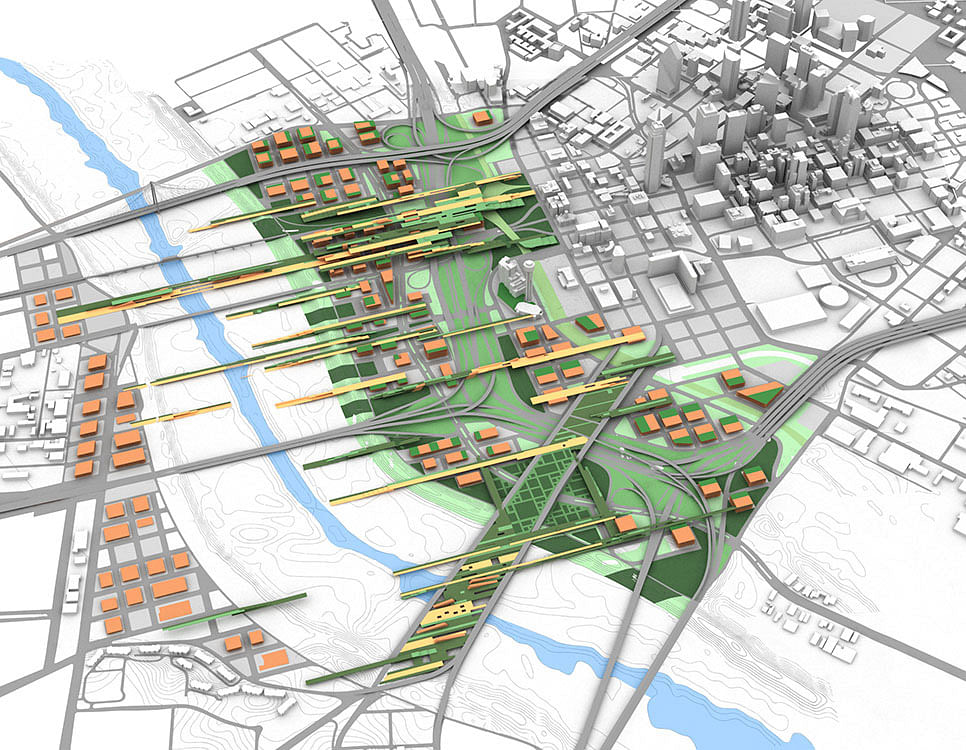
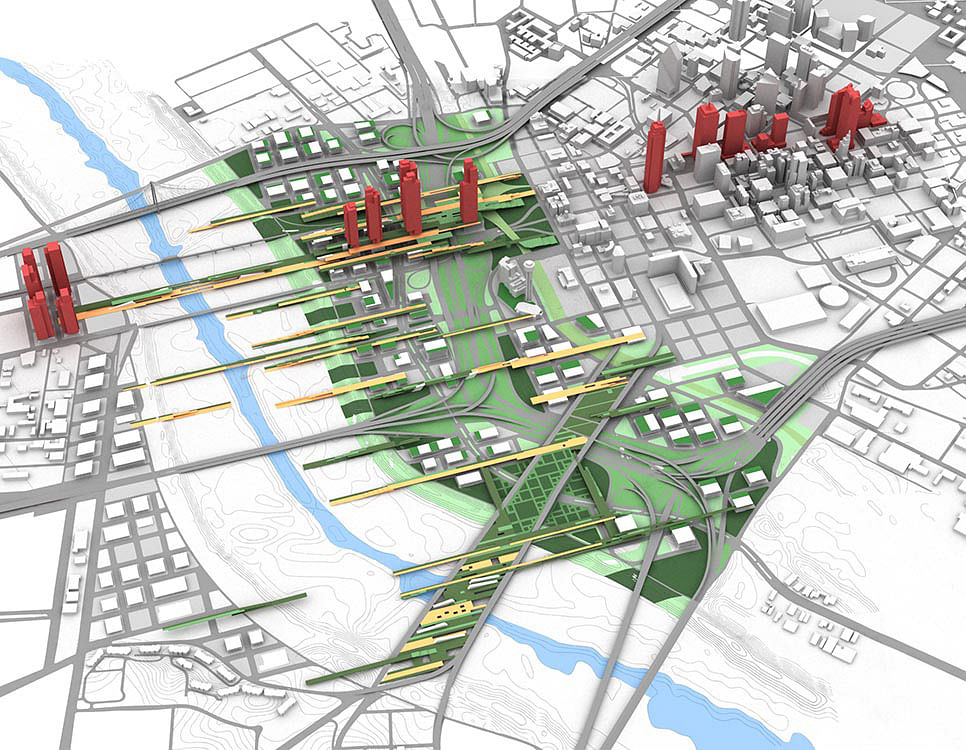
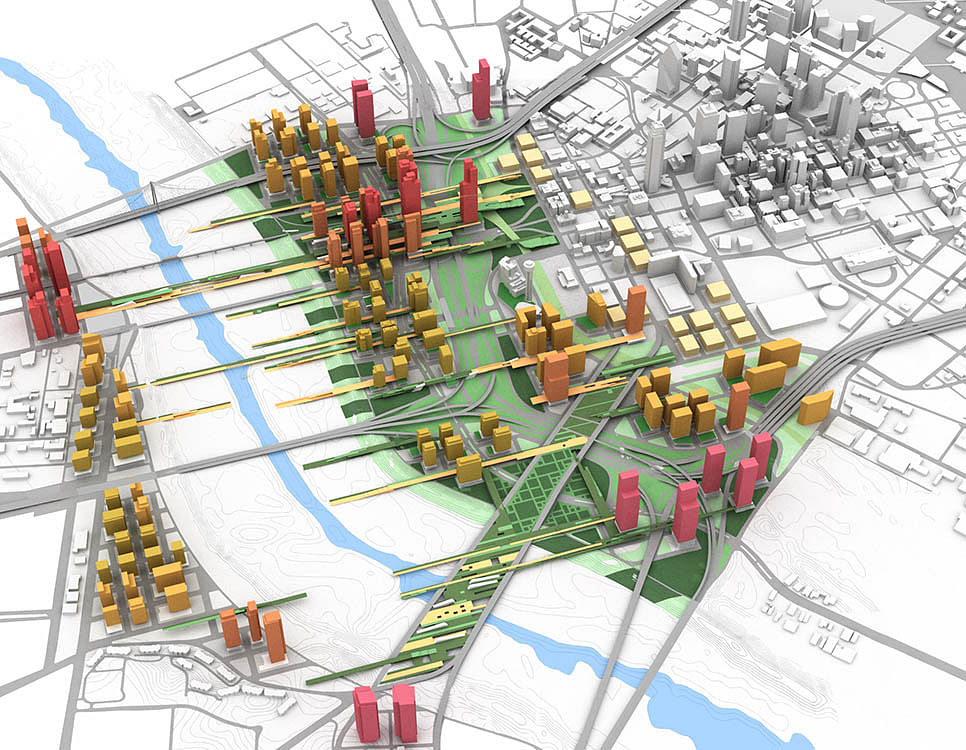
"The lower levels of the proposed buildings have a public character: shopping centers, restaurants, clubs, leisure and sports facilities. etc Green areas are proposed on the building levels that reach the heights of the elevated walkways. The cumulative area for these green terraces is 7.61ha (18.8acres). The lower levels of the proposed buildings have a public character: shopping centers, restaurants, clubs, leisure and sports facilities. etc."
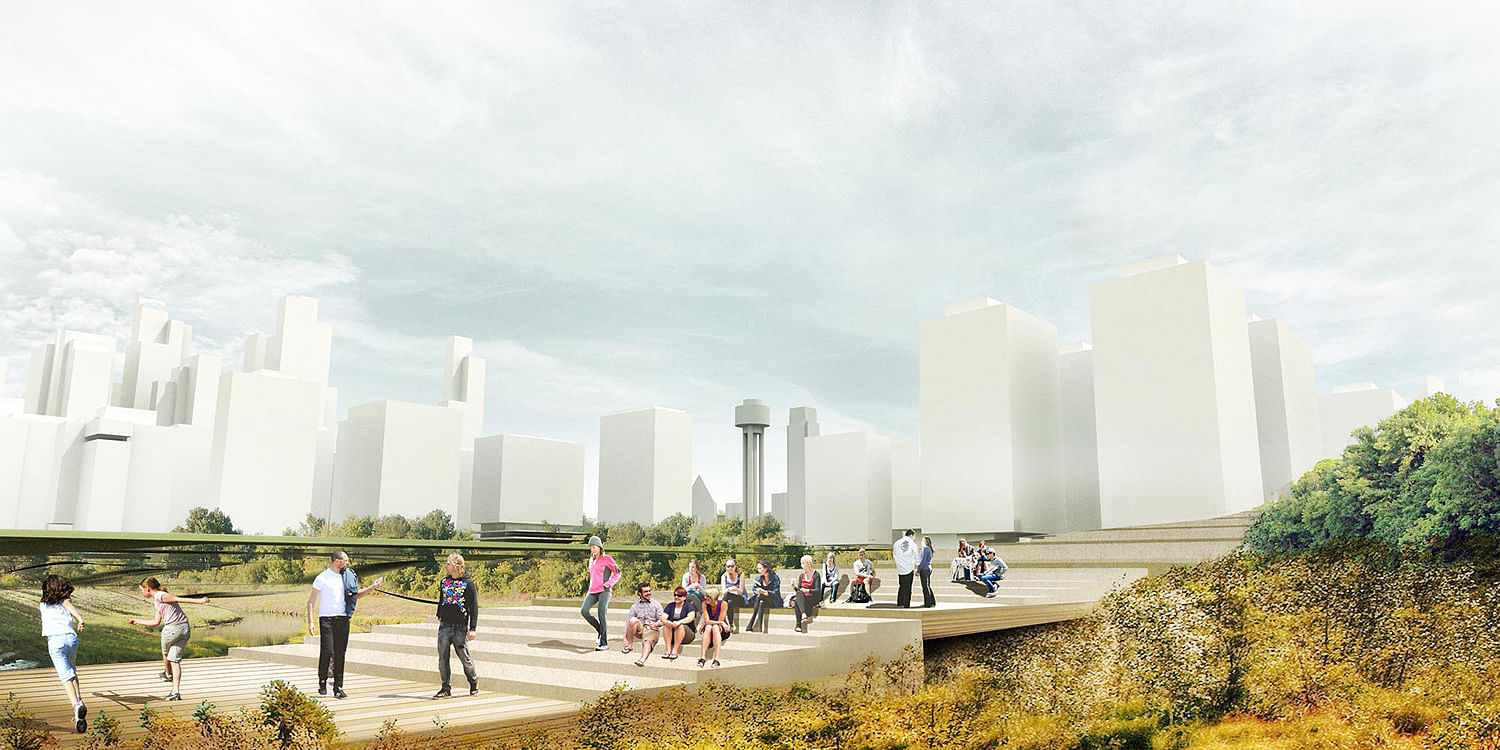
Image courtesy of Bogdan Chipara.

"Green areas are proposed on the building levels that reach the heights of the elevated walkways. The cummulative area for these green terraces is 7.61ha (18.8acres). The elevated walkways create a new layer for pedestrian circulation by interconnecting the proposed buildings"

All images courtesy of Bogdan Chipara.

Click the thumbnails below to see more project images.
Related

usa ● trinity river ● texas ● planning ● future ● development ● dallas connected city ● dallas ● cityscape ● bogdan chipara

Share

  • Follow

    0 Comments

  • Comment as :

A closer look into "Bridging", a Dallas Connected City finalist entry

Coal Power Plant Mutation by Bogdan Chipara

Sign up for Bustler's Email Newsletters

Next page » Loading

A closer look into "Bridging", a Dallas Connected City finalist entry

By Bustler Editors|

Friday, Mar 21, 2014

Share

Image courtesy of Bogdan Chipara.

Related

usa ● trinity river ● texas ● planning ● future ● development ● dallas connected city ● dallas ● cityscape ● bogdan chipara

"Bridging" by architect Bogdan Chipara from Constanta, Romania scored as a finalist in the Open Competition in the Dallas Connected City Design Challenge results we posted last week.

For Downtown Dallas' future development, Professional and Open category participants around the globe contributed their ideas on how to better connect the city to the Trinity River.

See Bogdan's approach right below.

Project description:

Bridging by Architect Bogdan Chipara
An Urban Design Solution for “The Connected City” International Competition

"The intention of connecting the city to the river can be seen in drawings from the early 19th century. George Kessler followed this intention in his city plans, which envision Dallas expanded until the edge of the riverbed. He also proposed two main connections to the other riverside, placed as a continuation of the urban fabric."

Image courtesy of Bogdan Chipara.

"The current proposal follows this intention, and adds a new one by which the habitat of the river is expanded towards the city. Thus, the site, situated in between those two environments, is influenced by them in equal measure. The areas themselves are divided in two: one half is occupied by plots for constructions and roads, and the other half is covered with vegetation and pedestrian walkways."

City section. Image courtesy of Bogdan Chipara.

"The proposed elevated walkways create a flow of circulation from the city into the riverbed by passing over the freeway/railway infrastructure and also over the levee. They create a secondary pedestrian circulation layer by connecting the lower levels of the proposed buildings and descend on the ground level of the riverbed."

Irrigation system. Image courtesy of Bogdan Chipara.

"Their second role is to sustain an irrigation system which brings water from Trinity River into the site. This water is used once, to sustain eight parks, and second, to transform the areas adjacent to the freeway infrastructure (inaccessible and not suitable for building) into one large green area."

Water-Pedestrian Flux. Image courtesy of Bogdan Chipara.

"Diagram showing the flux of pedestrians coming from the downtown and the new proposed buildings, and the water flux coming from the Trinity River into the site. The materials and manufacturing techniques must take into consideration the possibility of submerging the elevated walkway into water during a flood."

Image courtesy of Bogdan Chipara.

"'The Challenge area is also the home to some of the most significant freeway infrastructure within Dallas. Multiple freeways converge in this area creating vital regional connections that have influenced Dallas’ growth since the late 1960s...'"

Image courtesy of Bogdan Chipara.

"'...They are significantly important as a part of the larger North Texas highway system. Their functionality is key to many areas of our city and their presence has influenced the development of this area for decades.' - from the competition brief."

Image courtesy of Bogdan Chipara.

"The lower levels of the proposed buildings have a public character: shopping centers, restaurants, clubs, leisure and sports facilities. etc Green areas are proposed on the building levels that reach the heights of the elevated walkways. The cumulative area for these green terraces is 7.61ha (18.8acres). The lower levels of the proposed buildings have a public character: shopping centers, restaurants, clubs, leisure and sports facilities. etc."

Image courtesy of Bogdan Chipara.

"Green areas are proposed on the building levels that reach the heights of the elevated walkways. The cummulative area for these green terraces is 7.61ha (18.8acres). The elevated walkways create a new layer for pedestrian circulation by interconnecting the proposed buildings"

All images courtesy of Bogdan Chipara.

Click the thumbnails below to see more project images.
Share

  • Follow

    0 Comments

  • Comment as :

Archinect JobsArchinect Jobs

The Archinect Job Board attracts the world's top architectural design talents.

VIEW ALL JOBS POST A JOB

Architect / Urban Designer

Office for the Next Environment (OFTN)

Architect / Urban Designer

New York, NY, US

Project Architect / Senior Designer

Touloukian Touloukian Inc.

Project Architect / Senior Designer

Boston, MA, US

Interior Project Manager

HLW International LLP

Interior Project Manager

New York, NY, US

Project Designer (3-5 years)

Edmonds + Lee Architects

Project Designer (3-5 years)

San Francisco, CA, US

Junior Architect

Eric Colbert & Associates

Junior Architect

Washington, DC, US

Junior Architect

Elizabeth Roberts Architecture & Design

Junior Architect

Brooklyn, NY, US

Marketing Coordinator / EA

Stoss Landscape Urbanism

Marketing Coordinator / EA

Boston, MA, US

Junior Designer

OLIVER FREUNDLICH DESIGN

Junior Designer

New York, NY, US

Intermediate Designer / Architect [5+ years experience]

RO | ROCKETT DESIGN

Intermediate Designer / Architect [5+ years experience]

Sausalito, CA, US

Project Architect

Berliner Architects

Project Architect

Culver City, CA, US

Next page » Loading