• Login / Join
  • About
  • •
  • Contact
  • •
  • Advertising
bustler logo
bustler logo
  • News
  • Competitions
  • Events
  • Bustler is powered by Archinect
  • Sign up for Bustler's Email Newsletters

  • Follow these Bustler feeds:

  • Search

    Search in

  • Submit

    What are you submitting?

    News Pitch
    Competition
    Event
  • Login / Join
  • News|Competitions|Events
  • Search
    | Submit
    | Follow
  • Search in

    What are you submitting?

    News Pitch
    Competition
    Event

    Follow these Bustler feeds:

  • About|Contact|Advertising
  • Login / Join
Tagged: branch technology

Foster + Partners | Branch Technology score first prize in NASA 3D-Printed Habitat Challenge Phase 2: Level 1 test

By Justine Testado|

Tuesday, May 9, 2017
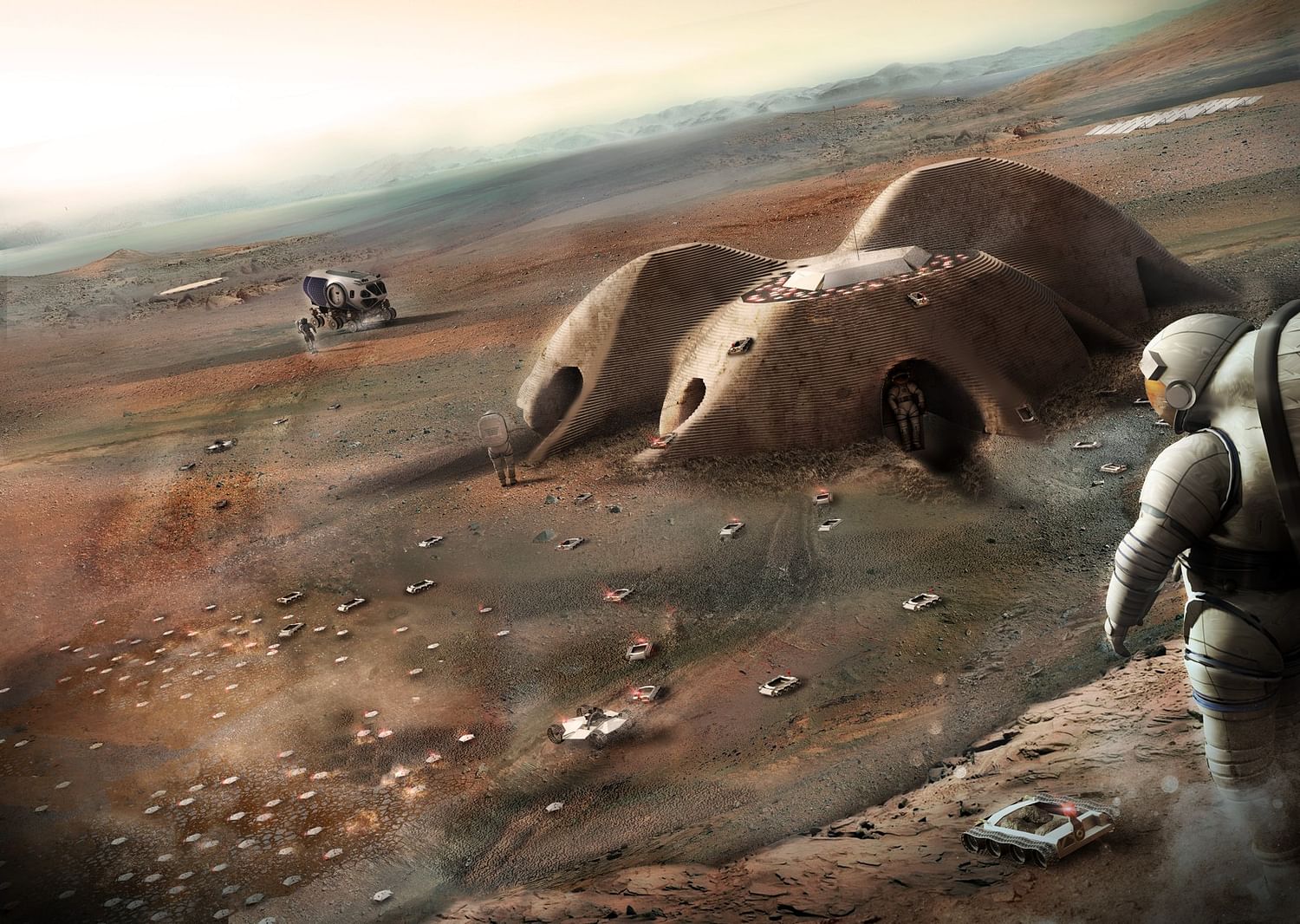
Foster + Partners' Mars Habitat concept. Image © Foster + Partners.

A team comprising Foster + Partners and Chattanooga-based Branch Technology recently won first prize in the NASA 3D-Printed Habitat Challenge's Phase 2: Level 1 Compression Test Competition. The three-phase Habitat Challenge envisions a future where autonomous machines can help build extra-terrestrial shelters for human habitation, and at the very least, potentially aid in developing technologies that can advance building fabrication methods here on Earth. Phase 2 is divided into three sub-competitions, with each level focusing on a different structural challenge. 

Foster + Partners achieved the highest score out of seven teams in this competition. University of Alaska, Fairbanks won second place, while the other five teams were Bubble Base from Winston-Salem, North Carolina; Pennsylvania State University of University Park; CTL Group Mars from Skokie, Illinois; ROBOCON of Singapore; and Moon X Construction from Seoul, South Korea.

Read on for more.
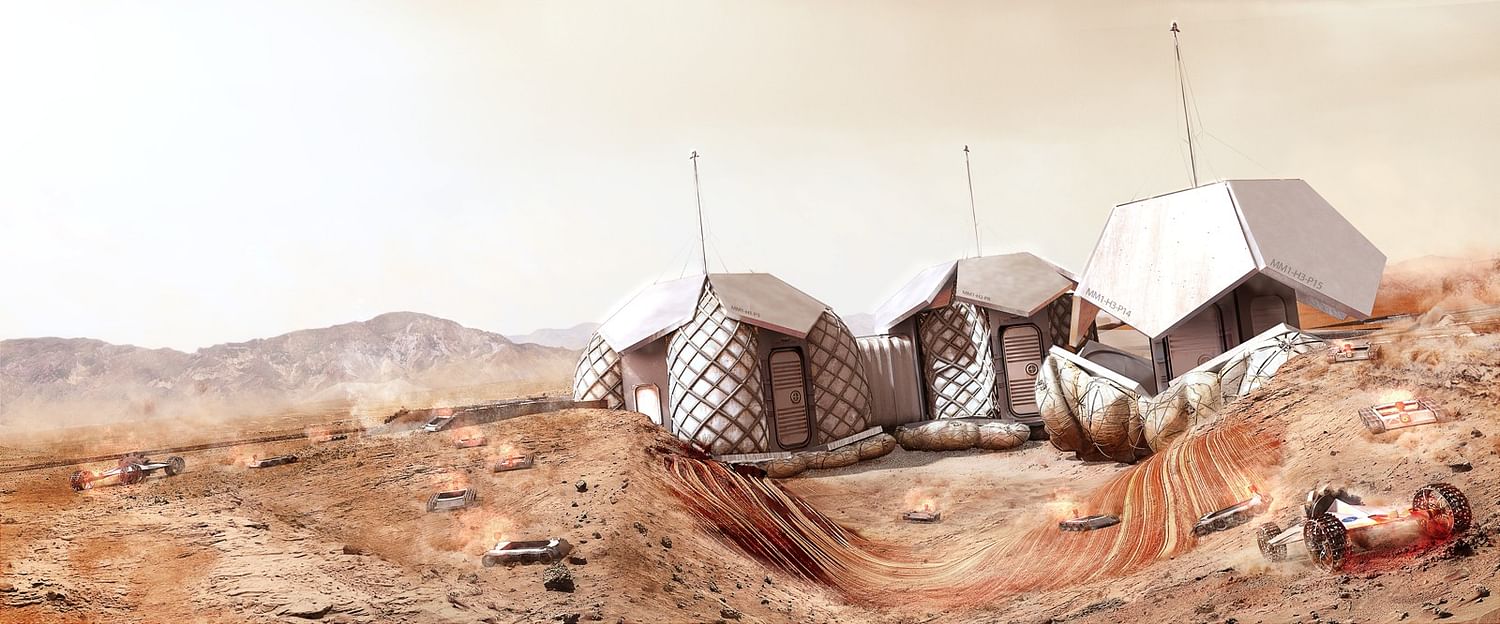
Foster + Partners' Mars Habitat concept. Image © Foster + Partners.

After winning second place in Phase 1 in 2015, Foster + Partners teamed up with Branch Technology to refine the original concept. 

In the Phase 2 - Level 1 Compression Test Competition, the seven competing teams had to use a combination of recycled mission materials and indigenous Martian regolith (soil) to 3D-print a truncated cone and a cylinder, which went through compression testing to assess their suitability as structural components. 

Proposals that maximized the use of local resources/mission waste scored more points from the jury, while proposals that relied on water and imported construction materials got marked down.

Foster + Partners and Branch Technology's Cylinder Print. Courtesy of Foster + Partners | Branch Technology.

Foster + Partners and Branch Technology’s Level 1-cylinder design (pictured above) combined 30 percent recycled mission plastics and 70 percent Martian regolith to achieve a maximum compressive load of 62,530 lbs (28,363 kg).

Foster + Partners and Branch Technology's Cone Print. Courtesy of Foster + Partners | Branch Technology.

In the coming weeks, the teams will work on their designs for the Phase 2 - Level 2 Beam Member Competition, in which a beam will be 3D-printed to test spanning structures. New teams can enter the Level 2 competition if they meet minimum requirements.

“Seeing tangible, 3D-printed objects for this phase makes the goals of this challenge more conceivable than ever,” said Monsi Roman, program manager of Centennial Challenges on NASA's website. “This is the first step toward building an entire habitat structure, and the potential to use this technology to aid human exploration to new worlds is thrilling.”

You can learn more about the NASA 3D-Printed Habitat Challenge here.

Images courtesy of Foster + Partners | Branch Technology.

RELATED NEWS Winner of NASA's 3D Printed Habitat Challenge: Would you live inside the Mars Ice House?
RELATED NEWS Results of NASA's 3D Printed Habitat Challenge for space exploration
RELATED NEWS NASA + America Makes launch 3D Printed Habitat Challenge for Mars

Related

foster + partners ● branch technology ● nasa ● 3d printing ● 3-d-printed habitat challenge ● space exploration ● structural engineering ● competition
Foster + Partners
Foster + Partners

Share

  • Follow

    0 Comments

  • Comment as :

Foster + Partners | Branch Technology score first prize in NASA 3D-Printed Habitat Challenge Phase 2: Level 1 test

Sign up for Bustler's Email Newsletters

Next page » Loading

Foster + Partners | Branch Technology score first prize in NASA 3D-Printed Habitat Challenge Phase 2: Level 1 test

By Justine Testado|

Tuesday, May 9, 2017

Share

Foster + Partners' Mars Habitat concept. Image © Foster + Partners.

Related

foster + partners ● branch technology ● nasa ● 3d printing ● 3-d-printed habitat challenge ● space exploration ● structural engineering ● competition
Foster + Partners
Foster + Partners

A team comprising Foster + Partners and Chattanooga-based Branch Technology recently won first prize in the NASA 3D-Printed Habitat Challenge's Phase 2: Level 1 Compression Test Competition. The three-phase Habitat Challenge envisions a future where autonomous machines can help build extra-terrestrial shelters for human habitation, and at the very least, potentially aid in developing technologies that can advance building fabrication methods here on Earth. Phase 2 is divided into three sub-competitions, with each level focusing on a different structural challenge. 

Foster + Partners achieved the highest score out of seven teams in this competition. University of Alaska, Fairbanks won second place, while the other five teams were Bubble Base from Winston-Salem, North Carolina; Pennsylvania State University of University Park; CTL Group Mars from Skokie, Illinois; ROBOCON of Singapore; and Moon X Construction from Seoul, South Korea.

Read on for more.
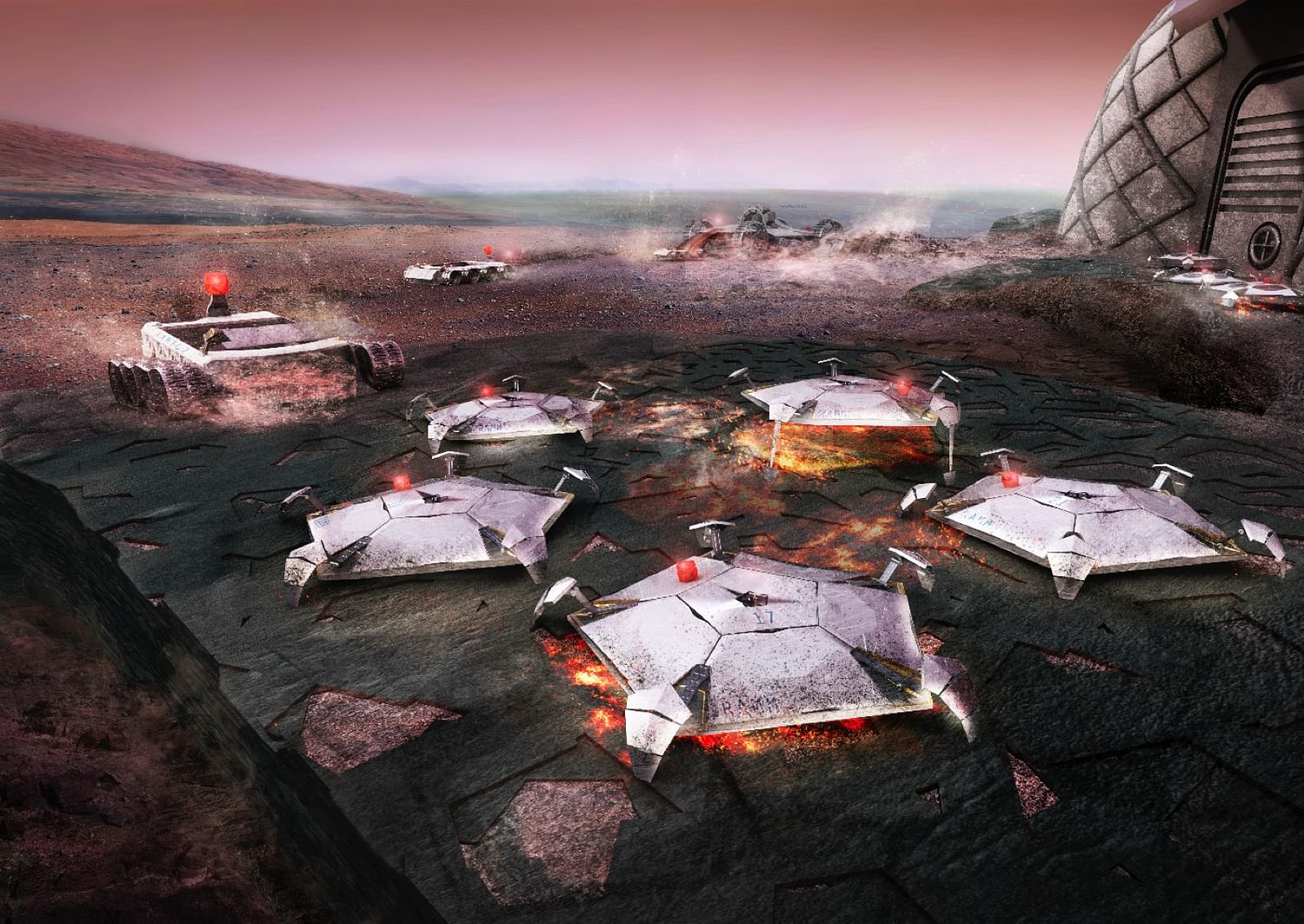
Foster + Partners' Mars Habitat concept. Image © Foster + Partners.

After winning second place in Phase 1 in 2015, Foster + Partners teamed up with Branch Technology to refine the original concept. 

In the Phase 2 - Level 1 Compression Test Competition, the seven competing teams had to use a combination of recycled mission materials and indigenous Martian regolith (soil) to 3D-print a truncated cone and a cylinder, which went through compression testing to assess their suitability as structural components. 

Proposals that maximized the use of local resources/mission waste scored more points from the jury, while proposals that relied on water and imported construction materials got marked down.
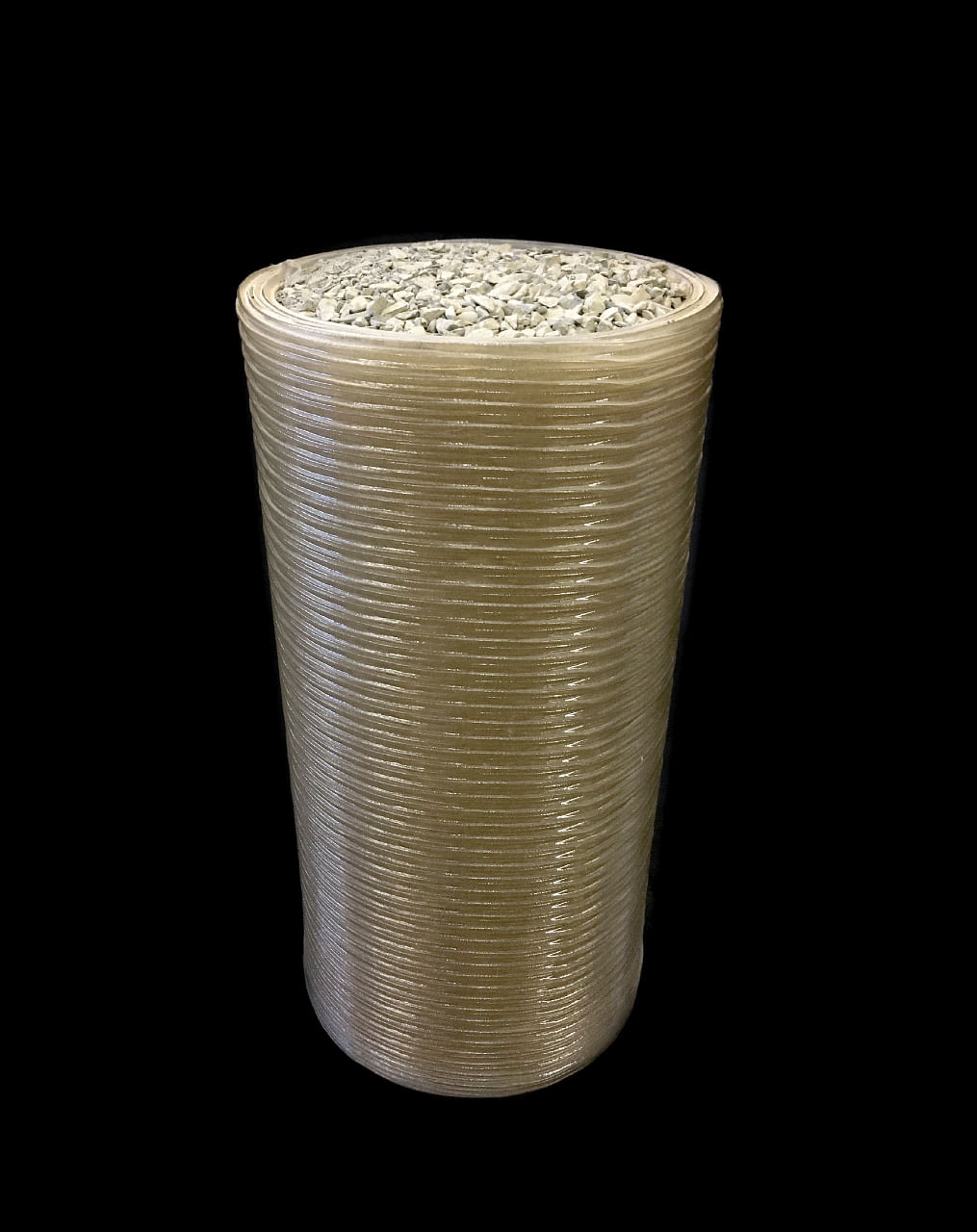
Foster + Partners and Branch Technology's Cylinder Print. Courtesy of Foster + Partners | Branch Technology.

Foster + Partners and Branch Technology’s Level 1-cylinder design (pictured above) combined 30 percent recycled mission plastics and 70 percent Martian regolith to achieve a maximum compressive load of 62,530 lbs (28,363 kg).
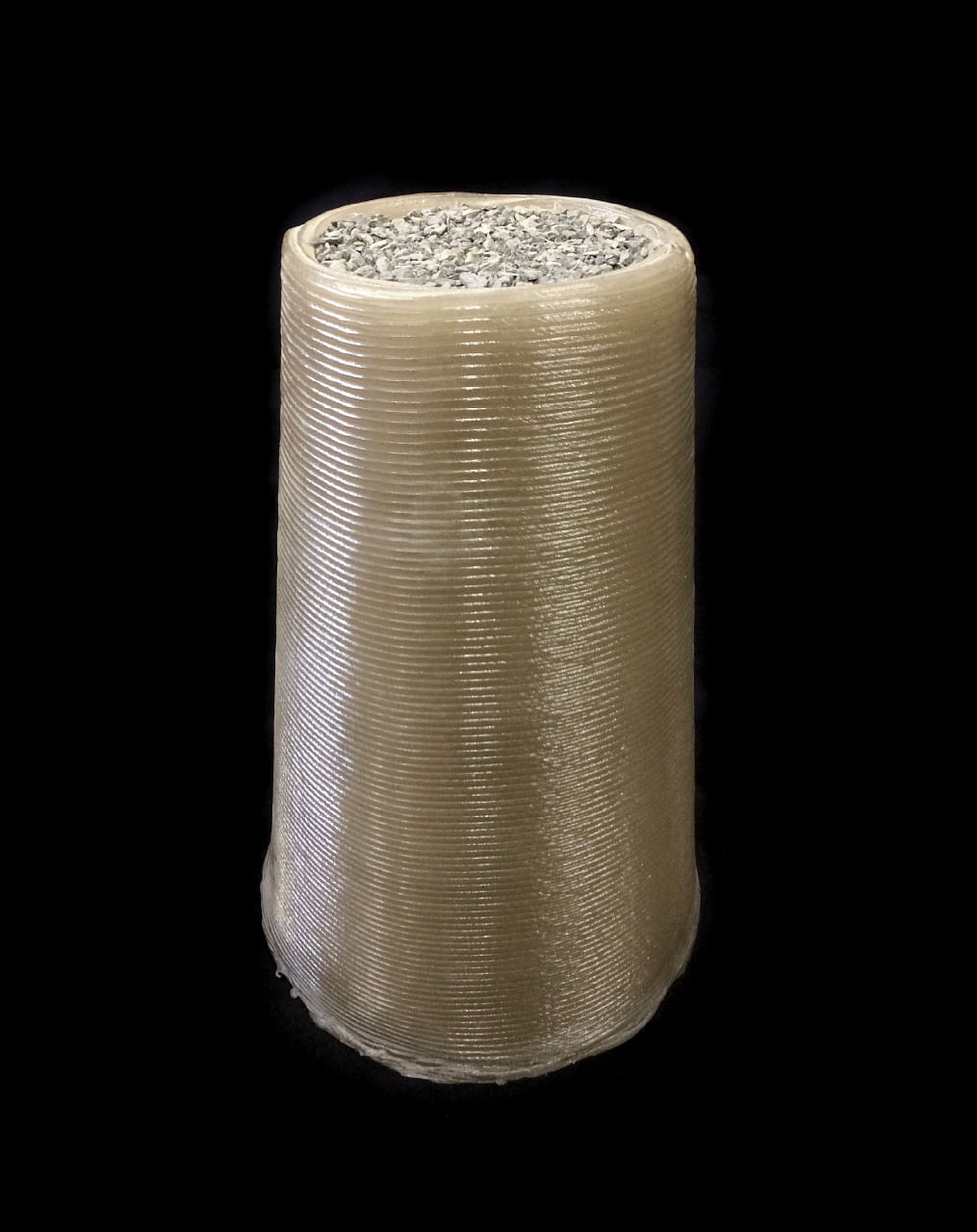
Foster + Partners and Branch Technology's Cone Print. Courtesy of Foster + Partners | Branch Technology.

In the coming weeks, the teams will work on their designs for the Phase 2 - Level 2 Beam Member Competition, in which a beam will be 3D-printed to test spanning structures. New teams can enter the Level 2 competition if they meet minimum requirements.

“Seeing tangible, 3D-printed objects for this phase makes the goals of this challenge more conceivable than ever,” said Monsi Roman, program manager of Centennial Challenges on NASA's website. “This is the first step toward building an entire habitat structure, and the potential to use this technology to aid human exploration to new worlds is thrilling.”

You can learn more about the NASA 3D-Printed Habitat Challenge here.

Images courtesy of Foster + Partners | Branch Technology.

RELATED NEWS Winner of NASA's 3D Printed Habitat Challenge: Would you live inside the Mars Ice House?
RELATED NEWS Results of NASA's 3D Printed Habitat Challenge for space exploration
RELATED NEWS NASA + America Makes launch 3D Printed Habitat Challenge for Mars

Share

  • Follow

    0 Comments

  • Comment as :

Archinect JobsArchinect Jobs

The Archinect Job Board attracts the world's top architectural design talents.

VIEW ALL JOBS POST A JOB

Architectural/Structural Drafter

New Beginnings Engineering

Architectural/Structural Drafter

Irvine, CA, US

Architectural team Memeber

Meraki Architects, LLC

Architectural team Memeber

Middleburg Heights, OH, US

Senior Associate/ Project Manager

DWY Landscape Architects

Senior Associate/ Project Manager

Sarasota, FL, US

Architect / Architectural Designer (3-5 years experience)

Resolution: 4 Architecture

Architect / Architectural Designer (3-5 years experience)

New York, NY, US

Architect / Project Architect - Remote (U.S. Based)

Joseph David Associates

Architect / Project Architect - Remote (U.S. Based)

Architect

OBRA Architects

Architect

New York, NY, US

Project Designer

The Brooklyn Studio

Project Designer

Brooklyn, NY, US

Project Architect

The Goldman Group

Project Architect

Walpole, MA, US

Healthcare Project Manager

NK Architects

Healthcare Project Manager

New York, NY, US

Intermediate Architect

O'Neill Rose Architects

Intermediate Architect

Brooklyn, NY, US

Next page » Loading