• Login / Join
  • About
  • •
  • Contact
  • •
  • Advertising
bustler logo
bustler logo
  • News
  • Competitions
  • Events
  • Bustler is powered by Archinect
  • Sign up for Bustler's Email Newsletters

  • Follow these Bustler feeds:

  • Search

    Search in

  • Submit

    What are you submitting?

    News Pitch
    Competition
    Event
  • Login / Join
  • News|Competitions|Events
  • Search
    | Submit
    | Follow
  • Search in

    What are you submitting?

    News Pitch
    Competition
    Event

    Follow these Bustler feeds:

  • About|Contact|Advertising
  • Login / Join
Tagged: green city graz

3rd Prize in Green City Graz Competition by CHYBIK+KRISTOF AA / BKK-3

By Bustler Editors|

Monday, Sep 10, 2012
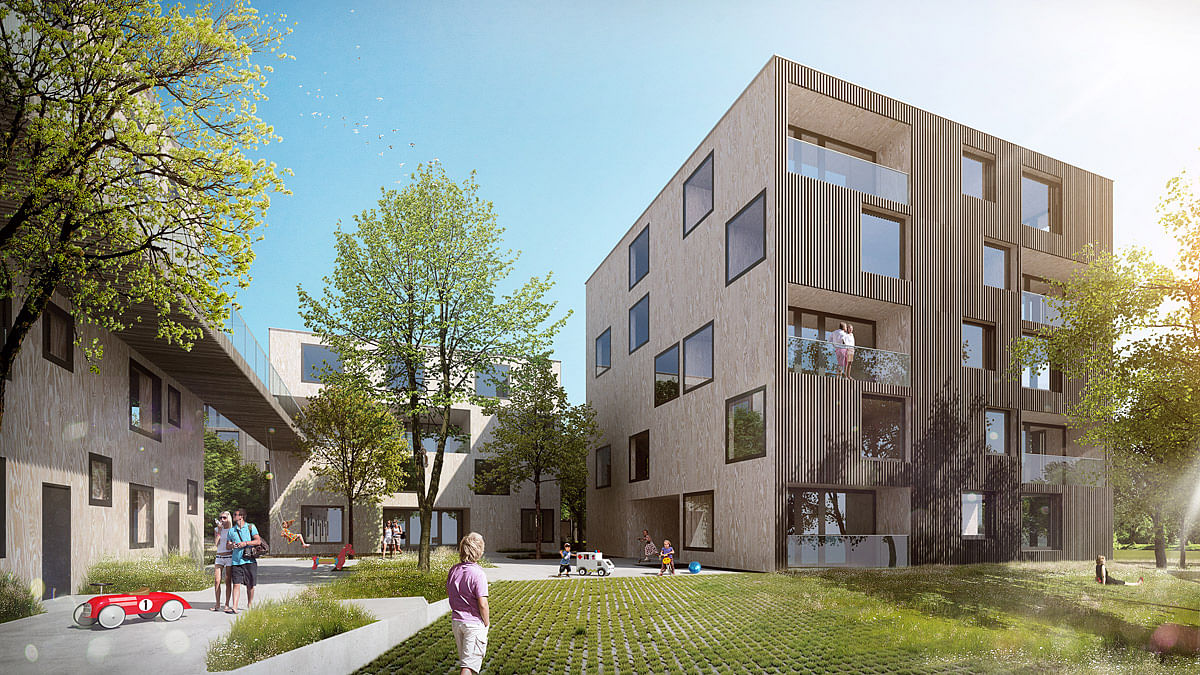
Concept for Green City Graz by CHYBIK+KRISTOF AA and BKK-3 (Image: CHYBIK+KRISTOF AA / BKK-3)

Czech architectural studio CHYBIK+KRISTOF ASSOCIATED ARCHITECTS has sent us images of the entry which won the team the Third Place in the international Green City Graz competition. Collaborating with Viennese office BKK-3, the architects participated in the architectural and urbanistic competition to project 700 apartments in the planned housing complex called Green City in Graz, Austria.

Project Description from the Architects:

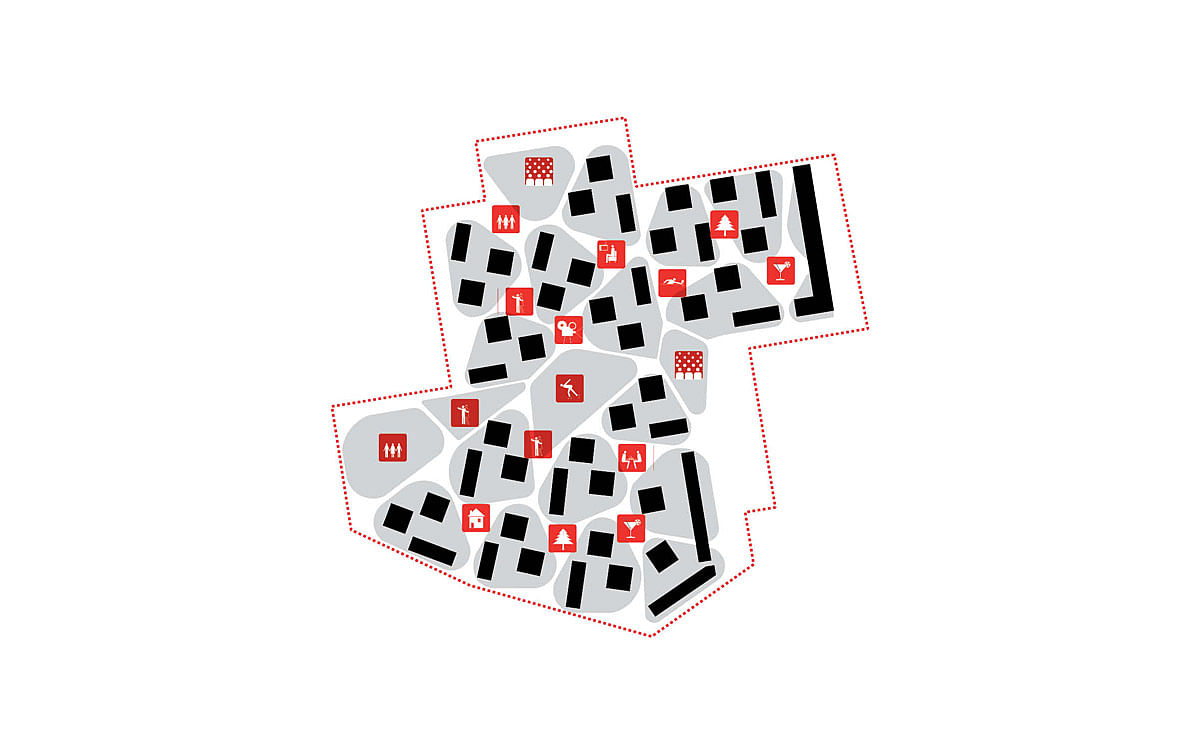
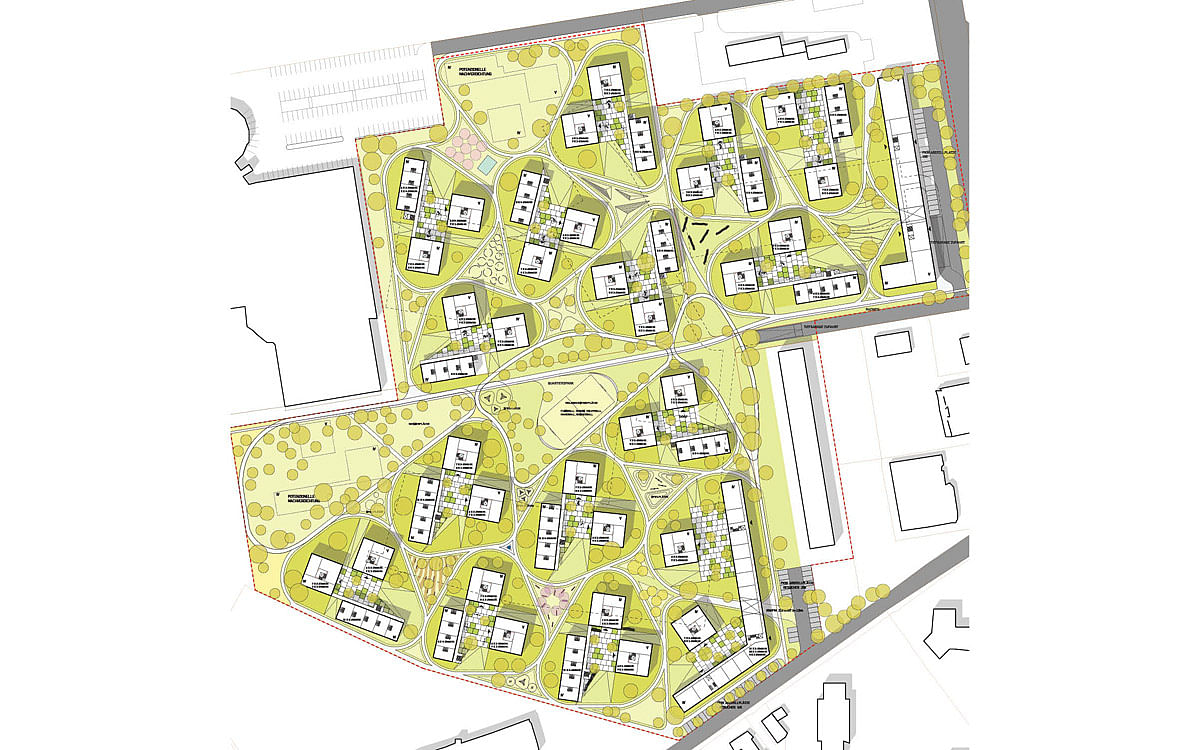
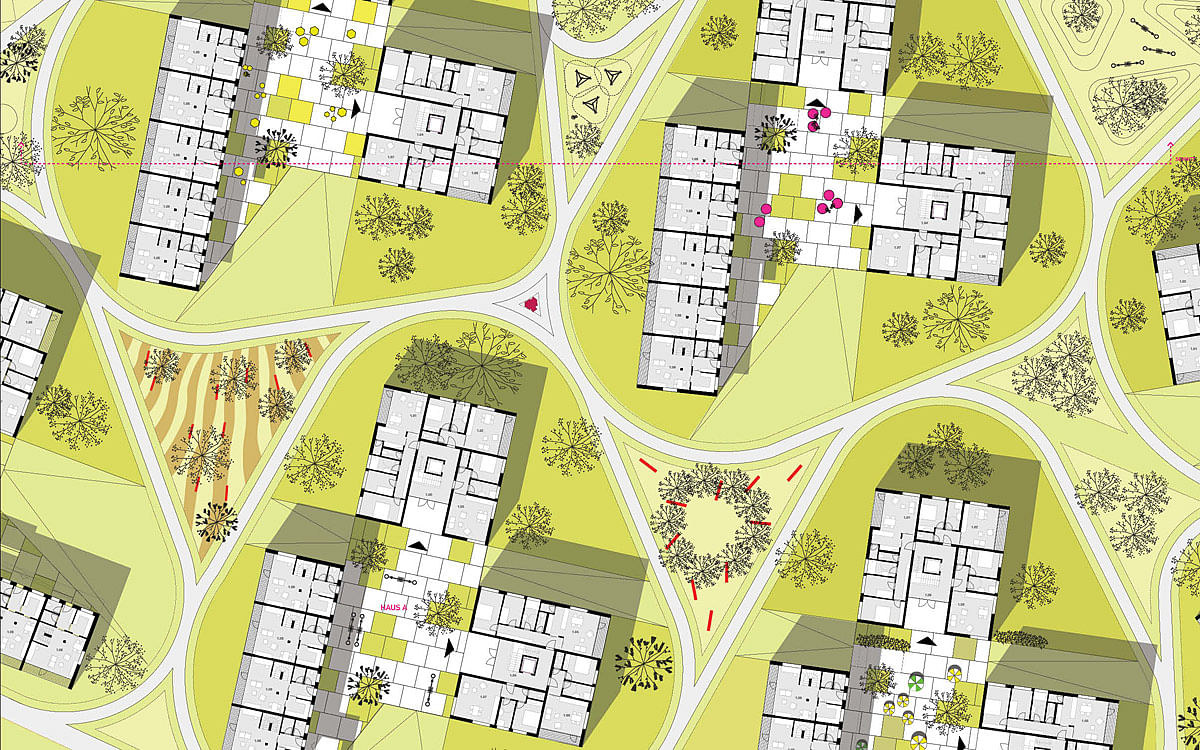
The main topic of the architectural competition for housing development, which touches the Styrian bio-corridor in the west, was to “live in the green”. The whole concept of the proposed project known under the name of the Green City Graz is to create a clear hierarchy of public and semipublic spaces by means of simple volumes of apartment buildings. The project is grounded on the logical continuity of various types of green spaces: whether it is the above-mentioned bio-corridor, the central park, smaller green square or the yard – a social terrace shared by several households. In this project, the architects tried to apply sustainable aspects of creating the environment.
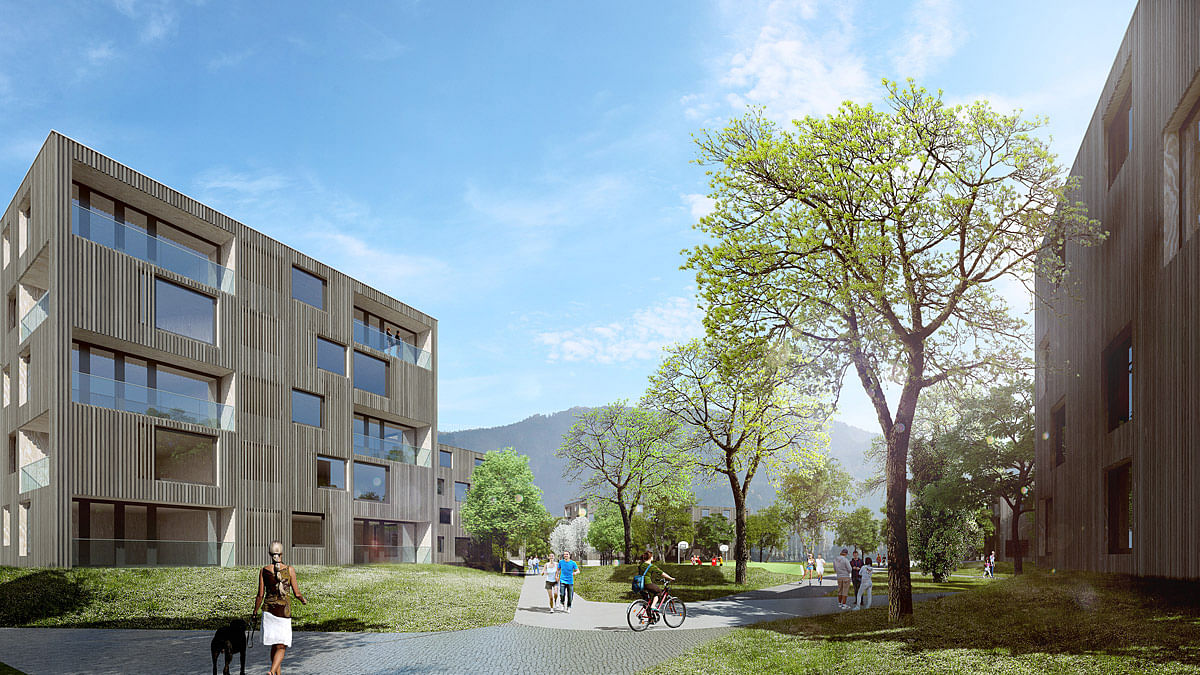
Rendering (Image: CHYBIK+KRISTOF AA / BKK-3)

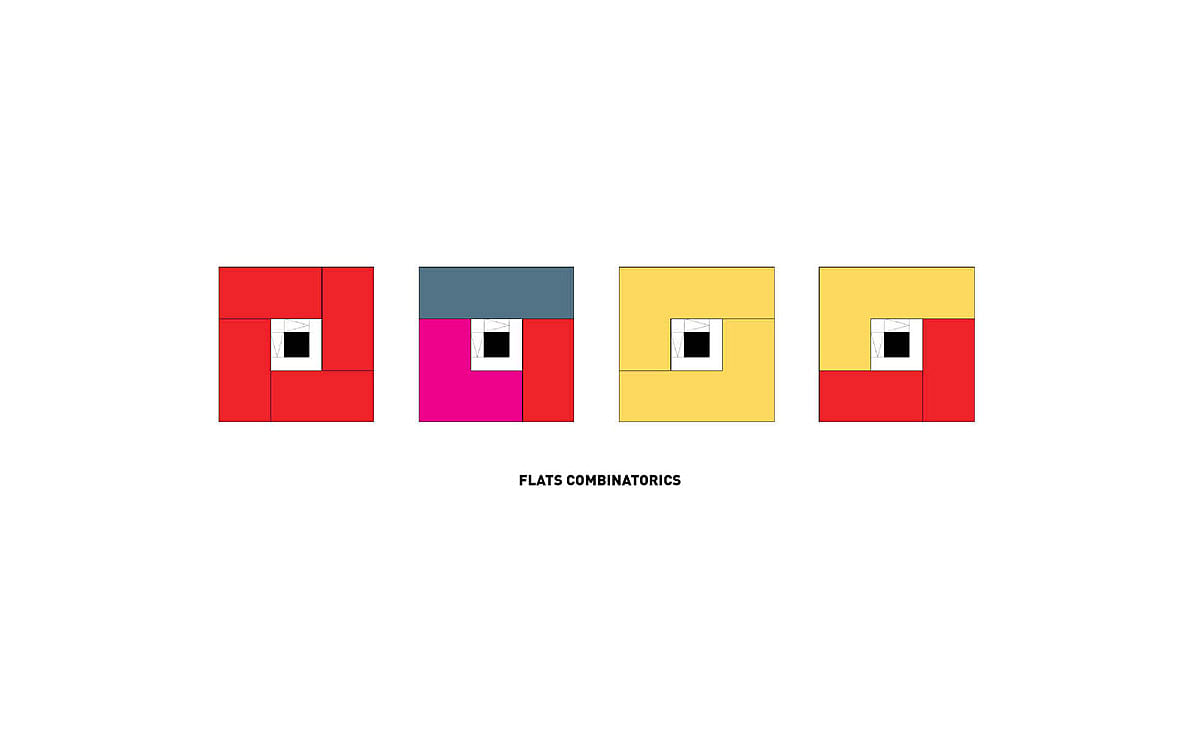
The question of sustainability does not concern only the problems of upkeep and maintenance of the spaces, but also the problems with accessing the expensive ground and plots. It is indeed possible to add value to public and semipublic spaces, or rather improve their quality, even without big additional investments. The spaces can be differentiated without having to be surrounded by fences or walls and this can be done by suitably combining the volumes of houses which create the outer area.
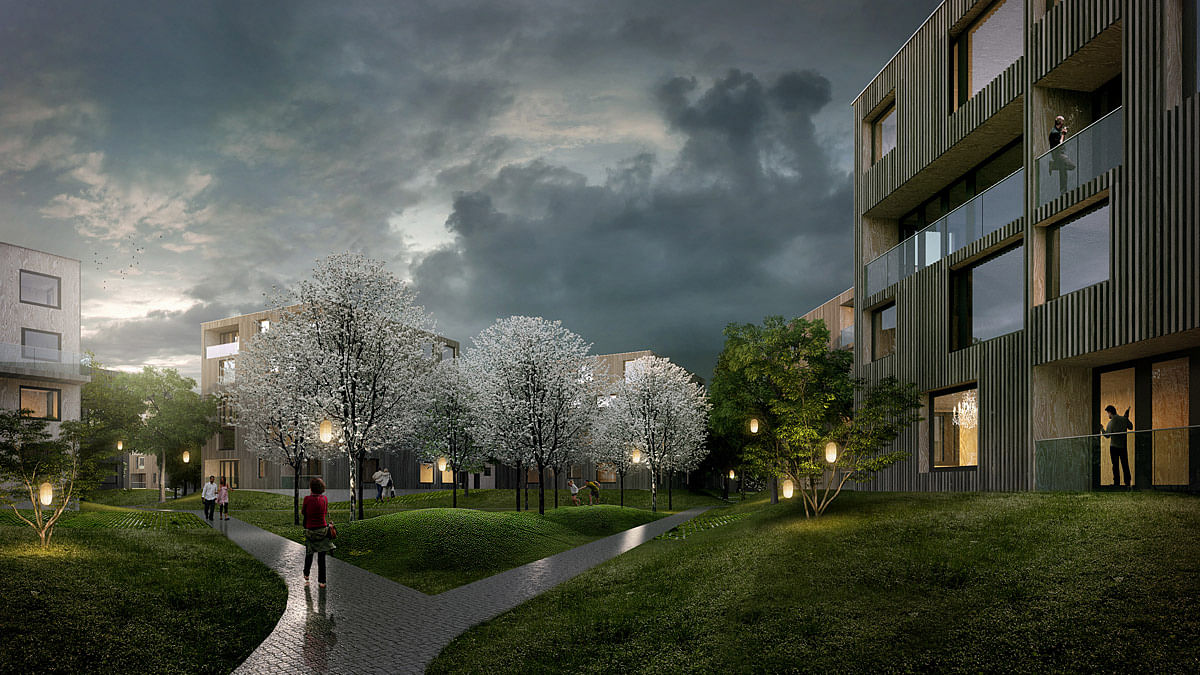
Rendering (Image: CHYBIK+KRISTOF AA / BKK-3)

Creating the social sustainability within the project is understood as a way of forming the spaces so they can be used by a large number of inhabitants. Over the past 50 years we could see the development of the housing landscape, starting with anonymous housing estates of prefab concrete buildings, which often lacked the human gauge, and ending with networks of minimal plots concealed behind high walls, which complete the picturesque architecture of satellite towns. Not one of these had the potential to become the fertile ground for developing of functional social bonds among the inhabitants, and this was after all one of the principal causes of the decay of the whole area.
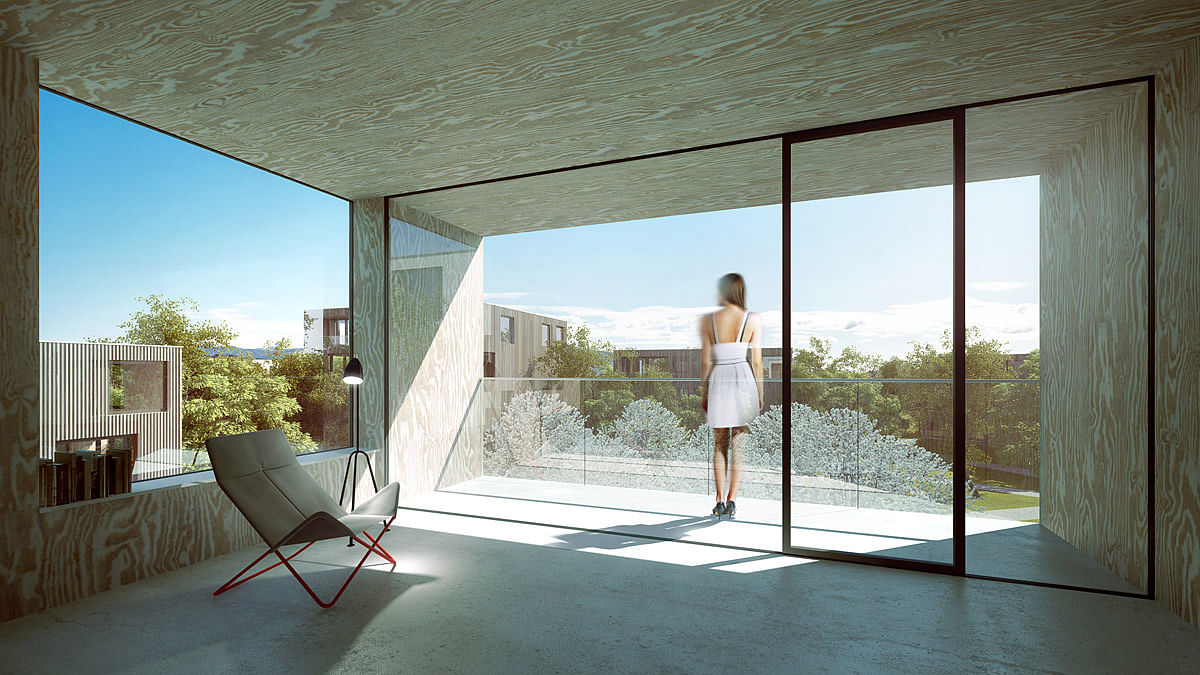
Rendering (Image: CHYBIK+KRISTOF AA / BKK-3)

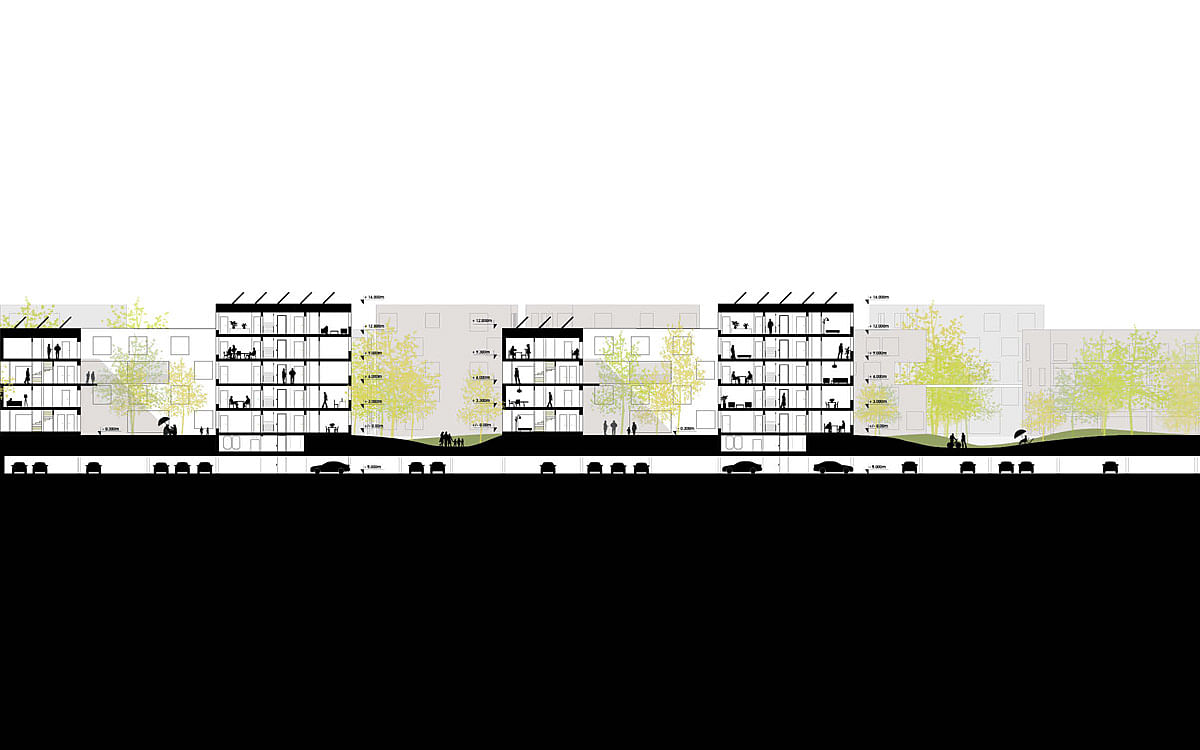
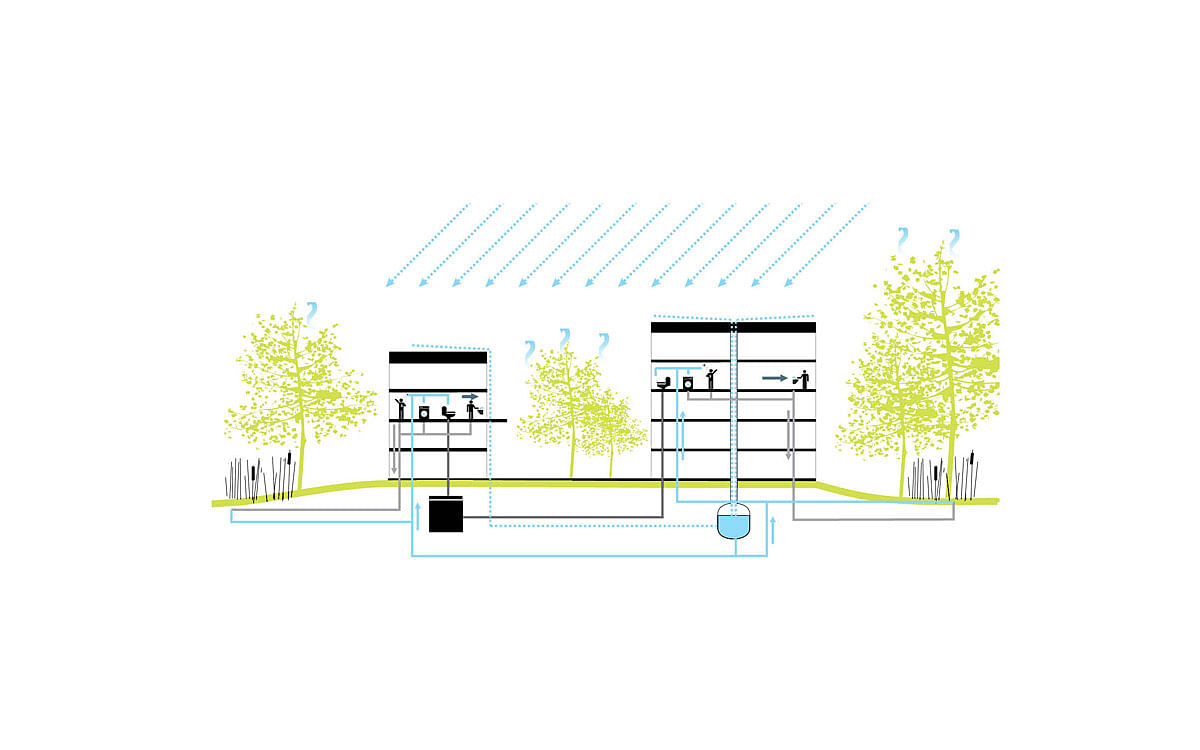
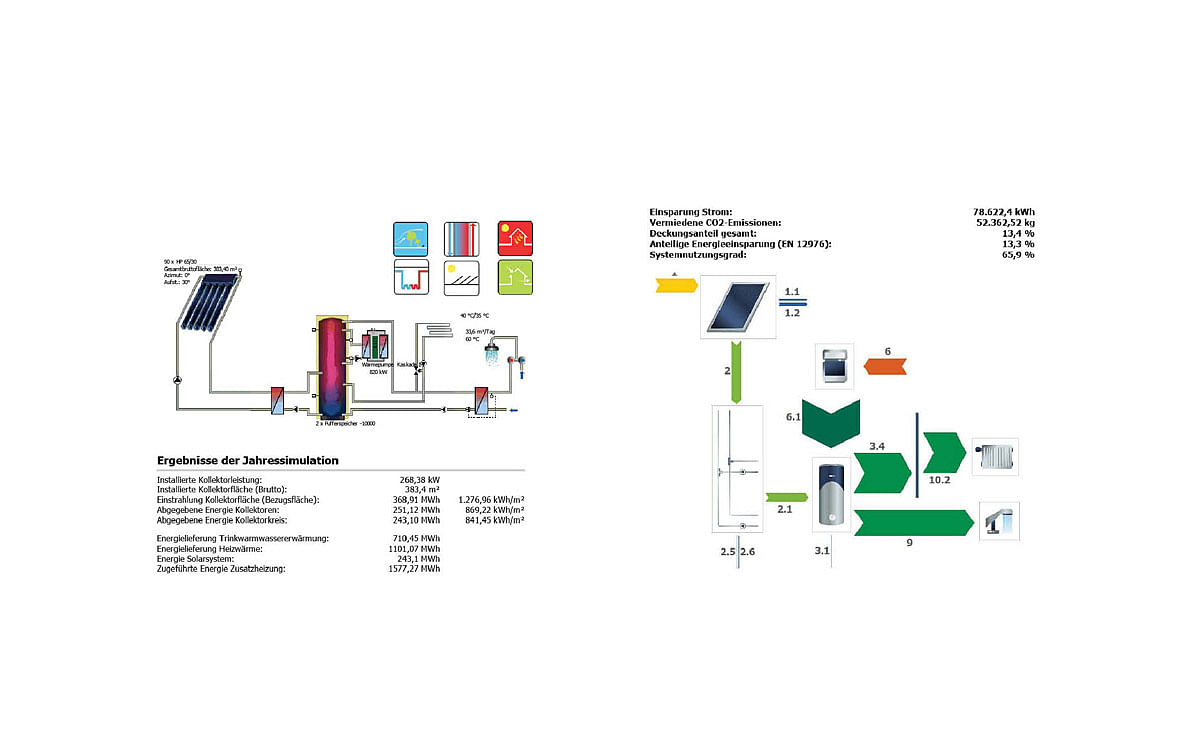
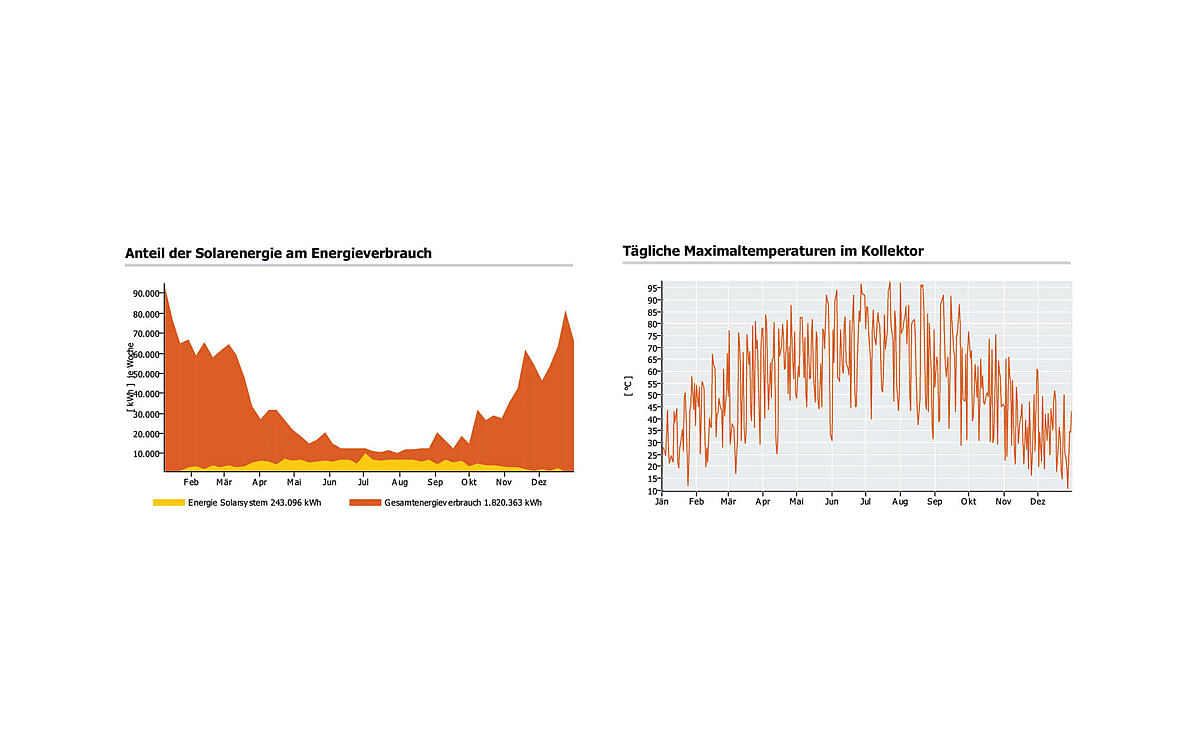
Both ecology and environment in places meant for living have several layers, and it is crucial to take account of the sustainability of inner as well as of outer spaces. It is worth mentioning that low-energy solutions of buildings produce zero emissions of carbon dioxide, and also that it is very profitable to use construction material made out of recycled or renewable sources. It is also essential to take into consideration the nature of the climate during all four seasons. By turning the facades of the houses to one another we can achieve sufficient sun exposure without overheating them. Such a composition of houses would allow a natural flow of air without having to use forced and energetically demanding cooling. Similar requirements must be applied to the outer spaces. To achieve positive results, one needs to find complex solutions. Therefore, we endeavor to develop approaches of public areas while focusing on acting economically with rainwater, renewable sources of energy, sewage etc.
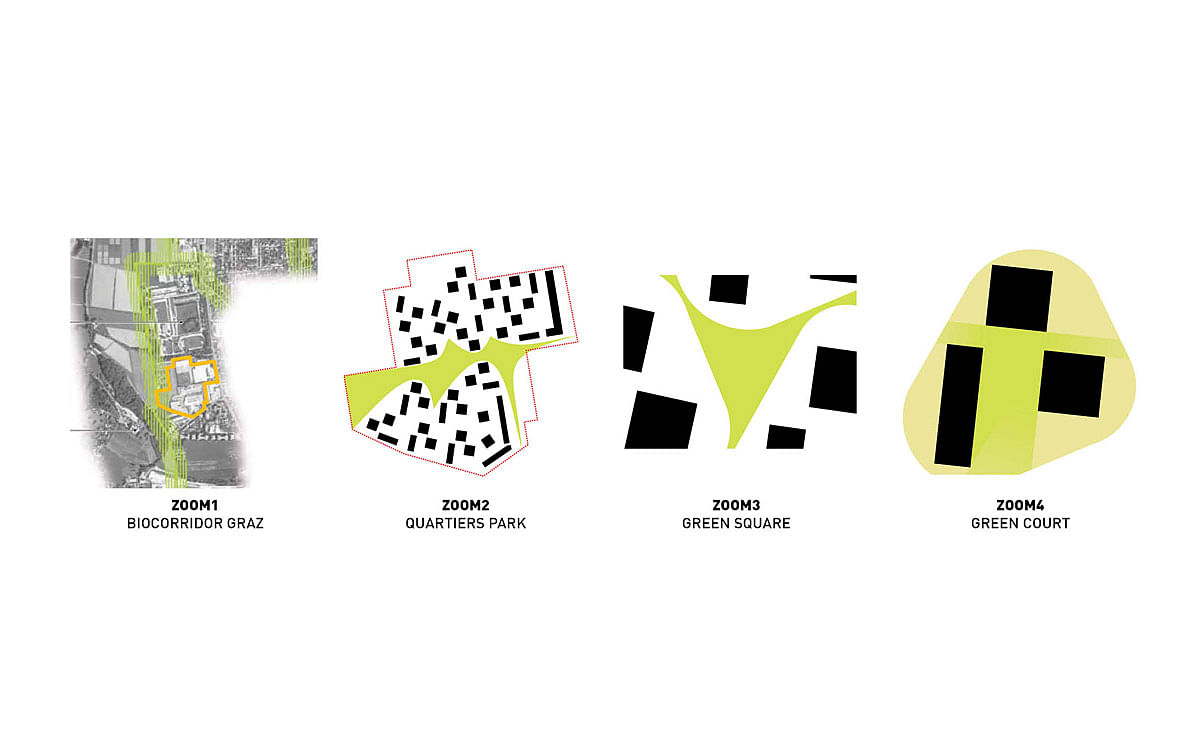
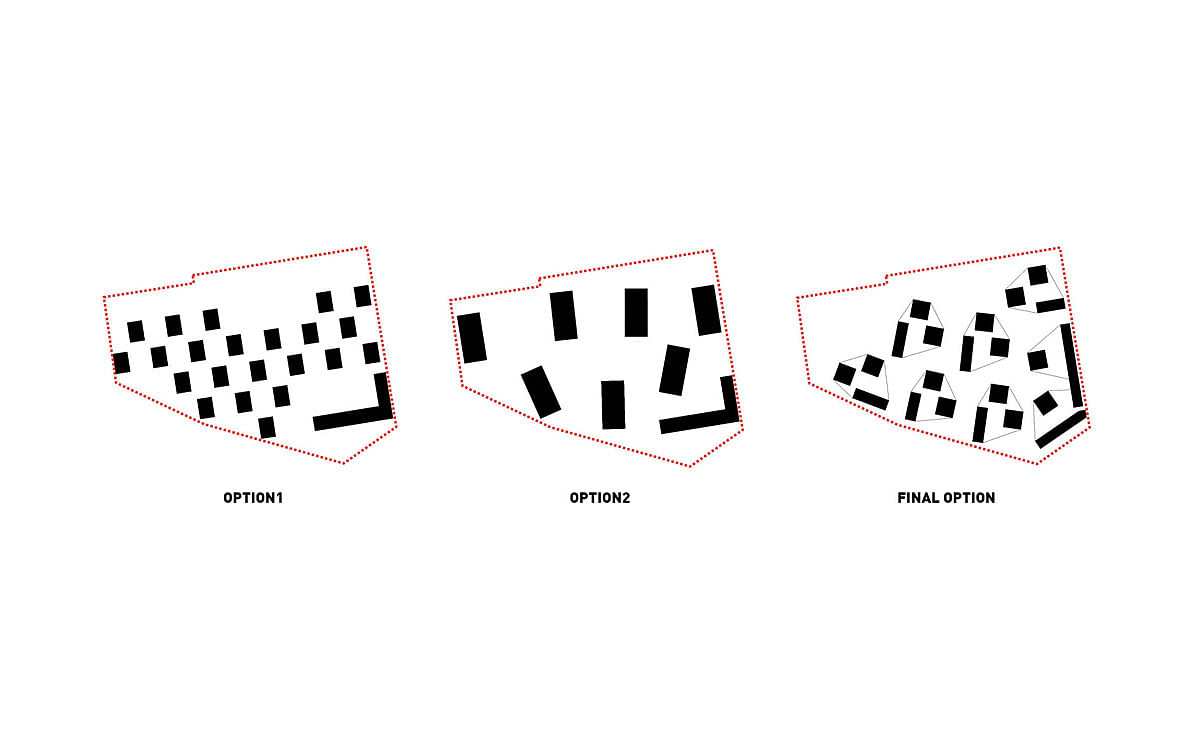
Diagram (Image: CHYBIK+KRISTOF AA / BKK-3)
Site plan (Image: CHYBIK+KRISTOF AA / BKK-3)
Section (Image: CHYBIK+KRISTOF AA / BKK-3)
Diagram (Image: CHYBIK+KRISTOF AA / BKK-3)

Project Details:

Project: Green City Graz, Austria
Type:invited competition
Status: 3rd prize
Year: 2012
Location: Graz, Austria
Size: 700 apartments

Author: CHYBIK+KRISTOF AA and BKK-3 Vienna
Partner in charge: Ondrej Chybik, Michal Kristof, Franz Sumnitsch
Team: Vojtech Kouril, Matej Strba, Martin Safar, Frank Schilder
Visualizations: Miss3

Related

residential ● housing ● green city graz ● graz ● europe ● chybik+kristof ● bkk-3 ● austria

Share

  • Follow

    0 Comments

  • Comment as :

3rd Prize in Green City Graz Competition by CHYBIK+KRISTOF AA / BKK-3

Sign up for Bustler's Email Newsletters

Next page » Loading

3rd Prize in Green City Graz Competition by CHYBIK+KRISTOF AA / BKK-3

By Bustler Editors|

Monday, Sep 10, 2012

Share

Concept for Green City Graz by CHYBIK+KRISTOF AA and BKK-3 (Image: CHYBIK+KRISTOF AA / BKK-3)

Related

residential ● housing ● green city graz ● graz ● europe ● chybik+kristof ● bkk-3 ● austria

Czech architectural studio CHYBIK+KRISTOF ASSOCIATED ARCHITECTS has sent us images of the entry which won the team the Third Place in the international Green City Graz competition. Collaborating with Viennese office BKK-3, the architects participated in the architectural and urbanistic competition to project 700 apartments in the planned housing complex called Green City in Graz, Austria.

Project Description from the Architects:

The main topic of the architectural competition for housing development, which touches the Styrian bio-corridor in the west, was to “live in the green”. The whole concept of the proposed project known under the name of the Green City Graz is to create a clear hierarchy of public and semipublic spaces by means of simple volumes of apartment buildings. The project is grounded on the logical continuity of various types of green spaces: whether it is the above-mentioned bio-corridor, the central park, smaller green square or the yard – a social terrace shared by several households. In this project, the architects tried to apply sustainable aspects of creating the environment.

Rendering (Image: CHYBIK+KRISTOF AA / BKK-3)

The question of sustainability does not concern only the problems of upkeep and maintenance of the spaces, but also the problems with accessing the expensive ground and plots. It is indeed possible to add value to public and semipublic spaces, or rather improve their quality, even without big additional investments. The spaces can be differentiated without having to be surrounded by fences or walls and this can be done by suitably combining the volumes of houses which create the outer area.

Rendering (Image: CHYBIK+KRISTOF AA / BKK-3)

Creating the social sustainability within the project is understood as a way of forming the spaces so they can be used by a large number of inhabitants. Over the past 50 years we could see the development of the housing landscape, starting with anonymous housing estates of prefab concrete buildings, which often lacked the human gauge, and ending with networks of minimal plots concealed behind high walls, which complete the picturesque architecture of satellite towns. Not one of these had the potential to become the fertile ground for developing of functional social bonds among the inhabitants, and this was after all one of the principal causes of the decay of the whole area.

Rendering (Image: CHYBIK+KRISTOF AA / BKK-3)

Both ecology and environment in places meant for living have several layers, and it is crucial to take account of the sustainability of inner as well as of outer spaces. It is worth mentioning that low-energy solutions of buildings produce zero emissions of carbon dioxide, and also that it is very profitable to use construction material made out of recycled or renewable sources. It is also essential to take into consideration the nature of the climate during all four seasons. By turning the facades of the houses to one another we can achieve sufficient sun exposure without overheating them. Such a composition of houses would allow a natural flow of air without having to use forced and energetically demanding cooling. Similar requirements must be applied to the outer spaces. To achieve positive results, one needs to find complex solutions. Therefore, we endeavor to develop approaches of public areas while focusing on acting economically with rainwater, renewable sources of energy, sewage etc.
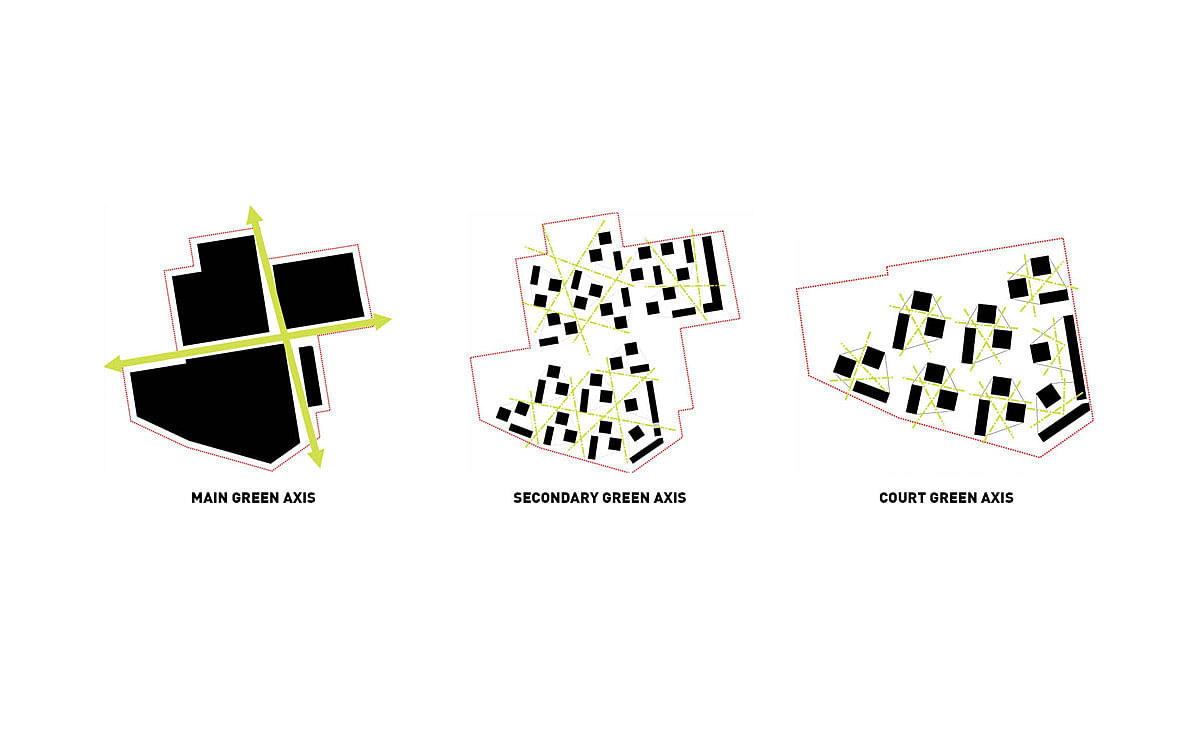
Diagram (Image: CHYBIK+KRISTOF AA / BKK-3)
Site plan (Image: CHYBIK+KRISTOF AA / BKK-3)
Section (Image: CHYBIK+KRISTOF AA / BKK-3)
Diagram (Image: CHYBIK+KRISTOF AA / BKK-3)

Project Details:

Project: Green City Graz, Austria
Type:invited competition
Status: 3rd prize
Year: 2012
Location: Graz, Austria
Size: 700 apartments

Author: CHYBIK+KRISTOF AA and BKK-3 Vienna
Partner in charge: Ondrej Chybik, Michal Kristof, Franz Sumnitsch
Team: Vojtech Kouril, Matej Strba, Martin Safar, Frank Schilder
Visualizations: Miss3

Share

  • Follow

    0 Comments

  • Comment as :

Archinect JobsArchinect Jobs

The Archinect Job Board attracts the world's top architectural design talents.

VIEW ALL JOBS POST A JOB

Junior/Intermediate Architect

Archimaera Architecture

Junior/Intermediate Architect

New York, NY, US

Studio Coordinator

Sarah Jacoby Architect

Studio Coordinator

Long Island City, NY, US

Project Manager

Payette

Project Manager

Boston, MA, US

Miami Senior Project Coordinator

BMA Architects

Miami Senior Project Coordinator

Miami, FL, US

Job Captain

Studio AR&D Architects

Job Captain

Los Angeles, CA, US

Architectural Design Manager for Architectural Lighting Design Firm

Castelli-Design

Architectural Design Manager for Architectural Lighting Design Firm

New York, NY, US

Architect

KieranTimberlake

Architect

Philadelphia, PA, US

Assistant Professor Architecture

California State Polytechnic University, Pomona

Assistant Professor Architecture

Pomona, CA, US

Architectural Designer / Architect (3-5 Years Experience)

Andrew Magnes Architecture

Architectural Designer / Architect (3-5 Years Experience)

Brooklyn, NY, US

Project Architect

Fowlkes Studio

Project Architect

Washington, DC, US

Next page » Loading