• Login / Join
  • About
  • •
  • Contact
  • •
  • Advertising
bustler logo
bustler logo
  • News
  • Competitions
  • Events
  • Bustler is powered by Archinect
  • Sign up for Bustler's Email Newsletters

  • Follow these Bustler feeds:

  • Search

    Search in

  • Submit

    What are you submitting?

    News Pitch
    Competition
    Event
  • Login / Join
  • News|Competitions|Events
  • Search
    | Submit
    | Follow
  • Search in

    What are you submitting?

    News Pitch
    Competition
    Event

    Follow these Bustler feeds:

  • About|Contact|Advertising
  • Login / Join
Tagged: riba

The top 12 ideas from the RETHINK: 2025 post-pandemic design competition

By Alexander Walter|

Tuesday, Jul 14, 2020
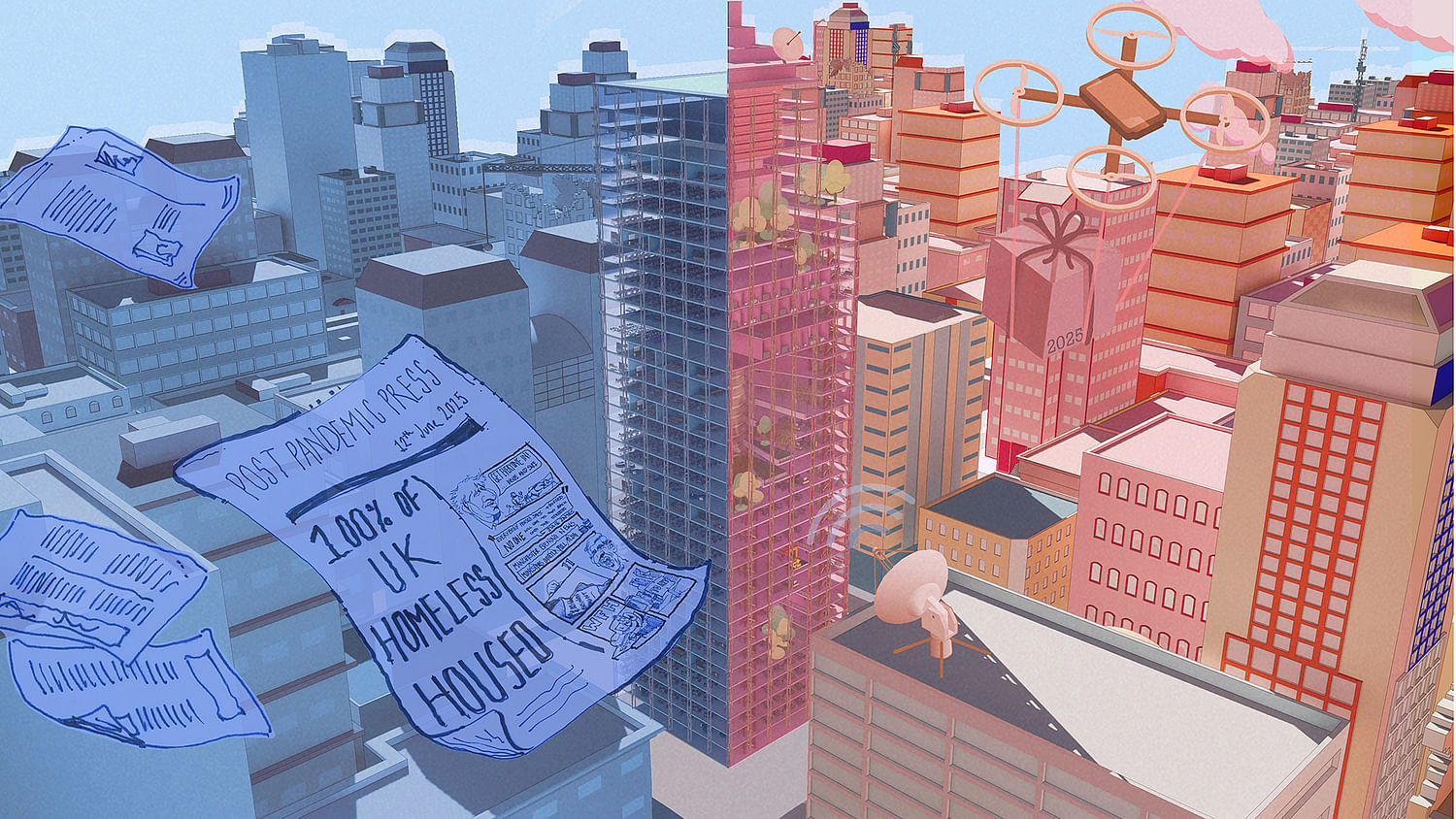
Shortlisted entry: Get Everyone In, Benjamin Holland, Olivia Dolan, Katie Williams

After revealing a longlist of 32 proposals imagining our post-pandemic world last week, RIBA's Rethink: 2025 international design competition announced the twelve shortlisted entries this morning. 

The brief tasked architects and students to envision what our built environment after Covid-19 might look like in 2025 taking into consideration one or several of these areas: healthcare spaces, remote learning, high-density living, public transport, high streets vs online shopping, international travel, and the use of technology to monitor and control populations. 

These are the shortlisted ideas:

Get Everyone In by Benjamin Holland, Olivia Dolan, Katie Williams (cover picture)

"The project proposes reusing empty office space to house the homeless. Through the redesign of office towers, it suggests the inclusion of communal health facilities on ground level, bringing nature into the space with gardens at the mid-level and translating a deep plan office floor into hostel-style bedrooms on upper floors, with space left to accommodate some office workers."
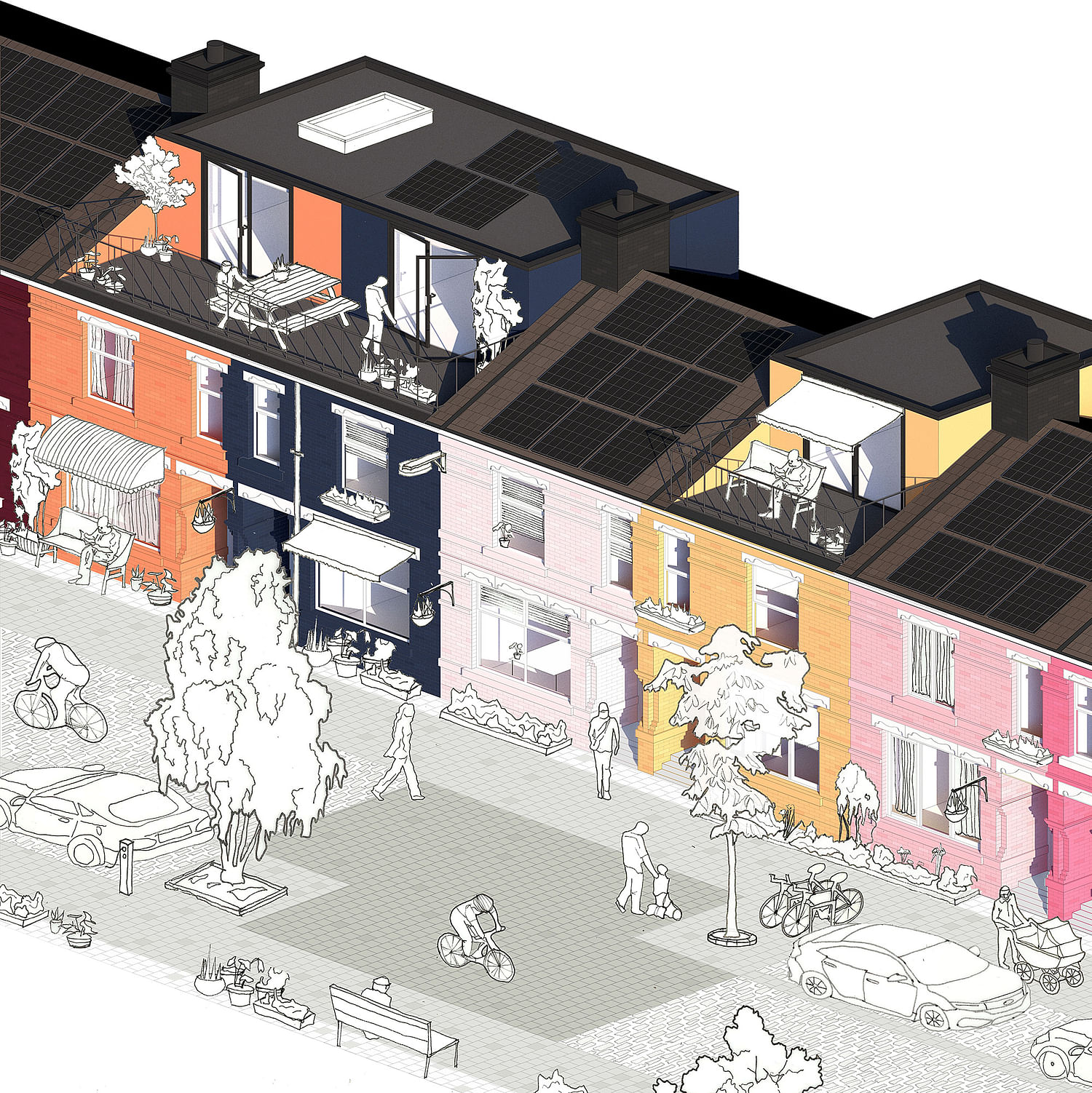
​A Catalogue of Regeneration, Andrew Jackson

A Catalogue of Regeneration by Andrew Jackson 

"This project proposes a series of incremental improvements that can be made to streets and houses. The step-by-step guide sets out five key stages of regeneration, starting with repairing potholes, through to the creation of ’woonerf’ zones – traffic calmed streets, and ultimately work to improve and expand individual homes. With sustainability at its heart, this idea works with the existing buildings, using inner city Manchester terraces as the case study within the proposal."
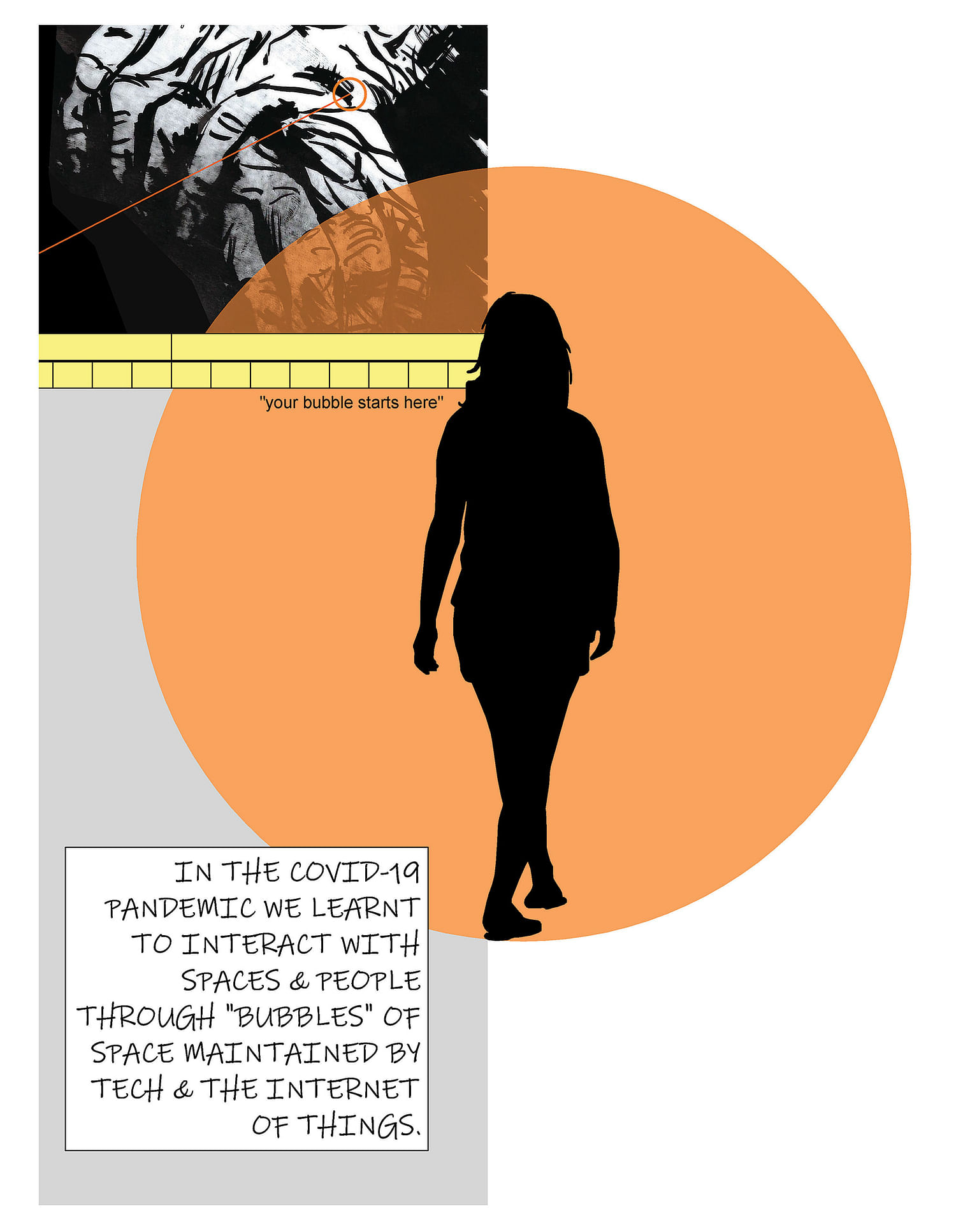
​Childbirth Made Personal, Sarah Joyce, University of Leeds

Childbirth Made Personal by Sarah Joyce, University of Leeds  

"This entry was presented through emotive drawings that drew out of the impact of the pandemic on childbirth and the essential element of touch. Using the coronavirus concept of ‘bubbles’ and virtual connections, Childbirth Made Personal suggests that the way we design will change with the use of light-touch interventions and personalised pathways. It encapsulates the idea of the ‘safe outside’ versus the unsafe inside, where births take place. It gently describes how the birthing experience will be affected by thinking of ‘people as carriers of infectious diseases and surfaces as transmitters’."
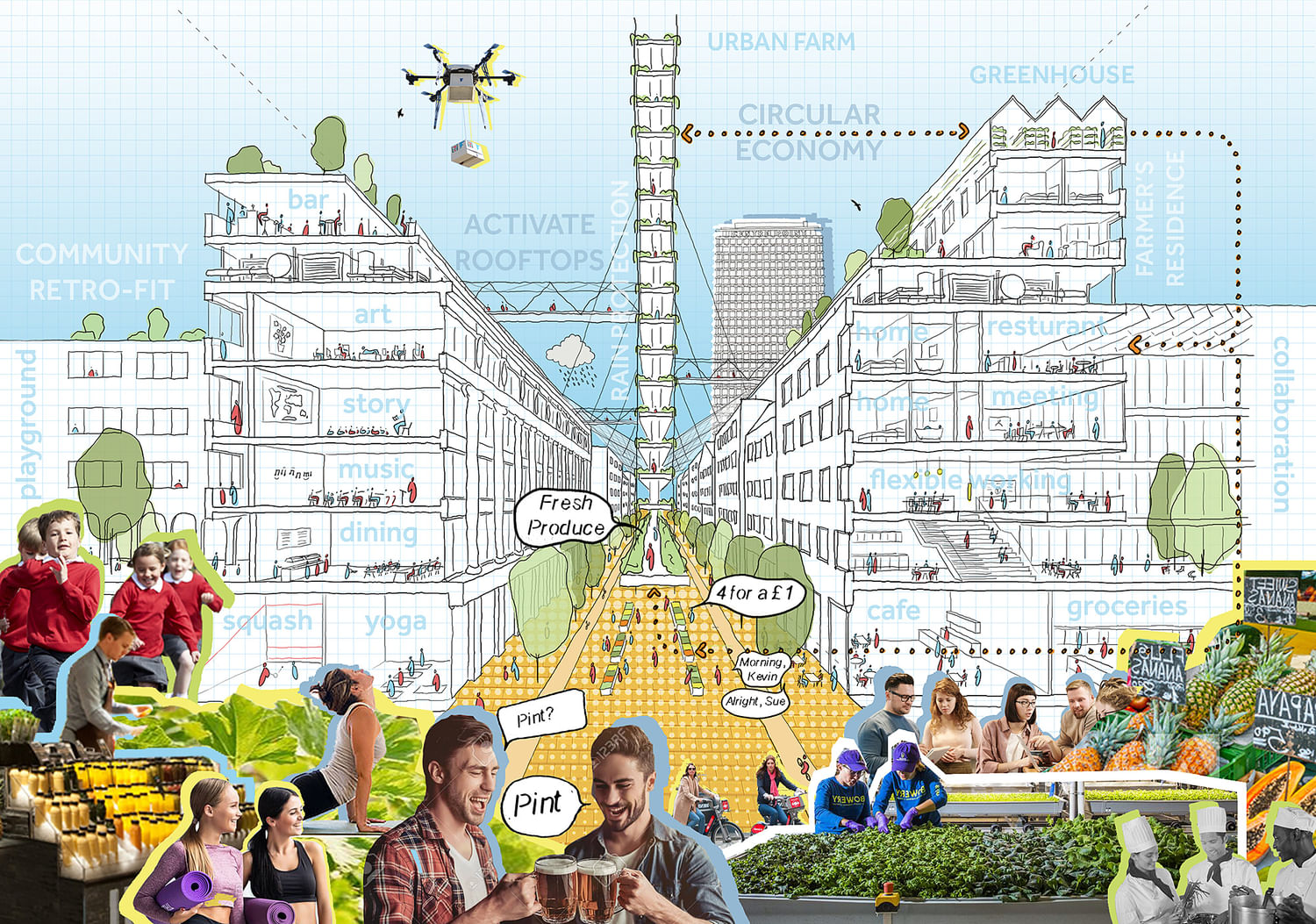
​Community Retrofit, Farrells

Community Retrofit by Farrells   

"This proposal details the reinvention of commuter hubs and tourist destinations of city centres as localised districts with less travel, homeworking and very limited shopping. Empty department stores and half-used office spaces are retrofitted with a school, an urban farm, new homes, bars, cafés, collaborative working spaces and leisure facilities in close proximity, providing maximum opportunities for social interaction and chance encounters."
​Eco-Archi Post Covid, Khan Bonshek

Eco-Archi Post Covid by Khan Bonshek  

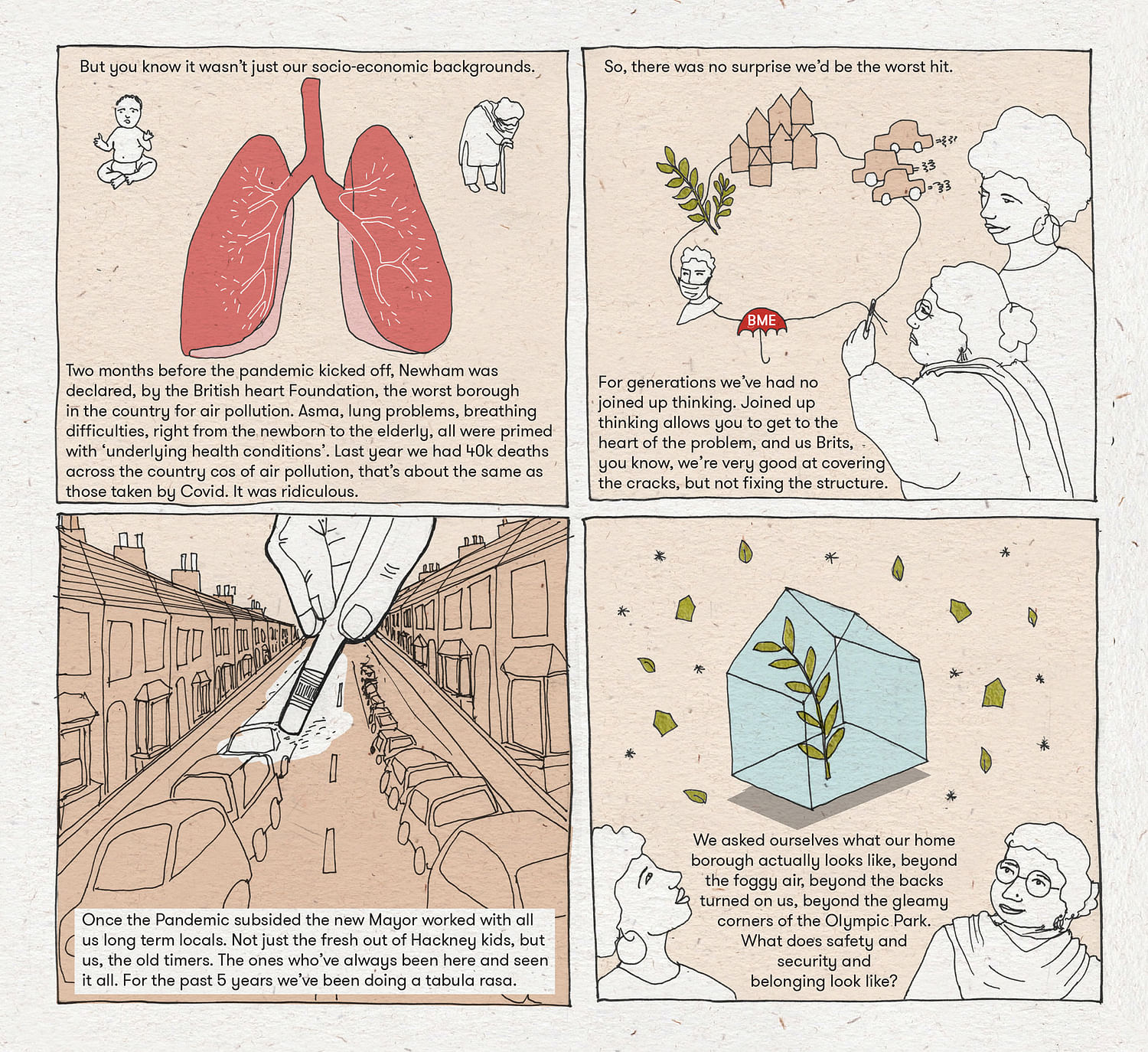
"This proposal seeks to address challenges faced by ethnic minority communities who have been disproportionately affected by coronavirus. Often excluded from planning decision-making, ethnic minorities also often live in more built-up and polluted areas. This idea seeks to address this through engaging the local community and working with local government to make tangible changes. Presented in the form of a comic, the proposal focuses on Newham which has the highest air pollution in London. It proposes making it the Green Lungs of London by radically cutting road traffic on domestic streets and changing the culture of car driving."
​Far off is close at hand, Haslam & Co Architects

Far off is close at hand by Haslam & Co Architects  

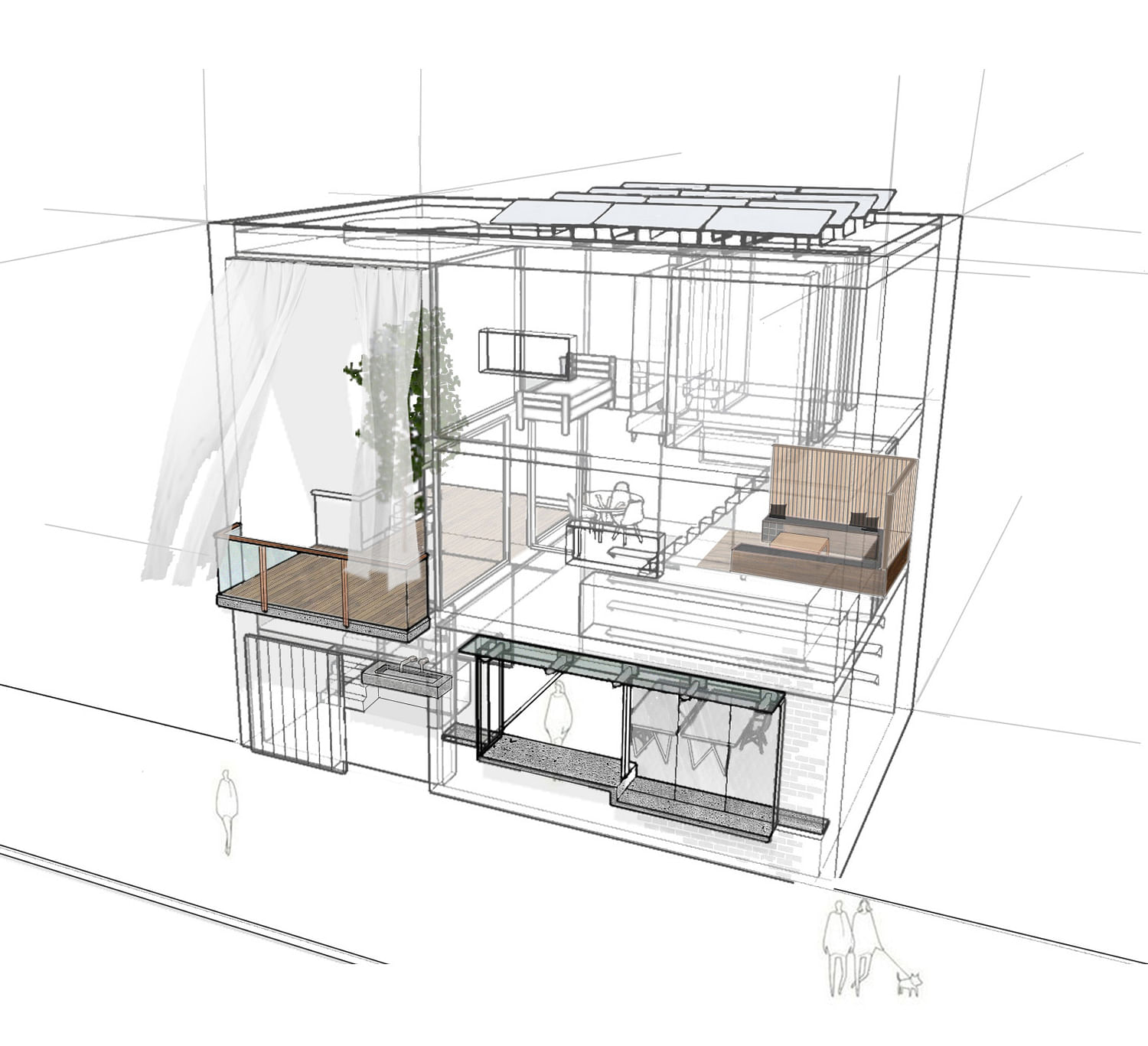
"This proposes a clever way to repurpose existing buildings through a reimagining of the high street. Converting existing shops into homes that still function as a point of exchange – with spaces for meeting and entertaining."
Greater London Agriculture, Tim Rodber and Dominic Walker

Greater London Agriculture by Tim Rodber and Dominic Walker  

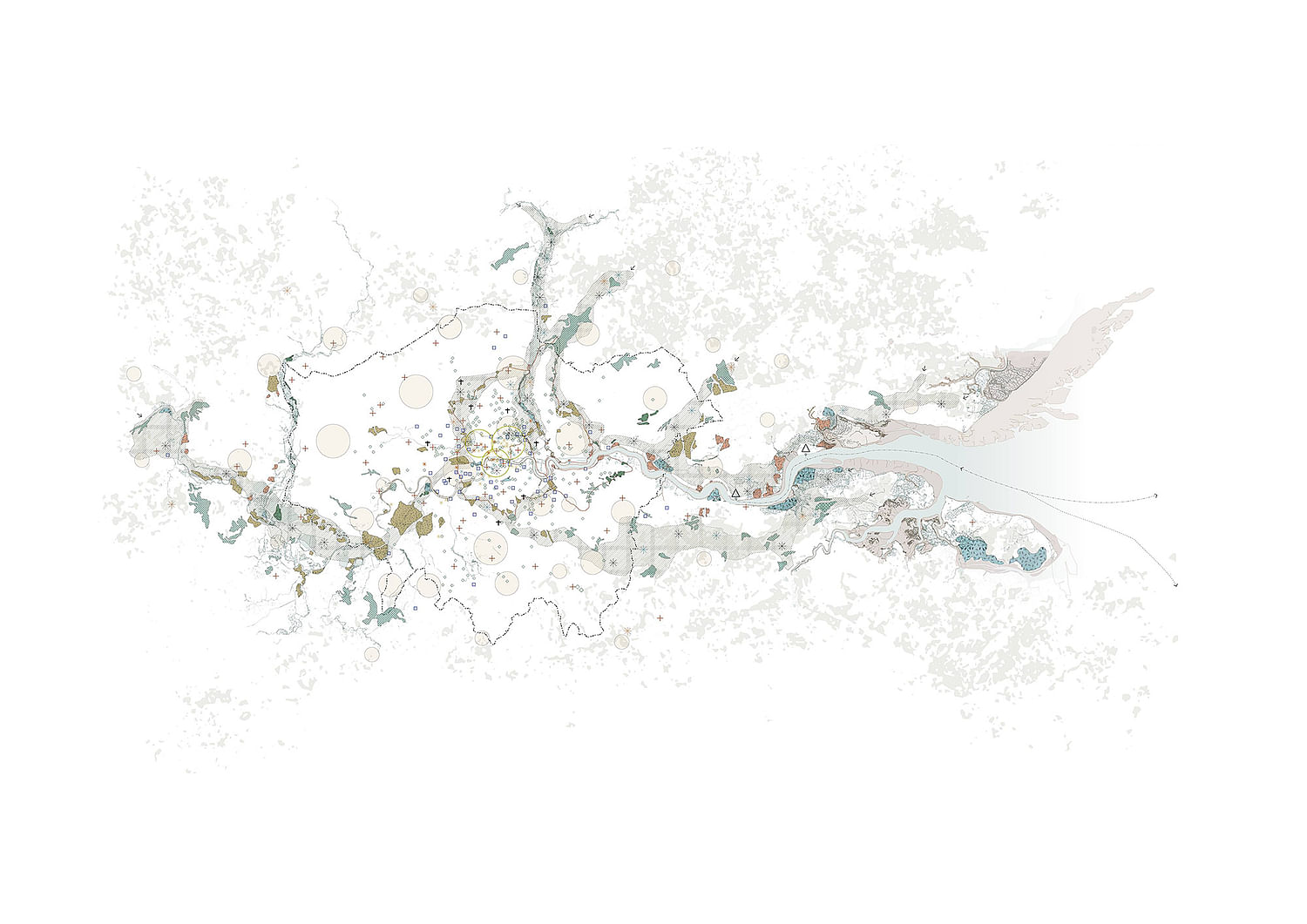
"The most ambitious proposition in terms of scale, this idea centres around agriculture becoming interwoven with the city - tiny mapped patchworks of food production linked over time by corridors of biodiversity. From community orchards to seaweed farms based around existing green spaces and low carbon transport links – this an agroecological approach to land use and a green innovation network. Local, regenerative food production is intended to build respect for food, offer super-fresh seasonal produce. In increasing biodiversity and allowing wider ecosystems to recover it could also play a part in reducing threats of future pandemics."
​House Farm - Peru, Kenyi Kevin and Sulca Quichca, Universidad Nacional de Ingenieria

House Farm - Peru by Kenyi Kevin and Sulca Quichca, Universidad Nacional de Ingenieria  

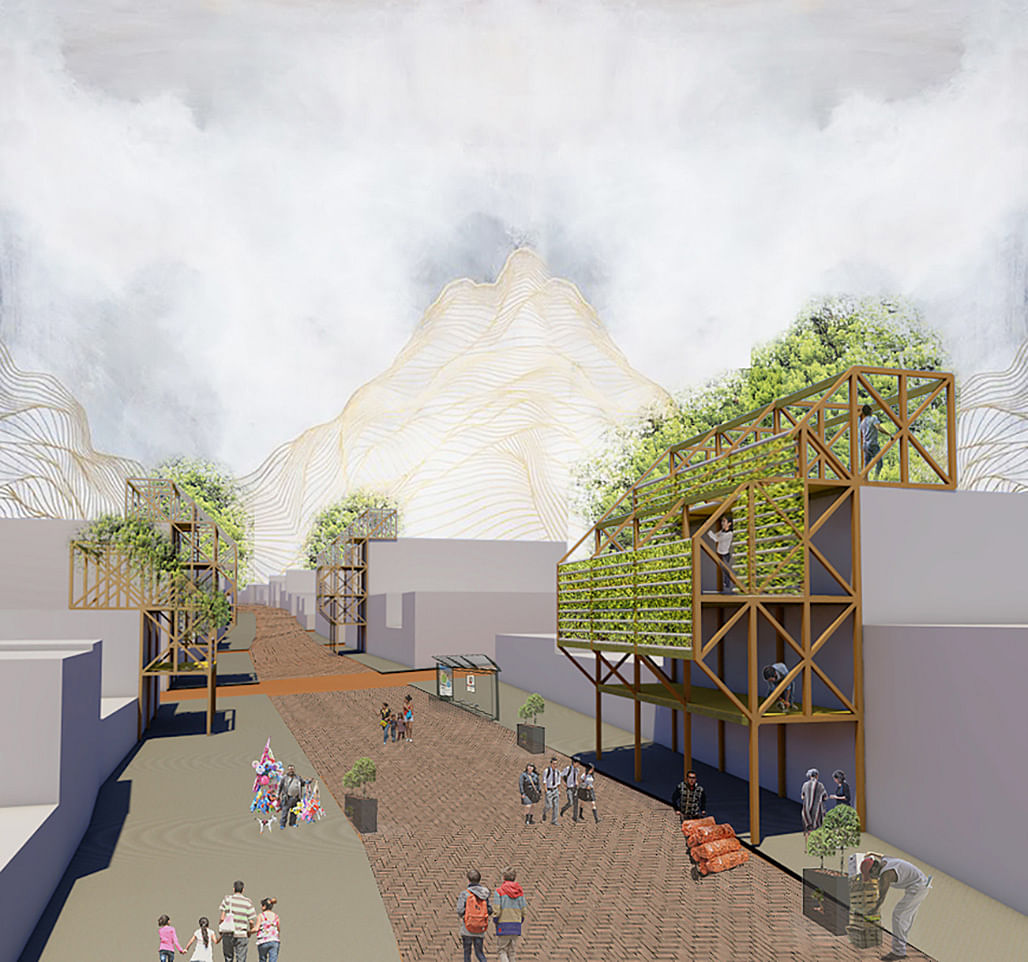
"Explicitly set in the Villa Maria del Triunfo district of Lima, this proposes a timber extension to create a new space between private home and public social space. It offers hydroponic growing space for fruit and vegetables. It appeals to the desire for food security sparked by the pandemic and would reduce crowds in markets say the designers."
​Post Pandemic Exchange, Elle Thompson, University of Nottingham

Post Pandemic Exchange by Elle Thompson, University of Nottingham  

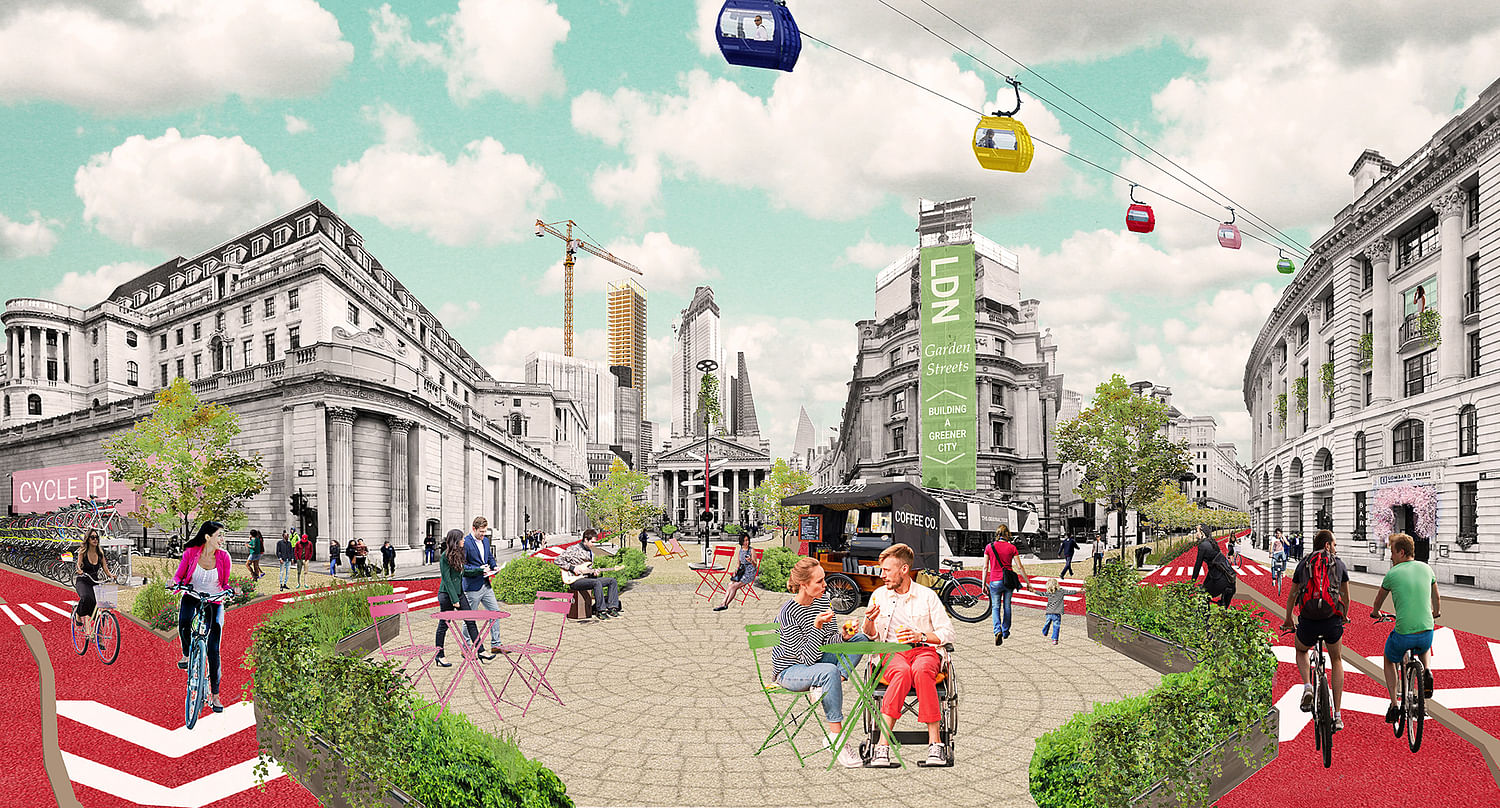
"This proposal tackles the use and function of three buildings types and the streets around them. Garden streets are created in city centres, improving the journeys that remain. While shops and high streets are out of favour, this entry argues that entrepreneurship can flourish in the form of markets and rooftop exercise classes with bank frontages taken over by ambitious bakery businesses. The final condition that is examined is that of the much neglected suburbia. Prefabricated extensions expand homes and front gardens to take over the streets."

Streets are Made for Walking, People Matter.

Streets are Made for Walking by People Matter.  

"This project takes the reduced capacity of public transport and the increased space allocated to cycling and pedestrian infrastructure. It develops a method for implementing ‘Shared Streets’ with cleaner, greener, safer environments. Modelling is done on Holloway Road, an arterial route in North London. Placemaking and ‘purposeful’ streets are a priority in stage one to 2025, helping build local identity. 2025-2035 would see the development of ‘inter-neighbourhood connections, in lateral rings expanding from the city centre’ – increasing the potential for polycentricity and reducing demand on the city centre."
​Village City, Stephen Macbean

Village City by Stephen Macbean  

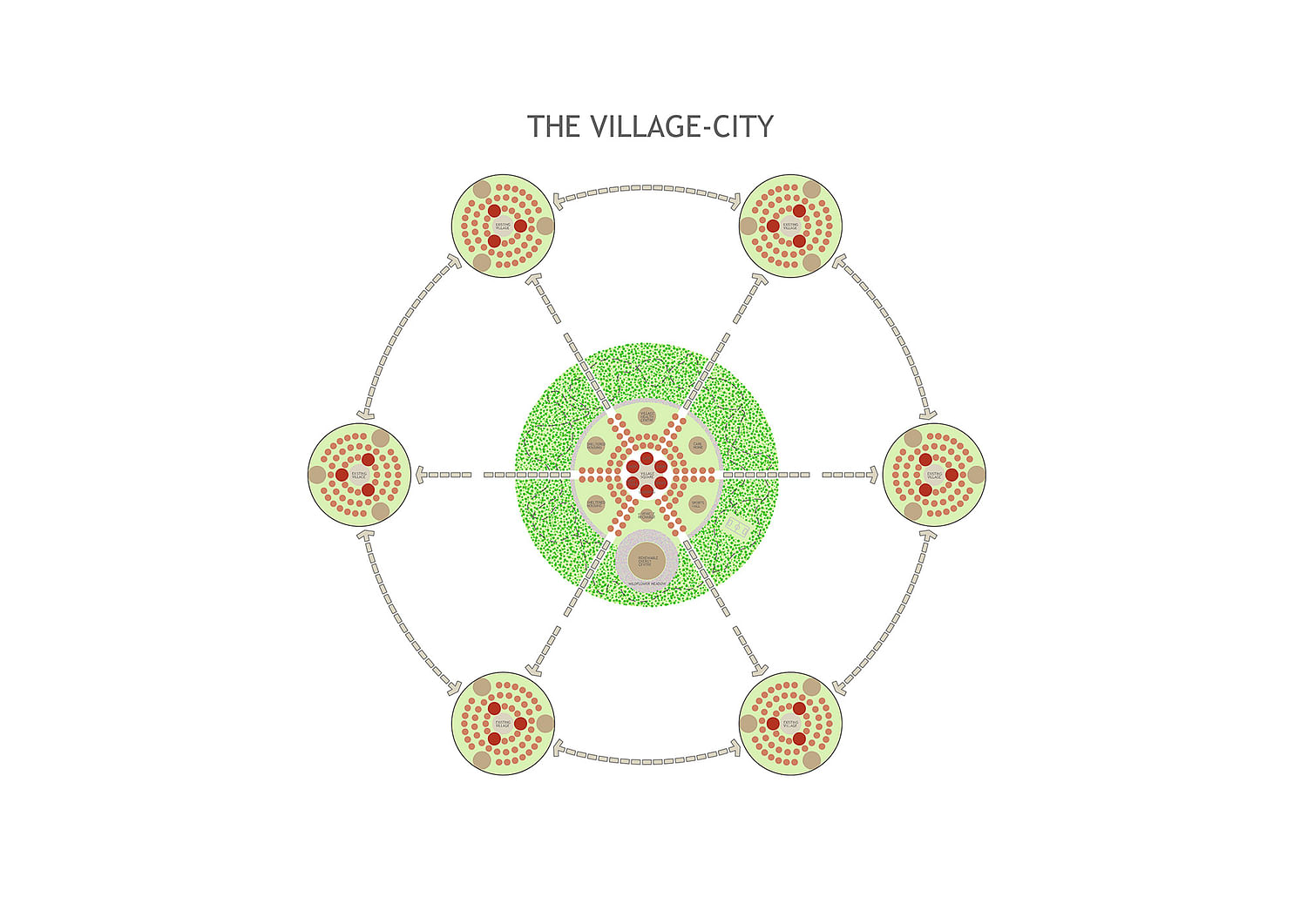
"This proposal suggests a new rural model to revive denuded villages - producing the facilities of a town for a cluster of villages. How do we allow villages to retain their character but be fit for the future? How do we re-invest the concept of localism? And how do we capitalise on the improved air quality and the move to zero carbon? The village-city would include a health centre; care home; sheltered housing; shops; bank or post office; cafe; learning resource centre for workshops and evening classes; office for meetings and small businesses; gym or sports hall; renewable energy centre. Ideally all this would be 10,000 steps (4km) there and back from each village – a healthy, walkable distance. And around this centre the proposal is to plant 40,000 trees interspersed with running and cycling trails."
​Window Living, Alice Vivoda, Patricia Schleeh, Eva Setz Kengen and Mark Kengen, The University of Edinburgh

Window Living by Alice Vivoda, Patricia Schleeh, Eva Setz Kengen and Mark Kengen, The University of Edinburgh  

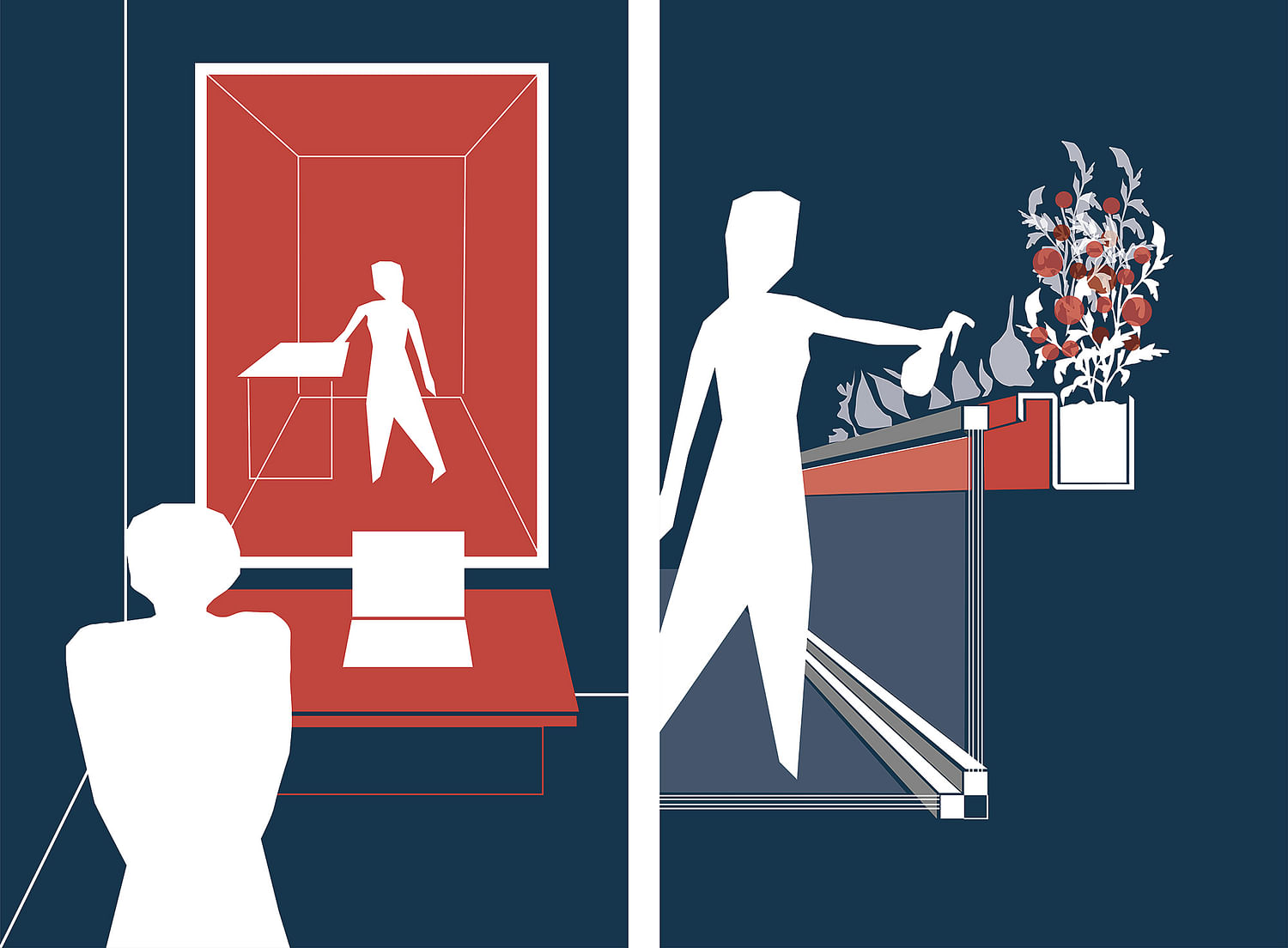
"With outdoor space being more important than ever before, Window Living gives those without immediate access to such space a chance to have it retrofitted. Window Living proposes a clever window that can swing open into a balcony or a half bay to be enjoyed as a semi-outdoor bench – giving different states of interaction with nature, neighbours and the city. ‘Step out of the box and through the window,’ urge the designers. For lockdown recurrences and rainy days, the set up also acts as a virtual window with HD screen, allowing a full perspective so communication is not just from behind the computer."

The competition's judging panel includes Francine Houben (Creative Director, Founding Partner at Mecanoo); Matt Jones (Principal Designer at Google AI, RIBA Trustee); Sarah Castle (Director, Co-Founder at IF_DO); Ed Clark (Director of Structural Engineering at Arup); Asif Khan (founder, Asif Khan); Joanne Averley (London Mayor Design Advocate, incoming Chief Planner at MHCLG); and jury chair Hugh Pearman (RIBA Journal Editor). 

Check back on Monday, July 27, for the announcement of the winning entry.

RELATED NEWS New pandemic-related architecture and design competitions listed on Bustler
RELATED NEWS More pandemic-related competitions and grant opportunities for architects and designers

Related

riba ● competition ● covid-19 ● pandemic ● shortlist ● uk ● europe ● london
Royal Institute of British Architects

Share

  • Follow

    0 Comments

  • Comment as :

The top 12 ideas from the RETHINK: 2025 post-pandemic design competition

London’s best architecture of 2026 honored by RIBA London Awards

Best new global architecture shortlisted by RIBA International Awards 2026

London’s best new architecture shortlisted at the 2026 RIBA London Awards

Níall McLaughlin awarded 2026 RIBA Royal Gold Medal

RIBA Asia Pacific Awards winners impress through adaptive reuse and revitalization

Top student architecture projects of 2025 honored at RIBA President’s Medals

Stone-clad home in rugged Scottish landscape named RIBA House of the Year 2025

RIBA Middle East Awards winners showcase best architecture of the region

Sign up for Bustler's Email Newsletters

RIBA Stirling Prize: Witherford Watson Mann's Appleby Blue Almshouse wins 2025 title of 'UK’s best new building'

Six projects make 2025 Stirling Prize shortlist for UK’s best new building

‘Hidden footprints of AI infrastructure’ project wins 2025 RIBA Norman Foster Travelling Scholarship

UK's best adaptive reuse projects make the 2025 RIBA Reinvention Award shortlist

Six early-career architect projects shortlisted for 2025 Stephen Lawrence Prize by RIBA

20 of the UK’s best buildings honored at 2025 RIBA National Awards

London’s best architecture honored at the 2025 RIBA London Awards

Next page » Loading

The top 12 ideas from the RETHINK: 2025 post-pandemic design competition

By Alexander Walter|

Tuesday, Jul 14, 2020

Share

Shortlisted entry: Get Everyone In, Benjamin Holland, Olivia Dolan, Katie Williams

Related

riba ● competition ● covid-19 ● pandemic ● shortlist ● uk ● europe ● london
Royal Institute of British Architects

After revealing a longlist of 32 proposals imagining our post-pandemic world last week, RIBA's Rethink: 2025 international design competition announced the twelve shortlisted entries this morning. 

The brief tasked architects and students to envision what our built environment after Covid-19 might look like in 2025 taking into consideration one or several of these areas: healthcare spaces, remote learning, high-density living, public transport, high streets vs online shopping, international travel, and the use of technology to monitor and control populations. 

These are the shortlisted ideas:

Get Everyone In by Benjamin Holland, Olivia Dolan, Katie Williams (cover picture)

"The project proposes reusing empty office space to house the homeless. Through the redesign of office towers, it suggests the inclusion of communal health facilities on ground level, bringing nature into the space with gardens at the mid-level and translating a deep plan office floor into hostel-style bedrooms on upper floors, with space left to accommodate some office workers."

​A Catalogue of Regeneration, Andrew Jackson

A Catalogue of Regeneration by Andrew Jackson 

"This project proposes a series of incremental improvements that can be made to streets and houses. The step-by-step guide sets out five key stages of regeneration, starting with repairing potholes, through to the creation of ’woonerf’ zones – traffic calmed streets, and ultimately work to improve and expand individual homes. With sustainability at its heart, this idea works with the existing buildings, using inner city Manchester terraces as the case study within the proposal."

​Childbirth Made Personal, Sarah Joyce, University of Leeds

Childbirth Made Personal by Sarah Joyce, University of Leeds  

"This entry was presented through emotive drawings that drew out of the impact of the pandemic on childbirth and the essential element of touch. Using the coronavirus concept of ‘bubbles’ and virtual connections, Childbirth Made Personal suggests that the way we design will change with the use of light-touch interventions and personalised pathways. It encapsulates the idea of the ‘safe outside’ versus the unsafe inside, where births take place. It gently describes how the birthing experience will be affected by thinking of ‘people as carriers of infectious diseases and surfaces as transmitters’."

​Community Retrofit, Farrells

Community Retrofit by Farrells   

"This proposal details the reinvention of commuter hubs and tourist destinations of city centres as localised districts with less travel, homeworking and very limited shopping. Empty department stores and half-used office spaces are retrofitted with a school, an urban farm, new homes, bars, cafés, collaborative working spaces and leisure facilities in close proximity, providing maximum opportunities for social interaction and chance encounters."

​Eco-Archi Post Covid, Khan Bonshek

Eco-Archi Post Covid by Khan Bonshek  

"This proposal seeks to address challenges faced by ethnic minority communities who have been disproportionately affected by coronavirus. Often excluded from planning decision-making, ethnic minorities also often live in more built-up and polluted areas. This idea seeks to address this through engaging the local community and working with local government to make tangible changes. Presented in the form of a comic, the proposal focuses on Newham which has the highest air pollution in London. It proposes making it the Green Lungs of London by radically cutting road traffic on domestic streets and changing the culture of car driving."

​Far off is close at hand, Haslam & Co Architects

Far off is close at hand by Haslam & Co Architects  

"This proposes a clever way to repurpose existing buildings through a reimagining of the high street. Converting existing shops into homes that still function as a point of exchange – with spaces for meeting and entertaining."

Greater London Agriculture, Tim Rodber and Dominic Walker

Greater London Agriculture by Tim Rodber and Dominic Walker  

"The most ambitious proposition in terms of scale, this idea centres around agriculture becoming interwoven with the city - tiny mapped patchworks of food production linked over time by corridors of biodiversity. From community orchards to seaweed farms based around existing green spaces and low carbon transport links – this an agroecological approach to land use and a green innovation network. Local, regenerative food production is intended to build respect for food, offer super-fresh seasonal produce. In increasing biodiversity and allowing wider ecosystems to recover it could also play a part in reducing threats of future pandemics."

​House Farm - Peru, Kenyi Kevin and Sulca Quichca, Universidad Nacional de Ingenieria

House Farm - Peru by Kenyi Kevin and Sulca Quichca, Universidad Nacional de Ingenieria  

"Explicitly set in the Villa Maria del Triunfo district of Lima, this proposes a timber extension to create a new space between private home and public social space. It offers hydroponic growing space for fruit and vegetables. It appeals to the desire for food security sparked by the pandemic and would reduce crowds in markets say the designers."

​Post Pandemic Exchange, Elle Thompson, University of Nottingham

Post Pandemic Exchange by Elle Thompson, University of Nottingham  

"This proposal tackles the use and function of three buildings types and the streets around them. Garden streets are created in city centres, improving the journeys that remain. While shops and high streets are out of favour, this entry argues that entrepreneurship can flourish in the form of markets and rooftop exercise classes with bank frontages taken over by ambitious bakery businesses. The final condition that is examined is that of the much neglected suburbia. Prefabricated extensions expand homes and front gardens to take over the streets."

Streets are Made for Walking, People Matter.

Streets are Made for Walking by People Matter.  

"This project takes the reduced capacity of public transport and the increased space allocated to cycling and pedestrian infrastructure. It develops a method for implementing ‘Shared Streets’ with cleaner, greener, safer environments. Modelling is done on Holloway Road, an arterial route in North London. Placemaking and ‘purposeful’ streets are a priority in stage one to 2025, helping build local identity. 2025-2035 would see the development of ‘inter-neighbourhood connections, in lateral rings expanding from the city centre’ – increasing the potential for polycentricity and reducing demand on the city centre."

​Village City, Stephen Macbean

Village City by Stephen Macbean  

"This proposal suggests a new rural model to revive denuded villages - producing the facilities of a town for a cluster of villages. How do we allow villages to retain their character but be fit for the future? How do we re-invest the concept of localism? And how do we capitalise on the improved air quality and the move to zero carbon? The village-city would include a health centre; care home; sheltered housing; shops; bank or post office; cafe; learning resource centre for workshops and evening classes; office for meetings and small businesses; gym or sports hall; renewable energy centre. Ideally all this would be 10,000 steps (4km) there and back from each village – a healthy, walkable distance. And around this centre the proposal is to plant 40,000 trees interspersed with running and cycling trails."

​Window Living, Alice Vivoda, Patricia Schleeh, Eva Setz Kengen and Mark Kengen, The University of Edinburgh

Window Living by Alice Vivoda, Patricia Schleeh, Eva Setz Kengen and Mark Kengen, The University of Edinburgh  

"With outdoor space being more important than ever before, Window Living gives those without immediate access to such space a chance to have it retrofitted. Window Living proposes a clever window that can swing open into a balcony or a half bay to be enjoyed as a semi-outdoor bench – giving different states of interaction with nature, neighbours and the city. ‘Step out of the box and through the window,’ urge the designers. For lockdown recurrences and rainy days, the set up also acts as a virtual window with HD screen, allowing a full perspective so communication is not just from behind the computer."

The competition's judging panel includes Francine Houben (Creative Director, Founding Partner at Mecanoo); Matt Jones (Principal Designer at Google AI, RIBA Trustee); Sarah Castle (Director, Co-Founder at IF_DO); Ed Clark (Director of Structural Engineering at Arup); Asif Khan (founder, Asif Khan); Joanne Averley (London Mayor Design Advocate, incoming Chief Planner at MHCLG); and jury chair Hugh Pearman (RIBA Journal Editor). 

Check back on Monday, July 27, for the announcement of the winning entry.

RELATED NEWS New pandemic-related architecture and design competitions listed on Bustler
RELATED NEWS More pandemic-related competitions and grant opportunities for architects and designers

Share

  • Follow

    0 Comments

  • Comment as :

Archinect JobsArchinect Jobs

The Archinect Job Board attracts the world's top architectural design talents.

VIEW ALL JOBS POST A JOB

AutoCAD Drafter/Architectural Designer

Kari Whitman Interiors

AutoCAD Drafter/Architectural Designer

Boulder, CO, US

Intermediate Architect

NDKazalas Architecture PC

Intermediate Architect

New York, NY, US

Architectural Designer

Build Block Inc.

Architectural Designer

Los Angeles, CA, US

Architects with 4-10 Years' Experience

Adamson Associates, Inc.

Architects with 4-10 Years' Experience

Los Angeles, CA, US

Project Architect at High End Boutique Townhouse Firm in BK

Steering House Design and Development

Project Architect at High End Boutique Townhouse Firm in BK

Brooklyn, NY, US

Intermediate Designer / Architect [5+ years experience]

RO | ROCKETT DESIGN

Intermediate Designer / Architect [5+ years experience]

Sausalito, CA, US

Design Architect

JLK Architects

Design Architect

Chicago, IL, US

Project Architect

Arrowstreet

Project Architect

Boston, MA, US

Senior Architectural Project Manager (Systems Driven, Human-Centric) (Hourly)

Local Parti Architecture, PC

Senior Architectural Project Manager (Systems Driven, Human-Centric) (Hourly)

New York, NY, US

Intermediate Architect

FAME Architecture & Interior Design

Intermediate Architect

Los Angeles, CA, US

Next page » Loading